Between seven and 10 vaquitas — the world’s most endangered marine mammal — have been confirmed alive in Mexico’s Upper Gulf of California following a joint monitoring effort by the federal government and scientists, officials announced Tuesday.
Details of the 2025 Vaquita Marina Observation Cruise, presented at the facilities of the Ministry of Environment and Natural Resources (Semarnat), also heralded the birth of at least one new calf, giving hope to a species on the brink of extinction.
▶️ Concluyó una exitosa temporada de monitoreo de la #VaquitaMarina gracias al trabajo conjunto de #Semarnat, @SEMAR_mx, @PROFEPA_Mx, @Conanp_mx, @bcgobierno y @seashepherd.
¡La esperanza sigue viva en el Alto Golfo de California!#SomosMedioAmbiente 🩵🐬 pic.twitter.com/CblHt4L9jG
— SEMARNAT México (@SEMARNAT_mx) October 29, 2025
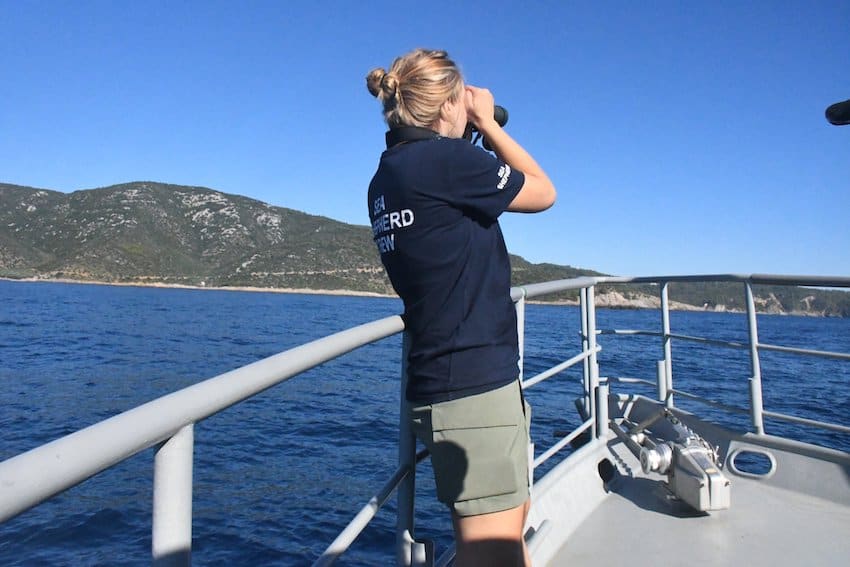
The visual monitoring from Sept. 2 to 30, following five months of acoustic monitoring, was supported by Mexican and international marine scientists aboard two vessels of the Sea Shepherd Conservation Society.

Last year’s annual vaquita census expedition counted only six to eight individuals, down from between eight and 13 in 2023.
Though this year’s slight increase offers hope for recovery, scientists note that returning to the 2015 population of 60 would take up to 20 years
These figures are for the entire global population, since vaquitas are found in only one location: Mexico’s Upper Gulf of California, also known as the Sea of Cortez.
They are shy, small porpoises whose full name in Spanish is vaquita marina, which translates to little sea cow.
Their population’s severe decline over the last two decades is largely due to a boom in the illegal fishing of totoaba, whose bladders are prized in traditional Chinese medicine and can fetch very high prices.
Totoaba are commonly caught using gillnets, which also indiscriminately trap and kill vaquitas.
Marina Robles García, undersecretary of Biodiversity and Environmental Restoration, a division of Semarnat, said the monitoring allows scientists to adjust their strategies and reinforce positive actions in specific areas.
But mainly, she added, the survey confirms “that the vaquita is still [out] there, that it persists, that the downward trend has not continued, that there are even individuals we hadn’t seen for several years — that were evidently in some other location where we haven’t been monitoring — and that it continues to reproduce.”
Using 1,228 detectors at 497 sites, acoustic monitoring recorded 254 encounters between May and late September.
Local fishermen and youth in the region participated in aspects of the monitoring.
Visual efforts identified at least one or two calves — including a juvenile swimming alongside its mother, a 1.5-meter female named Frida who is possibly pregnant again — signaling reproduction is underway.
The newly reported population is based on a 67% probability that the number of vaquitas is between seven and 10, according to a structured process of consensus called Expert Elicitation.
With reports from López-Dóriga and La Jornada