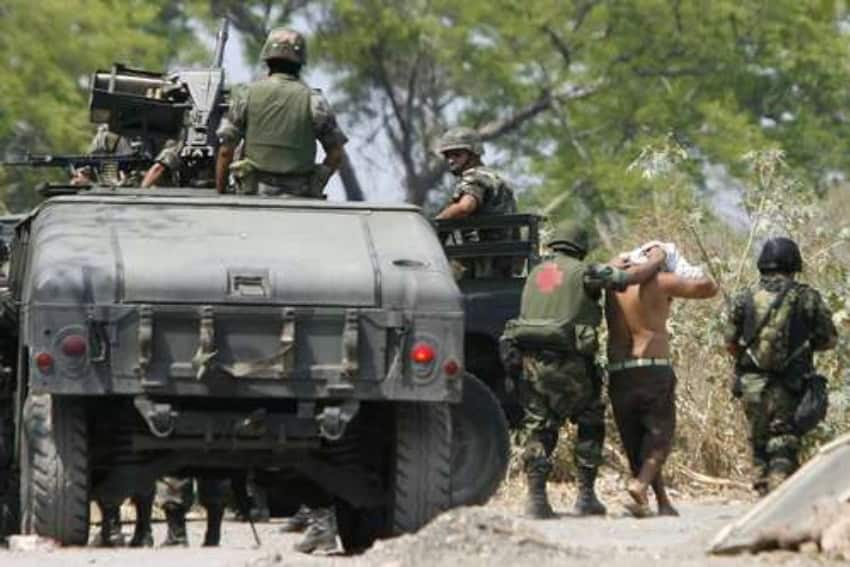
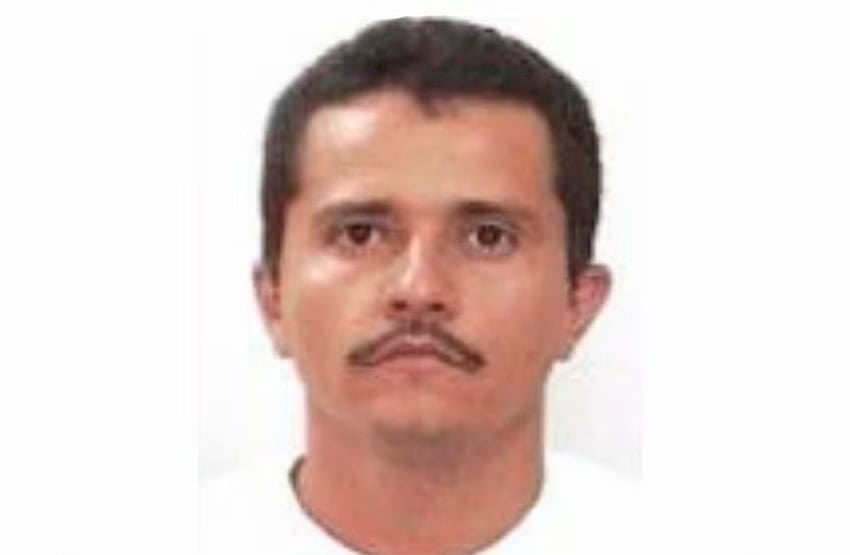
On Sunday morning, the Mexican army followed a still-unidentified woman to a ranch in Tapalpa, a hillside town two hours southwest of Guadalajara. Inside was Nemesio Oseguera Cervantes — better known as El Mencho. During the shootout that quickly ensued, El Mencho was gravely wounded. He died while being airlifted to a hospital.
As chief commander of the CJNG, one of Mexico’s most violent cartels, El Mencho had topped the country’s most-wanted list for eleven years. The U.S. State Department was offering up to US $15 million for information leading to his capture. News of the operation — it would be hours before his death and identity were confirmed — ignited immediate retaliation across the country. Cartel members set vehicles on fire and erected roadblocks at more than 250 points across 20 states. Flights into Jalisco were diverted, schools were closed, and civilians were ordered to stay indoors. The National Guard was deployed and suffered 25 casualties before order began to return.
How could the death of one man bring a country to a standstill?
What is a cartel?
The dictionary definition is simple enough: a group of independent companies that join together to control prices and limit competition. In practice, two types exist — one in a boardroom, the other in Latin America.
A business cartel is a group of otherwise legal firms that secretly agree to fix prices or divide markets rather than compete. Examples include pharmaceutical companies or oil producers coordinating to keep prices at an agreed-upon rate. They operate through contracts and accounting manipulation, and above all, they aim to stay invisible.
A criminal cartel (also known as a drug cartel or an organized crime cartel) operates on the same basic principle — restrict competition, maximize profit — but the methods are entirely different. Rather than legal maneuvering, criminal cartels rely on territory, violence and bribery to run illegal markets and, in many cases, the communities around them. Basically, criminal cartels are sales organizations that govern their chosen markets.
Mexico’s cartels are the most powerful example of an organized crime cartel. To understand how they got there, we have to go south to Colombia.

How did cartels start?
Criminal cartels started near Medellín in the 1970s, when drug smuggling was a relatively straightforward affair — marijuana was grown locally and transported by sea or small plane to the U.S., its primary consumer. As time went on and the shipments got larger and more frequent, the process became more sophisticated. So did the drugs, and by the 1980s, cocaine was in high demand. The infamous Medellín Cartel — led by the now iconic Pablo Escobar — emerged, turning cocaine trafficking into an industrial operation via maritime routes through the Caribbean and into Florida. In the late ‘80s, U.S. law enforcement disrupted the shipping lanes and Colombian traffickers needed a new way in. They turned to Mexico.
How did cartels in Mexico start?
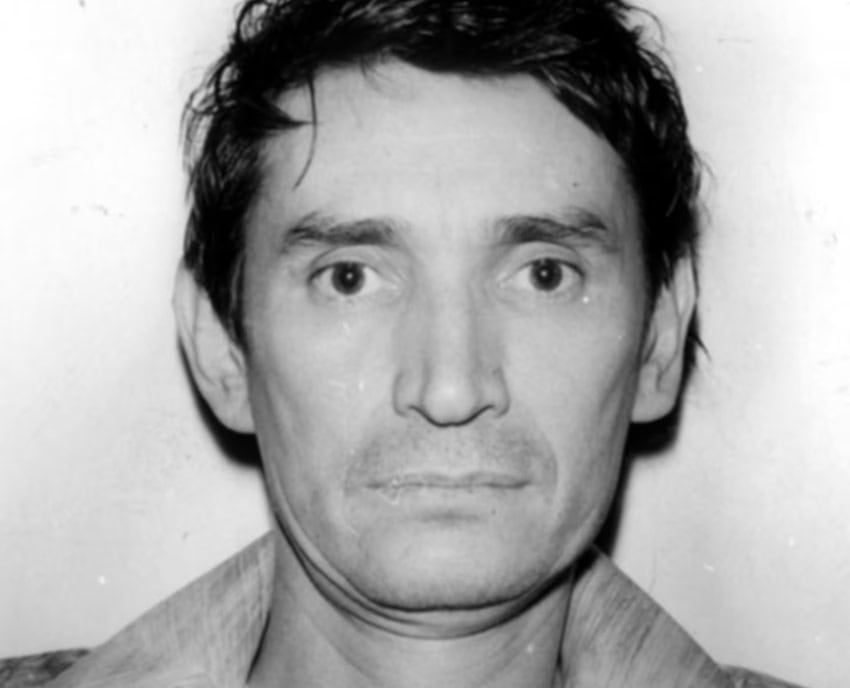
More specifically, they turned to Miguel Ángel Félix Gallardo, a former police officer with close ties to state and national political figures. He had already developed an extensive marijuana and opium trafficking empire out of Sinaloa. Working with Escobar’s network, he moved about four tons of cocaine each month across the U.S.–Mexico border. Critically, he negotiated partial payments in cocaine instead of cash, effectively stockpiling product to push wholesale. Mexico’s first major modern drug trafficking syndicate, the Guadalajara Cartel, was born.
Using Félix Gallardo’s political connections, the Guadalajara Cartel paid officers at Mexico’s federal intelligence agency in exchange for the safeguarding of shipments, securing stash houses and access to clandestine runways. Then, in 1985, a DEA agent was kidnapped and killed in Guadalajara. Four years later, Félix Gallardo was arrested in conjunction with the murder, amongst a litany of additional offenses. He called a meeting with Mexico’s top traffickers from prison, in which he parceled up his empire into regional territories — known as plazas. His nephews took control of the Tijuana route, and Joaquín “El Chapo” Guzmán and Ismael “El Mayo” Zambada were given the Pacific coast route. This would soon become the infamous Sinaloa Cartel.
How many identified cartels are there in Mexico?
Hard to say. A 2023–2024 study in the International Journal for Crime, Justice and Social Democracy finds that Mexico’s criminal landscape “includes roughly 37 large cartels (many the product of prior splits) and more than 130 smaller affiliates” as of the late 2010s–early 2020s. For U.S. threat‑assessment purposes, the 2025 National Drug Threat Assessment recognizes six major Mexican cartels/transnational criminal organizations. These are:
- Sinaloa Cartel (CDS) — the largest and most established, currently fractured by an internal war between the Chapitos (El Chapo’s sons) and Los Mayos (El Mayo’s faction)
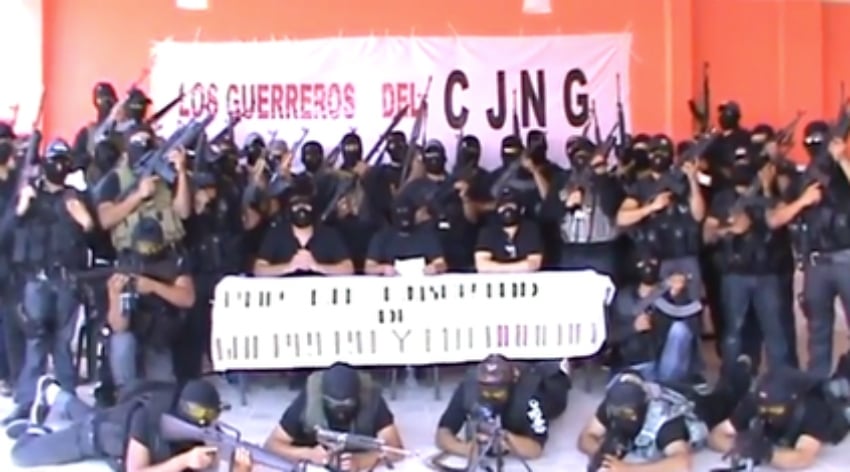
- CJNG (Jalisco New Generation Cartel) — El Mencho’s organization, known for extreme violence and paramilitary structure, with operations extending into Latin America, the United States and multiple countries as far away as Europe and Asia
- Gulf Cartel (CDG) — one of Mexico’s oldest criminal organizations, based in Tamaulipas on the U.S. border
- Northeast Cartel (CDN) — originally the armed wing of the Gulf Cartel, now independent and operating primarily in Tamaulipas and Nuevo León
- La Nueva Familia Michoacana — a Michoacán-based organization that emerged from the splintering of earlier groups in that state
- United Cartels (Carteles Unidos) — a coalition of smaller groups that formed specifically to resist CJNG expansion into Michoacán
What is the structure of a cartel today?
Today, a “cartel” in Mexico is no longer a single firm like it was in the past; it is now a set of highly militarized networks that control territory as much as they move products, and that are deeply embedded in local governance. Territorial control of plazas is now essential to a cartel’s two primary goals: profit and survival. As fragmentation has produced more groups, those plazas are more heavily contested, and turf wars over territory drive much of Mexico’s violence.
Interestingly, Mexico’s two most powerful cartels, CJNG and Sinaloa, run in totally opposite ways. Sinaloa functions as a horizontal structure: a decentralized, federation‑style network made up of semi‑autonomous factions and long‑standing allies. Together, they hold influence in more than 100 municipalities nationwide. The benefit of this structure is both economic and territorial: different factions can specialize in different routes and markets, and can expand to new areas without micromanagement from leadership.
Perhaps most crucially, the multifaceted organization is able to withstand the loss of a boss or an entire region without fracturing. The downside is the presence of internal rifts over territory and revenue, resulting in spikes in violence.
The CJNG, by contrast, is centralized and vertically organized around a single dominant leader. Its territorial footprint is significantly wider — recent assessments estimate a presence in more than 350 municipalities across the country. Roles range from regional plaza bosses down to lieutenants, sicarios, transporters and money launderers, all answering upward to one command. El Mencho invested heavily in paramilitary training, weapons and recruitment — notably through video games and social media — building strong cohesion and a powerful, violent brand. The vulnerability of this structure is equally clear: remove the leader — a tactic known as decapitation — and without a succession plan in place, the organization risks splintering into factions that fight each other as viciously as they fight rivals.
Do cartels rely totally on drugs for profit?
No — and arguably, they haven’t for a long time. Mexican cartels have spent decades diversifying their empires to touch nearly every sector of the economy. Drugs remain the foundation, but the business has expanded well beyond – here’s where the money comes from.
Drugs — Methamphetamine and fentanyl, manufactured in clandestine labs and trafficked globally, remain the primary revenue source.
Extortion — Businesses, farmers, transport operators and local governments pay regular “protection” fees known as “piso” — protection, ironically, from the cartel itself. The practice mirrors the Italian Mafia’s tributes and the Japanese Yakuza’s “shobadai.”
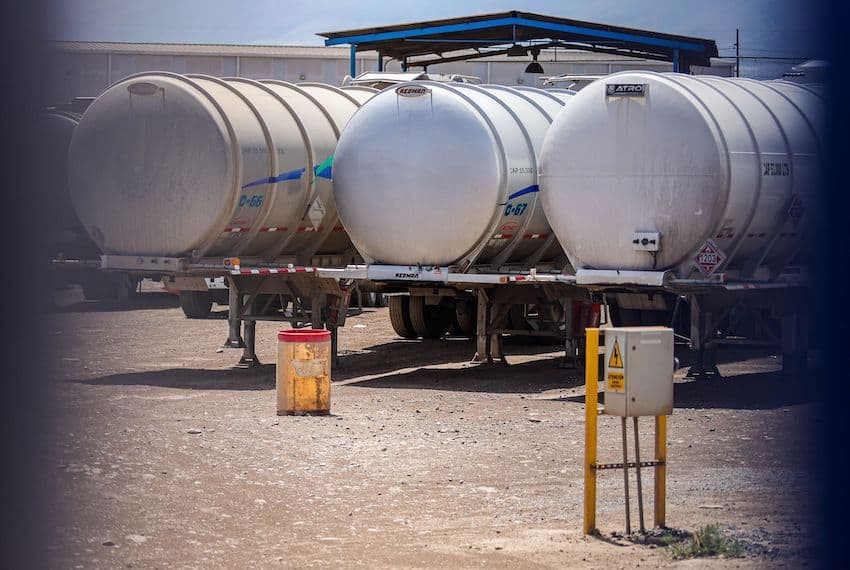
Huachicol (fuel theft) — Cartels tap Pemex pipelines and steal fuel, reselling it through illegal stations. The Financial Times reported in 2025 that illegal diesel and gasoline fell between 16 and 27% of Mexico’s annual fuel consumption over the last five years, translating to up to $21 billion generated annually.
Human and sex trafficking — Mexico serves as a source, transit corridor and destination country for both forced labor and sexual exploitation. Cartels also profit heavily from migrant smuggling, charging people en route to the U.S. border for passage. Separately, criminal groups control prostitution networks ranging from street-level operations to established venues, routinely using violence to displace existing operators.
Arms trafficking — Cartels move military-grade weapons — rifles, machine guns, grenades, explosives — through entry points like Tijuana and Ciudad Juárez, supplying both their own operations and external buyers.
Kidnapping for ransom — Originally a cash-flow fix to cover rising costs of weapons and payroll, kidnapping has become a fragmented but persistent market. Victims range from migrants to executives, with national cartels, regional groups and independent cells all participating.
Illegal resource extraction — Cartels extort farmers, hijack shipments and in some areas directly control orchards and packing houses. In avocados, berries and fishing, piso is extracted at every link of the supply chain — growers, packers, transporters — a multimillion-dollar industry.
Cargo theft — Armed teams hijack trucks on major highways, targeting food and beverages, electronics, auto parts and pharmaceuticals. Stolen goods are funneled into informal street markets, black market vendors and increasingly, online resale platforms.
Money laundering — The entire system depends on converting dirty money into clean currency. The DEA’s 2025 assessment states that Sinaloa and CJNG use Chinese money laundering networks to move profits from the U.S. back to Mexico. In June 2025, the U.S. Treasury cut three Mexican financial institutions off from the U.S. banking system after finding they had been used in laundering schemes tied to cartels.
What’s next?
El Mencho is dead. The Mexican government is calling it a victory — and it may well be. But cartels have survived the fall of every kingpin before him. Analysts say the real work starts now: dismantling the infrastructure, the money, the supply chains. Without that, history suggests another El Mencho is already waiting.
Bethany Platanella is a travel planner and lifestyle writer based in Mexico City. She lives for the dopamine hit that comes directly after booking a plane ticket, exploring local markets, practicing yoga and munching on fresh tortillas. Sign up to receive her Sunday Love Letters to your inbox, peruse her blog or follow her on Instagram.