Days after a controversial wildlife control contract made headlines, the Quintana Roo state government has announced its intentions to guarantee the free and safe movement of wildlife along the length of the Cancún-Tulum highway and the Maya Train railroad tracks by building 21 wildlife crossings across the state.
The state government said it would begin building the wildlife crossings – along Federal Highway 307 and the path of the Maya Train tracks — before the end of 2024.
The plan — with an initial budget of 17 million pesos (US $850,000) — calls for 15 elevated crossings, two aerial bridges and four underground passages.
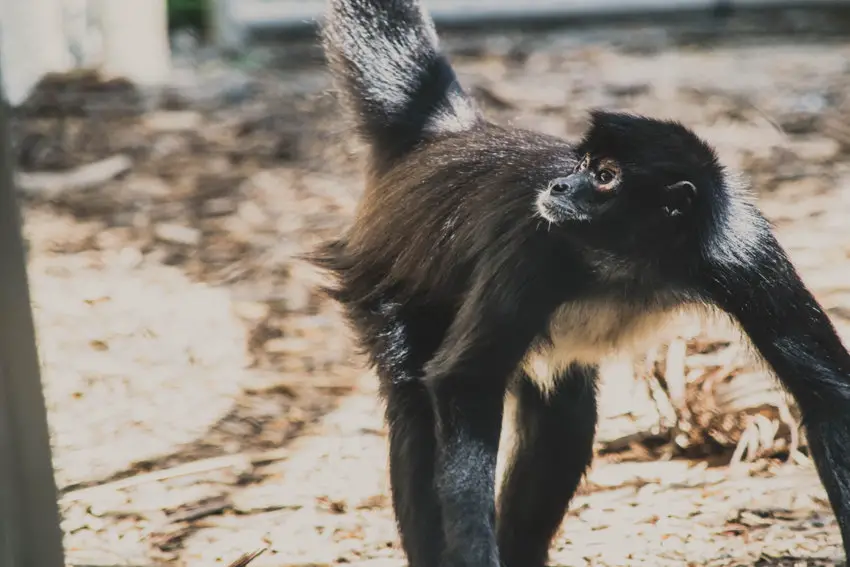
On Monday, Quintana Roo Gov. Mara Lezama announced the creation of a trust to support the project. In a social media post, Lezama said her administration aims to conserve and protect the state’s biodiversity through the construction of these wildlife crossings to protect the state’s “emblematic species, including the jaguar, ocelots and spider monkeys.”
All three species are native to Quintana Roo.
Quintana Roo’s Ecology and Environment Ministry (SEMA) and its Institute of Biodiversity and Protected Natural Areas will oversee the project, the newspaper Riviera Maya News reported.
Addressing the environmental impact of megaprojects
Wildlands Network, a U.S. NGO whose primary mission is to prevent biodiversity loss and promote climate change resilience, says wildlife crossings are critical to protecting species living in ecosystems fragmented by roads and other development.


A November 2023 amendment to the Federal Highways, Bridges and Motor Transport Law now makes wildlife crossings mandatory in Mexico’s road infrastructure. In addition, a June 2024 regulation states that transportation infrastructure projects must include provisions for wildlife crossings.
The Wildlands Network points out, however, that neither the law nor the regulation features enforcement language and that there are no specifics about the characteristics, maintenance or budget requirements for these crossings.
Although the Maya Train was promoted as an environmentally friendly project with promises of 500 wildlife crossings, activists claim such is not the case.
The newspaper El Financiero reported in June that fences were installed in some areas and that some drainages and tunnels are described as wildlife crossings, though they were not built with that intention.
“Animals such as spider monkeys are not going to come out of the trees to cross through a tunnel,” environmental activist José Urbina, known in Mexico as a defender of the Yucatán Peninsula’s cenotes and an opponent to the Maya Train project in the state, told El Financiero.
Such passages are not useful for wildlife, says Wildlands Network, and only a few of the drainages have the minimum characteristics to protect animals’ free passage. As a result, roadkill incidents are on the rise near the Maya Train, according to Wildlands Network.
The controversy comes on the heels of President Claudia Sheinbaum’s detailed plans to build 3,000 kilometers of railroad tracks during her administration.
In a positive development, a federal lawmaker on Tuesday introduced a bill mandating the inclusion of wildlife corridors during the design and modernization of railway infrastructure.
With reports from La Jornada, Riviera Maya News, El Financiero and Wildlands Network