President Claudia Sheinbaum has taken decisive steps toward the restitution of ancestral lands to the Wixárika people in a historic process that seeks to repair decades of dispossession and agrarian conflict in the border region between Jalisco and Nayarit.
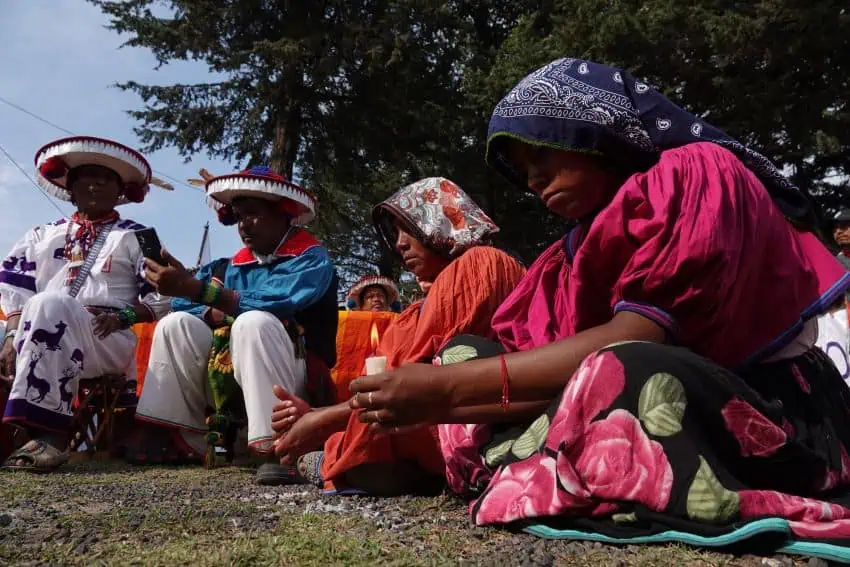
The Wixárika, sometimes known as the Huichol, are an Indigenous group primarily from the state of Jalisco. They mainly live in the municipalities of Mezquitic, Bolaños, and to a lesser extent, Huejuquilla. According to official figures, this area is home to approximately 14,300 Wixárikas.
According to Sheinbaum, her government will issue a decree this week to return 2,471 hectares in the Huajimic region of Nayarit to the Wixárika community of San Sebastián Teponahuaxtlán and its annex, Tuxpan de Bolaños (Wuaut+a-Kuruxi Manuwe), located mainly in Mezquitic, Jalisco. This move represents the largest ancestral land restitution to date, representing nearly one-quarter of the 10,448 hectares the Wixárika have claimed.
The region has long been occupied by small landowners and ranchers in Nayarit who have resisted handing over the land without compensation.
The decree includes a payment of 158.2 million pesos (US $8.1 million) to the current occupants of the lands, funded through a special budget allocation ordered by Sheinbaum. The objective is to ensure the peaceful enforcement of agrarian policy in favor of the Wixárika.
The conflict over land restitution to the Wixárika began in 2007, when the Wixárika community initiated a judicial claim based on titles from the viceregal period, which predate those held by the current mestizo landholders.
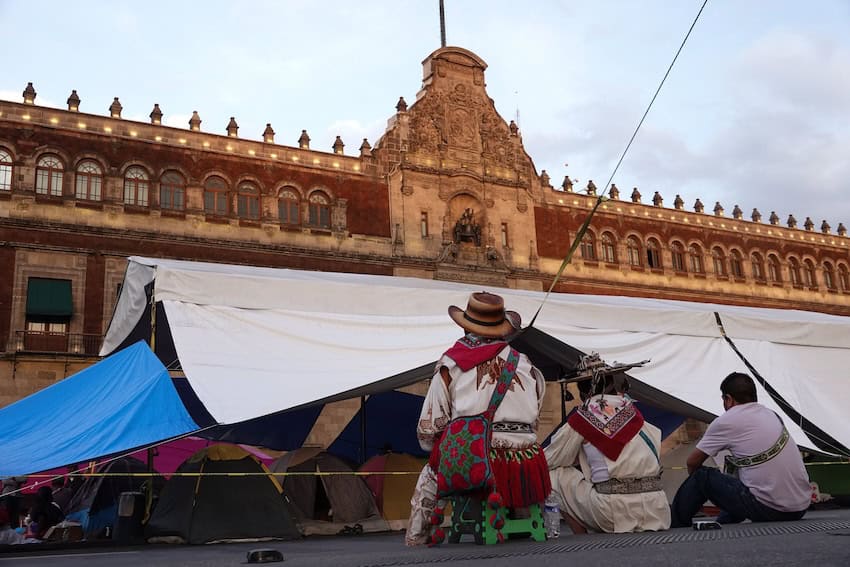
In 2022, a march from western Mexico to Mexico City dubbed the “Caravan for Wixárika Conscience and Dignity” demanded the return of the 10,448 hectares of communal land along the Jalisco-Nayarit border. That march accelerated restitution, which now will total 5,946 hectares restored so far. This represents 56.7% of the claimed territory, leaving at least 4,550 hectares to be returned.

Earlier this year, during a visit to the Au’dam community of San Bernardino de Milpillas Chico in the Sierra Madre Occidental, Sheinbaum said that the Indigenous people of Mexico are at the heart of her humanistic government.
“We see them as the essence of Mexico,” she said. “Without the Indigenous peoples there would be no Mexico. Each Indigenous people has its language, its culture, its land, its history, its ancestors, and that has to be preserved because if that is lost, Mexico is lost.”
With reports from La Jornada