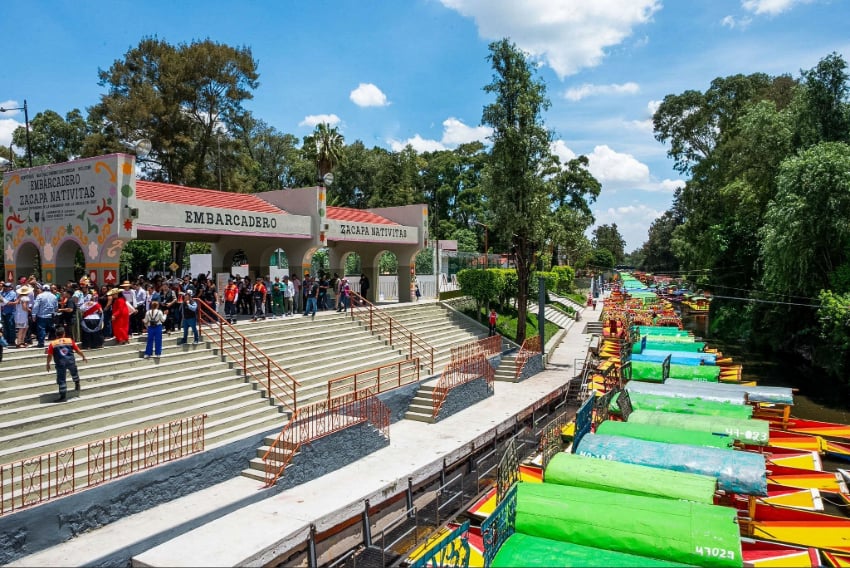
The historic canals of Xochimilco, a popular tourist attraction in Mexico City known for its colorful trajineras (traditional boats), have undergone massive renovations as part of the city’s beautification project for the 2026 FIFA World Cup.
The works focused on the docks of Cuemanco, Nativitas, Las Flores and Zacapa, where activists and residents had called out the deterioration of the infrastructure and the need to improve the tourist experience.

With a public investment of some 174 million pesos (US $9.9 million), the works included the reconstruction of commercial spaces and service areas, with new restrooms, water and drainage systems, safe wiring and modern lighting.
The renovations included upgraded pedestrian access points and waiting areas for trajineras, reorganized boarding points and improved signage.
During her speech at the opening ceremony, Mexico City Mayor Claudia Brugada explained that the works encompassed more than 50,000 square meters and the reconstruction of 162 commercial spaces, benefiting more than 2,000 families and more than 500,000 visitors who visit these tourist destinations every year.
The renovation is part of a larger project for the comprehensive recovery of the lake and the wetlands of Xochimilco.
“With this investment, we begin the rescue of Xochimilco: We are taking care of this great treasure and starting an unprecedented transformation for this fundamental area of Mexico City,” Brugada said.

Xochimilco is a green oasis within Mexico’s capital that includes over 2500 hectares of natural protected areas. Beyond being a tourist hotspot, the wetland is of strategic importance to Mexico City: It regulates the climate by mitigating heat waves; captures pollutants and produces oxygen; recharges aquifers; and supports unique biodiversity, most notably Mexico City’s emblematic axolotl salamanders and the chinampa agricultural system, which is recognized by UNESCO as a World Heritage Site.
However, this ecosystem has been deteriorating due to decades of uncontrolled urbanization, irregular settlements on chinampas, wastewater discharge into the canals, aquifers overuse, and chemical and biological pollution that jeopardize the viability of the chinampas and the survival of native species.
As part of the recovery operation, Brugada said that 55,000 plants were planted – including 40,000 plants that attract pollinators such as bees, hummingbirds and butterflies – in addition to the rehabilitation of 15,000 square meters of green areas and water infrastructure.
For Brugada, this investment represents “keeping the great biodiversity alive and conserving ecosystem services that are fundamental for air quality and climate regulation.”
With reports from Chilango, Diario de México, La Jornada and Infobae