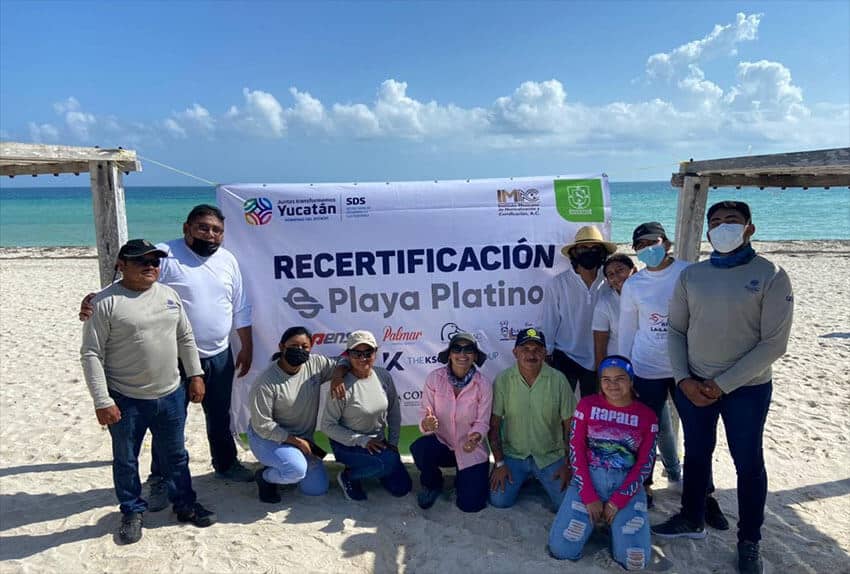
The Mexican Institute of Standardization and Certification (IMNC) has re-certified seven Yucatán beaches for the excellence of their environmental and social standards.
The Río Lagartos, Celestún, Telchac, Sisal, Cancunito, San Felipe and El Cuyo beaches, which have all been part of the IMNC’s beach improvement program since 2019, will maintain their “platinum beach” (Playas Platino) certifications. Four of the beaches are located in the state’s biosphere reserve and another two in state reserves.
Certifying beaches is a part of the state and Governor Mauricio Vila’s efforts to attract more tourism, care for the state’s coastal areas, to increase jobs in local communities and improve the region’s economy.
Yucatán hosts over 3 million tourists a year, most of whom come to enjoy the beautiful white sand beaches and warm Caribbean waters. Programs like IMNC’s draw international attention to the region as a destination and state authorities believe that this along with other infrastructure projects, such as the new cruise ship port in Puerto Progreso as well as the Tren Maya, will bring an even greater number of tourists to Yucatán state in 2023.
The Playas Platino program judges beaches on their trash reduction efforts, tourism facilities, security, accessibility and signage. In order to maintain the standard needed to gain re-certification, groups on each beach, made up mostly of local women, have organized beach clean-ups, local spay and neuter campaigns, and tourism training.
To be considered clean the beaches must be free from solid waste, dangerous waste, oil or derivatives of petroleum, and feces. Celestún and Telchac beaches both reduced contamination on their beaches by 88%, Sisal beach by 74%, Cancuncito by 93%, San Felipe beach by 87%, and El Cuyo by 71%.
With reports from Reportur, Diario de Yucatán, and Forbes