Home Blog Page 1013

UN missing persons report: abductions of youths, women rising; impunity ‘almost absolute’

0
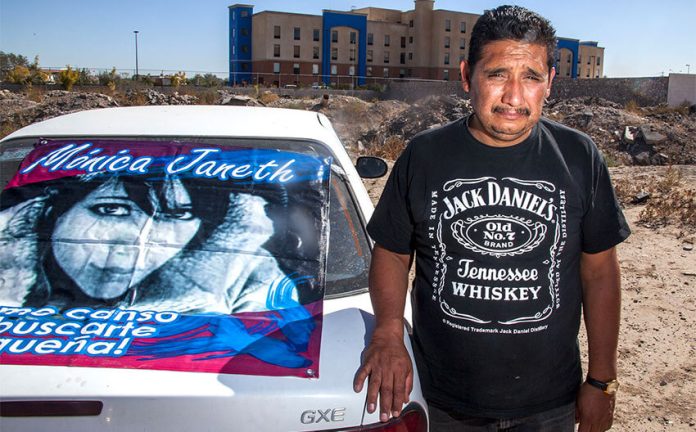
Ricardo Alanís and his wife looked for more than four years for their 18-year-old daughter
Ricardo Alanís and his wife looked for more than four years for their 18-year-old daughter, who disappeared in Ciudad Juárez, Chihuahua, in 2009. Her remains were found in 2013 but were not identified until nearly a year later. Luis Enrique Aguilar

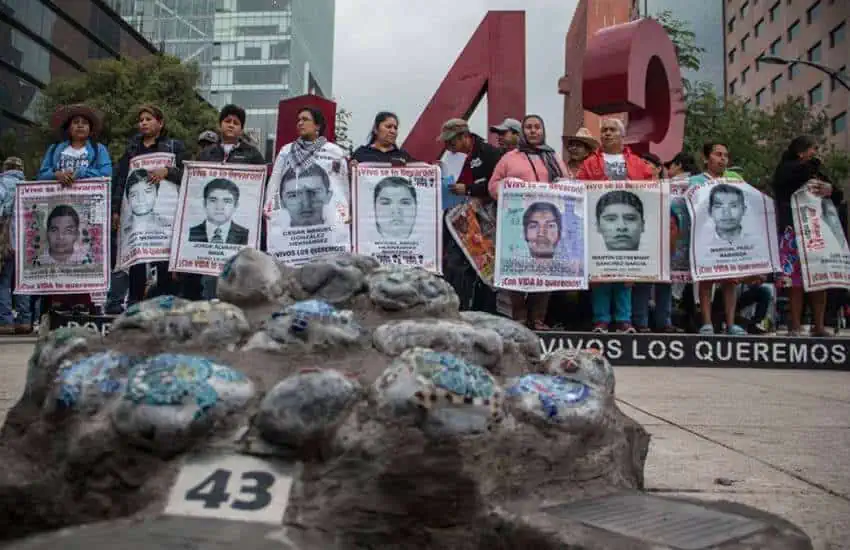
Abductions of children, adolescents and women are on the rise, while impunity in missing person cases is “almost absolute,” the United Nations Committee on Enforced Disappearances (CED) said in a new report.

The committee published a report Tuesday partially based on the visit to Mexico last November by four of its members, including president Carmen Rosa Villa Quintana.

It said that males aged 15 to 40 are the most common victims of enforced disappearances, but added that official statistics show a “notable increase” in abductions of girls and boys starting from the age of 12 as well as adolescents and women.

That trend worsened during the coronavirus pandemic, the CED said, noting also that authorities have reported abductions for the purposes of human trafficking and sexual exploitation.

The committee said that organized crime groups are mainly responsible for disappearances but recognized that they sometimes collude with authorities or benefit from their “acquiescence or oversight.”

The Mexican state is not only responsible for enforced disappearances committed by public servants, but may also be involved in abductions perpetrated by criminal groups, the CED said.

The committee acknowledged that over 95,000 people were considered missing when the CED members were in Mexico in November, and observed that there is “almost absolute” impunity in such cases.

“According to information supplied by the state, to November 26, 2021, only a minimal percentage of the cases of disappearances of persons – between 2% and 6% – had been prosecuted,” the CED said.

It denounced a frequently passive attitude of law enforcement authorities in the face of an extremely serious problem, which includes abductions of human rights defenders, journalists and migrants.

“Impunity in Mexico is a structural trait that favors the reproduction and covering-up of enforced disappearances and places victims in danger,” the CED said.

It also expressed its “profound concern” for a “forensic crisis.”

“According to public data, more than 52,000 unidentified deceased people currently lie in common graves, facilities of forensic services, universities and [other locations],” the CED said.

“Despite its magnitude, this figure doesn’t include bodies not yet found nor thousands of fragments of human remains that families and search commissions collect weekly in clandestine graves.”

The committee made numerous recommendations to Mexican authorities to prevent and eradicate enforced disappearances.

It urged Mexico to strengthen search and investigation processes, provide adequate staff and funding to the National Search Commission and state-based commissions and ensure effective coordination between all authorities involved in the process of searching for missing persons and investigating such cases.

The committee also called on the state to provide compensation and support to victims of abduction and their family members, to remove legal obstacles that hinder justice and to attend to the forensic crisis, among other recommendations.

Prevention of enforced disappearances must be at the center of the national policy, the CED said.

“… The national policy of prevention and eradication must not be limited to operational prevention directed only at avoiding concrete threats of disappearances and other human rights violations,” it added.

“… It’s about stopping systematic violations and combatting impunity for enforced disappearances, both those of the present and those of the past.”

Mexico News Daily 
Police killings spike amid soaring violence in Zacatecas

0
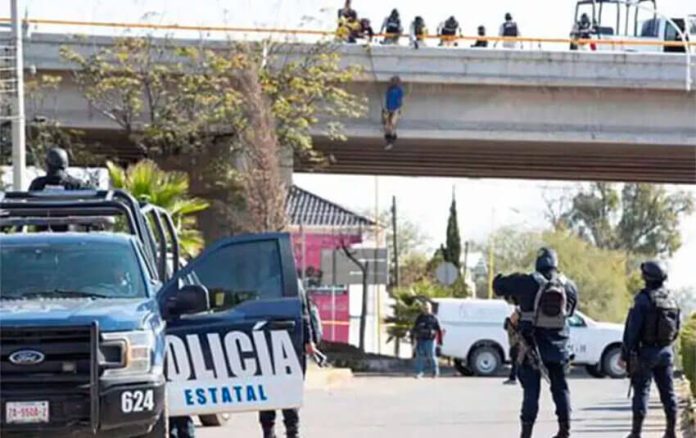
A body hangs from an overpass
A body hangs from an overpass last November in Cuauhtémoc, Zacatecas.

Sixteen police officers have been killed in Zacatecas in the first quarter of 2022, another grim reminder of the soaring violence in Mexico’s central state.

For the last 11 days, police across the state have been engaged in a general strike, demanding fired colleagues be reinstated, for better pay and healthcare, as well as deploring dangerous security conditions.

On March 26, an off-duty officer of the Metropolitan Police was killed while driving through Fresnillo, Zacatecas. Armed civilians blocked the road and fired more than 20 bullets at his vehicle, after which they lit it on fire.

A few weeks before, another officer had been shot just meters away from the police station, and several others were killed in private or public vehicles earlier in the year.

According to the register of police killings by Causa en Común, Zacatecas is the state with the highest number of such killings in 2022 so far, having risen steadily from third position in 2021, and 13th in 2020.

Zacatecas’ police force was already in dire straits. María de la Luz Domínguez Campos, president of the Human Rights Commission of the state, says that according to the U.N. recommendations on the ratio of police officers to inhabitants, the state has a deficit of over 3,000 officers. In November 2021, there were at least five municipalities that had no police officers at all.

This crisis in policing comes as wider violence in Zacatecas is also on the rise. According to figures released by the Executive Secretariat of the National Public Security System, homicides in the state increased by 143% between 2020 and 2021, from 789 to 1,134, making Zacatecas the state with the highest homicide rates in Mexico. In response, the government launched Operation Zacatecas II in November 2021, sending 3,848 troops to the state in an effort to keep order.

InSight Crime analysis

This wave of police killings can best be understood in light of the ongoing turf war ravaging Zacatecas and the state’s inability to protect its forces.

Zacatecas is a battleground for the Sinaloa Cartel and the Jalisco New Generation Cartel and smaller groups with whom each have formed alliances. The state is vital to these cartels because of its strategic location along drug trafficking routes to the United States.

Amid the rise in violence resulting from this war, which intensified in 2021, police officers have been unable to adequately protect themselves. According to Mexican gun laws, officers are not allowed to carry arms when off duty. This makes them easy targets once they leave work.

Furthermore, very few arrests have been made in relation to these killings, reflecting the broader issue of impunity afflicting Mexico, and Zacatecas in particular. In 2020, the percentage of crimes that were either not denounced or not investigated was 93% nationally, and 95% in Zacatecas.

Gustavo Aguilar, the mayor of Loreto, one of Zacatecas’ municipalities without a single police officer, explained that he had no force because since the murder of their colleagues the security agents had been too afraid. On March 19, a group of Zacatecas police officers went on strike, accusing senior officers of abuse of power and harassment, and demanding financial support for the families of victims. On the same day, at least 20 officers left their positions because they felt threatened.

Reprinted from InSight Crime. Vera Sistermans is a writer with InSight Crime, a foundation dedicated to the study of organized crime.

Zacatecas state police end 11-day strike

0
zacatecas state police
800 officers have returned to work.

State police in Zacatecas ended their 11-day strike on Sunday after reaching an agreement with Governor David Monreal.

About 800 of 1,000 officers stopped work on March 31 to pressure authorities to remove former army general Adolfo Marín Marín as Zacatecas public security minister and three other high-ranking police officials.

The work stoppage followed a two-day strike earlier in March when a group of officers demanded that the same three officials be dismissed, accusing them of corruption. Marín agreed to dismiss them, but left them in their positions and instead fired seven officers, at least five of whom had taken part in the strike.

The majority of the state’s officers abstained from their duties again on March 31 and said they wouldn’t return to work until Marín was gone.

One officer, who requested anonymity, said a compromise had been struck with state authorities. “[The seven dismissed officers] aren’t going to be reinstated. They’re going to be sent to other sections of the state government … the three commanders that were being requested [to be dismissed] will be removed from their positions,” he said.

The officer added that some of the demands around working conditions had also been met. It appears that Marín will remain in his post.

Since 2020, the Zacatecas state police force has been divided into two groups, the newspaper La Jornada reported. One is made up of approximately 800 police considered career officers of the Zacatecas state force, while the other consists of some 200 officers who transferred into that force from the now-defunct Federal Police.

Members of the former group went on strike, leaving municipal police, the National Guard and the army to carry out public security tasks in Zacatecas, a highly violent state where the Jalisco New Generation Cartel (CJNG) and the Sinaloa Cartel are engaged in a turf war. The three officers accused of corruption were all formerly of the Federal Police.

Being a police officer in Zacatecas is not an easy way to make a living. The newspaper El Universal reported in November that eight municipalities in Zacatecas had few or no police because officers abandoned their jobs due to high levels of violence.

According to the civic group Causa en Común, 16 officers were murdered in the state in the first three months of the year, the highest number in the country.

Meanwhile, the violence continues.

Six bodies were found Tuesday at the side of Federal Highway 49 in the municipality of Pinos, located near the Zacatecas-San Luis de Potosí state boundary. The five men and one woman had been tortured before they were killed.

With reports from Milenio and InSight Crime

Neighbors worry about growing cemetery of abandoned LP gas tanks in Mexico City

0
lp gas tanks
There are fears that the tanks may cause an explosion.

A growing collection of abandoned LP gas tanks at an industrial site in Mexico City is emitting foul odors and affecting the lives and health of nearby residents, who fear that an explosion could occur at any time.

Thousands of multicolored disused tanks fill the site of the old Pemex refinery in Azcapotzalco, a northern borough that borders México state.

The tanks – used by many Mexican households for cooking and to heat water – have been taken there by Gas Bienestar, the state-owned LP gas distribution company that entered the Mexico City market last year to increase competition and put downward pressure on prices.

The company has distributed new tanks emblazoned with its logo to customers, and taken away their old – and in some cases damaged – tanks away only to dump them at the former site of the 18 de Marzo refinery, which ceased operations in 1991 and was subsequently dismantled.

What the final fate of the 20 and 30 kilogram cylinders will be is unclear.

Residents of neighborhoods such as Huichapan, San Diego Ocoyoacac and Torre Blanca have complained of a strong odor emanating from the site. LP gas mainly contains butane and propane, which are odorless, but producers add strong-smelling mercaptan (also known as methanethiol) to the mix so that leaks can be more easily detected.

“The smell is so strong at night – so unbearable – that it’s like the stove isn’t turned off properly,” César Rivera told the news agency AFP.

Rivera and his wife – like many other people who live and work near the old refinery site – fear an explosion will occur in what has been described as a tank “cemetery.”

They’re also afraid of falling ill as a result of the constant foul smell, and often leave their apartment at night to escape the stink.

“The building administration has asked us not to smoke or use the stove burners when the smell’s stronger. It has completely changed our lives,” Rivera said. “It’s a time bomb.”

The 37-year-old web programmer said that he and his wife have endured the gas odor for eight months but only became aware of the source in January.

José Juan Macías has a carpenter’s shop next to the old refinery, and he and his employees have experienced the ill effects of the mercaptan stench. “We feel like vomiting and have really bad headaches,” he told AFP.

“The authorities say there’s nothing to worry about, … but everyone here thinks there’s some danger, so we always take care not to light anything when it smells a lot out of fear of an explosion,” Macías said.

Firefighters at the Tacuba fire station, located about five kilometers from the refinery site, told AFP they receive daily reports of gas leaks, but the smell people are complaining about is in fact coming from the discarded tanks. Station chief César Suárez said that firefighters have gone to the tank cemetery but haven’t been given the opportunity to express their concerns.

Accompanied by local National Action Party lawmakers, residents protested outside the site earlier this month, but the sea of tanks remains undiminished. The Gas Bienestar chief has promised to set a date for their removal, but months have passed and that hasn’t occurred, the newspaper El País reported.

Mexico City Mayor Claudia Sheinbaum said in January that Civil Protection officials had visited the old refinery and not detected any risk, but that view is far from uncontested.

The National Commission for the Efficient Use of Energy says on its website that gases produced by LP combustion are not toxic or carcinogenic, but adds that leaks lead to the formation of gas clouds “that could be explosive and could suffocate people in confined spaces.”

Ricardo Torres, a researcher at the Institute of Atmospheric Sciences at the National Autonomous University, told AFP that if people who live near the old refinery can constantly smell gas it’s because the tanks are not completely empty. He also said that LP gas contributes to the formation of ozone, which is harmful to people when present at ground level.

The gas odor could harm people’s health and there is an “imminent risk” of explosion because fossil fuels are also stored at the site, said Alberto Burgoa, a Miguel Hidalgo borough councilor.

Susana Cazorla, former head of the LP gas division at the Energy Regulatory Commission, raised concerns about Gas Bienestar’s removal of old tanks from people’s homes given that there is no formal replacement program.

“All this should be written down and there should be clear rules. But there’s nothing. We don’t know if they’re removing tanks that have really reached the end of their lifespan or whether they’re removing competitors’ [tanks] from circulation,” she said.

Gas Bienestar director Gustavo Álvarez Velázquez has said that at least half of the removed tanks are in poor condition, but Cazorla questioned the claim.

“Obviously they’ll always tell you that it’s due to safety but we can’t confirm it because there’s no regulation,” she said.

While removing old and possibly damaged tanks from people’s homes makes sense, placing thousands of them in close vicinity to people’s homes appears far less logical.

One neighbor said in a television interview that she and her family couldn’t sleep peacefully at night due to the smell and the fear of an explosion, explaining that “we’re worried we won’t wake up one day.”

Guadalupe Medina, another nearby resident, told AFP that the smell infiltrates her entire home and “causes us headaches and nausea.”

“It’s really very annoying and it’s every day,” she added. “It’s not once a week, it’s daily.”

With reports from AFP and El País 

Mayor calls for help after 8 members of family murdered in México state

0
The scene of Monday's shooting in Tultepec.

Eight members of the same family — including four children — were massacred by gunmen in México state early Monday morning.

Three girls and one boy, including a two-year-old baby, a man and three women were shot in the head at a property in Tultepec, a municipality 45 kilometers north of Mexico City. The victims, who had been sleeping when gunmen entered the property, were found murdered in their beds.

The man who was killed is thought to be the principal target of the attackers, the newspaper El Universal reported.

Neighbors heard gunshots and screams from the property and were afraid to go out, but contacted police. No arrests have been announced for what appears to be a targeted killing.

Bullet holes are visible on the property and police found bullet casings from three different weapons.

Mayor Sergio Luna Cortés said the attack was a “circumstantial situation,” without providing further details.

Luna met with security and justice officials on Monday to request security reinforcements. The National Guard promised to send more personnel.

The state Attorney General’s Office had little to say about the attack, but confirmed it had opened an investigation.

In the first two months of the year, Tultepec, the self-declared fireworks capital of Mexico, registered five homicides with firearms and one with a knife, while in the same period in 2021 there were only three homicides, according to data from the National Public Security System (SENSP).

In January and February there were 594 murders in the state. In 2021, México state was second only to Guanajuato for number of homicides.

With reports from El Universal and Milenio

In major reversal, government will administer COVID vaccine to children under 15

0
vaccinating a child
The federal government has until now downplayed the importance of vaccinating children under 15 against COVID.

The federal government will offer COVID-19 vaccines to children under 15, state governors revealed Monday after a meeting with President López Obrador.

Governors told reporters outside the National Palace they were advised that the government has ordered a shipment of Pfizer vaccines to be administered to younger children, who have not yet had the opportunity to get a shot.

They didn’t say whether all children aged five and over will qualify, but health regulator Cofepris has given the green light for vaccines to be administered to minors who are at least five.

Hidalgo Governor Omar Fayad said the government would acquire the Pfizer shots via COVAX, a World Health Organization-backed initiative for equitable vaccine distribution.

“I don’t know how many doses [will arrive] but they said that US $78 million has already been paid to the United Nations,” he said.

Querétaro Governor Mauricio Kuri made similar remarks, telling reporters that “the president told us that he’s ordering the vaccines … for children.”

Durango Governor José Rosas Aispuro noted that children will be inoculated with the Pfizer vaccine, the only shot approved by  Cofepris for use on minors.

The government’s decision is a significant policy reversal as health officials have asserted that inoculating younger adolescents and kids – with the exception of those aged 12 t0 14 with underlying health problems – is not necessary.

The probability of a healthy child getting seriously ill or dying from COVID is “very, very low,” Deputy Health Minister Hugo López-Gatell said in January, while Health Minister Jorge Alcocer claimed twice that COVID-19 vaccines could inhibit the development of children’s immune systems.

But a court ruling in February may have contributed to the government’s decision to change tack. A federal court ruled that children aged 5 to 11 have the right to be vaccinated against COVID-19.

However, the ruling obliged parents to go to court and obtain an injunction to access vaccines for their young sons and daughters.

About two-thirds of all Mexicans, including minors, are vaccinated against COVID with at least one shot, according to the most recent data. The vaccination rate could increase significantly once shots are offered to kids under 15 as there are almost 32 million children aged 0-14, data from the 2020 census shows.

The Health Ministry reported Monday that 193.9 million COVID-19 shots have been administered to 85.6 million people, 37.6 million of whom have received a booster dose.

The intensity of the pandemic in Mexico has eased significantly since the fourth omicron-fueled wave peaked in January.

Just 281 new cases and only two COVID-19 deaths were reported Monday – figures not seen since the very early days of the coronavirus outbreak in 2020.

Mexico’s accumulated case tally is 5.72 million –  of which just 5,844 are estimated to be active – while the official death toll is 323,727.  All 32 states are currently low risk green on the federal government’s coronavirus stoplight map.

With reports from El Universal and Reforma 

Truckers block US border crossing

0
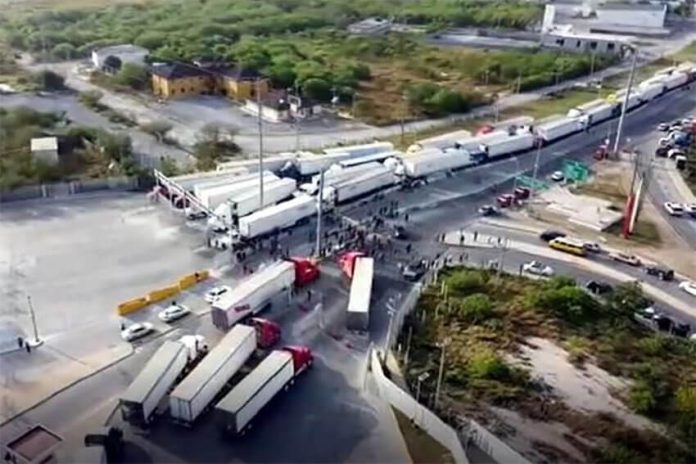
Truckers blocked the Pharr-Reynosa International Bridge on Monday to protest Texas' slow, thorough new inspection policy.

Truckers blocked an international crossing between Tamaulipas and Texas on Monday to protest the Lone Star State’s more stringent inspection policy for commercial vehicles.

Governor Greg Abbott last week directed Texas authorities to conduct more thorough inspections of all commercial vehicles crossing into the state from Mexico in order to detect drugs and migrants trying to enter the U.S. illegally.

“Governor Abbott announced on Wednesday aggressive actions by the state of Texas to secure the border in the wake of President Biden’s decision to end Title 42 expulsions” next month, the Texas government said in a press release, referring to expulsions to stop the spread of the coronavirus.

Truck drivers say that the enhanced inspections, which began last Thursday, have resulted in them being stranded at the border for up to 16 hours.

On Monday, they blocked the Pharr-Reynosa International Bridge to protest the lengthy inspections, which drivers say take about 45 minutes per truck and are not conducted after 10:00 p.m., leaving truckers stranded overnight.

The bridge normally opens at 6:00 a.m. but didn’t open on Monday morning. It is is the most important point of entry for food imports to the United States.

“Colleagues have fainted from the heat in the cabin – they don’t let you get out,” one protesting trucker told the newspaper Reforma.

“A lot of colleagues suffered hunger and thirst on the first day and they couldn’t go to the bathroom. They took lunch and water the next day, but they were still unable to go to the bathroom,” he said.

“They start [the inspections] at six in the morning and they leave at ten at night. … You have to wait until the next day to unload.”

Truckers said they were previously able to take as many as three loads of freight across the border per day, but now they can only transport one load every two or three days, which affects drivers’ earnings. “You spend what you earn on food,” one trucker said.

Texas State Senator Juan Hinojosa told the news website Border Report that 3,000 trucks per day usually crossed the Pharr-Reynosa bridge into Texas, but only about 300 per day had made it across since the stricter inspection process began.

“The truckers from Mexico are upset because they don’t have food. They don’t have bathrooms to use. They’re running out of fuel and some of the produce is rotting. So they are pretty upset,” Hinojosa said.

He and other Texas senators who represent border communities sent a letter to Abbott urging him to reconsider the mandatory inspection policy for all trucks.

Nuevo León authorities said that Governor Samuel García would travel to the Laredo-Colombia Solidarity International Bridge on Monday afternoon to lobby for swifter inspections.

“They’re now inspecting 100% of trucks … and that has been delaying the entire trade flow,” said Nuevo León Regional Development Minister Marco González.

“That’s why the governor will arrive to [the border town of] Colombia today,” he said.

“We have a meeting with businesspeople and customs authorities, … [including those] from Texas to look at the problem. The governor will make an announcement of an action … that will help speed up [border crossings],” González said.

But getting the Texas government to drop or change its recently implemented policy would appear to be a difficult proposition given its tough border security rhetoric.

“The Biden Administration’s open-border policies have paved the way for dangerous cartels and deadly drugs to pour into the United States, and this crisis will only be made worse by ending Title 42 expulsions,” Abbott said last week.

“With the end of Title 42 expulsions looming next month, Texas will immediately begin taking unprecedented action to do what no state has done in American history to secure our border. The new strategies announced … will further strengthen our already robust response to the Biden border disaster, and we will use any and all lawful powers to curtail the flow of drugs, human traffickers, illegal immigrants, weapons, and other contraband into Texas,” the governor said.

With reports from Reforma, The Border Report and The Texas Tribune

‘Still a lot to be done’ to stamp out torture in Mexico: former UN official

0
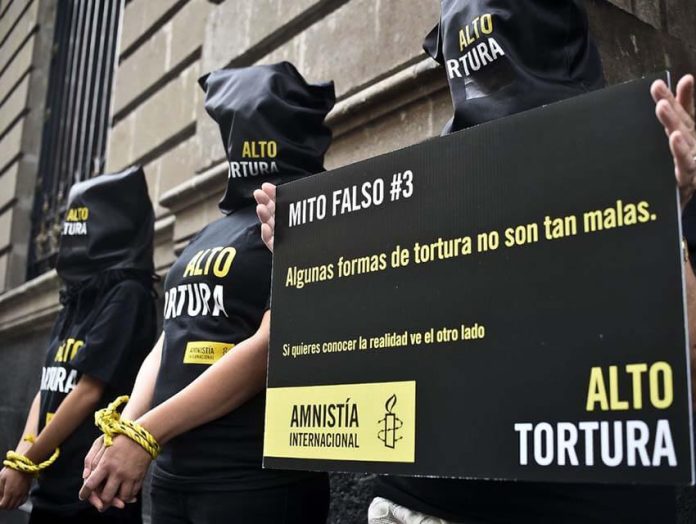
Amnesty International protest against the use of torture by authorities. File photo

The use of torture by government authorities remains a problem in Mexico, according to a former United Nations anti-torture official.

Juan Méndez, a lawyer, former UN special rapporteur on torture and an internationally renowned human rights activist who was jailed for 18 months in his native Argentina for his defense of political prisoners during that country’s military dictatorship, warned during the 2012–18 government led by former president Enrique Peña Nieto that torture was a widespread problem in Mexico.

One example of the problem during Peña Nieto’s presidency was the torture of suspects in the case of 43 missing students from the Ayotzinapa teachers’ college in Guerrero, as documented by the United Nations in a 2018 report.

In an interview with the newspaper Reforma, Méndez said that Mexico is still facing a human rights crisis – despite President López Obrador’s claim that such rights are no longer violated in Mexico – and asserted that a lot still needs to be done to stamp out torture

“My impression is that there is still a lot to be done so that there is complete validity of the prohibition of torture in Mexico,”  said Méndez, who was tortured while imprisoned in Argentina in the 1970s before his expulsion from the South American country.

Juan Mendez, a former UN special rapporteur on torture, was once a victim of torture himself in his native Argentina.

“What I believe Mexico shows is that the militarization of the solution to the problem of organized crime is counterproductive,” he added.

Before he was sworn in as president in December 2018, López Obrador promised a gradual withdrawal of the military from the nation’s streets. But as president, he continued to use the military for public security tasks, and in May 2020 published a decree ordering the armed forces to continue doing so for another four years

Méndez said he believed that troops deployed to combat organized crime and violence feel “authorized to use techniques that are against the law,” such as torture. What’s worse, he added, is that “their commanders are not inclined to stop those violations.”

Non-governmental organization Human Rights Watch (HRW) said in a recent report that “human rights violations – including torture, enforced disappearances, abuses against migrants, extrajudicial killings, gender-based violence and attacks on independent journalists and human rights defenders – have continued” in Mexico since López Obrador took office.

Torture, HRW said, is widely used by Mexican authorities to obtain confessions and extract information.

“It is most frequently applied after victims are detained, often arbitrarily, but before they are handed to civilian prosecutors. Victims are often held incommunicado at military bases or illegal detention sites,” the report said.

In trying to create a public resolution to the Ayotzinapa 43 case, the government has allegedly frequently tortured people to obtain false confessions.

Méndez, author of a new book on human rights, told Reforma that Mexico requires an internal “democratic and social dialogue” to determine what measures would work in the fight against organized crime.

He also said that “transitional justice has a role to play in Mexico because there is a legacy of serious human rights violations.”

The UN has described transitional justice as “an approach to systematic or massive violations of human rights that both provides redress to victims and creates or enhances opportunities for the transformation of the political systems, conflicts, and other conditions that may have been at the root of the abuses.”

Méndez noted that transitional justice usually takes place after a radical change in the political regime of a country – from a dictatorship to a democracy, for example – or after a transition to peace from armed conflict.

“In Mexico, there isn’t a regime change and there hasn’t been … an armed conflict like in Colombia,” he said, although López Obrador claims he is bringing transformational change to Mexico.

“However, transitional justice measures, adapted to the Mexican reality, could be very useful in the democratic dialogue I mentioned,” Méndez said.

AMLO promised to withdraw the military from use in public life, but he’s actually increased it.

Any measure that helps combat the high levels of impunity in Mexico would be welcome. Impunity rates are extremely high for many crimes, including torture.

One case that could buck the trend is that in which marines are accused of sexually torturing two women and one trans man in 2011. Three marines are currently on trial, a development that the Centro Prodh human rights organization described as an important step toward justice.

With reports from Reforma 

After 100 years as a prison, Islas Marías nearly ready as tourist destination

0
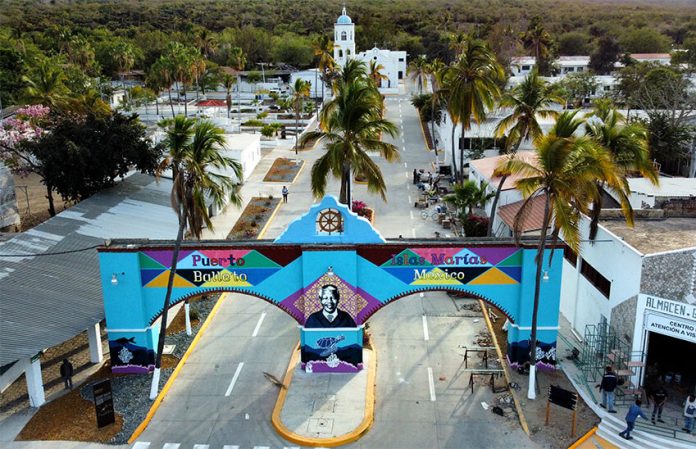
The entrance to Puerto Balleto, the main settlement on Isla María Madre.
The entrance to Puerto Balleto, the main settlement on Isla María Madre. Presidencia

An island off the coast of Nayarit where a prison with “walls of water” operated for over 100 years will open to the public as a tourism destination in three months, President López Obrador said Saturday.

Isla María Madre, the largest of four islands in the Islas Marías archipelago, housed a federal prison from 1905 until 2019, when the federal government closed the maritime penitentiary and opened an environmental education center.

In the next chapter of its history, the Pacific Ocean island is set to become an ecotourism destination where visitors will be able to observe seabirds, spend time on the beach and learn about local history. Tours will be managed by the Mexican navy.

“In three months, this island will open for visitors, who will have a lot to see, do, explore and enjoy,” López Obrador said during a visit to Isla María Madre on Saturday.

López Obrador noted that Isla Madre María – an island with a prison that was “famous for cruelty” – has already become a center for recreation, culture, defense of the environment and “knowledge about history and especially literature.”

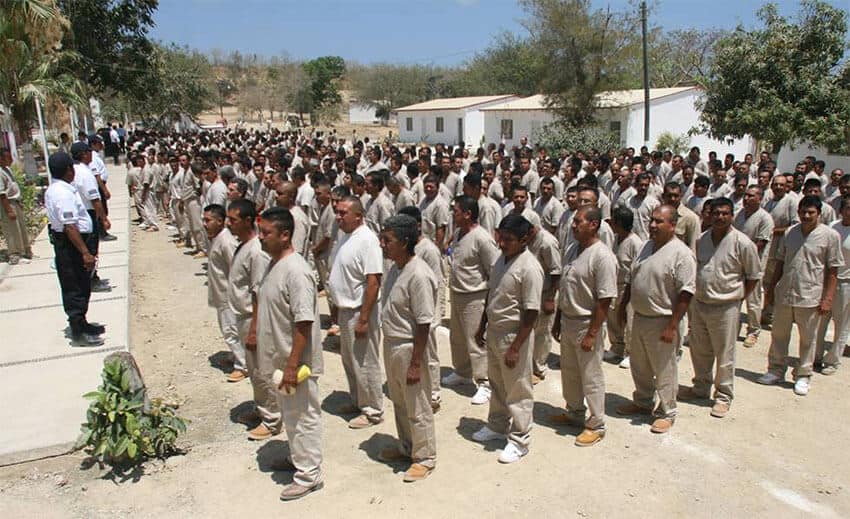
Prisoners line up in the Islas Marías penitentiary center before its closure in 2019.

“What was a hell is becoming a paradise,” he said.

The president criticized the “unjust and aberrant decision” taken in “a not very distant time” to “overpopulate this island with prisoners,” claiming that inmates’ human rights were violated.

He is convinced that the island’s future will be rosier than its past thanks to the decision taken by his government.

Tourists will be able to reach Isla María Madre via boat from San Blas, Nayarit, and Mazatlán, Sinaloa, López Obrador said.

He said that a navy vessel with room for 270 passengers and two ferries to be purchased by the government will take visitors to the island, located about 100 kilometers off the coast of Nayarit.

The president shared on Twitter images and video from his Saturday trip.

It took López Obrador and his companions, among whom were his wife and military officials, four hours to get to Isla María Madre from San Blas, but the new ferries will be able to complete the trip in 2 1/2 hours. Isla María Madre also has a refurbished landing strip on which planes that could fly tourists in from Mexico City in just two hours can touch down.

The president said that people of modest means will be able to visit the island, explaining that there will be cheap accommodation for families.

“It shouldn’t be an island for the elite; we’re going to seek a balance,” López Obrador said.

To avoid damaging the environment, no new buildings will be built to accommodate visitors. Instead, tourists will stay in existing houses where prisoners and prison employees formerly lived. The homes, which are being renovated or rebuilt, are currently occupied by workers preparing the island for tourism.

Arches covered in a colorful mural featuring South African antiapartheid revolutionary and former president Nelson Mandela – who spent 18 years imprisoned on Robben Island – will welcome visitors to Puerto Balleto, the main settlement on Isla María Madre, where prisoners used to work in salt mines and farm shrimp.

Tourists will be able to visit the town’s renovated square, its church – where one priest offered Mass to prisoners for over 30 years – and a museum, where they will learn about notable inmates such as writer José Revueltas, who was imprisoned on Isla Madre María in the 1930s for his political activism in favor of the Mexican Communist Party.

Revueltas wrote a novel called Los muros de agua (The Walls of Water), whose characters were imprisoned on the island and endured its isolation and harsh conditions.

In later years, some prisoners lived with their families in partial freedom and relatively good conditions, the Associated Press reported.

However, “that changed when President Felipe Calderón launched the war against the drug cartels in 2006 and hundreds of new prisoners were sent there,”AP said, noting that the inmate population reached 8,000 in 2013.

With reports from El Universal, Noticieros Televisa and AP

Nuevo León protest follows disappearance of 18 women in less than a month

0
Women's disappearances protest, Monterrey, NL
The protest in Monterrey began peacefully but shifted to violence after participants were denied access to the government building.

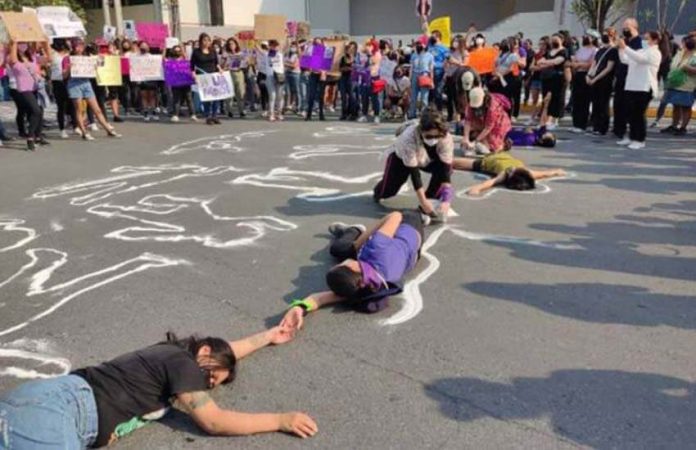
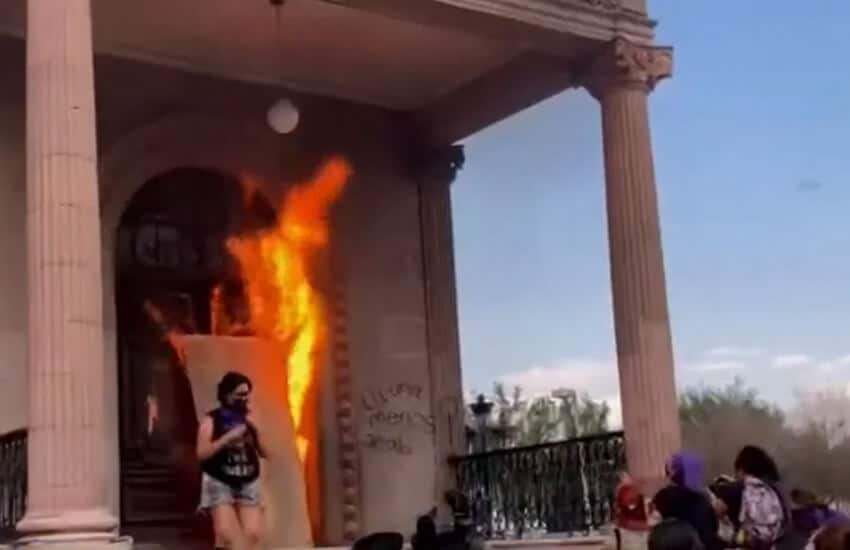
Protesters set the doors of the state government building on fire in Monterrey, Nuevo León, on Sunday, following the disappearance of 18 women in less than a month, including a 12-year-old girl.

Activists and relatives of the victims were spurred on by confusion surrounding the identity of a body discovered on Thursday, which was later confirmed to be 27-year-old Marí Fernanda Contreras. There was also anger about the earlier release of a suspect in Conteras’ case and the disappearance of another 18-year-old woman, Debanhi Susana Escobar Bazaldúa, on Friday.

The protest was initially peaceful but became violent after the group tried to enter the government building by force and were repelled by riot police.

The march had been heading toward the state Attorney General’s Office but returned to the government building after the protesters realized that the state Women’s Minister, Alicia Leal Puerta, was going to give a press conference there, which would also be attended by the head of the local search commission.

The protesters tried to push past the officers and some sprayed paint on the helmets of female police officers who said they were beaten by the angry citizens. Some of the group later set fire to the doors of the building.

Monterrey protestor
A woman stands in front of the state government’s building after fellow protesters set its doors on fire. Screen capture

The state Attorney General’s Office said that citizens were to blame for creating confusion around Contreras’ disappearance. “Many doubts have been expressed about the investigation of the case of María Fernanda Contreras Ruiz, which come from the interpretation of the facts by the citizens themselves,” it wrote on Twitter.

The state government said on Friday that 11 of the women reported missing had been located and that in 14 cases women had gone missing after fleeing, rather than being kidnapped.

State Public Security Minister Aldo Fasci denied that the disappearances were due to a criminal gang kidnapping women. “The rumor that there is a gang kidnapping women has been totally discarded; that is not happening in Nuevo León,” he said.

However, Fasci gave some alarming figures on the rate of disappearances this year. “After the pandemic, the number of disappearances of people in Nuevo León unfortunately increased … We have an average of eight missing people a day,” in 2022, he said.

Fasci added that most of the women that had disappeared were minors: 275 were women and 117 of those were adults.

The protests in Nuevo León began on Saturday when demonstrators called for Fasci’s resignation and chanted “Mariana is not an ally, she is privileged” in reference to the governor’s wife, Mariana Rodríguez Cantú, who heads a state government organization dedicated to social causes.

With reports from El Economista, El Universal, El Sol de México and Milenio