Emilio Lozoya, former CEO of Pemex, Mexico's state-owned oil company.
Former Pemex CEO Emilio Lozoya – accused of corruption and imprisoned since November – has reached an agreement that will allow him to leave jail in exchange for over US $10.7 million in compensation, the newspaper Reforma reported Monday.
Extradited to Mexico from Spain in July 2020, Lozoya – the state oil company’s CEO between 2012 and 2016 – is accused of receiving more than $10 million in bribes from Brazilian construction company Odebrecht in exchange for awarding it a lucrative contract for work on the Pemex refinery in Tula, Hidalgo. He is also accused of taking a more than $3 million kickback from the president of Altos Hornos de México (AHMSA), a company from which Pemex purchased a dilapidated fertilizer plant in 2015 at an allegedly vastly inflated price.
Barring a last-minute change of mind by the federal Attorney General’s Office (FGR), the former Pemex chief is likely to be released from Mexico City prison Reclusorio Norte on Tuesday, Reforma reported, citing information from federal authorities.
The newspaper said that Lozoya has finally reached an agreement with authorities that will see him pay almost $10.8 million to Pemex in compensation for the Odebrecht and AHMSA cases.
The former official has also negotiated a conditional suspension of the two cases against him, Reforma said.
The Agro Nitrogenados fertilizer plant had been out of operation for 14 years when Lozoyo arranged for Pemex to buy it.
Pemex, which reportedly accepted the compensation offer last month, will receive $7.38 million for the Odebrecht case and $3.4 million for the “junk” fertilizer plant case.
An initial payment of $1 million will be made for each case after the agreement is signed, Reforma said. Lozoya will have to pay the full amounts by the end of the year.
The ex-official, a close ally of former president Enrique Peña Nieto, will put up five properties as a guarantee for the compensation amount. Among them are his home in the Mexico City neighborhood of Lomas de Bezares, his wife’s beach house in Ixtapa, Guerrero, and his father’s property in the Bosques del Pedregal neighborhood of the capital.
Reforma reported that the FGR will also suspend cases against Lozoya’s mother, sister and wife.
The former Pemex CEO in November offered to pay $5 million in exchange for the FGR withdrawing its accusations against him in connection with both the Odebrecht and AHMSA cases. But that offer was rejected.
President López Obrador said Monday that he approved of the pact between Lozoya and the FGR. “We agree with it because it means returning to the people what was stolen from them,” he said.
However, López Obrador added that Lozoya’s offer should be reviewed to determine whether it is fair compensation for the corrupt acts he is accused of committing.
It is surprising that the president doesn’t oppose the ex-Pemex chief’s offer to buy his way out of prison, given that he has made combating corruption and impunity central aims of his government.
Lozoya is one of the most high-profile Peña Nieto-era officials who have been detained on corruption charges. The previous federal government was plagued by scandals, including a massive embezzlement scheme, for which former cabinet minister Rosario Robles was detained. Robles is in prison but has not yet faced trial.
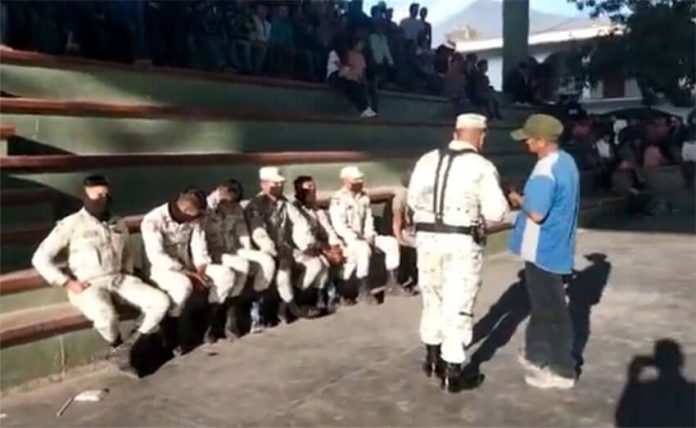
Community residents detained seven National Guard members in the town basketball court on Thursday. Video screenshot
Angry citizens in a town in Oaxaca detained seven National Guardsmen and declared war on the Mexican state on Thursday, before releasing the officers early on Saturday.
Citizens in the predominantly Zapotec town of San Cristóbal Amatlán, 130 kilometers south of Oaxaca city, blocked the entrance to the town with burning tires and detained the Guardsmen after disarming them on the town’s basketball court and puncturing the tires of their vehicle.
The citizens have been in a conflict with elected authorities for a year and accuse Mayor Juan Celso Santos and his council of corruption.
The security agents were trying to free an education councilor who was detained in the town on Thursday, but were outnumbered by the angry locals. Councillor Eufemia Flores Antonio had been offered protection by the Oaxaca Human Rights Ombudsman (DDHPO).
The protesters said in a statement that they were at war with the Mexican state. “We declare war against the Mexican state. We declare ourselves an autonomous municipality. We appoint self defense groups not to attack, but to defend the people of San Cristóbal Amatlán,” the statement read.
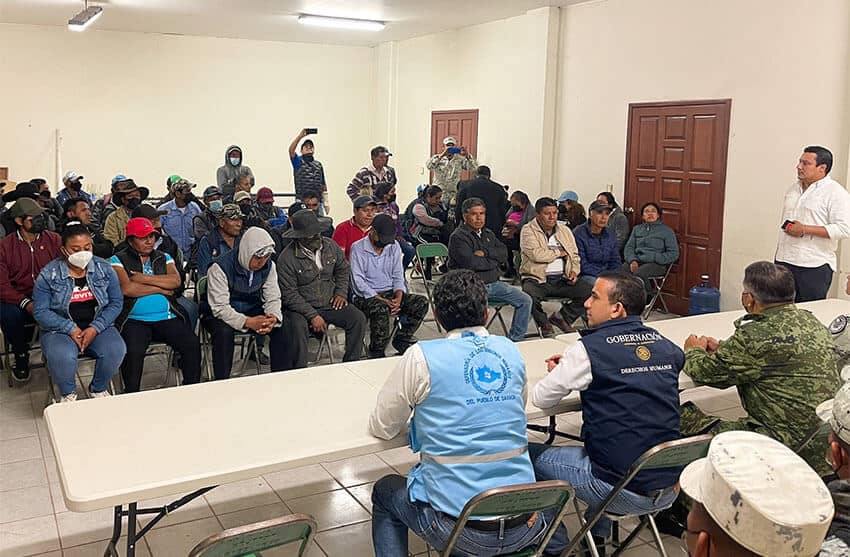
The standoff was resolved after negotiations between community members and state and federal officials.Twitter @JoseCarlosFO
They blamed security forces for intimidation and said they were inspired to action by the words of President López Obrador.
“We have been without a government for months. We declare that no government will intimidate us, we are indigenous people. We urge the National Institute of Indigenous Peoples to fulfill its word. As President López Obrador says, the people give power and the people take it away. We have made this decision because we are tired of being repressed,” the statement added.
San Cristóbal Amatlán has a long-running conflict with government authorities which has blurred the lines of who is in charge. Citizens have pressured local officials to leave their posts for a year and elected officials have been detained. Under pressure, local officials resigned from their posts, but a state court later ruled that they were forced to resign under threat of violence.
“The authorities were previously deprived of their liberty on April 14 and July 12 … which resulted in the early termination of their positions,” the court said in its ruling.
The Guardsmen were released on Saturday at 1:45 a.m. after negotiations with state authorities and the federal Defense Ministry. Local citizens and government authorities sang the national anthem together after reaching an agreement.
Politics are complicated in Oaxaca. The state is divided into 570 small municipalities — almost one quarter of the total in the country — many of which are semi-autonomous and are governed under the indigenous governing code known as usos y costumbres.
President López Obrador announced preliminary results and thanked supporters in a Sunday night video statement. Youtube screenshot
Fewer than 20% of Mexico’s eligible voters cast a ballot in Sunday’s polarizing recall referendum that was boycotted by much of the opposition.
President López Obrador was projected to win more than 90% of the vote, according to the National Electoral Institute (INE). The final result of the ballot, which asked whether López Obrador should see out the remainder of his six-year term, will be known in the coming days.
Turnout for the referendum was between 17% and 18.2%, according to INE’s projections, well short of the 40% needed for the result to be binding. The nationalist leader, who enjoys approval ratings of about 60% and won a landslide election in 2018, introduced the recall vote against himself.
In the first half of his term, López Obrador implemented sharp budget cuts and expanded social programs for the elderly and young job seekers. He also focused public investment on a handful of emblematic projects, including an oil refinery, a 1,400-kilometer tourist train ride and a new airport for the capital.
Mexico’s economic recovery has been sluggish, with investment held back by policy uncertainty and a near-record homicide rate. López Obrador has also clashed with the US over energy reform designed to favor the state electricity company, with a crucial vote set for this week.
But critics and the opposition said the ballot was a US $80 million farce designed to boost the president’s popularity. They fear that López Obrador wants to remain in power beyond Mexico’s one-term limit and that he is trying to undermine INE.
López Obrador — who has denied that he is seeking re-election — has called INE, a cornerstone of Mexico’s relatively young democracy, antidemocratic and accused it of acting illegally. He recently said he would push a reform to have INE’s board members directly elected.
Many voters, however, remain loyal to the president, who they see as a rare, incorruptible politician who spends time in the country’s small towns meeting regular people.
Mercedes Santamaría, from the president’s home state of Tabasco, said three years was not long enough to end corruption and impunity and that conditions were improving under López Obrador.
“I’m very happy that he redirected money that was previously for bureaucrats to line their pockets . . . while the people were dying of hunger,” the 65-year-old said outside a polling station.
Copyright The Financial Times Limited 2022. All rights reserved.
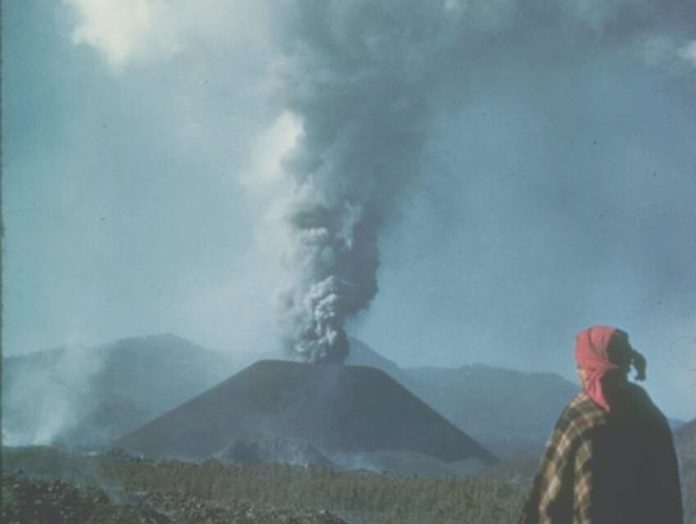
Tthis photo of Paricutín volcano, taken soon after it began erupting in 1943, has appeared in many children’s textbooks. USGS
Growing up in New Jersey in the 1970s meant that Mexico was almost like another planet, something that appeared in Clint Eastwood movies.
But since moving to Mexico, I have had two experiences that jarred memories related to Mexico from my primary school days — things I had read about in textbooks, then got a chance to find out they were really, really real. One was Teotihuacán. The other was the Paricutín volcano.
Paricutín did not become famous in the mid-20th century because of its size. It made it into the news and — decades later, into school textbooks — because it was the first cinder cone, or scoria, volcano to be documented in real time.
These are short-lived events geologically speaking, small volcanoes that suddenly emerge, erupt for a time, then go completely dormant.
Paricutín arose from Michoacán farmer Dionisio Pulido’s cornfield in 1943; its eruption officially lasted for nine years. By 1952, it had left a 424-meter-high cone, two towns completely buried in lava and ash and three others heavily damaged. Hundreds had to permanently relocate, resulting in the creation of two new towns.
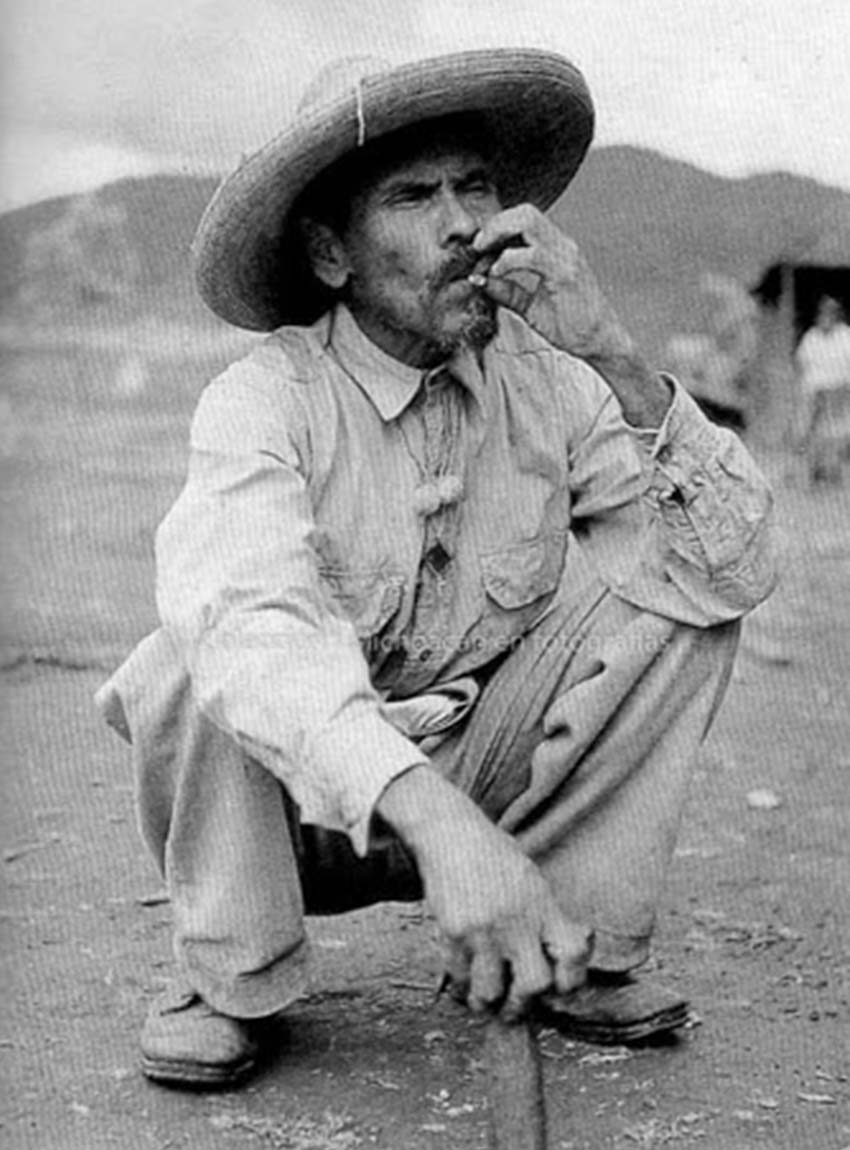
Dionisio Pulido, the farmer who discovered the volcano on his land.
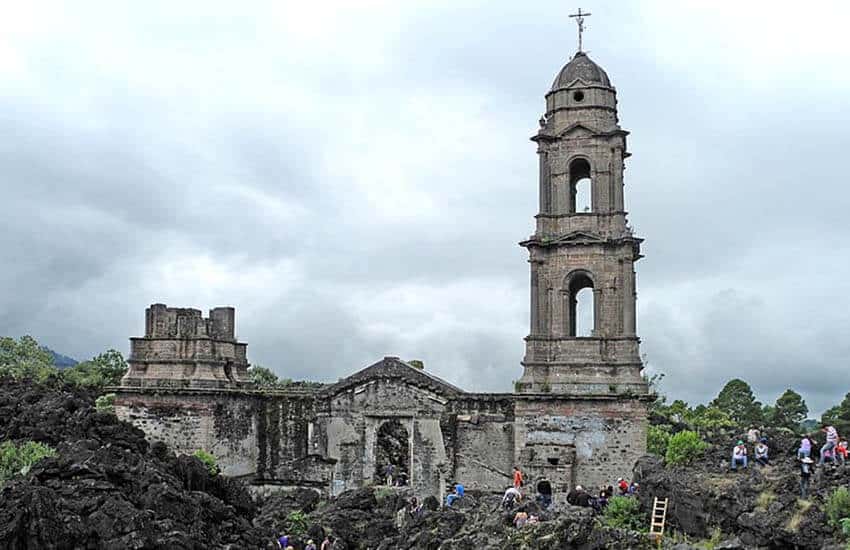
Since then, however, the volcano has become something of a blessing, bringing tourists to see the cone, which “smolders” because of water getting into the still-hot cone, and the partly buried church of San Juan Parangaricutiro.
It is worth the visit to get a taste of just how little Mother Nature cares for humans when she decides what she’s going to do.
For weeks before the eruption, locals reported sounds like thunder but no clouds, probably from the movement of magma. There were also hundreds of small earthquakes the day before the eruption started.
The spot where the crater arose in Pulido’s field had always been low, and corn did not grow well there. At the time of the eruption, he and his family were working that field.
Suddenly that spot swelled and formed a fissure more than two meters across, hissing and ejecting hydrogen sulfide. Within hours, the fissure was a small crater.
The entire town was alarmed as the volcano grew. Celedonio Gutiérrez, who witnessed the eruption on the first night, reported, “… when night began to fall, we heard noises like the surge of the sea, and red flames of fire rose into the darkened sky — some rising 800 meters or more into the air —that burst like golden marigolds, and a rain like fireworks fell to the ground.”
Facade of the mostly buried San Juan Parangaricutiro church. LBM1948/Creative Commons
Spewing ash, smoke and rock, the volcano reached 50 meters in height on the first day, and 100–150 meters by the end of the week. Within eight months, the cone was 365 meters tall, forcing a series of evacuations that extended outward as the volcano grew. Fortunately, the lava’s slow movement meant minimal loss of life.
Most of the growth and damage occurred in that first year, but it brought many journalists and scientists from Mexico and abroad to study the development of a volcano. Tourists also came to see the spectacle despite the danger of unseen flying rocks.
From then on, activity slowed and interest waned, leaving mostly a few scientists to see Paricutín’s last major burst of activity in early 1952.
The volcano captured the imagination of many in the mid-20th century. It made international news despite World War II. There are references to it in Hollywood movies from the time as well as in artworks such as those done by Diego Rivera and Dr. Atl.
Needless to say, it was a disaster for the residents of Paricutín and Parangaricutiro. Both towns were completely encased in lava. It destroyed the lives of local residents, not in the least that of Dionisio Pulido, who did not lose his sense of humor despite everything.
Before leaving his home for the last time, he placed a sign on the cornfield that read in Spanish: “This volcano is owned and operated by Dionisio Pulido.”
A nighttime image of the volcano taken in 1946. USGS
But since then, there has been a silver lining: the dramatic almost buried church alongside the still-treeless cone has brought tourists to the area ever since. Writer and tour organizer Tony Burton says that many people “of a certain age” come to Paricutín specifically because they read about it as a child.
Both the volcano and lava field over the church are accessible by foot or horseback and make for a very good initial introduction to the area’s natural beauty and local Purépecha culture. Climbing the volcano requires a guide, but the buried church doesn’t. While the attractions do bring in a significant number of tourists, the attraction has not significantly ruined the traditional way of life in the area.
The Purépecha community of Angahuan, about 32 kilometers from Uruapan, is the gateway to the volcano and lava field. Locals still weave rebozo shawls the way they always have, and food is still often cooked over wood fires, especially in homes and small family restaurants.
The town provides cabins and other accommodations with stunning views of the volcano, as well as a museum dedicated to it. The town and the volcano can be visited year-round, with comfortable temperatures in the daytime, although it can get chilly at night.
Paricutín has been called the youngest volcano in the world, but that is debatable. This particular volcano may never erupt again, but there will be another at some point in the future somewhere in Mexico.
Leigh Thelmadatter arrived in Mexico 18 years ago and fell in love with the land and the culture in particular its handcrafts and art. She is the author of Mexican Cartonería: Paper, Paste and Fiesta (Schiffer 2019). Her culture column appears regularly on Mexico News Daily.
This tart's pretty to look at and scrumptious to eat, with a rich, flaky crust.
It’s no secret that I love tomatoes. Sadly, that’s been one of the unfortunate tradeoffs to living in Mexico: it’s hard — if not impossible — to find tomatoes other than the common (and to me, blah and flavorless) saladitas.
Lately, the big-box stores are carrying a few other varieties: mostly cherry tomatoes in different colors and sometimes round “Early Girl” type slicing tomatoes or bigger Beefsteak impersonators that are always disappointing. Rarely do they have that distinctive tomato aroma, what to speak of flavor.
They’re grown elsewhere, then packed and shipped. They’re so far from the vine-picked tomatoes in my mother’s garden or just-picked heirlooms at California farmers’ markets that, well, I just look and lament. They just don’t taste like tomatoes to me, and the texture is all wrong.
Luckily, though, right now, Mazatlán’s organic farmers’ market is full of all kinds of tomatoes, and I’m in heaven.
While Sinaloa is the biggest tomato-growing state in Mexico, all the Green Zebras, Black Cherries and other flavorful, delicious heirloom varieties are mostly exported. I count my blessings that some of the small local farmers and one bigger organic grower, Vida Verde Vegetales, are growing a variety of interesting and delicious tomatoes and selling them locally.
It’s tomato season right now, so it’s a great time to try a tart like this.
Those of you in places with actual farmers’ markets are probably experiencing the same bounty at this time of year, before the summer rain and heat begin.
Last week, after a few days of happily admiring the big bowl of oddly shaped red, yellow and green tomatoes on my counter, it was time to do something with them, something that would do justice to the panoply of colors, flavors and textures before me. I’d been wanting to make this tomato-feta tart for more than a year, and now seemed like the perfect time.
This recipe puts aside the classic Italian flavor of basil in favor of the more subtle summer-meadow taste of fresh herbs like thyme, mint, marjoram and oregano. Use fresh if you can; otherwise, be gentle with how much dried herbs you add. You want to accent the tomatoes, not overwhelm them.
The crust is made in a food processor and is incredibly easy and wonderful. Follow it exactly, even when your mind rebels. (Yes, there’s a bit of sugar, but it works! And, yes, bake it for an hour — an actual hour — at 400 F.)
I made the whole pie crust recipe and froze half for later use. I didn’t have a pie pan, so I used a 9-inch springform pan instead.
Eaten hot out of the oven, this tart is fabulous in every way — pretty to look at and scrumptious to eat, with a rich, flaky crust and a savory, satisfying filling. It’s kind of like a frittata but not; without the eggs and cheese, it’s lighter, with brighter flavors.
Leftovers, even straight from the fridge, work because of the slight mustardy taste and tang of the feta. Serve with a green or arugula salad, and you’re set.
Tomato-Feta Tart
Use as many colors of tomatoes as you can find! The better the ingredients, the better the finished product.
About ½ cup crumbled feta cheese
1½ lbs. sliced ripe beefsteak or heirloom tomatoes (2–3 large)
Place tomato slices and halved cherry tomatoes in a single layer on baking sheet lined with two layers of paper towels or a clean kitchen towel. Season with salt. Set aside for 15 minutes.
Blot excess liquid with more paper towels.
Eaten hot out of the oven or as leftovers, it’s equally good.
Carefully roll out cold pie dough and transfer to pan. Chill in freezer 5 minutes.
Remove crust from freezer. Using the back of a spoon, spread mustard evenly over bottom surface. Layer in tomatoes, fitting them tightly together. Crumble cheese over top; season with paprika and black pepper.
Drizzle with 2 Tbsp. olive oil. Sprinkle with fresh or dried herbs. Bake about 1 hour, until edges are well-browned and crisp and top is sizzling, with tomatoes and cheese lightly browned and most liquid evaporated.
Remove from oven; cool to room temperature. Drizzle with a little olive oil and serve.
Easy Pie Dough
Chilling the dough at different stages is essential — don’t skip those steps.
2½ cups all-purpose flour, divided
2 Tbsp. sugar
1 tsp. salt
2½ sticks unsalted butter, cut into ¼ -inch pats
About 5 Tbsp. cold water
In a food processor, combine two-thirds of the flour with sugar and salt. Pulse twice to incorporate. Spread butter pats evenly over surface. (They will overlap.)
Pulse until no dry flour remains and dough begins to collect in clumps, about 30 short pulses.
Using a rubber spatula, spread dough evenly around bowl of food processor. Sprinkle with remaining flour; pulse until dough is just barely broken up, about 7 short pulses. Transfer to a bowl.
Sprinkle with the water. Using a rubber spatula, fold and press dough until it comes together into a ball; divide in half. (Dough will be soft and somewhat sticky.)
Form each half into a 4-inch disk. Wrap in plastic; refrigerate for at least 2 hours. When ready to bake, set one disk on a well-floured work surface; sprinkle top with flour. Roll dough into a circle, lifting and rotating to get an even shape and thickness.
Carefully fold dough in half and lay over a pie plate. Press into bottom; tuck overhanging edges and flute or crimp. With a springform pan, place rolled-out dough in pan and press tightly into edges and about an inch up the sides. — Adapted from www.seriouseats.com
Mexicans just seem to generally enjoy having children around, and you'll rarely hear a mom complain about her kids to others.
Moms are different in Mexico.
Well, that’s what I’m supposing anyway, as I’ve never been a mom anywhere else. I just know that they’re different from me.
So while I haven’t had the experience of being a mother in my home country (the United States), I did grow up there, and I’m still attached through my family, friends and the bits and pieces of my home culture I consume online.
When I look for advice (and believe me – new mothers look for a lot of advice), it’s information from my own culture that I naturally turn to. What did my mom — or moms like my mom — do? Okay, then, let’s move in that direction.
Mexican motherhood, of course, is as diverse as motherhood in any other country, all of us with our own unique styles of doing this terrifying job of trying to turn tiny humans into empathetic yet strong adults. Still, every country has a distinct personality, and there are plenty of common cultural threads to be found.
Last week, I wrote that when it comes to our children, we have the twin contradictory tasks of teaching them two things simultaneously: that they are special and unique and that they aren’t better than anyone else (I read that somewhere, by the way; it’s not my original thought).
We’ve all got different ways of trying to make this nurturing and strengthening happen, and through the years, I’ve run up against a few unexpected differences between me and other moms.
Now that so many other mothers and families seem to be moving to Mexico, it seemed a good time to point out some of these differences.
In my eight years as a foreign mother here in Mexico, these are some of the things that I’ve observed that are different between my experience and that of Mexican moms.
One fantastic difference: most moms here seem to rarely feel embarrassed by their children’s behavior in public.
As I’ve said before, an attitude of “Um, these places aren’t really for children, OK?” isn’t prevalent here. Children are recognized as the tiny citizens they are and given their due space in both public and private arenas.
Almost everyone, including strangers, adopt a kind and playful attitude toward them. Mexicans just seem to really enjoy children, and I’ve almost never heard anyone here utter the phrase, “Actually, I don’t really like kids.”
Most children are treated like very small children for a very long time — sometimes even as adults!
I suppose it’s possible that I’m imagining this, but there seems to be an assumption that kids can’t really do anything for themselves … so they are not frequently asked to. Food appears in front of them, clean clothes and dishes are magically put in their rightful places and parents wear their children’s Minecraft backpacks on the way home from school much after the point that most kids elsewhere would be expected to handle at least some of those things themselves.
Bedtime is not a big deal. In fact, it seems to be nonexistent for most children, even at young ages.
It’s not uncommon to see kids running around during family parties at midnight, or asleep on three to four lined-up chairs while their parents continue in the fun. This was very difficult for me to deal with personally, as I got a lot of pushback for wanting to keep my kid’s naptimes and bedtimes sacred. (She was a very grouchy baby and did not do well when her regular sleep schedule wasn’t followed.)
For most parents in Mexico, a “they’ll sleep when they’re tired” attitude abounds. And for the most part, that’s what kids do, though I never learned the secret to getting my own baby to do it; she would just stay awake and scream about it until I performed our nighttime routine.
Bath time, though — that is a big deal, and most parents don’t ever skip it.
Moms might scold their kids harshly, but you’ll rarely hear them complain about them.
Loudly and publicly putting your kid in their place? Fine. It happens. Complaining to others about how hard it is to be a mom and how sometimes you’d just like your pre-mom identity back? In that case, you might as well just call Child Protection Services on yourself.
To question one’s own dedication to the job that so many here consider sacred is to draw suspicion to yourself. There might be gritos (yelling) and chanclas (essentially, a child getting a slipper or sandal thrown their way for misbehavior), but the ideal of the all-sacrificing mother is ever-present in Mexico.
This can make it very hard to talk about things like postpartum depression (which I definitely had and definitely did not get professional help for).
Letting your child be cold in Mexico is practically child abuse.
Much of this is due to the belief that people get colds and flu from actually being cold (or from abrupt changes in temperature in general), as opposed to the transmission of viruses. If anyone has the sniffles, someone will invariably say “Well it’s no wonder, what with this crazy weather and all!”
I also see small dogs in sweaters when it’s 65 degrees out, so I’ve basically given up on trying to convince anyone that the cold won’t actually hurt them.
Back to scolding: friends will help you out with an unruly child, but do not scold a Mexican mom’s kid in front of her.
We’re all self-conscious about our parenting skills. But telling someone else’s kid not to do something because it annoys you (like screaming at the top of their lungs, for example) will get you some serious rancor in return.
Either learn to live with it or make up a story about why you can’t hang out until the kid’s a little older and possibly past that stage. Never tell the truth about the reason if the reason is that the kid annoys you; trust me on this one.
This isn’t an exhaustive list, and of course, I haven’t delved into the topic of fathers (that’s for another article). But these are the things that have stuck out to me!
If you’ve got anything to add, my eyes will be on the comments section.
President López Obrador at his Monday press conference.
There were two big votes coming up: a referendum on Sunday on whether President López Obrador should remain in office and the Senate’s say on the electricity reform, which has business chiefs in the United States fretting.
Monday
President López Obrador was put on the defensive on Monday. The government was accused of promoting the vote on whether his term should continue, in defiance of the National Electoral Institute’s (INE) rules. “There’s evidence that only those who are in favor of the [political] transformation are prevented from expressing themselves … those who are openly calling for people not to participate [in the vote] next Sunday aren’t questioned,” the president insisted.
The opposition’s strategy, to encourage people to abstain from Sunday’s vote, had succeeded in confusing the tabasqueño.”It’s Kafkaesque because, if they don’t want me, why don’t they vote against [me continuing in office]?” he said, referring to the Czech writer Franz Kafka, famed for his absurdist stories.
“A good democrat is one who wants to establish democracy as a way of life … who makes democracy a habit,” the president assured. However, he was less pleased with one woman’s call for democratic participation. Photographed at a demonstration, her T-shirt urged people to, “Vote against the crap.”
The government has been accused of continuing to promote the referendum, in defiance of election law.
The conference closed with a song by the Cuban singer Amaury Pérez, No Lo Van a Impedir (They’re Not Going to Stop It), briefly accompanied by the president’s raised fist.
Tuesday
Deputy Health Minister Hugo López-Gatell urged people to keep getting vaccinated and announced 10 consecutive weeks of reductions in active COVID-19 cases.
The foreign minister, Marcelo Ebrard, was back from a tour of Asia. He’d been to India searching for cheaper drugs: the country produces 60% of the world’s generic medications and 30% of the world’s vaccines, he informed. He’d also visited the United Arab Emirates, Saudi Arabia and Qatar to whip up investment and said Qatar Airways was looking to fly to the recently inaugurated Felipe Ángeles airport, which so far only has Venezuela as an international destination.
The president confirmed the opposition was planning to vote against the electricity reform and drew the battle lines. “In a few days we’re going to know who is who … I have information that some lawmakers don’t agree with voting to continue protecting private companies … I’m trusting that they’re going to vote freely … I call for them to rebel [against their parties] so that they are authentic representatives of the people … and not traitors to the homeland,” he said.
López Obrador was equally unimpressed by the Supreme Court’s decision to annul a law which prevented public servants from working in the private sector for 10 years after leaving their posts. “It’s an aberration, how is it possible to go back to the way it was before! … political-administrative promiscuity,” he scorned.
Foreign Minister Marcelo Ebrard reports back after a tour of Asia.
On Sunday, he said he would write “Long live Emiliano Zapata!” on his ballot, referring to the folkloric hero of the revolution, whose assassination will be commemorated the same day.
Wednesday
The president opened the conference on Wednesday with a line from a nursery rhyme, shortly before stressing it was important for politicians to avoid looking ridiculous.
The government’s media analyst, Elizabeth García Vilchis, said it was untrue that an airline was promoting Sunday’s vote and confirmed that the Maya Train project wasn’t so environmentally damaging as to change the color of the ocean, as a National Action Party (PAN) senator had claimed.
García rounded off her section by demanding that the government’s least favorite journalist, Carlos Loret de Mola, explain how he accumulated his extensive property portfolio.
The president said one of Loret’s assets was located close to a property belonging to jailed former security minister Genaro García Luna. His comment represents the latest in a rumor fueled association game between the two. Loret’s most recent offense exposing the connection between AMLO’s son’s luxurious home and a Pemex contractor.
In the U.S., there were calls for Mexican lawmakers to be denied visas for supporting a pro-Russia diplomatic group. AMLO said it was a historic mistake. “That’s going back to the Cold War, to times of persecution, exclusion and authoritarianism,” he asserted.
Later in the conference, he cited Bertolt Brecht in a bid to offend his political rivals. “‘There is nothing more like a fascist than a frightened bourgeois,'” the president said, before requesting a song by another Cuban musician, this time Silvio Rodríguez’s anti-capitalist anthem, Canción en Harapos (Song in Rags).
Thursday
Security Minister Rosa Icela Rodríguez, back from a spell with COVID-19, revealed some of the government’s prize catches. They’d arrested El Molusco (The Mollusk) for murders in Quintana Roo, El Traumado (The Traumatized) who was the head of a cartel in Guerrero and criminals in Michoacán working under El Jabalí (The Boar).
The president claimed that the National Action Party’s ideology could be defined as nazi-fascist, but tried a sweeter approach with lawmakers from the Institutional Revolutionary Party (PRI). He read a 1960 letter by President López Mateos, who nationalized Mexico’s electricity under the PRI dictatorship. “‘I return to you [the people] the energy which is the exclusive property of the nation. Don’t be too trusting, because in future years some bad Mexicans … will try by subtle means to deliver … our resources to foreign investors,'” he recited.
López Obrador called on lawmakers from the PRI to heed López Mateos’ message, and vote in favor of his electricity reform.
Security Minister Rosa Icela Rodríguez showed off some of the government’s recent criminal catches on Thursday.
On the international stage, the UN was voting to expel Russia from its human rights council. The president said Mexico would abstain from the vote. “How do we resolve Russia’s conflict with Ukraine, if we don’t have an intermediary? What is the UN for?” he argued.
Friday
The conference was shorter than usual on Friday as the president was to travel to the Marías Islands off of Nayarit, which were a penal colony until 2019 but now are a natural protected area.
The tabasqueñohit two birds, or maybe three, with one stone. He offered an analogy that placed him as the son of God, promoted the islands and mocked the PAN senator’s wobbly ecological claim about changing the sea’s color. “What was hell is now being turned into paradise … when you are the messiah you can change the color of the sea and you can turn hell into paradise. It can all be done,” he said.
Later in the conference, the president celebrated the Supreme Court’s ruling that deemed last year’s electricity reform constitutional. “The damage was repaired yesterday, the people were protected … it was a triumph,” he said, later adding: “It was a good day, I’m happy, happy, happy, happy.” On the scale of delight, his four happies made him one third happier than after the June 6 elections, when he only declared himself to be “happy, happy, happy.”
The U.S. Ambassador to Mexico, Ken Salazar, warned that the electricity reform could provoke litigation in the U.S. The president responded by insisting the reform doesn’t violate the USMCA (the United States-Mexico-Canada) trade agreement.
López Obrador shifted attention to the responsibilities of the United States and criticized U.S. President Joe Biden for failing to keep his word. “I’m not going to ask President Biden why he hasn’t fulfilled his commitment to regularize our migrant countrymen,” he said, shortly before jetting off to Nayarit.
The performance video was shown at the Ceremonia music festival in Mexico City last weekend. Screenshots
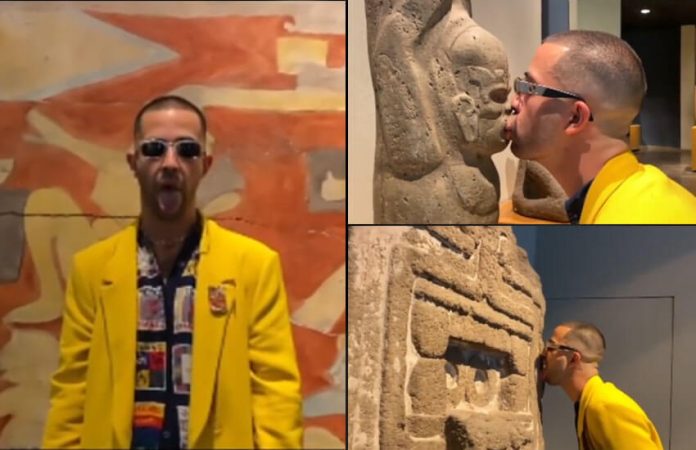
The National Institute of Anthropology and History (INAH) has defended security arrangements at the National Museum of Anthropology (MNA) after a video showing a performance artist kissing and licking pieces in its collection was presented at a music festival last weekend.
Durango native Pepx Romero kisses and licks several pre-Hispanic pieces at the Mexico City museum in a video that is part of his “Mexique 2022” project.
Presented at the Ceremonia music festival, the video is intended to criticize the sale of such pieces at auctions in France.
A voice-over says that pieces sold at auction belonged to pre-Hispanic cultures and were stolen. “[They were] all pieces whose historic and symbolic cultural essence was incalculable and which became simple objects of decoration in the living room or studio of a house,” it says.
INAH said earlier this week that it had not authorized Romero’s performance and no request to carry it out had been submitted.
Diego Prieto, the institute’s director, said Thursday that no pieces were damaged, and claimed – despite the clear security breach – that the MNA is the “most secure” museum in the country.
“In no museum in the world does each visitor have a guard by their side. This person came into the museum with three companions, whose role was to warn him in the event of a guard approaching,” he said.
“Approaching a [museum] piece at such a close distance is not correct, but it’s possible at any museum in the world. Fortunately in this case the approaches didn’t cause damage. … We don’t believe there was any failure in the [museum’s] security systems,” Prieto said.
According to museum director Antonio Saborit, Romero and his accomplices spent just under an hour in the museum on March 31.
“The number of pieces this person touched with his lips is approximately 30 in five rooms: the Gulf, Mexica, Teotihuacán, Toltec and Oaxaca rooms,” Saborit said.
He also defended the museum’s security arrangements. “Every day there are 65 guards spread throughout the museum. They take care of the museum’s wellbeing in all areas,” Saborit said.
Pepe Romero, performance parte del proyecto Mexique, 2022.
El artista fue al Museo Nacional de Antropología en CDMX, besó y lamió algunas piezas de su colección.
Por supuesto que esto coloca a las espectadoras en una posición incómoda, están presenciando un aparente daño pic.twitter.com/nsBtqAb9lf
— Obras de Arte Comentadas (@obrasdeartecom) April 5, 2022
Social media users shared and commented on Pepx Romero’s controversial performance.
In an interview with the newspaper El Universal, Romero acknowledged that his performance was provocative.
“It’s a provocation to attract attention to this situation that is happening in the auctions [of pre-Hispanic artifacts],” he said.
“There have been auctions this year and they haven’t been able to be stopped. … French laws allow this disgrace, … they’re prostituting our heritage in front of our noses,” said Romero, who is also a theater director and founder of a music collective.
He said that the title of his project – which means Mexico in French – is meant to highlight that Mexico is becoming “a decoration boutique for rich people” who can afford to buy pre-Hispanic pieces to decorate their homes.
Asked whether he was nervous about being held to account for his kissing and licking spree given that there are laws that protect the country’s cultural assets, the artist responded:
“I believe that these laws … protect assets from being damaged. However, the act [I carried out] didn’t cause damage. … I’m completely relaxed.”
A roseate spoonbill is just one of the more than 70 waterbirds you can spot at La Vega lake. Chris Lloyd
Without a doubt, the most popular nonalcoholic tourist attraction outside the city of Guadalajara is the Guachimontones Archaeological Site. But once you’ve strolled among the circular pyramids and visited the Phil Wiegand Interactive Museum … what else is there to do?
If you are thinking of eating, swimming, walking, cycling or picnicking — not to mention birdwatching or kayaking — head for the lake!
No, I’m not thinking of Lake Chapala, but rather that little lake you probably already spotted when you climbed to the top of the biggest guachimontón: la Presa de la Vega.
The body of water is nine kilometers long and two wide and is the source of the 230-kilometer-long Ameca river, which serves as the border between Jalisco and Nayarit and whose waters spill into the Pacific Ocean at Puerto Vallarta.
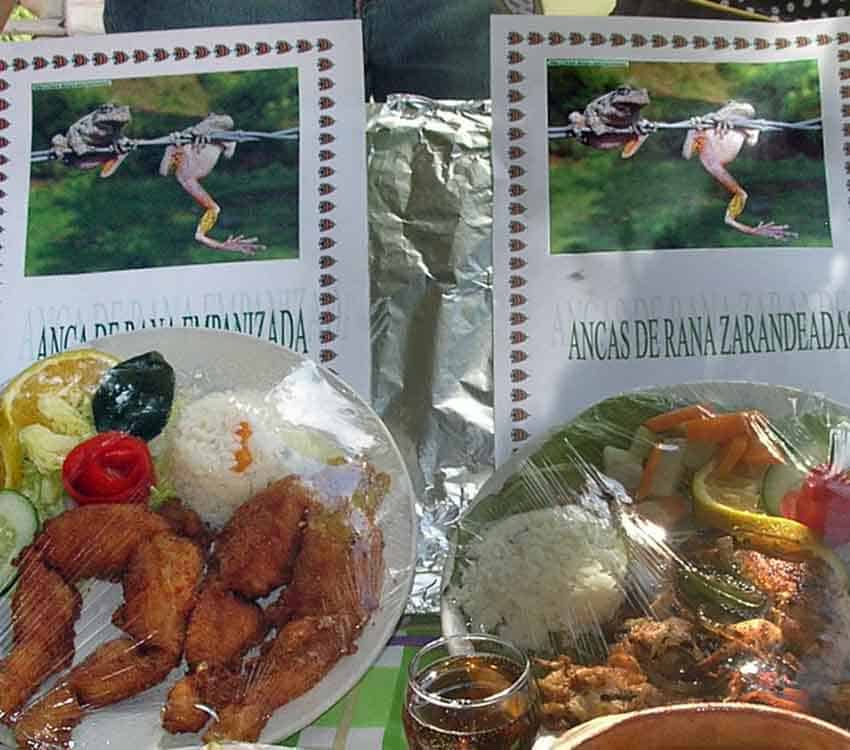
At the northern end of La Vega, there are restaurants, and you’ll find most of them full of people on the weekend. Ceviche, fried fish and shrimp are all popular, but every restaurant around here also includes on its menu a specialty: frogs legs.
Kayakers silently slip into the lake, hoping to see plenty of water birds. Chris Lloyd
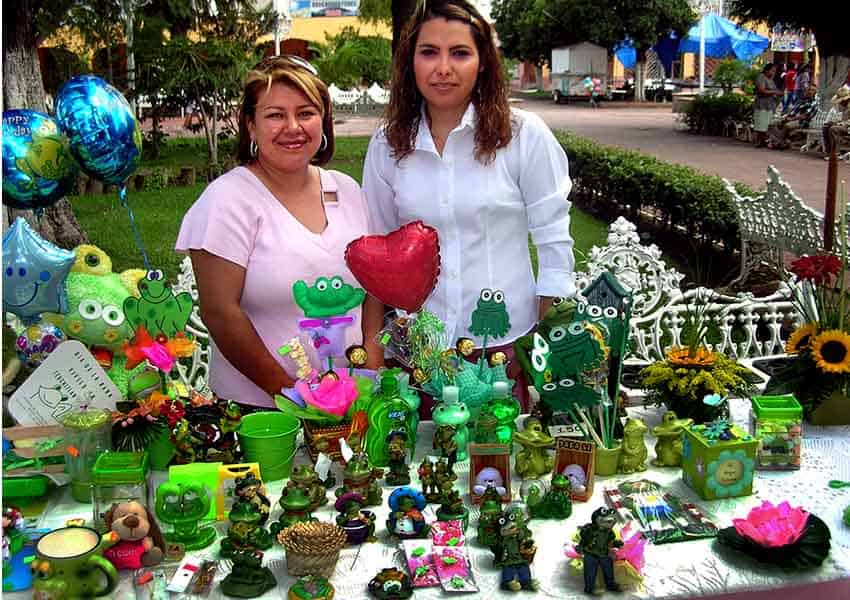
This is because the area’s predilection for frogs goes way back — perhaps even to pre-Hispanic times. In fact, the nearby town of Teuchitlán has been holding a yearly Frog Festival for as long as people can remember.
Sad to say, La Vega’s frogs were so popular that they eventually became extinct at the lake, and those you now find on the menu are all imported from the state of Nayarit!
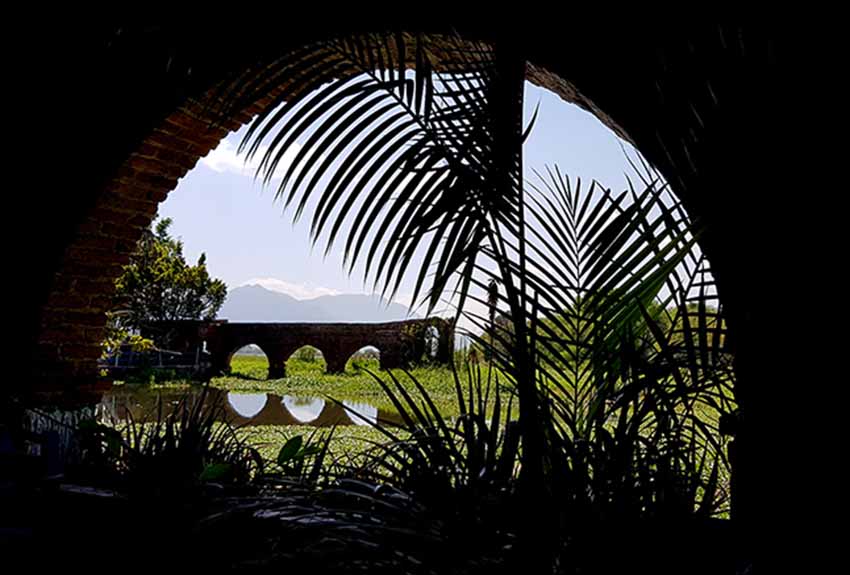
Each of the restaurants offers a picturesque view of the lake as well as of the old aqueduct at its northern end. Most of them will provide kids — and adults too — with a cane pole so they can try their luck as fishermen while waiting for dinner to be served.
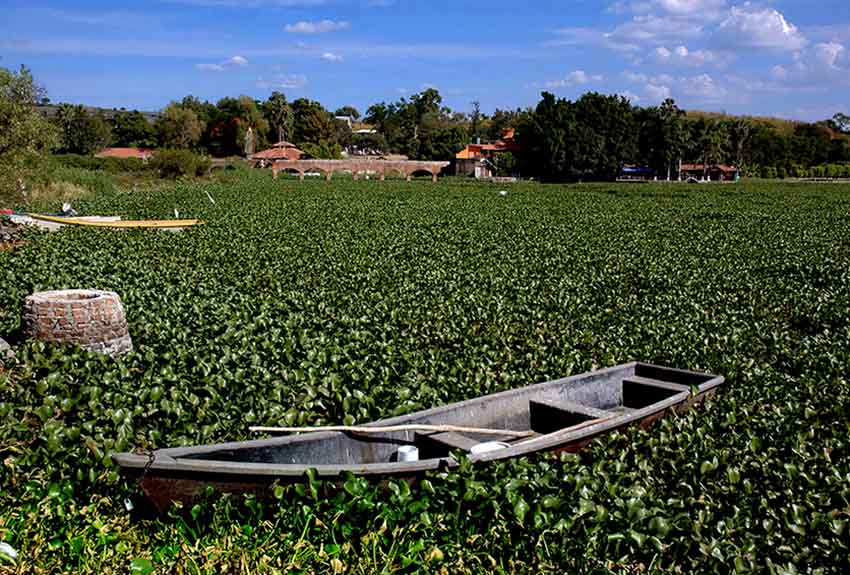
The first time I went looking for Presa la Vega, I couldn’t find it. I was of course looking for water, but in that year, 1985, the entire lake was hidden under a carpet of green.
The culprit was the water hyacinth (Eichhornia crassipes), popularly called el lirio, which has been fighting tenaciously to take over all the lakes of Jalisco (including Chapala, Mexico biggest lake) ever since an unnamed Frenchwoman — according to legend —brought the plant to Mexico to brighten up her garden pond.
It’s true that these flowers are charming, but unfortunately, the great green carpet of lirios uses up a lot of the lake’s oxygen, to the detriment of its fish stock.
At times, the entire lake may be saturated with water hyacinths.
Over time, a myriad of solutions to El Problema Del Lirio have been tried. For some years, huge floating machines crisscrossed the lakes, chopping up the lirios for compost, but eventually, it was acknowledged that the water hyacinth could actually reproduce faster than the loaders could heap it onto trucks.
Then people came up with biodegradable herbicides that would wipe them out in nothing flat — but at what price? There was even a project to import manatees, which were supposed to happily dine on the lirios, keeping them under control, but no one was able to control the local fishermen and hunters who soon caught every one of the sea cows.
So, over the years, the water hyacinths come and go, nevertheless allowing enough fish to flourish to satisfy great numbers of water birds that frequent the lagoon.
There are so many birds at Lake la Vega (149 species, they say) that the Jalisco Water Commission has published a bird guide Aves de la Presa de la Vega, which you can download as a printable PDF file.
Many of these birds you can see simply by walking along an andador located just south of the restaurants. This is a two-kilometer-long walkway, a rather unusual one because it is bordered by water on both sides, allowing you to spot both marsh and lake birds.
Here you are likely to see white egrets, or jacanas (which walk on the lily pads), ibises, anhingas and cormorants, surely enough species to satisfy someone who is walking off a dinner of mariscos (seafood).
A snowy egret wins the lake’s “Best Hairdo” award. Chris Lloyd
The true birdwatcher, however, will head down to the south end of the lake and launch a kayak from a little park near the dam.
Here, ornithologists can get close to roseate spoonbills, green herons, wood storks and black-bellied whistling ducks. With a little luck, they might even find themselves paddling alongside one of the otters that make their home in this lake.
At the end of this same little park, you also have easy access to a section of Las Vias Verdes. This project has converted many of Jalisco’s unused railway tracks into 91 kilometers of bicycle trails.
These are not dirt trails for mountain bikers but smooth slabs of concrete, perfect for family cycling. Although they were created for tourism, they are also very popular with country folk who use them to bicycle from one rancho to another without having to endanger their lives on a highway.
La Presa De la Vega was declared a RAMSAR site in 2010, categorizing it as one of the most important wetlands in the world. One of its main sources of water is the Teuchitlán river, which comes from warm springs located at El Rincón, very close to the ruins of the Guachimontones.
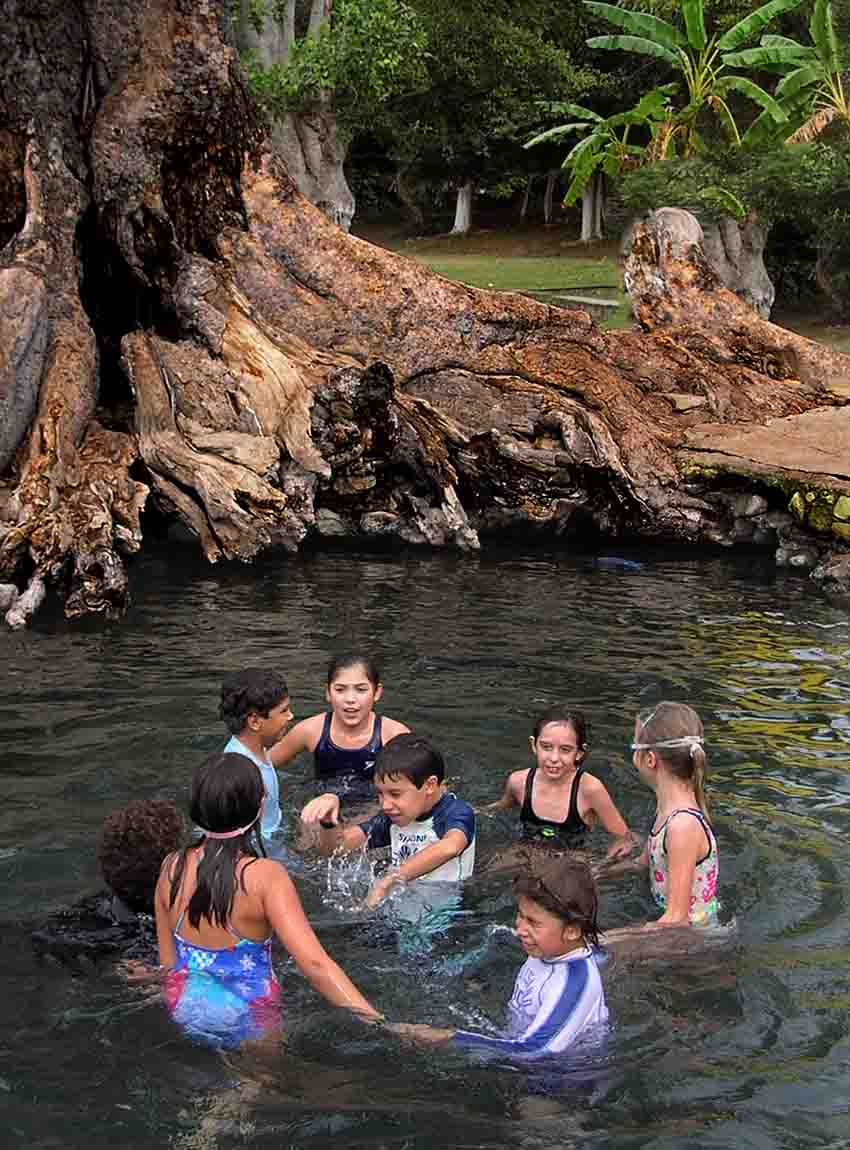
El Rincón is a popular balneario — a water park with both natural and artificial pools. It’s also home to several species of splitfins, small fish that instead of laying eggs, give live birth to their young.
A spring-fed pool inside Balneario El Rincón at the northern end of La Vega Lake provides refreshing fun.
Probably the most famous species of splitfin is Ameca splendens, the butterfly splitfin, which became a favorite of fish fanciers around the world not only for its beauty but also for its dietary preference: it just happens to love algae, which means a butterfly splitfin in your aquarium will keep it spotlessly clean.
In these waters, researchers from the University of Michoacán recently reintroduced two species that had gone extinct locally: the tequila splitfin (Zoogoneticus tequila) and the golden skiffia (Skiffia francesae),
To reach the restaurant area, ask Google Maps to take you to Zona Restaurantera, Teuchitlán, Jalisco. You’ll find the birdwatching walkway just south of the restaurants.
If you’d like to visit the dam, bicycle trail and little park at the south end of the lake, ask for Muelle La Vega, Jalisco. Both sites are less than an hour’s drive from Guadalajara.
The writer has lived near Guadalajara, Jalisco, since 1985. His most recent book is Outdoors in Western Mexico, Volume Three. More of his writing can be found on his blog.
The 91-km network of Vias Verdes bicycle trails can be accessed from La Vega lake.
A quiet park at the south end of the lake offers a good view of the dam.
Otters in the lake attest to the healthiness of the ecosystem, says naturalist Manfred Meiners, who took this photo.Photo courtesy of Manfred Meiners
Frogs’ legs are on the menu at every restaurant on the lake, although they are no longer locally obtained.
A family proudly displays their knick-knack collection at the annual Frog Festival. “These are not for sale,” they say.
Fishing is a good way to pass the time while waiting for your order to arrive … at any of the lakeside restaurants.
This free guide shows 78 birds often seen at Lake La Vega.
View from inside one of the restaurants at the northern edge of the lake.
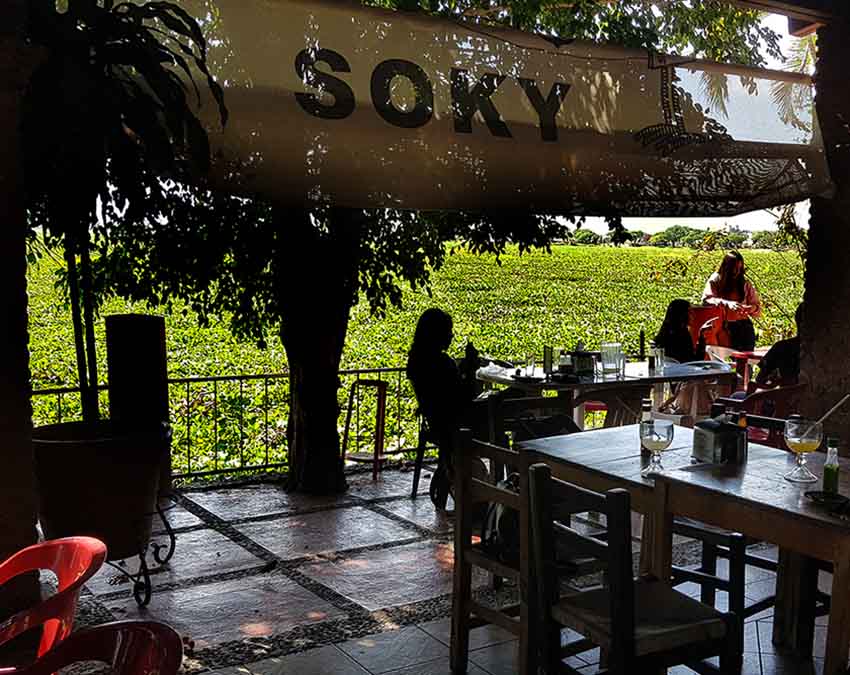
View of the lirio-covered lake from Restaurante Soky.
Watercolor by artist Jorge Monroy, showing the Guachimontones and the La Vega dam.
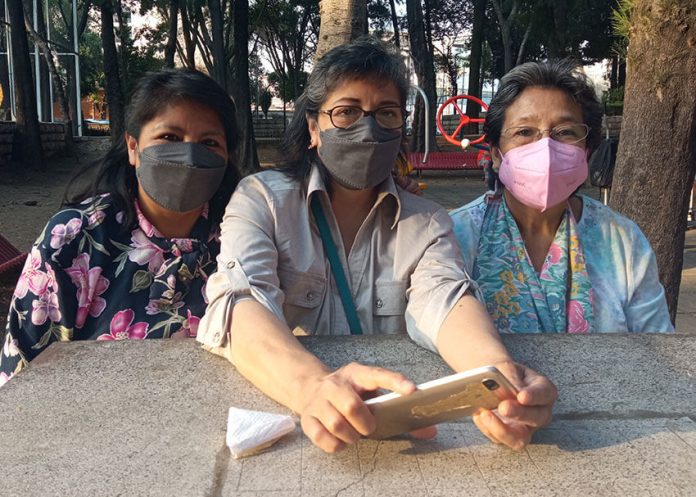
After losing their torta shop in Roma Norte, the Ortíz siblings say they could never afford to rent in the neighborhood where their family lived for 50 years.
“It was always about money, never about the law,” said Noemí Ortíz of her family’s forcible removal in February from their decades-old business in Mexico City’s Roma Norte neighborhood. “Fifty-four years of our life in that place, and that was the end of it.”
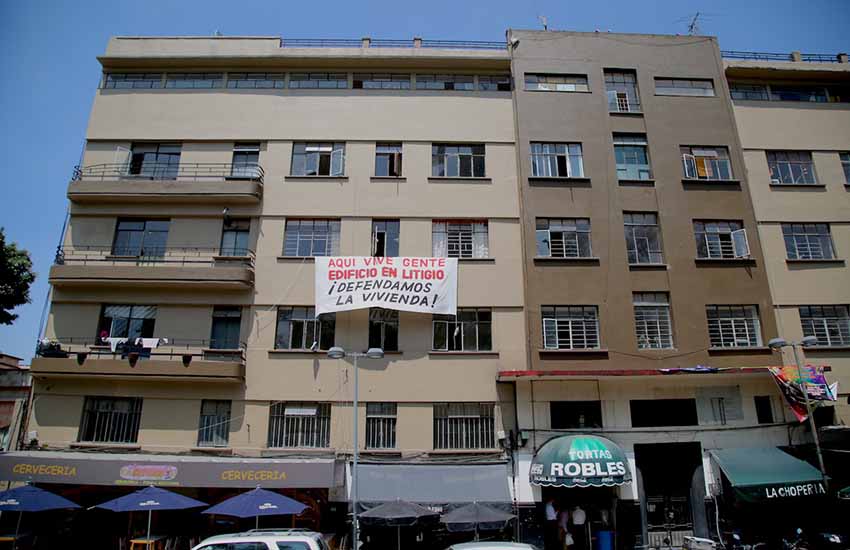
Since 1968, a storefront on the ground floor of Mérida #83, a large old residential building on the corner of Colima and Mérida streets, had been the home of the Ortíz family torta sandwich business, Tortería Colima, run for the last two decades by Noemí and her four siblings after their father acquired it to run a bakery in the early days.
This came to an abrupt end on February 11 when the family was removedagainst its will by agents of a property law firm that had been fighting to take possession of the building for some 12 years and now lists Mérida #83 as its address.
How this was able to happen is a more complicated story for a different article, but suffice it to say that the motivation for forcing the Ortíz family out of a location they’d occupied for half a century was likely the skyrocketing demand for rental properties and commercial spaces in Mexico City’s most desirable neighborhoods.
Merida #83 currently appears to be under renovation to create apartments. In Roma Norte, monthly rents for a two-bedroom apartment average around 21,150 pesos, according to the real estate platform propiedades.com.
The building at Mérida #83 where the Ortíz family built a life for 54 years, now under renovation.
Tortería Colima, which sold tortas and fresh juices, was an institution in the area, feeding visitors and passersby as well as neighbors and workers at local restaurants, hospitals and schools. Ortíz told Mexico News Daily that their most regular clients were waitstaff, cleaners and other workers on their lunch breaks or on their way home from a shift.
According to Observatorio 06000, an action group concerned with evictions and decreasing affordability of housing in the city center, Tortería Colima had been “one of those little corners of the neighborhood that remained standing despite the gentrification and ‘touristification’ of the area.” To be sure, the Ortíz family members were among the last remaining occupants of the four-story building, which contains 21 apartments and several storefronts.
The family said that over the years, the property law firm had deployed numerous legal challenges, as well as forms of physical harassment, to force them and other tenants out — including drilling holes into the walls and letting water run out. In response, the family behind the much-loved tortería got organized.
They hired lawyers at a cost of thousands of pesos and joined forces with tenants’ action groups in the city such as Observatorio 06000 and the Red de Desalojos (The Evictions Network).
In 2019, they held a giveaway of tortas “in defense of the neighborhood,” gifting free tortas to passersby, sharing the story of their long history in the building and their struggle to stay. They gathered hundreds of signatures from neighbors in the area on a petition expressing support for having the business remain.
The Trevi building in the Historic Center, seen here in 2018, suffered a similar fate to Mérida #83, with tenants slowly forced out. The new owners reportedly want to put a coworking space or hotel there.
According to Ortíz, the community support was palpable. “They did not want us to leave,” she said.
But in the end, all that organized resistance and community goodwill seemed to come to nothing: a group of men and women descended on Tortería Colima on February 11, throwing the business’ bar stools, milkshake makers and crockery out into the street. The aggressors physically attacked members of the family — punchingn and hitting and grabbing the women by the hair, Ortíz recounted — while others welded the doors of the store shut.
“My niece, Isabel, received multiple blows,” she said. “She had bruises on her body.”
The Ortíz family’s dislodgement is not an isolated case in Mexico City, where public debate about families forced to move during the pandemic and the increase in both construction projects and living costs has been particularly aflame lately.
Never a cheap city in which to live, the capital has been, however, experiencing a property affordability crisis.
According to a study conducted by the Autonomous University of Mexico (UNAM)’s Institute of Social Research and the Habitat International Coalition, some 55% of households throughout the city were struggling to pay their rent or mortgage since the pandemic arrived in 2020, leading 30% to change their place of residence.And in the last several months, rent prices that were frozen or that fell in 2021 are now climbing back up, with monthly increases recorded at 0.3% in 2022 according to the real estate platform Inmuebles24.
The newspaper El Sol de México reported last month that judicially permitted evictions of those who inhabited or commercially rented real estate in Mexico City increased 27% from 2020 to 2021. But that eviction data only includes formal rental contracts.
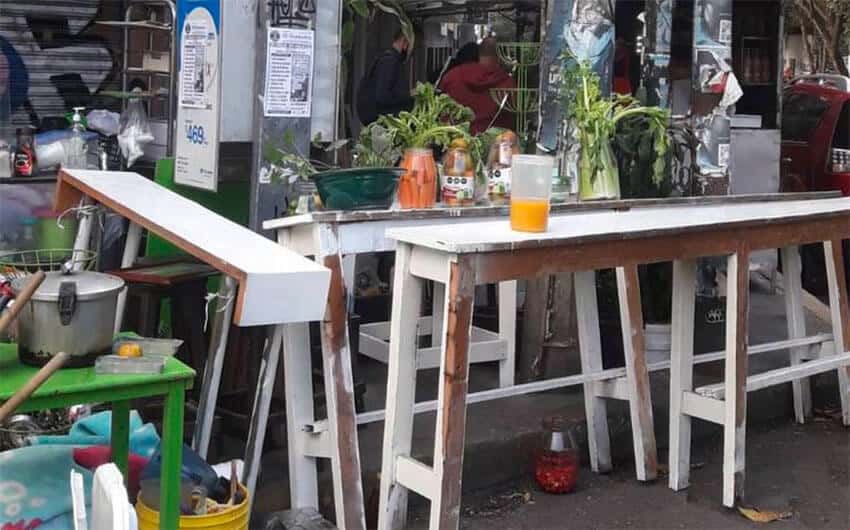
Tortería Colima’s eviction was abrupt and violent: a group representing the property firm taking possession of the building tossed out all the shop’s contents and welded the doors shut.
Habitat International Coalition’s Silvia Emanuelli told the newspaper that about 51% of rentals in the city are informal and these sorts of arrangements often do not involve legal proceedings when eviction becomes an issue.
So, to understand what’s really happening, it is also necessary to consider anecdotal evidence— like the story of the Ortíz family.
While it’s unlikely to be the only factor drivingrising rents and evictions in areas like Roma Norte, there is one related phenomenon that currently is getting a lot of attention from Mexico City locals: the highly visible recent uptick in long-term visitors and new residents from the United States.
As housing costs in cities like New York and Los Angeles have climbed astronomically and more companies are permitting their employees to work remotely, “gringos with laptops” have become a dominant feature of street life in Roma and surrounding neighborhoods.
The street occupied by Tortería Colima for the past five decades is no exception, hosting a growing presence of fancy cafes, pop-up fashion stores and art galleries to serve a U.S.-dollar-earning clientele that stays in Airbnb apartments priced well above what the average local resident can afford.
#EnContexto | ¿Quiénes son los responsables de la gentrificación en la Ciudad de México? ¿Los gringos con laptops? ¿O los empresarios que van detrás del dinero de la especulación?
Por @Maria_Efemerehttps://t.co/u5kLciBWmN
“Gringos with laptops” have become a visible phenomenon in some of the capital’s central neighborhoods, sparking ire and debate.
Social media has registered Mexico City residents’ criticism and frustration with this phenomenon. The visible domination of central capital neighborhoods by these digital nomads, the loose migration controls on U.S. citizens in Mexico and these newcomers’ ability to earn dollars and spend pesos is difficult for many chilangos to overlook.
When a visitor from Austin recently tweeted that remote working in Mexico City “is truly magical,” a storm of indignation among Mexico City residentsabout remote workers from the U.S. pushing locals out of their own neighborhoods ensued online. Referring to the dislodgement of Tortería Colima, Mexico City editor Brenda Mireles put it this way:
“Yes, come and see the magic of illegal evictions caused by the massive arrival of foreigners who impose their way of life at the expense of the original residents,” she said. “A marvel that cannot be missed!”
Ortíz agrees that the predominance of higher-income foreigners in the Roma Norte neighborhood — many from the U.S., Argentina, and France — is related to pressure on lower-income residents, but she does not blame them directly.
The trouble, she said, comes “from those who want more money, who already have the money to pay lawyers, police, the whole system … to buy the buildings and vacate them all to remodel.”
“Give them a little manita de gato [touch-up] and sell them at the price that foreigners can buy,” she explained.
One Twitter user’s rebuttal to the infamous tweet in February about remote work in Mexico City that went viral.
Indeed, that’s the central proposition of a new documentary film called PUSH, which opened in Mexico in March: that the blame for residents around the world being pushed out of their neighborhoods must be directed at the investment companies and private equity funds that have turned housing everywhere into a commodity to trade and profit from.
“It’s an elusive-by-design global system that has turned people’s homes into abstract financial assets traded on the stock market — moneymaking machines for the already more than wealthy,” wrote the documentary’s filmmaker, Fredrik Gertten, in The Washington Post Español op-ed coauthored with the film’s protagonist, housing advocate Leilani Farha.
“The main culprit behind the housing crisis in Mexico,” the pair wrote, “… is not someone on Twitter sipping a cortado in between a yoga class and the next Zoom meeting.”
Regardless of the analysis, the outcome of Mexico City’s affordability crisis — marked by financialization and speculation and the replacement of lower income communities by higher income ones — has been devastating for individuals and families like Ortíz and her siblings.
Along with a traumatic uprooting of two generations of work and community connection, they have lost their livelihood.
“We can’t go and set up in Roma again; we cannot afford to rent anywhere there,” she said. “We do not know what we will do. There are very few jobs for older people [like us].”
PUSH - Teaser Trailer
“We are not asking for a lot,” she said. “It’s not just that we want to live where we work. More than anything, what we want is to work — we are used to working.”
And the Roma Norte community has lost too, she argues.
“Our tortas were healthy,” she said, “and they cost less than at the street stalls. People could rely on us selling exactly the same good food that we made for our family.”