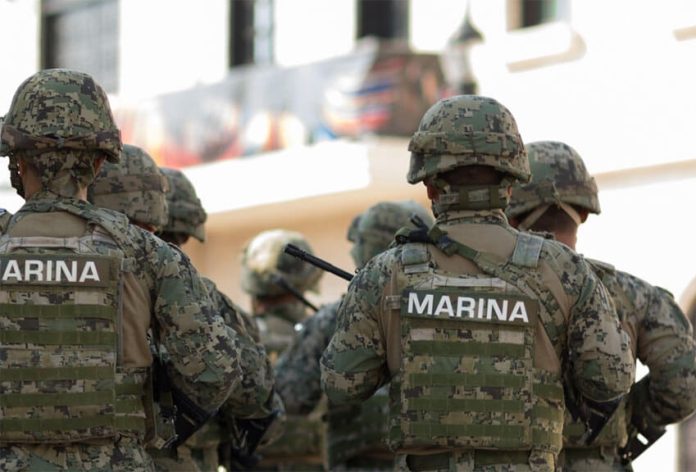
Navy marines detained the three victims in Tabasco in 2011.
Three marines accused of committing acts of sexual torture against two women and one trans man in 2011 have finally been put on trial.
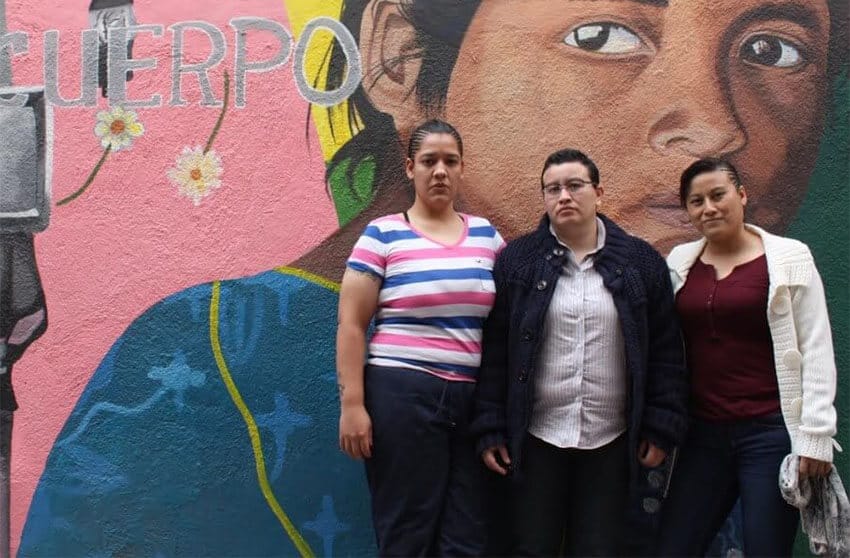
Korina Utrera, Denís Blanco and Charly Hernández were arbitrarily detained by navy personnel in Tabasco on August 27, 2011, according to a press release issued by the Centro Prodh human rights organization.
They were then illegally held at a military facility for more than 30 hours, during which time they were victims of sexual torture, said Centro Prodh, which has worked on the case.
The three victims were accused of being members of the Zetas criminal organization and jailed for over five years until they were absolved and released in November 2016.
Warrants for the arrest of the marines on torture charges were issued last November and they were subsequently taken into custody. They are now on trial in a federal court.
Korina Utrera, Charly Hernández and Denís Blanco. Amnesty International
“The beginning of the criminal process is an important step toward the justice that the survivors have sought since they regained their freedom,” Centro Prodh said.
“… We call on the federal judicial power to try [the accused] with a gender perspective and respecting due process,” it said.
The two women were in a relationship and living in Villahermosa when they were abducted from their home by hooded marines, according to a report by the newspaper El País.
They attempted to convince the marines they were not the people they were looking for, but their efforts were to no avail.
Utrera and Blanco, both originally from Veracruz, told El País that the marines’ aggressiveness toward them increased when they found out they were in a same-sex relationship. Their ordeal occurred during the government of former president Felipe Calderón, who launched a militarized war on drug cartels shortly after he took office in late 2006.
Homicides surged during Calderón’s 2006-12 presidency and the National Human Rights Commission (CNDH) received more than 30,000 complaints against security forces for crimes such as torture, arbitrary executions and forced disappearances. Very few cases resulted in criminal punishment for the alleged perpetrators.
According to El País, the physical consequences of the sexual torture suffered by Utrera and Blanco lasted for years. One of the accused marines raped Utrera with his gloved hands in the bed of a pickup truck, causing injuries that were documented years later by the CNDH, the newspaper said.
“All this makes me very cold,” Blanco said, recalling the torture and the years she spent in jail.
When the two women found out that their aggressors had been detained, they felt a mixture of fear and anxiety rather than relief, El País said. Neither has yet received any compensation for the abuse they suffered and their wrongful imprisonment.
While the alleged perpetrators are yet to be convicted and sentenced, Centro Prodh lawyer Melissa Zamora said the arrest of the marines is an important step forward given the high rates of impunity for torture cases.
“But as in other cases,” she added, “only the direct culprits are accused and not the people … in charge of [ensuring] these practices don’t occur.”
Mexico was one of 58 countries that abstained from Thursday's vote at the UN Human Rights Council. Twitter @UN_HRC
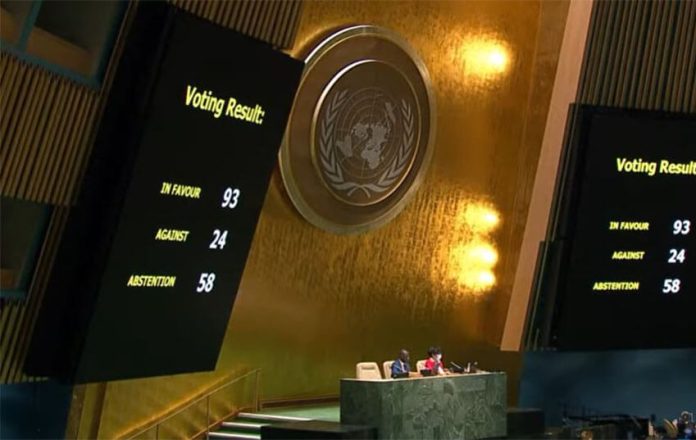
Mexico on Thursday abstained in a United Nations vote that suspended Russia from the UN Human Rights Council over reports of “gross and systematic violations and abuses of human rights in Ukraine,” a move that drew harsh criticism from an international human rights organization.
Ninety-three countries voted in favor of Russia’s suspension, 24 voted against and 58 abstained.
Among those that voted against suspension were Russia itself, China, Cuba and North Korea. In addition to Mexico, the countries that abstained included India, Brazil, South Africa, Saudi Arabia and Pakistan.
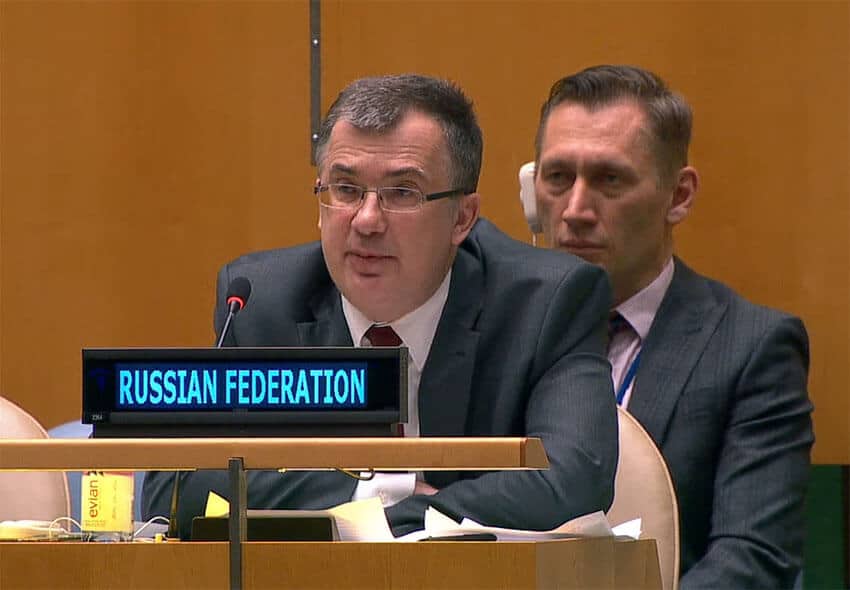
After the resolution was adopted, Russian Deputy Permanent Representative Gennady Kuzmin abruptly announced that Russia had already decided to leave the council.
President López Obrador announced Thursday morning that Mexico – which has condemned Russia’s invasion but not imposed any sanctions – would abstain in the vote.
After being voted out, Russian Permanent Representative Gennady Kuzmin said Russia had already decided to leave the council anyway. Youtube screenshot/UN Human Rights Council
“What we have set out is that we shouldn’t vote for the expulsion of Russia nor be against it, we’re going to abstain,” he said.
“Why the abstention, which is also a position? Because … how can we resolve Russia’s conflict with Ukraine if we don’t have mediation? What is the UN for? How … [could we] blow up an instrument that is fundamental to achieving peace agreements and avoiding war …? Why not accept that this war exposed the failure of politics? Because politics was invented to avoid war,” López Obrador said.
“… The parties have to be called to negotiation, to dialogue, to stop the war. … If the UN is not able to speak with Russia, because they expelled Russia, who will speak with the Russian government?”
Mexico’s permanent representative to the United Nations gave a more succinct explanation for the abstention.
“Exclusions at this time don’t resolve the problem and that’s why Mexico abstained in this resolution,” Juan Ramón de la Fuente said.
“… I hope that … [the suspension of Russia from the Human Rights Council] won’t be an additional obstacle for other bodies of the UN such as the Security Council and the General Assembly itself to keep working. We need to find a diplomatic solution so Mexico is in favor of everything that will keep inclusion and dialogue on the table …” he said.
Tamara Taraciuk, acting director of the Americas division of Human Rights Watch (HRW) slammed Mexico’s decision to abstain, while the secretary general of the Organization of American States (OAS) was also critical, although he didn’t specifically mention Mexico.
“Mexico’s abstention stance, along with Brazil and El Salvador, is a disgrace because … there is evidence of possible war crimes [in Ukraine],” Taraciuk told the newspaper El Universal.
“We’ve documented cases of summary executions, illegal violence against [Ukrainian] citizens and repeated sexual violence,” the HRW representative said. “… In this context, saying or suggesting that Russia can have a place at the table of the Human Rights Council is a disgrace.”
OAS chief Luis Almagro said on Twitter that he supported the UN’s decision to suspend Russia and asserted that to be neutral at a time when crimes against humanity are being committed is to be an “accomplice.”
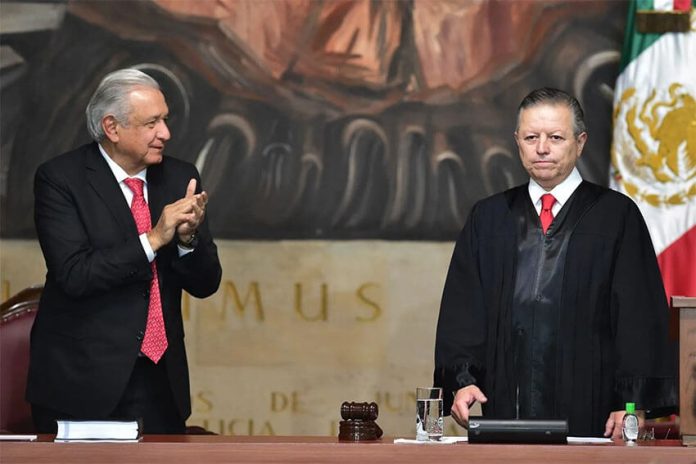
President López Obrador applauds Supreme Court Chief Justice Arturo Zaldívar at the third annual report of the federal judiciary in Dec. 2021. Gobierno de México
The Supreme Court (SCJN) has confirmed that the most important articles of a controversial electricity law can be implemented, delivering a ruling that is a significant victory for President López Obrador in his quest to reform Mexico’s energy sector.
The Electricity Industry Law (LIE), which gives power generated by the state-owned Federal Electricity Commission (CFE) priority on the national grid over that produced by private and renewable energy companies, was passed by Congress in March 2021.
However, its enforcement was prevented by injunctions granted to private energy companies. The latest challenge to the LIE was brought by opposition party senators, the Federal Economic Competition Commission and the state of Colima.
Seven of 11 Supreme Court justices held that the LIE violates the right to free competition in the energy sector and hinders the transition to clean energy sources, upholding a federal court ruling that suspended the law shortly after it took effect.
But their opinions were insufficient to invalidate the law as eight votes were needed for its revocation.
The CFE relies on nonrenewable energy sources for electricity, including its Carbon II coal-fired power plant in Nava, Coahuila. Twitter
The key article that the SCJN ruled is valid is that which gives electricity generated by the CFE priority on the national grid.
The state-owned company relies heavily on coal and oil to produce electricity, meaning that Mexico’s greenhouse gas emissions are likely to increase as a result of the LIE. The federal government is pursuing a separate reform that would guarantee the CFE 54% of the electricity market, a significant increase over the share it currently holds.
The Supreme Court also ruled that several other LIE articles that benefit the CFE are valid, including one that eliminates a requirement to buy power from the supplier selling it at the lowest price.
With the law declared constitutional by the country’s highest court, injunctions preventing its implementation will have to be lifted.
But the United States government believes the ruling is unlikely to end legal challenges to the LIE.
“The U.S. government respects Mexico’s sovereignty and democratic processes. It is in that vein of cooperation and respect that we are concerned that the 2021 electricity law is likely to open the door to endless litigation, creating uncertainty and impeding investment,” Ambassador Ken Salazar said in a statement on the Supreme Court’s decision.
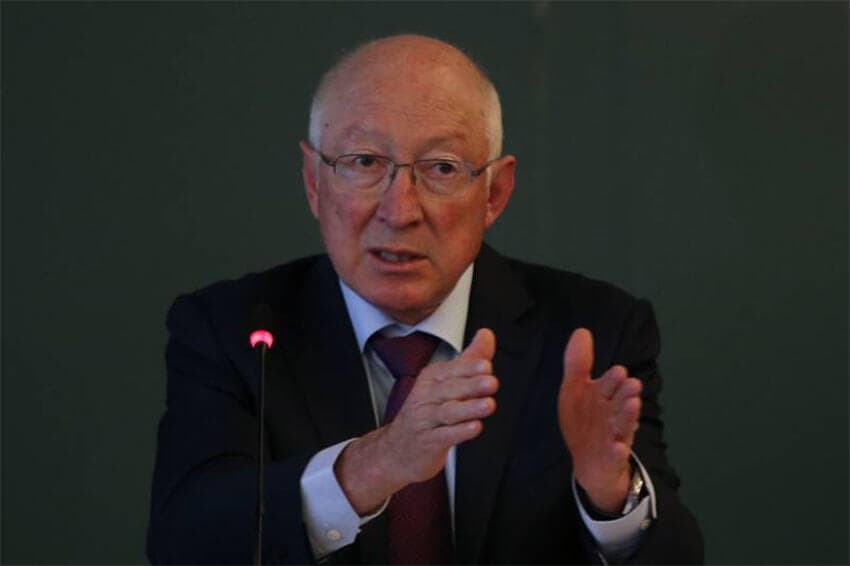
Ken Salazar, the U.S. ambassador to Mexico, warned that the ruling could lead to “endless litigation.” Cuartoscuro
He noted that the measures now before the Mexican legislature – the proposed reform that would guarantee the CFE over half the electricity market – have impacts on North American competitiveness.
In that context, Salazar said, “we hope that the legal framework that emerges will support the creation of a North American clean energy powerhouse, protect current and future U.S. business investments in Mexico in accordance with Mexico’s obligations under the United States-Mexico-Canada Agreement [USMCA], and protect the integration of U.S.-Mexico supply chains for the prosperity of our region.”
In a letter sent to Economy Minister Tatiana Clouthier last week, United States Trade Representative Katherine Tai warned that over US $10 billion in U.S. investment in Mexico was at risk due to the country’s energy policies.
Kenneth Smith, a former trade official who headed up Mexico’s negotiating team in USMCA talks with its North American free trade partners, warned that the United States and Canada could use the trade pact to take action against Mexico if the proposed electricity reform passes Congress in its current form.
If the bill becomes law, the U.S. and Canada could use chapter 31 of the USMCA to challenge it via an arbitration panel, Smith said, noting that that chapter sets out mechanisms to resolve disputes between countries.
“The decision of a panel could result in significant trade repercussions and retaliation against [Mexican] export products … [to] cover the damage caused,” he said.
Responding to Thursday’s court decision, analyst Carlos Petersen of Eurasia Group said it creates some legal uncertainty for businesses whose confidence has already been adversely affected by policy and political uncertainty in Mexico.
“That will likely discourage investment,” he told the Financial Times.
Lawyer José Maria Lujambio of Cacheaux, Cavazos & Newton said the situation could become chaotic. “There’s a whole salad bowl of arguments, so collegiate courts and judges can take whatever they want from it.”
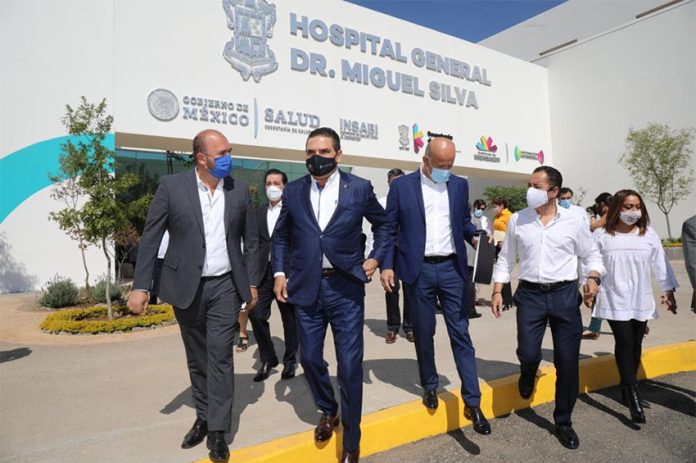
Silvano Aureoles, then-governor of Michoacán, at the November 2020 inauguration of the Ciudad Salud general hospital. Michoacán Health Ministry
An investigation has uncovered an apparent corruption scheme in which the previous Michoacán government awarded contracts for a hospital project to companies with links to political allies of former governor Silvano Aureoles.
Supported by a UNESCO journalism program and published by the newspaper Milenio, the probe detected irregularities in contracts worth over 1.1 billion pesos (US $54.5 million) in total, that were given to companies to complete work on the 3-billion-peso Ciudad Salud (Health City) project in the state capital Morelia.
Two new hospitals were built in the Ciudad Salud precinct, which opened in 2020: a 250-bed general hospital and a 100-bed children’s hospital. The federal government provided 2.6 billion pesos for the project – the largest completed by the Aureoles administration – while the other 400 million pesos came from the state government.
According to the UNESCO/Milenio investigation, some of the companies awarded contracts have links to political allies of Aureoles, who was the Democratic Revolution Party (PRD) governor of Michoacán between October 2015 and September 2021.
GCQ Construcciones, which was awarded a contract worth 376.4 million pesos (US $18.7 million), has links to Carlos Herrera Tello, the government secretary in the Aureoles administration and the PRD candidate in Michoacán’s 2021 gubernatorial election.
Businessman and politician Carlos Herrera did well during Aureoles’ tenure: at least 14 of his businesses received irregular contracts, according to the now-defunct Michoacán Monitor, which shut down in March after its director was murdered.
Samedic, a health sector supplier, won a contract worth 160 million pesos (US $7.9 million). It has links to Alexis Nickin Gaxiola, son-in-law of former Tabasco governor Roberto Madrazo, the Institutional Revolutionary Party’s candidate in the 2006 presidential election.
The investigation also raised questions about a contract worth 430.2 million pesos that was awarded to a consortium made up of Roth’s Ingeniería and Constructora Tzaulan. More on that later.
The Federal Auditor’s Office (ASF) detected a range of irregularities related to Ciudad Salud contracts, among which were payments for work not carried out and payments higher than those agreed to. The irregularities the ASF detected added up to 751.6 million pesos (US $37.4 million).
Of Aureoles’ political allies that benefited from Ciudad Salud contracts, Carlos Herrera appears to have the clearest conflict of interest.
Described by journalists Concepción Peralta Silverio and Ami Sosa as Aureoles’ right-hand man, Herrera was the legal representative of Quality Construcciones, a company that changed its name to GCQ Construcciones in 2016, the investigation said.
“His power was so wide-ranging that he could even sell the company,” the report said.
Alexis Nickin Gaxiola, son-in-law of former Tabasco Governor Roberto Madrazo, jointly owns a company with one of the owners of Samedic, which received at least US $16.8 million in contracts for the hospitals.
The investigation noted that GCQ had no experience in building hospitals, yet was awarded a 376-million-peso contract to complete work on the third stage of the general hospital. It formed an alliance with the company Constructora Pátzcuaro to complete the project.
The investigation cited four reasons why awarding the contract to GCQ represented a potential conflict of interest: Herrera is a former mayor of Zitácuaro and is thus prevented by a federal law from participating in bidding processes for government projects; one of GCQ’s owners is Herrera’s brother-in-law; the company was the subject of criminal complaints related to its failure to complete work on infrastructure projects in Tuxpan; and Herrera is a known friend of Aureoles and was appointed Michoacán government secretary in April 2019.
The investigation said that evidence suggests that the bidding process that resulted in GCQ winning the contract was not carried out in a fair way. Two competitors that presented lower bids were disqualified, allegedly because they made clerical errors on their applications. Those companies filed complaints about their treatment but they went nowhere.
A lawyer for GCQ said that Herrera was not a representative of the company when it was awarded the Ciudad Salud contract. The company was awarded two other lucrative contracts during the six years Aureoles was in office.
Michoacán-based construction companies told the investigative journalists that contracts were routinely awarded to the former governor’s favorite companies, which resulted in other firms going bankrupt due to a lack of work.
One construction company chief who asked not to be identified said that his firm did not participate in bidding processes because they were “rigged.”
Young patients being transferred on opening day to the Eva Sámano de López Mateos children’s hospital, which missed its second-stage construction deadline by 17 months.
The only Ciudad Salud contract that wasn’t awarded as a result of a (supposedly) competitive tender process went to Samedic, which supplied medical equipment to both the general and children’s hospitals.
Nickin, Madrazo’s son-in-law, jointly owns another company with one of the Samedic owners, the UNESCO/Milenio investigation said. The journalists didn’t point out any explicit links between Nickin and Aureoles.
They did say that Samedic subcontracted smaller companies to install medical equipment in the two hospitals, and that one of the subcontractors had complained about not being fully paid.
The report also said that Samedic was awarded four other contracts worth 338.5 million pesos during the six-year term of the Aureoles government.
The investigation raised a number of concerns about the bidding process that resulted in the Roth’s/Tzaulan consortium being awarded a contract for the construction of the second stage of the children’s hospital. It said that another company with the same owners as Roth’s, called Constructor Erlort y Asociados, was permitted to participate in the same process, resulting in a “clear simulation of competition.”
One company, Luviano, which built the first stage of the children’s hospital, was disqualified for presenting a bid higher than the authorized budget, while Edificaciones Tres Ríos was ruled out due to clerical errors on its application.
The investigative journalists questioned why the Roth’s/Tzaulan consortium was awarded the contract when the former company had no experience in building hospitals and the latter failed to meet the deadline for the construction of a hospital in Ciudad Madero, Tamaulipas.
The consortium was 17 months late in completing the second stage of the Ciudad Salud children’s hospital, and the project ended up costing 37% more than the amount specified in the original contract.
The two companies – which were paid a total of 590.3 million pesos, or 160 million pesos more than the amount originally agreed – were not sanctioned in any way for failing to meet the scheduled deadline. The second stage’s final price tag made it the most expensive Ciudad Salud project.
The investigation named the owners of Roth’s and Tzaulan but didn’t provide any details about the relationship they had with Aureoles.
With the exception of one company – ICA – the firms awarded contracts to work on the Morelia healthcare precinct had their biggest ever payday thanks to their association with the Michoacán government led by Aureoles, according to the civil society organization Poder, which has a public contracts database.
Despite the juicy contracts, some of the work on the two hospitals was substandard, the UNESCO/Milenio investigation said. The hospitals have been flooded by rain and wastewater and there are concerns about the foundations of the children’s hospital, it said.
The investigation said that current Michoacán Governor Alfredo Ramírez Bedolla is in a position to hold the previous government to account, but noted that he is in an uncomfortable situation because his health minister, Elías Ibarra Torres, worked for the Aureoles’ administration in the same position and his signature appears on some of the contracts in question.
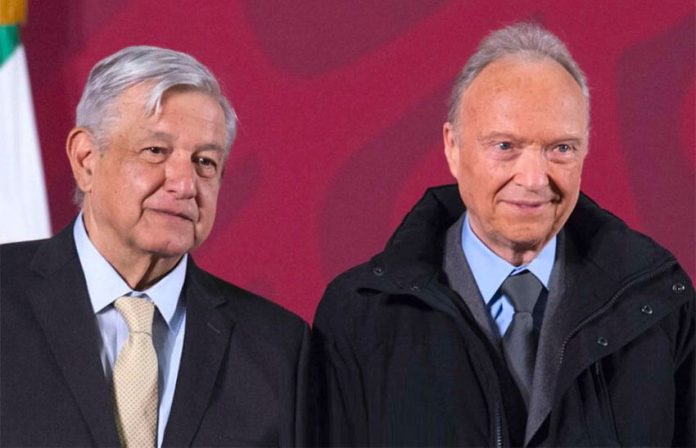
López Obrador said he has no connection to Attorney General Gertz.
President López Obrador has labeled four United States senators liars after they accused him of using the federal Attorney General’s Office (FGR) to target government critics.
Four Democratic Party senators including Senate Foreign Relations Committee chairman Bob Menéndez wrote to U.S. Secretary of State Antony Blinken and Attorney General Merrick Garland to express concerns that López Obrador’s government and the FGR are “politicizing the Mexican justice system and jeopardizing the independence of democratic institutions.”
“President López Obrador’s tenure has been marked by an increasing pattern of seemingly selective prosecutions disproportionately targeting government critics,” said the April 5 letter signed by Menéndez, Patrick Leahy, Benjamin Cardin and Jeffrey Merkley.
“These investigations have been pursued by the FGR – an institution that is constitutionally autonomous from the executive branch, but which has in practice aligned with President López Obrador – with the apparent aim of discrediting and silencing political opponents, as well as pursuing personal vendettas,” the letter said.
The senators cited three cases to support their claim. They said that leaked recordings of a call between Attorney General Alejandro Gertz Manero and another FGR official “raise questions about whether Gertz Manero improperly used FGR resources.”
“They also raise questions about improper dealings between Gertz Manero and members of Mexico’s Supreme Court in a case in which the national prosecutor accuses his in-laws of failing to provide proper care to his brother, who died in 2015 at the age of 82,” the letter said. “Despite this, President López Obrador continues to defend Gertz Manero.”
They noted that the scientists belonged to an advisory forum that has been critical of the federal government.
The lawmakers also observed that in August 2021 the FGR pressed corruption charges against Ricardo Anaya, a 2018 presidential candidate and outspoken critic of López Obrador. The charges are related to a bribery case involving Brazilian construction company Odebrecht and Mexican lawmakers in Congress during former president Enrique Peña Nieto’s 2012-18 presidency.
“According to press reports, ‘political analysts and legal scholars, including two allies of Mr. López Obrador currently serving in official legal capacities, say the case against Mr. Anaya is riddled with inconsistencies,’” the senators’ letter said.
“Cases such as these stand in stark contrast to instances in which President López Obrador’s government and the FGR have failed to seriously investigate or prosecute potential corruption among individuals linked to the president,” the Democrats said, citing cases involving his personal secretary and brother.
“The selective prosecutions also contrast markedly with the FGR’s decision to close the investigation against former defense minister Salvador Cienfuegos in January 2021, following Cienfuegos’ arrest in the United States … on charges of collusion with narcotics traffickers,” the letter said.
“In light of this pattern of apparent selective and politically motivated prosecutions, efforts by President López Obrador and his allies to target and weaken the independence of Mexico’s judicial system raise significant concerns,” the senators said, citing the president’s attack on a judge who ruled against an energy proposal, his attempt to extend the term of the chief justice of the Supreme Court in apparent violation of the constitution and his call for members of the Mexico’s top electoral court to resign.
“As José Miguel Vivanco, former executive director of Human Rights Watch’s Americas Division has noted, these actions demonstrate a disregard for judicial independence and are a ‘direct assault on the rule of law,’” the letter said.
“We urge you to give serious consideration to the risk of a weakened, politicized, justice system in Mexico, and to raise and prioritize these concerns in discussions with your Mexican counterparts,” the senators told Blinken and Garland.
“The United States government must explicitly communicate its continued support for Mexico’s independent institutions, as well as its firm belief that President López Obrador’s efforts to advance legitimate accountability initiatives must strengthen, not dismantle, democratic institutions and the rule of law.”
López Obrador rejected the senators’ claims at his news conference on Thursday, asserting that it was untrue that he has used the FGR for political purposes.
“With all respect, they’re liars, … perhaps they’re misinformed,” he said, adding that the senators were motivated by upcoming midterm elections in the United States.
“It’s a good thing there are only four of them because four swallows don’t make a summer,” the president quipped.
“What am I going to say back to them? Nothing,” he said before launching into a response later in his morning press conference.
“… I don’t have any connection to Attorney General Gertz Manero other than [my] respect [for him]. It’s no longer the time in which the president gave instructions to the judicial power, to the Supreme Court, the Attorney General’s Office, no,” López Obrador said.
“There is now an authentic rule of law, there’s not a crooked state. … [The senators] are lying, they are, the least I can say, uninformed,” he said.
“… Perhaps these senators don’t know me or perhaps they’re used to something else [in Mexico], but [the situation] has already changed. Hopefully they’ll inform themselves and if they have proof present it, but generally they’re complaints without foundation. It’s due to the [electoral] season and because the conservatives of Mexico are now accusing us [from] abroad, they go there to accuse us,” López Obrador said.
“… If … [the senators] have no foundation and it’s just a campaign against us, Mexicans and Mexican-Americans won’t like that, and if they’re looking for votes it won’t help them. I shouldn’t even be giving them advice, but there are 40 million Mexicans in the United States,” he said.
“… They’re wrong, misinformed. … Furthermore, … we don’t accept [foreign] interference,” López Obrador added.“… Mexico is a free, independent and sovereign country.”
Rather than filling your vacation with tours or activities sold by a large company, consider using local folks who need the income and know the area intimately.
In just a few days, schools across Mexico will close for the Semana Santa and Pascua (Easter) holidays. Many Mexican families take vacations during this time, and the holidays often coincide with student spring breaks in the United States and Canada.
The result is millions of people descending on beaches and other tourist destinations throughout the country over a short span of two weeks.
For big beach towns like Cabo San Lucas and Cancún, the influx of visitors is more easily absorbed (although it still takes a huge toll) as there are already big hotels, decent infrastructure and services set up for large numbers of tourists.
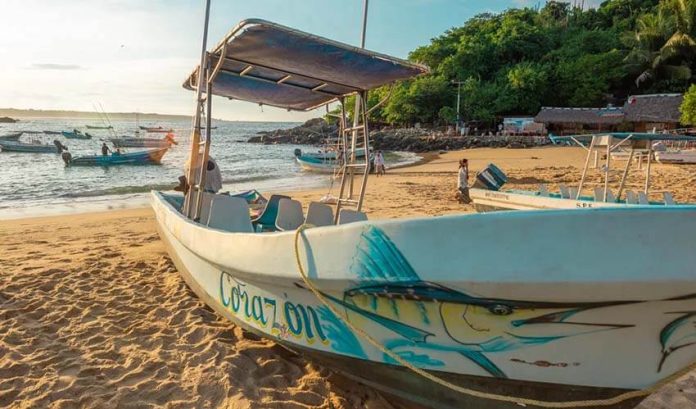
But for smaller beach communities like Puerto Escondido, Sayulita, San Pancho and Chacala, Nayarit, (where I live), the temporary doubling or even quintupling of the local population can take a serious toll on the infrastructure and environment.
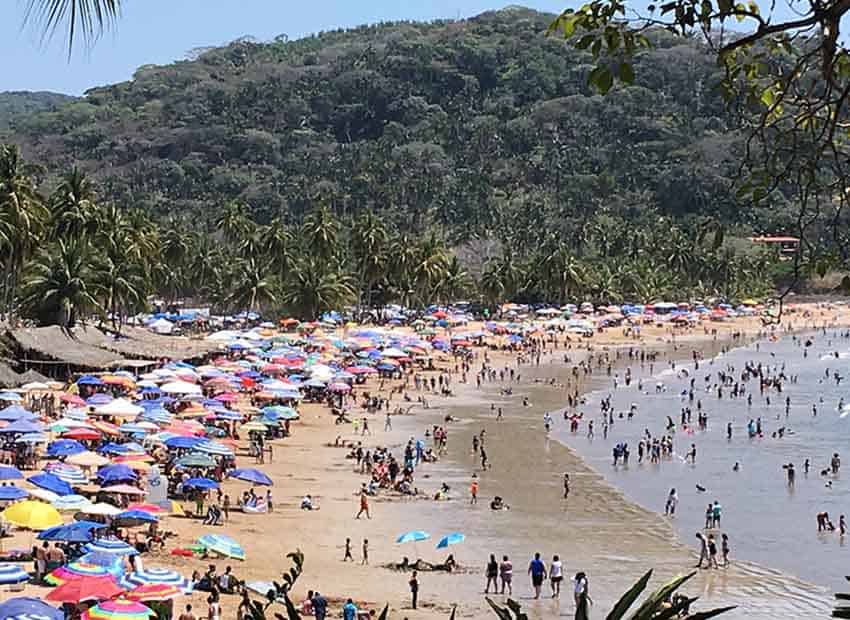
Take Chacala, for example. Our permanent, year-round resident population is around 350 people. During the high season for tourists, the population triples to about 1,000 people. But during the Semana Santa and Pascua holidays, it can grow to 2,000 or more.
Semana Santa tourists in 2018 at Playa Chacala, Nayarit, located in a town that at other times of year has a population of 350. Debbie Slobe
We have no centralized water treatment facility here and not nearly enough public trash cans. And suddenly, more than five times the usual number of people are using the septic tanks and garbage cans (if the trash even makes it to a garbage can).
It can get ugly fast.
As Semana Santa and Pascua approach, it’s important to think about ways we can reduce our impact on the places we visit and better support local communities during this hectic time. Here are some ideas for how to tread more lightly and do more good during your travels — in Mexico and beyond.
Reduce your waste: bring your own reusable shopping bags, straws, coffee mugs and water bottles when you travel so you can reduce the number of plastic bags, throw-away cups and straws you use or are given. When going out to eat, bring a plastic container with a lid (your rental probably already has a few containers) for leftovers to avoid using styrofoam containers.
Refrain from buying drinks in plastic bottles and go for homemade fruit drinks (aguas frescas) in restaurants, or opt for drinks that come in returnable glass bottles (beer usually falls into this category, yay!). When you go to the beach, bring a large plastic bag with you and pick up the trash you see around you. Leave it looking cleaner than you found it!
Shop locally: rather than buying all your groceries at Costco, El Comer, Mega, Walmart or other corporate grocery chains before you arrive, buy your food from the local shops, vendors and grocers. You might not find all your favorite items or specialty products, but one week without your favorite peanut butter won’t kill you.
It is also way more satisfying, fun and less wasteful to buy produce from a local frutería, bread from a local panadería and fish from a local pescadería than from an impersonal big-box supermarket. The products are always fresher and tastier and often come in less or no plastic. Plus, buying locally supports the community’s economy.
Stay in locally-owned hotels: there’s been a lot of new hotel development along Mexico’s coastlines, and Chacala is no different. But not every shiny new hotel is owned locally or has the community’s best interests in mind.
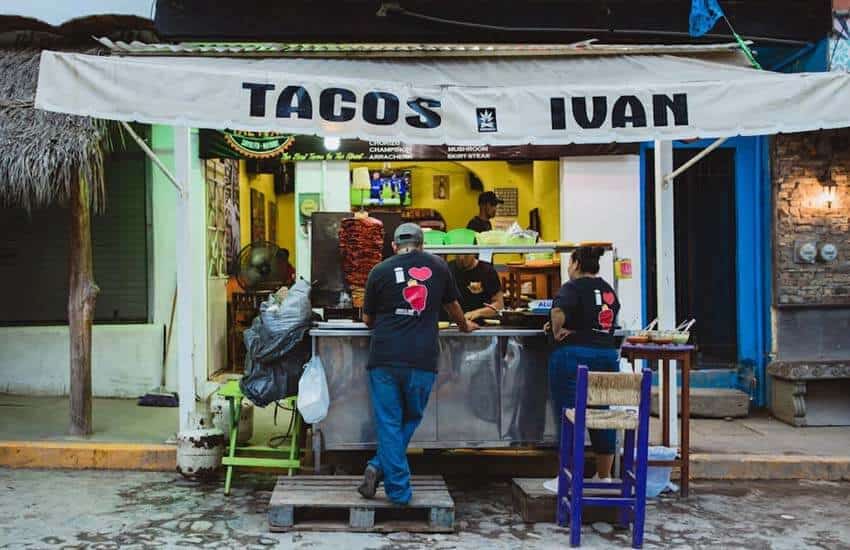
Eating food made fresh and in front of you by locals is always more memorable and helps the community’s economy. Kelly Mason Photo/Shutterstock
Using rentals and hotels owned by established community members means that the money you spend will stay in the community. If you are new to an area, it may take a bit of research to find locally owned places, but many towns have community Facebook groups where you can ask for lodging recommendations.
Hire local service providers: from transportation to tour guides, choose folks that live in the community you are visiting. Rather than renting a car with a national agency, consider hiring a driver from town to pick you up at the airport. Use local taxis and combis (taxi vans) to get around.
When planning excursions like whale watching or hiking, don’t book with big tour companies from the nearest city but rather with local guides and boat captains — who generally have a better knowledge of the flora and fauna and the best spots to see whales.
Instead of resting on your laurels all day, consider enriching your mind while enriching the community. Want to create? Hire a local artisan to teach you how to make traditional handcrafts. Want to learn some Spanish? Hire a local Spanish teacher to tutor you in the basics. Want to learn how to make a mean mole? Hire a local cook to show you how.
There is likely an abundance of local expertise available wherever you are visiting to help you have an enriching, fulfilling vacation and at the same time support the resident population. Again, you can often find and arrange these opportunities ahead of time by joining a community’s Facebook group and asking around for recommendations.
Support local causes: most communities — even small ones — have their own community-led organizations and initiatives working to serve the needs of locals. For example, here in Chacala, we have groups that provide educational opportunities for children, train people in employable trades such as woodworking and food production, provide water safety programs for kids and training for local lifeguards, offer sterilization services for cats and dogs, coordinate a weekly volunteer trash pickup and more.
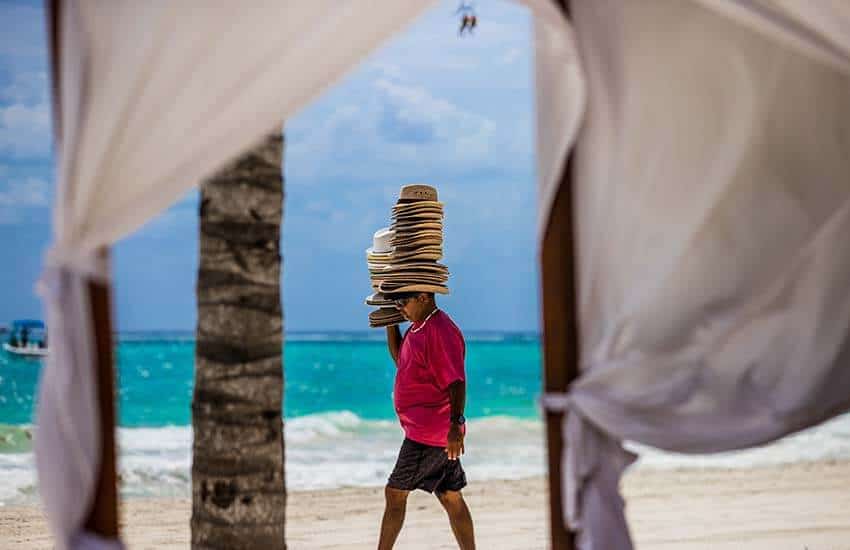
This gentleman likely faced travel costs and a significant fee to sell you hats on the beach. Maybe you don’t need to haggle with him over 100 pesos? Aspects and Angles/Shutterstock
On your next vacation, consider making a gift to the community in the form of a financial or material donation to one or more local initiatives. Again, you can usually find out about these initiatives via the community Facebook group.
Don’t haggle: the back-and-forth negotiation tourists often engage in to get the lowest price for something is a pretty common practice in Mexico; I used to be a haggler myself. But I’ve come to realize just how harmful haggling can be.
Most vendors have to pay a fee for the right to sell their products on the beach or at local markets, and many travel long distances to set up shop there. What they sell that day might determine whether their family eats sufficiently.
While you may think something is “overpriced,” remember that it’s probably still a bargain compared to what you would pay for an equivalent product in your home country (as if you could find hand-painted Talavera pottery at home!). So just pay what folks are asking or simply tell them no gracias.
Got ethical travel tips to share with our readers? Let us know in the comments below!
Debbie Slobe is a writer and communications strategist based in Chacala, Nayarit. She blogs at Mexpatmama.com and is a senior program director at Resource Media. Find her on Instagram and Facebook.
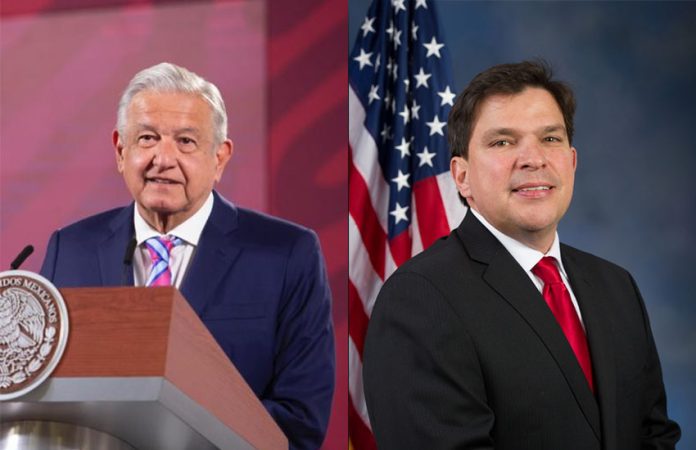
The president spoke out against U.S. Representative Vicente González's proposal on Wednesday.
A United States lawmaker has called on the U.S. government to revoke the visas of Mexican deputies who joined a Mexico-Russia friendship group last month, triggering a blunt response from President López Obrador.
U.S. Representative Vicente González wrote to Secretary of State Antony Blinken and Secretary of Homeland Security Alejandro Mayorkas to request visa revocations for deputies who joined the friendship group, which was formally established in the lower house of Congress on March 23, just under a month after Russia’s full-scale invasion of Ukraine began.
“In recent days and in the midst of an international crisis in Eastern Europe, several legislators from Mexico’s federal Congress (Chamber of Deputies) took this opportunity to shun the free world and stand with [Russian President Vladimir] Putin by forming a Mexico-Russia Friendship Committee. The timing of this committee sent a clear message to the United States and the free world,” the Democratic Party lawmaker wrote in an April 4 letter.
“… In light of Russia’s illegal aggression towards Ukraine, I call upon you to stand with Ukraine and condemn this ‘friendship committee’ by issuing visa revocations for all Mexican members of Congress that have participated in this deplorable assembly,” González wrote.
“If these individuals refuse to condemn Russia, and instead choose to stand with tyranny, they should not be allowed the privilege of entering, traveling or investing in the United States of America.”
Members of the Mexican Congress participating in the “Mexico-Russia Friendship Committee” should not be allowed to enter, travel, or invest in the US.
— Rep. Vicente Gonzalez (@RepGonzalez) April 5, 2022
The representative for Texas’s 15th congressional district provided Blinken and Mayorkas with a list of 25 deputies he said had joined the Mexico-Russia friendship group, most of whom represent the ruling Morena party and its ally the Labor Party.
López Obrador on Wednesday made it clear he didn’t agree with the U.S. lawmaker, describing his proposal as “prehistoric” and asserting that he made it to to help his chances of reelection at midterm elections later this year.
“I don’t believe it’s fair and I don’t believe it’s rational to want to suspend the visas of those who gathered to express their points of view with respect to the Russian invasion of Ukraine,” he said.
“… There is now a campaign asking that they not be allowed to enter the United States. That’s a return to the Cold War, to the times of persecution and exclusion and authoritarianism,” López Obrador told reporters.
“I don’t agree with that,” he said, noting that he also didn’t agree with Twitter blocking the account of former United States president Donald Trump in the wake of the attack on the U.S. Capitol in January 2021.
“That goes against freedom. … What will happen to the Statue of Liberty in New York – it will turn green from anger,” López Obrador said, adding that if lawmakers’ U.S. visas are revoked the government will send a diplomatic note in protest.
Asked whether he endorsed the Mexico-Russia friendship group, AMLO didn’t give a direct response, simply saying that “we’re free.”
He then highlighted a Twitter post by airline Volaris, in which it said it respected diversity of opinion and acknowledged the existence of different ideologies.
“An applause for Volaris,” López Obrador said, before clapping his hands and flashing a broad grin.
“… How can we talk about freedom and threaten to limit freedom? And why position ourselves like judges to decide what’s right and what’s wrong?” he asked. “Why don’t we allow people to express themselves?”
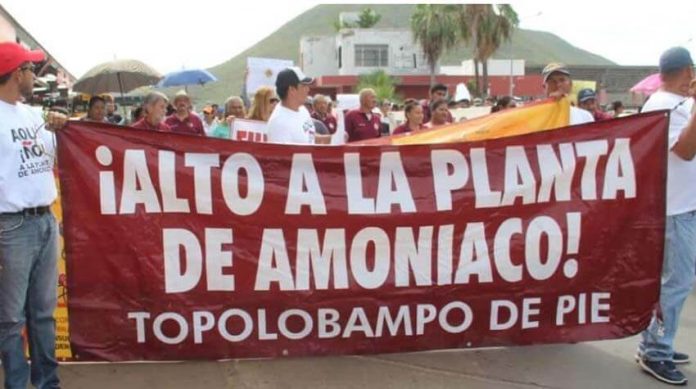
Protest against the plant in Topolobampo, Sinaloa in 2020.
The Supreme Court (SCJN) has revoked the environmental authorization granted to a US $5 billion fertilizer plant in Sinaloa because the federal Environment Ministry failed to consult the local indigenous community about the project.
A federal government referendum held last November found almost 76% support for the construction of an ammonia and urea plant in Topolobampo, a port town 20 kilometers southwest of Los Mochis. However, work on the project, which began in 2018, has been stalled since March 2019, when a federal judge halted the project due to environmental concerns.
Despite the results of the 2021 federal referendum, the SCJN ruled on Wednesday that the project – the largest ever in Sinaloa in terms of investment – can’t go ahead until the local indigenous community has been consulted.
With the ruling, the court upheld a separate 2021 federal court injunction that ordered that a consultation process with the indigenous residents be carried out before environmental authorization – first granted in 2014 – can be reconsidered. That injuction, issued by a Los Mochis-based federal judge, came in response to an application filed by residents of a fishing community in Ahome, the municipality where the fertilizer plant is to be located.
The company Gas y Petroquímica de Occidente (GPO) – a subsidiary of Swiss-German construction group Proman AG – is behind the project.
A publicity poster for Gas y Petroquímica de Occidente (GPO) regarding the project. The company rejects claims that it would cause environmental damage. GPO Twitter
Many fishermen have said the operation of the plant would cause irreparable damage to the Santa María, Topolobampo and Ohuira lagoons and restrict the area in which they can work.
Environmental activists say that marine life such as turtles and bottlenose dolphins would be adversely affected, while the head of the federal government’s Natural Protected Areas Commission said in 2019 that having an ammonia plant so close to lagoons protected by the Ramsar Convention on Wetlands of International Importance “is not possible.”
GPO has rejected claims that the plant’s operation would damage the environment and says that the project will generate 2,500 jobs in its initial stage and benefit farmers in 10 states.
No ammonia or urea is currently produced in Mexico.
The SCJN ruled that a “free and informed” consultation process mustn’t take longer than four months. The Environment Ministry must collaborate with the National Institute of Indigenous Peoples to conduct the consultation in accordance with International Labour Organization protocols.
“It’s not viable to exclude the indigenous community nor deny them their right to express opinions and points of view … with respect to a decision … that has a bearing on their territory and the ecosystems found there,” the SCJN said in its ruling.
A company rendering of what the plant would look like.
The fishermen who filed an injunction request with the Los Mochis federal court live in Lázaro Cárdenas, a community on the opposite side of Ohuira Bay to where GPO wants to build the fertilizer plant. They say there is a risk that natural gas and ammonia will leak from the plant.
The Supreme Court has halted and canceled other projects due to authorities’ failure to consult with indigenous communities. It revoked two mining concessions in Puebla in February because the federal government failed to consult with the local indigenous community before granting them.
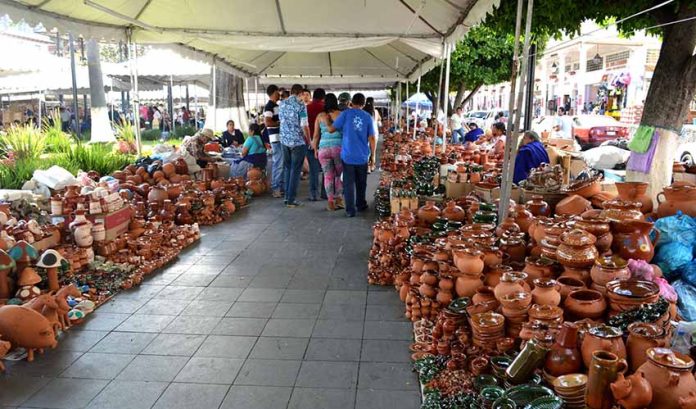
This is only a small percentage of what's typically available at the Palm Sunday Handcraft Market, starting this weekend in Uruapan, Michoacán.
I would venture to guess that many Mexican handcraft aficionados started out like I did, attracted at first by colorful baubles in tourist markets, then wanting to know if what I was buying was “real” or not.
Although it is getting easier to find information about Mexico’s true artisans, it still requires a bit of legwork. Your best bet is to buy direct from one at their workshop (often in their home), but if that is not possible, there are a few highly reputable annual handcraft fairs in Mexico.
With the pandemic easing, I’m glad to say that Michoacan’s Tianguis de Domingo de Ramos (Palm Sunday Handcraft Market) in the city of Uruapan is back.
Uruapan today is best-known for being in the state’s avocado-growing region, but it hosts what Michoacán officials say is the largest handcraft market of its kind in Latin America. Certainly, it draws over 1,300 artisans per year from all over Michoacán to display their wares for sale.
The focal point of the event is at the city’s main plaza, which annually gets covered in tarps that shelter a maze of aisles and stands. Stalls also spill over into adjoining streets.
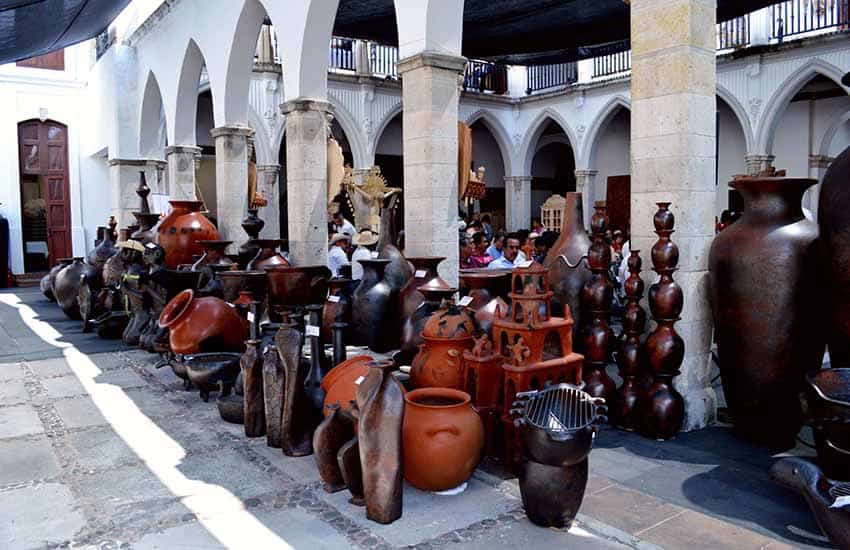
Massive pottery items awaiting judging at a previous State Handcraft Fair. This year’s winners will be on display at the Uruapan event.
The event promotes the four main indigenous cultures of the state: the Purépecha, Mazahua, Nahua and Otomi. The Purépecha are best represented, not only because they are the dominant group but also because handcraft production has been highly developed in their region since both the pre-Hispanic and colonial periods.
Pottery is the main draw, followed closely by wood items. You’ll also find traditional clothing, miniatures, jewelry, toys, lacquered items and leather. One other interesting item to find if you go on or before Palm Sunday is the plethora of nimble fingers that weave palm fronds into intricate shapes for the holiday.
The fair does a decent job of keeping out items not made in Michoacán — usually cheap souvenir items; its only small sin is that not all vendors are artisans; some are resellers.
As always, buyer beware, but the overall quality of merchandise here is good.
But the event is more than just a market. The Tianguis begins on the Saturday before Palm Sunday (this year on April 9) with a parade to welcome the participating artisans and a demonstration of Purépecha cooking. This year, that date also features a concert by Lila Downs. All of the days have some kind of event related to food, dress, music, dance and more. You can see a schedule in Spanish here.
I should note that the event has grown tremendously in the past few years, but if you are looking to buy the finest handcrafts the market has to offer, arrive before Palm Sunday (April 10). As with all events of this type, the best stuff sells out almost immediately. However, the handcrafts and cultural events are available all the way until the event ends on April 24, and even just the food is worth the trip.
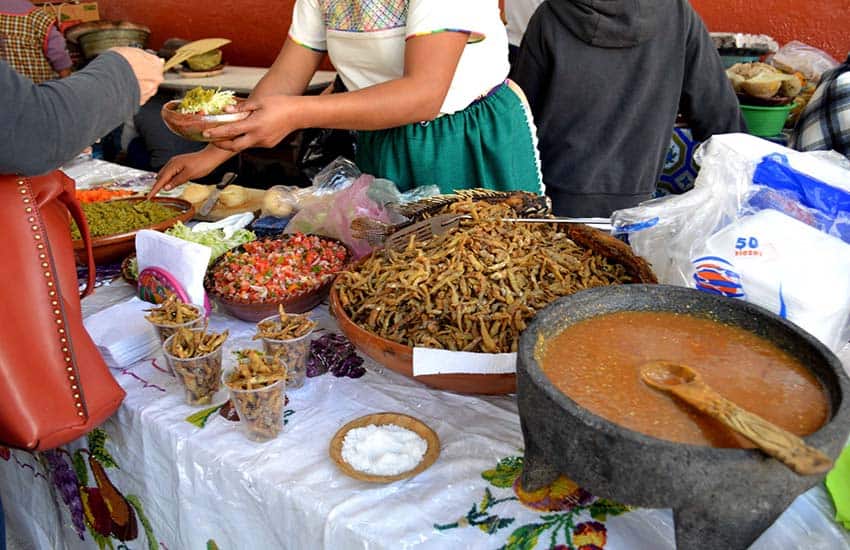
In between collecting handcrafts, you can try freshly made indigenous food, like these Purépecha dishes.
I also strongly recommend checking out pieces from the LXI Michoacán State Handcraft fair, whose winners will be announced on April 10 at Uruapan’s Casa de Cultura (cultural center). The chances of buying any of these pieces are low since people with connections usually get to them first. But you will get to see the best of the best and learn who makes them. You can always contact the artisan later to get your own piece made. Many of the artisans are on Facebook.
In addition to everything that the city has to offer, such as the Barranca del Cupatitzio National Park, Uruapan is also near other Michoacán attractions such as the Paricutín volcano (main access is in the town of Angahuan) and the better-known city of Pátzcuaro.
There are, however, a couple of potential drawbacks to attending the fair: firstly, most of the event occurs during Holy Week, a major vacation period for Mexico, and so hotel space may be difficult to find in Uruapan proper. Secondly, this part of Michoacán admittedly has long had problems with narcos. I personally have never run into any issues, but if you are concerned, nearby Pátzcuaro is an easy ride, meaning you can spend your nights there and your days in Uruapan.
The fair brings experienced collectors back year after year, and for newbies, I know of few other places to jump in and be surrounded by the true magic of what Mexico’s hands create.
Leigh Thelmadatter arrived in Mexico 18 years ago and fell in love with the land and the culture in particular its handcrafts and art. She is the author of Mexican Cartonería: Paper, Paste and Fiesta (Schiffer 2019). Her culture column appears regularly on Mexico News Daily.
The SCJN declared unconstitutional two aspects of AMLO's signature federal austerity law.
The Supreme Court (SCJN) has dealt President López Obrador two blows in as many days.
The court on Monday revoked a provision in his government’s federal austerity law, approved in 2019, that prevented former high-ranking civil servants from working for a period of 10 years in private companies they regulated or about which they had privileged information.
The SCJN on Tuesday also invalidated Article 61 of the austerity law, which gave López Obrador the authority to use money as he saw fit that was saved by austerity measures his government has implemented. Nine justices voted to revoke Article 61 and two voted to maintain it.
The SCJN determined that the article violated the Chamber of Deputies’ constitutional authority to authorize the federal budget.
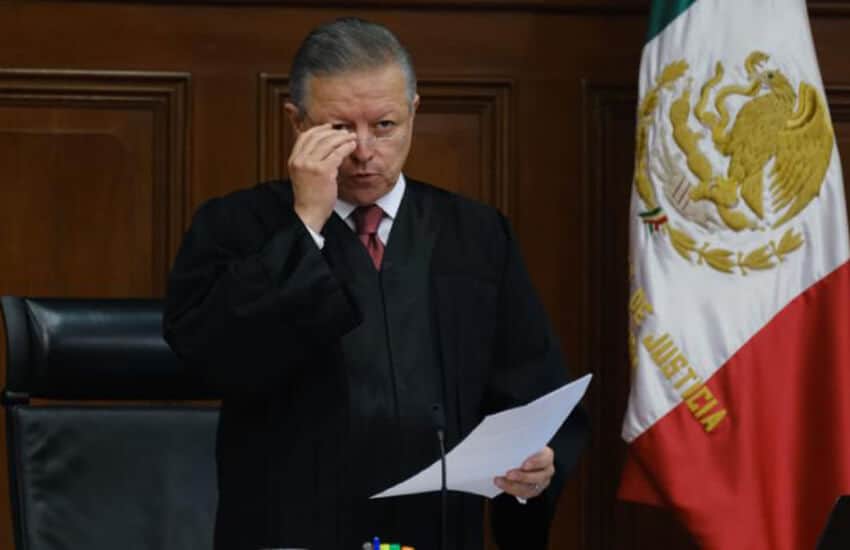
Justices voted unanimously in favor of repealing the 10-year ban on ex-civil servants entering the private sector to work for companies they regulated, determining that a prohibition of that length is excessive. Chief Justice Arturo Zaldívar described the ban as “unnecessarily long” and argued that it was too broad.
Chief Justice Arturo Zaldívar described the ban on former civil servants working in companies they regulated as “unnecessarily long.” File photo
“Not all senior management positions have the same responsibilities nor do they present the same degree of risk of corruption,” he said. “The rule is therefore over-inclusive.”
The Supreme Court’s ruling upholds a decision handed down by a federal court, which found in February that the provision that restricts ex-government workers’ employment options is unconstitutional as well as “unfair and excessive.”
The government last year spent 510 billion pesos (US $25.3 billion) above what was budgeted, the newspaper Reforma reported, but it was unclear how much of that spending came from money saved by austerity measures.
Justice Javier Laynez said that article 61 allowed the president to spend money on government subsidies, programs and infrastructure projects that had been rejected by the lower house of Congress. “It’s unconstitutional because it’s a completely open power,” he said.
López Obrador on Tuesday described the Supreme Court’s first ruling as an “aberration.”
“How is it possible to go back to the old ways?” he asked, claiming that it was a “national embarrassment” that former president Ernesto Zedillo joined the board of a railway company shortly after the conclusion of his presidency, during which he privatized Mexico’s rail system.
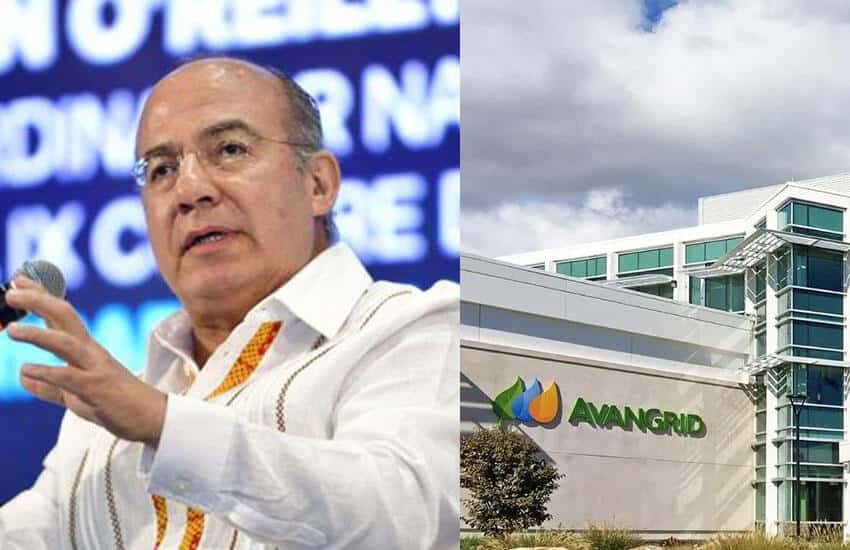
AMLO said Felipe Calderón, who was on the board of Iberdola subsidiary Avangrid after his presidency, showed why a ban on public servants taking certain private positions is necessary. Internet
In January, López Obrador described various former presidents’ private sector employment as “despicable” and “immoral.”
On Wednesday, López Obrador said that former Pemex directors, Federal Electricity Commission functionaries, energy ministers and Finance Ministry officials were all guilty of conflicts of interest because they took up positions “in banks [and] companies, which benefitted when they occupied public positions.”