Home Blog Page 1017

Government considering price controls on basic foodstuffs to control inflation

0
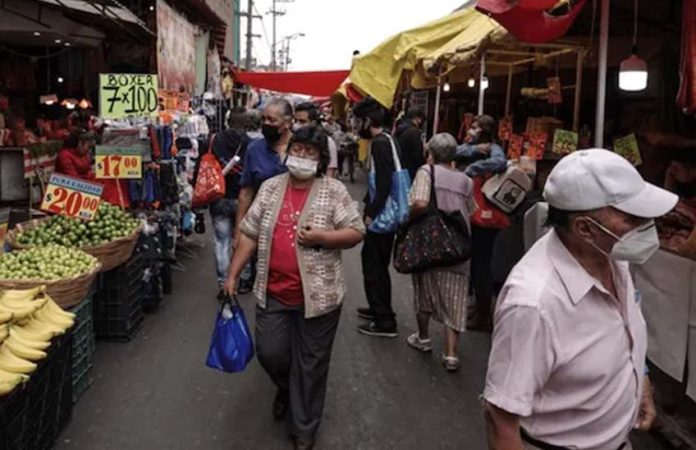
Hidalgo market
Shoppers at a food market in Hidalgo.

The federal government is considering placing price controls on basic food items as part of efforts to control inflation, President López Obrador said on Monday.

“We’re making a food production plan so there is greater supply and [so] we can also control inflation with food,” he told reporters at his morning press conference.

Annual inflation was 7.29% in the first half of March.

“We’re going to announce [our plan] in a few more days; we’re already working on it, … it has to do with the canasta básica, to guarantee that there are no shortages and [ensure] that we control inflation,” López Obrador said.

The canasta básica is a basic selection of foodstuffs including beans, rice, eggs and sugar.
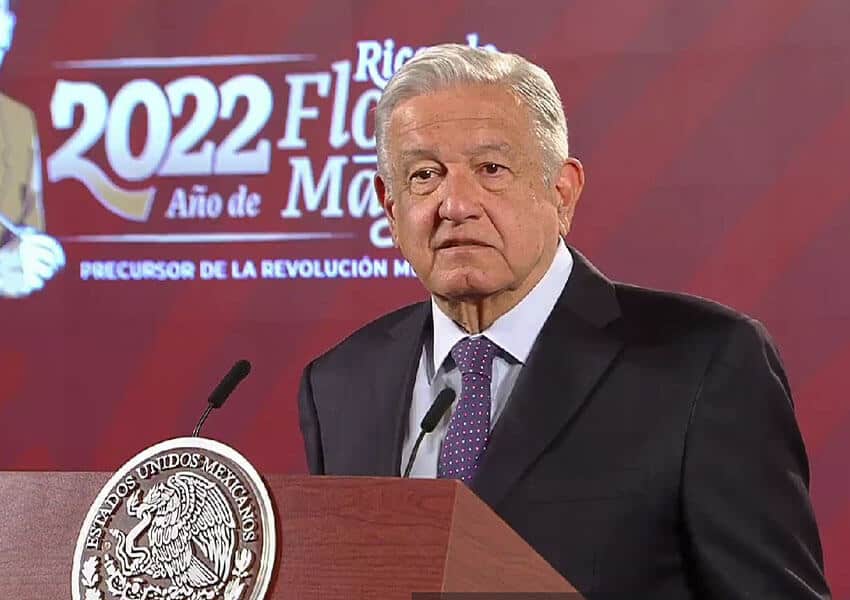
AMLO
At his Monday press conference, AMLO said the government plans to control inflation via a “food production plan” that would prevent shortages. Presidencia

Explicitly asked whether the government is considering price controls, López Obrador said the government would implement them in addition to a food production plan “if necessary.”

“First, production, … the best thing to confront inflation is to produce, [to ensure] there is supply, but price controls help as well,” he said.

Probed again whether “maximum prices” were going to be implemented, López Obrador responded:

“Not yet. What a good journalist you are, there’s no doubt. We’re going to wait. What we have to do is deal with the [inflation] problem in the best possible way. The good thing is that we’re here to serve the people, the people are our master, not companies, corporations or banks. … The basic intent is to govern for the benefit of the people. So we analyze [issues] and make decisions in accordance with what’s in the best interests of the people.”

Two experts who spoke with the newspaper Reforma raised concerns about the possibility of price controls being imposed by the government.

Alejandro Saldaña, chief economist at the financial company Ve Por Más, said that price controls “could generate shortage problems in the medium term because if [food] producers face lower prices, production is discouraged.”
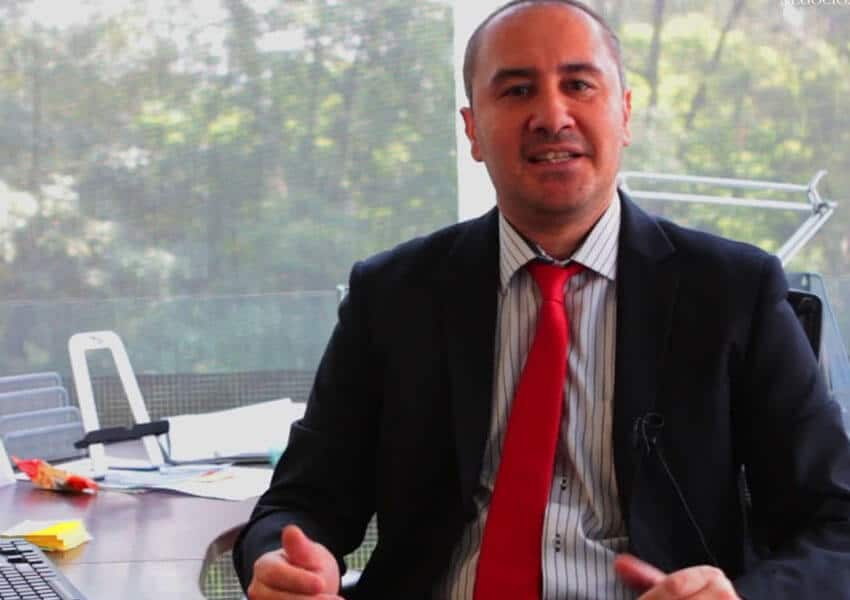
James Salazar, CI Banco
James Salazar, an economic analyst at CI Banco, said price controls don’t make sense. “We’re not in a red alert scenario,” he said. Screen capture

“… Shortages, if sustained, would be reflected in even more aggressive price increases,” he said, apparently suggesting that government price controls wouldn’t work.

James Salazar, deputy director of economic analysis at CI Banco, said that price controls on basic foodstuffs would be akin to asking producers to “restrict price increases.”

That would automatically create “an imbalance in terms of supply and demand,” he said, “because you’re imposing a maximum price when there is much stronger demand and that results in shortages.”

Salazar said that price controls have been implemented in the past when inflation was high, but they didn’t work.

“In the medium and long term, you could create shortages and black markets and who ends up paying [the price] in the end is the [food] producer,” he said.

Price controls in other countries, such as Venezuela, have resulted in shortages of basic goods and fueled the popularity of black-market trading.

Salazar said that price controls don’t make sense because inflation is not as high as it has previously been, although it reached a 20-year high in November.

“We’re not in a red alert scenario,” the CI Banco analyst said. “The reality is that inflation has shot up around the whole world [but] it’s not what we saw in the ’80s or beginning of the ’90s.”

With reports from El Universal and Reforma 
Protests call for boycott of AMLO’s revocation of mandate vote

0
election workers
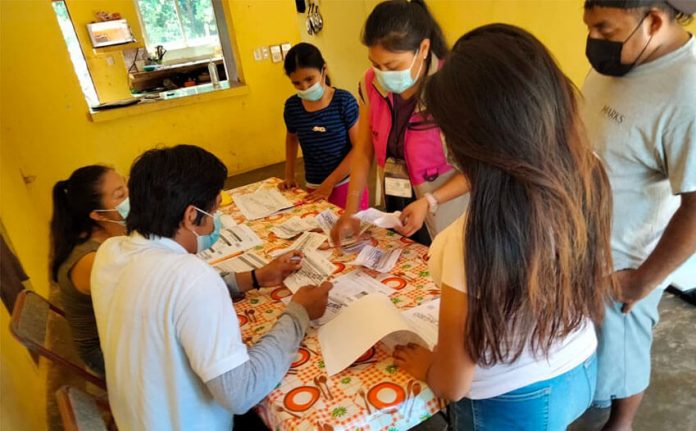
These are among more than a quarter of a million election workers who have been preparing for Sunday's referendum.

Mexicans took to the streets across the country Sunday to call on their fellow citizens not to vote in the upcoming referendum on President López Obrador’s leadership.

A revocation of mandate referendum in which citizens will get the opportunity to have their say about whether López Obrador should complete his six-year term will be held this Sunday.

Marches and rallies during which protesters called for citizens to boycott the vote were held in Mexico City and numerous states including Querétaro, Chihuahua, Puebla, Quintana Roo, Jalisco, Nuevo León, Veracruz, Aguascalientes, Yucatán, San Luis Potosí and México state.

The Mexico City march – which started at the Angel of Independence on Reforma Avenue and concluded at the Monument to the Revolution – was organized around the slogan, “¡Terminas y te vas!” or “You finish and you go!”

Citizens who participated in the marches want López Obrador to finish his six-year term in 2024 and leave office. Some observers have claimed that the president could use the results of the recall referendum to extend his grip on power, although López Obrador has repeatedly pledged that he will leave office in 2024, or earlier if a majority of citizens choose to revoke his mandate.

Protesters at the front of the Mexico City march carried a banner urging citizens not to vote on April 10. Some people carried signs expressing their support for the National Electoral Institute (INE), which López Obrador is planning to dismantle.

In Querétaro city, some 300 people urged citizens not to cast a vote in the recall referendum. Protesting queretanos also came out in defense of the INE, which López Obrador says has not adequately promoted the revocation of mandate vote.

Among the other cities where marches and/or rallies against the referendum were held Sunday were Puebla, Guadalajara, Cancún, Mérida, Ciudad Juárez, Xalapa and Toluca.

Opposition lawmakers have also called for a boycott of the vote, which requires a minimum turnout of 40% to be legally binding, although López Obrador has indicated he will comply with the will of the people even if that threshold isn’t met.

With reports from Milenio and Reforma 

Mexico’s president takes recall elections to a whole new level

0
One of the recall debates held recently in advance of Sunday's vote.

Recall elections had a big year internationally in 2021, grabbing the spotlight in California and Taiwan. But 2022 is set to witness the recall on a whole other level as Mexican President Andrés Manuel López Obrador, widely known by the nickname AMLO, will be facing the voters on April 10.

While we’ve seen recalls in the United States’ largest state and against the presidents of both Venezuela and Romania, the Mexican presidential recall, dubbed a revocation of mandate vote, is by far the largest by population in history. Yet this recall has not grabbed the world’s attention as others have in the past. There’s a reason for that. AMLO not only does not fear the recall, he has welcomed it with open arms. He is hoping that it provides a boost for his political agenda. And if America’s recall history is any standard, there’s reason to think he’s right.

Mexico’s recall is very unusual in that it was originally proposed by AMLO as part of his election in 2018. From the beginning, he appeared to be the biggest supporter of a recall vote, encouraging his supporters to sign the petitions and get the more than 2.7 million valid signatures needed to get to the ballot. In fact, there is a movement by his opponents to boycott the recall vote.

The chance of removal is slim. For the recall to succeed, not only do a majority of voters have to cast ballots to remove AMLO, but 40% of registered voters have to turn out out to vote. This type of turnout law is uncommon in the U.S., though it is a regular feature elsewhere throughout the globe. In 2012, the president of Romania survived a recall due to low turnout, and so did the mayor of Warsaw, Poland, and officials in Taiwan.

While this type of law provides protection for the officials, it also creates the false perception that the officials sneaked through because voters didn’t show up. However, this low turnout is actually a winning strategy, even if it is a public relations debacle. AMLO’s recall is different in that he wants to win by an overwhelming margin, so he is not looking to use the 40% turnout law. He even said that he would abide by a decision even if the 40% threshold is not met. AMLO instead wants as high a turnout as possible. It is his opponents who are actually calling for people not to turn out.

What explains his actions? Some of his opponents originally feared that he would try to use a recall success to repeal the one six-year term limit for president. That does not seem to be the focus, but he clearly does want the recall to be treated as a chance to ratify his term, strengthening his position in dealing with Congress and others. A strong performance will certainly assist him.

In the U.S., we have not had actual promotion by politicians of their own recall in this fashion, though we have elected officials try to use the recall laws in a tactical fashion. In 2021, a Seattle councilwoman tried to get supporters to sign petitions against her in order to speed up the recall vote and have it timed with a regularly scheduled election (this did not work, though she survived the final vote). In 2012, supporters of Wisconsin Governor Scott Walker submitted papers for an early recall push in order to assist him in raising funds under a very loose recall law.

While recalls have a strong success rate in the U.S., officials who survived – and sometimes those who lose – can see a big benefit to their political careers. California state Senator Jeff Denham survived a recall vote in 2008. He was later elected to Congress. The same thing happened with Wisconsin State Senator Scott Fitzgerald after his recall triumph in 2012. San Francisco Mayor Dianne Feinstein easily beat back a recall in 1983. The next year, she was being discussed for vice president. Now, she is the longest-serving U.S. senator in California history.

California Governor Gavin Newsom is about to test this theory himself.  Many observers, as well as history, suggest that 2022 could be a challenging, if not disastrous election year for Democrats. Yet all of the major Republican contenders have backed out of running against Newsom in his reelection run.

After an overwhelming victory in the recall vote, Newsom has frightened off seemingly all of the most serious contenders. The result may be that he glides to victory even in a difficult environment, but due to not having a strong Republican opponent, he also helps Democrats lower down on the ticket, including some key Congressional races. Newsom is already being discussed as a potential presidential contender down the road.

AMLO may be facing the voters early this year, but unlike other officials throughout the world, it is not due to opponent anger or hope for an electoral triumph. Rather, he is hoping for a boost from a vote of confidence by the voters. There’s a good chance he will get it.

Joshua Spivak is a senior fellow at the Hugh L. Carey Institute for Government Reform at Wagner College. He is the author of Recall Elections: From Alexander Hamilton to Gavin Newsom and writes the Recall Elections Blog.

Hotel Nickelodeon, Mexico’s largest water theme park, inaugurated in Quintana Roo

0
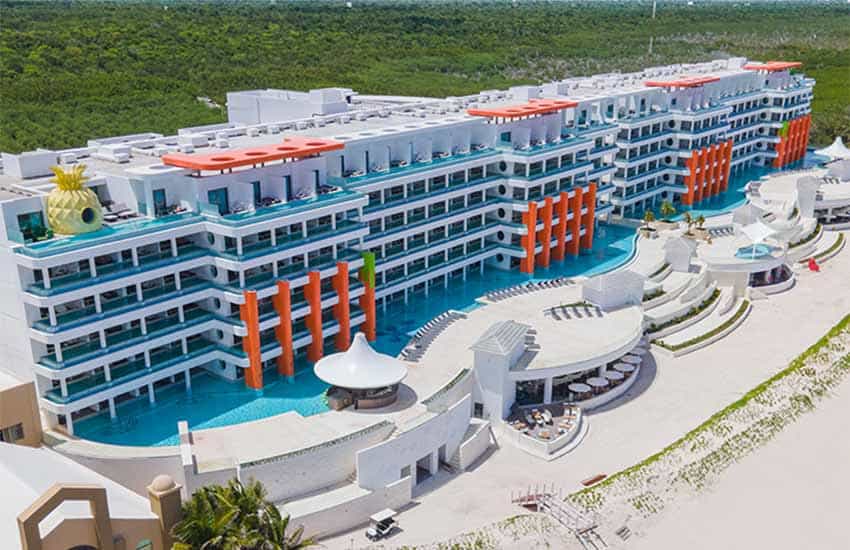
Nickelodeon Hotel lobby, Riviera Maya
Much of the luxury hotel's decor recalls the children's network's most popular shows, such as this golden pineapple from SpongeBob SquarePants. Nickelodeon Hotels & Resorts

A new water theme park and hotel were inaugurated in Quintana Roo last week.

Hotel Nickelodeon and its water park Aqua Nick, located between Cancún and Puerto Morelos, allows fans to stay beside some of the Nickelodeon children’s network’s most familiar characters, such as the Teenage Mutant Ninja Turtles or SpongeBob SquarePants and his companions.

The hotel is operated by Karisma Hotels and Resorts and has 280 rooms, six restaurants, three bars, a 500-seat theater and a spa. Aqua Nick water park sits on 2.4 hectares and has two bodies of water with slides.

Owner Grupo Lomas invested US $340 million in the complex, which will employ 800–1,200 people. Fees are around US $450 per person, per night. It’s their second Nickelodeon-themed hotel resort. Their first opened in Punta Cana, Dominican Republic, in 2016.

Governor Carlos Joaquín attended the inauguration and celebrated the achievement of building the complex in the COVID-19 pandemic, when “there was uncertainty and things were not easy,” he said.

Hotel Nickelodeon
The beachside hotel markets to families with all-inclusive rates starting at US $450.

“This speaks very well of our business people, of the investors, of each and all of you, whom I thank for that trust,” Joaquín added, addressing representatives from Nickelodeon, Karisma Hotels and Grupo Lomas.

Director of operations at Grupo Lomas, Samantha Frachey, said the resort opened last summer with 38% occupancy and reached 56% occupancy by last month. She predicted a further bump in demand. “In April we are going to reach 80% occupancy, and we increasingly have more demand thanks to alliances with tour operators in Mexico, the United States, Canada and Latin America,” she said.

With reports from Reportur and Milenio

AMLO’s energy policies put US $10 billion in investments at risk, US warns

0
Economy Minister Clouthier and US Trade Representative Tai.

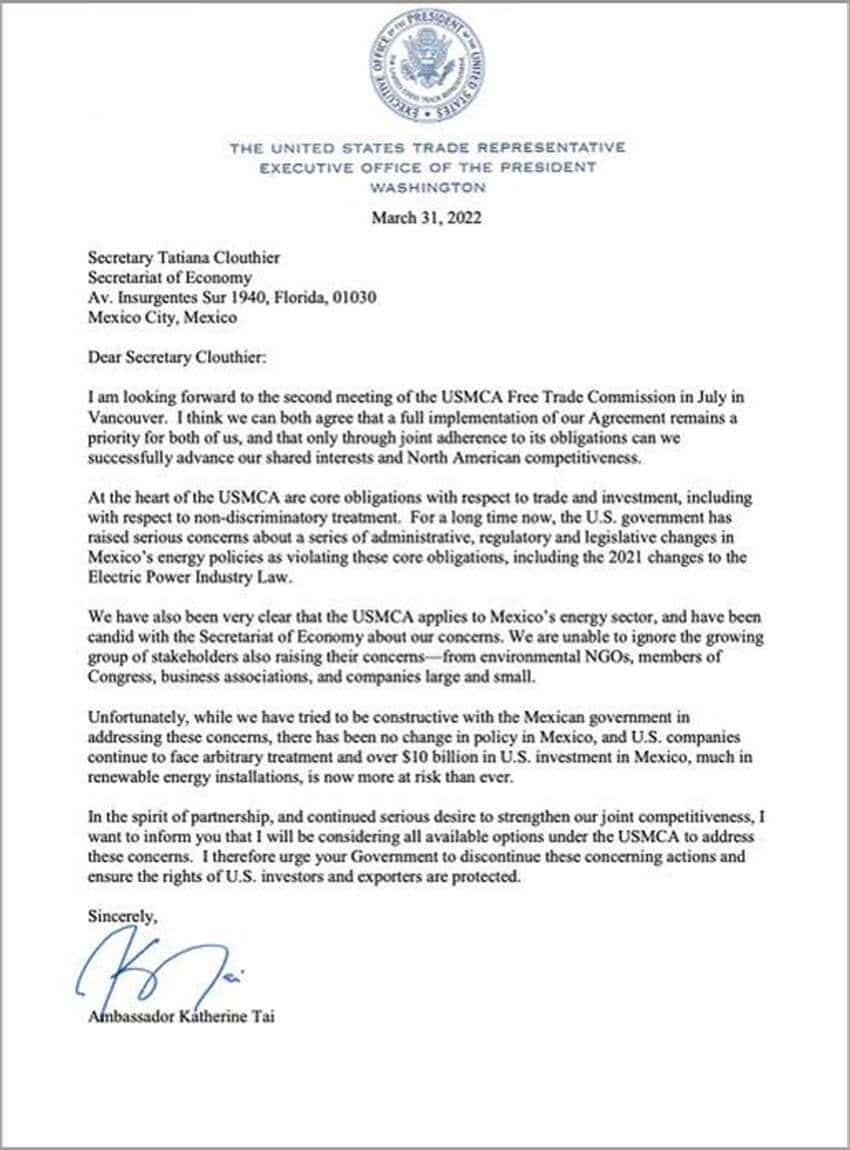
The United States government has warned that Mexico’s energy sector policies place US $10 billion in U.S. investments at risk.

United States Trade Representative Katherine Tai cited the 11-digit figure in a letter to Economy Minister Tatiana Clouthier last Thursday.

According to the newspaper Reforma, which saw the private letter, Tai said the Electricity Industry Law – which gives power generated by the state-owned Federal Electricity Commission (CFE) priority on the national grid over that produced by private and renewable energy companies –  poses a great risk to United States energy projects in Mexico.

The Supreme Court on Tuesday is beginning debate on the constitutionality of the law, which was passed by Congress last year.

Tai lamented that Mexico’s energy policies haven’t changed despite the U.S. government’s efforts to collaborate constructively with its Mexican counterpart.

letter from USTR to Mexico
The letter Clouthier received from the US Trade Representative reflected thinning patience with Mexico’s desire to overhaul its energy market.

Several U.S. officials, including Tai, have raised concerns about the federal government’s energy policies and plans, including a constitutional bill that would guarantee 54% of the electricity market to the CFE.

Ambassador Ken Salazar acknowledged last month that United States energy companies are having problems securing the permits they need to operate without encumbrance in Mexico, while U.S.-owned fuel storage terminals have been shut down by authorities for allegedly unclear reasons.

Despite U.S. concerns, President López Obrador said Friday that he wouldn’t make any changes to his proposed electricity reform, and he is also determined to strengthen the role state oil company Pemex plays in the energy sector.

In her letter to Clouthier, Tai contended that United States companies are being treated arbitrarily in Mexico. Renewable energy sector investments are at greater risk now than at any previous time, the trade representative said.

Reforma noted that the $10 billion figure cited by Tai is more than triple the value of Mexican avocado exports to the United States in 2021, which totaled $2.8 billion.

Tai told Clouthier that she would consider all available options under the United States-Mexico-Canada Agreement to challenge energy sector policies that the U.S. believes violate the three-way free trade pact.

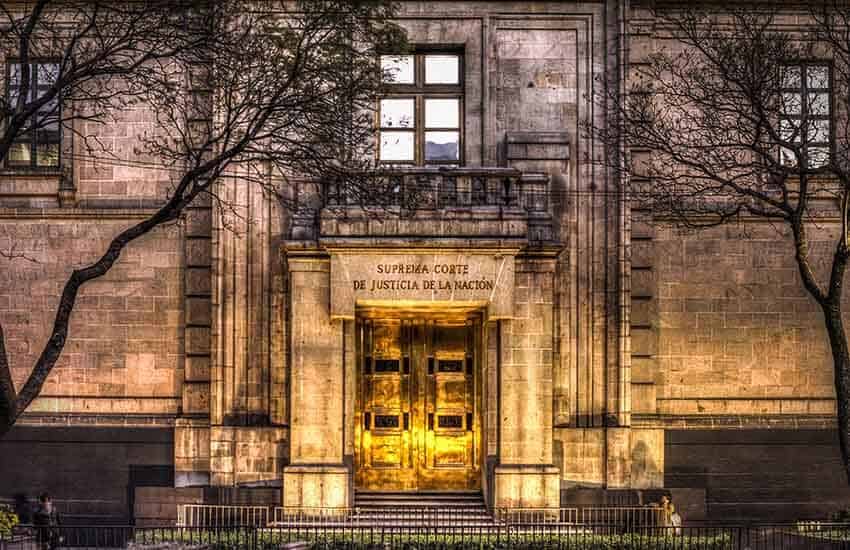
Mexican Supreme Court building
Mexico’s Supreme Court began reviewing the Electricity Industry Law’s constitutionality on Tuesday. Fernando Gutiérrez Ortega/Shutterstock

She urged the Mexican government to suspend laws and policies about which the United States has raised concerns, and protect the rights of U.S. investors.

Meanwhile, López Obrador claimed Tuesday that some opposition lawmakers would support his constitutional bill, which would also get rid of two independent energy sector regulators.

He said he had information that some legislators with the Institutional Revolutionary Party (PRI) and even a National Action Party (PAN) lawmaker would “rebel” and support his reform.

“I call for that, for them to rebel so that they are authentic representatives of the people and not employees of vested interest groups,” López Obrador said.

“They shouldn’t be traitors to the homeland, they should rebel, have the arrogance to feel free,” he said.

“… I also call on people to be alert, because debates [on the electricity reform] are going to start in the Chamber of Deputies … and we have to see who defends [private and foreign] companies,” rather than the state, López Obrador said.

“Because this has happened in other times. The PRI and the PAN came to an agreement when they still had the people fooled that they were different, and they voted for [the contingencies fund] Fobproa to convert private debt into public debt, and that enormous debt still exists,” he said.

With reports from Reforma 

Campaign urges tourists in Quintana Roo to avoid drug use

0
drug campaign poster
'Don't turn your vacation into a permanent [jail] stay,' warns the poster at the Cancún airport.

A campaign has been launched in Quintana Roo to reduce drug use in tourist destinations famous for their party cultures, in which visitors will have to sign a letter acknowledging their understanding of drug laws.

The Sé Parte de la Solución (Be Part of the Solution) campaign is being promoted to tourists in airports, marine terminals and hotels in an effort to combat the drug trade.

Government spokesperson Fernando Mora Guillén said tourists will have to sign a letter of commitment at their hotels. “It’s expected that hotels in Cancún, the Riviera Maya and other destinations will submit a letter of commitment in which guests state that they know possessing and trafficking drugs is a crime,” he said.

Mora added that the strategy of showing powerful images on posters was recommended by U.S. Ambassador Ken Salazar.

The campaign will run indefinitely and be communicated in English, Spanish, French and German.

Governor Carlos Joaquín said that the campaign was about protecting tourists. “Motivated by the next tourist high season, we are promoting the campaign in collaboration with business people to warn tourists about the risks and consequences of consuming drugs during their stay in Quintana Roo,” he said.

Some 12 million tourists visit Quintana Roo every year, but violence threatens the reputation of the state long seen as a safe destination. Agents from the Quintana Roo Attorney General’s Office have arrested six people for the murder of four men in Playa del Carmen. Those men are also being investigated for kidnapping and murder of 13 people.

In late January, two Canadians with criminal histories were shot dead in Xcaret Hotel near Playa del Carmen. The U.S. government then issued a security alert for Quintana Roo, shortly before a beach club manager was shot dead in Playa del Carmen.

In October, gunfire left two tourists dead in Tulum and another incident saw two drug dealers shot and killed on a beach in Puerto Morelos in November.

In March, an English businessman was shot dead in front of his 14-year-old daughter in Playa del Carmen.

A range of international criminal groups are known to be present in the state and the increase in violence triggered the deployment in December of a new tourism security battalion of the National Guard.

The U.S. government launched an FBI investigation into criminal activity in Quintana Roo in February.

With reports from Milenio and La Jornada Maya

As court prepares to consider electricity law, environmentalists unite against it

0
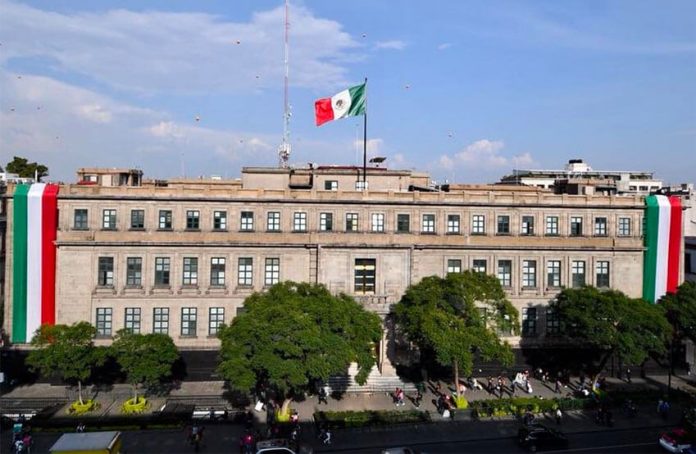
mexican supreme court
The law is on Tuesday's agenda at the Supreme Court.

An umbrella group of environmental organizations announced Monday that it would make a submission to the Supreme Court (SCJN) to argue against the Electricity Industry Law (LIE), which was approved by Congress last year.

The SCJN will consider the constitutionality of the law on Tuesday.

The LIE gives power generated by the state-owned Federal Electricity Commission priority on the national grid over that produced by private and renewable energy companies.

The law took effect on March 10, 2021, but a federal judge promptly ordered its suspension, ruling that it could harm free competition and cause irreparable damage to the environment because it favors traditional energy sources over renewable ones.  The decision came in response to suspension requests filed by renewable energy companies.

A day before the SCJN commences its consideration of the constitutionality of the LIE,  a collective of 38 environmental organizations led by Nuestro Futuro (Our Future) said it would file an amicus curiae (friend of the court) brief against the law.

Nora Cabrera Velasco, director of Nuestro Futuro – an organization made up of young environmentalists, said the proposal by Justice Loretta Ortiz Ahlf that the LIE be declared constitutional doesn’t take the law’s environmental shortcomings into account.

Ortiz is a former federal deputy for the ruling Morena party and its ally the Labor Party, a political history that opposition lawmakers say affects her capacity to rule on the constitutionality of the LIE in an impartial way.

Cabrera said the law the justice wants to validate lacks provisions to tackle climate change. The amicus curiae brief “is a very important document because it’s signed by a lot of organizations,” she said.

“It’s one of the few amicus [briefs] presented in relation to the Electricity Industry Law. We believe that the justices must put climate change in the center of the debate,” Cabrera said.

“…What we want is a constitutional precedent in which the justices recognize that we have a right to have serious and effective climate change mitigation policies.”

Writing in The Wall Street Journal, columnist Mary Anastasia O’Grady said the Supreme Court’s ruling on the LIE “will signal whether it is still independent or if it has become a tool of President Andrés Manuel López Obrador,” commonly known as AMLO.

She wrote that that the LIE “effectively puts an end to competition among electricity generators, damages investors, and revives the monopoly power of the state-owned federal electricity company.”

“This contravenes the constitution, which was amended in 2013 to open the market to private capital and guarantee a level playing field for all,” O’Grady added.

She noted that the constitutional challenges were filed by Mexico’s competition commission, members of Congress and the state of Colima, and that Justice Ortiz “wrote the opinion that argues the law is constitutional.”

O’Grady acknowledged that Ortiz – “who staunchly opposed the opening of energy markets in 2013 as a congresswoman for the Workers’ Party and is a hardcore AMLO supporter” – needs only a simple majority of the 11 magistrates to prevail on Tuesday.

“That’s not impossible but it’s unlikely. If it happens it will mark the end of the court as a serious arbiter,” she wrote.

With reports from Milenio

Environment ministry draws fire for failing to control Yucatán pig farms

0
With over 200 in operation, Yucatán has more hog farms than any other state in Mexico. Government of Mexico

A collective of seven organizations has written to President López Obrador and Environment Minister María Luisa Albores to denounce the environmental impact of large pig farms in the state of Yucatán and to chastise authorities for failing to rein in the industry.

In an open letter published by nongovernmental organization Indignación, the collective — “representatives of various Mayan towns of the Yucatán Peninsula” — said that the large-scale pig farming industry has grown more quickly in the state of Yucatán in recent years than anywhere else in the country.

“The establishment of farms with thousands of head of swine is a business activity that has multiple environmental impacts,” the letter said, citing serious damage to “our land, water, natural resources and way of life.”

Concerns have previously been raised about the impact of pig farms on Yucatán’s bee population and on its cenotes, or natural sinkholes.

The seven organizations, among which are the Western Yucatán Mayan Council, the Mayan Committee of Homún and the Yaxkukul Residents Committee, also said that the establishment of huge hog farms has violated “our autonomy and self-determination.”

The activists who wrote the letter want Environmental Minister María Luisa Albores to take action on hog farms. Twitter

They have filed several reports of environmental, social, cultural and territorial damage caused by large-scale pig farms, they said, and have asked all three levels of government to take steps to “put the brakes on this activity and guarantee our right to self-determination and a healthy environment.” But “to date, no authority has listened to us,” the letter said.

In that context, the collective said it “noted with surprise” that the federal Environment Ministry (Semarnat) admitted in a March 25 statement that “one of the main environmental problems on the Yucatán Peninsula is the increase [in the number] of pig farms.”

In a statement with the heading, “Where were the pseudoenvironmentalists when the true devastation of the southeast of Mexico began years ago?” the Semarnat said it was working to remedy the “socio-environmental disaster” that past administrations “allowed and promoted” for “the benefit of a few over the common good.”

The statement — a response to those who have denounced the Maya Train project — cited “some serious situations from the past 30 years that really have damaged the natural wealth” of Mexico’s southeast, the region through which the 1,500-kilometer railroad will run.

One of the examples cited was the “indiscriminate growth” of pig farms.

“In the state of Yucatán, the local pig farmers’ association has mentioned having at least 500 farms in 50 municipalities, … whose impact on human health and the environment due to deforestation, ecological imbalance and contamination of cenotes is undeniable,” Semarnat said.

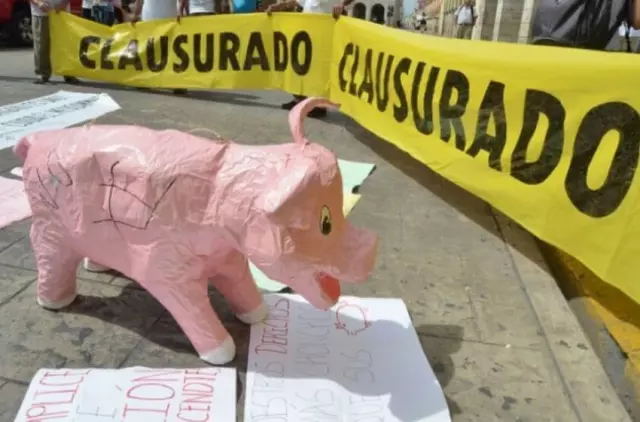
Protests shut down a large hog farm near Homun, Yucatán.

Given that the federal government acknowledged the serious problems created by pig farms, the Yucatán collective said it was surprised that it has taken no action to remedy the situation.

“Up to now, the actions implemented … [by] the federal (and state) executive to stop this activity that seriously affects our towns are nonexistent,” the letter said.

The collective complained that neither President López Obrador nor other officials who have traveled to Yucatán with him have addressed the issue or met with the affected communities “to listen to us and attend to our petitions.”

It also said that it has had no response from Minister Albores despite inviting her to meet with people adversely affected by the pig farming industry.

“Faced with this situation, once again and in an open way, we would like to invite you to meet with the people … standing up to this industry that contaminates our territory and water and places our survival and cultural identity at risk,” the letter said.

“… In the context of a multicultural country such as ours, intercultural dialogue between indigenous peoples and the authorities of the day is essential,” the collective said,

“… We extend an invitation to visit us between April 6 and 13 in the town of Homún, where for six years we’ve been … [defending] our territory and water from the operations of a mega farm of 49,000 pigs,” it said.

“We and other people who live with the impacts of this industry want to initiate … dialogue about the actions that must be carried out to protect our water, environment and health and our rights as Mayan people.”

Yucatán residents have previously protested agains the Homún “mega farm” in Yucatan’s capital of Mérida. The Supreme Court last year upheld a suspension of the farm’s operations, which were first halted after a 2018 Yucatán court decision; however, activists fear they could be allowed to resume.

Greenpeace said in late March that it had collected via an online petition more than 181,000 signatures against the adverse impact large pig farms have on Yucatán’s environment. The petition urged authorities to not allow the construction of more farms or the expansion of existing ones.

Mexico News Daily 

Puebla remains tell story of second French intervention in Mexico

0
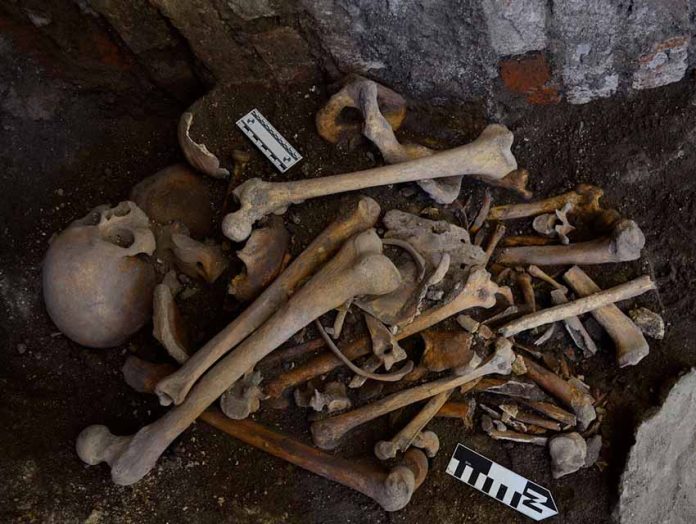
19th century Mexican remains found in Puebla city by INAH
The find was part of a discovery of a group of graves in the Saint Francisco Javier Temple in Puebla city. INAH

Archaeologists have uncovered the remains of a man who may have been killed during a battle against invading French forces in the 19th century.

The National Institute of Anthropology and History (INAH) said in a statement that a team of specialists found a group of human graves at the Saint Francisco Javier Temple in the historic center of Puebla city. The remains of 20 individuals, including children, have been uncovered.

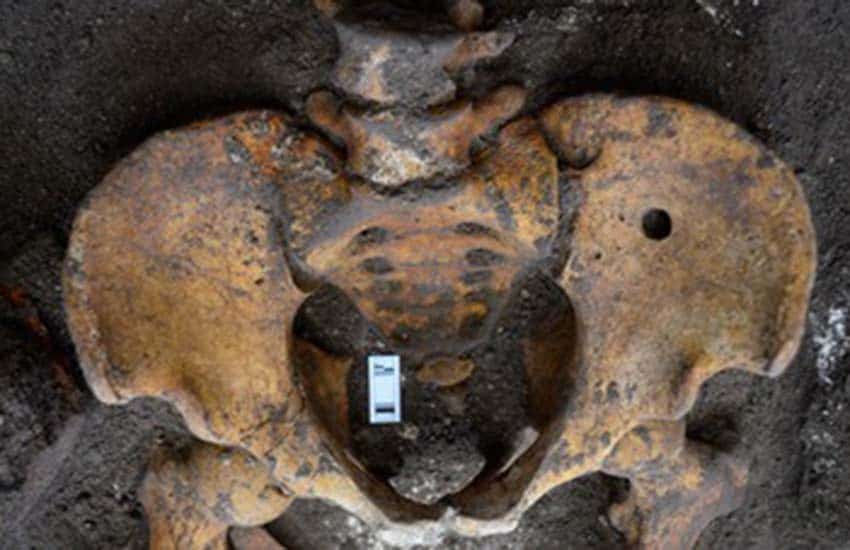
The majority “could be related to 19th-century epidemics,” INAH said, but the discovery of a male ilium, part of the hip bone, with a bullet hole – as well as the bullet that caused the wound – led researchers to theorize they had found the remains of a soldier killed during the second French intervention in Mexico between 1862 and 1867.

The San Francisco Javier Temple was “used as a fortification by the Republican fighters after the French advance on the Loreto and Guadalupe forts in 1863,” INAH said. The temple has also functioned as a hospital and a jail.

Lizbeth Chicas Martínez, an anthropologist, said the man who was apparently shot would have died from his injury. The bullet “probably pierced important organs, and given the time it was unlikely that a person would have survived,” she said.

hip bone with bullet hole from 19th century remains Mexico
The hip bone found by INAH archaeologists with a bullet wound, seen on the right in this photo. INAH

The INAH archaeologists also found a range of items that are believed to have originated in the second half of the 19th century. They include cannonballs, buttons, coffin nails, shoe soles, a metal cross and fragments of Talavera pottery.

“We believe that it’s an unprecedented discovery because on one hand it gives us information about the Jesuit religious complex of Saint Francisco Javier, but it also tells us how the city of Puebla was, at least in the 19th century,” INAH Puebla director Manuel Villaroel told the newspaper El País.

“[It’s] a space that became a stage for the French invasion battles. There are remains of a person who probably died from a bullet wound, as well as elements such as buttons and bullets that can start to give us information about the battle, which occurred in the streets of Puebla … to defend the sovereignty of our country,” he said.

The French, along with the British and Spanish, invaded Mexico in late 1861 after then president Benito Juárez stopped making foreign debt repayments. The British and Spanish left the country after receiving a guarantee they would receive the money they were owed, but the French remained.

Mexican forces defeated the French army at the famous Battle of Puebla on May 5, 1862, but the city fell to the French just over a year later.

With reports from El País

US Consulate issues security alert for Colima

0
cartel battle fire Colima Mexico
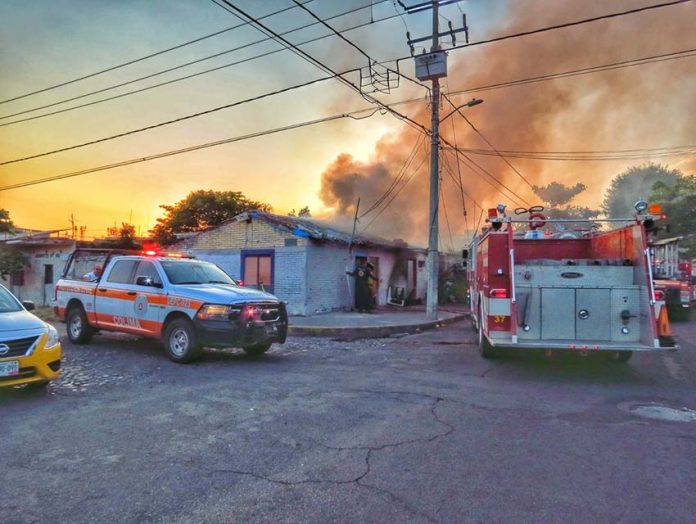
Firefighters respond to a blaze in Colima city that followed an organized crime battle on March 27. Civil Protection

Warning that violent crime and gang activity are widespread, the U.S. Consulate General in Guadalajara issued a strongly worded security alert for Colima, warning its citizens not to travel to the state due to crime and kidnapping amid an ongoing turf war between criminal groups.

While the U.S. Department of State had already included Colima in a Do Not Travel advisory on March 16, that travel advisory was focused on Nuevo Laredo. Colima was included with Baja California, Chihuahua, Coahuila, Durango, Guanajuato, Jalisco, México state, Morelos, Nayarit, Sonora and Zacatecas. It advised increased caution in all other states except Campeche and Yucatán, where normal precautions were recommended.

It also instructed citizens to reconsider travel to Mexico due to COVID-19.

The new advisory, issued on April 1, focuses exclusively on the state of Colima, “where shooting incidents between criminal groups have occurred in public places where bystanders have been injured or killed,” the Consulate General said. It also warns particularly against travel to Colima city.

Colima is the smallest state in the country by population, home to just over 730,000 citizens. However, its modest size and remote location haven’t spared it from becoming one of the most violent places in Mexico: 84 people were killed from February 7 to March 7, almost three per day.

Eleven people were killed and five were injured in the state over the weekend.

The wave of violence started with a prison riot on January 25, in which nine inmates were killed. The violence spread to the streets on February 7 in a territorial battle between the Jalisco New Generation Cartel (CJNG) and the local gang Los Mezcales, a previous ally that switched allegiance to the Sinaloa Cartel.

Colima was Mexico’s most violent state on a per capita basis for five consecutive years between 2016 and 2020, before losing that unenviable title to Zacatecas last year.

Morena party Governor Indira Vizcaíno Silva interrupted 72 years of Institutional Revolutionary Party (PRI) power in Colima by winning the June 2021 elections.

Mexico News Daily