Home Blog Page 1026

A quick guide to Mexico’s expat ‘boat people’ subculture

0
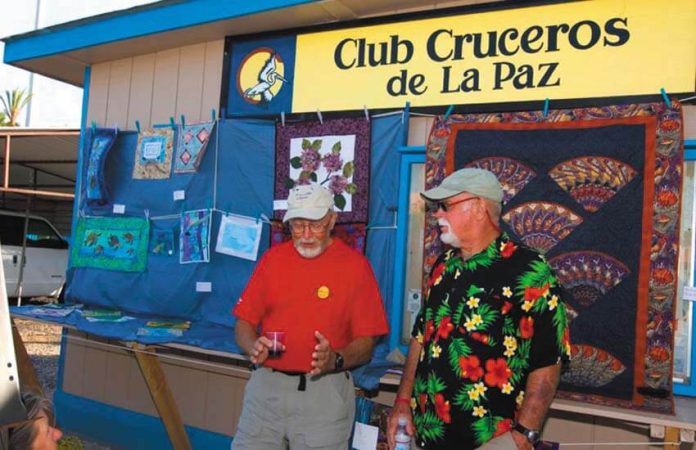
clubhouse near Marina de La Paz
Boaters visiting Mexico display their artwork for judging outside the clubhouse of Club Cruceros de La Paz near Marina de La Paz. Pat Rains

Much has been written about the many people who live in Mexico part- or full-time, but relatively little has been written about Mexico’s different expat subcultures.

One group I have found nothing about is that of folks whose Mexico experience revolves around their use of their own personal boats. A Google search gives only a bunch of ads for rentals. But it’s not hard to understand why boaters would be drawn to Mexico’s coasts.

The vast majority of these boaters come from the United States and Canada. They may spend all or part of the year here and go through immigration and tax procedures similar to us landlubbers. But there is diversity here. Boaters can range greatly in age — from those in their twenties with their tiny, stripped-down first boat to the retirees who have the financial means to live on floating mansions.

Most boaters, no matter what the vessel, seem to prefer the same regions of Mexico. The strongest expat boating culture is on the northwest Mexican coast, including Baja. One reason is that this region — stretching from Puerto Vallarta northward — is closest to the west coasts of the U.S. and Canada but also because it boasts bold landscapes and seascapes, not to mention the Gulf of California, which Jacques Cousteau dubbed “the world’s aquarium.”

If you’re interested in getting involved in the boating community here, some of Mexico’s most popular marinas are in Ensenada, Baja California; Los Cabos and La Paz in Baja California Sur; Mazatlán, Sinaloa; and Puerto Vallarta, Jalisco. There are also increasing facilities in the upper Gulf. The yacht and sailing clubs that provide camaraderie and logistical support to foreign boaters are mainly in the northwest, including Club Cruceros in La Paz and the  Acapulco Yacht Club. However, be careful when approaching organizations with “club” in their name; many are really boat rental businesses.

Cabo San Lucas harbor
Two young sport fishermen fishing for bait in Cabo San Lucas harbor in Dad’s inflatable dinghy with the family’s 65-foot sportfishing yacht behind them. Pat Rains

The southern Pacific coast is not unknown to boaters, with its facilities in Acapulco; Barra de Navidad, Jalisco; Manzanillo, Colima; Ixtapa/Zihuatanejo, Guerrero; Huatulco, Oaxaca; and Puerto Chiapas (in the Tapachula municipality of Chiapas). However, many are side trips for those hanging up north or stopping points for those heading ever further south. But recreational boaters all but ignore Mexico’s east coast. Marinas are absent on this coast with the exception of the Yucatan, mostly in the Cancun area with a couple in Progreso and Campeche.

According to Pat Rains author of Mexican Boating Guide, the main reason for this is that many Canadian and U.S.-East Coast boaters are more attracted to places like the Chesapeake Bay and the Florida Keys, not to mention all those wonderful Caribbean islands.

Ocean-based expat culture in Mexico is naturally quite strongly tied to season and weather, especially hurricane season, which extends from June to November on both coasts. Those who remain in Mexican waters during these months are either in or near large protected marinas and other “hurricane holes” — natural areas that afford protection in storms. Any movement in open water means keeping a wary eye on weather reports, especially for those with smaller vessels.

The other half of the year is nearly storm-free, so this allows boaters to more easily enjoy what Mexico has to offer, whether that is leisurely cruising the coast or parking their vessel somewhere to tour inland to places like the Copper Canyon, the monarch butterfly sanctuaries and Chiapas coffee plantations.

February and March seem to be the sweet spot of the boating season. Many settle in an area where they want to be for a while and where weather conditions favor organized events such as regattas. The largest of these include Sailfest in Zihuatanejo in February; the San Diego Yacht Club’s annual race from Ensenada to Puerto Vallarta.

There’s also the Mexorc and the Banderas Bay regattas, both in Puerto Vallarta in March. These events attract thousands of participants and spectators and often raise money for Mexico-based charities.
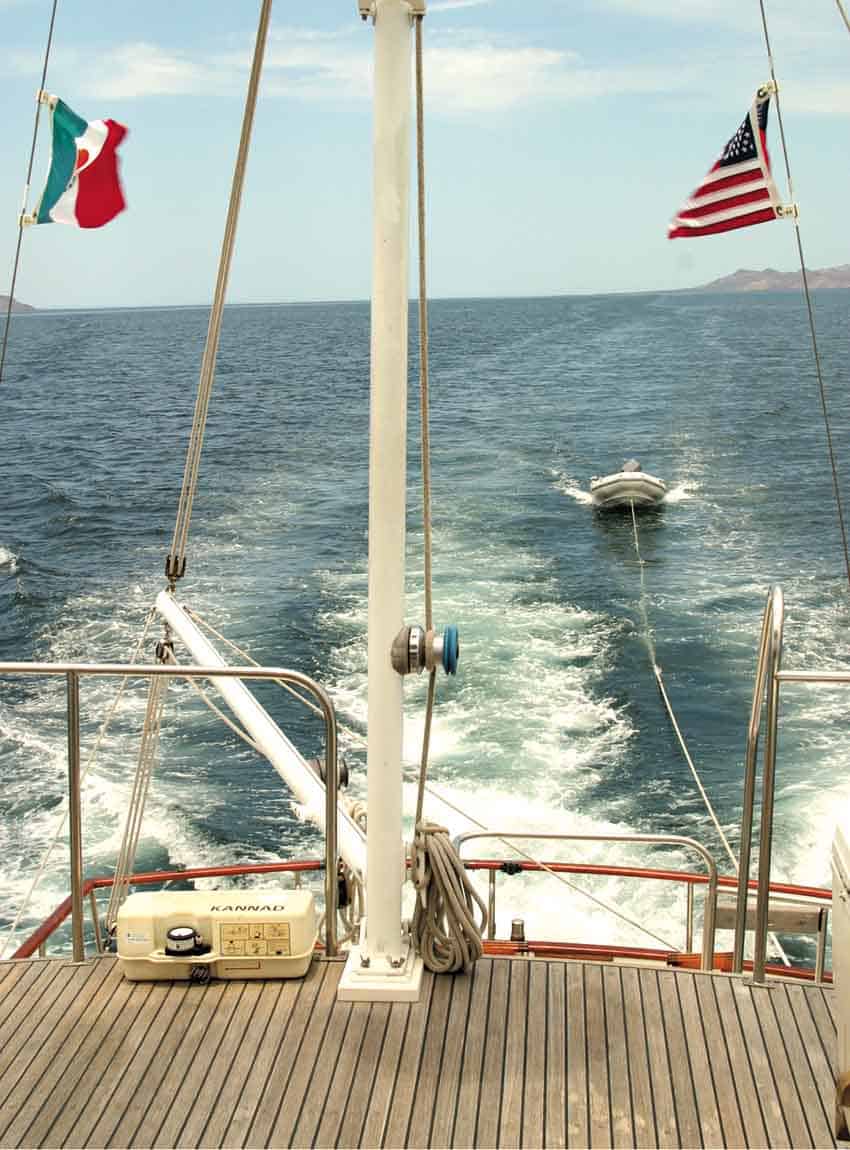
Boat in Los Cabos
International flag etiquette: the Mexican flag must be flown on the boat’s starboard side, and the vessel’s country’s flag flies on the port side. Pat Rains

For many, their Mexican boating season kicks off in October and November with flotillas or rally vessels traveling together from the California coast down to southern Baja and beyond. Going in groups makes the trip more fun and in some ways easier as there are few places for boats to stop between Ensenada and Los Cabos.

One such annual rally is the Cruise Underway to Baja (CUBA), from San Diego to La Paz, and the Baja Ha Ha, which runs from San Diego to Los Cabos.

Ocean-based recreational boating in Mexico has always been popular and continues to grow significantly. One important reason is the efforts of the Association of Mexican Marinas, which lobbied the Mexican government to overhaul the bureaucracy foreign boaters had to face. Previously, there were hours- and even days-long procedures not only to enter and leave Mexican territorial waters but also to dock in each port.

Today, Rains estimates that at least 2,000 boats enter Mexico on the Pacific side each season, with a respectable 1,500 for the Gulf. Although more facilities have been built and many coastal businesses cater to this demographic, there is a serious shortage of recreational marina space, a problem that Rains says will continue into the foreseeable future until there is some significant investment in port infrastructure.

Leigh Thelmadatter arrived in Mexico 18 years ago and fell in love with the land and the culture in particular its handcrafts and art. She is the author of Mexican Cartonería: Paper, Paste and Fiesta (Schiffer 2019). Her culture column appears regularly on Mexico News Daily.

Tlayudas controversy sparks debate: are they really tlayudas?

0
A Oaxacan tlayuda
A Oaxacan tlayuda with cecina, tasajo and chorizo as the principal toppings.

When is a tlayuda not a tlayuda? When it is in fact a doradita, according to some social media users.

Tlayudas, a regional food from Oaxaca that are part of the antojitos (little cravings) family of tortilla-based snacks, are currently in the spotlight after footage of a woman selling them at the Felipe Ángeles International Airport (AIFA) on Monday went viral.

Some social media users asserted that the woman was not selling tlayudas but rather doraditas – antojitos also known as tlayudas that are sold on the streets of México state and Mexico City, especially on and around the zócalo, the capital’s central square.

A tlayuda oaxaqueño, also known as a clayuda, is a crispy, large, round tortilla heated on a comal (griddle) and topped with hot and cold ingredients such as lard, beans, meat (chorizo, tasajo and cecina are common), queso oaxaca (Oaxaca cheese), avocado, radish and salsa.

A doradita, also known as a huarache toluqeño, is an oval-shaped crispy blue corn tortilla commonly topped with cold ingredients including beans, chopped nopales (cactus pads), cilantro, cheese, onion and salsa roja or verde (red or green chili sauce).

¡Doraditas de nopales, en el zócalo! | México Lindo y Qué Rico | Cocina Delirante

Despite the obvious differences between a tlayuda oaxaqueña and a doradita, the latter is also commonly called a tlayuda, and was referred to as such in many media reports about the entrepreneurship of the AIFA doradita vendor, who sold the snacks to hungry passengers who had few other food options at the new airport.

Linguist Yasnáya Elena Gil, a Oaxaca native and Mixe speaker, weighed in on the debate about whether doraditas can also be called tlayudas, writing on Facebook that both snacks can indeed be referred to as tlayudas.

“Both are tlayudas. A lot of people from the Valley of México have called what the woman was selling in the new airport tlayudas. It’s like mole – the first time that I ate mole in a town near Texcoco, [México state], I thought that it would be like the mole I always ate in Oaxaca but it wasn’t. It was very different because there are different kinds of mole just as there are different kinds of tlayudas. Both are tlayudas, calm down,” she wrote.

“One is not more original than the other, nor would it be the first time that someone uses the same name for …two things that are different in one aspect and similar in others,” Gil added.

She also said that the word tlayuda has been used interchangeably with doradita for at least four decades in central Mexico.

“So now it’s also its name, such are linguistic phenomena. … They are also tlayudas if there is a community of speakers that calls them that,” Gil wrote.

How the Mexico City tlayuda differs from that of Oaxaca
How the Mexico City tlayuda differs from that of Oaxaca. gourmet de mexico

According to a Spanish language text written by the academics Michael Swanton and Sebastián van Doesburg, the word tlayuda comes from the adjective tlayudo, “which today means strong, tough, resistant.”

“The (tortilla) tlayuda/clayuda, therefore, contrasts with the soft (tortilla) and the toasted (tortilla),” they wrote, citing a 1982 book – Tradiciones Gastronómicas Oaxaqueñas – by Ana María Guzmán de Vásquez Colmenares.

The academics also wrote that the first written use of the word tlayuda they could find was in a novel set in Oaxaca that was published in 1890. Author Arturo Fenochio Rosas wasn’t referring to the tlayuda oaxaqueña as we know it today but rather used the word tlayudas to describe tortillas that had gone stale and thus become hard.

Mexico News Daily 

#Gritaputo is trending: will fans hold back the chant at Thursday’s game against US?

0
Mexican soccer fans
Mexican fans have a bad reputation for homophobic chants that many hope will improve at this Thursday's match. Twitter

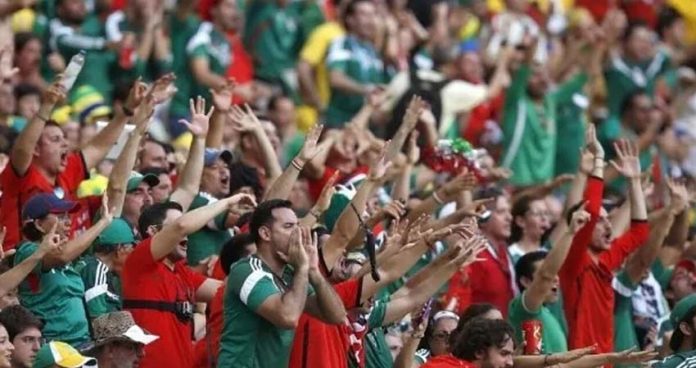
A controversial soccer chant which forced the national team to play two matches in front of empty stadiums is trending on social media, sparking fears that it will reverberate around the Aztec Stadium in the grudge World Cup qualifier against the United States on Thursday.

In what has become Mexican soccer tradition, the homophobic slur “Eh, puto!” is shouted from the stands during matches, normally at the opposition goalkeeper after a goal kick. The Mexico Soccer Federation (FMF) has been trying to end the chant and sanctions by soccer’s world governing body FIFA meant the national team, often called El Tri, was forced to play in front of empty stadiums against Costa Rica and Panama earlier this year.

In an effort to police fans’ chanting, the FMF will implement a new system to track the some 50,000 fans in the stadium on Thursday and try to identify those who shout the slur.

ESPN reporter David Faitelson called on fans to avoid the chant. “The #Gritaputo [chant] has appeared as a trending topic [on social media] just hours before the game between Mexico and the United States. I hope there is awareness, respect and education. It’s just a football game. We are going to make ourselves known for our Mexican hospitality. The game is won, lost or drawn on the pitch,” he said.

If fans continue the chant on Thursday, it could hurt their teams chances of qualifying for November’s world cup in Qatar: any further punishment will see El Tri docked points. That would spell trouble for the side which is in third place, the last automatic qualification spot, four points ahead of Panama with three matches to play.

El Tri faces the U.S. at 8 p.m. on Thursday, a team they’ve already lost to three times in the space of a year. They lost 2-0 in a qualifying game in November and fell short twice to their closest rivals earlier in 2021 in other tournaments.

The U.S. is tied in the standings with Mexico with 21 points, but is ahead on goal difference in the Concacaf (Confederation of North, Central America and Caribbean Association Football) standings. At the top of the standings is Canada with 25 points, meaning it has all but qualified.

El Tri faces Honduras away on March 27 before its final qualifying game at home to El Salvador on March 30.

The “Eh, puto!” chant has also caused problems in the national league: an angry crowd turned violent in December in Morelia, Michoacán, after a game was suspended.

In an unrelated act of soccer hooliganism, at least 26 people were injured during a massive brawl at a professional soccer match in Querétaro city earlier in March.

With reports from ESPN

Sargassum’s early arrival creates worries over Holy Week tourism

0
Sargassum on a Quintana Roo beach.

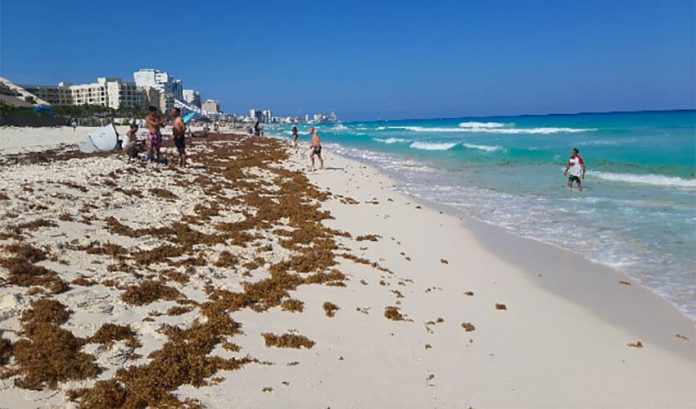
Many tourists who visited the Mexican Caribbean over the long weekend were greeted by the early arrival on some beaches of hefty quantities of the smelly seaweed known as sargassum.

Beach destinations in Quintana Roo saw an influx of tourists for the March 19-21 puente, an annual long weekend to mark the anniversary of the birth of former president Benito Juárez, but authorities have warned that this year’s early arrival of sargassum could cause problems for Holy Week, which starts on April 10.

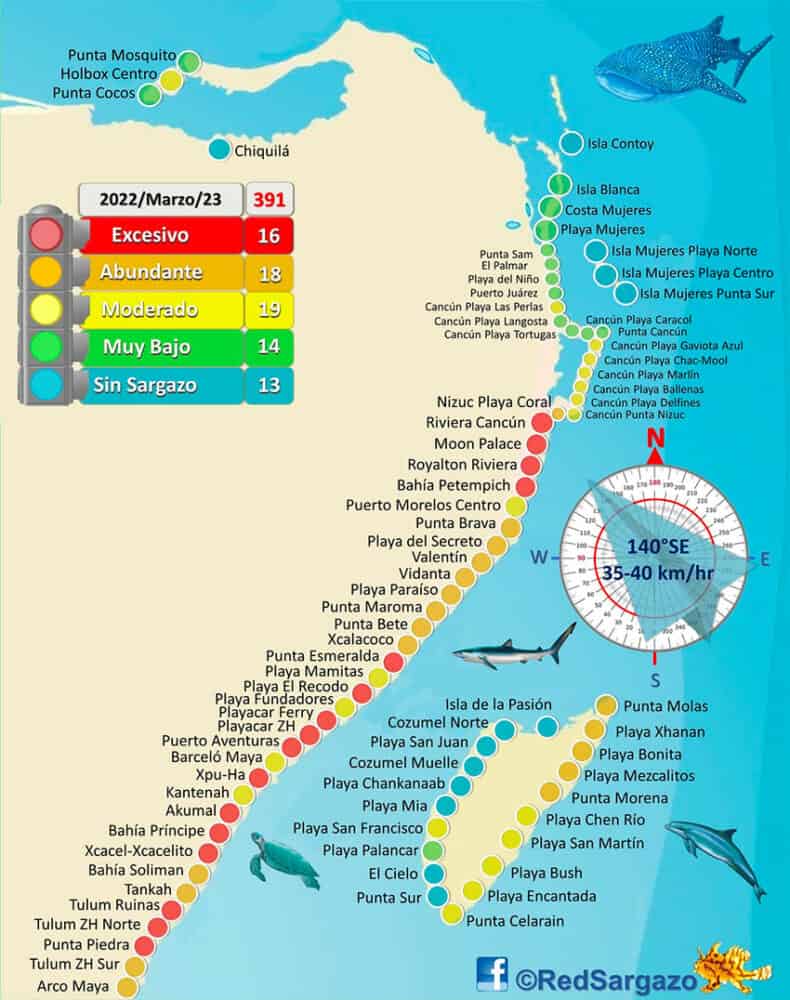
Sixteen beaches in the state already have excessive amounts of sargassum, mainly in the south and on the Riviera Maya, according to the Sargassum Monitoring Network, which published an updated map on Wednesday. Beaches in the north of the state, including in and north of Cancún, are so far less affected.

The network said another map published on Monday by the University of South Florida showed a 1,000 kilometer swathe of sargassum between Jamaica and the Caribbean coast, particularly dense to the north of Honduras, at least some of which should arrive on Mexico’s Caribbean shores at the beginning of April.

The director of the federal office of maritime land zones (Zofemat), Hugo Uribe Nicolás, said the year’s first official sargassum collections started last weekend on Playa del Carmen’s central beaches. More than 50 volunteers and municipal workers collected over 80 tonnes of seaweed using tractors and wheelbarrows.

The sargassum situation
The sargassum situation as of 6:00 a.m. Wednesday.

However, the problem was made worse because the placement of sargassum barriers by the navy had been delayed due to bad weather. The head of the national sargassum strategy, Rear Admiral Alejandro López Zenteno, said that barriers would be installed in Puerto Morelos in the coming days, in Playa del Carmen in the first week of April and then in Tulum immediately after.

He added that a 500 meter barrier had been laid in Mahahual, which will be finished this week.

The director of sales and marketing at the Grand Hyatt Playa del Carmen, Marc André, said he was counting on federal authorities to keep the beaches clean. “The navy has barges to collect sargassum before it lands on the beaches … it causes discomfort, not only visually, but because of the smell,” he said.

The manager of a beach club in Tulum said the seaweed would affect visitor numbers. “Hopefully over the Easter holidays there will be no arrival of sargassum, because that affects the flow of local and foreign visitors,” he said.

Hotel occupancy in some of the state’s primary tourist destinations was around 85% and almost 400,000 tourists visited the Caribbean coast over the long weekend, according to the state Tourism Ministry. It posted photos of pristine beaches on Tuesday, explaining that not all of the beaches in the state are plagued by the seaweed.

Very little sargassum reached Quintana Roo beaches prior to 2014 but very large quantities of the weed have arrived annually since then. Climate change, pollution from fertilizers and changing ocean flows and currents are among the factors cited for the increased quantities, much of which floats up to the Caribbean sea from the Atlantic Ocean off the east coast of South America.

With reports from Milenio, El Sol de México and Reportur

As vote on AMLO’s performance nears, violations of electoral silence law grow

0
A billboard declares, 'AMLO is not alone,'
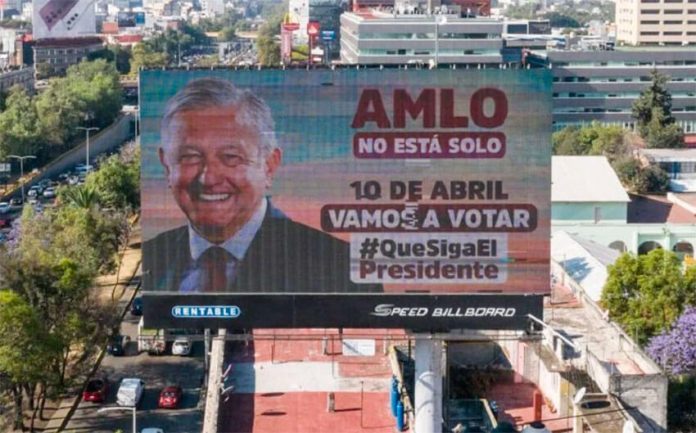
A billboard declares, 'AMLO is not alone,' and urges citizens to vote on April 10.

President López Obrador and other politicians affiliated with the ruling Morena party have violated the electoral silence law several times in the lead-up to the referendum on the president’s leadership.

A so-called revocation of mandate referendum at which citizens will have the opportunity to vote in favor or against López Obrador completing his six-year term will be held April 10.

A veda electoral, a ban on political campaigning and advertising as well as promotion of the referendum that applies to politicians at all three levels of government, took effect February 4 and will remain in place until voting ends on the second Sunday of next month.

The Federal Electoral Tribunal (TEPJF) has confirmed six breaches of the ban that were first flagged by the National Electoral Institute (INE), which is organizing the April 10 vote.

Two related to remarks López Obrador made at his regular news conferences in February and two others related to the president’s dissemination of information regarded as political propaganda during a trip he made to Sonora the same month.

The INE complaints commission has also determined that the president and the federal government have violated the veda electoral several times this month with social media posts. Those breaches have not yet been confirmed by the TEPJF.

The INE has also detected breaches by Morena party senators, 18 governors (some of whom represent other political parties) and Mexico City Mayor Claudia Sheinbaum, who is considered a leading candidate to succeed AMLO as president.

Sheinbaum said on Twitter Tuesday that she had received a second letter from the INE demanding that she take down social media posts it considers political advertising. She said she would comply with the order but added that she would challenge the ruling because she regards it as “biased and excessive.”

Sheinbaum received a similar order last month and was also warned for verbally promoting her government.

The Congress last week approved a decree that modified the electoral silence law to exempt spoken remarks made by officials, but the TEPJF ruled that the change doesn’t apply to the current electoral period because it was already underway when it was promulgated.

Nevertheless, López Obrador was in campaign mode while at the new Felipe Ángeles International Airport for its inauguration on Monday. He told citizens he would be voting on April 10, a remark that could be considered promotion of the referendum.

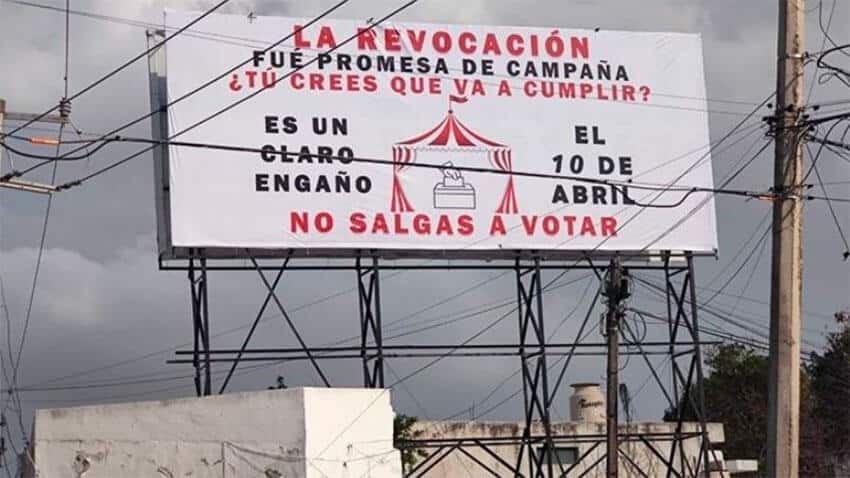
The opposition has its own billboards
The opposition has its own billboards, claiming that the vote is a hoax and urging that citizens not vote.

The president didn’t speak at the official inauguration ceremony but other officials, including Sheinbaum, spoke in glowing terms about his stewardship of the military-built airport.

Political advertising featuring the slogan and hashtag #QueSigaAMLO (AMLO should continue) has also caught the attention of the INE, which estimated last week that almost 5.5 million pesos (US $272,000) had been spent on billboards, signs and flyers.

Suspecting that funding for the advertising didn’t come solely from everyday citizens, the INE said it was investigating whether any political parties were involved, which would be a violation of the law.

“While citizens have full liberty to express their position on the subject of the revocation of mandate process and to publicly support the president of the republic so that he continues in the position, it must be free of interference, public funding and partisan or government interventions,” the electoral authority said.

The news website Animal Político reported Monday that seniors have received telephone calls, political advertising and home visits urging them to vote in favor of López Obrador continuing as president so that the provision of welfare programs and free COVID-19 vaccines doesn’t cease. If Morena or another political party was involved, that would also constitute a breach of the veda electoral.

“There are a lot of … irregularities generated from the government, from those who promoted the consultation [on AMLO’s leadership],” said electoral issues expert Arturo Espinosa.

“They’ve sullied the [electoral] process. What do I mean by sullied? There hasn’t been fairness, there hasn’t been certainty, there has been intervention by public officials,” he said.

López Obrador has pledged that he will respect the result of the referendum, even if 40% of enrolled voters don’t participate, which would mean that its result is not binding. “If people vote for me to resign, I’ll leave,” he repeated last week.

Members of opposition parties have described the vote as a publicity stunt and say that AMLO will use a low turnout as another reason to attack the INE, an institution of which he is an outspoken critic.

López Obrador has criticized it for failing to adequately promote the referendum – an accusation INE president Lorenzo Córdova has rejected – and has spoken of plans to overhaul it.

The Supreme Court ruled last December that the electoral authority must stage the referendum in April, thwarting its postponement of the vote on the grounds that it didn’t have sufficient funds to organize it. Those funds are controlled by the Congress.

With reports from Animal Político

Report on tlayudas sold in new airport sparks racism, classism accusations

0
Azucena Uresti, President Lopez Obrador
A tweet journalist Azucena Uresti, left, made about a food vendor at the new Felipe Ángeles Airport on Monday triggered the ire of President López Obrador. Internet

President López Obrador on Tuesday accused a well-known journalist of racism and classism after she reported on the sale of tlayudas at the Felipe Ángeles International Airport (AIFA), which opened for business on Monday.

Tlayudas are originally a regional food of Oaxaca made with tortillas, but they are sold in other parts of Mexico as well.

At his morning news conference, López Obrador presented a Twitter post by television and radio presenter Azucena Uresti in which she published a video of a woman selling Mexico City-style tlayudas – large crunchy tortillas covered with toppings including beans, nopales and cheese – inside the army-built AIFA terminal on its opening day.

“A woman entered the arrivals hall of the AIFA and started to sell tlayudas to passengers in the terminal. Due to the lack of businesses selling food, long lines formed,” Uresti tweeted in a post read out by the president.

“In other words, a tlayuda isn’t food,” AMLO satirized. “That’s it. But it’s part of the ignorance of the cultural greatness of Mexico and feeling superior to others. That’s racism and classism,” he said.

The tweet that put a CDMX tlayuda vendor in the middle of a class war of words.

Rather than reporting on the gastronomic offerings at the new airport – which Uresti also did do during a broader report on the opening of the new airport that was broadcast on Milenio TV – López Obrador said, the journalist “should be saying, ‘It was a historic day. A great airport was inaugurated.’”

She should have included the opinion of billionaire businessman and civil engineer Carlos Slim, who said the airport was “well-built,” he added.

AMLO claimed that Uresti – whom he criticized earlier this month for her reporting on the International Women’s Day march – and some other journalists who reported on the sale of tlayudas at the airport did so with “disdain.”

“How little they know Mexico, the cultures of our country. … What do they want? … What are tortas called in the United States? Hamburgers,” he quipped. “It’s a lot of racism, classism and anger, isn’t it?”

López Obrador, who frequently makes verbal attacks on journalists, and the media more broadly, also said that he shared the opinion of leftist cartoonist José Hernández, who retweeted Uresti’s tlayuda post with the comment: “Unbelievable how the inauguration of the AIFA uncovered and exacerbated the most miserable classism.”

Uresti responded to the president with another Twitter post, asking him to identify which part of her previous tweet made her guilty of classism.

tlayuda
The food behind the furor: a tlayuda, made with large crunchy tortillas and many toppings. deposit photos

“I reported what was happening without qualifiers or judgment. By the way, Mr. President, I’m still waiting for the proof of everything you’ve accused me of,” she added.

López Obrador wasn’t the only high-ranking politician to make an accusation of discrimination with regard to commentary on the presence of informal vendors at the new airport on Monday, among whom were people selling AIFA and AMLO-related souvenirs.

Asked about criticism of their presence on Tuesday, Mexico City Mayor Claudia Sheinbaum, a close ally of the president, responded that it was “incredible,” given the festive mood at the opening.

“Of course the airport has to comply with regulations, but yesterday was a party day, and a lot of people showed up. From my perspective, it’s really a very discriminatory vision, and, obviously, the airport will function like any other airport. … But yesterday was a day of celebration, and that annoyed them [critics of the federal government] a lot,” she said.

The mayor also responded to criticism on social media of Mexicans who went to the airport on Monday to celebrate the opening of the public infrastructure project and show their support for the government and López Obrador, who chose to build the approximately US $4 billion AIFA after canceling the previous government’s larger, more expensive airport project — which he claimed was riddled with corruption.

Sheinbaum said that those of the opinion that people shouldn’t have gone to the airport have extremely “elitist” and “discriminatory” views. “It really is incredible,” she added.

With reports from El Universal 

System to send earthquake warnings in the form of cell phone alerts

0
Seismic alerts by cell phone are coming soon.
Seismic alerts by cell phone are coming.

Earthquake alerts in Mexico could soon go direct to citizens’ cellphones, giving them more time to evacuate buildings and seek safety.

The federal organization that tracks earthquakes and runs the country’s early warning system, CIRES, announced that it plans to introduce cell phone alerts and said the warnings would reach citizens regardless of network operators, the quality of their internet connections and without the need for them to download an application.

The improved early warnings would be transmitted through the technology Cell Broadcast, which enables CIRES to send out bulk messages to cell phone users in a defined area.

Cell Broadcast technology is not affected by external factors such as saturation of telephone lines or natural disasters.

Cell Broadcast is already being used by at least 18 countries and members of the European Union.

CIRES said that other more well known modes of communication were too unreliable, and could endanger citizens if used to provide earthquake alerts. “Social networks … like other means of information on the internet, eventually suffer interruptions, delays and suspension in their services. This makes them unreliable for early seismic alerts,” it said in a statement.

CIRES revealed its intention to use Cell Broadcast on social media. “CIRES’ telecommunications capacity could be used to broadcast seismic warning through Cell Broadcast technology … Mexico is already working on it. It could put it into operation in the medium term,” a post read.

Mexico City and other states have reacted to warning sirens at least twice this month, but no major damage was reported from either event.

With reports from Reporte Indigo and Milenio 

January’s federal government deficit highest in six years

0
Pemex gas pump
The deficit was much higher in January largely due to a government decision to cover most or all of gas and diesel taxes at the pump.

The government’s federal deficit in the first month of the year was the highest for any January in six years.

The deficit was 10.4 times greater than the public shortfall registered in the first month of 2021 and the biggest reported for any opening month since 2016.

Public spending for January totaled 765.83 billion pesos (US $37.12 billion, according to January average currency exchange rates), while revenues totaled 701.3 billion ($33.99 billion), leaving a deficit of 64.53 billion pesos ($3.13 billion).

The deficit was due to a stagnation in tax revenues, which fell almost 380 billion pesos or 0.2% in annual terms, according to the treasury. That was due in large part to a 56.3% fall in the collection of the Special Tax on Products and Services (IEPS) on petrol and diesel in January 2022 compared to that of January 2021 — following a federal decree for the tax to be lifted to shield consumers from high international prices, the treasury said.

The coordinator of the think tank México Evalúa’s public expenditure program, Mariana Campos, said the government only collected 47% of what it should have from the IEPS on petrol and diesel in January 2022.

Mexican financial analyst Ricardo Cantú
Financial analyst Ricardo Cantú said federal deficits have been a problem since 2008. File photo

On January 8 of this year, the federal treasury instituted a week-long discount on gas taxes, covering 62.25% of IEPS costs per liter of Pemex Magna gasoline bought between January 8 and January 14. This was followed by 100% coverage of IEPS taxes on regular gasoline between February 18 and March 18.

Value-added tax (IVA) collections also fell, declining 9.2% in annual terms.

Campos added that the fiscal deficit is likely to remain high throughout the year, especially if IVA collections do not recover. This could lead to budget cuts, she said.

Ricardo Cantú, founder of the Center of Economic and Budgetary Investigation (CIEP), said that despite the IEPS tax relief, buying gasoline and diesel remained unattractive due to high prices. “The IEPS on fuels has an impact, and if we remove it from revenues … given that prices are rising again, this causes us to collect even less,” he said.

Cantú added that since 2008, federal authorities have faced problems with the fiscal deficit but haven’t taken measures to tackle the issue.

“It’s necessary to make an adjustment in such a way that less is spent or more is collected,” Cantú said. “Although, our room to maneuver at the level of spending is much smaller than at the level of collections because there is spending that you cannot reduce — like pensions.”

Cantú concluded that without a change in course, the government’s burden would increase. “The problem is that if we don’t take responsibility today to spend less or to raise more, it means that we are leaving that problem for the future,” he said.

“That may be the next year, or it may even be until future generations.”

With reports from Reforma

April fairs and festivals: rock music, strawberries, bulls and donkeys

0
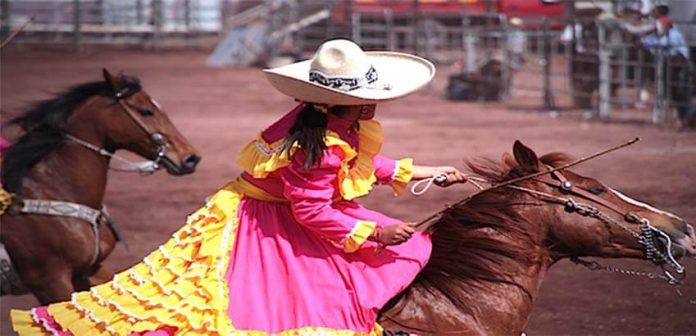
Texcoco horse festival
The International Horse Festival in México state returns this year on April 1 and runs for most of the month.

Spring has arrived, and there are plenty of events and festivities to dive into in April. Among Easter’s festivities is the annual Quema de Judas (Judas Burning) event, often a highly spirited ritual sacrifice of Christ’s betrayer on Holy Saturday, typically involving fireworks, on April 16 or April 17. It happens in many communities around Mexico, maybe even yours.

Also, if you’re a racing fan and are going to be in Mexico City in October, the time is now to buy tickets for CDMX’s Formula 1 racing events, from October 28–30 at the Hermanos Rodríguez Autodrome, with tickets going on sale via Ticketmaster on March 25. They always sell out quickly.

If you happen to have a Mexican credit card, some credit card companies are offering special Formula 1 ticket presales this week before they become available to the general public on the 25th, so check with yours.

• Strawberry Festival, Irapuato, Guanajuato (Now–April 3)

The world capital of strawberries invites visitors to enjoy its annual Feria de Fresas,  fairground rides, watch Papantla Flyers and, yes, try a few strawberries. Also, get your cowboy hats at the ready to see Latin Grammys and Billboard Latin Music awards-winning Mexican singer Christian Nodal, as well as Julión Álvarez, a singer from Chiapas who’s also received nominations for both aforementioned awards. There will also be an homage to the late narcocorrido singer Valentín “El Gallo de Oro” (The Golden Rooster) Elizalde. Buy tickets for the concerts here.

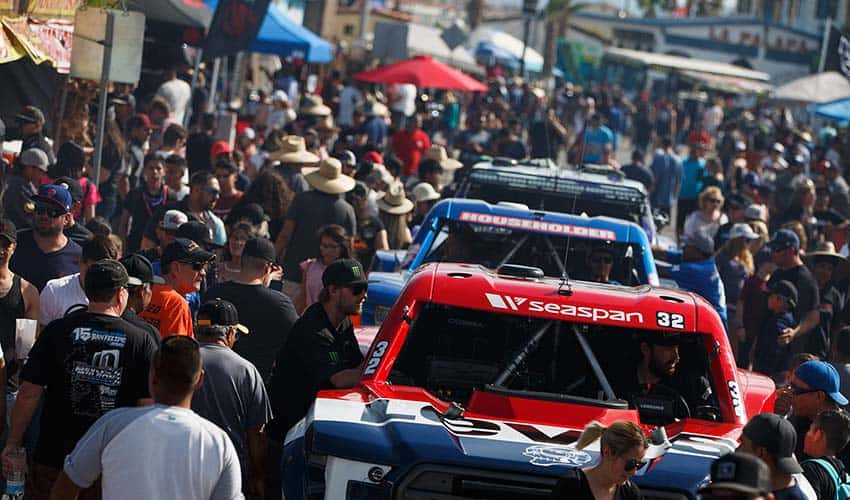
SCORE 250 race San Felipe, Baja California
The annual SCORE 250 off-road desert racing event returns to San Felipe, Baja California, for another year, starting on March 30. File photo

• SCORE San Felipe off-road racing, San Felipe, Baja California (March 30–April 3)

Cars, motorcycles, quad bikes and other four-wheelers line up to race through the desert terrain of Baja California. Baja California’s Ministry of Health is currently requiring COVID safety protocols at all large events, so come prepared to use a facemask, keep a safe distance and encounter checkpoints with sanitizing gel and required temperature checks.

• Tecate Pa’l Norte Festival, Monterrey, Nuevo León (April 1–2)

The heavyweight rock and pop festival returns to Monterrey’s Fundidora Park. Caribou, Maroon 5, Nicola Cruz, the Libertines and the Strokes are some of the biggest names at this year’s event. Available tickets start at 4,068 (US $200).

• Festival Expo Tejupilco, Tejupilco, México state (April 1–10)

A local festival highlighting regional heritage, traditions and customs celebrated in honor of the Señor del Santo Entierro. Get a taste of traditional Mexican culture and food, including drinks typical of the event such as el chorreado — a hot drink made with milk, chocolate and alcohol of one’s choice — and the powerful torito (the little bull) cocktail.

• International Horse Festival, Texcoco, México state (April 1–24)

Horse shows, bull runs, cowboy culture, music and fairground rides all find their place at this annual horse festival in Texcoco, La Feria Internacional del Caballo Texcoco, which dates back to the 1940s. Tickets start at 336 pesos (US $16.50) to see well-known Mexican musical acts like Julión Álvarez, big band Banda MS and cumbia group Los Ángeles Azules.

• Domingo de Ramos Festival, Uruapan, Michoacán (April 9–24)

A folk art event in a region famed for the strength of its handicrafts and artisanship, taking place in various locations in the historic center. There will be artesanía and indigenous clothing contests, indigenous food displays and musical events as well as a revered artisan market with nearly 2,000 participants, this year taking place at Uruapan’s Casa de Cultura. The event been expanded this year to two weeks, so you’ll have more time to browse, but if you’re in the market for artisan goods, go on the first day to find the best items on offer. Find out more details here.

Also, as part of the festival, legendary Mexican songstress Lila Downs will be giving a free concert at Uruapan’s plaza de asta bandera (the municipal park where the Mexican flag is displayed) on April 9 at 8:30.  

• Tuxpan Easter Festival, Tuxpan, Veracruz (April 8–20)

Tuxpan, a city on the Veracruz coast, celebrates its annual Easter Festival, the Feria de Semana Santa. Huapango, the traditional local music, will reverberate and matlachines dancers will be performing. Also, sample the region’s famous cuisine, including pumpkin, prawns and fried plantain dishes.

As part of the festival, there’ll be sports and cultural events and a fairground.

• Zacatecas Cultural Festival, Zacatecas city (April 9–23) 

The 36th edition of the event aims to promote local art and exhibit the state’s cultural wealth with music and a nod to architecture. Theater, dance, opera and other shows will be on the bill at the city’s Plaza de Armas, the Fernando Calderón Theater, the Plaza Miguel Auza, the Plaza Goitia, and the old San Francisco convent. See the full schedule of events here.

• Jerez Spring Festival, Jerez, Zacatecas (April 13–25)

With a hint of rivalry, the historic Magical Town of Jerez, 56 kilometers southwest of Zacatecas city, holds its Feria de Primavera on similar dates. The traditional festival is strong on horses but also features a Queen of the Fair beauty pageant and various sports tournaments in volleyball, basketball and racquetball.

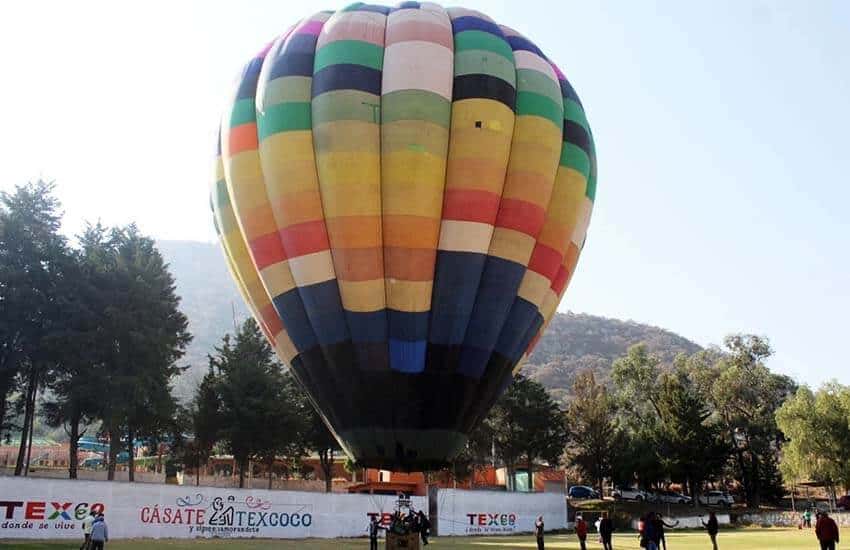
Texcoco hot air balloon festival
Texcoco’s free hot-air balloon festival takes place April 30–May 1. File photo

• San Marcos Festival, Aguascalientes city (April 16–May 8)

This 90-hectare festival in Aguascalientes celebrates its 193rd birthday this year and has something for everyone. The Feria Nacional de San Marcos offers visitors colonial tradition in the bullring, music, nightclubs and family attractions on an artificial lake on San Marcos Island. There will also be a number of Mexican artists performing as part of the fair’s palenque concerts, including Gloria Trevi, Christian Nodal, Edith Marquéz and Pepe Aguilar. Find tickets here, but note that when you are taken to the Ticketshop website, you must click the link in the middle of the screen where it says to “remove all filters” in order to see the available shows.

• Motorcycle Week, Mazatlán, Sinaloa (April 20–24)

The 26th edition of the Semana Internacional de la Moto Mazatlán is expected to attract thousands of bikers from Mexico and beyond. Events will include a beach party, a biker parade and concerts with both Mexican and international rock artists. General admission costs 550 pesos, while 950 pesos will get you a bracelet that provides VIP access. Photos from a previous event show that Carlos Santana once performed here. Buy tickets here.

• Expo Festival Guadalupe, Nuevo León  (April 21–June 12)

A bull-heavy local festival in Nuevo León’s second biggest municipality with over 70 years of tradition. Expo Feria Guadalupe can entertain the kids at the fairground while parents find their way to the beer garden. Last year, the 60 pesos (US $3) at the gate gave people unlimited access to fairground rides.

• The International Image Festival (FINI), Pachuca, Hidalgo (April 22–29)

The festival organized by the Autonomous University of Hidalgo provides a space for artistic creation and visual communication through exhibits, conferences and workshops.

The theme this year is climate change and the invited country is Germany. Previous editions have taken borders, water and populism as themes.

• National Donkey Festival, Otumba, México state (April 29–May 1)

The running of the donkeys in Otumba, known as the Carrera Internacional del Burro, where the beasts of burden are dressed up in local traditional costumes and run five- and 10-kilometer races. If Donald Trump-themed donkeys or a Buzz Lightyear burro sound appealing, then this is a must. Visitors can also watch a donkey polo match. Note that the information about buying tickets that is listed at the link we provided applies to racers, not spectators.

• Puebla Festival, Puebla city (April 29–May 14)

Puebla’s major festival returns: the Feria de Puebla at the Centro Expositor y de Convenciones de Puebla (Puebla Expo and Convention Center).

Bull running and cockfighting events, plus music from famed Mexican artists such as Carlos Rivera, Banda MS and Los Tigres del Norte. Concerts start at about 11:30 p.m. Tickets cost from 300-3,500 pesos (US $15-172). Buy tickets for the concerts here. Any tickets labeled as “Palenque Puebla” are for concerts at the festival.

• Vaivén Festival, Tequesquitengo, Morelos (April 30)

The electronic and alternative festival returns to Tequesquitengo’s stately botanical garden, the Jardines de México. Acts will include Iceland’s Sigur Rós, the British group Jungle and U.S. DJ Porter Robinson. Available tickets start at 1,540 pesos (about US $75).

• Hot-Air Balloon Festival, Texcoco, México state (April 30–May 1)

This free event will take place at the San Nicolás Tlaminca soccer field. If you’re willing to shell out 300 pesos, you can enjoy a hot-air balloon ride as well.

Mexico News Daily

#Savethejunglefromthetrain: More voices join chorus protesting Maya Train route change

0
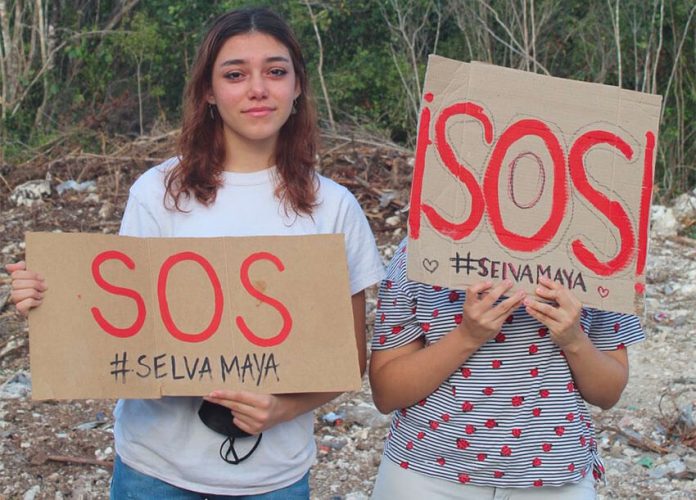
The signs declare an SOS for the Mayan jungle.

Dozens of famous Mexicans as well as environmental activists and others have joined a new campaign against the federal government’s Maya Train project, warning that construction of the railroad in Quintana Roo threatens jungle, subterranean rivers and wildlife.

The social media campaign – which specifically warns of the dangers of construction of section 5 of the railroad between Cancún and Tulum – was launched Tuesday (World Water Day) under the name and hashtag #SelvameDelTren, a play on words in which the Spanish word for jungle is used in place of the Spanish word for save.

Thus, through the use of an inventive double entendre, “save me from the train” becomes “save the jungle from the train” or “save me and the jungle from the train.”

In one of several campaign videos featuring prominent Mexicans, actor and comedian Eugenio Derbez declares that the Maya Train is “destroying the jungle,” which he describes as “our natural heritage.”

The federal government announced in January that the route for section 5 of the railroad would be moved inland after the Playa del Carmen business community complained that the construction of the railroad parallel to Highway 307 would effectively divide the city in two.

Virgin jungle has already been cleared to make way for tracks along the modified route.

“Hundreds, thousands of trees have already been cut down and it could be millions more,” says singer Natalia Lafourcade in the aforesaid Sélvame del Tren video.

“The subterranean rivers and cenotes [natural sinkholes] are being contaminated and it’s worth mentioning that the longest system of subterranean rivers on planet Earth is in that area,” says Arturo Islas, a television host, actor and environmentalist.

In a second appearance, Lafourcade asserts that “thousands of native species” are losing their habitat due to construction of the railroad, while Rubén Albarrán, singer of the acclaimed rock band Café Tacvba, declares that he and others who have joined the campaign are not the government’s “adversaries” but rather Mexicans who “want life for all of us.”

“We don’t need a train that hasn’t been evaluated environmentally and doesn’t comply with the law,” says Maya woman Imelda Kimil.

Roberto Rojo, a biologist and speleologist, advises President López Obrador that there is no hurry to complete the project, which is slated for completion in 2023.

A video that is part of a new campaign in protest against the Maya Train.


“Section 5 will pass over subterranean rivers, caves and cenotes, a unique ecosystem and the longest in the world,” he says.

Albarrán invites López Obrador – who recently flew over a section of the modified route – to “tour the area and listen to the experts,” adding that “we don’t need a train – we need to conserve our territory.”

“And we want to stop the damage to the [Yucatán] Peninsula,” adds Islas. “If not today, when will we do it? The Riviera Maya is crying out to us.”

Actor Bárbara Mori concludes the video by calling for all citizens to come together for Mexico. “Let’s save the jungle, let’s save the water,” she says.

Among the other well-known Mexicans who lent their voices to the campaign in other videos are Kate del Castillo, Omar Chaparro, Saúl Hernández and Ana Claudia Talancón.

“We’re against the Maya Train having to pass precisely through a protected area,” says Hernández, singer of the band Caifanes.

A change.org petition against the modified route of rail project had attracted signatures from more than 90,000 people by Wednesday morning.

President López Obrador responded to the campaign at his press conference Wednesday morning, claiming that its supporters had been contracted by his opponents to criticize and discredit the government.

The opposition “convinces or contracts with artists and pseudoenvironmentalists who are supposedly worried about defending the environment …”

The new social media campaign, which is running on Twitter, Facebook and Instagram, adds to opposition to the Maya Train in Quintana Roo as well as broader resistance to the US $8 billion project, which will also run through Tabasco, Campeche, Yucatán and Chiapas.

One of the opponents is Centinelas del Agua, a non-profit organization focused on the protection of water resources on the Yucatán Peninsula.

“The nation’s budget is being spent on a project that doesn’t make financial sense, which is a threat to ecosystems, which will contaminate drinking water and which will affect Mexicans’ natural and tourism heritage,” said Otto Van Bertrab, the organization’s founder.

Raúl Padilla, president of the Quintana Roo-based Jaguar Wildlife Center, called on López Obrador to visit the region’s caves and cenotes, and inspect the work being done to monitor and protect wildlife.

Jaguars are one species that experts say will be adversely affected by the construction and operation of the 1,500-kilometer railroad.

The Maya Train, one of the federal government’s signature infrastructure projects, has also encountered resistance from Mayan communities, some of which have taken legal action against its construction.

Mayan residents of the states through which the train will run have complained about not being properly consulted about the project, which is slated to begin operations in late 2023, although a federal court recently suspended environmental permits for three sections.

In 2019, the Mexico office of the United Nations High Commissioner for Human Rights raised a range of concerns about the consultation process prior to a vote on the project, among which was that translations of information into indigenous languages were inadequate, if they existed at all.

With reports from El Universal and Reforma