Home Blog Page 1027

Tlacotalpan’s lively Candelaria fest belies its quiet year-round appeal

0
Tlacotalpan, Veracruz Candelmas celebrations
Candelmas and a son jarocho festival fill the colonial Veracruz town in February, but otherwise, it's the perfect quiet getaway.

Arriving at night in Tlacotalpan, Veracruz, the Papaloapan river is an unseen presence riding along beside you. A rural road dotted with streetlamps leads you down a skinny land bridge with the black-as-night river on one side and cattle farms stretching to the horizon on the other.

A hint of fish aroma wafts in through the car windows as you drive, and minus the modern electricity, the area looks very much like it must have when it was filled with sleepy fishing communities before the Spanish conquest.

According to town historian Alvaro Zarrabal, not much is known of Tlacotalpan’s early inhabitants. Neither artifacts nor written remains of their society remain, and nearby ruins that might have given researchers a clue were destroyed long ago. The town’s remembered history is decidedly colonial.

Spanish traders moved here in the 1600s, when their main settlement in Port of Alvarado, some 30 kilometers away, was beset by piracy.  When they moved inland, they established Tlacotalpan for several centuries as a trading center for the entire area.

The small city boomed in the pre-railroad years when waterways were the main form of transport of people and goods throughout the country;  it even boasted one of the many vacation homes of Mexico’s polarizing president Porfirio Díaz.

Tlacotalpan, Veracruz
The Papaloapan River is omnipresent in the town, a riverscape that peeks between Tlacotalpan’s houses.

But when the beginning of the 20th century brought railroads Tlacotalpan’s fortune began a downward trajectory. By 1998, when the town was named a UNESCO World Heritage site, it had spent a generation collecting little but dust in this sultry part of Mexico’s south.

But when the morning’s first rays of sun hit the town’s clay-tiled rooftops, the river gleams like a flood of diamonds on its 354-kilometer trek into the center of the state. While fishing is still a major source of income here, the town has seen a tourism boom since the 1990s and as its yearly Candelaria festival gained fame across the world.

Candelaria is the Mexican name for the Catholic feast of Candlemas, which occurs every year on February 2.

The Candelaria event in Tlacotalpan combines an homage to the town’s patron saint – who is the Virgin of Candelaria, protector of fishermen and the virgin of waterways – with a rambunctious son jarocho music festival, featuring performers from across the region.

Son jarocho, southeast Mexico’s traditional musical genre, comes from the combined influence of Afro-Caribbean, Spanish and indigenous rhythms and musical instruments, as well as zapateado dancing on raised wooden platforms. The music is fast-paced and old-timey, with a haunting singing style that reverberates in the ear long after the notes decay.

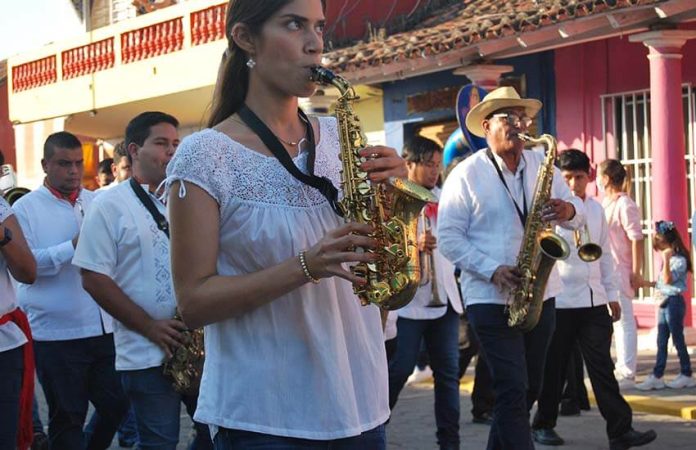
During the festival, founded in part by members of the country’s most famous son jarocho band Mono Blanco, hundreds of bands and individual musicians come together to play stage shows and participate in the fandangos – impromptu jam sessions that happen across the city during those days.
Tlacotalpan
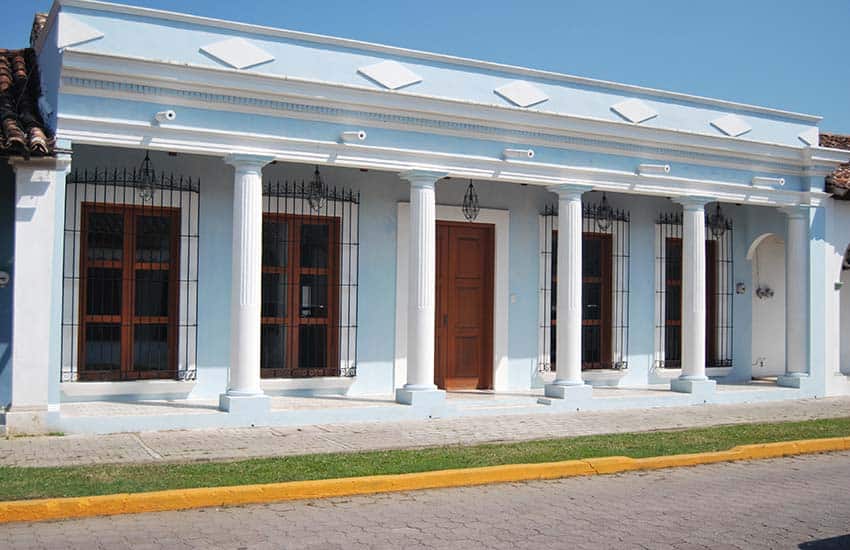
The Classical revival architecture around Tlacotalpan reflects its 19th century boom days before the railroads came to Mexico.

It’s also a time when the city fills with cowboys and tourists, drinking in the city’s makeshift outdoor pubs set up for the occasion and playing games of chance at the many fair tents that line the streets. Hawkers sell jewelry, artists host exhibitions of their work and the local government puts on three nights of fireworks displays that border on dangerous in the city’s main plaza.

One of the festival’s best highlights is the midnight mass on February 1, when bands come to pay homage to the Virgin. On February 2, a procession through the town’s narrow streets, and then a flotilla of boats, accompanies the Virgin on a yearly journey to bless the waterways.

There is also a release of bulls into the city streets – a tradition more hotly debated each year as to whether it amounts to animal cruelty – and concerts every night in one of the town’s main squares – everything from rock to banda music.

The cabalgata (a parade of horses and their riders dressed in traditional regional outfits) that starts the festivities off on the festival’s first night marches right past many of the hotels on Avenida Beltran, a main thoroughfare and the same street where a makeshift bus stop is set up each year for visitors. It’s a good place to set up a plastic chair or lean out a balcony window and watch the festivities without having to go too far from your hotel room.

Even without Candelaria’s revelry, Tlacotalpan is a little gem off the beaten tourism path suitable for most times of the year. The town’s houses glitter in Caribbean yellows, blues and pinks, and their entryways with Roman-style columns and arched front porches speak of another era.

Walk along Chazaro street, and you will get intermittent glances of the massive Papaolapan river in the meters-wide alleyways between homes. Palm trees swaying in the wind, these colonial mansions are legally required to be preserved in the style that they were built, giving the urbanscape a lost-in-time quality.

Down on the riverfront, little seafood eateries sell local delicacies: river shrimp, picadas (handmade tortillas topped with fish and other goodies), fish empanadas, chilpaya pepper salsas and torito – a local beverage often made with the local firewater (often cane liquor) that cloaks its potency in sweet and/or creamy flavors like peanut cream and joba fruit.

For Candelaria, these spaces are packed to the gills with roving vendors selling cheese, regional cookies, jewelry and more, but in the off-season, you can enjoy fresh seafood and a beer by the river with almost zero interruptions.

While less frequently visited most of the year, Tlacotalpan is definitely worth the side trip from the Port of Veracruz or the state’s southern beaches. Good food, a delectable climate and the town’s own brand of colonial quaintness will capture the heart of any traveler wishing to explore further afield and get to know Mexico’s southeast.

Lydia Carey is a freelance writer and translator based out of Mexico City. She has been published widely both online and in print, writing about Mexico for over a decade. She lives a double life as a local tour guide and is the author of Mexico City Streets: La Roma. Follow her urban adventures on Instagram  and see more of her work at  www.mexicocitystreets.com.

Soldier charged with murder in death of golfer-businesswoman during car chase

0
The vehicle in which former golf champion Lidia Villalba was killed.

A soldier has been charged with the murder of a golfer and businesswoman from San Luis Potosí who once ran as a candidate for federal deputy for the Institutional Revolutionary Party (PRI).

Lidia Villalba de Heinz, a former national golf champion, was killed and four other people were wounded on Thursday night while returning to San Luis Potosí city from a golf tournament in Aguascalientes.

A soldier opened fire on the sports utility vehicle (SUV) transporting Villalba in Ojuelos, Jalisco, near the Zacatecas border, killing her. Two women in the backseats of the SUV were wounded in the legs and the driver and a person in the passenger seat suffered injuries to the arms.

Four police officers were also injured. However, there is no record stating that the occupants of the SUV attacked them. The shooting occurred in Jalisco, but the body and the vehicle were found over the state border in Zacatecas, the newspaper El Norte reported.

According to a statement provided to the federal Attorney General’s Office (FGR) by an unconfirmed source, a Jalisco ministerial police vehicle, two military pickups and other municipal security vehicles pursued the SUV on Federal Highway 80 in the direction of San Luis Potosí city, after security officials saw the SUV speeding about 150 meters away from them.

The convoy chased the SUV for about five kilometers and repeatedly tried to cut it off.

The Jalisco police vehicle eventually managed to halt the SUV and the police officers approached the vehicle and demanded the driver and passengers exit.

The statement explains that the police officers fired a handgun and a soldier then fired a mounted machine gun into the back of the SUV.

However, it’s not clear whether weapons were fired from different angles: the newspaper Milenio reported that there were bullet holes visible at both the rear and front, and on the front passenger side of the SUV.

According to the statement, at around 10:40 p.m. a lieutenant ordered the solider to surrender his weapons and hand over his uniform. He was informed he was being arrested for murder and the attempted murder of four civilians.

Jalisco Governor Enrique Alfaro distanced his administration from the murder. “It was in Zacatecas, in a chase. The army is already giving information. It was a matter for the army, they are the ones who will have to give information,” he said.

The Zacatecas-Jalisco border is a territorial battleground between the Sinaloa Cartel and the Jalisco New Generation Cartel (CJNG).

With reports from Milenio, Expansión Política and El Norte

Truckers block highways to protest insecurity, tolls and fuel prices

0
Truckers protest in México state.

Truckers and other professional drivers blocked highways across Mexico on Tuesday to protest against insecurity and high toll costs and fuel prices.

There were blockades and marches in at least 20 of 30 states where protests were slated to be held, the newspaper Reforma reported.

Among the states where roads were at least partially blocked were Aguascalientes, Veracruz, Quintana Roo, Querétaro, Puebla, Jalisco, Chiapas, México state, Guerrero and Guanajuato.

Truckers in Guerrero protesting on the Mexico City-Acapulco highway denounced extortion by police and called for greater surveillance of highways by the National Guard, Reforma said.

A sign affixed to a bus in Querétaro read, “No more murders, no more robberies of vehicles on federal highways,” while one displayed on a truck in Veracruz said “no more abuses by the state police.”

Some motorists complained about delays on social media. In a tweet directed at several authorities, one motorist complained of being stuck on the Querétaro-Mexico City highway for six hours due to a blockade. “We need to move, there are families here,” he wrote.

Members of the truckers’ organization Amotac also protested outside the lower house of federal Congress in Mexico City.

Additional protests are scheduled for Wednesday in Mexico City’s central square and outside the Senate, Chamber of Deputies and Ministry of Communications and Transportation buildings.

“We’ll protest due to insecurity, which has been on the rise. Trucks are being stolen … in various states,” Amotac vice president Carlos García told Reforma.

He said it was difficult for truckers to recover financially if their vehicles are stolen or damaged by criminal groups.

“The presence of security [forces] on highways leaves a lot to be desired,” García said, adding that increases in toll costs are also affecting the financial viability of truckers and trucking companies.

Truckers also complained of rising fuel costs, although the war between Russia and Ukraine, among other factors, hasn’t pushed prices up here as much as it has in some other countries.

In a statement, Amotac put a number of requests to authorities, among which were the provision of greater security on highways; a reduction of toll costs; a reduction in the price of fuel; an embargo on new taxes on the transport industry; and a ban on double articulated vehicles, which the group said are responsible for accidents that have resulted in thousands of deaths.

With reports from Reforma 

Health train to provide services to 10,000 in Sonora

0
Dr. Vagón travels to remote Mexican communities where access to doctors is scarce or nonexistent.

A train that tours the country providing health services to vulnerable, remote communities is about to stop in Sonora, where it will provide free consultations to 10,000 people.

Dr. Vagón (Dr. Railcar) will roll into the state on March 24 and spend four days in each of five Sonora towns, offering free services in Cananea, Agua Prieta, Esqueda, Nogales and Puerto Peñasco.

Dr. Vagón began touring in May 2014 and is operated by the private rail company Ferromex, part of Grupo México.

In almost eight years, the health train has visited 23 states and traveled 88,000 kilometers, transporting a team of 65 medical professionals who work and live onboard. The medical team has attended to some 400,000 patients and provided more than 1.5 million consultations since it was launched.

The 17 train cars boast an operating theater and clinics specialized in gynecology, diabetes treatment and general medicine. Patients can take advantage of consultations in nutrition, psychology, pediatrics, geriatrics, optometry and dentistry and receive blood tests, as well as tests for sexual health. They can even have X-rays, ultrasounds and other expensive tests done.

COVID-19 tests are available for patients that are considered at risk of carrying the virus.

Dr. Vagón has also previously helped in the aftermath of natural disasters. It reached communities in the Oaxaca Isthmus region in Ixtepec and Juchitán after the 2017 earthquake and provided relief after the tropical depression in Sinaloa and Sonora in 2018.

In addition to providing health services to the remote communities it visits, the touring train also partners with Cinemex, Mexico’s second largest cinema chain, to set up a free open-air cinema for residents that has so far screened 328 films.

With reports from Milenio

Toy-maker Mattel to invest 1 billion pesos in its Nuevo León factory

0
Mattel CEO Kreiz
Mattel CEO Kreiz: Mexico could have a strong future in the toy industry.

The multinational toy company Mattel plans to invest more than 1 billion pesos (almost US $50 million) to expand its factory in Nuevo León.

The Montoi plant in north Monterrey is already 200,000 square meters and the expansion will make it the biggest toy factory in the world and create 4,000 jobs, according to the Nuevo León Economy Ministry.

The federal Economy Ministry said the company’s workforce at the plant had grown from 1,600 employees in 2019 to 3,500 in 2022 and it was Mattel’s largest. It added that the toy-maker exports its products to 30 countries.

The CEO of Mattel, Ynon Kreiz, said the plant was key to the company’s operations. “Montoi plays a central role in the operation of Mattel’s global value chain. It creates a key plant for our value chain in the Americas that supports our long-term strategy of growing as a high-performance toy company driven by its intellectual property,” he said.

He added that Mexico could have a strong future in the toy industry. “We believe that Mexico, given its geographical position, has a unique opportunity to position itself as a world toy hub. To contribute to the development of this industry in Mexico, we have supported local suppliers and motivated international suppliers to establish themselves in the country,” he said.

Kreiz also announced that the company plans to duplicate the investment over the next five years to further expand the Montoi plant.

Mattel is an American manufacturer founded in 1945 and headquartered in California. Among the products and brands in its portfolio are Barbie, Hot Wheels, Fisher-Price, American Girl and UNO.

The name Mattel is a blend of the names of two of the company’s founders, Harold Matson and Elliot Handler.

With reports from Proceso

Pianist’s win of Russian music award leaves bitter taste

0
anthony tamayo
Anthony Tamayo entered the competition before the invasion of Ukraine. He was named a winner five days after the Russians invaded.

Finding out he was the winner of a Russian classical music competition was a bittersweet experience for a Mexican pianist given his opposition to Russia’s invasion of Ukraine.

Anthony Tamayo won first place in the 19-30 age category of the Empire of Russian Music competition, for which musicians submitted their entries online. He also won a special prize for the best performance of a piece by an Italian composer.

The 29-year-old told the newspaper Reforma that he was notified of his victory on March 1, just five days after Russia began its large-scale invasion of Ukraine.

“With the war, finding out I was the winner was a bucket of cold water,” he said. “On the inside I felt very proud but cold at the same time.”

Noting that he received some negative comments when he shared news of his victory on social media, Tamayo acknowledged that it’s not the best time to win a Russian competition.

He was also advised not to travel to Moscow, where prizes will be awarded and competition winners are scheduled to perform later this year. The pianist is supposed to receive a cash prize of 2,500 euros, but the competition organizers have warned there could be a delay due to the recent devaluation of the ruble.

Tamayo told Reforma that he condemns war and supports the people of Ukraine, including two Ukrainian musicians he met at previous international competitions.

“I’ve thought a lot about this prize, my first in Europe. I believe that art has nothing to do with war. I’m against war,” he said.

“I don’t think that [Russian President Vladimir] Putin needs to be murdering people in this way. I would say that he is a murderer,” said Tamayo, whose piano teacher is Russian.

Irina Shishinka is also a professor at the National Institute of Fine Arts in Mexico City and was a member of the Empire of Russian Music jury, although she was barred from adjudicating her student’s performance.

When Tamayo submitted his entry to the competition Russian war drums were not yet beating, and the pianist was still  recovering from a nasty injury.

When he recorded his solo piano piece, Tamayo was still in therapy for a serious fracture of a finger on his left hand that he suffered when he was hit by a bus. He needed surgery and without medical insurance had to come up with 70,000 pesos (US $3,450) to pay for it.

It was his last chance to participate in the Empire of Russian Music competition as Tamayo turns 30 this Friday and will be too old to participate in the next edition.

While it’s unlikely that he will travel to Moscow, the pianist hopes to perform at another concert the competition winners are slated to offer in Rome, Italy, in September. He made it clear that he believes that music – and art more broadly – is a force for good in the world.

“Artists are not causing this war,” Tamayo said. “Music knows no wars, borders or religions.”

With reports from Reforma 

AMLO criticizes US for quick support of Ukraine while stalling on Central America

0
lopez obrador
'Support for our Central American brothers hasn't been approved in four years,' the president said at Tuesday's press conference.

President López Obrador on Tuesday questioned why the United States Congress is taking so long to approve aid for Central American countries when it promptly authorized resources to help Ukraine in its war against Russia.

The United States Senate gave final approval to a US $13.6 billion emergency military and humanitarian aid package for Ukraine earlier this month.

Speaking at his regular news conference, López Obrador said that in a meeting last week with United States Secretary of Homeland Security Alejandro Mayorkas he insisted on the need for the U.S. to support El Salvador, Honduras and Guatemala in order to stem migration.

“Nobody leaves their community, abandons their family for pleasure. They do it out of need,” he said.

“We’ve been saying this for a long time and we’ve been unable to get a favorable response. … We have to attend to the people of Central America, our Central American brothers, so that they have hope of being able to live with dignity, like they deserve,” López Obrador said.

The president noted that Mexico has extended the Sowing Life tree-planting employment program and the Youths Building the Future apprenticeship scheme to Central America before stressing that what his government wants is for the United States to invest in the region as well.

“We’re proposing that Sowing Life and Youths Building the Future be expanded. We’re already helping but of course we don’t have enough resources,” he said.

The Mexican and U.S. governments announced a new framework for development cooperation in Guatemala, Honduras and El Salvador late last year, but López Obrador said the approval of U.S. funding for Central America has been stalled for four years.

The U.S. Congress “just authorized resources for Ukraine and that’s fine because it’s their policy to protect Ukraine, they’ve decided that,” he said.

“… The United States Congress approved it in two days, I believe, but the support for our Central American brothers hasn’t been approved in four years,” López Obrador said.

“That’s what [Mayorkas and I] spoke about. And it’s not just about employment in Central America but also … the possibility of [Central Americans] obtaining temporary work visas [for the United States], putting migration flows in order, really changing migration policy,” he said.

AMLO also questioned why a commitment to regularize the migratory status of more than 10 million Mexicans who “live and work honestly in the United States” hasn’t been acted upon.

“Why is this initiative stalled in the Congress? Isn’t it important? Why don’t they approve the resources for Central America?” he asked.

“I saw what was approved for Ukraine. … With all respect, it was an amount much greater than what’s needed to support the poor people of Central American and Caribbean countries,” López Obrador said.

“The truth is the [bilateral] relation is very good but there is a lot of bureaucracy there as well. I think that the [United States] elephant is bigger and more rheumatic than ours,” López Obrador said, once again using the world’s largest land animal as a metaphor for cumbersome bureaucracy.

With reports from Reforma and El Universal 

Home construction scheme defrauded more than 100 people in Oaxaca

0
Some of the victims of a construction scam in the Isthmus of Tehuantepec.

A law firm in Oaxaca allegedly defrauded more than 100 people with a home construction scam. Two years after they parted with their cash, the mostly poor victims are still waiting for justice – and to get their money back.

A group of 45 people who say they collectively lost more than 700,000 pesos (US $34,500) are among those who reported the apparent fraud to state authorities. The accused are due to appear in court on Wednesday.

According to a report by the newspaper El Universal, Isthmus of Tehuantepec residents handed over between 10,000 and 20,000 pesos (US $493-$986) each to Ciudad Ixtepec-based law firm Posada y Asocia2 in 2020 on the understanding they were paying for the construction of environmentally-friendly homes that would be completed in just six weeks.

The law firm was promoting an eco-home construction program, and claimed it was collaborating with the global humanitarian organization Action Against Hunger, according to documents the residents received.

However, the homes were never built and the residents have been unable to recover their money.

María de los Ángeles Juárez, a resident of the municipality of Matías Romero, told El Universal that she first heard about the scheme from a woman called Amanda Toledo, a municipal employee in Juchitán who apparently collaborated on the alleged fraud with Posada y Asocia2.

She said that Toledo offered the construction of eight homes for needy people in Matías Romero. The price per house was just 10,000 pesos.

To gain people’s confidence, Posada y Asocia2 showed those interested a model home that was built in a poor neighborhood of Juchitán. The law firm also began construction of one home in Matías Romero, but it was never completed. Ricardo Posada of Posada y Asocia2 said that a lack of building materials prevented its conclusion.

At that time, the law firm had already received eco-home payments from more than 100 people.

“I trusted Amanda and looked for people who really had a need for a home,” de los Ángeles said.

“I started with eight people, but my group grew to 50. Later another group with more than 100 people was created but I’m only speaking about my group, which was defrauded more than 700,000 pesos,” she said.

Oaxaca municipality of Matías Romero.
Many of the people who thought they would get new homes live in the Oaxaca municipality of Matías Romero.

“They’re poor people, all of them had to look for the money in order to hand over 10,000 pesos, … some gave 20,000 pesos for two houses. It really was a fraud,” de los Ángeles said.

She discovered that people in the towns of Juchitán, Ixhuatán and Ixtepec, among others, were swindled by Posada y Asocia2.

The law firm didn’t respond to a request from El Universal to offer its version of events. De los Ángeles said that complaints against 15 people, including Toledo and Posada, were filed with the Oaxaca Attorney General’s Office.

The accused were summoned to a court hearing last Wednesday but didn’t show up. They are scheduled to appear at a second hearing on Wednesday.

One of the alleged victims is Julieta Rueda, a 69-year-old Matiás Romero woman who paid 20,000 pesos for two homes. Unsurprisingly, she regrets handing over her money to Posada y Asocia2.

Among the other alleged victims are the sisters Eva and Elsa Santiago Sánchez, Zapotec textile artisans in Álvaro Obregón, a community in Juchitán.

Other artisans and tortilla chip makers were also deceived by the law firm, El Universal reported, noting that one group of 32 women gave 220,000 pesos to Posada y Asocia2 and spent more than 400,000 pesos on foundations for the promised eco-homes.

Some women were convinced to buy a home after they were given rice, beans and sugar free of charge, said Eva Santiago.

“In the town of Álvaro Obregón the women are poor and survive with what they sell. A lot pawned their jewelry, sold their animals and asked for loans to be able to give the money [to Posada y Asocia2],” she said.

“… We believed in Ricardo Posada because we needed a home, … but we were deceived,” said tortilla chip maker Rosalida Pineda López.

With reports from El Universal 

National soccer team at risk of losing berth to World Cup in Qatar

0
Players on Mexico's national team
Players on Mexico's national team in training this week for Thursday's game against the US.

The national soccer team is on a nervous home straight in its bid to qualify for the 2022 World Cup in Qatar.

El Tri, as the team is commonly known, has three qualifying games remaining and sits in third place in the Concacaf (Confederation of North, Central America and Caribbean Association Football) standings.

However, a win by either Panama or Costa Rica could see the national team lose the opportunity to compete among the world’s 32 best soccer nations in November.

Only the top three of the eight Concacaf nations will automatically qualify for the World Cup, while the fourth-placed team has a chance to qualify through an inter-confederation playoff match.

Mexico’s team faces the United States — a team they’ve already lost to three times in the space of a year — on Thursday at Mexico City’s Aztec Stadium at 8 p.m. They lost 2-0 in a qualifying game in November and fell short twice to their closest rivals earlier in 2021 in other tournaments.

The U.S. is tied in the standings with Mexico with 21 points, but is ahead on goal difference. At the top of the standings is Canada with 25 points, meaning it has all but qualified.

Mexico’s dreams of Qatar were looking particularly shaky near the end of January when the team played out a stalemate at home to Costa Rica, but a crucial 1-0 victory over Panama on February 2 will have come as sweet relief to the country’s soccer faithful.

El Tri faces Honduras away on March 27 before its final qualifying game at home to El Salvador on March 30.

If the team drops four points from its final three games, players’ plane tickets to the Middle East could be in jeopardy. If they can win two matches out of three, they’ll be safe.

The Stars and Stripes will be without a full strength lineup for Thursday’s match after Juventus player Weston McKennie and Barcelona’s Sergiño Dest were forced to pull out because of injury.

El Tri won’t be at full strength either: goalkeeper Jonathan Orozco and midfielder Rodolfo Pizarro have both ruled themselves out of the match.

With reports from El Universal, Marca and La Razón

AIFA: Transportation issues, lack of services cause inconveniences for travelers

0
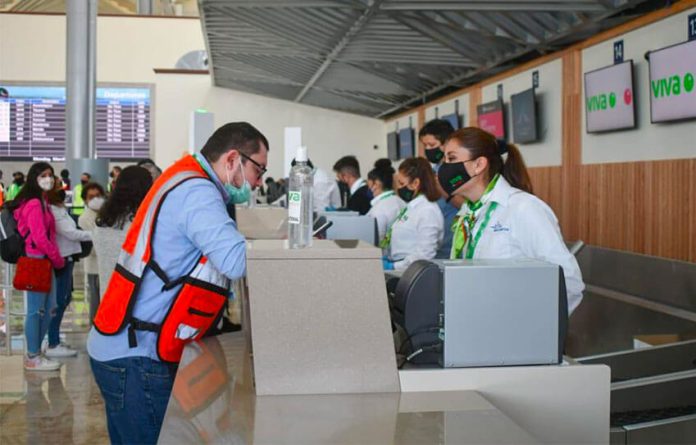
Passenger checkin counters at AIFA.

A lack of services in the terminal building of the Felipe Ángeles International Airport (AIFA) and difficulties getting to and from the new facility marred the experience of travelers who used the airport on its first day of operations.

Banks, currency exchange offices and food and beverage outlets at the AIFA – located approximately 50 kilometers north of Mexico City in México state – were not operational on Monday, according to a report by El Universal.

An information kiosk employee told the newspaper that banks and exchange offices will open in the coming days.

“There will be an HSBC and BBVA but they’re not operating today. There are no food outlets [open]. There will be more services as activities at the airport normalize,” the employee said.

While the services usually on offer at an international airport were not available, a number of informal vendors set up shop, hawking merchandise that included AIFA-related memorabilia. One enterprising woman set up a tlayuda stand and attracted a long lineup of hungry customers.

A resident of the Mexico City borough of Álvaro Obregón who traveled to the AIFA to take the inaugural flight to Caracas, Venezuela, described the new airport as “modern and very nice” but added that some fine-tuning is needed.

Ernesto Rodríguez also said that the installation of road signs to direct motorists to the facility from Mexico City would be helpful.

Alejandro Ortega told El Universal that getting to the airport from Huixquilucan, a México state municipality some 70 kilometers away, took almost three hours because navigation apps weren’t familiar with the route.

“It was a disaster honestly,” he said, explaining that the protracted route selected by Waze and Google Maps added 1 1/2 hours to his travel time.

“It took us almost three hours; two hours and 48 minutes,” said Ortega, whose mother-in-law was booked on the flight to Caracas which, like many other incoming and outgoing services on Monday, wasn’t on time.

Passengers who arrived at the AIFA on the first flights into the new airport also faced transport problems. Those who chose to leave on a Mexibús service endured wait times of over an hour due to the limited number of buses in operation, El Universal reported.

Passengers looking for a taxi found few options and high prices. An official at the sole taxi stand said that demand for taxis exceeded expectations. The 33 taxis that were dispatched to the airport to provide initial service were quickly taken, he said.

El Universal reported that a taxi trip to the center of Mexico City cost 812 pesos (US $40), while a journey to the southern neighborhood of Portales was slightly more expensive at 890 pesos. Hiring a car was cheaper, with companies such as Hertz offering a vehicle for 550 pesos per day with a 200-peso fee for dropping it off in central Mexico City.

Some passengers complained about the lack of internet signal to arrange a pick up via Uber, but there were reports that ride-sharing companies were prohibited from entering the AIFA precinct.

Private companies offered van and bus services to destinations such as Santa Fe, the Mundo E shopping center, the Observatorio bus terminal and Toluca, the capital of México state. The price of tickets was substantially lower than a taxi fare, and the drivers – unlike some people who traveled to the AIFA on Monday – presumably knew where they were going.

With reports from El Universal