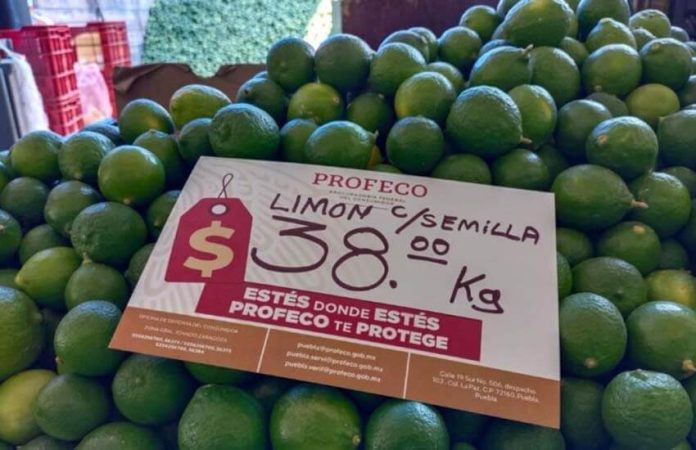
Federal consumer agency Profeco tweeted evidence of lowering prices for limes, but many Mexicans are encountering prices closer to 100 pesos per kilogram. Profeco/Twitter
More than two months after lime and avocado prices spiked, two of Mexico’s most popular fruits remain relatively expensive, according to data from Profeco, Mexico’s consumer protection agency.
In some areas of Mexico City, both lime and avocado cost more than 100 pesos (about US $5) per kilogram. Over the past week, avocado prices in the capital ranged from 58 to 106 pesos per kilo, with an average price of 87 pesos per kilo.
Lime ranged from 40 to 107 pesos per kilo, with Colima (Mexican) limes costing significantly less than Persian limes on average (72 versus 93 pesos per kilo, respectively).
In Guadalajara, avocado prices did not surpass 100 pesos, but the average price around the state was a bit higher, at 92 pesos per kilo. Lime prices were similar to prices in Mexico City.
In Monterrey, the most expensive avocados went for 99 pesos per kilo, with an average price of 88 pesos per kilo. Colima lime sold for an average 63 pesos per kilo.
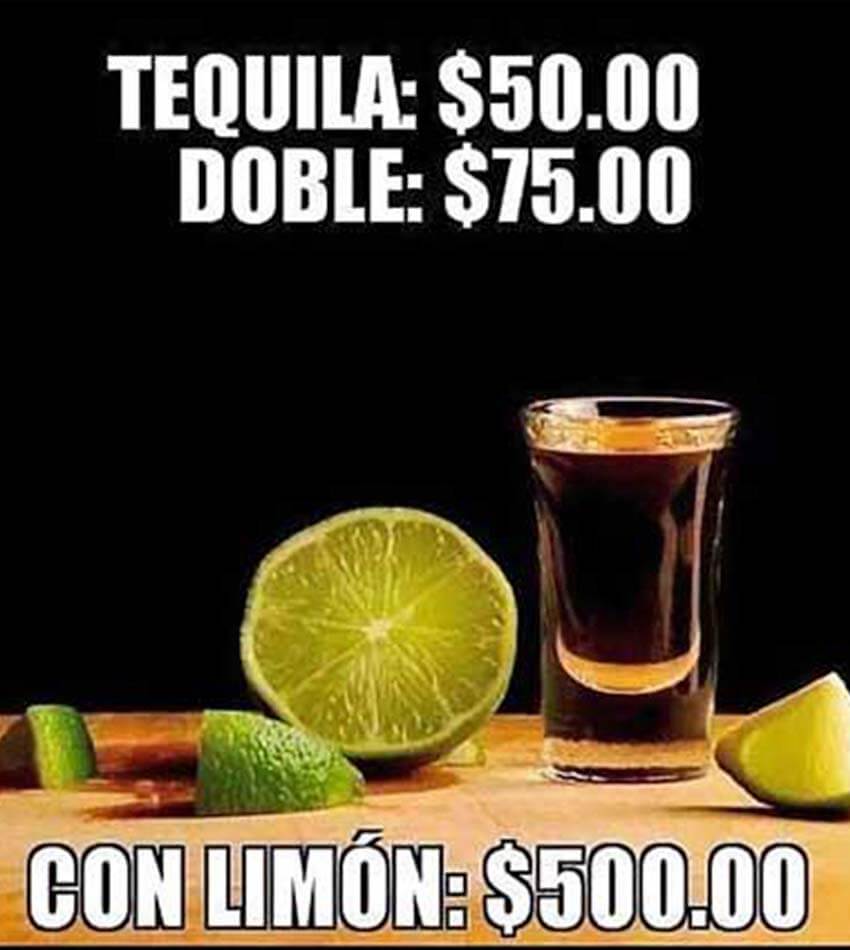
The high prices has brought back a favorite meme about lime prices on social media, joking that a lime for your tequila shot will cost you 10 times the price of the liquor. Internet
The numbers stand in contrast with optimistic statements made by the head of Profeco, Ricardo Sheffield, in late February.
“Last week I found [lime] in many places in Mexico City for 40 pesos,” he said at the time. “… In other parts of the country, especially areas of production, it is already less than 20 pesos per kilo, so it’s now getting back to normal.”
Carlos Anaya, the head of Agricultural Market Consultant Group (GCMA), said that the rise in avocado prices is related to a dip in production compared to the past year, while domestic and international demand remains strong.
Lime prices are down 18% from in the areas where they are grown, “but we keep seeing that supermarkets and markets are still maintaining a high price,” Anaya said.
Prices for the citrus fruit are down 11% from February, but are still almost 150% higher than last year, he added.
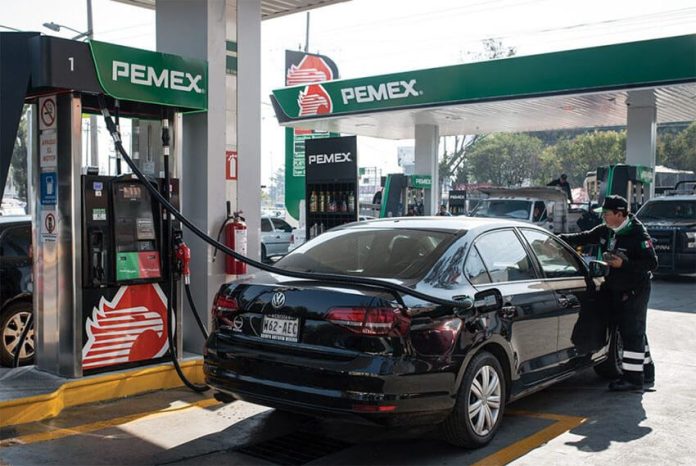
In recent weeks, the federal government has covered the Special Tax on Production and Services (IEPS) in order to keep gas prices down.
Higher than expected oil revenue due to a recent increase in global prices will be more than eaten up by additional government subsidies to keep fuel prices down, according to a Mexico City-based think tank.
In an analysis published Wednesday, IMCO considered three scenarios in which the average price for Mexican crude this year is US $70 (low), $90 (medium) and $110 (high) per barrel. The cost of a barrel of Mexican export crude – produced by state oil company Pemex – was just under $112 at the close of trading on Wednesday.
For each scenario, the think tank estimated surplus oil revenue and IEPS excise tax relief the government will provide to keep costs at the pump down. The government has recently covered 100% of the IEPS on gasoline and diesel, effectively lifting the tax.
In the low scenario, IMCO estimated that surplus oil revenue will amount to 5 billion pesos this year and fiscal stimulus will cost the government 124.3 billion pesos, yielding a net negative result of 119.3 billion pesos ($5.9 billion).
In the medium scenario, IMCO estimated that surplus oil revenue will amount to 122.7 billion pesos and stimulus will cost 277.6 billion pesos, producing a net loss of 154.9 billion pesos ($7.7 billion).
In the high scenario, the think tank estimated that additional oil income will total 247.1 billion pesos in 2022 and stimulus will cost public finances 452.6 billion pesos, yielding a net negative result of 205.5 billion pesos (US $10.2 billion).
IMCO said the net loss in the low scenario – almost 120 billion pesos – is similar to the entire 2022 budget for the Ministry of National Defense. The negative result in the high scenario is almost as high as the 2022 budget for seniors’ pensions, which is 226.5 billion pesos.
IMCO recommended that the government disseminate information about the extent to which it expects to subsidize fuel in the coming months as well as the factors that will guide its stimulus policy.
It also called on the government to provide detailed information about how higher oil revenue and fuel subsidies will affect the nation’s public finances.
The government’s federal deficit in the first month of the year was the highest for any January in six years due to a stagnation in tax revenues, including those collected via the tax on fuel.
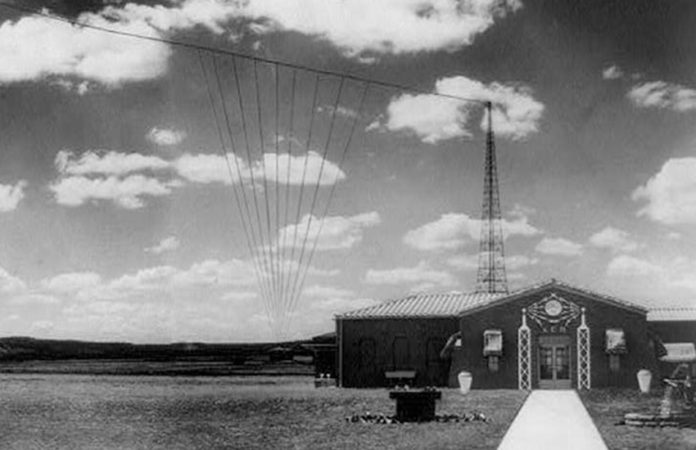
A vintage photo of border blaster radio station XER, in Villa Acuña (now Ciudad Acuña), likely from before 1934. Library of Congress
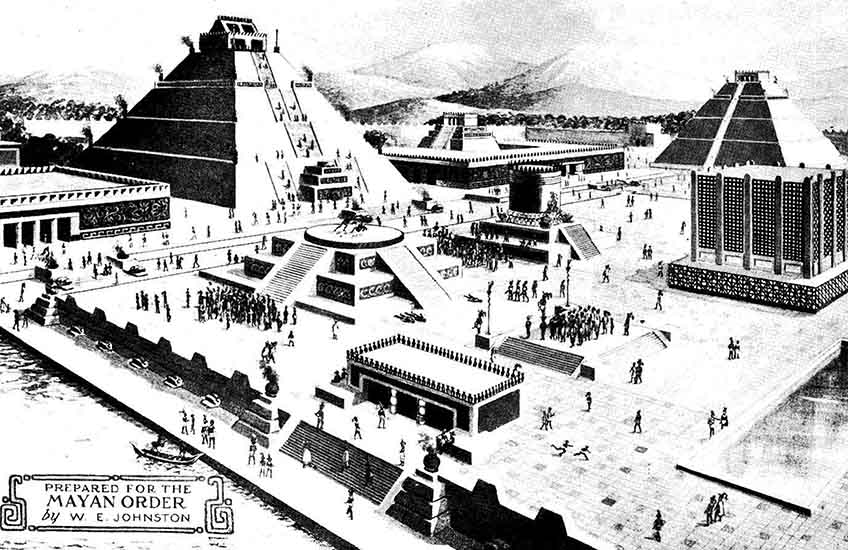
In radio’s early decades, among the oddball attractions found on the airwaves from 1920 to 1940 included a husband-and-wife team of psychics broadcasting from the U.S.-Mexico border under the stage names of Koran and Rose Dawn who became so popular that their extensive following helped them create a secondary income source: an organization called The Mayan Order.
Those who applied for membership and received its periodicals, the founders suggested, could harness the ancient Mesoamerican civilization’s secrets.
The pair were just two of the many psychics and other broadcasters of questionable integrity on the airwaves along the Rio Grande during radio’s beginnings. These characters built “border-blaster” stations of such epic size and scope that they could transmit from the Mexican side of the border into the United States.
Author John Benedict Buescher’s new book, Radio Psychics: Mind Reading and Fortune Telling in American Broadcasting, 1920–1940, unearths Koran and Rose Dawn’s forgotten story, as well as those of about 25 other border-blaster radio personalities on the Rio Grande who were heirs to a longtime American fascination with the occult.
“I was surprised how really dominant this stuff was in the early days of radio,” Buescher said. “Radio historians typically have just waved it off, not really focused on it, didn’t really take it seriously.”
Border radio psychic Rose Dawn had a large US following of believers who listened to her on a radio station built partially in Coahuila and partly in Texas.
From the beginning, the radio stations along the Rio Grande had a colorful history. Pioneers included the controversial John Brinkley, who fled Kansas after hawking a virility treatment in which goat testes were implanted into men at his clinic.
“You have to call them bizarre operations,” Buescher said. “Of course, medical authorities were all over him complaining about it.”
Buescher describes all the border blaster psychics as “really colorful characters, really wild” and “chameleon-like,” embracing “whatever would convince the audience,” including “telepathy, mind-reading, seeing out into the future, looking through space and time, clairvoyance.
“They were naturally inclined, you might say, because of their job, to present themselves as masters of mystery – whatever that means.”
While most recordings of these characters’ radio broadcasts have been lost, Buescher was able to mine several remaining transcripts compiled by the U.S. government in attempts to prosecute these broadcasters for medical quackery or mail fraud.
Brinkley was one such case. After he fled Kansas, he relocated to the Mexico-U.S. border and founded the station XER in the early 1930s. Nicknamed “The Sunshine Station Between the Nations,” it was based in Villa Acuña, Coahuila, (now Ciudad Acuña) and nearby Del Rio, Texas.
An image publicized by Koran and Rose Dawn’s Mayan Order, which promised listeners mystic power from studying “Mayan civilization” under their tutelage.
At one point, it broadcast at 1 million watts. Bill Crawford — author of Border Radio: Quacks, Yodelers, Pitchmen, Psychics, and Other Amazing Broadcasters of the American Airways – called Brinkley’s station “the most powerful radio station on Earth.”
“Nobody had ever heard of that kind of power before,” Buescher said.
Another dubious medical practitioner soon followed Brinkley southward: Norman Baker, who ran a questionable clinic for cancer in Iowa. Baker also established a station at the border — XENT in Laredo, with a transmitter in Nuevo Laredo.
“Eventually, stations like [the border blasters] were set up everywhere from Tijuana to Tabasco, all along the border,” Crawford said, who is working on a documentary about the subject. “The phenomenon lasted quite a while.”
There were occasional bumps in the road: The Mexican government shut down XER in 1934 due to unpaid taxes. However, the station resurfaced the next year as XERA, once more broadcasting at 1 million watts.
“Overall, border blasters offered “much more power and a much greater audience,” Crawford said. “The fact that these stations were the most powerful stations on Earth at the time in little border towns in Mexico, there’s something romantic about it.”
Psychics Koran (William Perry Taylor) and Rose Dawn (née Isabelle Madge Coutant) were among Brinkley’s featured psychics. Taylor was an all-purpose seer, Coutant was an astrologer. Although they lived in Texas, they found inspiration for their material — e.g. the Mayan Order — in Mexico. “To develop their characters, they studied mystic teachings, cultures of mystery,” Buescher said.
Author John Benedict Buescher has penned several books, including one about Gilded Age purported psychic and con artist Ann Odelia Diss Debar.
On at least one occasion, in 1936, the couple visited Mexico. Buescher said he thinks they did so at the behest of Brinkley, who wanted to ingratiate himself with President Lázaro Cárdenas. “They met the president down there,” Buescher said. “He greeted them. [The visit was] in gratitude, Brinkley thought, for the president’s support of the project and his continuing patronage.”
XERA’s downfall occurred in 1939, when Brinkley lost a libel suit in the U.S. against Morris Fishbein, the journal editor of the American Medical Association. Two years later, the station was off the air.
Later, despite Koran contracting polio in 1946, he and Rose Dawn continued to mine Mexico for their material. They still promoted the Mayan Order, and in 1951 funded a genuine Mayan archaeological dig led by retired Tulane University expert Frans Blom in Chiapas’ Moxviquil mountains.
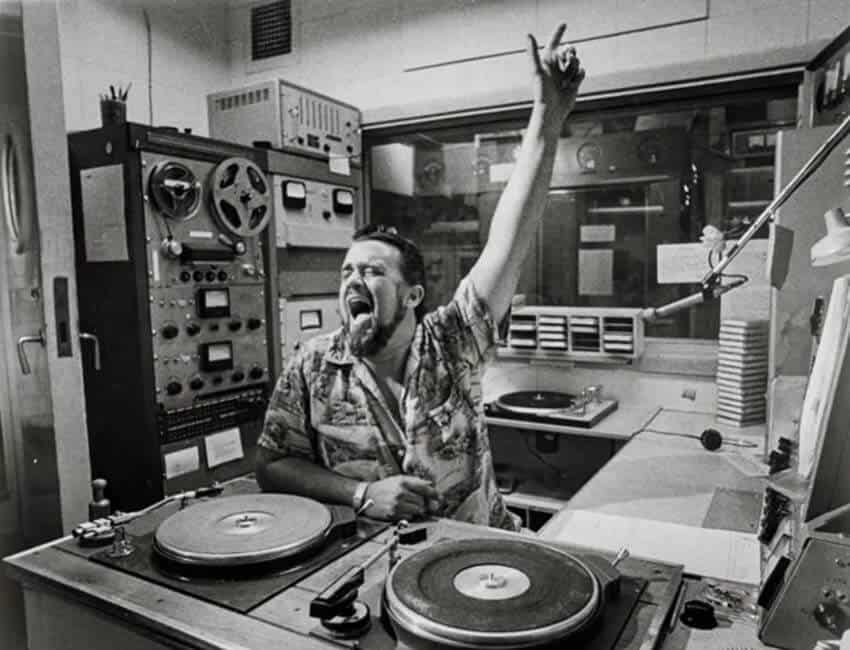
In addition to psychics, border blaster stations gave more legitimate performers their start on radio, including country stars Hank Williams and the Carter family and rock-n-roll disc jockey Wolfman Jack.
“George Lucas was a big fan of Wolfman Jack,” Crawford said. “His first big film, American Graffiti, was about Wolfman Jack on [border blaster station] XERB in Tijuana on Rosarito Beach. It had a great impact on American pop culture.”
Still from Wolfman Jack’s appearance in the film American Graffiti, which recreated his time at Tijuana border blaster XERB.
But Americans were not the only ones impacted by the border blasters.
“Because of the [Mexican licensing] requirements, [the stations] broadcast a certain amount of their airtime in Spanish and with Spanish performers,” Buescher said. “It would popularize Mexican culture with the American people and also, essentially, promote tourism to Mexico.”
And, said Buescher, American radio entrepreneurs “paid a lot of [their profits] to the [Mexican] government, hired a lot of Mexican talent — technical talent, not just performers — [and] trained them on radio technology and concepts.”
Although the border blasters’ heyday has long since passed, many of the stations are still around.
“XERB still operates; I think it’s all sports in English,” Crawford said. “XERF [which is located at the same site as Brinkley’s XERA station but was never a continuation of XERA] still operates in Acuña. Now it’s a Mexican government-owned station. The history continues.”
However, Buescher said of the radio psychics, “there’s nothing quite like that on the air today. There’s the Psychic Hotline and a few psychics online. It’s not as popular as they were back then.”
John Benedict Buescher’s book Radio Psychics is available on Amazon.John Benedict Buescher
Rich Tenorio is a frequent contributor to Mexico News Daily.
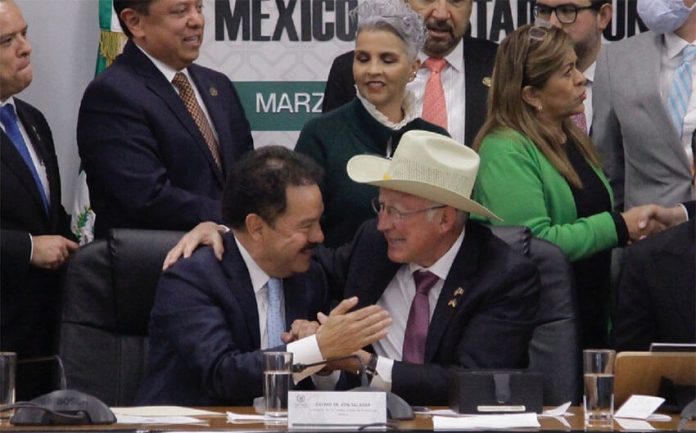
Ignacio Mier, lower house leader for Morena, shakes hands with U.S. Ambassador Ken Salazar at Thursday's meeting of the Mexico-United States friendship group.
United States Ambassador Ken Salazar has rebuked Mexican lawmakers for showing support for Russia despite that country’s invasion of Ukraine.
Speaking to members of the Mexico-United States friendship group in the lower house of Congress on Thursday, Salazar said the two North American countries have to be as united now as they were during the Second World War.
“We have to be in solidarity with Ukraine and against Russia,” the ambassador said.
“I believe that the ambassador of Russia, who was here yesterday making noise, [said] that Mexico and Russia were very close. Sorry, that can never happen, it can never happen,” he told lower house lawmakers.
“In World War II there was no distance between Mexico and the United States, [we were] united against what Hitler and the others were doing to defeat humanity and freedom,” Salazar said.
He said the Russian invasion of Ukraine is something that he thought he would never see and warned that the war could affect Mexico.
“I’m asking you, the deputies who have so much strength … [to see] what Russia did in attacking Ukraine – it’s an attack against freedom and the way of life of all of us,” Salazar said.
“… There can’t be differences [between us]. We have to do the same thing that the two countries did in the time of World War II,” he reiterated.
Morena lower house leader Ignacio Mier Velazco asked that Mexico’s position with regard to the conflict in Ukraine not be distorted.
“We’ve vigorously condemned [the invasion],” he said, asserting that the creation of a friendship group didn’t change Mexico’s position.
“[Mexico] condemns the invasion of one country by another because Mexico has experienced this historically,” Mier said, citing 19th century French intervention and the 16th century Spanish conquest.
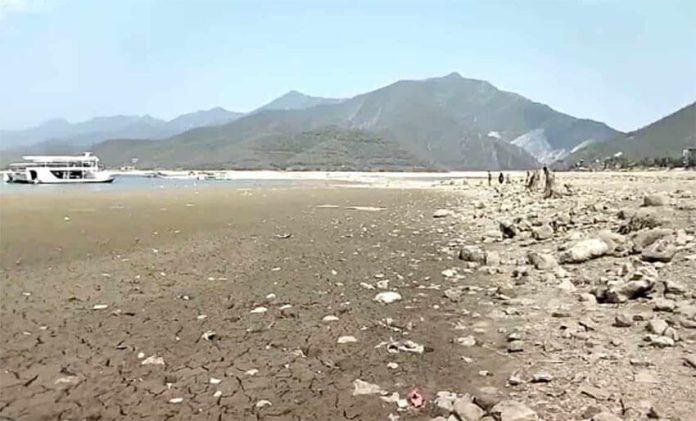
La Boca dam, one of Monterrey's water sources, seen here in March 2022. So far this year, dam water levels are lower than they were at the same time last year. File photo
The Nuevo León government has introduced water restrictions in the metropolitan area of Monterrey as drought continues to plague the northern border state.
The restrictions, which began Tuesday, apply to seven zones of the metropolitan area, affecting more than 5 million people. Water service will be cut one day a week after 9:00 a.m. in each of the seven zones.
Residents of the municipality of Apodaca, for example, won’t have water on Mondays, while people who live in Santa Catarina will have to do without on Saturdays. No end date for the restrictions has been set.
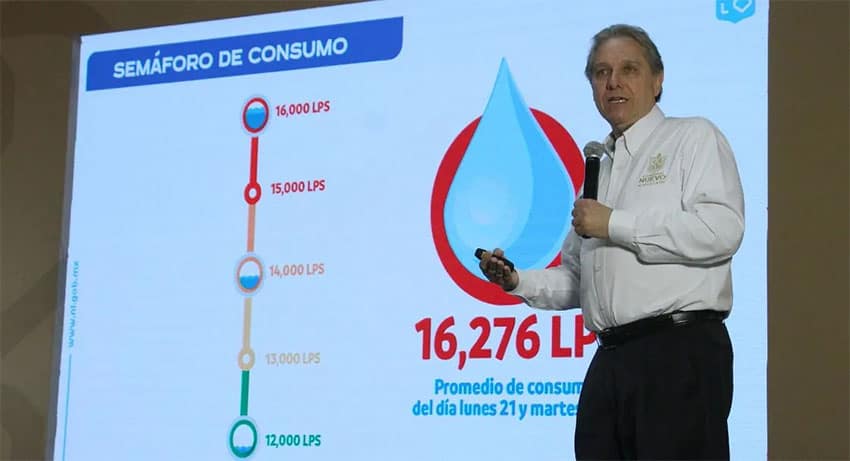
The government expects to save more than 4,000 liters of water per second thanks to the restrictions, but consumption actually increased on Tuesday “due to panic among the population about being left without water,” said Monterrey water official Juan Ignacio Barragán Villarreal.
Juan Ignacio Barragán Villarreal, director of the Monterrey water utility, said panic drove water usage up on Tuesday.
Many Nuevo León residents rushed out to buy water tanks, buckets and other vessels when they heard about the restrictions. They took effect at a time when two of the three dams that supply water to Monterrey are virtually empty.
The La Boca dam, which has a capacity of 40 million cubic meters of water, is approximately 15% full, according to the latest report from Monterrey water authorities, while the Cerro Prieto dam, which has a capacity of 300 million cubic meters, is at just 7%.
Barragán, director of Monterrey water utility SADM, told the newspaper El País that the company obtains 25% of its water from those two dams, while the other 75% comes from subterranean sources.
“It’s not a situation of life or death, we still have 75% of our sources, but [the low dam levels] can affect supply,” he said.
While it’s Monterrey households that are affected by the water restrictions, the agriculture industry is the biggest consumer of water in Nuevo León. According to National Water Commission (Conagua) data, it accounts for 65% of water use in the state.
Some companies with operations in the metropolitan area of Monterrey also use significant quantities of water. Ternium México, a mining and steel manufacturing company, has a concession for over 14.6 million cubic meters of water per year, while Cervecería Cuauhtémoc Moctezuma, a brewer, has a concession for almost 7 million cubic meters annually.
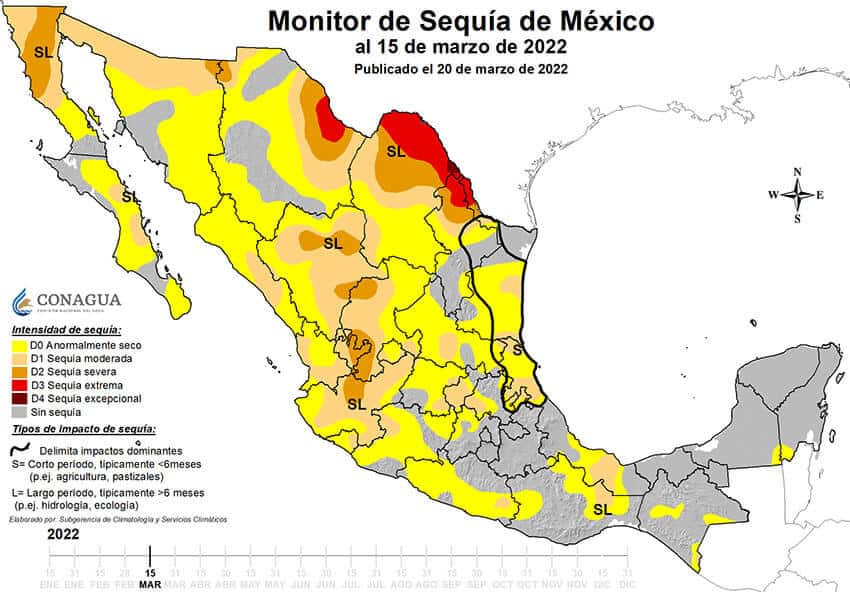
The northeastern border states have been most affected by “extreme” and “exceptional” drought (shown in red and dark red). SMN Conagua
The quantity assigned to Ternium is almost twice the volume of Lake Chapala, Mexico’s largest lake.
How Nuevo León’s water is used is under the microscope due to the prolonged drought in the state. Barragán said that a lack of rainfall has been a problem since 2015, and the situation has worsened in recent years.
Precipitation was well below average both last year and in 2020, causing dam water levels to drop to a critical level, he said, noting that levels below 5% would threaten animals that live in the dams.
The severity of the situation prompted the state government to issue an extreme drought declaration in early February, and with no significant rainfall expected until the middle of the year, it had little choice but to impose restrictions.
“The problem is that we are a drought zone but we don’t operate as such,” Rosario Álvarez, director of the environmental organization Pronatura Noreste, told El País. “There are no limits to the quantity of water supplied, there’s no culture of saving water,” she said.
Álvarez questioned why water restrictions don’t extend beyond households, arguing that in a “context of crisis,” they should also apply to industry and agriculture.
Coahuila and Tamaulipas, both of which neighbor Nuevo León, are also badly affected by drought, currently exacerbated by the La Niña weather phenomenon, according to experts cited by the newspaper Reforma.
According to Conagua, 30.4% of Mexico’s territory was experiencing some level of drought on March 15, up from 13.1% a month earlier. The country’s main dams had almost 6 billion fewer cubic meters of water compared to February 15.
Just over one-fifth of Mexico’s almost 2,500 municipalities – 531 – were officially in drought last week, with some of the worst conditions, including those of exceptional and extreme drought, found along the country’s northern border.
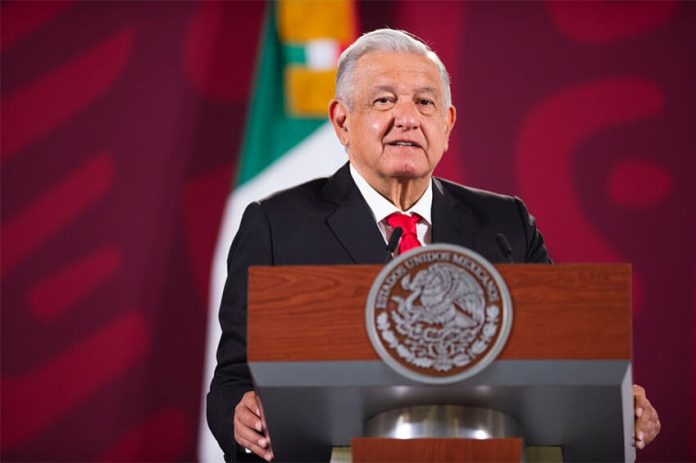
The president shared the rate information at his morning press conference. Presidencia de la República
President López Obrador on Thursday rattled the country’s financial sector by declaring the central bank’s interest rate decision before the official announcement.
López Obrador told reporters on Thursday morning that the five-member board had voted to raise rates by a half percentage point to 6.5%, in a preemptive announcement that was seen as a blow to the bank’s independence.
“Yesterday’s decision was taken unanimously and we respect the bank’s autonomy,” he said at his daily morning news conference.
It is not the first time the president has taken financial markets by surprise. Late last year, López Obrador spooked investors when he abruptly changed his nominee to lead the bank, choosing an obscure public sector economist and raising fears at the time over the institution’s independence.
In 2020 a bill proposed by the ruling Morena party sought to force the bank to buy excess dollars, in another move that critics said undermined the central bank’s autonomy. The proposal was eventually shelved after strong opposition.
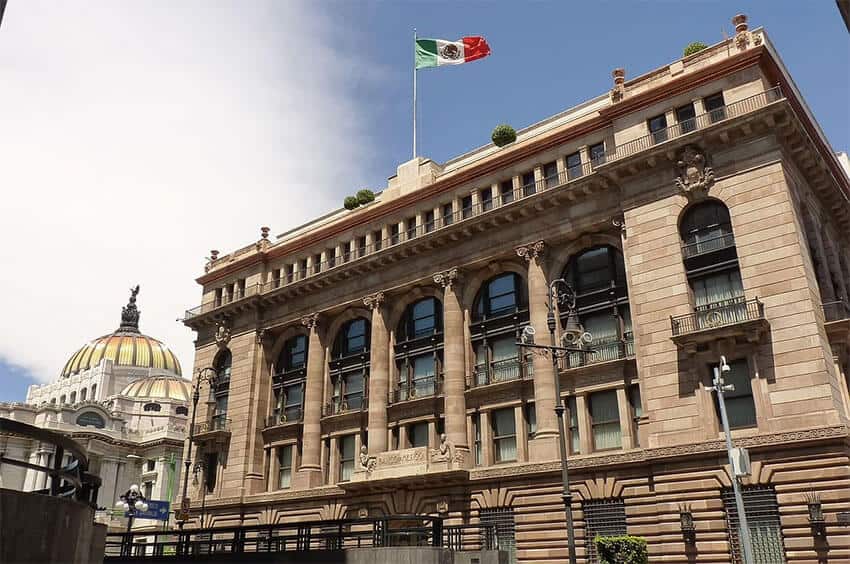
The Bank of México confirmed that the new interest rate would be 6.5% early Thursday afternoon. CC BY-SA 3.0
Experts lined up to criticize the president’s announcement on Thursday, which has again stoked fears that he wants to interfere with monetary policy.
“Since López Obrador entered the presidency, there were a lot of concerns about the autonomy of the Bank of México,” said Gabriela Siller, head of financial and economic research at Banco Base. “With today’s announcement these worries have resurfaced again.”
The Bank of México declined to comment on the news.
The Bank of México became independent in 1994 and has built a reputation in markets for competence. Its new governor, Victoria Rodríguez Ceja, the first woman to hold the post, has sought to reassure markets and opposition lawmakers that she would uphold its autonomy.
Like other central banks around the world, the Bank of México is trying to tame high inflation, which hit 7.29% in Mexico in the first half of March. Analysts have been revising down their expectations for growth.
“I think that this puts the central bank in a bad position,” said Alonso Cervera, chief economist for Latin America at Credit Suisse. “People will be questioning the bank’s autonomy, why does the president know the policy decision ahead of time, who leaked it?”
Thierry Wizman, global interest rates and currencies strategist at Macquarie Capital, said the rate hike was in line with expectations and that the preemptive announcement was an extension of López Obrador’s second-guessing and nudging of the central bank over the past three years.
The Mexican peso reached 20.11 per US dollar, its strongest level since September 2021. Yields on Mexican government bonds across maturities were broadly higher, with the two-year bond yield, which moves with interest rate expectations, rising to 8.46%, its highest since January 2019.
The announcement had been planned for 1 p.m. local time on Thursday. Due to a banking conference taking place in Acapulco — where López Obrador, Mexico’s finance minister and the central bank’s governor are expected to speak, among others — there had been a departure from the standard timings for central bank processes, Bloomberg reported, which had potentially given the president earlier access to the information.
Gabriel Casillas, chief economist for Latin America at Barclays, said that he did not think this would happen again as the bank resumed its typical schedule.
Copyright The Financial Times Limited 2022. All rights reserved.
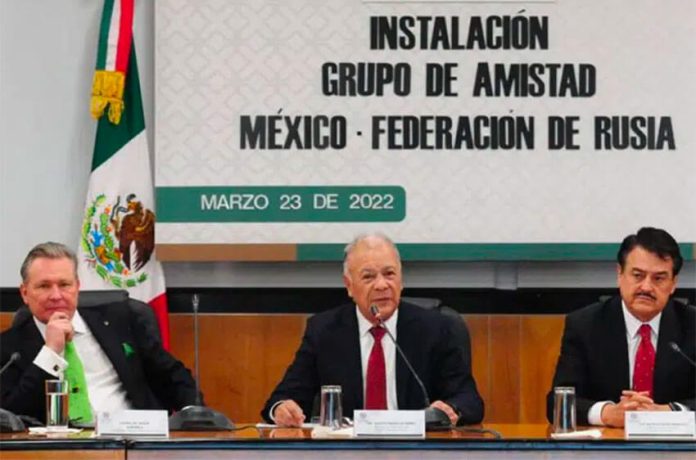
Labor Party president Alberto Anaya speaks at the creation of the Mexico-Russia friendship group, an event attended by Russian Ambassador Viktor Koronelli, left.
Mexico has condemned Russia’s invasion of Ukraine, but that didn’t stop a group of lawmakers from creating a Mexico-Russia friendship group.
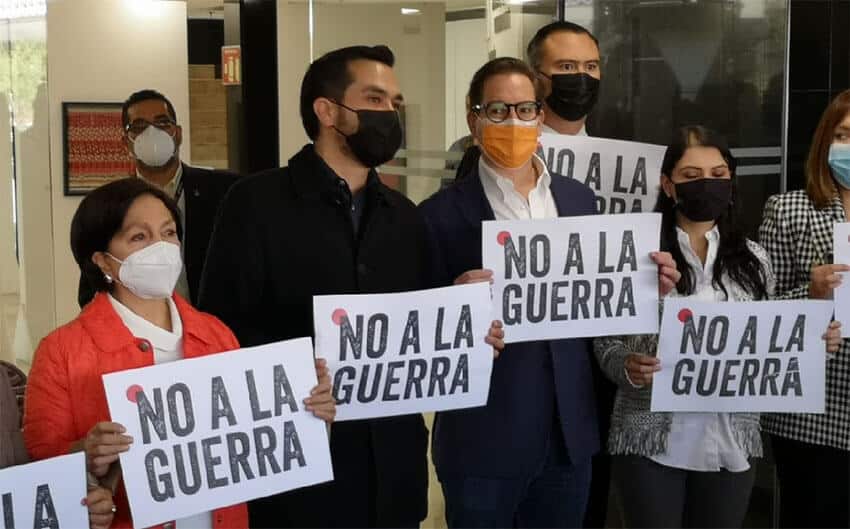
Made up of deputies from the ruling Morena party, the Labor Party (PT) and the Institutional Revolutionary Party (PRI), the group was formally established Wednesday in the lower house of Congress while Citizens Movement (MC) party lawmakers protested against the move.
Russian Ambassador Viktor Koronelli acknowledged the committee’s creation as an indication of Mexico’s solidarity with Russia.
“This mechanism is a sign of support, solidarity and friendship for us,” Koronelli said, observing that the group was formed during “complicated times.”
He asserted that Russia didn’t start the war, but “is finishing it,” condemned fake news about the conflict in the west, charged that Russia is a victim of discrimination and racial hate and offered dubious justifications for the “special military operation” in Ukraine.
Koronelli also acknowledged that Mexico has not imposed any sanctions on Russia.
“We very much respect the position shown on several occasions by the president of Mexico, Andrés Manuel López Obrador ,[and] Foreign Affairs Minister Marcelo Ebrard,” Koronelli said.
“In the world today there are countries like China, India and Mexico that will never reply ‘Yes, sir’ to the orders of Uncle Sam,” he said. “… Our relationship with Mexico has a strategic character and is based on mutual respect of national interests.”
Members of the friendship group – whose creation had been postponed due to the situation in Ukraine – said they were concerned about the lack of peace, but didn’t condemn Russia’s invasion, the newspaper Reforma reported.
PT president and lawmaker Alberto Anaya thanked Koronelli for the “pertinent” information he offered about the conflict in Ukraine, while 92-year-old PRI Deputy Augusto Gómez praised the ambassador for representing the “heroic people” of Russia and “illuminating the thinking” of his fellow lawmakers.
As other party leaders announced the Mexico-Russia friendship group, Citizens’ Movement lawmakers protested the move.
Morena Deputy Armando Contreras claimed that Mexican lawmakers are “always ready to do everything we can to increase the friendship, relations and cooperation between Mexico and Russia in every aspect of the world and life.”
In a Twitter post, the deputy said he had emphasized that “we’ll strive for a peaceful solution to the Russia-Ukraine conflict as well as a prompt meeting of lawmakers from … [Mexico and Russia] to create an agenda that unites our nations.”
Three National Action Party (PAN) lawmakers were slated to join the friendship group, but pulled out at the last minute. Deputies with the conservative party said they didn’t want to be part of the “imprudence and lack of sensitivity” the formation of the group represented.
MC deputies protested its establishment and demonstrated their support for Ukraine, holding up signs that read “No to the war.”
“The best way of showing our friendship with the Russian people is … to isolate its tyrannical government that is massacring … [the Ukrainian] people,” said Salomón Chertorivski, an MC deputy and former federal health minister.
“There are already more than 3 million displaced Ukrainians. With complete force but in a peaceful way we express our rejection of the installation of the Mexico-Russia friendship group,” he said, referring to the number of people who have left Ukraine since the invasion began.
MC Deputy Jorge Álvarez Máynez said the group’s creation was incongruent with Mexico’s condemnation of Russia at the United Nations.
“We don’t have a conflict between two guilty parties; we have a clear invader and … people who are being massacred,” he added.
While Mexico condemned Russia’s invasion in a message delivered by the foreign minister in late February and at a March 2 session of the United Nations General Assembly, López Obrador on Wednesday used different language to describe the country’s position.
“In the case of the war we’re not going to participate in favor or against. Our position is one of neutrality, which has to do with the [non-interventionist] foreign policy of Mexico. Of course we’re in favor of peace and peaceful solution of disputes. Hopefully [there will be] dialogue and an agreement is reached, but we don’t want to be protagonists, to offer our mediation – no. That’s what the United Nations is for,” he said.
The cozying up of some lawmakers to Russia comes at a time when Mexico’s relations with Europe are strained due to López Obrador’s pointed criticism of the European Parliament after it condemned the harassment and killing of journalists and human rights defenders in Mexico in a resolution approved on March 10.
If you are living in Mexico and work full time for a Mexican company, chances are that you have IMSS (Instituto Mexicano del Seguro Social) coverage. But what about the rest of us?
IMSS is Mexico’s answer to socialized medicine. As a contract worker for both Mexican and American schools, I did not qualify, or so I thought. Most expats grapple over the question, private insurance or IMSS?
IMSS is both a viable and an affordable option. It is also tried and true. You can find an IMSS clinic within blocks of your home and even while traveling. The initial process is complicated but the savings makes it worth it.
At 50, my annual premium was US $571 and there are no costs beyond that, such as copays or prescriptions. My daughter was a dependent at no additional cost until she turned 16. Had she been enrolled in a Mexican school; the coverage would have continued for free. Since she was not, I was able to purchase her coverage for $300 annually.
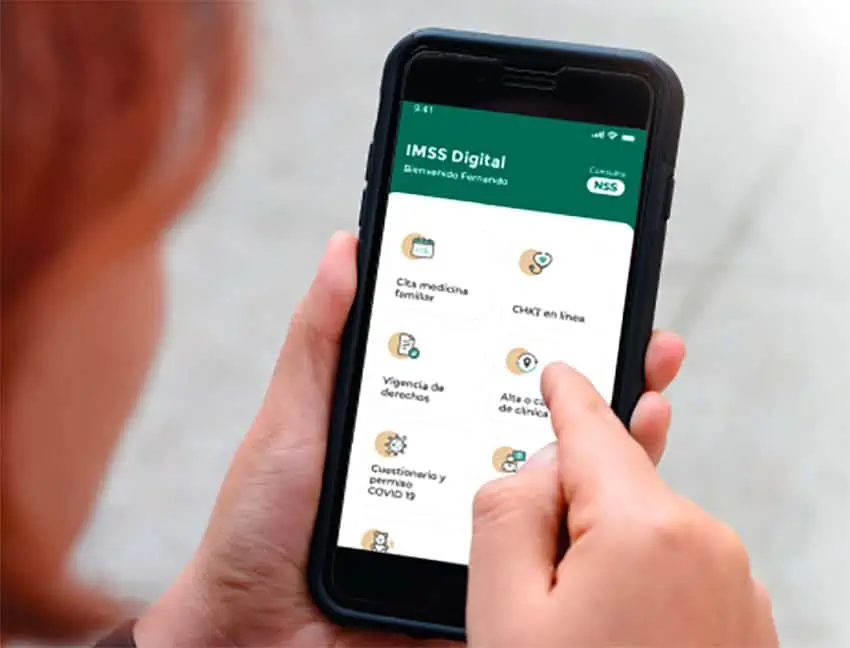
The initial process of getting set up can be frustrating but using the insurance is not. There is an app where you can find your clinic and sub-delegation based on your postal code. First you must create a trámitewhich can be done on the website. This is not difficult if you speak a reasonable amount of Spanish. If you don’t, you will need to find a Spanish speaker to help. You should choose incorporación voluntaria on the site. This will produce your trámite and allow you to print invoices.
I would highly recommend paying for a year at a time. It is possible to pay monthly but that requires you to go to the bank every month. There is no option to pay online. If you are one day late, they will cancel it and you have to start from scratch. Sadly, I learned that lesson the hard way.
Next, take the invoices to the bank and pay them. Any bank should be able to process these transactions. However, if you do not go to your bank, you will need to bring cash. My daughter has a long last name that the system could not handle so IMSS had to print the invoice. This required me to pull cash from an ATM and go to a specific bank near the sub-delegation.
Now here is where it gets tricky. If you are missing a single document when you make your initial trip to your sub-delegation, you will be turned away. There will probably be zero English speakers on staff. They have tried to turn me away due to lack of documents. I knew I had them all which resulted in a friendly disagreement that was ultimately resolved.
If you want to complete the transaction, do not appear frustrated or angry. If you do, you can expect no help. If you are patient and friendly, you will have a better experience.
This is what you will need (original and copies):
Residente temporal or permanante
Your trámite
Invoices with proof of payment (receipts) attached
Two photographs infantil (you can have these made at any passport photo shop)
Birth certificate
A Mexican social security number (de seguridad social). Hopefully you have this. If not, it will require a trip to another office. IMSS will give you the information for the location.
Proof of residence – a bill such as CFE or gas that is less than three months old.
IMSS has a smartphone app to help users locate the nearest clinic among other services.
If you are missing any of these items, you will be turned away until you have them. The processing of paperwork will take some time so bring a book. There also may be a lineup. Some sub-delegations will give you a card for an appointment for another day and others will see you the same day. It is a crap shoot.
Never go on Monday if you can avoid it. Once you have accomplished all of that, congratulations! Go have a drink and some tacos. The hard part is over.
Once your paperwork has been processed, now you need to go to your clinic where they will give you a book that works like an insurance card. They will need one of the photos infantil for the book. There may be a lineup but this doesn’t take any time at all. Depending on your clinic, they may want to do a quick physical and record the results in your book. If not, you should book an appointment which is easily done on their app.
IMSS is great for preventative medicine, vaccinations, and prescriptions. They also have dental care. I have been told it is really great in emergencies but thankfully have no experience with that. After recovering from COVID last year, I went to IMSS to see how it impacted my health. They did a full blood screening, chest x-ray, and even a mammogram while I was there.
That being said, IMSS is not always the best solution. Last May, I required an invasive surgery and decided to go to a private hospital. I found a specialist on the Doctoralia app who spoke English and was able to pay cash for a procedure that required anesthesia and an overnight stay. The total cost was $3,000. I also lost a crown and rather than going to IMMS, because I deemed it an emergency, I just walked around to a few dentists before I found one who replaced it for $25.
There are also some preexisting conditions — malignant tumors, chronic degenerative diseases and congenital diseases, for example — that are not covered by IMSS.
Ultimately, my advice would be to avoid private insurance in Mexico unless you are wealthy. It is outrageously expensive and I don’t trust that it would be available when needed.
IMSS was founded in 1943 and clinics are present everywhere in Mexico. Sometimes you may want to go private and pay cash but IMSS will be there when you really need it.
Jennifer Trujillo is an English and Spanish professor from Texas living in Mexico City.
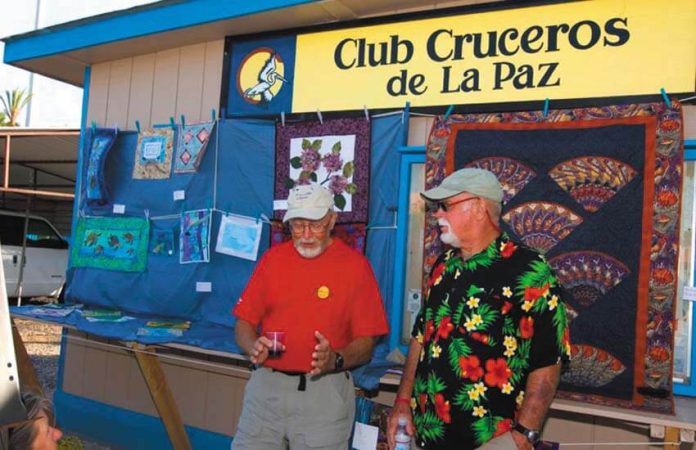
Boaters visiting Mexico display their artwork for judging outside the clubhouse of Club Cruceros de La Paz near Marina de La Paz. Pat Rains
Much has been written about the many people who live in Mexico part- or full-time, but relatively little has been written about Mexico’s different expat subcultures.
One group I have found nothing about is that of folks whose Mexico experience revolves around their use of their own personal boats. A Google search gives only a bunch of ads for rentals. But it’s not hard to understand why boaters would be drawn to Mexico’s coasts.
The vast majority of these boaters come from the United States and Canada. They may spend all or part of the year here and go through immigration and tax procedures similar to us landlubbers. But there is diversity here. Boaters can range greatly in age — from those in their twenties with their tiny, stripped-down first boat to the retirees who have the financial means to live on floating mansions.
Most boaters, no matter what the vessel, seem to prefer the same regions of Mexico. The strongest expat boating culture is on the northwest Mexican coast, including Baja. One reason is that this region — stretching from Puerto Vallarta northward — is closest to the west coasts of the U.S. and Canada but also because it boasts bold landscapes and seascapes, not to mention the Gulf of California, which Jacques Cousteau dubbed “the world’s aquarium.”
If you’re interested in getting involved in the boating community here, some of Mexico’s most popular marinas are in Ensenada, Baja California; Los Cabos and La Paz in Baja California Sur; Mazatlán, Sinaloa; and Puerto Vallarta, Jalisco. There are also increasing facilities in the upper Gulf. The yacht and sailing clubs that provide camaraderie and logistical support to foreign boaters are mainly in the northwest, including Club Cruceros in La Paz and the Acapulco Yacht Club. However, be careful when approaching organizations with “club” in their name; many are really boat rental businesses.
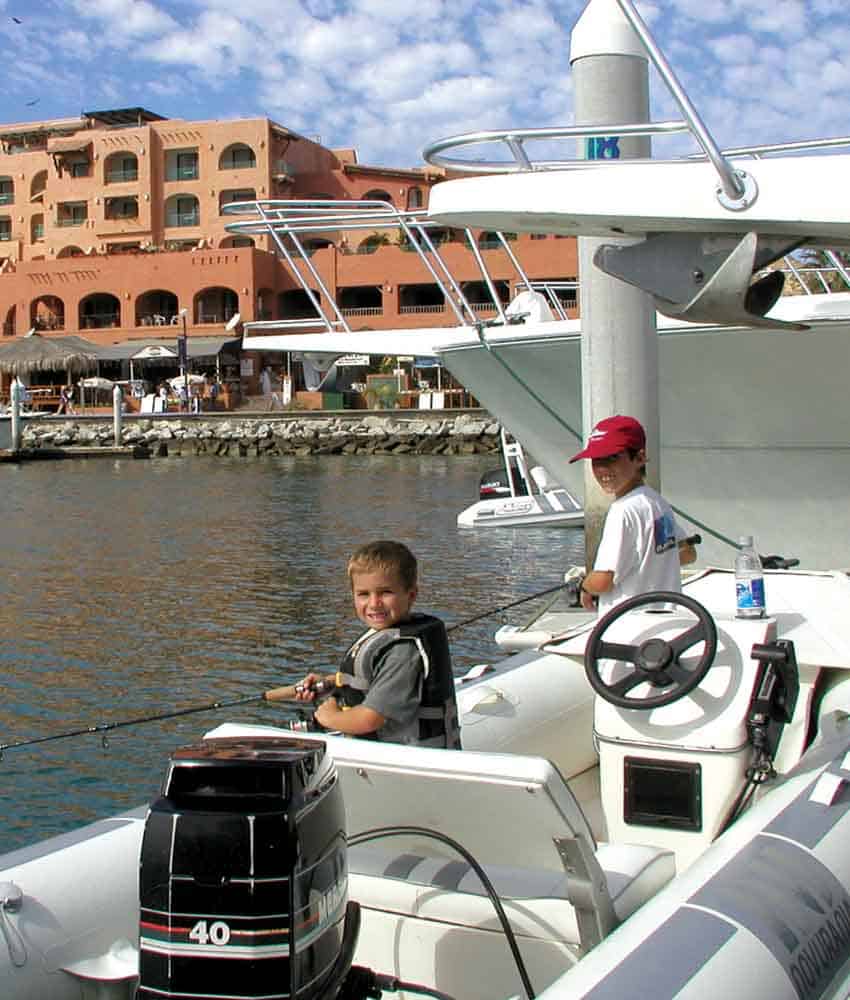
Two young sport fishermen fishing for bait in Cabo San Lucas harbor in Dad’s inflatable dinghy with the family’s 65-foot sportfishing yacht behind them. Pat Rains
The southern Pacific coast is not unknown to boaters, with its facilities in Acapulco; Barra de Navidad, Jalisco; Manzanillo, Colima; Ixtapa/Zihuatanejo, Guerrero; Huatulco, Oaxaca; and Puerto Chiapas (in the Tapachula municipality of Chiapas). However, many are side trips for those hanging up north or stopping points for those heading ever further south. But recreational boaters all but ignore Mexico’s east coast. Marinas are absent on this coast with the exception of the Yucatan, mostly in the Cancun area with a couple in Progreso and Campeche.
According to Pat Rains author of Mexican Boating Guide, the main reason for this is that many Canadian and U.S.-East Coast boaters are more attracted to places like the Chesapeake Bay and the Florida Keys, not to mention all those wonderful Caribbean islands.
Ocean-based expat culture in Mexico is naturally quite strongly tied to season and weather, especially hurricane season, which extends from June to November on both coasts. Those who remain in Mexican waters during these months are either in or near large protected marinas and other “hurricane holes” — natural areas that afford protection in storms. Any movement in open water means keeping a wary eye on weather reports, especially for those with smaller vessels.
The other half of the year is nearly storm-free, so this allows boaters to more easily enjoy what Mexico has to offer, whether that is leisurely cruising the coast or parking their vessel somewhere to tour inland to places like the Copper Canyon, the monarch butterfly sanctuaries and Chiapas coffee plantations.
February and March seem to be the sweet spot of the boating season. Many settle in an area where they want to be for a while and where weather conditions favor organized events such as regattas. The largest of these include Sailfest in Zihuatanejo in February; the San Diego Yacht Club’s annual race from Ensenada to Puerto Vallarta.
There’s also the Mexorc and the Banderas Bay regattas, both in Puerto Vallarta in March. These events attract thousands of participants and spectators and often raise money for Mexico-based charities.
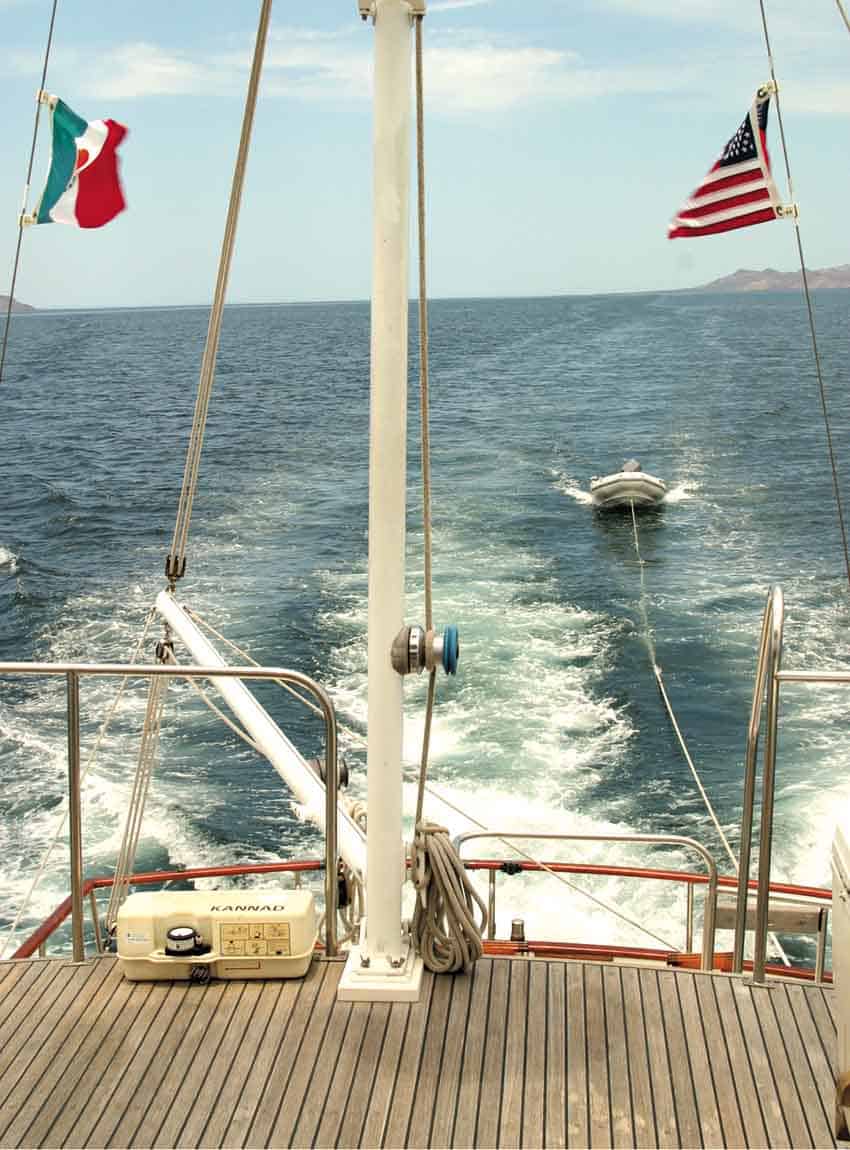
International flag etiquette: the Mexican flag must be flown on the boat’s starboard side, and the vessel’s country’s flag flies on the port side. Pat Rains
For many, their Mexican boating season kicks off in October and November with flotillas or rally vessels traveling together from the California coast down to southern Baja and beyond. Going in groups makes the trip more fun and in some ways easier as there are few places for boats to stop between Ensenada and Los Cabos.
One such annual rally is the Cruise Underway to Baja (CUBA), from San Diego to La Paz, and the Baja Ha Ha, which runs from San Diego to Los Cabos.
Ocean-based recreational boating in Mexico has always been popular and continues to grow significantly. One important reason is the efforts of the Association of Mexican Marinas, which lobbied the Mexican government to overhaul the bureaucracy foreign boaters had to face. Previously, there were hours- and even days-long procedures not only to enter and leave Mexican territorial waters but also to dock in each port.
Today, Rains estimates that at least 2,000 boats enter Mexico on the Pacific side each season, with a respectable 1,500 for the Gulf. Although more facilities have been built and many coastal businesses cater to this demographic, there is a serious shortage of recreational marina space, a problem that Rains says will continue into the foreseeable future until there is some significant investment in port infrastructure.
Leigh Thelmadatter arrived in Mexico 18 years ago and fell in love with the land and the culture in particular its handcrafts and art. She is the author of Mexican Cartonería: Paper, Paste and Fiesta (Schiffer 2019). Her culture column appears regularly on Mexico News Daily.
Some social media users asserted that the woman was not selling tlayudas but rather doraditas –antojitos also known as tlayudas that are sold on the streets of México state and Mexico City, especially on and around the zócalo, the capital’s central square.
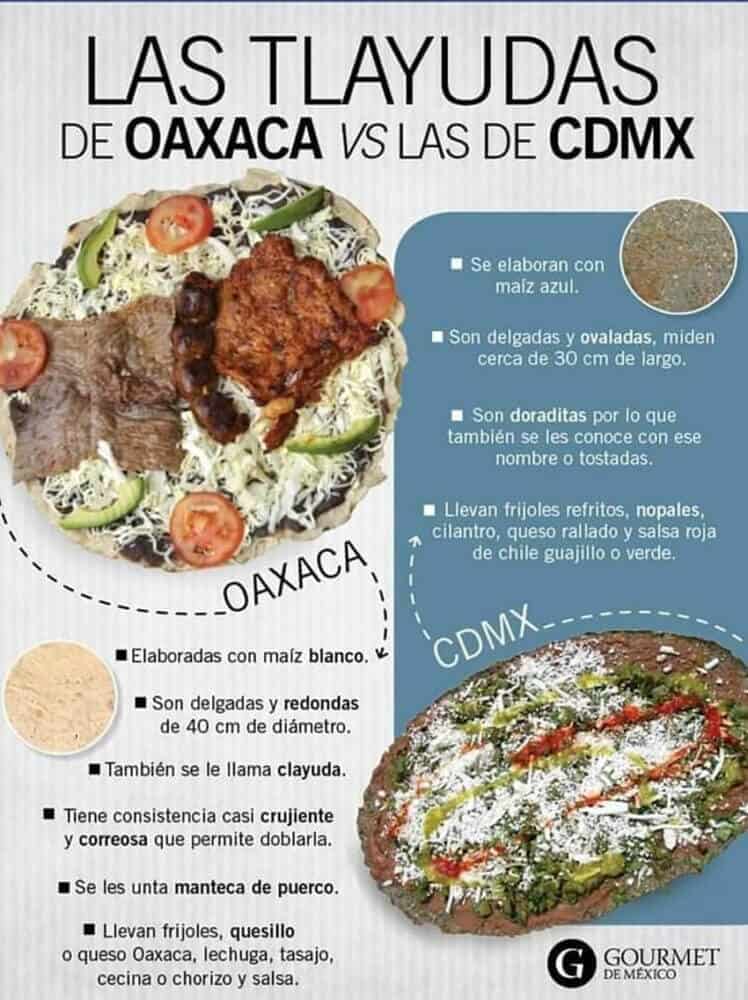
A tlayuda oaxaqueño, also known as a clayuda, is a crispy, large, round tortilla heated on a comal (griddle) and topped with hot and cold ingredients such as lard, beans, meat (chorizo, tasajo and cecina are common), queso oaxaca (Oaxaca cheese), avocado, radish and salsa.
A doradita, also known as a huarache toluqeño, is an oval-shaped crispy blue corn tortilla commonly topped with cold ingredients including beans, chopped nopales (cactus pads), cilantro, cheese, onion and salsa roja or verde (red or green chili sauce).
¡Doraditas de nopales, en el zócalo! | México Lindo y Qué Rico | Cocina Delirante
Despite the obvious differences between a tlayuda oaxaqueña and a doradita, the latter is also commonly called a tlayuda, and was referred to as such in many media reports about the entrepreneurship of the AIFA doradita vendor, who sold the snacks to hungry passengers who had few other food options at the new airport.
Linguist Yasnáya Elena Gil, a Oaxaca native and Mixe speaker, weighed in on the debate about whether doraditas can also be called tlayudas, writing on Facebook that both snacks can indeed be referred to as tlayudas.
“Both are tlayudas. A lot of people from the Valley of México have called what the woman was selling in the new airport tlayudas. It’s like mole – the first time that I ate mole in a town near Texcoco, [México state], I thought that it would be like the mole I always ate in Oaxaca but it wasn’t. It was very different because there are different kinds of mole just as there are different kinds of tlayudas. Both are tlayudas, calm down,” she wrote.
“One is not more original than the other, nor would it be the first time that someone uses the same name for …two things that are different in one aspect and similar in others,” Gil added.
She also said that the word tlayuda has been used interchangeably with doradita for at least four decades in central Mexico.
“So now it’s also its name, such are linguistic phenomena. … They are also tlayudas if there is a community of speakers that calls them that,” Gil wrote.
How the Mexico City tlayuda differs from that of Oaxaca. gourmet de mexico
According to a Spanish language text written by the academics Michael Swanton and Sebastián van Doesburg, the word tlayuda comes from the adjective tlayudo, “which today means strong, tough, resistant.”
“The (tortilla) tlayuda/clayuda, therefore, contrasts with the soft (tortilla) and the toasted (tortilla),” they wrote, citing a 1982 book – Tradiciones Gastronómicas Oaxaqueñas – by Ana María Guzmán de Vásquez Colmenares.
The academics also wrote that the first written use of the word tlayuda they could find was in a novel set in Oaxaca that was published in 1890. Author Arturo Fenochio Rosas wasn’t referring to the tlayuda oaxaqueña as we know it today but rather used the word tlayudas to describe tortillas that had gone stale and thus become hard.