Home Blog Page 1024

Death, taxes and online shopping: tales of woe with the customs office

0
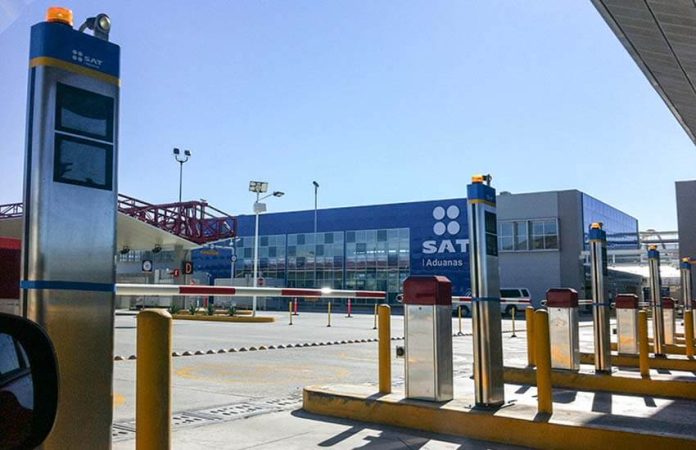
customs office in Mexico
Once your international order arrives at a customs office, mysterious processes begin — often at an unpredictable cost to you.

Customs has struck again.

For the third time in the past six months, I’ve had to pay upwards of 800 pesos (always as a surprise) in order to receive packages from the United States.

The first time this happened was over 15 years ago, when I lived in Querétaro. I’d ordered some carefully selected clothing from a company in India, and the delivery company (I find that things shipped through DHL are the most likely to get tagged and charged by Mexico’s customs) called me to say I’d need to pay the fee in order to receive my package.

Back then, 800 pesos was quite a sizable percentage of my paycheck, and I cried out of frustration and my own impotence to do anything about it.

I’d paid more than that for the contents, and it had been a stretch of my budget, so the news that I’d have to pay so much more panicked me.

Surprise customs fees and charges always feel like a hostage situation: pay us or you’ll never see your possessions that you’ve already paid for.

I did pay the customs fee and received my package, only to discover that the clothes did not fit. I had no choice but to cut my losses, and I vowed to never place orders for that sort of thing from outside the country again. If I wanted to order clothing, I’d just wait until I was in the U.S. and have it shipped there.

But apparently, I haven’t learned.

Yesterday, I received an order from a store in the U.S. that has an online Mexican storefront. I thought I’d be safe from customs charges. (I’m looking at you, Moon Magic!) So when I got the message from DHL (goodness, why is it always DHL?) that I’d need to pay 834 pesos in order to receive it, I immediately wrote to cancel my order.

I soon got a message back: you can either refuse to pay and customs will destroy the package (and we can’t issue a refund in that case), or you can ask to have it sent back, and we’ll refund you, minus the cost of shipping it back to us and any taxes and fees … once we get it back, of course.

So to sum up, my choices were:

  1. Lose the money and get nothing for it;
  2. Lose about half the money and get nothing for it;
  3. Pay considerably more than what I agreed to for the product.

I decided to go ahead and pay, but I’m still mad about it. Though I’ve been in Mexico for 20 years now, my American sensibilities when it comes to customer service aren’t something I can shake off. I expect the people in charge to fix the problem because that’s what I do.

So beware, my friends. Just because online stores have a Mexican storefront doesn’t mean they don’t still count as imports, and complaints are likely to get you a “not our problem” response.

The exception, the DHL delivery folks told me, seems to be orders from Amazon and Shien, who must have some sort of agreement with customs (not that I’m encouraging you to frequent these stores, but I figured you’d like to have the information).

My frustration, really, is more toward customs here in Mexico, which feels like a big kid holding up your homework and refusing to hand it over without receiving your lunch money first.

There is no way to argue with them. There is no number to call.

If you really want to fight, you can send them mountains of paperwork to contest their assessment of the value and wait for their response, which must be done before paying the fee; if you’ve paid, then you’ve accepted your fate. In the meantime, DHL will wait exactly seven days before marking it “undeliverable” and doing whatever they do with those packages; I highly doubt they “destroy” them.

One would think that simply by avoiding ordering from companies that must import their products to you from outside of Mexico, you could avoid this situation. But, really, receiving anything from out of the country is fair game.

Here are my other two sad stories from the past six months (I’m pretty sure that customs must have me flagged at this point as one of the doofuses that always pays).

Last year, I lent an old phone to a friend and wanted it back. She had since moved to the United States, and she and her partner had decided to send it back through DHL. Though they paid over US $100 to send it, once it got to Mexico I received the dreaded message: there would be a more-than-800-peso tax to pay in order to receive it, even though it was a six-year-old used phone.

My argument to my friend that I shouldn’t have to pay to receive something that I’d lent out fell on deaf ears, and I forked over the money during a time I was financially suffering so that I could get it back and give to my daughter to take photos with. Once I paid, more frustration ensued: the phone no longer worked.

The second customs fee I faced came slightly after Christmas: my dad had sent a package with a few holiday presents in it. This time, I only had to pay about 400 pesos! I was annoyed that I had to pay to get it, but at least everything inside of the box worked.

There are certainly much larger injustices in the world than this. However, this is information I’d surely want to know if I were new around here.

So, my friends, behold my cautionary tale: either bring what you want from the States with you when you first head down, buy locally or be prepared to fork over a ransom for whatever’s coming your way from up north.

Sarah DeVries is a writer and translator based in Xalapa, Veracruz. She can be reached through her website, sdevrieswritingandtranslating.com and her Patreon page.
Corn class battles, airport opens: the week at the morning press conferences

0
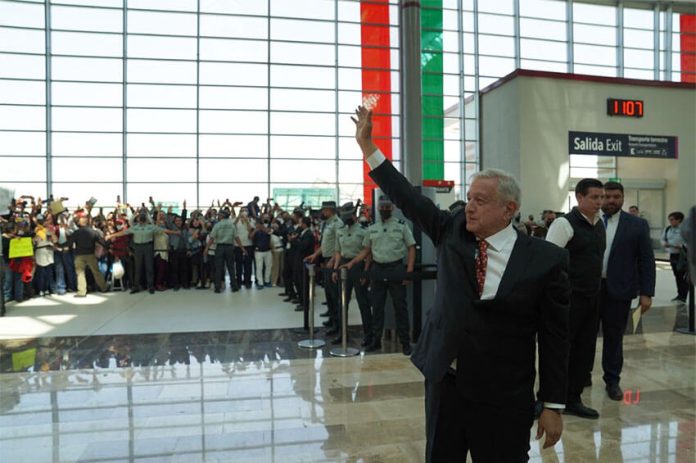
President López Obrador gave his Monday morning press conference at the opening of Felipe Ángeles International Airport (AIFA).
President López Obrador gave his Monday morning press conference at the opening of Felipe Ángeles International Airport (AIFA). Presidencia de la República

President López Obrador toured Oaxaca last weekend, a state for which he has a particular soft spot. The fiercely independent area is divided into 570 small municipalities, 418 of which are governed under the indigenous legal  code known as usos y costumbres. Land ownership there is widely distributed.

Monday

It was a big day for AMLO on Monday: the morning conference aired from Felipe Ángeles International Airport (AIFA), built to serve Mexico City, which was set for its inauguration. The president said he only took a cool 38 to 40 minutes to get to the airport amid concerns about its transport connections.

Defense Minister Luis Cresencio confirmed a modest opening for the AIFA, with 2,022 passengers on its first day. They’re hoping for an acceleration: the airport’s director, Isidoro Pastor, wants 5 million to pass through the terminal in 2023.

The president, subject to an electoral silence due to an upcoming referendum on his performance, is not allowed to campaign, promote or propagandize. Inaugurating public projects, such as airports, is against the rules, but the president spoke anyway.

“This project was completed despite the resistance of groups with vested interests … those who’d like us to do badly, and see the country do badly,” he said.

However, silence was maintained when the president was asked about a scandalous dispute between his former legal advisor, the former interior minister and the attorney general. On that topic, he kept quiet.

“Mission accomplished,” the president declared, celebrating the AIFA’s completion, shortly before striding away to attend to the nation.

Tuesday

More good news from Deputy Health Minister Hugo López-Gatell: the whole republic had gone green on the coronavirus stoplight map.

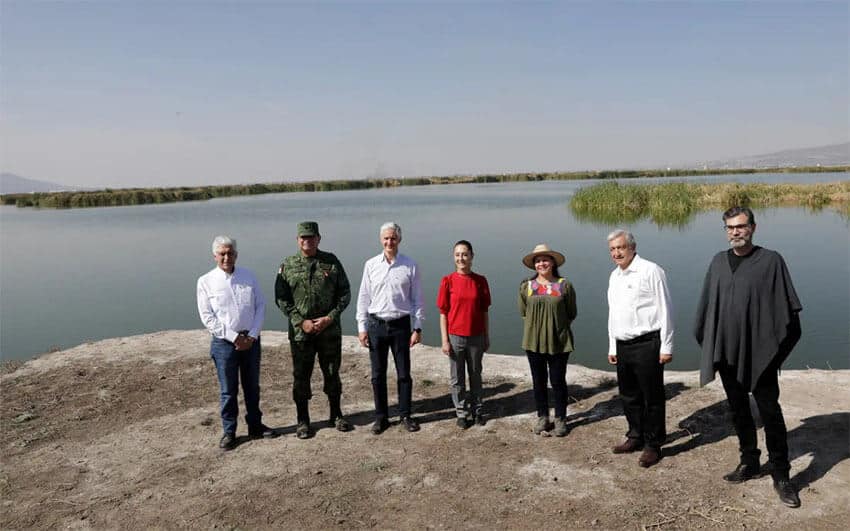
On World Water Day, the Environment Minister, María Luisa Albores, added more green to another map: she announced Lake Texcoco, the original site of the canceled, semi-constructed airport, as a natural protected area. It was planned and initiated by AMLO’s predecessors and later discarded through a 2018 referendum.

President López Obrador, Environment Minister María Luisa Albores and other public officials visited Texcoco in December of last year, during the planning process of the natural protected area.
President López Obrador, Environment Minister María Luisa Albores and other public officials visited Texcoco in December of last year, during the planning process of the natural protected area. Twitter @alfredodelmazo

Later in the conference, while defending his press conference at the airport’s opening, the president got a bit tongue tied.

“There is political confrontation and there is passion and [people] get angry, because they show what they really are … For example, to illustrate, yesterday we inaugurated the … we did not inaugurate it. The airport was delivered … I did not participate, except as a witness,” the president reassured viewers.

The media had mocked the catering available at the airport on Monday, after a woman was photographed serving tlayudas, a traditional dish found in Oaxaca.

“How little they know about Mexico? … I mean, what do they want? … What’s the name of those sandwiches in the United States?” the president asked.

“Hamburgers,” came the reply.

Wednesday

“The rooster fell asleep on us,” the president quipped, arriving a little behind schedule on Thursday.

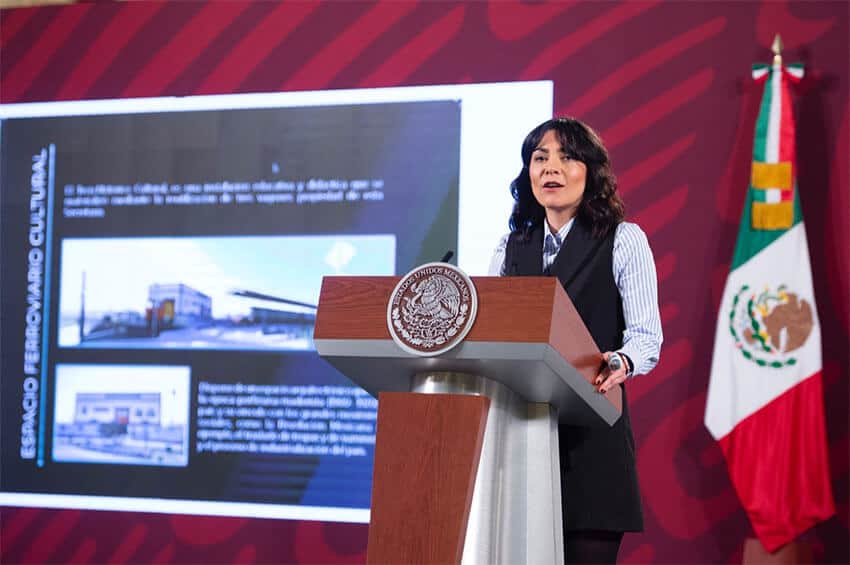
Prepped with a pack of “media lies” to refute, federal media expert Elizabeth García Vilchis took the floor. She began with a list of the AIFA’s marvelous features, which weren’t recognized by critics, who she said “refuse to see reality and construct their own post-truth.”

She went through the back catalogues to explain that the AIFA wasn’t over budget, the control tower wasn’t on a tilt, the president didn’t fake a train journey toward the airport and new runways had indeed been built. And in other news, García said the Harley Davidson motorcycle in a photo next to AMLO’s son didn’t belong to him.

The theme of transport continued to the Maya Train: a group of artists had joined a social media campaign protesting the environmental impact of the project.

“When did these artists, pseudo-environmentalists, speak out about the destruction that was going to take place on Lake Texcoco? … Did they say anything during the neoliberal period about governments handing over 60% of the national territory for mining?” the president retorted.

It was back to tlayuda-shaped battle lines later in the conference.

Elizabeth García Vilchis refuted a number of claims in her weekly segment.
Elizabeth García Vilchis refuted a number of claims in her weekly segment. Presidencia de la República

“[Our adversaries] … give off airs of superiority. They believe themselves to be blue-blooded … They don’t know what tlayudas are … it wasn’t even a tlayuda the lady was selling,” the president insisted.

A call from the room confirmed his wisdom: “They were doraditas,” someone said, referring to a similar corn-based snack.

At the close, the tabasqueño displayed his colors. “We’re going for a tlayuda,” he announced.

Thursday

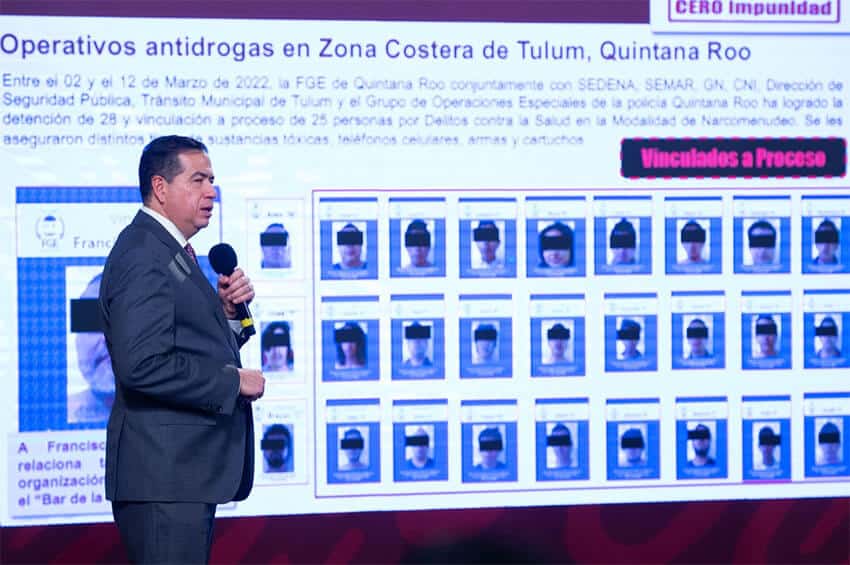
An update on homicides was first up at Thursday’s conference. Deputy Security Minister Ricardo Mejía Berdeja offered some assurance to hoteliers in Quintana Roo: 10 men and one woman from the Jalisco New Generation Cartel (CJNG) were detained in Cancún in relation to 13 murders and 28 more people had been arrested in Tulum for organized crime. Another 29 people had also been arrested for the 2019 massacre of a Mormon family in Sonora.

Mejía added that investigations into recent murders of journalists and of the killing of the mayor of narco battleground Aguililla, Michoacán, were at an advanced stage.

Deputy Security Minister Ricardo Mejía Berdeja announced dozens of organized crime-related arrests around the country on Thursday.
Deputy Security Minister Ricardo Mejía Berdeja announced dozens of organized crime-related arrests around the country on Thursday. Presidencia de la República

However, the head of Civil Protection, Laura Velázquez, revealed that pacifying the country was not only a struggle against mankind, but also against Mother Nature. She confirmed the dry weather was back with 33 active forest fires being combated by 1,513 firefighters .

Amid the ecological disaster, the president later reiterated that his Maya Train project would do no damage.

“I’m from a town, I grew up in the countryside. I know what trees are, I love trees. I learned to protect the flora and fauna. We’re not destroyers,” he said.

Friday

The president was in Cuernavaca, Morelos, for the last conference of the week. “Our solidarity with the governor of the state of Morelos … this state with such a history of social struggle, the land of General Emiliano Zapata Salazar,” he said, referring to the diminutive revolutionary hero.

Governor Cuauhtémoc Blanco said the firm hand of the law would be applied to corrupt former state officials.

“We don’t forgive or forget,” he warned.

With debates on AMLO’s electricity reform starting in the Chamber of Deputies, U.S. Ambassador Ken Salazar said that active contracts with energy companies should be respected.

“I respect the U.S. ambassador to Mexico very much, I respect his opinion, but we have a position that we are going to defend and the legislators are the ones who are going to decide,” the president responded.

On matters of national sovereignty, the U.S. had more complaints. A military official had claimed Mexico had the most Russian spies of any country in the world.

“We’re not going to Moscow to spy on anyone, we’re not going to Beijing to spy on what they’re doing in China. We’re not going to Washington, not even Los Angeles, we’re not getting into that,” AMLO insisted.

Mexico News Daily

Mexican wins international entrepreneur of the year award

0
Alejandra Ríos, one of five winners of the One Young World Entrepreneur of the Year Award.

A Mexican woman is one of five winners of an international entrepreneurship competition for people aged 35 and under.

Alejandra Ríos, CEO of culinary experiences and events company Ambrosía, was selected by a panel of international judges as a winner of the 2022 edition of the One Young World “Entrepreneur of the Year” award, which is judged on the positive social impact of the candidates’ ventures and how they are inspiring others with their leadership.

One Young World, a United Kingdom-based organization, describes itself as “the global forum for young leaders” and is backed by renowned figures such as singer and activist Bob Geldof, Duchess of Sussex Meghan Markle and Nobel Peace Prize laureate Muhammad Yunus.

Announcing Ríos as one of the five winners, One Young World noted that Ambrosía, a Mexico City-based company, is a leader in Mexico in the creation of culinary experiences and events. It offers catering for events such as weddings and corporate functions, among a range of other services.

The organization also acknowledged that Ríos is the founder of investment fund Meraki Ventures and the “youngest shark” on the seventh season of reality television show Shark Tank México, in which entrepreneurs pitch their business ideas to potential investors.


Ver esta publicación en Instagram

Una publicación compartida por Ambrosía (@ambrosia.mex)

One Young World describes Ambrosía as a “leading culinary experiences and events company.”

“Additionally, Alejandra is an angel investor in projects such as Básicos de México, The Positive Foods, among other projects. She has also been actively involved in other venture capital funds such as Amplifica and 500 Startups, focused on promoting entrepreneurship in Mexico and Latin America,” the organization said. 

Básicos de México is a clothing company while The Positive Foods manufactures products such as tortillas and cookies.

According to a biography on Ríos’ personal website, she completed a business management diploma at the Ibero-American University in 2006 before joining the Ambrosía board of directors the same year.

Ríos has also completed a leadership and management course at New York University, a finance degree at the Monterrey Institute of Technology and an MBA at Harvard Business School.

When she was included on the short list for One Young World’s award in late February, she tweeted, It is an honor to be nominated together with these incredible young entrepreneurs who are having a positive global impact.

Ríos and the four other entrepreneurs of the year – two from the United States, one from Colombia and one from the U.K. – will be presented with their award at the One Young World 2022 Summit, to be held in Manchester, England, in September. 

Mexico News Daily 

Ukrainian ambassador slams lawmakers’ support for ‘criminal regime’

0
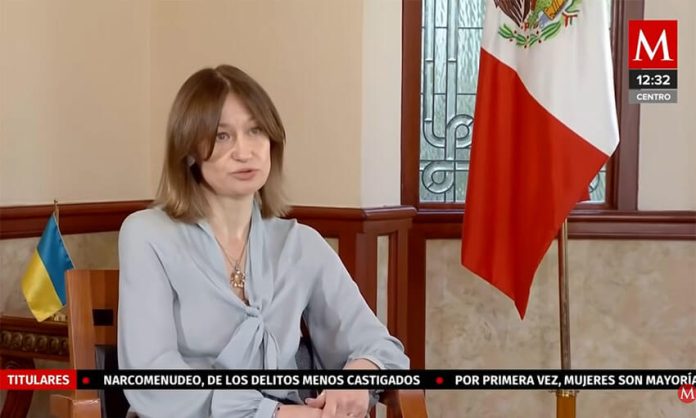
Ukrainian ambassador to Mexico Oksana Dramaretska condemned the creation of the Mexico-Russia friendship group in an interview with Milenio.
Ukrainian Ambassador Oksana Dramaretska condemned the creation of the Mexico-Russia friendship group. Screenshot

Ukraine’s ambassador to Mexico has slammed lawmakers who joined a Mexico-Russia friendship group, asserting that expressing support for Russian President Vladimir Putin as he commands the invasion of her homeland is to “participate in a crime.”

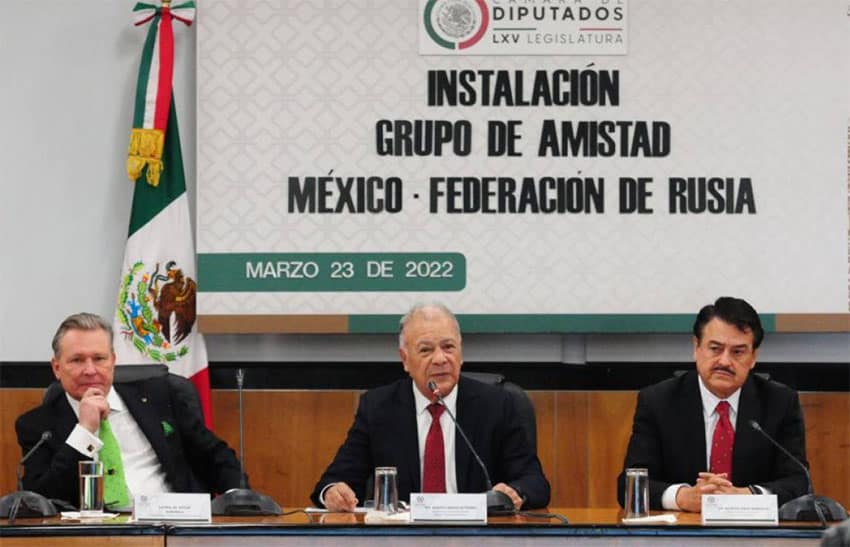
A group of deputies formally established the friendship group on Wednesday at an event attended by Russian Ambassador Viktor Koronelli.

“It’s a disgrace,” Oksana Dramaretska told Milenio Television in an interview. “… To support Putin, declare support for Putin in these times, is to participate in a crime.”

The ambassador acknowledged that most deputies didn’t join the friendship group or attend the event with her Russian counterpart, but those who did will have their decision “on their conscience.”

She also noted that some parties, including the Citizens Movement and the National Action Party, have made “strong declarations” against the creation of the group.

In a separate interview with Radio Fórmula, Dramaretska said that lawmakers who joined the group – most of whom are deputies with the ruling Morena party and its ally the Labor Party – offered their friendship to a “criminal regime.”

“To support the murderers … is to participate in their crimes,” she said. Putin is “a criminal, a person who seems crazy,” the diplomat said.

“What can I say? This brutal, unjustified war, unleashed by Putin’s criminal regime against the Ukrainian people, has already lasted for 29 days. They’re killing our people, destroying our cities,” Dramaretska said.

The ambassador told Milenio TV she understands Mexico’s decision not to send weapons to Ukraine given its non-interventionist foreign policy, and expressed appreciation for the position the country has taken against the invasion at the United Nations.

However, she was critical of its decision not to impose economic sanctions on Russia.

“I’m asking the government of Mexico to consider applying sanctions against Russia because to have business as usual with Russia in these times is to support this war, to support the massacre of people,” Dramaretska said.

Meanwhile, data from the National Immigration Institute (INM) shows that the average number of Ukrainians entering Mexico per month has more than doubled this year, presumably due to heightened tension between Ukraine and Russia prior to invasion in late February as well as the outbreak of full blown war.

An average of 2,352 Ukrainians entered the country per month last year, while the monthly average this year – based on data up to March 19 – is 5,037. About 85% of those who came in January flew into Cancún airport, with most of the remainder touching down in Mexico City.

According to the INM, no Ukrainian citizens have sought asylum in Mexico for humanitarian reasons related to the war.

The number of Russians entering Mexico has also increased this year, rising from a monthly average of 6,287 in 2021 to 15,132 this year, a 140% spike.

With reports from Milenio

7 burned bodies identified as missing Guanajuato musicians

0
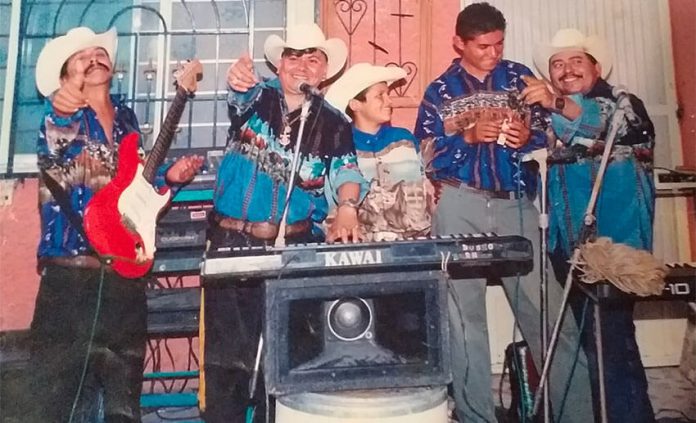
Members of the band Los Chuparrecio
Members of the band Los Chuparrecio were murdered this week near Celaya.

Seven bodies found in a burned truck outside of Celaya, Guanajuato, Tuesday night belong to a group of banda musicians who disappeared earlier the same day.

Los Chuparrecio, a family musical group, set out from the community of Juan Martín at 3 p.m. on Tuesday headed for a gig in Rancho Seco, a town just outside of Celaya. But the band never made it to their destination. Family members said they stopped answering their cell phones an hour after they left home.

Then around 11 p.m., a different truck was set on fire in the community of San José el Nuevo, a town on the way to the Chuparrecio’s gig. Inside were seven badly burned bodies, with their hands tied with wire. Nearby, there was another body: a man showing signs of torture.

Los Chuparrecio set out with six musicians and two staff members, all of whom were related. The group included three brothers and one minor, Juan Diego Pérez Maldonado, age 15. The state attorney general released an Amber Alert for Juan Diego the next day.

Their truck was found abandoned in Rancho Seco the next day, and their musical instruments were gone. The burned bodies in San José el Nuevo were found inside a red truck with Michoacán plates.

The area south of Celaya, Guanajuato, where the incident took place.

Family members of the musicians said they recognized their loved ones in pictures of the crime scene that circulated on social media and on Wednesday, a group of mothers, wives and siblings showed up at a regional prosecutor's office.

A woman said that a body she saw in social media posts had clothing identical to what her husband was wearing that day.

One man identified his brother and another, his cousin, based on the clothing they could see in the online posts.

On Friday, state Attorney General Carlos Zamarripa Aguirre confirmed that the seven burned bodies were, in fact, members of Los Chuparrecio. During a military event in Irapuato, he said in a brief interview that forensic evidence and information from the family had allowed officials confirm the identities.

Sophia Huett López, head of the state public security system, said on Thursday that while the number of victims matched, the bodies were so unrecognizable that genetic testing would be necessary to confirm their identities.

A tribute to the band published online on Thursday.


With sources from Proceso and El Universal

More Russian spies in Mexico than any other country: US defense official

0
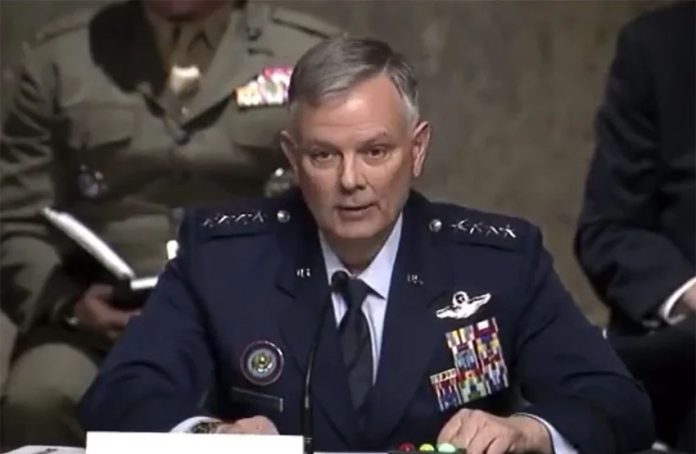
Air Force General Glen VanHerck shared information about the Russian intelligence strategy in Mexico on Thursday in a presentation to a U.S. Senate committee.

Russia has more intelligence agents in Mexico than any other country, a high-ranking United States military official said Thursday.

Air Force General Glen VanHerck, commander of the United States Northern Command, told the U.S. Senate Committee on Armed Services that “the largest portion of GRU members in the world is in Mexico right now.”

The GRU is Russia’s military intelligence agency. VanHerck didn’t say how many Russians spies are believed to be in Mexico but asserted that those here “keep an eye very closely on their opportunities to have influence on U.S. opportunities and access.”

The GRU has been accused of interfering in elections in the United States, attempting a coup in Montenegro in 2016, carrying out a cyber-attack on the World Anti-Doping Agency and poisoning former Russian intelligence officer Sergei Skripal and his daughter in the United Kingdom in 2018.

VanHerck also spoke about his concern that countries such as Russia and China could take advantage of the instability in Mexico created by drug cartels.

General Glen VanHerck at the U.S. Senate Committee on Armed Services.

“Transnational criminal organizations … create an environment that is not conducive to raising a family [or] for economic success and we see that happening right on our border, in Mexico,” he said.

“My concern with that is the instability it creates, the opportunity it creates, for actors such as China, Russia and others who might have nefarious activities on their mind to seek access and influence in … [the United States] from a national security perspective,” the general said.

“There are actors who are very aggressive and active all across the North Command area of responsibility … [including] the Bahamas and Mexico,” he added.

Despite the apparent presence of Russian spies here, VanHerck spoke highly of security collaboration between the United States and Mexico. The two countries reached a new security agreement late last year.

VanHerck’s assertion about Russian agents in Mexico came the same day as United States Ambassador Ken Salazar rebuked Mexican lawmakers for showing support for Russia despite that country’s invasion of Ukraine.

A group of deputies from the ruling Morena party, the Labor Party and the Institutional Revolutionary Party formally established a Mexico-Russia friendship group on Wednesday.

The creation of the Mexico-Russia friendship group on Wednesday drew criticism from Citizens' Movement party legislators, as well as U.S. Ambassador Ken Salazar.
The creation of the Mexico-Russia friendship group on Wednesday drew criticism from Citizens’ Movement party legislators, as well as U.S. Ambassador Ken Salazar.

At his morning press conference on Friday, President López Obrador was asked whether there are Russian spies in Mexico.

“I don’t know. We don’t have information about that,” he replied, before adding that “any foreigner who wants to carry out legal activities in the country can do so.”

“Those who are criminals and commit crimes are detained; neither Mexicans or foreigners are permitted to commit crimes in our country,” López Obrador said.

AMLO also said that Mexico doesn’t send spies abroad. “We don’t go to Moscow to spy on anyone nor to Beijing to spy on what’s happing in China. Nor do we go to Washington, not even Los Angeles, we don’t get involved in that,” he said.

With reports from Reforma 

Guadalajara artist takes whimsical aim at Mexico’s tomb raiders

0
Ernesto Solana artwork at Phil Weigland Museum
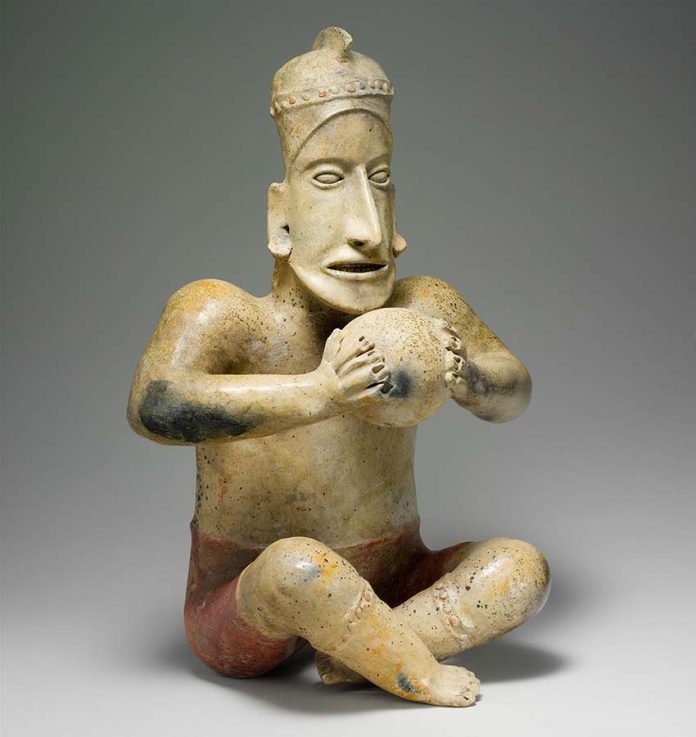
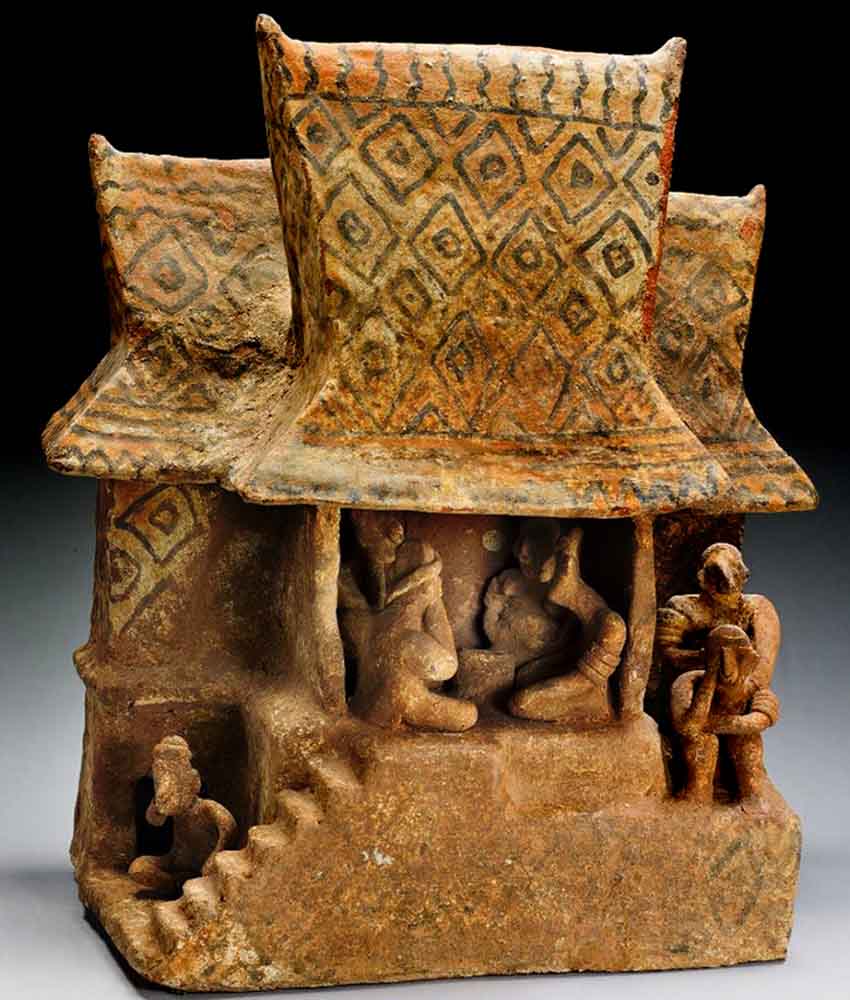
This Mexican pre-Hispanic sculpture of a seated ballplayer is in storage at the Metropolitan Museum of Art in New York. Should it be returned to Mexico?

The unfamiliar word “neoprehistory” recently sent me to an art exhibit in Guadalajara and then down an interesting rabbit hole about artifact looting in Mexico.

The exhibit was at the Phil Weigand Guachimontones Museum, located 40 kilometers west of Guadalajara, which presents the fascinating history of the people who constructed huge “circular pyramids” all around western Mexico 2,000 years ago. In addition, the museum always features an exhibit on some other topic related to archaeology.

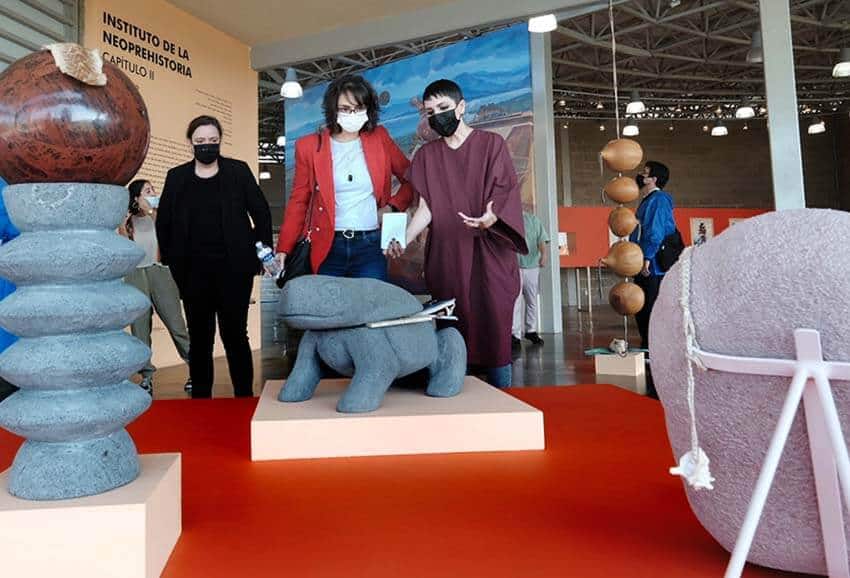
Recently I learned that the latest of these changing exhibits is a presentation by the Neoprehistory Institute, a place I’d never heard of, featuring art by Ernesto Solana.

As I had no idea what the word neoprehistory meant, I phoned up Arely Orozco, the museum’s administrator, to ask her what the exhibit was all about.

Saqueo,” she replied.

Ernesto Solana artwork at Phil Weigland Museum
This 2,000-year-old piece from Nayarit resides in the Chicago Art Institute. Chicago Art Institute

Saqueo?” I repeated, my eyes widening.

The Spanish word means “tomb looting,” surely a more interesting topic than neoprehistory, whatever that was.

It turned out that the “Neoprehistory Institute” is an invention of Solana’s, part of the conceit of an art series that he began exhibiting in 2021. Meanwhile, the term “neoprehistory” doesn’t seem to be in usage in any dictionary or any other context I could find online besides two art exhibits — one by Solana and another in Milan in 2016.

Solana’s current exhibit is the second part of a series of works by the artist, which reimagines Mexican prehistory through art. But Solana’s current exhibit does more than reimagine: it also comments on Mexico’s complicated history with its prehistoric artifacts, particularly around the subject of tomb looting.

For the public, tomb looting might bring up dynamic images of Lara Croft and Indiana Jones, but for every archaeologist in Mexico, it literally conjures up nightmares.

“The display is about saqueo?” I confirmed with Orozco over the phone. “Okay, I’m coming to see it tomorrow.”

Ernesto Solana artwork at Phil Weigland Museum
Visitors examine a whimsical “neoprehistoric” sculpture.

She was there waiting for me the next day, her baby Ana Paula in one arm.

We walked over to the exhibit, which is entitled: Instituto de la Neoprehistoria Capítulo II. A big sign on the wall introduced Ernesto Solana and the theme he had chosen for our consideration. Buried in this explanation is a casual statement mentioning that the Neoprehistory Institute is not a real organization at all, but rather “an exercise in speculation.”

After reading this, I began to look at Solana’s work — and to understand.

Solana is an artist and sculptor, established in both Mexico City and Guadalajara, and it appears he has a great sense of humor. At the Guachimontones, he has found just the right formula to focus our attention — without raising a war cry — on a subject that is both serious and complex.

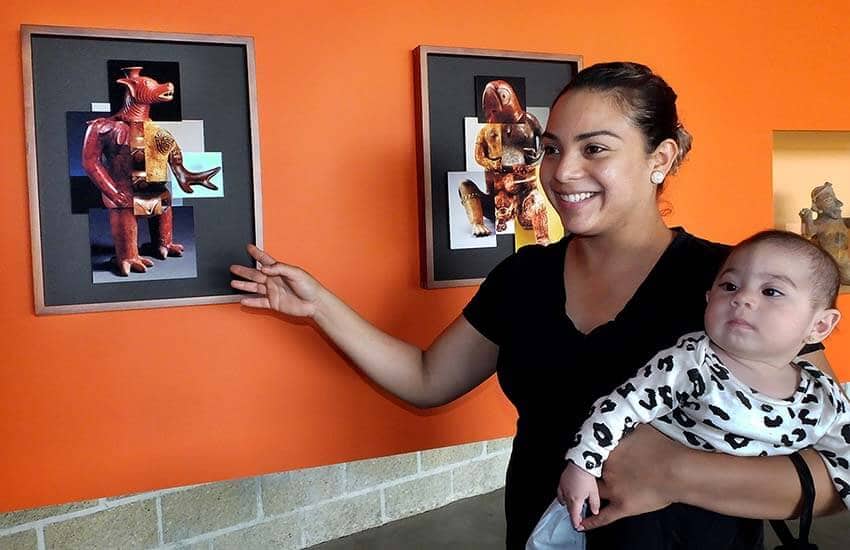
Orozco led me to a set of collages on the wall.

“With these,” she said, “Ernesto Solana is trying to engage us in a dialogue. His approach is very subtle, because for us archaeologists, tomb looting is a subject both painful and delicate.

Art of Ernesto Solana
Arely Orozco explains the subtleties of an Ernesto Solana collage.

“Each collage shows us a fantastic being — part man, part woman and part beast — entirely composed of pre-Hispanic art pieces now found at the Metropolitan Museum of Art in New York City, in a room completely dedicated to the archaeology of western Mexico.“

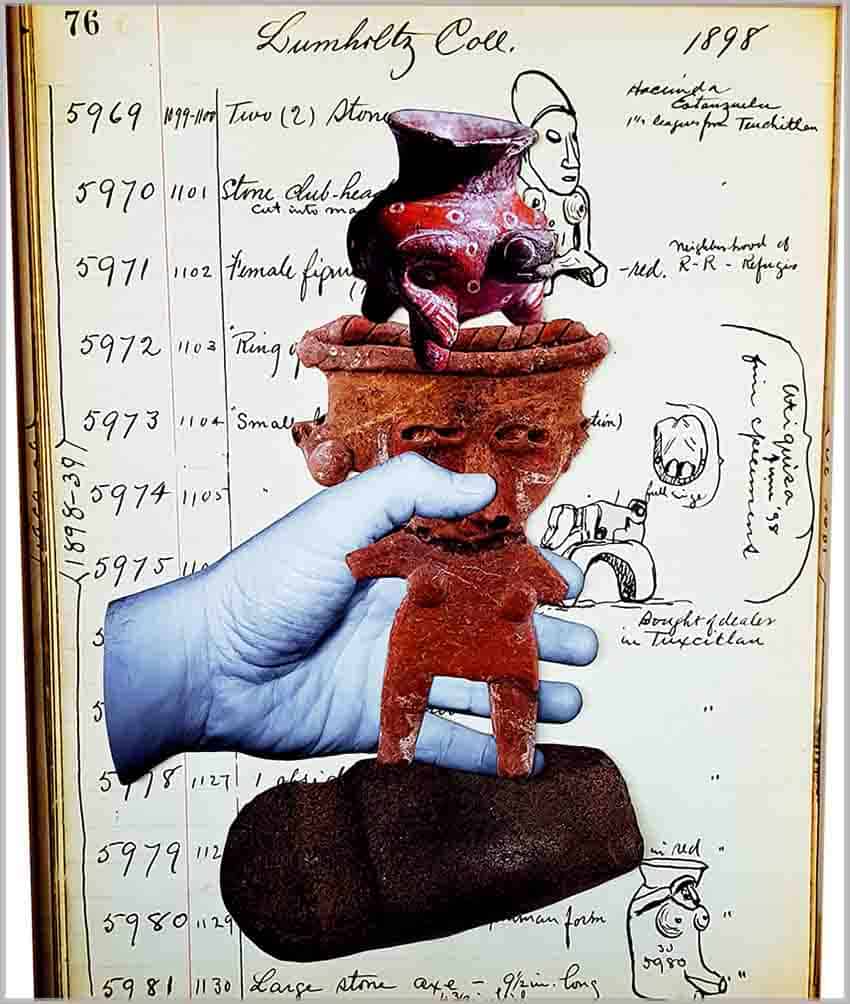
A few steps away, there is a similar set of collages, but these are superimposed on enlargements of pages from very old handwritten catalogs that describe, in English, thousands of artifacts illegally carried from Mexico to the American Museum of Natural History by explorer Carl Lumholtz and archaeologist Marshall Saville.

According to researcher Seonaid Valiant, they were able to avoid customs inspection thanks to the assistance of President Porfirio Díaz.

The curiously assembled artifacts in these collages are each accompanied by a giant hand. To me, the message seemed clear: Mexico’s patrimony has been handed over to someone else.

Just between these two sets of whimsical collages, there is a sort of display within a display.

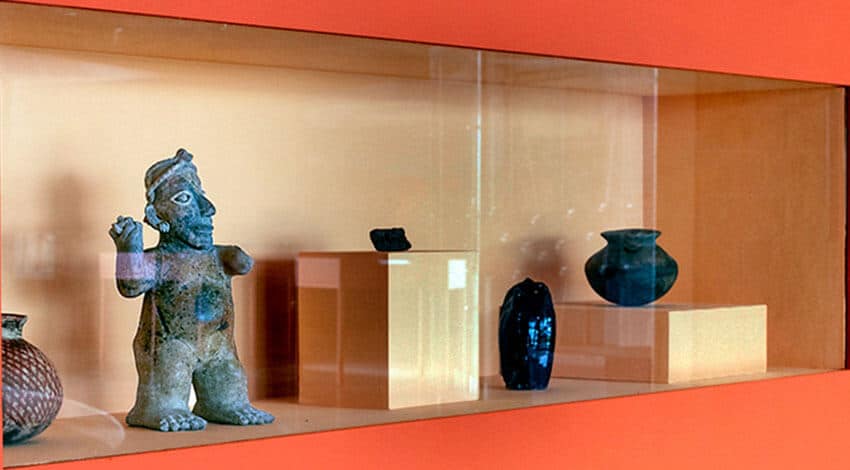
Here — with no neon signs or flashing lights — we see a small figurine collection found in situ in western Mexico by archaeologists. These are figurines that looters never had a chance to get their hands on.

Ernesto Solana artwork at Phil Weigland Museum
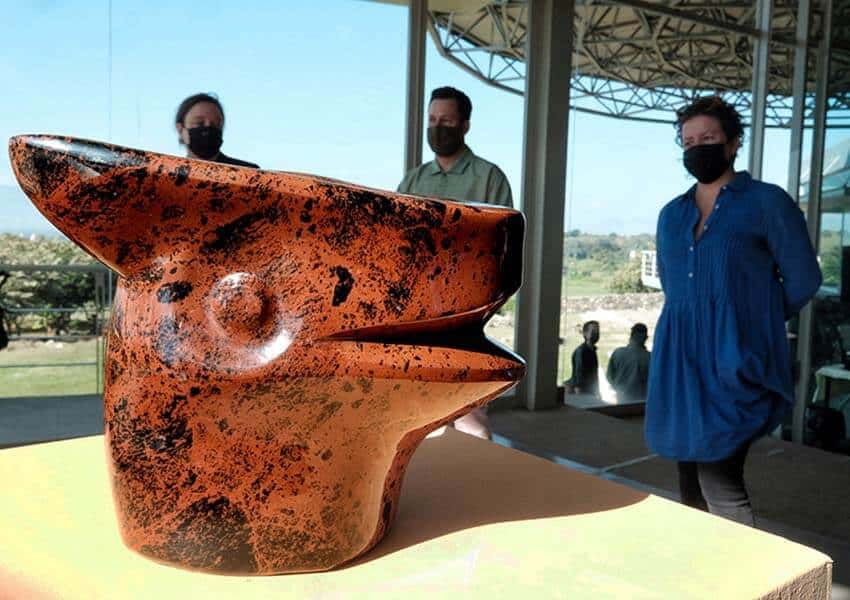
An obsidian sculpture from the exhibit.

Again we are being given a message, and this time Arely Orozco spelled it out for me: “Just one of these pieces found in its original setting renders much more information than all the looted objects in the Met’s collection taken together.”

This juxtaposition of photos of looted objects spirited out of Mexico on either side of a collection of artifacts found and studied where they originally lay opens the door to the complex issue of monos (figurines), as they are called by the country people who stumble upon them by accident or deliberately hunt for them.

A person in possession of a mono might be a saqueador (looter) — who has found and removed the precious item from its original surroundings — or he might be the buyer.

If the buyer is a foreigner, off goes the figurine out of the country, and in most cases, so does every scrap of information about the piece. If, however, the buyer is a local coleccionista (collector), the piece will at least remain in the neighborhood.

Truth be told, what you see in most small-town museums in Mexico is almost always the personal collection of a local Don Pepe or Don Pedro.

Contrast all of this with one of those very rare events: when a tomb is discovered intact and the first people to enter it are archaeologists.

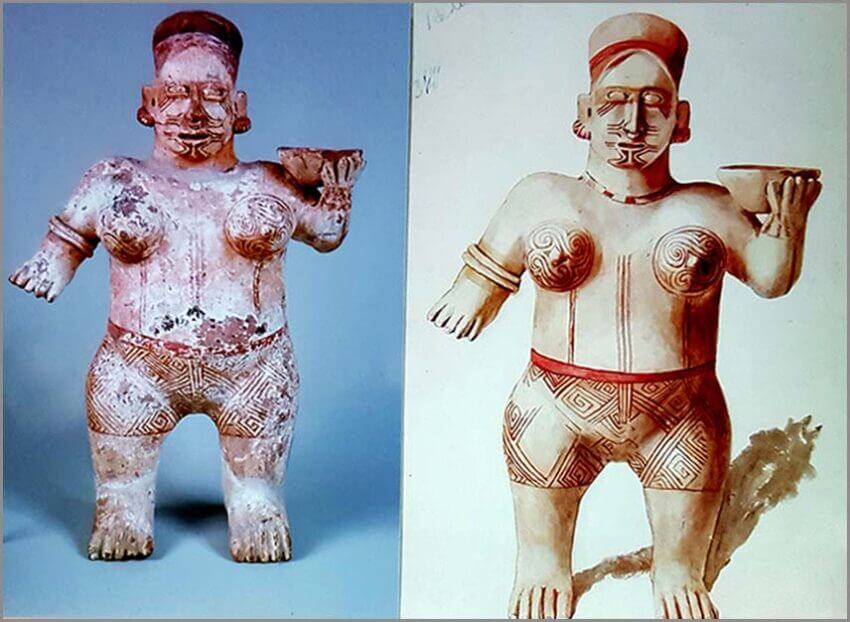
artifact and drawing by Adela Breton
The original statue seen by Adela Breton and the drawing she made of it.

Such a thing happened in 1993 when an untouched tomb was found at a place called Huizilapa, Jalisco, just northwest of Tequila Volcano.

This shaft tomb was 7.6 meters deep and had two chambers. Six individuals were found, three in each chamber, together with offerings. Bone studies suggest that this was a family crypt.

The archaeologists who first entered the chambers were amazed to find over 60,000 artifacts inside — yes, 60,000! This was all the more remarkable because the depth of the tomb suggested that the people buried in it were not particularly important. (Some shaft tombs are over 20 meters deep.)

The body of one individual at Huitzilapa, says archaeologist Eduardo Williams, “was elaborately adorned with jade and shell bracelets, nose-rings, earrings, greenstone beads, carved jade pendants and a cloth sewn with thousands of shell beads …”

The tomb offerings, Williams said, also included pottery figures representing ballplayers and clay vessels decorated with geometric and zoomorphic designs which, when excavated, still contained food remains.”

Moving on to other parts of Solana’s exhibit, I came upon some sketches by British explorer Adela Breton of objects she drew in 1896 when she witnessed the looting of the Guadalupe Mound near Etzatlán, Jalisco.

Ernesto Solana
This piece by Solana comments on artifacts found in situ.

In each case, the sketch is paired with a photograph — perhaps taken decades afterward — of the figurine Breton had depicted.

Were Breton, Lumholtz, Saville, the American Museum of Natural History and the New York Met looters — or collaborators with looters? Should Mexico’s wayward archaeological treasures be sent back to where they came from?

I had my opinion on the matter, but one day, I asked archaeologist Phil Weigand, popularly known as “the discoverer of the Guachimontones,” if Jalisco should ask the Art Institute of Chicago to return its collection of 2,000-year-old clay models (maquetas) depicting people interacting around the circular pyramids.

“Now is not the time,” he replied.” We don’t have the resources to keep those maquetas safe, but while they’re in Chicago, nobody is going to steal them.”

At present, the American Museum of Natural History is holding 50,000 pre-Hispanic artifacts from Mexico and Central America.

  • Information on Ernesto Solana and examples of his art can be found on his website. For up-to-date news about the Guachimontones museum and archaeological site, as well as replies to questions, see the Guachimontones Facebook page

The writer has lived near Guadalajara, Jalisco, since 1985. His most recent book is Outdoors in Western Mexico, Volume Three. More of his writing can be found on his blog.


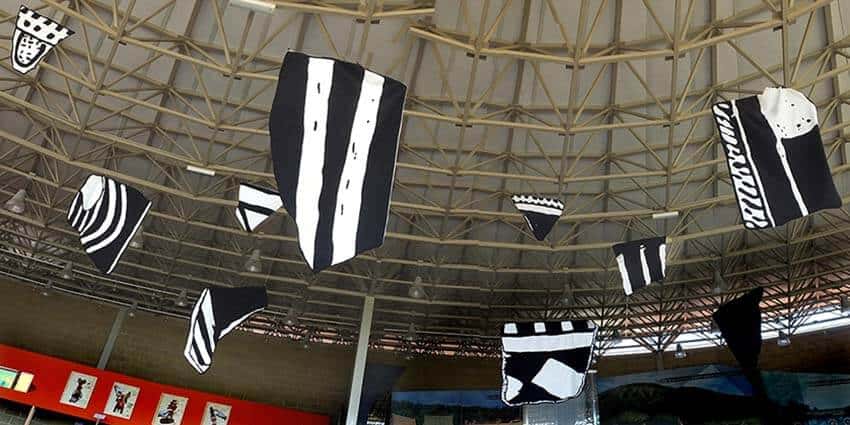
Work by artist Ernesto Solana.
This piece, similar to the one about Saville, takes aim at Mexico artifact hunter Carl Lumholtz.


Ernesto Solana artist
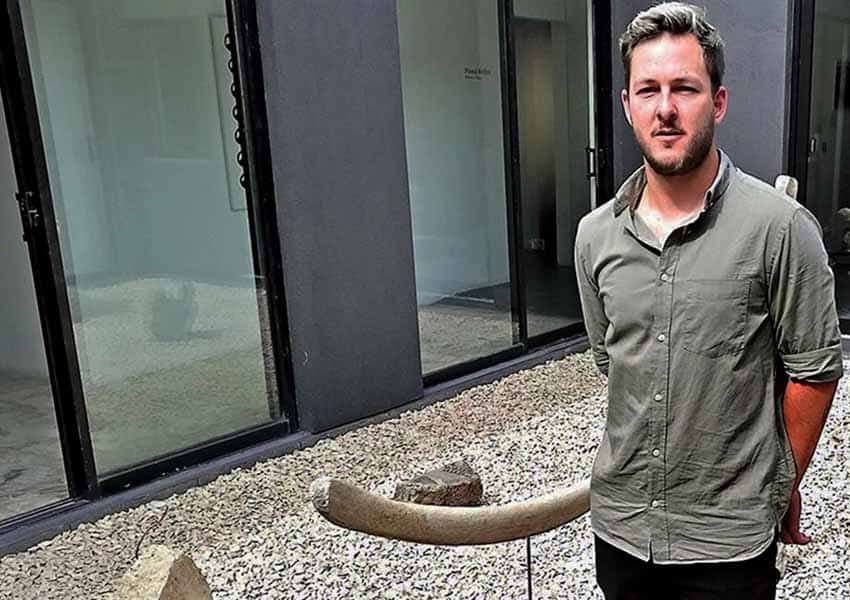
The artist Ernesto Solana.


Solana’s work Potsherds.

Fans unhappy as El Tri fails to score a goal against archrival US

0
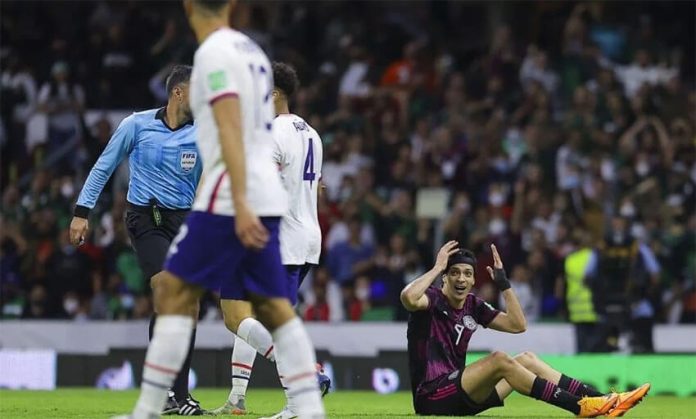
Center forward Raúl Jiménez calls for a foul at Thursday's game.

The Mexican and United States national men’s soccer teams played out a scoreless draw in their FIFA World Cup qualifying match in Mexico City on Thursday night.

The 0-0 tie in front of 40,000 spectators at Aztec Stadium left El Tri, as Mexico’s national team is commonly known, in third place with 22 points in the Confederation of North, Central America and Caribbean Association Football (Concacaf) standings.

The United States is also at 22 points but has a superior goal differential. Canada leads the eight countries competing in the final round of Concacaf, qualifying with seven wins, four ties and just one loss for a total of 25 points.

Costa Rica is fourth with 19 points after defeating Canada 1-0 in San José Thursday night, while Panama is fifth with 18 points after a 1-1 tie with Honduras in Panama City.

The top three Concacaf teams will automatically qualify for the World Cup in Qatar in November and December, while the fourth-placed team has a chance to qualify through an inter-confederation playoff match. Each of the Concacaf teams has two qualifying matches left.

Mexican winger Hirving Lozano comes up against US defender Deandre Yedlin.

Sports newspaper Récord described El Tri’s performance against the United States as poor, reporting that it was outplayed by its archrival and created very few goal-scoring opportunities.

Unhappy with the team’s performance, Mexican fans called for manager Gerardo “Tata” Martino, an Argentine, to be dismissed, chanting “¡Fuera Tata!” or “Tata Out!”

Some fans also shouted the homophobic slur “Eh, puto! as the U.S. goalkeeper took goal kicks.

In an effort to police fans’ chanting, the Mexico Soccer Federation (FMF) said it would implement a new system to track spectators in the stadium and try to identify those who shout the slur. Guilty parties were to be ejected and face a five-year ban on attending El Tri matches.

However, the plan to identify those using the slur didn’t come to fruition due to the large number of spectators, Récord reported.

One soccer fan said on Twitter that television stations “colluded” with the FMF so that the chant wasn’t audible to people watching the match at home. “As always the press lies,” @Ozwaldini wrote.

Mexico’s next World Cup qualifier is against Honduras this Sunday in San Pedro Sula. El Tri will face El Salvador at Aztec Stadium in its final qualifying match next Wednesday.

With reports from Récord

Inter-American rights commission urges action to stop violence against journalists

0
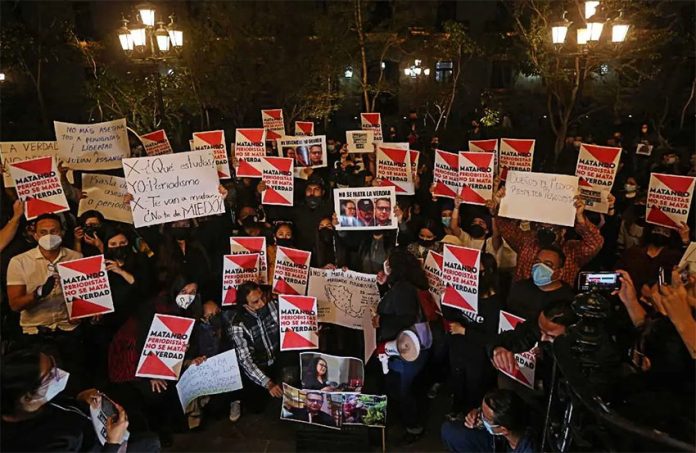
After three journalists were murdered in the first four weeks of 2022, there were national protests in support of the press around the country.

The Inter-American Commission on Human Rights (IACHR) has urged Mexican authorities to implement additional measures to prevent violence against journalists and protect them from the threat of physical attacks.

In a press release issued Thursday, the Office of the Special Rapporteur for Freedom of Expression of the IACHR said that in the first 10 weeks of 2022, it received at least eight reports of murders of journalists for reasons that could be related to their work.

It warned of the “normalization and deepening of violence” against journalists in Mexico.

“In this context, the office calls on the authorities to assess the causes and effects of this phenomenon and urges them to take complementary measures to those already in place in terms of violence prevention, protection of journalists and the fight against impunity for crimes against the press,”  the press release said.

The rapporteur also said it has received reports of “recurrent stigmatizing remarks against the press by federal and local public officials.”

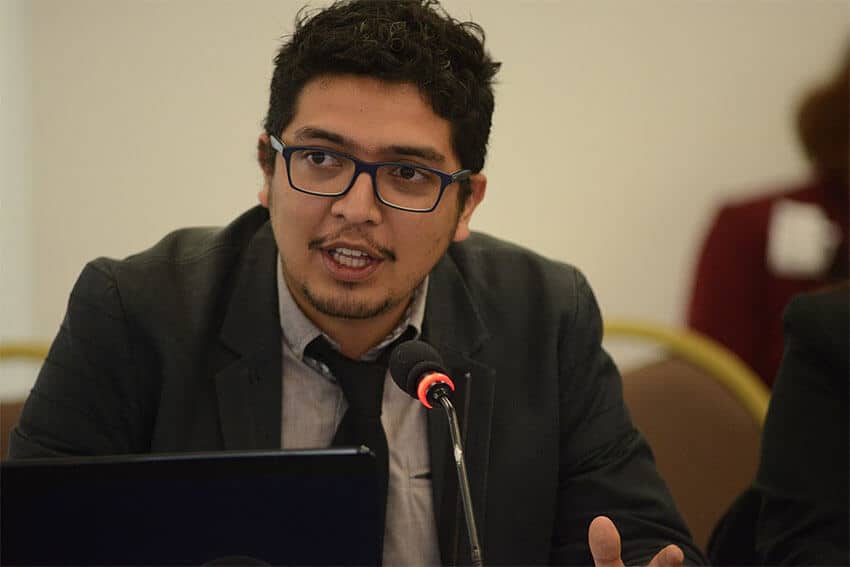
The statements came out of the office of Pedro Vaca Villareal, special rapporteur for freedom of expression.
The statements came out of the office of Pedro Vaca Villareal, special rapporteur for freedom of expression. CC BY 2.0 / Daniel Cima

President López Obrador is Mexico’s most prominent critic of the press, frequently attacking journalists and media outlets at his weekday press conferences.

The rapporteur said the human and financial resources allocated to the government’s program to protect journalists have not been effective in preventing the murder of journalists.

“Structural adjustments to the protection system and the announced training of officials are unfortunately temporarily out of step with the urgency of the situation,” the statement said.

“The messages of official rejection of lethal violence against the press are mixed and confused in time and space with stigmatizing official messages that are framed in a complex and sustained struggle of the federal authorities over journalists and the media. The relevance assigned by the authorities to their conflict with the press inevitably overshadows the messages of rejection to the violence they have issued, causing them to lose the forcefulness, conviction, and clarity they should have at this moment.”

Current efforts to prevent violence, protect journalists, condemn physical attacks on members of the press and hold perpetrators accountable are “disjointed, sometimes contradictory, and together are insufficient to contain the phenomenon of violence, … which currently represents one of the main threats to freedom of expression in Mexico,” the statement said.

The rapporteur said it was urgent that Mexican officials take additional measures to protect journalists and recognize their legitimacy and the value of their work and repudiate crimes against them.

Mexico News Daily 

Podcast offers an explanation for AMLO’s revocation of mandate vote

0
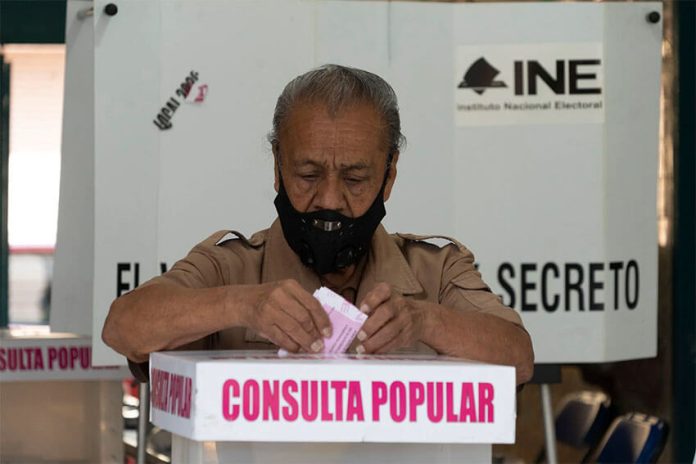
A man votes on a past referendum in Mexico City.

Just over two weeks before Mexicans get the opportunity to have their say about whether President López Obrador should complete his six-year term, a new podcast looks at how the “revocation of mandate” referendum came about and the president’s motivations for holding it.

The latest edition of the Americas Society/Council of the Americas podcast Latin America in Focus poses the question, “Why is Mexico holding a presidential recall vote?”

AS/COA Online’s Carin Zissis hosts a discussion on the question with journalist, lawyer and political analyst Fernanda Caso.

The referendum, for which the National Electoral Institute has been given a budget of about US $78 million to organize, will be held on April 10 and the majority of participants are expected to vote in favor of López Obrador continuing as president, especially given that opposition parties are calling for a boycott of the vote.

Why, then, did AMLO, as the president is best known, go to the trouble of staging the expensive exercise?

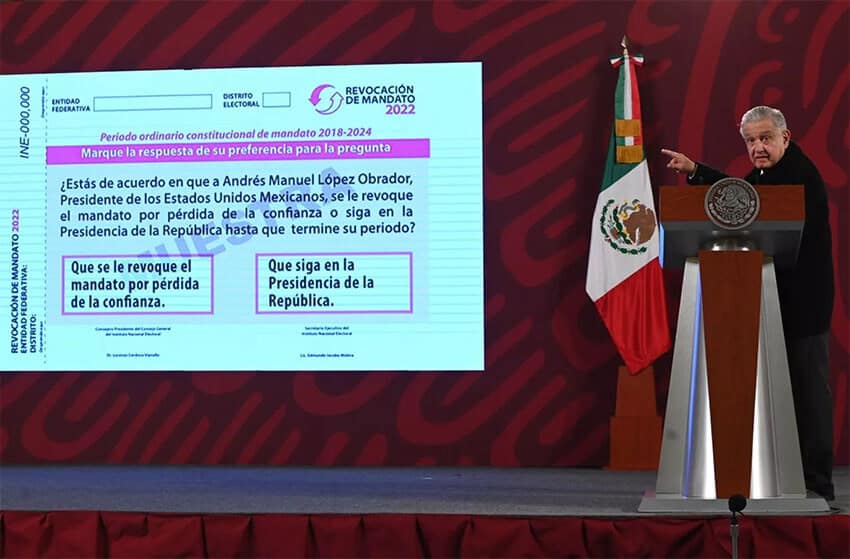
President López Obrador shared and discussed the phrasing of the referendum question at an early February press conference.

Caso, host of the magazine Gatopardo’s podcast and head of the political website Latitud 3°12, said that the constitutional reform that allowed the revocation of mandate vote to be held could pave the way for a Mexican president to stay in office beyond his or her six year term, although she didn’t say that was AMLO’s intention.

“A lot of people fear that a president will eventually want to stay longer after a recall says that people like him,” Caso said.

She noted that a “strange fact” about the upcoming referendum is that “the people who are organizing it are the people who like the president.”

“… You would think that in a recall it would be the opposition who would ask for it,” Caso said. “… It’s the government asking people if they want the president to stay. So nobody is asking him to leave.”

The analyst said that AMLO is “obsessed with being a character in history books” and sees the recall vote “as an opportunity … [to be] the first president who went through a process like this where people want to kick him out and he got all this popular support.

“The thing is … nobody wants to kick him out of office so even that narrative is becoming weird,” Caso said.

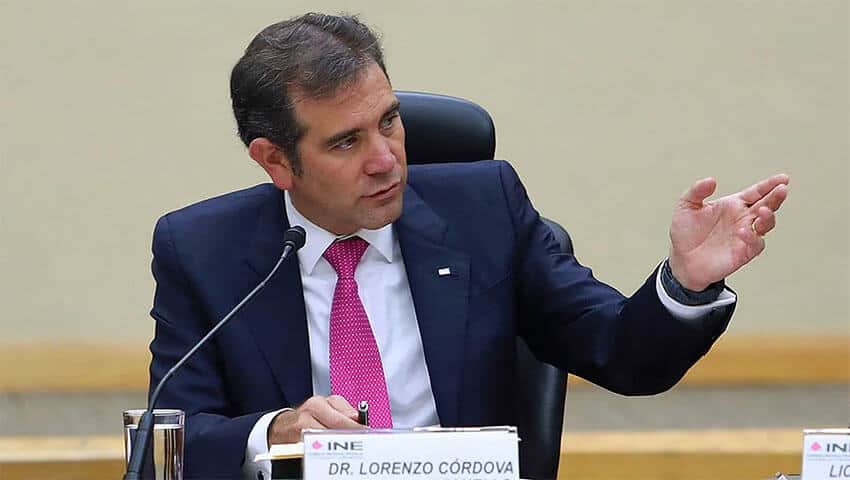
The INE initially voted to delay the referendum, a move its director Lorenzo Córdova attributed to insufficient funding. But a judge later ordered the referendum to proceed as originally scheduled.

She also said that AMLO is using the revocation vote to “gain allies for the 2024 election” and support for his proposed electricity, electoral and National Guard reforms.

“If he says, ‘This is the strength I have in all these places, … then you should be part of my team and you will have more possibilities of winning. If you are you are part of my team for 2024 then you should support my project right now and that project is all these reforms.’ I’m thinking specifically of one party, … this is just speculation, … but I think his bet is to have the … [once omnipotent Institutional Revolutionary Party] become his ally, either in a formal or an informal way,” Caso said.

In addition, the president is using the recall as a test for his political allies, including those interested in succeeding him as president, she said.

“He’s measuring his political allies. He’s asking governors, he’s asking mayors to … [make] a big effort to bring people out to vote so he’s going to see who can answer to that call,” Caso said.

“… There is also this internal battle happening inside his party, this recall is working as that. People who want to be the next [Morena] candidate [are making] big efforts to show him they have the muscle to bring people out,” she said.

However, there is scant interest in the upcoming vote, Caso told Zissis.

Listen to the podcast:

“You go on the streets and people are not talking about it. It’s not a big discussion in the country, it’s just the president and his friends who are insisting on this exercise,” she said.

“… A very low turnout could be a bittersweet result for … [López Obrador] because it would mean people are not following him the same way they were in the beginning,” Caso said. “… It’s going to be a very costly exercise in terms of money but also in terms of the time the president and the people around him are investing in it.”

“We need a president focused on the main issues the country’s facing: the pandemic, insecurity, education – there are a lot of issues,” she said.

With reports from AS/COA Online