Home Blog Page 1125

North American summit meeting scheduled next week in Washington

0
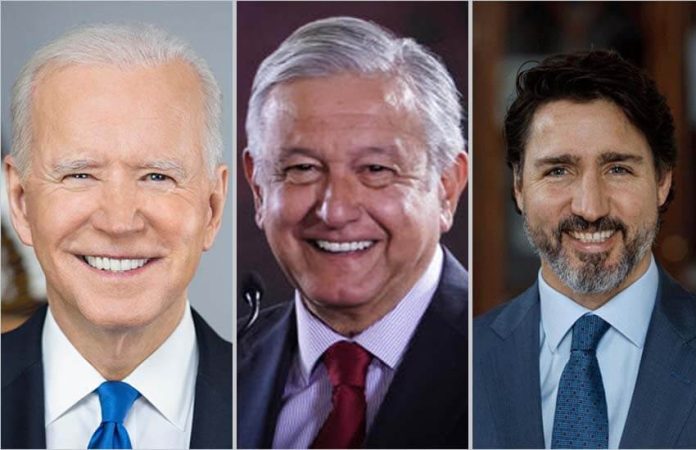
Biden, López Obrador and Trudeau
The 'Three Amigos' summit will be the first time the three leaders have met as a group in person since Canadian Prime Minister Trudeau hosted in 2016.

President López Obrador, U.S. President Joe Biden and Canadian Prime Minister Justin Trudeau will meet at the White House next week for the first North American Leaders Summit since 2016.

The governments of all three countries announced the November 18 summit on Wednesday.

Mexican Foreign Minister Marcelo Ebrard told López Obrador’s morning press conference that the three leaders were expected to meet for two hours next Thursday. He also said the president would have separate one-on-one meetings with Biden and Trudeau.

The main issues Mexico will raise at the trilateral summit are development cooperation for southern Mexico and Central America, “regional economic integration to promote investment in our country,” preparation for the next pandemic and “how to achieve fair economic recovery in 2022 and 2023,” Ebrard said.

The United States agreed in September to collaborate with Mexico on employment programs in the country’s south and Central America but hasn’t said how much financial support it will provide.
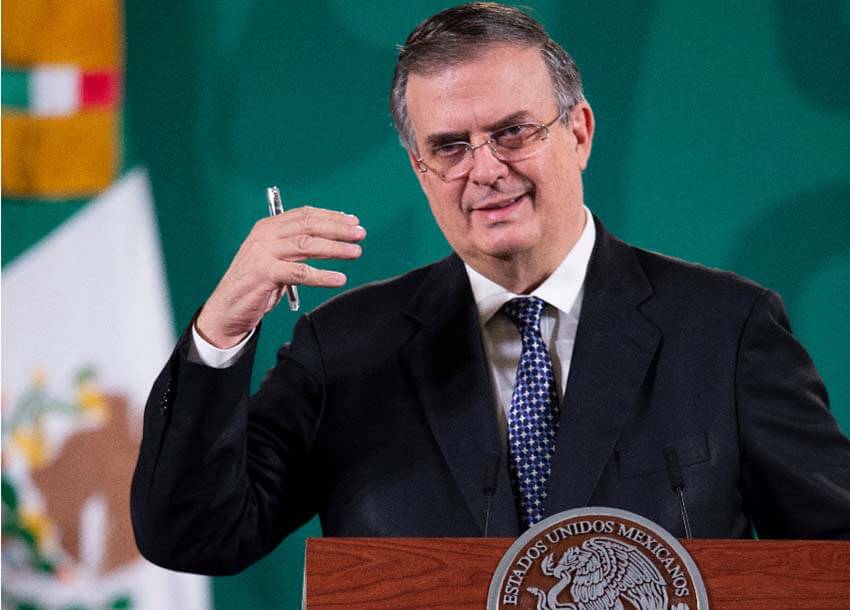
Mexico Foreign Minister Marcelo Ebrard
Foreign Minister Marcelo Ebrard said Mexico would like to discuss regional economic integration to promote investment.

López Obrador, who proposed a global poverty-alleviation plan at the United Nations headquarters in New York on Tuesday, said he didn’t expect that his proposed electricity reform – which favors the state-owned Federal Electricity Commission – would be a topic for discussion, even though U.S. Ambassador to Mexico Ken Salazar has recently raised concerns about it.

The White House said in a statement that the countries will reaffirm their strong ties and integration during the summit, “while also charting a new path for collaboration on ending the COVID-19 pandemic and advancing health security; competitiveness and equitable growth, to include climate change; and a regional vision for migration.”

It said “strengthening our partnership is essential to our ability to build back better, to revitalize our leadership, and to respond to a widening range of regional and global challenges.”

Trudeau’s office said the priorities will include “finishing the fight against COVID-19, getting the job done on vaccines, tackling the climate crisis, creating new middle-class jobs, building an economic recovery that works for everyone, and migration.”

There were no North American Leaders Summits during the four years former U.S. president Donald Trump occupied the White House, the most recent being hosted by Trudeau in Ottawa in 2016 when Enrique Peña Nieto and Barrack Obama were in power.

However, Mexico, the United States and Canada did negotiate a new North American free trade agreement, the USMCA, during the Trump years. That pact, which replaced the 25-year-old NAFTA, took effect in July 2020.
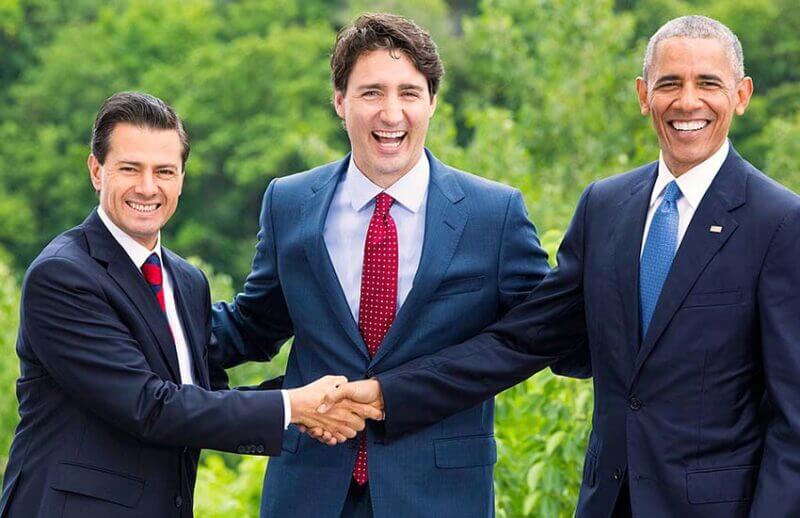
Enrique Pena Nieto, Justin Trudeau, Barack Obama
When the three nations’ leaders last met in person, Enrique Peña Nieto was Mexico’s president. File photo

The upcoming “Three Amigos” gathering will take place just after the United States reopened its land borders to nonessential travelers and as large numbers of migrants seek to reach the U.S. via Mexico.

López Obrador met virtually with Biden in March and the two leaders “committed to immigration policies that recognize the dignity of migrants and the imperative of orderly, safe, and regular migration.”

But Mexican authorities have continued to use force against migrants to stem their flow through the country, and the National Guard killed one migrant and wounded four others as they traveled through Chiapas late last month.

With reports from Milenio, CNN and The Canadian Press 

At 0.84%, October inflation increase highest in 23 years

0
inflation
Higher LP gas prices helped drive inflation. shutterstock

Prices in Mexico continue to climb: monthly inflation registered its highest increase in October in 23 years, the federal statistics agency Inegi said on Tuesday.

Prices rose 0.84% ​​in October compared to September; a jump second only to October 1998 when a monthly increase of 1.43% was registered. 

The rate of inflation stands at 6.24%, the highest annual rate since December 2017, when it reached 6.77%.

The rise has been driven by higher prices for LP gas, which escalated in February due to a supply shortage caused by weather in Texas. And electricity prices rose 18.8% after a seasonal subsidy ended, the newspaper El País reported. 

Eggs, onions, green tomatoes and air travel also became more costly. 

Inflation in the United States is also sky high: it’s at its highest level since 1990, which inevitably has a knock-on effect for the Mexican economy, due to the two countries’ intimate trading relationship. U.S. inflation jumped from 5.4% in September to 6.2% in November, yet the Federal Reserve played down concerns, calling the rise “transitory.” 

In Mexico, private sector specialists raised their inflation expectations for 2021 to 6.6%, which makes 10 consecutive months of upward adjustments. The Bank of México will meet again on Thursday to evaluate its inflation targets and monetary policy.

Deputy governor Jonathan Heath said the current inflationary phenomenon was complex and warned that the energy reforms proposed by President López Obrador could inhibit the country’s economic recovery. 

However, an economist at consultancy Oxford Economics, Joan Domene, said prices could soon fall. “We will wait for the effect of the Buen Fin [shopping promotion] in November to generate a drop in prices. The recent rise in inflation and volatility of the peso could force Banxico to hike [interest rates] more aggressively,” he said. 

The Mexican economy has experienced an economic rebound since the COVID-19 pandemic. Since an 8.5% fall in 2020, the government expects growth rates of 6-6.5% in 2021.

With reports from El País, El Financiero and BBC

3 decades of abuse: Oaxaca woman was sold for a bottle of mezcal at age 10

0
Irma Ríos was sold as a child bride
Irma Ríos described being repeatedly beaten and raped during her marriage of 30 years. Milenio

A three-decade-long nightmare that a Oaxaca woman endured after being sold into common-law marriage for a bottle of mezcal at the age of 10 has finally ended.

State Attorney General Arturo Peimbert Calvo said Tuesday that the man who gave Irma Ríos’ father the mezcal in exchange for his daughter in 1991, and proceeded to abuse her for the next 30 years, had been arrested.

The official said in an interview that authorities will prosecute the aggressor — Ignacio Rodríguez Cabrera — for a range of crimes and seek the maximum penalty the law permits.

Peimbert said that Ríos had been notified of her husband’s arrest and was receiving support from the Oaxaca Women’s Ministry and other authorities.

The victim said in a media interview before the arrest that her father sold her for a one-liter bottle of mezcal. Her husband was 20 when the exchange occurred.

"Por una botella de mezcal"; mujer indígena de Oaxaca detalla cómo fue vendida de niña
Irma Ríos’ interview with Milenio.


“… My dad said, ‘Go with him,’ but I didn’t want to go because I was 10 years old,” Ríos said.

She said she was beaten and repeatedly raped by Rodríguez, who fathered her three children. Ríos also said that she was locked up when her husband went to work and had effectively missed out on several years of her childhood.

“… I want to be happy, and I want to be free. … I want to be happy without violence,” she said.

Selling young girls into marriage is relatively common in parts of Mexico, but it’s money, rather than mezcal, that usually changes hands. The practice is particularly prevalent in the Montaña region of Guerrero.

Many of the child brides suffer years of sexual and other abuse, as was the case with Angélica, a 15-year-old girl sold into marriage at the age of 11 who was recently jailed for 10 days after she fled the home of her father-in-law, who allegedly attempted to rape her.

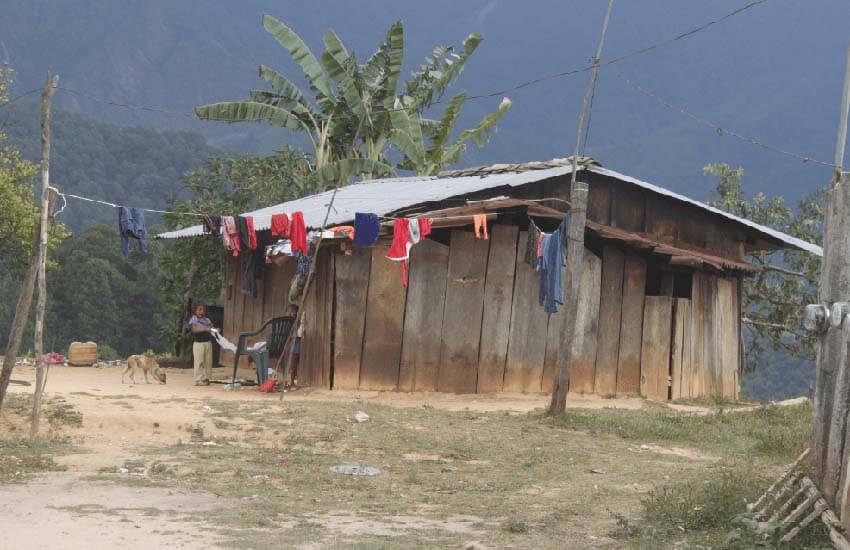
Indigenous girls sold into marriage in the Montaña region are “victims of the lack of attention of authorities,” said Abel Barrera, the director of a local human rights center. Families sell their daughters due to poverty, he told the newspaper Milenio.

poverty in Montaña region of Guerrero
Families who sell their daughters into marriage often do so because of poverty, said Abel Barrera, director of a Guerrero human rights center. Centro Derechos Humanos Tlachinollan

President López Obrador said in late October that the media had made the sale of girls for marriage or prostitution appear to be a bigger problem than it really is, a remark that earned him a rebuke from the Network for Children’s Rights in Mexico.

Barrera nevertheless expressed confidence that the federal and Guerrero governments will enact policies to reduce the incidence of child marriage and stop the suffering of hundreds of girls who are the victims of sexual, physical and psychological abuse perpetrated by their husbands.

With reports from Milenio 

Caribbean jewel of Tulum deals with rapid rise in violence

0
Joaquin Carlos
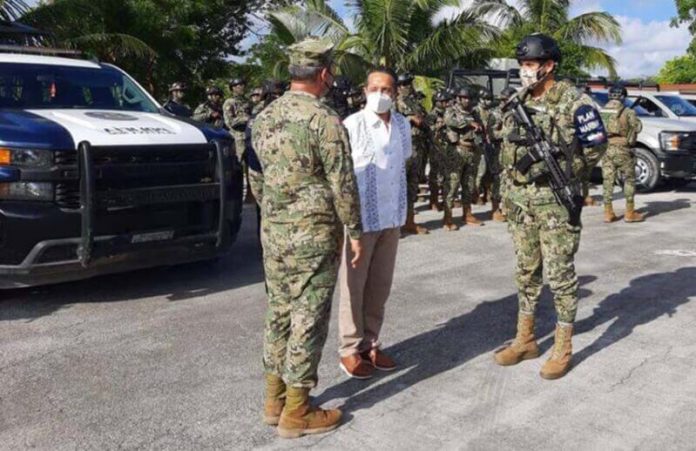
Governor Carlos Joaquín welcomed federal troops to Tulum on October 26 after Defense Secretary Luis Cresencio Sandoval promised to restore stability in the area. goverment of Quintara Roo Twitter

A number of foreigners have been killed in the Caribbean resort town of Tulum, shining a spotlight on a rapid rise in violence in one of the most sought-after destinations in all of Latin America.

Between January and September 2021, the town registered 65 murders, an 80.5% increase over the same period last year when just 36 murders took place, according to statistics from the National Security System.

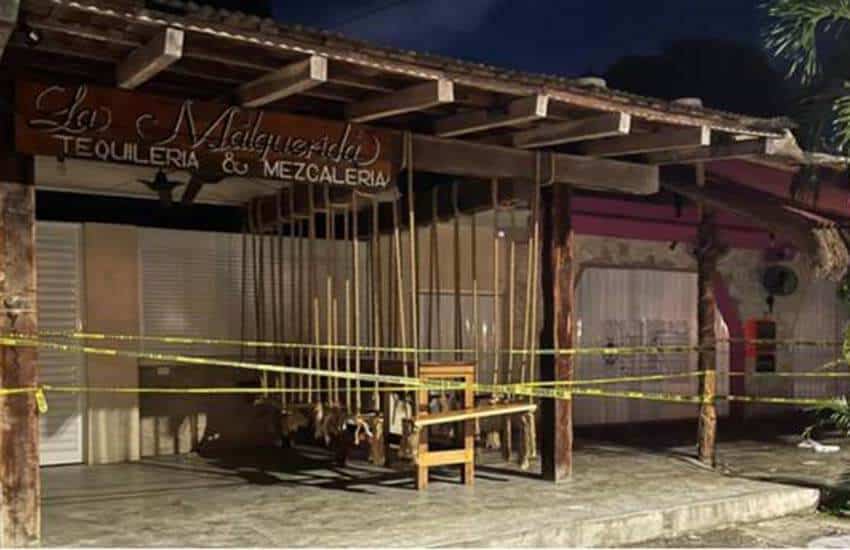
And the violence has only continued. On October 20, two foreign tourists, a travel blogger from India and a German citizen were shot dead at a restaurant in Tulum, caught in the crossfire of a shootout between gangs. Three other tourists were injured.

This year has also seen attacks claim the lives of nationals from Spain, Uruguay and Belize.

While these killings only account for a fraction of the total death toll among Mexican citizens, local businesses are highly concerned that the violence is driving away tourism. In October, the German government issued a travel advisory warning about visiting Tulum, although this was later retracted.

La Malquerida Tulum
The killing of two foreign tourists in a shootout is just the latest example of Tulum’s rise in violence. FGE Quintana Roo

In 2020, a record number of American tourists visited the Riviera Maya, a long strip of resort towns that includes Cancún, Playa del Carmen and Tulum, allegedly to escape COVID-19 travel restrictions, according to the Washington Post.

InSight Crime analysis

Tulum may have become a victim of its own success, with criminal groups being attracted to the drug trafficking and extortion possibilities offered by this tourist hotspot.

The local hotel association says it knows who to blame. According to David Ortiz Mena, president of the Tulum Hotels Association, large raves and dance parties have led to an increase in demand for drugs, which attracted organized crime.

Speaking to the newspaper El Heraldo, Ortiz explained that while the world shut down during the pandemic, Tulum became known for continuing to hold raves and music festivals. This was accompanied by a rise in demand for drugs, he said.

Extortion attempts on hotels, restaurants and visitors have also increased. “Hotel owners are alarmed because their clients, tourists, are being threatened by the bad guys. And when they demand attention from authorities, they don’t get a response,” Juan Noriega Granados, another member of the Tulum Hotels Association, told the press.

party in Tulum
Tulum has become known internationally as a party destination. This photo of a dance party was taken in December 2019. Facebook

The situation has grown so dire that security forces have had to be sent in. 450 federal troops were sent to Tulum in late October, among other security strategies, following the murder of the two tourists.

While a number of criminal groups, including national-level threats such as the Zetas Vieja Escuela cartel and local gangs such as the Bonfil, have long operated in Tulum, the arrival of the Jalisco Cartel New Generation has been blamed for an escalation in violence.

Reprinted from InSight Crime, a foundation dedicated to the study of organized crime.

Collision between transit vans kills 12 in Chiapas

0
crash on Palenque-Playas de Catazajá highway, Chiapas
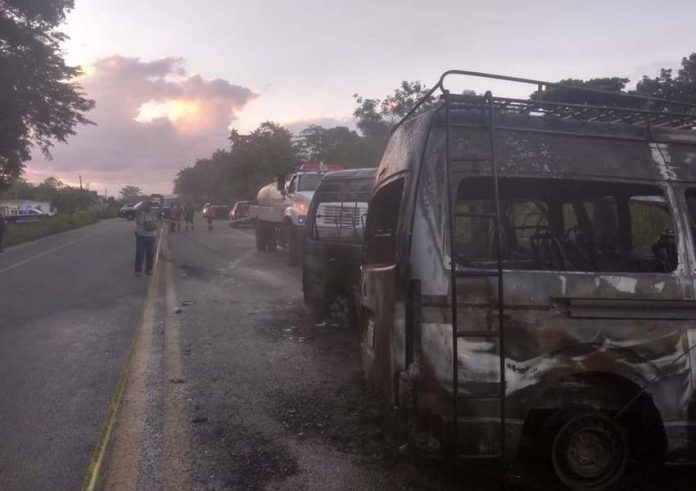
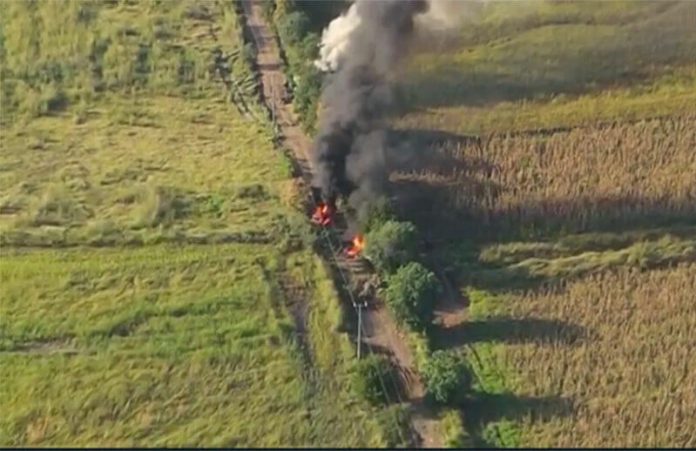
The crash on the Palenque-Playas de Catazajá highway left both transit vehicles completely burned. Chiapas Civil Protection

Two transit vans collided on the Palenque-Playas de Catazajá highway in Chiapas early on Tuesday, killing 12 people and leaving three others injured, all of whom were presumed to be migrants. 

Seven bodies were recovered from one of the transit vans and five from the other. Photos published by the state’s Civil Protection office show that both vehicles caught fire and were burned out.  

The state Attorney General’s Office said the victims appeared to be Central Americans but identification work is still being carried out. The three injured people, the office confirmed, were Honduran. One of the injured was a minor, identified by authorities as Kevin “N,” who had second-degree burns. He was transferred to Palenque General Hospital with the other two injured people.

The Palenque-Playas de Catazajá highway remained closed to traffic for several hours.

Criminal gangs dedicated to human trafficking are common in the area, TV Azteca reported. Known as polleros, they transport migrants from the southern Guatemala border to Mexico City or the United States border by vehicle for hefty sums.

With reports from ADN 40 and TV Azteca 

Jalisco cartel launches new attacks in Michoacán but no fatalities reported

0
Vehicles belonging to the Jalisco New Generation Cartel burn on a road in the Tierra Caliente region.

The Jalisco New Generation Cartel (CJNG) has carried out attacks in the Tierra Caliente region of Michoacán this week but no fatalities have been reported.

A cell of the powerful criminal organization launched an offensive in the community of Taixtán early Tuesday afternoon but groups of armed residents contained the attack, the newspaper El Universal reported.

However, the offensive resumed Tuesday night and Wednesday morning with attacks against local residents and army personnel.

The CJNG reportedly used high-caliber weapons and explosive-laden drones in the offensive. It is unclear who or what the cartel was targeting in Taixtán, located in the municipality of Tepalcatepec, which borders Jalisco. However, the CJNG is engaged in a fierce turf war in the Tierra Caliente region with the Cárteles Unidos, led by the Viagras crime gang.

The cartel has also clashed with self-defense force members, and recently decapitated five men manning a checkpoint in Tepalcatepec.

A day before its attack in Taixtán, the CJNG went on the offensive in Villa Victoria, the municipal seat of Chinicuila, located on the border with Jalisco and Colima. Residents and local authorities reported that an armed gang entered the town in armored trucks known as monstruos (monsters) at about 4:30 a.m. Monday and shot at homes and vehicles.

The community guard and the army responded to the attack and a confrontation ensued that lasted more than 1 1/2 hours, El Universal said. Six soldiers were wounded and transferred to a hospital in Apatzingán.

The newspaper reported Wednesday that the CJNG’s advance had been halted.

The Tierra Caliente of Michoacán has been plagued by violent crime in 2021. Another hotspot is Aguililla, where the CJNG and the Cárteles Unidos have clashed on numerous occasions.

According to a report by the Associated Press, the army has largely stopped fighting the cartels in Aguililla and surrounding areas. Instead, soldiers guard dividing lines between cartel territories so they won’t encroach on each other’s turf, the news agency said.

AP also said that the army turns a blind eye to the cartels’ criminal activities. It reported that the Viagras are extorting lime producers, cattle ranchers, avocado farmers and iron ore mines and that CJNG leader Nemesio “El Mencho” Oseguera “wants to take over all this.”

Alejandro Hope, a security analyst, told AP that the federal government’s strategy in Michoacán is clearly “some sort of pact of non-aggression.”

“… [The soldiers] are not there to disarm the two sides, but rather to prevent the conflict from spreading. The problem is that we don’t know where the army draws the line, what they are willing to accept,” he said.

Violence in the Tierra Caliente region has displaced thousands of people since President López Obrador took office in late 2018, many of whom have sought asylum in the United States.

With reports from El Universal and AP

For second time, US ambassador raises concerns about electricity reform plan

0
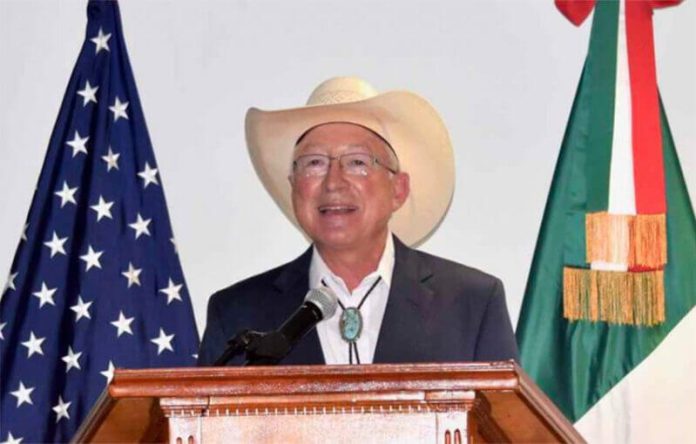
Ken Salazar
Ken Salazar stressed that Mexico needs US investment.

The United States ambassador to Mexico has expressed cautious confidence that the two countries can reach a mutually agreeable resolution with regard to President López Obrador’s proposed electricity reform, which seeks to limit the market share of foreign and private companies.

Ken Salazar told a press conference Tuesday that the United States is seeking to understand more about the motives of the planned reform, which López Obrador sent to Congress at the start of October.

The constitutional bill aims to guarantee 54% of the power market to the state-owned Federal Electricity Commission and get rid of the independent National Hydrocarbons Commission and the Energy Regulatory Commission.

Salazar acknowledged that renewable energy companies that have invested heavily in Mexico are worried about the president’s proposal, even though its approval is far from guaranteed because the ruling Morena party and its allies don’t have the congressional supermajority required to pass constitutional bills on their own.

He said last week that the U.S. government had “serious concerns” about the plan and was “committed to continuing our dialogue on these critical issues.”

The ambassador stressed Tuesday that Mexico needs the investment of United States companies for its economy to flourish, not just in the energy sector “but also in many other things.”

He said the U.S. government is attempting to find out “whether there are some paths on which we can reach a resolution” vis-à-vis the electricity bill.

“I don’t know if that’s possible … I believe there are possibilities that we can reach a place where [the issue] can be resolved [but] I’m not sure,” Salazar said, without revealing what concessions the U.S. is seeking.

“… What I am sure about is that the two presidents have a good relationship, and we’re having meetings with the government leaders to see the way in which we can move ahead,” he said.

López Obrador said on Monday that he was unconcerned about Salazar’s remarks about his electricity proposal because the United States government hasn’t formally lodged a complaint about it.

“We have very good relations with the United States, the border is opening today, and we don’t have any kind of complaint or protest against the electricity matter,” he said.

López Obrador also said that the United States doesn’t consider Mexico to be its “backyard” and respects the country’s sovereignty. Salazar is a good ambassador who has the right to express himself, he added.

“We’re always going to be respectful of all opinions,” López Obrador said, before accusing the media of selective reporting on the ambassador’s remarks.

“Because he said — I don’t know whether it was before or after [he raised concerns about the electricity bill] — that the Mexican government was acting well, he even praised us for following the footsteps of Roosevelt. But they don’t publish that – that’s why we shouldn’t get heated up because they take a lot of statements out of context,” he said.

With reports from Milenio and El Universal 

Health Ministry appeals ruling ordering it to vaccinate Mexico’s teens

0
covid
Health Minister Jorge Alcocer claimed last month that that vaccinating children could have a “limiting” effect on the development of their immune systems.

The federal government has challenged a court order instructing it to offer COVID-19 vaccines to all youths aged 12 to 17.

A México state court official announced Monday that the federal Health Ministry’s in-house lawyer had filed an appeal against the ruling handed down early last month.

The appeal was filed on behalf of Health Minister Jorge Alcocer; Deputy Health Minister Hugo López-Gatell, the government’s coronavirus czar; and President López Obrador.

The same México state court official formally notified health authorities on October 27 that if they didn’t modify the national vaccination policy to include all minors between 12 and 17 within five days, they would be reported to the federal Attorney General’s Office for contempt of court.

The government’s appeal will be referred to a collegiate court, which will determine whether it has the right to not offer vaccines to adolescents. The government has offered shots to minors aged 12 to 17 with underlying health conditions that make them susceptible to serious COVID-19 illness, but argued that the universal inoculation of youths is not necessary.

Alcocer claimed last month that that vaccinating children could have a “limiting” effect on the development of their immune systems and asserted he wouldn’t vaccinate his grandchildren.

López Obrador indicated on October 14 that the government would challenge the court order, which was issued in response to an injunction request filed by the family of a girl seeking her vaccination. The judge determined there was no impediment to an order applying to all youths because access to health care is a universal human right. She ruled that the government must offer vaccines to youths during the fifth phase of the national vaccination plan, which concludes next March.

In other COVID-19 news:

• It’s “highly probable” that Mexico will enter a fourth wave of the pandemic in the coming weeks, a Pan American Health Organization (PAHO) official said Monday.

PAHO Mexico representative Cristian Morales said it’s very likely the fourth wave will begin this month and extend into December.

He suggested that the wave could be fueled by large gatherings of people at the Day of the Dead parade and Formula One Grand Prix in Mexico City.

“We’ll see in the next two or three weeks if the public followed the social distancing, face mask use and frequent handwashing instructions,” Morales said.

Deputy Health Minister López-Gatell said last week that Mexico could experience fourth, fifth, sixth and seven waves, even as more than 80% of adults are vaccinated.

• The Health Ministry reported 2,192 new cases and 137 additional COVID-19 deaths on Monday. Mexico’s accumulated tallies are currently just under 3.83 million and 289,811, respectively. Estimated active cases number 19,493.

Mexico’s fatality rate is 7.6 per 100 confirmed cases, while its mortality rate is 227.1 deaths per 100,000 people, the 21st highest in the world, according to data compiled by Johns Hopkins University.

With reports from Milenio and Forbes México

Consumer protection agency warns 3 airlines against charging for carry-ons

0
carry-on luggage
Profeco said that the practice breached the Mexican constitution as well as consumer protection and civil aviation laws. Blue planet Studio/Shutterstock

Consumer protection agency Profeco has told Mexico’s three biggest airlines to stop charging for carry-on luggage.

Profeco said in a statement it would take legal action against Aeroméxico, VivaAerobus and Volaris if they continue what it called an “abusive practice.”

The agency said that hand luggage is an inherent part of commercial air transport, which was “not open to negotiation,” and that denying passengers their right to carry-ons “could constitute a practice that harms the interests and rights of consumers.”

It added that the practice breached the Mexican constitution, consumer protection law and civil aviation law.

The latter states that passengers have a right to hand luggage: “The passenger may carry up to two pieces of hand luggage in the cabin. The dimensions of each one will be up to 55 centimeters long by 40 centimeters wide by 25 centimeters high, and the weight of both should not exceed 10 kilograms.”

Mexico News Daily

Mexico wins second place in ‘Fossil of the Day’ contest at climate conference

0
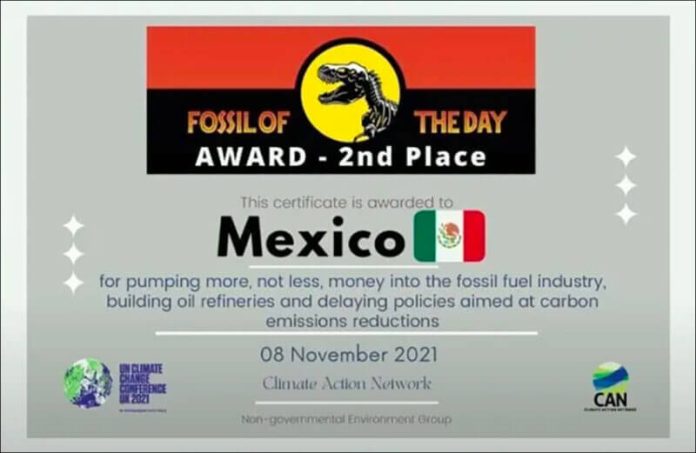
A network of environmental groups was critical of Mexico's climate change efforts.

Mexico won an unenviable second place Monday in a daily contest held at the United Nations Climate Change Conference in Glasgow, Scotland.

Presented by the Climate Action Network (CAN), a global network of more than 1,500 civil society organizations in over 130 countries, “Fossil of the Day” awards are given to the countries that are “doing the most to achieve the least” in terms of the progress on climate change.

Mexico was awarded second place “for pumping more, not less, money into the fossil fuel industry, building oil refineries, and delaying policies aimed at carbon emissions reductions.”

In a press release, the CAN said that “Mexico has worked hard to earn its Fossil of the Day award.”

“Ranked as the 13th largest emitter of CO2 in the world, it’s not exactly spearheading energy transition,” it said.

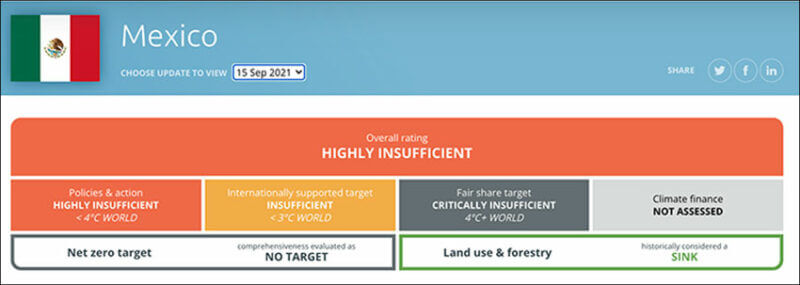
Mexico's status on the Climate Action Tracker.
Mexico’s status on the Climate Action Tracker.

The network insinuated that Mexico’s inaction on climate is confounding given that “in 2020 alone, at least 101,000 people were forcibly displaced because of natural disasters, according to the annual report of the Internal Displacement Monitoring Center.”

It said that Mexico “turned up in Glasgow with out of date NDCs [nationally determined contributions] from 2015, previously rated as ‘insufficient’ to achieve the 1.5 C degree goal and with no loss and damage or emissions mitigation data.”

“And surprise, surprise, they also failed to support the recent ‘Global Coal to Clean Power Transition’ Statement which championed a just and inclusive transition to prevent loss and damage and human rights violations they’ve been linked to,” the CAN said.

“They’ve now fallen even further behind with a rating of ‘highly insufficient’ on their climate policies. How much further can this country slide?”

The highly insufficient rating comes from the Climate Action Tracker (CAT), an independent scientific analysis that tracks government climate action and measures it against the globally agreed Paris Agreement aim of holding warming well below 2 C, and pursuing efforts to limit warming to 1.5 C.

“The ‘highly insufficient’ rating indicates that Mexico’s climate policies and commitments are not consistent with any interpretation of a fair-share contribution and lead to rising, rather than falling, emissions, with an exception being Mexico’s conditional NDC target, which roughly stabilizes emissions at today’s level,” the CAT said.

“… Mexico’s plans to not increase its 2030 mitigation ambition are contrary to the Paris Agreement’s requirement that each successive NDC should represent a progression on their mitigation efforts. This sends negative signals to the international community that Mexico is not serious about its commitment to reduce GHG [greenhouse gas] emissions in line with the Paris Agreement climate goals.”

The CAT noted that “in the midst of the pandemic, the Mexican Ministry of Energy published a bill (fast tracked due to COVID-19) that would effectively halt private renewable energy investment in the country, prioritizing the government’s own aging, fossil fuel-fired power plants.”

“… The decision to favor fossil fuel generation over renewable energy now puts Mexico on a path that is even more inconsistent with the steps needed to achieve the Paris Agreement’s 1.5 C limit. Its plans for the power sector – especially the decision to continue investing in coal – stands in stark contrast to what is required to achieve the 1.5 C limit.”

Among the other countries that have “highly insufficient” CAT ratings are Canada, Australia, Argentina, Brazil, India and Saudi Arabia.

Edging out Mexico in Monday’s “Fossil of the Day” award were the United Kingdom (which has an “almost sufficient” CAT rating) and Saudi Arabia. Those two countries shared first place “for their sterling efforts in securing a weak new Work Program on Action for Climate Empowerment, which we’re now going to be lumbered with for the next decade!”

Mexico News Daily