Home Blog Page 1130

Puebla’s Dia de Muertos parade this year harkens to holiday’s Mexica roots

0
Day of the Dead Catrina face painting in Puebla city
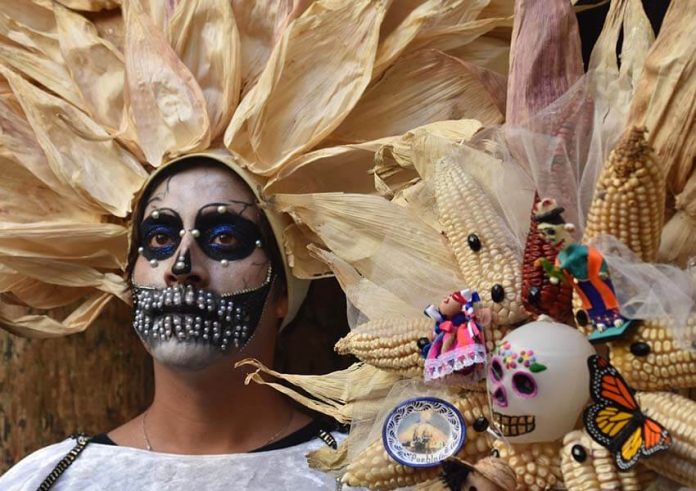
Luis Eduardo Cuanal in full regalia for a different sort of Catrina parade this year in Puebla city, one that sought to emphasize participants' Mexica roots. Photos by Joseph Sorrentino

Day of the Dead — celebrated in modern times on November 1 and 2 — is based on ancient indigenous ceremonies that, at least in the Mexica or Aztec civilization, may have lasted for as long as two months.

This year, some residents of Puebla city decided that they wanted to put on a Catrina parade that would acknowledge the holiday’s beginnings in those ceremonies.

In one of the Mexicas’ two calendars, a religious calendar called the xiuhpohualli, Miccailhuitontli was the Mexica period of “the little feast of the dead,” which was a preparation for Huey Miccaílhuitl, “the great feast of the dead.”

The celebration of Miccailhuitontli has mostly been lost in Mexico, but a group in the city of Puebla decided to bring it back.

“In pre-Hispanic cultures, Day of the Dead began in what we would consider the month of September,” Esther Cortés Rojas, the co-coordinator of the Puebla event, said.
Day of the Dead in Puebla city
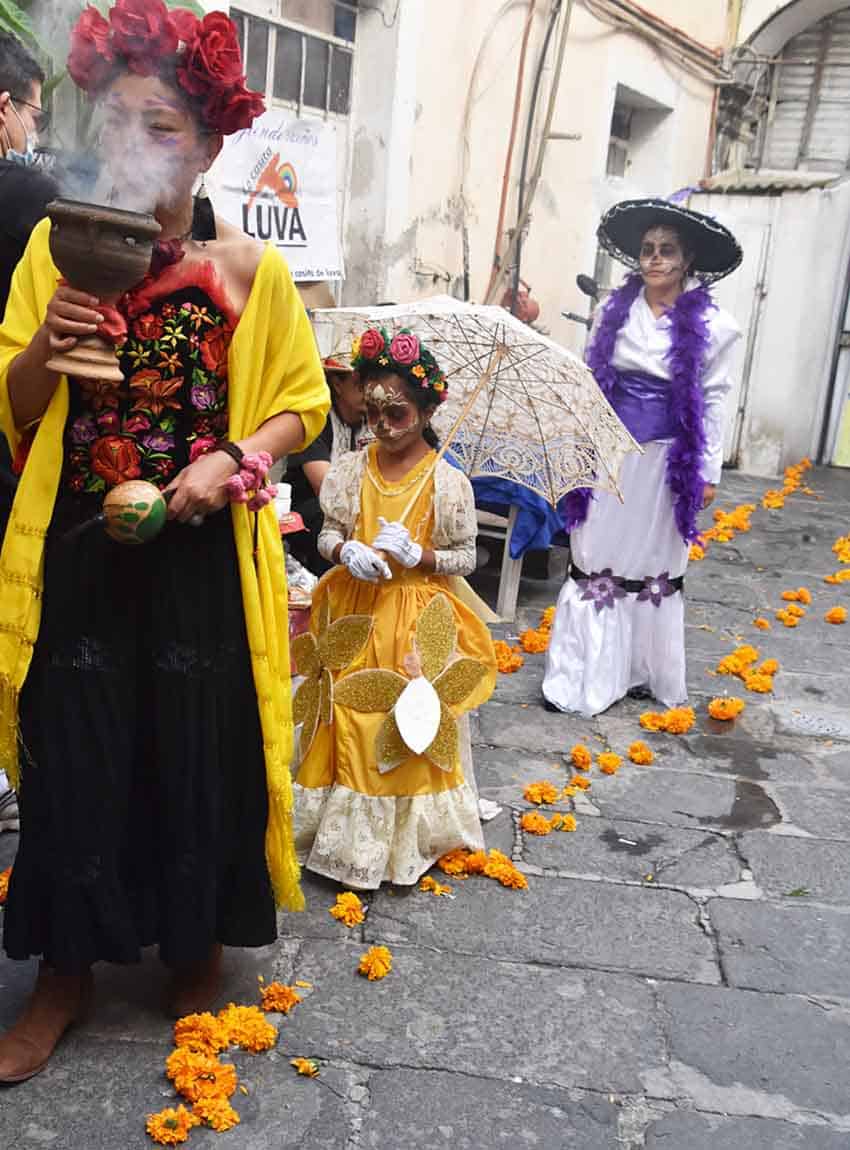
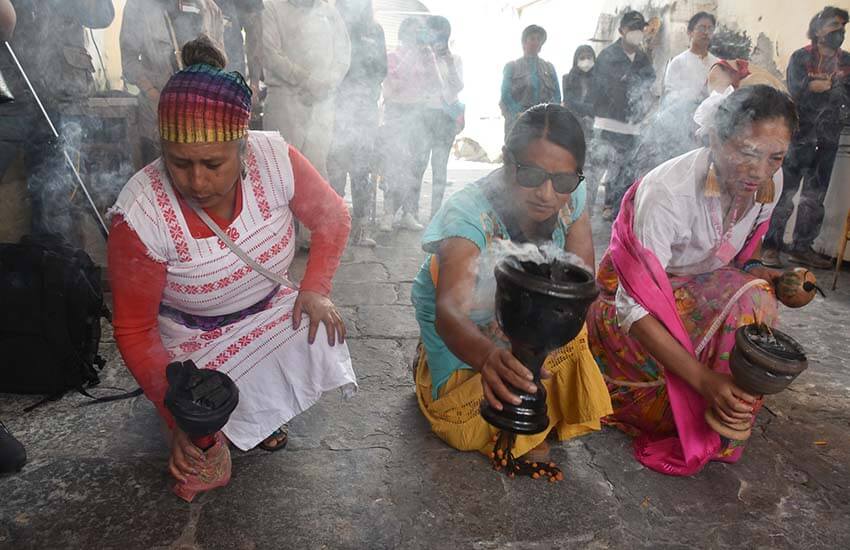
Women purify the space for the opening Mexica ceremony with incense.

She and José Velázquez Guevara, the other coordinator, decided to celebrate Miccailhuitontli with workshops and a Catrina parade at the Taller Estudio de la Cura, an art school in the city.

“This is the first time we presented it,” Velázquez said. “This marks for us the beginning of Day of the Dead. We want people to understand this.”

The day began with a Mexica ritual.

“We ask for permission to have this ceremony. We perform a ritual to the four points,” Víctor Carreto Cabaños, the ritual’s leader, said.

The four points refer to both the four cardinal directions as well as the four elements that were important to the Mexica: earth, wind, fire and water.

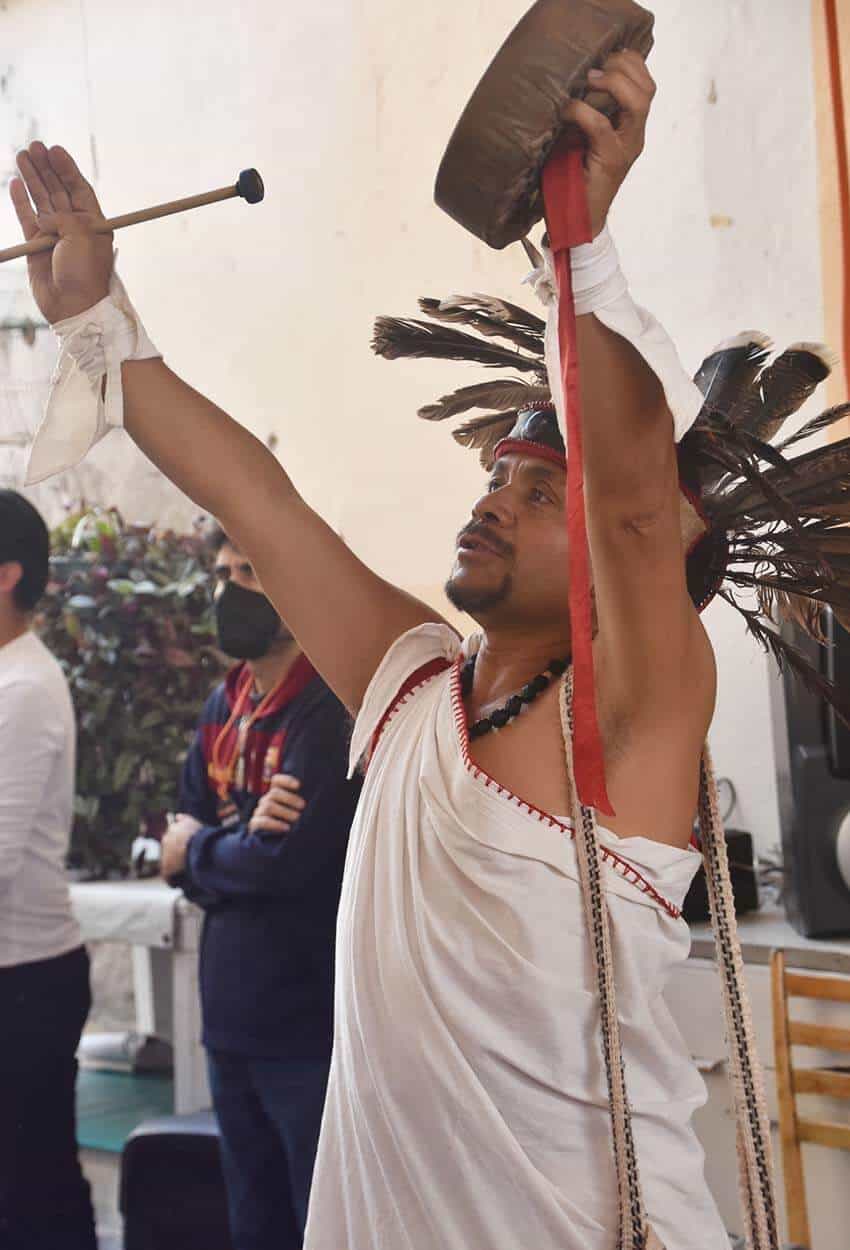
To open the ceremony, Carreto chanted and hit a small drum while three assistants purified the space with incense. He explained that the ritual isn’t to ask permission from a god.
Day of the Dead in Puebla city
The celebration’s opening ritual faced each of the four cardinal directions.

“In [the indigenous language of] Náhuatl, there is no word for god,” he said. “We believe in energy, the energy that is the universe.”

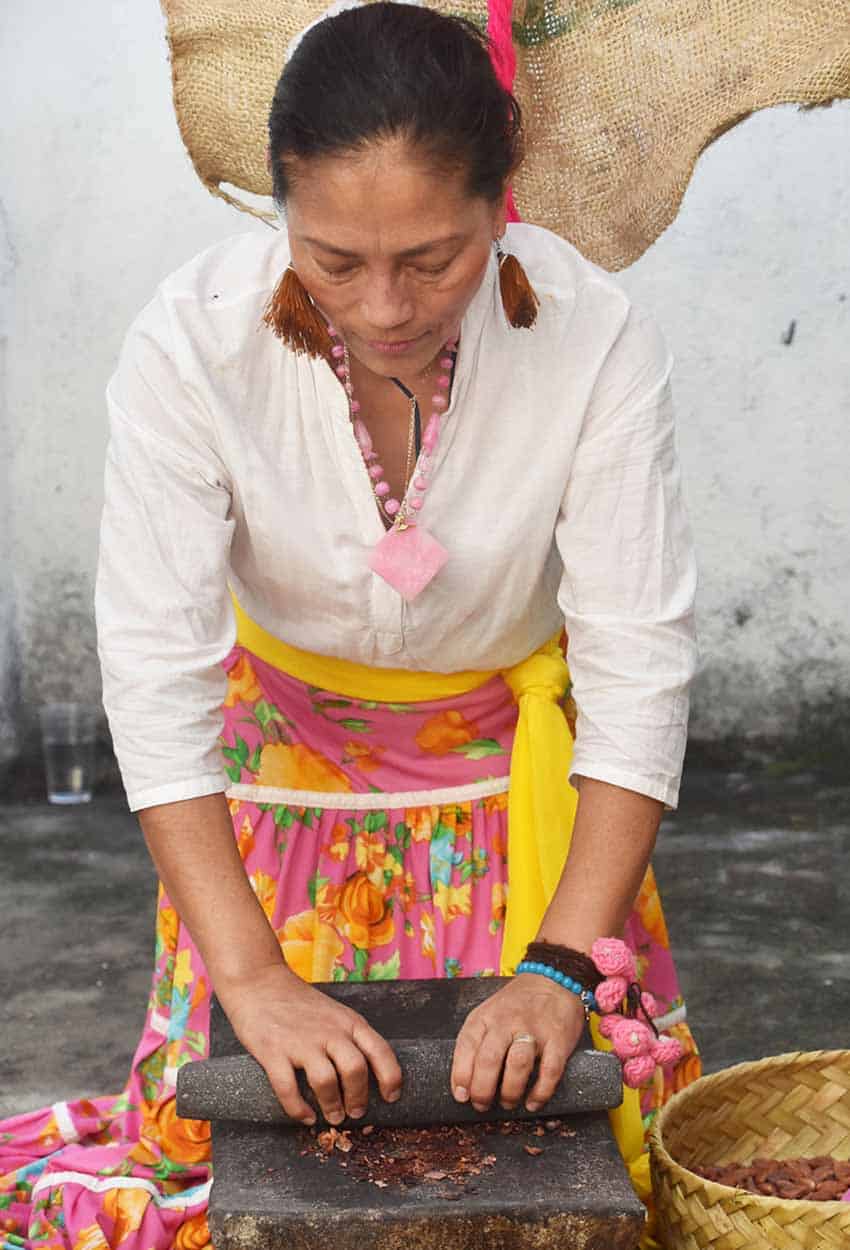
Organizers held workshops where attendees learned about the cempasúchil (Mexican marigold — the iconic Day of the Dead flower) and the role of cacao in indigenous cultures. They also got to make skulls out of amaranth.

But the highlight of the day was the Catrina parade.

Catrina is the iconic Day of the Dead figure, based on a 1910 etching by José Guadalupe Posada, popularized by a later work of Diego Rivera.

The figure, as intended by Posada, pokes fun at Mexicans who imitated European styles during the era of President Porfirio Díaz, known as the Porfiriato. The Catrina also pokes fun at death.

It takes time and patience to transform a person into a Catrina.

Day of the Dead Catrina face painting in Puebla city
Blanca Anahí Llamas applies makeup to Luis Eduardo Cuanal.

In a small room, Blanca Anahí Llamas Torres painstakingly applied makeup to Luis Eduardo Cuanal’s face.

“We are projecting death using art, music and theater,” Cuanal said. “It is to represent the cult of death. Catrina signifies an expression of death in a feminine figure.” Cuanal’s transition into a Catrina took almost an hour.

Nearby, Alexandra Cazorla and Alexis López, whose faces were painted as skulls, waited for the parade to begin.

“This is a preamble to Day of the Dead,” Cazorla said. “It is to show death as something profound, a transcendence, [to show] that we do not completely end.”

“It is not to show fear,” added López. “It is to have a fiesta.”

Before walking around the patio, each participant was cleansed with incense before Cortés led them down a path made from cempasúchil petals. Finally, they all posed on the studio’s staircase.

Catrina parade, Puebla
Sandra Inzunza helps her daughter Valentina González with final touches.

“Day of the Dead is to remember people who have died,” said Elizabeth Damián Espinosa, who organized the parade. “It is also to say, ‘I am going to die someday, too.’”

Joseph Sorrentino, a writer, photographer and author of the book San Gregorio Atlapulco: Cosmvisiones and of Stinky Island Tales: Some Stories from an Italian-American Childhood, is a regular contributor to Mexico News Daily. More examples of his photographs and links to other articles may be found at www.sorrentinophotography.com  He currently lives in Chipilo, Puebla.

 

Catrina parade, Puebla
Gisela Juárez and Baraquiel Juárez dressed up for the parade.


Catrina face painting, Puebla
Blanca Anahí Llamas gets some help with her Catrina costume.


Catrina parade, Puebla
Valentina González, center, parades along a route lined with Mexican marigolds, the iconic Day of the Dead flower.


Day of the Dead in Puebla city
Esther Cortés Rojas grinds toasted cacao seeds.


Catrina face painting, Puebla
Alicia Guerra begins the process of getting her face painted.

FEMSA’S 10-year goal: 10,000 new Oxxo stores in Mexico

0
oxxo store
More are on the way.

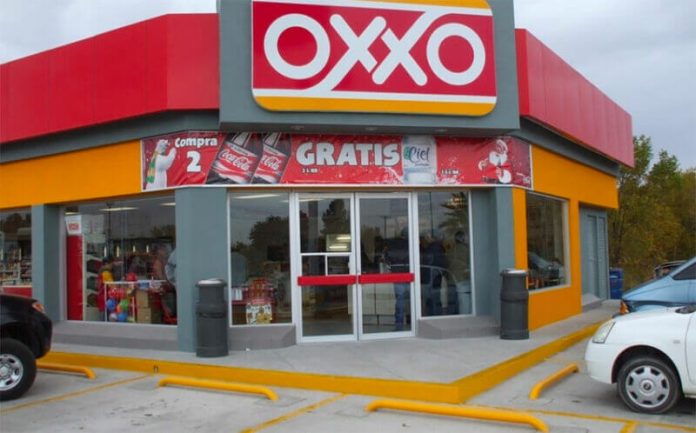
Having trouble finding an Oxxo store? Never fear – 10,000 more are on the way.

Although Oxxo is already ubiquitous across Mexico, the chain’s owner plans to open about 10,000 additional stores over the next decade. That would increase the total number of Oxxos to just under 30,000 by 2031.

FEMSA CEO Eduardo Padilla Silva announced the 10-year goal in a telephone call with analysts. He said the coronavirus pandemic had slowed down the pace of new store openings but expressed confidence it would pick up soon.

Eugenio Garza y Garza, FEMSA’s finance director, said that 163 new Oxxos opened in the third quarter of 2021 and a total of 431 have opened this year.

“Our expansion operations slowed down a little due to the third wave of COVID. … As things are we still have the net goal of 800 new stores in Mexico this year, but we might fall a little short,” he said.

Juan Fonseca, FEMSA’s investor relations director, said 1,000 new store openings can be expected in 2022, the minimum annual number required for the company to reach its goal.

FEMSA, the world’s largest independent Coca-Cola bottling group and the second largest shareholder of multinational brewing company Heineken, also owns Oxxo stores in Colombia, Chile and Brazil. Some 350 new stores are expected to open in those markets next year, Fonseca said.

With reports from Reforma 

Fleeing Venezuela to be imprisoned in Mexico: a migrant journalist tells his story

0
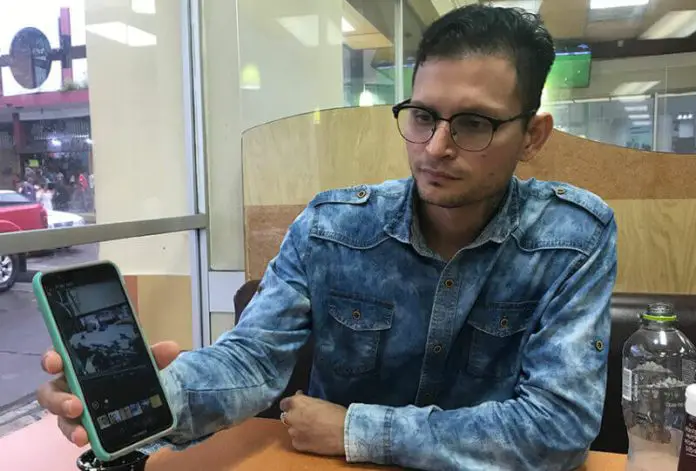
Joel Rondón shows a video of an attack against him in Chile.

They called him “the journalist.” When I first saw Joel Rondón sitting in a quiet corner of the “21st Century” detention center in Tapachula, Chiapas, he was thinking intensely. It didn’t seem worth asking what was on his mind: getting out was everyone’s priority. 

The Venezuelan, 32, didn’t look like the typical refugee. He wore a shirt and glasses, and had piles of documents; Mexican law and human rights law among them. The idealism was hard to ignore: we’d all been imprisoned without any legal process, but his faith wasn’t wavering. 

He’d been trapped 27 days, and his patience had worn thin. The last time I saw him in “21st Century” was through the tiny window of the metal door which kept us confined. He was on the other side, being wrestled to the ground by police officers.  

That resistance effort took him to a solitary cell. However, the next day word spread that he’d been released. 

I met up with Joel in the Pollo Campero fried chicken restaurant in Tapachula later in October. He told me about the 10,000-kilometer road he and his wife had traveled.  

“I left because of the political situation, I was pressured by the government. The dictatorship.” Joel had been working as a radio journalist for Bolivar FM, 104.5, in Maracaibo until 2017, when he left the country. His radio show became increasingly critical of the Nicolás Maduro regime, and started taking public legal accusations through an on-air phone-in. 

Federal investigators took exception to the reporting. Not so subtle hints came that the broadcaster should keep a low profile, accompanied by demands for dollar bribes. “It brought us problems,” he said, in understated fashion.

“I left Venezuela and I went to Peru. I started doing the same reporting, live, from my cellphone … I was covering the plebiscite of [opposition politician Juan] Guaidó in 2017. That generated more problems for me in Peru. They’re criminals. They get your number … they threaten you … they wrote to me on WhatsApp: ‘We know you’re in Peru. You have family here in Venezuela.’ My whole family had to flee,” he said. 

Chile was his next attempt at freedom. After setting up a cellphone repair business in Santiago de Chile, things were going well. Then one day an unwelcome visitor arrived. “We know you fled Peru, we know you fled Venezuela. We don’t want you here; leave this business,” Joel was told. 

Back in Pollo Campero, slabs of fried chicken were disappearing when Joel reached for a video on his phone. CCTV footage showed a parking lot, and a thin individual riding a scooter. A car approached from behind, and made straight for the scooter, intentionally hitting the front wheel and knocking the rider off.

Someone was after Joel. Clearly Chile wasn’t safe either.

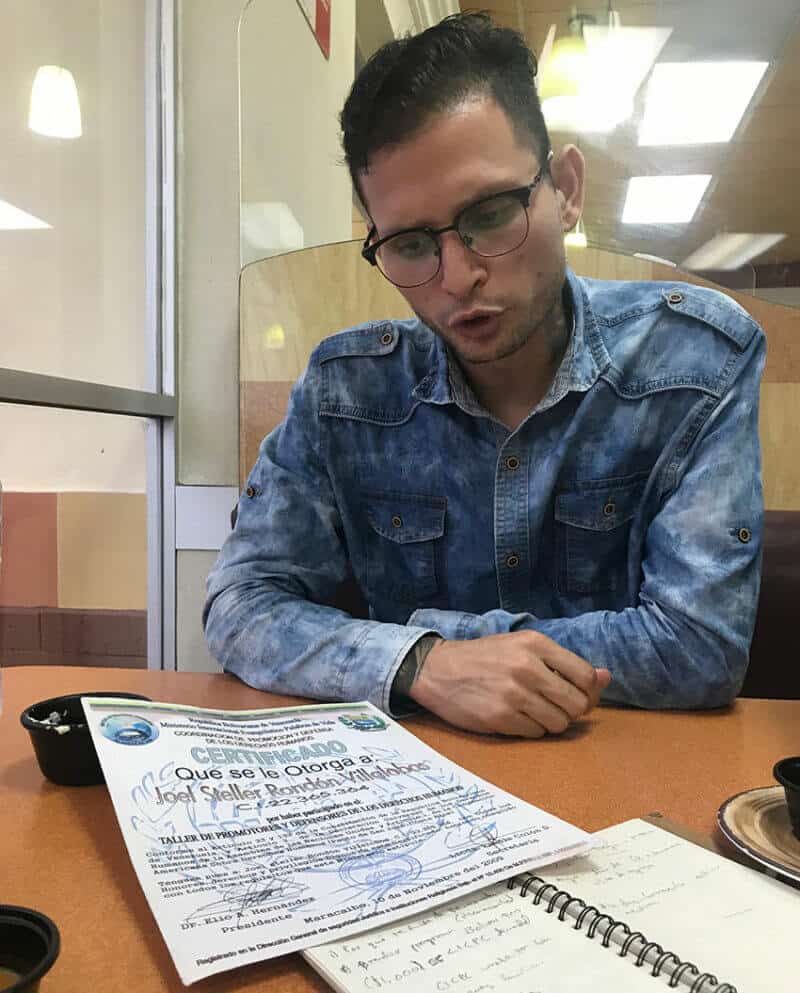
Rondón with the Venezuelan document certifying him as a human rights defender.

“From Chile I had to go through Bolivia, back through Peru, Ecuador, Colombia, the jungle,” he said referring to the Darién Gap, the inhospitable no man’s land which separates Colombia from Central America. 

“I saw 11 bodies [in Darién]. It’s like entering a different dimension.”

After a hellish journey, the couple reached Panama, and were met with some unorthodox border policies: they were given US $40 to head north to the border with Costa Rica. A border officer told a crowd of migrants that he was about to turn his back, and the rest was their prerogative. 

In Costa Rica there was no detainment. They crossed Nicaragua unimpeded: Venezuelan passport holders had free transit due to the political alignment of the two governments. 

In Honduras, that changed drastically. Bribes were demanded at every police checkpoint. Guatemala, Joel said, was even more expensive: “They stop your taxi and demand $50 each.”

The pair crossed into Mexico in July. They had a meeting with refugee agency COMAR for September 6. That was canceled by the agency. The following day they decided to head north for Tuxtla Gutiérrez, the state capital, and were caught.

“The immigration official said I would be there for two days,” he said of the prison-like detention center he was sent to. There the facility overflowed with migrants sleeping in squalid conditions on the floor. Medical attention and phone calls were hard to come by; legal information and representation were inaccessible. 

“I arrived at night and in the morning I was organizing a protest,” he explained proudly, before presenting his certificate as a human rights defender, awarded back in Venezuela. “They are violating human rights,” he said with conviction. 

The protests continued, and they worked. He secured private meetings with the center’s director, which are not available to other inmates.

However, it didn’t seem to speed up the process. The days and weeks dragged on, and Joel found himself losing track of time. Eventually, from that solitary cell, his name was called and he tasted freedom once more. 

Now, free of cells, bad meals and abusive officials, he and his wife feel little affection for Mexico. They hope to find their way to a place where their rights can be protected, and dollars can be earned.

Just one last border remains, before asylum in the U.S.A.

Mexico News Daily

State bolsters security efforts in Tulum with new vehicles

0
Tulum's new quads will patrol the coastal area and beaches.
Tulum's new quads will patrol the coastal area and beaches. government of quintana roo

Tulum, Quintana Roo, has beefed up its security with 10 new patrol vehicles and six quad bikes after a string of violent incidents in recent months. 

Two tourists were killed in a shooting in the Quintana Roo tourist destination on October 21, provoking the German Foreign Office to advise German citizens in the Riviera May not to leave their hotel complexes.

Governor Carlos Joaquín said the Quintana Roo tourist destination had grown rapidly and needed to continue to do so in an orderly way to prevent crime. He added that the image of the city needed to be improved, for it to be seen as a successful, internationally recognized destination.

Joaquín pointed to investment in technology, CCTV and a focus on lowering violence as the key to overcoming violent crime. 

The pickup truck patrol vehicles are destined for the city center, the coastal area and hotel zone. Eight will be put at the disposal of the police and two to municipal transit authorities. 

The six quad bikes were donated by local businesses and will patrol the coastal area and the beach. 

Mayor Marciano Dzul said coordination on security matters was essential. “Today Tulum needs to feel safe. That is why I thank the governor for his support to make this possible. Today we are launching these units to patrol the streets of the municipality: coordinated work will always give better results,” he said.

However, some of Tulum’s problems with violent crime are caused by the security forces themselves. Police were accused of responsibility for the death of a Salvadoran woman in March when they violently pinned her to the ground, breaking her back during her arrest. A fortnight later, videos circulated on social media of another violent arrest. 

Mexico News Daily

Mexico fights to stop auctions of pre-Hispanic art in France but to no avail

0
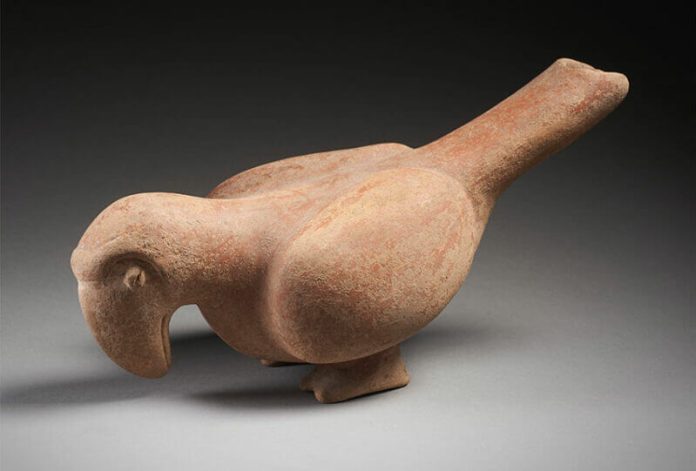
The parrot that sold for the equivalent of US $2,265.

Mexico tried but failed to stop the sale of pre-Hispanic artifacts at an auction in Paris, France, on Tuesday.

The Mexican Embassy in France said in a statement last week that it had contacted the French Ministry for Europe and Foreign Affairs to convey its concern about two auctions at which items of “our national heritage” were to be sold.

It said it emphasized that the commercialization of archaeological artifacts encourages transnational crime and creates favorable conditions for looting cultural assets with illicit excavations.

The embassy said it mentioned the letter of intent Mexican and French authorities signed earlier this year to strengthen cooperation against the illegal trafficking of cultural assets and asked that French authorities verify that the operators of auctions and sales are complying with national and international legal obligations.

The embassy also said it wrote letters of protest to the presidents of the auction houses Artcurial and Christie’s Paris to request the cancellation of their auctions.

But Artcurial’s auction went ahead in Paris on Tuesday while Christie’s sale remains scheduled to take place in the French capital next Wednesday.

The vast majority of 232 lots on offer at Artcurial’s “Antiquities, Islam & Pre-Columbian Art” auction, which included more than 40 Mexican pieces, were sold, according to results of the sale published on the company’s website.

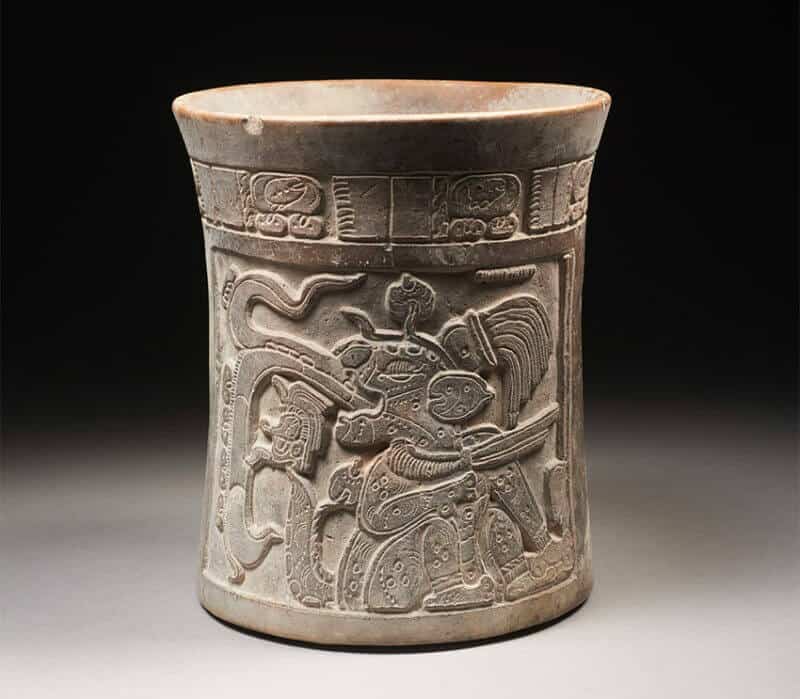
Among the Mexican items sold were a Mayan “jaguar” vase for 9,100 euros (US $10,550), a Mixtec ceramic plate for 1,560 euros and a ceramic parrot from Colima for 1,950 euros.

At the upcoming Christie’s auction – “Pre-Columbian Art & Taino Masterworks from the Fiore Arts Collection” – more than 70 Mexican pieces are slated to be put on the block.

Among them are a 1,500-year-old Teotihuacán mask with an estimated value of 20,000 to 40,000 euros and a rare Mayan pendant believed to be worth as much as 100,000 euros.

Culture Minister Alejandro Frausto also wrote to Christie’s Paris to urge it not to go ahead with its auction.

This Mayan vase sold for over US $10,000.

“The Ministry of Culture of the government of Mexico urges Christie’s to stop the auction and reflect on the historic and cultural value of the items,” she wrote.

“… The Mexican government regrets and energetically condemns the sale of such pieces, which constitute inalienable, imprescriptible property of the nation whose extraction from national territory is carried out without authorization and illegally, as it has been prohibited by Mexican laws since 1827.”

The government has also sought the assistance of the United Nations Educational, Scientific and Cultural Organization to stop the sale of Mexican artifacts abroad.

Authorities have had scant success in stopping the sale of Mexican artifacts at international auctions in cities such as Paris and New York, but Italian authorities intervened in September to cancel an auction in Rome at which 17 pre-Hispanic pieces were to go on the block.

Frausto said that the timely action of Mexico’s ambassador in Italy, Carlos García de Alba, and the European nation’s chief of police for the protection of cultural heritage, Roberto Riccardi, were crucial to the suspension of the auction.

Riccardi was subsequently decorated with the Order of the Aztec Eagle, the highest Mexican order that can be awarded to a foreigner.

With reports from AFP and El País

More organizations join coalition fighting for new tax rules for US expats

0
irs

An advocacy group fighting for new tax rules for U.S. citizens living abroad has gained momentum after two new organizations joined its coalition. 

American Citizens Abroad (ACA) argues that U.S. expats should pay residence-based taxation (RBT) rather than citizenship-based taxation (CBT). 

Under CBT, U.S. citizens have to pay tax to the U.S. treasury whatever country they live in, due to the fact that they’re passport holders. RBT legislation would disqualify foreign-earned income from U.S. taxation. Internationally, CBT is more the exception than the rule: most countries base taxation on RBT. The ACA said tax reform for Americans abroad had been overlooked in previous tax legislation reforms.  

In late October, two new organizations joined the coalition: Democrats Abroad, a group for expats who support the Democratic Party, and American Families United, a organization that lobbies for reform around immigration law for families.

ACA was founded in January 2021, and quickly assembled a wide coalition. The member organizations are The Adrian Leeds Group (Paris, France), AmCham Abu Dhabi, the Association of Americans Resident Overseas (AARO), the American International Club of Rome, Americans Overseas, Angloinfo, Bright!Tax, Dunhill Financial, ExpatExchange, National Taxpayers Union (NTU), Swiss American Chamber of Commerce and White Lighthouse Investment Management.

Executive director Marylouise Serrato said ACA’s wide membership proved the value of their cause. “The expanding membership in the RBT Coalition indicates the importance of tax reform for Americans overseas and shows that support covers various sectors and interests; it is not just organizations representing Americans overseas that support tax reform for this community,” she said.

Chairman Jonathon Lachowitz added that interest in reforming CBT went beyond the ACA membership. “Our advocacy efforts in Washington, D.C., tell us that congressional offices are hearing from a wide range of individuals, businesses and organizations calling for tax reform for Americans overseas,” he said. 

The RBT coalition said it makes information available to the U.S. government, the media and the public, and that organizations are invited to join the coalition. 

More information about the RBT Coalition can be found at their website.

Mexico News Daily

Aging, poorly maintained pipelines present ‘major risk’ to safety for Pemex

0
pemex

Pemex’s pipelines are old, damaged and lack maintenance, a situation that increases the risk of a major disaster, state oil company officials have acknowledged.

Pemex has almost 17,000 kilometers of pipelines across Mexico, including stretches that traverse urban areas and rivers.

According to a report by the newspaper El Universal, which obtained sensitive company information, large sections of pipeline have been in operation for more than 30 years and are corroded internally and externally.

The newspaper also said that landslides are exerting pressure on some sections of pipeline they are not designed to withstand.

The deputy director of transport for Pemex’s logistics division (Pemex Logística) told a state oil company board meeting in July that the majority of pipelines have been in service for lengthy periods of time and that resources must be allocated to carry out inspections and repairs. Juan Francisco Rivera Cavazos warned that the old pipelines pose a “major risk” to safety, El Universal said.

The official spoke of a 2010 pipeline explosion in San Martín Texmelucan, Puebla, that claimed the lives of 29 people and said that Pemex must do what it can to avoid a repeat of a major disaster. There have been dozens of explosions on Pemex pipelines since then, including one in Hidalgo in 2019 that killed well over 100 people and one in Puebla last Sunday that claimed one life.

Many of the disasters were caused by illegal taps on pipelines by petroleum and gas thieves. The current government claims to have significantly reduced fuel theft but more than 30,000 illegal taps have been detected since it took office in late 2018, according to Pemex data.

El Universal also reported that Pemex Logística’s pipeline maintenance chief said in an internal document in December 2020 that pipelines in central Mexico were not being properly maintained.

Carlos Iván Mancilla said that if they continue to operate without adequate maintenance, fuel leaks will occur and Pemex infrastructure and the safety of employees could be placed at risk.

However, Pemex Logística didn’t receive any resources for maintenance and repairs in 2020, he said. El Universal said that other Pemex infrastructure, such as pumping stations, also require maintenance and repairs.

The state oil company was carrying out at least 11 projects to improve its pipeline network but their funding was suspended by the current government, the newspaper said, citing information from the Finance Ministry’s transparency website.

With reports from El Universal 

Immigration agents, Guard attempt to detain priest helping migrants

0
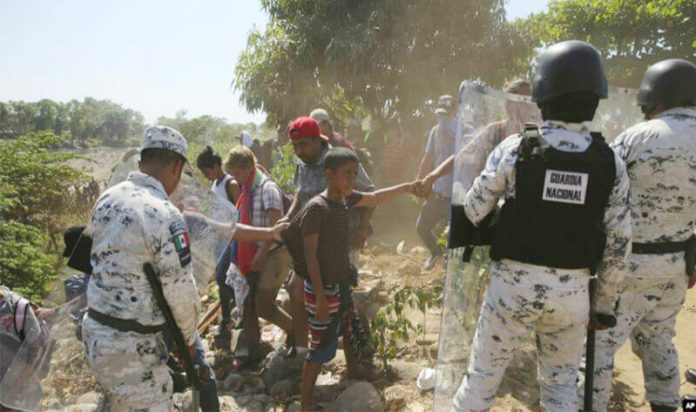
The National Guard have been active in trying to contain the movement of migrants
The National Guard have been active in trying to contain the movement of migrants from the southern border. file photo

A Catholic priest in Chiapas says National Guard troops and National Immigration Institute (INM) agents threatened to arrest him when he provided help to women and children in the migrant caravan which left Tapachula on October 23. 

Heyman Vázquez Medina, the parish priest in Huixtla, was transporting migrants to Pijijiapan, the caravan’s destination on Tuesday, 27 kilometers from Hermenegildo Galeana where it spent Monday night. The women and children were stranded on the highway and suffering from dehydration and heat stroke as well as coughs, diarrhea and fever.

Vázquez said his pickup truck was surrounded by officials on the highway. “I was carrying water and medicines for the migrants, and on the way I distributed them. There were a lot of sick children and I told them to climb onto my pickup truck, but since there were a lot of them I made four trips. Someone from the National Guard saw me on the last trip, three kilometers from the entrance to Pijijiapan. They lined up their cars on the highway and the agents of that organization and the INM surrounded me,” he said.

Officials started to take migrants from the back of the truck to put them on to a bus to be returned to Tapachula, the newspaper La Jornada reported. 

Vázquez said he called caravan leader Irineo Mújica for help. “They wanted me to get all the people out of my truck … I told them that I was taking them to the doctor because they needed attention … I called Irineo Mújica, who was not very far and arrived with a group of migrants. There was an altercation and [the authorities] had to give in,” he said.

“I am not afraid of you and you will not intimidate me either. I’m taking the children because they need medical attention. You don’t offer it to them,” the priest said to the authorities, the newspaper El Universal reported. 

He added that an INM official told National Guardsmen to take him to the local prosecutor’s office but instead they took his license plate number and said he would be reported. 

The National Guard is under investigation for another incident in Chiapas on Sunday, when a Cuban migrant was killed after troops opened fire on a pick up truck transporting migrants near Pijijiapan. Four other people were wounded in the incident, which is now being investigated by the National Human Rights Commission.

With reports from La Jornada and El Universal 

Accused of cover-up, police blamed in shooting death of 22-year-old actor

0
actor Octavio Ocaña
Octavio Ocaña died after a police chase in Cautitlán Izcalli, México state.

Municipal police are responsible for the shooting death of a 22-year-old actor in México state on Friday, claim the man’s father and thousands of social media users.

According to the México state Attorney General’s Office (FGJ), Octavio Ocaña – best known for his role as Benito in the television series Vecinos (Neighbors) – accidentally shot himself after losing control of his SUV while being pursued by Cautitlán Izcalli municipal police in Atizapán de Zaragoza, a municipality located north of Mexico City.

Cautitlán Izcalli police had ordered Ocaña to stop but he accelerated instead, precipitating a high-speed chase that continued into Atizapán. According to the FGJ, Ocaña accidentally shot himself in the head as he crashed into a retaining wall.

“As a result of the dynamic of this accident the driver presumably set off the firearm he was carrying in his right hand,” it said in a statement, adding that he was shot at close range.

Ocaña was still alive when police reached his vehicle, in which two other men were traveling, but died after arriving at a hospital in the México state municipality of Naucalpan.

The two passengers allegedly told investigators that the actor removed his gun from the vehicle’s glove compartment when the chase began.

The FGJ said results of toxicology tests showed that Ocaña was driving under the influence of alcohol and marijuana. An empty tequila bottle and empty beer cans were found in the actor’s vehicle and the man traveling in the front passenger seat told investigators they had been drinking, according to the FGJ.

In an interview, Ocaña’s father said the gun found in his son’s car belonged to him but claimed that it wasn’t the weapon that shot him.

“The police killed Octavio Ocaña,” Octavio Pérez said, asserting that the bullet wound his son sustained was not consistent with the caliber of his firearm.

He said Ocaña had a Defense Ministry license for his gun and carried it due to the high levels of insecurity in Mexico. Pérez also challenged the FGE’s claim that his son was under the influence of marijuana.

“My son didn’t smoke marijuana, my son wasn’t an alcoholic that drank for two days straight because he had responsibility. I’m a businessman [in Tabasco] and he was in Mexico City taking care of my company there,” he told a YouTube program hosted by television presenter Gustavo Adolfo Infante.

Pérez said his son’s death had “destroyed” him but vowed to fight for the truth and until all those responsible are in prison.

Using photos and videos of the car chase and crash to back up their claims, thousands of social media users also blamed municipal police for Ocaña’s death.

Twitter and Facebook users said the weapon with which the actor allegedly shot himself could have been planted in the vehicle by police. They also shared images of a Cautitlán Izcalli police vehicle with a dent in its front to support a claim that it rammed into the back of Ocaña’s SUV, causing it to crash. Social media users also shared video footage that allegedly shows police beating the two other men who were in the vehicle.

In addition, a video posted to social media allegedly shows police offers in civilian clothing at the scene of the crash on Sunday.

“What do they want to erase?” one Twitter user asked.

Diego Enrique Osorno, a journalist, asserted that the FGE’s version of events “is one of the stupidest false reports in the recent history of official criminal cover-ups.”

“The setup is clear,” said Facebook user Cesar Portillo Arias in a post below the FGE’s statement. “Too bad that the Attorney General’s Office continues to lend itself to these kinds of violations of the rule of law.”

With reports from El Universal, El País and Aristegui Noticias 

Archaeologists on Maya Train project find 1,000-year-old Maya canoe

0
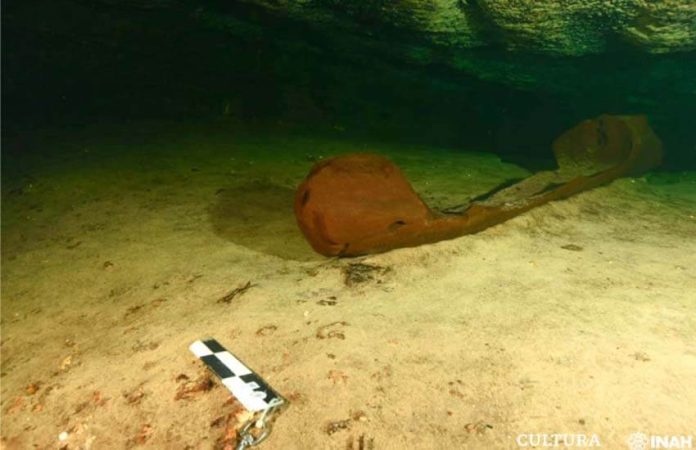
prehistoric canoe
The canoe found by archaeologists working on the Maya Train in eastern Yucatán, near the ancient Maya city of Chichén Itzá. INAH

Archaeologists working on the Maya Train railroad project discovered a pre-Hispanic canoe that is believed to be more than 1,000 years old, the National Institute of Anthropology and History (INAH) announced.

The Mayan wooden canoe was found in a cenote, or natural sinkhole, at the San Andrés archaeological site, located near the ancient Mayan city of Chichén Itzá in eastern Yucatán state.

Helena Barba Meinecke, head of the Yucatán office of the INAH Underwater Archaeology Department, said that she and other archaeologists were taking a break from diving when she noticed a dark mark on the cenote wall five meters below the surface of the water.

The mark was the opening to an underwater cave where the canoe was located. INAH said in a statement that it’s 1.6 meters long, 80 centimeters wide and 40 meters high.

“The small vessel could have been used to extract water from the cenote or to place offerings [in the cenote] during rituals,” it said.

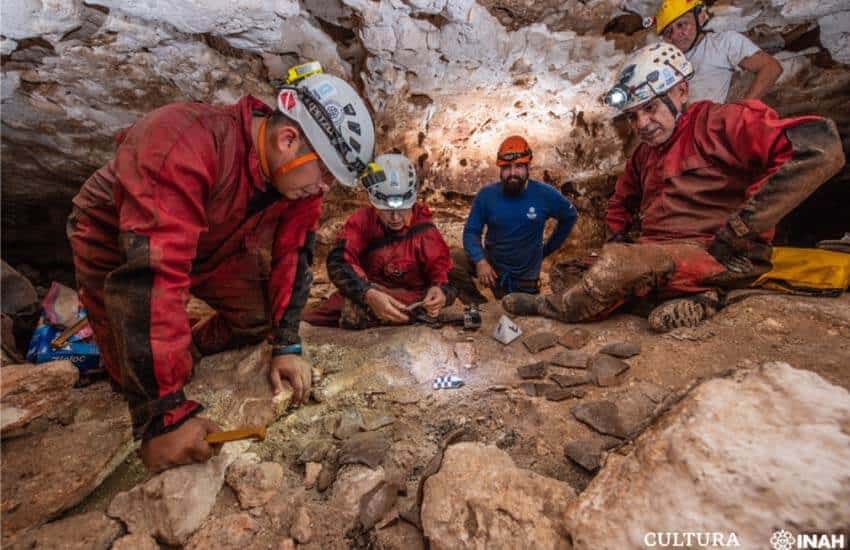
prehistoric canoe
Researchers at the cenote where the prehistoric canoe was found. INAH

Barba said it’s the first canoe of its kind to be found intact and so well preserved in the Mayan region. Fragments of pre-Hispanic Mayan canoes have previously been found in Quintana Roo, Guatemala and Belize, she said.

The archaeologist said the canoe was likely built in the Terminal Classic period, which corresponds to 830-950 AD. If that hypothesis is correct, the canoe is at least 1,070 years old.

The canoe will be subjected to a dendrochronology, or tree-ring dating, analysis next month to determine its age and the type of wood it is made of. Experts from the Sorbonne University in Paris, France, will aid the analysis, INAH said.

A three-dimensional model of the canoe will be made to assist additional study and allow the construction of replicas that could be exhibited in museums, the institute said.

Other objects of archaeological value were found in and around two other bodies of water on the San Andrés site.

Archaeologists found a “human and ceramic skeleton,” a ritual knife, an incense burner, more than 40 broken pots and fragments of charcoal. They also discovered pre-Hispanic artwork, including a mural made with painted hands.

“It’s clear that this is an area where ceremonies took place,” Barba said. “Not just because of the intentionally broken ceramics but also because of the charcoal remains that indicate [the Mayan people’s] exposure to fire.”

Mexico News Daily