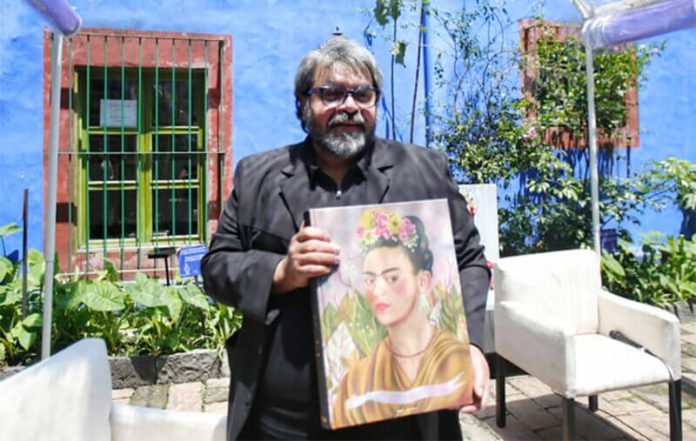
Editor and co-author Lozano with a copy of the new book.
All 152 of the paintings completed by Frida Kahlo between 1924 and 1954 have been compiled in a new book launched in Mexico City on Monday.
Published by German art book publisher Taschen, Frida Kahlo: The Complete Paintings doesn’t just feature all of the renowned Mexican artist’s best known and lesser known works but also provides painstaking detail about them, the context in which they were made and their ownership history.
Available in English, Spanish, German and French, the 624-page tome also includes interviews, newspaper articles, photographs, notes, diary pages and letters handwritten by Kahlo, who was born in Coyoacán, Mexico City, in 1907 and died in the same district in 1954.
“It’s the most complete and detailed study that has been done about the origin and fate of the 152 paintings Frida Kahlo made,” said art historian Luis-Martín Lozano, the book’s editor and one of its three co-authors.
However, it doesn’t aim to be an exhaustive account of her artwork, he told the newspaper Milenio at the launch of the book at La Casa Azul (The Blue House), Kahlo’s former home that is now a museum.
“What we try to do is summarize what we know about Frida Kahlo,” Lozano said.
In an interview with the BBC, he said that the book provides information about some Kahlo paintings that “amazingly” have never been written about previously.
In turn, the United Kingdom’s national broadcaster said the book “offers for the first time a comprehensive survey of her entire oeuvre.”
Co-written by Lozano and the art historians Andrea Kettenman and Marina Vázquez Ramos, Frida Kahlo: The Complete Paintings is available on Taschen’s website for US $200.
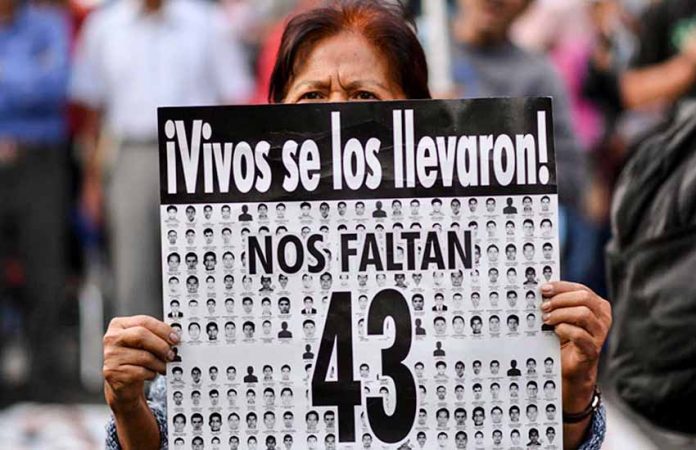
Protester calls for the federal government to solve the case of the missing 43 Ayotzinapa teaching students, who disappeared in Iguala, Guerrero, in 2014.
A group of independent experts will continue to investigate the disappearance of 43 students in 2014 after the federal government agreed to its ongoing participation in the case.
The decision came after a meeting Monday between Deputy Interior Minister for Human Rights Alejandro Encinas and Esmeralda Arosemena de Troitiño, head of the Inter-American Commission on Human Rights (IACHR). It established the Interdisciplinary Group of Independent Experts (GIEI) in November 2014 to conduct an investigation into the disappearance of the Ayotzinapa teaching students in Iguala, Guerrero, which had occurred a month earlier on September 26.
Encinas said President López Obrador is committed to the GIEI’s ongoing participation until there are conclusive results in the case. The previous government refused to renew the group’s mandate after it was critical of its investigation, but the current administration allowed it to resume its probe.
The current federal government rejected its predecessor’s “historical truth” about what happened on the night of September 26 — that corrupt municipal police intercepted and handed the students over to a crime gang that killed them and burned their bodies in a dump. López Obrador’s government launched a new investigation shortly after taking office in late 2018.
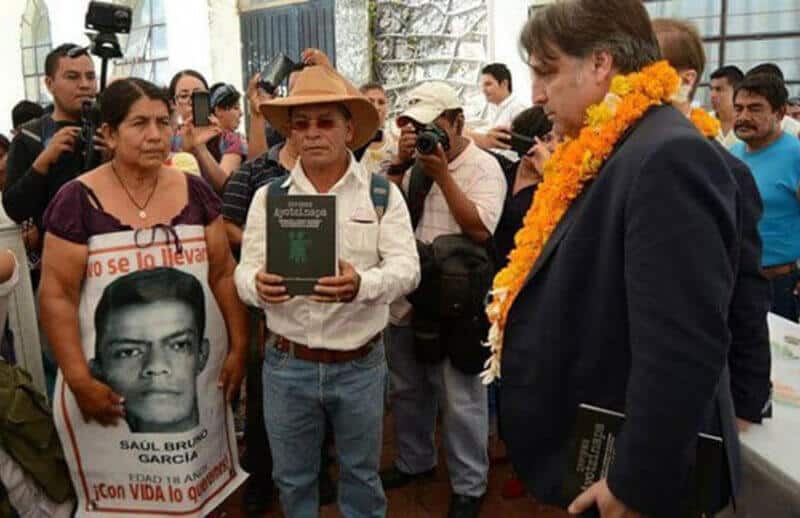
A representative of the Group of Independent Experts, right, meets with parents of the kidnapped Ayotzinapa students in 2015. The group was formed with parents’ approval. File photo
Arosemena acknowledged the federal government’s political will to resolve the case, noting that it created a truth commission to conduct a fresh investigation into the students’ disappearance. However, the government has not yet publicly given its own definitive version of events.
The IACHR chief renewed the commission’s commitment to contribute to the government’s investigation.
Meanwhile, a key suspect in the case was detained last weekend almost three years after he was released, the newspaper Milenio reported.
Patricio Reyes Landa, also known as “El Pato” (The Duck), was identified as a perpetrator of the crime and provided evidence to support the former government’s official version of events after his arrest in 2014. He even confessed to killing some of the Ayotzinapa students.
However, he was released in October 2018 after a judge ruled that 83 statements made by suspects in the case were obtained illegally via torture and other inhumane treatment. In addition, a judge ruled that there was a lack of evidence to prove “El Pato” was a member of the Guerreros Unidos, the crime gang that allegedly killed the 43 students.
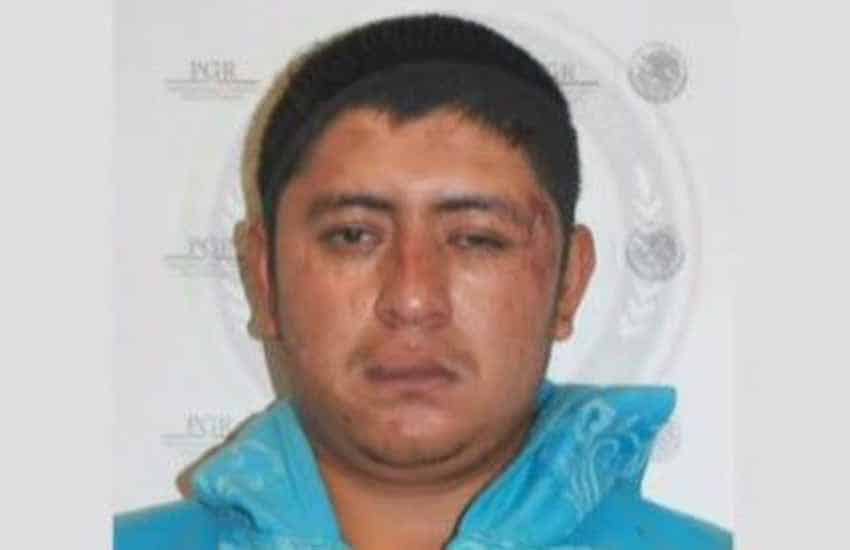
Patricio “El Pato” Reyes Landa was arrested in 2014 and confessed to involvement in the 2014 kidnapping but was released in 2018.
But he was released again on Tuesday. His arrest, it turned out, had nothing to do with the Ayotzinapa case — he had been carrying an illegal weapon, a crime that doesn’t merit preventative custody.
Scores of people accused of involvement in the students’ disappearance, including municipal police and alleged gangsters, have been released from prison after judges ruled they were illegally detained or subjected to torture.
Outside cases of rape and those in which an expectant mother’s life is endangered, abortion during the first 12 weeks of pregnancy is currently only legal in four states: Mexico City, Oaxaca, Hidalgo and Veracruz.
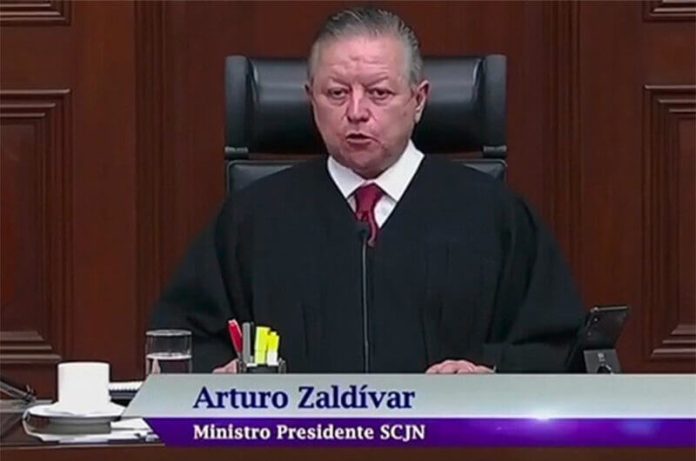
Chief Justice Arturo Zaldívar declared Tuesday a historic day for all Mexican women, especially the most vulnerable.
From now on, no woman can be prosecuted for having an abortion in the first 12 weeks of pregnancy without violating the ruling of the SCJN and the Mexican constitution, he said.
“From now on, a new route of freedom, clarity, dignity and respect for all … women begins,” Zaldívar said.
“… Today is another step forward in the historic struggle for their equality, dignity and for the full exercise of their rights,” he said.
Justice Luis María Aguilar Morales, the proponent of the decriminalization of abortion in Coahuila, said that “never again” can a woman or a person with the capacity to give birth be criminally punished for having an abortion.
“Today the threat of prison and the stigma that weighs on people who freely decide to interrupt their pregnancy is banished,” he said.
Outside the court, pro-life activists condemned the court’s ruling, while feminist groups celebrated the decision online.
“Historic ruling!” reproductive rights group GIRE declared on Twitter.
Mexico, still a largely conservative nation with the second highest number of Catholics in the world after Brazil, is now the most populous country in Latin America to decriminalize abortion.
The court’s decision came after women’s groups in recent years ramped up pressure on authorities to legalize it across the country at numerous protests.
President López Obrador, a staunch advocate for participatory democracy, previously proposed holding a referendum on the subject but on Tuesday morning backed the SCJN’s capacity to rule on the issue.
“The best thing in this case is that if it’s already in the Supreme Court it should be resolved there,” he said, adding that he wouldn’t take a side because doing so would not be “the most prudent thing” to do.
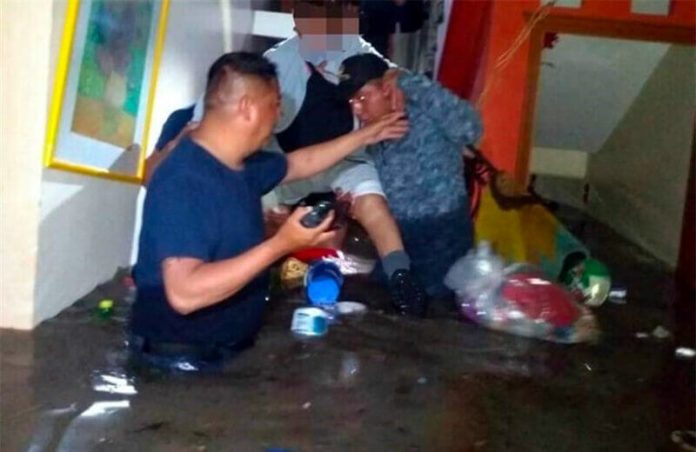
Hospital workers evacuate a patient in a flooded hallway in Tula General Hospital No. 5 Tuesday morning.
Sixteen people died in an IMSS hospital in Tula, Hidalgo, Tuesday morning after heavy rains caused severe flooding and cut off electrical service to much of the municipality.
Fourteen of the dead were COVID patients on assisted respiration who lost their lives when the system supplying oxygen ceased to function due to the loss of electricity.
Three rivers in the area burst their banks, including the River Tula which is only 210 meters from the hospital.
Water entering the hospital not only flooded patients’ wards but damaged a generator which would have provided an alternative power supply for the oxygen machines on which patients were dependent.
Videos uploaded to social media show people pushing their relatives out of a flooded room with water up to their knees.
Imágenes del #IMSS en #Tula#Hidalgo la madrugada de este Martes. personal Médico desaloja a pacientes en medio de la inundación provocada por las fuertes lluvias. pic.twitter.com/mCnz9UrCYj
Hidalgo Governor Omar Fayad explained that nine colonias and 31,691 inhabitants had been affected by the flooding. He said five temporary shelters had been set up for people who had fled their homes.
The director of the Mexican Social Security Institute (IMSS), Zoé Robledo, said there were 104 people working in the hospital attending to 56 patients when the flooding began early Tuesday. Around 20 patients were being evacuated and transferred to other hospitals, he said in a video on social media early Tuesday afternoon.
Early in the day emergency room Dr. Héctor Manuel Arias called for oxygen for his patients in a live transmission social media: “What is urgent is oxygen for these patients who still have hope to survive … The ones that concern me the most are the COVID patients, they are in a fight for their survival, they need their oxygen,” he said.
President López Obrador addressed the tragic events in Tula in a Twitter post Tuesday afternoon. “In this honorable assignment there are good days, very good, bad and very bad. Today is one of the latter. The deaths of 17 patients in the IMSS hospital due to the overflowing of the Tula River in Hidalgo has brought me much sorrow.
“A lot of water has fallen in the Valley of México and it will continue raining. To those who live in low-lying areas move quickly to shelters or to higher ground with family and friends.”
UPDATES: The number of fatalities was updated to reflect the final tally and the president’s comments were updated with his remarks on Twitter Tuesday afternoon.
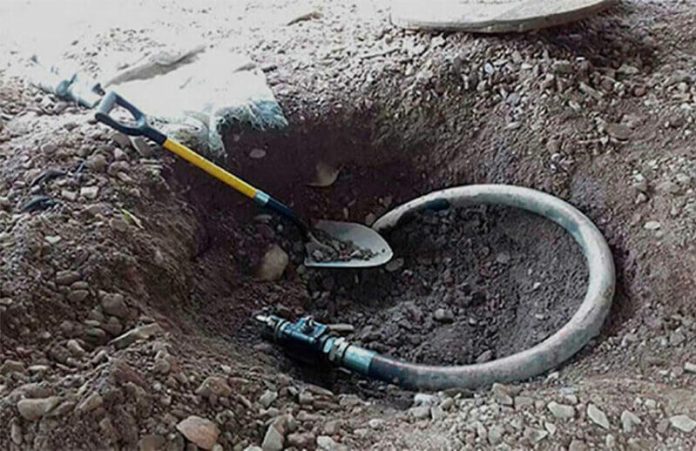
Gas pipeline taps must be inside jobs, says Pemex official.
LP gas theft from pipelines in Puebla has increased significantly since the current federal government took office, according to Pemex data that contrasts sharply with statistics included in President López Obrador’s third annual report.
Presented last week, the president’s report stated that illegal taps on the state oil company’s LP gas lines in Puebla have declined by 40.1% due to a military crackdown on gas theft.
But Pemex data shows that illegal taps have increased every year since López Obrador took office in December 2018.
There were 64 taps on LP gas pipelines in Puebla in 2018, according to data provided by Pemex to the newspaper El Sol de Puebla. The figure rose dramatically to 916 the following year, an increase of 1,331%. Puebla consequently became the worst state in the country for the crime.
The incidence of gas pipeline theft rose again in 2020 with 1,639 illegal taps, a 79% increase compared to 2019.
There was an additional increase in the first six months of 2021 with 846 illegal taps compared to 717 in the same period of last year.
Almost 69% of all LP gas pipeline taps in the first half of the year in Mexico were detected in Puebla, making the state the clear epicenter for the crime.
Pemex data shows that Tepeaca, San Martín Texmelucan, Acatzingo, San Matías Tlalancaleca, Amozoc, Santa Rita Tlahuapan, Acajete, San Salvador El Verde and Palmar de Bravo have the highest incidence of gas theft among Puebla’s 217 municipalities.
The ubiquity of the crime in Puebla fueled a 28% increase in the number of illegal taps detected across Mexico in the first half of 2021. A total of 1,217 perforations were detected, up from 945 between January and June of last year.
Pemex sources told the newspaper Reforma that criminal groups have begun tapping gas lines in areas of Puebla where the crime was previously uncommon. In San Matías Tlalancaleca, a municipality about 50 kilometers northwest of the state capital, 71 illegal taps were detected in the first half of 2021 whereas the highest figure for the same period in recent years was just six.
A Pemex security official who spoke with Reforma accused state oil company employees of colluding with gas thieves.
In order to successfully extract LP gas, “criminals need to know when there is not so much pressure in the pipelines,” he said. “Who’s giving that information to gas traffickers?”
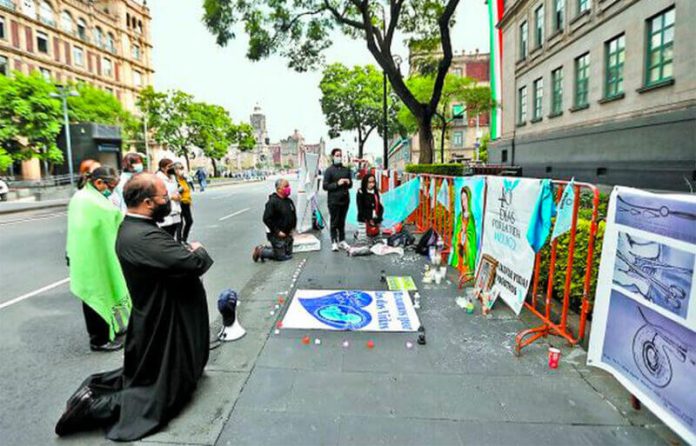
Opponents gather Monday outside the Supreme Court in Mexico City.
The Supreme Court (SCJN) appears to be on the verge of setting a precedent that will pave the way for the legalization of abortion across Mexico.
The court’s justices began debating challenges to abortion restrictions in Coahuila and Sinaloa on Monday, and eight of the 11 indicated they are in favor of revoking criminal penalties for the termination of a pregnancy in the former state. The other three justices didn’t participate in Monday’s session.
Voting on the challenges is to commence on Tuesday. If a qualified majority of eight justices vote in favor of invalidating the section of the Coahuila criminal code that punishes abortion at any stage of a pregnancy by one to three years imprisonment, the court would set a precedent that would oblige judges across Mexico to hand down similar rulings.
Outside cases of rape and those in which an expectant mother’s life is endangered, abortion during the first 12 weeks of pregnancy is currently only legal in four states: Mexico City, Oaxaca, Hidalgo and Veracruz. But a court ruling that decriminalizes abortion in Coahuila would in time open up access to early abortion for millions of women in the country’s other 28 states.
Justice Luis María Aguilar, the proponent of the decriminalization of abortion in Coahuila, said the aim is to give women the right to make decisions about their own bodies and lives without facing prosecution. The state has an obligation to provide an “environment of protection” in which that can occur, “not one of punishment,” the justice said.
Aguilar also said that his proposal acknowledges the changes that have taken place in Mexican society as well as fundamental principles such as democracy and the separation of church and state.
Chief Justice Arturo Zaldívar said that all the SCJN justices are “in favor of life” but “some of us are in favor of women’s lives being lives in which their dignity is respected, in which they can fully exercise their rights, in which they are free from violence and can determine their own destiny.”
With regard to Sinaloa, Justice Alfredo Gutiérrez proposed a court ruling that declares the absolute prohibition of abortion in that state as unconstitutional. His proposal argues that a modification to the state’s charter that states that life begins at conception violates the Mexican constitution.
Gutiérrez also argues that states do not have the right to deny women access to sexual and reproductive health services, including abortion. In addition, his initiative seeks to invalidate a law that allows health personnel to refuse to carry out an abortion due to their own personal beliefs on the practice.
A qualified majority vote in favor of Gutiérrez’s proposal would also set a precedent for the legalization of abortion across Mexico.
As justices discussed the matters on Monday, conservative groups protested outside the Supreme Court building in Mexico City.
Holding signs with pro-life messages as well as religious imagery, the demonstrators exhorted the SCJN to not rule in favor of declaring abortion restrictions unconstitutional.
“We’re urging the Supreme Court justices to reject these [challenges to states’ efforts to limit abortions], … we trust that these justices are going to defend life,” said Leticia Gonzalez-Luna, president of the pro-life group Voz Pública.
In contrast, pro-choice activists were optimistic that the court would set a precedent that paves the way for legal abortion across Mexico.
“The SCJN will make the decriminalization of abortion a reality in all federal entities,” tweeted Estefanía Veloz, a feminist and lawyer.
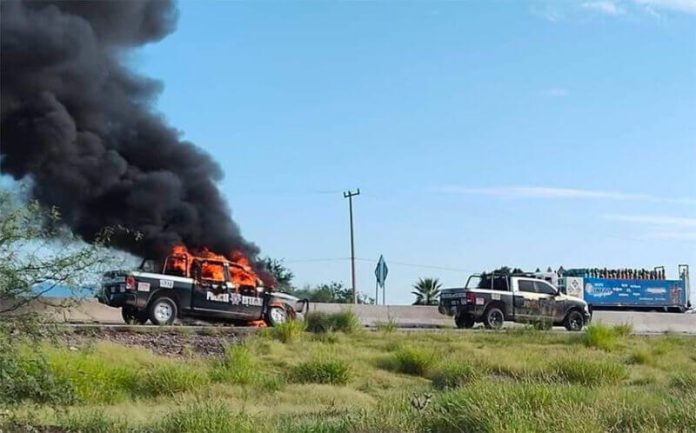
Armed confrontations between criminal gangs and security forces have killed four suspected gang members and injured two police officers in Sonora. The officers were reported in stable condition.
A code red alertwas issued for the north of the state Monday and a federal highway was closed temporarily. Violence had begun to escalate August 3 in the municipalities of Caborca, Pitiquito and Altar where attacks were directed against several homes, and in one incident a grenade was thrown.
At least one police officer was injured in Pitiquito around 7:00 a.m. Monday after a 20-minute shootout in which an armed group was eventually neutralized. Security authorities published an alert at 11:00 a.m. the same day to confirm that the code red was still active and that citizens should take extra precautions.
“The operation in northern Sonora continues to be active in code red, where police forces …. are intensifying the operations against a criminal group in the area,” the statement read.
No further update had been provided since then as of noon Tuesday.
On videos uploaded to social media, a long series of gunshots by automatic weapons can be heard in Pitiquito. In another video in Altar, individuals are seen setting a police vehicle on fire.
Motorists reported that the Pitiquito-Caborca highway was closed after the clashes, but state authorities confirmed that traffic flow was restored at around 2:50 p.m. Monday.
Two people died, vehicles were swept away by powerful floodwaters and six neighborhoods were flooded after torrential rains struck Ecatepec, México state, Monday.
Authorities identified the victims as a 39-year-old woman who was carried away by the current in a street in the neighborhood of Tulpetlac, and a 73-year-old man who was in a building that collapsed.
The downpours lasted around 90 minutes and affected more than 19 neighborhoods, home to some 120,000-150,000 residents. The Ecatepec general hospital also flooded causing damage to the emergency ward and operating rooms.
In one street where floodwaters ran like a river, a man rescued a baby by negotiating his way through the current in water nearly waist high.
Samuel Gutiérrez, the state’s head of Civil Protection, said authorities were well placed to repair the damage. “All government agencies, both municipal and state, are already in place and with specialized teams from CAEM [the state of México’s water commission] working to lower the water levels … we will be able to assess the damages,” he said.
Arrastrado por la corriente, vecinos salvan a bebé en calles de Ecatepec
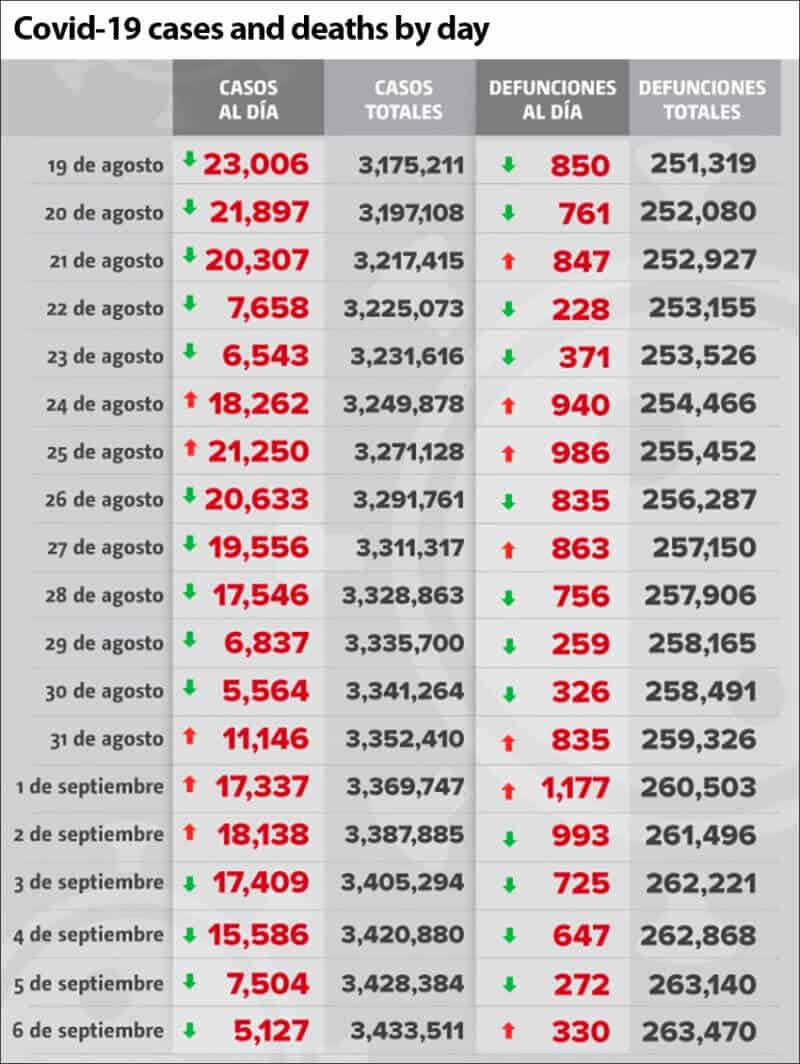
The federal Health Ministry reported 5,127 new coronavirus cases and 330 COVID-19 deaths on Monday.
Both figures were much lower than the average for the past seven days but reported infections and deaths are invariably lower on Sundays and Mondays due to a drop-off in testing and/or the recording and reporting of test results on weekends.
Mexico’s accumulated case tally stands at 3.43 million while the official death toll is 263,470. There are 92,970 estimated active cases across Mexico, a 7% decrease compared to Friday.
More than 13,200 cases per day were reported on average in the seven days to September 5, while the average daily death toll was 711.
Mexico has the highest case fatality rate among the 20 countries currently most affected by COVID, according to data compiled by Johns Hopkins University. There have been 7.7 fatalities per 100 confirmed cases here, a figure almost five times higher than the United States’ rate of 1.6. The high rate in Mexico is indicative of the country’s low testing rate.
Coronavirus cases and deaths in Mexico as reported by day. milenio
• Just over 87 million vaccine doses have been administered in Mexico, according to the most recent data. The Health Ministry said Sunday that 66% of the adult population – 58.9 million people – has received at least one shot. Just over 35.6 million of those people are fully vaccinated, meaning they have had both shots of a two-dose vaccine or were inoculated with one of the two single-shot vaccines Mexico has used.
As of Sunday, Mexico had received a total of 104.2 million vaccine doses, about 38% of which were made by AstraZeneca.
• One-third of workers in Mexico reported that their employers have made vaccination against COVID-19 mandatory, even though doing so violates the law.
Just over one in five respondents to a poll conducted by job search website OCC Mundial said they were asked to present proof of vaccination to their employers. Another 11% said they were instructed to get vaccinated but haven’t yet had to present their vaccination certificates.
The federal Labor Ministry has said that employers cannot legally require their workers to be vaccinated or make vaccination a hiring prerequisite because to do so would violate the Federal Labor Law.
• Another case in which a health worker failed to administer a vaccine properly was detected in Boca del Río, Veracruz. A young woman who filmed herself getting her shot complained because the nurse pierced the skin on her arm with a syringe but didn’t inject any vaccine.
State welfare delegate Manuel Huerta Ladrón de Guevara attributed the error to fatigue. The nurse was told to take the rest of the day off.
Several other incidents in which vaccines were not properly given have been detected in Mexico, including one in Sonora and another in Mexico City.
• Some vaccinated people have reported difficulties obtaining their vaccination certificates. One man who spoke with the newspaper Reforma said he followed the instructions on the government’s vaccination website but never received a link to download his certificate. A vaccinated woman recounted a similar experience.
Other fully vaccinated people are waiting for their certificates to be updated to show they have received both doses of two-shot vaccines. One woman told Reforma that her mother received the second of her two shots in April but her vaccine certificate doesn’t mention either of the jabs she was given.
Creating a fine mezcal, an artisanal knowledge dating back to before the Conquest, is something only a limited number of producers in Mexico do truly well. Edgar Xolot/Shutterstock
Mezcal, one of Mexico’s most ancient libations, is a lesser-known alcoholic beverage gaining attention in recent years. If you’re not familiar with it, surely you know tequila, Mexico’s most potent traditional liquor, famous around the world. Well, tequila is actually a type of mezcal that evolved into its own particular category.
Tequila is rooted in the tradition of mezcal making, but mezcal has its own unique distillation process and a very specific way that it should be tasted. It was being produced in Mexico long before the arrival of the Spanish — at that time in clay pots, a process that some mezcal masters still use today.
With the arrival of the Spanish came the introduction of the alcohol still, particularly the “Filipino” still, which continues to be used today.
What is officially recognized as mezcal is made in various Mexican states, with a range of production methods and using different types of agave plant. Its regulation on a national scale is still evolving. There are currently nine states where mezcal is made and several others in the process of being certified.
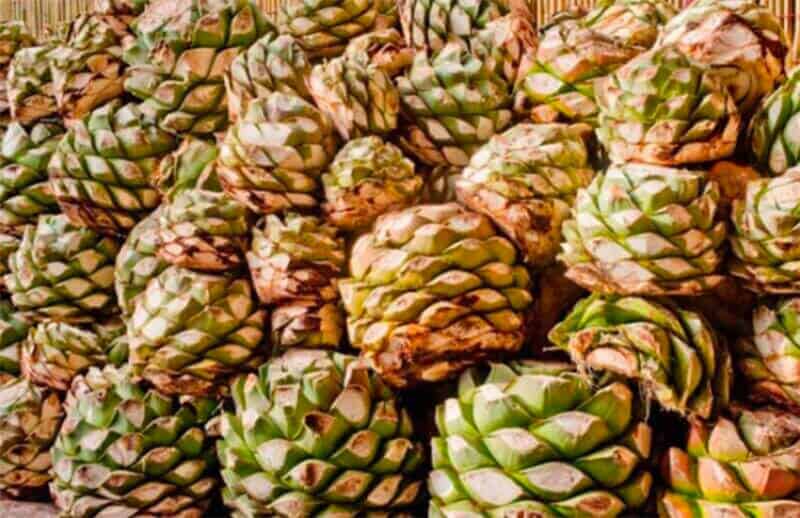
Mezcal is obtained from the first, second or third distillation of cooked fermented agave hearts — called the piña. They can weigh anywhere between 50 and 300 kilograms, depending on the type of agave. The most common type in Mexico, the espadín, needs at least eight years to mature. Its hearts weigh up to 300 kilograms.
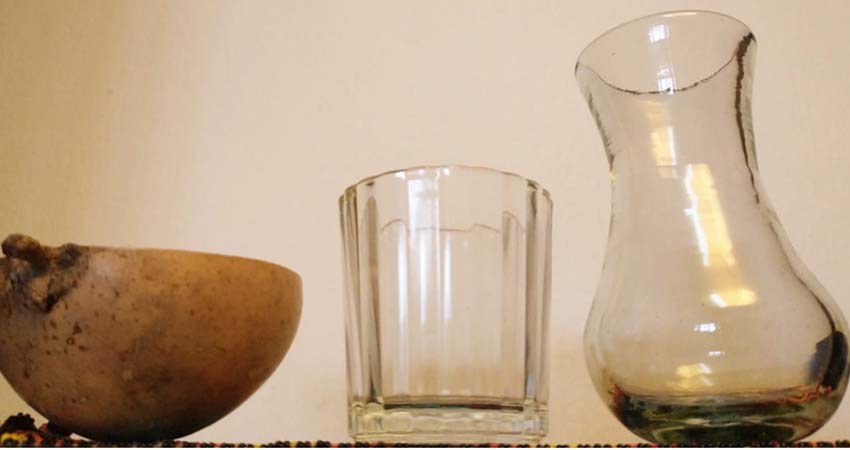
The jicara, the veladora, and the bulbo espirituoso, all traditionally used receptacles for tasting mezcal.
The process requires painstaking attention and starts with the plants’ cultivation. Most agaves grow wild and are not sprayed with pesticides, meaning that most artisanal mezcal can be considered organic even if it’s not certified as such.
Once mature, cutting the leaves, or pencas, away from the heart must be precise, or the mezcal’s quality can suffer. With artisanal production, the hearts are cooked in an earthen pit, which has an important effect on the mezcal’s overall expression once distilled.
The cooking time varies from mezcal master to mezcal master. During cooking, the sugars of the plant feed its natural yeasts, determining alcohol levels.
Once cooked, the agave hearts are cut into pieces, and their fibrous meat is shredded in the process. During the cutting, the separation of the fiber is very important and must be done by someone with experience in order to safeguard the agave’s juice and make sure that process is hygienic.
The fermentation that follows also requires lots of attention — the mezcal master must keep an eye on the temperature, sugar levels and any possible contaminants in the fermentation mash. All the knowledge and patience that goes into mezcal making is what makes its producers true masters of their craft.
The type of agave, the region of the country and the type of production all play a part in determining the quality of the final product. Unlike other distillates, each mezcal has the distinct signature of the person who produces it.
Agave hearts in preparation to be cooked for mezcal.
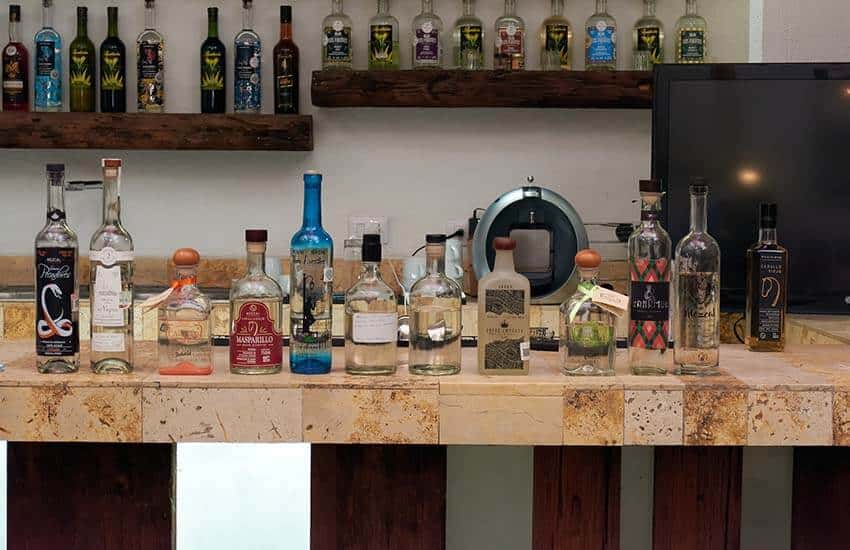
If you want to buy mezcal and don’t yet know much about it, always take note of the name of the master who made it, as well as the town and the region it came from. The type of agave should appear prominently on the label or else you might find that you are purchasing an underwhelming mezcal blend. Blending mezcal is incredibly complicated, and only a limited number of producers do it well.
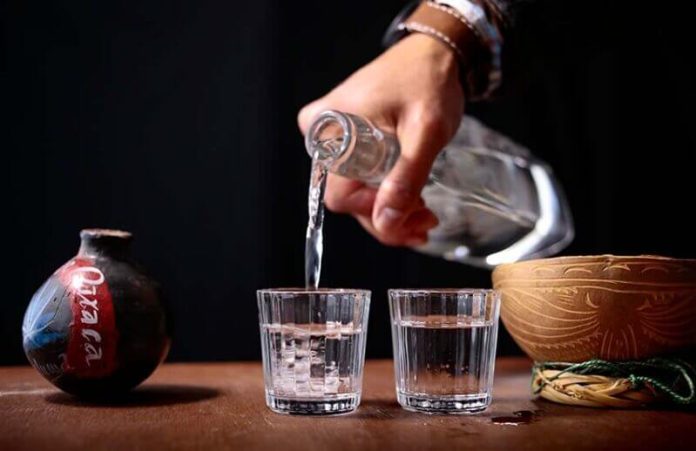
The level of alcohol by volume is another factor in mezcal’s quality — a good mezcal is 43% or higher, according to the experts. You can test a bottle by shaking it or pouring it and seeing how many “pearls,” or bubbles, are formed. The longer the bubbles last before popping and the more medium-sized bubbles there are, the more likely that you have a good bottle.
However, this is only one visual clue and doesn’t absolutely guarantee that your mezcal is good. Master mezcal makers also traditionally test to see how many pearls their mezcal makes as it falls into a jicara, a hollowed-out gourd used for tasting, but these days, that visual test is always followed up by measuring with a hydrometer to check the density.
Mezcal production is divided into three moments: the punta, or the first liquid to come out of the still, which is generally discarded; the cuerpo, or body, which is the middle section of the distillation process and will be used for the second and possibly third distillations of the mezcal and the final part of the distillation, the cola (tail), which is very high in alcohol. The cola is often added to the body of the mezcal in order to raise its overall alcohol content at the end of the process. The blending of these different sections must be done carefully and requires extensive previous knowledge.
Mezcal’s quality is defined by its aromas — of the agave plant, herbs, earth, honey, floral scents, smokiness, citrus and others. The mouthfeel of the mezcal should be intense due to its high alcohol content but not aggressive, and the flavor of the agave plant should be present.
Which receptacle you use to taste your mezcal is also important.
When buying mezcal, take note of the master producer’s name as well as the town and region it came from. The type of agave used should also appear on the label.
In Mexico, there are a few traditional glasses from which to drink mezcal, such as the aforementioned jicara or a veladora — a small votive candle holder. But drinking from either, you will lose some of the mezcal’s aromas due to their wide mouths.
A sherry glass or champagne flute can help maintain the aromas of the mezcal better because the release of the alcohol is more controlled. In addition, these types of glasses allow you to pause for sipping and prevent you from swallowing it in a single gulp.
There is a glass made especially for mezcal called el bulbo espirituoso — similar to a sherry glass but minus a stem — which combines the best of all options: its skinny middle keeps the alcohol from evaporating quickly while its wide mouth allows you to smell the mezcal’s aromas slowly and makes drinking easy. Its wide bottom allows for the proper oxygenation of the liquid.
Just as in the making of mezcal, tasting it is a delicate and careful process. Glasses, temperature and pairings are all things taken into account when it’s sampled properly, even more so with the wide variety of mezcals and their various food pairings.
Just as tequila has its rituals and myths — salt and lime, for instance, which don’t necessarily add to its appreciation — the same is true with the classic orange slices often served with mezcal. It’s fine if your aim is just to enjoy the beverage while hanging out with friends and chatting, but if you want to truly savor this liquor, it should be done on its own.
Start out by simply sniffing the mezcal in the glass without moving the liquid. Do this several times. The aromas should be the pleasant ones mentioned above — nothing that smells of gasoline or ether.
The first sip should be rolled around the mouth to coat it and then swallowed. This is followed by a second sip, which is again rolled around the entire mouth, this time to catch the subtle flavors that appear on different parts of the tongue.
You must remember to drink lots of water alongside the mezcal and, as they say in Mexico, “kiss” the mezcal — in other words, take small, slow sips, pausing between each. This will make your experience special and start you on a path to tasting mezcal like a pro.
By tasting it this way, you can appreciate the differences between one mezcal and another, between different types of agave and between the regions they are from. It’s a skill available to anyone who is willing to learn. Try it out and see what happens.