Home Blog Page 1168

Citrus exports soar 28% in first seven months of the year

0
limes
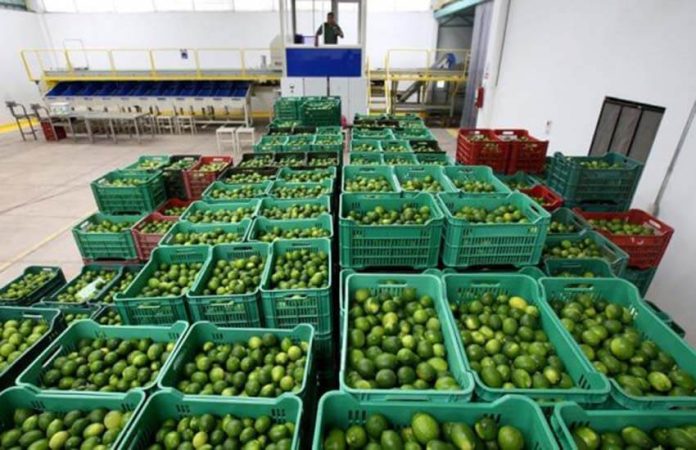
Mexico exported US $912.3 million worth of citrus in the first seven months, compared to $711 million over the same period in 2020.

The export of citrus fruits shot up 28.3% in the first seven months of the year in annual terms.

The value of those exports was US $912.3 million, compared to US $711 million over the same period in 2020.

Mexico is the world’s second largest exporter of limes, with 17.7% of the value of world sales, and the fourth largest exporter of grapefruit. However, the agricultural sector commits the largest growing area of any citrus fruit to oranges.

The United States depends on Mexico for 78.22% of its citrus imports, making it the principal market for exports. Nevertheless, oranges, mandarins, limes and grapefruits also find their way to the Netherlands, Japan, Germany and the United Kingdom.

Derivatives of citrus fruits, such as juices, essential oils, peels and purees, played an important role in the rise in export value. From January–July, exports of orange juice grew 36%, totaling $278.5 million, compared to $204.8 million over the same period last year.

Agricultural trivia:

Jalisco produces more milk than any other state. In 2020, it produced 15.82 billion pesos’ (about US $800 million) worth of cow’s milk.

It was followed by Coahuila, Durango and Chihuahua. Together, the four states produce 52% of the milk for the entire country, according to data from the Agri-Food and Fisheries Information Service (SIAP), part of the Ministry of Agriculture and Rural Development.

CORRECTION: The original version of this story incorrectly referred to limes as lemons.

With reports from El Economista

Oaxaca priest urges new approach to dealing with migrants

0
Alejandro Solalinde
Alejandro Solalinde operates a migrants' shelter in southern Oaxaca.

A Catholic priest and social justice activist has proposed the creation of a government-run group to listen to and assist migrants who arrive in Mexico.

Alejandro Solalinde Guerra, a Oaxaca-based priest and founder of the Hermanos en el Camino (Brothers on the Road) migrant shelter in Ciudad Ixtepec, said that a “bridge group” managed by the federal government should be created to help migrants from Central America, South America and Caribbean countries.

He suggested that the group’s members could include migrant shelter directors, Catholic Church leaders, human rights defenders and academics.

In an interview with the newspaper El Universal, Solalinde spoke out against the federal government’s strategy of attempting to contain migrants on the southern border.

It is as if the government wants to “put them in a pen,” he said, asserting that the strategy violates migrants’ human rights.

Solalinde said that ex-military personnel with training and experience in the implementation of national security policy have been tasked with halting the migrants’ advance. However, they lack training in highly sensitive migration issues, he said.

The National Guard and National Immigration Institute (INM) agents have carried out operations in recent days to detain migrants in Chiapas. Two of the latter were suspended last week after they used brutal violence to detain one migrant.

Having fled poverty and violence in their homelands, migrants deserve to be listened to and helped, the 76-year-old priest said.

They shouldn’t be corralled on the southern border, he reiterated. “I believe that with the help of the bridge group they can be guided,” Solalinde said, adding that migrants could be funneled to different parts of the country depending on their nationalities and academic aptitudes.

He suggested they could subsequently have the opportunity to enter the United States legally if the Mexican government reaches new agreements with its U.S. counterpart.

Solalinde expressed support for President López Obrador’s call for the United States to do more to spur development and address the root causes of migration in large migrant source countries such as those in the Northern Triangle of Central America. However, he was pessimistic about any short term progress in Honduras, currently the main Central American source country.

Apparently indicating that he was interested in participating in the bridge group he proposed, the priest told El Universal:

“I’ve changed tactics: before I shouted, marched and protested against these migrant containment policies. Now I want to have a bearing from the inside, … ask them to modify their policies. That’s why I’ve asked … the INM to accept the help of people who know about migration issues, people who have worked with migrants for years. I also ask that of Foreign Affairs Minister Marcelo Ebrard, in order to restructure our migration policy.”

With reports from El Universal 

Ixtapa-Zihuatanejo highlighted in 72 Hours for Mexico campaign

0
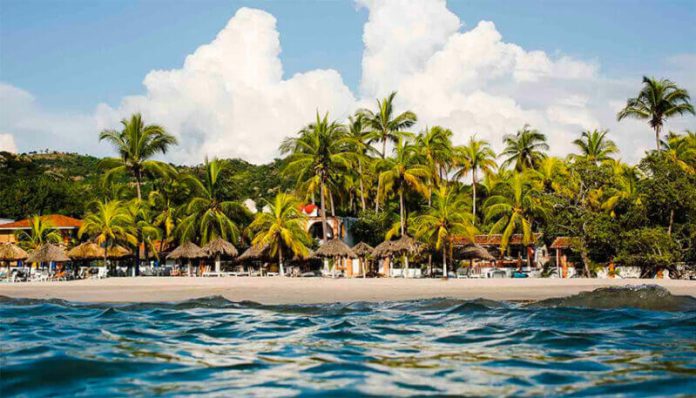
Ixtapa-Zihuatanejo in Guerrero.

A resort destination in Guerrero has been made the focal point of the 72 Hours for Mexico tourism campaign.

Ixtapa-Zihuatanejo, four hours from Acapulco, is featured in the campaign, whose premise is to film and exhibit tourists’ whirlwind trips to a destination over 72 hours.

In Ixtapa-Zihuatanejo, the travelers are whisked off to some of the area’s attractions.

Content creators and Aeroméxico collaborated with local guides to take the vacationers to some of the most attractive sites to make the promotional material as eye-grabbing as possible.

Ixtapa-Zihuatanejo only marks the beginning of the 72 hours campaign, which will continue to highlight the best destinations across the country.

72 horas en Imágenes - Ixtapa Zihuatanejo.

A virtual conference to launch the project included the Tourism Minister of Guerrero, Ernesto Rodríguez Escalona; the director of tourism of Zihuatanejo, Jesús Gallegos; the creator and CEO of the 72 hours project, Israel Lara; and the team of content creators and photographers.

With reports from Periódico Viaje

Tierra Caliente protest demands military intervention to halt violence

0
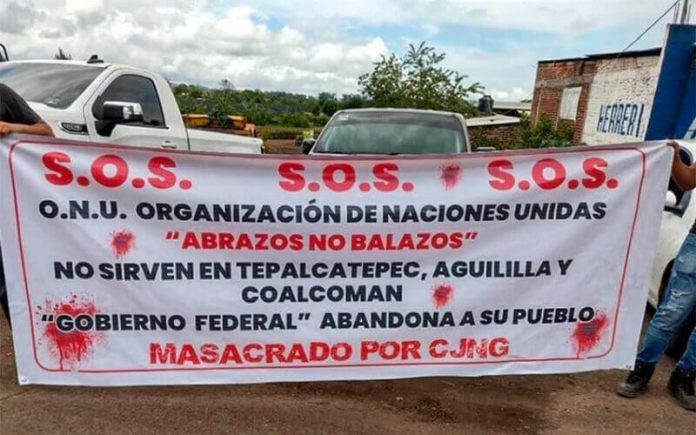
A banner declares an S.O.S. in Apatzingán on Sunday.

Residents of the Tierra Caliente region of Michoacán protested on Sunday to demand military intervention to combat organized crime.

“Hugs, not bullets doesn’t work in Tepalcatepec, Aguililla and Coalcomán. The federal government is abandoning its people, massacred by the CJNG [Jalisco New Generation Cartel],” read one banner held up by protesters outside a military base in Apatzingán.

“Hugs, not bullets” is an epithet for the government’s non-interventionist security strategy that favors addressing the root causes of violence over combating it with force.

The government has been criticized for not doing enough to combat violence in the Tierra Caliente of Michoacán, where the CJNG and the Cárteles Unidos are engaged in a bloody turf war.

Aguililla has been the worst affected municipality in recent times but violence has also caused the displacement of residents in Buenavista, Apatzingán and Coalcomán, where 3,000 people fled in August.

More recently, residents of Tepalcatepec – scene of numerous cartel attacks in recent years – abandoned their homes after acts of aggression attributed to cells of the Jalisco cartel were perpetrated in several communities last Friday.

Mayor Martha Laura Mendoza said that about 1,000 people had taken shelter in a sports center in Tepalcatepec and urged the deployment of the army to affected areas of the municipality.

“The confrontations [between cartels] are very strong at the moment and the most important thing for me is to protect the children,” she said.

“We’re being displaced from our homes, we’re afraid, they’re throwing bombs and grenades at us,” one woman told the newspaper Reforma at Sunday’s protest.

“… [President] López Obrador must listen to us. We’re hungry and cold, we’re calling on the relevant authorities to support us, not just authorities of the state but also the United Nations and UNICEF. … Children have no homes because [organized] crime has destroyed their homes with flamethrowers. We need help from … all the forces of Mexico …” she said.

With reports from Reforma 

Talos Energy files notice with Mexico over disputed oil field

0

A United States energy company has submitted notices of dispute to the federal government over a decision to take away its control of a shallow water oil field in the Gulf of Mexico.

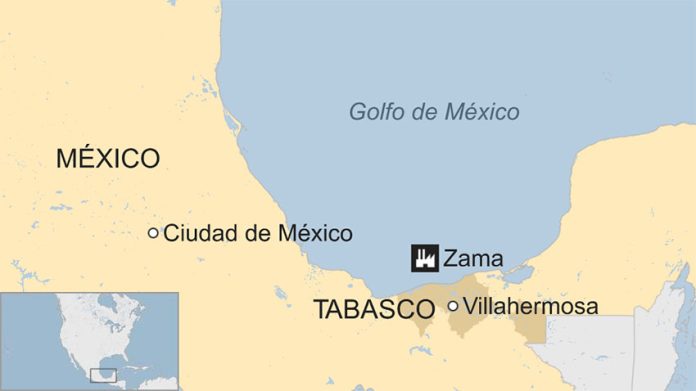
Houston-based Talos Energy intends to fight the decision by the Energy Ministry (Sener) to designate the state oil company Pemex as the operator of the Zama field, which contains almost 700 million barrels of oil.

Talos, leader of a consortium that discovered the field in 2017, said in a press release that Sener’s decision caused damage to the company as an investor and offshore operator in Mexico.

It also said Sener’s actions violate the United States-Mexico-Canada Agreement, or USMCA, and the bilateral investment treaty between Mexico and the Belgo-Luxembourg Economic Union. The company noted that Sener designated Pemex as the operator of Zama just three days after the ministry received a letter from the state oil company arguing for operating rights.

“Under Mexico’s own unitization guidelines, Sener was required to ‘consider the principles of economy, competitiveness, efficiency, legality, transparency, best practices of the industry and the best use of hydrocarbons.’ Disregarding the company’s formal requests, Sener has not demonstrated how these legal principles were followed,” Talos said.

The firm said its notices of dispute provide the opportunity for an initial phase of negotiation and consultation between the parties in an attempt to resolve the controversy.

“If successful, this would avoid the need for further legal action, including international arbitration. Talos will diligently seek a fair and mutually beneficial agreement and will continue to engage in good faith with the institutionally appointed representatives of the government of Mexico,” the company said.

Talos noted that it has attempted over a period of almost three years to work constructively with Pemex and Sener to “finalize a unitization and unit operating agreement … for the Zama field that follows international best practices.”

The company, which noted that it and its partners have already invested US $350 million in Zama, said it has “repeatedly sought a positive outcome for all parties and will continue to do so under this process.”

The federal government’s seizure of control of Zama was based on its claim that just over half the field is on acreage owned by Pemex.

Despite the ownership designation, Talos remains “hopeful that a negotiated outcome that fully respects the rule of law is achievable,” said the company’s president and CEO Timothy S. Duncan.

“The filing of these notices of dispute, along with the concrete, mutually-beneficial proposals we have presented to Pemex and Mexican authorities in the past, demonstrates our commitment to maximize value for all stakeholders, including Mexico,” he said.

Talos made it clear that it believes it would be a better manager of the field than Pemex.

“The company’s operated efforts between 2017 and 2019 were under budget, ahead of schedule and without any safety incidents. In contrast, despite the statements from Pemex executives and Mexican government officials asserting that Pemex would drill a confirmation well on their neighboring contractual area to provide complementary geological data, Pemex repeatedly delayed the well for several years until ultimately canceling all plans to drill it just a few weeks before Sener designated Pemex as the operator of the yet-to-be-finalized unit,” it said.

Talos said it has “consistently demonstrated its commitment to the optimal development of the field, having advanced a complete front-end engineering and design study, which is now investment ready.”

The company estimates that the project could generate over $30 billion in total revenue for Mexico in addition to Pemex’s own share of the revenues and profits of their ownership interest in Zama.

“The platforms that are required to be installed at Zama will be the deepest facilities ever installed in Mexico, at approximately 550 feet (170 meters) of water. Talos is very experienced in these situations and currently operates multiple platforms at these and greater water depths.”

Mexico News Daily 

5,000 phony license plates seized in Mexico City

0
The license plate haul by police in Mexico City.

Five thousand black market phony license plates made for states across the country were seized during four simultaneous raids in Mexico City on Friday.

In one case, plates were found in a small two-story building in Coyoacán where five members of a crime gang printed the plates, which were then sold for 3,000-6,500 pesos (about US $150-$327).

According to investigators, the criminal group contacted customers on social media and offered a delivery time of three days. They were being made particularly for other criminal organizations, said city police.

A police commander who led the investigation, but did not provide his name for security reasons, described the group’s factory-like operation. “They distributed license plates to all parts of the country … The building … was sectioned into three parts, one where they cut the material to make the license plates. They had another area where they painted and covered the plate with plastic so that they looked like the original colors,” he said.

He said the group dominated the black market for license plates due to its production capacity and was discovered through intelligence work.

Authorities found eight printers, seven computers and 200 driving permits for motorcycles and cars at the property. They also recovered 43 bags of marijuana, 87 doses of cocaine and a vehicle that had been reported stolen.

Plates were also seized in two other locations in Coyoacán and one in Tlalpan.

With reports from El Universal

Financial investigator finds big spending by former Pemex union boss

0
Carlos Romero
Carlos Romero retired from Pemex earlier this year.

Details of lavish spending by the former boss of the Pemex oil workers union and his family have come to light through a federal investigation.

Carlos Romero Deschamps and his family spent 275 million pesos (about US $16 million) over three years on jewelry, U.S. and Mexican real estate and 477 flights to seven countries, according to documents obtained by the newspaper Milenio.

The investigation by the federal Financial Intelligence Unit (UIF) revealed that in the last three years of the government of former president Enrique Peña Nieto, Romero and his family declared 88.6 million pesos in spending and generated tax deductions of 21.5 million pesos but received over 300 million pesos in bank deposits.

The circulation of the money allegedly allowed Romero to use his wife, children and their respective partners and his brother-in-law as a front to triangulate resources and evade taxes.

Authorities were alerted by the scale of deposits and payments, particularly by real estate sales worth 174.8 million pesos and purchases worth 62.4 million. The family also traveled 477 times to the United Kingdom, Spain, Singapore, the United States, Germany, Brazil and Japan, destinations to which they arrived on several occasions on private flights.

The Pemex union granted a loan of 5 million pesos to one of Romero’s sons and 500,000 pesos to his brother-in-law, despite neither of them having an employment relationship with Pemex.

Early suspicions were raised by the luxurious portfolio of assets that became public knowledge. The yacht The Indomitable and a 10-million-peso house in Mexico City’s upmarket Polanco district attracted attention. The family is also listed as the owner of luxury apartments in Florida.

In March it was announced that the 77-year-old Romero, an ex-lawmaker once named one of Mexico’s most corrupt politicians, had left Pemex after 62 years of service on a pension equal to his full salary.

Two criminal complaints over the family’s financial activities were made to the Attorney General’s Office in May 2019, the progress of which is unknown. The criminal complaints against Romero were first revealed by President López Obrador in May.

With reports from Milenio and Aristegui Noticias 

Forces break up a fourth caravan of migrants leaving Tapachula, detain 150

0
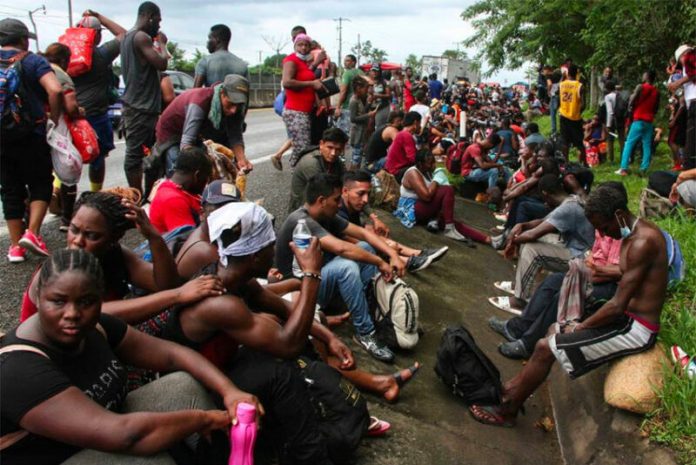
Migrants stop to rest on a Chiapas highway.

About 150 members of yet another caravan of migrants were detained in Chiapas on Sunday.

Some 500 National Guard (GN) troops and National Immigration Institute (INM) agents carried out an operation early Sunday morning to detain migrants who slept in Huixtla after arriving on foot from Tapachula late on Saturday.

It was the fourth time in eight days that federal authorities confronted Haitian, Central American and South American migrants in southwestern Chiapas.

At about 5:00 a.m., GN members and INM agents surrounded a municipal sports complex where members of the 600-strong caravan, including many women and children, were sleeping.

When the migrants became aware of the authorities’ presence, many attempted to escape in darkness to the banks of the Huixtla River. But the security forces detained about 150 migrants, according to Tapachula-based newspaper El Orbe. Some were detained at the municipal facility while others were rounded up at other locations in Huixtla.

There was at least one clash between migrants and authorities during which sticks and stones were allegedly thrown by both parties.

Detained migrants were reportedly taken to the Siglo XXI migrant detention center in Tapachula, a city where thousands of migrants have been stranded due to the slow assessment of their asylum claims. Some, if not all, are likely to be deported to their countries of origin.

A Chiapas-based human rights monitoring and observation collective reported that children were separated from their parents during the early-morning operation in Huixtla.

A group of migrants who avoided capture gathered on train tracks in Huixtla and some continued their northward journey on rural roads, the newspaper Reforma reported. Others hid to avoid detention, while some took shelter in Huixtla churches and  homes.

The caravan members had planned to walk en masse to Escuintla on Sunday. It was unclear how many migrants made it to the town, located about 30 kilometers north of Huixtla, but some boarded northward-bound public transit services. El Orbe reported that federal authorities in Oaxaca were preparing containment operations in that state.

Ana Saiz, director of the migrant advocacy organization Sin Fronteras, said that operations against migrants – even those in which force is used as has occurred in recent days – won’t dissuade them from attempting to reach other Mexican cities or the United States.

“It’s clear that people who have fled to save their lives are absolutely determined,” she said. “… The only thing these operations do is force people to hide and seek more dangerous routes,” Saiz said.

“… What is needed is for them to be attended to, for the law to be complied with,” she said, adding that INM agents must be monitored by the National Human Rights Commission, the National Council to Prevent Discrimination and international organizations to ensure that agents don’t abuse their power.

More than 77,500 people filed asylum claims in Mexico between January and August, of which 70% were submitted in Tapachula. The city is located just north of the Suchiate River on the Mexico-Guatemala border, which hundreds of thousands of migrants have crossed in recent years en route to the United States or cities such as Mexico City and Tijuana.

With reports from El Orbe and Reforma 

Long lineup forms for opening of first Krispy Kreme in Veracruz

0
The doughnut chain's new location in Boca del Río.

Veracruzanos like their doughnuts: hundreds lined up in Boca del Río, Veracruz, Friday for the opening of the first Krispy Kreme outlet in the state.

The famed glazed doughnuts caused a frenzy according to local media and social media reports, with customers young and old queuing early in the morning to get a taste of the creamy desserts.

The first customer, who said she had arrived at 3:00 a.m. to get a place in line, was recognized with a commemorative photo and a small banner.

The company said it will produce about 24,000 doughnuts a day.

“Krispy Kreme just opened a few minutes ago and it’s already absolutely crazy. Don’t pass by Ruíz Cortines [neighbourhood],” wrote one Twitter user.

Meanwhile, another Twitter commentator said doughnuts had taken precedence over the vaccination drive. “My beautiful and beloved Veracruz, the lines for vaccination look empty and desolate, but how about the opening of Krispy Kreme in Boca del Río … Poor country …” he wrote.

The U.S. doughnut chain first arrived in Mexico in 2004 in Interlomas, state of México. It now has 200 locations in 14 cities.

The company, which operates in more than 30 countries, was founded by Vernon Rudolph in the 1930s. The first store was opened in 1937 in North Carolina.

With reports from Milenio and Merca 2.0

Statue of indigenous woman to replace Christopher Columbus in Mexico City

0
Christopher Columbus
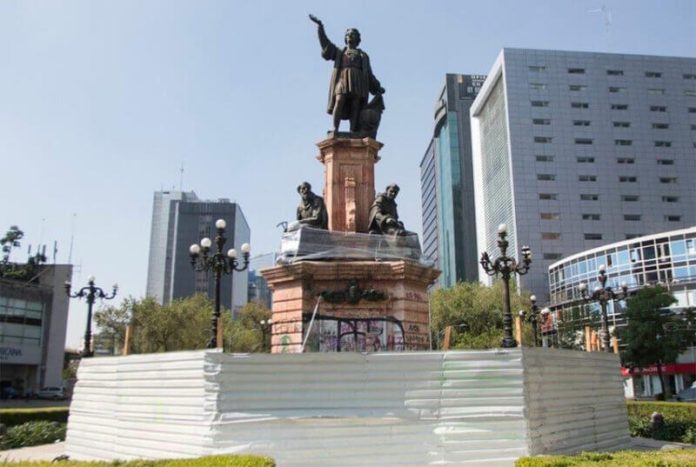
Christopher Columbus won't return to the capital's Paseo de la Reforma.

A statue of an indigenous woman will be installed on a Mexico City avenue at a location where a statue of Christopher Columbus previously stood, Mayor Claudia Sheinbaum announced.

Speaking at an event on Sunday – International Day of the Indigenous Woman – Sheinbaum said that the Columbus statue removed from Paseo de la Reforma for restoration last October will not be returned to the capital’s most emblematic boulevard.

Removed two days before Día de la Raza (Day of the Race) amid threats from protesters to topple it, the almost 150-year-old statue made by French sculptor Charles Cordier will be relocated to Parque América, a park in Mexico City’s affluent Polanco district.

Sheinbuam said the base of the Columbus statue will also be removed to make way for a statue of an Olmec woman made by the artist Pedro Reyes.

“… The Columbus statue will be moved to a worthy place with the authorization of the INAH [National Institute of Anthropology and History] and in its place there will be recognition of the women in our history, especially indigenous women; that’s social justice,” she said.

“Pedro Reyes, who is a great Mexican sculptor, is making a sculpture of the Olmec woman, who is the origin of the origin,” Sheinbaum said.

The Olmec civilization is known as the “mother culture” of Mesoamerica because most scholars believe it was the first in the region and influenced those that emerged in later years.

Sheinbaum acknowledged that the idea to erect the new statue on Paseo de la Reforma – home to numerous monuments and “anti-monuments” – originated in the federal Senate. She rejected any claim that the removal of the Columbus statue is an attempt to erase the history of the Europeans’ arrival in Mexico.

The relocation of the statue is not about “hiding” it, she asserted while acknowledging Columbus as a “great” and “universal” personage.

“Some people think that the Spanish brought civilization to Mexico [but] that’s not true,” Sheinbaum added. “We have centuries of history and that which comes from outside isn’t better. We’re a multicultural nation.”

With reports from Milenio and El País