Home Blog Page 1209

Arte Casbal keeps alive both a family tradition and a dying Mixtec craft

0
Arte Casbal studio, Puebla
An assistant at Arte Casbal paints an árbol de la vida candelabra made in the Puebla studio.

A small mound of clay sits on the table just to Jorge Casbal’s right. He tears off a small chunk and deftly shapes a piece that’s a little larger than a half a tennis ball; this is the base of what will become an árbol de la vida — a tree of life.

He takes another piece of clay and gently rolls it between his hands, forming the central tube, and lays it on the table in front of him. He repeats this several times as he makes the various parts, his hands moving confidently. Nothing is measured, and everything is done by hand.

He knows what he needs to do from years of experience, and he makes it look easy; but it’s not.

“To make the most basic thing, [a person] can learn in about six months, practicing every day,” he said. “It would take about a year in training to make a small árbol de la vida.

Jorge and his brother Ulises are the owners of Arte Casbal in Izúcar de Matamoros, Puebla, which is famous for its barro policromado — painted clay — and especially its árboles de la vida.
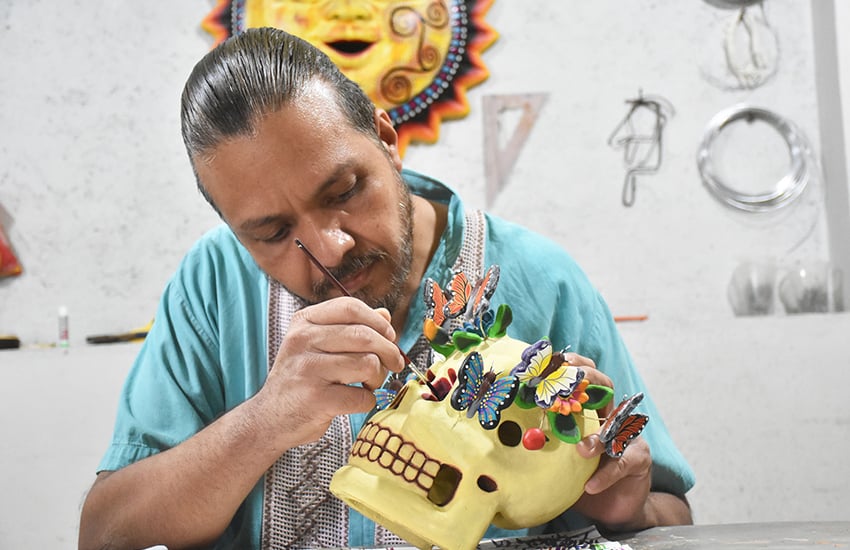
Ulises Casbal
Ulises Casbal works on a clay handcraft. The brothers make a variety of items in painted clay, including ones for Day of the Dead.

The earliest discovered depiction of a Mexican árbol de la vida is found in the Codex Vindobonensis, a Mixtec parchment believed to have been made a few decades before the arrival of the Spanish in 1519. The Mixtecs occupied an area that is now Oaxaca, Guererro and Puebla.

“In the codex, there is a tree called apoala,” said Jorge, “and it represents the beginning of life, according to the Mixtec culture.” The tree also shows the origin of the Mixtec ruling families and the civilization’s early history.

Mexican indigenous groups have been using clay to make figures and other items for thousands of years. In the country’s central region, unpainted clay figures date from around 1800 BC.

Painted figures appeared much later, first in the Olmec culture. Still later, around AD 800 in Teotihuacán, figures with religious symbols began to appear.

It’s not clear when the first clay árbol de la vida appeared in Mexico, but the ones that we’re familiar with today — ones that incorporate images and symbols based on Catholic religious icons — appeared after the Conquest. Like many things in Mexico, this indigenous art form has changed over the centuries.

“With the arrival of the Spanish and evangelization, the árbol de la vida was transformed,” Jorge said. “The Moors invaded Spain, and from there, the Spanish brought Moorish images here, and we use them in our polichromado. Our pieces are a mix of three cultures: Spanish, Moorish and Mixtec, but [the] Mixtec also have an Olmec and Zapotec influence.”
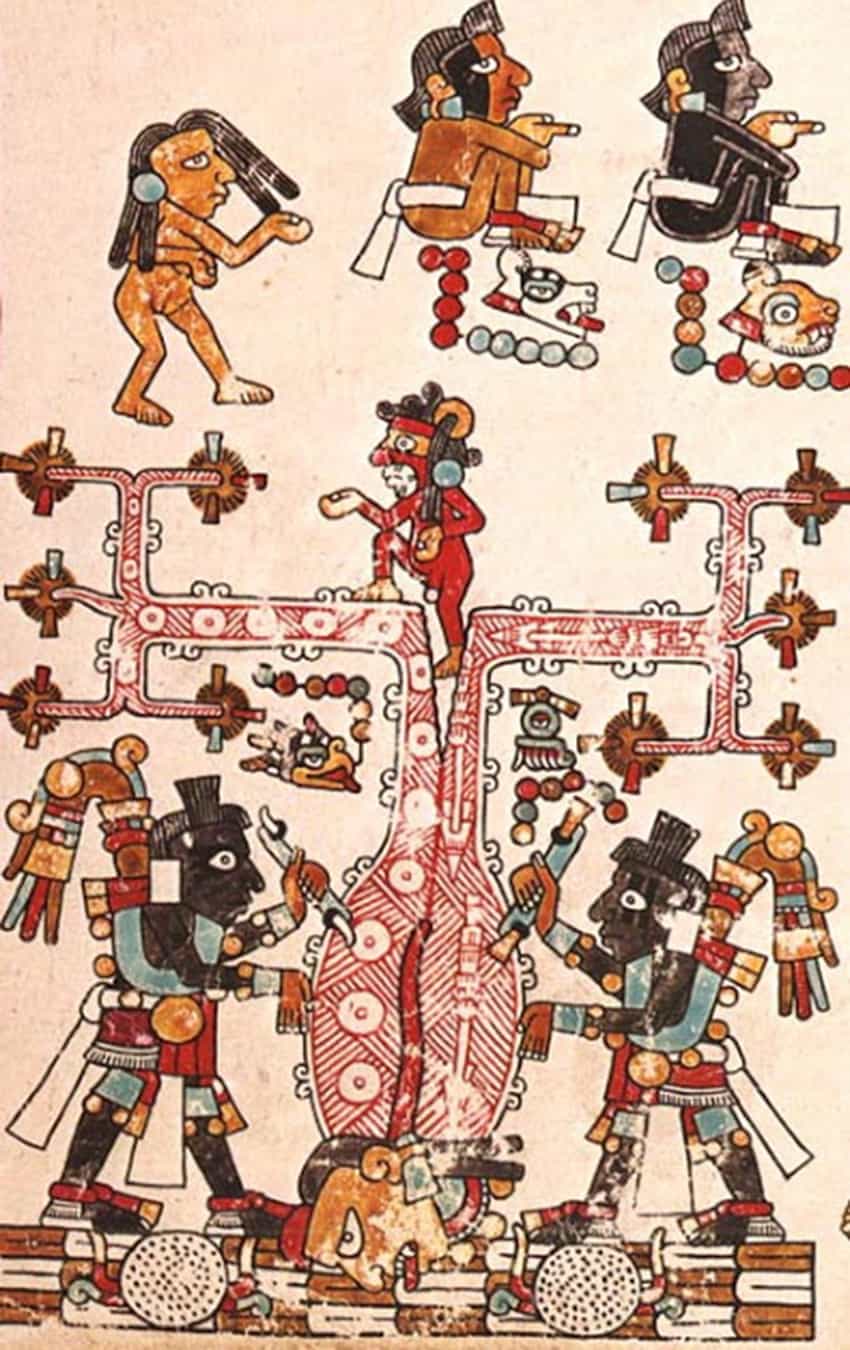
image from the Vindobonensis Codex
The Vindobonensis Codex, a pre-Hispanic pictorial document, displays the apoala tree, whose imagery shows the origins of the Mixtecs’ ruling families.

Making árboles de la vida and other figures is a family tradition for Jorge and Ulises that goes back generations. “During the Revolution, the art was being lost, and it was recovered by my grandmother, Catalina Orta, together with Don Aurelio Flores,” said Jorge.

His grandmother taught all her children, including Jorge and Ulises’ father. Unfortunately, their father eventually lost his studio and abandoned the family, but fortunately, he’d taught his wife, Maria Luisa Balbuena Palacios, who is now recognized as a master of the craft. She in turn taught Jorge and Ulises.

The family struggled after their father left. “We lived in extreme poverty,” said Jorge. “Sometimes we had nothing to eat. We went to school, but we were not good students. But little by little, we came to love crafts.”

In 2003, the brothers convinced their mother to let them enter a piece in a competition sponsored by the National Fund for the Development of Handcrafts (Fonart). “Despite being first-timers, we took second place, and that started to change our history,” Jorge said.

Soon afterward, they decided to start their own studio.

“My mother is very traditional, and we made variants,” Jorge explained. “Also, we wanted our own workshop, our own style, and because of this, we wanted our independence. And so we formed Arte Casbal in 2004.”
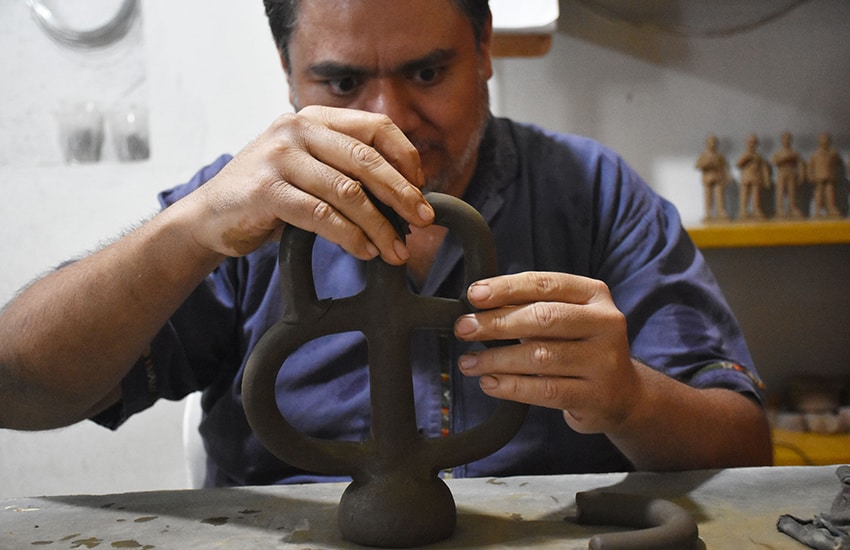
Jorge Casbal
Jorge Casbal puts together the base of another árbol de la vida piece.

Before they can start making one of the tree figures, the clay must be prepared over weeks. It starts out essentially as a stone that they first pound and grind and then sift to remove any small stones and other impurities.

The resulting powder is put in a tank of water for a week or two. The water is then removed, leaving behind something that Jorge described as being like a “mole paste” — which the brothers then knead. After all that, the clay’s ready to be sculpted.

Jorge takes all the pieces that are laid out in front of him and gently connects them. He smooths out the spots where the pieces are joined and places the unfinished árbol de la vida upright. He’ll leave it on a shelf to dry for three or four days before placing it in an oven. The hot air in the oven can crush them.

“Once dry, we put them in an oven at C 800, using something traditional: firewood,” he said. “This is a very long process, and it is a process done absolutely by hand.”

Traditionally, an árbol de la vida has an image of God on top, as well as Adam and Eve figures and a serpent, although some have strictly secular themes such as animals and nature. In the brothers’ studio, the decorations typically incorporate indigenous designs and symbols.

The sculpture is customarily given to newlyweds “as a symbol that they are wishing the couple a family union that’s prosperous,” said Ulises. “One with many children.”

A small, eight-inch item, like the one Jorge was working on, takes about a week of continuous work to make and costs 1,500 pesos (US $75). At the time of my visit, an assistant was painting a very large, elaborate one that Jorge estimated took 20 days to make and will take another 20 to paint. That one cost 40,000 pesos (nearly US $2,000).

They also sell a variety of other figures, including ones for Day of the Dead.

There were once many more workshops like Arte Casbal in Izúcar de Matamoros. “Now there are 12 family workshops,” said Ulises, “maybe two others.”

The brothers realized that the craft was being lost and began doing what they could to preserve it. “My brother and I undertook to start social networks [promoting the craft],” Ulises continued. “We promote it in fairs.” They also train people.

Still, they and others in their family struggle to keep the knowledge alive and to survive. When asked if they can continue their work, Jorge wasn’t optimistic.

“It depends,” he admitted. “We do it for love, and we will continue. Once, someone asked my cousin if he will continue this work, and he said no. The person asked why. My cousin said, ‘So my children do not die of hunger.’”

• You can view and purchase the brothers’ work at their website or on Facebook and Instagram.

Joseph Sorrentino, a writer, photographer and author of the book San Gregorio Atlapulco: Cosmvisiones and of Stinky Island Tales: Some Stories from an Italian-American Childhood, is a regular contributor to Mexico News Daily. More examples of his photographs and links to other articles may be found at www.sorrentinophotography.com  He currently lives in Chipilo, Puebla.

US man arrested for impersonating police officer in Playa del Carmen

0
The US citizen without his police uniform.

A U.S. citizen was arrested for dressing up as a police officer in Playa del Carmen.

Patrick “N,” 22, was wearing a uniform with a shirt marked “City Police,” a bullet proof vest and a black cap with a police badge, and was armed with a baton.

He was detained in a vehicle along with other passengers which municipal police determined to be suspicious in the north of the city just off the Cancún-Tulum highway.

The foreigner was unable answer the officers’ questions convincingly and was turned over to state prosecutors. It is unclear why the man had dressed up as a police officer or whether he spoke Spanish.

With reports from Noticias Pedro Canche

Government announces Covid vaccination certificates available online

0
vaccination certificate website
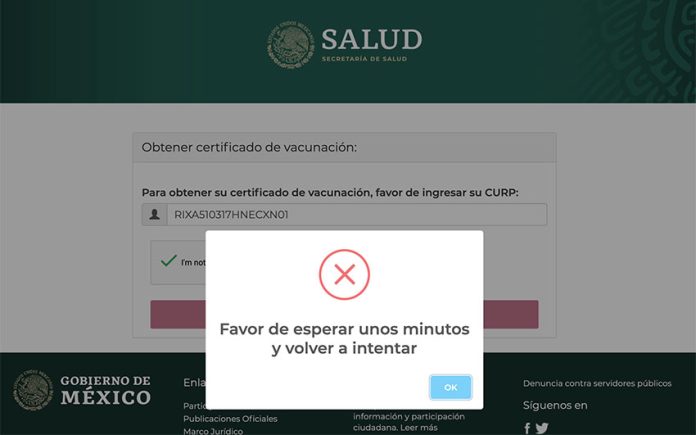
The message many have seen when attempting to obtain the certificate.

The federal government announced Tuesday that people vaccinated in Mexico against Covid-19 could download a digital certificate as official proof of their vaccination status, but many people were unable to complete the process.

Deputy Health Minister Hugo López-Gatell told the president’s Tuesday morning press conference that people who are fully vaccinated could access the certificates on a Health Ministry website.

“If you want to have official proof that you have been vaccinated, … [the certificates] are there,” he said.

The coronavirus point man said that each certificate states the vaccine with which they were inoculated and the date or dates on which they received the shot.

Downloading the certificate – which also has a QR code – is especially important for international travelers as it may be needed to prove one’s vaccination status in certain countries, López-Gatell said.

However, a large number of Mexicans found it impossible to obtain the certificate and took to social media to vent their frustration. After entering their CURP identity number on the certificate website, many people were told to “wait a few minutes and try again.”

However, their repeated attempts were repeatedly met with the same message. It was unclear whether the problem was related to heavy traffic on the site.

Other people complained they received a message saying there was no available data to generate their certificate even though they are fully vaccinated.

One social media user responding to López-Gatell’s Twitter post announcing the website said her husband’s certificate said he was immunized with the Pfizer vaccine when he actually received Sputnik shots.

People who are able to successfully log into the website will be sent an email containing a link to another site where they can download their vaccination certificate.

There are 19.9 million fully vaccinated people in Mexico, the Health Ministry said Tuesday, and just over 33 million have received at least one shot. The latter figure accounts for 37% of the adult population, the ministry said. López-Gatell said Wednesday that just under 48.5 million vaccine doses have been administered across the country.

Meanwhile, Mexico’s accumulated case tally rose by 7,989 on Tuesday, the biggest single-day jump since late February and the death toll increased by 269.

The Health Ministry’s announcement of the high case tally came after López-Gatell acknowledged Tuesday morning that Mexico had entered a third wave of the pandemic. Reported case numbers increased 53% in June compared to May and Covid-19 deaths rose 42%.

Mexico’s accumulated case tally currently stands at just under 2.55 million, while the official death toll is 233,958, a figure considered a vast undercount due to low Covid-19 testing rates.

The Health Ministry government last week published excess mortality data that showed that more than 447,000 fatalities were attributable to Covid-19 but has not updated its official death toll to reflect those numbers.

Mexico News Daily 

Above average rainfall provides drought relief in some areas

0
Drought relief courtesy of Tropical Storm Dolores
Drought relief courtesy of Tropical Storm Dolores in Sinaloa in June.

Rainfall recorded in the first six months of the year was above the historic average and came during a drought that has been considered the worst in 30 years.

The severe lack of precipitation prompted opposition legislators to urge the government and the National Water Commission (Conagua) as recently as May 24 to implement an emergency plan to mitigate the damage.

Rainfall totaling 259.5 millimeters was recorded from January 1 to July 4, 9.1% above the 237.9 millimeter average documented between 1981 and 2010.

Over June, 137.5 millimeters of rain was recorded, 31.3% above the average for the month, making it the fifth rainiest June since 1941.

The area with the highest accumulated rainfall last week was Requetemu, San Luis Potosí, with 325.4 millimeters; Cuale, Jalisco, was second with 265.4 millimeters; and Chicomapa, Veracruz, third with 262.9 millimeters.

Reservoirs which had been at historically low levels are returning to capacity. On Monday, 11 of the country’s main dams were full, and another 26 registered levels of over 75%. Only Sinaloa, Sonora and Guerrero reported dams at under 50% of capacity.

Conagua’s latest drought monitoring report shows that the second half of June radically altered the state of play: more than 76% of the country was suffering from insufficient water in mid-June, which had dropped to 56.2% by the end of the month. Meanwhile, the area affected by extreme or exceptional drought decreased from 21.3 to 10.8%.

The report connects the change in climate to the onset of the hurricane season. “[The rainfall] was mainly associated with the evolution and presence of Tropical Storm Dolores and Hurricane Enrique in the Pacific Ocean and Tropical Storm Claudette in the Gulf of Mexico … and the passage of four tropical waves and the entry of humidity from the Pacific Ocean, the Gulf of Mexico and the Caribbean Sea,” it said.

With reports from Reforma

AMLO announces new state-owned company will distribute LP gas ‘at fair prices’

0
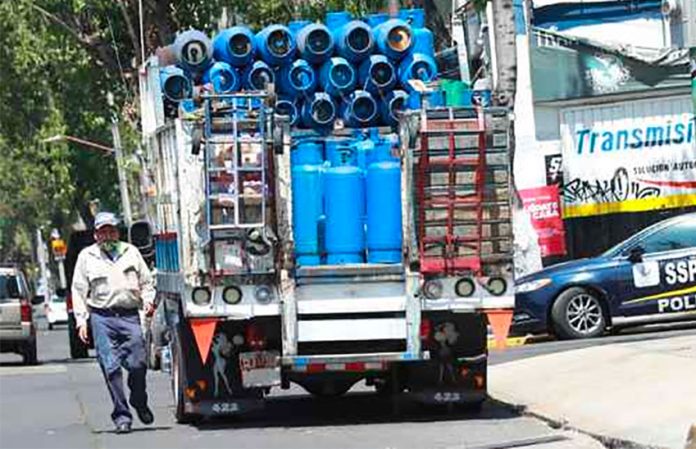
Private distributors of LP gas will face government competition.

The federal government will create a new state-owned company to distribute LP gas directly to consumers, President López Obrador said Wednesday.

The state oil company Pemex will establish the new utility within three months, he told reporters at his regular news conference.

“We’re already preparing the creation of a company to distribute gas at fair prices. It’s going to be called Gas Bienestar [Well-Being Gas],” López Obrador said.

“It’s going to sell cylinders of 20 to 30 kilos of gas at low prices … without these other private companies ceasing to participate [in the gas market]. But there’s going to be competition because there isn’t [now],” he said.

The president said the price of LP gas – which most Mexican households use for cooking – has been rising “unjustifiably” above inflation, which is 3.15%.

Data from the consumer protection agency Profeco shows that LP gas prices have risen more than 30% in some parts of Mexico over the past year.

López Obrador said his government has kept its commitment to keep price rises for gasoline and electricity below the level of inflation but has been unable to do the same with LP gas.

López Obrador blamed five large distribution companies, which he didn’t name, for gas price hikes and asserted they have “very high profit margins” as a result.

“Pemex sells [gas] to them at a price and they sell it to the consumer at a very high price,” he said.

The president said distribution by the new state company will begin in Mexico City, where he said prices are particularly high. Gas Bienestar will have very low profit margins, allowing it to keep LP gas prices low, he said.

López Obrador, a staunch energy nationalist, is also aiming to increase the state’s participation in the electricity and oil sectors, which were opened up to private and foreign companies by the previous federal government.

Mexico News Daily

Indigenous community calls for protective measures as pork industry grows

0
pig farm
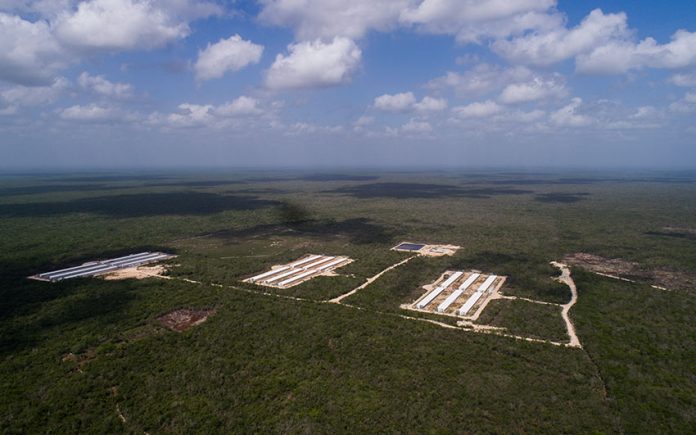
A pig farm that was shut down in May by federal environmental officials. It is located near the Ring of Cenotes in northwest Yucatán.

Featuring vast landscapes of untouched jungle and one of the most extensive karst aquifer systems on the planet, the state of Yucatán is among the most biodiverse in the country. It is also a state where deforestation has claimed over one third of the jungle, mainly due to rapid agricultural development.

The state has recently become an epicenter for growth for the pork industry, and intensive pig farms have begun to appear amid the jungle landscape in areas inhabited by indigenous beekeepers and small farmers. With plans to establish more farms in the region come questions about the local impacts of intensive pig farming in Mexico.

Those questions triggered an official complaint by citizens in partnership with several NGOs and resulted in the closure of four Yucatán pig farms due to environmental concerns in May.

The environmental protection agency, Profepa, announced the closures after carrying out inspections of farms in the municipalities of Maxcanú, Kinchil, Opichén and Mérida. It found a lack of environmental impact assessment results and inadequate management and reporting of hazardous waste and wastewater.

Profepa said it plans to address environmental concerns and come up with strategies to evaluate environmental impact in lowland forest areas before issuing authorizations.

According to Juan Carlos Anaya Castellanos, director of the Mexican Agricultural Markets Consulting Group, the pork sector contributes significantly to the Mexican economy, accounting for 76 billion pesos in 2020. Production is on the rise: there was a 3.1% increase in 2020 over 2019 and a 3-4% increase is projected for this year.

Industrial pig farms on the Yucatán Peninsula represent 14% of all Mexican pig farms and are among those authorized to export pork to China, Japan, Korea, and the United States. The region has been marked as an advantageous area for the farms due to its water resources, its extensive territory, and its access to the United States and Asia through the port of Progreso.

Pork production on the peninsula increased by 36% between 2006 and 2018 and continues to grow.

According to Greenpeace México, there are 257 pork farms in the country, of which 122 (47%)“are in regions considered a priority for biodiversity conservation. Some of the farms in the western part of the state of Yucatán are near the Ria Celestún Biosphere Reserve, a protected area which forms part of a large wetland corridor.

A biologist and member of the beekeeping collective Maya Alliance for the Bees says that millions of liters of water are used to carry out intensive pig farming practices, and the wastewater is eventually deposited into the forest, polluting many hectares of land.

He was one of several citizens, most of them beekeepers, who spoke with Mexico News Daily on condition of anonymity.

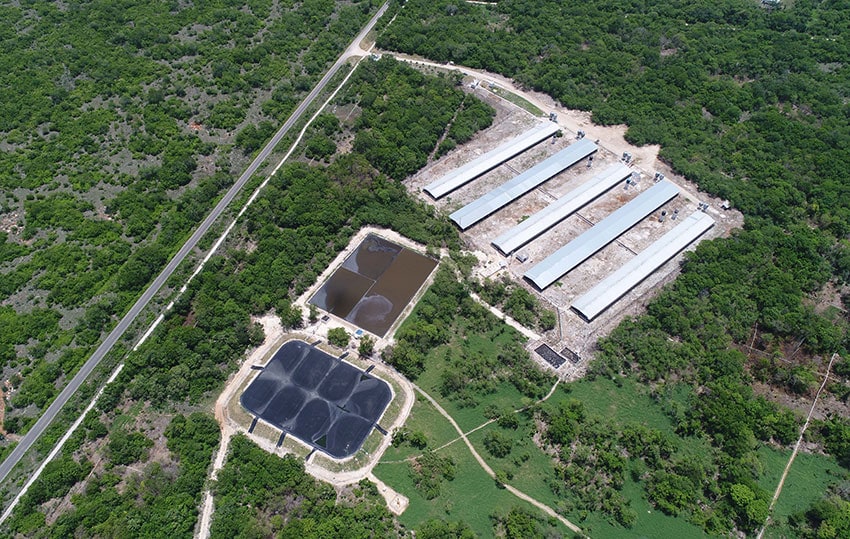
A pig farm in Kinchil, Yucatán.

A Maya beekeeper from the town of Kinchil said pools of wastewater from pig farms were discovered in the jungle nearby. “The farms have a treatment plant, but it doesn’t work perfectly. The water flows into the forest after that. In the area where we saw the water, we noticed that there were dead trees.”

Water pollution also affects the bee population that the local indigenous community relies upon to carry out their traditional livelihood. The majority of the inhabitants of the western part of the state, where intensive pig farming takes place, are indigenous Maya beekeepers and small scale cattle farmers.

Another member of the Maya Alliance for the Bees said traditional beekeeping relies on pure water and an intact ecosystem where the bees can collect pollen across their foraging area. “In beekeeping we have seen a decrease in the harvest. These problems didn’t exist before, and the harvest was very good … We have seen dead bees, but we don’t know why. That’s something we can’t know without laboratory tests.”

The beekeeper from Kinchil explained that local producers can no longer label their honey as organic since the bees are exposed to chemicals in the wastewater from the pig farms. “We can’t get organic certification because we are almost within two kilometers of the farm. Some beehives are within one kilometer of the farm. Two years ago an organic honey company approached us but we couldn’t get certified.”

In addition to the risk to their bees, locals worry that their own drinking water might be contaminated, especially indigenous farmers who drink water from shallow traditional Maya wells that typically measure less than six meters deep. The water table is very high in some areas in this region, increasing the likelihood of contaminated water reaching the shallow wells. In one area there is concern that the farms’ wastewater could reach a large reservoir that supplies water to the nearby city of Celestún.

Greenpeace took samples from wells in the area in 2020 and detected the presence of coliform bacteria in the water, concluding that the National Water Commission should monitor the water quality in the area frequently, and that local communities should have access to the information.

The anonymous beekeeper from the town of Kinchil says he hopes that the local indigenous community will be integrated into ongoing monitoring and decision making around the pig farms in the future.

“We would like to be part of a team of local caretakers of the region, and participate in water sampling. We aren’t against the company, we are against what could happen if people begin to get sick and native species are damaged. We aren’t going to stop the company if it is doing things correctly.”

Mexico News Daily

4 México state municipalities clean up after severe flooding

0
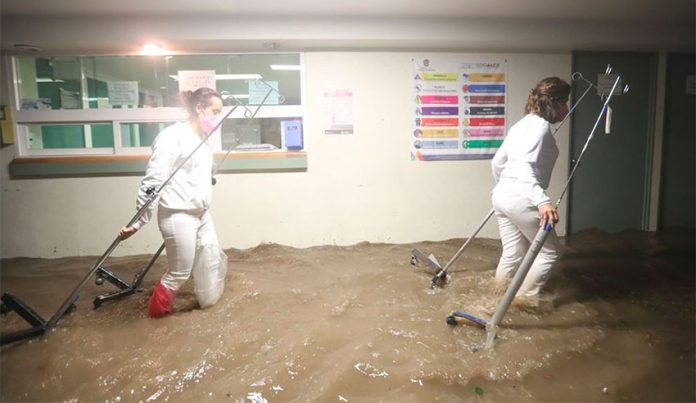
Many patients were evacuated from this hospital in Atizapán.

Destructive heavy flooding in the northwest outskirts of Mexico City left residents counting their possessions Tuesday in four municipalities of México state.

In Atizapán de Zaragoza, floodwaters rose to 1 1/2 meters in depth and morphed into what locals described as a river. Tlalnepantla, Naucalpan and Zumpango were also hit by flooding.

Four thousand inhabitants from 24 neighborhoods were severely affected in Atizapán, as well as 227 houses, the general hospital and dozens of fences and trees, according to data from the government of Atizapán. Mayor Ruth Olvera Nieto said her office had requested the deluge be categorized as a natural disaster.

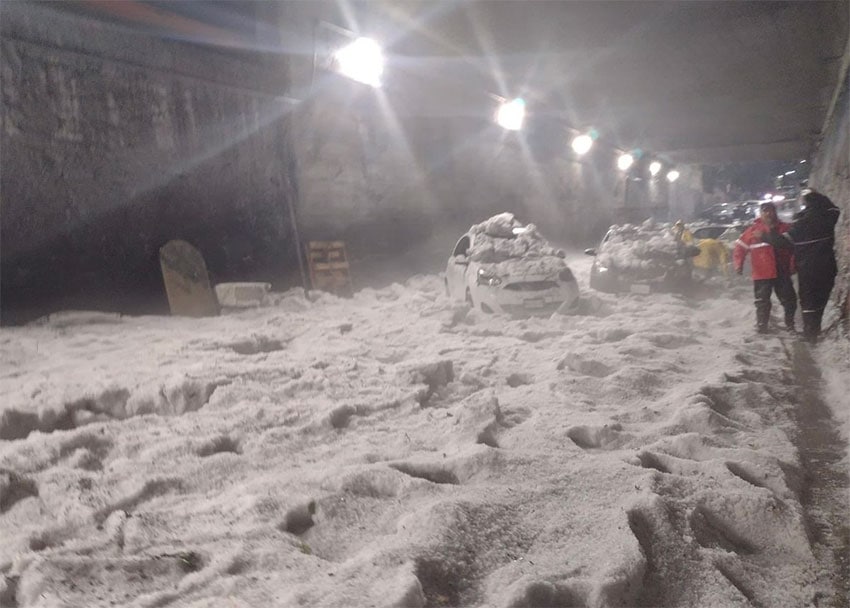
More than 60 mm of rain and hail fell during a two-hour deluge and caused five rivers to overflow their banks.

Dozens of patients were evacuated from the General Salvador González Herrejón hospital in Atizapán and transferred to other nearby facilities after severe flooding.

Floodwaters in Atizapán.

One man died of hypothermia in Tlalnepantla when he was trapped in his car for three hours after it was covered in hail. Three other trapped motorists were rescued and admitted to hospitals with symptoms of hypothermia.

On the block where grandmother Juana Díaz lives, six families — 60 people — lost everything in the flood.

For 30 minutes, Juana floated on a mattress with her three grandchildren which she said saved their lives. “When the rain fell the fence broke and the river came: it was a river. I was with my three grandchildren and my daughter, the only thing that saved us was the mattress,” she said.

“I’m calm. Everything was lost but my children are safe and sound. That is what I care about,” she added.

Resident Milton Mendoza described the material damage, and called for assistance. “In all the houses the water rose up to a meter and a half [affecting] washing machines, refrigerators, boilers,” he said.

“We need [authorities] to come and sanitize the entire area. We are fighting against Covid-19 and now with a flood of sewage-contaminated water,” he added.

The aftermath of a hailstorm in Tlalnepantla.

Daniela Reséndiz said the flood had stripped her family of valuable possessions. “We barely had time to rescue a few things, the water didn’t stop. The drains were not deep enough … In my house we lost two cars, the living room and dining room,” she said.

Cecilia Torres feared the worst amid the chaos. “We thought we were going to die. I swear,” she revealed.

With reports from El Siglo de Torreón, Infobae and Reforma

Presidential indifference leaves anti-corruption system in ‘vegetative state’

0
Jorge Alberto Alatorre
Jorge Alberto Alatorre is the only person who has been named to the five-member citizens' committee.

A citizens’ committee that is supposed to lead the federal government’s National Anti-Corruption System (SNA) only has one of its five required members, while the system itself is in a “vegetative state,” according to the director of a think tank.

The role of the Citizen Participation Committee (CPC) in the SNA – created by the previous federal government – is to contribute to the formation of anti-corruption policy and oversee from a citizen’s perspective the activities of the six corruption-fighting institutions that make up the system: the Federal Auditor’s Office, the Federal Judiciary Council, the Anti-Corruption Prosecutor’s Office, the Ministry of Public Administration (SFP), the National Institute for Transparency and Access to Information and the Federal Administrative Justice Tribunal.

The committee should have five members who are experts on anti-corruption policy and not involved in party politics, but it has only one – Jorge Alberto Alatorre Torres, a professor at the University of Guadalajara.

Alatorre, the newspaper Milenio reported, has been left on his own after previous CPC members quit or concluded their terms and were not replaced.

No replacements were named initially because the authority tasked with appointing CPC members, the Selection Commission, had no members of its own. The federal Senate should have named replacements for outgoing Selection Commission members in October 2019 but failed to do so and continued to neglect its duty for more than a year.

The upper house of Congress did finally appoint new Selection Commission members in March this year but only after a federal court ordered it to do so. The directive came after three CPC members filed an injunction request in August 2020 that sought to compel senators to comply with their responsibility.

But four months after nine new members of the Selection Commission were appointed, the vacant CPC positions have still not been filled. If Alatorre were to resign from the CPC, the body that heads up the SNA would effectively disappear.

If that were to occur, the entire anti-corruption system – already out of favor with President López Obrador, who has relied heavily on two non-SNA institutions, the federal Attorney General’s Office and the government’s Financial Intelligence Unit, to combat corruption –  would run the risk of losing legitimacy, Alatorre himself told Milenio. 

However, the academic said he is committed to his position on the CPC and is not thinking about leaving.

Edna Jaime, general director of public policy think tank México Evalúa and president of the Selection Commission until October 2019, asserted that López Obrador – who has faced criticism for neglecting the SNA – has passed his indifference toward the anti-corruption system birthed by his predecessor onto the Senate, in which the ruling Morena party and its allies have a majority.

“… The president of the republic has never given any support to the SNA, he doesn’t consider it a suitable instrument [to combat corruption],” she told Milenio.

Edna Jaime
The president has never given any support to the national anti-corruption system, says Edna Jaime.

“… The president’s scant enthusiasm toward the SNA infected his party, Morena, … and other legislators who believed they could postpone the formation of [a new] Selection Commission,” Jaime said. She was also critical of the commission for not fulfilling its central task.

“The CPC only has one of its five members and is doing what it can, but everything related to the SNA is completely stalled and that has led it to a vegetative state, which hopefully can be overcome,” Jaime said.

There is at least some cause for optimism. In a report published Wednesday, Milenio said the Selection Commission is on the verge of starting the process to appoint four new members to the CPC.

However, there is some concern that the commission members – appointed by a Senate dominated by Morena – could make politically motivated appointments. In that context, several civil society organizations banded together to form a collective that launched a social media campaign based around the hashtag #PerfilesIdóneosYa (Suitable Profiles Now) in order to pressure Selection Commission members to promptly appoint properly qualified and independent CPC members.

The sole current member told Milenio that driving forward efforts to combat corruption – which López Obrador characterizes as the raison d’etre of his administration – is very difficult when he has no colleagues with whom he can share CPC work.

“… Dividing work between five [members] is not the same as dividing it between one. This effectively represents a challenge to moving the [anti-corruption] agenda forward,” Alatorre said.

However, he stressed that, on his own, he has taken on the responsibility of promoting the full implementation of the national anti-corruption policy.

Luis Ángel Martínez Ramíreza corruption and transparency expert at the Ethos Public Policy Laboratory, said last year that the López Obrador administration was not making use of the policy.

With regard to the designation of new CPC members to join Alatorre, members of the #PerfilesIdóneosYa collective say that a meticulous selection process that ensures the appointment of suitable people must be carried out.

People who are qualified and completely free of political influence must be named, said Marco Antonio Zamarripa, a member of a Coahuila-based citizens’ group that is part of the collective.

Many people without relevant experience and with links to political parties have been involved in state-based anti-corruption systems, he said. The participation of such people in an anti-corruption system “puts its credibility and operation at risk,” Zamarripa said.

Amparo Menchaca of the Nuevo León-based Civic Council of Institutions said that it is “super important” that the process to appoint new CPC members be carried out “so transparently that there is no room for doubt that the best people are being chosen.”

Those people, she added, must meet “all the requirements established by the law, one of which is precisely that [CPC members must] come from civil society.”

With reports from Milenio 

Pemex says lightning strike set gas on fire in Gulf of Mexico

0
Friday's fire in the Gulf of Mexico.

State-owned oil company Pemex said a combination of a gas pipeline leak and a lightning storm caused the oceanic fireball which lit up the water in the Gulf of Mexico on Friday.

The fire started around 5:15 a.m. 150 meters from the Ku-C drilling platform in the Ku-Maloob-Zaap extraction complex, located on the Bank of Campeche. The Ku-C platform was unoccupied at the time and there were no injuries reported.

Pemex sent out fire control boats to tackle the blaze, which took five hours to extinguish.

A leak in an underwater pipeline allowed natural gas to build up on the ocean floor and once it rose to the surface it was most likely ignited by a lightning bolt, the company said.

The storm was so intense that operators had already shut off pumping stations serving the offshore rig before the accident.

“There was no oil spill and the immediate action taken to control the surface fire avoided environmental damage,” the company added.

Gusatvo Alanis, a board member with Mexico’s environmental law center CEMDA, told Reuters he thinks it is much too soon to conclude that the fire caused no environmental damage.

Pemex should commit to preparing a “detailed study of the (environmental) impact caused by the fire” as well as a plan to repair the damage, according to a statement signed by more than two dozen environmental groups, including Greenpeace as well as CEMDA.

Climate activist Greta Thunberg reposted a video clip of the fireball on her Twitter account. “The people in power call themselves ‘climate leaders’ as they open up new oilfields, pipelines and coal power plants — granting new oil licenses exploring future oil drilling sites … This is the world they are leaving for us,” she wrote.

The president has bet heavily on drilling more wells and buying or building oil refineries and touts oil as “the best business in the world.”

With reports from Reuters and AP

US organization urges Mexico to reconsider decision on Zama oil field

0
Pemex doesn't have the funds, capacity or infrastructure required to operate the field, says Larry Rubin.

A business and community organization that represents United States interests in Mexico has urged President López Obrador to reverse a federal government decision to award control of a huge oil discovery to state oil company Pemex.

The Energy Ministry awarded Pemex the rights to operate the nearly 700-million-barrel Zama field in the Gulf of México, which was discovered in 2017 by a consortium comprising Texas-based Talos Energy, Premier Oil of the United Kingdom and Germany’s Wintershall DEA.

The three companies have already invested US $325 million in the development of the field but in a move described as being close to an expropriation by former hydrocarbons deputy minister Lourdes Melgar, the federal government has seized control of Zama, claiming that just over half of it is on acreage owned by Pemex.

Speaking at a virtual press conference, the president of the American Society of Mexico asserted that the state-owned company doesn’t have the funds, capacity or infrastructure required to operate the field. Larry Rubin warned that the field could be abandoned in the medium term if Pemex takes control of it.

“…[That] would be a loss for the competitiveness of Mexico, not just for Talos, which decided to bet on the country,” he said.

“… It would be a big loss for the country,” Rubin said, adding that the organization he heads believed that the private companies’ right to control the field would be respected.

He called on López Obrador to return the operation rights to Talos and asserted that the government’s decision would send an unequivocal message to investors that there is a lack of legal certainty in Mexico.

“We believe that American investors are here to create jobs and opportunities for small and medium businesses. That’s why we want a stable legal framework and for free enterprise and the creation of opportunities in Mexico to be respected,” the American Society chief said.

Giving Pemex control of the field could even delay Mexico’s economic recovery from the pandemic, said Rubin, who is also a trade ambassador for the Confederation of Industrial Chambers and the Mexico representative of the United States Republican Party.

“… We believe that the best way is to work together on projects that can’t be developed [by one company] alone,” he said.

The likelihood of López Obrador overturning the Energy Ministry’s decision would appear to be extremely slim given that he is a staunch energy nationalist who is aiming to boost Pemex’s participation in an oil sector that was opened up to foreign and private companies by his predecessor. The president previously denied that Pemex was planning to take over Zama after a 2019 report by news agency Reuters asserted as much.

Pemex has more than US $100 billion in debt but claimed last month that it has the financial capacity to operate the field. The state oil company has also said that it has infrastructure near Zama – located off the coast of Tabasco – to receive, store and export crude. However, the depth of the field, at 168 meters, is deeper than most of Pemex’s shallow-water projects in the southern portion of the Gulf of Mexico.

Houston-based energy expert Miriam Grunstein described the decision to give control of the field to Pemex as a political move. 

“They wanted to give Pemex the medal, but it will come at a high cost,” she told Reuters, explaining that Zama’s other stakeholders could take legal action if the field fails to operate successfully under the state oil company’s management.   

Talos – which won the exploration and production rights for the area where Zama is located at a 2015 oil field auction and commissioned an independent study that found that 60% of the deposit was on its acreage – said Monday it was “very disappointed with [the energy ministry’s] sudden decision …”

The company, which has significant experience developing fields at similar depths to Zama, also said it would explore all its legal and strategic options to maximize value for its shareholders.

With reports from El Economista and Reuters