Home Blog Page 1244

Kansan City Southern, Canadian National finalize railway merger

0
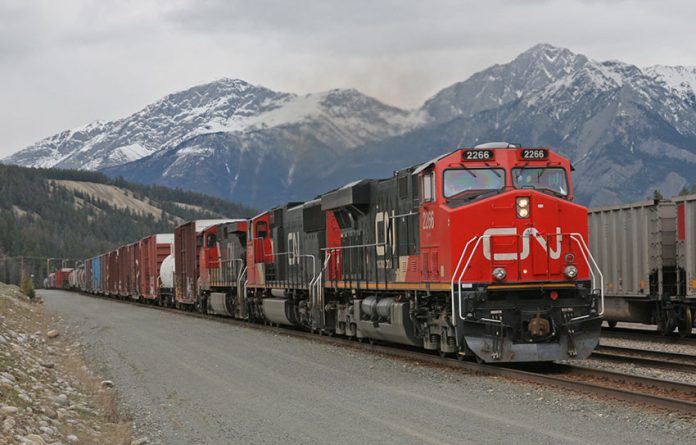
A Canadian National train in Jasper, Alberta
A Canadian National train in Jasper, Alberta. TamasV / Shutterstock.com

Railway company Canadian National (CN) agreed to a US $33.6-billion deal to take over Kansas City Southern (KCS) on Friday, which will connect ports between Mexico, the United States and Canada with 42,000 kilometers of track.

KCS transports freight from the ports of Tampico and Altamira in Tamaulipas, the port of Veracruz, and from the Pacific port of Lázaro Cárdenas in Michoacán. It takes automobiles and industrial products into the United States, and hauls farm goods to south of the border.

Clearance will be subject to a thumbs up by KCS shareholders and regulatory approval from the the Federal Economic Competition Commission and the Federal Telecommunications Institute in Mexico, and the Surface Transportation Board (STB) in the United States.

Another Canadian railroad, Canadian Pacific, had agreed to take over KCS in a $29-billion deal in March, only for rival CN to come in with an improved offer. In its sweetened proposal, CN agreed to add more stock and cover the $700-million breakup fee Kansas City Southern would owe Canadian Pacific for walking away from their existing agreement. If the deal fails to get approval from regulators, CN would also owe KCS a $1-billion reverse breakup fee.

Canadian Pacific’s deal had already received preliminary regulatory approval from the STB, but the regulator might be more cautious about giving CN the go ahead: the company is larger and has more overlap with KCS, which could put it at a disadvantage in winning antitrust approval. Railroad takeovers have to be in the public interest and enhance competition to gain approval.
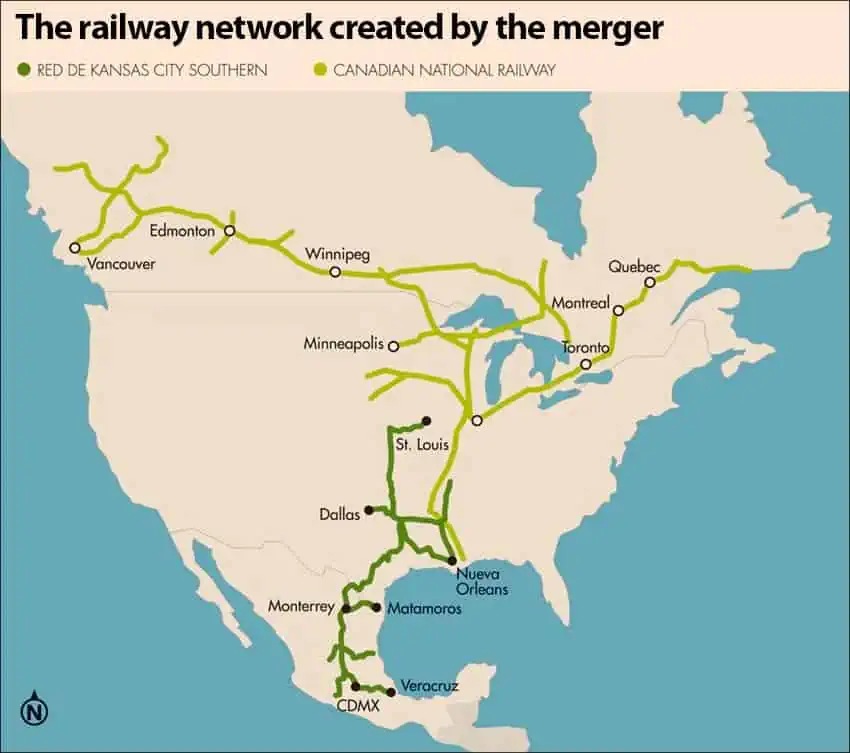
Kansas City Southern and Canadian National's combined network of tracks.
Kansas City Southern and Canadian National’s combined network of tracks. el economista

Logistics and transport professor at the Tec de Monterrey university, Sergio García, said he expects Canadian Pacific will strike a deal with a different U.S. railroad. “I think that at this moment Canadian Pacific is looking for another alliance with another U.S. operator. We will probably see in the coming months the announcement of another unexpected merger because the conditions will require it. It’s one thing to compete with a company, and another to compete with a large company with a presence in three countries,” he said.

Canadian National CEO JJ Ruest said the deal would “meaningfully connect the continent,” while chairman Robert Pace said he was confident the deal would be given the green light. “KCS is the ideal partner for CN to connect the continent, helping to drive North American trade and economic prosperity. We are confident in our ability to gain the necessary regulatory approvals and complete the combination with KCS, and we look forward to combining with KCS to create new opportunities, more choice and a stronger company,” he said.

KCS CEO Patrick J. Ottensmeyer said the takeover will drive prices down for customers. “As North America’s most customer-focused transportation provider, we are excited about this combination with CN, which will provide customers access to new single-line transportation services at the best value for their transportation dollar, and increase competition,” he said.

CN is Canada’s largest railway company, spanning 32,831 kilometers of track. It gained control of the U.S. Illinois Central railroad in 1998, and Bill Gates is its biggest shareholder.

KCS is the smallest of the major freight railroads in the U.S, covering 10,800 kilometers of track in the U.S. and Mexico. Its routes cross through Mexico City, various cities of El Bajío and Monterrey, meeting the U.S. border at Texas, and it also runs a rail link along the Panama Canal.

Sources: Wall Street Journal, El Economista (sp), Milenio (sp)
Drowned by Mexico’s thirst, underwater towns emerge during drought

0
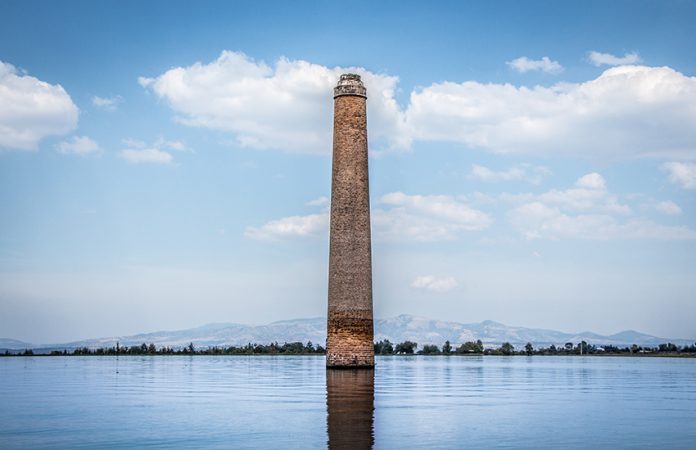
old silver smelter at San Antonio Dam in Hidalgo, Mexico
Smokestack from an old silver smelter at the San Antonio Dam in Hidalgo. Noé Martínez

It is a spooky sight: a crumbling bell tower poking up from under the waters of a reservoir.

The ruins of underwater towns can be found in various parts of Mexico, sometimes partly visible year-round, sometimes only when water levels drop sufficiently. This year, the water in the reservoir in San Miguel Allende, Guanajuato, dropped enough that it was possible to walk up to the old parish church of Agustín González.

You might think that the destruction of centuries-old buildings would be rare in Mexico, but not so. Frantic dam-building began in the early 20th century, starting with La Boquilla in Chihuahua in 1910.

The pace peaked in the 1970s and 1980s, when 45% of Mexico’s dams were built. The drive behind them was the modernization of Mexico, demanding more agriculture, more electricity and more water for thirsty cities.

No solid, up-to-date data exists on the number, types or conditions of Mexico’s dams. The National Water Commission last put the number at 4,449 in 2008, but a 2019 study estimates there are 5,163.

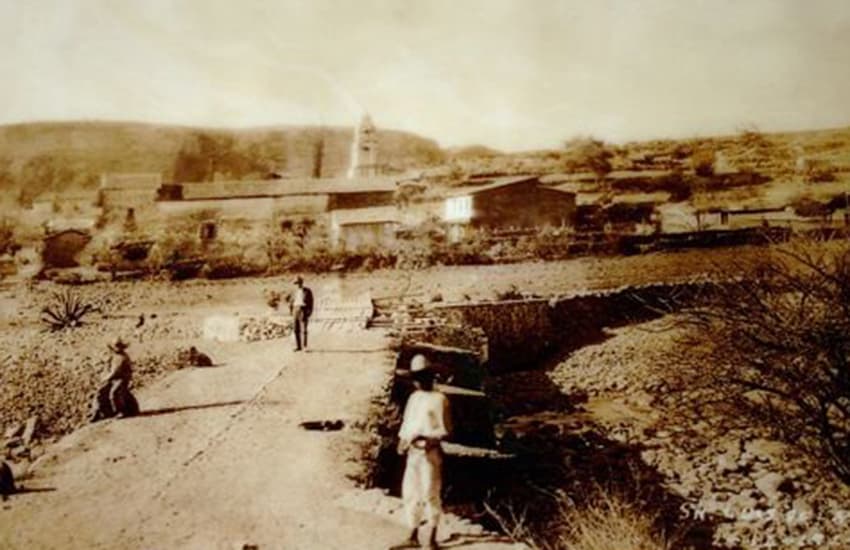
now-submerged town of San Luis de las Peras in México state
Image of the town and people of San Luis de las Peras before it was flooded in 1943 for the Taxhimay Dam in México state.

Fifty of them control 80% of the country’s surface water. The most important are in the Balsas River basin, the northwest of the country, the Grijalva River basin and the Río Bravo (Rio Grande).

Dams and reservoirs have ecological and social costs, many of which are borne by people who do not see the benefits. In Mexico, these people have been disproportionately indigenous.

The main issue around these bodies of water is the forced displacement of entire communities, with the construction of reservoirs drowning homes, farmland and even historical and archaeological sites.

Some examples include El Temascal Dam, built in 1949, displacing 22,000 people in Oaxaca; El Infiernill in 1961 in Michoacán, which displaced 5,500; and La Angostura in 1972, which displaced 15,483 in Chiapas.

Dam building has since continued, although more slowly and with more attention to their creation’s effect on local populations.

The 1996 construction of the Luis Donaldo Colosio Dam in Sinaloa led to the Huites Declaration, a document outlining the grievances of indigenous people displaced by dam building. One of the most recent cases is the El Zapotillo Dam in northeastern Jalisco. It was halted in 2019 because of a lawsuit filed by towns slated to be flooded, although the federal government wants to revive it.

While the towns die underwater, they do not disappear. Where the ruins can be seen, they have become tourist attractions; locals with boats take people out to the sites.

The most notable submerged community is Quechula, home to a 16th-century church and monastery. It’s located in the Malpaso (also known as Nezahualcóyotl) Reservoir in Chiapas, one of the largest and most important reservoirs in Mexico.

Since the dam was built in 1966, the monastery has been seen only twice, once in 2002 and again in 2015. Despite its age and role in early evangelization efforts in the region, it was never declared a historical site.

México state has a number of waterlogged ghost towns. The best-known is San Luis de la Pera in the Taxhimay Reservoir. Since 1943, only the tower of the old parish church has been visible above the waters. The artificial lake is one reason why the area is now an important regional recreational area.

Near the popular weekend getaway of Valle de Bravo is the town of Santo Tomás de los Plátanos, under the Santa Bárbara Reservoir. It and the surrounding 145 hectares were declared a state ecological reserve in 1993.

In Guanajuato, the La Purísima Reservoir covers the ruins of Zangarro, a community flooded in 1979. Its church and other buildings can be seen only in times of severe drought.

Ruins of Quechula Monastery in Chiapas' Malpaso Dam.
The ruins of the 16th-century monastery of Quechula in the Malpaso Dam in Chiapas.

The old church remains standing, but it is not in good condition. For years after the church was flooded, there were stories of people diving and finding gold in the submerged ruins.

One of the most important reservoirs in Oaxaca is the Benito Juárez, built in 1961. At the height of the dry season, it is possible to see the old town of Jalapa del Marqués (or Yudxi in Zapotec). It is home to the ruins of an old Dominican monastery as well as a primary school and cemetery. How much is visible each year depends on the level of drought.

Michoacán is home to a structure called the “drowned church (iglesia hundida) of Churumuco.” The town of Churumuco was emptied and flooded with the construction of the El Infiernillo Dam in 1965.

The church was built in 1800 and is noted for being one of the places where Independence War hero José María Morelos y Pavón worked as a priest. Much of the building has collapsed, but what is left is visible for much of the year.

Most of the drowned towns are in the center and south of the country. That is because there are more and larger rivers there, as well as more and larger population centers. But there are also examples of underwater ghost towns in the north.

In Sonora, San Pedro de la Cueva was a town founded by Jesuit missionaries in 1614. It disappeared under the waters of the Plutarco Elías Calles dam in 1962. Today, the reservoir is a popular recreational area for hiking, camping and fishing.

In almost all cases, the flooded communities are small towns, with their parish churches being the main building of note. But other communities such as haciendas have been flooded as well.

San Antonio was one of three haciendas near Pachuca owned by silver magnate Pedro Romero de Terreros. The old hacienda house, chapel and smelting facilities were covered by water with only a smelter smokestack visible year-round.

A similar fate fell upon the El Palote Hacienda in León, Guanajuato. During droughts, it is possible to walk to the ruins of the old chapel and hacienda house.

Leigh Thelmadatter arrived in Mexico 18 years ago and fell in love with the land and the culture in particular its handcrafts and art. She is the author of Mexican Cartonería: Paper, Paste and Fiesta (Schiffer 2019). Her culture column appears regularly on Mexico News Daily.

Political violence: ‘narco politics is advancing with gigantic steps’

0
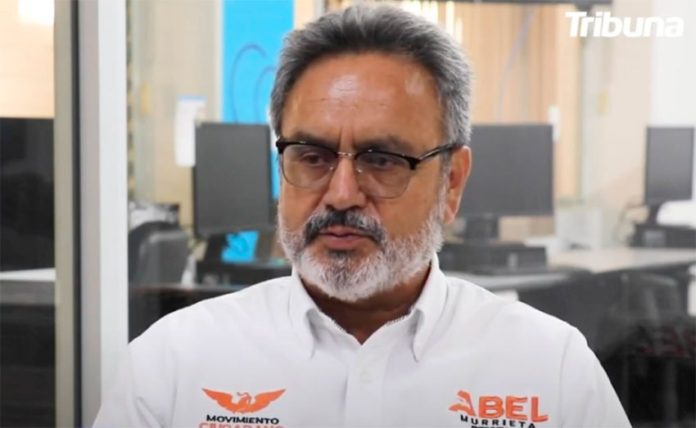
Candidate Abel Murrieta
Candidate Abel Murrieta said he was serious about taking on crime. Hours later he was dead.

It was a sunny afternoon in Ciudad Obregón, a town in northwestern Mexico. Abel Murrieta, running for mayor of the municipality of Cajeme, where the town is located, stood on a busy intersection by a shopping centre, clutching leaflets to canvas for votes in June 6 elections.

A man in a gray shirt and jeans walked up, took out a gun and pumped 10 bullets into the former state attorney general, including two to his head, before crossing the street again and escaping in a waiting car as Murrieta lay on the pavement. Footage from official security cameras aired on television showed leaflets scattered and blood soaking his white shirt.

Murrieta was the 32nd candidate murdered in the run-up to election day, when Mexicans nationwide will elect 500 federal lawmakers, 15 state governors and thousands of mayors and local officials.

Since the election process began last September, 85 politicians have been murdered, including the 32 who had been running for office, according to Etellekt Consultores, which tracks campaign violence. That makes it the second bloodiest election on record, after the presidential vote in 2018.

According to Etellekt, most of the victims were candidates for mayor from parties in opposition to the incumbents in those states. Their deaths have laid bare the deep-rooted ties between organized crime groups and the local officials who protect them.

“If you confront them, you get harassed or killed,” said Rubén Salazar, Etellekt director. “This is Mexican democracy at the local level … No one can run for office without the permission of the mayor and the local crime boss.”

Murrieta appears to have been no exception. In a posthumously released election spot, he proclaimed he was “serious about taking on crime … I’m not afraid.” Hours later he had been shot dead, the apparent aggressor captured on an official street security camera in the state where López Obrador’s former security minister is running for governor.

The political murders have underlined the challenges facing President López Obrador’s “hugs not bullets” strategy against organized crime, his new militarized federal police force and his repeated promises to deliver peace in a country where violence has been soaring for 15 years and there are nearly 100 murders a day.

Violence, which has been spiraling since former president Felipe Calderón launched a catastrophic war on drugs in 2006, is Mexicans’ top electoral concern, dominating many races. A survey by El Financiero newspaper this month found two-thirds of people disagreed with López Obrador’s handling of the problem, with just 18% approving.

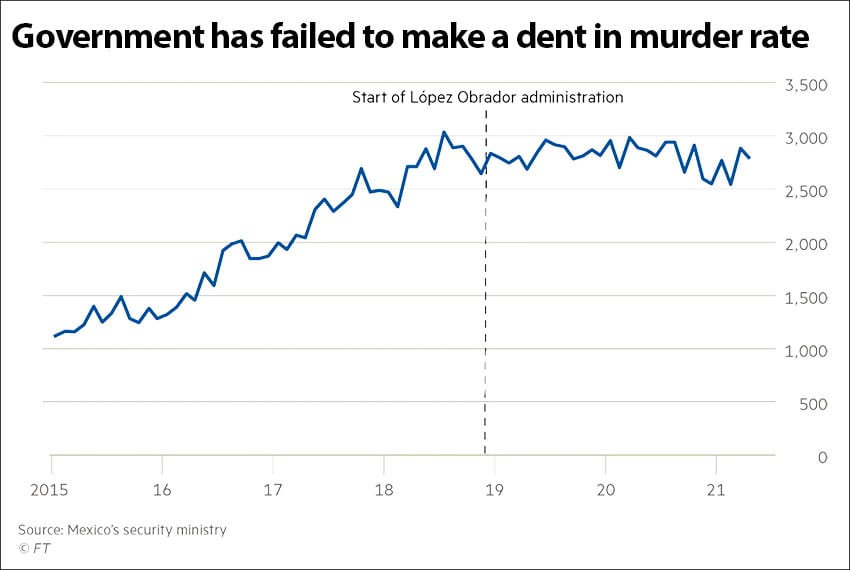
Since 2006, the number of homicides has more than tripled. The government claims it has now contained the rise, reporting a 4% drop in murders the first four months of this year compared with the same period last year.

But in April, there were 2,857 murders, 4% higher than in April 2020, as well as 77 femicides — the murder of women because of their gender — a 13% leap from the same month last year.

Homicides per month since 201
Homicides per month since 2015. financial times

Mexico’s murders hit an all-time high in 2019 with 34,682 homicides and 970 femicides. Last year was little better: 34,554 homicides and 977 femicides. So far this year, there have been 11,277 homicides and 318 femicides.

Ricardo Márquez Blas, a former security official, said that on a dozen occasions since López Obrador’s term began the number of homicides had surpassed 3,000 a month, including femicides, compared with just three in the previous 2012-2018 administration.

López Obrador, who took office in 2018, says he has taken a different tack by addressing the root causes of crime, offering young people jobs and scholarships instead of confronting cartels directly.

But critics say he, like past governments, has relied on the military instead of reforming state and local police forces in a country where officers earn around US $600 a month, and have to buy their own boots.

In a pointed criticism of Mexico’s strategy, former U.S. ambassador Christopher Landau said López Obrador had adopted a “pretty laissez-faire attitude” towards drug cartels despite estimates that they controlled “anywhere from 35 to 40% of the country.”

“He sees the cartels … as his Vietnam, which it has been for some of his predecessors, and so I think … he sees that as a distraction from focusing on his agenda,” he told an online seminar.

That recalled the “pax narca” — a tolerance for cartel activities provided they remained contained — that reigned while the Institutional Revolutionary Party (PRI) ruled Mexico in most of the 20th century.

“The president doesn’t want to take on El Narco,” said Salazar, using the Mexican term for drug cartels.

He said López Obrador, who is widely considered to be seeking to replicate the PRI’s centralized power, “doesn’t understand” that the old cohabitation had been shattered as new parties disrupt cosy criminal partnerships and spark new ones.

“The president doesn’t want to recognize that there’s a very big problem of narco politics in the country that is advancing with gigantic steps,” Salazar said, as politics and crime mix at the local level.

Analysts say the climate of polarization is further inflamed by the president’s daily news conferences, where he delivers a barrage of criticisms against his political opponents and electoral authorities that he claims are biased.

“With all this polarization, far from delivering on his promises of peace, he is giving us a more convulsed country,” said Gema Kloppe-Santamaría, an expert on crime and violence at Loyola University in Chicago.

“López Obrador has polarized this election to the point of virtually declaring war on electoral institutions. My big worry is that what we’re seeing now won’t stop after June 6,” she said.

© 2021 The Financial Times Ltd. All rights reserved. Please do not copy and paste FT articles and redistribute by email or post to the web.

Airlines report increase in business from vaccine tourism

0
Aeromar
Aeromar's flights to Texas have seen seat occupancy rates higher than pre-pandemic.

As Mexicans tired of waiting for a Covid-19 vaccine have been heading to the U.S. to get vaccinated, two airlines are reaping the benefits.

Fly Business has tripled its flights to Texas, a state known for its bountiful vaccine supply and a place where foreigners can get the jab. The airline has increased its schedule from three to nine flights weekly.

“There are many people who have asked for flights to Texas specifically. We have provided these flights… because we want people to get vaccinated and we have also offered a discount,” said Fly Business president Elliot Ross in an interview with the newspaper Milenio. “The priority for businessmen is to get their families vaccinated. … in Mexico that is not so easy, and with a short, two-hour flight, people prefer to get the injection in Texas.”

He added that vaccine tourism currently accounts for 20% of the company’s flights.

Another airline, Aeromar, said its flights to Texas have 80% seat occupancy, a rate that is even higher than it was before the pandemic. Airline director Juan Rosello said that many of those clients are traveling to get their vaccine in Texas.

The Mexican Association of Travel Agencies (AMAV) has also seen a spike in business from vaccine tourism. In the past two weeks, it has sold 120,000 travel packages for Mexicans seeking to be vaccinated, Milenio reported.

At 20,000 pesos (US $1,000), the packages are not within the reach of every Mexican but for those who can afford it, it has proved to be an attractive option. The packages include flights, hotels, transportation and vaccine registration, mainly for destinations in Texas, Arizona or Miami, Florida.

Source: Milenio (sp)

San Miguel scholarships give low-income students the chance to attend college

0
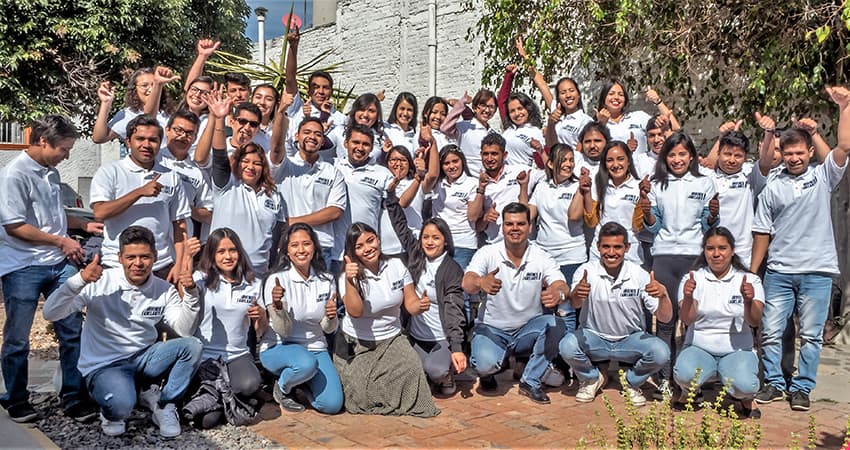
Jovenes Adelante scholarship recipients
Jóvenes Adelante gives promising Mexican students not just money for school but laptops, tutoring and a supportive network during and after college.

It started with a pair of shoes. A boy in San Miguel de Allende, Guanajuato, had received a university scholarship but had no shoes to wear to his classes. So Helen Morris stepped in to help. She bought him the shoes he needed, and the two became close.

With Morris’ support, that boy eventually got a Fulbright Scholarship through Southern Methodist University, where he earned an MBA.

His success inspired Morris and her friends to found Jóvenes Adelante (JA), a scholarship program for low-income students in San Miguel de Allende. Today, more than 200 students have graduated through the program.

Jóvenes Adelante supports students for up to five years, including paying for professional certifications after graduation. In addition to a commitment of 25,000 pesos (US $1,255) per year, students are connected with a mentor, receive a laptop and have access to free counselors for psychological and pedagogical support, English tutors and workshops on professional skills. All this makes it “the most robust and multifaceted scholarship that we are aware of in Mexico,” said Jóvenes Adelante president Don Krim.

After the program, graduates continue to network with other JA alumni and share professional opportunities.

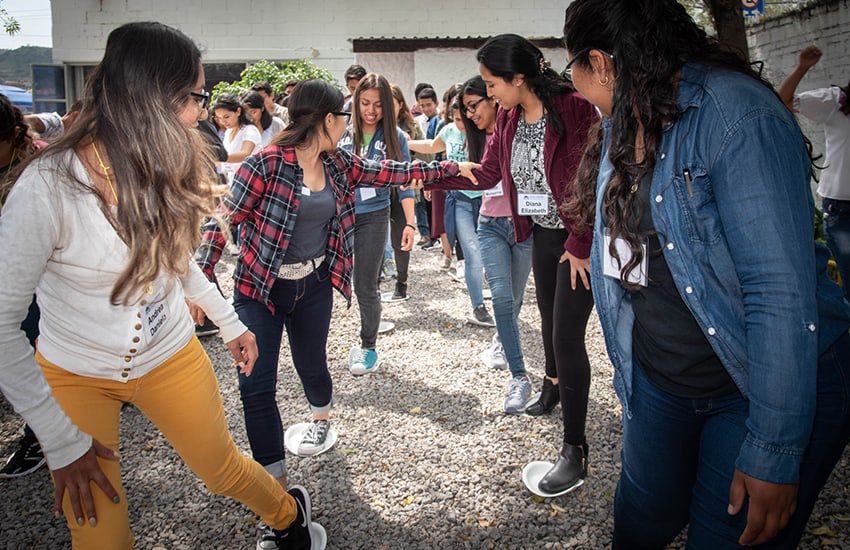
Recipients engage in a bonding exercise during a group meeting designed to foster connections and make students feel part of a community.

“We do not just write a check. We are with the student as a family every step of the way for the full length of their university career,” Krim said. “So long as our students demonstrate a consistent academic performance and drive, we have their backs for five years.”

One graduate, Carla Cadena, was the first in her family to go to college. Now she is the administrative director of a hospice care organization and a project manager for the local Rotary Club.

“It was a totally new scene. I did not have cousins or any family members who could help me get oriented,” Cadena said. “My mentor was a great help to me. She was with me throughout my 4 1/2 years of college … she listened to me and gave advice. It’s good to know someone is listening to what is happening in your life — in academic matters but also for personal and professional issues.”

Having a laptop for her schoolwork was also extremely useful, she added.

Students in the program must achieve a level of English appropriate to their field of study. For some, Krim said, that means conversation partners to help them reach an intermediate level. For others, it involves serious study for the TOEFL English proficiency test with a tutor provided free of charge by JA.

Students are not accepted into the program until a sponsor has committed to support them financially throughout their studies. Each student is assigned a mentor, whom they see at least once a month. The program currently has 105 active students and 96 volunteer mentors, Krim said.

Group of Jóvenes Adelante recipients.
A group of Jóvenes Adelante recipients.

“We try to pair the student with a mentor who has a professional background in the student’s specific field of study … these mentors become the primary, but not exclusive, emotional support to the student,” Krim said, adding that many graduates return to the program as mentors.

High grades are just the start for students seeking the scholarship. They must demonstrate “the seeds of initiative, independence, commitment to learning and continuing education and social and leadership potential that lead to success in the workplace,” Krim said.

The program has an 85% college graduation rate, more than triple the 26% rate for San Miguel de Allende students in general. Krim attributes their success to the multilevel support that the program provides.

Cadena says she’ll always be grateful that Jóvenes Adelante exists.

“They have changed the lives of many students in San Miguel de Allende, including mine,” she said. “The organization always receives you with warmth and a smile. They have created a big family. They give us their confidence, love, attention — and at the same time cultivate values and support us to be more responsible and professional.”

• Jóvenes Adelante relies on an international base of donors in Canada, the U.S., the U.K. and Mexico. Their 2021 sponsorship commitment is US $1,800 per year for five years. They provide tax-deductible receipts for Canadian, U.S. and Mexican donors. To find out more, visit their website.

Mexico News Daily

‘It seems the enemy is in judiciary:’ military chief goes on offensive against judges

0
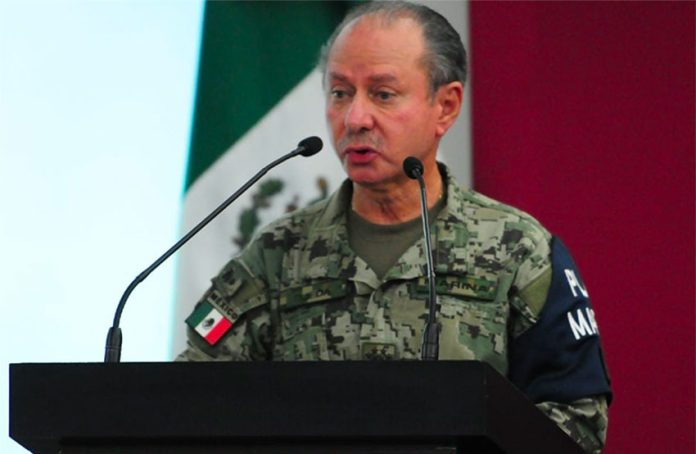
Navy Minister Ojeda
Navy Minister Ojeda: 'We don't have much help from judges and state attorney generals.'

The federal government has launched another attack on the judiciary, triggering a warning from the Americas director of Human Rights Watch (HRW) that “the rule of law is under attack in Mexico.”

Navy chief José Rafael Ojeda took aim at the nation’s judges at President López Obrador’s press conference on Friday, declaring that it seems that the judiciary is the “enemy” of the state in many organized crime cases.

Referring to the importation via Pacific coast ports of precursor chemicals to make synthetic drugs such as fentanyl and methamphetamine, Ojeda said the government is working on a legal reform that would place a greater number of chemicals on the banned list.

The navy minister said the reform must be carefully formulated to ensure that there are no loopholes that could allow judges to free suspected criminals.

“We don’t have much help from judges and [state] Attorney General’s offices [in organized crime cases], we have to close the circle well because if we don’t [the criminals] get away from us,” Ojeda said, underscoring the need to draw up a strong reform and present comprehensive and compelling evidence in cases against drug traffickers.  

There are “many cases” in which judges act in a way that makes it appear they are on the side of the criminals, the navy chief said. 

“It seems that we have an enemy in the judicial power; we have to close the circle well in order to carry out arrests,” and keep criminals in prison, Ojeda said. 

The broadside comes after repeated attacks on the judiciary by López Obrador, who has been angered by rulings against government laws and policies and infrastructure projects such as the new Mexico City airport and the Maya Train. 

Late last month, the president asserted that Supreme Court judges would become accomplices to corruption if they don’t approve a law – backed by him – to extend the term of the court’s chief justice by an additional two years, even though the Mexican constitution restricts the maximum term of a chief justice to four.

López Obrador argues that only Arturo Zaldívar, the court’s chief justice and president of the Federal Judiciary Council, is capable of implementing the government’s laws to overhaul the judicial power, among which are reforms designed to eliminate corruption, nepotism and harassment in the court system.

In addition to pressuring Supreme Court judges to support the extension of the chief justice’s term, the president has recently criticized members of the judiciary for striking down his administration’s energy sector laws.

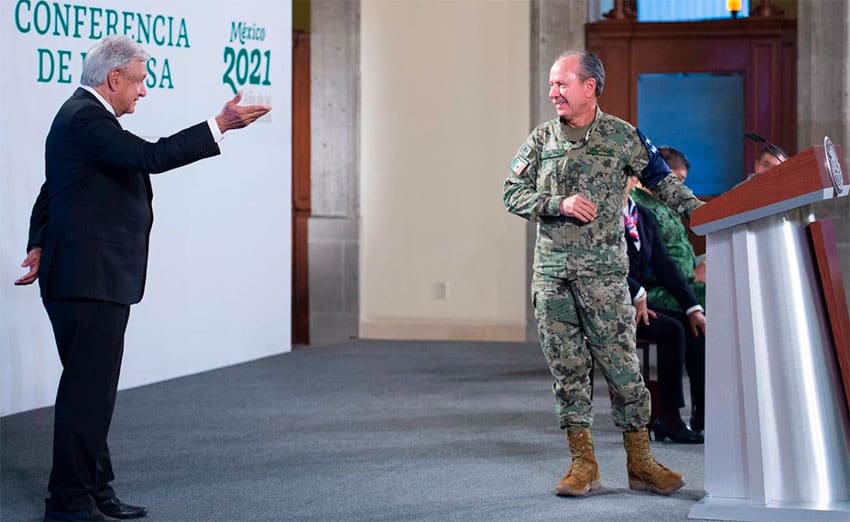
lopez obrador and ojeda
The president has led the attack on the judiciary. Navy Minister Ojeda, right, followed with his own offensive on Friday.

He said in March that judges that hand down rulings against the Electricity Industry Law, which favors the state-owned Federal Electricity Commission over private companies, should be investigated for corruption. López Obrador even wrote to Zaldívar – considered an ally of the president – to ask him to initiate an investigation into Judge Juan Pablo Gómez Fierro, who suspended the electricity law on the grounds that it could harm free competition and cause irreparable damage to the environment.

An investigation into the judge is necessary because there are “people, organizations and companies” that are close to the old political regime, he said March 17.

The president has also threatened to name and shame judges who regularly free criminal suspects, a common occurrence in Mexico due to irregularities such as authorities’ fabrication of details about how a suspect was arrested.

The addition of the navy chief’s voice to the government’s offensive against the judiciary was slammed by Human Rights Watch Americas director José Miguel Vivanco, who was also highly critical of the move to extend Zaldívar’s term.

Ojeda’s declaration that the government has enemies among the nation’s judges is a “symbol of the militarization of Mexico and the degradation of the rule of law” under the presidency of López Obrador, he wrote on Twitter, adding that the situation is “very dangerous.”

Vivanco described the navy minister’s remarks as “outrageous” in another Twitter post.    

“The head of Mexico’s navy says (while standing next to President López Obrador at a press conference) that judges are the ‘enemy.’ This should be a wake-up call. The rule of law is under attack in Mexico,” he wrote. 

Chief Justice Zaldívar also took to Twitter after Ojeda’s appearance at the press conference.

“The role of judges is to defend human rights and the constitution,” he wrote without referring specifically to the navy chief’s remarks. “We will continue guaranteeing their autonomy. An independent judicial power is essential in a democracy.”   

For its part, the National Association of Federal Judicial Power Circuit Magistrates and District Judges issued a statement asserting that federal judges are neither the friends nor enemies of anyone.

Rather, the statement added, “they only obey the constitution and act in defense of people’s human rights.” 

Source: El País (sp), El Universal (sp) 

Dealing with asylum applications will take ‘monumental effort,’ says UN official

0
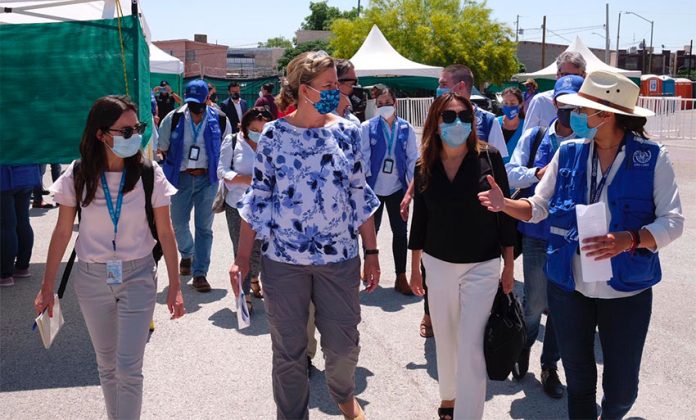
Kelly Clements
The UN's deputy commissioner for refugees, Kelly Clements, during a tour of the northern border area earlier this month.

With an unprecedented number of Central American migrants entering the country and seeking asylum, Mexico needs to strengthen its refugee assistance program, says the UN’s deputy high commissioner for refugees.

Kelly Clements has completed a tour of the northern and southern border areas to evaluate a UN pilot program that seeks to resettle refugees who might otherwise seek asylum in the United States.

In an interview with the newspaper Milenio, Clements said she witnessed “a constant flow of asylum seekers” on the southern border, leading the UN Refugee Agency to open a permanent dialogue with the Mexican government to explore how the international community can help the country adapt to the challenge of being a destination country for asylum seekers.

“I believe that if we expand the capacity to process asylum requests in Mexico, we will avoid people taking desperate, risky journeys to the northern border,” Clements said. “They can be received in Tapachula, Tenosique or Mexico City. It’s a long term project, but it is urgent.”

Mexico is on track to receive a record number of asylum applications this year given the figures recorded so far. Mexico’s refugee agency, Comar, estimates that the total for 2021 could go as high as 90,000, well over the record 70,000 received in 2019.

And that’s on top of the estimated half a million people described as refugees who are already in Mexico, according to the Ministry of the Interior.

Clements said the UN and the Mexican government are looking into ways to deal with the problems in Guatemala, Honduras and El Salvador that lead people to flee, seeking to help the countries resolve their internal crises.

“This will take a monumental, coordinated effort with international cooperation and support from Mexico,” Clements said.

On the northern border, the UN is considering how to deal with the fallout of the United States’ Remain in Mexico program, which led to the creation of camps where refugees live in substandard conditions.

“Mexico finds itself in a complicated position between the United States and the southern countries,” Clements said. “It’s a difficult position and we have worked closely with the United States government on its expectations and on the reconstruction of its asylum system, which was damaged over the last few years.”

Source: Milenio (sp)

April homicides down 3.5%; first 4 months down 4% compared to last year

0
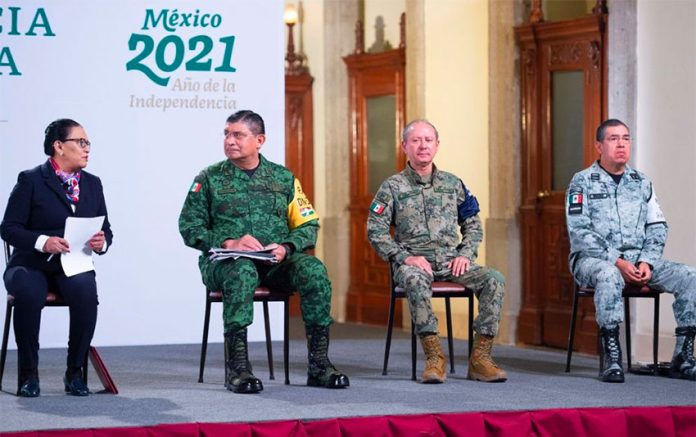
Members of the federal security cabinet at Friday's security briefing during the morning press conference.

Murders declined 3.5% in April compared to the previous month but violence levels still remain very high.

There were 2,857 homicides and 77 femicides last month for a total of 2,934 victims, according to data presented by Security Minister Rosa Icela Rodríguez at the president’s press conference on Friday.

There was an average of 97.8 murders per day in April compared to 98 in March.

Rodríguez highlighted that homicide numbers for the first four months of the year show a 4% decline compared to the same period of 2020.

“During the current administration, the upward trend for intentional homicides has been contained,” she said.

Still, with 11,277 victims between January and April, Mexico is on track to record more than 30,000 murders for a fifth consecutive year.

Rodríguez said that 50.6% of the homicides in the first four months occurred in just six states. Guanajuato, where criminal groups are fighting each other for control of rackets such as fuel theft and extortion, was the most violent state in the period with 1,263 homicide victims.

Baja California ranked second with 1,063 victims followed by Jalisco (882 victims); Michoacán (861); México state (852); and Chihuahua (792).

The security minister said murders have declined in 10 of 15 highly violent “priority” municipalities where the federal government is implementing localized security strategies and rolling out social programs to try to combat the violence.

The municipalities that recorded a combined 18% reduction in homicides were Tijuana, Ciudad Juárez, Celaya, Culiacán, Morelia, Benito Juárez, San Pedro Tlaquepaque, Iztapalapa, Irapuato and Salamanca.

Four of those – Celaya, Tijuana, Ciudad Juárez and Irapuato – were ranked among the five most violent cities in the world in 2020, according to a study by the Citizens Council for Public Security and Criminal Justice, a Mexican nongovernmental organization.

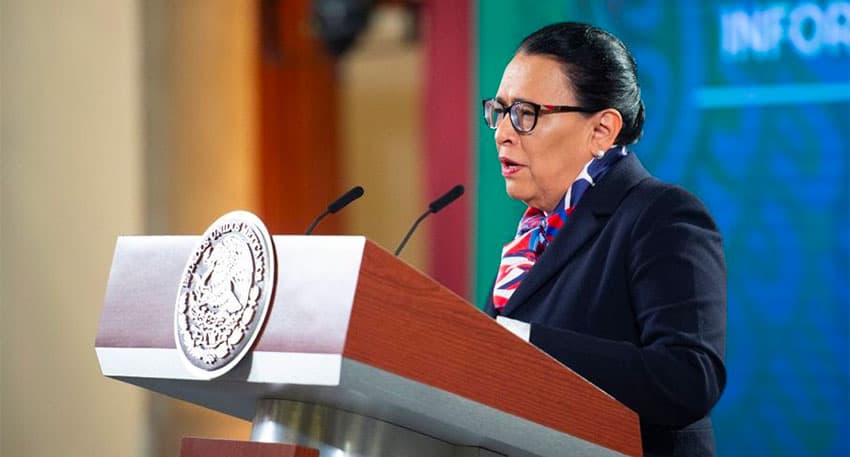
Security Minister Rosa Icela Rodríguez
Security Minister Rosa Icela Rodríguez: ‘The upward trend for intentional homicides has been contained.’

Rodríguez conceded that the government had failed to stem violence in the other five priority municipalities: León, Cajeme (Ciudad Obregón), Guadalajara, Acapulco and Chihuahua city. They recorded a combined 17% increase in homicides between January and April.

Cases of femicide – the murder of women and girls on account of their gender – decreased 0.3% in the first four months of the year to 319, one fewer than in the same period of 2020. Rodríguez said that cases of kidnapping declined 34.4%.

Although the security minister asserted that the government has contained the high levels of violence, President López Obrador acknowledged that homicide numbers have “dropped very little.”

He also recognized that some cases of crimes such as kidnapping and robbery are not reported to authorities and therefore are not included in official statistics. People sometimes negotiate with kidnappers for the release of their family members without making contact with authorities, López Obrador said.

Boxing champion Canelo Álvarez recently revealed that he had done just that. In an interview broadcast earlier this month, he said that he personally negotiated the successful release of his kidnapped brother in 2018, explaining that he couldn’t ask the police for help because he suspected they were involved in the abduction.

Despite acknowledging that some cases of kidnapping go unreported, López Obrador boasted that the crime has declined 65% since he took office in late 2018.

“I believe this is noteworthy because there was a time in which kidnapping was a crime that caused a lot of damage everywhere,” he said.

Source: El Universal (sp), EFE (sp) 

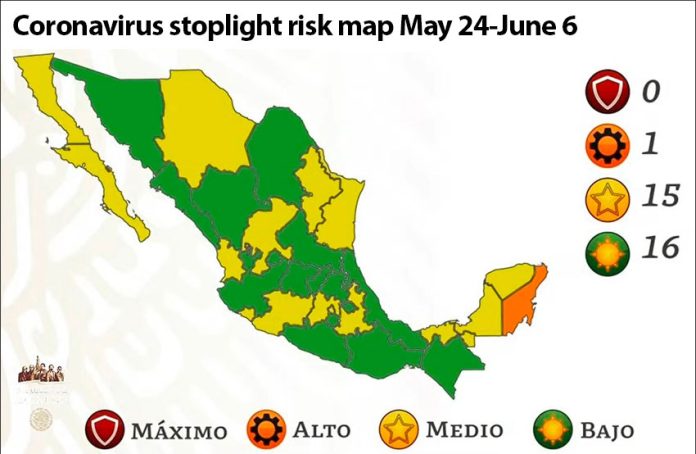
16 green states, 15 yellow, 1 orange on the new coronavirus stoplight map

0
The new stoplight map that takes effect Monday.

Almost a year ago, the federal government presented its first coronavirus stoplight map to guide the reopening of the country after a two-month-long national social distancing initiative and the suspension of all nonessential economic activities.

Then, just one of Mexico’s 32 states – Zacatecas – was painted high risk orange.

On the latest map presented by the Health Ministry on Friday, once again, just one state is painted orange.

But in contrast with the map published on May 29, 2020, on which all of the other 31 states were maximum risk red, the new map, which will be in force from May 24 to June 6, is completely devoid of that undesirable color.

Exactly half of the 32 states will be low risk green for the next two weeks, 15 will be medium risk yellow and Quintana Roo – the Caribbean coast state that is home to resort cities such as Cancún and Playa del Carmen – will be on its own as the sole orange light state in the country.

The new map is reflective of a much-improved coronavirus situation a year after Mexico went through the peak of the first wave of the pandemic and four months after it emerged from its second – and worst – wave, which began late last year and extended into the first month of 2021.

Case numbers, deaths and hospitalizations of Covid patients have all declined during successive months this year and Mexico’s vaccination program continues to gather pace with more than 25.6 million shots now given to health workers, seniors, teachers, pregnant women and people aged 50-59.

Some medical experts believe that high levels of coronavirus immunity in Mexico through infection and a high percentage of inoculated adults in the United States, where about 280 million shots have been administered, have helped drive down new infections here.

The 16 green light states during the upcoming fortnight, an increase of two compared to the map currently in effect, will be Chiapas, Coahuila, Veracruz, Jalisco, Guanajuato, Sonora, Sinaloa, Durango, San Luis Potosí, Oaxaca, Tlaxcala, Aguascalientes  Querétaro, Hidalgo, Guerrero and Morelos.

The first 11 states are already green while the last five will switch from yellow.

The 15 yellow light states will be Baja California, Zacatecas, Colima, Michoacán, Puebla, Tamaulipas, México state, Yucatán, Baja California Sur, Mexico City,  Nuevo León, Nayarit, Campeche, Tabasco and Chihuahua.

The first 10 states are already yellow, Nuevo León, Nayarit and Campeche will switch from green and Tabasco and Chihuahua will change from orange.

Each stoplight color, determined by the Health Ministry using 10 different indicators including case numbers and hospital occupancy levels, is accompanied by recommended restrictions to slow the spread of the virus but it is ultimately up to state governments to decide on their own restrictions.

The Health Ministry also reported on Friday that Mexico’s accumulated case tally had increased by 2,604 to just over 2.39 million. The official Covid-19 death toll rose by 176 to 221,256, the fourth highest total in the world after the United States, Brazil and India.

The Health Ministry estimates that there are currently just over 18,000 active cases in Mexico, a significant decrease compared to January when the figure exceeded 100,000.

Mexico News Daily 

Half of Jalisco’s missing persons remain unidentified in morgues

0
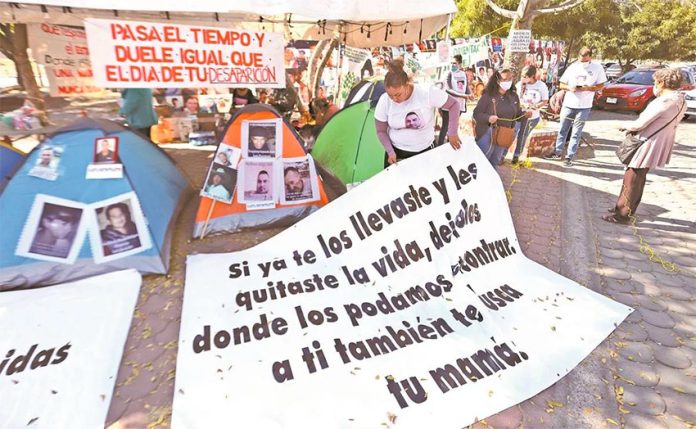
Volunteers at an information booth guide families through the bureaucracy at Jalisco forensic institute.
Volunteers at an information booth guide families through the bureaucracy of finding their loved ones.

In 2018, some residents of Guadalajara registered complaints about a smelly, refrigerated trailer full of unidentified bodies that had been parked in various places in the city. The trailer was a stop-gap solution to overflowing morgues at the Jalisco Institute of Forensic Sciences (IJCF).

Now, three years later, the crisis continues with 6,249 unidentified bodies currently being held by the institute, according to a new report by the NGO Justice Center for Peace and Development. Some 2,500 of those bodies entered the morgues since the current state administration took office in December 2018.

The total is nearly half of the 12,819 people who have been reported missing in Jalisco, according to the National Registry of Missing Persons. But who they are remains unknown as the bodies are awaiting DNA analysis.

The family of Paulino Monroy became very familiar with the IJCF system as they searched for the man who disappeared May 20, 2020 on the highway to Chapala. The family visited the IJCF offices every weekend for eight months, looking through the images in the registry of unidentified bodies.

The registry contains 2,265 entries, only a fraction of the missing. In January, after examining photo after photo of corpses, they recognized in a photo of a body found in a hidden grave in the municipality of El Salto.

But the body has not been released to the family despite identification by numerous relatives, due to inconclusive DNA testing results.

“They tell us there is a liquid in the body that prevented a comparison,” Monroy’s sister told the newspaper El Universal.

A collective of families of missing persons has documented hundreds of cases similar to that of the Monroy family. Since last October, Fundej has manned a booth outside the IJCF offices in Guadalajara to offer guidance to the many families who come to brave the bureaucracy and seek lost loved ones.

One of the Fundej volunteers is Ana María, a mother who has been looking for her son for more than a year. She told El Universal that every week, roughly 100 families come to look for a missing person. Finding the body is only the first step; getting it returned to the family is another battle.

“There are not enough staff, nor anthropologists, nor geneticists. The bodies can stay there for years,” Ana María said.

The IJCF has 117 people working on body identification, but not all have the necessary training for the job, according to the report by the Justice Center NGO.

“A crucial element in understanding the crisis is the lack of coordination between authorities in charge of the processes of finding bodies, storage, identification and burying the unidentified,” the report states, adding that the number of experts is insufficient for the number of bodies.

After images surfaced of bodies being inappropriately stored, on the floor and without refrigeration, the state government launched an investigation, saying that the responsible parties would be sanctioned.

IJCF director Gustavo Quezada, meanwhile, said that many staff had stopped working due to the pandemic, causing delays.

Source: El Universal (sp)