Home Blog Page 1245

Aguascalientes, Guerrero to switch to green on coronavirus map

0
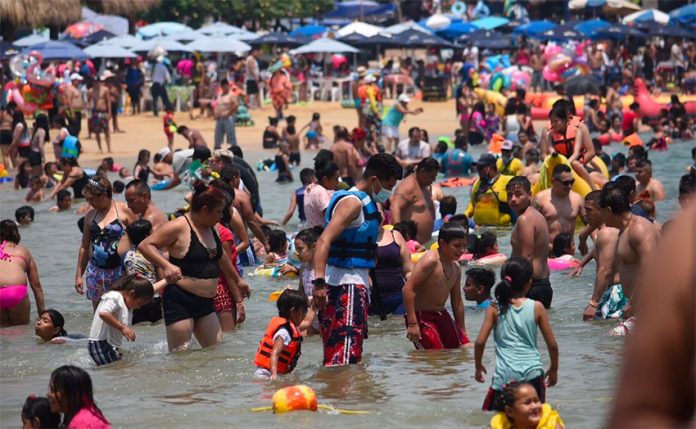
A crowded beach in Acapulco in early April.

Aguascalientes and Guerrero will switch to low risk green on the federal stoplight map on Monday, according to their respective governors.

Both states are medium risk yellow on the map currently in force. The federal Health Ministry will present a new map for the two-week period between May 24 and June 6 at Friday night’s coronavirus press briefing.

Martín Orozco of Aguascalientes said the switch to green will pave the way for the reopening of schools. Primary schools are slated to reopen on June 6 and middle and high schools could offer in-person classes starting June 13, the governor said.

Orozco said it will be up to parents to decide whether they want their children to return to classes. He stressed that schools will have to follow strict protocols to prevent the spread of the virus.

Schools across Mexico closed in March 2020 due to the pandemic, and with the exception of some rural schools in Campeche, remain shut. Students switched to online and television learning, which has been especially challenging in parts of the country where internet connectivity and TV reception is unreliable.

Aguascalientes, one of Mexico’s smallest states, has recorded more than 26,000 confirmed coronavirus cases and 2,460 Covid-19 deaths, according to federal data. It has been yellow on the stoplight map since early March.

Governor Héctor Astudillo announced Friday that Guerrero will also switch to green on Monday but stressed that the risk downgrade doesn’t mean the pandemic is over.

“The pandemic continues, it exists. That’s why we have to take care and we have to get vaccinated,” he said.

“… The green light doesn’t mean that we can all go out and party, … that we can go to work and walk around without face masks; we have to maintain the preventative measures.”

Astudillo noted that the pandemic has caused severe economic damage to the Pacific coast state but acknowledged that the loss of human life has been even more painful.

“We’ve had ups and downs, … the two national peaks [of the pandemic] reached us; we had 35 to 36 deaths a day during the first [peak] between May and June last year. The second came in January and February, during which we had up to 26 deaths a day,” he said.

The governor said Guerrero is now recording an average of seven Covid deaths per day and the hospital occupancy rate is not above 20% in the various regions of the state.

Astudillo also said that the switch to green will pave the way for the reopening of schools but unlike Orozco, he didn’t offer any dates for students to return to classrooms.

Guerrero, which was maximum risk red on the stoplight map less than three months ago, has recorded more than 40,000 confirmed cases since the start of the pandemic and 4,295 Covid-19 deaths.

Mexico City, Mexico’s coronavirus epicenter since the start of the pandemic, continues to lead the country for cases and deaths with more than 652,000 of the former and 42,661 of the latter. The capital switched to yellow at the start of last week and will remain that color next week, the Mexico City government said Friday.

The national tally of confirmed cases rose to 2.39 million on Thursday with 2,628 new cases reported while the official death toll rose by 230 to 221,080, a total considered a vast undercount.

As of Thursday night, just under 25 million Covid-19 vaccine doses had been administered, a figure equivalent to 20 shots per 100 people.

Source: Milenio (sp) 
Foreign investment breaks a record but only a small portion is new money

0
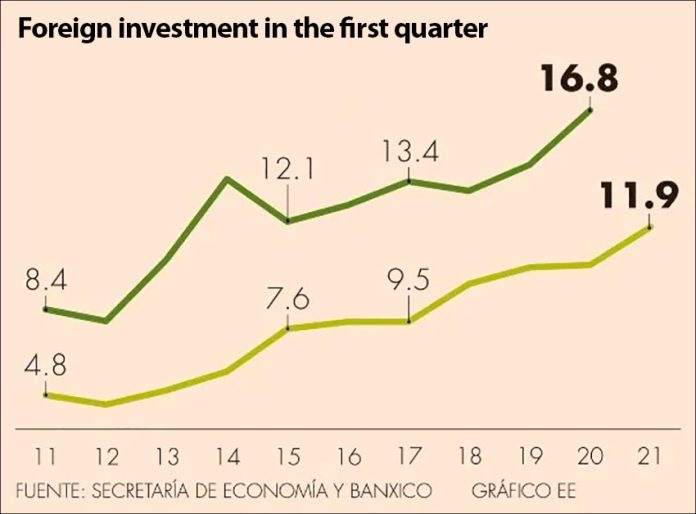
Foreign investment in the first quarter since 2011
Foreign investment in the first quarter since 2011, in millions of dollars. In light green are preliminary figures; final numbers are in dark green. el economista

Foreign direct investment (FDI) reached a record high in the first quarter of 2021, preliminary data shows, but less than 20% of the money that flowed into Mexico was destined for new investment.

The Economy Ministry (SE) reported Thursday that FDI was worth US $11.86 billion between January and March, a 14.8% increase compared to the first quarter of 2020, for which preliminary data showed that investment totaled $10.33 billion.

The preliminary data FDI figure for the first quarter of this year is the highest since record keeping began in 1999. It will almost certainly be revised upward once companies have formally reported all foreign investment in the period to the SE.

But there is no guarantee that the preliminary data FDI record will translate into a record figure.

The revised FDI figure for the first quarter of last year – which coincided with the beginning of the coronavirus pandemic when the global economy had begun to contract but had not yet gone into free fall – was $16.75 billion, a 62% increase compared to preliminary data.

Achieving a similar increase this year could be difficult given that the global economy remained significantly affected by the pandemic in the first quarter.

The 14.8% uptick based on preliminary numbers is undoubtedly good news for the Mexican economy but the makeup of the $11.86 billion figure provides less cause for celebration. Data showed that 59% of FDI in the first quarter was the result of reinvestment of profits and 22% was movement of funds between companies. Only 19% of first quarter FDI represented new investment, a 3% decline compared to the same period of 2020.

Almost half of all FDI – 47% – went to Mexico’s manufacturing sector, while 15% went to the finance and insurance industry and 14% went to mining. The energy and hotel/accommodation sectors only attracted 3% each of the total. The former sector has been affected by the federal government’s move to overhaul it to favor state-owned energy companies while the latter remains affected by the tourism downturn.

The United States was the biggest investor in Mexico during the first quarter, with 42.5% of FDI coming from that country. Spain was the second largest source with 12.1% followed by Luxembourg (8.2%); United Kingdom (5.5%); and Canada (4.8%).

Carlos Serrano, chief economist at BBVA México, warned that the FDI figures for the first quarter are not as “extraordinary” as they seem because, among other reasons, they “don’t reflect an appetite for new investment.”

Source: El País (sp) 

AMLO to nominate Bank of México governor who ‘favors moral economy’

0
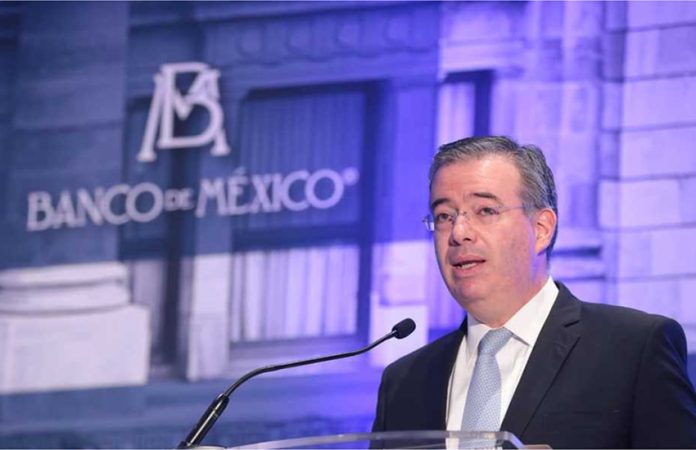
Banco de Mexico Governor Alejandro Díaz de León
Bank of México Governor Alejandro Díaz de León won't be serving another term, says President López Obrador.

President López Obrador said Friday that he will replace the current central bank governor with an economist who supports a “moral economy” — an economy in which the well-being of everyone is prioritized over the wealth of the few.

Speaking at his regular news conference, López Obrador said he won’t nominate current Bank of México Governor Alejandro Díaz de León for a second term after it concludes at the end of November.

López Obrador, a fierce critic of the neoliberal economic policies he says were implemented by successive governments during the 36 years preceding his arrival in the National Palace, said he would instead nominate an economist with “a lot of prestige” who is better attuned to Mexico’s social needs.

The new governor of the central bank (also known as Banxico), will be “an economist with a social dimension, one who is in favor of a moral economy,” the president told reporters.

López Obrador didn’t say who he had in mind for the job. His nominee would have to be ratified by the Senate, in which the ruling Morena party and its allies have a strong majority.

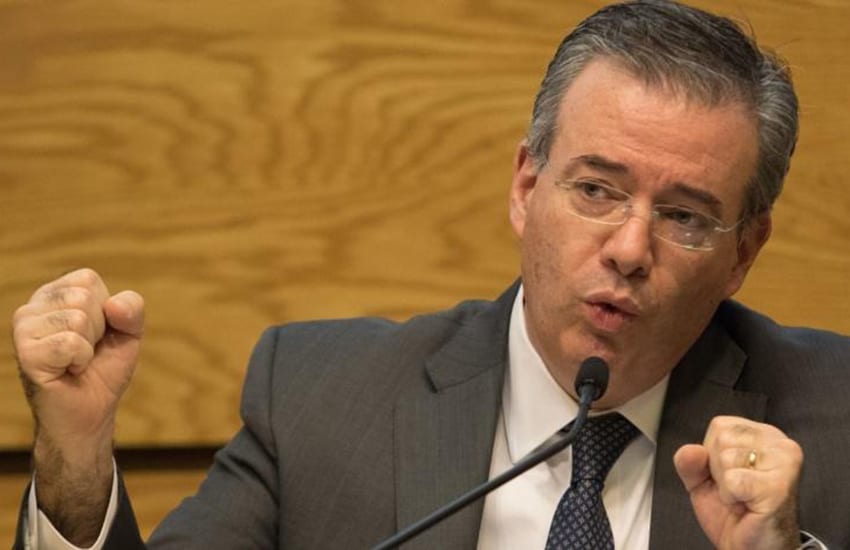
Bank of Mexico governor Alejandro Díaz de León
Before Banxico’s most recent clash with the ruling party, Díaz opposed a Morena-sponsored reform in which the bank would buy other banks’ surplus foreign cash.

The president’s decision not to extend the governor’s term for another four years could open up “a period of uncertainty for the traditionally conservative monetary authority,” the news agency Bloomberg said.

It said the president’s confirmation that he won’t renew Díaz’s term was expected but nevertheless may cause uncertainty for investors until he names a successor. López Obrador has already appointed three members to the bank’s five-person board and now, “by saying that the next governor would be focused on social issues, the president suggests he wants to shift the approach of the bank’s leadership,” Bloomberg said.

López Obrador this week expressed dissatisfaction with a decision of the Banxico board not to turn over a foreign exchange surplus to the Finance Ministry.

On Thursday he directed his criticism at Díaz, charging that the governor has an affinity with members of the previous federal government, which did receive bank profits. He claimed that the central bank looks unfavorably upon his administration but conceded that its autonomy must be respected.

Gerardo Esquivel, a central bank board member appointed by López Obrador, said Banxico profits were needed to cover other expenses and denied that the decision not to transfer a surplus to the government was politically motivated.

While López Obrador said he respects the central bank’s autonomy, economist Enrique Quintana contended that it was nevertheless concerning that “one of the anchors of stability in Mexico” is being questioned by the president.

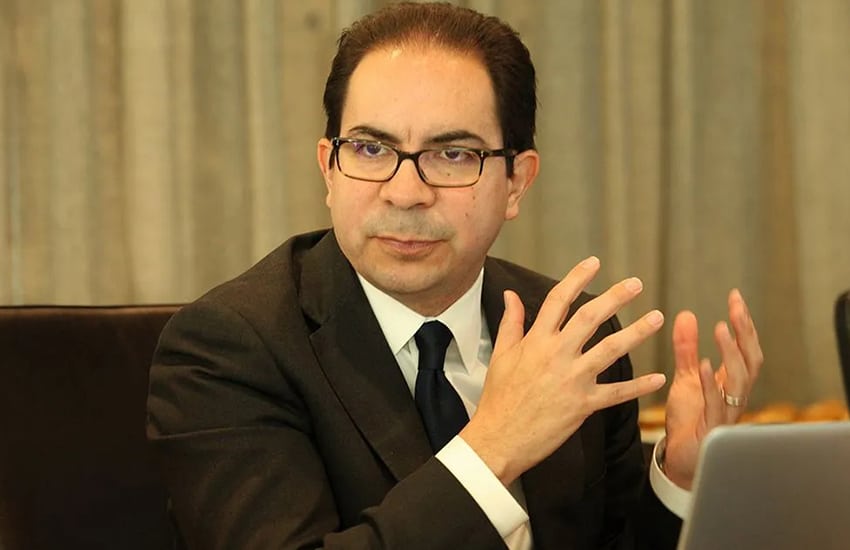
Bank of America economist Carlos Capistran
Bank of America economist Carlos Capistran said Lopez Obrador’s announcement implies that Banxico will likely tolerate more inflation.

Writing in the newspaper El Financiero, Quintana said López Obrador has made “impeccable” and “unquestionable” appointments to the central bank board but suggested the president could now seek to appoint a governor who is open to accommodating his desire for the bank to serve his government ahead of the country.

“The issue is delicate because the financial stability that exists in Mexico is based on the certainty that an autonomous central bank offers,” he wrote.

Quintana wrote that López Obrador has shown himself to be pragmatic with regard to central bank appointments but added that it can’t be ruled out that the president’s ideological beliefs will win out and he will appoint a governor who is sympathetic to his views.

Carlos Capistran, a Bank of America economist, said López Obrador’s announcement implies that the central bank will likely tolerate more inflation in the months and years ahead.

It “gives support to the side of Banxico’s board that worries more about growth than inflation and anticipates a governor that also puts more weight on growth and less weight on inflation than Díaz de Leon, potentially much less weight to inflation,” Capistran said.

Quintana said that if Morena wins a two-thirds majority in the Chamber of Deputies, it could introduce constitutional reforms to decrease the central bank’s autonomy. Some members of the federal government see the bank as “a kind of temple of neoliberalism,” he wrote without naming any names.

“For the financial health of everyone, of the 126 million Mexicans, hopefully common sense prevails,” Quintana wrote.

Although Díaz de León hasn’t won the admiration of the president he is highly regarded in international financial circles. He was named central bank governor of the year in 2020 by the financial publication Central Banking. It was one of several international awards he has won since becoming governor.

Source: Bloomberg (en), El Financiero (sp) 

Couple accuse police of assault causing pregnant woman to lose baby

0
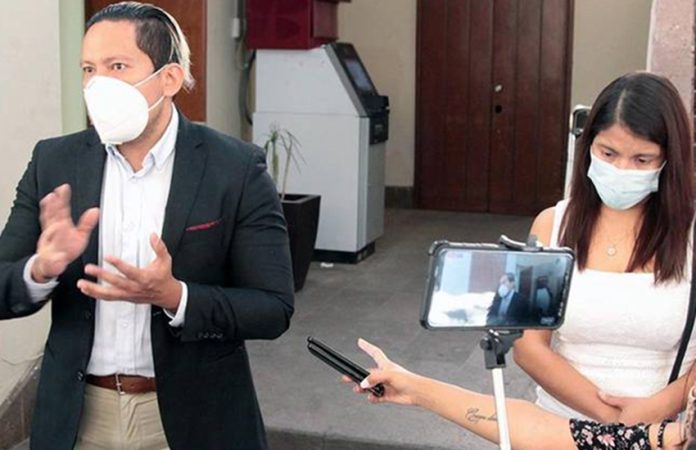
Víctor Villegas and Brenda Guzmán
Víctor Villegas and Brenda Guzmán allege that San Luis Potosí officers assaulted them and caused Guzmán to miscarry.

A San Luis Potosí couple have accused state police of an unwarranted assault that caused the woman to lose her unborn baby.

According to the news website Infobae, police arrived outside the San Luis Potosí city home of Víctor Villegas and Brenda Guzmán on May 1 because a neighbor complained that a vehicle was blocking access to his house.

Officers from the state police metropolitan force responded to the call and are alleged to have physically assaulted the couple, both of whom are doctors.

Infobae reported that Villegas and Guzmán were initially involved in an argument with police over the improperly parked car because the officers wanted to impound it due to registration irregularities.

The couple were involved in a scuffle with the officers when the police indicated that they were going to arrest them. Guzmán says she suffered injuries inflicted by a policewoman that caused her to lose her baby hours later. She was allegedly yanked and hit in the abdomen by the officer.

Villegas and Guzmán met on Thursday with Edgardo Hernández Contreras, a state deputy and president of the public security committee of the state Congress.

Due to what they said was the indifference of authorities to what happened to them, the couple sought the assistance of the committee. Villegas and Guzmán, who have filed a complaint with the state Attorney General’s Office (FGE), said they were the victims of police abuse and demanded that the officers responsible be held to account.

“We have no way of demanding that the life of our child be given back to us — it’s impossible — but justice should at least be served, and hopefully this won’t happen to anyone else,” Villegas said.

The state Public Security Ministry (SSPE) told Infobae that five officers involved in the incident — three men and two women — currently remain at their jobs. The FGE is investigating and will determine whether the officers have a case to answer, the SSPE said.

The Attorney General’s Office said Thursday that its investigation was 80% complete and that it expected it would be finalized in the coming days.

Hernández, the state deputy, said police committed “shocking” and “unforgivable” acts of violence that resulted in a tragedy for both Guzmán and Villegas. He attributed the incident to a lack of police training.

The lawmaker pledged to support the couple in their fight for justice, asserting that it’s “necessary to continue working to avoid these kinds of police abuse.”

Police brutality is a problem in many parts of Mexico. Two high-profile examples include the case of a Salvadoran woman who died after a municipal officer knelt on her back in Tulum, Quintana Roo, in March and the death of a man in Ixtlahuacán de los Membrillos, Jalisco, last June after he was allegedly beaten by municipal police after being arrested for not wearing a face mask.

Source: El Sol de San Luis (sp), Infobae (sp) 

Promised electric plant for Baja excluded from list of call for tenders

0
cfe

The Federal Electricity Commission (CFE) recently published a call for tenders to build five electrical generation plants around the country, but with one notable omission. A plant for Baja California Sur was not included.

In March, the CFE said it would publish a call for tenders for a combined cycle plant in the state, with construction to start in 2021. Yet in April it published calls for tenders for five new plants as part of its business plan for 2021 to 2025 but made no mention of Baja California Sur.

It turns out that the business plan for that period now calls for the new plant to begin operating in 2024.

President López Obrador said during a visit to the state in August last year that a new plant would be build “in the short term” and end the power blackouts.

Meanwhile, the blackouts continue due to what the CFE has called “technical failures” and “deficits in energy generation.” Similar reasons were cited for blackouts in the summer of 2019.

The outages have come as summer temperatures begin to rise, creating more demand for electricity as people turn on their air conditioners.

“The blackouts started in May, a situation that will make us more vulnerable to energy shortages in the month of August, when temperatures peak and a fan or even air conditioner are basic necessities in any Baja California home,” said Senator Audelia Villarreal, who had questioned the new plant’s absence in the call for tenders.

She called on the CFE to resolve the energy shortages, and asked that it CFE provide more information on the cause of the energy shortage. She explained that the exclusion of her state from the call for tenders was a grave setback.

Sources: Diario el Independiente (sp), BCS Noticias (sp)

Criminal gangs seek to control elections in México state municipalities

0
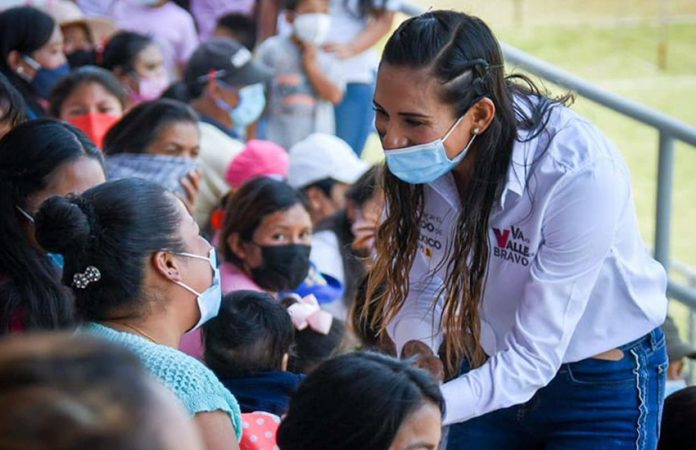
Valle Bravo, México state, mayoral candidate Zudikey Rodríguez
Valle de Bravo candidate Zudikey Rodríguez was kidnapped and told to drop out of the June 6 election. She hasn't campaigned since.

Criminal groups are threatening, installing and even kidnapping political candidates in México state as they seek favorable conditions to operate under after the June 6 elections.

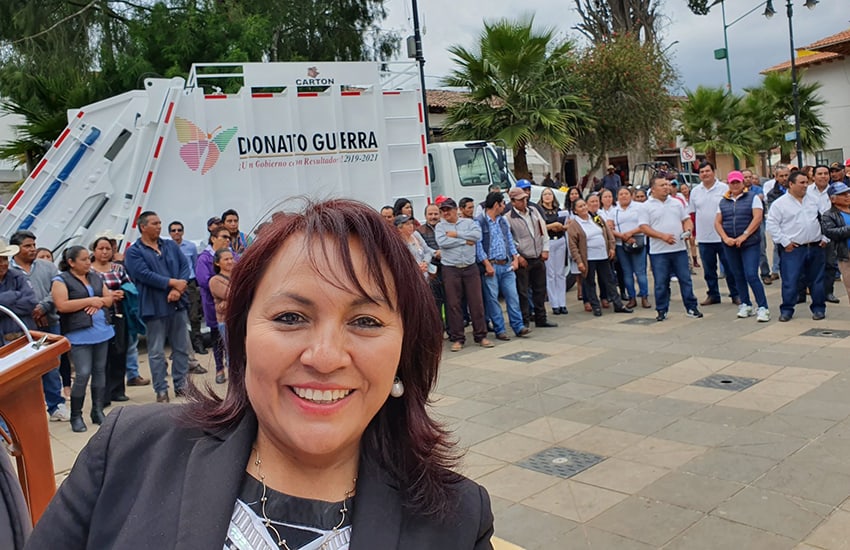
The newspaper Reforma spoke with local leaders of several political parties, who revealed that threats have been made against their candidates in Valle de Bravo, Donato Guerra, Ixtapan de la Sal, Tejupilco, Temascaltepec and Sultepec, all municipalities in southern México state, where there is a strong criminal presence.

In Donato Guerra, which borders Michoacán, criminal groups blocked Democratic Revolution Party (PRD) Mayor Eliza Ojeda from seeking reelection, Reforma reported. They also prevented her husband, Tomás Octaviano Félix, from contesting the mayoral election.

Criminal groups demanded that Carmen Albarrán be installed as the mayoral candidate for a coalition made up of the PRD, the Institutional Revolutionary Party (PRI) and the National Action Party (PAN).

Those three parties formed an alliance in December to increase their chances of beating Morena party candidates in many municipalities and federal and state electoral districts across Mexico.

Donata Guerra, México state, Mayor Eliza Ojeda
According to the newspaper Reforma, organized crime prevented Donata Guerra Mayor Eliza Ojeda (seen here in 2019) from seeking reelection on June 6. From Twitter

In Sultepec, which borders Guerrero, coalition candidate Luisa Martínez González has received threats from organized crime, Reforma said. The PRD has reported the threats to México state electoral authorities but the state government has not publicly commented on organized crime’s intervention in the electoral process.

In Temascaltepec, criminal groups also allegedly “imposed” the Morena party candidate for mayor, and in Tejupilco, part of México state’s Tierra Caliente region, PRI-PAN-PRD candidate Rigoberto López has received threats.

In Valle de Bravo, a popular tourist town and weekend destination for Mexico City residents, organized crime took an even more hands-on approach this week.

Zudikey Rodríguez, mayoral candidate for the PRI-PAN-PRD coalition, was kidnapped on Monday while she was campaigning at the Velo de Novia waterfall in Avándaro, a nearby town. The former sprinter and hurdler who competed at the 2008 Olympic Games was allegedly abducted by members of the Familia Michoacana cartel.

According to witness accounts cited by noted political columnist Raymundo Riva Palacio in a piece published by the news website Eje Central on Thursday, Rodríguez was approached by two people and subsequently forced into a vehicle. Riva wrote that the candidate was driven 64 kilometers to Tejupilco, where a “person soaked in alcohol surrounded by an armed group” told her: “’Look, Zudy, they’ve ordered me to kill you, but I’m going to spare your life. I just ask you to hide and drop out of the campaign.’”

Rodríguez asked whether she should leave the country and the person — who Riva said has been identified as Familia Michoacana leader Johnny Hurtado Olascoaga, also known as “El Pez” (The Fish) — reiterated that she should go into hiding and withdraw her candidacy for mayor.

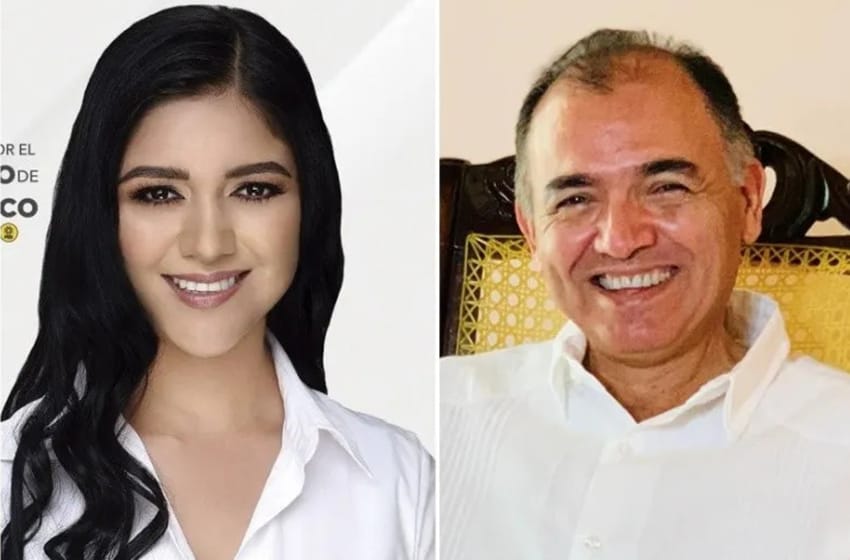
Carmen Albarrán and Rigoberto López
In México state, criminal groups allegedly demanded that Carmen Albarrán be installed as a mayoral candidate in Donata Guerra and threatened Tejupilco mayoral candidate Rigoberto López.

Hurtado and his brother José Alfredo lead a faction of the Familia Michoacana that has operated for more than a decade in the Tierra Caliente region of Guerrero and which controls the “criminal corridor” between Arcelia, Guerrero, and Valle de Bravo, Riva wrote. He said the criminal cell is currently in an alliance with the Jalisco New Generation Cartel, generally considered Mexico’s most powerful and violent criminal organization.

“’El Pez’ could have killed Rodríguez without any problem, but it’s clear that wasn’t his final intention. They [the Familia Michoacana] wanted to intimidate her. They wanted her to abandon her electoral campaign without violence and without attracting national attention. So far, it has to be said, they achieved it: after the same criminals who abducted her at the Velo de Novia [waterfall] returned her to Avándaro, Rodríguez went into hiding,” Riva wrote.

The former candidate, who hadn’t been seen in public since her abduction, appeared in a video on Thursday in which she said that she was well. She thanked her team for their “unconditional support” but didn’t speak about her political campaign or ask citizens to vote for her on June 6.

Riva wrote that the motivation for the Familia Michoacana’s actions was to help the Morena party mayoral candidate, Michelle Núñez.

“This hadn’t happened before. The Olascoaga brothers had injected resources into electoral campaigns, according to people with knowledge of the political life in the south of México state, to gain protection, install their people in the municipal ministries of Security and Public Works or to pressure and extort council members. … What is unprecedented is that they bet on a specific candidate,” he wrote.

At the same time as Rodríguez was kidnapped, Riva wrote, federal customs chief Horacio Duarte — in concert “deliberately or coincidentally” with the criminals — arrived unannounced at the offices of the current PRI mayor of Valle de Bravo, Mauricio Osorio, to warn him to withdraw his support for the PRI-PAN-PRD candidate.

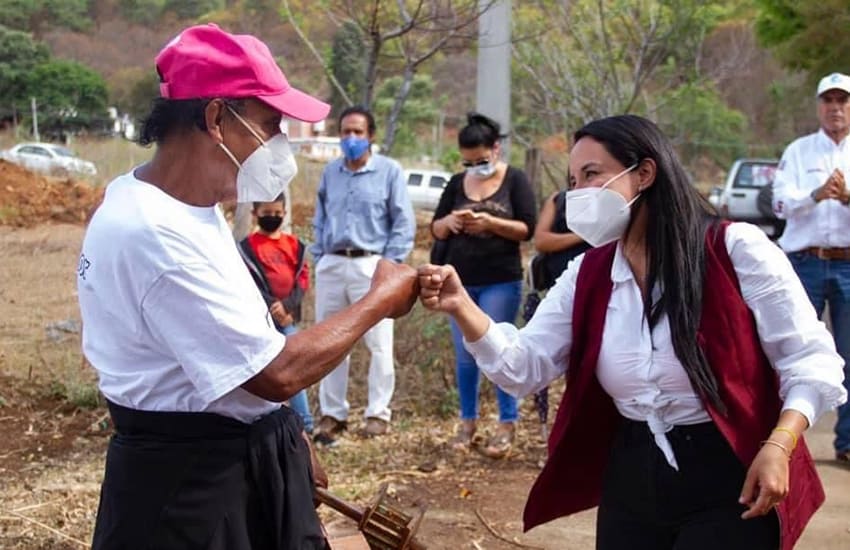
Morena party candidate in Valle Bravo, México state, Michelle Nuñez
Morena party candidate Michelle Nuñez campaigning in April in Valle de Bravo.

Duarte, who is apparently close to Núñez, allegedly threatened to have the federal tax agency, SAT, of which customs is part, investigate the mayor if he didn’t do as he was told.

Citing information provided by people who personally know Rodríguez, Riva also wrote that people identified as members of Morena are watching her house to see who is visiting her. The aim, he said, is to infer whether the former athlete still plans to contest the June 6 election.

“… The state can’t allow actions of this nature in which a criminal group meddles in an electoral process where — if their apparent candidate is successful — they will implant criminal power into public power,” the columnist wrote.

He urged the federal government to investigate Rodríguez’s abduction and the actions of Duarte to determine “his alleged responsibility in the criminal events” of this week.

“The symptoms shown by the microcosm of Valle de Bravo are clearly those of narco-politics,” Riva wrote, adding that given the increasing number of examples of criminal involvement in politics, the federal government cannot continue to stand on the margins and not act against “this accelerated deterioration of public life.”

Source: Reforma (sp), Eje Central (sp) 

Tijuana shelter to house people who have fled violence in Aguililla, Michoacán

0
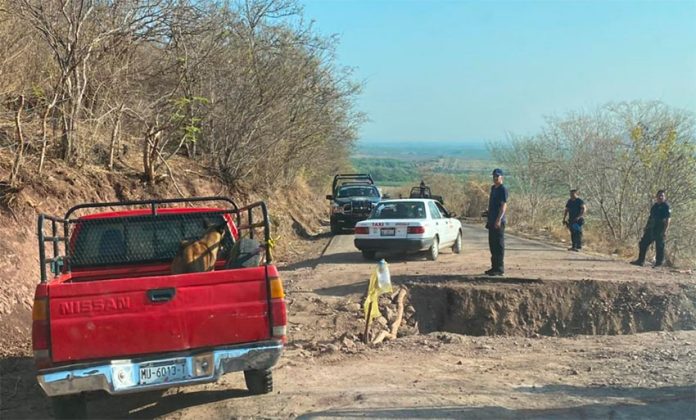
A trench blocks access to Aguililla, Michoacán.
A trench blocks access to Aguililla.

As the number of people displaced by violence in Aguililla, Michoacán, continues to grow, religious networks are planning a shelter in Tijuana to house them.

Aguililla has become a center of operations for the Jalisco New Generation Cartel (CJNG), as it seeks to extend its territory into neighboring municipalities. But the violence has been too much for more than 500 families who have fled north, hoping to apply for asylum in the United States.

The shelter will have a food bank, cafeteria and a medical dispensary, and provide clothing. It will also provide migrant rights lawyers to assist refugees with their asylum applications. Services will be free thanks to the support of Catholic priests on both sides of the border.

Michoacán Catholic priest Gregorio López said about 90 families have arrived in Tijuana and 50 have entered the U.S.

López, also known as “Padre Goyo,” operates 30 shelters in Apatzingán which have been receiving refugees from Aguililla since the beginning of the year.

“Up until today we have had more than 500 families. We are talking about a whole town fleeing because the drug traffickers are operating with full impunity, killing innocent people,” López told Business Insider last week.

“Mexico is now overwhelmed and out of capacity to attend what is going on in Aguililla, and we really need a U.S. intervention. I’m calling the DEA [Drug Enforcement Administration] to come and help us,” López said.

In Aguililla, parish priest Gilberto Vergara said the church and local government have written more than 500 letters of recommendation for Aguililla residents who hope to apply for asylum in the U.S. The documents introduce the applicant and provide evidence of the violence they fled.

Vergara added that every night for the past month roads into Aguililla have been been blocked with ditches dug by criminal gangs to prevent passage. In the morning, police and residents fill in the holes. Wednesday night, Aguililla residents were awakened by the shots of another CJNG attack, which residents said left at least three people dead.

Some observers blame the situation in Aguililla on reduced security cooperation between Mexico and the U.S., which dates back to the latter’s arrest of former defense minister Salvador Cienfuegos. Now, criminal organizations directly benefit, said Cecilia Farfan-Méndez of the University of California at San Diego.

“López Obrador’s administration is thinking on Mexico’s sovereignty, and it’s getting the U.S. authorities frustrated since it’s very unclear what Mexican authorities are actually looking for,” she told Business Insider.

Texas immigration lawyer Carlos Spector said the exodus of refugees to the border “is a direct responsibility of U.S. and Mexican authorities failing to accept Mexico has a failed state — the organized crime is more of an authorized crime.”

Sources: El Universal (sp), Quadratín (sp), Business Insider (en)

Nearly 900 refugees have fled warfare in northeastern Jalisco

0
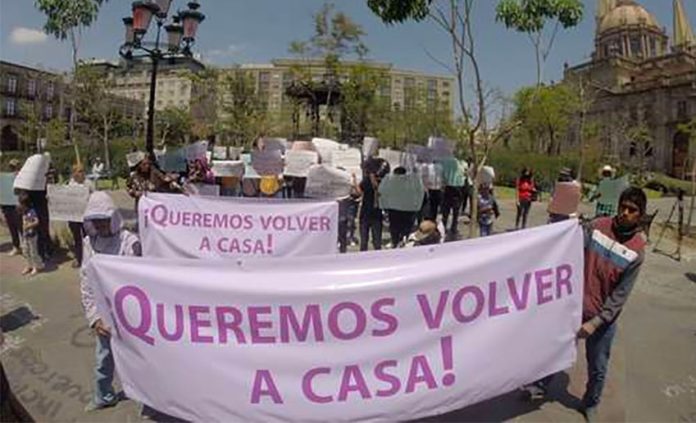
displaced people at a protest in Guadalajara
'We want to go back home,' read the banners of displaced people at a protest in Guadalajara last week.

The ongoing turf war between the Jalisco New Generation Cartel (CNJG) and the Sinaloa Cartel in northeastern Jalisco has forced nearly 900 refugees to flee their homes.

Catholic priest Manuel Sandate told the newspaper El Universal that 894 people have been forced out of their homes in Teocaltiche, Jalisco, according to the most recent count by the Divino Salvador parish in Mechoacanejo, where many refugees have found safety.

Some families from the communities of Aguatinta and Los Pocitos have returned home, but those from other communities have not. Due to the presence of the National Guard, the army and state police, some residents have been able to return home during the day to care for their animals and their land, but most do not dare stay the night, Sandate said.

“In the evening they have come back to stay here with the families who have opened their homes [to refugees],” Sandate said, who also called for continued support of the displaced people.

The state government said it has established an operations base in the area. State police are coordinating with the army and National Guard to patrol the zone, and have not reported further violence. The DIF family service agency has set up delivery points in the towns of Mechoacanejo and Rancho Nuevo, where affected families can receive support.

Source: El Universal (sp)

Jalisco governor says forest fires set intentionally ‘to destabilize’

0
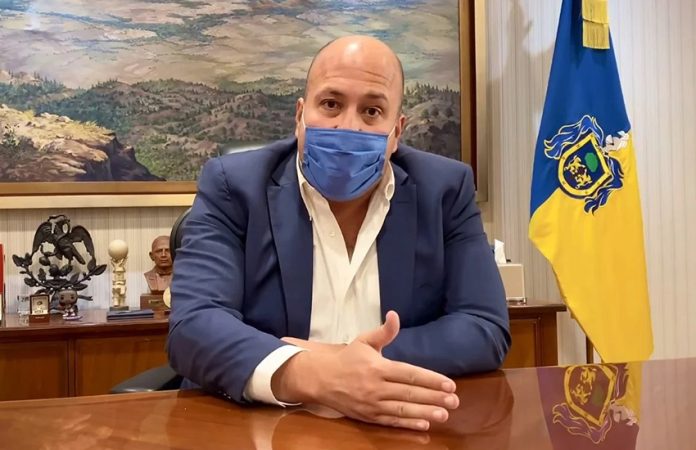
Jalisco Governor Enrique Alfaro
In a video message posted on social media, Jalisco Governor Enrique Alfaro blamed 7 fires in 1 day in the Guadalajara metropolitan area on political provocateurs.

Seven forest fires that burned in the metropolitan area of Guadalajara on Tuesday were lit deliberately to “destabilize” Jalisco, Governor Enrique Alfaro claimed on Wednesday.

“Our city was attacked yesterday by interests seeking to destabilize Jalisco,” Alfaro said in a video message posted to social media.

“In an event that had never been seen in our city, seven forest fires were started at the same time in the metropolitan area of Guadalajara.”

The governor asserted that the only possible explanation for the fires was that “very specific” interests are “trying to create a political agenda with issues that are truly risky for our city.”

“[There were] seven fires that can’t be explained in another way,” Alfaro said. Such acts place the lives of firefighters and residents at risk, he said.

The governor said his government has images of the people who allegedly lit the fires, all of which were extinguished or controlled by Wednesday morning. He ruled out the possibility that they were set to clear land for agricultural or real estate purposes.

“We’re talking about areas where this can’t happen. We’re talking about fires started with another intention. Curiously, of the seven [fires] that occurred yesterday, five were in Zapopan,” Alfaro said without offering further details about why the fires might have been lit in that municipality.

He said the state Attorney General’s Office will conduct a thorough investigation to determine who is responsible for the fires and apprehend them.

“To the people who are harming the city to profit politically, you can’t do this to the city,” said Alfaro, who was flanked in the video by firefighters, civil protection personnel and his environment minister.

“… Tragedies can’t be used for political gain; … Faced with these acts, we commit to keep working, to keep taking care of our city and our state. We’re going to continue fighting despite the difficult times we’re living in, despite all this,  … [these] very strange events that have put Jalisco in a very difficult situation.”

Source: El Universal (sp) 

Supreme Court confirms suspension of Yucatán pig farm

0
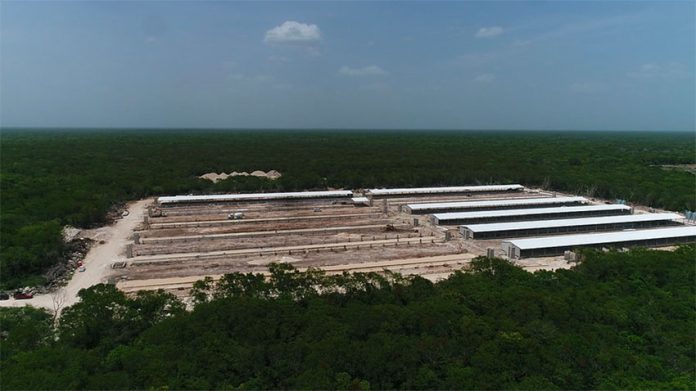
The industrial hog farm in Homún, Yucatán.
The industrial hog farm in Homún, Yucatán. greenpeace méxico

The Supreme Court has voted unanimously to uphold the suspension of a 49,000-head hog farm in Yucatán, whose operations were first halted after a 2018 Yucatán court decision.

Producción Alimentaria Porcícola (PAPO), about 50 kilometers southeast of Mérida near the Mayan town of Homún, must remain closed until the case is definitively resolved in the state’s Second District Court.

The successful 2018 claim was brought by the Mayan children of Homún on constitutional grounds.

Civic organization Kanan ts’ono’ot, youth representatives and the NGO Indignación celebrated the court’s decision in a joint statement. “Once again [the court] agrees with the Mayan people of Homún.”

The statement added that the ruling “protects the right to health, the environment and a dignified life for the girls and boys of the Mayan town …”

The fate of the farm has become a matter of international concern. Earthjustice, a nonprofit environmental law organization, filed a friend of the court brief on May 5 on behalf of itself, the Center for Biological Diversity, Coastal Carolina Riverwatch, Greenpeace México, Waterkeeper Alliance and 13 experts.

The amicus curiae brief detailed “substantial scientific evidence about the grave and irreversible harm to human health and the environment associated with industrial hog operations … contamination of water, including naturally occurring freshwater wells known as cenotes; emission of noxious air pollution; the spread of dangerous pathogens and contribution to climate change.”

Industrial animal operations are notorious polluters, threatening air and water quality and human health. PAPO is expected to generate over 272 million kilograms of urine and feces each year, more than is generated by the entire human population of Tijuana.

The farm’s establishment in Homún has divided residents. Many oppose it on environmental grounds, but others support it because of the jobs it could generate. The company has said that a fully operational farm would support 75 full-time jobs.

Sources: Milenio (sp), Infobae (sp)