Home Blog Page 1258

With 0.96 officers per 1,000 residents, Mexico is short 100,000 cops

0
The Mexican federal police force was officially dissolved at the end of 2019, after the formation of the National Guard.

Mexico needs more than 100,000 additional state police officers in order to meet international standards.

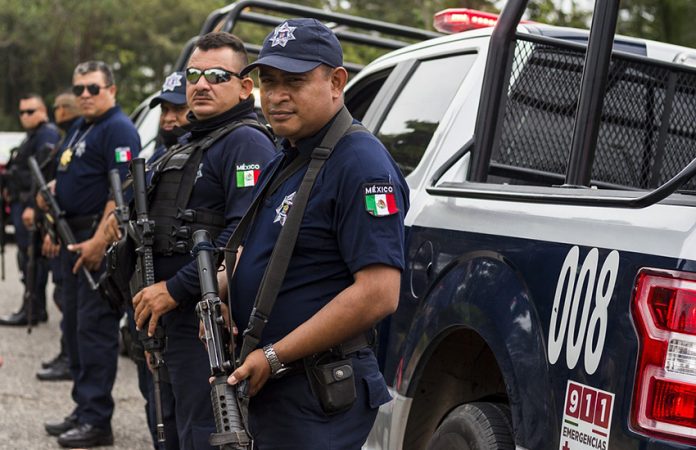
An analysis conducted by the National Public Security System (SNSP) identified that there were 123,070 state police officers in Mexico’s 32 federal entities at the end of 2020, equivalent to 0.96 state police officers per 1,000 residents.

The figure is well short of the established international standard of 1.8 per 1,000 inhabitants. To reach that standard, the states need to recruit and train 101,458 new officers.

As things stood in December, Mexico’s 32 state police forces collectively had only just over half the officers they should have had.

The situation in some states is much worse: Baja California, which includes the highly-violent border city of Tijuana, had just 0.18 state police officers per 1,000 residents and Sinaloa, home to the notorious Sinaloa Cartel, had just 0.26 officers per 1,000.

The states with the next lowest per capita rates were Sonora (0.3), Querétaro (o.31) and Coahuila (0.45).

Mexico City, which has state-like status, was the only federal entity with more than 1.8 officers per 1,000 people at the end of 2020. The capital easily exceeded the international standard with 4.41 police per 1,000 chilangos or capitalinos, as residents of Mexico City are known.

Yucatán ranked second with 1.64 state police per 1,000 residents followed by Tabasco with 1.47.

The SNSP analysis also found that 7,066 state police officers were dismissed last year because they didn’t pass confidence tests. More than a quarter of the dismissals — 27% — occurred in Guerrero, more than any other state. Dismissals in Zacatecas and Tabasco accounted for 25% and 18% of the total, respectively.

SNSP data indicates that state police in San Luis Potosí are the best paid in the country with an average net monthly salary of 21,090 pesos (US $1,043) followed by those in Guanajuato — Mexico’s most violent state — and Chihuahua, where officers earn average wages of 20,000 pesos and 18,094 pesos, respectively.

Officers in Chiapas are the worst paid, taking home just 6,357 pesos (US $315) per month on average. At 6,414 pesos, Tabasco has the second-lowest average wage for state police followed by Morelos, where officers earn an average of 8,647 pesos.

The SNSP recommended that state governments increase pay and benefits for police in order to provide them with greater stability and security and thus strengthen their commitment to the job and sense of belonging.

Source: El Economista (sp) 
Government apologizes for 5 centuries of abuse against Maya people

0
President López Obrador
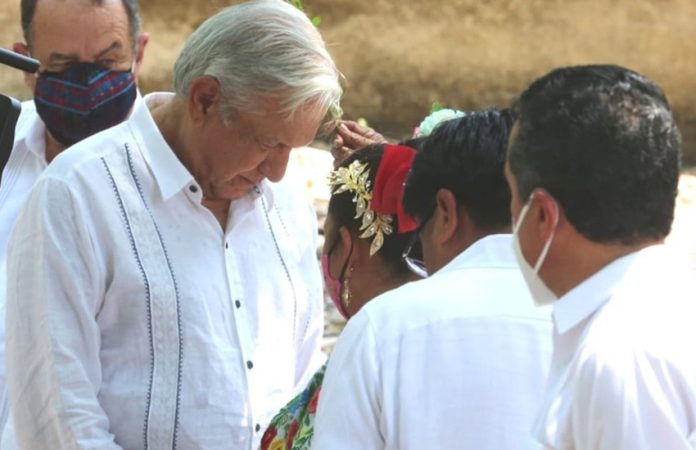
President López Obrador said the Yaqui and the Maya people have been 'victims of the greatest cruelty.'

The federal government on Monday apologized to the Maya people of Mexico and beyond for what it said was five centuries of abuse committed by foreign and Mexican authorities and longstanding discrimination that continues to the present day.

President López Obrador offered the apology at an event at the Caste War Museum in Tihosuco, Quintana Roo, saying that it was an “imperative of government ethics” and a result of his own personal convictions.

“We offer the most sincere apologies to the Maya people for the terrible abuse that private individuals and national and foreign authorities committed in the Conquest, during three centuries of colonial domination and two centuries of Mexican independence,” he said.

The president said that all indigenous peoples of Mexico have suffered “exploitation, dispossession, repression, racism, exclusion and massacres” and continue to suffer the same “shameful” abuses today.

“… The Yaqui and the Maya have been … treated the worst, [they are] the victims of the greatest cruelty,” López Obrador added.

The commitment of the federal government is to “listen to, attend to and respect everyone but to give preference to the neediest, especially the Maya and the indigenous people of all the cultures of Mexico,” he told attendees, among whom were representatives of the Maya community, Interior Minister Olga Sánchez, Guatemalan President Alejandro Giammattei and the governors of Quintana Roo, Yucatán, Campeche, Tabasco and Chiapas.

The president’s apology came two years after he revealed that he had written the king of Spain and Pope Francis to ask that they apologize for the indignities suffered by the native peoples during the Conquest.

The Spanish government rejected the request, while a spokesman for the Vatican said the pope had “already spoken with clarity about this issue.”

At Monday’s ceremony — one of a series of events to mark 200 years of Mexican independence and the 500th anniversary of the Spanish Conquest, Interior Minister Sánchez asked the Maya people for forgiveness on behalf of the government and pledged that federal authorities will work to build a more inclusive, fairer and more fraternal Mexico.

“To the Maya people of Mexico, today, in the name of the Mexican state, we ask for your forgiveness for the offenses committed against you throughout our history and for the discrimination of which you are still victims in the present,” she said.

“With this act, we want to look together toward the future with the confidence that we’re planting a just and worthy seed of peace that will allow us to have abundant fruit; … one of the fruits of forgiveness is peace,” Sánchez said.


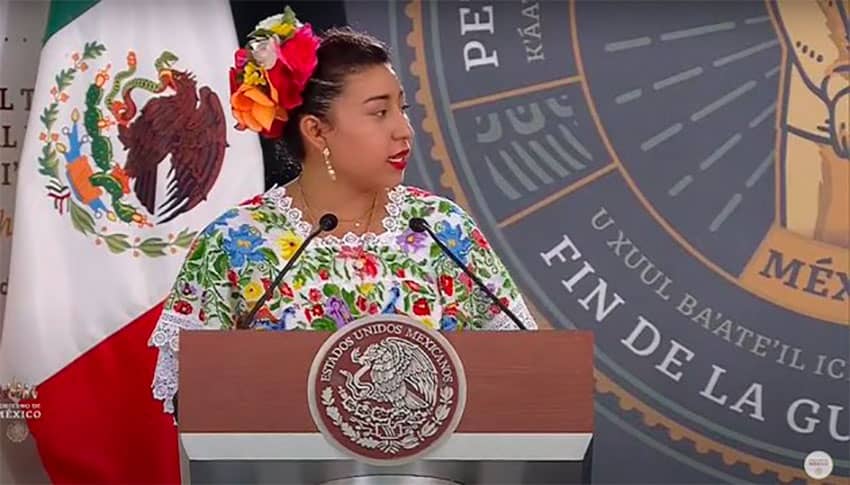
Maya spokeswoman Dzib Poot
Maya spokeswoman Dzib Poot said an apology on its own was not enough.

The interior minister acknowledged that the Mexican state acted particularly cruelly toward the Maya during the Caste War of Yucatán, a 19th-century conflict between indigenous and European-descended residents.

“These people have suffered exploitation and mistreatment for centuries, [ranging] from … dispossession of their lands and the consequent displacement to injustices and humiliations in their own territory,” Sánchez added.

But a Maya community representative said an apology on its own was not enough.

Ana Karen Dzib Poot said “concrete actions” are needed and urged the government to create a “Maya people’s memory, recognition and justice commission” and to draw up a development plan to respond to the most pressing needs of residents of southeastern Mexico. Dzib Poot also called for Maya people’s rights to be enshrined in the Mexican constitution.

The overarching aim must be to put an end to the injustices and discrimination suffered by the Maya, she said.

For his part, the Guatemalan president noted that Maya people face a range of problems today, including violence at the hands of organized crime. They also suffer from malnutrition, social exclusion and a lack of development in the areas where they live, Giammattei said, acknowledging that many Maya are forced to migrate as a result.

Millions of modern-day Maya live in Mexico’s south and southeast as well as in Central American countries such as Guatemala and Belize.

López Obrador believes that his government’s signature infrastructure project — the Maya Train — will spur social and economic development in Mexico’s long-neglected southeast. But many Maya are opposed to the project on environmental grounds or because they believe it will bring few economic benefits to the region’s residents.

Source: Milenio (sp), Reforma (sp) 

Zapatistas set sail for Europe; ‘invasion’ carries anti-capitalism message

0
Zapatistas begin their trans-Atlantic voyage.

Seven Zapatistas set sail for Europe on Sunday to highlight and discuss inequality and spread their message against capitalist oppression.

Four women, two men, and one non-binary person departed from Isla Mujeres, Quintana Roo, in a century-old German sailboat christened La Montaña, or “The Mountain.”

The delegation from the Zapatista Army of National Liberation (EZLN), a group best known for staging an uprising in Chiapas in 1994, plans to arrive at the port of Vigo in Galicia, Spain, in about six weeks to coincide with the 500th anniversary the fall of the Aztec capital of Tenochtitlán.

For the EZLN capitalism is responsible for violence against women, the genocide of native peoples, racism, militarism and the exploitation and destruction of nature.

The group has accepted invitations to meet with NGOs and other groups in 30 European countries and territories, according to their spokesperso,n Subcomandante Moisés, among which are Germany, Denmark, Hungary, Italy, the United Kingdom, Cyprus, Sardinia, Catalonia, France, Russia and Poland.

México | El viaje a Europa de los rebeldes zapatistas

The travelers received special training in Chiapas, substantial parts of which are controlled by the EZLN.

“The invasion has begun” said Moisés, alluding to the voyage made by Spanish conquerors to Mexico more than half a millennium ago.

He stressed, however, that the EZLN’s invasion differs in its aims. “This is a journey for life,” he said.

The group’s former leader, Subcomandante Galeano, spoke of the obstacles the project has faced. “It was not easy. In fact, it has been tortuous. In order to stick to our calendar we had to face objections, guidance, discouragement … prudence and straight sabotage,” he said in a statement.

The oldest crew member, Bernal, 57, was confident. “We are not nervous, we are ready,” he said.

A group of indigenous Otomí people sent the adventurers off with applause, proclaiming with raised fists: “Zapata vive, la lucha sigue!” or “Zapata lives, the fight continues!”

Sources: Milenio (sp), The Guardian

Efforts to combat cartels have broken down due to loss of trust, cooperation: DEA

0
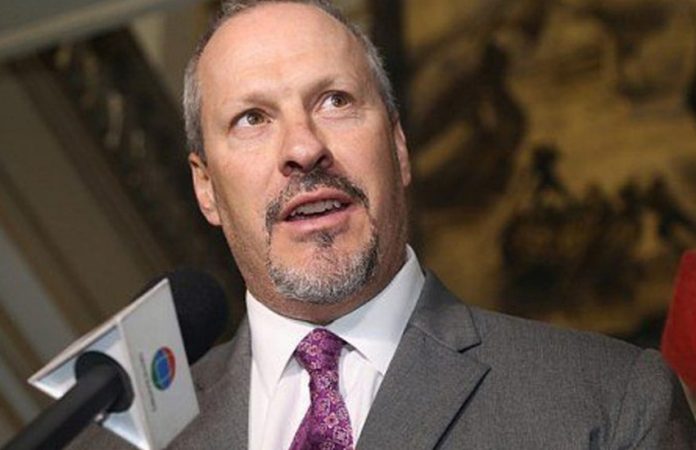
DEA Head of Operations Matthew Donahue
DEA head of operations Matthew Donahue says that his government’s willingness to work bilaterally in targeting cartels is no longer reciprocated by Mexico.

Joint efforts by United States and Mexican authorities to combat drug cartels in Mexico have broken down due to a collapse in trust and cooperation between law enforcement forces and the militaries in the two countries, according to a high ranking Drug Enforcement Administration (DEA) official.

Matthew Donahue, head of operations for the DEA, told National Public Radio that the organization is willing to share with its counterparts in Mexico but its desire to do so is not reciprocated.

“They themselves are too afraid to even engage with us because of repercussions from their own government if they get caught working with the DEA,” he said.

The breakdown in bilateral relations can be traced back to the United States’ arrest of former defense minister Salvador Cienfuegos last October on drug trafficking and money laundering charges. The arrest of the ex-army chief — whom the United States subsequently returned to Mexico under pressure from Mexican authorities — occurred without the U.S. first notifying Mexico, a slight that led the federal government to express “profound discontent” to its counterpart north of the border.

In response to the arrest of Cienfuegos, defense minister during the 2012–2018 presidency of Enrique Peña Nieto, Mexican lawmakers passed legislation that restricts and regulates the activities of foreign agents in Mexico. The law also requires Mexican officials to share intelligence the United States provides about cartels with other government agencies, including ones “the U.S. doesn’t trust,” NPR reported.

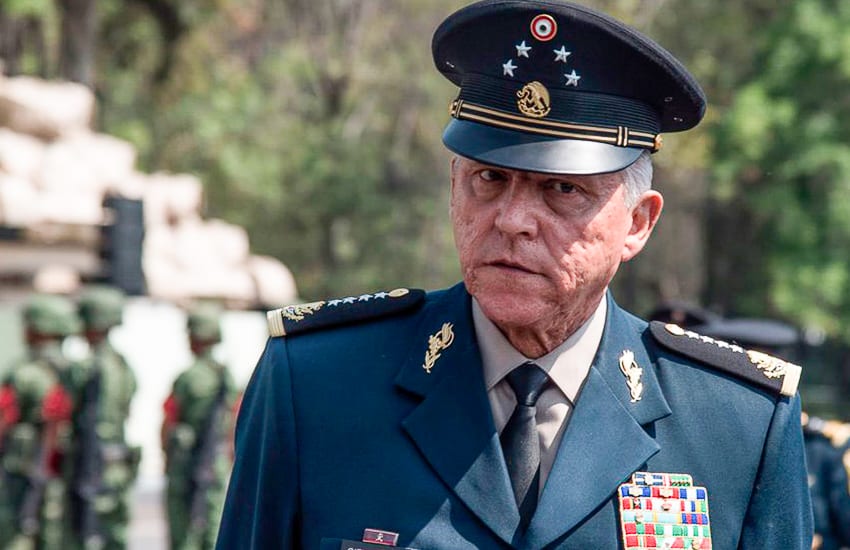
The US and Mexico's cooperation broke down over the US's arrest of former defense minister Salvador Cienfuegos last October with no previous notification to Mexico.
The US and Mexico’s cooperation broke down over the arrest of former defense minister Salvador Cienfuegos last October with no previous notification to Mexico.

As a result, information sharing and joint investigations ground to a halt.

“… Matthew Donahue says the winners in all this are the drug cartels,” NPR said.

“They do not fear any kind of law enforcement … or military inside Mexico right now,” said Donahue, who also noted that cartel-run labs in Mexico are the main source of fentanyl and methamphetamine that is fueling a drug-use epidemic in the United States, which he described as a “national health threat.”

United States sources told NPR that the breakdown in bilateral security relations makes it harder to track shipments of fentanyl — a highly potent synthetic opioid that kills tens of thousands of Americans annually —  and other drugs as they cross Mexico’s northern border. NPR said it was told by a White House official that drug interdiction will be the subject of bilateral U.S.-Mexico talks soon.

But a University of California at San Diego expert on security cooperation between the two countries told NPR that restoring trust and cooperation between Mexico and the United States won’t come easily, especially considering that the Mexican government is currently focused on the June 6 elections.

“With the elections coming up, my expectation is that there’s not going to be a lot of attention to what the U.S. would like to do and how to enhance that cooperation,” Cecilia Farfán-Méndez said.

Falko Ernst, senior Mexico analyst for the International Crisis Group, acknowledged that, as things stand, Mexican military and police officials are not providing information to U.S. authorities to allow them to target cartels in Mexico, as a small group did prior to Cienfuegos’ arrest.

U.S. operations in Mexico “have pretty much been paralyzed,” Ernst told NPR. “… What the U.S. has built up in terms of good relationships with … parts of the Mexican state have pretty much gone.”

Source: NPR (en) 

San Miguel Writers Conference takes its acclaimed writing workshops online

0
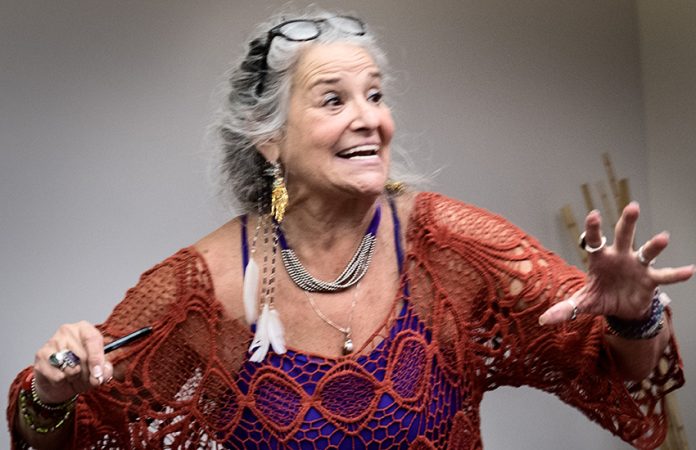
Author of Wage Peace, poet Judyth Hill will lead a workshop aimed at expanding writers' awareness of cross-cultural and experimental poetry to improve technique.
The author of Wage Peace, poet Judyth Hill, will lead a workshop aimed at expanding writers' awareness of cross-cultural and experimental poetry to improve technique.

While the coronavirus pandemic has postponed or canceled many cultural events worldwide, some organizers of such gatherings have seen the possibilities in transforming their events into virtual ones this year, using webinars, streaming services and videoconferencing.

The San Miguel Literary Sala in San Miguel de Allende, Guanajuato, a local organization that hosts the internationally known San Miguel Writer’s Conference every year, has responded to the pandemic’s challenges this year by reinventing what would normally be in-person workshops in the Magical Town into online events anyone around the world can easily attend via Zoom.

The Literary Sala not only successfully attracts big-name authors as speakers (this year, Tom Hanks and Matthew McConaughey, who both published books in 2020, are featured virtual guests), it also puts on several workshops at the conference on writing, editing, and the publishing industry, led by accomplished writers, poets, and editors.

In 2021, the Literary Sala has been hosting virtual events since the beginning of the year and will continue doing so at least through August. This month, it is presenting four live Zoom workshops on writing with authors, journalists and writing coaches:

  • Narrative Voice: Where Prose Comes Alive. May 17 and May 19. Taught by Amy Gottlieb.
    Gottlieb, a book coach and writing instructor whose debut novel The Beautiful Possible, was a finalist for the Ribalow Prize, Wallant Award, and a National Jewish Book Award, will lead a three-hour workshop on crafting memorable character voices to bring a compelling authenticity to a story that makes it come alive.
  • World Travels and Travel Writing: Turning One Passion into Another. May 17 and 19. Taught by Laurie Gough.
    Gough, a journalist, author and freelance editor who has written for several newspapers such as The Guardian, the Los Angeles Times and the Globe and Mail, where she was a travel columnist, is also the author of three memoirs. Her workshop will be on travel writing, a genre she points out is needed more than ever with people stuck at home due to the pandemic. Attendees will engage in inspiring writing exercises and discuss the importance of conveying the wonder of the place about which one is writing.
  • Writing for Teens (even if you aren’t one). May 18 and 20. Taught by Kat Falls.
    Falls, the author of the Scholastic Press science fiction series for tweens and teens called Dark Life, will be leading a workshop for both experienced writers and beginners who want to learn how to write a middle-grade or young adult novel. The seminar will include writing exercises and will touch on current and upcoming market trends, as well as how to catch an agent’s eye.
  • Shamanic Origins of Poetry: The Deep Magic of Saying. May 18 and 20. Taught by Judyth Hill.
    Hill is a poet, author, editor and teacher who is the author of the internationally acclaimed poem, Wage Peace. Her workshop will expose attendees to examples of cross-cultural poetry, unusual styles and techniques for making poems and poetry through the ages, all with an eye toward gaining new skills of description and musical language.

All four events will be one-time workshops that are not recorded. Each costs $80 but can also be bundled for a discounted price with other events coming up between May and August, including the Matthew McConaughey interview on May 14 and an event featuring Hallie Ephron and April Eberhardt on June 20.

For more information on times and purchasing tickets, visit the San Miguel Literary Sala website.

Mexico News Daily

19th-century church ‘rises from the water’ in Guanajuato

0
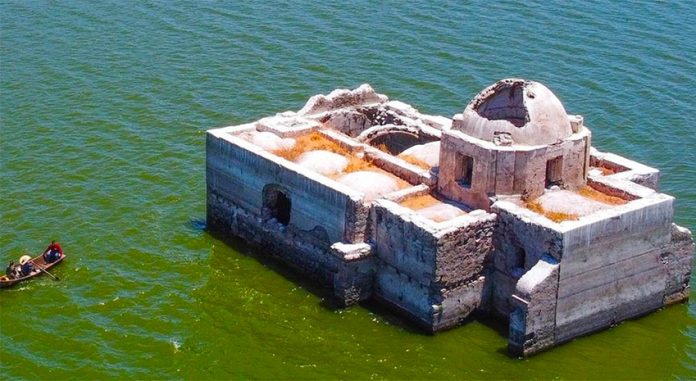
The Church of the Virgin of Dolores
The Church of the Virgin of Dolores has reappeared after water levels dropped at the Purísima dam reservoir.

A church hidden underwater for most of the past 40 years has reemerged due to drought in Guanajuato.

The Church of the Virgin of Dolores disappeared in 1979 after a dam was built in the area.

The church, built in the mid-19th century, was the heart of the colonial community of El Zangarro, which once housed the rectory and civil registry, of what was then Villa Real de Mina de Guanajuato.

The history of the community came to an end in 1979 when president José López Portillo ordered the construction of the Purísima dam, which flooded 200 hectares.

His hand was forced: six years earlier the city of Irapuato, 25 kilometers away, was completely flooded after another dam burst. The new dam was intended to avoid future flooding.

Dulce Vázquez, director of the municipal archive, said there was some resistance from residents of El Zangarro. “Oral history tells that it was very difficult for them to leave the place, not just because of the buildings, but because of the sense of belonging to the place … A few resisted until they saw  it was already a reality that the water would arrive to cover the entire town,” she said.

The inhabitants of El Zangarro were relocated to nearby land, where they founded a community of the same name.

The Temple of the Virgin of Dolores reappeared in July last year as a result of drought.

More than 70% of the country has been affected by the prolonged dry season, with a lack of precipitation particularly acute in Guanajuato.

Source: Milenio (sp)

Farmers plead for federal government support as drought takes its toll

0
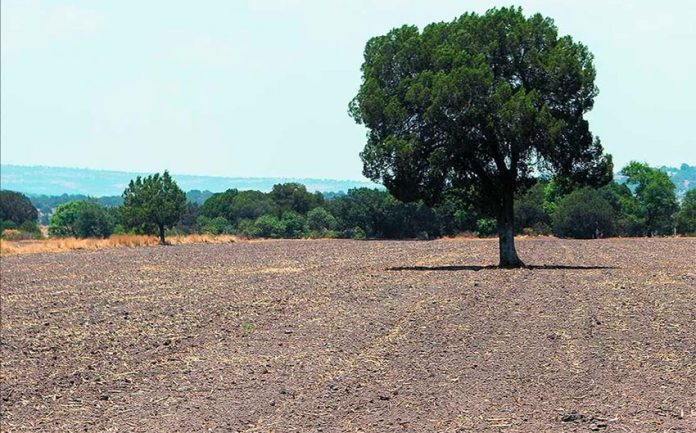
Dry conditions in Puebla.

Farmers are calling on the government to help relieve the damage of a severe nationwide drought.

The National Water Commission has registered exceptional drought conditions in municipalities in Chihuahua, Sonora and Tamaulipas and extreme drought in municipalities in 15 states. As of mid-April, 70% of the country had been affected by the prolonged dry season.

The farmers’ demands include the reinstatement of agricultural disaster insurance, a policy of the previous administration, subsidies to reduce the cost of animal feed and seeds, the modernization of irrigation technologies and other economic support.

Sinaloa farmer José Enrique Rodarte, who represents farmers in Culiacán and has worked in agriculture for 50 years, says the problem began in 2020. “The dams captured very little water. We estimated that 20 to 30% more water was used to irrigate completely dry land … There are crops that still lack 30 to 45 more days of irrigation, which means that they can’t be maintained. Most likely, if 6 million tonnes were produced, now there would only be five in total. The problem is serious and very worrying,” he said.

“We need agricultural insurance to be reinstated for these kinds of losses and the implementation of irrigation technologies that make water use more efficient …. We know that they can’t control the climate, but they can combat the lack of water,” he added.

Martín Ignacio Zuña produces corn and sorghum in southern Sinaloa. “We had a total loss, there’s no income to live on, we don’t have enough for self-consumption, there’s nothing for seeds, let alone to sell. The lack of water has been present for four years, but 2020 was the worst,” he said.

“We are not feeling sorry for ourselves and we have the right that the government not leave us at the mercy of God …. Thanks to what we farmers produce, they can eat at home, they don’t lack milk, meat, tortilla or beans. Thanks to the love we give to our work, we put food on their plates,” he added.

In Aguascalientes, rancher Marco Puga saw losses of 50% on previous years.

“We depend on the water we have to irrigate; if I only have water for five of my 10 hectares, we are talking about a 50% loss in production … In the case of livestock, I would have been paid 28 pesos per kilo for my cows when they were well fed, but now that they’re skinny just 20 pesos per kilo, a decline of almost 30% on the purchase price,” he said.

The states most affected by the lack of rain are Coahuila, Durango, Guanajuato, Chihuahua, Guerrero, Jalisco, state of México, Michoacán, Nuevo León, Quintana Roo, San Luis Potosí, Sinaloa, Sonora, Tamaulipas y Zacatecas.

Source: Milenio (sp)

Elevated section of Mexico City metro collapses; 23 dead, 70 injured

0
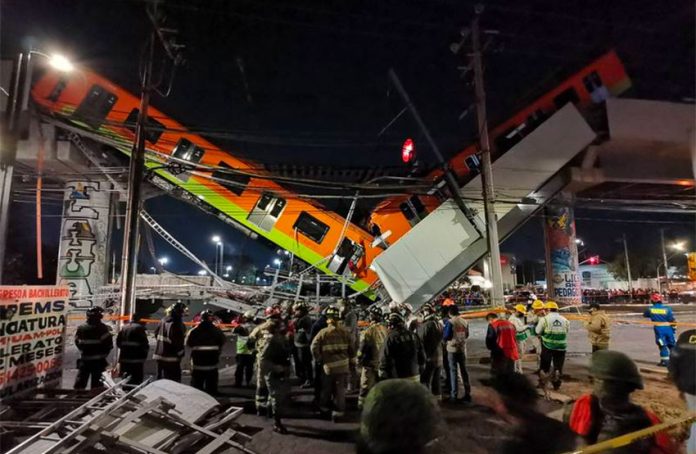
The metro car after Monday night's accident.

At least 23 people died and 70 were injured when an elevated section of the Mexico City metro collapsed on to a road below, leaving the train split in two and hanging precariously.

The accident, which happened late on Monday, came after reports that a car had crashed into a pillar supporting the rail bridge. Mayor Claudia Sheinbaum, addressing reporters at the scene in a hard hat, said a support beam had given way.

Videos shared on social media captured the moment when the line collapsed, crashing on to a busy road below. Sheinbaum said at least one car was trapped under the train.

Rescue workers were at the scene, searching for survivors or trapped passengers. Forty-nine people were taken to hospital.

The accident happened on Line 12, the newest metro line, in the south of the capital. The line was built when Marcelo Ebrard, now the foreign minister and considered a leading contender to succeed President López Obrador, was mayor of the city.

On Twitter, Ebrard promised his full assistance in the investigation of the “terrible tragedy.”

Line 12 was partially closed in 2014-2015 to repair what the authorities described at the time as structural faults. Four stations were also shut after a major earthquake struck the capital in 2017.

One survivor told Foro TV that he felt the train “brake suddenly and we were all pulled in the other direction. My cell phone flew out of my hand . . . I saw people who had fainted and were unconscious.”

© 2021 The Financial Times Ltd. All rights reserved. Please do not copy and paste FT articles and redistribute by email or post to the web.

Artisans celebrate opportunity to sell for first time since pandemic began

0
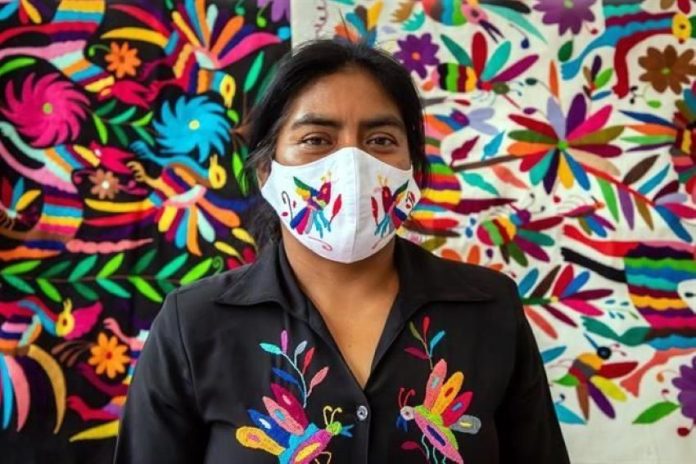
Tenango de Doria textile artisan Susana Hernández Núñez.

A museum in Mexico City has given five artisans from Hidalgo a much-needed opportunity to sell their wares amid the ongoing coronavirus pandemic.

The National Museum of Popular Cultures invited artisans from the municipality of Tenango de Doria to sell their colorful Tenango embroidery at a recent expo.

One of the five artisans who participated was Susana Hernández Núñez, who left her home in the community of El Dequeña at 3:30 a.m. to travel to the museum, located in the southern borough of Coyoacán.

She told the newspaper Reforma that it was the first time since the beginning of the pandemic that she was able to sell her embroideries at a public event.

“After a year and a half, this is the first outing,” said Hernández, who like most artisans has seen her income dry up during the pandemic due to the downturn in tourism and the lack of opportunity to sell her work at fairs and other events.

“… We’ve been through something very difficult. I believe that for everyone it was very hard, psychologically, physically, morally and especially economically,” she said.

Hernández said that she and other embroiderers from Tenango wouldn’t have had any income at all if they hadn’t begun making and selling face masks. Nevertheless, she estimated that her income has fallen by 8,000 pesos (about US $400) a month.

Another artisan who attended the museum expo was Alejandría Manilla Alarcón, the sole income earner in her family.

“I live with my kids; [all] three depend on me — one’s at university, one’s at high school and I’ve got a girl at primary school,” she said.

For Hernández, Manilla and the other Hidalgo artisans invited to Mexico City, the opportunity to sell their work — among which are dresses, blouses, bags, purses and table runners — to customers directly was a welcome one.

Still, their income, and that of countless other Mexican artisans, is unlikely to recover much while the pandemic continues to impact tourism and makes holding arts and crafts events difficult, if not downright unviable.

“Hopefully, the pandemic will end [soon]; it’s what we’re all asking for,” said María Teresa Hernández Núñez, another artisan who participated in the museum expo. “Let it end so we can move on,” she added.

Source: Reforma (sp) 

March remittances up 10% to record-breaking US $4.15 billion

0
banknotes

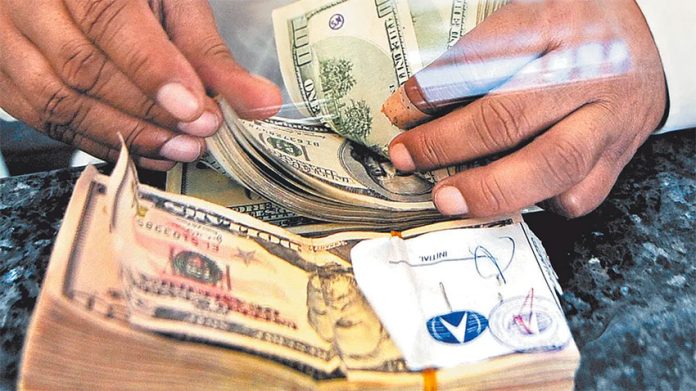
Mexican workers living abroad sent home a record US $4.15 billion in March, a 10.4% increase on March last year.

In the first quarter, remittances sent to Mexico totaled $10.62 billion, another record, with a 13% increase on 2020.

The average remittance payment was $370, compared to $320 last year, and 1.8 million families benefited, according to data provided by the Bank of México (Banxico).

The International Monetary Fund’s (IMF) Alejandro Werner explained that the solid flow of remittances is due to the U.S. fiscal stimulus, the incentives for migrants to support their families back home, and payments switching to formal channels due to border closures.

Werner added that it is likely that the trend will continue, but could slow moderately as the pandemic further recedes in Mexico.

Goldman Sachs’ Alberto Ramos explained that the flow of remittances remains strong, referencing the impact of “the generous fiscal transfers that the United States government is granting to families; as well as the competitive exchange rate differential, and the deep contraction of employment and economic activity in Mexico.”

Source: El Economista (sp)