Home Blog Page 1275

13% don’t want a Covid shot; most want to wait and see its effects: poll

0
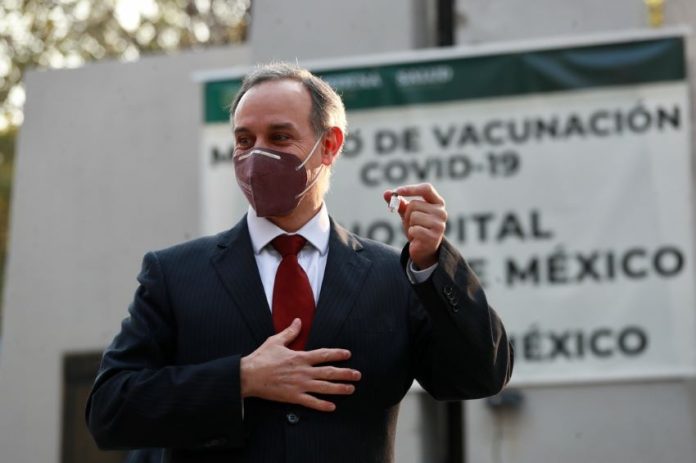
Nearly half of those who answered a recent survey by the firm Consulta Mitofsky said that they had a good opinion of Deputy Health Minister Hugo López-Gatell.

About one in seven Mexicans doesn’t want a Covid-19 vaccination shot, according to the results of a new poll.

The Mexican consulting agency Mitofsky’s most recent national coronavirus survey, conducted on April 9–11 with 1,000 people, found that 13.3% of respondents don’t want to be vaccinated against the disease that has claimed more than 300,000 lives in Mexico.

Just over three-quarters of those polled, or 76.4%, said they have already had a jab or are waiting for their opportunity to get vaccinated, while 10.3% said that they didn’t know whether they would get a shot or not.

Among those who said that they don’t want to be vaccinated, the most popularly cited reason among eight provided by Mitofsky was that they want to wait and see what effect vaccination has on the first groups of inoculated people. Almost one in five respondents, or 19.7%, cited that reason.

Fear of vaccines or injections was cited by 13.4% while 12.4% mentioned the risk of adverse reactions such as blood clots.

About one in 13 of those who don’t want to get vaccinated, or 7.5%, said that Covid-19 doesn’t exist or isn’t a serious disease. Another 3.9% said that vaccines are ineffective against the virus.

A response option provided by the survey — “the disease and the vaccine are part of a conspiracy to reduce the population” — was chosen by 10.2%. Another 4.4% said the objective of vaccination is to control people.

Religious reasons were cited by 3.3%.

In response to questions about the vaccination distribution process, the majority had positive feelings about it. The survey found that 71.9% of respondents believe that the organization of the process has been very good or good in the state where they live. However, 19.4% said that it has been very bad or bad.

As of Monday night, just over 11.7 million vaccine doses had been administered, mostly to health workers and people aged 60 and over.

The poll also found that 26.7% of respondents are more afraid of contracting the coronavirus than of being a victim of crime or being affected negatively by the pandemic in an economic sense. Just over a third of those polled said that being a victim of crime was their biggest fear while 31.7% said they were most afraid of adverse economic consequences.

However, when the other two options were removed, 76.5% of those polled said they were very or somewhat afraid of catching the virus. A slightly lower percentage of respondents, 62.4%, said they were very or somewhat afraid of dying of Covid-19.

As for President López Obrador’s management of the crisis — which has been widely criticized by health experts — 58% of respondents said that they approved, and 40.1% said they disapproved.

Just under half of those polled said they had a good opinion of Deputy Health Minister Hugo López-Gatell, who has led the government’s pandemic response, while 35.7% said the opposite.

When the poll asked respondents to offer an opinion about the origin of the coronavirus, 35.5% said that they believed that the virus was created in a laboratory and intentionally let out of the lab to allow it to spread. An additional 12.8% of respondents said they believed the virus was created in a lab and that it escaped by accident.

Only 29.4% of those polled said that they believed that the origin of the virus is zoological and that it subsequently jumped to humans, while 22.3% said that they didn’t know where SARS-CoV-2 came from.

Source: El Economista (sp) 
30 marines arrested in connection with 2014 disappearances

0
The arrest is a blow to the navy, considered Mexico's most trusted security force.

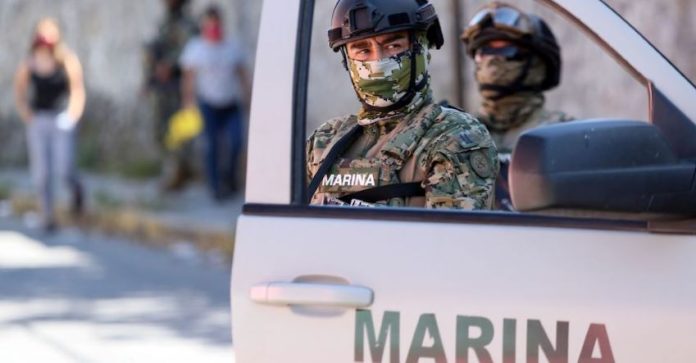
Thirty marines were arrested last Friday in connection with the forced disappearance of an unspecified number of people in Nuevo Laredo, Tamaulipas, in 2014, the navy said in a statement.

The Ministry of the Navy said Monday that the federal Attorney General’s Office (FGR), acting on arrest warrants, detained the marines, who allegedly carried out the abductions and presumed murders while deployed to the northern border city.

The navy said that it made the marines available to the FGR so it can carry out the appropriate investigations.

It didn’t give any further details about the crimes.

It is the largest arrest of military personnel in connection with the disappearance of civilians in recent years and a heavy blow to the navy, which is generally considered Mexico’s most trustworthy security force.

Tamaulipas is one of Mexico’s most violent states and has one of the highest missing persons rates in the country.

The navy was accused of involvement in the disappearance of at least 57 people in Tamaulipas in the first half of 2018, and the United Nations said in May of that year that there were “strong indications” that federal security forces were responsible for the disappearance of 23 people, including at least five minors, in the state.

Forced disappearances are seldom fully investigated in Mexico and impunity for the crime, as is the case for many other offenses including homicide, is extremely high.

The federal government said last week that more than 85,000 people have disappeared since 2006, the year former president Felipe Calderón launched a military offensive against Mexico’s notorious drug cartels.

Criminal organizations are to blame for most disappearances, but corrupt security force members — including municipal and state police, marines and soldiers — have also been accused or convicted of abductions and murders. For example, the army has long been suspected of involvement in the high-profile case of 43 teaching students who disappeared in Guerrero in 2014.

According to leaked testimony obtained by the newspaper Reforma in January, the military was directly involved in the disappearance of the students.

The FGR said last September that arrest warrants had been issued against soldiers and federal police in connection with the case but has not reported whether those warrants have been executed.

Source: BBC News (en) 

Hilton to open 31 new hotels this year and next in Mexico

0
Hilton's Yucatán Resort Playa del Carmen will open this year.

Hotel giant Hilton has 31 hotels in development in Mexico which will all open by the end of 2022.

One of the biggest projects is the Hilton Cancún complex, an all-inclusive resort with 715 rooms 20 kilometres south of Cancún’s hotel zone, set to open late this year.

Another is the The Yucatán Resort Playa Del Carmen, a 60-room all-inclusive resort which will open this summer.

Mexico has the fifth largest concentration of Hilton hotels anywhere in the world.

“In Mexico we are seeing a great deal of interest in vacation and leisure destinations and in traditional destinations, led by Cancún, Vallarta and Los Cabos,” said Mario Carbone, Hilton’s development director for Mexico and Central America.

“The necessity to travel is even more evident after so long ‘trapped’ in our homes, so we predict a boom in interest for vacation travel. That will be the first thing we see, followed by business travel, which we are very confident is going to recover in the long run,” Carbone adds.

The impact of the Covid-19 pandemic saw Hilton invest more in hotel conversions, where existing infrastructure is incorporated into the Hilton brand, such as the DoubleTree complex in Mazatlán, Sinaloa, which opened on October 1.

Last year Hilton’s total projects in Latin America went from a 20% concentration on hotel conversions to 50%.

The company opened 400 hotels in 2020, 14 of which were in Latin America, and now has 100 complexes in development in the region.

Source: Expansión (sp)

Mexicans are heading to US again: massive increase in migration recorded

0
Migrants at the Mexico-US border wall.
A file photo of migrants at the Mexico-US border wall.

Mexicans are attempting to cross illegally into the United States in numbers not seen for more than a decade.

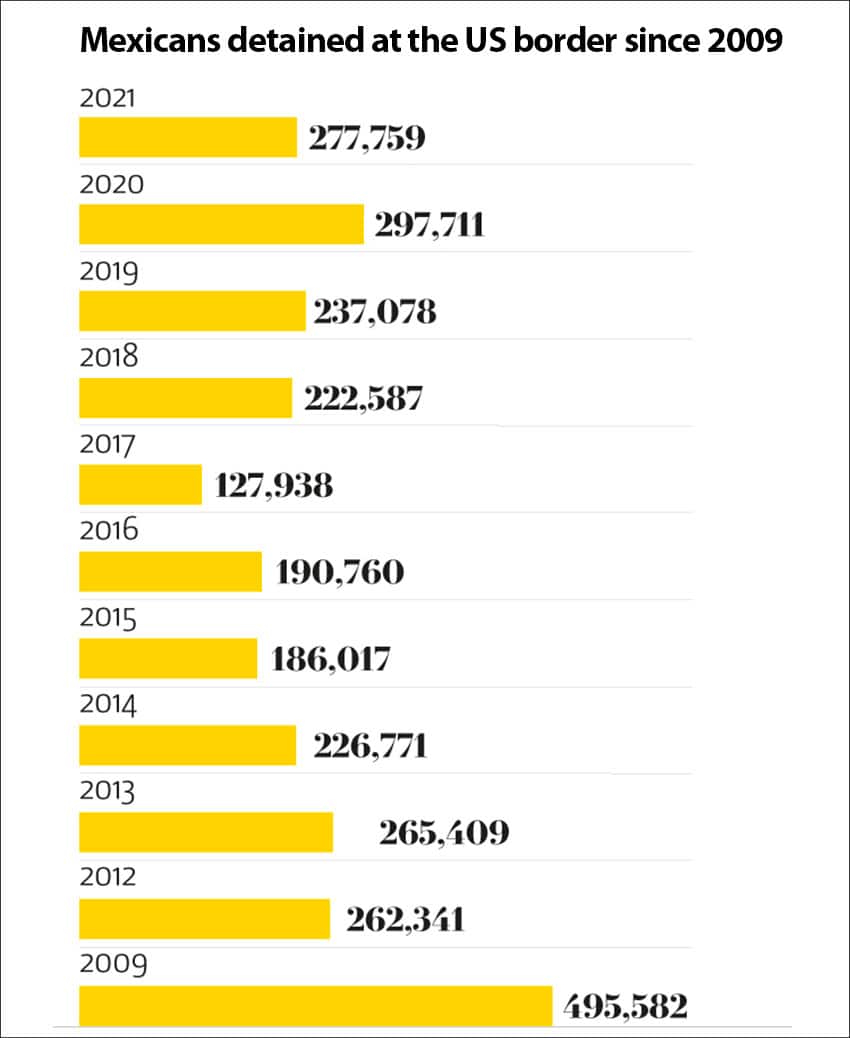
Some 147,000 Mexicans were detained by U.S. border agents in the first three months of the year, a figure equivalent to two-thirds of all arrests of Mexicans by the U.S. Customs and Border Protection (CBP) in 2020.

If the trend continues, almost 590,000 Mexicans will be intercepted by the CBP this year, which would be the highest number since 2008, when more than 600,000 were detained.

The spike in the number of Mexicans trying to enter the U.S. without going through official immigration channels comes after years of decreases in migration flows across the northern border. In 2017 — for the first time ever — the number of Mexicans returning home from the United States exceeded the number of Mexicans heading north.

Migration expert Eunice Rendón told the newspaper Milenio that CBP arrests of Mexicans last month were more than four times higher than the level seen in recent years.

The number of detentions by fiscal year
The number of detentions by fiscal year (October to September). This year’s figure, reflecting six months of data, is already at 93% of last year’s total. milenio

“In March, for example, border patrol captured 171,000 people, of whom 68,000 were Mexicans. … What we have seen in other years is [the detention of] 15,000 Mexicans [per month],” she said.

Rendón attributed the surge to economic factors related to the coronavirus pandemic as well as displacement caused by violence.

In the almost 2 1/2 years since President López Obrador took office, about 776,000 Mexicans have been detained by the CBP, meaning that arrests during the six-year term of the current government are on track to exceed the number recorded during the 2012–2018 presidency of Enrique Peña Nieto, during which about 1.15 million Mexicans were intercepted.

Writing in the newspaper El Universal, columnist León Krauze noted that López Obrador said in a 2019 interview with the news agency Bloomberg that his “dream” was to reach a point in his presidency at which there would be no need for Mexicans to migrate to the United States because they had work and could be happy where they were born.

Not only has the president not achieved that goal but the migration of Mexicans has, in fact, increased, he wrote.

“About four of every 10 migrants detained on the [United States] southern border in recent weeks are of Mexican origin,” Krauze wrote, adding that “the grave trend” threatens to undo gains made over the past decade during which migration of Mexicans to the U.S. recorded negative numbers.

The columnist said there was no detailed study about the new wave of Mexican migration to the United States but contended that the causes are the same as those that drive other people in the region. Krauze cited insecurity, poverty, lack of work opportunities and climate changes as migration push factors.

“The consequences of the pandemic have been particularly harsh in Mexico, where the government has failed in the containment of the health emergency and in the management of the economic crisis. The explosion in poverty in the country has the same consequence as always: the people go to where there is … the possibility to survive,” he wrote.

The journalist asserted that López Obrador needs to urgently respond to the growing migration phenomenon, which has also been encouraged by the departure of former U.S. president Donald Trump, who enacted harsh immigration policies, and the arrival in the White House of current President Joe Biden, who rolled back some of his predecessor’s policies even as he simultaneously told migrants not to come to the U.S.

Krauze added that 2021 data shows that the government is failing in what López Obrador described as its responsibility to guarantee security, employment and well-being for the Mexican people so that they don’t have to leave their homes and seek a better life elsewhere.

“There is still time to rectify [the situation],” he wrote.

Source: Milenio (sp), El Universal (sp) 

Forest fire in Morelos continues to spread; 180 hectares affected

0
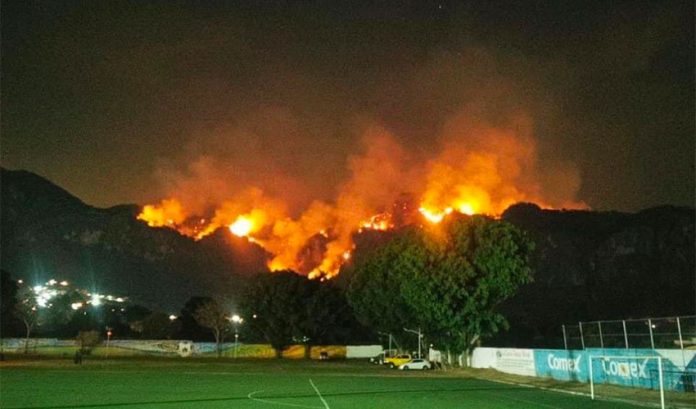
The fire Monday night in Tepoztlán.

A forest fire in the hills of Tepoztlán, Morelos, has hospitalized six firefighters, one with third degree burns.

The fire has grown to affect 180 hectares and is the largest on record in the area.

Environmental emergencies chief Raymundo Rosales Martínez said 244 firefighters were working to extinguish the fire, which could continue to burn for another six days due to adverse weather conditions. Three helicopters are also helping to tackle the blaze.

“We have 20% control but it grew exponentially even when we were working against it … This fire is bigger and has behaved much more aggressively than those in the past. The ones before had an average of 80, 120, 160 hectares, but this one is already at 180 hectares, and we might end up with another 50 hectares affected,” Rosales said.

State Civil Protection coordinator Enrique Clement Gallardo said the fire came within 300 meters of the community of San Juan Tlacotenco yesterday, but confirmed there was no longer any risk to the population.

[wpgmza id=”295″]

The closest populated area that could be in any danger is three kilometers away, he said, but was not currently at risk.

National Civil Protection head Laura Velázquez confirmed that the fire in Tepoztlán was one of the five biggest in the country, with other large scale fires in Querétaro, San Luis Potosí and Guerrero.

“We are going through a moment of atypical dryness which is aggravating the situation,” Velázquez said.

There are 83 active fires in the country, affecting 23,000 hectares.

Source: Reforma (sp)

In Mexico City, the mayor has higher approval rating than AMLO

0
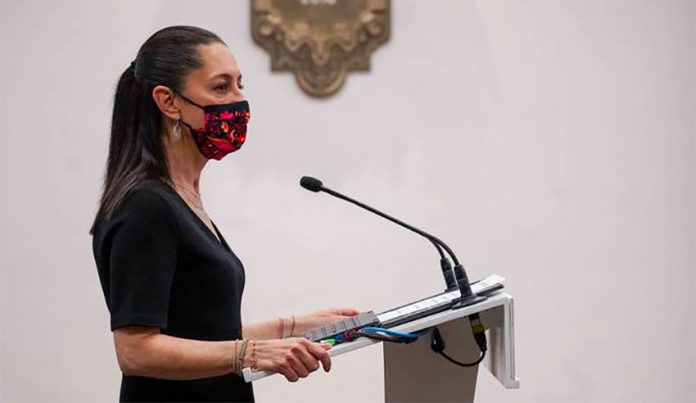
Mayor Sheinbaum enjoys a 71% approval rating.

Mexico City Mayor Claudia Sheinbaum has a higher approval rating than the country’s president, according to a recent survey by El Financiero and Bloomberg.

Of the 600 Mexico City residents surveyed on April 9 and 10, 71% said they approve of Sheinbaum’s performance in office, while only 55% responded in kind when asked about President López Obrador.

The disapproval ratings were also favorable to Mayor Sheinbaum: 43% of those surveyed rated the president’s performance negatively, while only 26% gave the mayor a bad review.

There was also some good news for Morena, the political party of both leaders. Voting intentions for the June 6 legislative elections gave the party a strong hand in Mexico City, according to the survey.

Forty-four percent of decided voters said they favor Morena. Only half as many said they would vote for the right-wing National Action Party (PAN) while 11% would support the Institutional Revolutionary Party (PRI) and 6% the Democratic Revolution Party (PRD). Fully 25% of those polled were undecided.

In 2014 Sheinbaum broke from the traditional left-wing PRD to join López Obrador’s splinter movement, forerunner to the Morena party. Both were elected in the Morena sweep of the polls in 2018, when Sheinbaum became Mexico City’s first female mayor.

She is widely seen as a frontrunner — along with Foreign Affairs Minister Marcelo Ebrard — to succeed López Obrador as the Morena candidate in 2024.

Source: El Financiero (sp) 

400 forced from their homes by Jalisco cartel in the last 2 weeks

0
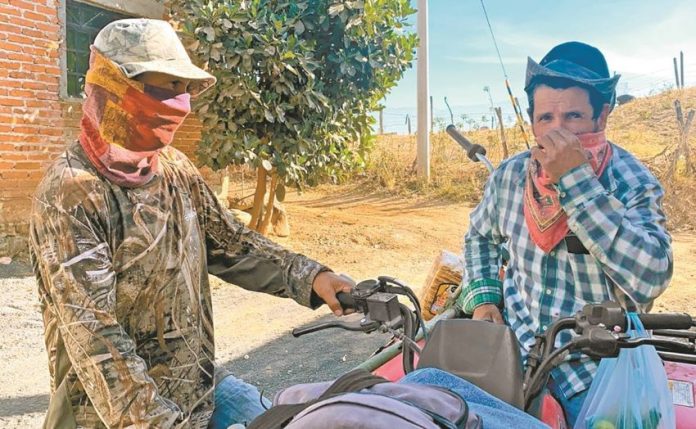
“We were displaced … without knowing the reason or the motives,” said Rafael, an El Maguey, Jalisco, resident forced out of town at gunpoint.
'We were displaced … without knowing the reason or the motives,' said Rafael, an El Maguey, Jalisco, resident forced out of town at gunpoint.

The Jalisco New Generation Cartel (CJNG) has forced more than 400 people out of their homes in two communities in Jalisco and Michoacán.

According to a report by the newspaper El Universal, members of about 80 families in El Maguey, a town in the Jalisco municipality of Quitupan, and El Lobo in Cotija, Michoacán, were ordered out of their homes at gunpoint by presumed CJNG criminals during the past two weeks.

Rafael, one of those who was forced to leave, told El Universal that he and his family went from having a calm and productive life at home to being unable to afford to eat.

“We were displaced by the Jalisco New Generation Cartel without knowing the reason or the motives,” he said, adding that some 150 residents of El Maguey were forced out of their homes on a single night.

Rafael, whose family worked in agriculture, said that a group of armed men broke into his home and those of others in the community and pointed their weapons at residents, including children, women and seniors, as they ordered them to abandon their dwellings.

He said the cartel members threatened to kill them if they didn’t obey their orders. Rafael also said that the residents of El Maguey are good people who don’t owe the CJNG anything.

“It’s an incredible thing that we can’t yet get over. We lived really comfortably, very calmly, but they changed our lives overnight without any reason,” he said.

Rafael, whose 20-year-old nephew was killed by suspected CJNG gunmen, and many other El Maguey residents are currently taking refuge in the municipality of Los Reyes, but some are considering seeking asylum in the United States.

Rafael’s brother told El Universal that he is now in a precarious situation, explaining that although he is safe, he has had to start his life from scratch and struggles to pay for everyday expenses.

“I want it to be known that since the Jalisco New Generation Cartel people came [to the community], we started living through a true hell,” he said.

He said that his father died of grief because he had to leave the life he had built over decades in El Maguey. He also said that he could be tempted to take up the fight against the CJNG himself, if he could afford to buy weapons.

Luis, another displaced resident, said that federal authorities have done nothing to stop the illicit activities of the CJNG even though there is a National Guard base in Cotija, which borders Quitupan.

“They [the guardsmen] don’t do anything. … They even protect the Jalisco cartel,” he said, adding that members of the two organizations have been seen together.

“… What hope do we have to live in peace, what hope do we have that this forced displacement won’t happen in other places?”

The CJNG, usually considered Mexico’s most powerful and violent criminal organization, has recently expanded its influence in parts of Michoacán, including Aguililla, the birthplace of the cartel’s leader, Nemesio “El Mencho” Oseguera Cervantes.

The cartel has reportedly seized that municipality by driving out other criminal groups such as the Cárteles Unidos. At least eight members of that organization were executed by the CJNG in a massacre late last month.

Source: El Universal (sp) 

Empty schools prove easy target for thieves in Veracruz

0
A school in Veracruz after it was looted by thieves.

Schools left empty by the coronavirus pandemic have been a target for thieves in the state of Veracruz, where at least 67 schools have been robbed since March.

That’s on top of the more than 80 robberies reported last January at schools in the city of Veracruz since the Covid-19 pandemic began.

Some schools have been hit several times.

The Elena Martínez Cabañas kindergarten has been robbed seven times, while other schools have faced more than three break-ins.

An official in Veracruz city said the state’s Education Ministry has not done enough to tackle the crimes.

“There are schools where there is nothing left to steal, they are completely cleaned out, but unfortunately [the ministry] has not tackled the issue. There is no solution to curb the robberies, those who steal for a living know that no one is going to chase them,” he said.

He requested that the ministry reconvene inter-institutional working groups to put together a strategy to tackle the crime. “We do not need a police officer in every school. What we need is a strategy.”

He claimed the working groups were not suspended because of the pandemic, but because the ministry argued with the security authorities that sit on them.

Education Minister Zenyazen Escobar García said it would be difficult to replace all of the stolen equipment. “Of the 67 schools many had been given computers … and what we have always been told is that once a school has received new equipment, that school goes to the back of the line … but we are considering what to do,” he said.

Sources: Milenio (sp), El Sol de Córdoba (sp)

Would-be candidate threatens to track down elections agency councilors

0
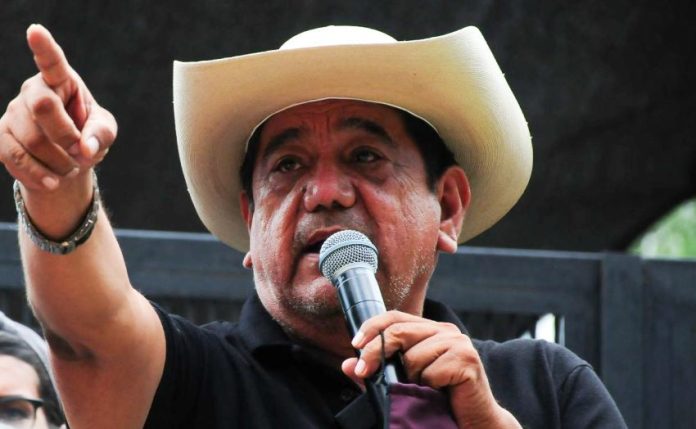
Disqualified gubernatorial candidate in Guerrero Félix Salgado at a protest by supporters outside Mexico City’s National Electoral Institute (INE) headquarters.
Disqualified gubernatorial candidate Félix Salgado at a protest by supporters outside Mexico City’s National Electoral Institute headquarters.

Accused rapist and disqualified political candidate Félix Salgado, who was barred from contesting the upcoming Guerrero gubernatorial election because he missed a deadline to report pre-campaign spending, issued a threat on Monday against the National Electoral Institute (INE) councilors who stripped him of his candidacy.

Speaking at a protest by supporters outside INE headquarters in Mexico City, Salgado — who was selected as the candidate for the ruling Morena party despite accusations of rape by five women and widespread opposition to his candidacy — said that he and his supporters would track down the seven electoral councilors, including INE president Lorenzo Córdova, if they don’t reinstate him on the ballot for the June 6 election.

His remarks came a day after he threatened to stop elections from happening in Guerrero unless he is allowed to run.

The INE general council will convene on Tuesday after the Federal Electoral Tribunal (TEPJF) ordered it to reformulate its sanctions against both Salgado and Raúl Morón, Morena’s candidate for governor in Michoacán — who was also barred from contesting the elections for failing to report pre-campaign spending.

“If they don’t vindicate themselves, … we’re going to find the seven [councilors],” Salgado said, “we’re going to look for them, and we’re going to go and see Córdova.”

Salgado (l) at the protest with Morena Party president Mario Delgado. In the background, a banner accuses the INE's councilors of corruption.
Salgado, left, at the protest with Morena party president Mario Delgado. In the background, a banner accuses the INE’s councilors of corruption.

“Wouldn’t the people of Mexico like to know where Lorenzo Córdova lives? Wouldn’t you like to know where his little … sheet metal home is, which leaks when it rains and wets his body? Yes? Little bastard!”

Salgado, a federal senator on leave and a former mayor of Acapulco, asserted that he and his supporters would not allow themselves to be victims of INE’s “abuse.”

“… We have the support of the people. We’re the majority,” he added.

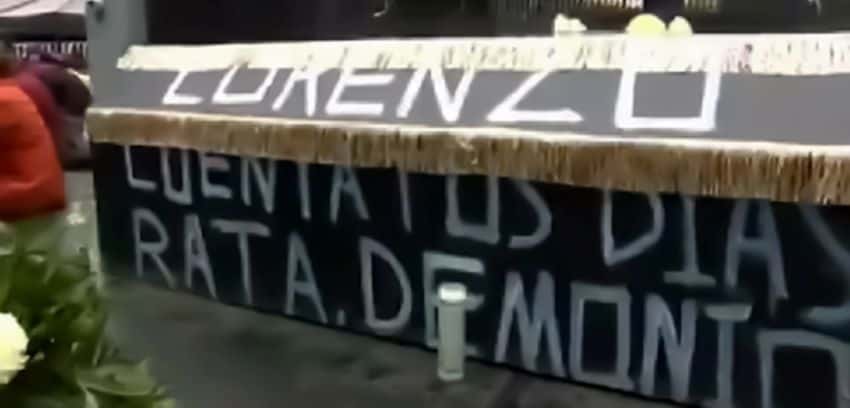
Salgado’s supporters at the protest also issued a threat to the INE president, writing “Lorenzo, count your days, demon rat” on a coffin that was on display behind the would-be candidate as he spoke.

Facing criticism for his remarks, Salgado later on Monday attempted to walk back the threat he made against the INE councilors.

“A lot of people have visited me in my home, [and] nothing happens,” he told reporters. “I’m not going to [Córdova’s] house; [I say it] so that the man isn’t worried. It’s not a threat, it’s not violence.”

After the INE council meets, he said, and regardless of the decision it makes with respect to his candidacy, “we’re going [back] to Guerrero.”

“We’re leaving tomorrow [Tuesday] once we find out the result. We’re not pressuring anyone, we’re not hurting anyone, we’re not blocking any road, we’re not exercising violence,” he declared.

In a subsequent television interview, Salgado asserted again that his remarks don’t amount to a threat but also claimed that people have a right to know where government officials, including the INE councilors, live.

“We didn’t come to destroy or annoy anyone,” he said, adding that if the INE doesn’t overturn its decision to strip him of his candidacy, he will once again take his case to the TEPJF.

Morena national president Mario Delgado also came to Salgado’s defense, telling reporters that “no threat has been made to anyone.”

Morena is “a peaceful movement,” Delgado said.

Félix Salgado's supporters set up a fake coffin telling INE president Lorenzo Córdova to "count your days, demon rat."
Félix Salgado’s supporters set up a fake coffin telling INE president Lorenzo Córdova to “count your days, demon rat.”

“Throughout all these years, we have shown that. … Today we’re here singing, we’re dancing,” he said, referring to the protest at the INE offices. “There is no aggression towards anyone. Yes, we’re demanding that they [the INE councilors] act with impartiality. Yes, we’re demanding that the [elections] umpire doesn’t become a player [in the electoral process].”

Delgado once previously called on INE councilors opposed to Morena to join one of the opposition parties and take up the fight against the government “from the correct trench.”

In light of Salgado’s remarks, Interior Minister Olga Sánchez, in an unprecedented move, called on both Morena, which was founded by President López Obrador, and the INE to act in accordance with the law and treat each other with respect.

“As interior minister, I make an energetic call to keep differences within [the framework of] legality and mutual respect,” she wrote in a Twitter post directed to both entities.

For his part, Córdova said he will allow the Mexican people to come to their own conclusions about Salgado’s remarks and those of other political actors who have also issued threats against the electoral body he heads.

“I understand that as part of their strategies, political parties defend their interests and want to position INE as [another] party. The citizens will judge the threats,” he said in an interview.

National Electoral Institute president Lorenzo Córdova and Interior Minister Olga Sánchez look over ballots for the upcoming federal deputy elections in June.

Córdova said that if he was concerned by threats issued against him, he wouldn’t have accepted the INE presidency in the first place. (He has held the job since 2014). He stressed that the INE is not in favor of or against any political party and noted that the electoral institute of today is the same one that certified the resounding victory of Morena at the 2018 elections, at which López Obrador won 53% of the vote in a four-way contest for president.

In a video message posted to social media on Sunday, Córdova said that the INE — as the organizer and “neutral umpire” of the elections — will guarantee the transparency and fairness of the process in strict accordance with the law.

This year’s election, at which voters will renew the entire lower house of federal congress and elect municipal and state representatives, including governors in 15 states, will be Mexico’s largest ever.

Source: Milenio (sp), Sin Embargo (sp), El Universal (sp) 

Former Cabify driver sentenced to 50 years for 2017 femicide

0
Mara Fernanda Castilla
Mara Fernanda Castilla was sexually assaulted and strangled.

A court in Puebla handed down a 50-year prison sentence to former Cabify driver Ricardo Alexis Díaz on Monday for the femicide of 19-year-old student Mara Fernanda Castilla Miranda.

The political science student disappeared on September 8, 2017 after taking a ride through Cabify in San Andrés Cholula, on the outskirts of Puebla city.

According to investigators Castilla was taken to a hotel where she was sexually assaulted and strangled. Her body was found in a ditch days later.

Alexis, 24, was always the main suspect in the case.

Castilla’s mother, Gabriela Miranda, said that while she was satisfied with the sentence, her lawyers would appeal to extend it to the maximum of 60 years.

“Although we would have wanted 60 years, I feel satisfied because from the beginning I promised Mara that there would be justice and it wasn’t going to be left as it was … after this long and difficult journey, this nightmare, we are reaching our goal, after a great deal of pain and uncertainty. We appreciate the solidarity that everyone has shown,” Miranda said.

“Ricardo Alexis is receiving punishment from our authorities, but divine punishment will come in its moment,” she added.

The defense also confirmed that it would appeal the sentence. “Today there was everything apart from justice,” the lead defense lawyer said.

Sources: El Financiero (sp), Sin Embargo (sp), The Guardian