Home Blog Page 1279

2 weeks later, missing Jalisco family found alive and well

0
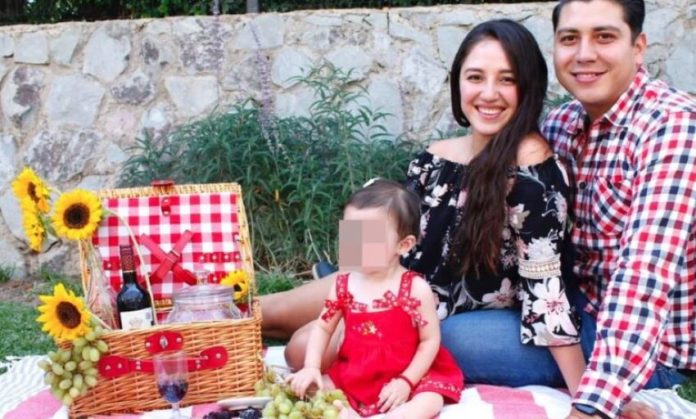
Julio Alberto Villaseñor Cabrera and Jimena Romo Jiménez with their daughter Julia.

A Jalisco family who disappeared two weeks ago has been found alive and well, Governor Enrique Alfaro announced Friday.

The governor said on Twitter that the four missing members of the Villaseñor Romo family — the father, mother, their son and the father’s sister — were located at 2:30 a.m. Friday.

The announcement comes a day after another member of the family, 1-year-old Julia Isabella Villaseñor, was found alone but in good health on a vacant lot in the municipality of La Barca, Jalisco.

“Yesterday, the little one, Julia Isabella, was found, and today we begin the day with the news we’d all been waiting to hear: at 2:30 in the morning, her family was found as well,” Alfaro wrote.

“After days of searching without rest in different municipalities of the state, … her mother, father, aunt and the little boy [her brother] … are today safe and sound.”

The Jalisco Attorney General’s Office (FGE) said that the family, who disappeared on March 25 while traveling home to Zapopan from Mexico City, was found in La Laja, a community in the municipality of Zapotlanejo, located about 40 kilometers east of Guadalajara.

Attorney General Gerardo Octavio Solís said members of the family were undergoing medical checks but were in good health. He didn’t provide details about what happened to the family or where they had been for the past two weeks.

Blanca Trujillo Cuevas, head of the FGE’s missing persons division, said the family was located as the result of “hard work” that included search operations, interviews and the collection of information.

“Today we celebrate that they’re alive, well and going to return to their family members,” she said.

The five members of the family were reported missing after Salvador Romo, father of Jimena Romo, lost contact with them as they were driving home to Jalisco from a vacation in Mexico City.

Seven of eight officers on the Acatic police force in Jalisco were arrested in connection with the family’s disappearance. They currently remain in custody and are scheduled to appear in court on Saturday.

Source: Milenio (sp) 

Health authorities modify national vaccination schedule

0
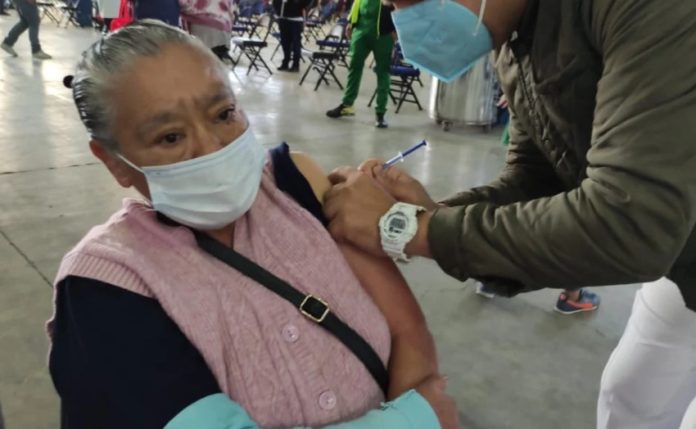
A senior citizen receives a Covid-19 vaccination in Mexico City.

Citing the delay in the delivery of Pfizer vaccines earlier this year, the federal government has modified its Covid-19 vaccination schedule, pushing back by one month the start date of the different stages of the national vaccination plan.

“The schedule of stages 2 to 5 has been modified and may undergo future modifications as it depends on the delivery of the pharmaceuticals,” the government said.

Stage 2 of the vaccination plan — the inoculation of people aged 60 and over and non-frontline health workers — will extend into May, according to the modified schedule. That presumably means that President López Obrador’s pledge to immunize all seniors with at least one vaccine dose by the end of April will not be fulfilled.

Almost 7.4 million seniors have so far received at least one dose, a figure that accounts for only 47% of the 15.7 million people aged 60 and over.

The inoculation of people aged 50 to 59 (stage 3) will take place in May and June while those aged 40 t0 49 (stage 4) will get their shots in June and July. Stage 5 — the vaccination of people aged 16 to 39 — is now scheduled to begin in July and conclude in March 2022.

The government said in late February that it expected to receive more than 100 million vaccine doses by the end of May, but as of Thursday night only 16.08 million had arrived. Mexico has secured most of those doses via commercial arrangements but received some 2.7 million AstraZeneca shots from the United States government under a loan scheme.

Finance Minister Arturo Herrera said Thursday that the government expects to receive an additional 5.5 million AstraZeneca shots in late April and May via Covax, a World Health Organization-backed initiative for equitable vaccine distribution.

Drug regulator Cofepris said Wednesday that it had no plans to limit use of the AstraZeneca vaccine although many countries have recommended that it not be used to inoculate younger adults due to growing evidence that it can cause blood clots in rare cases.

In addition to that vaccine, Mexico has used Pfizer, SinoVac, CanSino and Sputnik V shots to inoculate citizens. Four of the five vaccines used to date require two shots, whereas the Chinese-made CanSino is a single-shot vaccine. Herrera said the government has no plans to purchase Johnson & Johnson’s single-shot vaccine, which is currently being used in the United States.

One additional vaccine that could be used in Mexico is India’s Covaxin, to which Cofepris granted emergency use authorization earlier this week.

Just over 10.64 million vaccine doses — two-thirds of all doses received — had been administered in Mexico by Thursday night, according to Health Ministry data. Of the almost 7.4 million seniors who have received one shot, nearly 940,000 have had their second required jab.

More than 530,000 vaccine doses were administered on Wednesday, a new daily record, while more than 334,000 were given on Thursday, according to preliminary data that will be revised upward on Friday.

The New York Times vaccinations tracker currently shows that 8.4 doses per 100 people have been administered in Mexico, compared to 115 in Israel, which ranks first, 61 in Chile, 53 in the United States and 20 in Canada. Mexico’s southern border neighbors, Guatemala and Belize, have administered 5.8 and 0.7 doses per 100 people, respectively.

Only 7.1% of Mexico’s population has received at least one vaccine dose while just 1.3% is fully vaccinated.

Some health experts estimate that 70% to 90% of the population needs to be inoculated or infected with the virus to reach herd immunity. For that to occur, a minimum of around 90 million Mexicans — the country’s population is just over 126 million — would need to have Covid-19 antibodies generated either by infection or inoculation.

Meanwhile, Mexico’s accumulated tally of confirmed coronavirus cases rose by 5,140 on Thursday to almost 2.27 million while the official Covid-19 death toll increased by 548 to 206,146.

The federal government acknowledged in a report published late last month that Mexico’s true Covid-19 death toll was above 321,000, a figure almost 60% higher than the official count of test-confirmed fatalities, but it has not subsequently updated its official numbers.

Source: Milenio (sp), El Financiero (sp)

Vaccinated seniors can go back to work bagging groceries

0
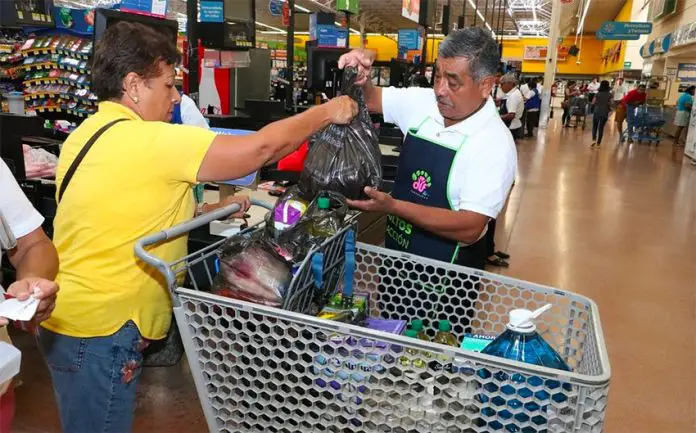
A supermarket bagger in a pre-pandemic photo.

Seniors who have received their second dose of Covid-19 vaccine can now return to work packing groceries in supermarkets, according to the National Institute for the Elderly (Inapam).

The return to work should be gradual, voluntary and in accordance with the coronavirus stoplight risk map in each state. Seniors who have had a respiratory illness within the past month should not return to work, Inapam said.

Major supermarket chains announced in March 2020 that seniors would no longer be permitted to work as baggers to prevent the spread of Covid-19 among vulnerable sectors of the public. The decision represented an economic blow to seniors who supplemented their pensions with tips from shoppers.

For many seniors, the tips were their main source of income, according to Elizeth Altamirano López, a gerontologist and psychologist with the Mexico City Council for the Prevention and Eradication of Discrimination. Losing their jobs can also take a toll on seniors’ mental health, she said.

The Mexico City government announced last month that it would provide economic support payments to seniors who had worked as grocery baggers in the amount of 2,200 pesos (US $109).

Source: Milenio (sp)

Priest sentenced to 27 years for homicide of deacon

0
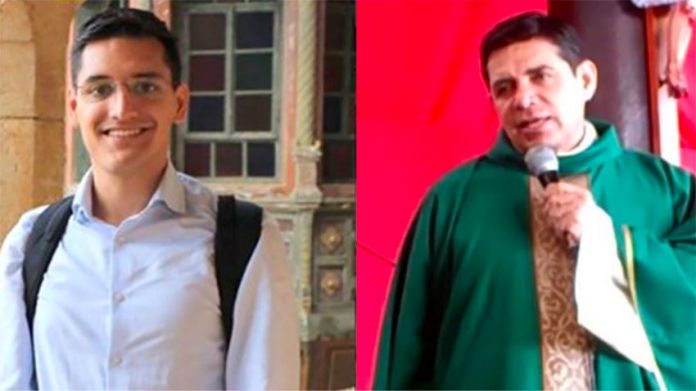
The victim, Avendaños, left, and Bautista.

A criminal court has sentenced Catholic priest Francisco Javier Bautista Ávalos to 27 years and six months in prison for the murder of Leonardo Avendaño, whose body was found in the Tlalpan borough of Mexico City on June 12, 2019.

The prison sentence will be served without options for early release. The court also ordered a fine of more than 400,000 pesos (US $19,850).

The former parish priest was found guilty of murder on Tuesday. The family had asked for the maximum sentence of 50 years.

Avendaño was reported missing on June 11, 2019, a day before his body was found in the back of a pickup truck in Tlalpan. The body showed signs of torture and asphyxiation. Bautista was detained a week later after having conducted the victim’s funeral service.

Video footage showed that he met with the 29-year-old deacon the night of his murder. Shortly after Avendaño’s death, his family said he was murdered to prevent him from going public with unspecified accusations against Bautista.

Initially, many parishioners supported Bautista. An online petition gathered more than 6,000 signatures in his support. Some early reports suggested that the murder may have been an accident in the course of a sex game. Josué Avendaño, the victim’s brother, emphatically rejected those claims.

“My brother was tortured. [His injuries] weren’t from a game or anything like that. It was something that was planned in advance. My brother was tortured, and then, after that, the cause [of death] was asphyxiation,” he said. He added that the body was badly bruised with a broken nose and some missing teeth.

After the sentencing, the victim’s brother said he was satisfied with outcome.

“I would have liked the maximum penalty but having justice served is more than enough.”

Source: Milenio (sp)

Men disguised themselves as senior citizens in attempt to get a Covid shot

0
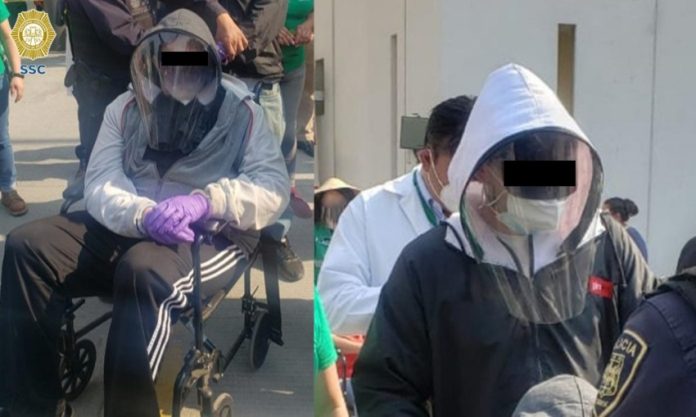
One of the men came to the vaccination site in a wheelchair.

Two men who passed themselves off as senior citizens in order to get vaccinated against Covid-19 are in prison and awaiting trial.

On Wednesday, a Mexico City judge ordered the two men to stand trial on charges of identity theft as well as falsification, alteration or improper use of identification documents. The judge remanded the men in custody and granted prosecutors a period of one month to complete their investigation.

Christian Alberto Nieva Gómez, 35, and Rubén Morales Zerecero, 31, allegedly went to a vaccination center in the Mexico City borough of Coyoacán on March 27 and passed themselves off as the latter’s uncle and father, respectively, according to the TV Azteca news website.

According to preliminary investigations, they presented birth certificates and citizen identification (CURP) numbers that corresponded to Morales’ relatives.

Wearing face masks, plastic face shields, gloves, sweaters with hoods and dark glasses, the men managed to deceive officials at the vaccination center and both received shots.

Mexico City Mayor Claudia Sheinbaum said that the men had also dyed their hair and eyebrows gray.

After the men had received their shots and were in the vaccination center’s observation area, a federal official became suspicious that they weren’t who they said they were. Their documents were checked again, and the official noted that the two men’s voices weren’t those of senior citizens.

Police were immediately notified and the men were arrested.

“What they did was falsify official documents, and that’s a criminal offense,” Sheinbaum said on Wednesday. “That’s the reason they’re in custody.”

The two men have connections and some renown in Latin America’s video gaming e-sports world, according to TV Azteca.

A video gaming news website said Morales, who is also the son of Mexican TV actress Aida Pierce, has been one of the best videogame players in Latin America during the past two decades.

He made a splash in the videogaming world at age 15 in 2005 as a third-place winner in the FIFA esports world championships and became popular enough that he was featured in commercials for the Xbox live videogaming platform in Latin America in 2015. He most has recently worked for the videogame company EA Sports on content creation.

Nieva also has worked for EA Sports and is known for working on the development and localization team for Latin America.

Source: Reforma (sp), Animal Político (sp), TV Azteca (sp), Ginx Esports TV (en) 

Child of family missing for 2 weeks found in La Barca, Jalisco

0
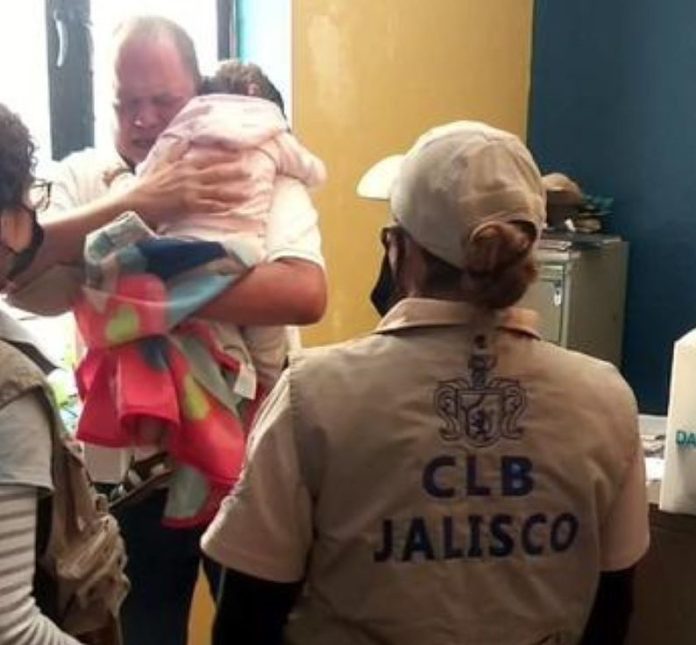
1-year-old Julia Isabella Villaseñor is reunited with her grandfather.

A 1-year-old girl who disappeared last month along with her parents, aunt and brother has been found, the Jalisco Search Commission said Thursday.

The commission said that Julia Isabella Villaseñor was found by municipal police on a vacant lot in La Barca, a municipality about 100 kilometers southeast of Guadalajara. The infant was alone, but was in good health and has been reunited with her grandfather.

Julio Alberto Villaseñor Cabrera, Jimena Romo Jiménez, their two children and Villaseñor’s sister disappeared on March 25 while traveling home to Zapopan, Jalisco, from Mexico City.

Seven police officers on the municipal police force in Acatic, Jalisco, were arrested in connection with the disappearances earlier this week. Two of the officers are suspected of involvement in another missing persons’ case.

On Thursday morning, officials from the Jalisco Search Commission and National Search Commission, as well as police, were continuing the search for the four other missing family members in Acatic, which is about 100 kilometers northwest of where Julia was found. Relatives of the family were also participating in the search.

The Zapopan couple disappeared in Acatic.

Authorities are also searching for the deputy director of the Acatic police force, who is wanted on forced disappearance charges.

The motive for the family’s disappearance has not been determined, but there could be a connection to an armed attack which took place days earlier in Guadalajara.

“[A] person who was assaulted with a gun in the city of Guadalajara four days earlier in a direct attack has a very close relationship with two of the disappeared people. So it is very probable that the events were related, but we are still not totally sure,” the Jalisco Attorney General’s Office said earlier this week.

An earlier version of this story incorrectly stated that the Villaseñor Romo family has three children. They have two.

Source: Reforma (sp) 

In the southeast’s ‘water communities,’ families live at a river’s mercy

0
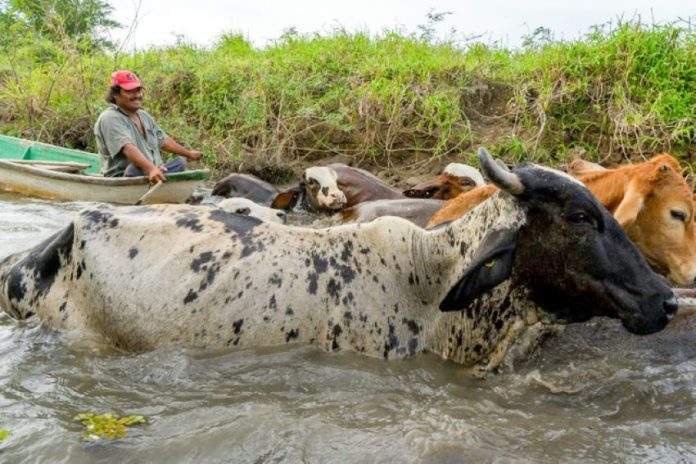
A farmer along the Usumacinta River moves his cattle.
A farmer on the Usumacinta River moves his cattle. Photos by Gavin Shand

While the unseasonably late Hurricanes Eta and Iota slammed into Central America in the first half of November 2020, further north on Mexico’s Gulf coast, the sun was shining, as it almost always does there late in the year.

Meanwhile, however, across the so-called “northern triangle” of Guatemala, Honduras and El Salvador, where the hurricanes were striking, significant quantities of rainwater poured into the area’s rivers, which largely flow from south to north and end up meeting the ocean in the Gulf of Mexico, largely via the Usumacinta River basin.

As the hurricanes hit, in fact, the Díaz family of San Eduardo at the westernmost edge of Campeche, a family well used to being surrounded by water the entire year, had little inkling that within two weeks and despite having had no rainfall whatsoever, they would be struggling with the harshest floods they had witnessed in a generation.

In no time at all, their entire land, crops and animals had either washed away or had been left at the literal water’s edge. At the highest watermark, in fact, the family had half a bedroom as the sole remainder of their dry existence; the rest of their lives had been fully immersed.

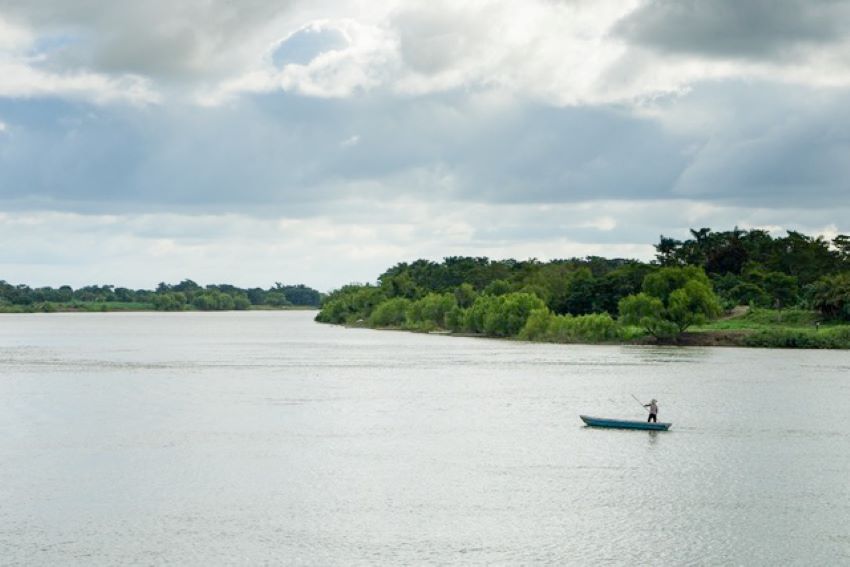
The Usumacinta River and its broad hinterland of deltas and extensive floodplains gathers and releases, on average, over 5,000 cubic meters of water per second. Straddling Tabasco and Campeche in Mexico’s remote southeast, reaching inland as far as Tenosique, it is by some distance the most voluminous river in Mexico and Central America.

The Usumacinta River, which runs through Tabasco as well as Chiapas.

Above Tenosique, in the highlands of Chiapas, where the river also serves as the de facto border between Mexico and Guatemala, the Usumacinta is generally a narrow channel cut through rock — including a classic high-wall gorge at Boca del Cerro — before it opens out below into a wide array of self-nourishing water systems. During the winter season, some of the expansive area of land occasionally dries, but the territory is more often composed of year-round wetlands that are home to innumerable native species, including manatee, crocodiles, the howler monkey and an immense array of bird life.

The Usumacinta is also home to Mexico’s little-visited and largely forgotten water communities, the Díaz family among them.

Comprising three generations and approximately 40 individuals, the family’s presence here began 60 years ago when their grandparents relocated to the area from the regional uplands. They moved because land (or water) was cheap and plentiful and natural resources from which they could live and sustain themselves were in abundance.

The waters rose, the waters abated, fish were everywhere and their little pocket of precarious paradise gave them enough space to keep and feed livestock, using everything that grew around them.

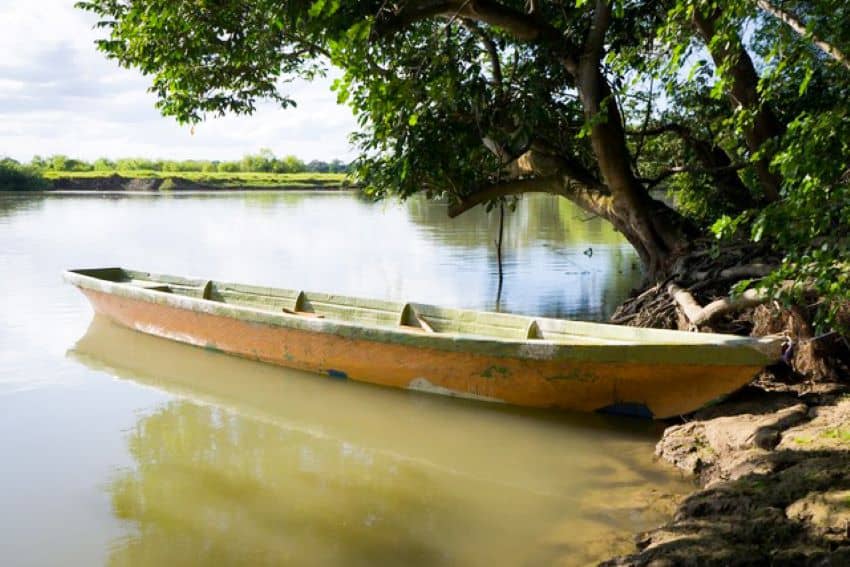
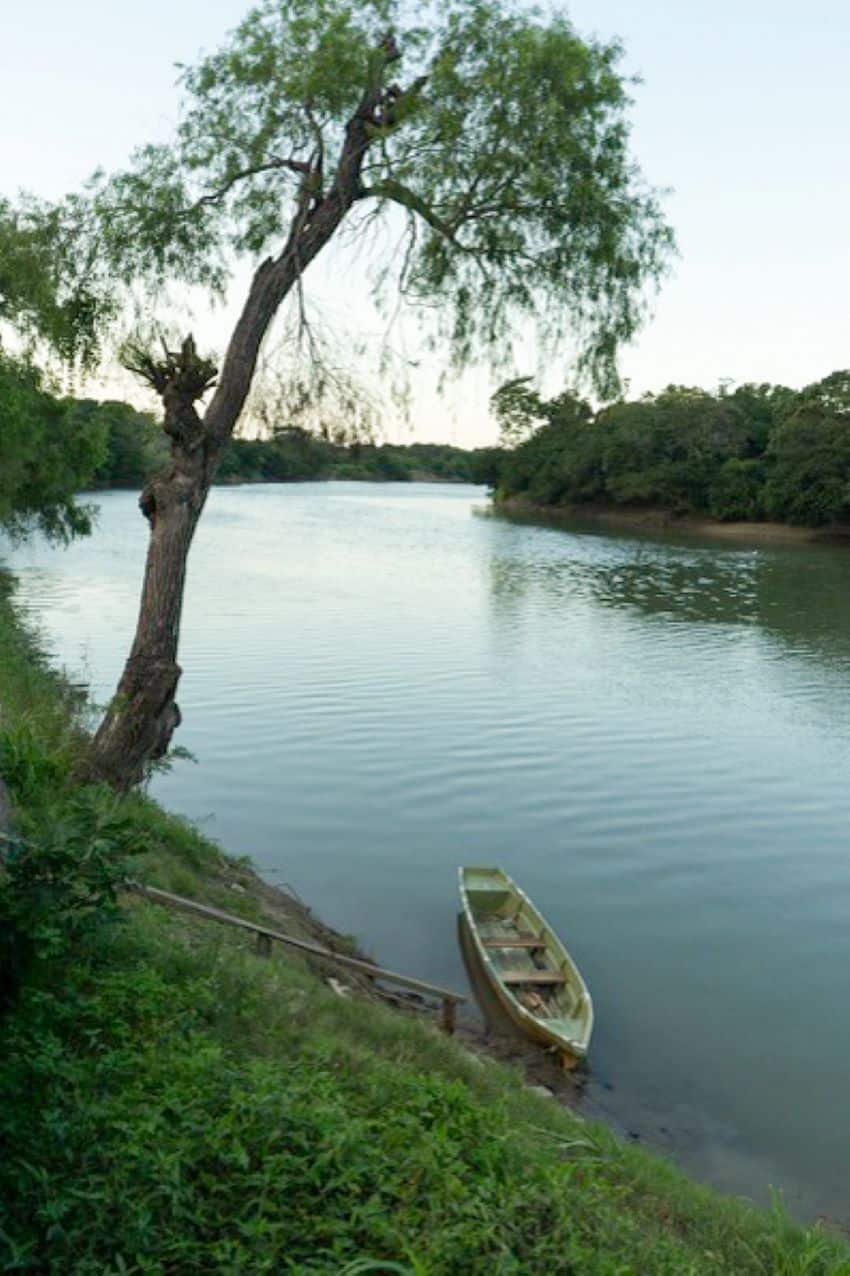
In the early days, the only transport was via the water on a Venetian-style punt. Though there are still traces of the canalete style of stand-up rowing, or punting, these days, outboard engines are favored over the punt for anything but the shortest of distances.

The nearest road was built 20 years ago but still ends miles from the family, a clear dead end that had soldiers who came to help with relief efforts in December completely stumped.

This traditional mode of transport is still used, but these days, the canoe has been mostly replaced by motorboats.

“They came in a massive truck,” says Sara, a second-generation member of the family and now regarded by all as the matriarch of the community. “The road was impassable, and they couldn’t conceive that it just stopped without going on anywhere. So their assistance ended up being to help some neighbors move a fridge they had just bought from the nearest town.” She rolls her eyes as she says this. “We’re better off alone here. Most people don’t understand how we can live so completely surrounded by — and at the mercy of — water, so much water.”

Further to the west in Tabasco, in the Centla biosphere reserve, husband-and-wife team Lupita and Raúl live much the same lifestyle as the Díaz family — one in which water is a permanent source of opportunity and livelihood but also risk. The couple live at Tres Brazos, the point of precise intersection between the Usumacinta and the vast Grijalva River and the smaller San Pedrito River, at which point the Usumacinta gets bigger than ever as it rolls on toward the ocean.

Here it isn’t just the full rivers that flood, says Lupita, but also ocean swells that barrel back in.

“We’re constantly at the mercy of our environment, but we’ve never known a place as beautiful as this. We are so lucky to live here.”

Communities across this broad, undefined area — except to say that it constitutes the westernmost edge of the Mayan world — all share a word in their common language, la creciente. The concept refers to the river as it swells and threatens but also the fact that, as it bursts its banks, fish will fill the surrounding wetlands and lagoons, bringing bounty and sustenance.

As with every event that these most amazing and unique of communities endure, everything is a double-edged sword — no surprise when you live on a forgotten frontier.

Because the river stretches into Guatemala, a hurricane outside Mexico can end up swelling the river here to flooding.

The truth of such frontiers is that they are little-known and understood because they are hiding in plain sight in the heart of Mexico’s southeast. Most mainstream cultural exposure to them is at its very edges. But take the time to push on beyond where the roads end, to journey beyond the water’s edge, and you will find some of the most amazing unknown and unheralded communities in the country, a hidden parallel world living on the beautiful edge of existence.

Shannon Collins is an environment correspondent at Ninth Wave Global, an environmental organization and think tank. She writes from Campeche.

Petroleum thieves turn from pipeline taps to smuggling fuel by land and sea

0
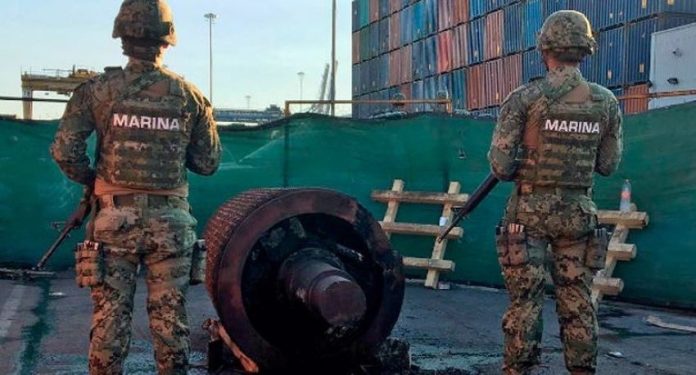
The military and the federal government have ramped up supervision in recent weeks at ports in Tamaulipas to try and stop illegal fuel smuggling.
The military and the federal government have ramped up supervision in recent weeks at ports in Tamaulipas to stop illegal fuel smuggling.

Criminal groups that once dedicated themselves to tapping state-owned petroleum pipelines are now focused on smuggling fuel into the country.

According to a report published Thursday by the newspaper Reforma, bands of former huachicoleros, or fuel thieves, are colluding with customs officials to bring fuel into Mexico illegally via marine ports and the northern border.

The collusion is mainly taking place at land borders in the Tamaulipas cities of Reynosa, Matamoros and Nuevo Laredo, and at the Altamira and Tampico ports in the same state.

Citing federal sources, Reforma said that dozens of tanker trucks are entering the country every day carrying fuel purchased in Texas that is not officially reported to customs. The newspaper also said that fuel is imported with false documentation that allows importers to avoid taxes.

In addition, the report said that criminal groups are taking stolen fuel out to sea on vessels that subsequently return to Mexican ports and pass the fuel through customs with fake import permits to “legalize” it — fuel laundering, in other words.

“Fuel theft is now [occurring] in foreign trade,” Raquel Buenrostro, head of the federal tax agency SAT, said in a recent meeting with lawmakers.

“They steal [fuel] in the Gulf [of Mexico], take it out to open sea and bring it back in with fake import licenses. As it is stolen, it was worth paying taxes. Now they [criminal groups] don’t even pay them,” she said.

Buenrostro said the SAT, which oversees customs, is working to resolve the fake import permits issue.

According to federal reports, once fuel is smuggled into the country it is transported to gas stations in the northeast of Mexico that are operated by criminal groups. The army and navy, which were last year given the task of eliminating corruption at ports of entry, have ramped up supervision of customs in recent weeks in an attempt to stop the illegal importation of gasoline and diesel, Reforma said.

The federal government’s Financial Intelligence Unit (UIF), the National Guard and customs are all investigating criminal networks that operate at land borders and ports. The UIF is investigating the transportation, storage and sale of smuggled fuel in order to identify the money trail of criminal groups.

According to the SAT, its tax revenues have fallen due to the illegal importation of fuel. The agency reported that its IEPS excise tax revenue declined by 20.3 billion pesos (US $1 billion), or 35.7%, in the first quarter of 2021 compared to the same period of last year.

“This situation is due to the smuggling … of fuel. The smuggling is carried out by … organized crime. … In addition to having a negative impact on tax collection, it affects fair competition in the [fuel] market,” the SAT said in a statement.

Source: Reforma (sp) 

AMLO renews attack on journalist with a history lesson to show media can’t be trusted

0
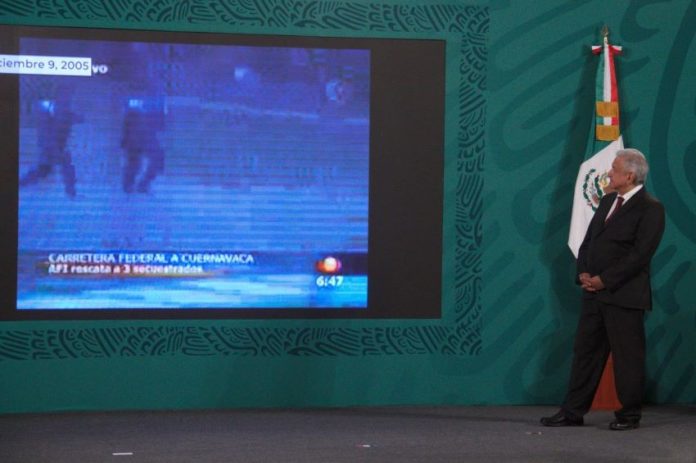
AMLO dedicated some of his morning press conference to showing old news footage of a 2005 televised arrest that turned out to be restaged by police for the Televisa news network.
AMLO dedicated a portion of his morning press conference to showing old news footage of a 2005 televised arrest that turned out to have been restaged by police.

To support President López Obrador’s claims that the injection of a man with an empty syringe at a Covid-19 vaccination center in Mexico City may have been staged and that the media can’t be trusted, the federal government on Wednesday recalled a 2005 case in which two people were arrested for kidnapping on live national television in what was in fact a setup.

At the president’s regular news conference, the government screened footage originally broadcast on the Televisa network in December 2005, showing the arrest of Israel Vallarta and Florence Cassez, his French girlfriend, by federal police.

Interior Minister Olga Sánchez noted that the pair were in fact arrested the day before the staged arrest was broadcast.

The day after their arrest on the Mexico City–Cuernavaca highway, Vallarta and Cassez were forced to participate in a staged arrest at a cabin where they were supposedly holding their kidnapping victims hostage.

There was “no agreement” between the first arrest and the staged, televised arrest with regard to the place, time and way in which they occurred, Sánchez said.

She said that the head of the federal investigative police at the time, Genaro García Luna — currently in custody in the United States on drug trafficking and bribery charges — later admitted that the televised arrest was a “dramatization unconnected to reality.”

García declared on television that the televised arrest was a “setup,” the interior minister added.

President López Obrador, who is frequently critical of the media, said the 15-year-old case was being revisited to show that the press cannot always be trusted.

“We’re going to look at the issue of setups that are carried out by the media with the intention of manipulating public opinion,” he said.

López Obrador suggested Monday that the injection of a senior with an empty syringe was staged, asserting that the media is “capable of everything.”

“… I know a journalist and a television channel that were specialists in setups, so I don’t trust [the media],” he said.

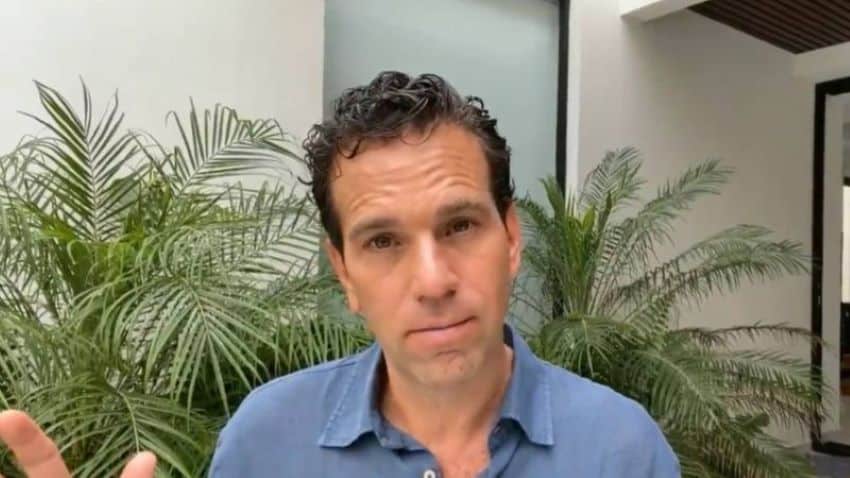
Journalist Carlos Loret de Mola, who broadcast the faked arrest footage for Televisa in 2005, said he didn't know that the apprehension was staged by police (from Twitter).
Journalist Carlos Loret de Mola, who broadcast the faked arrest footage for Televisa in 2005, said he didn’t know that the apprehension was staged by police (from Twitter).

It became clear on Wednesday that the president was referring to Televisa, which has long had a cozy relationship with the once-omnipotent Institutional Revolutionary Party, and the journalist Carlos Loret de Mola, the presenter of the news program on which the staged arrest was broadcast in 2005.

López Obrador, who has clashed previously with Loret de Mola — an outspoken critic of the federal government — said that setups have long been a part of the Mexican media landscape.

“Things like this that we’ve just seen were presented during the neoliberal period [which the president defines as occurring between 1982 and until he came to power in 2018] and, of course, in earlier times,” he said.

The president charged that setups occurred because of the “close and even criminal association that existed between the political power and the media.”

The public were left in a “state of defenselessness,” he said. “They could be manipulated with complete freedom,” he  added before asserting that his government will never participate in any media setups designed to deceive the public.

Despite his condemnation of media deceit, López Obrador, accused of stigmatizing the press in a new Amnesty International report, stressed that his administration will not seek to legislate to make media manipulation a crime.

“Freedoms are guaranteed; there is no censorship. There is no repression of the media … but there is no longer this perverse relationship [with the government],” he said.

Later on Wednesday, Loret de Mola posted a video message to social media in which he said that he wasn’t aware that the arrest of Vallarta and Cassez was staged at the time it was televised and noted that he has apologized for the deceitful broadcast on numerous occasions.

The journalist claimed that the president’s motivation for screening footage of the 15-year-old staged arrest — which he described as “an ambush against me” — was to provide a distraction from corruption accusations leveled against members of López Obrador’s government and family, including his brother Pío López Obrador who, in two videos that surfaced last year, is shown receiving large amounts of cash from an advisor to the Chiapas government.

Loret de Mola said the injection of a person with an empty syringe simply requires an investigation and the imposition of penalties if it is determined that the simulated vaccination occurred on purpose. But López Obrador instead sought to find a scapegoat in the media, he said.

The journalist charged that what the president did on Wednesday was a “precise representation” of the federal government: “in the face of any difficulty, any error or improper action, the fundamental interest is not to respond to the worries of his constituents but rather to desperately look for who to blame.”

Loret de Mola said the government targeted him because he hasn’t succumbed to the president’s belief that the media should “flatter and applaud him.”

López Obrador and his administration went after him, Loret de Mola added, because they weren’t capable of articulating a “simple response about a vaccine that wasn’t administered.”

“This says everything about the current government and he who leads it. Who’s important is him, only him, his image and his grudges,” he said, adding that it was ironic that the president was accusing him of deceit when he has said “27 times” that the pandemic is under control, lied about the real Covid-19 death toll and claimed that there is no economic crisis.

“He has lied 45,000 times in just over two years of morning press conferences; this is a hard fact. I accepted my error 16 years ago, and I’ve offered public apologies on several occasions and faced legal consequences. But he [López Obrador] doesn’t [own up to his mistakes]. To hide the reality, he reverts to farce every morning. I will continue doing journalism whatever the cost,” Loret de Mola concluded.

Source: Reforma (sp), Infobae (sp)

Amnesty International report critical of human rights violations in Mexico

0
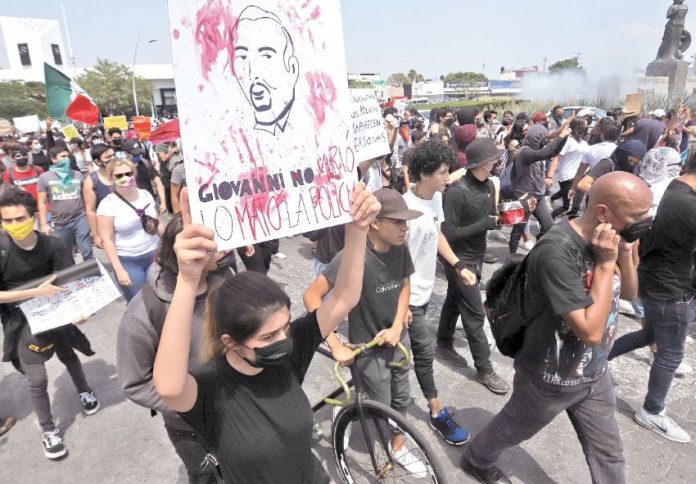
The killing of Giovanni López by police for not wearing a face mask, which sparked protests
The killing of Giovanni López by police for not wearing a face mask, which sparked protests, was cited in the Amnesty International Report.

Unlawful killings, arbitrary detentions, enforced disappearances and violence against women and girls are among a range of human rights violations cited by Amnesty International (AI) in a new report.

In the Mexico section of its 2020-2021 human rights report, AI cited three unlawful killings perpetrated by Mexican security forces last year.

They were the death of 30-year-old Giovanni López Ramírez, who was allegedly killed by municipal police in Ixtlahuacán de los Membrillos, Jalisco, last May after being arrested for not wearing a face mask; the army’s execution last July of 19-year-old Arturo Garza, an unarmed survivor of a shootout in Nuevo Laredo, Tamaulipas, between the military and a criminal group; and the alleged murder last October of 35-year-old Yéssica Silva by the National Guard, which opened fire on her vehicle in Delicias, Chihuahua, as she returned home from a farmers’ water rights protest.

In the “Extrajudicial Killings” sub-section of its Mexico report, AI said that the federal Attorney General’s Office attempted to close the investigation into the killing of 22 people by soldiers in Tlatlaya, México state, in 2014, before having properly investigated chain-of-command responsibility in the case.

However, the attempted closure was halted by victims’ representatives, the organization said.

It came to light last week that the Ministry of National Defense last month secretly rearrested seven soldiers in connection with the incident, known as the Tlatlaya massacre.

AI noted that President López Obrador signed a decree last May ordering the armed forces to be permanently deployed in public security operations until March 2024. But the decree didn’t include “substantive regulations to ensure their conduct was consistent with international standards,” the report said.

AI also raised concerns about the arbitrary detention of at least 27 people during protests in Guadalajara last June triggered by the death of Giovanni López.

“Protesters were abducted in unmarked vehicles, and their whereabouts were unknown for several hours. Local organizations reported that at least 20 of these detentions could amount to enforced disappearances,” the report said.

It added that such disappearances by state agents and disappearances carried out by nonstate actors continued to be a concern. “Those suspected of criminal responsibility enjoyed almost total impunity,” AI said.

Entitled The State of the World’s Human Rights, the report noted that almost 7,000 people were registered as missing in Mexico in 2020, and almost 64,000 disappeared over the past decade.

In the “Violence against Women and Girls” subsection, AI acknowledged that the femicides in February 2020 of 25-year-old Ingrid Escamilla, whose body was skinned by her partner, and 7-year-old Fátima Cecilia Aldrighett Antón, whose body was found in a plastic bag, “sparked outrage, leading to unprecedented attendance at social protests on International Women’s Day.”

“… During 2020, 3,752 killings of women were reported, 969 of which were investigated as femicides,” the report said.

It also said that up to December, there were just over 260,000 calls to the 911 emergency line to report incidents of violence against women, a 32% increase compared to the entire previous year.

The NGO also noted that the government slashed 75% of the National Women’s Institute operational funding last July and asserted that President López Obrador “continued to downplay the issue of violence against women, questioning the validity of calls made to emergency services to report domestic violence and criticizing women’s protests against femicides.

In addition, AI noted that the National Human Rights Commission’s Mexico City headquarters was taken over by women protesting the lack of progress by authorities on the issue of violence against women, adding that “alerts of gender-based violence against women” remained operational in 18 states.

With regard to sexual and reproductive rights, the human rights organization noted that the Supreme Court rejected an injunction request last July that sought to change the legislation criminalizing abortion in Veracruz. Abortion activists had been optimistic that the court would deliver a landmark ruling that would pave the way for the decriminalization of abortion across Mexico.

The report said that human rights defenders continued to be attacked and harassed, noting that 24 such people were killed last year.

“Defenders of environmental and indigenous peoples’ human rights expressed concern about the Maya Train mega project. The president responded by publicly accusing them of being ‘false environmentalists,’” it said.

AI also noted that media workers continued to be threatened, harassed and attacked last year and that at least 19 journalists were killed.

“The president stigmatized human rights defenders and the media on various occasions,” the report said.

“… In September, a letter signed by 650 journalists and academics accused the president of actions harmful to freedom of expression, including a series of public statements undermining the press, permitting an environment conducive to censorship, administrative sanctions and misuse of the law to intimidate the press.”

AI also noted in the report’s “Freedoms of Expression and Assembly” subsection that police in León, Guanajuato, arbitrarily detained 22 women and beat and sexually assaulted several women and girls during a women’s protest last August.

“In November, in Cancún, police used live ammunition on a series of mostly peaceful protest by women protesting against femicides,” the report added.

AI also said that torture and other ill-treatment by Mexican authorities remained a concern in 2020 and that migrants, refugees and asylum-seekers continued to face excessive use of force and arbitrary detention by authorities, as well as abductions, assaults and killings by nonstate actors.

“Civil society organizations presented several injunctions between April and the end of the year requesting the release of all people in immigration detention and an end to such detentions due to the Covid-19 risk. A federal judge in Mexico City ruled that all those in immigration detention should be released. However, authorities failed to comply with the ruling and detentions continued, depriving migrants not only of their right to health but also to liberty,” the report said.

Mexican authorities have further ramped up enforcement against migrants in recent weeks.

Amnesty International also raised concerns about the federal government’s management of the coronavirus pandemic, which has claimed more than 205,000 lives, according to the official tally, which is widely considered a significant undercount.

“The government responded to the Covid-19 pandemic with cuts to public spending in various areas. Health workers reported that they lacked access to personal protective equipment [PPE] and the benefits needed to ensure a safe working environment,” the report said.

At least 2,397 health workers died with Covid-19 in Mexico last year, AI noted. It also acknowledged that several health workers were physically attacked in public places or on public transport during the pandemic.

In the broader Americas region, “government responses to the [coronavirus] crisis had far-reaching impacts on human rights, with frequently devastating consequences for vast numbers of people,” the report said.

“The region, home to just 13% of the world’s population, recorded 49% of all Covid-19-19 deaths globally [in 2020]. Lack of PPE plus poor and precarious working conditions, exacted a terrible toll on health workers, who were often prohibited from speaking out and sanctioned if they did.”

Mexico News Daily