Home Blog Page 1278

Cancún airport arrivals reach 1.57 million, highest since February 2020

0
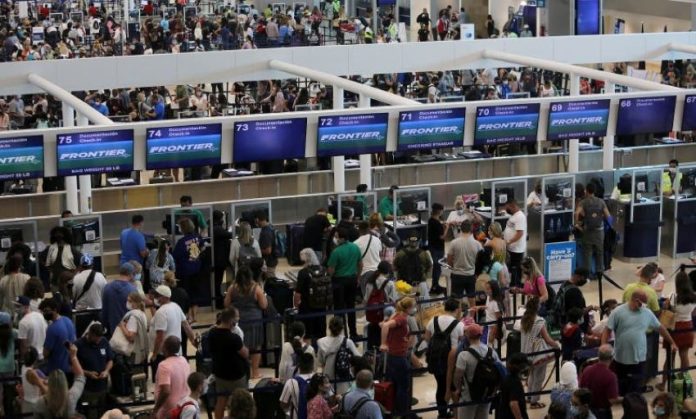
Crowds at Cancún International Airport
Crowds at Cancún International Airport.

Arrivals at Cancún airport hit their highest level since February 2020 last month, even as the suspension of Canadian airlines’ flights to Mexico remained in effect.

A total of 1.57 million air travelers flew into the resort city’s airport in March, according to its operator, ASUR. Just under 56% of that number arrived on international flights while just over 44% flew in from other cities in Mexico.

Incoming passenger traffic hadn’t been so high since 2.17 million people flew into Cancún in February last year – before the World Health Organization had declared the coronavirus outbreak a global pandemic.

International arrivals have now outnumbered domestic arrivals during four consecutive months, even though flights from Canada — Mexico’s second-largest source country for tourists after the United States – to Mexico were suspended on January 31 and won’t resume until early May.

The airport’s high numbers have also occurred despite many countries, including the United States and Canada, requiring incoming travelers to present a negative Covid-19 test result.

ASUR said in a statement that the Easter vacation period helped increase incoming flights in March. Holy Week began this year on March 28 and ran through April 4.

Analysts at the Mexican bank Banorte said in a note that March arrivals at airports operated by ASUR, which includes facilities in several other cities such as Mérida, Hautulco and Veracruz, exceeded expectations.

They predicted that international air arrivals will increase further in coming months due to the fast rollout of Covid-19 vaccines in the United States. Almost 152,000 flights are scheduled between the United States and Mexico in the seven-month period between the end of March and the end of October, a 6% increase compared to the same period in 2019.

Cancún will be the most popular destination this summer, according to data also showing that 11 of the 13 airlines that fly between Mexico and the United States will provide services to and from the airport in the Caribbean coast city. All told, there will be direct services between Cancún and 40 airports in the United States, among which Los Angeles International Airport and Dallas-Fort Worth International will have the most connections.

Air Canada, one of four Canadian airlines that agreed to the Canadian government’s request to temporarily suspend flights to Mexico and other sun destinations, will resume services to the country in early May.

According to the company’s website, flights from Toronto to Mexico City will resume on May 3 with three services per week. Twice-weekly flights from Vancouver to the Mexican capital will resume on May 6, while twice-weekly services between Montreal and Mexico City will begin again on May 10.

The newspaper El Independiente reported that Air Canada was planning to resume flights to Los Cabos in early May, but that destination doesn’t currently appear on the airline’s upcoming routes schedule.

The resumption of some flights to Mexico from Canada is welcome news for the Mexican tourism industry, which had its worst year in living memory in 2020. Tourism Minister Miguel Torruco said that the three-month suspension of flights could cost the sector US $782 million in lost revenue.

The Tourism Ministry predicted in January that international tourist numbers would increase 33.7% in 2021 compared to last year in a best-case scenario, but even if that upturn is achieved tourism would still be well below 2019 levels.

Now, however, the summer schedule for flights between the United States and Mexico, the rapid vaccine rollout in the U.S. and the upcoming return of Canadian tourists give cause for optimism that the recovery could exceed that prediction.

Source: El Universal (sp), El Independiente (sp), The Canadian Press (en) 
The tale of ‘The Third Guadalajara,’ located in the middle of nowhere

0
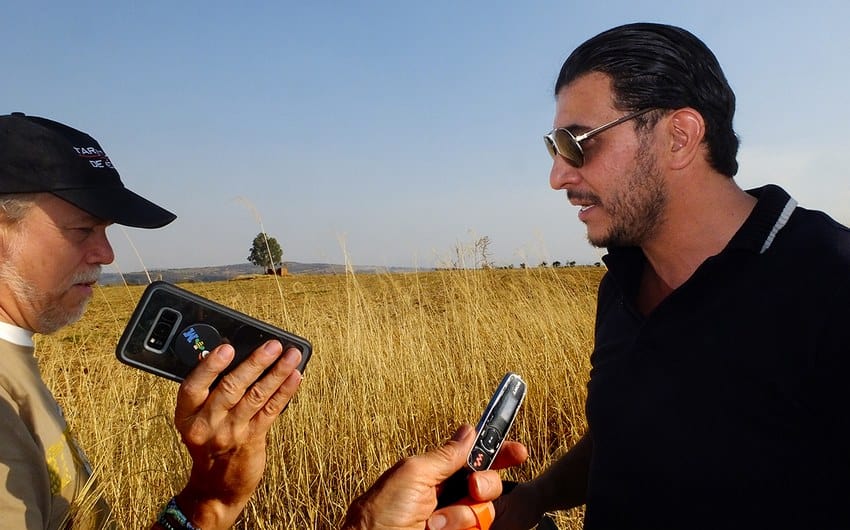
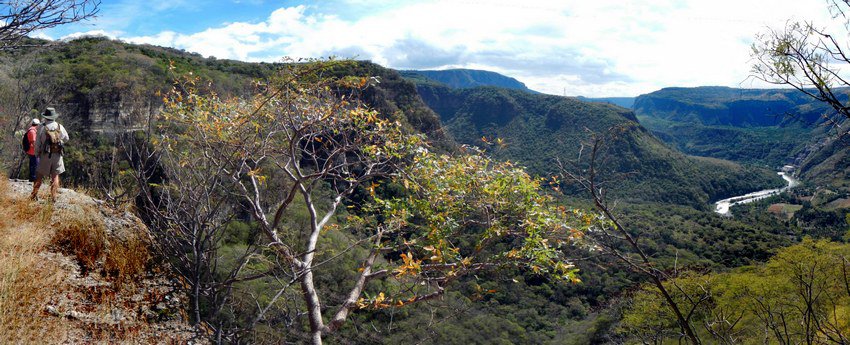
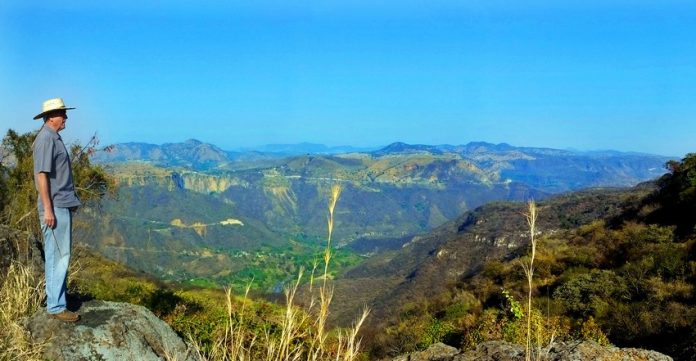
Salvador Mayorga takes in the view from Rancho el Mexicano.

The northern limits of the city of Guadalajara are clearly defined by the beautiful but nauseatingly smelly and polluted Santiago River, which flows through the dramatic Barranca de Oblatos canyon and its sheer walls that are 500 meters deep.

What lies on the other side of that challenging chasm?

“To some, it may look bleak over here,” says ranchero Salvador Mayorga, “but in reality, the ecosystem is fascinating. This is the habitat of wild boars, pumas, armadillos, black iguanas, white-tailed deer, wild turkeys, parakeets and an infinite variety of invertebrates.”

It’s also the perfect place to view the Barranca in all its glory, as I discovered when I camped out at Mayorga’s Rancho el Mexicano, which features no electricity and no internet, and — although it is located only four kilometers from the busy streets of Mexico’s second-largest city — still feels pretty close to the middle of nowhere.

Well, I happened to be visiting Rancho el Mexicano with archaeologist Francisco Sánchez, and when I mentioned the loneliness of our surroundings, he turned to me.

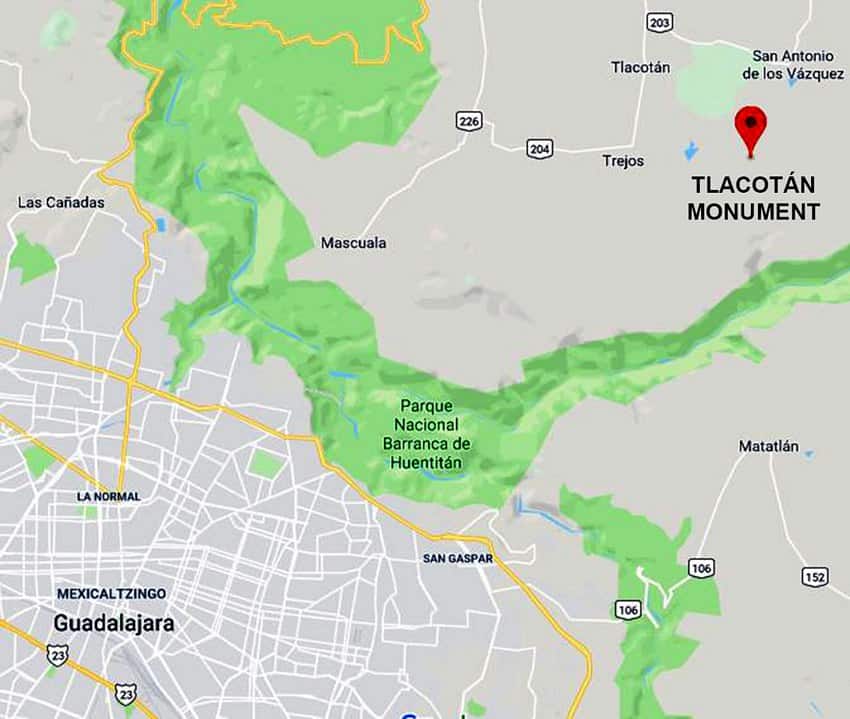
Map locating the monument to the third Guadalajara.

“Would you believe that this desolate mesa we are on was once chosen by the Spaniards as a great spot to found the city of Guadalajara? Not far from here there’s a monument marking the place, and I know right where it is.”

Naturally, my friend Rodrigo and I prevailed upon the archaeologist to show us the historic spot. As we drove along, Francisco explained that the first attempt to found Guadalajara was in Nochistlán in Zacatecas in the year 1532, but there wasn’t enough water and that plan was scuttled.

Next they tried Tonalá, but Nuño de Guzmán, the Spanish conquistador and colonial administrator for New Spain, chased them away, saying he wanted that land for himself. Then they decided upon the spot we were heading for, called Tlacotán, located 17 kilometers northeast of today’s Guadalajara Zoo.

Francisco stopped the car. “We’re here. The monument is just a few steps away.”

Well, this place looked even more solitary than Rancho el Mexicano, and I couldn’t see a monument anywhere. However, Rodrigo and I followed Francisco on a winding path through the bush until we came to a barbed-wire fence.

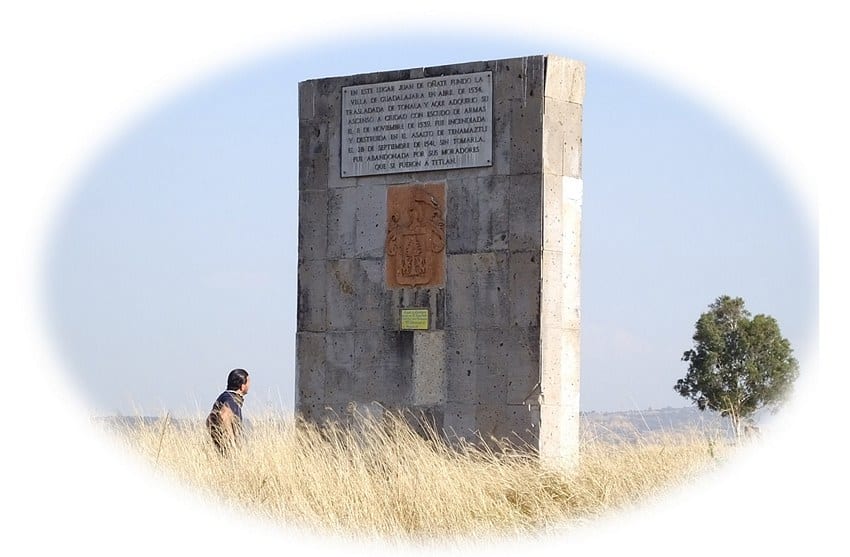
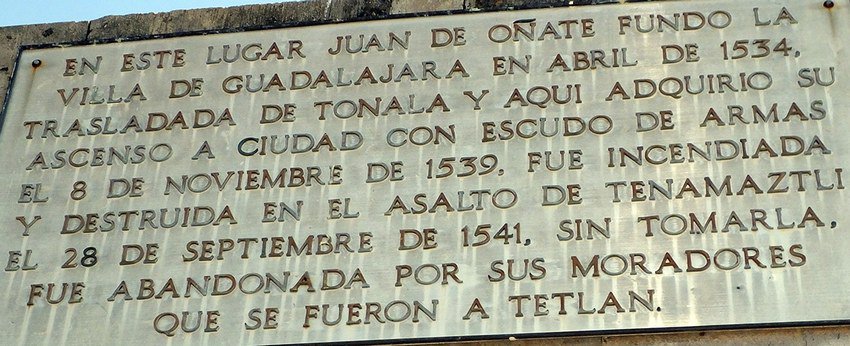
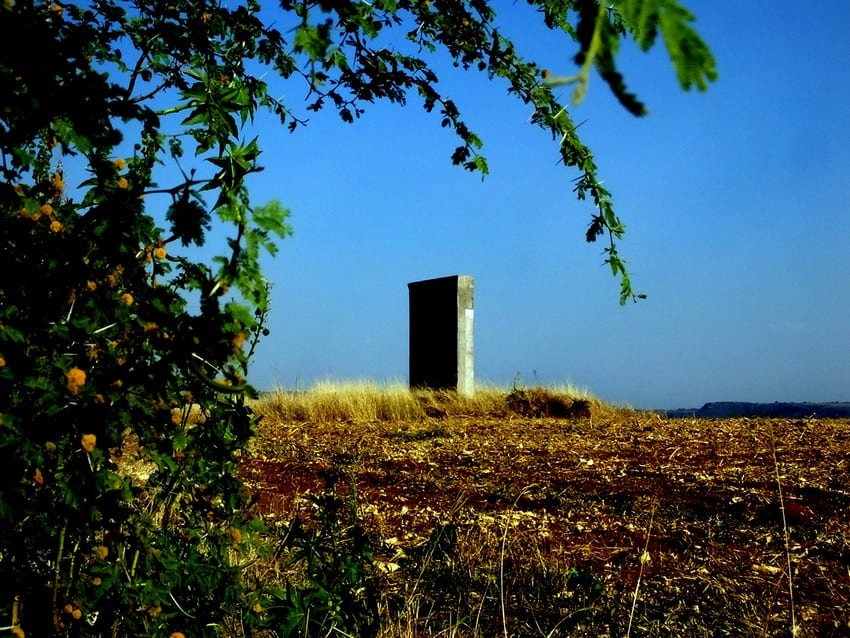
Now, as has been proven again and again, all good adventures in Mexico start with a step over, under or through a barbed-wire fence … and this was no exception. On the other side of the fence was a row of trees, and then we saw it: a great slab looming above us like the monolith in 2001, A Space Odyssey. All around it was nothing but cornfields as far as the eye could see. A big engraving stated that this was the place where the village of Guadalajara was founded in 1535 and where it was declared a city by royal decree in 1539.

Archaeologist Francisco Sánchez, right, relates the story of the third Guadalajara.

“But there’s nothing here! Where are the ruins?” we asked our guide, who assured us that back in those days there were houses, a cathedral and a big plaza shaded by a tall zapote tree.

“So, what happened?” I asked.

“What happened was Tenamaztle, leader of los indígenas Caxcanes, who according to the records of the Spaniards appeared on top of those distant hills on September 27, 1541, with 15,000 men, all of them infuriated by the Spaniards’ custom of enslaving native peoples.

Pedro Plascencia, who happened to be out in that direction collecting firewood, saw them coming down the hills in great waves, but the Spaniards had foreseen the possibility of a big attack and had reinforced one of their houses, erecting towers and walls around it and sealing up all the doors but two in order to protect their little city.

And then they were attacked by thousands of Caxcanes, most of them naked and painted red from head to foot, their skulls shaved except for a ponytail. Some of them wore clothing or armor taken from dead Spaniards, but their only weapons were bows and arrows.

“For four hours the Spaniards fought back with their guns, crossbows and cannons. When it was all over, they say 15,000 Caxcanes lay dead with rivers of blood everywhere, but only two Spaniards had been killed.

“So Cristóbal de Oñate, governor of the city, ordered that the corpses be thrown over the cliffside into the Río Verde Canyon to prevent an epidemic, but all the bodies lying more than two kilometers from the city were left in place as proof of what had happened and a warning to any other native people that might want to attack them.”

The following day, the archaeologist told us, the Spaniards celebrated a Mass, giving thanks for the miracle they claimed had occurred during the battle. They said a man dressed all in white and riding a white horse had appeared in the middle of the fighting, holding a cross in his right hand and a sword in the other. “It was San Miguel,” they said, “and he is the one who killed most of the Indians.”

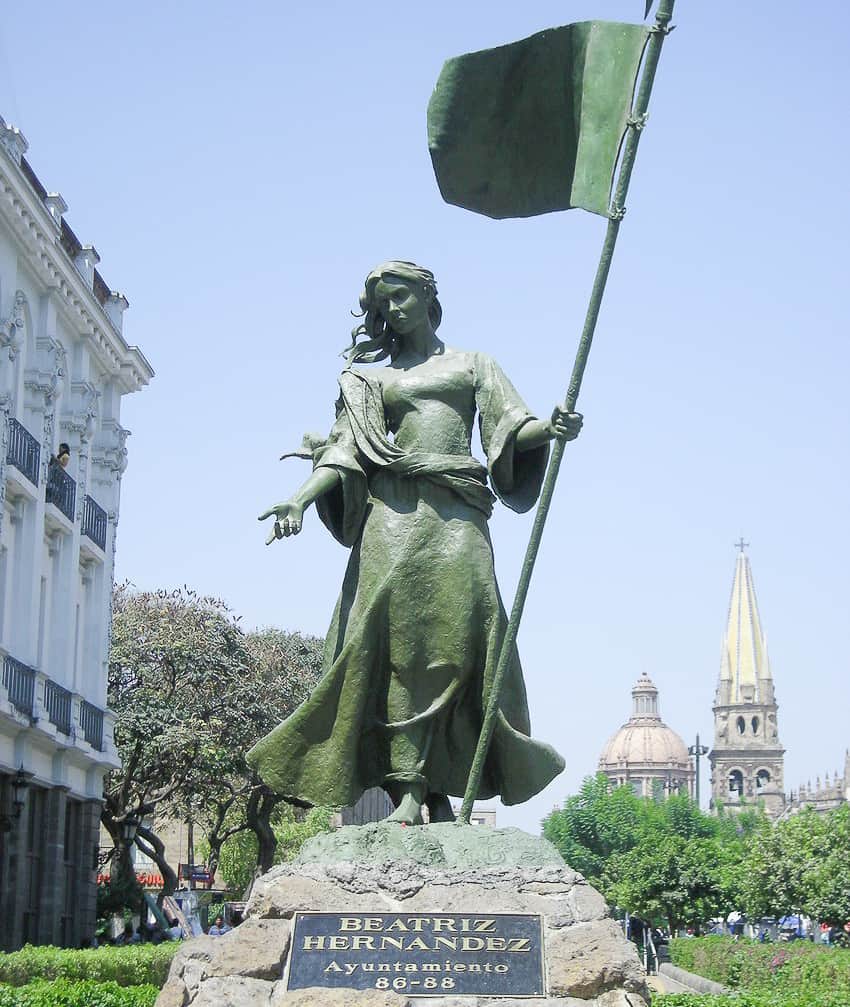
Statue of Doña Beatriz Hernández, by sculptor Ignacio Garibay. A plaque describes her as “fiery, fearless and outspoken.”

Saint Michael, however, was not the only hero in that battle. A group of 10 soldiers was in charge of defending one of the doors in the homemade fortress when a huge and powerful Caxcán suddenly burst in, so big that no one dared go even near him.

“In the room,” said Francisco, “was Doña Beatriz Hernández. She was dressed in armor with a machete in her belt. Pulling it out, Beatriz walked right up to the warrior and slashed at his throat. The huge man crashed to the ground, and Beatriz finished him off. This was the moment she got her reputation for being feisty and brave and not letting anyone tell her what to do.”

The next day, all the women and children left Tlacotán with an escort and followed the Camino Real to Tonalá, a journey of at least eight hours. A certain number of Spaniards stayed on, waiting for the arrival of the Viceroy of New Spain, Antonio de Mendoza, with thousands of friendly indígenas who would finish off the rebellious ones.

From Tonalá, soldiers explored the Valle de Atemajac to find a better place to reestablish Guadalajara, and a meeting took place near the present Degollado Theater.

There was much disagreement, and to end it, Cristóbal de Oñate pulled out his knife and drove it into a tree, declaring that this would be the location of the new Guadalajara, in the name of the king. Still, the arguing continued until Doña Beatriz stood up and said, “El rey es mi gallo [I stand by the king — a quote from Don Quijote], and we are staying here for better or for worse!”

“You heard the lady,” said Oñate, and that ended the discussion. And that’s why you’ll find a prominent statue of Beatriz in the very center of Guadalajara, at the southeast corner of the Teatro Degollado.

The lonely monument to Guadalajara’s third incarnation stands tall on a wind-swept plain 17 kilometers northeast of the modern city.

Should you ever find yourself wandering about the barren mesa north of this city, with nothing much to do, you can easily visit the monument to the third incarnation of Guadalajara by asking Google Maps to take you to “QRRV+GR Trejos, Jalisco.” Don’t let the pandemic stop you: I’m sure it won’t be crowded.

The writer has lived near Guadalajara, Jalisco, for 31 years and is the author of A Guide to West Mexico’s Guachimontones and Surrounding Area and co-author of Outdoors in Western Mexico. More of his writing can be found on his website.

View of the Oblatos Canyon and the Santiago River.


Legend on the Tlacotán monument.


Today nothing remains of the third Guadalajara with its cathedral and plaza.
Today nothing remains of the third Guadalajara and its cathedral and plaza.

Morena lawmakers want animal rights enshrined in constitution

0
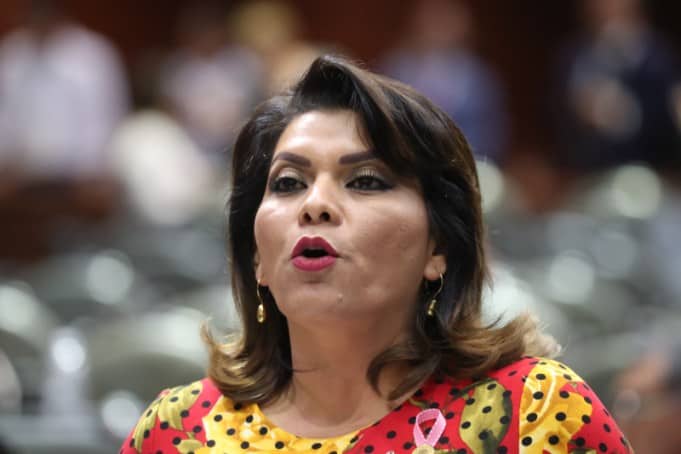
Deputy Lorenia Iveth Valles has introduced the draft constitutional reform.

The ruling Morena party is seeking to enshrine the rights of animals in the constitution on the grounds that they, like humans, are able to perceive and feel things.

A draft constitutional reform put forward by Deputy Lorenia Iveth Valles Sampedro proposes that the state consider animals as “sentient beings” with rights.

The state, therefore, “will adopt the necessary provisions to guarantee their protection, well-being, decent and respectful treatment [and] responsible guardianship and promote a culture of care [for animals],” the proposed reform states.

If the proposal passes Congress, governments at the federal, state and municipal level would have to enact laws that protect animals’ rights and well-being.

Valles, who represents an electoral district in Hermosillo, Sonora, also presented in the lower house of Congress a draft constitutional reform that would oblige the state to establish veterinary hospitals for domestic animals.

“With this initiative, we’re not seeking to make a heap of regulations … but rather establish the base through which the state will really look out for the protection of domestic animals or pets,” the proposal states.

In emphasizing the need to ensure animals’ access to veterinary medicine, the draft reform notes that the poor health of an animal can affect its owner’s well-being. It also notes that some diseases can be transmitted from animals to humans.

“… [The obligation] to attend to the health of domestic animals or pets must be expressed in the constitution,” the proposal states.

Such a reform requires the support of at least two-thirds of lawmakers to pass Congress. Morena and its allies have a slim two-thirds majority in the Chamber of Deputies but only have a simple majority in the Senate.

The makeup of the lower house will change later this year as all 500 seats are up for grabs at elections on June 6.

Source: El Universal (sp) 

Quintana Roo governor criticizes flawed vaccination strategy

0
Vaccines being delivered for use in Quintana Roo.
Vaccines are delivered for use in Quintana Roo.

Quintana Roo Governor Carlos Joaquín González criticized the national vaccination strategy during a meeting with federal officials on Thursday for what he described as a lack of flexibility.

Speaking at a virtual meeting also attended by other state governors, Joaquín described Quintana Roo as a “very young state” where the majority of the population is under 60, and consequently has a surplus of vaccines sent by the federal government for the exclusive inoculation of seniors.

He complained that there is no flexibility in the strategy to use any surplus doses to vaccinate people aged under 60, asserting that it made no sense not to use them when there are unvaccinated medical personnel and tourism sector workers in the Caribbean coast state.

“I have [private sector] doctors protesting and asking for vaccines. I have requests from tourism personnel who want them,” Joaquín said.

The governor also said the federal government hasn’t kept up with its scheduled vaccine deliveries.

“Some weeks ago, [Finance] Minister Arturo Herrera gave us a schedule of weekly vaccine deliveries across the country; I would like to have an update on that, if there is one, because these [promised] vaccine deliveries haven’t been met 100%,” Joaquín said.

Later on Thursday, the federal government announced that it had modified its Covid-19 vaccination schedule, pushing back by one month the start date of the different stages of the national vaccination plan.

At the federal Health Ministry’s coronavirus press briefing on Thursday night, Deputy Health Minister Hugo López-Gatell addressed the first of Joaquín’s concerns, saying that members of the federal government’s “roadrunner” vaccination brigades have the authority to instruct that surplus vaccines be used to inoculate other priority sectors of the population such as health workers.

But in light of the governor’s claim that surplus vaccines are not being used in Quintana Roo, López-Gatell said that he would discuss the matter with the federal government’s delegates in that state.

Source: Reforma (sp) 

Man caught on video beating a woman identified as National Guardsman

0
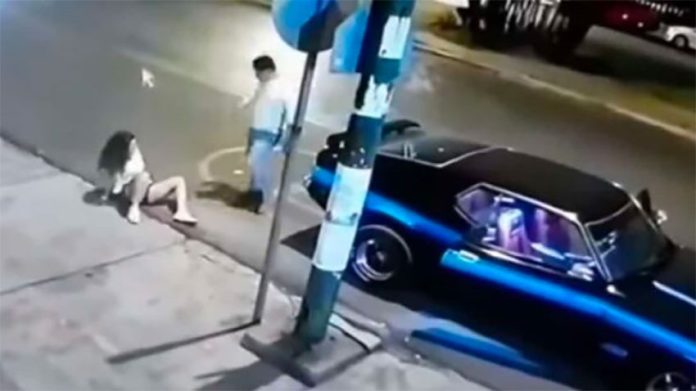
The woman sits on the road after being pushed out of the car.

A man who was caught on a surveillance camera throwing a woman out of his car and beating her in Mexico City April 4 has been identified as Luis Galicia, a member of the National Guard.

The incident took place in Coyoacán where neighbors, woken by screams, bore witness to the incident.

In the video the couple can be seen struggling in the vehicle before the woman is thrown out. The man exits and begins to beat her, then returns to the vehicle.

Neighbors called emergency services for help and one tried to intervene. The aggressor, realizing he had been seen, dragged the woman back into the vehicle and fled.

Police later located the vehicle, a Mustang, and the driver matched the man in the video. A search of the vehicle turned up a loaded firearm and 60 small bags of what appeared to be cocaine. The man identified himself as a member of the special forces unit of the National Guard.

“Tonight members of the [police] stopped a man associated with an attack on a woman in Calzada de las Bombas yesterday. This kind of violence against women is unacceptable in our city,” wrote Police Chief Omar García Harfuch on Twitter on April 6.

Though the woman, since identified as the attacker’s wife, declined to press charges the internal affairs office of the National Guard has begun an administrative process to sanction Galicia.

Mexico City prosecutors said the man claimed he attacked the woman after she confronted him about messages she had found on his phone. The couple were at a bar when the fight began.

According to the city’s Ministry of Women, 2020 saw a 5.4% increase in reports of domestic violence over 2019. Emergency calls for the same crime increased 7%.

Sources: Infobae (sp), El Universal (sp)

Video reveals another case of police brutality in Tulum

0
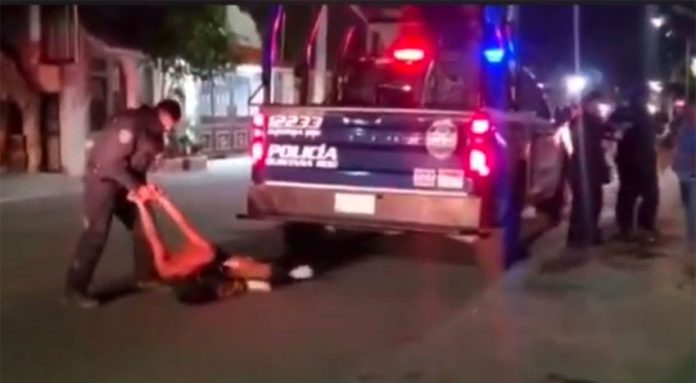
Police arrest a man in Tulum on Wednesday.

On March 27, Tulum police allegedly killed a Salvadoran woman who had been detained for disorderly conduct. Now, less than two weeks later, a video has surfaced of police in Tulum using excessive force to detain a young man on Wednesday night.

In the video, the man can be seen face down on the ground, with his hands cuffed behind him. Officers dragged him up by his hands into the back of patrol pickup, then beat him as onlookers watched and recorded the incident. The man did not appear to resist, but called for help and asked that the number of the patrol vehicle be recorded.

“We are recording!” shouted the man wielding the cellphone that was recording the scene. A woman approached the police and tried to intercede, but was turned away.

The violent incident comes to light less than two weeks after 36-year-old Victoria Esperanza Salazar died after municipal police held her down by kneeling on her back, breaking two vertebrae. Salazar was a mother of two, living in Tulum on a humanitarian visa.

The Quintana Roo Attorney General’s Office (FGE) determined that the cause of death was her broken back. They said that the force used by police was disproportionate, unreasonable and generated a high risk of death. The office has opened a murder investigation in light of the incident.

Salazar’s death has drawn comparison with the death of George Floyd in Minneapolis last May.

“I join the demand for justice and zero impunity for the murder of Victoria, a woman who lost her life at the hands of municipal police from Tulum, Quintana Roo. I condemn… the excessive use of [police] force. It must be punished,” said Martha Lucía Micher, a Morena party senator.

Quintana Roo Governor Carlos Joaquín González and federal Interior Minister Olga Sánchez also condemned the brutality and called for justice.

Source: Milenio (sp), Noti Tulum (sp)

2 weeks later, missing Jalisco family found alive and well

0
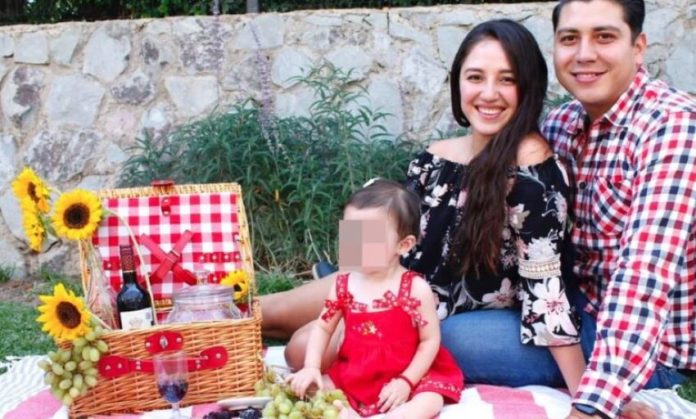
Julio Alberto Villaseñor Cabrera and Jimena Romo Jiménez with their daughter Julia.

A Jalisco family who disappeared two weeks ago has been found alive and well, Governor Enrique Alfaro announced Friday.

The governor said on Twitter that the four missing members of the Villaseñor Romo family — the father, mother, their son and the father’s sister — were located at 2:30 a.m. Friday.

The announcement comes a day after another member of the family, 1-year-old Julia Isabella Villaseñor, was found alone but in good health on a vacant lot in the municipality of La Barca, Jalisco.

“Yesterday, the little one, Julia Isabella, was found, and today we begin the day with the news we’d all been waiting to hear: at 2:30 in the morning, her family was found as well,” Alfaro wrote.

“After days of searching without rest in different municipalities of the state, … her mother, father, aunt and the little boy [her brother] … are today safe and sound.”

The Jalisco Attorney General’s Office (FGE) said that the family, who disappeared on March 25 while traveling home to Zapopan from Mexico City, was found in La Laja, a community in the municipality of Zapotlanejo, located about 40 kilometers east of Guadalajara.

Attorney General Gerardo Octavio Solís said members of the family were undergoing medical checks but were in good health. He didn’t provide details about what happened to the family or where they had been for the past two weeks.

Blanca Trujillo Cuevas, head of the FGE’s missing persons division, said the family was located as the result of “hard work” that included search operations, interviews and the collection of information.

“Today we celebrate that they’re alive, well and going to return to their family members,” she said.

The five members of the family were reported missing after Salvador Romo, father of Jimena Romo, lost contact with them as they were driving home to Jalisco from a vacation in Mexico City.

Seven of eight officers on the Acatic police force in Jalisco were arrested in connection with the family’s disappearance. They currently remain in custody and are scheduled to appear in court on Saturday.

Source: Milenio (sp) 

Health authorities modify national vaccination schedule

0
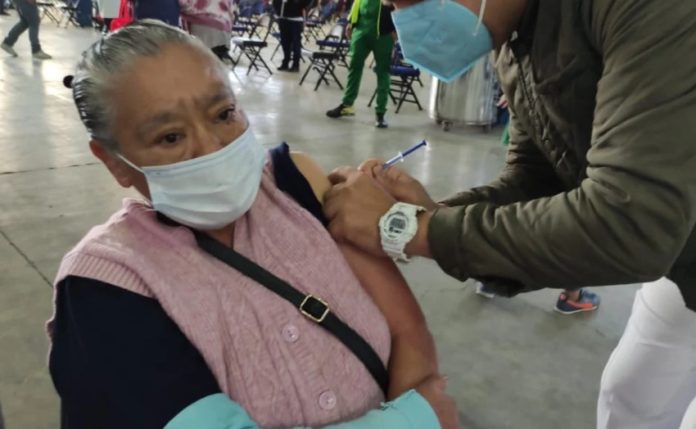
A senior citizen receives a Covid-19 vaccination in Mexico City.

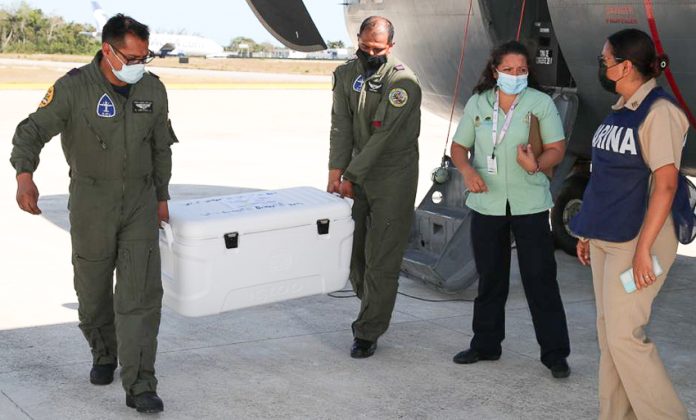
Citing the delay in the delivery of Pfizer vaccines earlier this year, the federal government has modified its Covid-19 vaccination schedule, pushing back by one month the start date of the different stages of the national vaccination plan.

“The schedule of stages 2 to 5 has been modified and may undergo future modifications as it depends on the delivery of the pharmaceuticals,” the government said.

Stage 2 of the vaccination plan — the inoculation of people aged 60 and over and non-frontline health workers — will extend into May, according to the modified schedule. That presumably means that President López Obrador’s pledge to immunize all seniors with at least one vaccine dose by the end of April will not be fulfilled.

Almost 7.4 million seniors have so far received at least one dose, a figure that accounts for only 47% of the 15.7 million people aged 60 and over.

The inoculation of people aged 50 to 59 (stage 3) will take place in May and June while those aged 40 t0 49 (stage 4) will get their shots in June and July. Stage 5 — the vaccination of people aged 16 to 39 — is now scheduled to begin in July and conclude in March 2022.

The government said in late February that it expected to receive more than 100 million vaccine doses by the end of May, but as of Thursday night only 16.08 million had arrived. Mexico has secured most of those doses via commercial arrangements but received some 2.7 million AstraZeneca shots from the United States government under a loan scheme.

Finance Minister Arturo Herrera said Thursday that the government expects to receive an additional 5.5 million AstraZeneca shots in late April and May via Covax, a World Health Organization-backed initiative for equitable vaccine distribution.

Drug regulator Cofepris said Wednesday that it had no plans to limit use of the AstraZeneca vaccine although many countries have recommended that it not be used to inoculate younger adults due to growing evidence that it can cause blood clots in rare cases.

In addition to that vaccine, Mexico has used Pfizer, SinoVac, CanSino and Sputnik V shots to inoculate citizens. Four of the five vaccines used to date require two shots, whereas the Chinese-made CanSino is a single-shot vaccine. Herrera said the government has no plans to purchase Johnson & Johnson’s single-shot vaccine, which is currently being used in the United States.

One additional vaccine that could be used in Mexico is India’s Covaxin, to which Cofepris granted emergency use authorization earlier this week.

Just over 10.64 million vaccine doses — two-thirds of all doses received — had been administered in Mexico by Thursday night, according to Health Ministry data. Of the almost 7.4 million seniors who have received one shot, nearly 940,000 have had their second required jab.

More than 530,000 vaccine doses were administered on Wednesday, a new daily record, while more than 334,000 were given on Thursday, according to preliminary data that will be revised upward on Friday.

The New York Times vaccinations tracker currently shows that 8.4 doses per 100 people have been administered in Mexico, compared to 115 in Israel, which ranks first, 61 in Chile, 53 in the United States and 20 in Canada. Mexico’s southern border neighbors, Guatemala and Belize, have administered 5.8 and 0.7 doses per 100 people, respectively.

Only 7.1% of Mexico’s population has received at least one vaccine dose while just 1.3% is fully vaccinated.

Some health experts estimate that 70% to 90% of the population needs to be inoculated or infected with the virus to reach herd immunity. For that to occur, a minimum of around 90 million Mexicans — the country’s population is just over 126 million — would need to have Covid-19 antibodies generated either by infection or inoculation.

Meanwhile, Mexico’s accumulated tally of confirmed coronavirus cases rose by 5,140 on Thursday to almost 2.27 million while the official Covid-19 death toll increased by 548 to 206,146.

The federal government acknowledged in a report published late last month that Mexico’s true Covid-19 death toll was above 321,000, a figure almost 60% higher than the official count of test-confirmed fatalities, but it has not subsequently updated its official numbers.

Source: Milenio (sp), El Financiero (sp)

Vaccinated seniors can go back to work bagging groceries

0
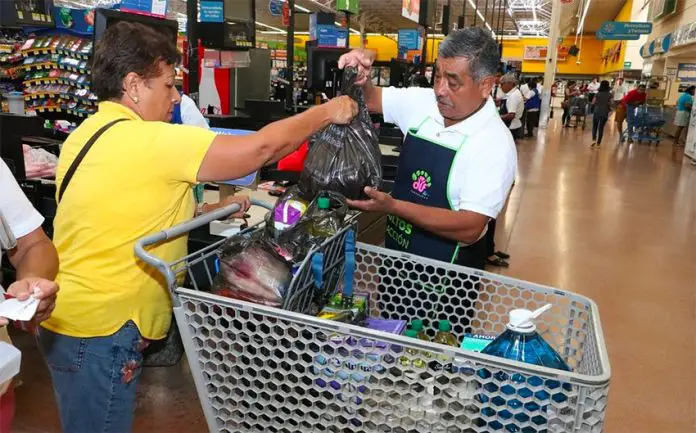
A supermarket bagger in a pre-pandemic photo.

Seniors who have received their second dose of Covid-19 vaccine can now return to work packing groceries in supermarkets, according to the National Institute for the Elderly (Inapam).

The return to work should be gradual, voluntary and in accordance with the coronavirus stoplight risk map in each state. Seniors who have had a respiratory illness within the past month should not return to work, Inapam said.

Major supermarket chains announced in March 2020 that seniors would no longer be permitted to work as baggers to prevent the spread of Covid-19 among vulnerable sectors of the public. The decision represented an economic blow to seniors who supplemented their pensions with tips from shoppers.

For many seniors, the tips were their main source of income, according to Elizeth Altamirano López, a gerontologist and psychologist with the Mexico City Council for the Prevention and Eradication of Discrimination. Losing their jobs can also take a toll on seniors’ mental health, she said.

The Mexico City government announced last month that it would provide economic support payments to seniors who had worked as grocery baggers in the amount of 2,200 pesos (US $109).

Source: Milenio (sp)

Priest sentenced to 27 years for homicide of deacon

0
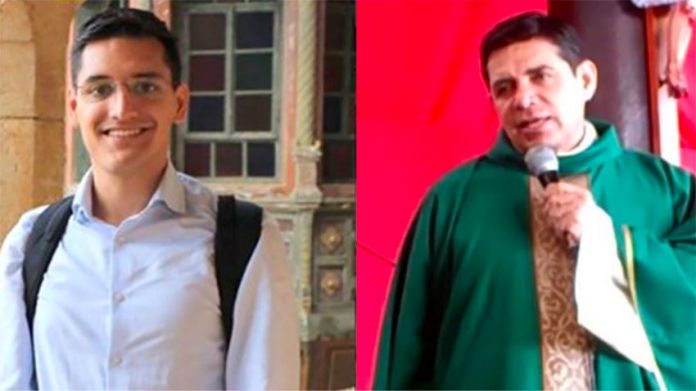
The victim, Avendaños, left, and Bautista.

A criminal court has sentenced Catholic priest Francisco Javier Bautista Ávalos to 27 years and six months in prison for the murder of Leonardo Avendaño, whose body was found in the Tlalpan borough of Mexico City on June 12, 2019.

The prison sentence will be served without options for early release. The court also ordered a fine of more than 400,000 pesos (US $19,850).

The former parish priest was found guilty of murder on Tuesday. The family had asked for the maximum sentence of 50 years.

Avendaño was reported missing on June 11, 2019, a day before his body was found in the back of a pickup truck in Tlalpan. The body showed signs of torture and asphyxiation. Bautista was detained a week later after having conducted the victim’s funeral service.

Video footage showed that he met with the 29-year-old deacon the night of his murder. Shortly after Avendaño’s death, his family said he was murdered to prevent him from going public with unspecified accusations against Bautista.

Initially, many parishioners supported Bautista. An online petition gathered more than 6,000 signatures in his support. Some early reports suggested that the murder may have been an accident in the course of a sex game. Josué Avendaño, the victim’s brother, emphatically rejected those claims.

“My brother was tortured. [His injuries] weren’t from a game or anything like that. It was something that was planned in advance. My brother was tortured, and then, after that, the cause [of death] was asphyxiation,” he said. He added that the body was badly bruised with a broken nose and some missing teeth.

After the sentencing, the victim’s brother said he was satisfied with outcome.

“I would have liked the maximum penalty but having justice served is more than enough.”

Source: Milenio (sp)