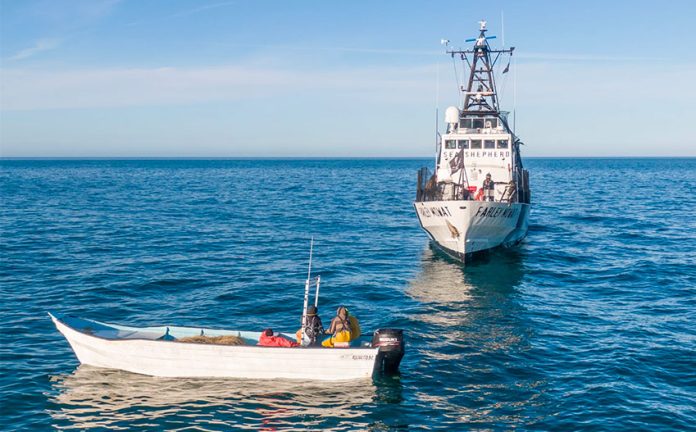
The fishboat moments before it collided with a larger vessel in the upper Gulf of California.
A fisherman who was injured in the upper Gulf of California on Thursday during an attack by fishermen on two vessels owned by a conservation society died Friday evening.
Mario García Toledo, whose fishboat collided with a larger vessel owned by the Sea Shepherd Conservation Society, died in a Mexicali hospital of trauma caused by multiple injuries to his abdomen and pelvis, said Agustín Toledo, a family member from San Felipe, Baja California, in a statement Saturday.
Toledo blamed the conservation group for García’s death.
“This morning, the Toledo García family announces the painful loss of another brother: Mario García Toledo has passed on to eternal life, yet another victim of the violence by foreign environmentalists in the Sea of Cortés,” he said. “The family of the now-deceased awaits strong justice on the part of federal authorities in Baja California. May this killing not go unpunished by each one of the corresponding authorities. We don’t want more victims.”
Accounts differ over what happened during the incident, which took place in an area of the upper Gulf of California designated as a “zero tolerance” refuge zone for the endangered vaquita marina porpoise.
What both sides can agree upon is that García’s small boat smashed into the hull of the Farley Mowat and broke apart, causing serious injuries to García and another unidentified fisherman who remains hospitalized with fractures to the cranium and collarbone and other injuries.
However, fishermen blamed the conservation group for the fishermen’s injuries, and his family refers to his death as a murder.
According to Sea Shepherd representatives and military officials who were on board the Farley Mowat, fishermen opposed to the prohibitions against fishing in the protected area threw Molotov cocktails and lead weights at the Farley Mowat and another Sea Shepherd vessel, the Sharpie, around 7:00 a.m.
As the Farley Mowat began to leave the scene, the society said, one of the fishermen’s boatsswerved in front of it and smashed into the hull. The smaller vessel broke in two, and its two passengers were thrown into the sea.
After being rescued the two men were taken on board the Sharpie for emergency first aid provided by the navy. Both were airlifted for hospitalization.
The Mexican economy took a significant hit from the coronavirus pandemic and associated restrictions but one big winner in 2020 was e-commerce.
Helped in no small part by stay-at-home recommendations, online sales were projected to reach US $18.8 billion in 2020, according to a November report by German market and consumer data company Statista. The figure is almost 32% higher than e-commerce sales in Mexico in 2019, which totaled $14.26 billion.
According to Statista, spending on electronics and media was projected to be $5.88 billion in 2020, or almost a third of the total e-commerce expenditure.
The predicted outlay on fashion items purchased online was just under $4.52 billion, while $3.44 billion was expected to be spent on toys, hobbies and DIY products and $3 billion on furniture and appliances.
Just over $1.93 billion was projected to be spent online on food and personal care.
Statista also predicted that a total of 50.7 million Mexicans would make online purchases in 2020, an 8.8% increase compared to 2019. Market penetration was predicted to be 39.3% of the population, up from 36.5% last year.
A co-founder of Triciclo, a marketing agency that specializes in e-commerce, said that growth in the sector during the pandemic was equivalent to what was expected over a period of two years. Renata Raya said that some small and medium-sized businesses saw their overall sales increase by as much as 500%.
“Those that had a physical store were forced to enter the world of e-commerce,” she said. “… We also have clients that already sold online and … for them, the growth was very significant.”
Raya also said that nine out of 10 people who made an online purchase for the first time in 2020 shopped online again a short time later. She added that she expects e-commerce growth to continue in the short term.
Indeed, Statista forecasts that total online sales in Mexico will reach $21.2 billion this year, which would be a 12.8% increase over the 2020 projection. By 2025, e-commerce revenue will hit $24.6 billion and 77.9 million Mexicans will be shopping online, the company predicts.
The enterprise sales manager for Magento Commerce, an e-commerce website creation platform, agreed that online sales will continue to increase even when shopping in bricks and mortar stores no longer poses a threat to people’s health.
“While it’s true that a lot of people are tired of being at home, a lot of people have also noticed the convenience” of online shopping, Mario Juárez said.
Companies evaluated by Magento have seen their online sales increase by between 300% and 400%, he said.
Like Raya, Juárez said the pandemic has accelerated e-commerce growth in Mexico, charging that it has placed the sector in a position it would have otherwise reached in a decade.
But despite the growth in 2020, both company representatives believe that safety concerns and logistical challenges are among the constraints on the e-commerce sector.
Indeed, the Mexican Association of Online Sales found that 48% of people it surveyed believe that shopping online is unsafe. Another barrier for is that only 47% of Mexicans have a bank account, according to the latest financial inclusion survey conducted by the national statistics agency Inegi.
“There is still a very large [part of the] market” that doesn’t shop online, said Juárez, adding that the “main challenge” for the e-commerce sector is the low proportion of the population with access to bank services.
However, many companies have developed different payment methods for people without bank accounts, he added.
Among them: paying for online purchases at convenience stores such as OXXO, paying cash on delivery and using gift cards and e-vouchers.
Plus the new fintech banks, which only operate on line, have made opening a bank account simple and fast and they offer credit or debit cards.
López Obrador: Assange, right, 'is a journalist and deserves a chance.'
Mexico will offer political asylum to Wikileaks founder Julian Assange, President López Obrador said Monday after a British judge blocked the 49-year-old Australian’s extradition to the United States.
“I’m in favor of him being pardoned. Not only that, I’m going to ask the foreign affairs minister [Marcelo Ebrard] to do the relevant paperwork to ask the government of the United Kingdom about the possibility of allowing Mr. Assange to be freed and for Mexico to offer him political asylum,” he told reporters at his regular news conference.
López Obrador’s remarks came after Judge Vanessa Baraitser of the Central Criminal Court of England and Wales ruled that Assange cannot be extradited to the United States to face charges of espionage and hacking of government computers because there would be a severe risk of him committing suicide while being held in a high-security U.S. prison.
“The overall impression is of a depressed and sometimes despairing man, who is genuinely fearful about his future. I find that the mental condition of Mr. Assange is such that it would be oppressive to extradite him to the United States of America,” Baraitser said.
Explaining his decision to offer asylum to Assange – who was arrested at the Ecuadorian embassy in London in 2019 after holing up there for almost seven years – López Obrador said that asylum is a right and that Mexico has a tradition of offering protection to foreigners.
“But at the same time, [there is] also the responsibility to take care that he who receives asylum doesn’t intervene, doesn’t interfere in the political affairs of any country,” he said.
“Firstly, I am pleased that in England they have given protection to Mr. Assange, that his extradition to the United States hasn’t been authorized,” López Obrador said.
“It’s a triumph of justice; I’m pleased that they act this way in England because Assange is a journalist and deserves a chance. We will be in a position to offer asylum and we congratulate the United Kingdom court for the decision taken today, … it was a very good decision. So, a pardon for Mr. Assange … and asylum in Mexico, we’ll give him protection.”
The president’s position on the Wikileaks founder stands in stark contrast to his position on other asylum-seekers, notably Central American migrants, whose welcome in Mexico has been less than warm since López Obrador took office. Nor is the president known for being sympathetic toward journalists.
The move was seen by a former ambassador to the U.S. as another indication that the president is “determined to pick a fight with Democrats and the incoming Joe Biden administration. “Saying this morning that he will seek to offer asylum to Assange is lunacy, sheer lunacy,” Arturo Sarukhán wrote on Twitter.
López Obrador has previously called for Britain to release Assange and described his imprisonment as “torture.” Documents published by Wikileaks revealed the world’s “authoritarian” machinations, he said last year.
Assange will appear in court again on Wednesday as his legal team lodges a new application for his release on bail. Lawyers for the United States government, which sought the Wikileaks founder’s extradition, are appealing the ruling handed down in London on Monday morning.
A man was arrested in Sonora on Saturday on three accounts of aggravated murder after he allegedly beat his three young children to death to take revenge on his wife.
According to authorities, Luis Alfredo “N,” 26, of Mineral de la Reforma, Hidalgo, is accused of killing his three children — aged 3, 7 and 8 — on Saturday and then fleeing to Sonora.
Authorities in Hermosillo arrested the suspect on the same day after a multi-state manhunt in Hidalgo, Tlaxcala, Puebla and other adjoining states. He was handed over to Hidalgo authorities on Sunday.
The suspect is believed to have had an argument with his wife and that his motive was to cause her grief.
Police in Hidalgo became aware of the killings after the suspect’s father informed them, they said. His son had called to say that he had killed the children — whom the suspect had recently called “the best thing in my life” on a social media post displaying images of them.
When authorities arrived at the suspect’s home in Hidalgo, they found the three children dead.
President López Obrador has once again proposed holding a citizens’ consultation to decide whether abortion should be legalized in Mexico, stating that “the democratic method” is the best way to resolve controversial issues.
Speaking after Argentina’s Senate legalized elective abortion on the penultimate day of 2020, López Obrador said the people, not the government or the Catholic Church, must decide whether women should have the right to terminate a pregnancy.
“In very controversial issues, the best thing … is to consult citizens, nothing should be imposed,” the president said while declining to take a position himself.
“Everything should be in accordance with the majority decision of the people, in this case women. Let them decide freely, … the best method to resolve discrepancies [and] differences is the democratic method, that’s what I’ve always maintained,” he said.
The government must obey the people and not impose anything, López Obrador added.
“I don’t believe it’s advisable to take a decision from above, even when there is legal and legitimate representation, as the legislative [power] is. I believe that in these cases, the best thing is the application of participatory democracy. Power structures shouldn’t intervene. … [Abortion] shouldn’t be a matter of government or the [three] powers or churches but rather a matter for women.”
One of the president’s favorite catch phrases is “with the people everything, without the people nothing” and indeed he has already held public consultations to determine the fate of a range of infrastructure projects. They include the former government’s Mexico City airport, a private brewery project in Mexicali and his administration’s Maya Train railroad.
Abortion is currently legal in just two of Mexico’s 32 federal entities, Mexico City and Oaxaca, where women can legally terminate a pregnancy in the first 12 weeks. Some other states allow abortion in cases of rape or to protect the life of the mother.
López Obrador’s proposal to put nationwide legalization to a vote triggered criticism from some opposition party lawmakers who charged that human rights mustn’t be subjected to consultation.
“The Mexican state is obliged to guarantee what is established in article 1 of the constitution, … regarding human rights. The first person to respect them must be the head of the federal executive,” said Verónica Juárez Piña, leader of the Democratic Revolution Party in the lower house of Congress.
She described López Obrador’s proposal to hold a consultation on abortion as authoritarian, sexist and a backward step, asserting that the government should follow the recommendations of the Supreme Court, which ruled in 2008 that Mexico City’s decision to decriminalize abortion in the first 12 weeks of pregnancy was constitutional.
Martha Tagle, a deputy with the Citizens Movement party, said on Twitter:
“1. Rights aren’t put to consultation, the state guarantees them. 2. It’s up to the legislative power to decriminalize and legalize [abortion.] 3. It’s about recognizing women’s right to decide about their bodies.”
In another tweet, Tagle said: “If López Obrador says that ‘the people’ decide, he must recognize every woman’s right to decide if she continues or not with a pregnancy [and] to decide [what’s right] for her body. That’s why abortion must be decriminalized.”
There was optimism among pro-choice activists that the Supreme Court would deliver a ruling last July that would pave the way for the decriminalization of abortion across Mexico. But four of five judges of the court’s first bench voted against upholding an injunction granted in Veracruz that ordered the state Congress to remove articles from the criminal code that stipulate that abortion in the first 12 weeks of pregnancy is illegal.
If the Supreme Court had upheld the injunction, the decision would have set a precedent that could have led to further court orders instructing state legislatures to legalize first-trimester abortion.
The process for obtaining a temporary work visa is long and laborious.
Most people reading this article probably realize that any remote worker who wanted to come to Mexico for a year could just enter as a tourist and get a 180-day tourist visa — no questions asked.
At the end of the 180 days the remote worker could either: a) cross a land border to the U.S., Guatemala or Belize and return immediately with a new visa; b) fly to any country and return with a fresh 180-day visa; c) apply within Mexico for another tourist visa (temporarily available because of the pandemic); or d) just overstay their visa and pay a small fine on the way out if flying or probably paying no fine if driving out or walking across a border.
But most potential remote workers around the world don’t know this information, and would be scared of overstaying their tourist visa. Many potential remote workers would likely consider Mexico if there was a more well-known, organized, easy, and clear path to come to Mexico legally.
Many other countries have jumped on the remote worker visa concept as a way to fill empty rentals, restaurants and stores, and stimulate the economy, partly replacing lost tourism and tax revenues. The Mexican tourism industry will likely not fully return to pre-pandemic levels until 2022 or beyond. Why not offer and promote a cheap, quick, and easily obtainable Mexico remote worker one-year (and renewable) visa?
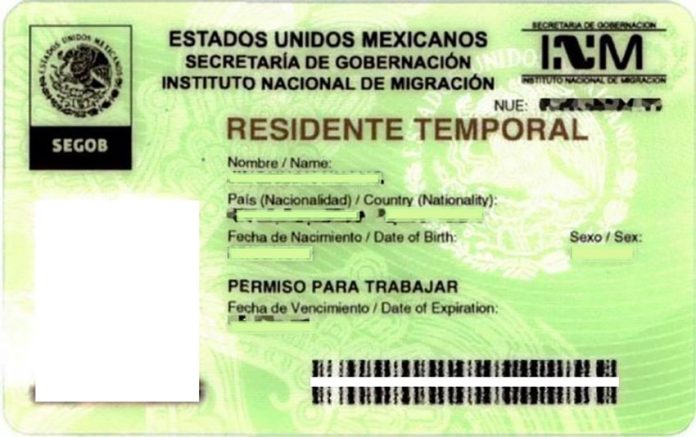
Of course, anyone could apply for the existing Mexican temporary worker visa but that is a long and complicated process involving bank statements, significant cash flow or savings, lots of paperwork, perhaps paying an immigration facilitator, as well as a steady, documented income that may not exist.
I suggest that most Americans, Canadians, Europeans, Asians and others from around the world would not realize Mexico’s flexible system and would assume that they could be in big trouble if they overstayed their tourist visa. A Canadian can enter the U.S. visa free and stay for six months. But after that you are an illegal alien.
Sure, cross the border back into Canada or take a trip to Mexico, but upon returning to the U.S.A. the immigration officer will immediately see that you are returning after a short time and you would likely be denied entry. Mexico has one of the most flexible immigration systems in the world. The Mexican government is apparently much more concerned about your car than they are about you! And likely tens of thousands of expats technically live illegally in Mexico on overstayed tourist visas or just by living here for years on sequential tourist visas. Try doing that in any other country in the world.
My proposal is to have a new and separate Mexican remote worker visa. There would be an application and a processing fee (perhaps 2,000 pesos, enough to demonstrate that the applicant is serious), and proof that the person has a combination of perhaps US $5,000 in some combination of earnings in the past three months, money in the bank, or available space on a credit card or line of credit.
The visa could be renewed annually within Mexico, and perhaps after one or two years one could choose either a renewal of the remote visa or, if financially eligible, a normal temporary visa that could eventually lead to a permanent one. A recent negative Covid-19 test could be required before the first arrival.
These new visa holders would bring needed people and revenue into the country at a time when the needs are enormous. Their families and friends would likely visit them. The revenue could be a bridge to the return of pre-pandemia visitor levels of tourism in Mexico. The pandemia has shown companies that much of their work can be done remotely and with equal or even increased productivity. Large corporations are offering their employees the chance to work remotely.
But there are entrepreneurs and all kinds of gig workers that want to travel, to live somewhere cheaper, in a new culture, with better weather, with a new language, who can do it while working remotely.
Many of the remote worker visas from other countries are too expensive or complicated or have other barriers. Estonia requires an income of more than $4,000 per month for the previous six months. Antigua and Barbuda require proof of making $50,000 per year. Prospective applicants with incomes like these can already get a temporary work visa in Mexico.
The whole concept here is to make the visa application and acceptance process as easy and transparent as possible. There is no need to turn someone down if they have at least a backpacker’s cash flow or parents or other family members who will support them. Anyone can enter now for 180 days with absolutely no documentation, so in a sense this is just a proposal to extend that to 365 days for the remote workers visa. Renewal can be possible with bank statements showing that the visa holder has moved a certain amount of cash from another country to Mexico. The visa should be relatively inexpensive, transparent, online, and easily obtainable by most applicants.
The strict immigration rules that most countries in the world have are designed partly to protect local workers. But Mexico is a country where the average new university graduate makes 58 pesos per hour ($2.89). The minimum daily wage for all workers was set to go up on January 1, 2021 to 141.7 pesos per day. I don’t think that many remote worker visa holders would be tempted to try to find a local job.
Jim Blakley is a former college counselor from Canada and a 15-year resident of San Miguel de Allende, Guanajuato.
A cob of GMO corn called MON810 developed by Monsanto.
A federal government decision to ban genetically modified corn has been slammed by Mexico’s largest agricultural lobby but praised by organic farmers who have long called for its prohibition.
The government published a decree Thursday that stated that biosecurity authorities would “revoke and refrain from granting permits for the release of genetically modified corn seeds into the environment.”
The objective of the decision is to “contribute to food security and sovereignty” and protect “native corn, cornfields, bio-cultural wealth, farming communities, gastronomic heritage and the health of Mexicans,” the decree said.
The government also mandated the phasing out of GMO corn imports for use in the food industry by January 2024 and decreed the elimination of glyphosate, a controversial herbicide, by the same date.
While a total ban on the herbicide is still some way off, federal departments will immediately abstain from “purchasing, using, distributing, promoting and importing glyphosate or agrochemicals that contain it as an active ingredient,” according to the decree.
“Culturally appropriate” alternatives such as low-toxicity agrochemicals and organic products will be used instead.
The ban on genetically modified corn was criticized by GMO advocates, among whom is the National Agricultural Council (CNA). The council and others contend that prohibiting GMO corn cultivation in Mexico will limit the options of farmers, and that banning imports poses a threat to the food chain.
“The lack of access to production options puts us at a disadvantage compared to our competitors, such as corn farmers in the United States,” said CNA spokeswoman Laura Tamayo.
“On the other hand, the import of genetically modified grain from the U.S. is essential for many products in the agri-food chain,” said Tamayo, also a regional director for the German multinational Bayer, whose agro-chemical subsidiary Monsanto makes the herbicide Roundup – whose active ingredient is glyphosate – and the GMO corn designed to withstand the controversial weedkiller.
The CNA says that a ban on glyphosate could cause agricultural production to fall by up to 45% but government officials, including Environment Minister María Luisa Albores and Health Minister Jorge Alcocer, reject the claim. For his part, Agriculture Minister Víctor Villalobos has opposed a blanket ban on the use of glyphosate.
In sharp contrast to the CNA’s view, the president of the Mexican Society of Organic Production, Homero Blas, described the government’s decision to ban GMO corn as a “huge victory.”
Opponents of genetically modified crops argue that they contaminate native corn varieties that have been grown in Mexico for thousands of years. They also say that they encourage the use of pesticides and herbicides that pose a risk to both human health and biodiversity.
While the government decree will phase out food sector GMO corn imports, it was unclear whether the ban would extend to imports of GMO corn from the United States that is used as livestock feed.
The news agency Reuters noted that Mexico is largely self-sufficient in white corn used to make tortillas but depends on GMO corn imports from the U.S. to feed farm animals.
The vessel Farley Mowat was attacked by fishermen Thursday.
One fishboat was destroyed Thursday during an attack on vessels operated by the Sea Shepherd Conservation Society in an area of the upper Gulf of California designated as a refuge for the endangered vaquita porpoise, the society reported.
Crew aboard the vessel Farley Mowat were retrieving a gillnet from the water when fishermen aboard at least five pangas began throwing lead weights and molotov cocktails at both the crew and military officials who were on board.
As the vessel began to leave the scene, the society said, one of the pangas swerved in front of it and smashed into the hull. The smaller vessel broke in two and its two passengers were thrown into the sea.
A second Sea Shepherd vessel, Sharpie, recovered the two men, who had been rescued from the water by one of the pangas, and took them aboard where they were given emergency first aid. Doctors with the Mexican navy arrived at the scene and treated the two, one of whom wasn’t breathing when he was brought aboard.
While the men were being treated, the society reported, two other fishermen boarded the Sharpie, threatened the crew and officials on board and smashed a camera that was filming the incident.
Collision at Sea as Sea Shepherd Vessels Attacked in Mexico's Vaquita Refuge
Other pangas threw projectiles and fuel, setting the Sharpie’s bow on fire.
The fire was extinguished and the two fishermen removed from the vessel.
The injured men were transferred to two nearby navy vessels and subsequently airlifted to a hospital.
The incident didn’t deter the fishermen, who have been at odds with government policy intended to protect the vaquita, of which an estimated 10 remain.
The society said they continued to attack the Farley Mowat with molotov cocktails, setting fire to a pile of fishing gear that had been collected on the ship’s deck. On shore, meanwhile, a truck belonging to the society was set on fire.
One of the government’s measures is a prohibition on the use of gillnets in the protected area. But conservationists have long criticized the government for lack of enforcement.
The Sea Shepherd Conservation Society is working with Mexican authorities to patrol the area and deter illegal fishing.
Can your morning cup of joe help support hardworking, dedicated Mexican farmers?
An unfortunate truth is that Mexico is not considered a prime producer of coffee, even among Mexicans. Nescafé instant coffee is ubiquitous on supermarket shelves and in restaurants. “Gourmet” coffee is often associated with Starbucks. Even though the country could easily satisfy the demand for all kinds of coffee, Mexico still imports the stuff from places such as Brazil, Colombia, and Vietnam for reasons of price and prestige.
But it should not be that way. Mexico has developed its own coffee specialties, such as café de olla – coffee brewed with spices and piloncillo sugar — and regional preparations such as café lechero, an espresso coffee with frothed hot milk popular in Veracruz.
Coffee was introduced to Mexico in the late 18th century. By about 100 years later, the country was exporting it. Mexico has tropical rainforests with the correct humidity, soils and altitude to grow good-to-excellent coffee, especially in Chiapas, Veracruz, and Puebla.
By the 1950s, Mexico had a promising coffee industry, heavily supported by the federal government, which worked internationally to keep prices stable and relatively high. It was good politics, bringing money into Mexico and supporting some of the country’s poorest populations.
But coffee production fell from grace starting in the 1970s.
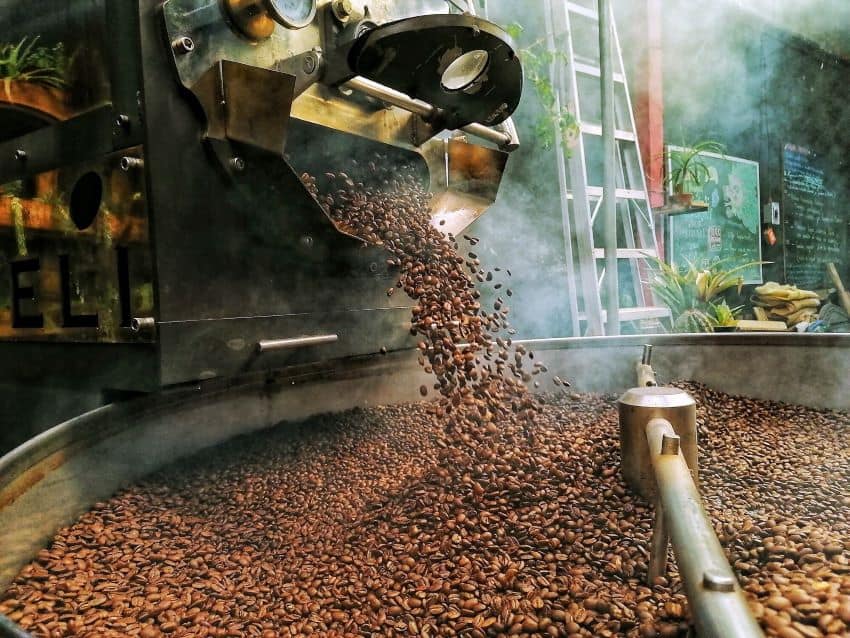
Roasting beans at Black Dragon Coffee in San Cristóbal de las Casas, Chiapas.
More countries began producing in high quantities, glutting the market by the 1980s. In addition, neoliberal economic policies were taking hold in Mexico, leading the government away from its role as a negotiator. The result was a 71% decline in production by the 1990s as farmers found they could not make any money at all.
Price supports were crucial to Mexican coffee farmers because they worked small plots of land in very isolated regions, lacking infrastructure and access to technology. This makes the production and transport of coffee to market significantly more expensive.
History and politics explain the small farms. Most coffee growing land is in the south, with long histories of community- and family-held land parceled out to members. Haciendas (plantations) were broken up after the Mexican Revolution and distributed among rural populations. Sentiment against large private landholdings remains strong.
Today, Mexico has over 500,000 farmers working just over 700,000 hectares, many doing what they can with less than a hectare. These farmers have traditionally been dependent on unscrupulous middlemen called coyotes for both marketing and financing. Such a system does little or nothing to relieve poverty, but large buyers do not find it economically feasible to negotiate purchases with a myriad of small farmers.
Coffee production in Mexico has very recently started to grow again, not because of government efforts but due to a combination of farmer cooperatives and the rise of specialty, niche-market coffees. After losing government support, farmers in Oaxaca and Chiapas began to organize. The first and primary function of these cooperatives then and now is to sell members’ production for better prices.
Of all the niche-market coffees popular in the world, organic is by far the most important. The first organic coffee in Mexico was grown in Chiapas as early as 1960, but most of the market’s growth came after 1980. Such coffee can command prices that are 15–20% higher. That may not seem like much, but it makes small-scale production feasible. Today, Mexico ranks first or second in the world (depending on the source) in the production of organic coffee.
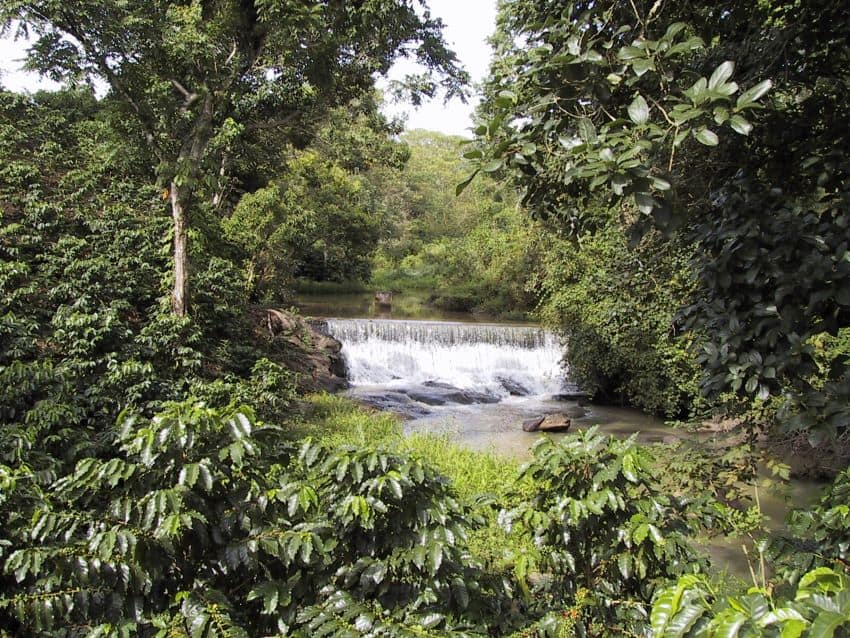
A coffee farm located in Zihuateutla, Puebla. Jaontiveros (CC)
Other specialty market coffees grown in Mexico include those for the rare bean, fair trade, denomination of origin, and socially or economically conscientious buyers. In these markets, disadvantages can be made advantageous – small-scale production, isolated locales or cultures and practices that preserve the rainforest. These factors are pluses for consumers who wish to buy more than just a dose of caffeine.
Admittedly, specialty coffee production is not a panacea. There are issues with access to technology, with plants that are susceptible to plagues and with finding ways to get the coffee from small producers to faraway niche markets in an economically feasible manner.
But despite the difficulties, niche-market coffee is growing, and exporters such as David Benjamin Briones of the Black Dragon Coffee House in San Cristóbal de las Casas see more opportunities for themselves and the farmers they work with.
The interest in specialty coffee has not escaped the likes of Nestlé and Starbucks: they not only promote coffees based on their states of origin but also have highly publicized programs to help farmers improve their plant stocks and growing techniques.
Not surprisingly, the Mexican government is a latecomer to this, but it is investing once again in the industry. Starting in 2016, coffee production halted its decline and has started to come back slowly.
International nongovernmental organizations, Mexican federal and state governments and even multinational corporations offer ways to buy organic and other niche coffee. There are also many cafes all over Mexico that offer domestic coffees, especially in places such as Mexico City, San Cristóbal de las Casas, San Miguel de Allende and other upscale tourist areas. However, local companies and cooperatives founded by coffee farmers offer the most direct way to let farmers get the maximum benefit from their production.
Café lechero is the specialty of La Parroquia Café in the port of Veracruz. Alejandro Linares Garcia
The money in coffee is not in the green bean but rather in the final roasted product and its marketing. Ambitious farmer cooperatives have taken the plunge into roasting and marketing their own brands of coffee, often taking advantage of their ethnic and regional identities as well as the internet.
The most successful cooperatives are found in Oaxaca, followed by Chiapas. This is notable as these are states with high indigenous populations. But these groups are found everywhere coffee is grown. There are those who sell online, most often through Facebook pages.
One of these is Tojtzotze, which represents farmers of several indigenous ethnicities in the Lacandon Rainforest in Chiapas. MRGrupo Monte Blanco represents a group of growers in Veracruz, and Yuku Café specializes in coffee grown in Oaxaca’s Mixteca region. La Cooperativa de Cafe de Totonacapan is a group of 29 women producers in the state of Puebla that sells through venues such as Starbucks.
Leigh Thelmadatter arrived in Mexico 17 years ago and fell in love with the land and the culture. She publishes a blog called Creative Hands of Mexicoand her first book, Mexican Cartonería: Paper, Paste and Fiesta, was published last year. Her culture blog appears weekly on Mexico News Daily.
Both rapid testing in Mexico City and vaccinations resumed Saturday.
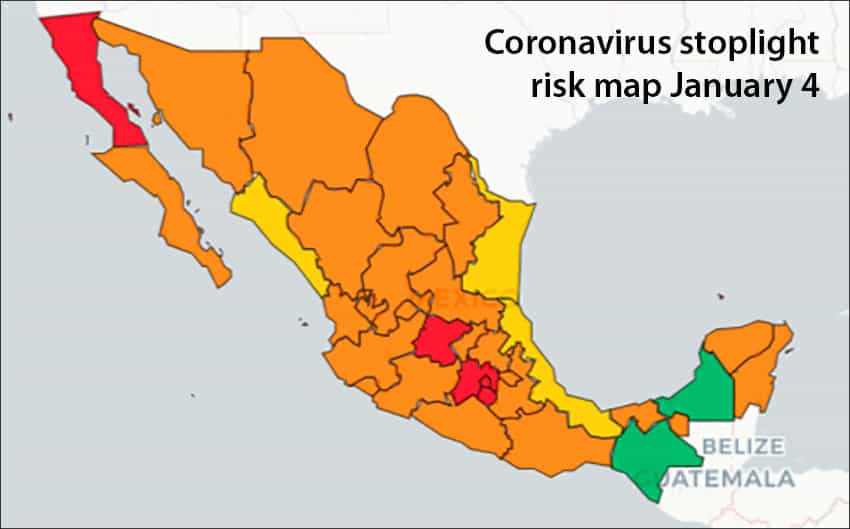
The federal Heath Ministry updated the coronavirus stoplight map Friday but the only changes were the official addition of Guanajuato and Morelos to the states designated as maximum-risk red.
Both states went red last week, joining Mexico City, México state and Baja California.
Three states — Sinaloa, Tamaulipas and Veracruz — remain medium-risk yellow, while Campeche and Chiapas remain low-risk green. The other 27 states continue to be designated high risk on the updated map.
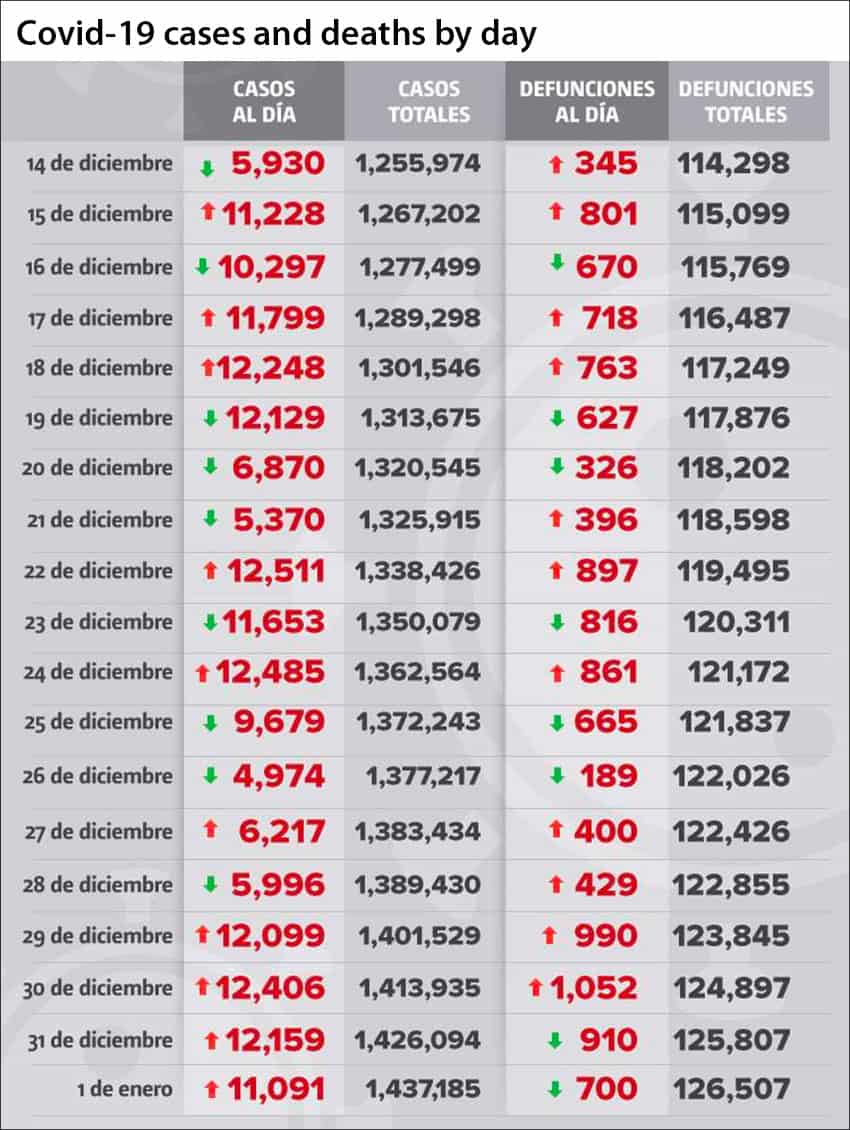
Another 11,091 cases of Covid-19 were registered Friday, bringing the total to 1.43 million. The death toll increased by 700 to 126,507.
States with the highest number of cases are Mexico City, México state, Guanajuato, Nuevo León, Jalisco, Sonora, Coahuila, Puebla, Tabasco and Veracruz. Nearly two-thirds of all cases are located in those entities.
Coronavirus cases and deaths in Mexico as reported by day. milenio
In other Covid news:
• The vaccination program was reinitiated Saturday after taking a break for New Year’s Day. Spokesman for the armed forces, which are in charge of distributing and administrating the coronavirus vaccine, had said the program wouldn’t resume again until Monday. But vaccination centers were up and running today in Mexico City, though with one significant change.
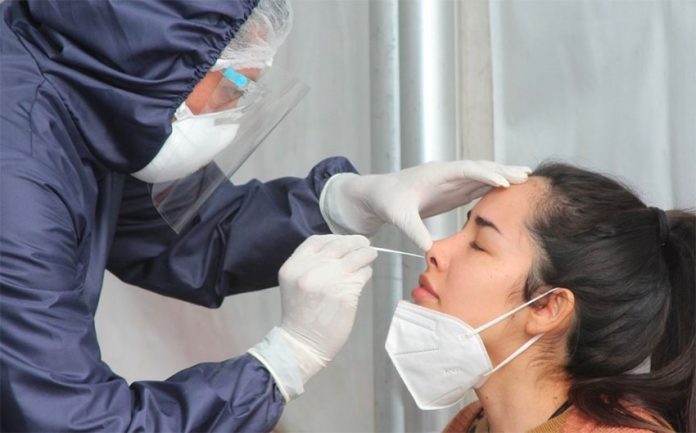
• Rapid test kiosks in Mexico City were closed for the holiday Friday but reopened Saturday — to some long lineups.
Residents began lining up at 5:00 a.m. for free tests that began at 9:00 and finished at 5 in the afternoon.
At some locations, there weren’t enough test kits to satisfy the demand.
López-Gatell unmasked.
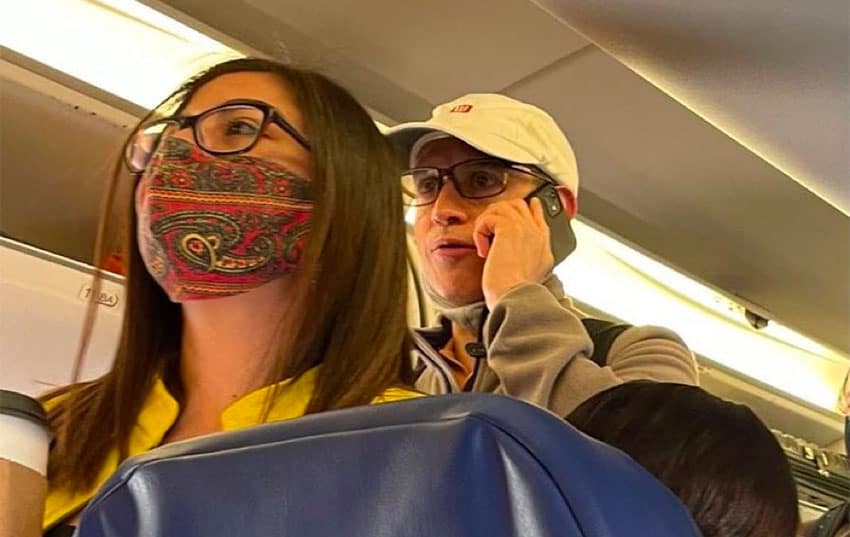
• The government’s coronavirus point man was criticized on social media after he was photographed New Year’s Eve on an airplane bound for the beach destination of Huatulco, Oaxaca.
Deputy Health Minister Hugo López-Gatell, who has sent mixed messages about the use of face masks but has repeatedly urged Mexicans to “stay at home” to avoid spreading the coronavirus, was presumably heading out for a New Year’s vacation.
Despite regulations requiring passengers to wear face masks while aboard aircraft, the minister was maskless.