Home Blog Page 1352

Loose dogs pose an unexpected threat to a reserve’s wildlife

0
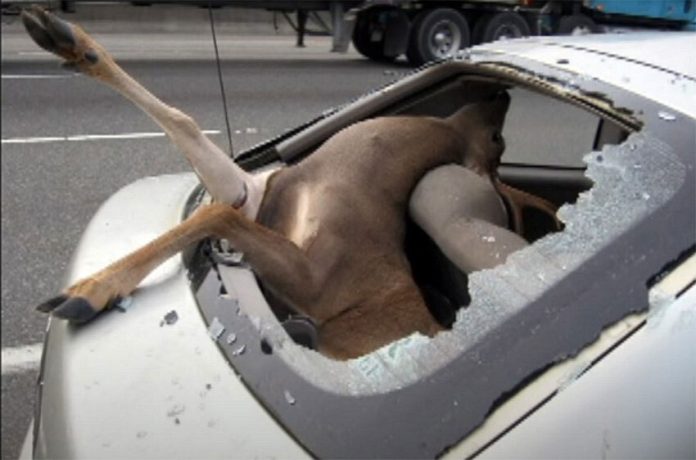
Loose or stray domestic dogs run free in Jalisco's Primavera Forest, attacking wildlife or spooking them into running at oncoming cars.
Loose or stray dogs run free in the Primavera Forest, attacking wildlife or spooking them into oncoming cars, which was the case with this deer. Courtesy of Aura Jaguar

I live in a small community called Pinar De La Venta perched on the edge of Jalisco’s Primavera Forest, a huge flora and fauna reserve adjacent to the city of Guadalajara and of nearly equal size. When I first arrived here, the community consisted of many houses with only 25 families living in them full-time.

Why so few people? Well, in 1985 there were no streetlights here, no telephone service, no TV reception and, of course, no internet. Generation Alpha might find it too hard to imagine: solitude and silence, broken only by occasional tweets — the kind produced by birds, I must clarify. At night you could walk the cobblestone streets in near-total darkness lit by the stars and the moon and serenaded only by chirping crickets, croaking frogs, whispering pines and the occasional flap of a bat’s wing.

Contrast that with the night sounds in this same community in 2020: the barking, growling, yelping, woofing, whining, snarling, yipping and howling of 800 family dogs — not all at once, mind you, but haphazardly waking you all throughout the night, from dusk to dawn … and beyond.

When you have that many dogs, you naturally have plenty of escapees. These roam the streets by day and by night, scaring the bejesus out of anyone undertaking such a foolish proposition as going for a walk. I made that mistake one day when I decided to take our parrot Tatu for a stroll in a big meadow across the street. Tatu rode on my head, perched on a sombrero, alerting me to the presence of anise seeds, one of his favorite treats, in the grass far beneath him.

Suddenly I heard the barking, yelping, woofing etcetera of canines owned by a young woman taking her pack of dogs for a walk, none of them on a leash, of course. Tatu was aware of their presence seconds before I was and, with a squawk of fear, leaped straight up into the air, landing on the ground because his wings were clipped.

Loose dogs in Pinar de la Venta.

During these few seconds, I perceived that all four of those dogs were heading straight for us at high speed. I snatched up Tatu, turned and ran … but I was not quite fast enough. The lead dog not only caught up with me but also succeeded in biting me on the butt.

After the young woman managed to get her dog pack under control, I shouted to her from a distance, “Your dog bit me,” expecting her to offer to pay for rabies shots at the very least. To my surprise, she replied, “You have dogs too; I know you do.”

I couldn’t fathom how my having dogs could possibly exculpate her from what had just happened, but I informed her that I owned no dogs, only one very frightened parrot.

“You give me any trouble,” shouted the woman,” and I will have you deported.”

Sans rabies shots, I — like hundreds of others in my community — survived being bitten by a free-running dog with no untoward consequences. But not all are so lucky. One day, I was once again about to take my parrot onto the cobblestone road in front of my house. I stepped out of the gate. To my left, I saw a mother and child strolling up the street. Turning to my right, I saw a typical neighbor ambling down the road with his dog — not on a leash, of course.

What ensued was a problem of size: the dog, friendly as could be, was very big; the child was very small. The huge dog ran straight up to the little girl and attempted to place its paws on her shoulders. That little girl let out the most terrified scream I have ever heard in my life. The look of utter fear and absolute terror on her face is etched in my mind forever.
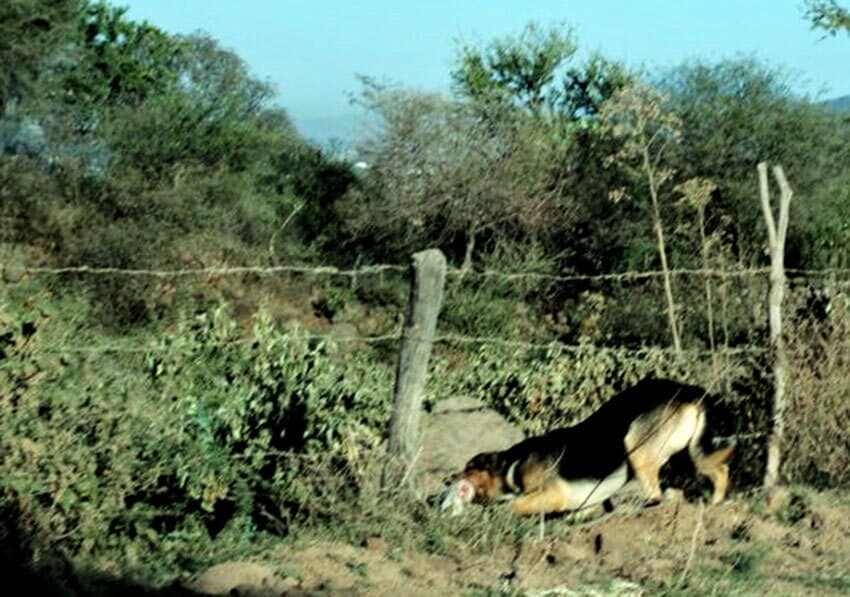
A German shepherd in the protected area with a piece of a baby white-tailed deer.
A German shepherd in the protected area with a piece of a baby white-tailed deer. Aura Jaguar

While there is hope that the dog owners of my community may reflect on stories like these and change their ways, there is not much any of us can do about that handful of dogs which — in a demonstration of true cleverness and ingenuity — succeed in escaping from their owners in a bid to see the world and live off the land as did their forebears in ages past, before human beings domesticated them: the call of the wild!

Yes, every day, a few dogs in every community hear the call of nature, dig their way out of the yard and become gloriously independent. Well, not quite, because nature also decrees that dogs should live in packs.

So picture this: the Primavera Forest, an officially designated protected area greatly beloved by the people of Jalisco, is surrounded by a dozen towns and housing developments like mine, all of them generating packs of self-liberated dogs.

Guess where those dogs eventually go to make a new home?

A few years ago, the Jalisco research group Aura Jaguar decided to investigate just which animal is most prevalent in Bosque La Primavera. They set up camera traps so that they would be sure not to miss those elusive animals that only come out at night.

The book Mammals of the Primavera Forest lists 58 species roaming about the protected area, including deer, raccoons, possums, foxes and plenty of mice. More surprising, we learn that the woods also house lynxes, armadillos, ringtails, white-nosed coatis, peccaries and even a few pumas.
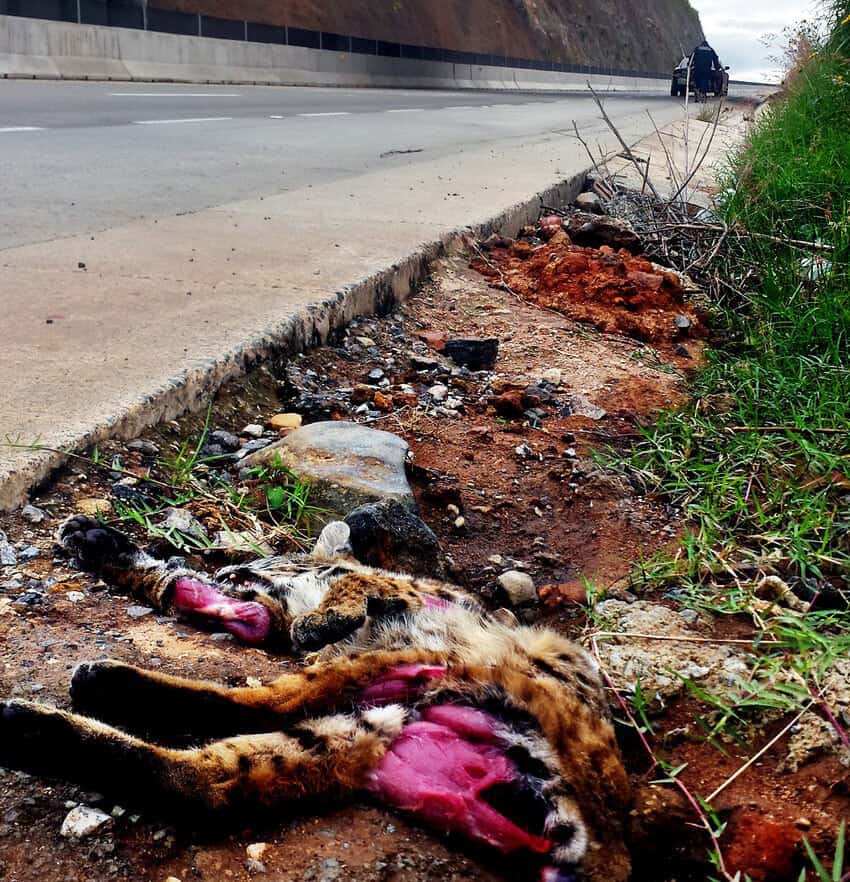
This lynx was surprised by a dog pack while trying to use Mexico’s first animal overpass.
This lynx was surprised by a dog pack while trying to use Mexico’s first animal overpass. Aura Jaguar

Which of all these animals turned out to be the most common and typical mammal photographed by the camera traps?

None of them, of course. The cameras caught a creature that the guide to mammals never mentioned at all. They suggested that the most representative animal inhabiting many parts of Bosque La Primavera today is Canis domesticus.

This could still be reversed. A warden of Profepa, the federal office for environmental protection, put it succinctly.

“First of all,” he said, “what we really need to do is to forbid the ownership of dogs in those communities directly bordering the Primavera Forest. If that’s not possible, there should be a limit to how many dogs may be kept on one property: a maximum of two dogs per family, both properly vaccinated. These dogs should never be taken into the forest because even the smallest Chihuahua leaves traces alerting the native animals that some dangerous predator is in the neighborhood, forcing them to leave the area.”

“As for dogs running loose in the streets of towns adjacent to the woods, a fine should be imposed if they belong to members of the community,” he continued, “and if they don’t, they should be rounded up and removed from the fraccionamiento [neighborhood].”

Not long ago, a lynx was found dead alongside a highway bordering the forest. Animal tracks showed that the lynx had tried to cross the animal bridge over the highway but had been ambushed by a pack of dogs and, spooked, ran onto the highway, where it was killed by a car.
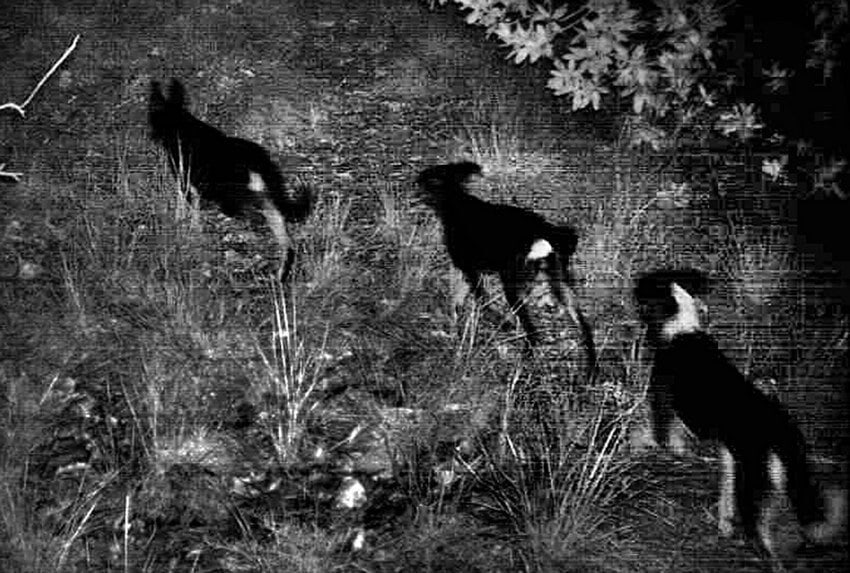
Camera-trap photo of dog pack inside Bosque la Primavera in Jalisco.
Camera-trap photo of dog pack inside Bosque la Primavera in Jalisco. Aura Jaguar

Similar dramas take place every day and every night in that sprawling forest, the pride of Jalisco. It is time for communities all over Mexico, especially those located near protected areas, to wake up and make some changes.

The writer has lived near Guadalajara, Jalisco, for 31 years, and is the author of A Guide to West Mexico’s Guachimontones and Surrounding Area and co-author of Outdoors in Western Mexico. More of his writing can be found on his website.
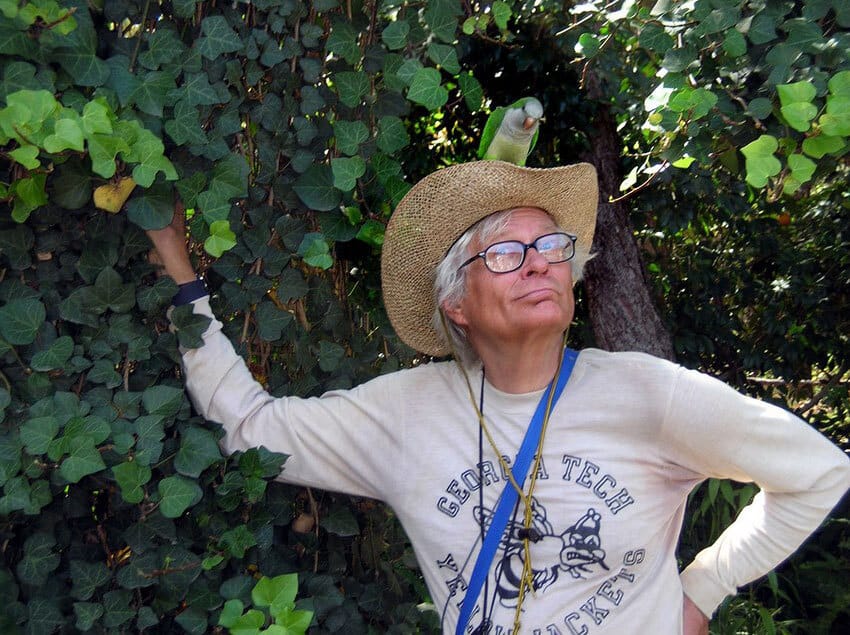
The writer prepares to take his parrot for a walk.

Sabotage derails 11 rail cars carrying new vehicles

0
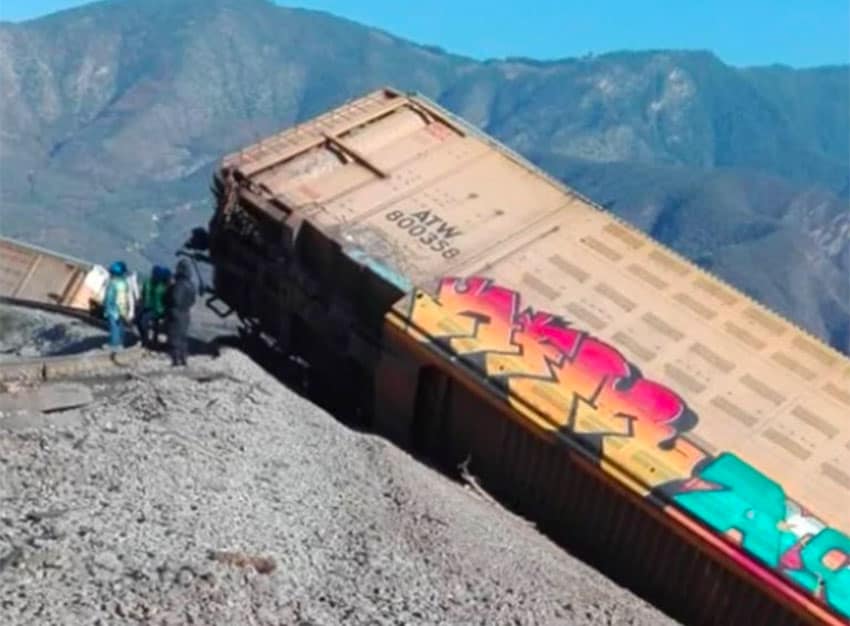
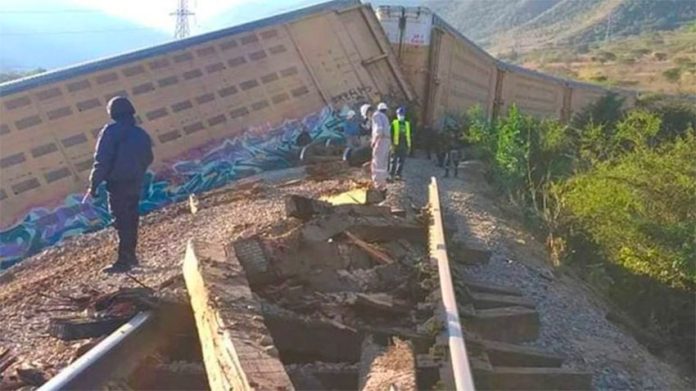
Wednesday's derailment in Veracruz.

Extensive financial losses have been estimated after a sabotaged rail line led to the derailment of at least 11 rail cars carrying new vehicles for export to Europe.

There were no casualties in the derailment, which took place about 3:00 a.m. Wednesday in Acultzingo, Veracruz.

The train was en route from the Volkswagen plant in Puebla to the port of Veracruz.

Thieves removed almost two meters of tracks to halt the train and steal merchandise. It wasn’t clear what they were able to steal, given that the cargo was brand-new vehicles.

A railway union spokesman said six rail cars rolled over completely and some dropped into a ravine. He estimated damages in the millions of pesos.

Source: Infobae (sp)

derailment

Daily Covid case tally is second highest since pandemic began in March

0
covid patient

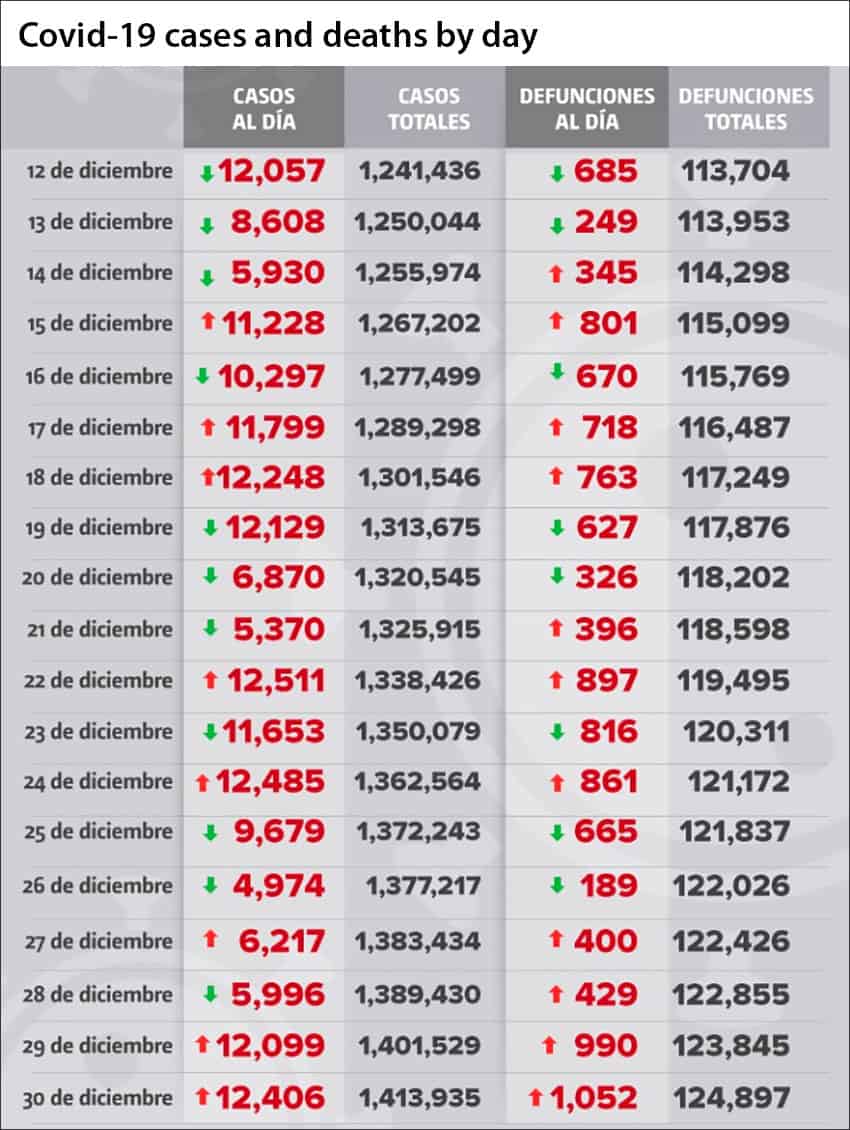
Mexico registered the second-highest daily tally of new coronavirus cases on Wednesday.

The 12,406 new cases brought the accumulated total to 1.41 million.

Death figures were also high. The 1,052 fatalities represented the second-highest number since June 3 and brought the total to 124,897.

Mexico will close the year in fourth place in the world for Covid deaths, behind the United States, Brazil and India, according to Johns Hopkins University.

However, a federal health official said new case numbers have shown a decline of 9%, meaning it’s possible that the virus is close to reaching a plateau.

Coronavirus cases and deaths in Mexico as reported by day.
Coronavirus cases and deaths in Mexico as reported by day. milenio

In Mexico City, hospital occupancy has crept up further, reaching 88% on Thursday, according to city health authorities. The capital was followed by México state with 82% and Hidalgo 74%.

Mexico News Daily

Without support, 50,000 small businesses in formal sector at risk

0
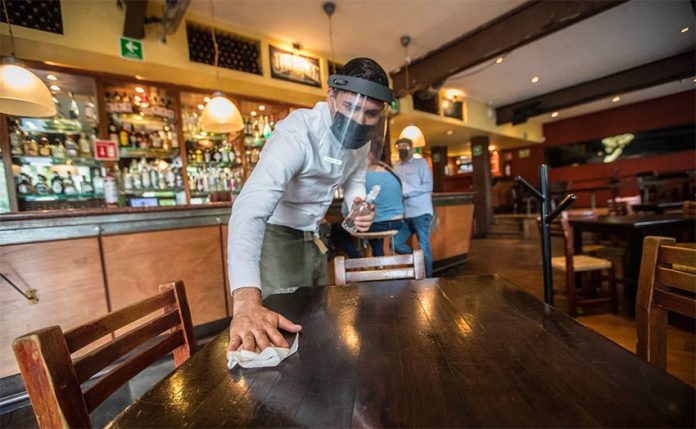
Nonessential businesses must remain closed until January 10.

The decision to close all nonessential businesses in Mexico City and México state December 19 means that 50,000 formal-sector small businesses in the Valley of México are at risk of shutting down for good.

Gerardo Cleto López of an organization representing small businesses told the newspaper El Universal that without adequate and better-planned government financial support, businesses with permanent physical locations facing rent, utilities and salary costs won’t be able to survive.

Businesses who try to take their sales online are only managing to make 10% to 15% of their normal earnings, Cleto said.

“This has an impact when you are carrying debt and overdue bills,” he said.

While he acknowledged that government sources are handing out some financial support, in the neighborhood of 10,000–15,000 pesos, that is only enough to help an informal business survive, he said, such as a food truck or vendors in open-air markets, both of which have fewer overhead costs.

He also said that businesses would not be facing another lockdown if the federal government had been more proactive in maintaining a clear and consistent message regarding the use of masks and the practicing of hygienic measures and social distancing.

“The vast majority of formal businesses have complied very responsibly with the sanitary protocols that authorities have put into place [in reaction to the coronavirus],” he said. “However, it seems to us that the government lost time in constructing efficient strategies and using resources to avoid the catastrophic scenario we are now facing … with more than 123,000 Mexicans dead, according to official figures.”

He also accused authorities in the Valley of México of not doing enough to enforce lockdown measures in the informal business sector, saying that many businesses in the formal sector were declared nonessential, while informal-sector ones continued operating.

In the middle of a red stoplight, “mobile businesses carry on without any sanitary controls in parts of Mexico City and México state,” he said. “And established businesses [with permanent physical locations], classified as nonessential, have been closed since December 19 …”

The closure came when both declared a red, high-risk designation on the coronavirus stoplight map, a move that was triggered by higher hospitalization and case numbers. It was also a move that was criticized for being too late.

The closure is in effect until January 10.

Source: El Universal (sp)

Man who killed himself after positive Covid rapid test wasn’t infected

0
The rapid test for the coronavirus is not as accurate as the PCR test.

Coahuila Social Security officials are on the defensive after a young man who was admitted to a hospital in Monclova with a positive result on a rapid Covd-19 test hung himself in a bathroom while awaiting results of a second confirmation test.

Hospital officials say the results of that second and more accurate test turned out to be negative.

Mario Alberto “M,” 29, arrived at the Monclova General Hospital last Saturday with proof of positive results on the rapid test that had been given elsewhere, as well as symptoms of the disease, including an oxygen saturation level of only 90%. Those factors convinced hospital officials to give him a confirmation Covid test, admitting him into a special area for coronavirus patients as they awaited the results.

On Monday, around noon, hospital officials said, the patient entered a hospital bathroom on his own and 20 minutes had not returned, which prompted a nurse to check on him. The nurse found the man dead, hanging from a sheet he had tied to the bathroom door.

Leopoldo Santillán, a Coahuila social security administrator, expressed regret over the incident but said that there were no plans to sanction the hospital staff in charge of caring for the young man.

“It was an unexpected incident,” he said. “We cannot take measures against staff because this wasn’t a case of homicide; it was a chance occurrence.”

The young man was ambulatory and capable of entering the bathroom by himself, Santillán said, adding that it was not the staff’s responsibility to accompany someone in Mario Alberto’s physical condition into a bathroom.

Regarding the Covid test the hospital administered, Santillán said it is hospital policy to confirm a rapid test with the PCR test saying, “That is the real confirmation, and his [PCR test] was negative.”

PCR, or polymerase chain reaction tests, are considered by the World Health Organization and the United States Food and Drug Administration to be the most accurate tests for detecting Covid-19. Conducted in a laboratory, the test checks for the presence of Covid-19’s genetic material, whereas rapid Covid-19 tests only detect the presence of virus antibodies in the blood.

Santillán would not speculate on specifics about why Mario Alberto took his life, although he said generally that all patients who have been hospitalized are typically under stress, aware of what could happen to them.

Under hospital protocol, Covid-19 patients are offered follow-up psychological counseling after being discharged, he said.

“The protocol states that they receive psychological support after leaving the hospital due to the anxiety that the disease leaves patients with,” he said. “We can’t predict if someone is already coming to us with anxiety. That is something that is attended to at the general practitioner level.”

The coronavirus has been a watershed moment for medical workers, he added, with unprecedented scenarios that have necessitated the perfecting of health care protocols.

Source: El Universal (sp)

AMLO reveals poll showing he has second-highest approval rating

0
López Obrador, No. 2 in the world.

Professing humility and taking a few swipes at his “conservative adversaries,” President López Obrador was keen to demonstrate his approval rating in comparison with other world leaders on Wednesday, insisting that Mexican news media would never publish the story and that the public should know.

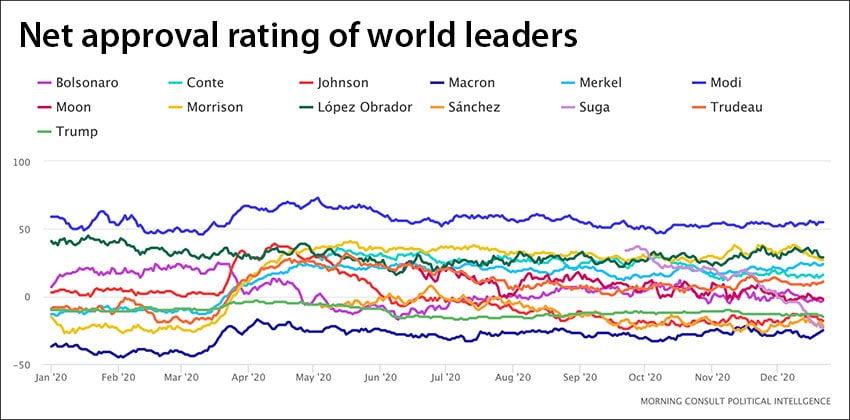
The international data intelligence company Morning Consult ranked López Obrador in second place among 13 world leaders, second only to India President Narendra Modi, as of December 22.

The Mexican leader’s rating on the Global Leader Approval Rating Tracker was 29, the difference between the number of people who approve of his performance and those who disapprove.

Modi, with a rating of 55, has been the top ranked world leader since the beginning of the year. López Obrador also held second place at the start of the year but by June he had dropped to just 16, ranking sixth place among world leaders.

But he has made a slow but steady comeback since then.

The president's rating is in green on the global leaders rating tracker.
The president’s rating is in green on the global leaders rating tracker. morning consult

His current rating on the Morning Consult survey is the same as that on Oraculus, a “poll of polls” that compiles a monthly average of all the principal opinion polls in Mexico.

The president’s December approval rating stands at 61% and his disapproval rating at 32%.

He expressed gratitude for the public’s support and confidence “in spite of the campaign against” him.

López Obrador has frequently used his morning press conference to claim that he has been attacked in the news media more than any other president.

But he he has spent more time attacking the media and his “conservative adversaries.”

Mexico News Daily

Disorder greets healthcare workers lining up for Covid shots in Mexico City

0
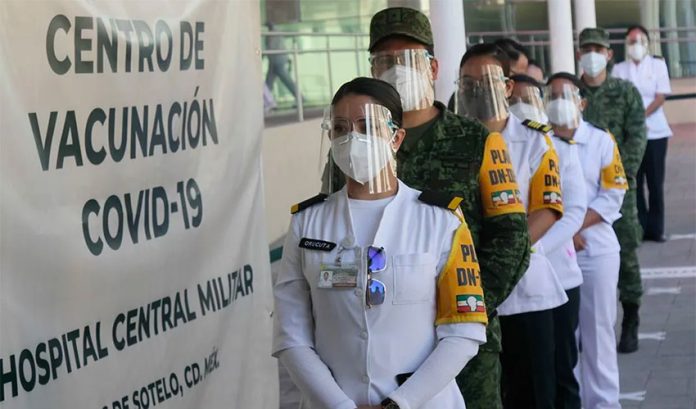
Candidates for Covid vaccination line up at a military hospital in Mexico City.

Some frontline healthcare workers waited for up to 10 hours for a Covid shot Wednesday only to find they weren’t on the list.

Doctors and nurses charged disorder in the vaccination process at the El Vergel military hospital in Mexico City after arriving in the early hours of the morning only to find later in the day they were not on the list of candidates.

Among them was an emergency Covid nurse who said the vaccine was being administered to cooks, dentists and administrators while frontline workers were not eligible due to the organizational problems.

There was a similar situation at a military hospital in Naucalpan, México state, where night-shift workers faced long lines and long waits after going straight from work to the hospital for their vaccination appointments.

When they complained to military personnel they were advised that the federal Ministry of Health was responsible for setting up the appointments.

The armed forces have been put in charge of distributing and administering the Covid vaccine in a national vaccination program that kicked off last week.

The program has designated healthcare workers who are in contact with Covid patients as its first priority, but others have been jumping the line for a shot.

The director of the Adolfo López Mateos medical centre in Toluca, México state, has been temporarily relieved of his duties while he is investigated for having members of his family inoculated.

The case was denounced during Wednesday’s presidential press conference.

President López Obrador said Thursday that thanks to such denouncements there should be no further cases of jumping the vaccination line.

He expects people will not do so for fear of being shamed by a public denouncement.

Source: Reforma (sp), El Universal (sp), El Financiero (sp)

Film documents indigenous-outsider clash at a Chihuahua ultramarathon

0
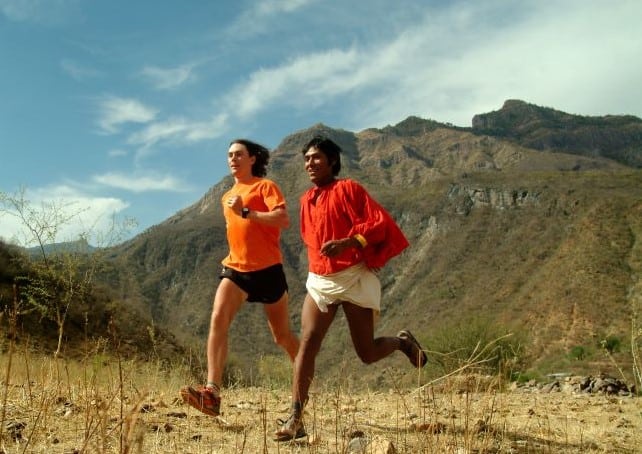
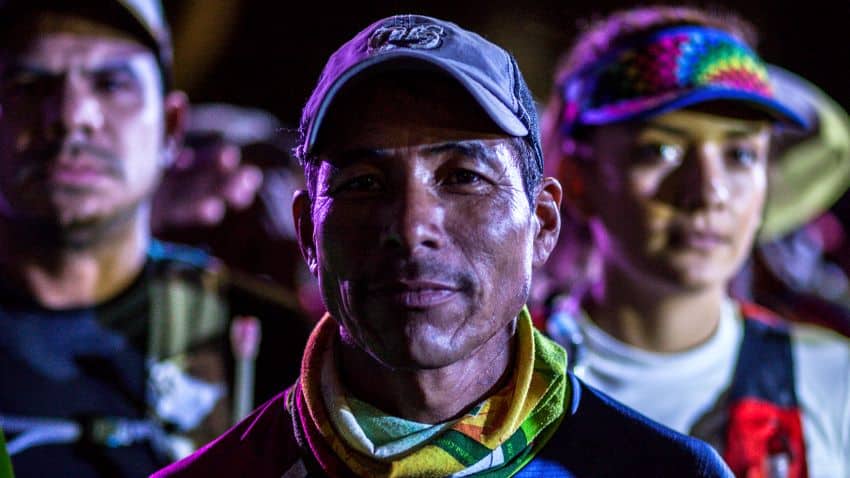
Runners in the ultramarathon in Urique, Chihuahua.
Runners in the ultramarathon in Urique, Chihuahua. Photos courtesy of ESPN

In recent years, the world has grown increasingly familiar with the indigenous Mexican community of the Tarahumara, or Rarámuri. A source of that familiarity has been the Tarahumara prowess in ultrarunning, in which athletes regularly log ultramarathon-type mileage in the Copper Canyon of Chihuahua.

Yet, the attention they have received is in some ways a mixed blessing. International runners who flocked to Chihuahua for training or recreational purposes encountered some tensions while competing in ultramarathons against indigenous runners eking out a subsistence living amid conditions of organized crime and narco-violence.

In 2015, these tensions erupted prior to an ultramarathon, resulting in frustration among the Tarahumara, the visiting runners and the local government of the town of Urique. This story is part of the narrative of The Infinite Race, a new documentary by Mexican filmmaker Bernardo Ruiz, whose past works include Harvest Season, a look at Mexican migrant workers in the California wine counties of Napa and Sonoma; Kingdom of Shadows, which focuses on drug violence on the U.S.-Mexico border; and a piece on Latino baseball Hall of Famer Roberto Clemente for the PBS series American Experience.

The Infinite Race premiered on December 15 on ESPN 30 for 30 sports documentary series in the US and on the ESPN Deportes channel in Mexico.

“Feedback has been overwhelmingly positive,” said Ruiz, whose family has also welcomed a new baby during this time. “Audience response has been very, very good.”

Guanajuato-born Ruiz, a dual citizen of Mexico and the United States, traveled to the hard-to-access Copper Canyon to meet the Tarahumara. He captured the mountain scenery in gorgeous aerial shots from a Cessna aircraft while compiling multiple perspectives on the community, including through three of its members: famed ultrarunner Silvino Cubesare Quimare, activist Irma Chavez and student-athlete Catalina Rascon.

Up-and-coming Tarahumara ultrarunner Catalina Rascón.

“A complex situation deserves more than one voice,” Ruiz said. “Silvino Cubesare is a veteran runner, kind of a legendary runner … Irma Chavez is an activist who is very critical of the ultramarathons Silvino has participated in. Catalina Rascón is a young up-and-comer representing a new generation, the only Tarahumara student in her high school at the time we were filming. She’s since graduated.”

Ruiz explained, “As a filmmaker, I am really drawn to stories where you don’t just hear one protagonist but voices of different perspectives.”

Yet he describes The Infinite Race as not a typical sports film but “a very different kind of film. I think it speaks to what 30 for 30 is trying to do, and is doing, in the last few years.”

Like the aerial images of the Copper Canyons, he wanted to focus a wide lens on the Tarahumara — not just on their impressive accomplishments in running, which include long-distance games with a ball, but also the increasing dangers they face from the criminal activity around them.

He learned about these dangers from “Drug Runners,” a 2017 Texas Monthly magazine article by Ryan Goldberg that looked at how organized crime groups in Chihuahua encroached on Tarahumara settlements and land.

“They’ve also been conscripting Tarahumara runners,” Ruiz explained.

According to the film, Cubesare was charged with attempting to smuggle drugs into the U.S.

Hunger and poverty are also issues for the Tarahumara, Ruiz says.

“That part of Chihuahua suffered from some very severe droughts in recent years. Illegal logging and deforestation make it harder for people just eking out a living as subsistence farmers and small agricultural producers.”

Silvino Cubesare, a Tarahumara ultramarathoner in the race that was featured in the film, won the bronze medal in the inaugural Indigenous World Games in 2015.

That’s why some of them run, he says.

“The race we documented [in Urique] offers an opportunity to receive vouchers for corn and other basic foodstuffs. Some runners are running for food.”

Over a decade ago, Tarahumara runners achieved fame through the bestseller Born to Run by Chris McDougall. The book also chronicled American ultrarunner Micah True, nicknamed “Caballo Blanco,” (White Horse). He was one of a few outsiders who have visited the Copper Canyon to learn how to run with the indigenous community.

A result of the book was an interest in barefoot running or minimalist footwear, which some say is a Tarahumara tradition, although this gets disputed in the film.

After getting to know the Tarahumara, True decided to create an ultramarathon that would serve several purposes, including benefiting the community.

“He had very noble intentions,” Ruiz said. “It was a kind of creation of coexistence that, in his view, would help the Tarahumara. After publication of the book in 2009, the race became a kind of bucket-list item for international runners. One American runner said the book became a kind of bible.”

True died while running in 2012, but the ultramarathon continued, named Ultra Marathon Caballo Blanco in his honor and run by professional race organizers in partnership with the local government of Urique.

Ruiz says this partnership fractured during the 2015 event because of tensions related to the race and a worsening security situation. Prior to the race, he says, there were “reports of gunfire, a kidnapping, even an execution. Race organizers were put in an impossible situation.

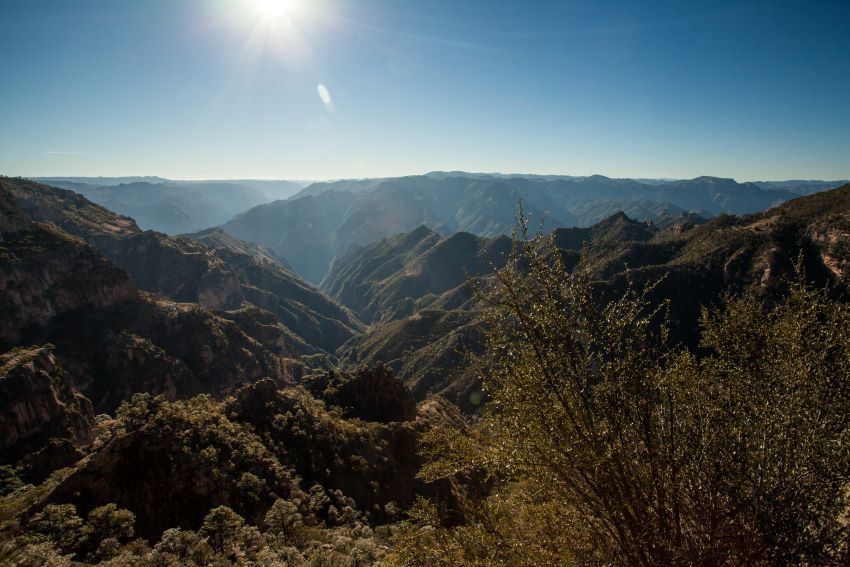
Copper Canyon, where the Ultra Marathon Caballo Blanco takes place.

“What I find interesting is that for a lot of international runners, the race was a kind of paradise, utopia. [And] here you had the violence of northern Mexico, Chihuahua, kind of a rude interruption. Worlds collided. It ended up becoming a pivotal moment in the film.”

In part by using footage obtained from Canadians in town for the race, Ruiz shows the differing reactions of multiple groups to the decision to cancel the official event.

“I understand the organizers [were concerned about] liability and safety,” Ruiz said. “They did not want people to get hurt.” However, he adds, “the local government in Urique asked, ‘Who are these guys telling us to cancel? This is our town. They’re only here a few weeks, then fly out.’”

Ruiz describes the Tarahumara’s collective response as: “It’s nothing new for us. We deal with narco-violence on a regular basis. This is our chance to run and get vouchers for our families’ survival.”

“Every group in the film sees it very differently,” Ruiz reflected. “As much as possible as a filmmaker, you try — I try very hard — to not pass judgment on people but rather think about how they’re seeing the situation. I tried very hard to see everyone’s position.”

The ultramarathon continued after 2015, with some changes. Since then, the event has been “organized almost exclusively by the Urique government, the local government,” Ruiz says, with less participation from international runners, while the “previous organizers, the people who organized it from 2012 to 2015, no longer organize it as a result of the tensions that erupted in 2015.”

Ruiz could not confirm whether the ultramarathon took place this year — “I believe there was a limited race, I’m not quite [sure],” he said. “The race usually started in March, [which this year] was kind of a few weeks after the U.S. [went into] a kind of lockdown.” The next such race is scheduled for March 2021.

Bernardo Ruiz
Bernardo Ruiz, director of “The Infinite Race” documentary, on ESPN this month.

Asked whether he himself did any running with the Tarahumara, Ruiz replied, “I was chasing after scenes.”

He explained that he worked with a very small team, including one particular colleague who is “in better shape than I am, a better runner.”

Yet he did end 2020 with a strong finishing kick for his film on one of the world’s biggest platforms.

“It was nice to kind of close the year with a broadcast on ESPN,” Ruiz said.

Rich Tenorio is a frequent contributor to Mexico News Daily.

Italian Epiphany tradition helps a Puebla town remember its heritage

0

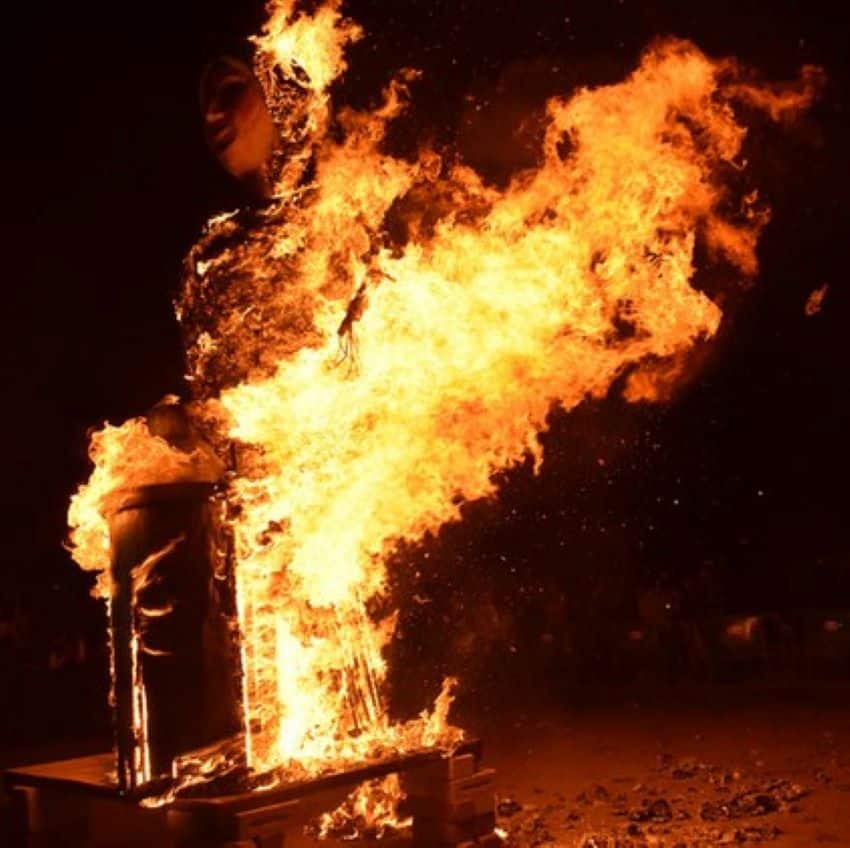
The witch stood silent as gasoline was poured around her, her unflinching gaze aimed over the heads of the people who had gathered to watch her burn. A spark flared at the bottom of her dress, and flames slowly spread. As the flames moved upward, a cheer went up from the 2,000 people surrounding her, and soon she was completely engulfed in flames.

Happily, she wasn’t a real witch but La Befana, and the burning of the 4.5-meter-tall figure that represents her, called la quema, is a tradition observed in Chipilo, an Italian pueblo in Puebla.

La Befana made her way to Chipilo from the Véneto region of northern Italy, which is where the people that settled the pueblo originally came from in 1882. The tradition is observed on the night of January 5, but it wasn’t celebrated in Chipilo until Eduardo Piloni Stefanonni, the director of the town’s Casa d’Italia, visited Véneto in the mid-1990s and witnessed the ritual.

“I thought, ‘Why don’t we have this in Chipilo?’” he says. “It is part of our culture.”

So in 1998, the town added another Italian tradition.

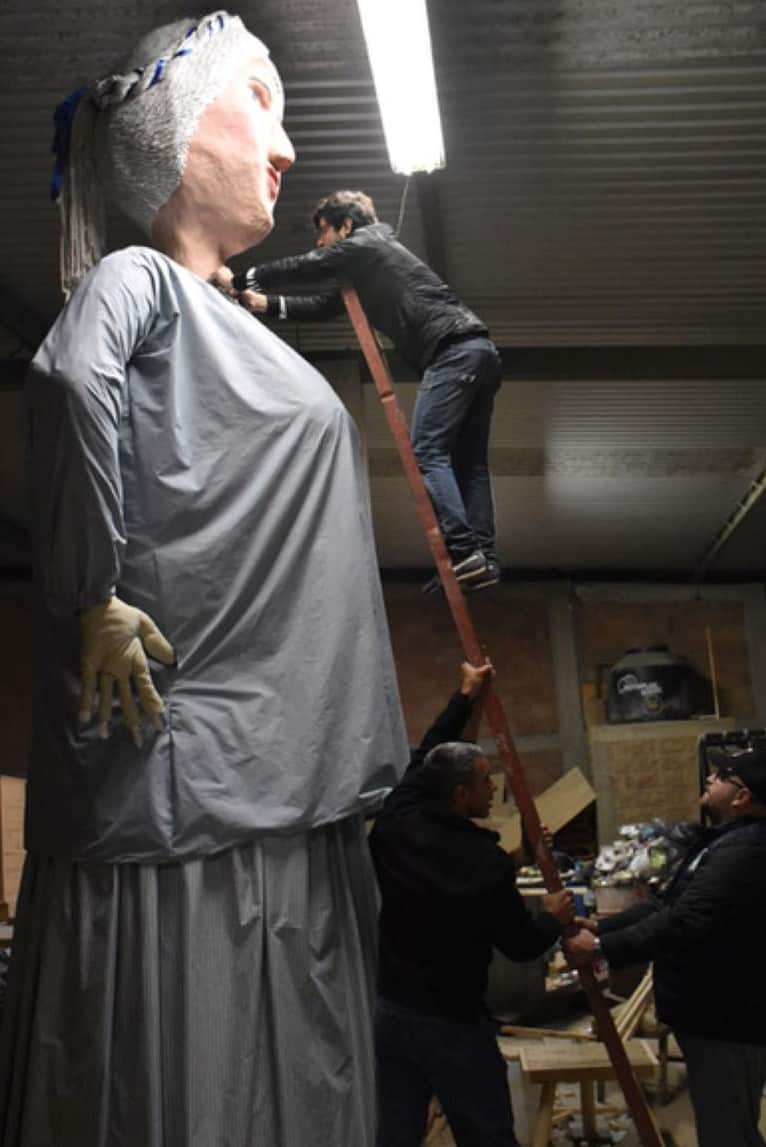
Grupo La Befana builds the figure in Francisco Berra’s carpentry shop.

The name La Befana comes from the Greek word for “epiphany.” The holiday of Epiphany, celebrated on January 6, commemorates the arrival of the Three Wise Men coming to see the baby Jesus in Bethlehem.

There are many stories about how La Befana came to be. In one version, the Three Wise Men lost their way as they traveled to Bethlehem and stopped to ask an old woman for directions. She didn’t know but gave them food and shelter. When they were leaving the next day, they invited her to join them, but she refused. She later changed her mind but couldn’t find them and now wanders the world giving candy to good boys and girls.

Although she’s a figure found throughout Italy, her reputation differs greatly depending on the region. In some areas, she’s a bad witch. But in parts of northern Italy and in Chipilo, “She is a good witch,” said Zuri Merlo, director of the Chipilo Nostro, a festival celebrating the town’s founding. “She has the power to get rid of bad things and bring good things.”

Her treatment varies as well.

“It is the custom in the north of Italy to burn her,” said Piloni. “From the central to the south, she is not burned. But in our region, Véneto, they burn her.”

And so they burn her in Chipilo as well.

The ritualized burning of La Befana, which chipileños call "la quema".
The ritualized burning of La Befana, which chipileños call “la quema”.

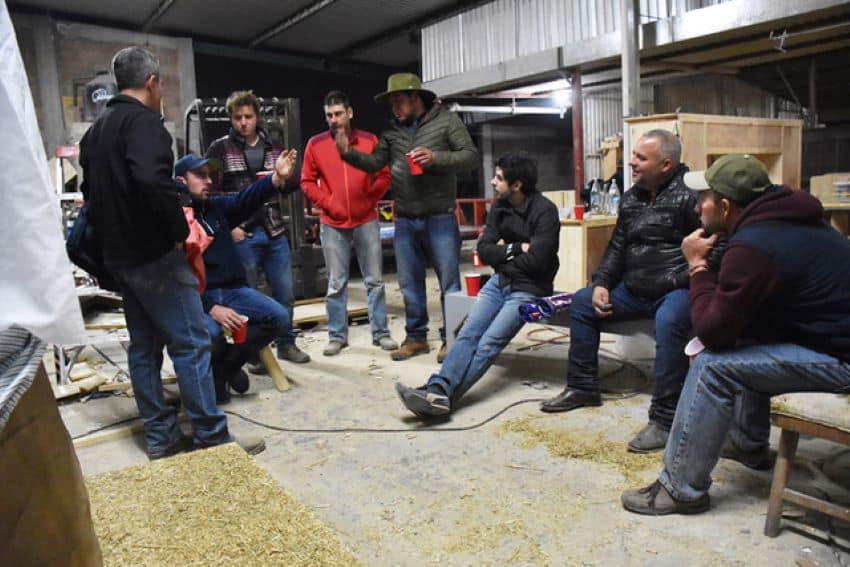
Last year, beginning on October, 24 men belonging to the Grupo La Befana gathered in Francisco Berra’s carpentry shop to build the witch. Throughout the month and into November, the large room resounded with Spanish and the Venetian dialect as the men switched easily between the two.

“We’re a group of friends,” said Héctor Mazzocco Sevenello, the group’s leader. “We each pay 200 pesos for general costs. We meet on Mondays, Wednesdays and Fridays, about an hour each day.”

La Befana starts as a simple metal frame that’s then covered with strips of wood, cardboard and newspaper. She takes on a different look each year.

“Before, she was painted,” said Berra, “but now she’s dressed and we gave her hair. It’s more real.”

In addition to preserving a tradition from their homeland, La Befana has another purpose.

“It is the pleasure of being together,” said Mazzocco. “Many members are married, and they broke their routine to work on this. It is our culture, our tradition, our language and habits. They are all being lost, and we as members are motivated by these activities to continue preserving what came before.”

Early on January 5, La Befana was taken from Berra’s shop and placed in front of the church where she stayed until that evening, when her final journey began. She was loaded onto a trailer and driven slowly down the pueblo’s main street to the baseball field, accompanied by the ringing of a handbell and trailed by several dozen people.

At the ballfield, she was placed in the center of a large circle, surrounded by a large crowd. After she was doused with gasoline, Mazzocco began the countdown with the crowd joining in. At “uno,” she was set on fire and soon became a tower of flames.

Each fall, chipileños build La Befana, a nod to the town's European roots.
Each fall, chipileños build La Befana, a nod to the town’s European roots. Photos by Joseph Sorrentino

“Some say the fire guides the Wise Men to Jesus,” said Mazzocco.

“Others say that it’s to bring light to the world,” Merlo added. “La Befana is a way to say good-bye to winter, to say good-bye to bad things in the past year. She takes all the bad things I want to get rid of.

And it is a time to meet, to be with others.”

When La Befana was nothing more than a large pile of smoldering ashes, members of  Grupo La Befana handed out bags of candy to children. As the crowd drifted away, Merlo reflected on La Befana’s significance for the pueblo.

“These are traditions that bring chipileños closer to their roots. But it is also to share it with people from outside the pueblo.”

She then paused and added,  “And it is a great chipileña party.”

Joseph Sorrentino is a regular contributor to Mexico News Daily.

Covid death numbers spike to 990, highest level this month

0
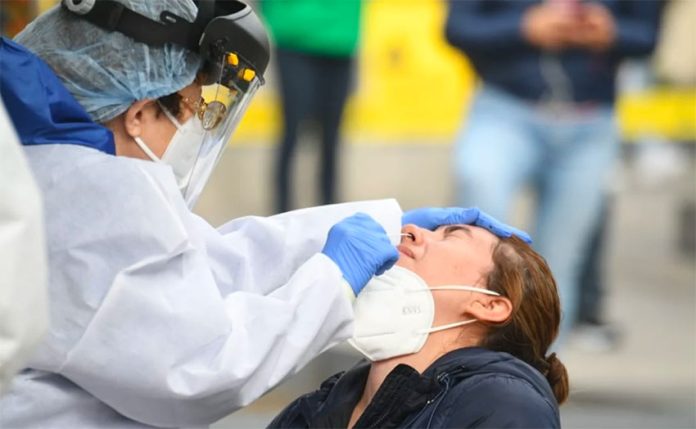
A healthcare worker goes door-to-door to conduct Covid-19 tests in Mexico City.

The number of coronavirus deaths reported on Tuesday hit the highest level recorded this month, federal health officials said.

The day’s death toll, which includes deaths that occurred previously but had not immediately been attributed to Covid-19, reached 990, pushing the accumulated total to 123,845.

The total number of cases registered since the pandemic began last March is now 1.4 million, up 12,099 since Monday.

Deputy Health Secretary Hugo López-Gatell said there were 18,893 Covid patients in hospitals across the country, although the majority — close to 10,000 — are in hospitals in the Valley of México.

The government’s coronavirus point man also said that the Pfizer/BioNTech vaccine had been administered to 18,519 healthcare workers in Mexico City, Coahuila and Nuevo León.

It is the first vaccine to arrive in Mexico but others are expected to follow soon.

President López Obrador said Wednesday that he expects the Oxford University/AstraZeneca vaccine to arrive in March following its approval Tuesday by the United Kingdom.

Mexico already has a contract to purchase the vaccine while the Carlos Slim Foundation has an agreement with AstraZeneca to aid in its production and distribution in Mexico and Argentina.

Source: Expansión (sp), UNO TV (sp)