Home Blog Page 1353

Covid doctor’s Xmas gift: seeing her daughter after 8 months in isolation

0
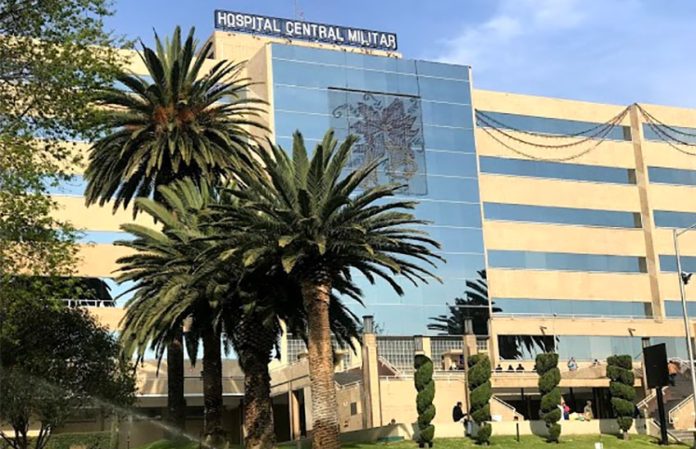
Hospital Central, where Dr. Rugerio has been working on the front lines against Covid-19.
Just in time for Christmas, Dr. Alejandra Rugerio Trujillo was vaccinated against Covid-19 Thursday, giving her an even better holiday gift: the chance to see her 10-year-old daughter again for the first time in eight months.

Rugerio, chief of the intensive therapy department at Mexico City’s Central Military Hospital, sees some of the most serious cases of Covid-19. She received the vaccination as part of one of the nation’s first wave of immunizations against the coronavirus for medical personnel.

One day after being administered the vaccine at a city hospital, she saw her daughter on Christmas Day.

“She was so big, because a child in eight months grows a lot and, well, now she’s almost a young lady, almost my size despite being only 10 years old, and she was so pretty,” she told Reforma newspaper. “She recognized me, though. She ran up to hug me and her father and, well, that day was just marvelous. We gave her what Santa had brought her under the Christmas tree, which were some dolls that she wanted. We spent the whole afternoon together; we ate pizza. We had a great Christmas Day.”

Because she and her husband are both doctors with the Mexican military, treating patients with Covid on a daily basis, they sent their daughter Camila to live with family eight months ago to reduce the risk of infecting her with the disease they have seen ravage so many people.

“It was very complicated. She is my only daughter,” Rugerio said. “We are only my husband, my daughter and myself. And with the uncertainty that existed with the pandemic, we made the difficult decision to have her be with our family in Sinaloa.”

Despite the sacrifices she’s had to make as a frontline worker, Rugerio, who has been a military doctor for 18 years, said she has experienced moments of pride, satisfaction, and even happiness watching some of her patients in critical condition overcome the coronavirus.

“It’s been very arduous work, not just for the doctors but for all the staff — the orderlies, the cleaning personnel — but it has its rewards, to give families their parents back or to watch our patients recover despite having been in grave condition; that is a great compensation,” she said.

But the most encouraging moment of the pandemic for her so far, she said, has been the day she received the vaccine.

“After so many months of uncertainty, it has given us a bit of light in our work,” she said.

Source: Reforma (sp)

Non-health sector workers attempt to jump the vaccine line

0
covid vaccination
Mexico's coronavirus vaccination program is under way in three states.

The national Covid vaccination program has opened new opportunities for corruption, revealing that the battle against the scourge has not been won quite yet.

In Mexico City, leaders of the government workers union attempted to jump the line and get on the list of healthcare workers due to be vaccinated, despite not being employed in the health sector.

Mayor Claudia Sheinbaum said leaders of union local Section 12 who tried to obtain Covid shots will be identified and punished.

“I want to be very emphatic about this: the president has been very clear about it [and] I’m totally in agreement: there are rules to receive the vaccine. The first to receive [it] are healthcare personnel on the front line in treating Covid …

“… there is [to be] no influence peddling here.”

In México state, an investigation is under way at a military hospital where a doctor has been accused of obtaining Covid vaccinations for his family.

President López Obrador confirmed Wednesday that the army had been accused of allowing the vaccination of a doctor’s wife and one or two of his daughters.

The president urged citizens to denounce such acts of influence peddling.

Also in México state, the director of a hospital will be punished for having arranged the vaccination of two family members.

The state health minister said José Rogel Romero of the Adolfo López Mateos medical center would be sanctioned and that the filtering of candidates for vaccination would be reinforced.

It wasn’t revealed whether the two family members would be allowed to get the second shot necessary for the Pfizer/BioNTech vaccine.

In Coahuila, 29 medical personnel who allegedly have no contact with Covid patients were vaccinated, the newspaper Milenio reported.

More Pfizer/BioNTech vaccine arrived in Mexico today from Belgium, bringing the total to 53,625 doses.

Mexico’s vaccination program has begun in three states with the inoculation of healthcare workers on the front lines of the battle against Covid-19. Senior citizens will be up next. Their shots will begin in January.

Source: Milenio (sp), Reforma (sp)

Foiled by efforts to stop hijacking, toll plaza thieves grab the cash instead

0
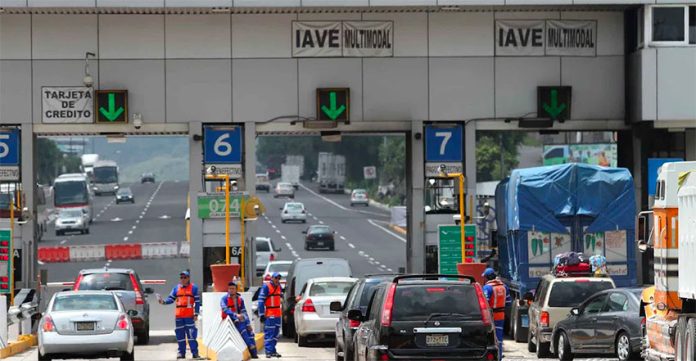
The Tepoztlán toll plaza has been a popular target for hijackers.

While toll plazas in many Mexican states have been repeatedly hijacked by more or less peaceful groups of people collecting “voluntary tolls” from drivers, a violent robbery of a plaza in Morelos early Monday suggests that criminals may be upping their game in response to increased security measures against the takeovers.

An armed gang of about 10 people attacked employees on duty at the Tepoztlán toll plaza, tied them up and stole 150,000 pesos (US $7,500) in cash from the toll booths and vault, as well as electronic equipment and cell phones.

By the time the National Guard arrived, the thieves had fled. The toll plaza employees were taken to a hospital in Cuernavaca and treated for injuries.

Employees union leader Martín Curiel told the newspaper Reforma that the plaza has been targeted for takeovers several times but never with such violence. He attributed the nature of the robbery to would-be hijackers changing their tactics.

“In my view, this You are not allowed to view this event. stems from … the battle by the National Guard and the federal roads and bridges administration [Capufe] against the [toll plaza] takeovers,” he said. “This toll plaza was constantly being taken over, but now it’s been several weeks since they’ve dared to. Now, direct robbery is the strategy …”

Curiel said his union is worried about its members’ safety and has sent formal letters to Capufe, demanding information about what measures the government is taking to avoid more such robberies.

The National Guard were put in charge of guarding the plazas in early November. In some cases, people taking over the plazas were being paid to do so by organized crime. Also in October, Morelos Senator Lucy Meza announced that she would present a petition in the upper house of Congress urging the federal government to clear toll plazas of illegal occupiers.

At the time, Meza said she was handing over at least 300 pesos per week to toll plaza hijackers while traveling between Cuernavaca and Mexico City.

Source: Reforma (sp)

CORRECTION: The original version of this story incorrectly put the toll plaza in Tepotzotlán, México state.

Mexico’s social housing projects need input from those who will live in them

0
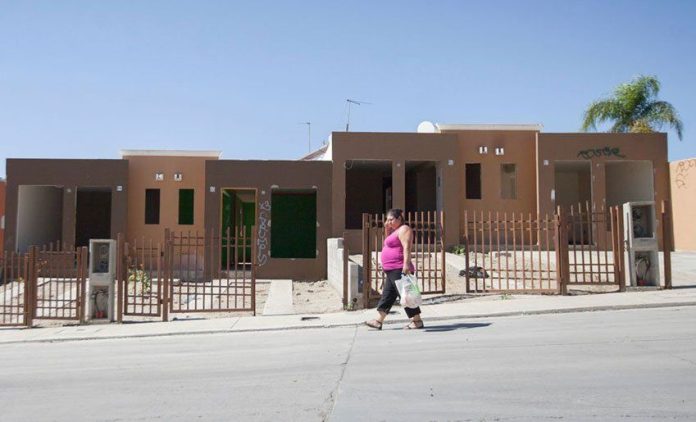
Government-built homes are often too small for families and lack amenities.

When I was a kid, there was a period of time when I was semi-obsessed with strangers’ houses. Whenever someone would drive me somewhere in a car, I’d fixate on the outside of different homes and wonder what it would be like to live there.

More than that, I’d wonder how I would fix it up if I lived there myself. How would I make it a nice place to live? If the house were ugly, I’d think about how I could make it into something I could feel proud of and comfortable within. For me, improving lives always starts at the physical level: how can we turn what’s around us into the best possible place so that we can be the best, happiest and most productive possible versions of ourselves?

Those who read my column regularly will have recognized by now that I have a special place in my heart for design, aesthetics and the urban landscape. To a great extent, I still mentally practice the same childhood pastime I described above. Drop me into any neighborhood and I can immediately list at least six things in under 30 seconds that I’d do to improve it.

Not to insult Mexico, but at least in my city this is a very easy exercise to do; sometimes I can get up to 12 things, especially when passing through housing developments that look like the zombie apocalypse has already come and gone. It made me very unproud and frustrated to learn that the Matt Damon movie Elysium’s futuristic dystopia was filmed in modern-day Mexico City. To be fair, it was filmed in a dump that’s now closed, and other utopic parts were filmed in the wealthiest parts of the same city. But still, that site isn’t abandoned. People lived there when it was a dump, and people still live there.

I do this same activity from within homes: what would I do with this space if I lived here? I’ve seen a lot of odd construction in this country, but the projects that confuse me the most are the social housing units, many of which are constructed and sold through Infonavit (the National Workers’ Housing Fund).

It’s one thing if an overly enthusiastic individual designs and builds a house himself and ends up with some odd features; it’s quite another when these homes number in the thousands, are situated in areas without basic services and are the result of gigantic government contracts.

Because of my own interest in the topic, the recent article on a planned housing restoration project immediately got my attention. The picture that went with it is dismal: a row of abandoned houses, all of which look too small for more than one or two people.

I just don’t get it. Didn’t any of these people play the video game Sim City when they were kids? You can’t just plop down a bunch of houses in the middle of nowhere and expect happy families to magically insert themselves. You need stores, yo. You also need schools, hospitals and a basic façade of security. For the most part, I feel that Mexico far surpasses my home country of the United States on this front as most urban neighborhoods here are at least somewhat self-sustainable: they have stores and places to buy things like bread, tortillas and school supplies.

Among some of the reasons these social housing units have been abandoned are that “… they’re too small for growing families, they’re far from work centers, they lack access to basic services and they’re located in areas with high levels of violence.” My, that does put a damper on things.

Infonavit director Carlos Martínez Velázquez admitted last year that “… many of the housing projects were not feasible from their inception. But construction permits were granted regardless.”

When the municipality doesn’t prioritize comfortable, safe and well-planned communities (either new or current ones), it shows, and I’ve found that many Mexicans have simply resigned themselves to the idea that rather than counting on the government to fix potholes or paint speed bumps, they’ll just have to focus on not tripping over them (especially at night when streetlamps may or may not be present or working).

This is a problem that needs to be fixed.

Recognizing it is the first step, though I’d still like to reserve at least five minutes of our time for jumping up and down in rage that someone actually gave out construction permits and lots and lots of money to create these useless space-suckers; the money came from somewhere, and there was a lot of it — my best and only guess is that it involved corruption, i.e., that people in power’s not-very-smart nephews were awarded lucrative contracts for designing and creating places that turned out to be not worth the materials used.

OK, that’s done. Thank you for indulging me. Now, let’s please focus on improving the communities where people live already and then move on to creating new ones that are intentionally great.

A visit to Mexico’s Alliance for Urban Regeneration website shows both hope and that they have the right idea. After all, I can drone on all day with my own bourgeois ideas about what houses and neighborhoods need and should have, but ultimately the input and participation of those who actually live in the community is the magic ingredient. This is an idea that doesn’t seem to have been implemented much in Mexico in general — those in power actually asking people what they want and need rather than assuming that they know best.

But even before we get to that point, surely we can agree on the necessity of a few basics: paved roads, sidewalks, hookups to water and electricity, drainage, streetlights, schools, stores, doctors, trash pickup, a police station, parks and playgrounds, a community center, public transportation routes and — not to get too ahead of myself — maybe even some closets and counter space in the kitchens and a shelf in the bathroom to set your towel and soap upon. How about bedrooms that are accessible without having to walk through another bedroom?

People know what they need and want, and protocols exist for involving them in the community-building process. So, instead of just demolishing old structures and renovating others, let’s get some input from the people who might actually live there.

Sarah DeVries is a writer and translator based in Xalapa, Veracruz. She can be reached through her website, sdevrieswritingandtranslating.com.

Legendary singer-composer Armando Manzanero dies at 85

0
Manzanero lost a battle with the coronavirus.

Mexico bid a sad and nostalgic farewell Monday to the legendary composer and performer Armando Manzanero, who died at 85 of renal failure after losing a battle with Covid-19.

Manzanero’s songs are known around the world in several different languages, having been recorded by legends themselves, from Frank Sinatra, Elvis and Dionne Warwick to Andrea Bocelli.

The English version of his song Somos Novios, recorded as It’s Impossible by Perry Como, was nominated for a Grammy. He won a Latin Grammy in 2001 for his album Duets, a lifetime achievement award from the organization in 2014, and another lifetime achievement award at the 2020 Billboard Latin Music Awards. He also won many international music awards.

Born in Yucatán, Manzanero started out his career as a musical director for the Mexican branch of CBS International in 1957 and as a music promoter for the EMI record label. His own recording career began after an RCA Victor executive convinced him to record an album of romantic songs.

Many of his decades-long catalog of over 600 songs have been hits not only for himself but also for several successive generations of Mexican musicians.

“A song has to be written with sincerity,” Manzanero told Billboard in 2003. “It can’t be written with the desire to have instant success or passing success but wanting to have a song forever. It’s like when you do a painting. You have to do it right so that painting remains on the wall forever. That’s been my secret.”

“We celebrate his life and work,” said the Latin Recording Academy in a statement issued after Manzanero’s death. “An irreplaceable loss for the Latin music world. We are with the Manzanero family in their grief.”

Perhaps another testament to Manzanero’s impact on Mexican culture was President López Obrador’s remarks on his death.

“Armando Manzanero was a sensitive man, a man of the people. That’s why I lament his death. He was also a great composer.”

The artist was hospitalized on December 17 after being treated at home for five days following his diagnosis with Covid. Once under hospital care, Manzanero’s symptoms appeared to be improving as recently as December 27. However, doctors said that renal complications did not improve and ultimately caused his death.

Manzanero received the Covid diagnosis just six days after attending the inauguration of Casa de Manzanero, a museum in Mérida displaying his instruments, awards and other mementoes of his career.

He also served as president of the Society of Authors and Composers of Mexico, taking on the post in 2010 after having served in other posts within the association from the 1980s onward, fighting for his fellow composers’ rights.

armando manzanero
Manzanero: ‘An irreplaceable loss for the Latin music world.’

Sources: Milenio (sp), Billboard (en), CNN (en)

Electricity commission blames wildfire, renewable energy for Monday’s power outage

0
cfe

The Federal Electricity Commission (CFE) has blamed a wildfire, renewable energy producers and court rulings for the massive power outage that affected more than 10 million customers in a dozen states on Monday.

But the evidence of a wildfire has been refuted and an energy specialist says the CFE is lying about the cause of the power failure.

On Tuesday the CFE and the National Energy Control Center (Cenace) held a joint press conference to announce that the outage was triggered by a 30-hectare wildfire in Paudilla, Tamaulipas.

The CFE said the fire affected transmission lines running between Ciudad Victoria, Tamaulipas, and Linares, Nuevo León, presenting evidence of the fire in a statement supposedly issued by the Tamaulipas Civil Protection agency.

But officials said the fire was not the only reason for the outage, which left some 35 million people without electricity for as long as two hours.

Cenace chief Carlos Menéndez said the electrical grid had been weakened at the time of the fire by a high concentration of renewable energy.

He said an unprecedented 28.7% of the electrical energy in the system was from renewable sources, “weakening” it and creating instability.

A CFE official offered that the system’s failure was a result of indiscriminate granting of permits to wind and solar energy producers. In addition, said Mario Morales Vielmas, the government’s efforts to stabilize the electrical network had been thwarted by the judicial system’s rulings against a new energy policy that was intended to give the government more control over the network.

The arguments were quickly called in to question, first by Civil Protection authorities in Tamaulipas who said they had no knowledge of a fire or the “official statement” exhibited by the CFE.

Civil Protection director Pedro Granados Ramírez later declared that the document was false. The logo it bore was not that of his office, the folio number did not coincide with those in use and the signature was not that of the official named, he said.

Energy expert Gonzalo Monroy said on Tuesday it wasn’t possible that renewable energy producers could have caused the outage, and accused the CFE of lying.

He said problems with the line were identified in 2016 and never corrected.

“They are trying to make an unsustainable technical argument in order to blame renewable energy suppliers.”

Monroy called for an independent investigation, claiming that the CFE doesn’t know the reason for massive power failure.

He said it was likely a lack of maintenance.

There hasn’t been an outage of the same magnitude since 1971, the energy specialist said.

President López Obrador weighed in on the issue at Wednesday morning’s press conference, claiming that the backlash over the incident was part of a conservative ploy.

He accused conservatives of “digging for a scandal” because “they’re eager to see the energy sector sold off to private citizens.”

Source: Milenio (sp), El Universal (sp), Reforma (sp)

‘No more power outages:’ it’s been promised before

0
López Obrador
López Obrador: supply of electrical energy is guaranteed.

President López Obrador insisted Tuesday there would be no further power outages. It wasn’t the first time.

The president was responding to Monday’s widespread outage that left over 10 million consumers without electricity.

“It won’t be repeated,” he said, “The people can be secure in knowing it won’t happen again and that the [Federal Electricity Commission] is an enterprise with first-class technicians.”

López Obrador said the same in August when reiterating a promise to construct a combined cycle generating plant in La Paz, Baja California Sur.

Seven months earlier he delivered the same message with regard to the same plant, promising the delivery of natural gas to power the plant. “… there will be no outages,” he said in La Paz in February.

(A start date for the plant has yet to be announced.)

In December 2019 the president said Mexico’s supply of electrical energy was guaranteed.

“There will be no outages …”

In August last year he said natural gas supplies had been negotiated to ensure there would be no outages “for many years.”

López Obrador offered the same assurance a month earlier, indicated that the Federal Electricity Commission would be strengthened.

“There will be no problems with a shortage of electrical energy, there is sufficient supply and there will be no outages …”

And seven months before that, during a tour of Yucatán, he promised that a natural gas shortage would be resolved and that a new generating plant would be built in the state “so there will never be outages on the Yucatán Peninsula.”

Source: Reforma (sp)

Doña Francisca, 91, wins 15-day battle against Covid-19

0
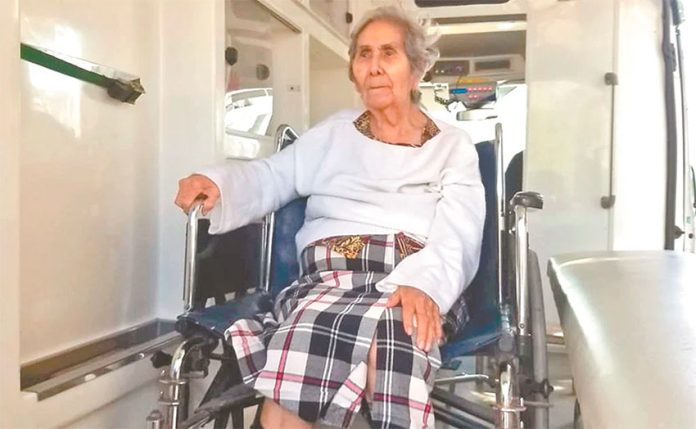
Hernández leaves the hospital in Reynosa on Monday.

Francisca Hernández was all smiles Monday as she left the Baudelio Villanueva hospital in Reynosa, Tamaulipas, after winning a 15-day battle against Covid-19.

On her way out to a waiting ambulance and accompanied by her daughter, Hernández extended her arm to salute the doctors and nurses who had taken care of her since she arrived at the hospital with low oxygen saturation and difficulty breathing. She said she was happy to get back to her daughter and to be able to feel the sun and fresh air on her face.

“I am happy. I feel very well,” she said as hospital personnel helped her into an ambulance to take her home, where she will continue her recuperation.

Hernández likely survived the disease — without needing intubation — because she contacted emergency personnel early on, said Armando Covarrubias, the doctor in charge of Covid-19 patients at the hospital. She is part of a trend he has seen: more people who suspect they have Covid are seeking help earlier, he said.

Of the 700 Covid-positive patients his hospital has treated, Covarrubias told the newspaper El Universal, 10 have died.

Hernández said that her family took her to the hospital when she had trouble breathing, even though her other symptoms seemed mild.

“I didn’t have a fever or a headache,” she said. “It was like a cold, but I couldn’t breathe, so they took me to the hospital.”

By the time she was admitted, her oxygen saturation was less than 80%, said Covarrubias. Under 90% is considered low.

Hernández recovered with the help of medicines they administered, Covarrubias said.

“She left in a wheelchair, her oxygen saturation at 95%, and for us that is an achievement.”

Source: El Universal (sp)

10.3 million CFE customers affected as electrical system fails

0
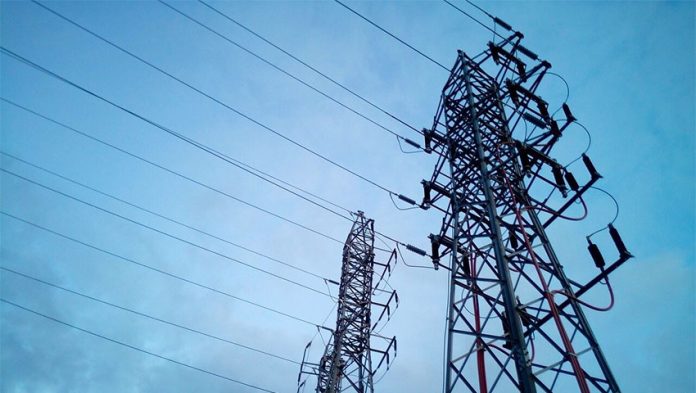
transmission towers

The federal electrical grid failed Monday afternoon, leaving 10.3 million customers in several of Mexico’s major cities without power for almost two hours.

About 19% of CFE customers nationwide were affected in parts of Mexico City and México state as well as the cities of Guadalajara, Monterrey, Hermosillo, Saltillo, Culiacán, San Luis Potosí, Aguascalientes, Pachuca, Mérida and Oaxaca, among others.

At least a dozen states were affected.

In Mexico City, services on Line A and Line 1 of the Metro had to be suspended temporarily due to the outage.

The grid failure also affected countless citizens across Mexico caring for Covid patients at home who are dependent on oxygen supplementation.

“It was the worst 50 minutes of our family’s lives,” Mexico City resident Alejandra Carmona told the newspaper Reforma. “My mother has to be connected to an oxygen concentrator that doesn’t work without power, and it suddenly shut off on us.”

Edson Cruz, also of Mexico City, found himself in a similar situation and had to scramble to find a nonelectrical alternative to the oxygen machine for his father, who is suffering from Covid-19.

“We reacted quickly when we saw that everything had shut down. Fortunately, we were able to use one of my uncle’s portable oxygen tanks, and we borrowed someone else’s tank in order to fill it.”

Federal authorities blamed the outage on “unforeseen circumstances,” pointing to transmission line irregularities between the cities of Ciudad Victoria, Tamaulipas, and Linares, Nuevo León, which they said caused a cascade effect that eventually led to the automatic shutdown of 16 power stations, including photovoltaic and wind energy plants. They dismissed the possibility of maintenance issues.

“[The shutdown happened] to protect the rest of the system,” said Carlos Gonzalo Meléndez, director of Mexico’s National Energy Control Center, in a virtual press conference with Federal Electricity Commission chief Manuel Bartlett.

Gonzalo promised that his agency would analyze the causes of the unexpected outage in conjunction with CFE and that the public would be informed of their findings.

“These outages are not common,” Gonzalo said. “We’re talking about extraordinary cases that are dealt with correctly.”

The outage deprived the grid of 26% of its total electrical output, or about the amount needed to power the Valley of México, Gonzalo said.

Bartlett said the failure did not cause any damage to CFE’s grid.

President López Obrador insisted Tuesday morning that it was a one-off event.

“Yes, there was a power failure,” he conceded, adding: “It won’t be repeated.”

Sources: El Universal (sp), Reforma (sp)

Covid numbers decline in Mexico City, state of México; maximum alert in Puebla

0
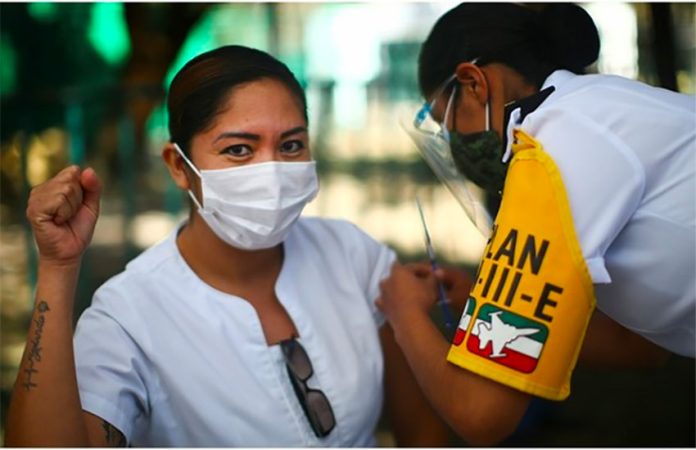
A healthcare worker raises her fist in defiance as she is injected with Covid vaccine in Mexico City.

Health authorities say a decline in new coronavirus case numbers has been seen in Mexico City and México state since nonessential activities were suspended on December 19.

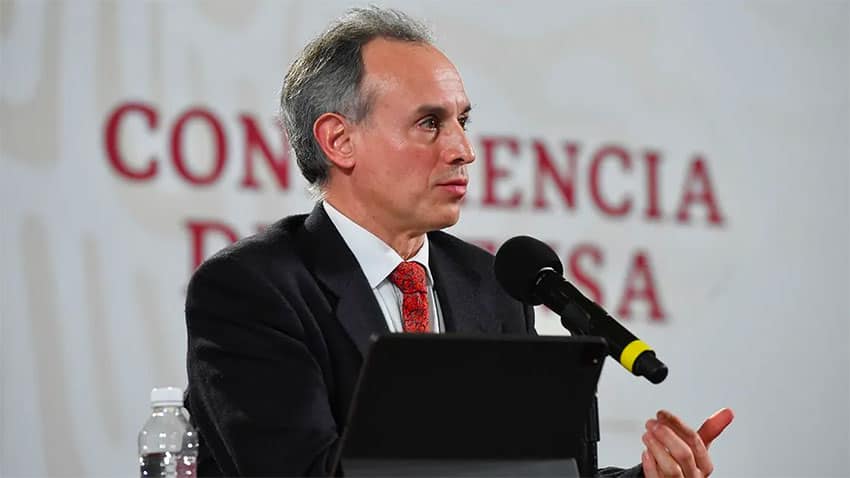
Deputy Health Minister Hugo López-Gatell said a 13% decline in case numbers had been recorded in recent weeks but cautioned that the downward trend was not definitive. On the other hand, hospitalizations and deaths have continued to rise, he said.

He linked the drop in numbers to the designation of red light status for the capital and México state on the government’s coronavirus stoplight map.

The news is not as good in Puebla, where an increase in new case numbers has been cause for alarm.

The governor of Puebla put the state on maximum alert on Monday and announced a complete halt to nonessential activities.

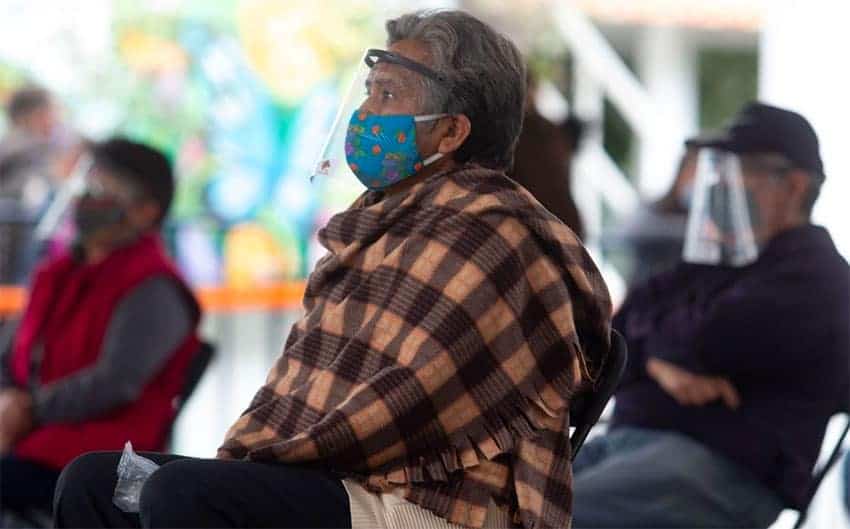
Seniors are next up for vaccinations against the coronavirus.

Governor Miguel Barbosa said the halt will remain in effect until January 11 in order to contain the advance of the virus, for which he blamed citizens’ failure to adhere to coronavirus measures.

He said new cases and hospitalizations have increased “exponentially” and that the state was back to where it was during the peak of June and July.

In Michoacán another seven municipalities have joined the 15 that were being closely watched due to the rising number of new cases.

Governor Silvano Aureoles said Monday that of every 10 people currently being tested for Covid-19, six are positive for the virus. He warned that unless people avoid family gatherings, particularly at New Year’s, the numbers will continue to rise, requiring new restrictions on economic activities.

The state capital is of particular concern. “If the epidemic is not controlled in Morelia, that alone could mean a red light [on the coronavirus stoplight map] for the whole state.”

Nationwide, there were 5,996 new cases registered on Monday bringing the total accumulated case tally to 1.38 million. The death toll reached 122,855 yesterday with 429 new fatalities.

López-Gatell: numbers improving in the capital, México state.

As case numbers rise and fall, the vaccination program is gaining momentum following the arrival of two shipments of the Pfizer/BioNtech vaccine.

As of Monday evening, 9,579 healthcare workers had been inoculated at Mexico City General Hospital, at military bases in Mexico City, Querétaro city and Toluca, México state, and in four municipalities in Coahuila.

An estimated 750,000 doctors, nurses and other health sector personnel will be inoculated with the Pfizer vaccine.

January will see the vaccination program extended to include senior citizens, its second priority. They will receive either the Pfizer vaccine or that of the Chinese company CanSino Biologics.

Source: Reforma (sp), Milenio (sp), El Universal (sp)