Home Blog Page 1417

Indigenous have good reason for not wishing to celebrate Columbus

0
Christopher Columbus, explorer and villain.

One of the books that’s been on my shelf for roughly 20 years now is Howard Zinn’s A People’s History of the United States.

The first chapter is both revealing and shocking, and represents a turning point not just in the history of the world, but in the lives of those who read and became at least somewhat radicalized by the book, never before having thought deeply about the implications of all that Christopher Columbus’ arrival in the Americas really set in motion.

It describes in detail both excerpts from Columbus’ own diary about what fine servants the Arawak would make, saying “With 50 men we could subjugate them all and make them do whatever we want,” as well as the violence against them. The attack on that group of original Americans was brutal and sustained: when they couldn’t lead the Europeans to more gold, they were taken as slaves.

If there’s any doubt as to how miserable the newly-arrived were making things, keep in mind that the Arawak deliberately killed their infants so that the little ones might escape the wrath of the newcomers. Mass suicide was the norm, and those who didn’t off themselves soon met their demise through murder or the brutalities of slavery.

By 1650, there was no trace of the Arawak left in the Caribbean islands. Indeed, there is no trace left of them in the world today. If that’s not genocide, I don’t know what else we’d call it.

So that was Columbus and his men, and what they set in motion. I, for one, can see why people, especially indigenous descendants in the Americas, might have something to say about us celebrating him with his very own holiday. What’s next, Hitler Day?

Exterminating small, peaceful (compared to the Europeans, anyway) populations on small islands is one thing. Once the Spanish moved to the mainland was quite another. Most of us know, at least roughly, how things went down in Mexico.

Yes, many died as Hernán Cortés made his way through the country, but many fought at his side, happy to have someone help them settle the score against what they saw as an oppressive tyrant before they realized the new guy was also not going to just let them go back to how things were, only this time with peace and power.

The very first piece I wrote for Mexico News Daily was about President López Obrador’s request to the government of Spain that they — as well as the Catholic Church — apologize for the conquest of Mexico and the harm that had been caused to the indigenous peoples and cultures already here.

My basic argument was, “Well, why not? It’s a show of good faith that ultimately costs them nothing.” Neither the government of Spain nor the Catholic Church agreed, and it became one of those sources of contention among people that ultimately doesn’t do much more than make everyone grouchy at each other. After all, the requested action would have been merely symbolic at this point. There’s no undoing it now.

Now, what’s long been known as Columbus Day is upon us, and protesters have had things to say about it in ways that echo the demand for statues of Confederate heroes in the U.S. to come down. The president’s wife, Beatriz Gutiérrez Müller, was also dispatched to Europe, part of her mission being to recuperate Mexican indigenous artifacts.

It’s not a new fight.

Though respect for and interest in indigenous culture has been seeing something of an uptick, the language of the invaders is ultimately the language we speak. We are still baptizing our children in the Catholic Church, whose churches and saints swiftly replaced indigenous temples and gods. The prejudices and sensibilities of the invaders, no matter how hard we try to extricate them, are woven into our psyche.

That said, many Mexicans will use the pronouns “we” and “us” to identify themselves with the original indigenous when talking about the conquest: “They invaded us.”

Really, it’s neither/nor; while a few people claim to be “100% Spanish/European” (I’ve known a lot, all of whom have triggered in me an involuntary eye roll) or “100% indigenous” (those who are don’t have to claim this; for many, Spanish is a second language), most Mexicans are a mix of the two: on a cultural level, the children of a powerful and perhaps oblivious father and an under-appreciated, violently-taken but proud mother.

Christopher Columbus didn’t simply go “from explorer to villain;” he was both explorer and villain. This same kind of duality exists in every aspect of Mexican culture, and perhaps in human culture, in a kind of never-ending Walt Whitman poem. Humans and societies are messy, and most of us, on both a macro and micro level, are many opposing forces at once.

But this fact remains: the indigenous got a raw deal then, and they’re still getting a raw deal now. We haven’t yet figured out how to make things right, but ceasing to pay tribute to the perpetrators more than we already do is a good start.

It’s up to use to decide whom and in what ways we honor those that made us, and what that means for whom and what they produced in real time. If you ask me, the conquistadores have had their time in the sun; it’s time for them to move aside and work at truly honoring, not simply paying lip service to, America’s original peoples.

Replacing Columbus Day on the calendar with Indigenous People’s Day would a move in that direction. Putting monuments in his honor in museums rather than in public would be, too.

How we reconcile history matters. Let’s learn to see Mexican culture as a quilt, not a totem pole, and step back from our centuries-long habit of honoring the instigators of mass atrocity.

Sarah DeVries writes from her home in Xalapa, Veracruz.

Trade negotiator investigated for charging for personal travel

0
Jesús Seade led negotiations that led to a new North American trade agreement.

Mexico’s chief North American trade negotiator is under investigation for charging the federal government for personal travel to Hong Kong.

According to the newspaper El Universal, the Public Administration Ministry (SFP) is investigating Deputy Foreign Affairs Minister Jesús Seade for embezzlement and abuse of office after he allegedly lied in order to obtain funding for his trips to the Asian city.

The purpose of five trips he took to Hong Kong between 2018 and 2020 appears to have been to visit his wife and other family members who live there. But Seade claimed that his travel was work related.

The deputy minister didn’t conduct any government business while in the financial center, El Universal said. For each of his five trips, Seade charged the government for first class flights and travel expenses.

He first traveled to Hong Kong in December 2018 just two weeks after assuming his deputy minister position. To cover his expenses for that trip he received 181,864 pesos (US $8,500 at today’s exchange rate) from the Ministry of Foreign Affairs.

All told, Seade is accused of the improper use of more than 865,000 pesos (US $40,600) in public resources, according to El Universal.

The accusations were made on the SFP’s anti-corruption platform Ciudadanos Alertadores, which citizens can use to report alleged wrongdoings by federal officials. El Universal said that the complaint against Seade is supported by various  documents.

The deputy minister has not commented publicly on the allegations against him while President López Obrador said Wednesday that he had no knowledge of an investigation into the trade negotiator.

Seade led Mexico’s negotiating team in the latter stages of discussions with the United States and Canada aimed at reaching a new North American trade pact. The USMCA, as the agreement is known, took effect July 1.

The deputy minister was nominated as a candidate for director-general of the World Trade Organization but was eliminated from the race during a voting round in September.

Source: El Universal (sp) 

Health protocols in place, ready for arrival of monarch butterflies

0
Butterflies are on their way.

Monarch butterfly sanctuaries in Michoacán are preparing to receive tourists for the upcoming arrival of the migrating butterflies, which is expected to begin around November 1. But visitors this year will find new health and safety protocols in place to protect them from Covid-19.

The butterfly population has already begun its journey from Canada and is expected to arrive on time at sanctuaries in Sierra Chincua and El Rosario, said Roberto Molina Garduño, a hotelier and tourism promoter who spoke with El Universal.

The monarchs typically stay in Michoacán for about five months.

Because the sanctuaries are in the open air, the risk of spreading Covid-19 is low. Nevertheless, said Molina, stringent safety protocols will be in place, including mask and social distancing requirements, capacity limits of only 20 visitors at a time, and temperature checks at entrances.

Tours will be coordinated along different routes within the sanctuaries to avoid visitors encountering groups, and there will be time limits on how long people may visit.

According to Molina, the Ministry of Tourism has yet to launch a campaign to promote the migration, which he said indirectly benefits hotels and other tourist-based establishments in the area. The sanctuary in El Rosario alone supports more than 5,000 tourism workers and has the potential to generate over 3 billion pesos for the region.

“We are calling upon government officials to pay attention to promoting the butterflies, a distinctive feature of not only Michoacán but of the region and all of Mexico,” Molina said.

The official opening to the public of the monarch biosphere reserve is planned for November 18.

Source: El Universal (sp)

Coronavirus can’t deter dancers from their tradition in Tlaxcala

0
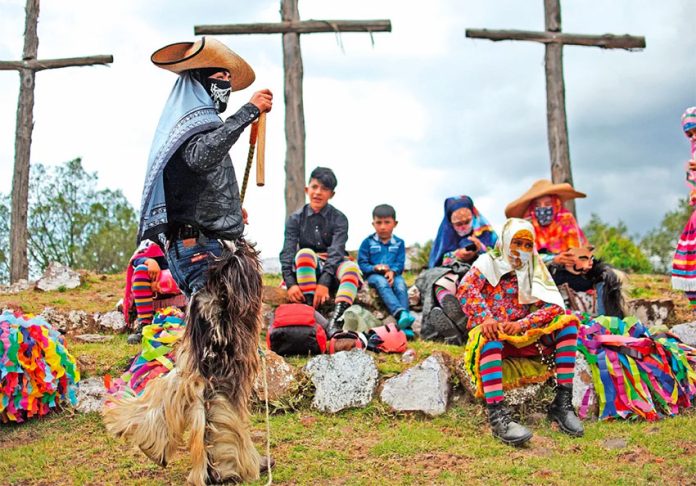
Dance of the Knives is performed in a community near Toluca de Guadalupe.

The people of Toluca de Guadalupe, Tlaxcala, ended their long wait and took to the hills this week to take the traditional Dance of the Knives to rural communities. 

The dance, normally performed in the spring as part of Carnival, had to be postponed this year due to the coronavirus, but those who perform it wanted to keep the tradition alive even after eight months of confinement. 

The dance, which has been performed since 1930, represents the start of a new agricultural cycle and also commemorates a peasant uprising that occurred against abusive landowners at the turn of the last century.

As the story goes, indigenous people were able to organize against their European repressors by adopting a practice of talking backward when discussing their plot, that is, saying precisely the opposite of what they actually meant in order to avert suspicion.

The celebration of the reenactment of those events is portrayed by dancers clad in brightly colored shirts, skirts, elaborate hats, shawls and masks representing different characters such as a doctor, a widow and a priest. They perform complicated dance steps with knives strapped to their ankles to demonstrate their agility and ability not to injure themselves. At the end, the dancers simulate a riot against a Spanish landowner which ends in his hanging. 

But the dance also represents the changing seasons and respect for nature. Hats the dancers wear are festooned with rainbow-colored streamers. They carry whips to represent the sound of thunder and bells to symbolize rain, dancing in a circle to the sounds of a violin and guitar.

The dance is a celebration steeped in identity and pride, and one that dancers felt important to take to the ranches and farms outside the city, albeit eight months later than usual.

Source: El Universal (sp)

After robbery of cancer meds, AMLO sees conspiracy among pharma companies

0
Parents of children with cancer don't believe the government.

Pharmaceutical companies are attempting to prevent the federal government from buying cancer medications, President López Obrador claimed Tuesday.

“There are signs that they’re blocking us [from making purchases], not just in Mexico but also abroad. The companies here make agreements with foreign companies … so that they don’t comply with our contracts,” he told reporters at his regular news conference.

The president’s claim came a day after he described the robbery last week of almost 38,000 doses of cancer drugs for children as “very strange.”

“We had a hard time obtaining these medications; we brought them [to Mexico] from Argentina; it’s very strange that these medications were stolen from a warehouse,” López Obrador said.

He said Monday and Tuesday that the government will fulfill its commitment to supply medications to children with cancer despite the robbery, which occurred last Wednesday at the Mexico City facilities of pharmaceutical company Novag Infancia.

The stolen medications, which included a range of chemotherapy drugs, were to be distributed to public health facilities by Novag.

The theft occurred as longstanding shortages of cancer medications for children continue to plague the country.

López Obrador said Tuesday that he was unsure about how the government would go about obtaining cancer drugs given the pharmaceutical company “conspiracy” but asserted Monday that “we’re permanently trying to supply these medications to all hospitals.”

“We’re not inhumane, we have feelings and we know what children [with cancer] and any [sick] person suffer if they don’t have medications,” he said.

Although López Obrador claimed that he didn’t know how the government would obtain future consignments, his administration signed an agreement with the United Nations Office for Project Services in July to collaborate on the international purchase of medicines, medical supplies and vaccines.

Meanwhile, a group of parents of children with cancer believe there was no robbery.

lopez obrador
‘Theft is very strange:’ AMLO.

“We don’t know much about this implausible robbery, our position is that we don’t believe it,” said Israel Rivas, spokesman for a national group of parents of child cancer patients.

He said in an interview that the warehouse from which the medications were apparently stolen is not a run-of-the-mill facility but rather “an enormous refrigerated room with a lot of security measures.”

An “alphanumeric passcode” is required to enter the facility, he said.

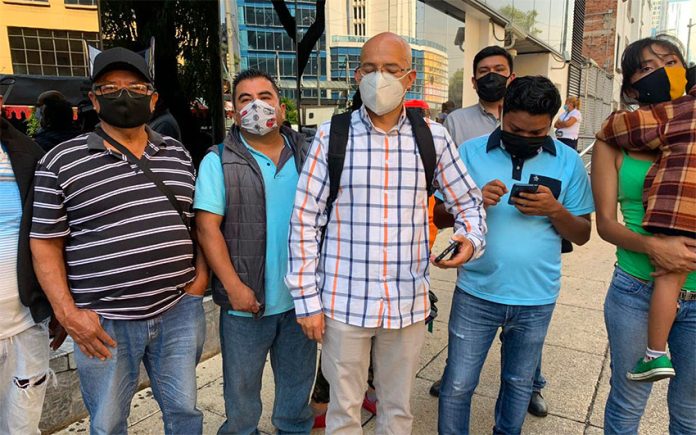
At a press conference in Mexico City on Wednesday during a protest against the shortage of cancer medications, Rivas said that parents don’t believe the government’s story that a robbery occurred because it has “systematically lied to us.”

“First it said that the shortage of medications was caused by a monopoly, then because … [of] corruption, then because there was an international shortage and now they come out with … [the story] that the medications were stolen. Would you journalists believe this tale?”

“Forty thousand doses [were supposedly stolen]! It’s unbelievable what happened, incredible, not to be believed. The truth is I’m astonished. We don’t believe the version the government is giving us …” Rivas said.

The spokesman, whose daughter has cancer, said that almost 1,700 children have died due to cancer medication shortages and warned that the situation will worsen due to the purported theft.

Andrea Rocha, a lawyer for the parents, said that a complaint in relation to the supposed robbery would be filed with the federal Attorney General’s Office today against López Obrador, health sector regulator Cofepris – which announced the theft in a health alert – and Novag Infancia.

She said that “there is not a single piece of real evidence” that the theft actually occurred and no proof that a criminal complaint has been filed in connection with the alleged crime. Rocha questioned why the Argentine-made medications were in Novag’s possession when López Obrador has said that the government itself will manage the distribution of medications to public health facilities.

At the same press conference, parents of children with cancer announced that they were aiming to collect 1.2 million signatures of support for a petition calling for a reform to the constitution in order to ensure that adequate medical treatment for cancer patients is guaranteed.

Rivas said the aim is to “comprehensively protect” all children who currently have cancer as well as future patients. He said the reform would also protect families “from an economic point of view.”

In a subsequent media interview, Rivas said that parents of children with cancer are unconcerned about where the government sources medications as long as they are of high quality.

“Hopefully there will be no [further] shortages. … We’re not interested in where they get [the medications], whether it’s India, Argentina, Mars or another planet. As long as they’re [high] quality, bring them from wherever.”

Source: El Financiero (sp), Infobae (sp), Milenio (sp), Reforma (sp) 

Buggies go horseless in Yucatán, gasoline engines take over

0
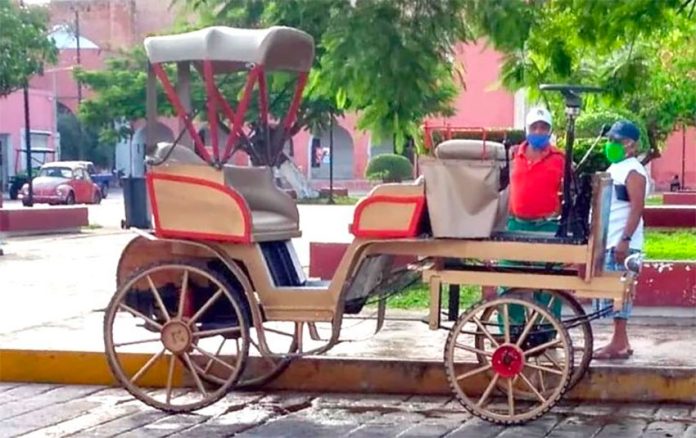
A motorized carriage in Motul.

Motul, Yucatán, has become the second city in the state to replace horse-drawn carriages with motorized ones following pressure by animal rights activists to abandon the practice, citing animal cruelty. 

Mérida was the first city in the state to begin using gas-powered buggies, which it did in November 2019. 

Horse-drawn carriages have been banned in Cozumel, Quintana Roo, since May as the practice violates the state’s animal welfare laws. 

They were also banned in Acapulco, Guerrero, this spring after the state decided to begin enforcing animal welfare laws on the books since 2014.

In that city, buggy drivers have taken to pulling the carriages with ATVs provided by the state government. Carriage drivers also received 10,000 pesos (US$ 469) from the government and a year’s worth of free maintenance on the four-wheelers. They were instructed to find a dignified retirement home for the now prohibited horses.

One such sanctuary is Cuacolandia in Puebla, where owner Elena Larrea cares for more than 100 abandoned or abused horses, including 42 former carriage horses from Acapulco that arrived after the ban was put into place, many with open sores and suffering severe malnutrition.

In Guadalajara, horse-drawn carriages were banned in 2017 and replaced with electric buggies equipped with a 10-horsepower motor that can drive the carriage at speeds of up to 25 kilometers per hour. 

“We cannot continue to mistake the idea of tradition with animal abuse. That no longer has a place in Guadalajara; we’ve put a stop to it today,” then-mayor Enrique Alfaro Ramírez said at the time.

Source: El Universal (sp)

Girl takes tiger for a walk in ‘crazy’ Guasave, Sinaloa

0
Girl walks her pet tiger in Guasave.

A video of a girl walking a tiger cub on the streets of Guasava, Sinaloa, has drawn some attention on social media. 

The footage filmed from inside a pickup truck shows a girl clad in shorts and a t-shirt walking the tiger on a rope leash. “Look, crazy Guasave. People go out for a walk with a tiger,” the man is heard saying as he approaches in his vehicle. 

He asks after her father as he films, and in their brief conversation she indicates that she has another tiger at home. 

Last month a woman was photographed walking her pet tiger in Mexico City’s wealthy Polanco district, causing a buzz on Twitter.

The owner fired back on social media, pointing out that the animal is not a Bengal tiger and that owning an exotic species is legal in Mexico if the owner meets with requirements set by environmental officials.

Exotic animal owners must obtain approval from the Ministry of the Environment (Semarnat), must prove the animal was born in captivity and that the animal will be confined under conditions that guarantee the safety of the public. The owner must also show respect to the animal.

Not everyone is up to the task of taking care of an exotic animal like a tiger. Guillermo Herrera, a parks and wildlife official in Nuevo León, says that people who own exotic pets must be able to provide the animals “with correct facilities and adequate knowledge of their diet and its maintenance. Unfortunately, the [exotic animal dealers] do not pay attention to this and sell to anyone without knowing if they meet these requirements.”

Although Mexican law does not prohibit the purchase of exotic animals, it does prohibit someone from taking their tiger out for a stroll around the neighborhood. “Animals cannot be exhibited on the street, they have to be in a confined site because they are exotic and dangerous. The law says that they have to be totally confined with no possibility of escape to guarantee the safety of civil society,” said Herrera. “The more contact it has with humans, the more dangerous that animal will be.”

In October 2018, authorities seized three Bengal tigers, a lion, 23 turtles, a lemur and a crocodile from a home in Hermosillo, Sonora, after a 7-year-old girl was attacked by one of the tigers. The owner said he was planning on establishing a private zoo.  

Source: El Heraldo de México (sp)

Sales of 21 brands of cheese, yogurt suspended for not meeting standards

0
cheese
Consumers being deceived, says ministry.

The Economy Ministry (SE) has placed an immediate ban on the sale of 19 brands of cheese and two brands of yogurt because they don’t meet official standards.

The ministry, in conjunction with the consumer protection agency Profeco, said Tuesday that various products called “cheese” and “natural yogurt” don’t comply with official Mexican standards and their sale has been carried out “to the detriment of consumers and with information that could cause them to be deceived.”

The ministry said the main breaches of the 19 cheese brands were that they claimed to be made with 100% milk when they were not; that vegetable oils were added in lieu of milk in their production; that they weighed less than the amount stated on their packaging; and that the main side of their labeling didn’t list the percentage of caseinates (milk proteins) used in their production.

The cheese brands whose sale has been banned are Fud, Nochebuena, Premier Plus Cuadritos, Zwan, Caperucita, Burr, Precissimo, Frankli, Selecto Brand, Galbani, Lala, El Parral, Portales, Walter, Sargento, Cremeria Covadonga, Aurrera  and Philadelphia (original and light).

With regard to “natural yogurt,” the breaches were the addition of sugar and non-compliance with the minimum required quantity of milk. The banned brands are Danone Bene Gastro and Danone Natural.

Philadelphia cream cheese
The manufacturer of Philadelphia cream cheese has rejected the test results.

The SE said the companies that make the banned cheeses and yogurts will be fined in addition to having the sale of their products banned.

Profeco chief Ricardo Sheffield told the newspaper Milenio that the agency he heads has initiated legal proceedings against Danone for deceitful advertising of its Bene Gastro yogurt. He said the name of the product implies that it is good for the gastrointestinal system whereas due to its significant corn syrup content it is in fact not good.

“It could even be damaging to health,” he said, adding that the legal battle against Danone will likely end up in court.

More legal battles could be looming as two manufacturers have challenged the results of the lab tests.

The manufacturer of Philadelphia cream cheese asserted that the decision to ban its products is “unfounded.”

Mondelēz México said in a statement that it has evidence that quality studies carried out by Profeco’s national laboratory in September found that Philadelphia cheese met all required standards.

The company said the Economy Ministry’s order to the National Association of Supermarkets and Department Stores to withdraw its cream cheese products caused it “surprise” and “bewilderment” because it is “totally unfounded and harms the reputation of our brand.”

Grupo Lala, meanwhile, rejected the findings with respect to its sliced, lactose-free Manchego cheese, insisting that the product is made with 100% milk.

Source: Milenio (sp), El Financiero (sp) 

Christopher Columbus: from explorer to villain

0
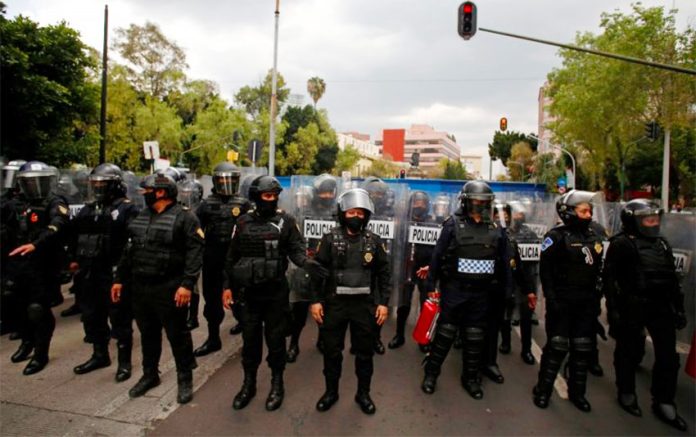
Police prevent access to a Columbus statue in Buenavista, Mexico City.

On the 528th anniversary of Christopher Columbus’s arrival in the Americas, protesters took to the streets this week in several Mexican states to denounce the “genocidal” explorer.

A statue of Columbus on Mexico City’s Reforma Avenue was removed on the weekend, ostensibly for restoration, but it came after threats to topple it. Nevertheless, protesters arrived at the statue’s base Monday and graffitied the fence that has been installed around it.

Among the messages: “Nothing to celebrate, nothing to forgive, everything to tear down,” “528 years of struggle, organization and resistance – the fight continues,” “Down with the symbols of colonialism” and “Good riddance, genocida [a person guilty of genocide].

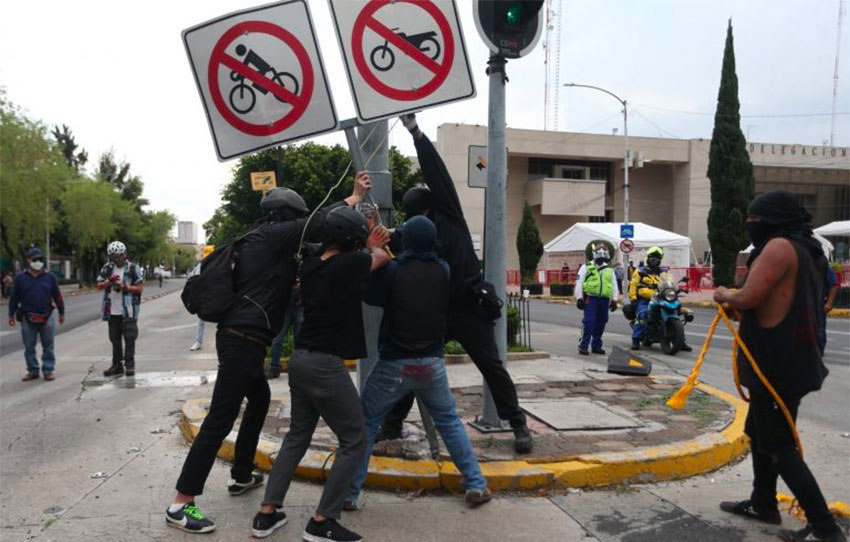
Another group of protesters made their way to a statue of Columbus in the Buenavista neighborhood, where they encountered a cordoned-off statue and a contingent of police who stymied their goal of defacing or bringing down the explorer’s likeness.

In Chilpancingo, Guerrero, protesters including members of the CNTE teachers union blocked traffic on the Mexico City-Acapulco highway for an hour to mark the anniversary of Columbus’s arrival.

Foiled in their attempts to take down Columbus statue in Mexico City, protesters tear down street signs instead.
Foiled in their attempts to take down a Columbus statue in Mexico City, protesters tear down street signs instead.

In Morelos, indigenous protesters expressed their support for President López Obrador’s request to Pope Francis for a public apology from the Catholic Church for the abuses committed during the Spanish Conquest of Mexico. In Oaxaca, there were protests to demand respect for indigenous peoples and to denounce large-scale energy projects, the newspaper El Financiero said.

Groups with links to the Zapatistas protested in the Chiapas cities of Tuxtla Gutiérrez and San Cristóbal de las Casas, where they condemned the negative impact of the Conquest and subsequent colonization.

The condemnations of the Genoan explorer are not new.

César Morado, a historian at the Autonomous University of Nuevo León, told the newspaper El Norte that condemning Columbus – whose expeditions were sponsored by Spain – and debate about his legacy go back centuries.

“It’s an old conflict we’ve had since the 19th century,” he said, adding that there has long been a debate between the aztequistas, those who hold up indigenous customs and traditions as superior, and the hispanistas, those who favor the Spanish.

“This debate is highlighted now due to the fact that society is more interconnected by social media but the bottom line is the same: it’s a matter of how we interpret history,” Morado said.

There is Columbus the explorer and conquistador and Columbus the perpetrator of atrocities against indigenous peoples, he said.

However, Morado noted that the history written by the winners, the conquistadores, became the dominant one. But opposing narratives are now becoming more prominent, the historian said.

According to another historian, the marginalization faced by indigenous people in Mexico today cannot be attributed to Europeans’ “discovery” of the Americas in the 15th century and the subsequent Spanish Conquest.

Luis Alberto García told El Norte that he believed that an apology for the Conquest, which López Obrador has also sought from the King of Spain, is unnecessary.

An apology, he said, “won’t change the current situation at all nor establish a plan to do so.”

Source: El Norte (sp), El Financiero (sp) 

Champion of tournaments: the Bisbee’s soldiers on despite the virus

0
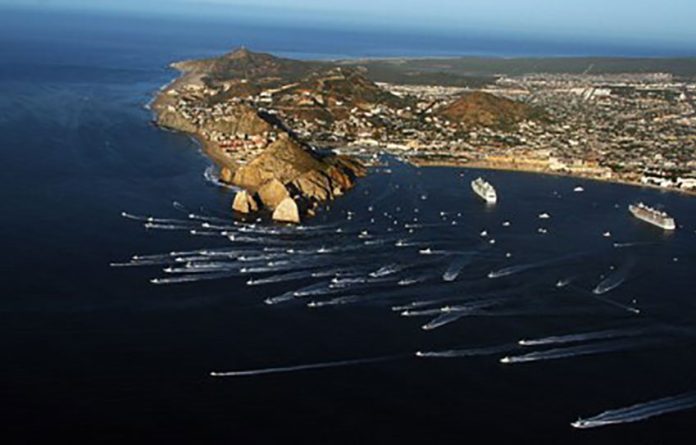
The boats are off in the shotgun start of the Bisbee's Black and Blue.
The boats are off in the shotgun start of the Bisbee's Black & Blue. Clicerio Mercado

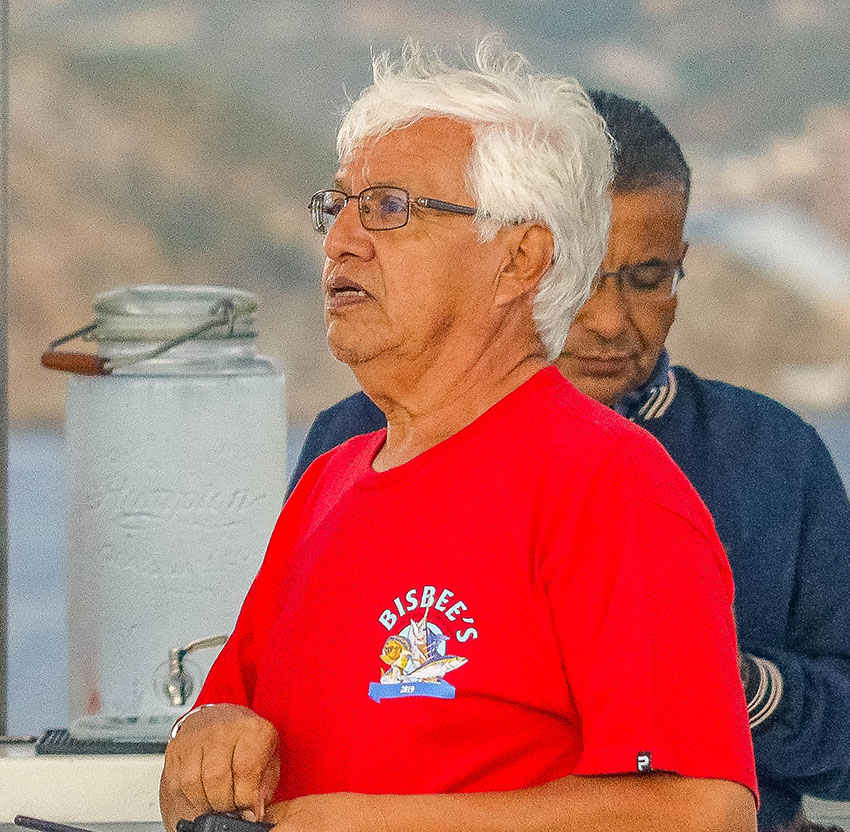
Clicerio Mercado sits at a restaurant at the Cabo San Lucas, Baja California Sur, marina on a late-summer morning, sipping a smoothie and greeting locals who stroll by his table with his typical good cheer. 

Everyone is happy to see him, not just because he’s overcome a nasty, six-week bout with the coronavirus, but because he helps run the legendary Bisbee’s fishing tournaments, which bring an estimated US $12-million injection into the Cabo San Lucas economy, a boost sorely needed in 2020.

For 30 years Mercado, now 73, grandfather to seven and great-grandfather to six, has organized the Bisbee’s in Los Cabos, a series of three tournaments culminating in the Bisbee’s Black & Blue, named for the two species of marlin it centers around, which draws anglers from all over the world to compete for millions in prize money. 

In 2006, anglers aboard Bad Company took home a record US $3,902,997.50. In the tournament’s 40-year history, 16 teams have received checks of upwards of US $1 million.

And while other tournaments in Costa Rica, Florida and the Bahamas have been canceled due to the coronavirus pandemic, Bisbee’s soldiers on by adopting a new set of protocols. 

Clicerio Mercado celebrates his 30th year with the Bisbee’s tournaments. Gary Graham

It’s just another example of how Mercado has learned to roll with the punches and his determination to continue with a tournament that he, those who fish it, and residents of Los Cabos dearly love. Fishing is, after all, what brought the first tourists to Los Cabos, and the October tournaments mark the beginning of high season for the resort destination.

Mercado is confident that the Los Cabos Offshore — October 15 through 18 — and the “Superbowl of fishing tournaments” as Sports Illustrated has called the Black & Blue — October 20 through 24 — will go off without a hitch. 

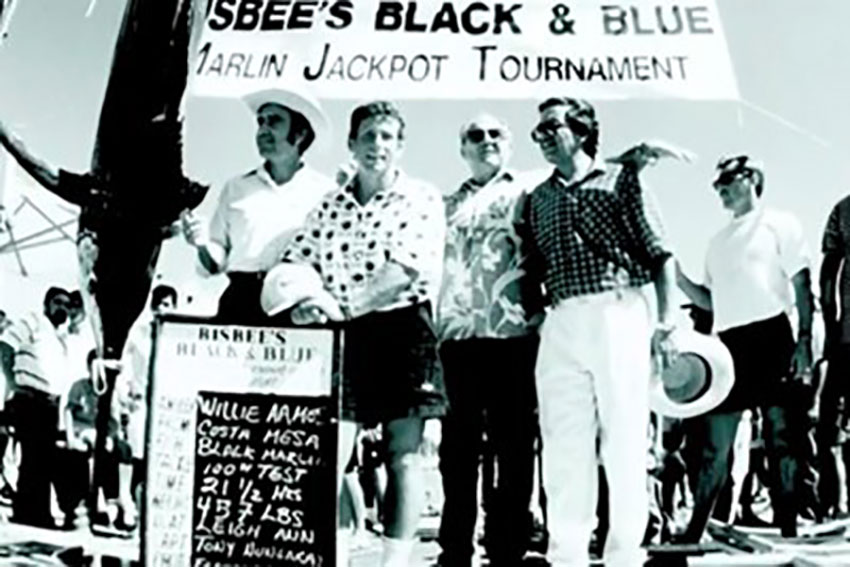
The tournament was founded in 1981 when a group of six teams of fishing buddies decided to create a competition for a US $10,000 purse in what was then a relatively remote location with a reputation for excellent fishing.

As Los Cabos grew exponentially, so did the Bisbee’s.

Mercado was the food and beverage manager at a marina hotel when tournament founder Bob Bisbee, who died in 2018, first hired him to help with logistics in 1990. 

“Throughout the tournament, we always needed help on things from our host facility and were unable to get the help needed by the different people there. So we found ourselves going to Clicerio for things that the general manager should have been doing. Also, for things that the maintenance department should have been doing,” said Bob’s son Wayne Bisbee, who is now tournament president.

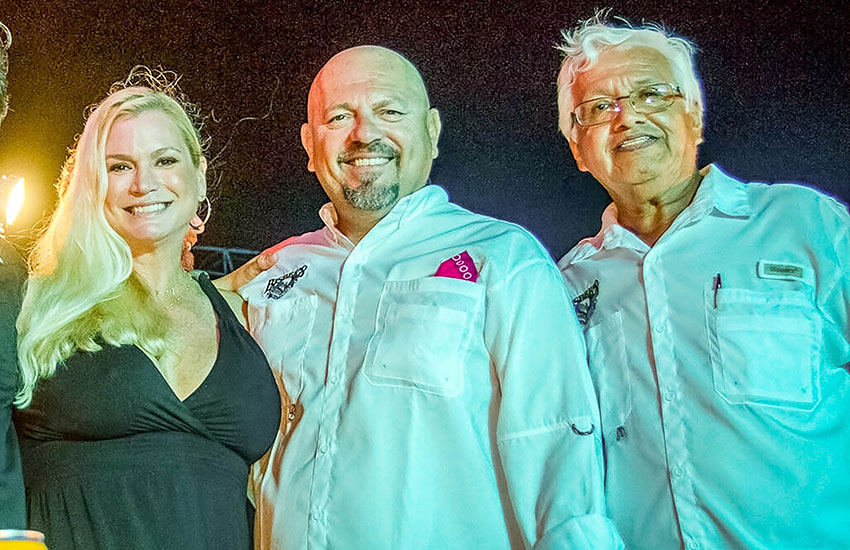
Tricia and Wayne Bisbee and Mercado. Gary Graham

“Basically, Clicerio became our primary go-to guy for getting things done even if they weren’t in his department, and that was great for us.” 

Mercado says he found that the skills he had learned in a 20-year career in the hospitality industry, where he began as a dishwasher, transferred well.

For him, coordinating a tournament means not only establishing a system and sticking to it, it’s also about diplomacy, cultivating friendships and making sure to know the right people in the right places to help pull off the event without a hitch. 

“A main strength that Clicerio has which I don’t is that he likes meetings. I hate meetings unless they’re taking place on a boat while fishing or in a bar, so he is great for seeing that the needed meetings for organizational things are happening,” Bisbee said. 

“He is much more organized than me and always has a checklist of what needs to be done versus trying to keep it all in his mind which I try to do. He also has a great capability of working with all the different organizations as needed in a very friendly manner.”

By 1993 Mercado began working for the Bisbee’s full-time, and since then he has become the Mexican face of the tournaments that he, Wayne Bisbee and his sister Tricia Bisbee run like clockwork, handling the logistics of holding such major events in Mexico with characteristic aplomb.

Last year's winners of the Black & Blue
Last year’s winners of the Black & Blue. Gary Graham

In recent years more than 150 teams from around the globe have participated in what has become the world’s richest fishing tournament. As of October 13, 69 teams have registered for the Black & Blue, with entry fees starting at US $5,000 per team, or US $71,500 for across-the-board entry into daily jackpots. Seventy-six teams have registered for the Los Cabos Offshore.

More teams are expected to sign up for both tournaments in the coming days. 

“Our expectation is to have over 100 teams per tournament, and that will be phenomenal for this very weird 2020,” Mercado says.

For an experienced coordinator like Mercado, putting on fishing tournaments in a pandemic is just a matter of changing up the rules a little for safety reasons. After all, the fish are still biting.

“We are holding normal Bisbee’s tournaments, and the restrictions do not have to scare people away. We have very good circumstances for the tournaments.” Mercado says. 

Working with state and local governments, Mercado and the Bisbees developed a blueprint for how a fishing tournament could be safely held during the pandemic and put it to the test earlier this year in their annual August East Cape Offshore tournament. 

Mercado, far right, at his first Bisbee's tournament, in 1990.
Mercado, far right, at his first Bisbee’s tournament, in 1990.

The event was a rousing success, breaking records as 72 teams competed in the three-day event on the Sea of Cortés with a jackpot of over US $1,100,000, marking the first year that prize money had topped US $1 million. Local fishermen also landed a massive 704-pound blue marlin, the largest in that tournament’s history.

But the circumstances were a bit different, as they will be in the upcoming two tournaments.

This year the normal in-person captains’ meeting to go over rules will be held virtually, with every captain, angler and crew member receiving a link to feeds in both English and Spanish. Face masks are mandatory at all times and only the angler who caught the fish will be allowed to approach the weigh station, which has been moved from in front of the Puerto Paraíso mall to the cruise ship pier to prevent massive crowds from gathering, as they have in years past.

The annual fundraiser for the Bisbee’s Fish & Wildlife Conservation Fund, which provides scholarships for local college students, supports a billfish tag and release program and funds anti-poaching efforts in South Africa, will be held virtually as a silent auction.

But the main difference most anglers will note is the absence of the tournament’s epic parties.

“Due to Covid-19, we’re not allowed to bring people together in any way which I am personally very sad about,” Wayne Bisbee says. “A huge part of our tournaments is the camaraderie of all the teams from literally around the world.” 

Gary Graham, a photojournalist, writer and fishing guru who first visited Baja in 1973, predicts that anglers weary of lockdown will still come out despite these uncertain times.

Graham covered the August Bisbee’s tournament whose success he describes as remarkable. “When that tournament took place, two weeks out there was no guarantee that it was going to happen, what the protocols would be, how it would be managed,” he said. The turnout showed that “teams that were interested in fishing tournaments, come hell or high water, would be there. That’s what I’m expecting in Los Cabos.”

For Mercado, the event’s success is a given. He’s got coordinating fishing tournaments down to a science that not even the coronavirus can derail. 

Mexico News Daily