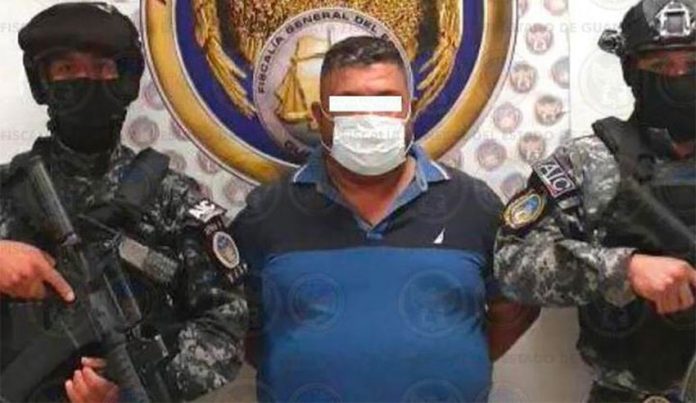
Police have arrested the presumed heir to the leadership of the Santa Rosa de Lima Cartel, Guanajuato Governor Diego Sinhue Rodríguez said Wednesday night.
State and federal forces took Adán Ochoa, alias “El Azul,” into custody in Celaya, the state attorney general confirmed on Twitter.
Ochoa is said to have been in control of the cartel since José Antonio Yépez Ortiz, alias “El Marro,” was arrested in August on charges of fuel theft and organized crime after an 18-month manhunt.
Ochoa is believed to have stepped in to take control in Yépez’s absence, and one of his first orders of business was to post narco-banners threatening to eliminate all those who betrayed him and anyone who allied themselves with the rival Jalisco New Generation Cartel (CJNG).
Ochoa is believed to be responsible for last week’s murder of Jesús Tinajero, a former candidate for mayor of Jerécuaro. His dismembered body was found on a highway along with the remains of three others partially stuffed in black garbage bags.
Also at the grisly scene was a narco-banner from the Santa Rosa de Lima Cartel warning public officials to refrain from aligning themselves with the CJNG or risk being “eliminated.”
Ochoa made himself known on August 17, two weeks after Yépez’s arrest, through a video posted to social media where he appeared with a dozen armed men. “Santa Rosa de Lima Cartel is stronger than ever, the war will continue and continue against the fucking Jaliscans, and we will not allow any skinny bitch to settle in the state,” he warned. “Guanajuato is for Guanajuato, you are tourists!”
Guanajuato is strategically located between the Pacific Ocean and the Gulf of Mexico on the route to the country’s border with the United States and control of the state is essential to the operations of the CJNG. Before his arrest, Yépez released a video vowing never to let the CJNG pass through Guanajuato.
In February, the CJNG posted 50 narco-banners featuring the faces of Yépez and Ochoa, whose identity was previously unknown, offering bounties on their heads. “We are here in Celaya where we have them located, so come out and face us and stop messing with people, fucking rats, killers of innocents. People of Guanajuato, we only ask for information, we will do the rest,” the banners read.
Zavala and Calderón had been optimistic that their movement would become a political party.
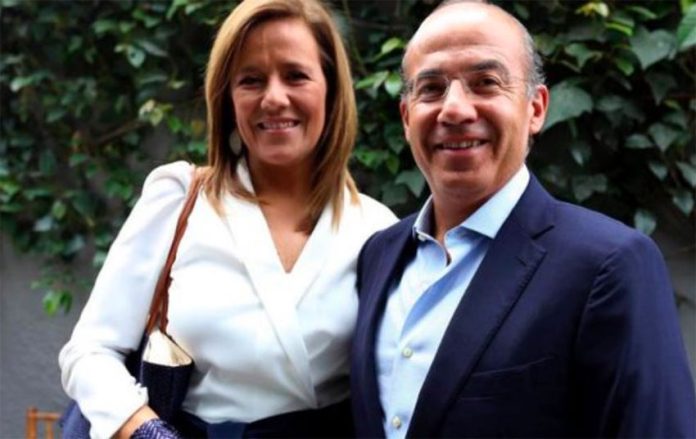
The Federal Electoral Tribunal (TEPJF) has ruled against granting party status to a political movement created by former president Felipe Calderón and his wife Margarita Zavala, preventing it from fielding candidates at next year’s elections.
During a virtual court session on Wednesday, four judges voted against the registration of México Libre (Free Mexico) as a political party while three supported it.
Prior to the TEPJF vote, Judge José Luis Vargas argued that INE had acted in accordance with the law and therefore its ruling should be upheld.
He likened México Libre’s financing to past cases of irregular electoral funding including the so-called Pemexgate scandal in which the state oil company union was found to have diverted 500 million pesos to the 2000 presidential campaign of Institutional Revolutionary Party candidate Francisco Labastida.
Leader Fernando González sings in a video promoting the RSP, which was given party status on Wednesday.
Vargas said that by receiving monetary contributions from unidentified people, México Libre violated the constitutional principles of certainty, transparency and accountability. He said the would-be party received as many as 50 such contributions.
The funding from unknown sources totaled 1.06 million pesos (about US $50,000), or just under 7% of the contributions México Libre received, Vargas said, adding that it might seem like a small amount but for ordinary Mexicans it’s a lot.
The Mexican state guarantees the right to freedom of association but problems arise when a group doesn’t comply with requirements as set out by the law, he said. Vargas told his fellow judges that a vote in favor of allowing the registration of México Libre would be a vote against transparency and accountability.
During the same court session, the TEPJF approved the registration of two parties with links to the federal government whose applications were previously rejected by the INE. It also ruled that a third party that is close to the government can maintain its registration after a majority of judges rejected that it had violated principles of secularism.
Redes Sociales Progresistas (RSP) is led by the son-in-law of Elba Esther Gordillo, the former teachers’ union leader who was jailed by the previous government on corruption charges, but later released.
In addition to denying México Libre party status, the TEPJF also increased a fine imposed on the group by the INE to more than 3 million pesos (US $140,000) from 2.3 million.
Zavala, who launched a bid for the presidency in 2018 but withdrew from the race 1 1/2 months before the election, criticized the tribunal’s decision in a Twitter post.
“The ruling of the TEPJF against the registration of México Libre is regrettable. It’s unfair, unconstitutional and illogical,” she wrote before thanking the three judges who voted in favor of granting the movement party status.
In a video message posted to social media, Zavala accused President López Obrador of being behind the court’s decision.
“That a single man can use the institutions of the state to lynch his opponents and prevent them from competing in elections is a blow to the very heart of democracy,” she said.
Zavala, who many people believe is planning to run for the presidency again in 2024, rejected the finding that México Libre accepted donations from unidentified people.
“We received signatures [of support] from free and committed Mexicans and raised funds transparently and honestly [but] none of that was sufficient to defeat the authoritarianism that co-opts and subjugates the authorities that should be independent,” she said.
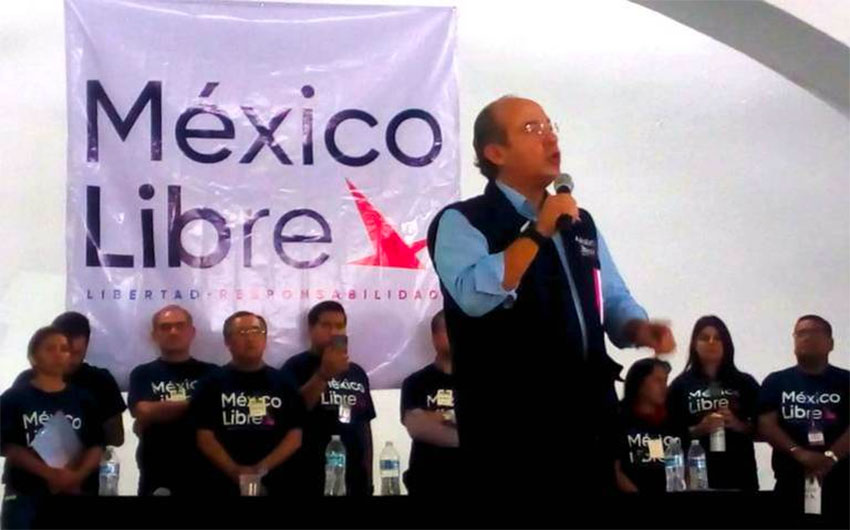
Calderón speaks at a meeting of the México Libre movement.
Calderón, who said previously that the donations in question were made via the payment platform Clip and the identity of the people who made them is known by the INE, described the TEPJF decision as “absurd.”
“Arbitrariness was perpetrated: the parties close to López Obrador … obtained their registration. [The registration of] México Libre, the only opposition voice, the only true citizens’ voice, was denied in the most absurd way. Authoritarianism advances,” he wrote on Twitter.
At his morning news conference on Thursday, López Obrador denied that he or anyone in his government was involved in the decisions to deny México Libre’s registration as a party.
“Before presidents decided who to give registration to or not, … that [practice] has now gone to the dustbin of history.”
On Monday, the Mexican peso lost its winning streak against the US dollar, in part due to the impasse in the U.S. Congress between Democrats and Republicans regarding the pandemic stimulus bill. The price of the dollar had risen slightly to 21.62 pesos at Citibanamex windows with the start of operations this week.
Predictions about the fate of the Mexican economy following the election are not optimistic either.
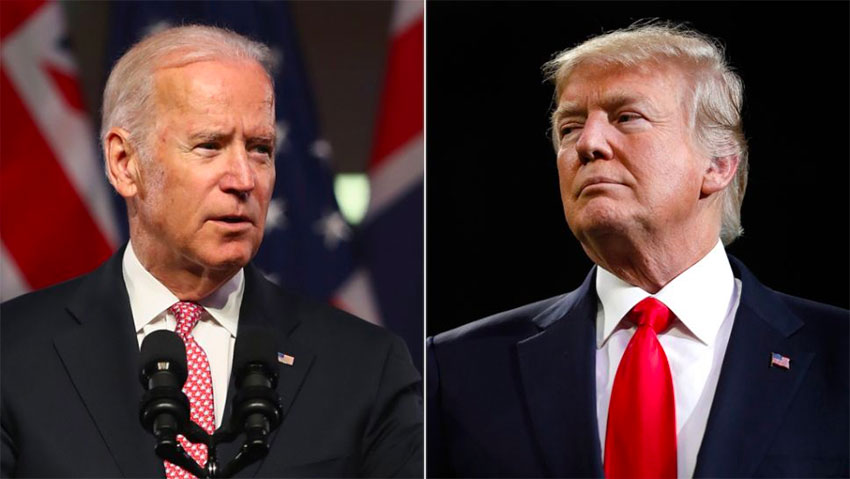
With Joe Biden polling ahead on most counts, the forecasted political stability following a victory for the Democrat challenger in November had contributed to the gradual rise of the peso in recent weeks. Other indicators of stability in the United States also have led to a healthier peso, including the improving condition of Republican incumbent President Trump after contracting Covid-19.
The trend linking greater political stability in the United States with a stronger peso and higher investor confidence can be traced back to the 2016 election.
However, the long-term effects of the election’s outcome on the Mexican economy are less clear, given both the political tumult in the United States, the scarcity of plans released by either candidate for relations with Mexico, and structural issues that continue to exist under Mexican President López Obrador’s administration.
A Biden presidency would signify a return to an “institutionalized” U.S.-Mexico bilateral relationship, said Duncan Wood, president of the Mexico Institute of the Wilson Center. Even though relations were good the past three years under Trump, Wood said, they were at the mercy of the U.S. president’s unpredictable mood swings.
“In bilateral politics and after so many trips to Mexico, Joe Biden wants to have a relationship of respect, dignity and collaboration on issues,” including tackling corruption and promoting transparency, said Roberta S. Jacobson, former U.S. ambassador to Mexico and senior advisor at the Albright Stonebridge Group.
Jacobson stepped down from her post at the State Department in 2018 amid heightening tensions between the U.S. and Mexico, caused in part by Trump’s pressure on then-president Enrique Peña Nieto to fund construction of the border wall.
Biden has also signalled support and a willingness not to politicize the U.S.-Mexico-Canada Agreement (USMCA), which entered into force on July 1. “What I’ve seen change is that the vast majority of the labor movement supported it,” Biden said in December. Even if he wanted to, he could not change the treaty’s terms during his presidency, since they can only be negotiated or modified every five years.
Some experts doubt whether Biden’s presidency would lead to better economic outcomes for Mexico. Gabriela Siller, director of economic and financial analysis at Banco BASE, warned that if Biden changed the existing pandemic stimulus packages, he “could slow down” the economic recovery in the United States and Mexico as a result. He could “hinder the entry of Mexican products” if he enforces pandemic-related sanitary restrictions for imported products, Siller added.
Moreover, Democratic vice presidential nominee Senator Kamala Harris has already shown opposition to the USMCA and could threaten its continuity if she gets elected into the White House.
Mexico is not high on the agenda for either Biden or Trump.
Even though Trump’s reelection would pose risks to the Mexican economy as well, they would be lesser as they are “the order of the day,” said Siller.
Some analysts argue that the president has made strides in boosting Mexico’s economic growth during his first term. Larry Rubin, representative of the Republican Party in Mexico, said Trump has effectively modernized the North American Free Trade Agreement (NAFTA) through spearheading the passage of the USMCA. Within five years, the treaty will triple Mexico’s bilateral trade with the United States, which is currently estimated at US $600 billion.
Rubin added that USMCA-generated jobs in U.S. companies “will be established in Mexico,” echoing a similar event when NAFTA came into force in 1994.
Despite Trump’s protectionist trade policies, the participation of the U.S. market in Mexico’s GDP increased, said Ignacio Martínez, coordinator of the Laboratory of Commerce, Economy and Business (LACEN) of the National Autonomous University of México (UNAM). “The share of Mexican exports that are directed to the U.S. represent 36.37% of Mexico’s GDP,” under his administration “while with Obama they represented 31.12%,” Martínez added.
Yet with Trump’s unpredictability, another four years of his presidency opens up the possibility of more bargaining on trade through the use of non-trade issues as chips, he said. As this has happened with migration, “we will be seeing how this issue continues to be used, now in relation to organized crime or drug trafficking,” he said.
Uncertainty following the highly anticipated, polarized election would inevitably bring negative effects for Mexico, said Julio Alejandro Millán, president of economic consulting firm Consultores Internacionales. Regardless of whether Trump or Biden wins, “the economic effects are still difficult to estimate, and this uncertainty often has negative effects on investors’ decisions, which is not good news for Mexico’s economic growth.”
Luis Rubio, president of the Mexican Council of International Affairs (COMEXI) and México Evalúa, a think tank, told Mexico News Daily that there are “structural” issues on the Mexican side of the border that prevent growth in foreign investment and trade.
Progress regarding economic and security reforms — such as leveling the development disparities between northern and southern Mexico and improving the rule of law — has been “going backward” under the López Obrador administration.
And with exports as one of the country’s most important economic drivers, Rubio said the government is “not doing anything to attract” multinational companies during the U.S.-China trade war that has many U.S. manufacturers leaving China in search of new spots for their supply chains.
Columnist Antonio Rosas-Landa writes that López Obrador has also “put at risk” billions of dollars of foreign investment by U.S. companies in the production of wind and solar generation in favor of “outdated nationalism,” which would go against policies by Biden, who would prioritize supporting greater renewable energy on his foreign policy agenda.
Rodrigo Aguilar, international analyst and founder of The Northamerica Project, said that despite the projected success of the USMCA, “free trade policies between Mexico and the U.S. are “a necessary condition, but it is not enough for economic growth.“
So far, the U.S. presidential candidates have made few mentions of Mexico on the campaign trail. President López Obredor made it clear recently in a morning conference that he prefers it this way: “The candidates have been very respectful in their opinions about Mexico — nothing like the last election.”
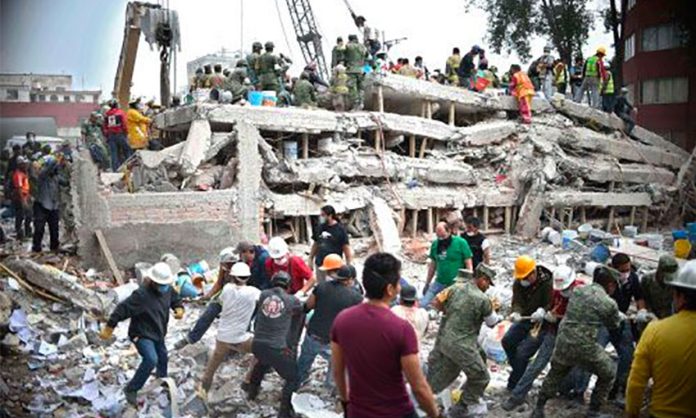
Rescue workers at the school after the 2017 earthquake.
The owner of a Mexico City private school in which 26 people died during the 7.1-magnitude earthquake in September 2017 was sentenced to 31 years in prison on Wednesday.
Mónica García Villegas, former owner and director of the Enrique Rébsamen school in the capital’s south, was found guilty of manslaughter last month.
A Mexico City court ruled that García had acted negligently by building an apartment for her personal use on the roof of a wing of a school building. The building collapsed in the September 19 quake, killing 19 children and seven adults.
A judge determined that García knew the risks of constructing an extra level on the building and found that the construction of the apartment violated building codes. The extra weight it placed on the building was identified as a factor in its collapse.
García extended her condolences to the families of the victims but maintained that she was innocent in her final statement to the court.
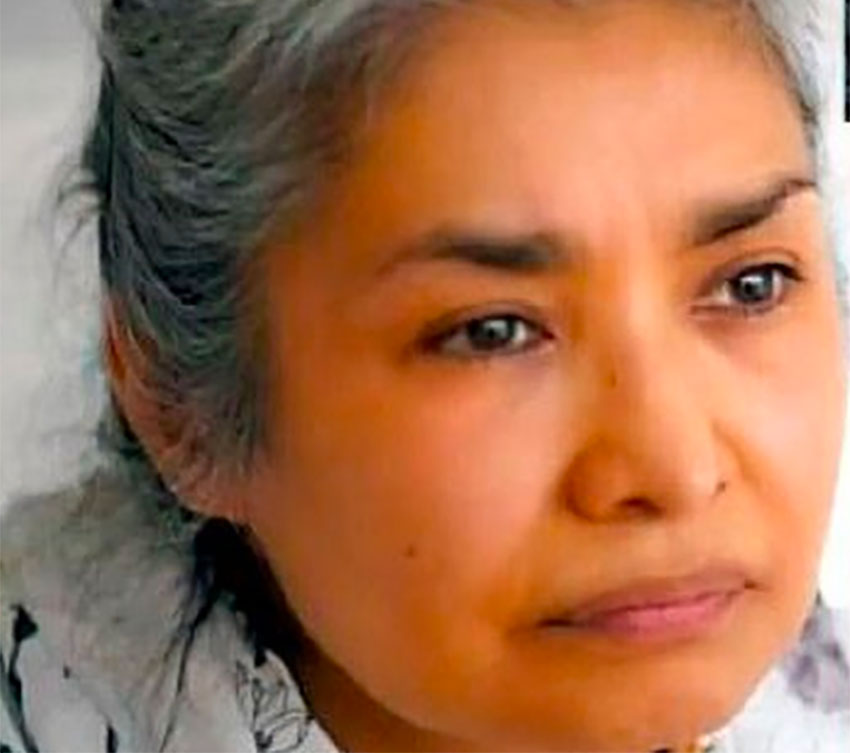
Former private school owner Mónica García.
In addition to being sentenced to 31 years imprisonment, García was ordered to pay 402,000 pesos (US $18,900) in compensation for each of the victims and was fined 123,000 pesos (US $5,800) for criminal negligence related to the construction of her apartment.
During the entire judicial process, parents of the the children who were killed at their school demanded that the judge deliver a sentence that sent a clear message that no one has the right to play with the lives of others.
Although the Mexico City Attorney General’s Office asked for a sentence of 57 years, Attorney General Ernestina Godoy said in a Twitter post that authorities had “achieved justice for the victims.”
Fernando Castillo Vega, a lawyer for the victims’ families, also said he was happy with the sentence, although he left open the possibility of challenging it.
“The lawyers and the victims we represent are satisfied,” he said.
The sentencing of García, who was called Miss Mónica by her students, brings some closure to a three-year-long nightmare for the victims’ families.
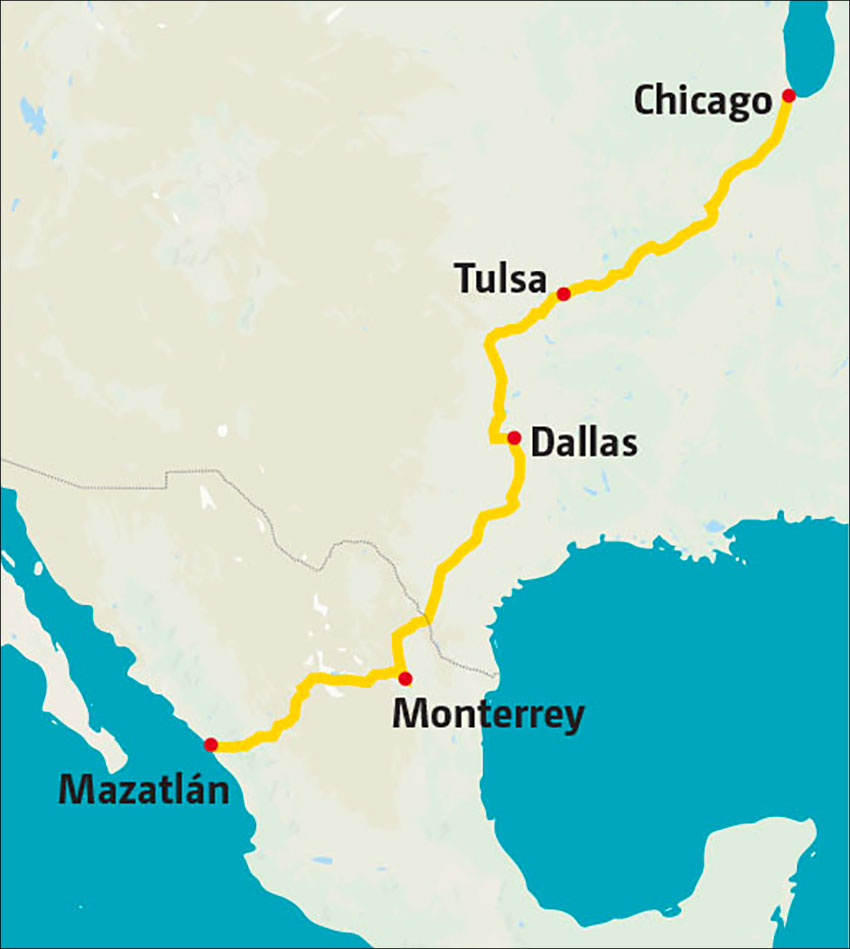
Mazatlán would lie at the southern end of new trade corridor.
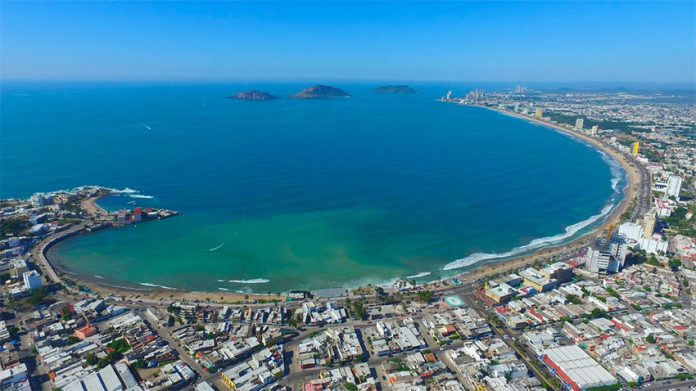
A Mexican company is seeking investment to develop a North American trade corridor between the Pacific coast port city of Mazatlán, Sinaloa, and Winnipeg, Canada.
Caxxor Group is aiming to raise US $3.3 billion in initial investment to build a new port and shipyard in Mazatlán, industrial parks in an undisclosed number of locations in Mexico, a Mexican exports logistics center in Winnipeg and 87 kilometers of railway tracks in Sinaloa.
The company’s general director told the newspaper Milenio that the so-called USMCA corridor (named after the new North American trade pact) will be a privately-funded project.
Carlos Ortiz said several groups have already shown interest in the project and progress has been made in obtaining the required permits in Mexico, the United States and Canada. It is expected to start in the second half of 2021.
Investment of $1 billion will be allocated to the port in Mazatlán, which will primarily receive agricultural, automotive, manufacturing and energy sector freight, he said.
The Mazatlán-Chicago leg of the new corridor. caxxor group
The port is expected to have the capacity to move 8 million containers annually, which would make it the largest in Latin America.
Ortiz said that after goods leave the port and move along the Mexican section of the USMCA corridor, they will be transformed at newly-built factories and plants that will add value to them. The transformational nature of the trade corridor will be a point of difference with other logistics routes such as the Panama Canal, he said.
The corridor will run through industrial regions of Sinaloa, Durango and Monterrey, Nuevo León, before reaching the United States. In the U.S., the corridor will run to Chicago, Illinois, via Dallas, Texas, and Tulsa, Oklahoma.
“It’s a holistic development in which the United States, Canada and Mexico are integrated,” Ortiz said.
He said that $600 million will be allocated to construction of 87 kilometers of railroad across the Sierra Madre Occidental to the new Mazatlán port. The new section of track will provide access to 7,115 kilometers of rail in the proposed USMCA corridor.
“There are several railway operators … that are interested in investing in the project,” Ortiz said.
He said that $1 billion will be invested in the new industrial parks, $300 million will go to a new Mazatlán shipyard and $400 million will be allocated to the Winnipeg logistics center. There is determination in Mexico, the United States and Canada for the project to succeed, Ortiz said.
It is expected to take at least five years to complete.
President López Obrador has expressed confidence that the USMCA, which took effect in July, will attract new investment to Mexico. But despite the new trade pact’s entry into force, many investors appear wary of investing in new projects in Mexico due to uncertainty created by the federal government.
United States Ambassador to Mexico Christopher Landau said in June that it’s not a good time to invest in Mexico, while the U.S. State Department said in a September statement that “investors report regulatory changes, the shaky financial health of the state oil company Pemex, and a perceived weak fiscal response to the Covid-19 economic crisis have contributed to ongoing uncertainties.”
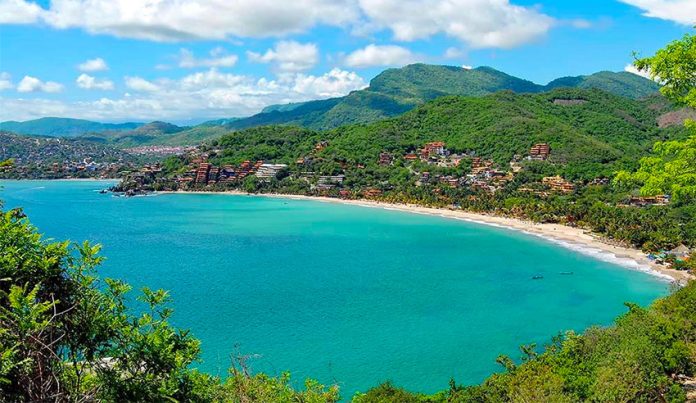
Traveling to Zihuatanejo looks inviting regardless of Covid-19. mexico destinos
With coronavirus cases rising daily, particularly in four of Canada’s most populated provinces, Canadians are turning to Mexico for some winter respite.
Having lived part or full-time in Mexico for over 25 years, the thought of not returning to what I have considered my second home seems inconceivable. And I am not alone.
There are thousands of Canadians who, like me, flock south of the border every year, arriving anytime between the months of October and May. While reported cases in Mexico appear to be rising again (as they are the world over), most people I talk to feel that it is easier to isolate and distance in a warmer climate than it is in a cold one.
Although the biggest risk seems to be the flight itself (middle seats now being sold on most airlines), the idea that we can safely fly with masks, sanitizers, and face shields is an appealing argument.
Beaches, hotels, and most restaurants are also open in Ixtapa/Zihuatanejo, the part of Mexico where I winter, but at limited capacity. Thankfully, social distancing and mask wearing, washing hands, etc. are widely encouraged from the top down, which makes the idea of going all the more attractive.
Although, as in Canada and the U.S., there are still people in Mexico who believe the pandemic is a hoax, for the most part locals are complying with the rules for safety and health. However, it is reported that some tourists from other parts of Mexico, the U.S. and Canada are not, and there lies the rub. Fortunately, there are ways to avoid both situations and people who do not comply with the guidelines.
Still, as easy as it could be to social distance while enjoying a daily dose of vitamin D, two of the biggest concerns for Canadians heading south are health insurance and health care in Mexico should you get sick. In March, Canadians in Mexico were strongly urged by insurance companies to return immediately as their plans would not cover Covid.
This year several insurance companies are offering Covid protection, albeit at a steep price of up to $1,000 extra on top of regular fees. For many of us it is worth considering while some say that given reasonable medical costs in Mexico, it is better to pay as you go. The bigger issue is can the hospitals in places more rural handle the influx of cases should the need arise? And do we as Canadians want to tax a potentially overrun health system and take care away from nationals should things become worse?
Another problem for some when deciding on travel is the frequent flight changes or outright cancellation of flights to and from Mexico. In my case I have already used up the credit I was issued for my cancellation back in March, and was warned by the agent that should I have to cancel due to Covid, I would not be issued another. This, however, does not apply if the airline cancels, but it is still a concern.
General consensus among expats and locals seems to be that the end of 2020 and going into 2021 will be a much different experience than one we have enjoyed in the past. In Zihuatanejo, we assume there will be few festivals, if any, and perhaps celebrations such as Day of the Dead, Carnival and Cabalgata will be canceled as well.
If they are not, most people, including myself, will avoid the huge crowds. Day to day life will be different too, as my friends and I plan our stricter social bubbles with like-minded people, patronizing restaurants and shops that follow guidelines. As in Canada, our hobbies, online classes, and Netflix binging can be as prevalent in Mexico but in a warmer climate.
Whether you stay in Canada or go to Mexico, my advice remains the same: follow the guidelines — wear a mask, wash hands and social distance, stay healthy and live your life for the betterment of all. And remember, one day this will pass.
The writer divides her time between Canada and Zihuatanejo.
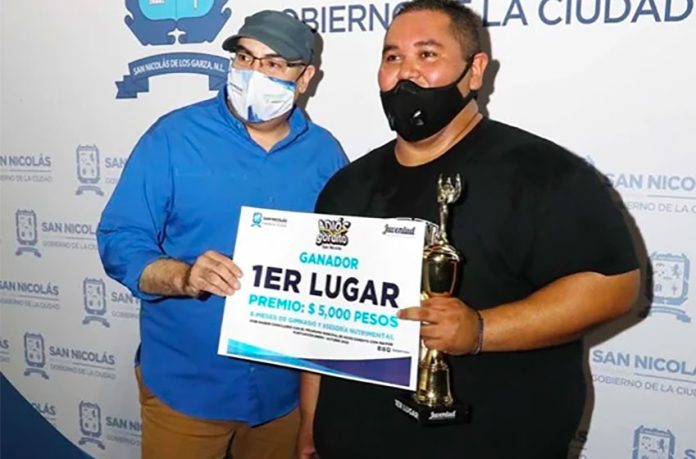
Contest winner Alejandro Alejo wanted to have his old life back.
In just over six months, 30 finalists in a weight loss program in San Nicolás de los Garza, Nuevo León lost a combined total of 350 kilograms. Leading the way was Alejandro Alejo López, who shed an impressive 75 kilos.
Alejo, a 36-year-old taxi driver, weighed in at 240 kilos when he entered the contest “Adiós Gordito!” (Goodbye, Chubby!). “… I want to have the life I had before,” he said at the contest’s outset, adding that the desire to be able to play with his two young daughters was a motivating factor.
During the award ceremony, Mayor Zeferino Salgado Almaguer commended the competitors for undertaking the challenge during the coronavirus lockdown, which would have made the temptation to open the cupboard or refrigerator especially difficult to resist.
“Today, more than rewarding an athlete, for endurance or otherwise, we are rewarding something intangible which is will power; they have shown the power they have when they say they will go forward,” the mayor said.
He added that those who participated are healthier people today, who have completely transformed their lives “and they have done it in the company of the only team that will always support them, which is their family.”
Adiós Gordito! was announced in January and was open to men and women aged 14 to 59 weighing more than 100 kilograms. A total of 134 people signed up but 30 made it through, accumulating points by regularly completing exercise routines prescribed by their trainers and following the advice of nutritionists.
Alejo received a prize of 5,000 pesos (US $235) and a six-month gym membership. Each of the 30 finalists also received cash prizes.
The program will continue with a new version beginning this week that more than 200 people have already signed up for, the mayor said.
Previously the municipal government had offered tax discounts to families who participated in a weight loss program.
More than 24 million Mexican adults are considered obese by the United Nations Food and Agriculture Organization.
One of the books that’s been on my shelf for roughly 20 years now is Howard Zinn’s A People’s History of the United States.
The first chapter is both revealing and shocking, and represents a turning point not just in the history of the world, but in the lives of those who read and became at least somewhat radicalized by the book, never before having thought deeply about the implications of all that Christopher Columbus’ arrival in the Americas really set in motion.
It describes in detail both excerpts from Columbus’ own diary about what fine servants the Arawak would make, saying “With 50 men we could subjugate them all and make them do whatever we want,” as well as the violence against them. The attack on that group of original Americans was brutal and sustained: when they couldn’t lead the Europeans to more gold, they were taken as slaves.
If there’s any doubt as to how miserable the newly-arrived were making things, keep in mind that the Arawak deliberately killed their infants so that the little ones might escape the wrath of the newcomers. Mass suicide was the norm, and those who didn’t off themselves soon met their demise through murder or the brutalities of slavery.
By 1650, there was no trace of the Arawak left in the Caribbean islands. Indeed, there is no trace left of them in the world today. If that’s not genocide, I don’t know what else we’d call it.
So that was Columbus and his men, and what they set in motion. I, for one, can see why people, especially indigenous descendants in the Americas, might have something to say about us celebrating him with his very own holiday. What’s next, Hitler Day?
Exterminating small, peaceful (compared to the Europeans, anyway) populations on small islands is one thing. Once the Spanish moved to the mainland was quite another. Most of us know, at least roughly, how things went down in Mexico.
Yes, many died as Hernán Cortés made his way through the country, but many fought at his side, happy to have someone help them settle the score against what they saw as an oppressive tyrant before they realized the new guy was also not going to just let them go back to how things were, only this time with peace and power.
The very first piece I wrote for Mexico News Daily was about President López Obrador’s request to the government of Spain that they — as well as the Catholic Church — apologize for the conquest of Mexico and the harm that had been caused to the indigenous peoples and cultures already here.
My basic argument was, “Well, why not? It’s a show of good faith that ultimately costs them nothing.” Neither the government of Spain nor the Catholic Church agreed, and it became one of those sources of contention among people that ultimately doesn’t do much more than make everyone grouchy at each other. After all, the requested action would have been merely symbolic at this point. There’s no undoing it now.
Now, what’s long been known as Columbus Day is upon us, and protesters have had things to say about it in ways that echo the demand for statues of Confederate heroes in the U.S. to come down. The president’s wife, Beatriz Gutiérrez Müller, was also dispatched to Europe, part of her mission being to recuperate Mexican indigenous artifacts.
It’s not a new fight.
Though respect for and interest in indigenous culture has been seeing something of an uptick, the language of the invaders is ultimately the language we speak. We are still baptizing our children in the Catholic Church, whose churches and saints swiftly replaced indigenous temples and gods. The prejudices and sensibilities of the invaders, no matter how hard we try to extricate them, are woven into our psyche.
That said, many Mexicans will use the pronouns “we” and “us” to identify themselves with the original indigenous when talking about the conquest: “They invaded us.”
Really, it’s neither/nor; while a few people claim to be “100% Spanish/European” (I’ve known a lot, all of whom have triggered in me an involuntary eye roll) or “100% indigenous” (those who are don’t have to claim this; for many, Spanish is a second language), most Mexicans are a mix of the two: on a cultural level, the children of a powerful and perhaps oblivious father and an under-appreciated, violently-taken but proud mother.
Christopher Columbus didn’t simply go “from explorer to villain;” he was both explorer and villain. This same kind of duality exists in every aspect of Mexican culture, and perhaps in human culture, in a kind of never-ending Walt Whitman poem. Humans and societies are messy, and most of us, on both a macro and micro level, are many opposing forces at once.
But this fact remains: the indigenous got a raw deal then, and they’re still getting a raw deal now. We haven’t yet figured out how to make things right, but ceasing to pay tribute to the perpetrators more than we already do is a good start.
It’s up to use to decide whom and in what ways we honor those that made us, and what that means for whom and what they produced in real time. If you ask me, the conquistadores have had their time in the sun; it’s time for them to move aside and work at truly honoring, not simply paying lip service to, America’s original peoples.
Replacing Columbus Day on the calendar with Indigenous People’s Day would a move in that direction. Putting monuments in his honor in museums rather than in public would be, too.
How we reconcile history matters. Let’s learn to see Mexican culture as a quilt, not a totem pole, and step back from our centuries-long habit of honoring the instigators of mass atrocity.
Sarah DeVries writes from her home in Xalapa, Veracruz.
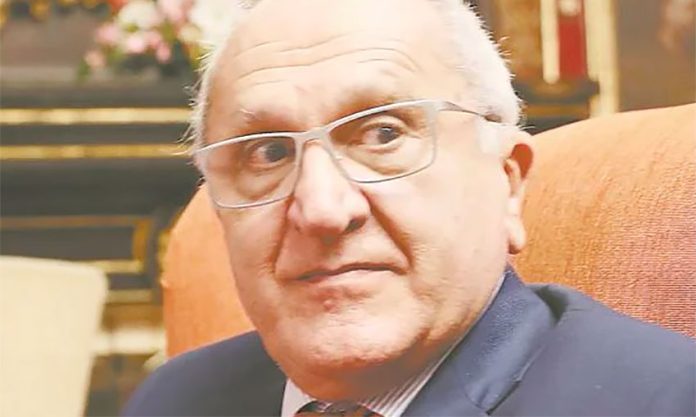
Jesús Seade led negotiations that led to a new North American trade agreement.
Mexico’s chief North American trade negotiator is under investigation for charging the federal government for personal travel to Hong Kong.
According to the newspaper El Universal, the Public Administration Ministry (SFP) is investigating Deputy Foreign Affairs Minister Jesús Seade for embezzlement and abuse of office after he allegedly lied in order to obtain funding for his trips to the Asian city.
The purpose of five trips he took to Hong Kong between 2018 and 2020 appears to have been to visit his wife and other family members who live there. But Seade claimed that his travel was work related.
The deputy minister didn’t conduct any government business while in the financial center, El Universal said. For each of his five trips, Seade charged the government for first class flights and travel expenses.
He first traveled to Hong Kong in December 2018 just two weeks after assuming his deputy minister position. To cover his expenses for that trip he received 181,864 pesos (US $8,500 at today’s exchange rate) from the Ministry of Foreign Affairs.
All told, Seade is accused of the improper use of more than 865,000 pesos (US $40,600) in public resources, according to El Universal.
The accusations were made on the SFP’s anti-corruption platform Ciudadanos Alertadores, which citizens can use to report alleged wrongdoings by federal officials. El Universal said that the complaint against Seade is supported by various documents.
The deputy minister has not commented publicly on the allegations against him while President López Obrador said Wednesday that he had no knowledge of an investigation into the trade negotiator.
Seade led Mexico’s negotiating team in the latter stages of discussions with the United States and Canada aimed at reaching a new North American trade pact. The USMCA, as the agreement is known, took effect July 1.
Monarch butterfly sanctuaries in Michoacán are preparing to receive tourists for the upcoming arrival of the migrating butterflies, which is expected to begin around November 1. But visitors this year will find new health and safety protocols in place to protect them from Covid-19.
The butterfly population has already begun its journey from Canada and is expected to arrive on time at sanctuaries in Sierra Chincua and El Rosario, said Roberto Molina Garduño, a hotelier and tourism promoter who spoke with El Universal.
The monarchs typically stay in Michoacán for about five months.
Because the sanctuaries are in the open air, the risk of spreading Covid-19 is low. Nevertheless, said Molina, stringent safety protocols will be in place, including mask and social distancing requirements, capacity limits of only 20 visitors at a time, and temperature checks at entrances.
Tours will be coordinated along different routes within the sanctuaries to avoid visitors encountering groups, and there will be time limits on how long people may visit.
According to Molina, the Ministry of Tourism has yet to launch a campaign to promote the migration, which he said indirectly benefits hotels and other tourist-based establishments in the area. The sanctuary in El Rosario alone supports more than 5,000 tourism workers and has the potential to generate over 3 billion pesos for the region.
“We are calling upon government officials to pay attention to promoting the butterflies, a distinctive feature of not only Michoacán but of the region and all of Mexico,” Molina said.
The official opening to the public of the monarch biosphere reserve is planned for November 18.