Home Blog Page 1428

Mexico hopes US, Canadian visitors will reactivate tourism this winter

0
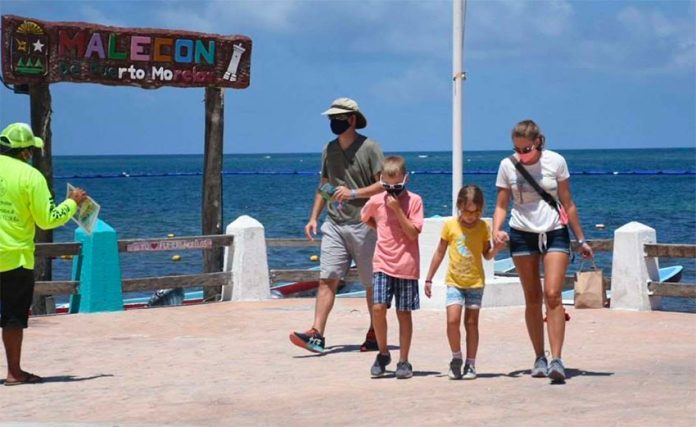
Mexico hopes US and Canadian visitors, weary of lockdown, will look south.
Mexico hopes US and Canadian citizens, weary of lockdown, will look south.

Authorities are counting on tourists from the United States and Canada in the coming months to reactivate the sector, which has been ravaged by the coronavirus pandemic.

In a joint press conference Wednesday night with Deputy Health Minister and coronavirus point man Hugo López-Gatell, Tourism Minister Miguel Torruco noted that vacationers from the U.S. and Canada make up 66.4% of all visitors to Mexico, whose proximity makes the country a prime destination. 

He said the coronavirus pandemic has changed the way people look at travel. Tourists are reevaluating travel plans and opting for destinations that can be reached by flights of no longer than 4 1/2 hours, which could make Mexico a prime vacation spot.

Mexico is potentially easily accessible from 22 Canadian cities, Torruco said, including Ottawa, Quebec, Toronto, Winnipeg and Regina with destinations such as Cancún, Mazatlán, Puerto Vallarta and San José del Cabo.

Visitors from the United States, which eased a travel advisory on Mexico in mid-September, have even more options with 37 such routes possible from cities such as Atlanta, Chicago, Los Angeles, Miami, New York and San Francisco to destinations like Ixtapa, Puerto Vallarta, Cancún, Querétaro, Mexico City, Huatulco and Oaxaca.

While tourism in 2020 is down by around 50%, that could change before the end of the year as travelers weary of lockdown and looking to escape the colder months turn their attention south. 

“There could be a pretty interesting rally, especially as Canadians have their winter season from late October to mid-April,” Torruco said.

Should the country move to a yellow light on Mexico’s coronavirus stoplight system by the end of this year, hotel occupancy rates could reach 42.8%, which is slightly higher than the 40.7% predicted two months ago under the same scenario, Torruco said.

If the country remains at an orange level through December, the occupancy estimate drops to 32.9%.

Last year Mexico welcomed 19.6 million international tourists, and projections for 2020 see that number dropping to 6.8 million. Torruco reports that 86% of tourists visit six destinations — Cancún, Mexico City, Playa del Carmen, Los Cabos, Nuevo Vallarta and Puerto Vallarta in order of popularity.

Overnight tourism along the border area, which saw 21.2 million visitors making quick trips into the country in 2019, is expected to drop to 12.3 million this year.

On October 5, Torruco announced the Tourism Ministry will present a strategy to encourage domestic tourism as well by promoting Pueblos Mágicos, or Magical Towns, as attractive destinations for Mexicans to visit.

In 2019, 102.6 million domestic tourists traveled to different destinations within the country. This year Torruco says 59 million Mexicans will travel within the country.

Torruco also announced that the Florida-Caribbean Cruise Association is working with Mexico on health protocols to restart the cruise ship industry in November and December.

In 2019 nine million tourists visited Mexico as part of a cruise, a number that is projected to drop to just over three million this year. And whether the cruise industry will start back up any time soon remains to be seen.

The Centers for Disease Control and Prevention (CDC) announced yesterday that they have extended a ban on cruises originating from U.S. ports to at least October 31.
Source: Sipse (sp), Axios (en)

AMLO announces new airport for Tulum, Quintana Roo

0
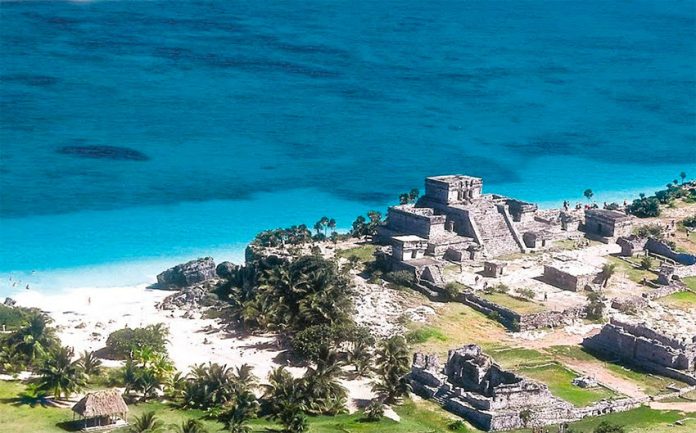
Tulum will get an airport, although no details have been offered.

As part of efforts to stimulate the economy in Mexico’s south and southeast an airport will be built in Tulum, Quintana Roo, President López Obrador said Thursday.

“A new airport will be built in Tulum, it will help [the economy] a lot,” he told reporters at his regular news conference.

López Obrador didn’t provide any details about when the project might start or where in Tulum it would be located.

His announcement comes 10 years after former president Felipe Calderón announced that a 3.2-billion-peso airport would be built in the popular beach destination.

But the project never got off the ground and as a result most people travel to Tulum from Cancún, located about 130 kilometers north.

Before López Obrador’s announcement, the Quintana Roo representative of Fonatur, the National Tourism Promotion Fund, said that federal authorities were considering the construction of two new international airports to complement the Maya Train project, which is expected to be completed in 2022.

Raúl Bermúdez said that one of the facilities would be located in Tulum and the other in Mérida, Yucatán.

However, López Obrador’s announcement this morning may have caught authorities in Quintana Roo by surprise: Tourism Minister Marisol Vanegas said Wednesday that she had no knowledge of an airport in Tulum.

In addition to having an air link, Tulum will be connected to the Gulf of Mexico coast via Palenque, Chiapas, the president said, explaining that the Maya Train will run between those two cities and then on to Escárcega, Campeche, from the latter.

López Obrador, who says the Maya Train will spur economic and social development in Mexico’s long-neglected southeast, predicted that Quintana Roo will be one of the first states to recover from the coronavirus-induced economic downturn.

“Its tourism activity is a creator and distributor of wealth,” he said.

“A lot of tourists arrive and there is economic growth. [Tourism] provides a lot of work for transportation, hotel and restaurant workers. [Quintana Roo] is very prosperous … in normal circumstances.”

If the Tulum airport is built, it will be the Caribbean coast state’s fourth airport. The commercial airports currently operating in Quintana Roo are located in Cancún, Chetumal and Cozumel, an island off the coast of Playa del Carmen.

Source: Milenio (sp), El Universal (sp), Mega News (sp) 

Drunk driver plows into baby shower, expectant mother loses child

0
The baby shower in Coatzacoalcos came to a sad and sudden end.

A joyous occasion turned to tragedy on Monday in Veracruz when a drunk driver plowed into a crowd of people at a baby shower, injuring eight and causing the expectant mother to lose her unborn daughter at 39 weeks of pregnancy. 

On Monday afternoon, Esmeralda Muñoz and her husband invited friends and family to their home in Coatzacoalcos to celebrate the imminent birth of their second child, a girl the couple had decided to call Yazmin. They had already begun stockpiling diapers for the little girl and had even picked out the outfit she would wear home from the hospital.

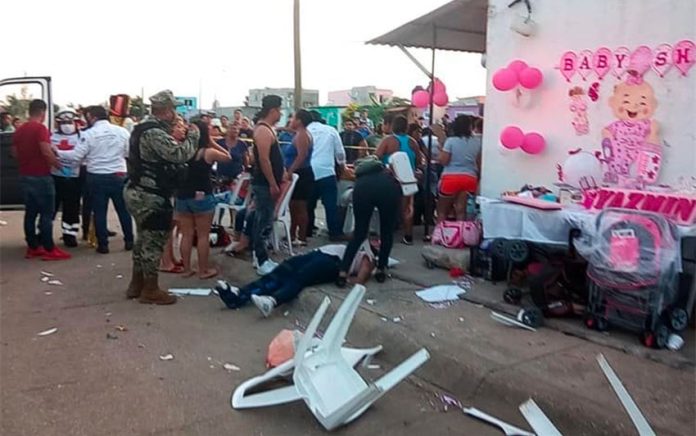
Guests gathered on the cordoned-off street outside the home which had been decorated with pink and white balloons to mark the occasion. A gift table had been set up with Yazmin’s name spelled out in large pink letters. A clown was hired to entertain the children.

The peaceful gathering was shattered around 6 p.m. when a 54-year-old man driving a pickup truck drove head-on into the crowd at a high rate of speed, running over at least seven people and killing a dog before ramming into a parked car where the vehicle came to a stop.

Neighbors were able to detain the driver, who appeared to be drunk, until police arrived. 

Six women and a child under the age of 8 were taken to the hospital by emergency workers who encountered a chaotic scene littered with the injured, an overturned stroller and broken chairs and tables the truck left in its wake. 

“The person came, he let himself come at us at full speed and if it had not been for the white car he would have killed us, he would have taken out all of us,” the clown told a reporter.

Although Esmeralda Muñoz was not directly hurt in the incident, the shock of what happened to friends and loved ones took its toll.

The following morning she began to experience abdominal pains and was taken to the hospital where Yazmin was pronounced dead just days before she was due to be born. 

Later that day, Yazmin’s body was turned over to her family and a wake was held at the home where 24 hours earlier they were celebrating her upcoming birth. A tiny white casket was placed on a table adorned with gladiolas while Muñoz remained hospitalized.

Her mother fears that the driver will soon be released from jail because direct injuries from the crash were relatively minor.  

“They told us that the man was going to get out in 48 hours and was only going to pay for injuries that could be verified. I have my other 11-year-old daughter bedridden, she can’t even move,” she said.

The driver, also a neighbor of the Muñoz family, was scheduled to appear before a judge on Thursday.

Source: Infobae (sp), La Silla Rota (sp)

Police clash with teachers in efforts to clear rail blockades

0
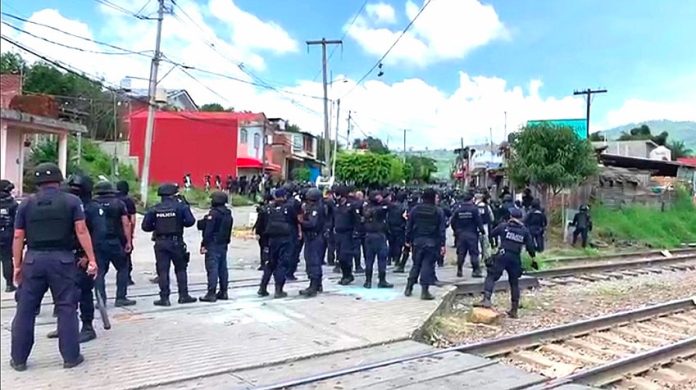
Police on the tracks in Uruapan, Michoacán.

Law enforcement and protesters in Uruapan and Pátzcuaro, Michoacán, clashed Wednesday over control of the railway tracks, leaving 14 police officers injured and seven protesters arrested as authorities removed rail blockades.

The protesters are teachers and teaching students, known as normalistas, who have blocked the railway on and off for the past three weeks, demanding the payment of bonuses and scholarships and the automatic allocation of jobs to more than 2,000 recent graduates.

The teachers, who are affiliated with the CNTE teachers’ union, were briefly removed last week under pressure from state police, but by Friday blockades were back in at least seven municipalities.

In yesterday’s clashes, state police and the National Guard moved in on teachers in Caltzontzin and Pátzcuaro after negotiations broke down.

Footage of the confrontation appears to show authorities launching flash bangs and tear gas at protesters.

The normalistas responded by throwing Molotov cocktails, fireworks and rocks at authorities who forcibly removed them from the tracks.

Ten state police officers and four members of the National Guard were injured in Caltzontzin, and seven protesters were arrested in Pátzcuaro.

Blockades on the tracks have interrupted the transport of goods to and from the center of the country, which is causing economic losses estimated at 50 million pesos (US $2.27 million) per day.

Michoacán Industry Association president Carlos Alberto Enríquez Barajas says that regardless of whether the teachers’ demands are legitimate, “this can no longer be the way to function in Michoacán.”

The blockades also scare off investors and drive up logistical costs that reduce Michoacán’s competitiveness, Enríquez said.

Currently, 12 trains are reported stranded in different parts of the state and the country, unable to reach their destinations due to the blockades.

In 2019 normalistas blocked the railway tracks in Michoacán for a total of 62 days.

Source: Milenio (sp)

Health minister promises free medications, specialty healthcare as of December 1

0
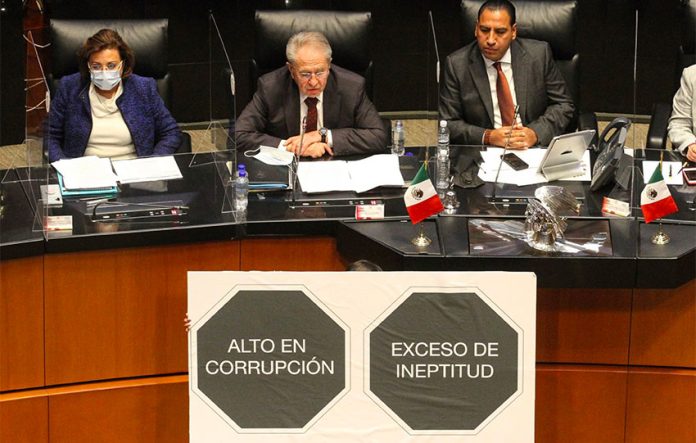
Health Minister Alcocer,
Opposition members greeted Health Minister Alcocer, center, with signs reading 'Stop corruption' and 'Too much ineptitude.'

Medications and medical care at all public healthcare facilities including specialty hospitals will be free effective December 1, Health Minister Jorge Alcocer said Wednesday.

Speaking in the Senate, Alcocer said the government was complying with its commitment to make specialty health care free as of that date.

“We’re working so that it happens on that date or before if possible,” he said.

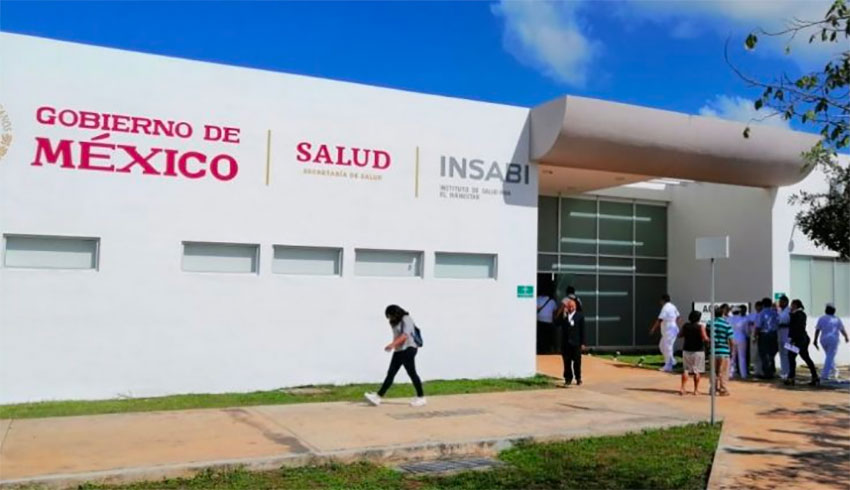
The government launched a new universal healthcare scheme known as Insabi in January but to date it has only provided free services at primary and secondary health care facilities, not tertiary level ones such as national health institutes and other highly-specialized hospitals.

Patients who qualify for the Insabi scheme and their family members have complained that they have had to purchase medications when hospitals should have provided them free of charge. Alcocer ensured that will no longer be the case by December 1.

The health minister acknowledged that providing free medical services at all levels of care will be expensive but stressed that the government sees spending in the health sector as an investment rather than a burden.

He said the government’s central aim is to reduce healthcare inequality by ensuring that all people without health insurance such as that provided by the Mexican Social Security Institute and the State Workers Social Security Institute can access free of charge all the medical services and medications they require.

Earlier in his Senate appearance, Alcocer defended the government’s response to the coronavirus pandemic in the face of harsh criticism and difficult questions from opposition party senators.

“The government response … has focused on saving lives,” he said, highlighting the various measures that were implemented to slow the spread of the coronavirus.

Alcocer said that the government’s pandemic response has avoided a “collapse” of the health system and has taken people’s rights and dignity into account. (Unlike many countries in the region, a hard lockdown was never enforced in Mexico.)

The health minister said the government inherited a health system with incomplete infrastructure and a shortage of more than 200,000 workers but nevertheless quickly prepared it to receive an influx of coronavirus patients. In a few short months, 969 public hospitals were equipped to treat Covid patients, Alcocer said.

Services provided by tertiary level facilities such as national health institutes and other highly-specialized hospitals will become free.

An analysis published by Amnesty International at the start of September said that more health workers have died in Mexico after contracting Covid-19 than in any other country but the health minister rejected that was the case.

Citing per capita figures rather than sheer numbers, Alcocer said that Mexico ranked 12th for Covid-19 deaths among health workers, not first.

He asserted that new coronavirus case numbers have been on the wane for nine weeks and highlighted that half of the country’s 32 states are close to green light status according to the federal government’s stoplight system to assess the risk of infection.

(Sixteen states are currently considered yellow light “medium risk,” 15 are orange light “high risk” and one – Campeche – is green light “low risk.”)

During Alcocer’s appearance in the upper house, National Action Party Senator Alejandra Reynosa said that the government’s response to the coronavirus crisis constituted a “crime” given that so many people have lost their lives.

She asserted that the death toll is undoubtedly much higher than the official number, which as of Wednesday was 77,646.

Sylvana Beltrones of the Institutional Revolutionary Party asked Alcocer what it would take for the government to reconsider its strategy and undertake a widespread Covid-19 testing campaign. Would a death of toll 80,000 convince the government that its strategy is not working, she probed.

Verónica Delgadillo of the Citizens Movement party asked Alcocer how many more people would have to die before he and Deputy Health Minister Hugo López-Gatell, Mexico’s coronavirus czar, would resign.

She asked him why he had permitted “the errors and negligence” of López-Gatell and inquired: “Aren’t you ashamed to know Mexico has the highest mortality rate in the world?”

Acocer responded correctly that according to data compiled by Johns Hopkins University, Mexico in fact has the 12th highest mortality rate (deaths per capita) in the world, although if the micro-states of San Marino and Andorra are excluded it ranks 10th.

Source: El Universal (sp), La Jornada (sp) 

Fake companies used to syphon millions of pesos from federal programs

0
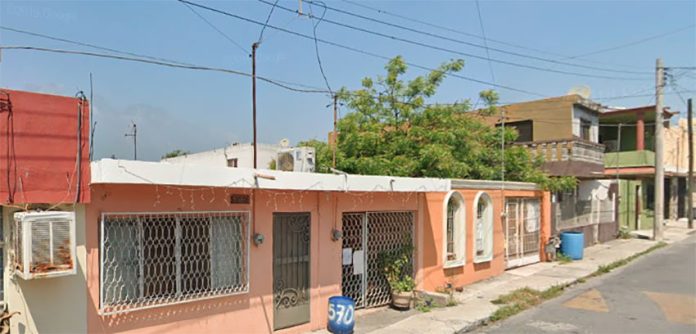
Homes on this street in Monterrey were listed as the addresses of some of the shell companies.

Shell companies with links to drug traffickers were used to syphon millions of pesos from federal programs during the government of former president Enrique Peña Nieto, according to a report by the newspaper Reforma.

The Software Industry Development Program (Prosoft), established during the 2000-2006 presidency of Vicente Fox, was one of those targeted by the illicit scheme.

A network of illegal companies in Nuevo León received 152.8 million pesos (US $6.9 million at today’s exchange rate) from the government via the program, Reforma said.

The illegal companies were created out of thin air, the newspaper said, adding that people who lived in poor neighborhoods in and around Monterrey were listed as directors or shareholders without their knowledge.

Some of the shell companies vanished after they received government funding. Others still appear on suspicious company lists prepared by the federal tax agency SAT.

Prosoft distributed 3.3 billion pesos (US $149.2 million) to companies and individuals during Peña Nieto’s 2012-2018 term, meaning that there was plenty of scope for corrupt activity.

It is unclear how much of that amount went to fake companies but in Nuevo León, where just under 338 million pesos was distributed, almost half of the funds distributed by Prosoft went to such firms.

Reforma and Mexicans Against Corruption and Impunity (MCCI), an independent anti-graft group, revealed in an article published Tuesday that SAT has launched a money laundering and tax fraud probe into a network of at least 45 shell companies that operated in the northern state.

The network of companies was used by leaders of the Zetas drug cartel, the Peña Nieto administration and several state governments, Reforma and MCCI said. Some of those companies illegally siphoned Prosoft funds.

The United States Department of Treasury also detected that companies within the illicit network were involved in suspicious operations.

The Peña Nieto government, which was plagued by corruption scandals, allegedly made extensive use of shell companies to divert public money.

Eleven federal agencies allegedly diverted billions of pesos through shell companies between 2013 and 2014. Former cabinet minister Rosario Robles was arrested in connection with the so-called “Master Fraud,” which syphoned money via contracts with public universities. She remains in prison awaiting trial.

The Ministry of Defense during the Peña Nieto government allegedly paid almost 2 billion pesos to 45 shell companies to which it awarded supply contracts related to construction work at the cancelled Mexico City airport project.

Chief Auditor David Colmenares said earlier this year that there were was a question mark over the use of 50.94 billion pesos (US $2.2 billion) during 2018, the final year of the previous government’s six-year term.

Source: Reforma (sp) 

Residents fined for filling Oaxaca city potholes: they didn’t have a permit

0
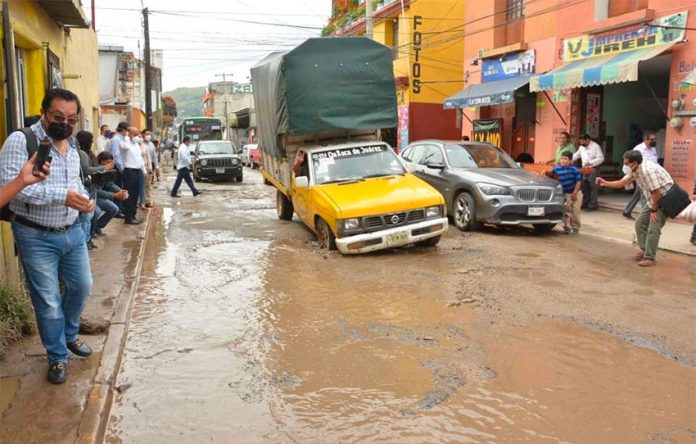
A vehicle encounters a pothole on a flooded Oaxaca city street.

Repair a pothole on a Oaxaca city street and you’re likely to get fined for it: filling baches, as they’re called, requires a permit.

Citizens who took it upon themselves to fix gaping holes in city streets were fined earlier this month for not having obtained the proper permits. Now they are demanding that authorities get the job done.

“We are an example of everything that a city should not be. A group of citizens covered a pothole and the municipal authority fined them,” said Jorge González Ilescas, a citizens’ representative. “The mayor has not visited this area because he has no intention of participating in its recovery.”

The municipal government’s efforts at patching the potholes amount to little more than filling them with dirt and stones, which is not a viable or lasting fix, citizens argue.

“There is not a single street in the city of Oaxaca, the metropolitan area of ​​Xoxocotlán and Santa Lucía del Camino or San Jacinto Amilpas that is free of damage,” said Rubén, a taxi driver.

“We are waiting for the government’s response because it is the same everywhere. If we go through Nuño del Mercado it is ugly … the lower part of the IV Centenario bridge is a swimming pool. Periférico, Miguel Cabrera, Avenida Central and Manuel Ruiz, they are impassable,” he says, arguing that the temporary repairs the city does last only a few days.

“The main reasons why our streets are destroyed is first due to heavy rains, secondly because of the terrible work of previous administrations and because [the state water utility] does not do their job well,” Mayor Oswaldo García Jarquín said.

However, Governor Alejandro Murat made it clear this week that the responsibility for repairing city streets lies with the municipal government. “The potholes in the cities are the responsibility of the municipalities,” he said.

Source: Milenio (sp)

Violence continues in Guanajuato despite cartel boss’s capture

0
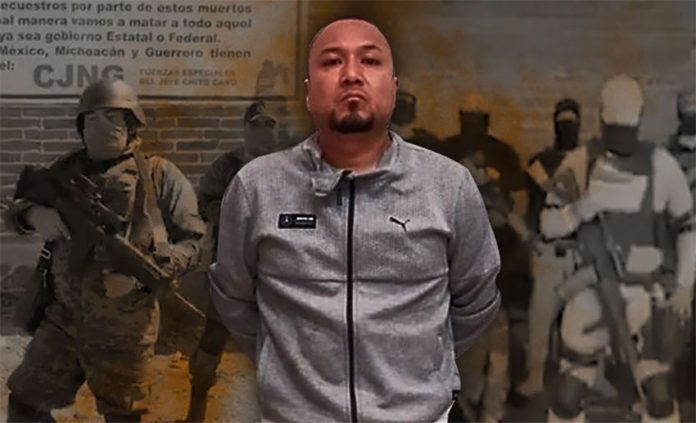
El Marro was captured in August after a long manhunt.

Guanajuato remains Mexico’s most violent state almost two months after the capture of the leader of the Santa Rosa de Lima Cartel (CSRL), a fuel theft, drug trafficking and extortion gang engaged in a turf war in the state with the Jalisco New Generation Cartel (CJNG).

José Antonio Yépez Ortiz, better known as  as “El Marro,” was taken into custody on August 2 after a long manhunt. He is currently in prison awaiting trial on a range of charges including kidnapping, fuel theft and organized crime.

Homicides declined 12.7% in August to 351 compared to 402 in July but have increased again this month.

Presenting crime data for August earlier this month, federal Security Minister Alfonso Durazo said that homicides had declined in Guanajuato since Yépez’s arrest and asserted that while the government couldn’t yet “sing victory” the situation was looking more positive in the Bajío region state.

But even with the almost 13% decline in homicides last month, Guanajuato still led the country for the crime. In the first eight months of the year, a total of 3,032 people were murdered in the state, a 33% increase compared to the same period of 2019, Mexico’s most violent year on record.

Roughly one in eight homicides in Mexico between January and August occurred in Guanajuato.

In the first 29 days of September, there were 356 homicide victims in Guanajuato, according to daily statistics published by the federal Security Ministry. Murders have spiked over the past week with about 120 victims, including 31 people who were killed on Sunday.

The government’s daily count tends to miss some homicides, which are later included in the National Public Security System’s monthly crime reports.

As a result, “it is very probable” that homicide numbers for Guanajuato in September will be about the same as July, according to security analyst Alejandro Hope.

Writing in the newspaper El Universal, Hope noted that there were a few weeks of “relative peace” after the arrest of El Marro and that August was the least deadly month in Guanajuato since last December.

But the “good streak” ended in September, he wrote. The analyst said that he doesn’t have a complete answer as to why the reduction in violence has not been maintained but provided some hypotheses.

Frame from a Santa Rosa cartel video in August advising the Jalisco cartel it was still in charge in Guanajuato.

Hope speculated that, as has occurred with other criminal groups, the “beheading” of the CSLR might have caused a dispute among gang members over who would succeed Yépez.

He also hypothesized that El Marro’s arrest caused a loss of discipline within the organization and in-fighting over control of fuel theft, drug trafficking and extortion revenue.

“At the same time, the breaking up of this group might have opened up a space for other groups (the Jalisco New Generation Cartel or maybe other local groups) to try to take over some of the illegal activities that El Marro’s people ran,” Hope wrote.

He said that another hypothesis is that the arrest of Yépez “did very little” to the organization he headed, either because El Marro wasn’t an all-powerful leader or because the CSRL has a more decentralized structure than the authorities think.

“In that scenario, the capture of Yépez would have only caused the group’s gunmen to lower their profile for a few weeks,” Hope wrote.

As soon as state and federal authorities reduced the pressure on the CSRL, its members might have returned to their criminal activities as they were carrying them out before El Marro’s arrest, the analyst hypothesized.

Hope said that a third explanation as to why the reduction in violence in Guanajuato has not been maintained is that the turf war between the CSRL and the CJNG never was its “efficient cause.”

“Maybe it was the trigger but stopped being the dominant dynamic long ago,” he wrote.

“That’s what happened in Ciudad Juárez a decade ago: the issue might have started as a conflict between cartels but a lot of scattered violence mounted on top of that – between [criminal] groups or not, involving gangs or not, in the prisons, in the streets, in homes and on public highways with the direct participation of multiple government agencies in the battle.”

In such a situation, arresting a single criminal leader does little to change the equation, Hope said, “especially if it is not accompanied by efforts at institutional reconstruction and prevention of violence.”

Whatever the explanation for the ongoing violence in Guanajuato – a report by the news website Infobae said that it has spiked recently because the new CSRL leader, a man nicknamed “El Azul,” rejected the CJNG’s attempts to strike a peace deal – “it is clear that the downfall of El Marro didn’t turn out to be the silver bullet that federal and state authorities expected,” Hope wrote.

“The drama of Guanajuato still has many chapters ahead.”

Source: Infobae (sp), Reforma (sp), El Universal (sp) 

Covid has shut down 90,000 restaurants and more may follow: Canirac

0
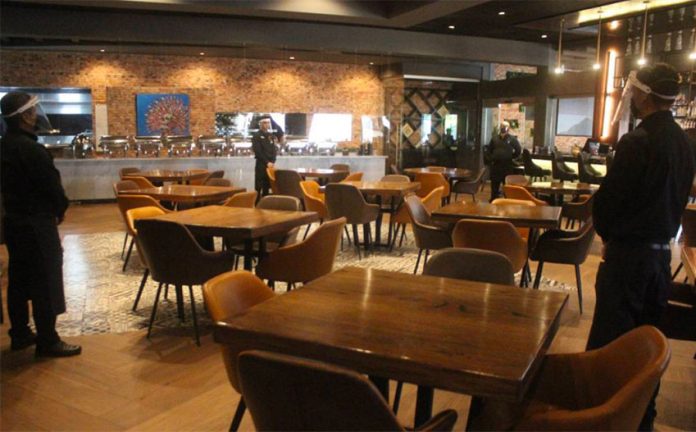
Restaurants that remain open must operate with limited capacity.

Ninety thousand restaurants have closed since the start of the coronavirus pandemic and about 30,000 more could follow, according to the vice president of the national restaurant association Canirac.

Germán Gonzélez said Tuesday that the pandemic and associated restrictions could force the closure of a total of 122,000 restaurants.

Speaking at a press conference to promote an upcoming food expo, Gonzélez said that about 17,000 restaurants in the greater Mexico City metropolitan area have not reopened after being forced to close in March.

He said that a census last year found that there were about 600,000 restaurants in the country, 96% of which are small businesses such as family-run fondas (informal diners) and taquerías (taco restaurants). That means that the coronavirus pandemic has shut down 15% of all eateries across Mexico.

Gonzélez said that restaurant industry revenue has fallen 100 billion pesos (US $4.5 billion) in 2020, explaining that restaurants that are currently open have seen their income drop by an average of 60% compared to last year.

Authorities began allowing restaurants to reopen to sit-down customers in June but their capacity has been limited to 30% to 50% of normal levels in most states.

With fewer diners and lower revenue as a result, many restaurant owners have had to dip into their savings in order to continue operating, Gonzélez said.

“That’s difficult to maintain for long periods,” he added.

While restaurant owners are reaching into their own pockets to keep their existing establishments open, they have little money to invest in new eateries, Gonzélez said.

“If a company has to put up money every day to stay open, creating new investment projects is difficult,” he said.

The coronavirus pandemic has also ravaged Mexico’s normally lucrative tourism sector. Average hotel occupancy across the country is currently below 25% whereas at the same time last year it was between 60% and 70%, according to Luis Barrios, CEO of the City Express hotel chain.

Tourism revenue remains well below 2019 levels although passenger numbers at the Mexico City airport are slowly recovering.

As a result of the sharp decline in tourism income, “investment in new hotels is minimal and projects that are half completed have been postponed,” Barrios said, explaining that the hotel industry is focused on keeping existing properties open and has “no resources left over.”

Source: Reforma (sp) 

Rape and murder of 3-year-old reignites chemical castration discussion

0
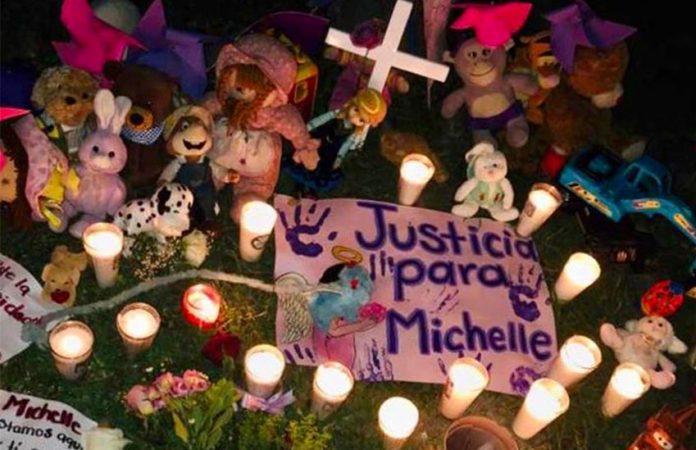
A memorial for rape and murder victim Michel Aylin.
A memorial for Michel Aylin.

The rape and murder of a 3-year-old girl in Tepic, Nayarit, has revived debate in the state government on the merits of punishing sex offenders with chemical castration.

Michel Aylin was sexually abused and suffocated to death on Sunday while in the care of her stepfather, who took the girl’s lifeless body to the hospital. She was pronounced dead upon arrival, but medical staff noticed clear signs of repeated physical and sexual abuse on her body.

Both the stepfather and the child’s grandfather, who has a history of sexual abuse of a minor dating back to 2014, have been arrested as authorities investigate her molestation and death.

Nayarit Governor Antonio Echevarría García condemned the toddler’s death. 

“The loss of life hurts in any case, but it goes deep when it comes to girls or boys,” he wrote on social media. “As a citizen, I join the demand for clarification of the case, demanding that the Attorney General’s Office carry out the necessary investigations and that whoever is responsible for this brutal crime be punished with the full weight of the law.”

If Rodolfo Pedroza Ramírez has his way, in Nayarit that could soon include chemically castrating that person.

Since March 2019, the National Action Party (PAN) deputy has voiced his support for including chemical castration in the state penal code as a punishment for people who rape women and children. The measure had stalled out but is seeing new support as outrage grows over what happened to Michel. 

The topic has bounced around the halls of justice in Mexico for years, but no state has yet approved the practice.

Earlier this month Deputy José Juan Espinosa of Puebla proposed chemical castration for sex offenders in his state. “Enough of being lukewarm on combating perverse behaviors that hurt the children of our state,” the legislator posted to his Twitter account. “I understand the issue of human rights of criminals, but I think that we also have to think about the victims and try to control this type of behavior,” he said.

The human rights advocacy organization Human Rights Watch considers chemical castration, which uses hormones to lower testosterone levels and reduce men’s sex drive, a cruel and degrading form of corporal punishment, which the Convention against Torture and the International Covenant on Civil and Political Rights both prohibit.

Source: El Universal (sp)