Home Blog Page 1429

Kids and Covid: avoiding both contagion and isolation-induced health issues

0
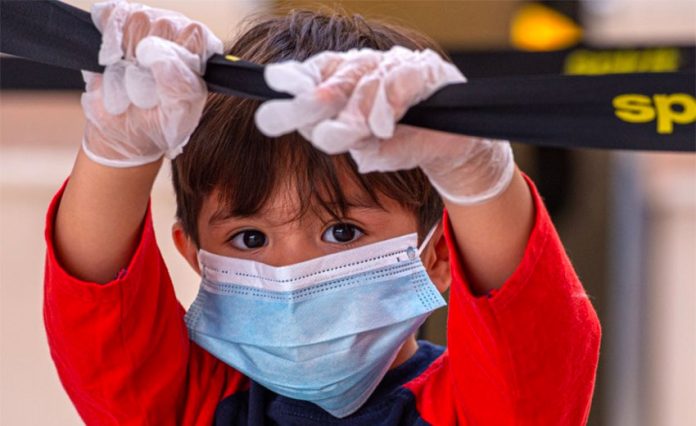
child with face mask

On Mother’s Day this year, my 6-year-old daughter had a bit of a breakdown.

She doesn’t usually cry now that she’s an older kid — my theory is that she used up 90% of her allotted lifetime supply of tears during her first two years of life — so when she does, I know it’s about something serious, like the heartbreak of getting your feelings hurt or very real fear.

So what was the breakdown about? Well, a lot of things. Her father and I had separated a few months before, and I’d moved us into a new house. Shortly after I had the house all set up and finally ready to receive guests, coronavirus came sweeping through and kept us isolated there and unable to have company, something we both love that makes us feel normal and at home.

She missed her dad living in the same place as us, even though she saw him frequently. She missed her friends. She missed her school. She didn’t like the new, unfamiliar house. She missed the younger dog that always picked fights with the older dog who now lived with her aunt instead of with us. She shouted through tears of rage and desperation, “I HATE coronavirus!”

Eventually, I cried with her, and sitting with her on those back steps sobbing together on our patio has become, for me, the kind of painfully tender memory that sticks with you forever.

If you have children, you understand. The most succinct expression of that feeling was expressed by the grandmother of the main character in one of my favorite books, Their Eyes Were Watching God by Zora Neale Hurston: Every tear you drop squeezes a cup uh blood outa mah heart.”

So what do we do with our children? If you’re me, you learn to be a little flexible, balancing the risk of contagion against the risk of isolation-induced mental and emotional health problems in young, pliable, sensitive brains.

Technically, my daughter should have been only with me since lockdown began if we’d been following the strictest set of guidelines. But keeping her from seeing her father is not something I’ve ever been willing to do: he’s a great dad, and they love each other.

It’s not just that I’m a reasonable co-parent (though I am a reasonable co-parent). First, being stuck at home just with me is very boring. While she can be shy at first, the fact that she was actually an extrovert was immediately evident when we enrolled her in daycare at the age of 8 months. She went from constant crying at home — did she just hate being a baby? — to all smiles when surrounded by friendly peers in a matter of days. My working theory is that she wanted more adventure than her family’s arms could provide her.

Plus, I work at home. I love my daughter more than anything and I love being with her, but when she’s with me, very little of what I need to do gets done. And if I want to put food on the table, things need to get done. My normal pre-pandemic pattern of working while she was at school has now practically been reversed: not only do I need to be present for at least popping in and out of her classes to help, but she needs my computer in order to take her online classes.

So far, so good-ish. When two well-meaning parents calculate risk differently, however, things can get sticky.

My daughter sees and interacts with several members of her dad’s side of the family and another (extended) family close to him. According to him, they have formed a “pod” of what I think are about 10 people who (supposedly) only and exclusively spend time with one another. I simply don’t believe that they can be 100% confident that no one in their circle has had any contact without “outsiders,” but honestly, I don’t begrudge them needing the contact and have not tried to insist on him keeping my daughter completely isolated.

I try to base my precautions and worries on statistics more than on fear. This means researching statistics on causes of death by age group, a macabre and terrifying real-life thought experiment if there ever was one. I don’t always succeed at staying calm, but science is certainly a better benchmark than my anxieties.

For my daughter’s age group the risk of death is higher for the flu and pneumonia than Covid, which most people, I think, know (once you get to the age of 15, the risk of dying from Covid becomes the higher one). One of the few mercies of this disease is that it seems mostly to spare children, if not from infection, at least from serious complications and death as a result.

Throw in the fact that the chances of dying in a car accident are much higher even than both of those combined, and you can guess why I’ve been known to chase after the car to make sure she has her seatbelt on with the kind of urgency that many think I should be feeling about her tiny face mask and antibacterial gel (to be clear, those are also required).

It’s not only about the children’s health, of course: children interact with older, more vulnerable adults, and much of the control of their movement and activity is just as much about protecting their elders.

But like putting a child in a car, it’s a risk people take because the benefit of important needs met is determined to be worth it. Face masks and gel are the seatbelts, but we all know that there are no guarantees for any of it.

When she’s with me, things are a bit more boring, because our own “pod” is much smaller: we have one little friend who lives close by that we go to play with sometimes. We go on walks. We’ve visited with one other family that’s stayed isolated, and we don’t hug, kiss, or shake hands with others. Mostly, though, we just hang out at home.

But my daughter is happy.

Are we taking the absolute strictest precautions? No, we are not. But we’re not throwing the baby out with the bathwater, either: pretty good is better than giving up because perfection can’t be achieved. And in the end, our daughter’s happiness and emotional health is just as important as her physical health. Like everyone, we’re just trying to make it through.

Sarah DeVries writes from her home in Xalapa, Veracruz.
Group of young men who serve Catholic Church has origins in Franciscan friars

0
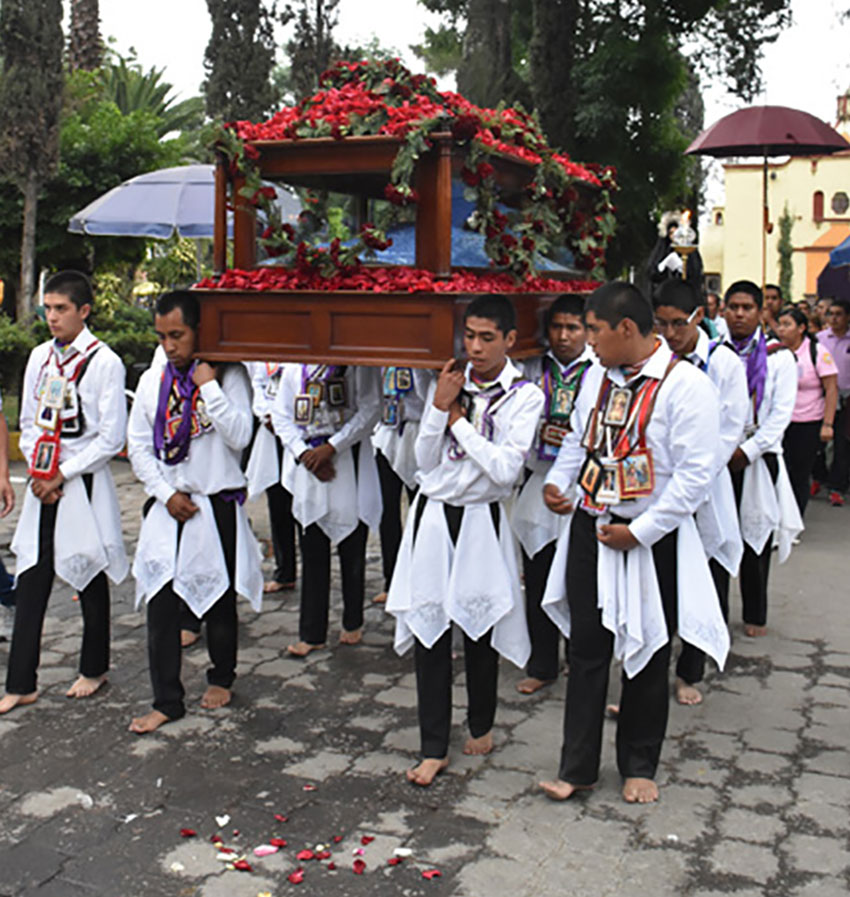
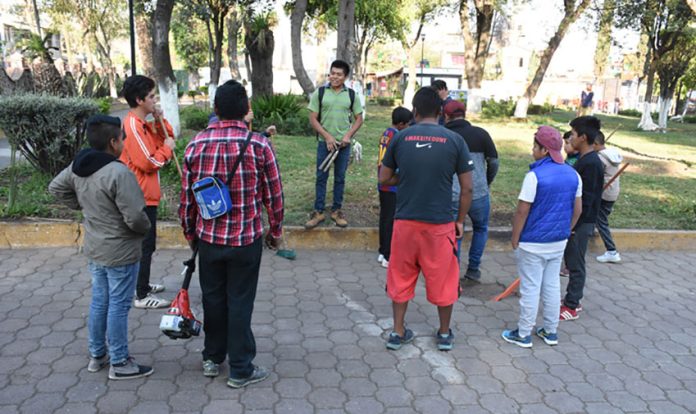
Los Varones prepare to go to work cleaning the churchyard.

Los Varones is a group of 14 young men in San Gregorio Atlapulco, Mexico City, who dedicate a year or more to serving the Catholic Church, a group that is the only one of its kind in Mexico, and perhaps the world.

The young men spend months in rigorous physical and spiritual training and, during Holy Week, endure periods of fasting and silence. “It is not easy,” admitted Ricardo Castro, a member for two years, “but one does it with faith.”

There’s very little written about their history, but there are snippets and some oral history that allow them to be better understood.

When Franciscan friars arrived in San Gregorio in 1555, the land had already been occupied for thousands of years. There’s a Neolithic site in an ejido known as El Japón that’s 4,000 years old (they were hunter-gatherers) and ruins in the hills that are at least 2,000 years old.

The hills were occupied by two groups of Mexicas and the lowland areas known as the chinampas were occupied by two groups of Alcohuas. They were Nahua, and had a warrior culture.

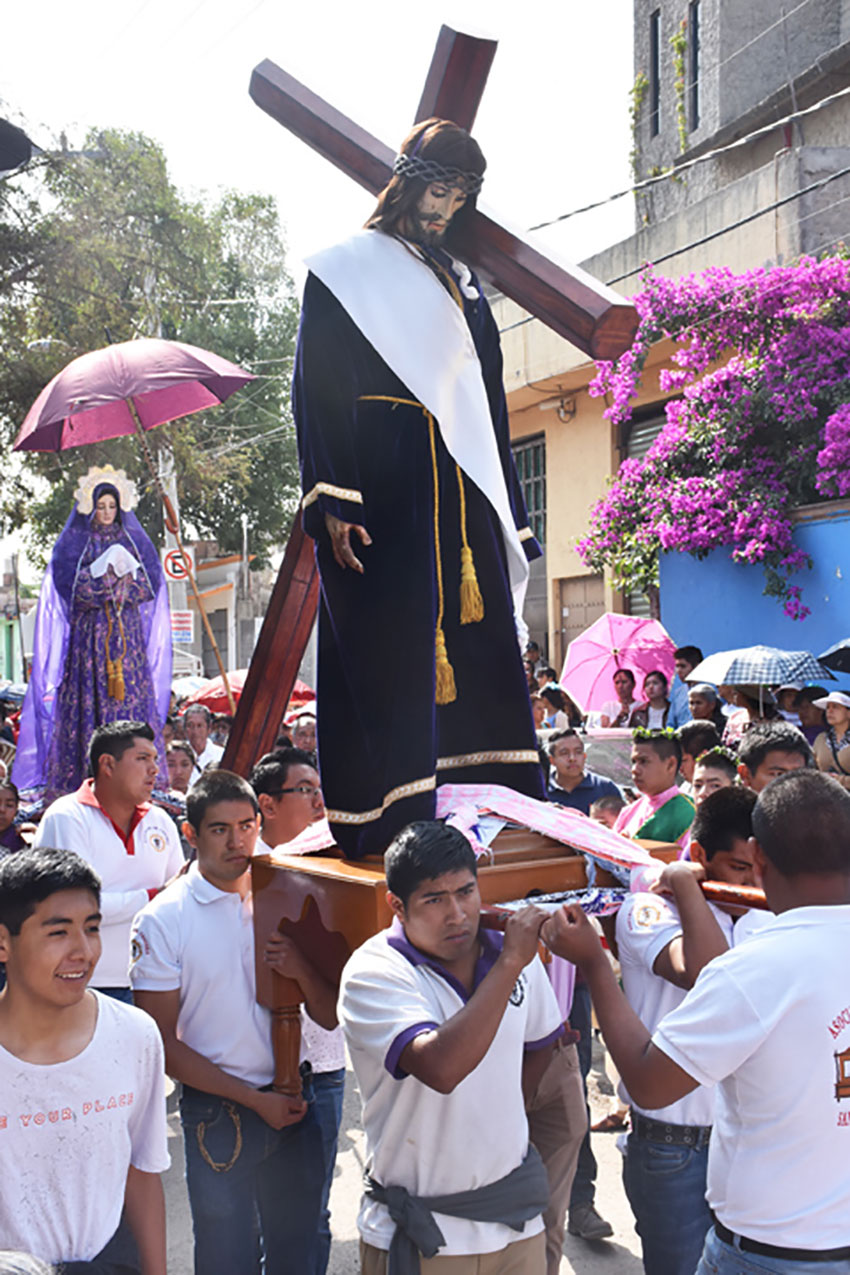
Members of Los Varones in a Good Friday procession.

Los Varones got their name from those Franciscan friars, an order that was founded by Saint Francis of Assisi. He was known as El Santo Varón, and the order is often referred to as Los Santos Varones.

Los Varones may be translated as “The Young Men” but in this case it has a deeper connotation of someone who is chaste and serious.

“Franciscans arrived in [San Gregorio in] the 16th century and they were really the first Varones,” said Arturo Galicia Carrasco who was a member of the group several years ago. “Probably in the early 17th century, they started using young men from the pueblo.”

Although firmly rooted in the Catholic religion, the group contains elements that can also be traced to indigenous groups that occupied the region in pr-Hispanic times (this mixing of Catholic and indigenous beliefs is referred to as Popular Religion).

The training Los Varones undergo today is in some ways similar to the military training undertaken by Mexica warriors in a school for children of the nobility. Los Varones need the training because during Holy Week they carry large statues through the pueblo for hours.

“We prepare for that by carrying a heavy table,” said Octavio Flores, a 15-year-old who has been in Los Varones for two years. “We run, do push-ups and pull-ups, we walk without shoes. Sometimes we put another person on our back and climb stairs.”

Los Varones are busy during Easter Week.
Los Varones are busy during Easter Week. Here they are in a procession on Holy Thursday.

Los Varones have a number of responsibilities to perform during the year. They maintain the gardens in front of the church, clean various statues and also clean some of the pueblo’s chapels. It’s a sizable time commitment.

“We are together Saturdays and Sundays for the whole year,” said Alberto Casas Garcia, the group’s president. “It is like we are family.” Members also spend more time in prayer and, especially during the period between Ash Wednesday and Easter Sunday — the cuaresma — attend more masses.

All members must be single. “If I want to marry,” said Castro, “I must leave the group.”

New members, called aspirantes, may ask to join Los Varones or, if someone is noticed to be especially pious, may be approached by someone in the group. At times during their training or while doing work with Los Varones, aspirantes must walk barefoot.

“That can be difficult,” admitted Eduardo Huerta Galicia, “But it prepares us … it is to purify oneself.” Going barefoot may harken back to the training of Mexica warriors and also to Franciscan friars, who often went barefoot to show their humility.

Given the commitment and the rigors of the training it’s a little surprising, especially these days, that there are still young men who want to be members of Los Varones. And even after serving for a year they want to continue.

Castro has been a member for two years now and doesn’t plan on leaving anytime soon. “They are my brothers,” he said. “It is not only for Easter Week, we are together all year … The group is now part of me. I know one day I will leave but I do not want to. The most important reason we do this is to be close to God. That is the most beautiful thing.”

Joseph Sorrentino is a regular contributor to Mexico News Daily. He writes from his home in San Gregorio.

Blocking access to beaches could net fine of over 1 million pesos

0
beach in mexico

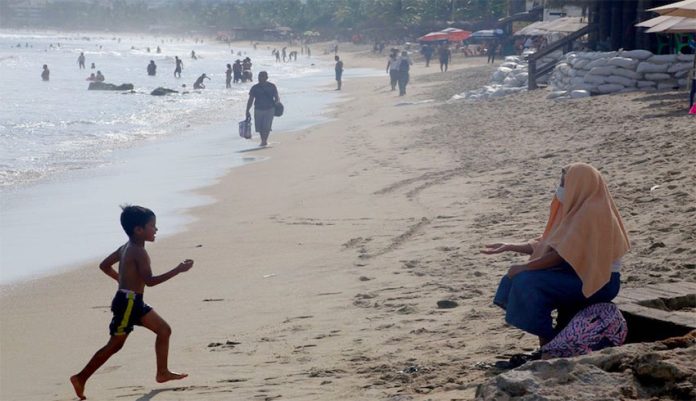
Property owners who block access to beaches could soon incur fines of more than 1 million pesos.

The Senate unanimously approved a reform to the General Law on National Assets on Monday that sets fines ranging from 260,640 pesos to 1.04 million pesos (US $11,800 to $47,200) for owners of coastal properties who prevent, restrict, obstruct or place conditions on access to beaches. By law all beaches in Mexico are public.

Fines can be issued if fences, barriers or buildings prevent entry to a beach or if property owners, hotel security staff or other hotel personnel block access when there is not an alternative public path to the coastline.

Repeat offenders could be stripped of permits that allow them to access the beach from their properties.

“The restriction of access to beaches … by owners of properties adjacent to the federal maritime land zone represents an act of discrimination against citizens,” said Mónica Fernández, a senator with the ruling Morena party.

She said that some owners of coastal properties treat the beach as their own private land when in fact it belongs to the nation.

Antonio García, a senator with the Democratic Revolution Party and president of the upper house’s tourism committee, said the reform will help to put an end to the discriminatory practices of some property owners.

He also said that it will strengthen the tourism industry, which has been decimated this year due to the coronavirus pandemic.

“We’re guaranteeing the right to recreation and also strengthening the tourism industry. … The tourism industry is the sector that has been hit the hardest by the pandemic; more than 10,000 small businesses have closed … due to a lack of economic activity,” García said.

After approval by the Senate, the reform was sent to President López Obrador for his endorsement prior to publication in the government’s official gazette.

Hotel owners have previously been warned by the government that their properties could be closed and demolished if they don’t comply with orders to grant access to public beaches.

The director of the federal office of maritime law zones said last December that one hotel project in Cancún, Quintana Roo, was demolished because it would have blocked public access to the beach.

In February this year more than 1,000 people gathered outside a beach club in Playa del Carmen to protest the infringement of citizens’ access to the country’s beaches.

The protest followed the arrest of a couple who had refused to buy food and drinks from Mamita’s Beach Club while they were enjoying the white sand and turquoise water of the Caribbean coast.

Source: El Universal (sp), Sin Embargo (sp) 

All-women police division: ‘Abortion Day marchers attacked us without reason’

0
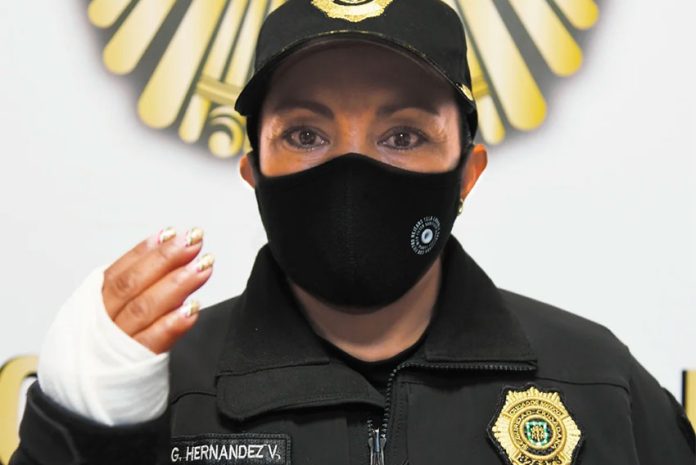
Guadalupe Hernández of the Ateneas squad says she was struck by a hammer.

Mexico City policewomen responding to Monday’s International Safe Abortion Day protest say they were attacked with Molotov cocktails and hammers without reason in an hours-long skirmish with abortion-rights activists.  

“It was the demonstration with the most direct attacks on us. They did not care that we were women and attacked us like that when they claimed to be our defenders. They directly threw Molotov cocktails at us and hit me with a hammer, they didn’t mind hitting you in the head,” said Guadalupe Hernández, deputy director of the Environmental Police, a detachment that is part of the all-women Ateneas squad that was in charge of policing the march.

An estimated 1,000 women participated in the demonstration, which they hoped would end in the zócalo, or city square, where another group of protesters demanding President López Obrador’s resignation has been camped out since last week. 

Mayor Claudia Sheinbaum said police asked that marchers hand over objects that could be used as weapons before entering the square, but they refused to do so and their access was blocked.

A small contingent of irate protesters then attacked shield-bearing police with metal pipes, paint, sticks, rocks, hammers, and Molotov cocktails, authorities say.

Sheinbaum said 44 police officers were injured in the clash.

Hernández said the tendons in her hand were injured during the demonstration. “We only asked that they march in peace and out of respect They hurt us and attacked us without reason. The only thing left for us was to protect ourselves, but we did not deserve the attack,” she said. 

Ateneas’ deputy director Gabriela Torres Sánchez said the attacks began with protesters hurling a Molotov cocktail at police, setting 10 officers on fire. Ateneas officers do not carry any kind of weapon, she said, and although police have been accused of using tear gas on marchers, authorities insist the chemical cloud that was seen came from fire extinguishers as police sought to defend themselves.

“The only thing they did was attack, break glass and hit colleagues who are also women, mothers,” she said.

Yesterday, President López Obrador praised Sheinbaum’s handling of the demonstration, saying her administration acted with “great responsibility, with great prudence.”

He also appealed to activists to keep their protests peaceful. “You cannot solve anything with the use of violence, that is not advisable. You cannot confront violence with violence, you cannot put out a fire with fire,” he said. “You have to fight peacefully and that is the only thing that we recommend.” 

Source: El Universal (sp)

Mexico’s Renata Zarazúa eliminated in second round of French Open

0
Despite the loss, Zarazúa's first-round win was a historic moment for Mexico.
Zarazúa lost the first set and was down in the second, but then turned things around for a stirring come-from-behind victory over the reigning Australian Open champion (File photo)

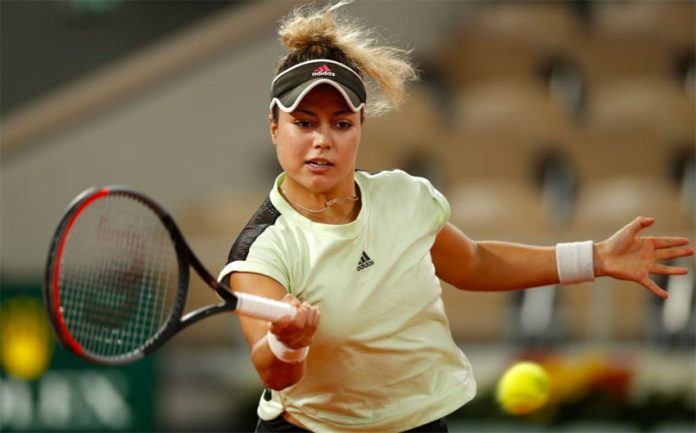
Mexican tennis player Renata Zarazúa fought hard but was eliminated in the second round of the Roland Garros French Open on Wednesday, losing to the tournament’s third seed Elina Svitolina.

Zarazúa, ranked 178th in the world, took on the Ukranian, ranked fifth-best, on her birthday and in her first-ever Grand Slam appearance. Although Zarazúa managed to win the second set 6-0 in just 29 minutes, Svitolina took the first and third, knocking the Mexico City native out of competition. 

The 23-year-old lost the serve twice as the duel began and appeared nervous, committing double faults, but recovered to sweep the second set. However, it was not enough to propel her to victory. Throughout the match, Svitolina had just six unforced errors compared to Zarazúa’s 18.

“Renata played very well, hit good shots and forced me to take risks. Then I was able to regain control of the game,” said the Ukrainian.

Despite the disappointing result for Zarazúa and her fans, the tennis player’s mere appearance in the second round of a Grand Slam tournament marked a historic moment for Mexican tennis.

On Monday she defeated French wildcard player Elsa Jacquemot 6-1 and 6-2, making her the first female tennis player from Mexico to advance to the second round at the French Open in 20 years.

Zarazúa, who has a record of 201 wins and 151 losses in singles matches, came close to winning the Mexican Open in Acapulco earlier this year.

Source: Milenio (sp)

Mathematician warns of coronavirus flare-up as positivity rate stops declining

0
coronavirus patient

A National Autonomous University (UNAM) mathematician has warned that the national coronavirus positivity rate is no longer declining and that the outbreak could soon worsen.

“At a national level, the positivity rate [the percentage of Covid-19 tests that come back positive] was coming down but now the trend is changing. It went from going down, which is desirable, to stagnating at … 40%. … To consider that the epidemic is controlled, the positivity rate needs to reach 5%,” Arturo Erdely told the newspaper Milenio. 

Mexico’s positivity rate is very high compared to most other countries because testing is mainly targeted at people with serious, coronavirus-like symptoms.

Only about 13,000 people per 1 million residents have been tested for Covid-19 in Mexico compared to about 315,000 in the United States, 84,000 in Brazil and 52,000 in India. Mexico has the fourth highest Covid-19 death toll in the world behind those three countries.

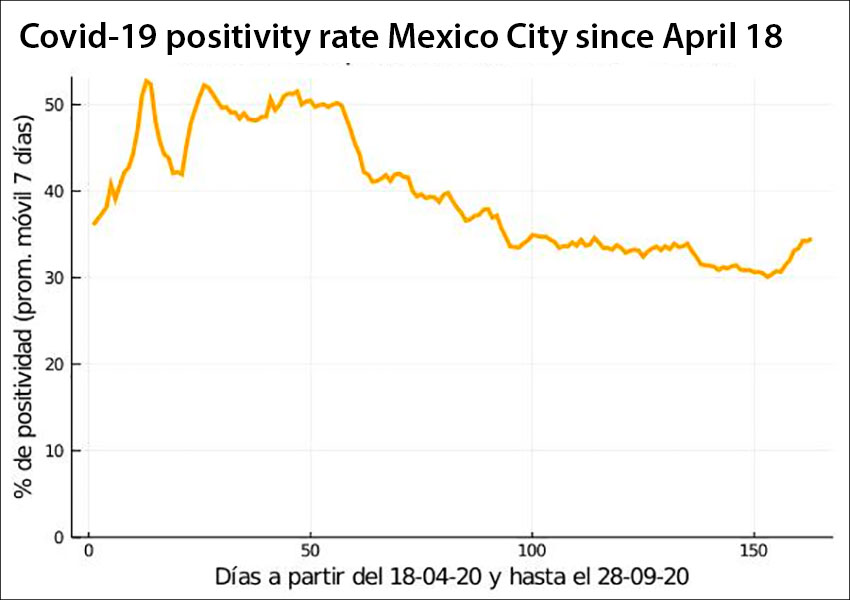
Erdely said the positivity rate in Mexico City, the country’s coronavirus epicenter, has increased from 30% to 34.5% over the past two weeks, an uptick he described as “worrying.”

The positivity rate in Mexico City, April 18 to September 28.

“The positivity rate was coming down but now it’s changed and it’s trending upwards. There is variability from one day to the next and from one week to the next but … when the average has been increasing for more than a week you can say that the trend is changing and [the positivity rate] is increasing. While in the case of Mexico City it’s increasing below the national average of 40.3%, it’s been rising and it’s about 34.5%, … which I think is concerning,” he said.

The UNAM academic said the positivity rate is the most important statistic to understand how the pandemic is evolving and the one that the World Health Organization watches most closely. But the federal government has never attributed sufficient importance to it, Erdely claimed.

While the national positivity rate is currently below the level seen in April and May – when it exceeded 50% – it shows that the pandemic has not significantly decreased, he said.

There are signs that new case numbers – which have been on the wane for about two months, according to the federal Health Ministry – could soon begin to rise, Erdely said.

He said that an uptick in case numbers could become even worse if the federal government doesn’t send clear messages about coronavirus mitigation measures such as the use of face masks.

“It’s very complicated. If [economic and social] activity increases, it’s impossible that infections won’t increase. So that [the outbreak] doesn’t get out of control, it’s essential to continue … taking care; social distancing, not going out if you don’t need to, the use of face masks, everything,” Erdely said.

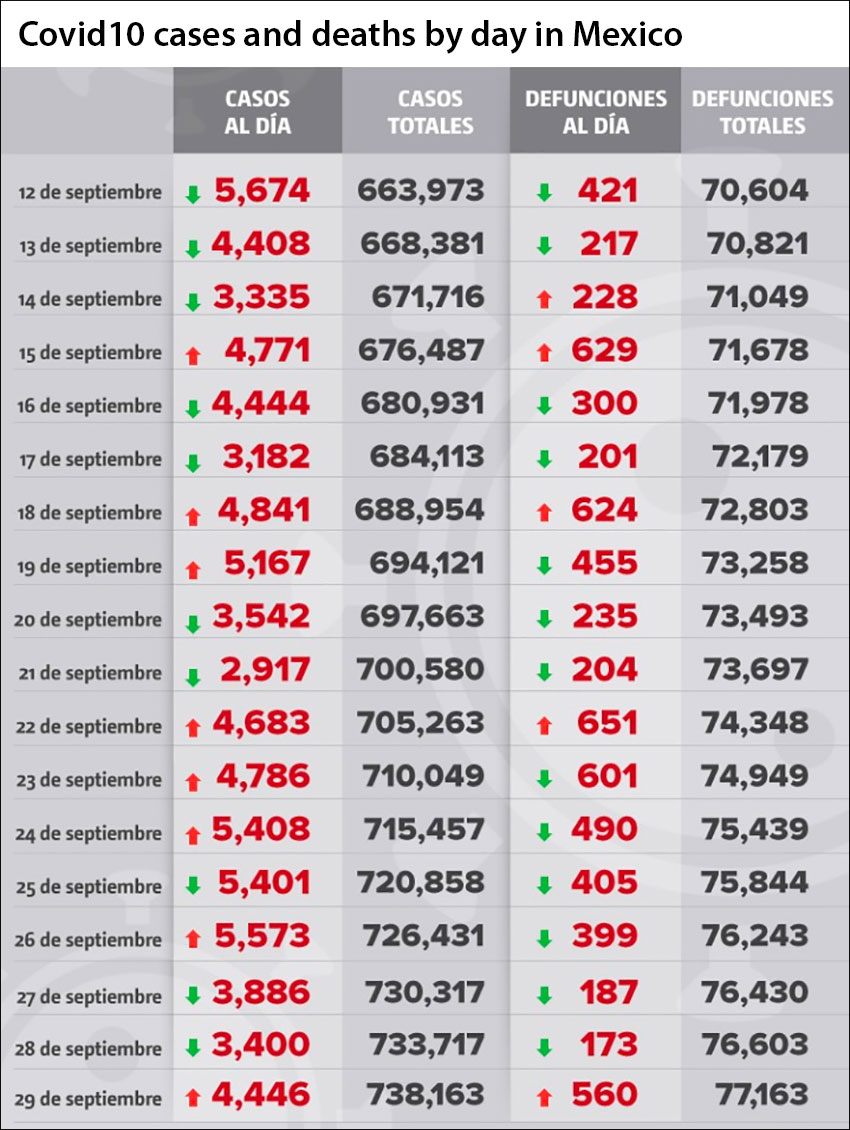
Coronavirus cases and deaths in Mexico reported by day
Coronavirus cases and deaths in Mexico reported by day. milenio

Meanwhile, the Health Ministry reported Tuesday that Mexico’s accumulated case tally had increased to 738,163 with 4,446 new cases registered.

A total of 138,603 cases were reported in the first 29 days of September, 21% fewer than the number registered in the 31 days of August. New case numbers in August declined 12% compared to July, which was the pandemic’s worst month with almost 200,000 cases reported.

But while new case numbers have trended downwards this month and last, several thousand continue to be reported on a daily basis.

Deputy Health Minister Hugo López-Gatell, Mexico’s coronavirus czar, has frequently asserted that the pandemic will be long and warned last week that a new wave of infections could begin in the middle of October, coinciding with the beginning of the flu season.

Mexico also continues to record hundreds of Covid-19 fatalities every day. The Health Ministry reported an additional 560 on Tuesday, lifting the official death toll to 77,163.

The real number of people who have succumbed to the infectious disease in Mexico is almost certainly much higher.

In Mexico City alone, which has officially recorded 12,051 Covid-19 fatalities, deaths from the disease were underreported by more than 10,000 in a six-month period to the end of August, according to a government excess mortality report.

Source: Milenio (sp) 

Coppel to invest 6 billion pesos in 400 new stores

0
coppel

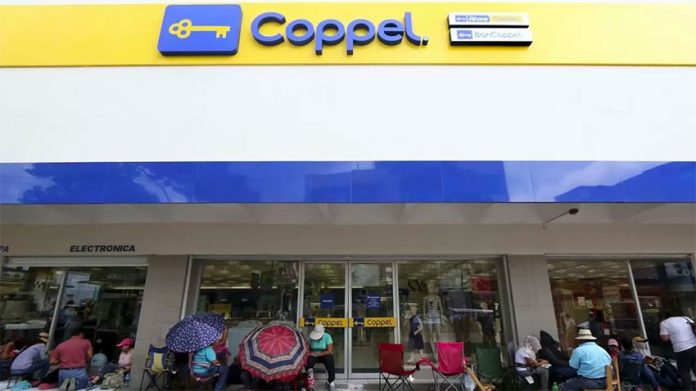
The department store chain Coppel will invest 6.3 billion pesos (US $191.7 million) to open 423 new stores over the next four years, according to the company’s director of real estate.

Domingo Soto said in an interview that Grupo Coppel eventually plans to have more than 2,000 stores.

Founded in Sinaloa in the early 1940s, the chain currently has 1,561 stores. Once the 423 new ones have opened, it will be just 16 short of the 2,000 mark.

Soto said that Coppel has the capacity to meet a wide range of consumers’ needs because “we have 30 different businesses” within a single store.

The chain sells products ranging from motorcycles to baby clothes, offers banking services and is a travel agency as well as a department store. It also operates nine clothing stores under the Fashion Market brand.

Coppel’s stores were able to remain open during the suspension of nonessential business activities in April and May due to the coronavirus precisely because it offers banking services through its BanCoppel division.

As a result, the company was able to continue selling goods to in-store customers at a time when other department stores were limited to online sales.

With people spending more time at home due to the pandemic, online shopping is growing quickly in Mexico and Coppel hasn’t missed out on its share of the increasingly lucrative market.

CEO Agustín Coppel said recently that online sales now make up for more than 10% of total sales whereas before the pandemic they only accounted for 2%.

Source: El Financiero (sp) 

Anaya is back: ex-political leader declares president is a megalomaniac

0
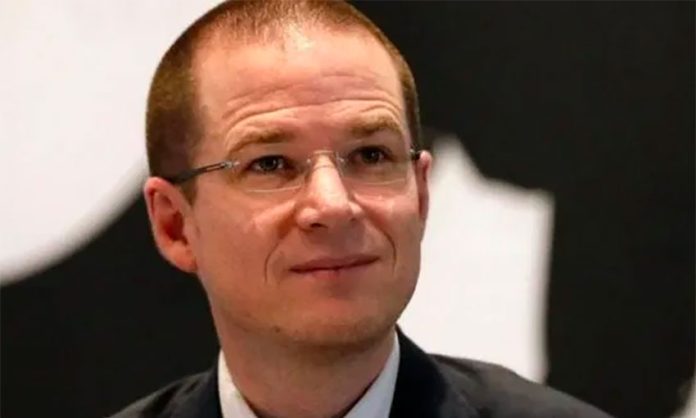
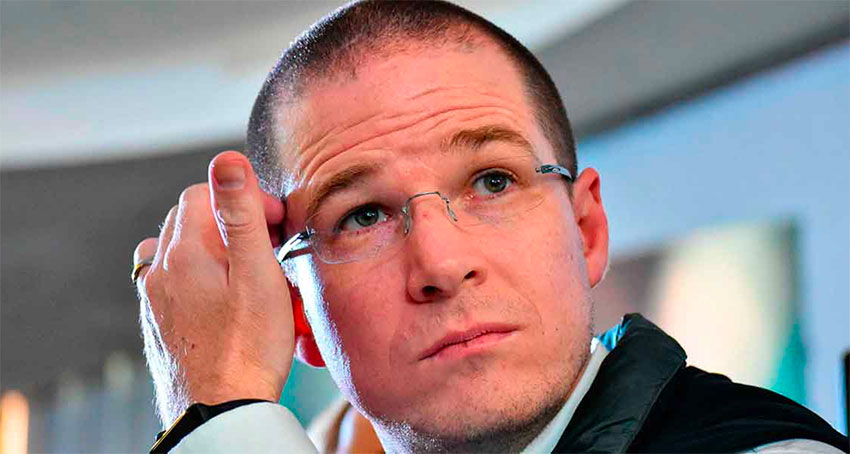
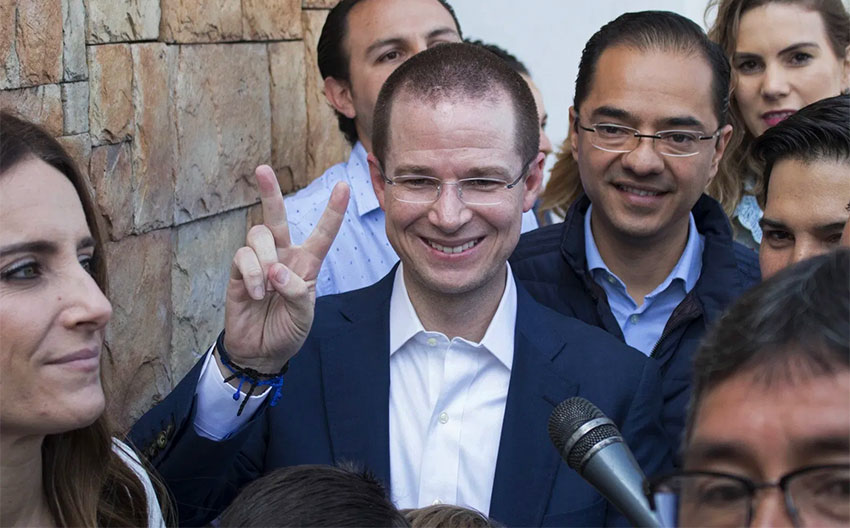
Ricardo Anaya
Ricardo Anaya returns just in time for the elections.

The man who ran for president under a right-left coalition against Andrés Manuel López Obrador has ended more than two years of silence with a scathing rebuke of the election winner’s performance.

Ricardo Anaya, a former leader of the National Action Party (PAN), also labeled López Obrador a megalomaniac in a video message posted to social media on Monday, a week after announcing that he had decided to return to public life.

Anaya began by taking aim at the president’s use of the term “fourth transformation” to describe the change he says his administration is bringing to Mexico.

He charged that López Obrador has no right to say that his government is carrying out a transformation that is just as momentous as Mexico’s independence from Spain, the 19th century liberal reform known as La Reforma and the Mexican Revolution.

“The first thing that has to be pointed out is that no political movement can claim a place in history it hasn’t won,” Anaya said.

ricardo anaya
‘The most dangerous thing is that [the president] believes his strategy is the correct one even when everything indicates the ship is sinking.’
“Not even [former president] Benito Juárez dared to assert that he was the protagonist of the second transformation. He won that place in history with his actions,” he added.

Anaya asserted that “the most concerning feature” of the way in which López Obrador interprets the history of Mexico is his “megalomania – his delusions of grandeur in other words.”

He went on to claim that “history teaches us that extreme vanity and pretensions of greatness lead to large errors that turn into catastrophes and disasters.”

“History teaches us that a megalomanic leader doesn’t listen, doesn’t change his opinion. He always thinks he is right and even in the face of contrary evidence he always has other ‘other information,’” Anaya said, using one of López Obrador’s favorite terms when confronted with information he doesn’t agree with or which portrays his administration in a negative light.

“The most dangerous thing,” he added, is that a megalomaniac never corrects his course because “he believes his strategy is the correct one even when everything indicates the ship is sinking.”

Anaya insinuated that the president is like a “madman” driving down a busy highway in the wrong direction while thinking that everyone else is going the wrong way.

“We all know how that ends,” he said before footage shows a car traveling in the wrong direction colliding head on with another vehicle.

Anaya, who was runner-up in the 2018 election with just over 22% of the vote (López Obrador garnered 53% support), asserted that his motivation for speaking out against the president was “profound concern” for “the damage” he is doing to Mexico.

“It’s you who is going to pay dearly for all his follies,” he warned.

The former federal deputy urged López Obrador’s collaborators to stop maintaining a “complicit silence” and “brown-nosing” the president.

Government officials close to the president have a responsibility to make him see his errors and the negative impact they are having on people’s lives, Anaya said.

“On the life of he who has no job, on the life of he who has no income, on the life of he who today has a member of his family who is sick or has already lost a loved one.”

Anaya appears to be positioning himself as a leading voice of the conservative National Action Party.

Anaya slammed López Obrador for his response to the coronavirus pandemic, which he said many experts have described as the biggest global crisis since World War II.

“At the beginning of the worst crisis of the century he addressed the nation to say this,” he said before the video cut to footage of López Obrador urging people to continue hugging each other because “nothing will happen.”

Anaya also criticized the president for not setting an example by wearing a face mask and practicing social distancing.

(López Obrador has seldom been seen wearing a face mask and continued to hold rallies and get up close and personal with his supporters in the early days of the pandemic).

Anaya, who appears to be positioning himself as a leading voice of the conservative party at a time when López Obrador and the ruling Morena party are dominating Mexico’s political landscape, also took aim at the decision to build a new state-owned oil refinery on the Tabasco coast, a move that has been criticized by many experts who say that the project diverts funds from Pemex’s more profitable exploration business.

“Let’s remember that he [López Obrador] insisted on the whim of spending money on a refinery instead of helping you when you most needed help,” Anaya said, taking a swipe at the government’s scant financial support for individuals and businesses amid the coronavirus-induced economic downturn.

“We’ll sadly remember that he didn’t live up to expectations in these historic times,” he said before concluding that despite what he sees as López Obrador’s poor leadership and bad government Mexico will overcome the adversity it faces.

Anaya’s return to the national political scene comes eight months before elections in June 2021 at which the lower house of federal Congress will be renewed and voters will elect municipal and state representatives.

The 41-year-old, who has just written a book called The Past, Present and Future of Mexico, has not publicly declared any intention to stand as a candidate at next year’s elections but his renewed enthusiasm for discussing national politics publicly might be a sign that he has one eye on putting his hand up to run for president again in 2024.

Mexico News Daily 

AMLO vows to quit if 100,000 protest and polls go against him

0
López Obrador will withdraw to his ranch in Palenque if he loses support.

President López Obrador issued a challenge to his detractors Tuesday: he will resign if 100,000 people attend a protest against him and opinion polls show that he has lost support.

“How are authoritarian governments overthrown? With the people, with large protests; people go out to the street – hundreds, thousands, millions. In my case, at the first protest of 100,000 and when I see that I don’t have support in the polls, [I’ll go] to Palenque, Chiapas. I won’t even wait for the revocation of mandate [vote],” the president told reporters at his morning news conference.

“I’ll see you there [in Palenque] because I have principles, I have ideals.”

López Obrador has a ranch in Palenque, a town in the northeast of Chiapas well known for its archaeological site of the same name, and has said previously that he would retire there if people come to the view that they don’t want him as president anymore.

“I’m not going to be like some presidents who have 10%, 15%, 20% approval in their countries and they’re still [in power],” he said in March. “How can one govern without the support of the citizens?”

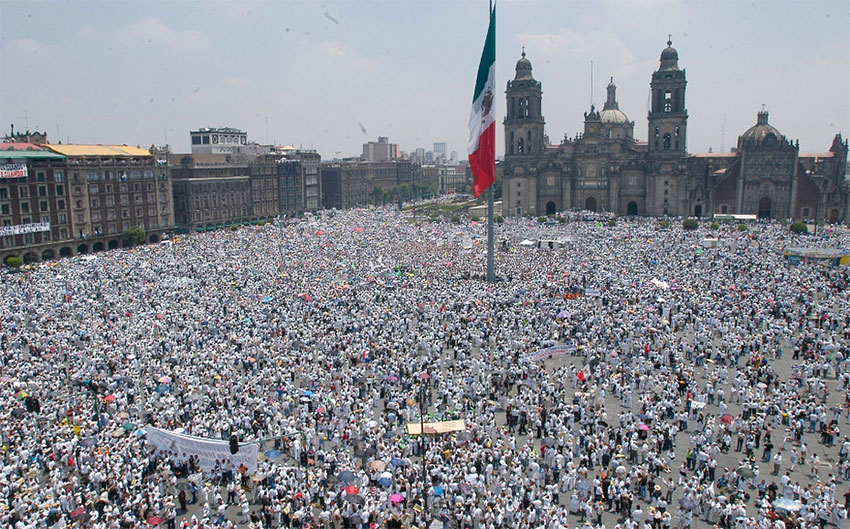
The 2004 march for peace drew as many as 350,000 people to the zócalo.

To formally test his support, AMLO, as López Obrador is best known, intends to hold a referendum in 2022 to ask citizens if they want him to continue as president until the end of his six-year term in 2024.

A recent poll of polls collated by the website Oraculus shows that AMLO has an approval rating of 57% but the president has rejected polls that indicate his support is below 60%, describing them as biased.

An organization known as the National Anti-AMLO Front has held numerous protests in recent months and some of its members are currently camping out in Mexico City’s central square, the zócalo.

The group has denounced the federal government’s management of the coronavirus pandemic and its economic response to the crisis, and claim that López Obrador is installing a regime of 21st century socialism.

But the president appears unperturbed by the people currently protesting against him in the zócalo – their numbers are only in the hundreds, less than 1% of the 100,000 threshold AMLO set in order for him to resign.

However, should there be a demonstration by 100,000 people or more it would not be the first time in Mexico City’s active history of protests and demonstrations.

  • A march in 1968 over the Tlatelolco massacre attracted an estimated 250,000 people.
  • A march for peace in 2004 was attended by 200,000, according to conservative estimates, and 350,000 by others.
  • Another march calling for a stop to violence was held in 2008 and drew 200,000, according to estimates by police.
  • More recently, official figures put the attendance at a March 8 march against gender violence at 80.000.

Mexico News Daily

New security force will safeguard mines against cartels

0
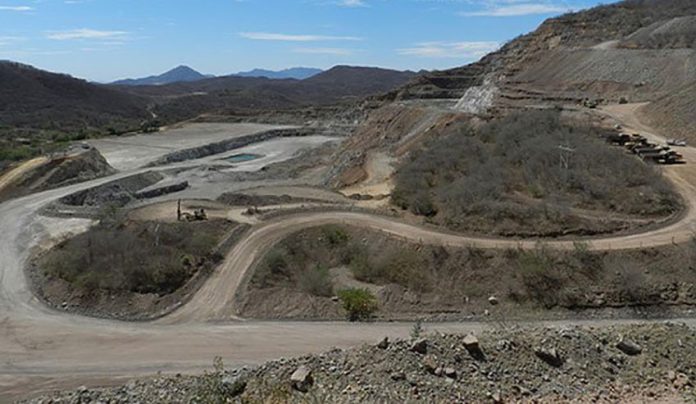
Thieves stole US $8.5 million worth of gold from the Gallo mine in Sinaloa in 2015.

Mexico has a new security force to protect the nation’s mines from drug cartels, the government announced Monday.

The first 118 mine guards, who will be equipped with assault rifles, graduated from a special training course and will be tasked with “solving the attacks by organized crime in this economic sector,” Security Minister Security Alfonso Durazo said.

“Today concludes a pioneering and highly relevant course in the increasingly broad profile in the training of the members of the federal protection service,” Durazo said at the officers’ graduation ceremony. “We know that the security of these facilities is delicate and requires high specialization. In coordination with the Ministry of the Economy and the industrial chambers, specialized strategies have been created for the mining regions.”

Foreign-run gold and silver mines have long been subject to extortion by drug cartels, and in recent years criminal organizations have also stolen minerals or semi-refined metals from the mines.

In 2015, a drug cartel stole around 4.5 kilograms of gold and silver from a mine in northern Mexico. The British-owned Fresnillo mining company, which operates three mines in Mexico including the largest silver mine in the world, reported that the theft occurred near its Herradura mine in Sonora when armed men carrying high-caliber weapons stopped a company vehicle and stole the ore.

That same year, thieves stole 7,000 ounces of gold worth US $8.5 million from the Canadian-owned El Gallo 1 mine in Mocorito, Sinaloa.  

In 2018, the Canadian company Pan American Silver temporarily reduced some operations at its mine in northern Mexico due to safety concerns.

The company noted that its employees had experienced safety problems on the roads leading to the mine in a remote part of Chihuahua, a region plagued by criminal groups. At one point, employees hid in the mine, fearful to leave due to threats from armed groups, and some employees were evacuated in private planes.

And in April 2020, Minas de Oro Nacional, a subsidiary of the Canadian firm Alamos Gold, was the victim of a daring theft of 1,000 ounces of silver and gold when five armed men subdued security guards and loaded their booty into a waiting small plane in an attack that took less than 10 minutes.

The decision to form a special squad of mine police was made at a summit on mining security held in May.

Some 2.6 million Mexicans are employed in the mining industry. In 2019, Mexican mines produced 244 billion pesos (US $11.25 billion) worth of ore.

Source: El Financiero (sp)