Flu vaccinations will begin October 1 for the general public, Deputy Health Minister Hugo López-Gatell announced Monday, whereas the campaign to vaccinate medical personnel is already underway.
He said the Ministry of Health has purchased 35 million doses of this year’s vaccine and distribution to the states has begun.
The flu shot campaign will kick off with a vaccination station and ceremony at the National Palace in October. The Health Ministry’s goal is to administer all doses of the vaccine by December 31 in order to help the population build up immunity to the flu by the peak months of January and February.
Health officials are wary of the dangers of battling a flu epidemic at the same time as the coronavirus pandemic. Flu symptoms are often similar to that of the coronavirus — fever, cough, body aches and fatigue — and distinguishing between the two will likely be a challenge for medical personnel. In addition, people with flu-like symptoms might not seek medical help, and the possibility that a patient could be infected with the flu and the coronavirus at the same time could severely tax healthcare providers.
“When influenza comes, which is undoubtedly going to happen, we could have an exacerbation and it could be that we need new restrictive measures. That is why we must manage the risk, reducing as much as possible the contagions,” Hugo López-Gatell said on Saturday.
The vaccine is obtained after the World Health Organization conducts technical consultations with specialized centers around the world to predict which are the new strains most likely to spread during the next influenza season. Approximately 40% of those vaccinated will become immune to the flu virus.
López-Gatell specified that all states will receive the necessary doses and if they do not have them already it is because distribution has been based on the states’ cold storage capacities.
Priority will be given to pregnant women, children, people over the age of 60 and those who have chronic diseases such as diabetes, hypertension, obesity, respiratory illness, heart disease, immunosuppression disorders, cancer, or HIV, López-Gatell said.
In the past, vaccinations began at the end of October. Last year they were moved to the middle of the month but this year the campaign will get an even earlier start.
The number of vaccine doses available this year is also much higher than in previous years. Last year 31.2 million doses were applied for the H1N1 “swine” flu. This year a total of 35.3 million will be applied.
Flu vaccines have been available free of charge in Mexico since 2017.
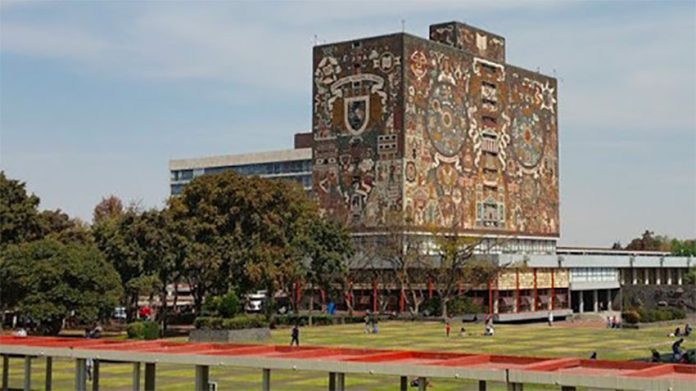
The National Autonomous University's 350,000 students are studying online.
The National Autonomous University (UNAM) announced Tuesday it would provide 20,000 tablet computers to students of limited economic means so that they can attend virtual classes and complete online coursework.
The university said in a statement that the aim of the scheme is to ensure that all high school and degree-level students can continue to study remotely during the coronavirus pandemic.
UNAM’s 2020-21 academic year officially commenced Monday with all 350,000 students studying online. In-person classes will resume gradually on a faculty-by-faculty basis.
Even though virtual classes have commenced, the university said the terms, conditions and procedures for the loan of the 20,000 tablet computers will be announced in the coming weeks.
UNAM also said that computer centers will be available for use by students at all its campuses once the coronavirus risk level is downgraded from orange light “high” to yellow light “medium.”
Mexico City and México state, where UNAM has several campuses, are both currently orange light states.
UNAM also announced Tuesday that it would expand its scholarship program to avoid students abandoning their studies during the pandemic.
In his welcome message to students who began or resumed their studies on Monday, UNAM rector Enrique Graue said the university’s teaching staff have a clear understanding of the difficulties they will face studying remotely.
Staff will make an extra effort to “overcome the new challenges the reality we’re living imposes on us,” he said.
About 6,500 professors have already completed courses to improve their capacity to teach online, the UNAM statement said.
Graue said that when health conditions permit, students will gradually return to the university’s campuses, where measures to reduce the risk of coronavirus infection will be in place. The use of face masks will be mandatory in all university spaces, he said.
Once campuses reopen, students will have the opportunity to live the full UNAM experience, the rector said.
“You’ll make lifelong friends, you’ll become familiar with our rich diversity, you’ll have the pleasant experience of walking in our facilities,” Graue told students.
UNAM is Mexico’s largest and most prestigious university. Its main campus, Ciudad Universitaria (University City), is located in Mexico City’s south.
Valentine Batres denies faking her presence in Zoom video.
A Mexico City congresswoman has been accused of skipping out on a virtual session of Congress by placing a photo of herself as background during a Zoom meeting on Friday.
Fellow lawmaker Jorge Gaviño Ambriz, a of the Democratic Revolution Party (PRD), posted a video of the meeting in which it appears Valentina Batres Guadarrama of the Morena party used Zoom’s background function to simulate her attendance, although the video did not make it clear how long she stepped away from the meeting.
“Deputy @valentinabtg: and I thought that you were paying a lot of attention to my speech when I realized that that attentive look was a photograph,” Gaviño wrote on his Twitter account. The tweet and video have been viewed more than 55,000 times.
Batres says she was indeed present at the meeting, which requires a digital scan of fingerprints both to sign in and to vote but had to step away for a moment to solicit technical help from relatives.
“My lack of knowledge of digital tools made me make a mistake. I put up a wallpaper that showed my frozen image. I stopped for a second to request technical help at home,” she said in a statement posted on social media early Tuesday.
“If you can see in the full video you can see that during the session I appear moving and making various gestures and movements,” Batres wrote.
She went on to say that she has been an active participant in Congressional sessions and has presented more than 60 bills. The only times she has ever missed a session were due to health reasons, she said.
“I had a technical error and I acknowledge my inexperience in handling digital tools, but by no means did I simulate my job,” she concluded.
Zoom gaffes have become common in the era of the coronavirus as more meetings and procedures are held virtually.
In May, Senator Martha Lucía Mícher appeared topless in a meeting with officials from the Bank of México to discuss coronavirus strategies. “I am not fluent in new technological forms of remote communication, which has sometimes played against me,” she said at the time.
“I am a 66-year-old woman who has breastfed four children, three of whom today are professionals and responsible men, and I am proud that my body has fed them,” she said.
In July, an attorney attending court proceedings via Zoom in a button-down shirt and boxers was caught in flagrante delicto by a judge when he stood up in front of the camera.
“Counselor, you are not wearing pants [and] you are in court,” admonished the judge.
“I am wearing pants, your honor,” responded the young lawyer, unconvincingly.
Railway blockades continue in Michoacán this week.
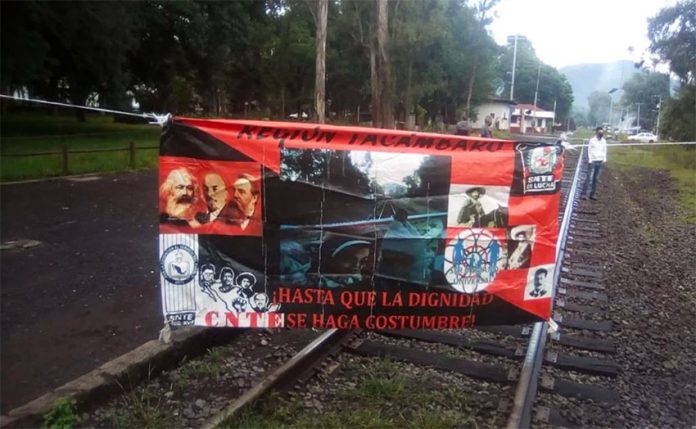
Teachers and teachers in training blocked railway tracks at four different points in Michoacán on Monday to demand the payment of bonuses and scholarships and the automatic allocation of jobs to teaching graduates.
Members of the dissident CNTE teachers union stopped trains in the municipalities of Pátzcuaro, Múgica, Maravatío and Uruapan.
Six trains traveling to Michoacán from Nuevo León and three that departed the port city of Lázaro Cárdenas were affected by the blockades, according to the Michoacán Industry Association (AIEMAC).
The blockades were reestablished after being removed at the end of last week. Teachers and teaching students known as normalistas had blocked rail tracks for more than three weeks, causing extensive economic damage.
The National Guard attended all four blockades in Michoacán on Monday but took no action against the protesters.
AIEMAC, which estimated last week that each day of blockades costs industry about 50 million pesos (US $2.3 million), said it was regrettable that teachers and students had returned to the tracks. Their actions damage the state economy and Mexican families, the association said.
AIEMAC president Carlos Alberto Enríquez Barajas said the protesters justify their blockades by saying “this is the way things are done in Michoacán.”
But he rejected that sentiment, declaring that the disgruntled teachers and their way of protesting “don’t represent us.”
Enríquez said the rail blockades scare off investors and drive up logistical costs that reduce Michoacán’s competitiveness.
He said Michoacán’s geographical advantage – its Pacific coastline provides trade access to the west coast of the United States as well as Asian markets – is being squandered due to problems in the state, including the teachers’ protests.
Enríquez urged the federal government to intervene to end the rail blockades so that third parties aren’t affected and “we can all continue carrying out our operations.”
There have also been blockades of tracks in Puebla, Veracruz, México state and Tamaulipas.
Felipe de Javier Peña, president of the transportation commission of the Confederation of Industrial Chambers, said there have been rail blockades on 100 separate days this year, 36 more than during all of 2019.
He said the blockades affect the transportation of goods within Mexico and are an impediment to exports via Pacific coast ports such as Lázaro Cárdenas and Manzanillo, Colima.
“Hopefully [the government] can negotiate [with the protesters] because they’re paralyzing the country,” Peña said.
He called on federal and state authorities to uphold the rule of law and promptly seek solutions to the issues that cause different groups to erect blockades on Mexico’s rail network.
Two massacres in the last five days have taken the lives of six women and four men, bringing the number of people killed in massacres across Mexico to 330 in at least 47 separate incidents since President López Obrador took office in late 2018.
On Tuesday morning five people were killed and one person was injured in a pre-dawn attack on a group of people celebrating with mariachis at a taquería in Irapuato, Guanajuato. At least one of the victims was a musician.
Minutes before 2 a.m., witnesses told 911 operators they heard several shots near the El Cuñado restaurant after armed subjects opened fire on a group of people inside before fleeing in two vans.
Authorities found the lifeless bodies of four men and one woman a few meters from the taco shop’s entrance next to a parked truck.
One person survived the massacre and was taken to the hospital in serious condition.
Just five days earlier, assailants shot and killed five women who were at a wake in Celaya, Guanajuato.
The attack was levied on a private home where a vigil was being held for a man who had been murdered two days earlier. Four people inside the home were injured in the 4 a.m. attack.
Municipal police, the army and the National Guard were dispatched to search the neighborhood for the attackers.
The police came across four suspects who were traveling in a vehicle that matched witnesses’ descriptions and a confrontation followed in the Hacienda Natura neighborhood
“Municipal police were attacked with firearms, so in legitimate defense and to safeguard integrity they repelled the aggression,” authorities said in a statement.
One of the suspects was killed in the exchange of gunfire, and the other three were arrested.
Officers seized a truck with superimposed license plates, firearms, ammunition and tactical and communications equipment.
The attack was similar to one on September 1 in Cuernavaca, Morelos, where 10 people lost their lives and at least 14 were injured when gunmen opened fire at a wake for a 16-year-old boy. No arrests have been made in that attack but warring cartels are suspected.
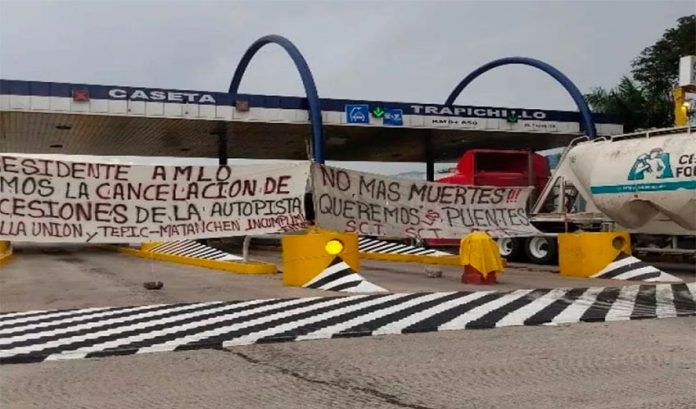
People who are illegally occupying toll plazas in Nayarit are set to come face to face with members of the National Guard (GN) this week.
However, it appears unlikely that they will be forcibly removed. President López Obrador on Monday ordered the GN to remove people who are illegally collecting tolls from motorists but the security force said that it would seek to persuade them to withdraw through dialogue.
Protesters and alleged criminals have occupied toll plazas in Nayarit for months, charging motorists between 50 and 80 pesos to pass.
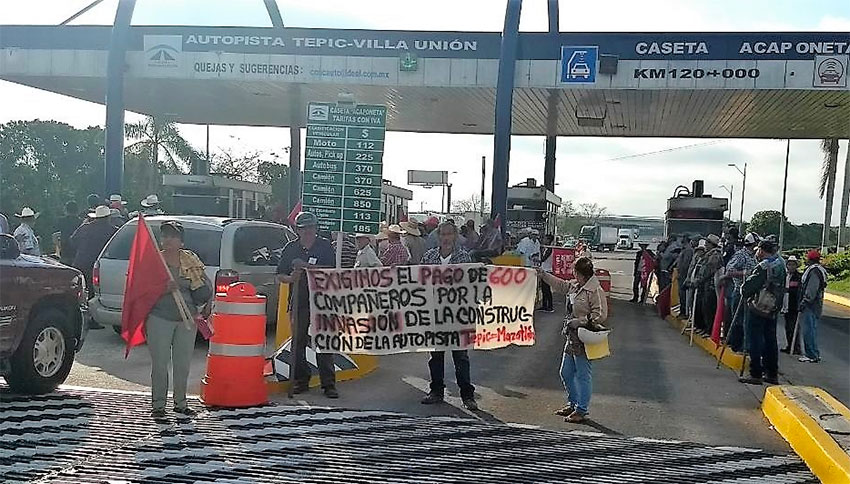
Until February, those collecting the tolls claimed to be farmers who said they weren’t adequately compensated for ceding their land for the construction of highways.
But according to the newspaper El Heraldo de México, members of criminal groups subsequently took control of the toll plazas and started collecting tolls for their own personal gain.
Among the occupied toll plazas are those on the highway between Tepic, Nayarit, and Mazatlán, Sinaloa.
“Action will be taken at all the occupied toll booths on the highway from Tepic to Mazatlán,” López Obrador told reporters at his regular news conference.
“I take this opportunity to tell these people that this illegal business is finished,” he said, adding that companies that built the toll roads have filed a complaint because they can’t recoup the money they invested.
The president said that the GN will ensure that the toll booths on the Tepic-Mazatlán highway will be cleared this week.
The newspaper El Economista sought comment from the GN about when and how it will carry out the operation to remove the illegal toll collectors.
A spokesperson for the security force responded that no specific operation had been planned but indicated that it would act in accordance with the directions of authorities. However, the spokesperson stressed that the GN will always favor dialogue over force.
Farmers protest lack of compensation for expropriated land at the Acaponeta toll plaza in Nayarit.
For his part, the head of the Association of Road Infrastructure Concessionaires said he was confident that López Obrador’s commitment would be fulfilled and that those occupying toll plazas in Nayarit and elsewhere will be removed.
“What the president pointed out [about lost revenue at toll booths] is very important. It’s not the first time he’s referred to the issue; in Nayarit a few weeks ago he compared [the illegal collection of tolls] to fuel theft, which is a very pertinent statement because it represents a very significant loss for the treasury beyond” what the road operators lose, Marco Antonio Frías Galván said.
He said 11 different toll plazas are currently occupied in Nayarit and that 25 others have been taken over in Sonora, Jalisco, Michoacán, México state, Morelos, Guerrero and Mexico City. The concessionaires association has filed more than 1,500 criminal complaints against toll plaza occupiers since 2018, he said.
Frías said that economic losses at toll plazas in 2020 already exceed the 3 billion pesos (US $139.1 million) that was lost last year.
He said the association he leads is working with the federal Security Ministry to develop a plan to prevent the takeover of plazas.
Although López Obrador claimed that his government is putting an end to the practice and that it has avoided losses of up to 7 billion pesos, Frías said that impunity remains a significant incentive for would-be occupiers.
“While there’s no punishment for those who take over toll booths, … the incentive will remain. It’s also clear that this very impunity has led to the creation of groups that exclusively dedicate themselves to blocking [toll plazas]. They’ve found a significant source of illegal revenue,” he said.
According to El Heraldo de México, a group of people occupying a toll plaza can collect more than 1 million pesos (US $46,300) per day.
Tacos of carne asada made with an orange marinade.
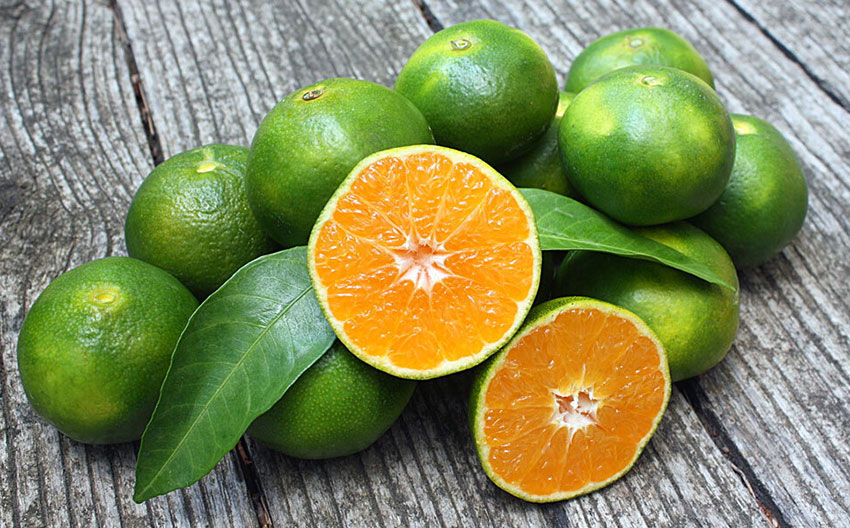
What’s green on the outside, orange on the inside and deliciously sweet and juicy?
The answer, my friends, is oranges grown in tropical climates.
A reader’s question last week prompted me to look into this. I’d seen green oranges too, year after year, and just assumed it had something to do with the weather. I didn’t give it a second thought because they were still sweet, and orange inside.
In Mazatlán, Kari noticed her favorite orange juice vendor was charging 5 pesos more for juice from green oranges. He said people think they have more vitamins.
“What’s the difference?” she wrote. “And why are there only green oranges in the market now?”
A bit of research found that climate is indeed the reason. Turns out oranges develop chlorophyll as they mature on the tree. Then cool temperatures cause the chlorophyll to die off, turning the skins orange. But a sudden rise in temperature can turn them green, sometimes overnight. Especially near the equator, where temps are consistently high, ripe oranges are commonly green. Ethylene gas can be used to turn the green skin orange, but that’s not customary for fruit sold in Mexico, where most oranges are regionally grown.
Although Mexico is one of the top producers of oranges in the world, drought and high temps have wreaked havoc on the 2019-2020 crop, cutting it by almost half to the lowest levels since the 1990s. Expect to see higher prices and less availability, and mostly green skin.
While oranges are grown all over the world, they’re a domesticated fruit, a deliberate (or accidental) hybrid of the mandarin and pomelo, first referenced in China in 314 BC. Sweet oranges spread to Europe via Portuguese traders in the 1500s, and then on to Mexico and South America.
Interestingly, the word for the color “orange” comes from the name of the fruit, a derivative of the Old Provencal auranja, based on Arabic nāranj. (It’s easy to see where the Spanish word naranja comes from.) Old French turned that into une norenge, and if you merge the “n” sounds, you end up with the English “orange.” Some languages “credit” those Portuguese merchants for the fruit’s name: the Albanian portokall, Neapolitan portogallo, Greek portokali.
This week’s recipes focus on the common sweet orange; I chose not to include bitter or Seville oranges, used in marmalade. Another interesting variety is the bergamot orange, a hybrid of bitter orange and lemon, whose peel is used for perfumes and — yes!—to flavor Earl Grey tea.
Carne Asada Tradiciónal
Every family has its own recipe for this classic Mexican dish, but here’s a basic one to get you started.
3 cups fresh orange juice, or more as needed
2 Tbsp. finely chopped fresh cilantro
2 Tbsp. freshly squeezed lime juice
1 tsp. (or more) minced garlic
1 tsp. salt
1 tsp. ground black pepper
1 tsp. ground cumin
3 lbs. trimmed skirt or flank steaks (arrachera)
16 corn tortillas, or as needed
Toppings: onion, cilantro, salsa Mexicana
To make marinade, combine orange juice, 2 Tbsp. cilantro, lime juice, garlic, salt, pepper and cumin in a large zip-lock freezer bag. Place steaks in the bag and seal, squeezing out as much air as possible. Refrigerate at least 1 and up to 8 hours.
Preheat grill to medium-high. Cook steaks to preferred doneness, 6-8 minutes per side. Remove from grill and slice as thinly as possible against the grain. Heat corn tortillas, add steak and toppings and enjoy.
Orange Dipping Sauce
An easy and irresistible sauce for coconut shrimp or chicken fingers, or for making classic Orange Chicken over rice.
Zest of 1 orange
1/2 cup fresh orange juice
2 Tbsp. fresh lime juice
2 cloves garlic, minced (or more)
½ tsp. salt
1 tsp. grated fresh ginger (or more)
2 Tbsp. honey
Optional: 1 Tbsp. cornstarch, 1 tsp. crushed red pepper, sesame seeds, chopped green onions
Classic chicken with orange sauce.
Combine zest, both juices, garlic, salt, ginger and red pepper, if using. If using cornstarch, remove 2 Tbsp. of juice mixture and whisk in cornstarch until combined thoroughly. In small pan, bring remaining juice mixture to a boil over medium heat; add honey. Stir in cornstarch mixture. Boil for 1 minute, stirring constantly until thickened. For Orange Chicken, garnish cooked chicken with sesame seeds and green onions. –marthastewart.com
Stovetop Candied Yams
These are usually baked in the oven; here’s an easier, quicker way.
3 lbs. sweet potatoes (yams), peeled and cut into 2-inch chunks
Salt
2 cups fresh orange juice
1¼ cups brown sugar
½ tsp. ground ginger
½ tsp. cinnamon
4 Tbsp. butter
Boil sweet potatoes in salted water about 10 min till fork-tender. Drain and set aside. Mix remaining ingredients in a shallow, wide sauté pan and bring to a boil on high heat. Add sweet potatoes and cook on high heat until sauce reduces to a syrup, about 10 minutes.
Crispy Honey-Orange Glazed Salmon
1 Tbsp. olive oil OR 2 tsp. butter
4 (6-oz.) salmon filets
¼ cup fresh orange juice
3 Tbsp. honey
2 Tbsp. soy sauce
4 cloves garlic, crushed or minced
Salt & pepper to taste
Optional: ½ tsp. red pepper flakes
If cooking fish on stovetop, heat butter or oil in a skillet over medium-high heat. Sear salmon skin-side up for 3-4 minutes. from pan and cover with foil. If using grill, place salmon skin-side down and cook over high heat for 6-8 minutes. Flip carefully with spatula and cook another 2-3 minutes till done.
In small skillet, cook orange juice on high heat until reduced to about half (it takes about 1 minute to reduce down if your pan is hot enough). Add garlic, then honey, soy sauce and red pepper flakes if using, stirring constantly to combine well. Simmer about 1 minute till reduced to a syrup. Carefully place salmon back in pan with sauce, skin-side up, and sauté for 2-3 minutes till cooked through. Serve immediately.
Janet Blaser has been a writer, editor and storyteller her entire life and feels fortunate to be able to write about great food, amazing places, fascinating people and unique events. Her first book, Why We Left: An Anthology of American Women Expats, is available on Amazon. Contact Janet or read her blog at whyweleftamerica.com.
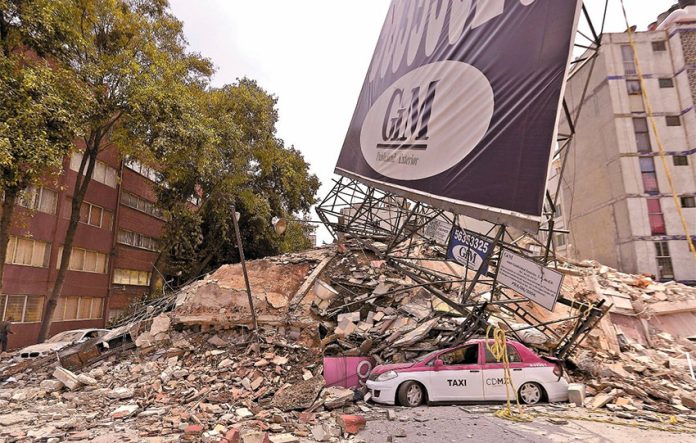
More than 4,000 public buildings and cultural spaces that were damaged in the powerful earthquakes of September 2017 and February 2018 have still not been repaired.
According to the federal government’s National Reconstruction Program website, 4,153 schools, hospitals and cultural spaces including churches are awaiting repairs.
The buildings are located in 11 states that were affected by the September 7, 2017 earthquake in southern Mexico, the temblor that shook central Mexico 12 days later and the quake on February 16, 2018 in Oaxaca.
The states are Chiapas, Mexico City, Guerrero, Hidalgo, México state, Morelos, Oaxaca, Puebla, Tabasco, Tlaxcala and Veracruz.
Of the more than 4,000 buildings awaiting repairs, 3,077 are in schools, 1,055 are cultural spaces and 21 are hospitals.
About one-third of the school buildings that remain damaged are in México state. Many schools in Oaxaca, Puebla and Morelos are also awaiting repairs.
In Morelos, where some earthquake victims remain homeless three years after their homes collapsed, there are 216 cultural buildings waiting to be fixed, more than in any other state.
The government website says that almost 30 billion pesos (US $1.4 billion) was allocated to repair 42,642 homes, health care facilities, schools and cultural buildings.
All 34,604 homes included in the reconstruction program have been repaired or rebuilt as have 95 health care facilities, 3,165 schools and 625 cultural buildings, according to the site.
The federal government provided financial aid to people whose homes were damaged or destroyed in the 2017 earthquakes but some victims claimed that they didn’t receive the money they were entitled to while other said they were defrauded of the funds by unscrupulous construction companies.
The Federal Auditor’s Office said in late 2018 that the government’s census to assess damage and identify victims after the twin devastating earthquakes of September 2017 was incomplete and hindered the distribution of financial aid.
Pre-Columbian tradition met classic German car engineering this week when a Oaxacan artist team revealed their perhaps most unique piece of artwork ever: a Mercedes-Benz G-Class all-terrain vehicle painted with iconography and colors inspired by alebrije art.
Jacobo and María del Carmen Ángeles, artists from San Martín Tilcajete, about 30 kilometers from the capital city of Oaxaca, revealed their latest masterpiece on their Facebook page, as did Mercedes-Benz México.
The company provided the vehicle, documented on social media its trip through Mexico to get to the artists and the work in progress, and showed off the final results to promote the company’s G-class model, one of the granddaddies of all-terrain and sport utility vehicles, first offered for civilian sale in 1979.
Alebrije art is distinctive folk art that originated in both Mexico City and Oaxaca. In the case of the former they are made from papier-mache; alebrijes from Oaxaca are carved from wood.
Jacobo and María have been creating artworks since childhood. Jacobo specializes in wood sculpture, while Maria has always the best in their house at painting the wooden figures.
Mercedes new paint job,Zapotec style.
They are well-known among artisan collectors for their colorful, fanciful works on copal wood.
They recently shared a video on their Facebook page, capturing the days of work they and a team of artisans did to decorate the vehicle. They said they were very pleased with the results.
The Dos Bocas refinery under construction in Tabasco.
The depreciation of the peso and higher steel prices are among the factors that could drive up the cost of the new Pemex refinery, according to an independent energy analyst.
In an interview with the newspaper Milenio, Ramsés Pech said the cost of the Dos Bocas refinery, currently under construction on the Tabasco coast, could increase by 20% to 35% due to the lower value of the peso compared to when the project was conceived and contracts were signed, as well as higher steel costs and higher costs for equipment the facility needs.
In a report published in April, the newspaper El Financiero also warned that the cost of the refinery could increase due to the peso’s decline in value compared to the U.S. dollar. The peso has appreciated since then but still remains lower than when contracts were awarded.
President López Obrador, who announced in May 2019 that the state oil company and the Energy Ministry would take charge of the project because bids submitted by private companies were too high, has pledged that the refinery won’t cost more than US $8 billion.
But Pech disagrees, noting that United States engineering and construction company KBR has withdrawn from the project because it couldn’t comply with the costs set out in its contract.
When it was awarded the contract, the exchange rate was 19 pesos to the U.S. dollar, the analyst said, whereas one greenback now buys about 21.5 pesos.
Pech said the departure of KBR is not a problem because other companies have stepped in to take its place but warned that they too could have trouble meeting the costs they agreed to in their contracts.
He said the government should reassess the costs it calculated when it first conceived of the project. At its current cost, the project is becoming “unviable,” Pech said.
“Pemex is given its budget in pesos; when the project was drawn up in 2018 it was with an exchange rate of 18 [pesos] to the dollar,” he said, explaining that the price in pesos will be higher because its value is now lower.
Pech also said that there is uncertainty about how the coronavirus pandemic will affect steel prices.
Given the uncertainty, the government should change its plan and build a refinery with a capacity to process 100,000 barrels per day (bpd) of crude, the analyst said. That amount is less than one-third the 340,000 bpd capacity the Dos Bocas facility will have.
By entering into a public-private partnership, the government could build a 100,000 bpd facility in less than two years, Pech said, adding that he doubted that a 340,000 bpd refinery could be completed by 2023, as López Obrador has pledged.
However, reducing the facility’s capacity by 70% is not a suggestion to which the president is likely to be amenable given that he has pledged to make Mexico self-sufficient in gasoline by 2023.
Jonathan Health, deputy governor of the central bank, said earlier this month that Pemex, which has in excess of US $100 billion in debt, could become an “incurable cancer” if the government doesn’t come up with a structural solution to its financial problems.
But a more expensive refinery would only add to the financial pressure the state-owned company is under. Even at its current budgeted price of US $8 billion, many analysts have been critical of the refinery project, arguing that it is using funds that would otherwise be spent on Pemex’s more profitable oil exploration business.