Home Blog Page 1447

Pemex could become ‘incurable cancer,’ warns Bank of México deputy governor

0
jonathan heath
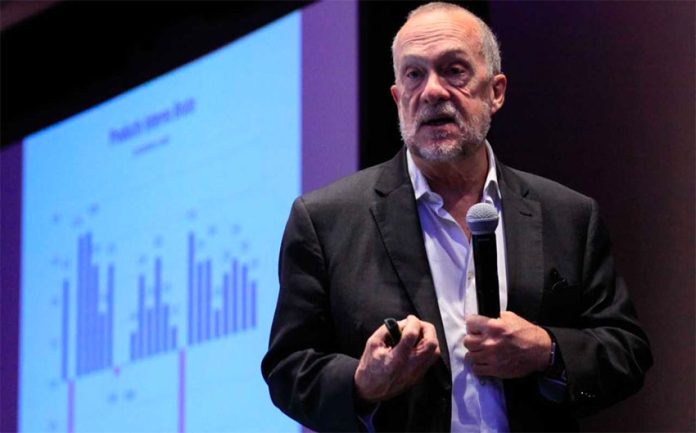
Heath: the oil company is a big 'headache' for Mexico's public finances.

Pemex could become an “incurable cancer” if the government doesn’t come up with a structural solution to the state oil company’s financial problems, according to the deputy governor of Mexico’s central bank.

Speaking at a seminar organized by the rating agency Moody’s, Jonathan Health said that Pemex is Mexico’s biggest public finances “headache.”

The state owned firm is the world’s most indebted oil company, owing in excess of US $100 billion.

Heath, who stressed that he was speaking as a private citizen rather than the deputy governor of the Bank of México, said that it’s not too late to rectify Pemex’s problems but asserted that the government needs to find a “structural and permanent” solution.

If a solution isn’t found,“this enormous headache will soon become a migraine and then an incurable cancer,” he said.

pemex

During the same seminar, Moody’s analyst Arianne Ortiz Bollin said the government should provide support of at least 1% of GDP to Pemex annually so that the firm can meet its financial obligations, although she personally recommended support equal to 2% of GDP in 2021.

She said that a growing problem for the state-owned company is that the government isn’t providing it with the resources it needs to invest and expand.

“Up to now, the support is not sufficient to reestablish cash flow nor to increase reserves and production,” Ortiz said.

“If they don’t do something to limit the company’s tax obligations, improve its capacity to generate cash or allow it to invest, it will end up affecting [Mexico’s] sovereign rating because 14% of revenue depends on what Pemex produces.”

Moody’s downgraded Pemex’s credit rating to junk in April, quickly following the lead of Fitch Ratings.

Marco Oviedo, chief economist for Barclays in Latin America, said the assumption in the proposed 2021 budget that Pemex will produce almost 1.86 million barrels of crude per day next year is very optimistic, pointing out that the state oil company has consistently failed to achieve production goals.

President López Obrador has pledged to “rescue” Pemex and make Mexico self-sufficient in gasoline by 2023.

To achieve the latter, the government is rehabilitating the country’s six existing refineries and building a new one on the Tabasco coast.

Investors and rating agencies have criticized the US $8-billion refinery project, arguing that it diverts funds from Pemex’s more profitable exploration business.

But López Obrador has rejected the claim that Mexico is better off sending crude abroad when it has to purchase gasoline, mainly from the United States, to meet domestic demand.

“There are still fools that say that it’s better to sell crude oil even though we have to buy gasoline. They forget that if we process our own raw materials jobs are created here,” he said in June.

Source: El Economista (sp) 

500 market vendors close in Salamanca, Guanajuato, over extortion fears

0
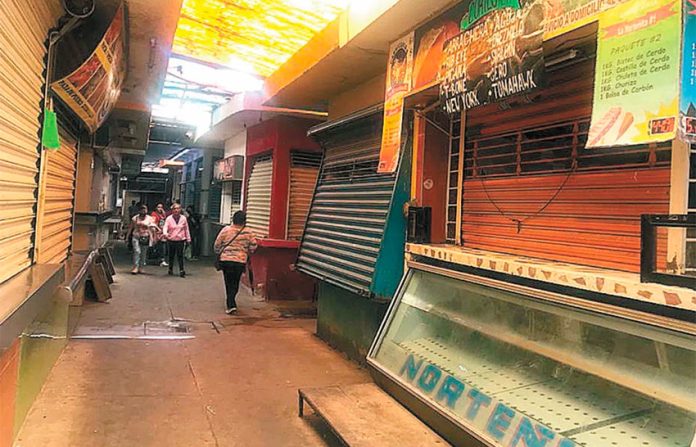
The curtains are down at Salamanca's Tomasa Esteves market.

Five hundred stall owners at a market in Salamanca, Guanajuato, have closed their businesses out of fear they could be targeted by violent extortionists.

Vendors at the Tomasa Esteves Market in downtown Salamanca shut up shop on Monday after rumors spread that an attack was imminent.

Two butchers were shot and killed last Thursday by a group of armed men who burst into the market.

“We’re very scared,” a shoe stall owner identified only as Margarita told the newspaper El Universal.

A grocery stall owner said that he and other vendors decided to close because they heard armed criminals were planning to show up at the market again and cause trouble for anyone who was still working.

They took the decision despite a strong presence of members of the National Guard and municipal police both inside and outside the facility.

“These people [the extortionists] are very dangerous, we don’t know when they might arrive,” said another market vendor identified only as Juana. She added that no date had been set for the market stalls to reopen.

“There’s a lot of fear,” said María, who sells birria, a goat stew.

“Threats have been directed at butchers … [extortionists] speak to them by phone to demand very large amounts ranging from 100,000 to 1 million pesos [US $4,700 to $47,000]. They can’t pay them. Who’s going to have those amounts [of money]?”

In addition to the attack last Thursday which also wounded a third butcher, a fruit vendor was murdered on Friday and two dead bodies were left outside the market on Saturday, María said. She added that another butcher was abducted a month ago and was only released after his family paid a ransom.

There was another armed attack near the market Wednesday afternoon that wounded two men who are believed to be market vendors, according to the newspaper El Sol de Salamanca.

It said that armed men in a vehicle shot at their victims while they were traveling in another vehicle. The wounded men were treated by Red Cross paramedics before being transferred to hospital.

Police attended the scene of the crime and began investigations but no arrests were reported.

Source: El Universal (sp), El Sol de Salamanca (sp) 

Government to spend 500 million pesos to buy aircraft raffle tickets

0
President López Obrador presented the design of the raffle ticket at a press conference in January.

The federal government will spend 500 million pesos (US $23.4 million) on tickets for the “presidential plane” raffle and distribute them to public hospitals treating coronavirus patients, President López Obrador said Tuesday.

He said the government will purchase 1 million tickets using resources obtained from the seizure of organized crime assets.

At the start of the year, López Obrador floated the idea to raffle off his predecessor’s luxuriously-outfitted Boeing 787 Dreamliner that he refuses to use and is trying to sell.

The idea sparked copious chatter on social media, with people musing about what they would use the plane for should they win the raffle and wondering where they might be able to park it.

But in February the president shattered ordinary Mexicans’ dreams of owning the plane, announcing that a raffle would indeed go ahead but instead 100 winners would each receive a prize of 20 million pesos.

The combined prize pool of 2 billion pesos (US $93.6 million) is supposed to be representative of the value of the plane, although its real worth has been estimated at $130 million.

López Obrador said Tuesday that the 1 million 500-peso tickets the government will purchase will be allocated to 956 public hospitals treating Covid-19 patients. Each hospital will get about 1,000 tickets, he said.

If one of those hospitals wins one of the 20-million-peso prizes – the raffle will be drawn on September 15 – its employees will decide how to spend the money, the president said.

He said it could be used to purchase medical equipment, an ambulance, workers’ uniforms or to improve the hospital’s general facilities. “Whatever they [the workers] decide,” López Obrador said.

The president reminded citizens that they still have time to buy their own raffle ticket and thanked business people and the heads of social organizations who have already purchased an allotment.

López Obrador hosted a dinner in February at which he asked some 150 company owners, chief executives and business leaders to commit to purchasing large bundles of tickets.

Ernesto Prieto, general director of the National Lottery, which is managing the raffle, told reporters Tuesday that just over 3.8 million of 6 million tickets have been sold, generating revenue of more than 1.9 billion pesos.

The raffle prizes will also be paid using resources obtained from the confiscation of criminal organization’s assets – the government has held several narco-auctions – allowing all the raffle’s revenue to go to health care.

López Obrador said that at least 2 billion pesos in raffle revenue will be used to purchase medical equipment, adding that all money raised will stay in the health sector.

Tickets can be purchased through links at the National Lottery’s website. However, the site was unavailable on Wednesday afternoon.

Source: El Universal (sp) 

Unhappy citizens apprehend mayor and put her in jail

0
Tezoatlán Mayor Cisneros has been held in jail since Monday.

Citizens unhappy with the performance of their mayor have the answer in the Oaxaca municipality of Tezoatlán de Segura y Luna: lock her up in jail.

The mayor of and the municipal secretary of the Mixtec municipality are behind bars after citizens arrested and jailed the two over a 4-million-peso (US $187,000) public funds dispute. 

Mayor Alexa Cisneros was peppered with insults by activists and residents of Yucuquimi de Ocampo after she allegedly refused to release funds to the town’s agencia municipal, or municipal agency.

The two were presumably lured to Yucuquimi under the pretext of having a meeting, but instead the women were taken into custody and imprisoned Monday afternoon.

The mayor’s mother claimed that her daughter and the secretary were taken by force “as if they were criminals. I believe that what they are doing is an injustice because like it or not, we have to respect our authorities,” Mariela Cruz Montes said. 

[wpgmza id=”253″]

Elements of the state government, including the Ministry of Public Security, have attempted to intervene but residents of Yucuquimi have been refusing to negotiate or release the two women. 

Oaxaca human rights ombudsman Bernardo Rodríguez Alamilla has initiated an investigation and is monitoring jail conditions. If their rights of the captives are violated, Rodríguez warned, those responsible may be subject to criminal charges.

Leading the capture of the mayor and her secretary was Eolina Vásquez, the municipal agent of Yucuquimi, known as an advocate for social justice in the Mixtec region.

At the end of 2019, Vásquez declared Yucuquimi de Ocampo an autonomous, indigenous town in an attempt to separate itself from the Tezoatlán municipality.  

The government responded by sending in the army. 

Vásquez is associated with the Zapatista Indigenous Agrarian Movement (MAIZ) and has actively participated in the previous detention of public servants, roadblocks, occupying offices and other activities. 

Vásquez says Cisneros is only being detained so that she can tell residents in person why she has withheld the town’s funds.

“It is not kidnapping, we did not bring her to keep her in jail or have her imprisoned, none of that. It is for her to explain to the public the reasons why [budget commitments] have not been fulfilled,” Vásquez said.

MAIZ leader Misael Velásquez Tadeo clarified that the decision to jail the mayor came from Yucuquimi and that his organization is not involved.

He emphasized that these situations arise because municipal authorities have ignored the demands of the community.

Source: Milenio (sp)

Mexico diverted money from regional development fund to contain migration

0
One of last year's migrant caravans crosses the southern border.

While the United States was pressuring Mexico to reduce migration, the Mexican government diverted resources from a regional development fund to transport migrants away from the northern border and to spruce up detention centers.

The Associated Press reported Tuesday that information it obtained through public records requests shows that the federal government last year allocated more than US $4 million from the Infrastructure Fund for Mesoamerican and Caribbean Countries – commonly known as the Mexico Fund – to immigration containment.

Documents provided by the Ministry of Foreign Affairs (SRE) said the Mexican International Cooperation Agency for Development sent about US $3.3 million from the fund to detention centers in July 2019 and that more than $700,000 was used to transport asylum seekers away from the northern border.

The diversion of funds came just months after United States President Donald Trump threatened to impose blanket tariffs on Mexican imports if Mexico didn’t do more to stop migrants reaching the U.S.

Mexico avoided the imposition of the tariffs after reaching a deal with the United States in June last year under which it agreed to deploy the National Guard to stem the flow of migrants and consented to an expansion of the U.S. government’s so-called “Remain in Mexico” policy that sends asylum seekers  back to Mexico to await the outcome of their claims.

The Associated Press (AP) reported that “unnoticed at the time” was an adjustment the Mexican government made in June 2019 to the Mexico Fund, whose resources were used to support development projects in Central America and Caribbean nations.

The López Obrador administration said in a decree that the fund “required a new vision that allows for better use of resources” and that it could be used for the “registration, control and tracking” of migrants and to carry out projects at migrant detention centers.

Asked about the changes to the fund’s goals and whether pressure from the United States was a factor, the SRE initially only provided AP a list of improvements that have been made to detention centers and told the news agency that the amount diverted was “very small,” accounting for less than 4% of the fund’s total resources.

However, after AP published its report the SRE said in a letter that “our immigration policy, like our foreign policy, is determined exclusively by the Mexican government … not by the United States nor any other country.”

But the former head of the National Immigration Institute (INM), who resigned a week after Mexico agreed to step up enforcement against migrants, told AP that the diversion of the Mexico Fund resources amounted to a “dramatic turnaround” from the fund’s mission.

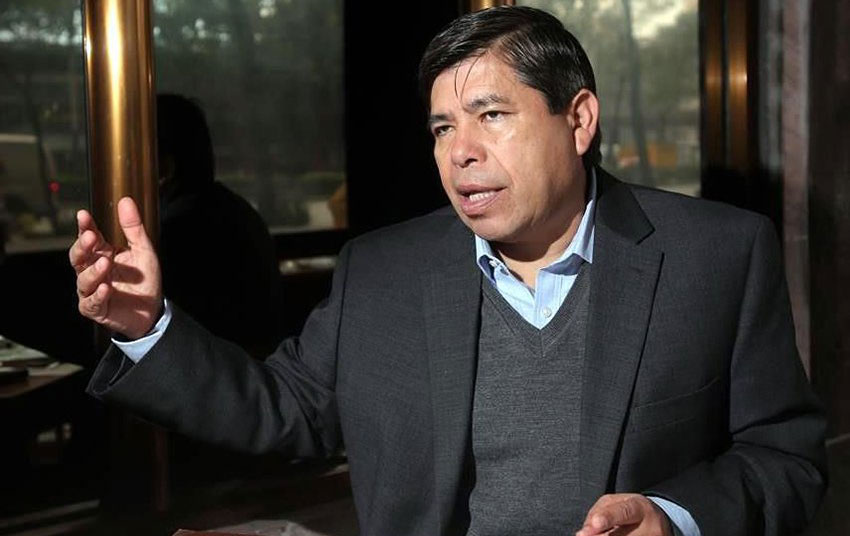
Tonatiuh Guillén said the diversion is testament to what happened after Trump threatened to impose tariffs on Mexican products.

The diversion of resources was 'a dramatic turnaround' from the fund's mission, said former immigration chief Tonatiuh Guillén.
The diversion of resources was ‘a dramatic turnaround’ from the fund’s mission, said former immigration chief Tonatiuh Guillén.

“[There was] a recomposition of the immigration vision completely oriented toward containment that leaves us without tools and resources to design development strategies, which had been the government’s objective,” he said.

Prior to Trump’s tariff threat, the government was considerably more amicable to migrants, granting 15,000 humanitarian visas in just three months at the start of President López Obrador’s administration.

But after the pact that staved off the tariffs was reached, members of the National Guard were deployed to anti-migration operations on Mexico’s southern and northern borders, and stopped thousands of migrants from traveling through the country.

In addition, Mexico’s prisons director became the head of the INM, deportations increased and “border cities, already plagued by cartel violence, filled with some 60,000 asylum seekers returned by the U.S. to wait out a process that lasts months and sometimes years,” AP said.

It is unclear how many migrants were bused away from Mexican border cities but the SRE said earlier this year that more than half of asylum seekers waiting for their cases to be resolved had decided voluntarily to return to their countries of origin.

In April, the Mexican government again used more than $700,000 from the Mexico Fund to transport migrants from the northern border to the southern border with Guatemala. Many were left stranded because the Mexico-Guatemala border was closed due to the coronavirus pandemic.

Maureen Meyer, vice president for programs and director for Mexico at the Washington Office on Latin America, said the Mexican government is “inviting people to self-deport” without explaining the consequences such a move has on their claims for asylum.

She also said “the fact that the Mexican government diverted funding designated to address the economic push factors driving migration to the U.S. in favor of moving asylum-seekers away from Mexico’s northern … border, and to improve conditions in Mexico’s detention centers, is a clear sign of how the López Obrador administration has shifted its migration priorities in response to the demands of the Trump administration.”

Guillén, the ex-immigration chief, said that “it is clear that the original objective of … [the Mexico Fund] was distorted.”

López Obrador held talks with Trump in July at the White House, where the latter said that the United States had been “helped greatly by Mexico in creating record numbers in a positive sense on our southern border.”

His remark presumably referred to the deployment of the National Guard in Mexico to block migrants’ path to the U.S.

For his part, López Obrador said that Trump has treated Mexico with respect since he took office in late 2018 and asserted that the U.S. president has never tried to “impose” anything on Mexico that violates the country’s sovereignty.

Source: AP (en) 

Intense itching took some time to diagnose: it turned out to be heat rash

0
A victim of heat rash.

This is a tale of an itchy adventure.

It started a couple weeks ago, in the middle of the night on Friday. I was woken up by a sudden itching, and thought, “Oh man, some mosquito or spider made it into my sheets!”

I know this is enough for some people to wake up completely and spring from their beds in a panic. It’s happened enough to me though that if it’s not too bothersome, I’ll just roll over and hope that whatever bit me and the reaction to it go away already so I can go back to sleep.

On Friday nights, my daughter goes to her father’s for the weekend, and I was at least glad that whatever got me didn’t get her, too. The next morning I had some itchy spots on my stomach, but still didn’t think much of it; they seemed like normal little bites.

Plus there were other things to take care of, like my kitchen flooding from the rain and finishing up some interviews for an article. I made a point to order flea medication for my dog, and went about my business.

By Sunday, things had gotten much worse. The itching had spread to my legs and arms, and was getting more intense, especially at night. I don’t think I slept more than 30 minutes straight starting that night, continuing for the next 10 nights (don’t ask me how I got my articles and translation assignments in that week — I’m not totally sure!).

On Tuesday, still sure that something had bitten me, I sent pictures to a trusted doctor friend. He assured me that it was definitely allergies, and told me to take a different type of antihistamine than I already had. I did, but nothing changed. A dermatologist friend he’d consulted with agreed that it was allergies, and gave me a list of expensive yet boring soaps and lotions to use, which I bought: still no change.

At this point you know I’d crowd-sourced it because this is what uninsured millennials do during a dangerous pandemic. After all, a doctor’s office or clinic is not the safest place to be these days, so if something might be resolvable at home, we try that first.

A friend of mine in another group took pictures of my now horrendous-looking skin along with her to see her doctor in nearby Coatepec for similar symptoms, and the doctor was completely sure of his diagnosis for both of us: scabies.

This seemed strange to me, as it’s one that comes about from extended skin-to-skin contact, something I think most of us have had very little of lately. Still, the symptoms made sense: body covered in rash, concentrated in “hot” places that mostly stayed covered? Check. Much, much worse at night? Double check. (I’ve since realized that they call any kind of mite infestation here “scabies,” even when you’ve picked up something similar outside in the garden.)

My friend bought the treatment that he’d prescribed — an internal anti-parasite pill, and a special cream to kill the mites — and brought them to my house. I took the pills, used the cream, and felt immediate relief. I think I even slept that night! Clothes, sheets, and pillows were washed, beds and sofas vacuumed, every surface disinfected. My daughter got a preventative treatment with the mite-killing lotion just in case, though mercifully she hadn’t (and hasn’t) shown any symptoms.

But it didn’t last. The next day I was still itchy, and that night my skin was back to its own torturous “new normal.” I called the doctor who said to give the treatment a couple of days to work, and thanked my lucky stars that at least I was going through this in Mexico, a place where I could actually get the doctor on the phone instead of having to go to the ER to hike up thousands of dollars in bills.

I read on the internet through tears of despair about how the itching could take several weeks to a month to go down, and thought I’d surely die before then. As a longtime migraine sufferer (the only other malady I suffer from that makes me feel like I’m literally about to die), I even thought to myself that I’d be willing to accept a few hours of migraine in exchange for a little relief from all this extreme itching. Selling my soul to the devil was another option I’d have gladly accepted.

I finally decided to go to a dermatologist’s office after I’d had quite enough of “giving the medicine time to work.” A friend had recommended him, and while I was desperate for any kind of relief, I was immediately nervous at the tiny, packed waiting room. At this point, though, my suffering was greater than my fear of proximity to others, and at least everyone was wearing masks.

The doctor diagnosed me immediately: heat rash, surely aggravated by the mite treatment. This was also a strange diagnosis to me as Xalapa is quite cool most of the time. That said, it’s the rainy season, and the humidity mixed in with some very hot days indeed has been through the roof, which I’m sure had something to do with it.

Though a friend had mentioned the possibility of heat rash earlier, I’d written it off thinking, “Surely heat rash couldn’t cause this much itching!” Alas, it can and it did. A cortisone shot and some more expensive creams, and I was sent on my way.

It’s been almost a week since getting the correct treatment. I’m still slightly itchy, but at least it no longer appears that I have leprosy. My suffering is down 90%, and I’ll take it! And if something like this comes up again that I’m not able to resolve on my own within a couple of days, it’s back to the dermatologist I go!

During this past week that I’ve been healing, I’ve reflected quite a bit on the delicacy and sensitivity of this white skin of mine. Racism has made it a premium in most of the world, and I can’t help but feel that its susceptibility to so many maladies is cosmic justice.

My daughter, thank goodness, has darker, sturdier skin: I almost cried the first time I saw how she simply got more brown at the beach rather than turning into a strawberry/lobster hybrid like I do, even with SPF 50 sunscreen.

I’ve decided that my own version of the racist notion “mejorar la raza” — in English, “improve the race” is this: reproduce with someone darker than you so that your children have a fighting chance of getting skin that can actually take a few hits!

Sarah DeVries writes from her home in Xalapa, Veracruz.

In San Gregorio, a velación kicks off all important fiestas

0
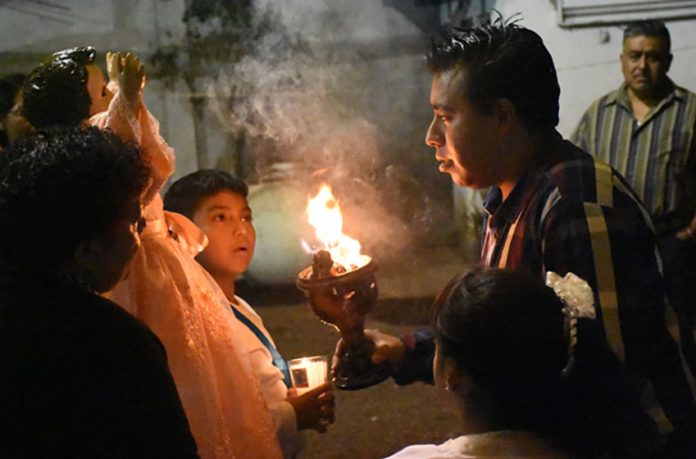
A cleansing ceremony that employs smoke from the copal is performed at the beginning of a velación.

The cool night air fills with the smoke and smell of burning copal while the songs of concheros — traditional musicians — announce the beginning of the velación, or vigil, a ritual that takes place the night before important fiestas in San Gregorio Atlapulco, Mexico City.

As with many religious ceremonies in Mexico, a velación isn’t strictly a Catholic celebration but is something referred to as religión populár — popular religion, a mixing of Catholic rituals and symbols with those of indigenous religions. And, of course, like all ceremonies in Mexico, there’s food.

Velaciones are hosted by mayordomos, lay religious leaders who typically devote a year to serving the Catholic church in a variety of ways, and they’re only held in Mexico’s central states: Querétaro, Guanajuato, México state, Morelos, Tlaxcala, Puebla and Mexico City.

According to Javier Márquez Juárez, who has studied the history of velaciones, these are states that had been occupied in pre-Hispanic times by Chichimecas and Mexicas.

“It was during the colonial era that the Chicimecas from Guanajuato and Querétaro formed a brotherhood; this was at the end of the 16th century and the beginning of the 17th,” said Márquez. “Before they were called concheros they were called the Brotherhood of the Holy and Legal Account. And this gave rise to concheros and velaciones.”

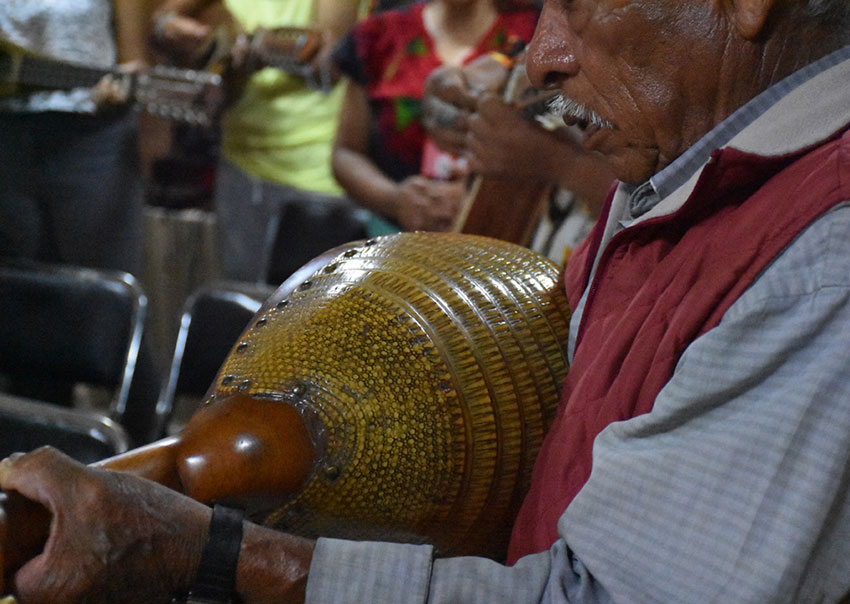
A conchero holding a stringed instrument called a concha
A conchero holding a stringed instrument called a concha, which is often covered with the shell of an armadillo. According to Aztec beliefs, the armadillo is a sacred animal.

In most places, velaciones tend to be small and semi-secret. “Only in San Gregorio Atlapulco are they large and attended by many people,” said Márquez.

This, I’ve come to learn, is typical of most ceremonies in San Gregorio: people turn out in large numbers for them.

Velaciones are usually held in a mayordomo’s house, although at times they’re held in more public spaces; basically, they just need to be somewhere big enough to accommodate a crowd. Tables set up at the front are packed with nichos — wooden boxes in which small figures of the crucified Christ or saints have been placed.

Flowers often adorn the tables. As people wait for the start of the ceremony, they sip atole, a traditional Mexican drink made with corn, served by the mayordomo’s family.

The Concheros enter singing and playing conchas, stringed instruments whose name derives from the fact that their backs are often covered with an armadillo’s shell. “In ancient times, the armadillo was a sacred animal,” said Márquez. “Each armadillo litter has four young and four is the number of the creator gods and the cardinal directions of the universe.”

The concheros are met at the entrance by someone carrying an incense burner filled with copal. A cleansing ceremony is performed and, after it’s completed, the concheros take their seats at the front of the room. An incense burner is placed in front of the nichos and the music begins.

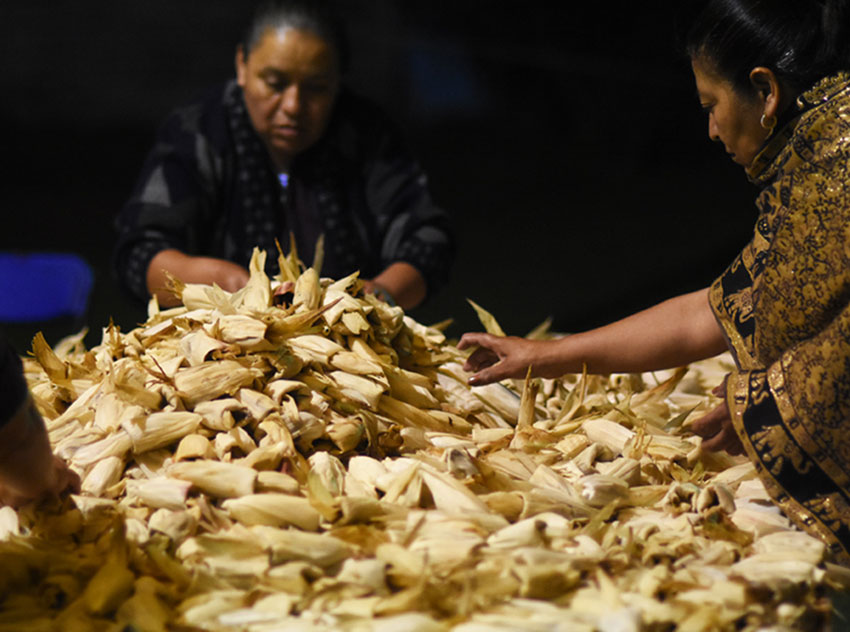
Hundreds of bean tamales
Hundreds of bean tamales, which will be served during the next day’s event, are made during the velación.

According to Márquez, the concheros first play an instrumental piece that welcomes deceased members of the group and asks permission from them to hold the velación. Once that is done, alabanzas (songs of praise) are sung and the music continues long into the night with a conchero periodically blowing on a conch.

As the night progresses, the mayordomo’s family wend their way through the crowd serving more atole and tea as well food, usually tortas or chilaquiles. No one ever goes hungry at a Mexican ceremony. Off to one side, other family and friends bend over tables, busily making hundreds of bean tamales that will be served during the next day’s fiesta.

Attending a velación gives you the feeling of being transported to a different time and place; the songs, copal and sounds from the conch have an almost hypnotic effect.

“I like velaciones because they invite self-reflection and meditation,” said Márquez. “They lead you to think how complex were pre-Hispanic rituals. From my point of view, the rite of the concheros and the velación would appear to be a different religion within Catholicism. It’s like pre-Hispanic naturalistic thinking enveloped Christian beliefs and together they forged something different.”

Joseph Sorrentino writes from San Gregorio Atlapulco, a town in the Mexico City borough of Xochimilco.

6 ex-health ministers urge national Covid testing campaign to contain virus

0
Ex-ministers have called for widespread national testing for Covid-19.

Six former federal health ministers have proposed a new national strategy to stop the spread of the coronavirus that includes a nationwide testing campaign and the mandatory use of face masks.

In a document seen by the newspaper Reforma, former health ministers Salomón Chertorivski, José Ángel Córdova, Julio Frenk, Mercedes Juan, José Narro and Guillermo Soberón assert that the federal government’s strategy to combat the virus underestimates the seriousness of the pandemic.

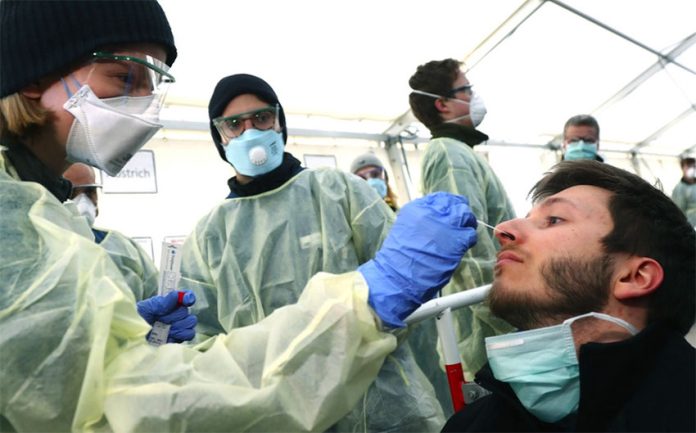
They noted Mexico’s low Covid-19 testing rate – only about 11,000 people per 1 million inhabitants have been tested so far – and charged that the government has shown an “incomprehensible” reluctance to test more widely.

The former ministers also said that the government’s “administrative disorder” has caused a shortage of medical supplies and charged that it has shown contempt for the General Health Council.

The government’s “erratic and inadequate” strategy to track the spread of the coronavirus in Mexico and its “anti-science resistance” to the use of face masks are just some of the failures in the management of the pandemic, they said.

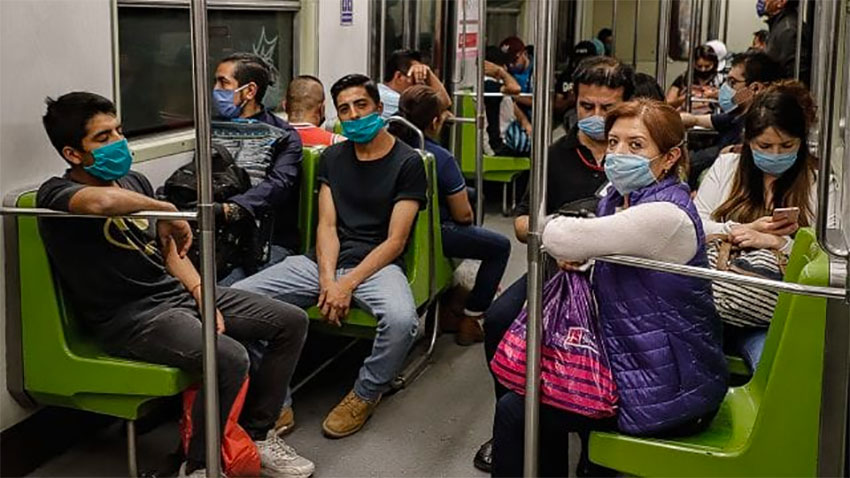
Use of face masks should be mandatory, say former health officials.

The former health ministers, who served under former presidents Miguel de la Madrid, Vicente Fox, Felipe Calderón and Enrique Peña Nieto, also noted that 79% of coronavirus patients who have died were never connected to a ventilator.

The analysis they undertook was commissioned by the the Citizens Advisory Council, a group created by the Citizens Movement political party.

The ex-officials proposed the implementation of a national plan over a period of six to eight weeks to get on top of the coronavirus outbreak.

They said the government needs more and better quality data to control the pandemic and to that end urged a national testing campaign. They also proposed that wearing a face mask be made mandatory across Mexico (many but not all states have made them obligatory) and said that localized lockdowns should be enforced in areas with high numbers of coronavirus cases.

The former health ministers also urged citizens to avoid enclosed and crowded places as much as possible and to continue practicing social distancing. In addition, they said that extra efforts need to be made to vaccinate widely against the seasonal flu, which is expect to coexist with the coronavirus during the winter months, and advocated for the formation of a scientific committee to evaluate the government’s response to the pandemic.

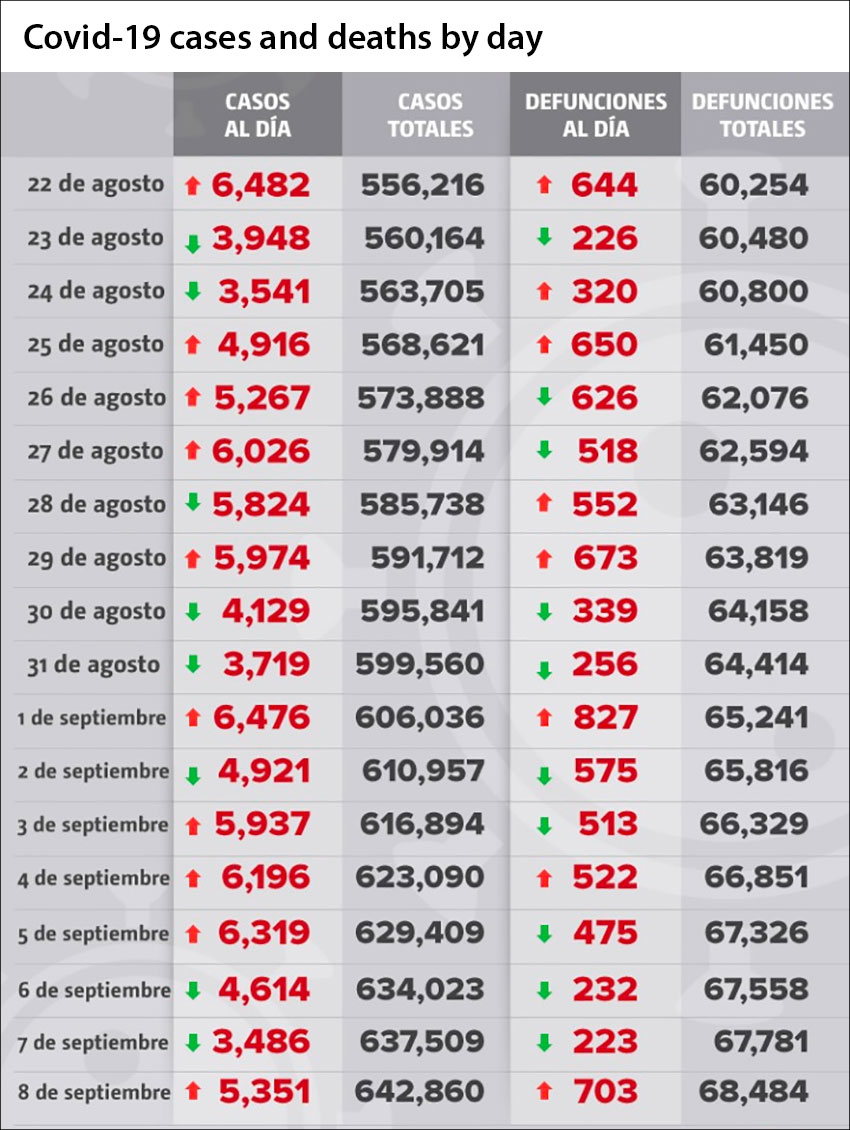
Meanwhile, Mexico’s accumulated tally of confirmed coronavirus cases increased to 642,860 on Tuesday with 5,351 new cases registered. The Covid-19 death toll rose to 68,484 with an additional 703 fatalities.

Coronavirus cases and deaths reported by day.
Coronavirus cases and deaths reported by day. milenio

Speaking at the Health Ministry’s coronavirus press briefing on Tuesday night, Deputy Health Minister Hugo López-Gatell, who has led the government’s pandemic strategy, responded to the news that the pharmaceutical company AstraZeneca had paused its phase three clinical trials of the coronavirus vaccine developed at Oxford University due to a serious adverse reaction in a participant.

The consequence for Mexico could be that the arrival of the vaccine, of which millions of doses are slated to be produced here, will be delayed, López-Gatell said.

The coronavirus czar said the suspension of clinical trials of vaccines is common because rigorous safety protocols have to be upheld while they are being carried out. He said that issues are sometimes resolved in 24 to 72 hours but that suspensions can last longer if more detailed investigations including a thorough examination of the affected person or people are required.

“It’s difficult to predict how long the suspension will last,” López-Gatell said.

AstraZeneca has not disclosed the nature of the adverse reaction the vaccine trial participant suffered.

If the vaccine does eventually pass phase three trials, its production in Mexico and Argentina and distribution across Latin America will be funded by the charitable foundation of Carlos Slim, Mexico’s richest person.

Before the AstraZeneca trials were paused, President López Obrador said that a free, universal Covid-19 vaccine would be available in the first quarter of 2021 and volunteered to be the first person in Mexico to be inoculated.

Source: Reforma (sp), Milenio (sp) 

VW dealership apologizes after backlash against photo bearing Nazi images

0
The photo that ended dealership's relationship with Volkswagen México.

A Volkswagen dealership in Coyoacán, Mexico City, has apologized for displaying a photograph of Nazi Germany in its offices after news of the photo made the rounds on social media over the weekend. 

But the apology wasn’t enough for Volkswagen México, which terminated its relationship with the dealer soon after.

The photo shows Adolf Hitler inaugurating the new Volkswagen Beetle against a backdrop of swastikas in 1938.

“That photograph, which until yesterday was shown in the administrative area of ​​the dealership’s offices, is part of a photographic collection of nine images that show the different stages through which the Volkswagen Type 1 sedan … passed, an extraordinary engineering feat at the time and one of the best-selling cars in the world,” the dealership explained Monday in a statement.

It said the rest of the photographs in the administrative area show other stages of production of one of the most beloved cars in Mexico and the world, regardless of its origin.

The iconic Volkswagen Beetle, a product of Nazi Germany.

“The image in question does not seek to condone one of the most cruel and inhumane eras in recent history,” the dealership said, and called the Nazi ideology “enormously harmful to Europe and the whole world, and which certainly does not represent [that of] any of the employees and workers of the company.” 

But Volkswagen México decided to end its commercial and business relationship with the Coyoacán dealership.

“Volkswagen’s philosophy is based on fundamental values ​​of equity, respect, inclusion, of being able to really bring society to the common good and this leads us to act accordingly,” said Edgar Estrada of Volkswagen México. “This is what allows us to continue building our Volkswagen brand in this country, looking not only to the present but looking forward with great respect, toward society, toward our customers, our dealerships and toward our entire family.” 

The tweet and accompanying photo that sparked the controversy was posted on Sunday. It read: “Dear @Volkswagen_MX it causes sadness and deep concern that your memory of history is an apology for racism. The photos were taken today at your Coyoacán branch.”

The German Embassy in Mexico got involved, responding “We condemn this disrespectful propaganda in the strongest possible terms. The embassy is in contact with @Volkswagen_MX about this.” 

As did the Simon Wiesenthal Center, an international Jewish human rights organization headquartered in Los Angeles.

“On behalf of our more than 400,000 members around the world, we demand that, as a German company, you enforce the law that prohibits the display of Nazi symbols,” read the letter addressed to Steffen Reiche, president of the executive council of Volkswagen México, and newly appointed CEO of the Volkswagen Group in Wolfsburg, Germany, Ralf Brandstetter.

“Volkswagen, the ‘People’s Car’, was a Nazi concept. German cars in Mexico are unacceptable if they come with the swastika,” said the center, which is known for Holocaust research and remembrance, hunting Nazi war criminals, combating anti-Semitism, and its Museum of Tolerance.

The Coyoacán dealership was founded in 1968, a year after the first Mexican Volkswagen factory began operations in Puebla. 

Source: El Universal (sp), Motorpasión (es)

National Guard backs off after tear gas fails to dislodge Chihuahua farmers

0
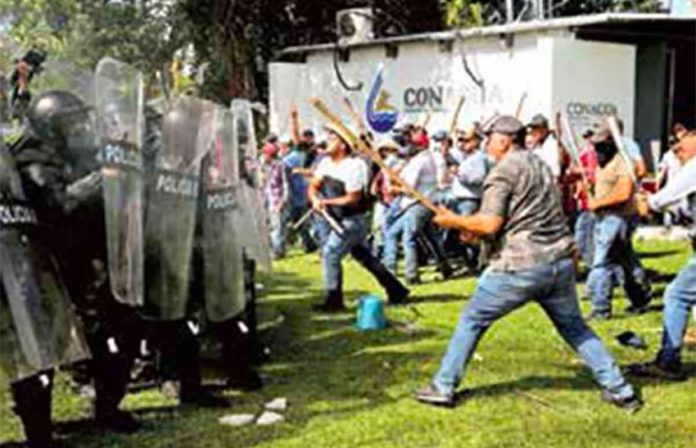
Farmers clash on Tuesday with the National Guard.

Farmers in Chihuahua who have been dealing with water shortages for years reached a breaking point once again Tuesday after the National Water Commission (Conagua) allegedly violated an agreement with ranchers by diverting water from the La Boquilla dam to the United States. 

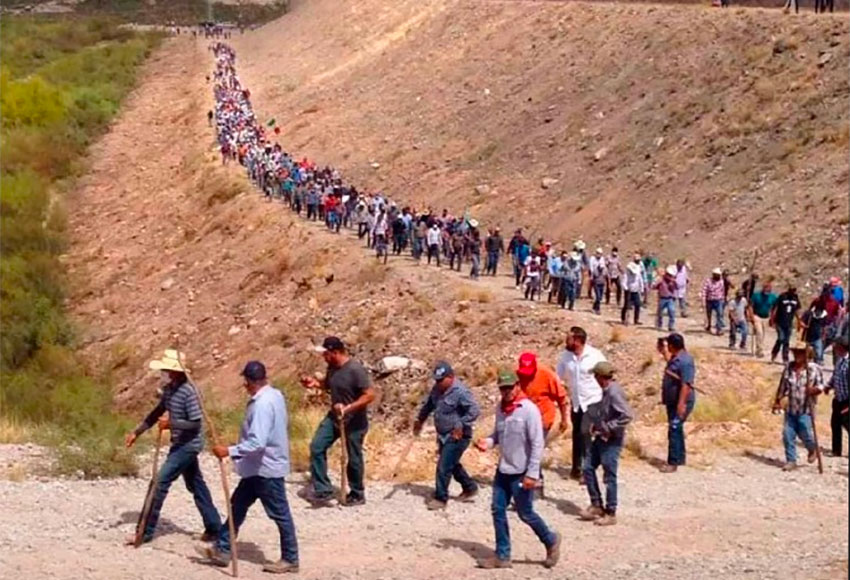
When authorities refused to close the floodgates, an estimated 5,000 farmers stormed the dam, attacking members of the National Guard with Molotov cocktails, sticks and rocks. Guardsmen clad in riot gear fought back by launching tear gas in a failed attempt to retake the water facility and were forced to withdraw.

“For us, it is a great satisfaction, something to be proud of, (and) a triumph for the people in saving the water,” said Abel Alvarado Martínez, the owner of a bakery in a nearby town, after National Guardsmen withdrew.

The tense situation is the result of a problem that has been brewing for several years in Chihuahua and relates to a 1944 water treaty with the United States and a drought in that state that has farmers struggling to irrigate their crops. 

Conagua officials had agreed to limit the amount of water sent north of the border, but instead the quantity was increased last week as pressure mounted from the United States to abide by the terms of the treaty.

Some 5,000 farmers turned up for yesterday's protest at the Boquilla dam.
Some 5,000 farmers turned up for yesterday’s protest at the Boquilla dam.

Mexico has fallen behind in the amount of water it must send north and owes the U.S. 426 million cubic meters, which must be paid by October 24. Payments are made by releasing water from dams on the Mexican side of the border. 

The water treaty has become a sensitive political issue in northern Mexico as violence continues to erupt.

Protests at the dam also occurred in January, February, and March when angry farmers angry torched four National Guard vehicles and two Conagua vehicles in Delicias, a city 100 kilometers north of the dam.

In July, 17 people were arrested at a water protest in which at least a dozen cars, toll booths and state and federal government offices were set on fire. Police seized vehicles, baseball bats, Molotov cocktails and other weapons used in the incident.

Farmers say 52 of Chihuahua’s 67 municipalities are in a state of drought. Governor Javier Corral has pledged to accompany farmers to a meeting to discuss the issue with President López Obrador, However, Corral says, the president refuses to see him or take his call.

López Obrador has advocated paying off the debt, noting that according to the treaty Mexico receives four times more water from the Colorado River than it contributes to the Rio Grande area. He has also blamed the protests on political opponents within the National Action Party. 

In the past, Mexico has delayed its payments in the hope that tropical storms that periodically enter the Gulf of Mexico will create an unforeseen surplus of water. But even though Hurricane Hanna made landfall in Texas last July, the storm’s rains weren’t intense enough to fill Chihuahua’s dams.

Last week, López Obrador proposed that the water allocation scheme should be reviewed by the United Nations, and warned that Mexico could face sanctions from the United States if it doesn’t pay its water debt, especially with the upcoming presidential elections. 

“I agree with international treaties, they must be respected,” bakery owner Alvarado said. “But if we do not have what they require, how are we going to pay?”

Source: Infobae (sp), Reuters (en)