New coronavirus case numbers declined for a third consecutive week in early August, a senior health official said Sunday.
Director of Epidemiology José Luis Alomía told the Health Ministry’s nightly coronavirus press briefing that new case numbers are estimated to have fallen 20% in epidemiological week 32 – August 2 to 8 – compared to the previous week.
The decline came after a reduction in new case numbers was recorded in each of the final two weeks of July.
Alomía noted that for the first time at the national level the number of people added to the Covid-19 “recovered” list in week 32 was higher than the number of people who tested positive during the same seven-day period.
Alomía also noted that the national Covid-19 positivity rate – the percentage of tests that come back positive – fell to 44% in week 32 from 47% the week prior.
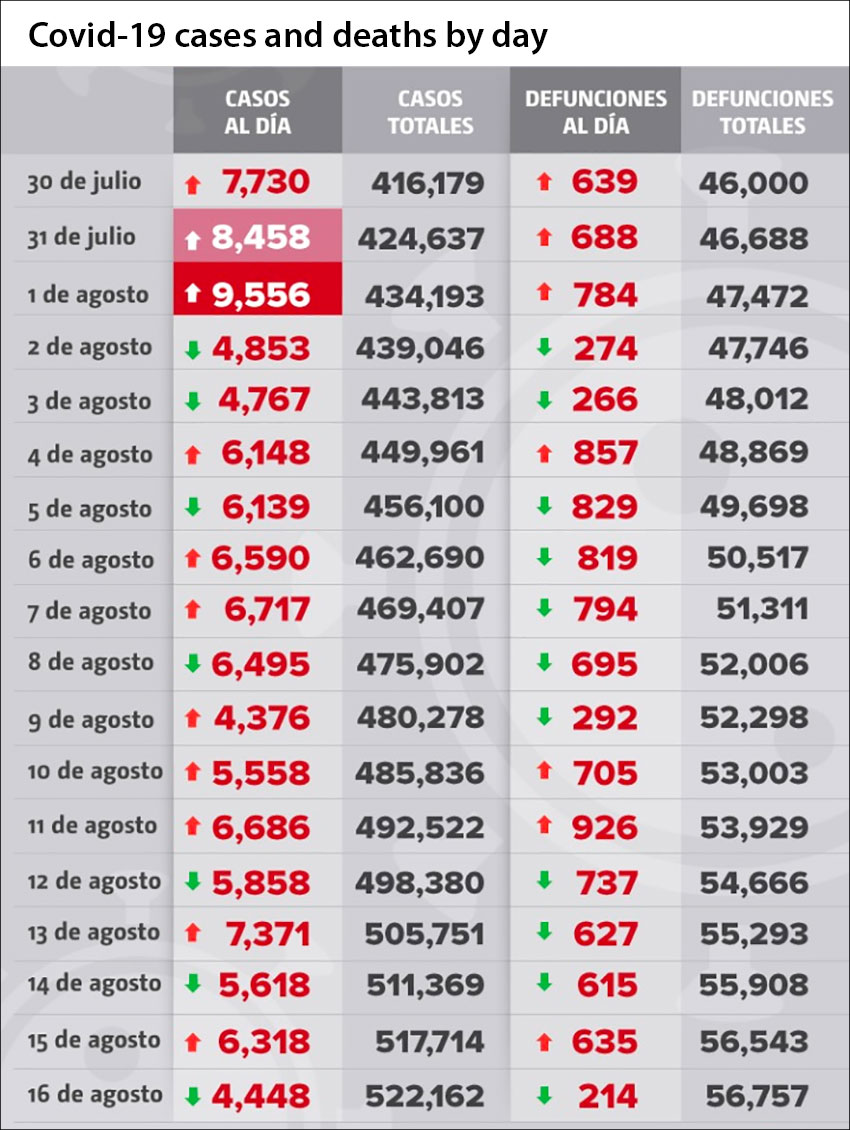
The daily tally of coronavirus cases and deaths. Deaths are numbers reported and not necessarily those that occurred each day. milenio
“This means that fewer and fewer people who have an acute respiratory condition end up being confirmed as having Covid-19,” he said.
The positivity rate is still very high compared to many other countries because most testing in Mexico is of people with serious coronavirus-like symptoms.
Almost 1.2 million people have now been tested, according to Health Ministry data, of whom 522,162 were confirmed to have the infectious disease. Health authorities registered 4,448 new confirmed cases on Sunday.
Just under 29,000 cases – 5.5% of the total – are considered active while the results of more than 81,000 tests are not yet known.
Mexico’s Covid-19 death toll rose to 56,757 on Sunday with 214 additional fatalities registered. Mexico ranks third for total Covid-19 deaths after the United States and Brazil.
The mortality rate is just under 45 per 100,000 residents, according to Johns Hopkins University data, the 13th highest in the world.
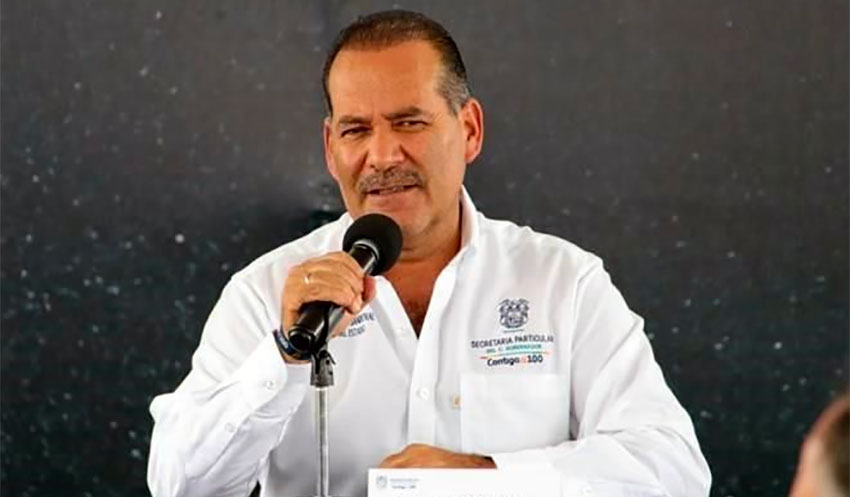
Aguascalientes Governor Martín Orozco disputes his state’s stoplight risk level.
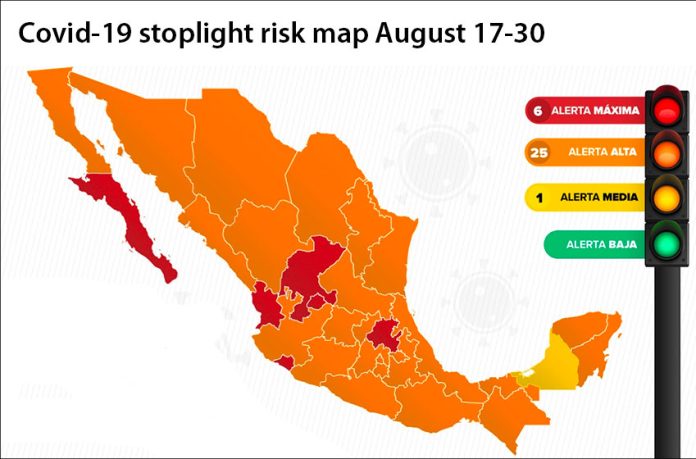
Eleven weeks after the national social distancing initiative was replaced by a “stoplight” system that recommends coronavirus restrictions on a state-by-state basis, most of the country is painted orange, indicating “high” risk of infection.
The risk level is red light “maximum” in just five of 32 states while Campeche begins this week as the only yellow light “medium” risk state.
While federal health authorities reduced this week’s risk level from red to orange in 11 states, the only state to go the other way was Aguascalientes.
But the state government rejected the red light risk assessment, saying that it is managing the epidemic appropriately and that its own assessment is that the risk level should be yellow.
The government said in a statement that new case numbers have remained stable and that there is still sufficient hospital space despite occupancy increasing in recent days.
It also said that it has the necessary medical supplies to treat coronavirus patients and noted that Aguascalientes has one of the highest testing rates in the country.
The small Bajío region state has recorded 4,812 confirmed cases since the beginning of the pandemic, the fifth lowest tally in the country, and 324 Covid-19 deaths.
Despite its red light status, Aguascalientes has just 375 active coronavirus cases, according to Health Ministry estimates.
The active case tally is the third lowest in Mexico after Morelos and Tlaxcala, where there are an estimated 303 and 349 active cases, respectively.
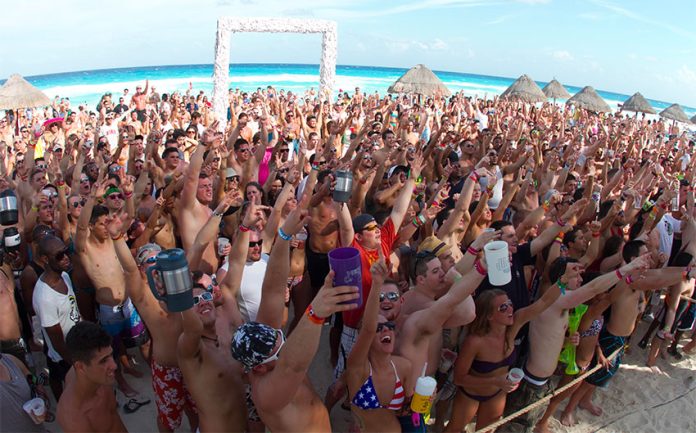
It might be a while before the tourist industry sees numbers like this.
The U.S. and Mexican governments will extend their agreement to close the land border to nonessential travel until September 21, but that doesn’t mean Mexico isn’t welcoming visitors.
“The border couldn’t be opened right now,” Mexico Foreign Affairs Minister Marcelo Ebrard explained on Thursday when the announcement was made to continue the shutdown. “It wouldn’t be logical that we change it right now.”
While tourists haven’t (officially) been permitted to drive into Mexico for a vacation since March 21, there have been no restrictions on flying into the country, especially since hotels and restaurants in popular resort destinations reopened, albeit with limited capacity, in June.
Thousands of travelers from the U.S. are enjoying uncrowded, low-key vacations — bars and nightclubs have not yet reopened — in beach destinations such as Los Cabos, Puerto Vallarta and Cancún, despite the U.S. government’s issuing of a “do not travel” warning for all of Mexico earlier this month due to the coronavirus.
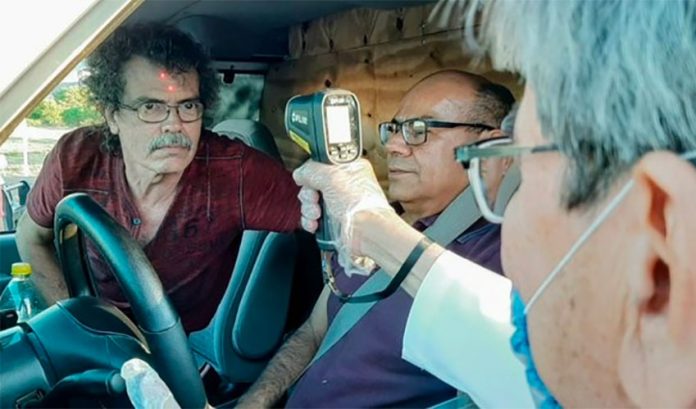
The level of screening upon arrival at Mexican airports varies and may include taking travelers’ temperatures and asking them to respond to a health questionnaire. There are no restrictions on U.S. citizens and permanent residents who return to the United States from Mexico, via air or land.
Coronavirus restrictions in Mexico vary by state and mostly follow the federal government’s “stoplight” map, which tracks how each state is doing based on four factors: case number trends (whether new infections are increasing, decreasing or stable), hospital admission trends, hospital occupancy levels and positive testing rates.
Hotel occupancy is capped at 30%, and many hotel guests are Mexican nationals, a shift toward domestic tourism that is also a trend in the United States.
Such is the case at Chablé Yucatán, which has long catered to Mexican residents. “This is normal, nothing new,” general manager Rocco Bova says. “Our market was always Mexico, now just slightly higher. We also got some people from the U.S., including guests flying private.”
Nobu Hotel Los Cabos, which reopened on July 1, reports that Americans make up the bulk of its guests, and Chablé Maroma on the Riviera Maya is seeing an even split between Mexican and foreign tourists. “We tend to have a lot of American guests, but surprisingly, we have experienced an increase in Mexican travelers,” general manager Gerardo Ortiz told Travesias magazine. “Especially honeymooners that needed a sudden change of plans due to Covid-19.”
Current figures show Mexico has 511,369 accumulated cases of the coronavirus, and the average per capita rate of active cases is 35.2 per 100,000. In the United States, the Centers for Disease Control and Prevention report the per capita rate of infection is 1,613. However, coronavirus testing is being conducted on a much higher scale north of the border.
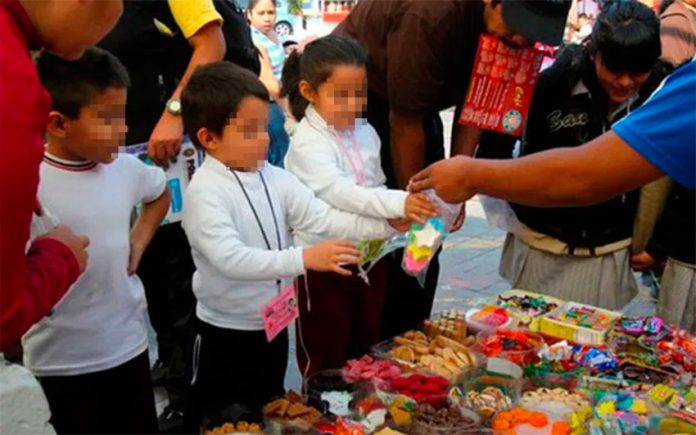
As lawmakers in Oaxaca gathered inside the state Congress 10 days ago, shopkeepers and street sellers congregated on the street to protest the proposal of a radical new law. As the cheers from inside the building reached the curb, it became clear that it would no longer be legal to sell sugary junk food to children across the state.
A combination of decades-long complacency and a rising Covid death tally had forced the government to take bold new steps toward a healthier future in the hope that the state would one day lose its title as leader in levels of childhood obesity.
Obesity in Mexico, as in Oaxaca, is no new phenomenon, and varying claims of how to tackle this epidemic range from an all-out ban to more comprehensive health education. While the latter is severely lacking, the former seems to be the favorite direction for many lawmakers country-wide, with many states testing the waters of prohibition.
The sugar tax introduced in early 2014 embodied a step in the right direction, but this new ban in Oaxaca shows how lawmakers at a state level simply don’t believe progress is being made fast enough.
The new law will put a complete ban on the sale of sugar-filled junk food to children, with harsh penalties on any sellers that disobey the directive including fines, and even jail time for repeat offenders. For all intents and purposes, sugary snacks now exist in the same category as cigarettes and alcohol — at least as far as the law goes.
This may go some way to reversing some of the cultural misinformation and cognitive dissonance that exists across Mexico and that sees sugary products pushed upon children by advertisers and family members in equal measure.
About 10% of children below the age of six months are fed soda regularly, while by the time the age hits 2, the figure is closer to 80%. Sodas are incredibly normalized. In fact, sugary drinks are simply not treated with the same caution as other harmful products, partly down to the familial preference toward having visibly well-fed children who, it could never be claimed, were going hungry.
All of this has been encouraged by the bloated food and drink industry that has, through decades of cultural influence, carved a reserved place in every family’s kitchen for its cheap and cheerful sodas.
Sugary drinks are so ingrained into the culture, but the culture itself is not where the problem ends. Historically, bastions of the sugar industry such as Coca-Cola have been capitalizing on necessity in order to sell their product to a desperate market, with many towns struggling for clean water somehow managing to find tienditas stocked with 5-peso Cola bottles.
With coke costing about the same price as bottled water, and seemingly far more common in many areas, it is no wonder that Mexico quickly became the biggest consumer of sodas in the world, beating the U.S. by 40%, and while nowadays clean water is much less of an issue, the impact of a devastating, generation-long campaign by sugar giants has made Coke an undeniable Mexican staple.
There is a similar narrative throughout the junk food industry, and beginning to unfuse sugar from the very essence of Mexican culture is no easy task. How do we deter the consumption of sugar when it is so ridiculously cheap? How do we limit the soft powers of advertising giants that perpetuate health myths? Most importantly, how do we prevent sugar companies filling the absent space of government provision and picking up the health authority’s ever-growing slack?
One answer may hark back to positive campaigns of the past, such as the sugar tax of 2014. This initiative placed a 1-peso increase on each liter of drinks with added sugar, resulting in a 10% overall increase in cost for the consumer. A study published by the National Institute of Public Health after this recorded a 12% decrease in the household purchase of sugary drinks; results not to be sniffed at, but hardly groundbreaking in a country where obesity kills nearly seven times more people than the drug war.
This idea also puts the pressure on the poorest families for whom a 10% increase is a significant sum, not the wealthier families who can, and do, continue purchasing sugary drinks without incurring any financial hardship. Economic prejudices are always common in tackling health crises, but a truly effective remedy is going to have to be one that doesn’t discriminate based upon wealth. Financial inequality is so often the root cause of health epidemics, that tackling them must recognize the fact, and implement measures that protect all stratas of society.
The coronavirus has, unfortunately, made this all too clear. This disease has disproportionately affected those in society without the means to meaningfully distance themselves from others, and those without the assistance of world-class healthcare. If this wasn’t enough to get us thinking once again about the immediate health dangers of poverty, we have been slowly learning throughout the pandemic that those with diabetes and heart problems are far more likely to die of the coronavirus; let’s not forget that diabetes and heart problems are the most common side effects of obesity which, we know, disproportionately devastates the poorest in society.
So perhaps the decision taken last week by the state of Oaxaca is, in fact, the closest thing to an intuitive solution. It is by no means perfect, and in fact there is arguably going to be a jarring knock-on effect for shop owners and street sellers, but in terms of recognizing the sheer scale of the issue, it is at least respectful of the situation as it stands.
Policies such as these, however, are only going to be effective with a targeted campaign from the health authorities that seeks to undermine the influence of sugar companies and advertising agencies who have had their rein for far too long. Essentially, the aim must be to expunge the prevalence of sugar from the Mexican canon, and slowly begin to recognize the ways in which the country has become a playground for the industry of ill health.
Only then might families across Mexico partake in the denormalizing of sugar in their lives, helping to deconstruct the candy culture.
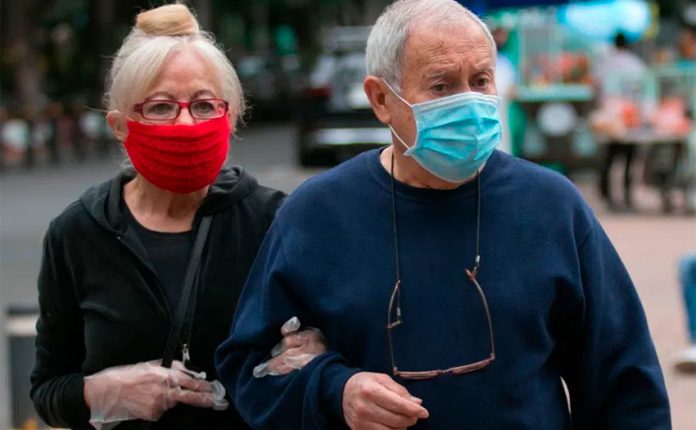
Using face masks for protection against the coronavirus will be mandatory in Colima and in Chihuahua.
In Colima, children under the age of 2, people who have difficulty breathing and people who are unable to remove their masks unassisted are exempt.
The law also emphasizes that other coronavirus protocols, such as social distancing, coughing or sneezing into your elbow, not touching your face, washing hands with soap and water and the use of antibacterial gel remain essential tools in preventing the spread of the virus.
A similar law will go into effect in Chihuahua Sunday.
In Sinaloa, people who enter government offices or use public transportation and do not have a mask will be provided with one free of charge in order to comply with state law.
Health Minister Efrén Encinas Torres said that even as Sinaloa is registering a downward trend in new cases and is at the orange level on the federal government’s coronavirus “stoplight” map, it is not time for Sinaloans to let down their guard.
Feliciano Valle, director of roads and transport, applauded the decision. “Today the mandatory use of face masks is agreed upon, and is without a doubt a very successful decision by the state Health Safety Council, giving us greater possibilities of preventing infections among users,” he said.
Governors in other states are opting to promote mask usage through social media campaigns.
In Nuevo León, Governor Jaime “El Bronco” Rodríguez Calderón challenged Governors Francisco García Cabeza de Vaca of Tamaulipas and Miguel Riquelme Solis of Coahuila to answer his “#Póntelo,” or #Putiton Twitter challenge.
Riquelme than passed the challenge along to Durango Governor José Rosas Aispuro, and García challenged Governors Silviano Aureoles Conejo of Michoacán, Martin Orozco Sandoval of Aguascalientes and Carlos Mendoza Davis of Baja California Sur to put on a mask and post a video.
De Lope believes Mexico has great potential for entrepreneurship.
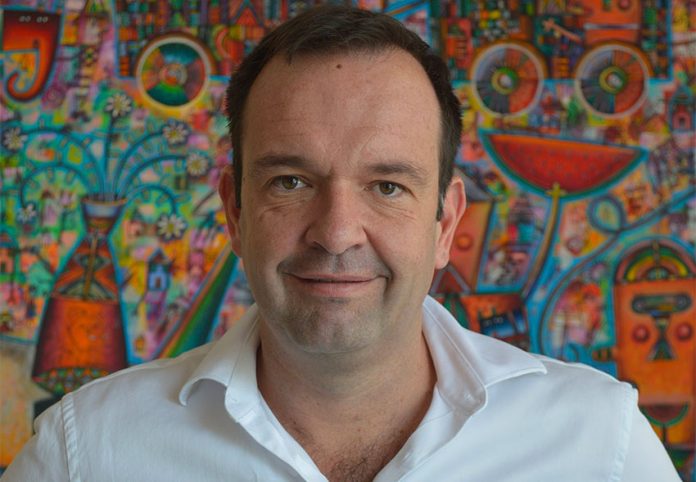
After creating various businesses since his youth, Javier de Lope Francés stated that he wanted to retire at age 40. That deadline has just passed, and there is no indication that he is slowing down.
Unlike many traditional Mexican businessmen, De Lope is casual in his dress, speech, and body language. He also eschews many of the political connections that grease the wheels of business. But it is refreshing to meet someone who prefers to let his work speak for him.
His is not entirely a rags-to-riches story. Born in Puebla a first-generation Mexican, his parents had immigrated to Mexico from Spain and carved for themselves a solidly middle-class life – he a manager at a plastics plant and she a professor at the Universidad de las Americas in Puebla.
De Lope’s talent for entrepreneurship appeared early. At age 7, he began selling recyclables. His first “business” was buying the prizes from junk food bags that college students did not want and selling them to his elementary school classmates.
His first major score was when he was in California to do a year of high school. One of his teachers saw De Lope’s Hard Rock México pin and wanted it. Soon De Lope had an internet page selling Mexican Hard Rock memorabilia to buyers from the United States, Europe, and Japan. He invested the $25,000 earnings into a car inspection station when he returned to Puebla. A year later, he sold it to attend college.
De Lope’s Torres Médicas in Puebla.
De Lope earned his degree in industrial engineering at the Tec de Monterrey in 2002, founding two businesses in the meantime. The first made handcrafted picture frames. Within a year, he had a plan to expand it. He entered the plan into the Venture Challenge 2000 at San Diego University, coming in third. This prompted corporations such as Ticketmaster and Price Costco to pledge US $1 million to the venture. It grew to making 20,000 frames a week, exporting to 10 countries.
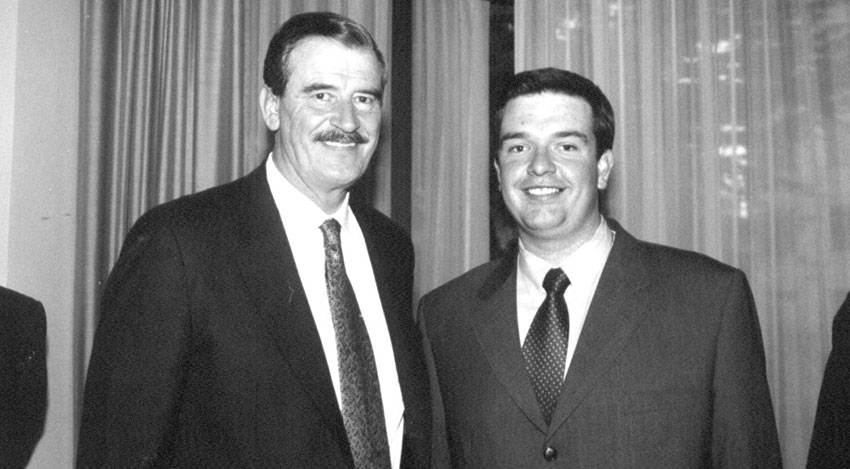
The second was creating printed agendas with advertising to distribute free to university students, first in Puebla, then in other major cities. The idea came to him while bored in class, having forgotten his notebook. The buzz he generated with his businesses led to an offer to write a book, Para Los Negocios No Hay Edad (In business there is no age), which was published by his alma mater and whose preface was written by former president Vicente Fox.
Perhaps sentimentally, De Lope held onto both companies for about 20 years before finally selling the picture frame enterprise and closing the notebook one.
Many entrepreneurs become famous because they found a company and become the face of that enterprise — Bill Gates and Microsoft, for example. But since college, De Lope’s public profile has been low key. The main reason is that his energy has been poured into the creation of companies in various fields, then selling them when they hit their stride.
Around the time De Lope graduated, Puebla began experiencing a building boom especially in the upscale south and west. He began building upscale shopping centers such as the Sonata center in Cholula, but found more opportunity in the construction of private hospitals, leading to Torres Médicas in the south of the city, as well as in Veracruz.
Adapting technology to the Mexican context is another focus of his. The first business of this type was El Súper Negocio, a service for ordering groceries and medicines online for delivery. When the Mexican government decided to shift to digital registration of receipts for tax purposes, he created several businesses for this purpose. One of his most recent projects is Código 46, a DNA testing facility similar to 23andMe. Technology and real estate provide the opportunity for co-working spaces. They work in Mexico, De Lope says, for many of the same reasons they work in other places in the world.
De Lope with then-president Fox at the Tec de Monterrey.
De Lope is not a publisher, architect, programmer, or chemist, so I asked him how he could work in all these fields without specialized knowledge. The answer is that Mexico has a wealth of capable professionals that can do this work, often for less than those in the United States and Europe. This allows him to focus on creating the service.
De Lope says the lessons he learned with his first tiny businesses as a child still apply — the value of money representing time and effort, the need to invest, and the need to be focused while taking risks. He strongly believes in Mexico’s potential for entrepreneurship.
“You can see it everywhere in Mexico, from the person selling on the street.” He believes what holds people back is Mexico’s poor education system and a wholly broken system of laws and banking. Nothing short of an overhaul is needed in both for the country and people to reach their potential.
De Lope focuses on these ideas in talks to university students because even in bad times, such as the Covid crisis, there are opportunities. He believes that Mexico’s business culture will change significantly, taking better advantage of digital technologies because of the economic advantages of doing meetings and conferences online. This will hurt business travel but reward those who shift into services for home offices and the like.
De Lope says his motivation is finding and catching the next wave. It is unlikely he will stop finding such waves, and besides, there is still a sequel to his book to write.
Leigh Thelmadatter arrived in Mexico 17 years ago and fell in love with the land and the culture. She publishes a blog called Creative Hands of Mexicoand her first book, Mexican Cartonería: Paper, Paste and Fiesta, was published last year. Her culture blog appears weekly on Mexico News Daily.
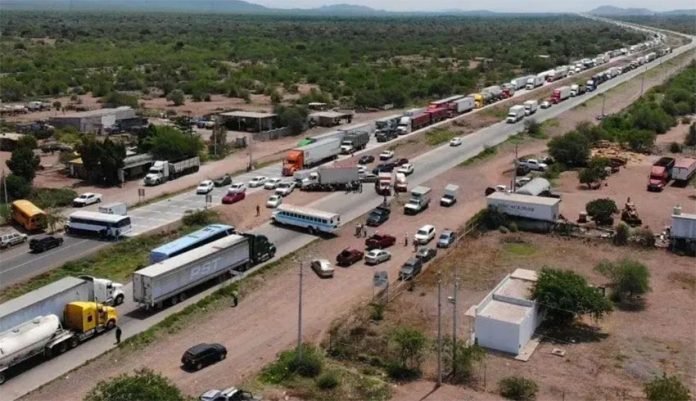
Indigenous Yaqui people in Sonora continue to block a rail line and federal Highway 15 despite a federally-brokered agreement in late July.
The blockades are affecting Mexican exports to the United States and generating millions of pesos in losses, said an industry organization.
Residents of one of eight Yaqui towns have mounted two roadblocks on the section of the highway that connects Ciudad Obregón with Guaymas and placed obstacles on train tracks connecting Nogales, Sonora, to Nogales, Arizona.
The Yaqui people are demanding that the government compensate them for ceding land for the construction of a range of infrastructure projects and fulfill commitments for the social development of its eight towns: Cócorit, Bácum, Vícam, Pótam, Tórim, Huírivis, Ráhum and Belem.
The current railroad blockade in the community of Vícam, between Ciudad Obregón and Guaymas, began on August 5.
A first railway blockade in July was briefly lifted after President López Obrador met with Yaqui representatives and pledged to create a justice commission that will be responsible for returning expropriated land, delivering basic services and rerouting a gas line.
In addition, he said he will offer a public apology on behalf of the Mexican government for historical abuses that the Yaquis have suffered.
But for those leading the protests, the president didn’t go far enough.
The blockade of the railway, in particular, is affecting trade with the United States, Confederation of Industrial Chambers (Concamin) president Felipe Peña explained, as cargo shipments must be offloaded and transferred to trucks, generating significant cost overruns.
Peña said 2,176 train cars were stranded with 87 million pesos (US $3.96 million) worth of grain, 284 million pesos (US $12.9 million) worth of auto parts, 64 million pesos (US $2.9 million) worth of consumer products and 126 million pesos (US $5.7 million) of supplies for the beer industry.
“There are more than 83,500 tonnes of materials, supplies and merchandise detained by this blockade, with direct economic losses of more than 45 million pesos for the transportation service, without considering the even greater economic effects for industries and businesses that use the freight train service,” Peña stated.
With the school year set to start August 24, education is also being affected.
The delivery of 79,000 free textbooks to primary schools in Sonora is being held up by the protesters, the Mexican Railway Association (AMF) said.
The highway blockade, meanwhile, turned violent on Wednesday.
A video has surfaced of several Yaqui protesters climbing into the cab of a truck and beating the driver for allegedly refusing to pay a toll.
Yaqui leaders say the video is misleading.
Juan Luis Mátuz González, captain of the traditional guard of the Yaqui ethnic group, said it was the driver who was the aggressor when he tried to ram a crowd of protesters and hit one of their vehicles. According to his version of events, members of the tribe climbed into his truck to take his keys when he attacked them with a bat. The Yaqui protesters then extracted him from the cab, subdued the man and gave him sugared water to calm him down.
The company that employs the injured driver, Transportes Barceló from Ciudad Obregón, has announced it will file a lawsuit against the tribe.
The Yaqui protesters are demanding a 150-peso (US $6.82) toll from vehicles traveling through the highway blockades in Vícam and Danzante.
A splash of yellow has appeared on the coronavirus stoplight map, on which orange now dominates. milenio
Campeche is the first state in Mexico to move from orange to yellow on the federal government’s coronavirus “stoplight” risk map, meaning there will be no restrictions on economic activities.
As of Monday, all businesses and public spaces in the state can open, although people at high risk, such as those with high blood pressure, diabetes, or other comorbidities, should continue to take extra precautions. Enclosed public spaces must operate at reduced capacity.
The next phase is green, meaning all activities, including schools, can return to normal operations.
Over the past two weeks, Campeche has seen a 23% decline in new cases and the state’s government has been proactive in combating the spread of the disease.
One tactic that appears to have proven effective was the formation of community brigades made up of doctors, pharmacists, nurses and social workers from the Ministry of Health. They have been testing people suspected of having the disease, monitoring those who are infected and conducting contact tracing.
According to the federal government, as of August 14 Campeche had recorded 5,120 accumulated cases of the coronavirus and 663 deaths, and there were 150 active infections, who are patients who have had symptoms within the last 14 days.
Campeche’s rate of infection is 21.69 per 1,000 inhabitants, below the national average of 35.20 per 1,000, but by no means the lowest in Mexico. That honor goes to Chiapas, where the reported rate of infection is just 2.73 per 1,000, whereas Baja California Sur maintains the highest rate of infection per capita at 143.29. The latter, tourism-dependent state is listed as red on the federal coronavirus map but has chosen to operate at the orange level.
Other states that will remain red are Nayarit, Zacatecas, Colima and Hidalgo, while Aguascalientes will move from orange to red.
States that have seen an improvement in the Covid-19 situation and will move from red to orange are Coahuila, Durango, Jalisco, Michoacán, Nuevo León, Puebla, San Luis Potosí, Tabasco, Tamaulipas, Veracruz and Yucatán.
Mexico City will remain at the orange level for the eighth week in a row, said Mayor Claudia Sheinbaum, who is self-isolating after coming in contact with a cabinet member who tested positive for the coronavirus.
“This coming week we are permitting the same activities. It is important to see what the impact is of the activities that have already reopened,” Sheinbaum said. “If everything continues as we hope it will, which depends on the participation of everyone, we will be reopening more activities.”
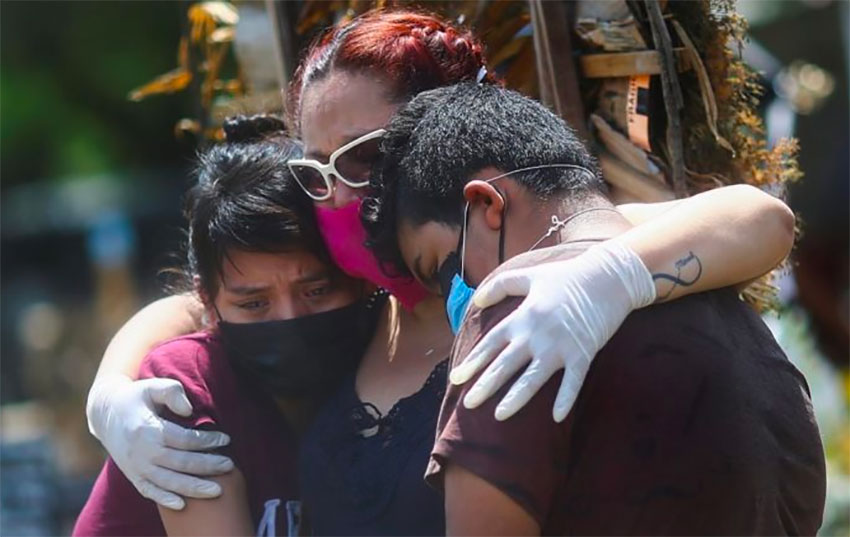
Coronavirus grief.
Deputy Health Minister and coronavirus czar Hugo López-Gatell said it took 123 days for the coronavirus to peak in Mexico, which has helped hospitals manage care as the number of confirmed cases has begun a slight decline.
“When we have a slow epidemic, which is the goal we set in Mexico, we seek to have fewer sick people per day, which does not saturate hospitals. But that does not mean that the epidemic disappears, the risk is deferred and the epidemic is organized so it can be controlled more effectively and unnecessary deaths can be avoided,” he said.
Health officials reported that as of Friday, 150 days since the start of the pandemic in Mexico, the country has registered 511,369 confirmed cases of the coronavirus, up 5,618 from Thursday. There were 615 deaths reported Friday, bringing the total of fatalities to 55,908.
José Luis Alomía, the Ministry of Health’s director of epidemiology, stated that 345,653 Mexicans have recovered from the virus, and general hospital occupancy stands at 39%, with 66% of the beds with ventilators available. Colima has the highest hospital occupancy rate at 66%, followed by Nuevo León at 64% and Nayarit with 62%.
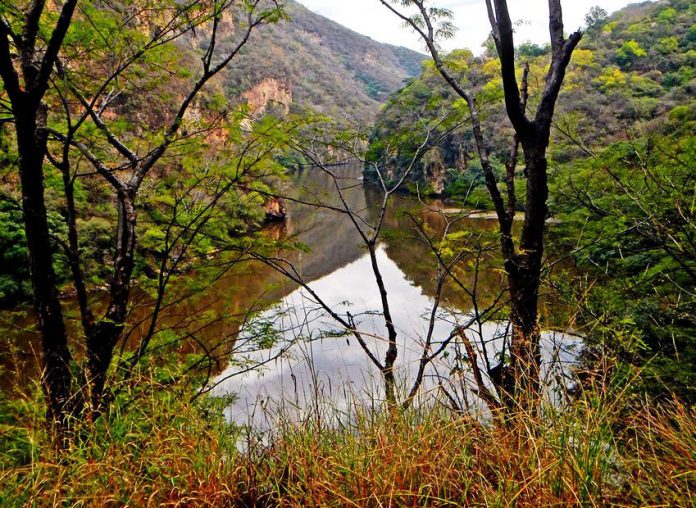
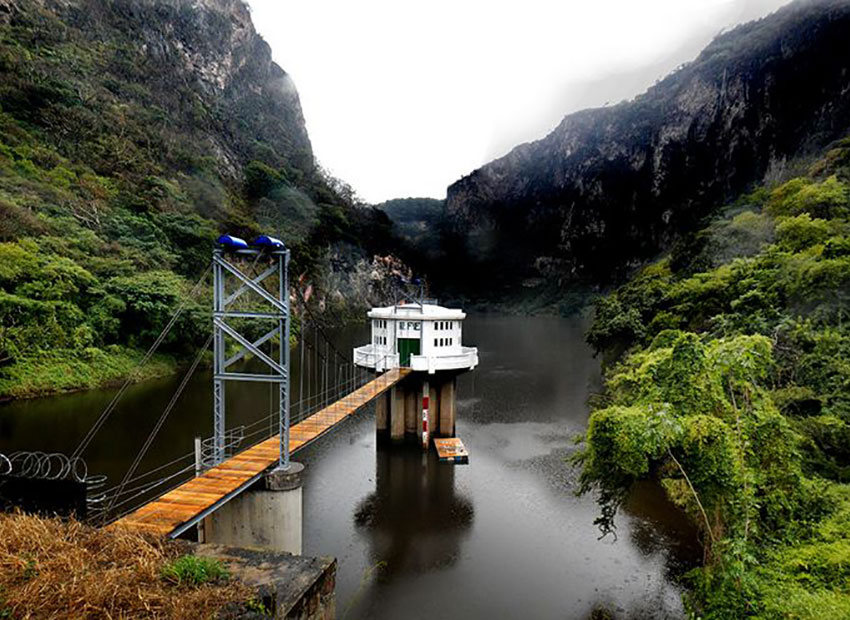
Majestic Colimilla Canyon, located just minutes from Guadalajara.
Years ago I was told tales about “two stone giants” standing guard over ruins deep inside one of the barrancas of the ubiquitous Santiago River, which wraps itself around the city of Guadalajara.
The exact location of those monos, as they are popularly called, escaped me until I mentioned them to my friend Rodrigo Orozco. “Los Atlantes de Colimilla? I know exactly where they are … let’s go!”
The next day we drove to the northeast corner of the city, where we found a rather shabby-looking barrio romantically but deceptively named Jardines Del Prado (Meadow Gardens). Here a winding cobblestone road led us down to a checkpoint manned by armed guards.
“Proceed no further,” they told us, “unless you have written permission from the state water commission.” This we did not have but, fortunately, we did have a friend who knew a friend who knew a friend and thanks to all that friendliness they actually let us through the gate, allowing us to continue along “El Camino a La Planta Potabilizadora Colimilla.”
No sooner had we passed the guards than we caught a glimpse of the river below us with a towering canyon wall on the other side. Although the Santiago is horribly polluted at many points here, at this particular spot, we could discern no bad smell and to tell you the truth, we were astounded at the beauty of the scene. It was dead quiet.
The Colimilla Dam, which began to produce electricity in 1950.
White and gray egrets were frolicking in the river which was full of fish — yes, live fish! — and on a branch above the water a kingfisher was preparing to dive. On the canyon wall behind us, a lacy waterfall was trickling. It was hard to believe we were only 13 kilometers from the city’s bustling Ring Road.
As we followed the river downstream toward the dam, we stopped again and again, jumping out of the car, even though it was drizzling, to take yet another photo. “This canyon,” I told my friend, “could be turned into a gorgeous park with little cafés overlooking the river. In my opinion, it would surpass the San Antonio Riverwalk by 10 magnitudes … just look at that incredible canyon wall towering above us!”
“Yes,” said Rodrigo, “but instead we Tapatíos dump our excrement and toxic waste into it — ¡qué lástima!”
We soon reached the huge, impressive cortina or dam and just beyond it the ruins of what was once the main hydroelectric plant supplying electricity to Guadalajara. It was built between 1945 and 1950 and once upon a time supplied 51 megawatts of power. Today, however, it is utterly abandoned and has been replaced by another plant farther down the river.
Wandering around the ruins of this once impressive operation, we started looking for the “5,000 stairs” that rumor says lead down, down, down to the river. Well, the actual number of steps turned out to be 200, which I know because my grandnieces Xela and Meli counted them.
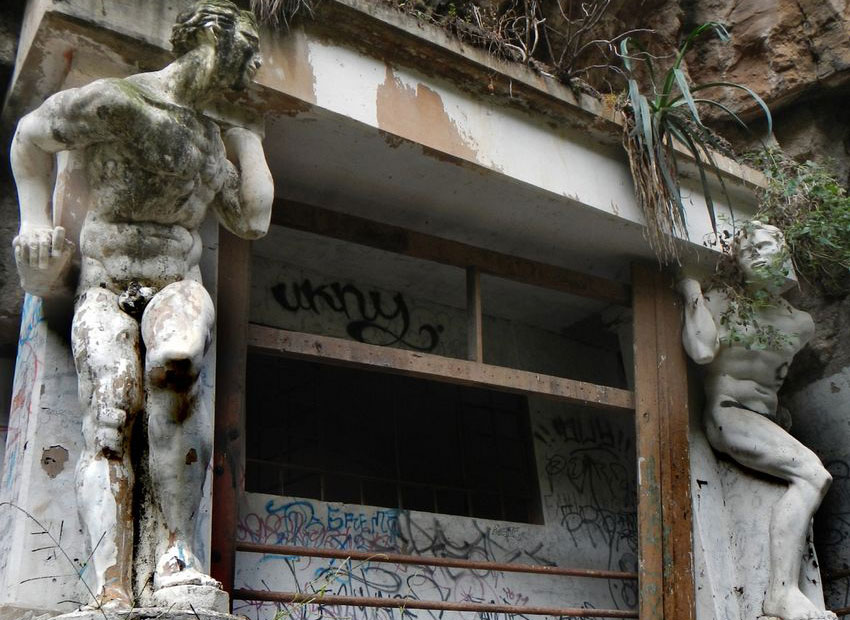
But it was well worth the effort. At the bottom you come to the dam’s spillway, which handled its overflow. The water pours out beneath an arch which in turn is flanked by huge statues of two young men wearing nothing but hairstyles right out of the 1950s. Each is about three meters tall and they reminded me of statues I saw in Italy commissioned by Mussolini in a futile attempt to bring back the grandeur of ancient Rome.
Los Atlantes: two statues about three meters high flank the dam’s spillway.
These in Guadalajara are known as the Atlantes de Colimilla and they are truly the last thing you’d expect to find at the bottom of a deep canyon 300 meters below the streets of a big metropolis. Sad to say, both statues were covered by grime and graffiti, accumulated over the decades.
At a distance of 7.3 kilometers from the checkpoint, we were delighted and surprised to find several rustic hot pools. We should not have been surprised, actually, because — as a geologist later informed me — that particular bend of the river is located inside the remains of Colimilla Volcano which was eroded away two million years ago by the Santiago River. At that time, it seems, much of Jalisco was a big lake and when water began to drain from it, colossal canyons were slowly formed, those same canyons which we can appreciate today all along the northern edge of the city of Guadalajara.
I put on my swim suit, anxious to take a dip in the hot water, which I had assumed would be coming from a hot spring. However, to my surprise I learned there is a full-fledged river here, which tumbles down hundreds of meters from somewhere high up the steep canyon side.
Local people have made all sorts of clever little outdoor dams here, but up above, so I was told, are Las Pilitas de Tonalá, long, lovely hot pools — some of them 40 degrees hot — hanging in space like giant balconies and offering bathers what is said to be an awesome view of the barranca.
As for the pools at the riverside, I found the water temperature delightful. On top of that, there were only a couple of dozen people present, even though it was a Saturday. Naturally, I wondered how they had reached this point because ours was the only car to be seen anywhere around and the road we were on was supposed to be closed to the public.
“Oh, there’s a path that leads down here from the barrio up above,” we were told. Ah yes, I was so enamored with the beauty and solitude of this place that I had actually forgotten that it’s located smack on the edge of a city teeming with five million people.
[soliloquy id="120008"]
Upon my return home, I tried to find out who had sculpted those two Colimilla Atlanteans. From José Guadalupe Gutiérrez of the Historical Society of Tonalá I learned that the two big statues were sculpted between 1945 and 1950 by one Ramiro Gaviño and are considered good examples of Art Deco.
After much digging on the internet, I learned that Ramiro Sergio Gaviño Rivera was an architect and sculptor from Mexico City, creator of El Monumento al Caminero, a set of three very big and very impressive statues in the capital’s La Joya colony, honoring the Road Builder and inaugurated in 1956.
From Erick González Rizo, president of Xalixco Estudios Históricos, I further learned that the Atlantes de Colimilla are no longer covered in grime and graffiti. “People in the neighborhood, living up above the river,” González told me, “decided on their own initiative that it was high time to clean up those statues, of which they are quite proud.
“Led by one Ruby Galindo, dozens of local people descended upon the site carrying cleaning implements, collapsible ladders and buckets of paint and in a few weeks restored the old spillway to its former glory.”
Let me also add that those volunteers accomplished all this without benefit of motor vehicles, walking up and down that steep hill I don’t know how many times. Bravo, Ruby and friends! Once again private initiative comes to the rescue when politicians fail to do their job.
Oh by the way, did I forget to mention that Colimilla Canyon is a so-called “protected area?”
The writer has lived near Guadalajara, Jalisco, for more than 30 years and is the author of A Guide to West Mexico’s Guachimontones and Surrounding Area and co-author of Outdoors in Western Mexico. More of his writing can be found on his website.
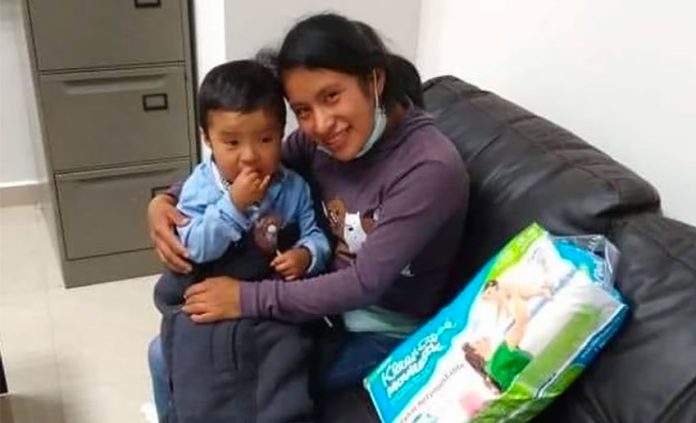
Kidnapping victim Dylan was reunited with his mother after 44 days.
The case of a toddler abducted on June 30 from a market in San Cristóbal de las Casas, Chiapas, had a happy ending Thursday when authorities rescued the child and returned him to his mother.
“I’m happy, content,” Juana Gómez said after being reunited with her son, Dylan Esau Gómez Peréz. “My little one is now with me. Everything’s going very well.”
Dylan, 2, was last seen at the Mercosur market in San Cristóbal, where his mother and grandmother were working at different stalls.
The case was highly publicized after his mother approached various authorities with requests to investigate Dylan’s kidnapping, including a petition to President López Obrador.
On the day of his kidnapping, Dylan was recorded on a security camera, alone — although his mother had sent him and his 5-year-old sister through the market to meet their grandmother at another stall — being accosted by two children, including a girl who appeared to be about 10 years old.
The camera footage showed the girl taking Dylan by the hand and leading him away from the market area to a woman, who then left the area with him.
Authorities found and interviewed the children in the video, who told them the woman had paid them 200 pesos to lure Dylan away from the market.
“Go get my son, who is in the market,” the woman allegedly told the children. “He’s very rebellious and he doesn’t want to leave with me.”
The search for Dylan set into motion an investigation that exposed a child-trafficking ring in San Cristóbal and led to the rescue of 23 children who had been kidnapped and forced to sell trinkets in the city, but it did not turn up Dylan. Instead, authorities said, a 23-year-old woman only identified as “Margarita N.” was detained in the case, which authorities say is unrelated.
According to the Chiapas officials the woman kidnapped Dylan because she could not have children and decided to use the child to convince her ex-husband to reunite with her. Her husband had previously left her over the issue.
She had been hanging around the market for two days before kidnapping the child, authorities said. After renting a room for one night in San Cristóbal, she then took the toddler to the small community of Las Palmas, two hours west of the city. Authorities found them both there 44 days later.
The woman faces up to 75 years in prison.
Dylan was checked by medical professionals after he was found and was determined to be healthy.
“The conditions in which he held him were humane,” said a state official. “She gave him food. She took care of him. There wasn’t any violence involved.”
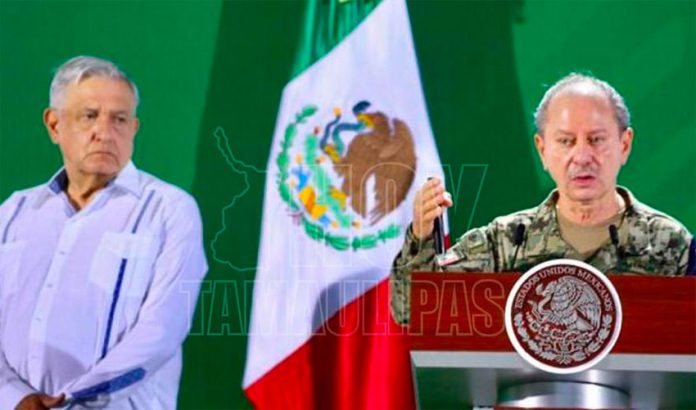
The president and Navy Minister Ojeda in Acapulco today.
Crime in Guerrero has seen an overall 32% decline so far in 2020, Navy Minister Rafael Ojeda Durán reported Friday. Murder is down 50% and kidnapping has plummeted 70% in the first half of 2020, he said.
The drop in numbers represents a significant accomplishment for Guerrero. In June 2017 the state had the second-highest crime rate in the nation, three years later it ranks at 20th.
Guerrero comes in at 24th in the nation for car theft and robbery, and seventh for the number of murders. However, in extortion it ranks 14th, marking an upward trend.
Although public safety in Acapulco is improving, it remains a concern, being among the municipalities with the highest crime rate, along with Chilpancingo and Zihuatanejo.
Governor Héctor Astudillo Flores cited the creation of the National Guard and the certification and improvement of municipal and state police forces as factors for the decline in crime, as well as daily meetings by a working group for peace in the state.
Executive secretary of the National Public Security System, Leonel Cota Montaño, said that state police have improved their operational capacity, and local forces have benefited from the federal government’s Contribution Fund for Strengthening Municipalities (FORTAMUN) which helps improve and equip municipal police forces.
New crimefighting tools have also had an effect. State Attorney General Jorge Zuriel de los Santos Barrila reported that a ballistic fingerprint database has been created in coordination with the Ministry of National Defense, which will help identify weapons used to commit crimes. A federal vehicle recovery system has also been developed which allows citizens whose cars have been stolen to review and monitor their cases online.
Authorities also pointed to the arrest earlier this week of two prominent cartel members as evidence of the state’s crackdown.
José Ángel Galeana Palacios, alias “El Capuchino,” leader of the Acapulco Independent Cartel, has been charged with three murders that occurred in 2016, and his second in command, known as “El Negro Pipa,” was charged with the murder of political YouTube star Pamela Montenegro Real, known as “Nana Pelucas” or “Grandma Wigs,” in 2018.