Home Blog Page 1468

The governor of Colima is not optimistic: ‘it’s only going to get worse’

0
Governor Peralta: poor decisions have cost lives.

The governor of Colima has slammed the federal government for its response to the coronavirus pandemic and predicted that the Mexican economy will collapse.

In an interview with the newspaper El Universal, Institutional Revolutionary Party Governor José Ignacio Peralta Sánchez charged that the federal government’s response to the pandemic was “poorly designed” and that it has been marked by “erratic decisions.”

He also accused the government of failing to build a consensus with governors and mayors about how to manage the pandemic  and noted that its forecasts about when the outbreak would peak have failed.

The “poor decisions” of the government’s coronavirus czar, Deputy Health Minister Hugo López-Gatell, in managing the pandemic have cost the lives of more than 53,000 people in Mexico, the governor said. (More than 56,000 people have now died due to Covid-19).

Peralta, an economist and academic before becoming governor in 2016, acknowledged that some sectors of the population have not followed the government’s coronavirus advice but apportioned part of the blame to federal authorities, asserting that they failed to educate people properly about how to stop the spread of the virus.

He said that President López Obrador has set a bad example for citizens by (mostly) not using a face mask – the president has been seen wearing one on just a few occasions – claiming that his decision to not cover up “confuses the public a lot.”

The governor added that López-Gatell has had to perform a “political juggling” act to justify why a nationwide mandatory mask policy has not been implemented. (The deputy minister has sent mixed messages about the value of masks, questioning their efficacy earlier in the pandemic before gradually warming to them and promoting their use).

Peralta also took aim at the president for calling on people at the start of the pandemic to continue going out to restaurants when state governors were urging citizens to stay at home. “The differences began from there,” he said.

Mexico’s limited coronavirus testing regime is “another great national tragedy,” the governor charged.

“We don’t have a bigger register of infections and deaths because the application of tests is limited. If there was a mass [testing] application policy, we would have a lot more identified infections and more Covid deaths,” Peralta said, noting that some suspected coronavirus deaths have been attributed to atypical pneumonia.

“We know that an enormous source of infections … are asymptomatic cases but the testing policy in Mexico is not directed to identifying them.”

covid-19

Asked about the pandemic’s impact on government coffers and the economy, Peralta described the situation as “delicate,” noting that GDP is predicted to fall by as much as 11% this year.

He said the government’s tax revenue will fall due to the slump and as a result state and municipal government’s will be allocated fewer resources.

“What nobody wants to acknowledge is that the problem is just starting. The economy will collapse, … the scenarios going forward are worse than the ones we are going through at the moment. We have to anticipate that in order to prepare,” Peralta said.

The governor said that the performance of the economy next year will depend heavily on the availability of a coronavirus vaccine.

“Above all,” he added, it will depend on whether there are enough vaccines to carry out a massive immunization program.

“These are questions that are very difficult to answer at the moment; if [the response] is not favorable, the health problem will continue affecting the economy,” with government revenue inevitably falling and unemployment going up,” Peralta said.

An ongoing economic crisis will lead to a “process of destruction of people’s well-being,” he added.

Indeed, the coronavirus-induced economic slump could push an additional 10.7 million people into poverty, the federal government’s social development agency said in May.

Data published in July showed that the economy shrank a record 18.9% between April and June compared to the same period last year as coronavirus restrictions forced the closure of countless nonessential businesses.

All the while, Covid-19 cases and deaths have continued to mount: the accumulated case tally passed 520,000 on Sunday – the seventh highest total in the world – despite a low testing rate, and Mexico’s death toll is approaching 57,000, a figure only exceeded by fatalities in the United States and Brazil.

Source: El Universal (sp) 

Nobel Prize winner working with farmers to seek alternatives to pesticides

0
Chemical engineer Frances Arnold of Provivi.

A company co-founded by a winner of the Nobel Prize in Chemistry is helping farmers in Mexico to reduce their use of pesticides through a pest management technique known as mating disruption.

Provivi, co-founded by the United States chemical engineer and 2018 Nobel laureate Frances Hamilton Arnold, has successfully completed the first stage of a pilot program aimed at preventing the reproduction of the cotton bollworm, or corn earworm, a moth whose larvae feed on a wide range of crops including corn.

In the pilot program, Provivi worked with 40 farmers to place dispensers containing synthetically-produced mating disruption pheromones on 245 hectares of land in Pénjamo, Guanajuato, where white corn is grown.

The dispensers expel sex pheromones that make male moths believe that there are females in the area with which they can mate.

However, in most cases, male moths will fail to locate a female and thus the mating process is disrupted.

The critter at the heart of the problem.

“As a result, reproduction is prevented, and less offspring will be produced in the next generation. This way of controlling the insect population and decreasing the size of future generations forms the concept behind mating disruption,” Provivi explains on its website.

“Unlike traditional insecticides, which aim to eliminate insect larvae already present in the field, mating disruption does not kill insects. Instead, [mating disruption] is a preventive method that hinders the generation of worms and reduces the insect population over each season of use.”

The pest control technique allows farmers to avoid the use of pesticides that might be harmful to people and/or the environment while still protecting their crops from hungry caterpillars.

The pheromone pilot program, which began in May, has succeeded in keeping the Guanajuato farmers’ corn crops larvae-free, the newspaper El Financiero reported.

“Today more than ever, the world needs agriculture to move toward a clean, efficient and sustainable approach. Thanks to the [pheromone production] technology, the use of insecticides in corn fields could be reduced by up to 40% – 100% in some cases,” said Gloria Meléndez, a director at Provivi México.

She added that the mating disruption technique has been successful in protecting other high-value crops, such as apples and grapes, from pests.

Farmers in other parts of Mexico have also placed pheromone dispensers on their land to protect crops including sorghum, tomatoes and chickpeas.

Source: El Financiero (sp) 

Veracruz rum wins international award for 6th year in a row

0
The award-winning rum from Veracruz.

A Mexican rum made the grade yet again in Europe on Sunday, winning the International Taste Institute’s Superior Taste Award for the sixth year running at ceremonies in Brussels.

Villa Rica 23 Años Gold Edition rum, produced by Licores Veracruz of Córdoba, won the accolade after a panel of the institute’s experts judged it in a blind taste test on five criteria: first impression, visuals, aroma, taste, and aftertaste. The rum also won a prestigious three-star rating for the sixth year in a row, the institute’s highest rating, meaning that the panel gave it a numeric score of over 90%.

The award for the premium rum puts Licores Veracruz in line for winning the institute’s highest recognition, the Diamond Award, in 2021. The award is only given to entrants who win a three-star rating for seven years in a row.

The International Taste Institute’s annual awards ceremony, one of the world’s most well-known and prestigious, recognizes a multitude of packaged and bottled products from all over the world, everything from pastries and high-quality preserves to steaks and charcuterie to alcoholic beverages.

Over 200 chefs, sommeliers, and other taste experts from over 130 countries and recognized by institutions such as the Michelin Guide and Gault & Millau participate as judges.

The award-winning rum from Veracruz.

Licores Veracruz is a 69-year-old family-owned company that makes a variety of premium wines and traditional Mexican spirits but also specializes in non-Mexican ones such as vodka, whisky, schnapps and vermouth.

The company described its award-winning rum as having been aged in Canadian oak casks and featuring notes of vanilla, cacao, tobacco, chocolate, caramel and honey. 

General manager José Villanueva said his company’s victory is one for the Made in Mexico movement.

“This represents an overall triumph in the category of Mexican rum against others around the world,” he said.

Mexico News Daily

Agua fresca, a simple fruit drink that is refreshing and delicious

0
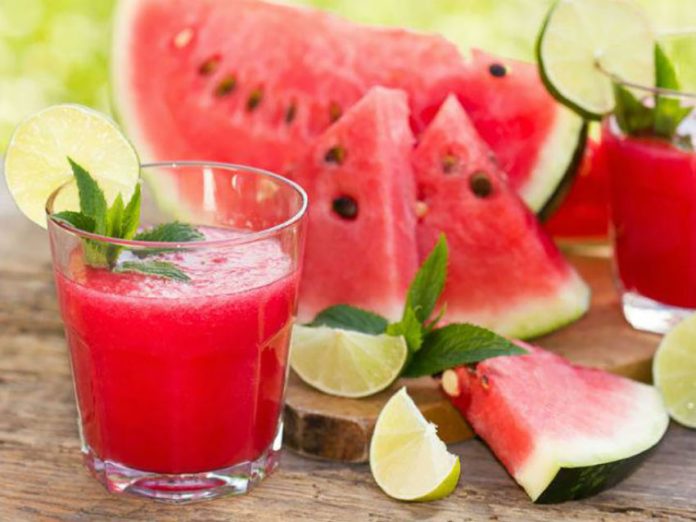
Watermelon is one of many fruits that will make a refreshing agua fresca.

Nothing says Mexico like jars of colorful agua fresca lined up on a counter or street cart! Tasty, refreshing and often surprising, these simple fruit drinks are a tried-and-true standby for living in a tropical climate. They’re a good use of ripe fruit and make staying hydrated — especially during the hot summer months — easy, inexpensive and delicious.

Most people know that agua fresca — literally “fresh water” — isn’t just juice. Made from fruit that’s first puréed and then strained (más o menos) to get rid of the pulp, sweetened with a little (or a lot!) of sugar and mixed with water, agua fresca is traditionally served icy-cold from big glass jars filled with ice. Sometimes a little lime juice or fresh herbs like mint or basil (albahaca) are added.

The most common flavors are piña (pineapple), melón (cantaloupe), berry, sandía (watermelon), mango, limón (lime), fresa (strawberry), guava, tuna or almost any combination thereof. Just about any ripe, juicy fruit can be used to make agua fresca, as well as tamarind and jamaica (hibiscus flowers), which I wrote about in a previous column.

Those are a very different process, and while they’re commonly called and sold as agua fresca, they’re really more like iced teas. You’ll also find more contemporary versions featuring unusual combinations like celery, beets, carrots and even chia seeds for a protein boost.

While these are simple to make, there are a few “tricks of the trade.” Dissolving almost any kind of sugar in cold water takes more time and patience than you might have, so think about making a simple syrup or dissolving the sweetener in a little hot water before adding it to the rest of the drink. Especially if you’re using piloncillo, even grated, you’ll probably want to dissolve it in warm water first.

These flavorful drinks are great on a hot summer day.

Very ripe fruit that smells sweet will make the best-tasting agua fresca. Fresh coconut water can be added to any agua fresca where you think the flavors combine well; if you use canned, be sure it’s coconut water, not coconut milk, which is an entirely different thing.

And a couple of teaspoons of fresh lime juice will brighten the taste of almost every fruit. Most agua frescas will last five to six days in the refrigerator.

Watermelon (Sandía) Agua Fresca

  • 4 cups cubed, seeded watermelon
  • 2+ cups water
  • ¼ cup sugar
  • Lime slices or strawberries for garnish

Purée watermelon, sugar and 1 cup water in a blender till smooth. Pour into pitcher. Add remaining water. Pour over ice and serve.

Basic Agua Fresca Recipe

  • 4 cups cold water
  • 2 cups fresh fruit
  • ¼ cup sugar (or equivalent other sweetener)
  • Optional: 2 tsp. fresh-squeezed lime juice
  • Ice

In a blender or food processor, purée water and fruit until smooth. Strain through a sieve, add sugar, mix well and pour into pitcher. Serve chilled over ice.

Cantalope (Melón) Agua Fresca

  • 4 cups cold water
  • 1 cantalope
  • ¼ cup sugar

Seed and peel melon and cut into chunks. Purée in blender or food processor till smooth, then strain well. Discard pulp. Put water, sugar and cantaloupe juice in pitcher and stir well to combine. Chill and serve over ice.

Limón Agua Fresca con Chia

  • 1 tsp. chia seeds
  • 2 cups of water
  • 3-4 Tbsp. fresh lemon or lime juice
  • 2 tsp. sugar
  • Fresh basil or mint leaves

Make limonada by mixing the juice, water and sweetener. Add chia seeds and stir. Let sit for about 15 minutes, stirring occasionally. Seeds will absorb the water and soften to a pleasantly gelatinous state.

Note: To make a bigger batch, use 6 cups of water, 6 big lemons or 10 limes (to make ½ cup of juice), ¼ cup sugar, 2 Tbsp. chia. Follow directions above.

Agua de Tamarindo

It’s not that hard to make this from scratch. Or just buy a jar of tamarind pulp.

  • 15 dried tamarind pods
  • 2 quarts water
  • 1 cup sugar

Bring half the water to a boil in a large pot. Prepare the tamarind pods by removing the brittle outer shell and pulling off as many strings as you can; discard shells and strings.

After water comes to a rolling boil, remove from heat and add the inner portion of the tamarind and the sugar to the water. Let sit for about 1½ hours. Using your fingers, squeeze the liquid out of the hard tamarind seeds, remove any remaining strings and discard both seeds and strings. Place the liquid and remaining pulp in a blender or food processor and process until pulp and water are fully combined. Strain the liquid through a strainer or leave it pulpy. Pour into a pitcher, add remainder of the water, and refrigerate until cold. –thespruceeats.com

Agua de Piña

  • 1 pineapple
  • 1/3 cup sugar
  • 5 cups cold water

Peel, core and cut pineapple into chunks. You should have about 4 cups. Pour sugar over pineapple chunks and let sit for 20-30 minutes. Pour into blender with 1½ cups cold water and mix until combined. Strain through a sieve, scraping with a spoon to help all the juice get through. Discard pulp. Pour into pitcher and add remaining water. Stir and adjust sweetener if needed. Refrigerate and serve over ice.

Janet Blaser has been a writer, editor and storyteller her entire life and feels fortunate to be able to write about great food, amazing places, fascinating people and unique events. Her first book, Why We Left: An Anthology of American Women Expats, is available on Amazon. Contact Janet or read her blog at whyweleftamerica.com.

AMLO sees manipulation behind Yaqui blockades in Sonora

0
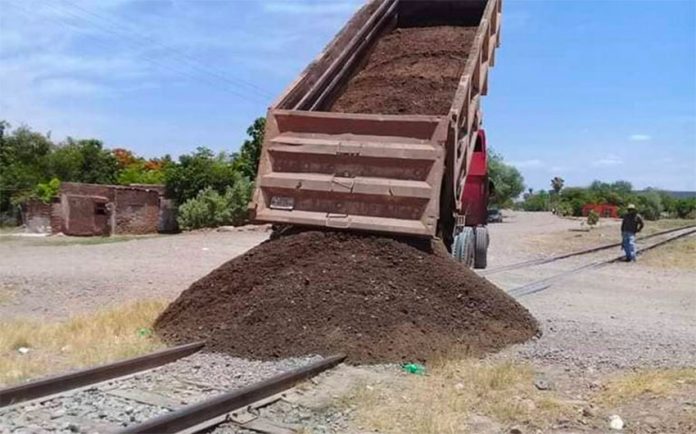
A rail blockade in Sonora.

President López Obrador said Monday that “corrupt politicians” might be behind the ongoing protests of Yaqui indigenous people in Sonora.

The president announced August 6 the creation of a justice commission that will be responsible for returning expropriated land to the Yaqui people, delivering basic services to them and rerouting a gas line.

But some members of the Yaqui community were unhappy with the federal government’s commitments and last week reinstalled a blockade of federal Highway 15 and placed obstacles on train tracks connecting Nogales, Sonora, to Nogales, Arizona.

Disgruntled Yaquis also reinstated a blockade of tracks in the municipality of Guaymas that was first set up in mid-July.

They are demanding that the government fully compensate them for ceding land for the construction of a range of infrastructure projects and fulfill commitments for the social development of their eight towns: Cócorit, Bácum, Vícam, Pótam, Tórim, Huírivis, Ráhum and Belem.

Speaking at his morning new conference on Monday, López Obrador said his government is now seeking a “general agreement” with the Yaqui people that will see the blockades lifted.

“I was with the Yaqui people, … I signed a justice commitment … that includes resolving all their demands,” he said before adding that the residents of one town are divided about the government’s plan.

“It seems that [one] group doesn’t agree with participating in what is being planned … or they don’t have the proper information. … I also feel that there is manipulation: corrupt politicians, those who always take advantage of the moment, always get involved in these cases,” López Obrador said.

“Do not allow yourselves to be manipulated by anyone,” he urged the Yaqui community without specifying exactly who might be trying to influence them.

The president said the head of the National Institute of Indigenous Peoples, Adelfo Regino, would travel to Sonora to speak with the Yaqui people and reiterate the government’s commitment to them.

“He will be there today, … he’s my representative, he has a mandate, … he’s my stand-in in the commission that was created to attend to the demands of the Yaqui people. … The agreements they reach have all the support of the presidency,” López Obrador said.

He ruled out any possibility that force would be used to clear the blockades, stating that “it’s better to convince and persuade than to impose.”

That position is likely to draw the ire of the private sector, particularly companies that export goods to the United States via Sonora.

The Confederation of Industrial Chambers said that more than 2,000 train cars carrying millions of dollars worth of agricultural products and manufactured goods have been held up by the blockades.

Grain, auto parts, beer industry supplies and school textbooks are among the goods that have been stranded.

Source: Reforma (sp), El Sol de México (sp) 

Mexico City borough chastised for confiscating 140 vendors’ tricycles

0
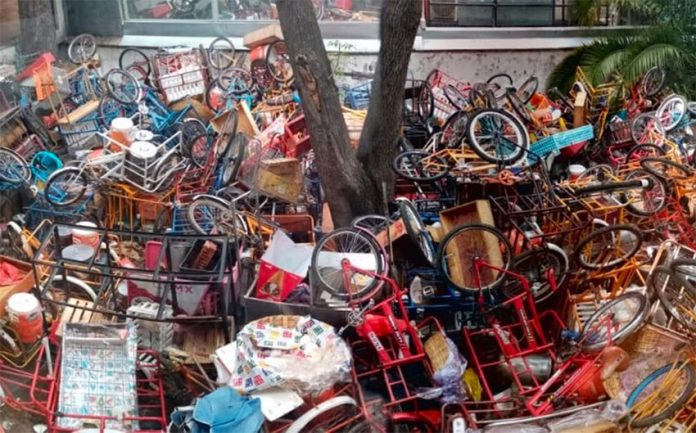
The confiscated tricycles in Miguel Hidalgo.

Authorities in the wealthy Mexico City neighborhoods of Polanco and Granadas are taking heat on social media after they confiscated 140 tricycles belonging to street vendors and marked them for destruction — some still containing their wares.

The backlash began after Hegel Cortés Miranda, general director of government and judicial matters in the borough of Miguel Hidalgo,which includes Polanco and Granadas, posted a photo on the government’s Twitter account of the 140 bikes in a city warehouse. In the post, he said the confiscated bikes would be destroyed.

Twitter users immediately began firing off negative responses, accusing authorities of depriving many people of their means of income, pointing out that many of the tricycles in the photo still contained baskets of bread, trays of food, and coffee thermoses belonging to their owners. Other commenters said the tricycles were private property and should be returned to their rightful owners and that the mobile vendors have less ecological impact, use less electricity, and cause less traffic than fixed vendor stalls, which were not targeted.

Some accused the borough of trying to “clean up” a wealthy district considered exclusive, saying the mass seizure was evidence that Mexico City authorities’ priorities were off kilter.

“What problems need to be urgently resolved in CDMX?” Twitter user @JimenaMarroquín wrote in response to Cortés’s post. “Crime? Rape? Lack of jobs? Lack of water in several neighborhoods? Mmmm, no, I think 140 commercial street vendor tricycles need to be taken out of Polanco because they look ugly in that area.”

“It is, in the end, what’s important to [government officials] is that Polanco looks pretty so that the people with money don’t complain, and as for the poor people, let them die of hunger,” Twitter user Samuel Álvarez wrote.

Said another: “Sales by bicycle or tricycle are not prohibited … the tricycles should not be confiscated, they should be returned to their owners.”

The borough is currently undergoing a multilayered public works facelift, with millions of pesos being invested in 89 neighborhoods, according to chief executive Víctor Hugo Romo, to improve and beautify infrastructure, green spaces, and public landmarks. Last month the Glorieta Polanco, a picturesque roundabout off Edgar Allan Poe and Horacio streets, was renovated at a cost of 7 million pesos. In June, in the Ampliación Daniel Garza neighborhood, government funds paid for a new, large mural paying tribute to medical personnel. 

In light of the high number of comments the tweet attracted, Cortés said the fate of the tricycles would be determined in line with administrative procedure. He stressed that the administration was sensitive and respectful of the social and economic reality of city residents.

Sources: Milenio (sp)

Since gang leader El Marro’s capture, homicides down in Guanajuato

0
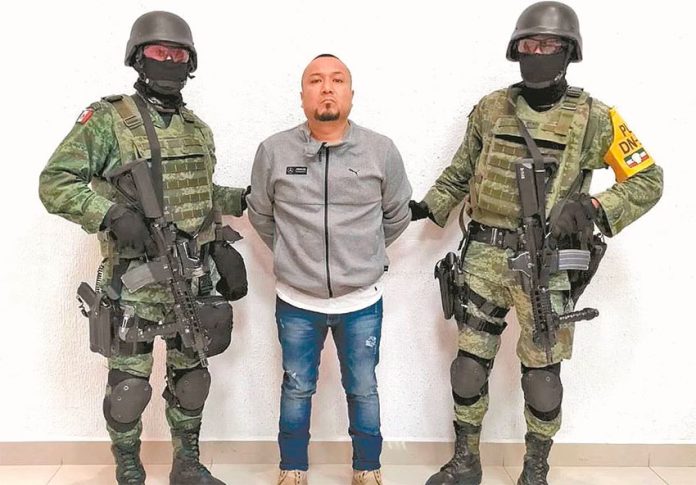
El Marro in custody.

Homicides have declined in Guanajuato since the capture of crime boss José Antonio “El Marro” Yépez Ortiz earlier this month but the state nevertheless remains the most violent in the country.

Between August 2 – the date the Santa Rosa de Lima Cartel (CSRL) leader was taken into custody – and August 14, there were 125 homicides in the Bajío region state, according to the federal government’s daily statistics.

The figure represents a 26.5% reduction compared to the preceding 13-day period – July 20 to August 1 – during which 170 people were murdered.

While the decline in homicides is welcome news, violence remains more prevalent in Guanajuato than any other state in the country.

The number of murders in Guanajuato between August 2 and 14 was 26% higher than in México state, which recorded 99 homicides to rank as the second most violent state.

Ranking third to fifth in the same period were Michoacán, Baja California and Chihuahua, where there were 81, 77 and 69 homicides, respectively.

Guanajuato, once one of Mexico’s most peaceful states, has been plagued by violence in recent years as El Marro’s fuel theft, drug trafficking and extortion gang engaged in a vicious turf war with the Jalisco New Generation Cartel (CJNG), led by Nemesio “El Mencho” Oseguera Cervantes.

Both President López Obrador and Security Minister Alfonso Durazo have noted that homicides declined in Guanajuato after the capture of Yépez, while Guanajuato Governor Diego Sinhué Rodríguez Vallejo said his arrest was “a big step toward recovering peace” in the state.

But security analyst Alejandro Hope told the newspaper El Universal that he didn’t expect a reduction in violence in the short term.

“It’s possible that Yépez’s arrest and the dismantling of a specific criminal network will eventually reduce the number of homicides in some Guanajuato municipalities [but] the opposite scenario could arise as well: less order in criminal markets and more lethal violence,” he said.

Another security analyst, David Saucedo Torres, warned earlier this month that the capture of El Marro wouldn’t put an end to the violence in Guanajuato, noting that the turf war between the CSRL and the CJNG is not over and that the latter is also engaged in disputes with other crime groups that operate in the state.

Guanajuato still belongs to us, says Santa Rosa cartel in new video.

However, the CJNG itself appears confident that peace can be restored as a result of the arrest of Yépez.

In a video posted online a week after the crime boss was taken into custody, a presumed leader of the Jalisco cartel pledged to bring peace to the state.

Surrounded by some 20 heavily-armed men dressed in military attire, a masked cartel member made a commitment to the people and authorities of Guanajuato “to keep the state calm and in peace.”

“We’re pleased to know of the arrest of José Antonio Yépez, alias El Marro, a killer of innocent people. … The war was against Marro, whose days were numbered,” the presumed CJNG leader read from a prepared statement.

“You can live calmly and have the security that we will maintain peace and tranquility because as a cartel we don’t dedicate ourselves to kidnapping or extortion,” he said.

“Businesspeople of Guanajuato, we will not make you run – have the peace of mind that you can stay in this beautiful state and those who left out of fear can return.”

The suspected cartel leader also said there won’t be reprisal against Yépez’s family members and followers as long as they stop carrying out criminal activities.

For its part, the CSRL posted its own video to social media over the weekend to warn its arch rival that it won’t allow it to operate unopposed in Guanajuato.

“Guanajuato continues to belong to the Santa Rosa de Lima Cartel. All of our cells, such as that you see here, continue to work and will continue to work in the entire state,” said a masked and armed man backed up by 13 others.

“We will not allow the establishment of the Jalisco New Generation Cartel in any municipality of the state. … Of all the cartels of Mexico, you are the worst and you’re coming to … exploit the people of Guanajuato. But as in all these years of fighting, we will remain strong and not allow your entry into the state.”

Source: El Universal (sp), EFE (sp), Milenio (sp), Reforma (sp) 

Soccer player accuses México state police of extortion

0
Soccer player Jair Peláez.

Premier League soccer player Jair Peláez claims that police in México state used extortion to force him to pay 10,000 pesos after a routine traffic stop on his way to Mexico City.

Peláez says police threatened him and his family if he did not pay the officers the money.

According to the soccer player, a goalie for the Cruz Azul Hidalgo team, he was driving from Hidalgo to Mexico City when police stopped him in Cuautitlán Izcalli and told him he had to pay a fine because his vehicle was in violation of the state’s Hoy No Circula anti-pollution regulations, which limit the number of cars on the allowed on roadw in México state on certain days based on their license plate number.

Peláez agreed to drive his car to a location that was supposedly a police station where he could pay his fine, but eventually the situation became worrying, he said on Twitter.

“Arriving at the place, it turned very suspicious,” he wrote. “They asked me to get out of my vehicle. I did so and asked where I could pay the fine and if I had to leave the vehicle at the impound lot where it was. There they began to intimidate and threaten me with doing something to my wife and children.”

According to Peláez, police told him that they would take him to the nearest ATM to withdraw money. Four officers escorted him on foot for about a half hour to two different ATMs.

Police told him that the 10,000 pesos was for Peláez to be able to return to his family “and guarantee that they would be fine,” he said.

He asked his Twitter followers to retweet his post about the incident and also posted photos, saying he hoped that “those responsible would be punished.”

Source: El Universal (sp), Récord (sp)

Covid numbers decline for third week; Aguascalientes rejects red alert level

0
Checking temperatures in Aguascalientes.

New coronavirus case numbers declined for a third consecutive week in early August, a senior health official said Sunday.

Director of Epidemiology José Luis Alomía told the Health Ministry’s nightly coronavirus press briefing that new case numbers are estimated to have fallen 20% in epidemiological week 32 – August 2 to 8 – compared to the previous week.

The decline came after a reduction in new case numbers was recorded in each of the final two weeks of July.

Alomía noted that for the first time at the national level the number of people added to the Covid-19 “recovered” list in week 32 was higher than the number of people who tested positive during the same seven-day period.

Alomía also noted that the national Covid-19 positivity rate – the percentage of tests that come back positive – fell to 44% in week 32 from 47% the week prior.

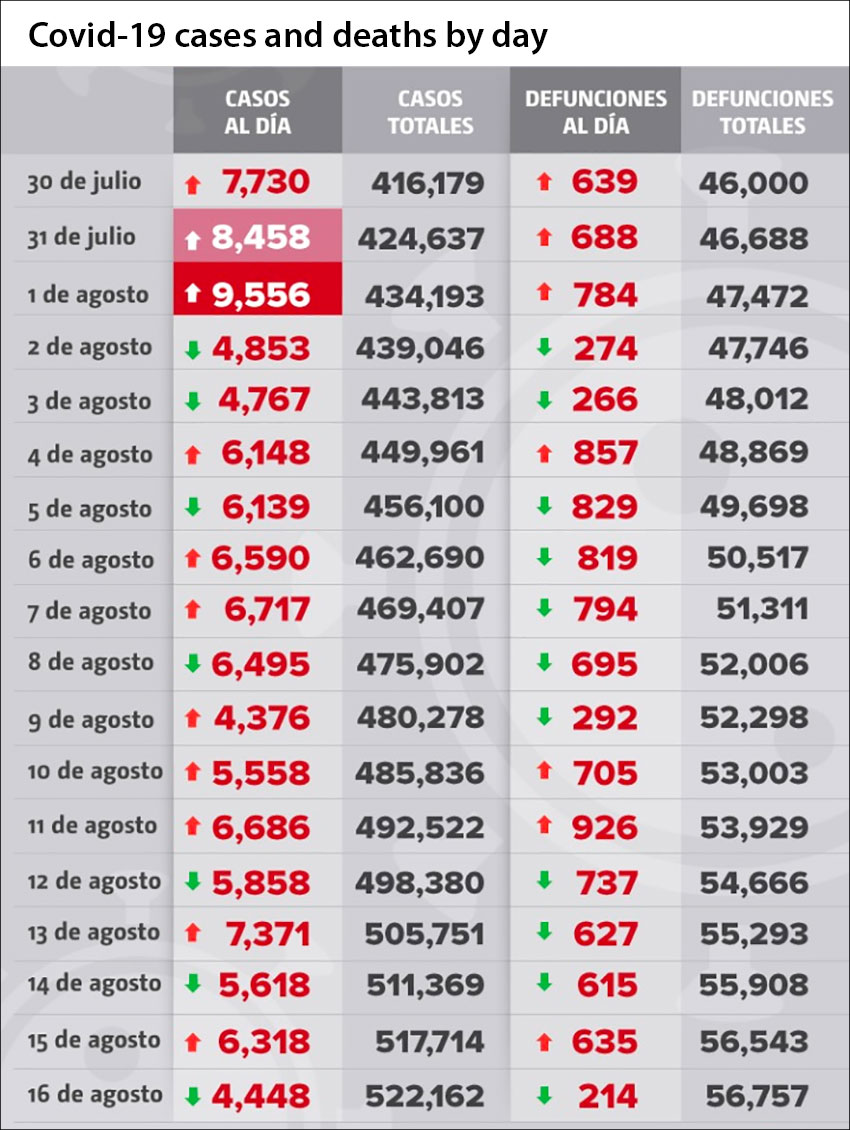
The daily tally of coronavirus cases and deaths.
The daily tally of coronavirus cases and deaths. Deaths are numbers reported and not necessarily those that occurred each day. milenio

“This means that fewer and fewer people who have an acute respiratory condition end up being confirmed as having Covid-19,” he said.

The positivity rate is still very high compared to many other countries because most testing in Mexico is of people with serious coronavirus-like symptoms.

Almost 1.2 million people have now been tested, according to Health Ministry data, of whom 522,162 were confirmed to have the infectious disease. Health authorities registered 4,448 new confirmed cases on Sunday.

Just under 29,000 cases – 5.5% of the total – are considered active while the results of more than 81,000 tests are not yet known.

Mexico’s Covid-19 death toll rose to 56,757 on Sunday with 214 additional fatalities registered. Mexico ranks third for total Covid-19 deaths after the United States and Brazil.

The mortality rate is just under 45 per 100,000 residents, according to Johns Hopkins University data, the 13th highest in the world.

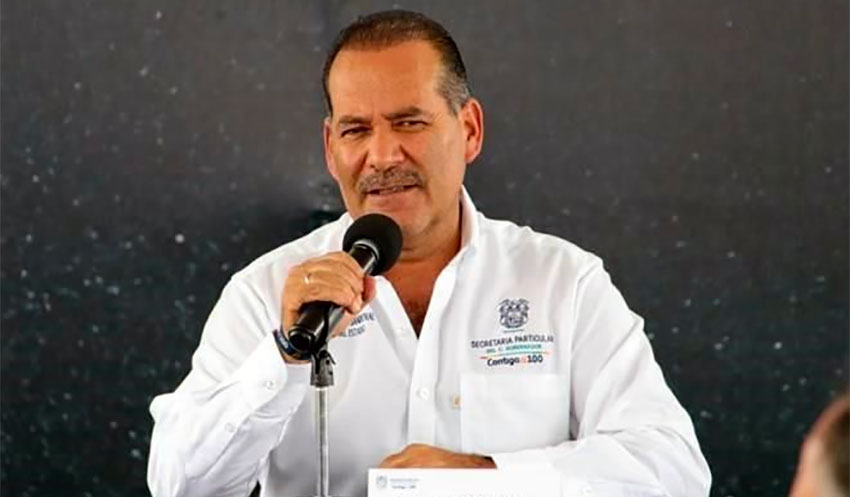
Aguascalientes Governor Orozco disputes his state's stoplight risk level.
Aguascalientes Governor Martín Orozco disputes his state’s stoplight risk level.

Eleven weeks after the national social distancing initiative was replaced by a “stoplight” system that recommends coronavirus restrictions on a state-by-state basis, most of the country is painted orange, indicating “high” risk of infection.

The risk level is red light “maximum” in just five of 32 states while Campeche begins this week as the only yellow light “medium” risk state.

While federal health authorities reduced this week’s risk level from red to orange in 11 states, the only state to go the other way  was Aguascalientes.

But the state government rejected the red light risk assessment, saying that it is managing the epidemic appropriately and that its own assessment is that the risk level should be yellow.

The government said in a statement that new case numbers have remained stable and that there is still sufficient hospital space despite occupancy increasing in recent days.

It also said that it has the necessary medical supplies to treat coronavirus patients and noted that Aguascalientes has one of the highest testing rates in the country.

The small Bajío region state has recorded 4,812 confirmed cases since the beginning of the pandemic, the fifth lowest tally in the country, and 324 Covid-19 deaths.

Despite its red light status, Aguascalientes has just 375 active coronavirus cases, according to Health Ministry estimates.

The active case tally is the third lowest in Mexico after Morelos and Tlaxcala, where there are an estimated 303 and 349 active cases, respectively.

Source: Reforma (sp) 

Mexico, US extend land border closure but travelers welcome by air

0
It might be a while before the tourist industry sees numbers like this.

The U.S. and Mexican governments will extend their agreement to close the land border to nonessential travel until September 21, but that doesn’t mean Mexico isn’t welcoming visitors.

“The border couldn’t be opened right now,” Mexico Foreign Affairs Minister Marcelo Ebrard explained on Thursday when the announcement was made to continue the shutdown. “It wouldn’t be logical that we change it right now.” 

While tourists haven’t (officially) been permitted to drive into Mexico for a vacation since March 21, there have been no restrictions on flying into the country, especially since hotels and restaurants in popular resort destinations reopened, albeit with limited capacity, in June.  

Thousands of travelers from the U.S. are enjoying uncrowded, low-key vacations — bars and nightclubs have not yet reopened — in beach destinations such as Los Cabos, Puerto Vallarta and Cancún, despite the U.S. government’s issuing of a “do not travel” warning for all of Mexico earlier this month due to the coronavirus. 

The level of screening upon arrival at Mexican airports varies and may include taking travelers’ temperatures and asking them to respond to a health questionnaire. There are no restrictions on U.S. citizens and permanent residents who return to the United States from Mexico, via air or land.

Coronavirus restrictions in Mexico vary by state and mostly follow the federal government’s “stoplight” map, which tracks how each state is doing based on four factors: case number trends (whether new infections are increasing, decreasing or stable), hospital admission trends, hospital occupancy levels and positive testing rates.  

Hotel occupancy is capped at 30%, and many hotel guests are Mexican nationals, a shift toward domestic tourism that is also a trend in the United States. 

Such is the case at Chablé Yucatán, which has long catered to Mexican residents. “This is normal, nothing new,” general manager Rocco Bova says. “Our market was always Mexico, now just slightly higher. We also got some people from the U.S., including guests flying private.”

Nobu Hotel Los Cabos, which reopened on July 1, reports that Americans make up the bulk of its guests, and Chablé Maroma on the Riviera Maya is seeing an even split between Mexican and foreign tourists.  “We tend to have a lot of American guests, but surprisingly, we have experienced an increase in Mexican travelers,” general manager Gerardo Ortiz told Travesias magazine. “Especially honeymooners that needed a sudden change of plans due to Covid-19.”

Current figures show Mexico has 511,369 accumulated cases of the coronavirus, and the average per capita rate of active cases is 35.2 per 100,000. In the United States, the Centers for Disease Control and Prevention report the per capita rate of infection is 1,613. However, coronavirus testing is being conducted on a much higher scale north of the border.

Source: Afar (en)