López Obrador, left, lacks vision, according to Rodríguez.
Nuevo León Governor Jaime “El Bronco” Rodríguez hopes some of U.S. President Donald Trump’s Covid-related economic strategies will rub off on Mexican President López Obrador next month.
“It is good that the president is going to the United States, because that will open up his vision, which unfortunately he does not have at the moment,” quipped Rodríguez in Tamaulipas at a meeting of governors from nine states.
Rodríguez contrasted López Obrador’s economic plan, mainly focused on increased social aid, the delivery of small micro-credits and the construction of legacy projects such as the Maya Train, with that of the Trump administration.
The governor expressed support for employment subsidies in the United States where the government has invested up to 30% of its gross domestic product in creating jobs to stimulate economic recovery, something that is not happening in Mexico, he said
The meeting between the two presidents coincides with the entry in force of the new trade treaty between Mexico, the United States and Canada on July 1, and it will be the Mexican president’s first trip abroad since taking office in 2018.
Rodríguez urged the president to use the meeting with Trump to standardize the terms of the treaty in sectors such as agriculture, logistics and the production of goods destined for the United States. “Mexico has enormous opportunities to be productive, and we need to take advantage of them,” he said.
Some of López Obrador’s critics are skeptical that the meeting will be beneficial for Mexico, where Trump is not generally well-liked, and did not mince words.
In a post to Twitter last week, the former Mexican ambassador to the United States, Arturo Sarukhán, called the potential visit “a big blunder and a mistake,” saying that Trump would only use the Mexican president as an electoral prop.
In an interview earlier this month Sarukhán called such a visit “suicidal for Mexico’s long-term and strategic relationship with the United States.”
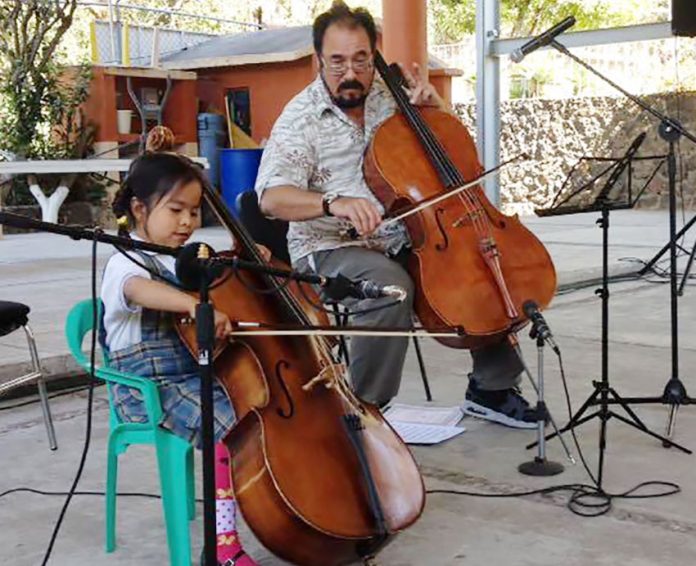
Cellist Alan Durbecq performs with a young student in Amatlán, Morelos.
Not content with a successful international career, a Mexican musician has chosen to work at providing artistic opportunities to Mexican children.
World-renowned classical guitarist Morgan Szymanski, born in Mexico City in 1979, has created an organization that so far has offered music workshops to more than 17,000 children.
Szymanski is descended from Coronel Ignacy Szymanski, a Polish military officer who migrated to New Orleans in the 19th century and whose son, Jean, made his way to Mexico after the civil war. His mother came from Scotland to study Mexican textiles, married his father, and served as the head of the Edron (British) School in Mexico City for a number of years.
Their son started playing the guitar at age 6 with the support of his parents. After studying at the National School of Music in Mexico he continued at the Edinburgh Music School and the Royal College of Music in London, graduating in 2004.
In 2015, he was named by the Ministry of Foreign Affairs as one of 100 Mexican artists with international impact.
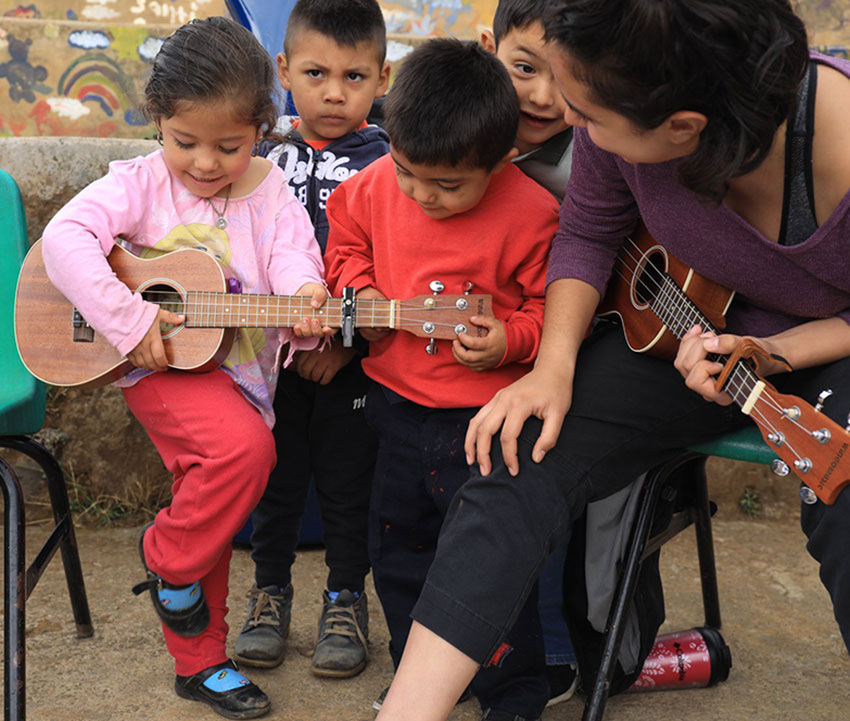
Musician Lavinia Negrete with children in Valle de Bravo, México state.
During his time in the U.K. he worked with Live Music Now! (LMN) a project of international violinist Yehudi Menuhin that takes young performers into nursing homes, hospitals and rural villages to play music.
In 2016, Szymanski founded PRISMA (Programa de Retribución e Impacto Social Mediante las Artes), using a crowdfunding campaign that collected money from all over the world.
PRISMA is affiliated with LMN, but is more ambitious. The latter focuses only on setting up live musical performances but PRISMA does more and integrates more kinds of art.
Its main performance events are festivals. In February for each of the past four years it has put on multi-day events in the towns of Tepoztlán, Morelos, (where Szymanski lives) and Valle de Bravo, several hours west of Mexico City.
After the earthquake of 2017, PRISMA organized an “artistic campaign” for damaged schools in Tepoztlán, offering workshops and raising money. It did the same for in Oaxaca after seismic events during the same year.
Fortunately, PRISMA festivals for 2020 were held before the Covid-19 pandemic shut everything down. This year the theme was Mexican folk music and featured two special guests — María Bernal and Angelina Benavides. It also included jazz guitarist Chris Van Buren, Finnish clown Sampo Kurppa, and Mexican violinist Nabani Aguilar.
Andrés Loewe, a Tepoztlán artist, teacher, actor and musician, wows students with his drum.
During the rest of the year PRISMA sponsors workshops with schoolchildren living in highly marginalized areas, mostly in the state of Morelos. (Now, of course, they are on hold.) Artists go into schools and introduce their art, after which the students interview the artists to learn about their career. Of course, the artists perform as well.
Some workshops introduce children to multiple arts. For example, at one Szymanski played his guitar while students painted what they felt listening to the music.
The workshops are special because for many children it is their very first experience with the art presented. One appreciative teacher told Szymanski that “one of these workshops is worth six hours in the classroom.”
The organization recruits Mexican and international performers in music, visual arts, dance, film, acting and clowning to give the workshops to children, allowing them not only to see a live performance, but to learn something about it.
With luck, some of the children will be inspired to pursue an artistic activity. One of the artists is British violinist Lizzie Ball, who takes her experiences working with Mexican children home when she plays in venues such as the Royal Albert Hall.
The shows and workshops also give young performers a chance to develop their careers. They receive only a small fee, but almost all want to return. One very possible reason is that these artists are often the guests of the communities they visit — receiving food, lodging and other support from local families.
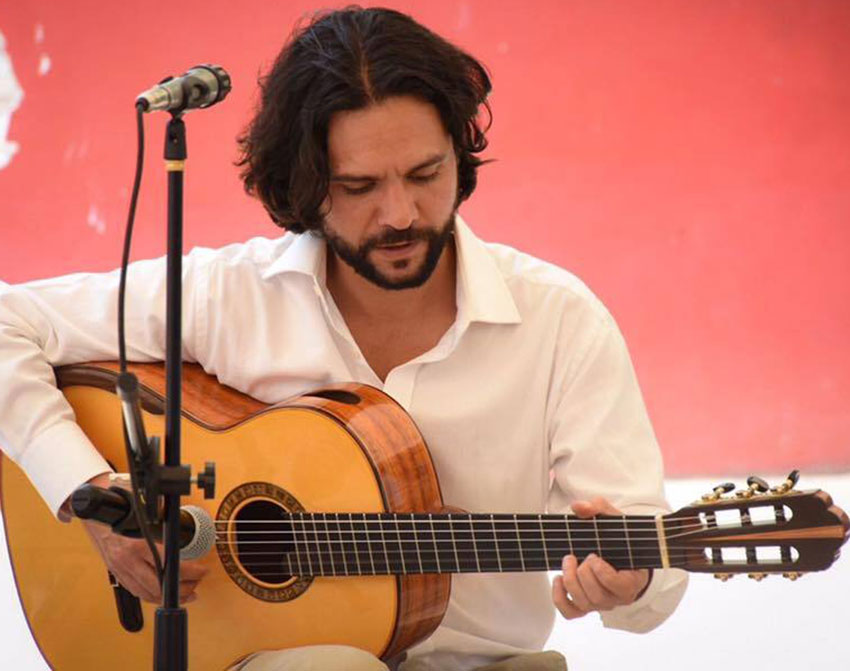
Classical guitarist and PRISMA founder Morgan Szymanski.
The “very Mexican welcome” that artists receive is a huge change from impersonal hotel rooms and gives artists, especially foreign ones, a glimpse into Mexican life they might never otherwise get.
PRISMA is the only program of its type in Mexico. Most of the activities are privately funded although the government of Valle de Bravo has provided support there. Szymanski believes it is important for Mexico as there are so many children in need of artistic contact.
It is easy to get children and schools interested in the workshops but the problem is that once the activities grow past a certain size, it becomes necessary to work with government bureaucracies.
But Szymanski believes that PRISMA can go national. He says that despite the organization’s small size, they have reached thousands of children. Sometimes, he says, “If you keep things small, you can do things well.”
Leigh Thelmadatter arrived in Mexico 17 years ago and fell in love with the land and the culture. She publishes a blog called Creative Hands of Mexicoand her first book, Mexican Cartonería: Paper, Paste and Fiesta, was published last year. Her culture blog appears weekly on Mexico News Daily.
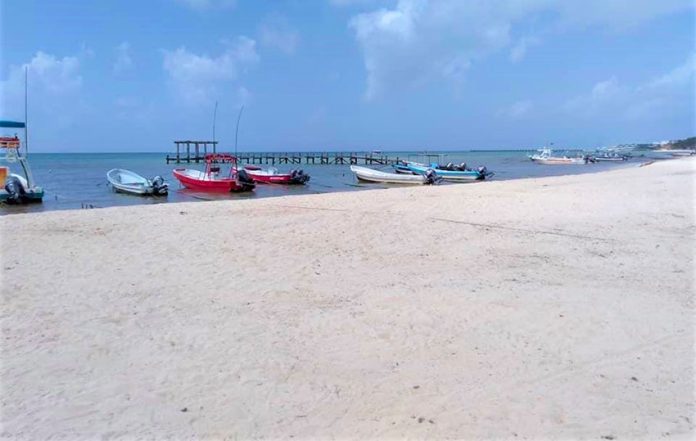
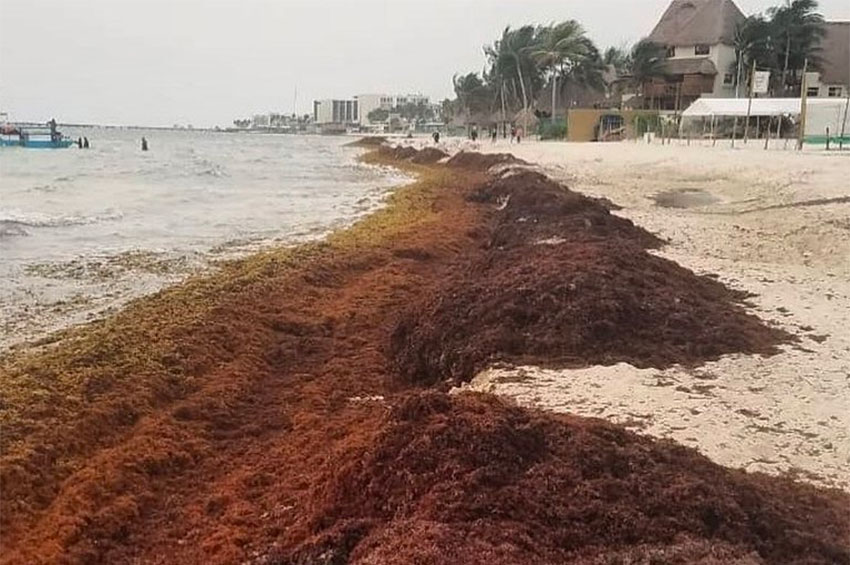
A sargassum-free beach Friday in Playa del Carmen.
Saharan dust clouds, the consequences for tourism of the coronavirus and the advent of hurricane season have given residents and businesses in Quintana Roo plenty to worry about as the state faces one of its most difficult summers in history.
However, reports from Playa del Carmen and other beach destinations in the state have added another concern to the list of worries: the return of sargassum which has blighted beaches in the area for several years.
As of this week, 5,678 tonnes of sargassum have been removed from the region’s beaches since the algae first washed up in May, according to a report by the navy.
Photos published on Facebook by the Citizens’ Sargassum Observatory showed the foul-smelling weed on several beaches.
“Seven workers and a single tractor is all they have on the ground to collect the sargassum in Playa del Carmen,” the organization reported, posting an image of a group of people attacking the seaweed with shovels.
Playa Mamitas in Playa del Carmen on Wednesday. Observatorio Ciudadano Sargazo
The upscale, gated community of Playacar has also seen its beaches covered in a blanket of sargassum this month.
So far, Playa del Carmen, the Riviera Maya and Akumal have recorded the highest concentrations of sargassum, which can cause irritation if it comes in contact with the skin.
There were significant quantities in Punta Piedra, Tulum, and an image captured from Krystal Hotel and Resorts, in Punta Cancún, showed a long line of sargassum on its white sand beaches, although the seaweed problem there was minimal compared to other areas.
Puerto Morelos, Cozumel, Holbox and Punta Allen have also seen low quantities of seaweed, and Isla Mujeres and Isla Contoy have so far been immune, according to reports.
The navy warned this week that large accumulations of sargassum will hit the Quintana Roo coast over the next three months. According to forecasts, the most affected beaches will be in Solidaridad, where Playa del Carmen is located, Cozumel, Tulum and Othón P. Blanco.
“With cleaning of the sea in the Mexican Caribbean area as a priority, naval personnel work constantly for the eradication of the algae with the support of state, municipal and civil organizations,” the Navy said. More than 20,000 people have been involved in the coastal cleanup.
Additionally, Navy marines have installed 4,252 meters of floating barriers at sea to stop the seaweed from washing up on beaches.
The navy also uses flyovers to determine the position of the seaweed, and deploys sargassum-seeking ships to intercept the floating brown algae before it blights the coastline.
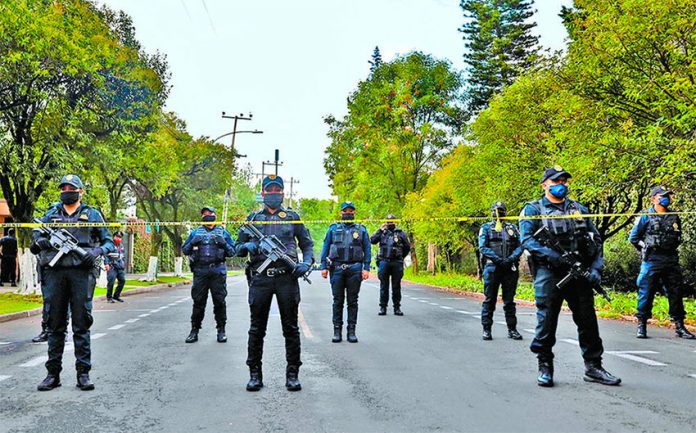
Police guard the crime scene Friday in Mexico City.
Government officials, including President López Obrador, had known for two weeks that the Jalisco New Generation Cartel (CJNG) was planning an attack against a top-level official.
Friday morning, Mexico City Police Chief Omar García Harfuch was ambushed by 28 armed men who sprayed the armored car he was traveling in with more than 150 high caliber rounds in a brazen murder attempt.
García received three bullet wounds but has been reported in stable condition and expected to recover.
Two police officers were killed in the attack as was a 26-year-old woman who found herself in the wrong place at the wrong time.
Security Minister Alfonso Durazo confirmed what Milenio reported on June 17: that between June 8 and 12 the National Intelligence Center (CNI) intercepted a telephone conversation between CJNG members.
Government officials and President López Obrador were made aware of the threat two weeks ago when security officials revealed the content of the phone call, in which cartel members were allegedly discussing their plan. They talked about which hitmen would be dispatched to attack public servants who were disrupting their criminal operations.
Authorities say the targets mentioned include Foreign Affairs Minister Marcelo Ebrard, for the recent extradition of El Menchito, CJNG leader Nemesio Oseguera’s son; Minister Durazo for federal operations against the cartel; Financial Intelligence Unit head Santiago Nieto for recently blocking 1,939 bank accounts linked to the cartel; and Chief García for arresting some of the cartel’s main leaders.
Security for some government officials was intensified as authorities worked to assess the validity of the threat, which played out at 6:35 Friday morning.
As García was on his way to his morning meeting with Mayor Claudia Sheinbaum, a construction truck and an SUV blocked the Paseo de la Reforma near the intersection with Monte Blanco in the upscale Lomas de Chapultepec neighborhood and opened fire, killing two officers who were escorting García as well as a woman driving through the area. Four police officers and one 23-year-old female bystander also suffered injuries.
Fragmentation grenades, .50 caliber Barrett sniper rifles, pistols and bulletproof vests were recovered from the scene.
García was shot in the shoulder, clavicle and knee and underwent surgery yesterday, but not before tweeting from his hospital bed that he blamed the CJNG for the attack. “This morning we were cowardly attacked by the CJNG, two colleagues and friends of mine lost my life, I have three bullet wounds and several shrapnel injuries. Our nation must continue to confront cowardly organized crime. We will continue working.”
That evening he updated his status. “I came out of surgery, I’m fine. I appreciate the displays of solidarity and affection. We will continue working for security and maintaining peace in our great Mexico City. Thank you very, very much for everything!”
Prosecutors say that the 12 men who were initially arrested in the attack stated that they were hired three weeks earlier. Footage of the attack was captured on surveillance video, leading to the additional arrests of two suspects in Atlacomulco and five in Tláhuac.
Among those in custody is Armando Briseño de los Santos who authorities are naming as the intellectual author of the attack.
Briseño is reported to be a cartel hitman who authorities suspect was responsible for the murder of two Israeli men in Mexico City in July 2019.
García, who was named Mexico City’s chief of police in 2019, has been battling organized crime for years.
In his previous role as head of the investigation division of the Federal Police, García was responsible for the release of 186 kidnapping victims, the capture of 606 kidnappers and the dismantling of 56 criminal gangs, according to El Heraldo de México.
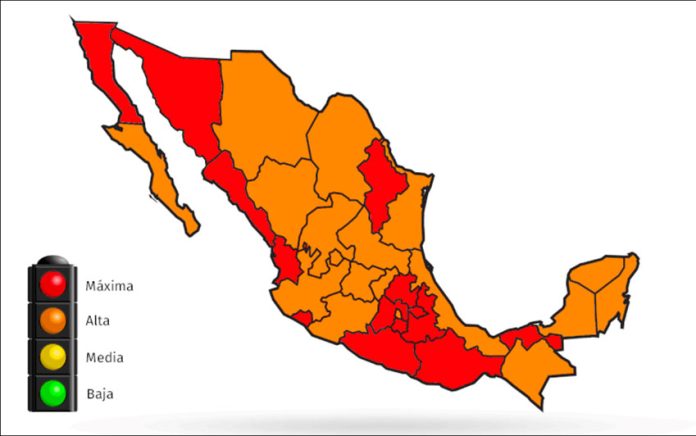
Although confirmed coronavirus cases have topped 208,000, the federal government’s latest color-coded “stoplight” risk map indicates that 18 states have moved from maximum risk to high risk and are able to ease coronavirus restrictions.
Colima, Hidalgo and Nuevo León, however, will move out of orange and back to the red, maximum risk level, as coronavirus conditions worsened. And Baja California, Guerrero, the state of México, Morelos, Nayarit, Oaxaca, Puebla, Sinaloa, Sonora, Tabasco and Tlaxcala remain at maximum risk.
In the 18 orange states, gyms, spas sporting clubs, churches and swimming pools are permitted to operate at 50% of their capacity, as are hotels, restaurants and cafés. Theaters, museums and cultural attractions may reopen at 25% capacity.
Markets and supermarkets can operate at 70% capacity, but may only allow one person per family inside the store. Barbershops and beauty salons may reopen but by appointment only.
Aguascalientes, Baja California Sur, Campeche, Coahuila, Chiapas, Chihuahua, Mexico City, Durango, Guanajuato, Jalisco, Michoacán, Querétaro, Quintana Roo, San Luis Potosí, Tamaulipas, Veracruz, Yucatán and Zacatecas have all been designated orange states.
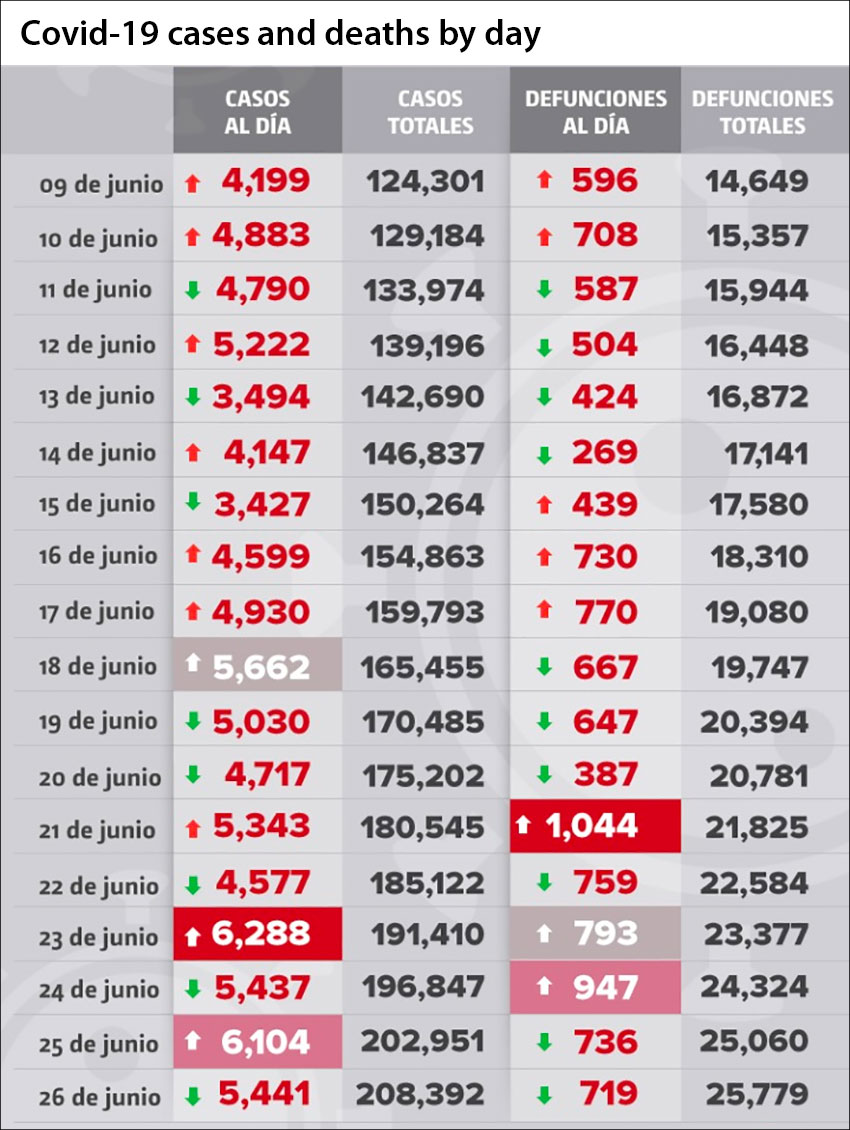
The daily tally of coronavirus cases and deaths. Deaths are numbers reported and not necessarily those that occurred each day. milenio
The government considers four factors when determining the risk level and corresponding stoplight color for each state: case number trends (whether new infections are increasing, decreasing or stable), hospital admission trends for coronavirus patients, hospital occupancy levels and positivity rates (the percentage of people tested who are confirmed to have Covid-19).
Health officials say that hospital occupancy carries a weight of 50%, case numbers and hospital admission trends 20% each and the number of new cases 10% in their decision-making on how the coronavirus is progressing in each state.
The Ministry of Health reported Friday evening that another 5,441 cases had been added to the tally, which now totals 208,392. An additional 719 deaths were reported, bringing that total to 25,779.
Coronavirus restrictions will be eased in Mexico City beginning Monday. Some experts say it's too soon.
With record levels of infection and between 4,000 and 6,000 new cases of the coronavirus being reported each day, some experts warn that if Mexico doesn’t change its strategy, infection rates will continue to spike.
They cite premature easing of coronavirus restrictions, low testing rates and people refusing to follow health protocols as reasons for the upward trend and are asking authorities to go on the offensive against the pandemic.
Given that Mexico City, the epicenter of the coronavirus outbreak with 3,842 active cases, will advance from a “red light” maximum risk level to an “orange light” high-risk level next week, experts don’t see the coronavirus curve flattening anytime soon.
“Mexico City is moving to an orange light and these are not the right conditions. The transmission has been more intense in recent weeks and if people go out in the street there will be more infections,” said Malaquías López Cervantes, a public health professor at the National Autonomous University (UNAM) and spokesperson for the university’s Covid-19 committee.
“People are exhausted by confinement and social distancing and staying home is no longer on their minds. By relaxing mitigation measures it is normal that infections continue and if we keep on like this there will be no way to flatten the curve,” López said.
Researcher and epidemiologist Alejandro Macías concurs.
Mexico has already exceeded 208,000 confirmed cases and 25,000 deaths, and Macías argues that people should not accept these numbers as part of the “new normal,” as there is nothing normal about such a high rate of contagion when it could be prevented.
In a video Macías published to social media, the doctor, who in 2009 was Mexico’s special commissioner for influenza care, advocated for increased testing and the use of face masks.
“In Mexico, cases of the new coronavirus continue to increase and deaths accumulate in large numbers every day. We are already getting used to that normality; we should not get used to it. It is not normal. This virus should not take so many people,” Macías said.
“We need to do go on the offensive, we need to do more testing, we have to do more testing. We also need to normalize the use of masks for everyone, right on up to the president of the republic. That will help us reduce the risk,” said López.
As of next Monday, 18 states in Mexico will have dropped to an orange, or high-risk level, whereas three states, Colima, Nuevo León and Hidalgo, will re-implement restrictions as they move back to red.
Hospital occupancy levels are at 59% and trending downwards in Mexico City.
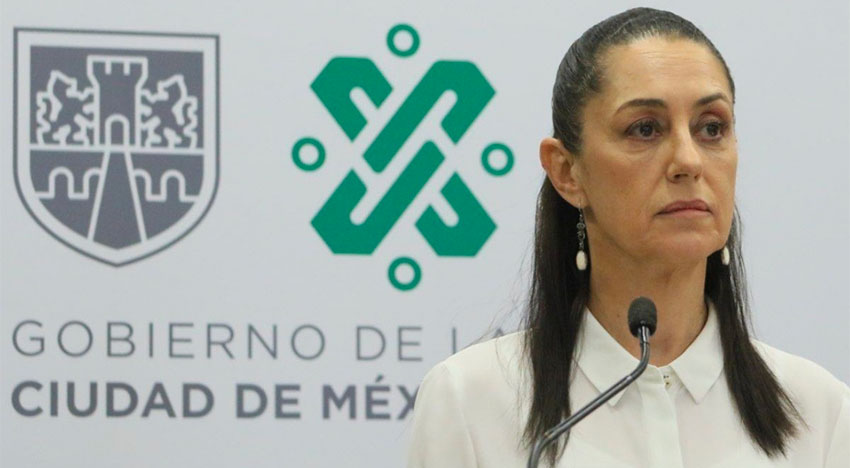
The coronavirus risk level in Mexico City will be downgraded from “red light” maximum to “orange light” high next week, Mayor Claudia Sheinbaum said on Friday.
The switch will allow some restrictions to be eased in the capital according to a staggered schedule.
Sheinbaum said that the switch to orange was possible because hospital occupancy levels are at 59% and trending downwards.
She said 2,973 coronavirus patients are currently hospitalized, an 8% decline compared to a week ago and a 15% drop compared to the peak on May 22.
The mayor stressed that if hospital occupancy levels go above 65% again, red light restrictions will be reinstated. She urged residents to continue to take precautions to reduce the risk of infection. People should continue to stay at home as much as possible and the use of face masks in public places remains mandatory, Sheinbaum said.
“Next week … we’re going to open [the economy] gradually and with strict health measures. The pandemic is ongoing. All citizens have made an effort to stop the pandemic growing [and] we need [their continued] support,” she said.
Small neighborhood stores will be permitted to reopen on Monday and domestic workers can return to work. People who employ workers such as maids in their homes must provide them with a face mask, protective shield and gloves, according to guidelines published by the government.
Sports centers will also be permitted to reopen at 30% of their regular capacity starting on Monday.
On Tuesday, shops and public spaces in Mexico City’s historic center will be permitted to reopen, while restaurants and hotels across the capital can welcome back diners and guests from Wednesday on.
Restaurants will be permitted to operate at 30% of their regular capacity if they only have an enclosed dining area and at 40% capacity if they have both indoor and outdoor space. Wait staff must wear a face mask and protective shield at all times and restaurants must not play music or issue reusable menus to diners.
Hotels and their in-house restaurants will also be permitted to operate at 30% capacity but common spaces such as events rooms and gymnasiums must remain closed.
Mayor Sheinbaum announces the new virus alert level Friday in Mexico City.
Street markets known as tianguis will be permitted as of Thursday next week, while beauty and hair salons can reopen next Friday but must operate on an appointment-only basis and not exceed 30% of regular capacity. Their workers and customers must wear face masks and appointments are restricted to a maximum of one hour.
The following Monday, July 6, department stores and shopping centers will be allowed to reopen at 30% capacity. Their opening hours will be restricted from 11:00 a.m. to 5:00 p.m.
All businesses that employ 30 or more people must test at least 5% of their workforce for Covid-19 on a weekly basis, according to government rules.
During Mexico City’s “orange light” phase, a range of businesses must remain closed including cinemas, theaters, bars, night clubs, museums, casinos and gyms.
Educational institutions will also remain closed while the coronavirus risk level remains high and events that gather large numbers of people, including religious services, are prohibited.
Given that the governments of México state, Morelos, Puebla and Hidalgo agreed to share the same coronavirus risk rating as the capital because of their interconnectedness in terms of the movement of people and goods, those states are also expected to switch from red to orange on the Health Ministry’s updated “stoplight” map to be presented by the Health Ministry on Friday night.
The downgrading of the risk level in Mexico City has occurred even though the capital still has the largest active coronavirus outbreak in the country, with 3,842 cases as of Thursday, according to official data.
One of Mexico’s first two confirmed Covid-19 cases was detected in the capital in late February and the city has maintained the unwelcome title of the country’s coronavirus epicenter ever since.
As of Thursday, Mexico City has recorded more than 45,000 confirmed cases and 6,116 Covid-19 deaths.
However, the case tally likely only represents a small fraction of the real total due to limited testing while an analysis of death certificates and several media reports indicate that coronavirus-related fatalities are being drastically underreported in the capital.
The Pescadero Food Bank prepares food packages for needy families.
A return to lockdown may be in the future for Baja California Sur (BCS) if the coronavirus cannot be controlled.
Governor Carlos Mendoza Davis said that so far in June there has been a 181% increase in virus cases in the state and an 86% increase in deaths due to the pandemic.
The number of hospital beds occupied by coronavirus patients and the use of ventilators has also doubled.
The governor warned that if the virus rate continues to increase, the state could go back into lockdown, which was partially lifted on June 15.
The state health laboratory says it is currently processing between 80 and 100 coronavirus tests each day.
Tests are only authorized for symptomatic people meeting specific criteria, and when a patient tests positive, contact tracing is conducted and the person is continually monitored to ensure they self-isolate and that their symptoms do not worsen.
Health authorities have created a geo-referenced map of coronavirus patients in the state, but that will not be made public due to concerns for the safety of the sick, El Sudcaliforniano reports.
As of June 25, BCS had 1,324 recorded confirmed cases of the coronavirus and 69 deaths.
Good coronavirus news
A group of about 15 people in Pescadero, a mainly agricultural community located on the Pacific side of the peninsula between Cabo San Lucas and La Paz, is giving back to their community through the Pescadero Food Bank, which was started in 2017 by a small group of expats.
The original group started providing bags of basic staples (flour, pasta, sugar, oil, rice, beans) to families in need. Over time, they eliminated flour and sugar from their bags in order to focus on healthier, higher protein staples such as eggs, tuna, lentils, milk, fresh produce and oatmeal.
Bags of supplies ready to go to families in Pescadero.
One of the families they are helping is a single-parent household consisting of mother Angélica and her five children, who range in age from 5 to 16. They live in an unfinished home with no water or electricity.
This living situation is typical of those served by the food bank, which also helps those with disabilities and chronic illnesses and the elderly.
Since the coronavirus began, most who receive donations have lost all or part of their income and outreach has increased from 50 families to 400 families per month at a cost of US $3,000. The Pescadero Food Bank relies solely on donations, which can be made through their website, and receives no government support or help from other organizations.
And in San José del Cabo, taking a cue from other cities around the globe, one restaurant is providing respite for the entertainment starved by offering a drive-in concert in its parking lot.
Flora Farms, a farm-to-table restaurant located in Las Animas, will serve burgers, fried chicken, pizzas and milkshakes to cars full of guests who will be treated to a concert by local musicians the Shamans this Saturday evening. It will also be live-streamed beginning at 7:30 p.m.
The restaurant, like many in the area, otherwise remains closed for all but takeout as the Los Cabos economy struggles to recover from revenue lost during the shutdown and lack of tourism.
Political pandemonium in La Paz
Supporters of eight state legislators undergoing a political trial for various charges of mismanagement and corruption blocked access to the congressional meeting room and broke a window, which forced deputies to cancel the meeting and flee the building, fearing for their safety.
The hearing, which was set to take place Thursday morning, accuses eight legislators of various political parties of administrative mismanagement, breaching their legislative obligations and jeopardizing the stability of the legislature, among other charges.
Three legislative workers were trapped inside the session room when the pandemonium outside broke out. Two escaped through a window while the third remained inside due to an injured foot, La Jornada reports.
Scallop smuggler’s blues
The National Fisheries and Aquaculture Commission (Conapesca) arrested two people on Sunday at a military checkpoint on the northern outskirts of La Paz after they discovered 100 kilos of scallops in the trunk of a white sedan.
Neither the scallops nor the men escorting them had the proper papers in order to prove that the shellfish were legally harvested, reports BCS Noticias.
The arrest came a day after authorities found a similar sized stash of scallops, also illegal, in a white refrigerated truck containing 100 individual one-kilo bags they suspect were packaged for distribution.
The UFO that wasn’t
A strange object appeared in the skies over La Paz Monday evening, causing hundreds of people to wonder whether the city was being visited by aliens. Photos and videos of the round, shiny orb were circulated on social media and in news reports.
Much speculation about the craft’s origin arose as the news of the sighting went viral, with some commenting that if aliens were considering invading La Paz, they had better respect coronavirus protocol and wear masks.
However, further investigation revealed that the unidentified flying object was a high-altitude balloon, part of Google’s Project Loon which seeks to provide internet access by flying the globes through the stratosphere to help rural areas with their internet connections, BCS Noticias reports.
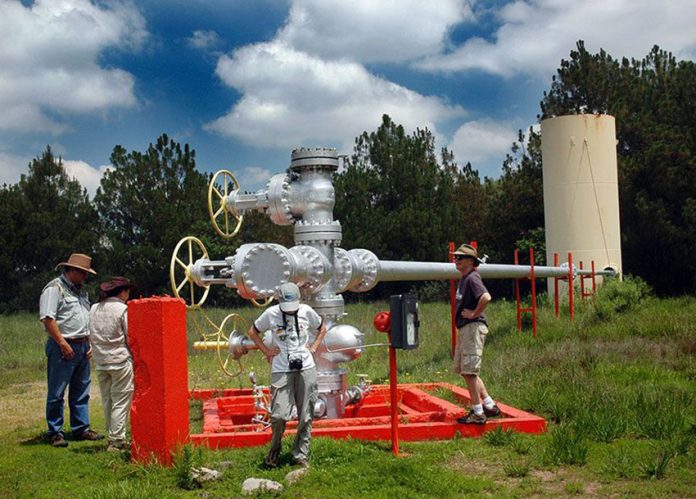
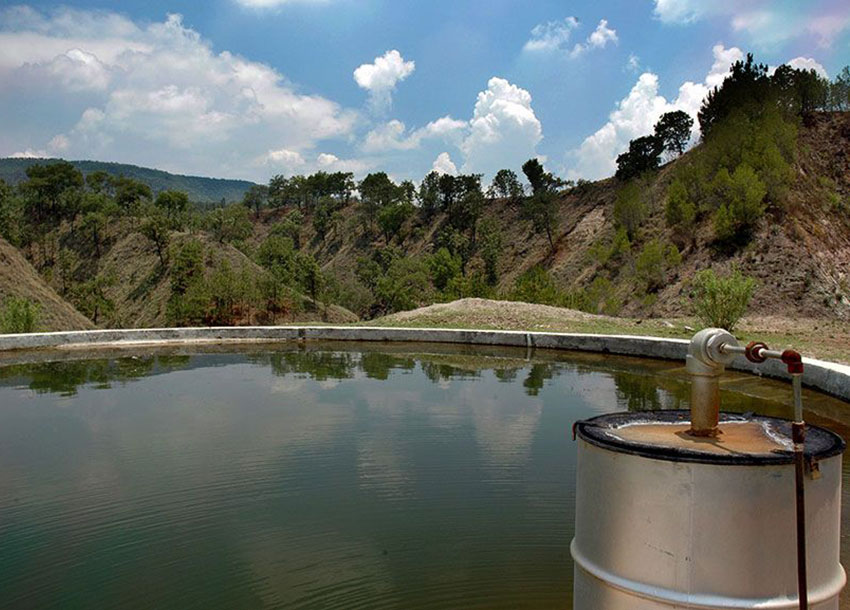
A capped steam well and silencer at Campo Geotérmico Cerritos Colorados in Jalisco.
Many years ago, deep inside the most primitive part of the huge Primavera Forest, which lies just west of Guadalajara, I came upon a network of beautifully paved roads which meandered over rolling hills covered with pine trees, while skirting the deep, jagged canyons so typical of this forest.
Picture-perfect streets leading nowhere are not what you’d expect to find deep inside the woods and I had the impression I had just entered a country club or a well-to-do condominium, except for the fact that there were no houses to be seen anywhere and no people either, only an awesome silence which seemed to say, “Here abide only ghosts — and you are not welcome!”
I said there were no people to be seen in this place, but while cruising about and thoroughly enjoying the unusual sensation of driving on a surface free of potholes, I came upon a solitary human being.
His name was Fernando and he welcomed me as if he had grown tired of the company of ghosts. He also informed me that I was tooling about the private property of the Comisión Federal de Electricidad (CFE). To my surprise, I learned that he was the watchman for this “Ghost Park,” but that he also acted as a guide for occasional visitors. A combination watchman and tour guide? Only in Mexico!
“!Bienvenido a Campo Geotérmico Cerritos Colorados!” said Fernando, explaining that this was a geothermal project that was supposed to be using steam to generate electricity for Guadalajara.
“Smelly lake” created by condensed steam.
I learned that the project had started in the late 1970s. “Between 1980 and 1989,” continued Fernando, “they drilled 13 steam wells here to tap the geothermal activity deep down below. They even received help from the United Nations because the object was to produce ‘clean’ electricity that would cause no pollution.”
Stage one of the project was to have generated 25 megawatts of power per hour, enough to supply the electrical needs of 7% of Greater Guadalajara.
Fernando led me to Well No. 9, a big “Christmas Tree” of fat pipes ornamented with enormous valves and fittings. He told me that the CFE had drilled down nearly two kilometers to reach the magma deep underneath and then showed me a pressure gauge reading 1,500 psi. Just what kind of power this represented was dramatically illustrated by a tiny tube less than a half-inch in diameter which tapped the main pipe and allowed a little steam to escape into a barrel several meters away.
This roaring blast of vapor was so hot you’d never be able to get close enough to it to steam an elote (ear of corn) and so loud it could drown out the noisiest ranchero radio station. And I won’t even mention what its sulfurous “bouquet” reminded me of.
I needed little imagination to figure what the result would be if the main valve of the big pipe were ever opened wide. This, explained Fernando, was why there was a large cylinder, resembling a giant yellow tin can, next to each capped well. “That’s a kind of mofle [muffler],” he said, “to keep down the noise.” He didn’t mention whether this silencer would do anything for the smell.
It seemed curious to me that the CFE had spent humongous amounts of money on a project which had never generated a single watt of power, but only upon my return home did I discover “the dark side” of the Cerritos Colorados project.
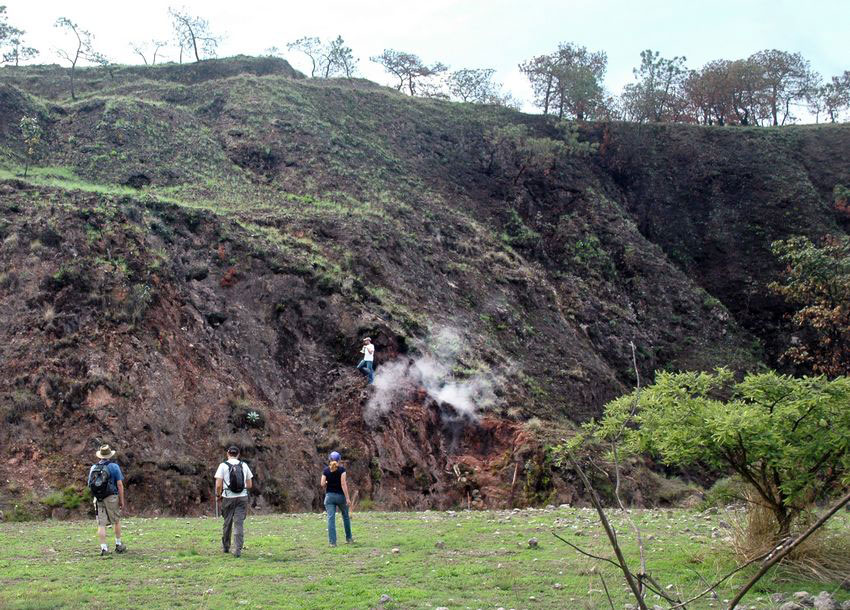
Fumarole located just north of the Cerritos Colorados camp.
According to Jorge Gastón, founder of Colectivo Ecologista Jalisco, the CFE irreversibly damaged the pristine pine and oak forest while they built their network of roads and drilled their steam wells. “They carried out their explorations in an irresponsible and ill-considered way and wreaked havoc in the woods. Wherever they drilled, they simply scraped away the entire layer of topsoil, turning an extraordinarily beautiful forest into a lunar landscape.”
Environmental activists in Jalisco had only to point to the devastation caused by the CFE in neighboring Michoacán when they created the steam wells at their well-known Planta Geotérmica Los Azufres site.
Now it just happened that, in 1988, the president of Mexico, Miguel de la Madrid, made a visit to Guadalajara and his itinerary included flying over the Cerritos Colorados area. Gastón recalls that the CFE personnel were so worried about what might happen that they actually went out into the woods and painted the denuded, rocky surfaces with a green epoxy. El Presidente, however, was not fooled and even landed to take a closer look.
Whether de la Madrid got green epoxy on his shoes, we are not told, but the fact that he had caught the CFE in flagrante delicto resulted in the cancellation of the project during the first year of Carlos Salinas de Gortari’s mandate.
Once the project was halted, environmentalists worked for years to undo the damage to the forest, laying sod, building dikes and planting thousands of trees.
When they had finished, silence returned to Cerritos Colorados and it became even more of a ghost park than before because it was now designated “out of bounds” to motorists. Only passing bicycle riders would stop to observe the little jet of steam still hissing out of Well No. 9 and then cycle on to admire a few natural fumaroles which still sputter away at the northern edge of the Ghost Park.
[soliloquy id="115312"]
That silence may soon be broken. Last week Guadalajara’s Instituto Metropolitano de Planeación reported that the CFE has been awarded 566.7 million pesos toward reactivating the Cerritos Colorados project. It now has a green light to explore and exploit the area during the next 30 years.
While many local conservationists lament this development, others point out that great strides have been made, all around the world, for producing electricity from steam wells without harming the environment. According to a United Nations University report on geothermal and the environment, “the use of geothermal energy has low environmental impact, particularly when compared with fossil fuels.”
That may be true, but if they ever open all 13 of those giant steam valves, mofles or not, I’m quite sure the one thing you will no longer be able to enjoy in the Cerritos Colorados part of the Primavera Forest will be the sound of silence.
The writer has lived near Guadalajara, Jalisco, for more than 30 years and is the author of A Guide to West Mexico’s Guachimontones and Surrounding Area and co-author of Outdoors in Western Mexico. More of his writing can be found on his website.
Covid-19 testing is on offer to the general public in Acapulco, Guerrero, as of Friday.
Guerrero Health Minister Carlos de la Peña Pintos announced the widespread testing program for the resort city on Thursday.
He said that testing will be performed at 16 different locations in Acapulco, which has recorded 2,870 confirmed Covid-19 cases since the start of the pandemic, according to official data.
Among the locations are the city’s central square, or zócalo, the Diana the Huntress Fountain on the coastal avenue and the El Rollo amusement park.
De la Peña said that people can be tested at any of the sites without the need to make an appointment.
He also said that 43 additional beds will be available for coronavirus patients at the CRIT children’s hospital and that eight extra critical care beds will be set up at the port city’s Ciudad Renacimiento General Hospital.
Governor Héctor Astudillo said that restrictions in the state will likely be eased next week.
He said he had met with hotel owners in Acapulco and Zihuatanejo and that preparations are underway to allow hotels and restaurants to reopen at reduced capacity on July 1.
Astudillo also said that authorities are hoping to reopen the state’s beaches next week.
Guerrero is one of 15 federal entities that are still under “red light” restrictions because the risk of coronavirus infection is deemed to be at the maximum level.
However, the Health Ministry will publish a new “stoplight” map on Friday and de la Peña expressed confidence that Guerrero will switch from red to orange.
The state has recorded a total of 4,828 cases but only 9% of that number – 436 – are considered active.
Guerrero has the eighth highest Covid-19 death toll in the country, having recorded 820 fatalities as of Thursday.