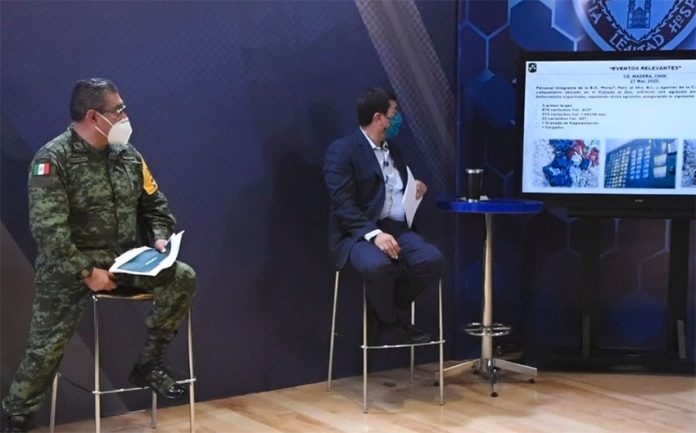
Brigadier-General Hernández and Governor Corral report on security operations.
Twelve narco-camps located along the Madera-Largo Maderal-Nuevo Casas Grandes corridor in the state of Chihuahua have been dismantled by soldiers in the past six months, the army said.
Brigadier-General Miguel Ángel Hernández Martínez said 8.5 tonnes of marijuana, 40 firearms, three fragmentation grenades, 75 magazines, 4,218 rounds of ammunition, three bulletproof vests, and 23 vehicles were seized. Eighteen people were arrested and three were killed during the arrests. Each camp consisted of between nine and 40 people.
The raid on drug trafficking camps is part of Governor Javier Corral’s Safe Chihuahua campaign in which military, federal, state and local authorities are working together to fight organized crime in the region.
Hernández explained that as part of the coordinated strategy to build peace in the state, a series of missions have been carried out, among which was the installation of an operations base with 30 soldiers in the area with the highest concentration of narco-camps.
Many of the areas soldiers patrol are remote and require crossing “areas where there are not always roads, they go as far as vehicles can, and then they travel strenuous days on foot, often having to spend the night where they arrive. This has allowed us to inhibit some actions by criminals,” Hernández said.
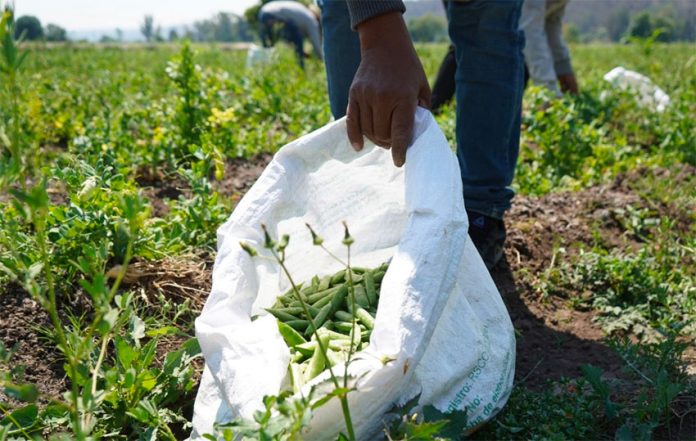
The only good news was in the agricultural sector.
Coronavirus lockdown measures had a devastating effect on Mexico’s economy in April, new data shows.
The national statistics institute Inegi reported on Friday that economic activity declined 19.67% in April compared to the same month a year earlier. April was the first full month in which nationwide coronavirus restrictions were in force.
The contraction was the worst year-over-year decline since comparable economic records were first kept in 1993. The previous record was an 11% contraction registered during the global financial crisis in 2009.
Inegi said that activity in two of the three broad sectors of the economy declined in April.
Activity in the industrial sector dropped a record 29.6% compared to the same month last year, while the services sector registered a 16.6% decline, also a record.
The agricultural sector provided some brighter news amid the gloom, growing by 2.4%.
News of the April slump comes two days after the International Monetary Fund (IMF) downgraded its 2020 growth forecast for Mexico to a 10.5% contraction. According to the IMF’s June World Economic Outlook Update, Mexico will suffer a deeper recession this year than any other country in the Americas.
Carlos Capistran, a Bank of America economist in New York, said the data for April is consistent with the forecast that Mexico’s economy will contract by 10% or more this year.
“It is not only the result of Covid-19 and the lockdown, but the lack of vigorous policies to help the economy,” he said.
“The latter and a virus that is still on the loose in Mexico will continue to keep economic activity in contraction territory for many more months.”
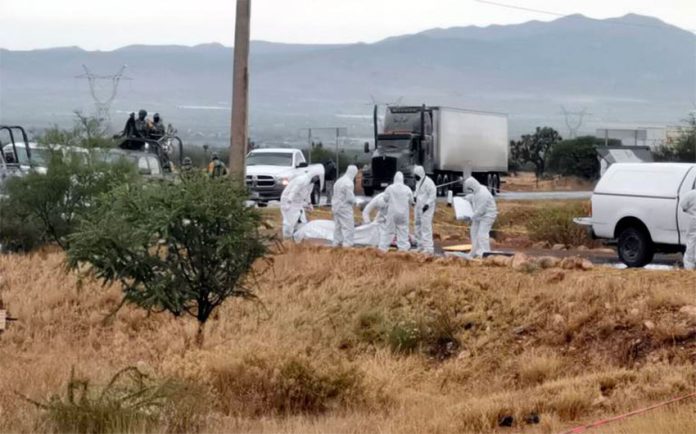
Forensic workers where bodies were found Friday morning.
The bodies of 14 people were found Friday morning on the side of a highway in Fresnillo, Zacatecas.
According to initial reports, the bodies were found wrapped in blankets and duct tape at around 7 a.m. along federal highway 45, near the Cerro Gordo community.
A Public Security spokesperson reported that the state Attorney General’s Office has transferred the remains to the state’s Institute of Forensic Sciences to determine the victims’ sex and cause of death.
Governor Alejandro Tello called for the strengthening of the presence of state and federal police and the development of an action strategy.
Violence has occurred across the state in the last 24 hours.
Also Friday morning, a dismembered body, also covered in blankets, was found near the Río Frío community in the municipality of Calera.
And Thursday morning, a confrontation between criminal organizations in the municipality of Juan Aldama, documented in a recording uploaded to social media where repeated blasts of automatic weapon fire can be heard, left at least four people dead and one home burned to the ground.
So far this year, Zacatecas has experienced an increase in violence and homicides reported to the National Public Security System with a total of 352 murders during the first five months.
That number translates to a murder rate of 21.12 per 100,000 residents, higher than the national average of 11.4 per 100,000 and places Zacatecas in sixth place nationwide for reported homicides per capita, just behind Colima, Baja California, Guanajuato, Chihuahua and Michoacán.
The municipality of Fresnillo, where the 14 bodies were found this morning has the highest murder rate in the state.
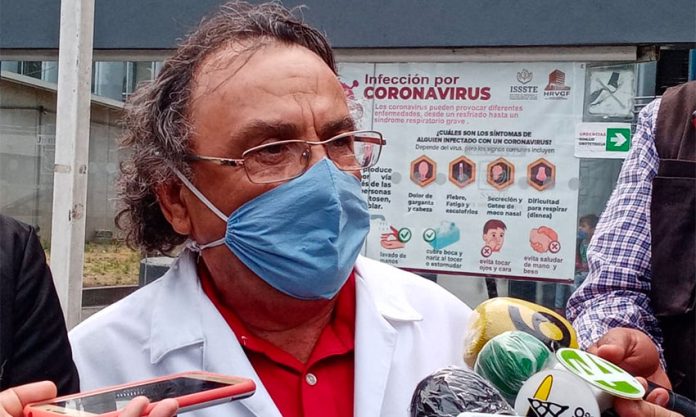
A failed generator caused the death of four coronavirus patients connected to ventilators in a Guadalajara hospital, claim staff at Zapopan’s Valentín Gómez Farías government workers’ hospital.
During a four-hour power outage due to rains in the area on Sunday, the emergency generator failed to kick in and power was lost to the machines that were helping the patients breathe.
Chief radiologist Benjamín Muñoz said the hospital’s maintenance department was at fault for neglecting to replace a defective battery.
“According to colleagues, the generator failed for several hours. They did not have a portable emergency generator that would have been the solution, because the patients on the seventh floor are those in the Covid area who depend on an automatic ventilator,” Muñoz said. “When the power fails, the generator stops and the person dies.”
He also mentioned that last year a faulty generator had resulted in the death of two children.
Muñoz said that when he filmed maintenance workers improperly disposing of hospital liquids earlier this year, he was sanctioned and on the verge of being fired, a process that was put on hold due to the coronavirus emergence.
Several members of the hospital’s medical staff, supported by various health workers unions, had complained about shoddy maintenance in the past and incurred threats and risked retaliation for doing so, they say.
“People have pointed out to the director the negligence, the ineptitude of the person in charge of maintenance, in addition to the workplace harassment they have suffered for almost a year, threats and everything,” said Muñoz who accused the maintenance department of corruption.
Union representative Diego Torres said it was common for public hospital workers to be fired after denouncing deficiencies in maintenance, infrastructure or medical supplies.
“It is undeniable that this health system is not investing what should be invested. It is undeniable that in a situation of a pandemic … resources should be urgently made available,” Torres said.
Union workers and representatives announced that national protests at public hospitals will take place July 1, with demonstrations planned for Jalisco, Guerrero, Chiapas, Baja California, Veracruz, Hidalgo and Coahuila.
Ambassador Landau said uncertainty created by the federal government could be a barrier to increased investment.
The United States ambassador to Mexico said on Thursday that it’s not a good time to invest in Mexico, but later revised his remark.
Speaking at a virtual conference organized by the Confederation of Industrial Chambers (Concamin), Christopher Landau charged that the Mexican government has not fulfilled its promise not to change the investment rules that were in place when it took office in December 2018.
“An essential part of my work as ambassador is to try to fix problems when they arise and to try to encourage investment of my compatriots. But I can’t lie to them nor can I tell them it’s an opportune time to invest in Mexico,” he said.
“We see very disheartening things for foreign investment, … we’ve obviously seen worrying things in several sectors,” Landau added.
The ambassador subsequently backtracked in a Twitter post.
“It’s being reported that I told Concamin that it’s not the right time to invest in Mexico. I didn’t say that. What I said is that investors seek certainty, and that there is nothing worse than changing the rules of the game,” Landau wrote.
“With the entry into force of the USMCA [the new North American free trade agreement], we have a golden opportunity to attract investment and supply chains to the three countries of North America. Hopefully we take advantage of this opportunity to boost economic growth and the prosperity of our region,” he said in another Twitter post.
However, Landau suggested during the Concamin conference that the “uncertainty” created by the federal government could be a barrier to increased investment in Mexico.
He acknowledged that Mexico has the right to change existing policies and establish new ones but added that it must be recognized that these changes can have a “very negative” impact on domestic and foreign investors.
“The Mexican government said that … it didn’t agree with some of the policies of previous governments but it was going to respect the promises that were made in the past, the rules of the game that were established,” Landau said.
“Maybe [it said] that it wasn’t going to expand or deepen [the existing policies] but [it did say] that it was going to respect them. For me, some of the actions in recent months, especially in the energy sector, have created uncertainty about the government’s promise to respect what was done in the past and not to change the rules of the game,” he said.
An association representing US refineries has written President Trump to register objections to Mexico’s recent moves in the energy sector.
“A lot of business people around the world are reevaluating their supply chains and thinking: ‘If we leave China, where do we go?’ Mexico should be a natural destination especially considering that the USMCA comes into force in less than a week but as far as I know we haven’t seen a great wave of investment in Mexico. On the contrary, there has been a great effort to preserve the already existing investments.”
As Landau indicated, the federal government has recently made a range of changes to policies in the energy sector.
The Energy Ministry also published a new policy in May that imposes restrictive measures on the renewable energy sector that could effectively prevent its expansion in Mexico and consolidate control of electrical power in the state-owned Federal Electricity Commission.
All of the policy changes angered the private sector, and several legal challenges have been launched against them.
The American Fuel and Petrochemical Manufacturers (AFPM), a United States trade association that represents most of that country’s refineries, has now added its voice to the dissent.
In a letter sent to United States President Donald Trump this week, AFPM president Chet Thompson expressed concern about the actions the Mexican government has taken to limit current and future investment in the energy sector.
He said the government has dragged its feet in granting permits to build new energy infrastructure, canceled import permits and changed regulations so that they favor the state oil company Pemex.
Thompson said that the actions threaten the investment of United States companies operating in Mexico as well as future income and U.S. jobs. The AFPM chief also said that it was doubtful that the actions were lawful under the terms of the USMCA.
The appeal to Trump to help persuade Mexico to respect the rules established by the previous government’s 2014 energy reform comes the same week as President López Obrador confirmed that he will travel to Washington D.C. to meet his U.S counterpart.
López Obrador has made no secret of the fact that he is not a fan of the 2014 energy reform and his government has taken steps to strengthen the state-owned oil and power utilities at the expense of private and foreign companies.
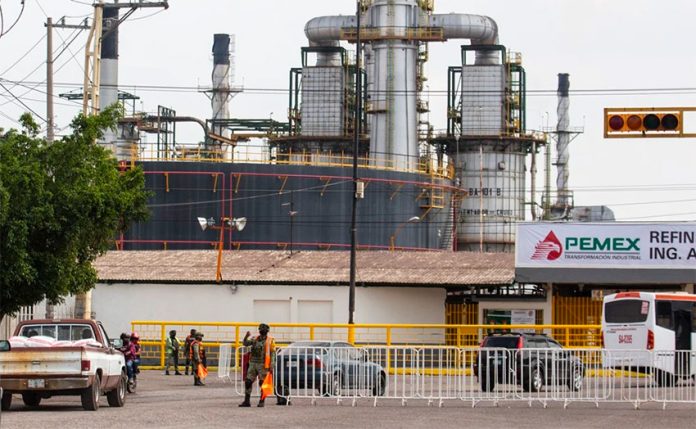
The Salamanca refinery was the target of a failed bombing attempt.
After cartel-related violence across Guanajuato last weekend and a thwarted bomb attack on the Pemex oil refinery in Salamanca on Wednesday, federal Security Minister Alfonso Durazo announced that 150 federal police officers will be dispatched to Salamanca for the next six months to help maintain order.
The municipal police force is composed of just 60 unarmed officers, who will now receive equipment and training from the army. The municipal force is a new one and its officers are all new and awaiting permission to carry arms.
They have been waiting since January.
In a security meeting between Durazo and mayors from around the state, an agreement was reached to increase funding and the use of technology to help combat crime.
The move comes after an abandoned vehicle containing 12 explosive devices was found near the Salamanca oil refinery Wednesday evening, an act thought to have been provoked by the arrest of dozens of members of the Santa Rosa de Lima cartel on Saturday in Celaya, including the mother, sister and cousin of cartel leader José Antonio Yépez Ortiz, alias El Marro.
After the arrests, Yépez ordered vehicles to be set on fire on several roads in the area, creating fiery blockades to hinder efforts to arrest him.
Blockades were established at 47 different points in 13 municipalities, Milenio reported, prompting the United States Embassy to issue a security alert warning its citizens to avoid highways in 10 Guanajuato municipalities.
President López Obrador called on the residents of Guanajuato who support the cartel to change their attitude toward the crime syndicate, which is involved in extortion and fuel theft, and separate themselves from illegal activities.
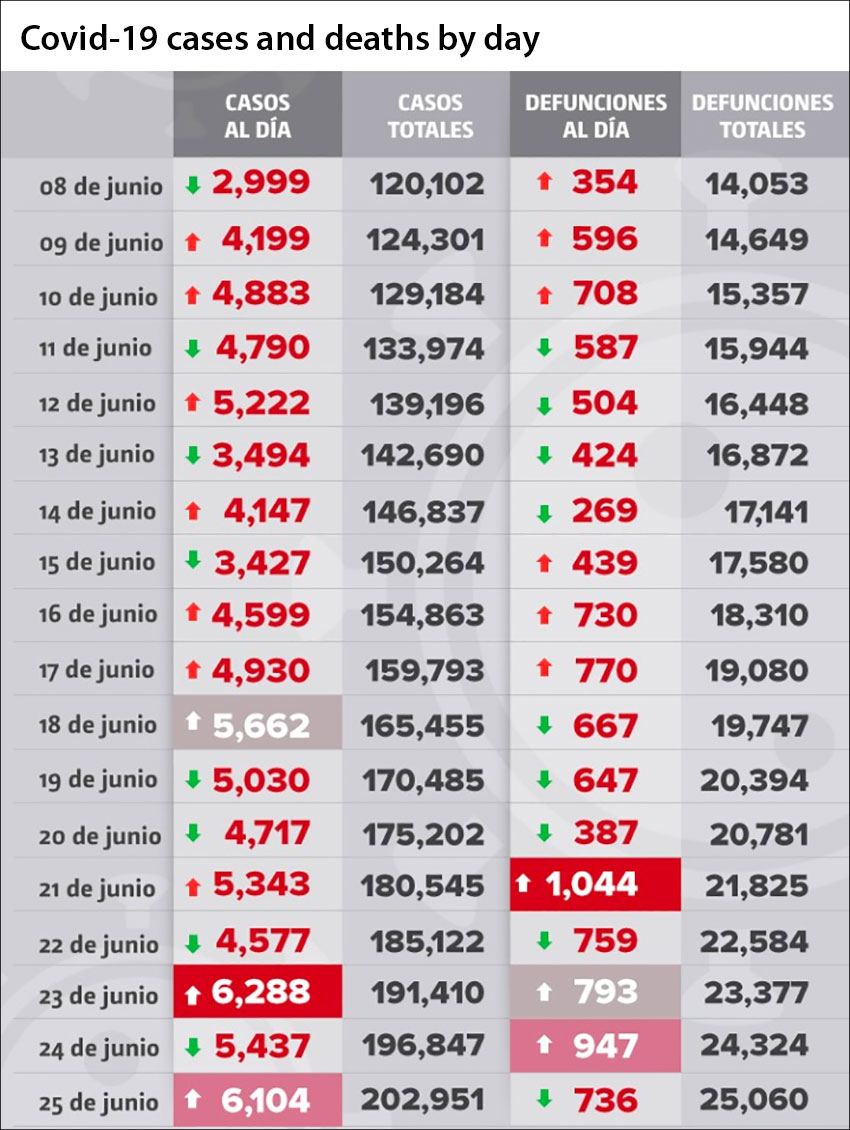
Mexico’s coronavirus case tally surged past 200,000 on Thursday with more than 6,000 new cases reported while the Covid-19 death toll exceeded 25,000.
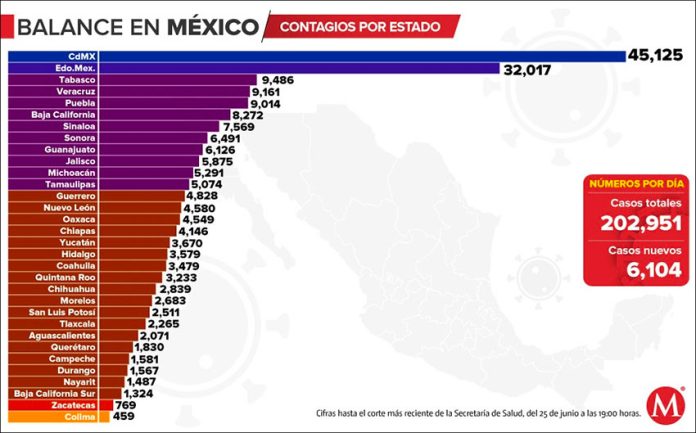
The federal Health Ministry reported that the accumulated number of confirmed cases since the beginning of the pandemic had increased to 202,951 with 6,104 new cases registered on Thursday.
It was only the second time that more than 6,000 cases were registered on a single day after 6,288 were reported two days prior.
Mexico now has the 11th highest coronavirus case tally in the world, according to data compiled by the Johns Hopkins University, having passed France on Thursday.
The Health Ministry reported that the official Covid-19 death toll had increased to 25,060 with 737 additional fatalities. An additional 1,966 deaths are suspected of having been caused by Covid-19 but have not yet been confirmed.
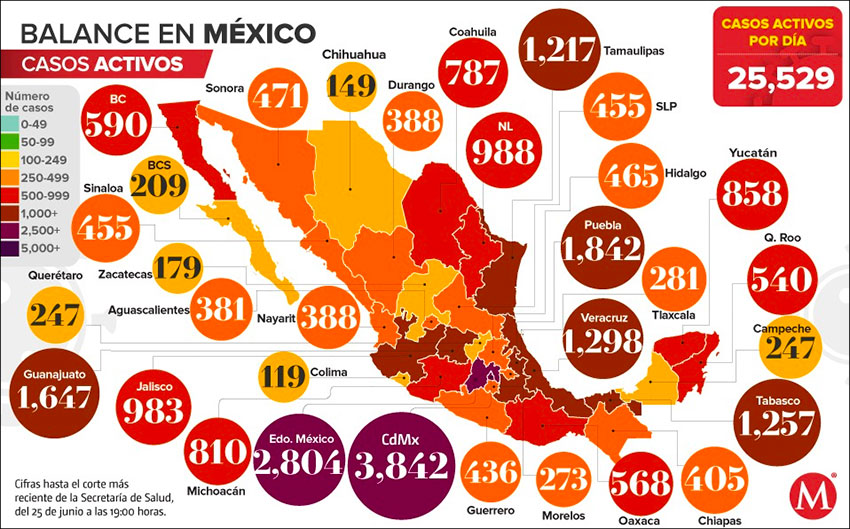
Active coronavirus cases as of Thursday. milenio
Today marks 100 days since the first Covid-19 death was reported on March 18 when Mexico had recorded just 118 confirmed cases.
If the average number of deaths reported each day thus far in June continues, the death toll will pass the former figure in the second week of July.
Of the more than 200,000 confirmed cases, 25,529 are considered active, an increase of 1,493 cases compared to Wednesday.
Health Ministry Director of Epidemiology José Luis Alomía said that there are also 63,583 suspected cases of Covid-19 and that 528,651 people have now been tested.
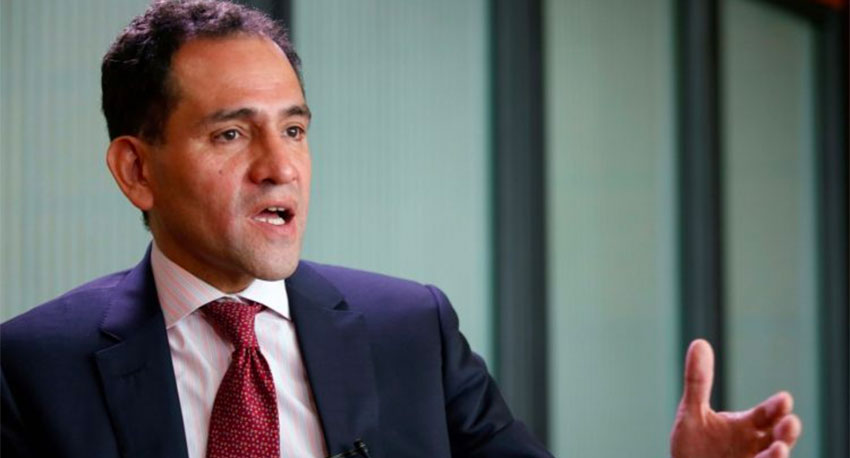
Among those who recently tested positive is federal Finance Minister Arturo Herrera, who announced the news on Twitter yesterday afternoon.
The daily tally of coronavirus cases and deaths. Deaths are numbers reported and not necessarily those that occurred each day. milenio
“I have just been told that I tested positive for Covid-19. I have very minor symptoms. From this moment I will be in quarantine, and will continue working from home,” he wrote.
Herrera is the fourth high-ranking federal official to have tested positive after Public Administration Minister Irma Sandoval, Consumer Protection Agency chief Ricardo Sheffield and Mexican Social Security Institute director Zoé Robledo.
The Finance Ministry said that contact tracing would be conducted to identify people who recently came into contact with the minister. One of those is President López Obrador, who met with Herrera in the National Palace in Mexico City on Monday.
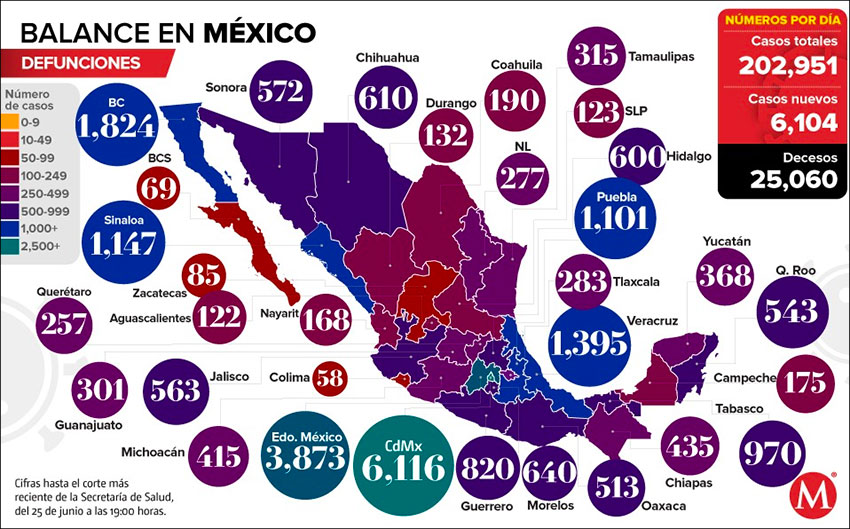
The capital remains the epicenter of the coronavirus outbreak, with 3,842 active cases, according to official data. Mexico City has recorded more than 45,000 confirmed cases since the start of the pandemic and its Covid-19 death toll passed 6,000 on Thursday.
México state ranks second for accumulated cases and deaths, with 32,017 of the former and 3,873 of the latter. It also has the second largest active outbreak in the country, with 2,804 cases.
Puebla, Guanajuato, Veracruz, Tabasco and Tamaulipas all have more than 1,000 active cases, while Baja California, Veracruz, Sinaloa and Puebla have each recorded more than 1,000 Covid-19 deaths.
Finance Minister Herrera has tested positive for Covid-19.
Almost four months after the first case of Covid-19 was detected in Mexico, the country is in the midst of a deadly pandemic with no clear end in sight.
In the middle of April, López-Gatell presented an epidemiological model that predicted that the coronavirus epidemic in the Valley of México metropolitan area would be virtually over by June 25 with 95% of cases having been recorded.
At Thursday night’s coronavirus press briefing, the deputy minister charged that some media outlets had misinterpreted the prediction because they reported that he had said that Mexico’s pandemic would be over by that date.
“We don’t assume that the journalists or their editors … or the media owners … have ill will. We assume that there is a misinterpretation of the information,” López-Gatell said.
He presented a video showing clips of various press conferences since February at which he asserted that the coronavirus epidemic in Mexico would be long.
On April 16, the date on which it was forecast that the Valley of México epidemic would be virtually over, López-Gatell qualified the prediction by saying that the outbreak would only come to an end if people followed the coronavirus mitigation restrictions.
Coronavirus deaths reported as of Thursday. milenio
He acknowledged last night that the mitigation measures are “tiring, uncomfortable, disagreeable” and cause anxiety but reiterated their importance and called on people to be patient.
Fifteen of Mexico’s 32 states still face “red light” restrictions because the risk of coronavirus infection is deemed to be at the maximum level in those states. The other 17 states were allocated an “orange light” on the Health Ministry’s “stoplight” map that will remain in effect until Sunday.
A new map will be presented at tonight’s coronavirus press briefing, with the stoplight colors allocated to each state and corresponding restrictions to take effect on Monday.
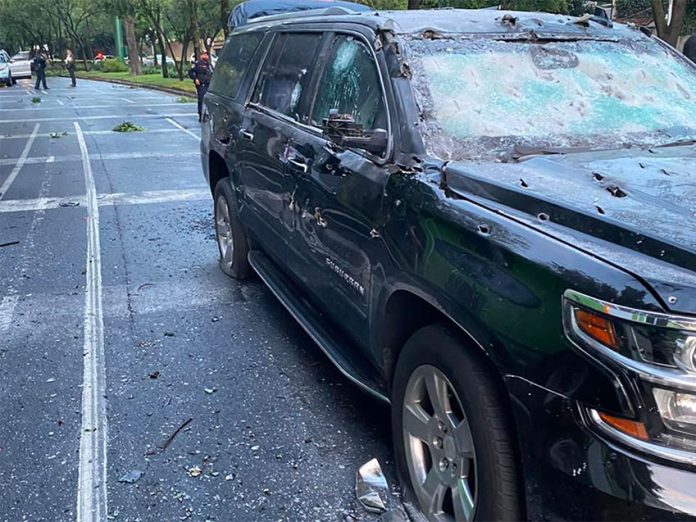
The vehicle in which the police chief was riding Friday morning.
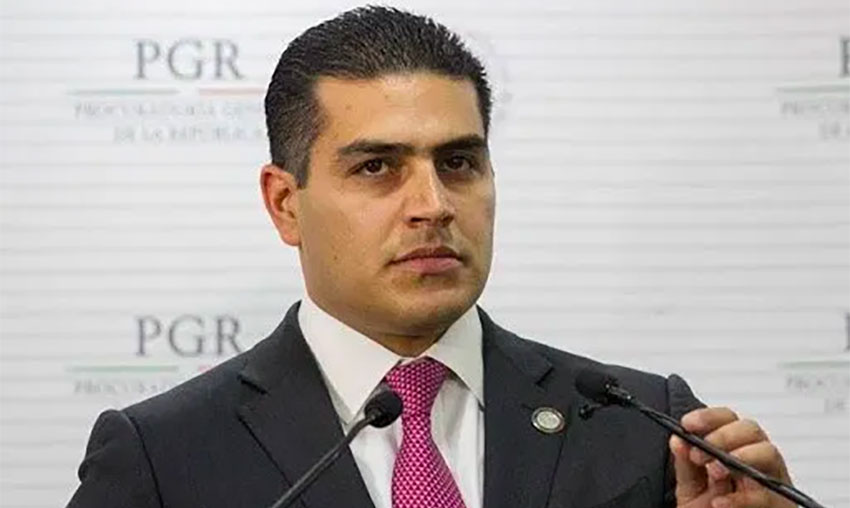
Mexico City Police Chief Omar García Harfuch was wounded this morning after he and his bodyguards were attacked by a group of armed men, Mayor Claudia Sheinbaum reported on Twitter.
The attack occurred just after 6:30 a.m. on Paseo de la Reforma in the Lomas de Chapultepec neighborhood as García, 38, was traveling in an armored Suburban to his regular morning briefing with Sheinbaum.
He and his entourage were fired on by a group of men in a truck who were equipped with body armor, pistols, Barrett .50 caliber sniper rifles and fragmentation grenades.
It is believed that García’s vehicle was blocked by another truck when several men jumped out of the first truck and opened fire, blanketing the Suburban in bullets.
One woman was killed while driving nearby and two of García’s bodyguards were shot dead during the attack, which was caught by surveillance cameras in the area.
Chief García: ‘We shall continue working’ to combat organized crime.
“To the families of these two brave police officers I send my condolences and say that they are not going to be abandoned,” Sheinbaum told a press conference this morning. She also said she has been in contact with family members of the female victim.
The chief was reported in stable condition and expected to recover.
He claimed via Twitter that the Jalisco New Generation Cartel orchestrated the attack.
“Our nation must continue to stand up against the cowards of organized crime. We shall continue working.”
Attorney General Ernestina Godoy said 12 arrests have been made in the attack thus far.
In his previous job as head of the investigation division of the Federal Police, García was responsible for the release of 186 kidnapping victims, the capture of 606 kidnappers and the dismantling of 56 criminal gangs, according to El Heraldo de México. García was named Mexico City’s chief of police in 2019.
President López Obrador made reference to this morning’s incident in his morning press conference, stating that the attack “has to do, without a doubt, with the work that García is carrying out to guarantee peace and tranquility both in Mexico City and around the country. We express our solidarity, and our total, complete and absolute support for the mayor and the members of the Mexico City public security team.”
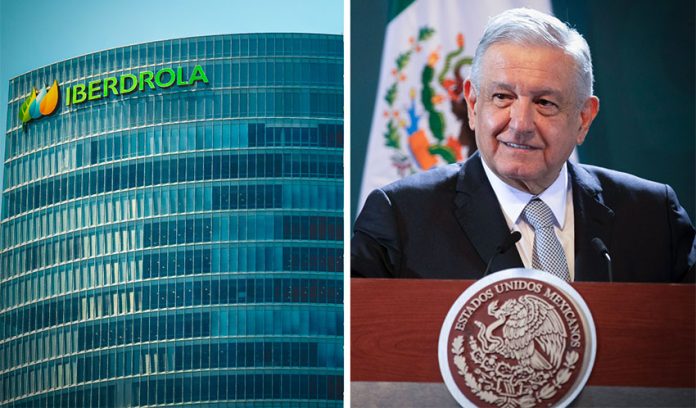
President López Obrador predicted Thursday that the government will reach an agreement with Iberdrola, a Spanish energy company that is reportedly canceling a US $1.2-billion power plant project in Veracruz.
The mayor of Tuxpan told the news agency Bloomberg and the newspaper Reforma that representatives of the firm told him that it was canceling its combined-cycle plant in the city because in nine months it has been unable to reach a natural gas supply agreement with the state-owned Federal Electricity Commission (CFE)
Veracruz Governor Cuitláhuac García tweeted on Wednesday that the Tuxpan plant will go ahead but the CFE will operate it.
But speaking at his regular news conference on Thursday morning, López Obrador said there is no official word that Iberdrola is canceling the project.
He said that he has received a letter from the company in which it expresses its desire to reach an agreement with the government and indicates that it wishes to continue investing in Mexico. López Obrador said that he had forwarded the letter to Energy Minister Rocío Nahle and CFE director Manuel Bartlett.
“There will be an agreement, the letter is for that purpose. They [Iberdrola] want dialogue, they’re even asking me for a meeting [but] I want the energy minister and the CFE director to attend to them first,” he said.
However, the president stressed that the government won’t sign an agreement that is unfavorable to Mexico and its people.
“Enough is enough, let it be well understood, let it be heard loud and far: Mexico is not a land to be conquered. They’re not going to come to loot us, that’s over. We have to look after the wealth of the Mexican people,” López Obrador said.
“It’s a disgrace that they took the energy minister of former president [Vicente] Fox or [Felipe] Calderón to work at the company,” López Obrador said.
He also noted that Calderón, president from 2006 to 2012, accepted a board position with a United States-based subsidiary of Iberdrola after he left office.
“Imagine a president of our republic, who after the end of his government became part of the Iberdrola board. It’s a disgrace!”
Calderón responded on Twitter that he didn’t take up a position with the company until four years after he left office and accused the president of attempting to divert attention from his government’s poor management of the coronavirus pandemic and associated economic crisis.
López Obrador and Calderón have a long history of antagonism, and the former blames the latter –and other past presidents – for all manner of problems his government faces, including corruption and insecurity.
A staunch nationalist, the president also accuses past “neoliberal” governments of allowing foreign and private companies to enter Mexico’s energy sector on terms that were unfair to the state. He claims that they neglected the state-owned CFE and Pemex, leaving them in ruins.
López Obrador has pledged to “rescue” the state-run utilities, and his administration has taken steps to limit the participation of private companies in both the electricity and oil sectors.
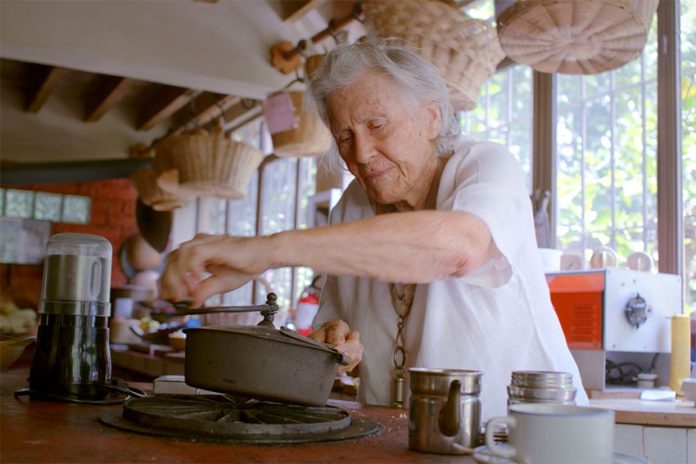
No foreigner has done as much to promote Mexican cuisine as Diana Kennedy, a 97-year-old British-born food writer, home chef and cookbook author who has called Mexico home for around half a century.
Now, a documentary explores the life and passions of the woman who has been described as “the rock star of Mexican cooking” and an authority on the cuisine of her adopted country.
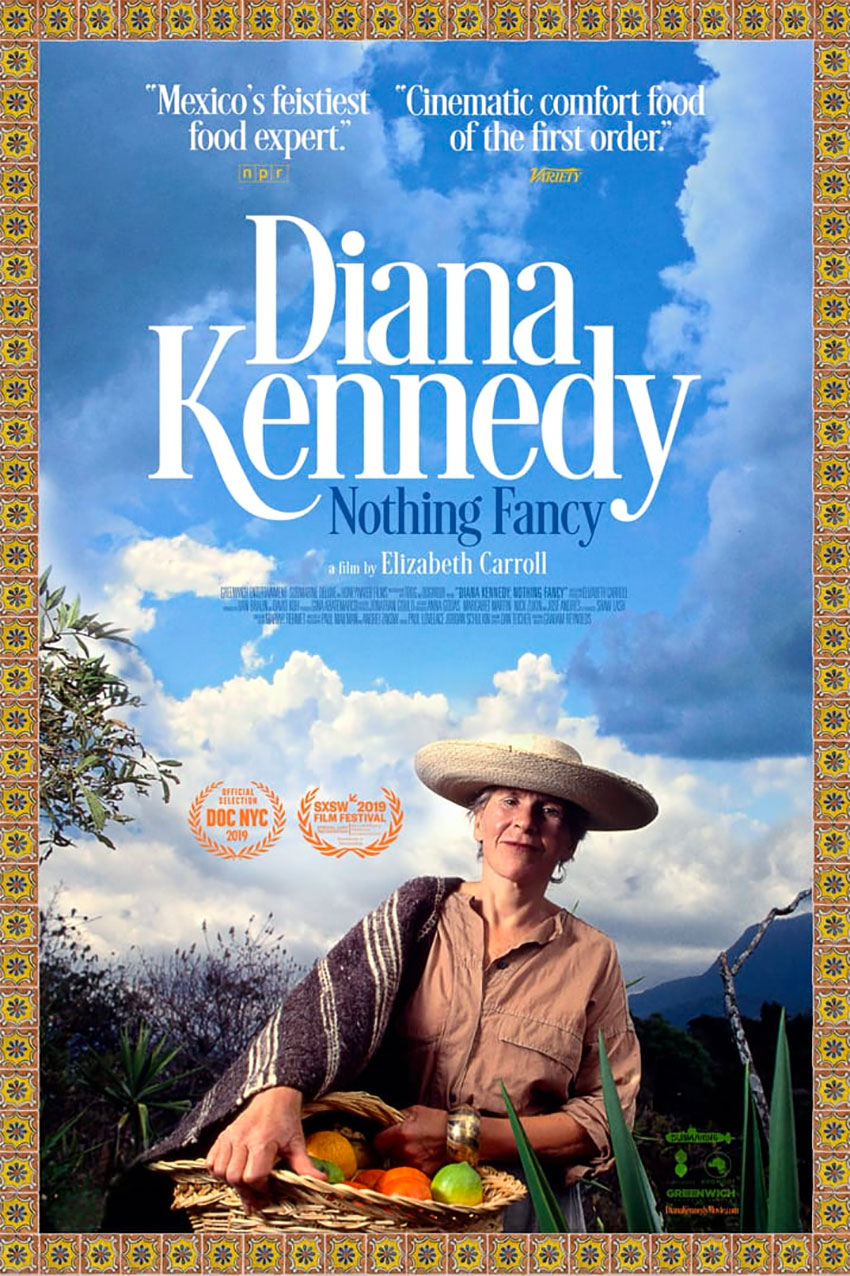
Described as a “short, sharp, marvelously watchable docu-portrait” by The Guardian newspaper’s film critic, Diana Kennedy: Nothing Fancy is the directorial debut of filmmaker Elizabeth Carroll.
Just minutes into the film, Kennedy’s editor at the publishing house Harper & Row, Frances McCullough, poses the question: “How can it be that a white British woman knows more about Mexican food than anybody else?”
Carroll’s 80-minute film searches for an answer, says food writer Mayukh Sen in a review for The Washington Post.
The documentary succinctly covers key events in Kennedy’s life, including her birth in England in 1923 and her first trip to Mexico in 1957 with Paul Kennedy, a New York Times correspondent who would become her husband.
While living with him in Mexico City, Diana Kennedy – the author of nine Mexican cookbooks – developed a great love for Mexican food that would endure throughout her whole life.
She moved to New York for a period in the 1960s but after her husband’s death from cancer, Kennedy settled for good in Mexico in the 1970s and dedicated the ensuing years to continuing her intensive on-the-ground research about Mexican cooking and culinary traditions.
She continues to live on an off-the-grid property near Zitácuaro, Michoacán.
Diana Kennedy: Nothing Fancy, writes The Guardian film critic Peter Bradshaw, “shows us her life in Michoacán, … vigorously engaged with her community, lecturing and giving media interviews and masterclasses in Mexican cooking, taking long walks, driving herself around the place, visiting markets and not hesitating to tell stallholders if their produce isn’t up to scratch.”
The documentary “functions as a tender character study of Kennedy in the twilight of her life,” writes Sen.
It features interviews with several foreign chefs and admirers of the nonagenarian as well as insights from three Mexican chefs: Abigail Mendoza of the Tlamanalli restaurant in Oaxaca, Pati Jinich, host of the television series Pati’s Mexican Table and Gabriela Cámara of Mexico City’s Contramar, who describes Kennedy as a “legend.”
The film, which has received near-unanimous praise since premiering at Texas’ South By Southwest festival in 2019, presents an overwhelmingly positive view of Kennedy’s contribution to the promotion of Mexican cuisine.
However, as Sen notes in her Washington Post review, some reviewers have criticized the documentary for “presenting an antiseptic portrait of Kennedy” and “smoothing over the complications of her legacy.”
Carroll, the filmmaker, said that Kennedy told her in no uncertain terms that there were some people she didn’t want involved in the film.
“I was given the opportunity to make the film about her, and this is a perspective that I’m offering on Diana,” she said. “It’s not everybody’s perspective, and it doesn’t have to be.”
One person who has been critical of Kennedy is Gustavo Arellano, a Mexican-American writer.
Diana Kennedy: Nothing Fancy | Official Trailer
“Her place in the history of Mexican food is secure: she made regional Mexican cuisine palatable to Americans. I will never begrudge that, because it was an important step in the course of Mexican food in the U.S. that a Mexican chef or writer could’ve never accomplished,” he told the Post.
“My issue with Kennedy has always been that she wants to fix Mexican food in amber, and belittles any interpretation or deviance from her romanticized notions of what Mexican food should be.”
Indeed, Kennedy’s disdain for tampering with traditional recipes is on display in the film.
“No you don’t put garlic in!” she snaps as she hovers over a stone mortar while making guacamole.
While the documentary – and Kennedy – have their critics, the film provides an easily-digestible and fascinating insight into the life of one of the giants of Mexican cooking and will be of interest to anyone interested in Mexico, and especially Mexican food.