Home Blog Page 1516

Earthquake survivor lived through two Big Ones

0
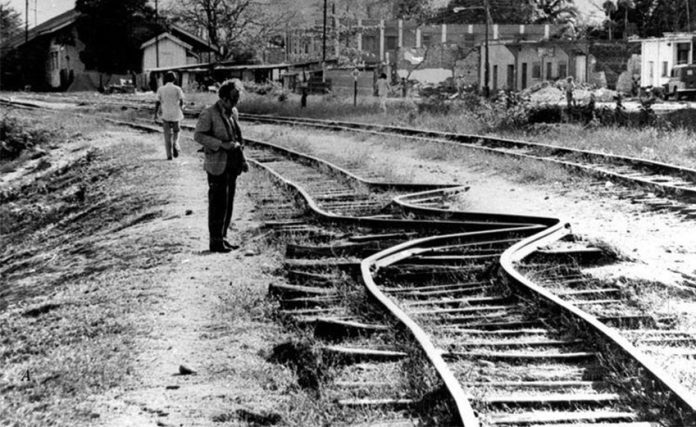
Twisted tracks after Guatemala's 1976 earthquake.

The only aspect of my life that is likely to garner a mention in Ripley’s Believe it or Not is my relationship with earthquakes.

I am, statistically speaking, possibly the only person around who can claim to have been in not just one but two Big Ones — Guatemala in ’76 and Mexico in’85. The former took 25,000 souls, and the latter about 8,000.

Fortunately Monday’s earthquake was a lot less lethal but I, survivor of at least a personal Earthquakedemia, may be a carrier of “Earthquakeovid” and able to offer some perspective as a recovered patient. A survivor.

Having lived not only in Guatemala and Mexico, but also seismic-prone Peru and Ecuador, my status as a quakecarrier is only logical, especially when I frost my earthquake cake astrologically with birth in San Francisco, site of the Really Big One.

Twice I’ve been unmasked as a carrier: the first time saw my radio interview in San Diego on the topic abruptly shortened by one. The second saw me hustled out of Japan, by my host, where earthquakes are serious business. Monday’s Oaxaca quake, a rocker in Mexico, was just a “thudder” in Guatemala, where I am currently marooned.

Scientists have their Richter and Mercalli classification scales. My own classification system encompasses rollers, rattlers, and as mentioned, thudders.

A roller seems to come as a wave from a distance, passing by like a surfer’s missed wave. I remember one roller appearing to bend my kitchen wall inwards, only to straighten back upright as the wave passed. A rattler makes window glass rattle, often opening drawers and doors like a poltergeist.

A thudder, by far the most common, sounds and feels like someone has dropped a bag of cement on the floor nearby.

Peru, or at least Lima, has its unique “rock n roller,” being built on a bed of water-rounded alluvial rocks. A quake coming from the Pacific through Lima announces itself by an ever louder clicking of stones, and says adiós by a receding clicking into the Andes, much like the whistle on a distant train.

The same scientists who dote on Richter scales have their HQ bunker in Golden, Colorado. The National Earthquake Center hosts a fascinating website if you’re the kind who likes to handle spiders. They are an amiable bunch, many with seismographs at home, and welcome input. Their responses from someone in the field are often noticeably tinged with envy. Gee! and Wow! are big vocabulary words.

As in marathons, endurance matters. My Big One in ’76 was just 35 seconds. The Big One in ’85 three times that — a seeming eternity.

Monday’s Oaxaca quake had two silver linings. Mexico’s unique early warning system functioned well, if not 100%.

And you can now, if this was your first one, set yourself down on a cracker barrel by the stove in the winter and swap long and short Mexico tales, no longer just about traffic cops and exotic ailments, but now about quakes. “Well, when I was in Mexico …”

Carlisle Johnson is a journalist living in Guatemala and a frequent contributor to Mexico News Daily.

Drought hits bean crops; Mexico to import 100,000 tonnes

0
Imports will make up for a bean shortage.

Although President Lopez Obrador has urged Mexicans to eschew expensive and processed foods and eat more beans, the country is facing a bean shortage due to drought and is being forced to import some 100,000 tonnes in order to meet the short-term demand.

The problem has been ongoing, the Ministry of the Economy reports. 

In 2019 bean production decreased by 31% and as a result, prices have increased by nearly 30% in the last year, according to the National Consumer Price Index.

Bean imports, which will start this year on July 1 and end October 15, were also necessary in 2016 and 2017. In 2018 the crops had recovered enough that beans were only imported for a six-week period.

The Ministry of Agriculture and Rural Development warned in December that the 2019 drought was the worst since 2011 and that the production of basic grains, sugar, corn, coffee and livestock would be affected. Key bean-growing states Chihuahua, Durango, Guanajuato and Zacatecas saw their driest month on record in July of last year.

Imports of rice, which are already at 85% of the nation’s supply, may also be increased as a result.

Last year the government spent 8.1 billion pesos (US $356 million) on subsidies for small farms, including financial assistance for 300,000 bean producers, and this year that budget has increased to 10 billion pesos (US $439 million).

Source: Reforma (sp)

IMF predicts Mexico will take biggest economic hit in all of Latin America

0
imf

The coronavirus-induced economic crisis will hit Mexico harder than any other country in Latin America, predicts the International Monetary Fund (IMF).

In its June World Economic Outlook Update, the IMF forecast that Mexico’s GDP will shrink 10.5% this year, 3.9% below its April prediction of a 6.6% contraction.

The forecast is considerably worse than those of the World Bank, the Organization for Economic Cooperation and Development and the United Nations Economic Commission for Latin America and the Caribbean, which are currently predicting that Mexico will suffer an economic contraction in 2020 of 7.5%, 8.6% and 6.5%, respectively.

If the IMF prediction proves to be accurate, Mexico will suffer its worst recession since 1932 when the economy contracted 14.8% amid the Great Depression.

The IMF’s 2020 growth forecasts for other major Latin American economies are: Brazil, 9.1% contraction; Argentina, 9.9%; Colombia, 2.4%; Chile, 4.5%.

The organization predicts that the GDP of the Latin America and the Caribbean region as a whole will shrink by 9.4% this year, while global economic output is forecast to contract 4.9%, a 1.9% decline compared to its April prediction.

“The Covid-19 pandemic has had a more negative impact on activity in the first half of 2020 than anticipated, and the recovery is projected to be more gradual than previously forecast,” the IMF said.

The growth forecast for Mexico is also below that of its North American trade partners, the United States and Canada, which the IMF predicts will suffer contractions of 8% and 8.4%, respectively, in 2020.

However, the outlook for Mexico in 2020 is better than the forecasts for the economies of France, Italy and Spain, all of which are predicted to contract by more than 12%.

The IMF predicts that the Mexican economy will grow 3.3% in 2021, an increase of 0.3% compared to its April forecast. However, the 2021 prediction for Mexico is below the 3.7% growth forecast for Latin America and the Caribbean and the 5.4% global forecast.

Mexico’s central bank is currently offering the most optimistic growth forecast for 2021, the newspaper El Universal reported, predicting that GDP will increase 4.1%.

Source: El Universal (sp) 

Pemex refinery in Guanajuato target of failed bomb attack

0
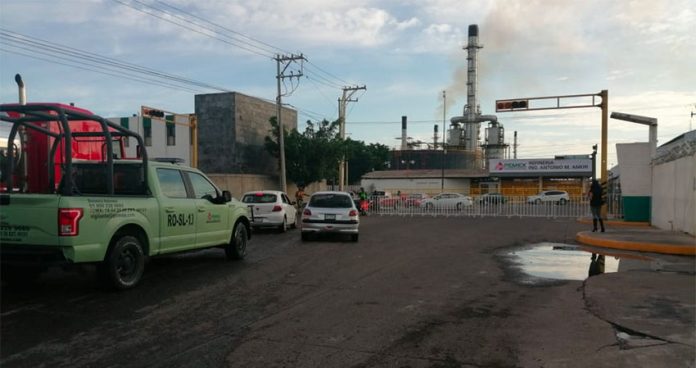
Access has been restricted at the Salamanca refinery.

Authorities foiled an attempted attack on a Pemex refinery in Guanajuato Wednesday night after an abandoned vehicle containing 12 explosive devices was discovered near the site, the minister of national defense (Sedena) reported.

President López Obrador said today that security at government facilities has been strengthened as a result.

The attempted bombing may be related to the law enforcement crackdown on the Santa Rosa de Lima Cartel, known for extortion and fuel theft, in which dozens of suspected cartel members were arrested Saturday.

Among them were the mother, sister and cousin of cartel leader José Antonio Yépez Ortiz, alias El Marro. 

In response, Yépez ordered vehicles to be set on fire on several roads in and around Celaya in order to create fiery blockades to hinder efforts to arrest him. Blockades were established at 47 different points in 13 municipalities, Milenio reported.

The United States Embassy subsequently issued a security alert warning its citizens to avoid highways in 10 Guanajuato municipalities.

Yépez thanked his supporters and those who burned cars, and threatened the government in two emotional videos posted to social media the evening after the arrests.

“These thieves humiliated and did what they wanted with my family and I will be a stone in their shoe, I’m going to blow up, you will see,” he vowed, promising to keep battling authorities “even if I’m left alone like a fucking dog.”

Source: Milenio (sp), El Financiero (sp)

Sinaloa Cartel infighting believed behind recent violence in Sinaloa

0
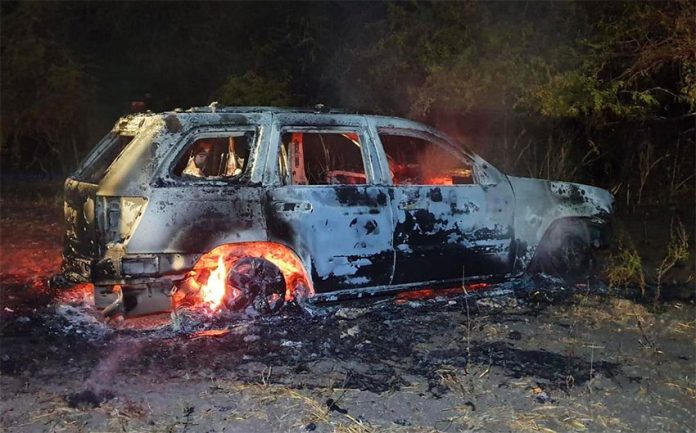
A car burns north of Culiacán where cartel hitmen have been fighting among themselves.

Cartel gunmen clashed Wednesday morning in Tepuche, Sinaloa, a group of small rural communities near ​​Culiacán, leaving 15 people dead. They are presumed to have been feuding members of the Sinaloa Cartel.

In one attack, seven men clad in body armor and tactical gear and brandishing assault rifles were killed. 

And in a separate incident, eight armed men were killed in the town of Bagrecitos after they opened fire on homes and vehicles.

Two bodies were found near the cemetery, one in the brush, and others inside homes.

Sinaloa Public Security Minister Cristóbal Castañeda Camrillo initially dismissed reports of the shootings as rumors until they were confirmed late yesterday afternoon.

The region has seen a wave of violence in recent months, including last week when a group of armed men in a convoy of pickup trucks ambushed and attacked navy marines while they were patrolling a dirt road. One marine was injured.

Much of the violence is blamed on rival factions of the Sinaloa Cartel battling for turf and power.

The Sinaloa Cartel has been under the control of Ismael “El Mayo” Zambada since Joaquín “El Chapo” Guzmán’s incarceration. 

However, some cartel members, headed by El Chapo’s children and known as “Los Chapitos,” refuse to recognize his authority after Zambada’s brother and son testified against El Chapo in 2018 exchange for a plea deal. 

Tensions within the cartel have been brewing for some time.

Last October, when the cartel descended on the city of Culiacán in order to force the government to release El Chapo’s son, Ovidio Guzmán, Zambada was reportedly opposed to Ovidio’s release and did not participate. Los Chapitos are said to have viewed this as a slight.

The divide intensified when Zambada’s right-hand man, known as “El Ruso,” was alleged to have been behind the November 2019 kidnapping and torture of 11 police officers who were on the payroll of Los Chapitos. When Los Chapitos demanded that Zambada hand over El Ruso, he refused.

Since then, eruptions of violence in the area have become commonplace.

Security Minister Castañeda has asked that the National Guard intervene to help de-escalate the violence in and around Tepuche.

“A request was made by the state government to the National Guard to increase the number of troops in that area. We have five bases operating and 10 more bases were requested to operate in that area,” he explained.

Source: Infobae (sp), Milenio (sp), Debate (sp)

President López Obrador’s anti-corruption push is failing

0
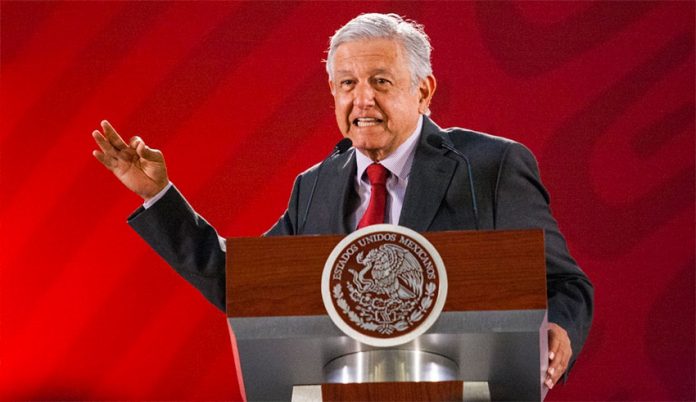
AMLO uses daily news conferences to blast ‘corrupt’ rivals and insists that graft is no longer tolerated.

Andrés Manuel López Obrador insists that Mexico’s greatest asset is “the honesty of its people,” but independent studies show corruption has worsened in the 18 months since the country’s graft-busting president took office.

Last year, the average bribe per person to public officials — including payments to police and to civil servants — soared 70%, according to state statistics institute Inegi’s latest two-yearly survey, rising from 2,273 pesos in 2017 to 3,822 pesos — equivalent to the monthly salary of 40% of Mexicans.

The Americas Society/Council of the Americas and Control Risks, a consultancy, also had bad news to report: their Capacity to Combat Corruption Index this month scored Mexico 4.55 out of 10, compared to last year’s 4.65. It said López Obrador had cast the anti-corruption fight around his personal ability to eradicate graft and had failed to boost institutions such as the national anti-corruption system, which was set up five years ago and lies incomplete.

The Mexican president, who likes to dismiss unpleasant facts with the catchphrase “I have other data,” has worked his magic on perceptions. However, the Inegi survey in May found a 4.5% drop in the number of people who believed corruption was widespread (even though more people reported having paid bribes). In January, Mexico improved one point in watchdog Transparency International’s 2019 corruption perception index.

“The truth is, every time this is measured … the perception that corruption is falling in Mexico is a reality,” López Obrador said.

Integralia, a consultancy, said the “dislocation between perception and reality” reflected López Obrador’s success at shaping impressions in his daily news conferences, at which he blasts “corrupt” rivals and insists that graft is no longer tolerated.

“There is less public spending and public works, so there is less opportunity [for bribes],” said Pamela Starr, professor at the University of Southern California. “The problem is, there’s nothing to make this permanent.”

The anti-corruption crusading president has accumulated scandals in his midst. Media have reported that Irma Eréndira Sandoval, the minister in charge of ensuring that public servants are graft-free, accepted a plot of land from the city government and acquired several properties while on an academic’s salary. She denies wrongdoing and vowed to pursue “media snipers.”

Manuel Bartlett, head of the state electricity company, denied accumulating a string of undeclared properties; he was later exonerated in a probe conducted by Sandoval’s department.

Bartlett’s son, a businessman, was then caught seeking to sell ventilators for Covid-19 patients to the state hospital system at inflated prices; the social security institute later backtracked and returned them.

The former head of the ruling Morena party, Yeidckol Polevnsky, has also been accused of wrongdoing: her successor has brought criminal charges against her, and she is facing an internal investigation by Morena, over payments for property purchases which allegedly did not take place. She said her conscience was clear.

Priorities may also change: a recent opinion poll suggested that with the Covid-19 pandemic claiming more than 1 million jobs in three months, 71% of voters wanted Mexico’s president, who regularly urges Mexicans to live frugally, to focus on creating jobs instead of fighting graft.

Some also fear that the president’s austerity policies, salary cuts in the administration and rules that tighten the screw on revolving doors for former public servants will undermine his anti-corruption efforts.

“Many bureaucrats had financial commitments that were met by their pre-López Obrador wages,” said one businessman. “But their salaries were cut and now there’s a ban on them working in the private sector for 10 years in their area of expertise, so moving to a better-paying job is no longer an option … the table is set for more corruption.”

Marco Fernández, anti-corruption investigator at México Evalúa, a think tank, and a professor at the Tec de Monterrey, lamented no reduction in impunity. “It’s business as usual,” he said.

© 2020 The Financial Times Ltd. All rights reserved. Please do not copy and paste FT articles and redistribute by email or post to the web.

Mexico City mayor looks to construction for economic reactivation

0
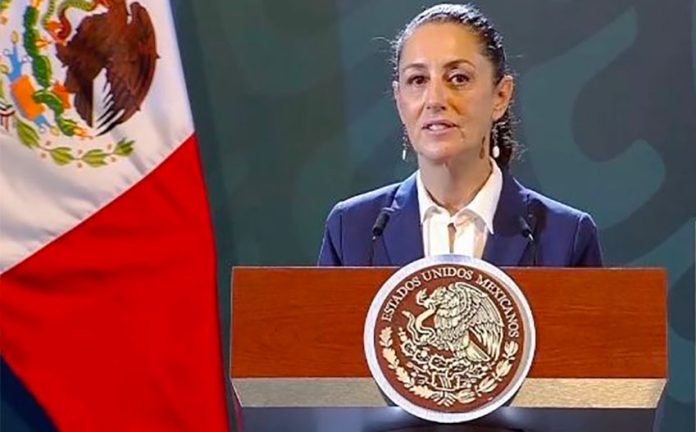
Mayor Sheinbaum: virus has cost the city 220,000 jobs.

The Mexico City government will invest almost 76.3 billion pesos (US $3.3 billion) in construction projects to help reactivate the economy amid the coronavirus pandemic, Mayor Claudia Sheinbaum said Wednesday.

Sheinbaum said that just under 25.9 billion pesos will go to public infrastructure projects and almost 50.4 billion pesos will be used to build private residential and commercial developments.

Some of the real estate projects will be located on Reforma Avenue, Mexico City’s most emblematic boulevard.

Sheinbaum also said that her administration will invest 92.4 billion pesos (US $4 billion) on other programs that will help to create jobs. The economic reactivation plan is expected to generate almost 1 million jobs.

“Since April, … 220,000 jobs have been lost [in Mexico City] due to the pandemic. With this reactivation program, we want to create 987,183 jobs, of which 554,800 will be direct,” Sheinbaum said.

The mayor said that social programs will also be strengthened as part of the reactivation plan and highlighted that small business owners will be able to continue to access loans to help them through the economic downturn.

Mexico City is the country’s coronavirus epicenter, having recorded more cases and deaths than any state in the country.

“Red light” restrictions are still in effect in the capital, meaning that most nonessential businesses remain closed. However, the construction and manufacturing sectors have resumed activities after being at a standstill since late March.

If Mexico City switches from red to orange on the new “stoplight” map to be presented by the federal Health Ministry on Friday, businesses such as restaurants, hotels, hair salons and gyms will be allowed to reopen at a reduced capacity starting Monday.

Source: El Financiero (sp), El Economista (sp) 

Man’s plea to prevent deaths of innocents may have cost him his life

0
Negrete posted a letter on Facebook to the leader of the Santa Rosa de Lima Cartel.

A Guanajuato politician who appealed to a cartel boss for an end to violence against innocent people may have lost his life for his trouble.

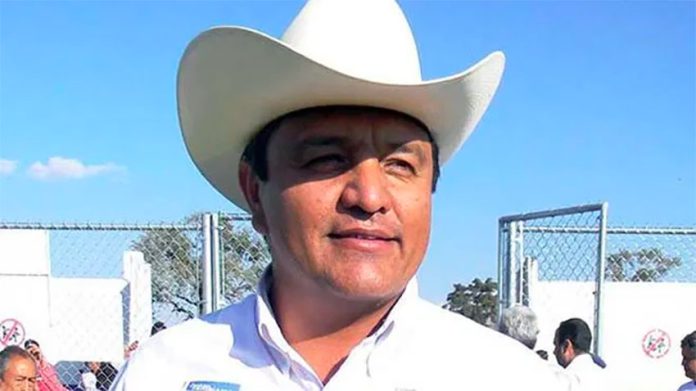
Joel Negrete Barrera, a 2018 candidate for mayor of Abasolo, was shot to death Wednesday, one day after he posted an open letter on Facebook to the leader of the Santa Rosa de Lima Cartel.

Negrete was working at his convenience store in the community of El Tule Wednesday evening when two armed men on a motorcycle drove up, entered the store and opened fire in front of witnesses, killing him.

Negrete published the document addressed to José Antonio Yépez Ortiz, alias El Marro, on Tuesday morning, making a plea for peace.

“Please be considerate and have respect for all of us who are oblivious to the confrontation that the state holds against your person and organization,” he wrote, pleading with Yépez not to hold the civilian population accountable for the actions of corrupt government officials. 

“You, like all of us, have a mother, brothers, a wife and children. You undoubtedly understand that the well-being of the family is the axis of human existence and that is why, for the well-being and safety of my family, I have had the audacity to address you,” Negrete wrote. “The millions of Guanajuatenses, oblivious to the causes that motivated this endless war, need a climate of peace to be able to continue with our lives.” 

The cartel, linked to fuel theft and extortion, has been engaged in a bloody turf war with the Jalisco New Generation Cartel, which has contributed to making Guanajuato Mexico’s most violent state with 4,500 homicides in 2019. 

President Lopez Obrador addressed Negrete’s murder in his morning press briefing today. “We have to continue fighting crime and guarantee peace,” he said. “The situation in Guanajuato has become very serious, more than in any other state.”

So far, authorities have not established a link between Negrete’s letter and his murder.

Source: El Sol de Irapuato (sp), Proceso (sp), Periódico Correo (sp)

San Juan Ozolotepec, Oaxaca, took the brunt of Tuesday’s earthquake

0
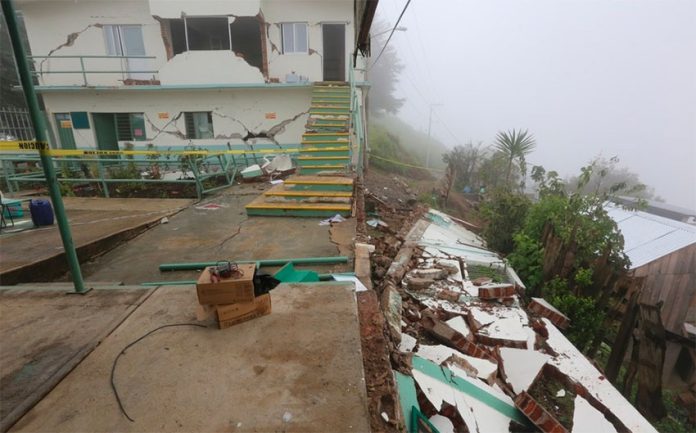
Earthquake damage in San Juan Ozolotepec, Oaxaca.
Earthquake damage in San Juan.

At least 200 buildings were damaged in the mountain municipality of San Juan Ozolotepec, Oaxaca, in the 7.4-magnitude earthquake that rocked southern and central Mexico on Tuesday morning, officials report.

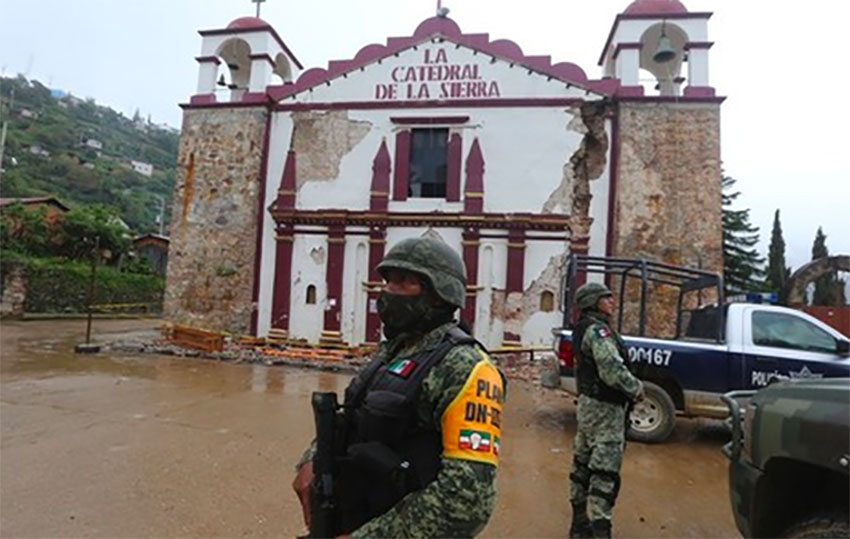
The region was the hardest hit by the quake, which left three of its residents dead, scores of homes uninhabitable and a church and medical clinic on the verge of collapse. 

Dozens of people have had to leave their homes due to structural damage, and landslides on the highway temporarily blocked access to army and National Guard disaster relief crews.

“Right now the report that we have is of material damage, many houses were demolished, they have many cracks, people will no longer be able to inhabit them,” said Mayor Francisco Reyes.

The region is no stranger to earthquakes, including the 8.1-magnitude temblor in 2017, but residents of San Juan Ozolotepec, where 99.5% of the population live in poverty according to federal statistics, said that Tuesday’s quake felt much stronger, as they struggle to contend with the damage and numerous aftershocks.

Soldiers outside the Cathedral of the Mountains in San Juan.
Soldiers outside the Cathedral of the Mountains in San Juan Ozolotepec.

Due to the town’s location, cell phone coverage is spotty at best, and after the quake some residents climbed hills trying to get cell phone service to plead for help.

Several ranches and small settlements remain cut off due to rubble-covered roads as rescue crews set out on foot to try to reach them and offer assistance.

The National Seismological Service placed the quake’s epicenter at two kilometers outside La Crucecita, Oaxaca, some 175 kilometers from San Juan Ozolotepec, but the tremor was felt in several states.

Both the epicenter and the magnitude of the quake have been revised. It was initially reported to be 23 kilometers from La Crucecita with a magnitude of 7.5.

The death toll has also gone up as another six bodies have been recovered since Tuesday.

“At the moment 97 municipalities reported damages in the states of Oaxaca, the state of México, Mexico City and Veracruz. There are two temporary shelters active in the state of Oaxaca, where a total of 38 people have sought shelter,” Civil Protection officials reported yesterday.

[wpgmza id=”247″]

“Unfortunately there are reports that 10 people have died and 21 are injured in Oaxaca, and in Mexico City two injures were reported.” 

Throughout Oaxaca, more than 2,000 structures were damaged, including 15 hospitals and medical clinics, as well as four hospitals and two churches in Veracruz.

Source: Reforma (sp), Milenio (sp), La Razón (sp), Diario Marca (sp) 

With 5,437 new cases, Mexico’s coronavirus numbers closing in on 200,000

0
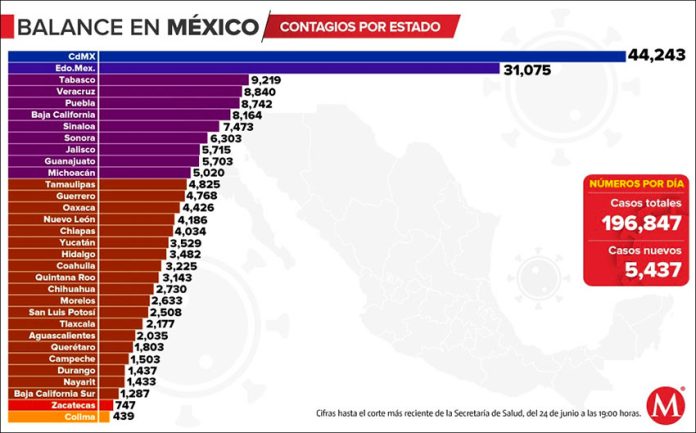
Coronavirus cases by state, as of Wednesday.
Confirmed coronavirus cases by state, as of Wednesday. milenio

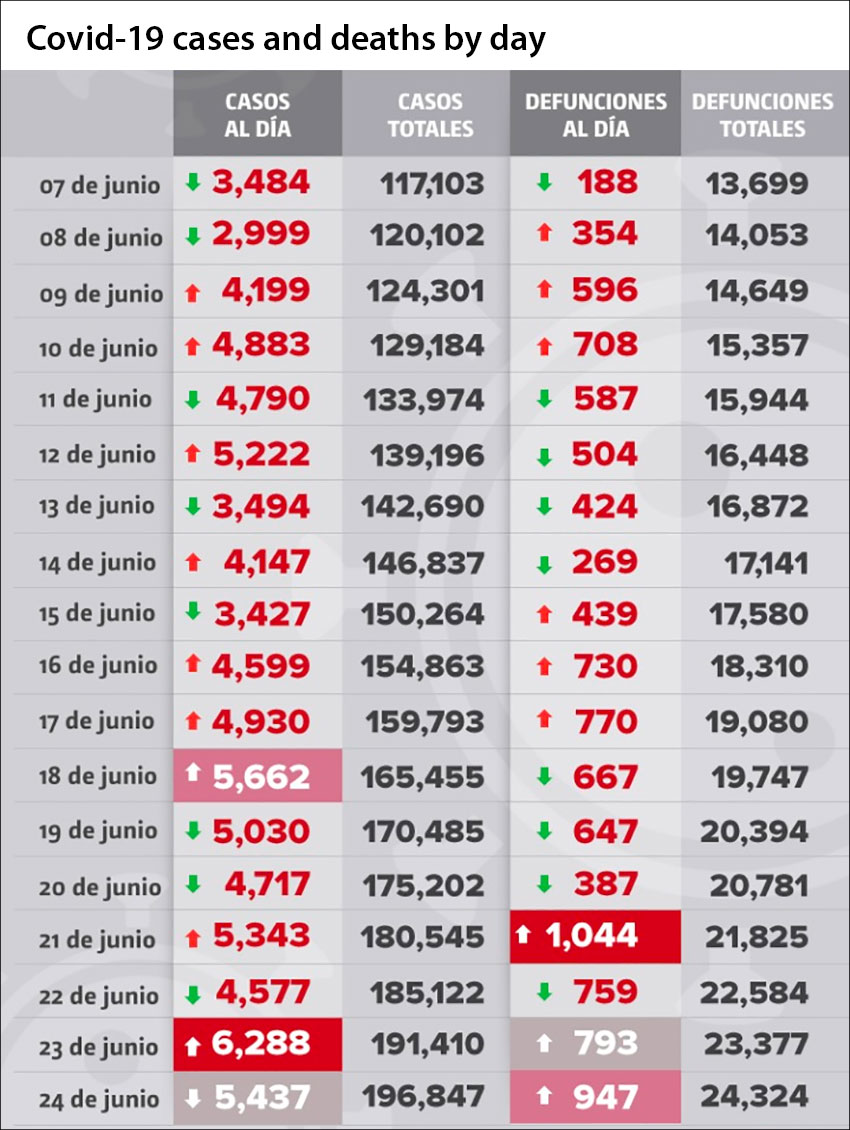
More than 5,000 new Covid-19 cases were added to Mexico’s tally on Wednesday, increasing the total to close to 200,000, while almost 1,000 additional fatalities lifted the death toll above 24,000.

The federal Health Ministry reported 5,437 new cases at Wednesday night’s coronavirus press briefing, increasing the total number of cases detected to 196,847.

Mexico has now passed Germany to rank 12th in the world for total case numbers, according to data compiled by the Johns Hopkins University.

The 11 countries that have recorded more cases than Mexico are, in order: the United States, Brazil, Russia, India, the United Kingdom, Peru, Chile, Spain, Italy, Iran and France.

The Health Ministry also reported 947 additional Covid-19 fatalities, increasing the official death toll to 24,324.

The daily tally of coronavirus cases and deaths.
The daily tally of coronavirus cases and deaths. Deaths are numbers reported and not necessarily those that occurred each day. milenio

Mexico has the seventh highest coronavirus death toll in the world after the United States, Brazil, the United Kingdom, Italy, France and Spain.

Based on confirmed cases and deaths, Mexico’s fatality rate is currently 12.3, well above the global rate of 5.1.

In addition to the more than 24,000 confirmed deaths, 1,894 fatalities are suspected to have been caused by Covid-19.

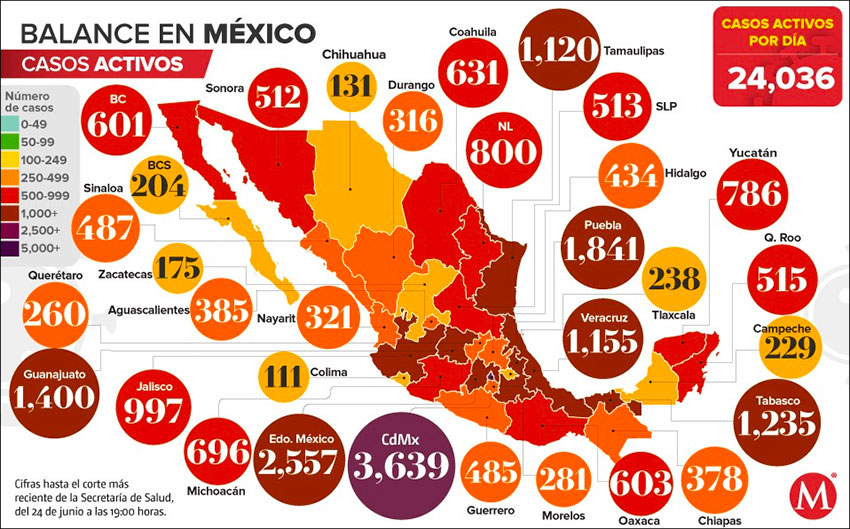
Director of Epidemiology José Luis Alomía said that 24,036 coronavirus cases – 12% of the total – are currently active, a decrease of 351 cases compared to Tuesday.

He also said that there are 62,475 suspected cases across the country and that 515,658 people have been tested for Covid-19.

Mexico City remains the country’s coronavirus epicenter, with 3,639 active cases, according to official data.

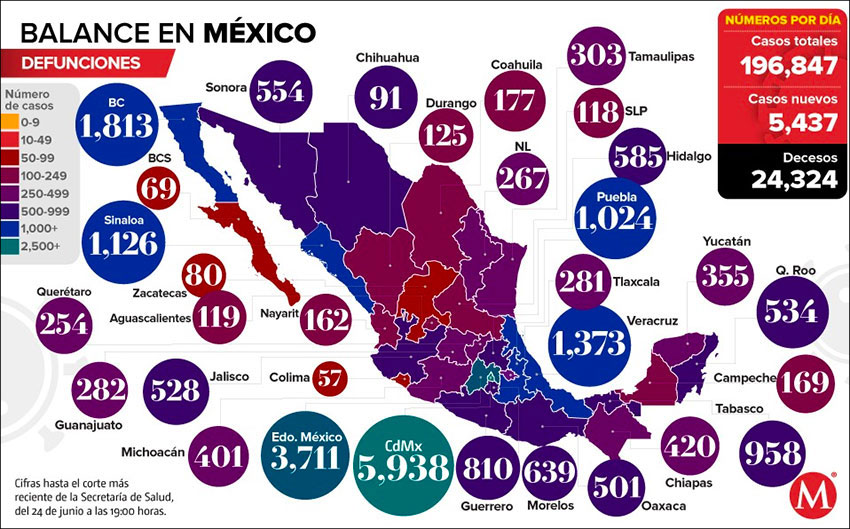
Covid-19 deaths as of Wednesday.
Covid-19 deaths as of Wednesday. milenio

México state, which includes a large number of municipalities that are part of the greater Mexico City metropolitan area, has the second largest active outbreak, with 2,557 cases.

In the middle of April, Deputy Health Minister Hugo López-Gatell presented an epidemiological model that predicted that the coronavirus epidemic in the Valley of México metropolitan area would be virtually over by June 25 with 95% of cases having been recorded.

The model predicted that the peak would occur between May 8 and 10 and that the Valley of México coronavirus epidemic would end in August.

However, there is now no clear end in sight even though health officials have said that the spread of the virus is stabilizing in the Mexico City area. Active cases did decline in Mexico City on Wednesday compared to Tuesday but increased in México state.

However, a lack of widespread testing inevitably means that many coronavirus cases go undetected, especially mild and asymptomatic ones.

The capital and México state are among the 15 federal entities that are still under “red light” restrictions because the risk of coronavirus infection is deemed to be at the maximum level.

Active cases of Covid-19
Active cases of Covid-19. milenio

After those two entities, Puebla has the largest active outbreak in the country, with 1,841 cases. The state capital is a clear coronavirus hotspot, with 1,547 active cases, more than double the number in León, Guanajuato, which ranks second at a municipal level for active cases.

Four other states have more than 1,000 active Covid-19 cases. They are Guanajuato, Tabasco, Veracruz and Tamaulipas.

Every state in the country has at least 100 active cases, while only three – Colima, Chihuahua and Zacatecas – have fewer than 200.

Mexico City also leads the country for Covid-19 deaths, having recorded 5,938 confirmed fatalities as of Wednesday. México state ranks second, with 3,711 confirmed deaths.

Four other states have recorded more than 1,000 coronavirus-related deaths: Baja California, with 1,813; Veracruz, with 1,373; Sinaloa, with 1,126; and Puebla, with 1,024.

Four states – Colima, Baja California Sur, Zacatecas and Chihuahua – have recorded fewer than 100 deaths.

At a municipal level, the densely-populated Mexico City borough of Iztapalapa leads the country for Covid-19 fatalities, with 1,039 as of Wednesday.

Even as Covid-19 case numbers and the death toll continue to show steady growth, Mexico’s health system is not currently overwhelmed with coronavirus patients.

National data presented by the Health Ministry on Wednesday night showed that 45% of general care hospital beds set aside for coronavirus patients are currently occupied while 38% of those with ventilator are in use.

Some states have higher hospital occupancy levels but none exceed 70% for either general care or critical care beds.

Source: Reforma (sp), El Financiero (sp), Milenio (sp)