Home Blog Page 1513

Honey is fun to work with in sauces and dressings—but buyer beware

0
Look for pure, raw, unadulterated, uncooked and unfiltered honey.

Have you watched the Netflix series Rotten? Each episode explores one type of food — garlic, chicken, milk — and its worldwide production. It’s alarming and upsetting, to say the least, and should confirm for you (as it did for me) the need to eat as local and direct-from-the-farmer as possible.

While the tone of the series is one of exaggerated alarm (like the title, which I hate) the information is solid. The episode about honey especially struck home, as I’d assumed, for example, that those guys in the tianguis and Walmart parking lots selling big slabs of honeycomb and honey out of big white buckets were legit. The price was always unbelievably cheap and I just thought it was another wonderful thing about living in Mexico.

Unfortunately, the truth is more likely that it’s corn syrup with a tiny bit of real honey mixed in. Why do I say that? Many conversations with the apiarist at the organic farmers’ market in Mazatlán made clear to me why honey is such a valuable commodity nowadays, even in Mexico.

And the big picture is that with more and more people wanting to “eat healthy” and avoid sugar and bee populations dying due to mono-farming, pesticides and disease, the honey supply can’t meet the demand. Countries like China — the world’s biggest producer of honey — with less strict food-labeling regulations are glutting the market with honey that’s adulterated in so many ways that it’s hard to detect. Watch the series. It’s eye-opening.

Even the Mexican Association of Honey Exporters reported that “The consumer is usually unable to tell the difference between real and fake honey, since the texture and makeup of the two are quite similar. While the crudest form of adulteration, with sugar or corn syrup, is slightly detectable, other falsifications, made with syrups from beets, rice or potatoes — usually originating in China, Vietnam or India — are more difficult to notice.”

Blend honey with mangoes, yogurt and milk to make this refreshing drink.

“Instead of consuming a beneficial product,” the report concluded, “they are negatively affecting their health because of the types of sugars the honey is adulterated with.”

I feel like I’m always harping about eating local, knowing your farmer, etc. But the truth is we expect the food we buy to be what it says it is, and we should care about what we eat. Yes, often “real” food will cost more than the processed, commercially produced version — but you get what you pay for. In this case, pure, raw, unadulterated, uncooked and unfiltered honey contains all of the healthy natural components you’re buying it for to begin with.

Cooking and filtering honey, for instance, removes all the beneficial pollens that should naturally be present. So do find a local beekeeper or buy direct from a farmer or natural foods store where you can be sure of the source.

The basic rule of thumb is the darker the honey, the more intense the flavor, which you’ll discover as you start tasting different varieties. Honey is a fun ingredient to play around with in basting and barbecue sauces and salad dressings. And it can be easily whipped or blended into cream cheese, softened butter or requesón, with herbs, minced nuts or dried fruit.

In the case of butter, make more than you need, roll into a log, wrap and freeze. Then just cut off small portions as needed.

Honey Mango Lassi

  • 3 cups mango, cubed
  • 1½ cups plain yogurt
  • 1½ cups regular, almond or coconut milk
  • 1/3 cup honey

In a blender, combine mangoes, yogurt and milk. Add honey and pulse until just combined. If you like, add an ice cube or two and blend again. Serve cold.

Honey Cucumber Salad

English cucumbers are slightly sweeter than “regular” cukes, and sold wrapped in plastic due to their thinner skin, which doesn’t have to be peeled.

  • 3 medium English cucumbers, thinly sliced
  • ¼ cup honey
  • ½ cup white wine vinegar
  • 1-2 Tbsp. water
  • ½ red onion, slivered
  • 1 Tbsp. fresh dill, minced
  • Salt and pepper to taste

Place cucumbers in bowl, sprinkle with salt, toss and set aside. In another small bowl, mix honey, vinegar, water and red onions. Pour mixture over cucumbers and toss. Marinate in refrigerator about 1 hour before serving.

This honey-mustard salad dressing is a classic.

Hot ‘n’ Sweet Broccoli

You’ll want to use this easy, delicious sauce on chicken, shrimp and other veggies too.

  • 1 large shallot
  • 1-inch piece fresh ginger, minced or grated
  • ¼ cup honey
  • 2 Tbsp. soy sauce
  • ½-1 tsp. crushed red pepper flakes
  • 2-3 Tbsp. water
  • ½ lb. broccoli, trimmed
  • 2 tsp. olive oil
  • 2 tsp sesame oil

Cut broccoli into bite-size florets; cut sugar snap peas diagonally into bite-size pieces. Heat oil over low heat in large skillet; add water, honey, soy sauce, ginger and red pepper and stir gently to combine. Turn heat to medium and continue stirring for 3 minutes till sauce begins to thicken. Add broccoli, stir to coat, then cover and cook a few minutes until tender-crisp. Uncover and let sauce cook 1-2 minutes more. Serve immediately over rice or noodles.

Honey-Roasted Cherry Tomatoes

Serve atop pasta or rice, or for breakfast, piled on toast with some crumbled queso fresco.

  • 1 lb. cherry tomatoes
  • 2-4 garlic cloves
  • 1 Tbsp. honey
  • 3 Tbsp. olive oil
  • Salt and freshly ground black pepper

Preheat oven to 375° F. Lightly oil a cookie sheet or roasting pan. Halve the tomatoes and place them cut side up in the pan, fitting them snugly with little or no space between them. Crush or mince the garlic with a pinch of salt, then beat it with the honey, olive oil and a good grinding of pepper. Spoon this sticky, garlicky mixture over the cherry tomatoes. Roast for about 30 minutes, until golden, juicy and bubbling.

Classic Honey-Mustard Salad Dressing

  • Honey
  • Dijon mustard
  • Apple cider vinegar
  • Olive oil
  • Salt & pepper

Using equal amounts of each ingredient, shake in a jar or whisk in a small bowl. Add salt and pepper to taste. Store in refrigerator.

Janet Blaser has been a writer, editor and storyteller her entire life and feels fortunate to be able to write about great food, amazing places, fascinating people and unique events. Her first book, Why We Left: An Anthology of American Women Expats, is available on Amazon. Contact Janet or read her blog at whyweleftamerica.com.
Economically speaking, the worst is over, president says

0
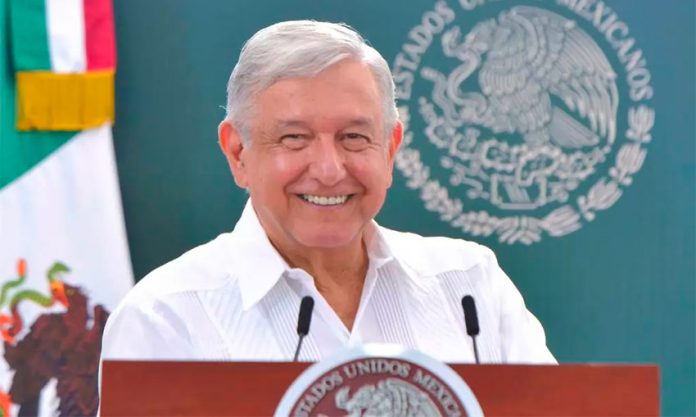
AMLO: no worries, the worst is over.

President López Obrador declared Monday that the worst of the country’s economic hardships are behind it and that the hemorrhaging of jobs largely due to Covid-19 shutdowns would begin to stabilize in July.

He predicted that June’s job losses in the formal sector would come to about 100,000, down from a drop of 344,000 in May and a staggering loss in April of 555,247 jobs.

That would bring the three-month total to just under one million jobs lost out of a total formal sector work force, as registered with the Mexican Social Services Institute, of 20.5 million before the pandemic began.

“Everything indicates that we have hit bottom and are heading toward the surface. We are going to emerge,” he said in his daily morning press conference. “We are going to grow economically. We have the indications that the worst has passed in economic terms.”

He also stressed the importance of the United States-Mexico-Canada Agreement, the new trade deal that goes into effect on Wednesday. It will help reactivate Mexico’s economy by encouraging foreign investment and the generation of jobs, he said. 

However, in terms of gross domestic product, a measurement which the president holds in some scorn, the economic malaise had begun to set in well before the effects of the coronavirus were felt.

The economy contracted 2.4% in the first quarter, the worst showing since 2009.

Sources: El Universal (sp), El Financiero (sp)

Third nationwide protest held against government of López Obrador

0
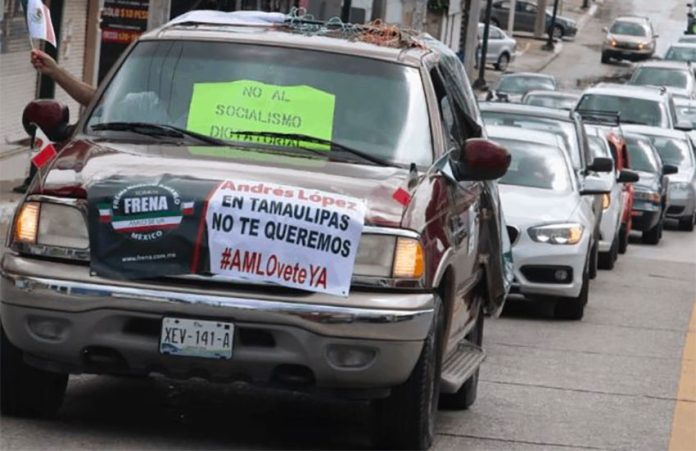
Sunday's protest in Tampico, Tamaulipas.

Bearing signs and waving Mexican flags, about 300 protesters in cars and on motorcycles took over Mexico City’s Paseo de la Reforma Sunday to demand that President López Obrador resign for what they said were destructive government policies and poor handling of the Covid-19 pandemic.

The protest, organized by the Frente Nacional AntiAMLO (National Front Against AMLO), moved between the Fuente de Petróleos and the Monument to the Revolution for two hours in a noisy convoy to voice complaints that López Obrador’s presidency has damaged the country since taking power in 2018.

Protesters say the administration is taking the country on a path toward communism, and that the president has put Mexico’s autonomy, integrity, and independence at risk during a health crisis.

“I am participating for the love of my country, for those who came before. Mexico deserves better things,” Yolanda Reyes, a housewife riding in a Chysler LeBaron, told Reforma. “Neither chairo [a disparaging nickname for AMLO supporters] nor fifi [a disparaging name for those with money], I am a working woman, earning bread with the sweat of my brow, not like Mr. López Obrador, who has never worked.”

Caravans of opposition groups have gathered on two previous occasions to demonstrate against the president. Sunday’s protests also took place in at least 21 other cities, including Querétaro, Puebla, Cuernavaca, Querétaro, Acapulco, Monterrey, Guadalajara, Chihuahua, Cancún, and Mérida.

Sources: Reforma (sp), Infobae (sp)

The fight for Guanajuato: getting drugs to market at the heart of dispute

0
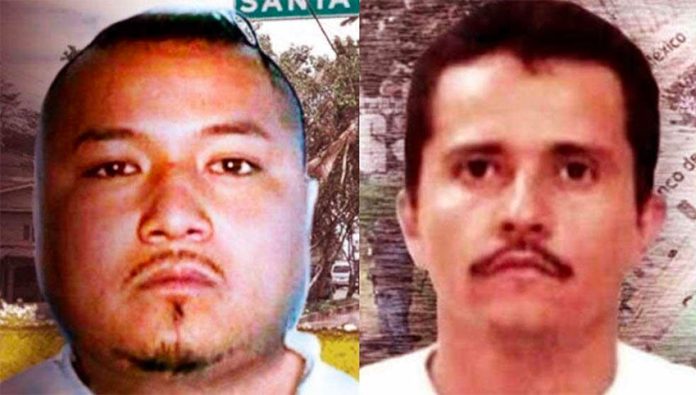
El Marro, left, and El Mencho are fighting for Guanajuato.
Gang leaders El Marro, left, and El Mencho.

It’s a 15-hour drive from the Pacific coast port city of Lázaro Cárdenas, Michoacán, to the northern border city of Reynosa, Tamaulipas.

The former city – along with other Pacific coast ports such as Manzanillo, Colima, and Acapulco, Guerrero – serves as a gateway for the importation of drugs such as methamphetamine and the synthetic opioid fentanyl from Asian countries, especially China.

Reynosa, like other northern border cities, lies on the brink of the world’s largest drug market, the United States.

That makes the route between the two of major importance to criminal organizations such as the Jalisco New Generation Cartel (CJNG), easily the most dominant such organization in the Pacific coast port cities of Lázaro Cárdenas, Manzanillo and Acapulco.

It operates in almost every state in Mexico, according to the United States Drug Enforcement Administration, but while it completely controls criminal activities in some states, it doesn’t have the same dominance in the north of the country.

The Sinaloa Cartel, once led by imprisoned notorious kingpin Joaquín “El Chapo” Guzmán, dominates in much of the border region between Tijuana, Baja California, and Ciudad Juárez, Chihuahua, while the CJNG wields substantial, although not uncontested, influence in Tamaulipas, the border state where Reynosa is located.

Therefore, moving drugs from the Pacific coast to the United States via Reynosa has two advantages: it saves the CJNG time because it is the shortest route to the northern border, and smuggling efforts into the U.S. are more likely to succeed because of its established – and significant – presence in Tamaulipas.

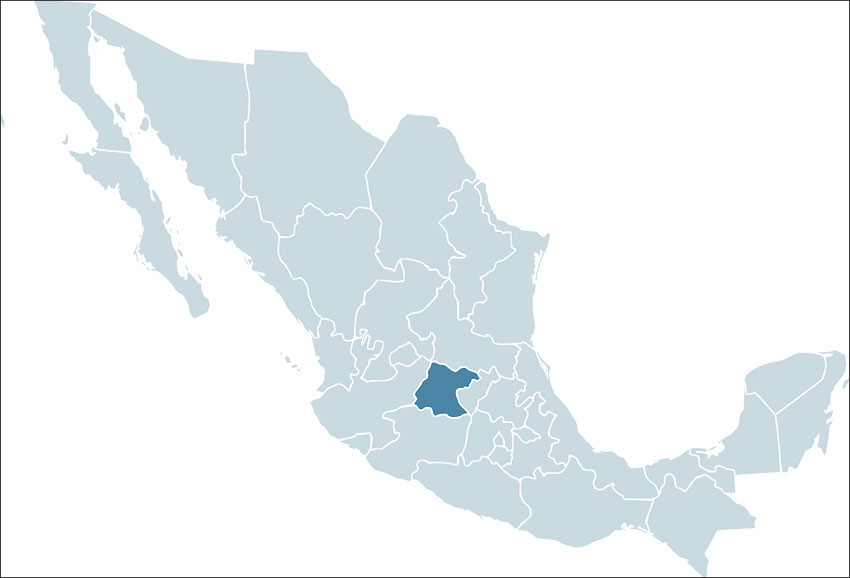
But there’s a catch. Getting from Lázaro Cardenas, or Manzanillo, to Reynosa in 15 hours entails going through Guanajuato, a state that the CJNG would like to control, criminally speaking, but doesn’t – at least for now.

In addition to the possibility that cartel operatives could run afoul of government security forces, hindering a smooth run from the glistening waters of the Pacific to Texas’ doorstep is the Santa Rosa de Lima Cartel, a Guanajuato-based fuel theft, drug trafficking and extortion gang headed by one of Mexico’s most wanted men, José Antonio “El Marro” Yépez.

In that context, according to a report published by the newspaper Milenio, CJNG leader Nemesio “El Mencho” Oseguera Cervantes – a man with a US $10-million price on his head in the United States – sent one of his nephews to Guanajuato in January 2017 to negotiate with the Santa Rosa de Lima Cartel with the aim of securing a safe passage through the state.

Yépez and his cartel henchmen, Milenio reported, were offered the opportunity to form a loose alliance with the CJNG. In exchange for accepting the offer, El Mencho and his men would stay out of the Santa Rosa gang’s lucrative fuel theft activities in Guanajuato, home to one of Pemex’s six refineries and hence several petroleum pipelines ripe for illegal tapping.

Guanajuato is important territory for the Jalisco New Generation Cartel.

However, the conversation with Oseguera’s nephew didn’t go well, Milenio said. El Marro wasn’t interested in striking a deal with – or serving – anyone and was apparently sufficiently offended to have his sicarios, or hitmen, murder the CJNG envoy at an Irapuato coffee shop where the meeting took place.

Rejecting Oseguera’s offer, and having his nephew killed, made El Marro enemy No. 1 of El Mencho, an animosity that endures to this day and which has made Guanajuato the most violent state in the country.

Instead of leaving the Bajío region state as the criminal domain of the Santa Rosa de Lima Cartel, and using it solely as a piece in the drug smuggling puzzle between the Pacific and the Mexico-United States border, the CJNG moved into Guanajuato and launched a full-blown turf war against El Marro and his co-conspirators.

And thus two underworld kings, El Mencho, rey de metanfetamina (meth king) and El Marro, rey de huachicol (fuel theft king), have turned once-peaceful Guanajuato into a blood-soaked battlefield in a near-incessant war that both men are loathe to lose.

There were more than 3,500 homicide victims in Guanajuato last year – with a significant proportion of the murders attributed to the turf war – and the state has hung on to the unwanted title of Mexico’s most violent in the first five months of 2020.

The third participant in the dispute is, of course, the Mexican state but neither federal security authorities, nor their state counterparts, have succeeded in quelling the violence in Guanajuato – the killing just goes on and on.

Authorities have thus far also failed in their attempts to apprehend El Mencho and El Marro, although members of both men’s families have been detained.

However, keeping the men’s family members in prison has proven to be a challenge: Oseguera’s wife, an alleged CJNG financial operator, was released on bail in September 2018, while Yépez’s wife, mother, father, sister, cousin and niece, among other relatives, have all been arrested only to be later set free.

While El Mencho and El Marro remain at large, the demand for drugs in the United States stays high and authorities’ apparent incapacity to combat the two cartels continues, the violence in Guanajuato appears set to persist.

A truce between the two criminal “kings” could perhaps put an end to the bloodshed but given their history, that scenario seems about as likely as President López Obrador’s non-confrontational “hugs, not bullets” security strategy ending all violence in the country tomorrow.

Mexico News Daily

‘Prepare for the worst,’ Nayarit governor warns as Covid-19 spreads

0
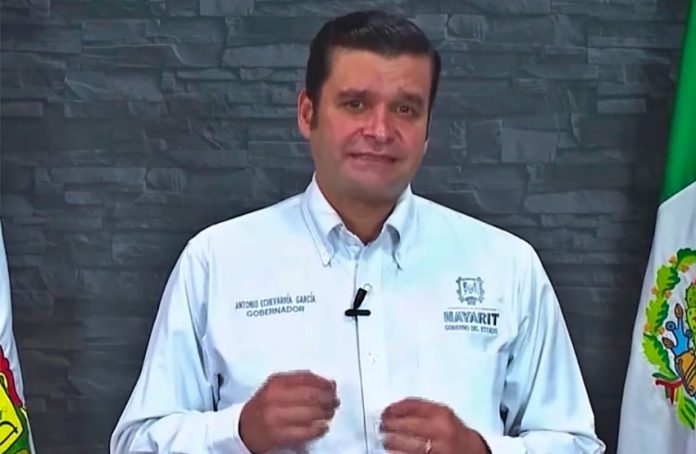
Governor Echevarría also blamed 'stupid conspiracy theories'

The governor of Nayarit has warned residents to prepare for the worst as the coronavirus pandemic continues to grow in the Pacific coast state.

In a video message posted to social media on Saturday, Antonio Echevarría García said that Nayarit is recording a high number of new infections on a daily basis and apportioned blame to irresponsible citizens.

“There are thousands of people who are not taking care of themselves and who place those around them at risk,” he said.

The governor also claimed that some people are spreading “stupid conspiracy theories” about Covid-19 that promote “murderous ignorance” about the disease.

“The hospitals are full,” Echevarría declared, a claim that is not backed up by federal data that shows that less than 60% of general care beds and just 23% of those with ventilators are currently in use in Nayarit.

“Soon we will have to improvise tarp camps to receive the thousands of people who will get sick because they didn’t wear face masks and [follow the coronavirus mitigation] measures.”

The National Action Party governor highlighted that a prediction made in March that 1,500 Nayarit residents would get sick with Covid-19 and that 80 people would die has already been exceeded. (As of Sunday, Nayarit had recorded 1,667 confirmed cases  – including more than 800 in Tepic – and 190 deaths, according to state data.)

“In a period of three months, about 200 Nayarit residents have lost their lives because of Covid, more than half of them in … June, the month in which the majority of productive activities restarted. … Today, we are assured, we’re not even at the halfway point” of the pandemic, Echevarría said,

After reiterating his criticism of those who haven’t complied with coronavirus restrictions, the governor announced that people who fail to wear face masks in public places or use the streets as a “recreational space” will face fines.

Businesses that fail to implement measures to protect their employees and customers from the risk of infection will also be sanctioned, Echevarría said before urging nayaritas, as residents of the state are known, to be responsible.

“Today I appeal to your maturity but I don’t rule out painful measures of great institutional force if citizens’ conduct doesn’t change soon,” he said.

Towards the end of his virtual address, Echevarría warned that not only the elderly and people with existing health conditions are vulnerable to complications if they are infected with the coronavirus.

“Countless young people who were apparently healthy have also lost their lives,” he said.

“I ask you to take this danger seriously, I don’t expect you to do it for me. I sincerely want you to do it out of love for you and yours. I am also a son, a father, a husband, a brother, a friend and a work colleague, and like you I don’t want to lose anyone from something that could have been avoided.”

Nayarit currently has 615 active Covid-19 cases, of which 296 are in Tepic and 78 in the coastal municipality of Bahía de Banderas.

Source: La Jornada (sp) 

Earthquake aid is slow to arrive in remote mountain areas of Oaxaca

0
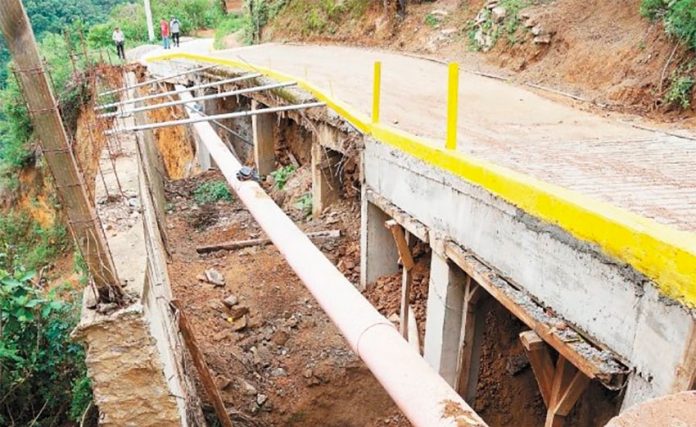
Road damage in Oaxaca.

The damage caused by Tuesday’s 7.5-magnitude earthquake in Oaxaca continues to cut off several communities in the Ozolotepec indigenous region, where roads are blocked by debris and communication hampered by limited phone and internet.

In some cases authorities have had to resort to delivering assistance on foot.

Federal emergency services and the Red Cross, who arrived within 12 hours of the earthquake, often had to abandon their vehicles and walk to isolated communities. Many of the settlements, which are some of the poorest in Mexico, are connected to the outside world by vulnerable dirt roads that under normal rainy season conditions become impassable.

The indigenous Zapotec communities of San José Ozolotopec, San Antonio Ozolotepec and San Andrés Lovene, local officials told El Universal, remain incommunicado. Officials estimate there are a total of about 150 homes there.

Two people in other communities have been reported dead and one missing. Another 15 are reportedly trapped under fallen debris in the community of Santa Catarina Xanaguía. Residents there say part of a hill broke away causing a landslide, but government authorities say that it was actually the result of earthquake damage to a local highway.

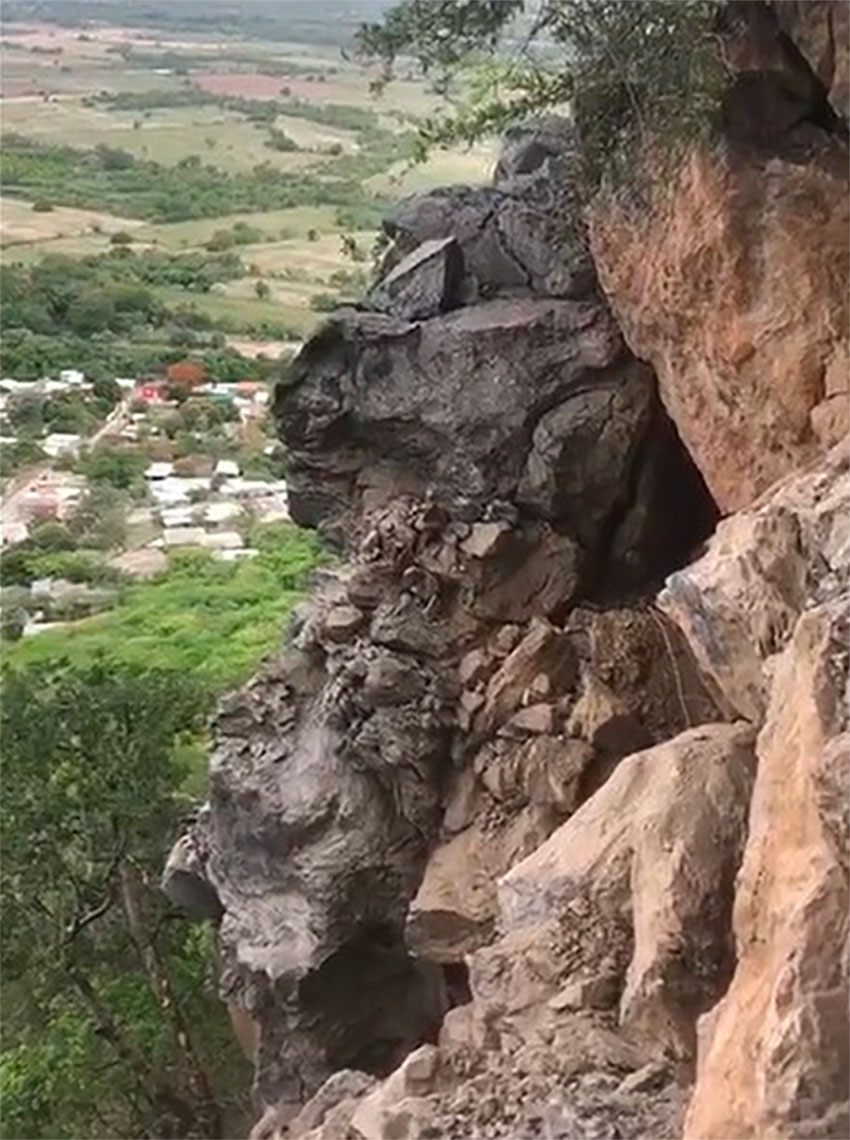
A rocky hill disturbed by the earthquake threatens the community of Santa María Mixtequilla.

In the municipality of San Juan Ozolotepec, where Mayor Francisco Reyes made a video asking for earthquake aid, recovery is slow.

“Many homes are demolished,” he told the newspaper La Razón. “They have many cracks. People won’t be able to inhabit them … At this point, we don’t know how many people are injured. We don’t have the machinery to clear the roads.”

The state government has opened a shelter to provide food and shelter for the displaced.

Meanwhile, emergency officials in the Isthmus of Tehuantepec, Oaxaca, warn that a likely inevitable rockslide threatens Santa María Mixtequilla. Residents are asking state and local Civil Protection authorities to intervene and activate preventative safety protocols.

The earthquake loosened part of a large rocky hill, creating observable fissures that a citizen reported to local authorities. One large rock has already fallen, crashing into the bathrooms of a local church, and another threatens to tumble onto the village if another major earthquake or even strong rains occur, local Civil Protection officials said.

The damage to the rock face made news initially because it revealed a previously unknown example of what appear to be prehistoric cave paintings. Residents are also asking federal authorities to send anthropologists to examine and preserve the site.

Sources: El Universal (sp), Milenio (sp), La Razón (sp)

Why one of Mexico’s smallest states is also its most violent

0
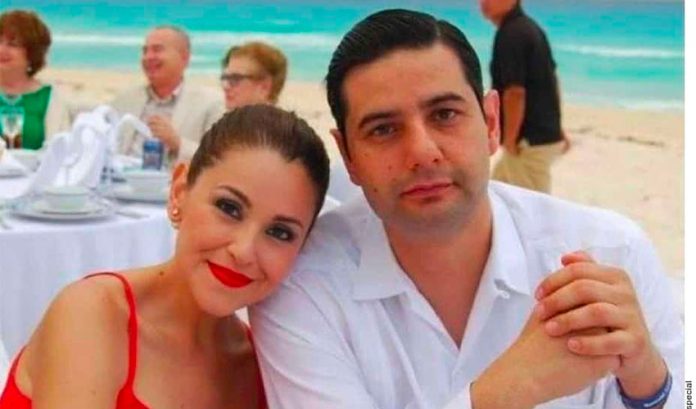
Colima judge Uriel Villegas and his wife were murdered two weeks ago.

A series of assassinations of high-profile public figures in Colima marks the latest manifestation of violence in one of Mexico’s smallest yet deadliest states — a dubious honor attributable to Colima’s location along the territorial fault lines dividing Mexico’s most powerful cartels.

Colima, with a population of less than one million, has topped Mexico’s murder per capita list every year since 2016. In 2019, the state finished with a rate of 97 homicides per 100,000 residents — far outpacing Baja California, which had the second-highest rate at 80 homicides per 100,000 residents.

This year, Colima has registered more femicides than any other state. It’s also one of five states that accounted for more than 50% of the clandestine mass graves exhumed during the presidency of Andrés Manuel López Obrador.

The coastal state was once considered one of Mexico’s safest and most desirable vacation spots. Its murder rate in 2015 was one-third of what it is now.

Accompanying this rise in violence has been a series of brazen and public murders of high-profile political and social leaders in Colima.

On June 16, hitmen fired more than 20 shots in the killing of Uriel Villegas Ortiz, a Colima federal judge, and his wife, Verónica Barajas, in the state’s capital city. Villegas had delivered judgments in several cases involving top Jalisco New Generation Cartel (CJNG) and Sinaloa Cartel leaders.

Two weeks before that, authorities discovered the body of Colima congresswoman Anel Bueno in an unmarked grave. She had been abducted more than a month earlier by a group of armed men in broad daylight as she partook in an event to promote a new sanitation project amid the coronavirus pandemic.

Villegas and Bueno are just two of at least a dozen public figures assassinated in Colima since 2010 — a list that includes lawyers, ministry officials and the state’s former governor.

InSight Crime analysis

The key to understanding violence in Colima is its location along invaluable drug trafficking routes.

Manzanillo, the state’s largest town and main port, serves as an arrival point for chemical precursors from Asia and a transit point for drugs moving towards the United States and Europe, according to Mexican journalist and organized crime expert Óscar Balderas.

Some of the largest cocaine seizures in Mexican history have taken place in the Pacific port city.

“The port of Manzanillo is one of the most active and coveted ports for the drug cartels,” Balderas told InSight Crime in a text message.

When Colima first began its downward spiral in 2016, Manzanillo was also at the center. A spike in homicides then was attributed to a three-way power struggle between the Sinaloa Cartel, the CJNG and Los Zetas over Colima’s coastal trafficking routes.

The violence also seemed to coincide with internal Sinaloa Cartel turmoil in the absence of its kingpin, Joaquín Guzmán Loera, alias “El Chapo.” This strife allowed the CJNG to make gains in Colima, according to Balderas.

The result was 206 homicides in the first four months of 2016, up from 44 across the same four months in 2015.

Since then, Mexico’s criminal landscape has become more fractured, birthing smaller cells that have resorted to extreme violence in pursuit of territory and legitimacy — a phenomenon that has made its way to Colima, too.

Citing official documents from the federal government’s security cabinet, Excélsior and Colima Noticias reported in February the presence of at least four different criminal groups in Colima.

According to the reports, the CJNG struck an alliance in 2019 with former members of the nearly defunct Arellano Félix Organization from Tijuana, who are now acting as Jalisco enforcers in Colima under the new name Tijuana New Generation Cartel (CTNG).

At the same time, a group called Los Troyanos, an armed wing of the Nueva Familia Michoacana, has also allegedly been operating in Colima. Sinaloa Cartel elements are also believed to have a presence in the state.

This fragmented criminal scene has collided with political instability, according to security analyst Alejandro Hope. Colima has swung for a different political party in each of the last three presidential elections and cycled through eight governors in the last 20 years.

“Colima has kind of plateaued at this very high level of violence,” Hope told InSight Crime. “It’s not clear if it’s organized crime violence or political violence, or a combination.”

Reprinted from InSight Crime. The author is a journalist, researcher and student on an internship at InSight Crime, a foundation dedicated to the study of organized crime.

Gang boss’s mom released for lack of evidence; all 31 arrested freed

0
The mother of Guanajuato crime gang boss El Marro leaves prison yesterday.

The mother of Santa Rosa de Lima Cartel leader José Antonio “El Marro” Yépez was released from prison on Sunday due to a lack of evidence, triggering criticism from President López Obrador.

At a two-day hearing that concluded on Sunday afternoon, a judge ordered the release of María Eva Ortiz, one of her daughters, her niece and two men after ruling that there was insufficient evidence to submit them to trial.

All five were arrested in the municipality of Celaya, Guanajuato, on June 20 on charges related to involvement with the Santa Rosa de Lima cartel, a notoriously violent fuel theft, drug trafficking and extortion gang.

Security authorities arrested a total of 31 people with alleged links to the gang in an operation in Celaya on June 20 but all of them have since been released from preventative custody.

During the weekend hearing, lawyers for Ortiz and the other defendants presented evidence that showed that security authorities planted 2 million pesos on El Marro’s mother, who was accused of being a financial operator for the Santa Rosa de Lima Cartel.

According to a report by the newspaper El Universal, Ortiz’s defense team proved that agents with the Guanajuato Criminal Investigation Agency removed the money from 30 different addresses in the community of San Isidro Elguera that have no connection to the Santa Rosa gang.

The lawyers also asserted that Ortiz was not detained at the address at which authorities said she was arrested. They said she was arrested at a nearby address and subsequently taken to another house for which the authorities had a search warrant.

However, Ortiz and the other alleged cartel members were arrested hours before the search warrant was issued at about 9:00 p.m. on June 20, the defense team said. Lawyers asserted that some of those detained, including members of El Marro’s family, were subjected to psychological torture.

In audio evidence presented at the hearing, men believed to be federal security agents are heard pressuring a woman, allegedly Yépez’s cousin, to tell cartel members to cease their dramatic response to the arrests, which included setting vehicles on fire to create almost 50 road blockades in 13 Guanajuato municipalities.

The woman subsequently calls her son and asks him to tell the cartel members and associates to “calm down.”

“They will beat us if they keep burning [vehicles],” she said.

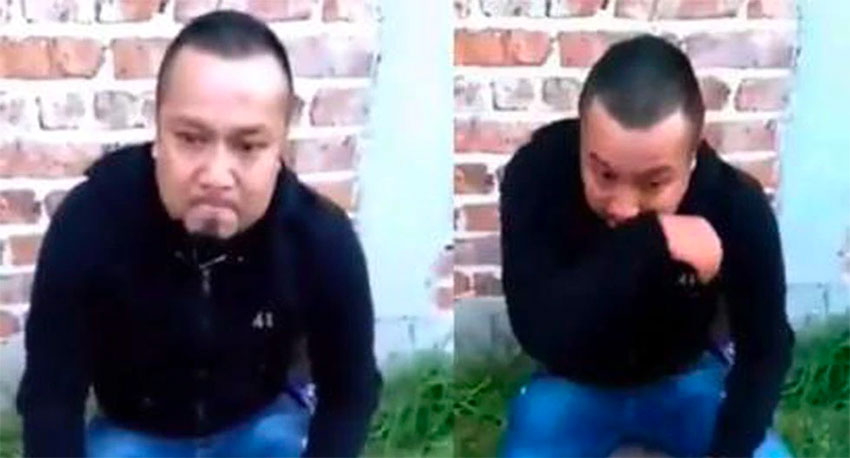
An emotional El Marro in one of two videos released after his mother's arrest.
An emotional El Marro in one of two videos released after his mother’s arrest.

A presumed federal agent is also heard threatening to kill cartel lookouts if those detained don’t cooperate by telling them to put an end to the blockades.

“[If you don’t cooperate], all that you’ll achieve is that I’ll come for them in the night because I already know who they are. … Let them know that I won’t catch them alive,” the presumed agent said.

An investigation has been launched into the alleged psychological torture to which some of those detained were subjected, El Universal reported.

Speaking on Monday morning, López Obrador condemned the release of Yépez’s mother and claimed that it is related to “an old problem” in the judicial system “linked to inefficiency and corruption.”

He implied that the judge – a woman by the name of Paulina Iraís Medina Manzano – had reached some kind of agreement with the suspected criminal and attempted to hide it by ruling that there were inconsistencies in the way in which authorities said she was arrested.

“Some judges have always looked [to see] if there was a mistake in [detailing] the time of arrest, in the paperwork, in anything that [allows them] to release alleged criminals,” López Obrador said.

“In this case, a thorough investigation will be carried out to review the reason why [Ortiz] was released,” he said.

Her son, El Marro, is one of Mexico’s most wanted persons but has managed to evade arrest despite the launch of a security operation last year whose specific aim was, and is, to take him into custody.

After the arrest of his mother, sister and cousin, Yepéz appeared in two emotional videos posted to social media in which he threatened authorities.

An attempted bomb attack on the Pemex refinery in Salamanca, Guanajuato, last week is suspected of being related to the law enforcement crackdown on his Santa Rosa de Lima Cartel, including the recent arrests.

Source: El Universal (sp), La Jornada (sp), 24 Horas (sp) 

New North American trade pact launches under a cloud

0
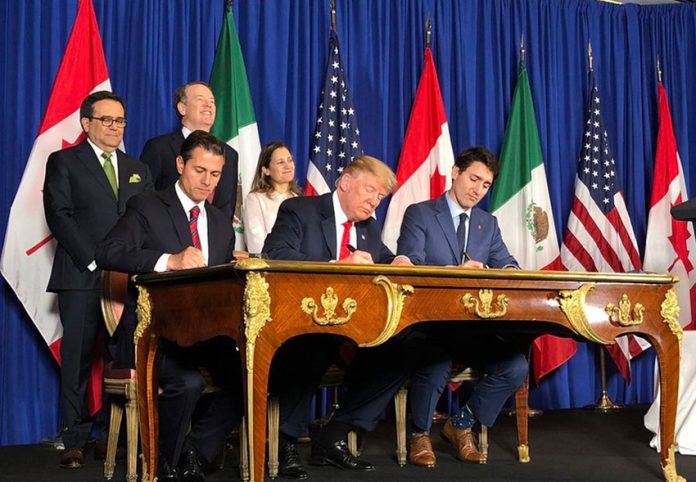
Former president Peña Nieto, Trump and Canada's Justin Trudeau signed the new agreement in 2018.

A new trade pact between the United States, Mexico and Canada begins on Wednesday with the top U.S. negotiator threatening litigation, investor distrust rife and supply chains tested by the Covid-19 pandemic.

While U.S. President Donald Trump and his Mexican counterpart, Andrés Manuel López Obrador, plan to toast the United States-Mexico-Canada Agreement (USMCA) at the White House, probably after U.S. Independence Day on July 4, others are more cautious.

“I don’t believe that on July 2, there is going to be a queue of foreign investors in Mexico,” warned Carlos Salazar, head of Mexico’s main business lobby, which has seen relations with the leftist nationalist leader sour.

The North American Free Trade Agreement was born with fanfare and the sense “that Mexico was opening to the world and would become developed and prosperous, and that it could negotiate as equals with the U.S.,” according to Verónica Ortiz, head of Comexi, a foreign affairs think tank.

By contrast, the USMCA which replaces it was forced into being by Donald Trump. The U.S. president branded NAFTA the worst deal ever and vowed to pull out unless there were changes that would encourage companies to repatriate jobs from low-wage Mexico.

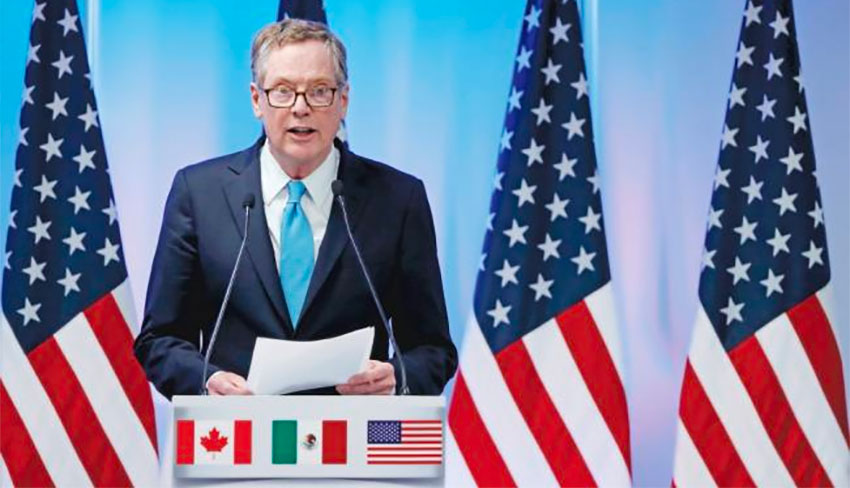
US Trade Representative Lighthizer warned Mexico to prepare for challenges.

Three arduous years of talks ensued, culminating in a deal that went well beyond NAFTA. López Obrador is betting the USMCA will bring investment and jobs. The business community, meanwhile, hopes it will enable Mexico to position itself as a manufacturing hub for companies relocating from China amid trade tensions with the U.S.

But U.S. Trade Representative Robert Lighthizer warned Mexico to brace for challenges, including over its enforcement of new labour rules, long a thorny issue in negotiations.

“After July 1, I expect to … look at complaints … and to the extent that we have problems, I expect to bring cases. I think Mexico understands that, I hope they understand that, I’ve made it as clear as I can,” he told a legislative hearing this month.

The new trade pact also comes at a time when abrupt policy shifts from the Mexican president, especially those designed to favour state-run oil company Pemex and utility CFE, have triggered outrage from U.S. companies.

“Just as China is losing its luster and Mexico should be saying ‘we are open for business, come on over,’ they’re putting the brakes on new FDI [foreign direct investment],” said Nelson Balido, a trade consultant based in Texas.

Christopher Landau, U.S. ambassador to Mexico, admitted in a conference call last week with Mexican executives: “I can’t lie. I can’t say it’s an opportune moment to invest in Mexico if we’re seeing things that are very discouraging.”

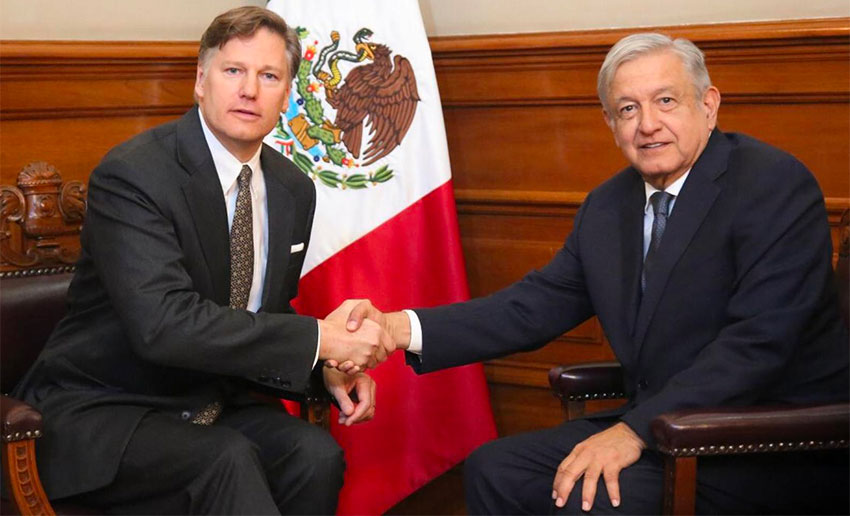
President López Obrador received US Ambassador Landau in Mexico City last year.
US Ambassador Landau, left: not an opportune moment to invest in Mexico.

Mexico’s changes to the rules in the electricity sector, penalizing renewables projects to favour the CFE, have triggered complaints and threats of arbitration. Investors are also upset over delays in issuing permits for gas stations, fuel storage and imported fuel, for example.

In a letter to U.S. Secretary of State Mike Pompeo and trade officials, the American Petroleum Institute this month blasted “recent actions … [that] discriminate against U.S. investors in violation of commitments that Mexico agreed to in both NAFTA and USMCA.”

The American Fuel and Petrochemicals Manufacturers wrote to Trump to complain about Mexican policy which, it said, “threatens not only the direct investment U.S. companies have made but also future revenue and U.S. jobs to make those investments viable.” It raised “serious questions about whether such actions are permissible under Mexican law and Mexico’s obligations under the new USMCA.”

The Global Wind Energy Council, meanwhile, wrote to Rocío Nahle, Mexico’s energy minister, to say that policy changes “have severely deteriorated the investment climate in the sector, and recovering that confidence is all the harder … given the Covid-19 crisis.”

Cross-border supply chains and a tightly intertwined North American manufacturing industry, in which components cross between the U.S., Mexico and Canada multiple times before winding up in a finished car, TV or other manufactured good, are the lifeblood of NAFTA and USMCA.

But a failure to harmonize Mexico’s official definition of essential industries during the Covid-19 pandemic with that in the U.S. has led to bottlenecks and delays. “Supply chains aren’t keeping up,” said trade consultant Balido. He added that some U.S. production lines had risked having to close and furlough workers “because they lack parts from Mexico … We’ve tried to talk sense into the López Obrador administration but they’re very difficult to work with.”

Still, the USMCA held much promise, said Luis de la Calle, a former NAFTA negotiator. He said the treaty could be a significant lever of development in Mexico’s poor southeast, which López Obrador has vowed to revitalize.

“There is enormous potential to detonate investment in agriculture, as happened in the Bajío [Mexico’s main central manufacturing region] under NAFTA,” he told a seminar.

“USMCA is far from being a panacea,” cautioned Duncan Wood, head of the Mexico Institute at the Wilson Center, a think tank, but the treaty did provide clear rules and the legal protections that investors craved.

But Landau, the ambassador, was blunt. “This is a moment to try to attract new investment to the whole of North America … [with] supply chains looking very vulnerable especially in China and Asia,” he said.

“It’s golden opportunity for Mexico to attract foreign investment. I hope they don’t waste it, frankly.”

© 2020 The Financial Times Ltd. All rights reserved. Please do not copy and paste FT articles and redistribute by email or post to the web.

Rate of coronavirus contagion and deaths is slowing: deputy health minister

0
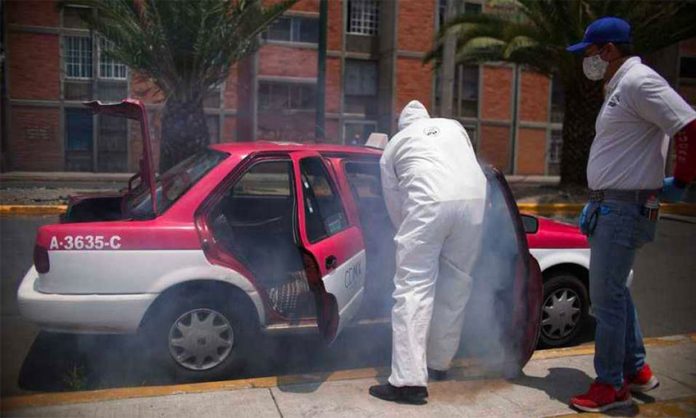
A taxi is disinfected against the coronavirus in Mexico City.

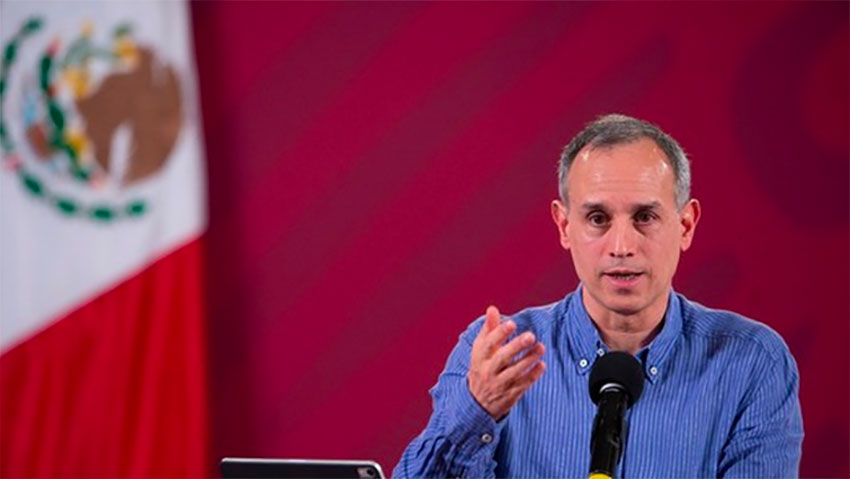
The coronavirus pandemic continues to grow but the speed at which new infections and deaths are occurring is slowing, Deputy Health Minister Hugo López-Gatell said on Sunday.

Speaking at the Health Ministry’s nightly coronavirus press briefing, López-Gatell highlighted that the increase in case numbers in percentage terms from one day to the next is much lower now than during March, the first month of the pandemic.

He made the same point last week while acknowledging that the percentage increases are in comparison with an increasingly higher number of total cases.

López-Gatell also presented graphs from the University of Oxford website Our World in Data to support his claim that the pandemic in Mexico is stabilizing and has not grown as quickly as in some other countries.

He highlighted that Spain reached a point in its pandemic at which more than 170 new confirmed Covid-19 cases per million inhabitants were reported on a single day.

López-Gatell
López-Gatell: another sign of the ‘famous flattening of the curve.’

Brazil has recorded more than 160 new cases daily per million people, the United States has detected more than 100 cases per million and the pandemic in Italy peaked at almost 90.

In contrast, Mexico thus far has reached a peak of just over 40 new confirmed cases per million inhabitants per day.

Referring to Mexico’s epidemic curve, López-Gatell said that “we’re starting to see a much slower rise” than in earlier phases of the coronavirus outbreak.

He stressed that the inclination of Mexico’s curve is not as steep as the other countries shown in the graph, which also included the United Kingdom, Germany and France.

“This is another one of the signs … of the famous flattening of the curve,” López-Gatell said, claiming that the coronavirus mitigation measures put in place by the government achieved their goal and avoided the health system being overwhelmed.

The deputy minister also emphasized that no country in the world knows exactly how many Covid-19 cases it has. Therefore, Mexico’s comparatively low number of daily cases cannot be attributed solely to a low testing rate.

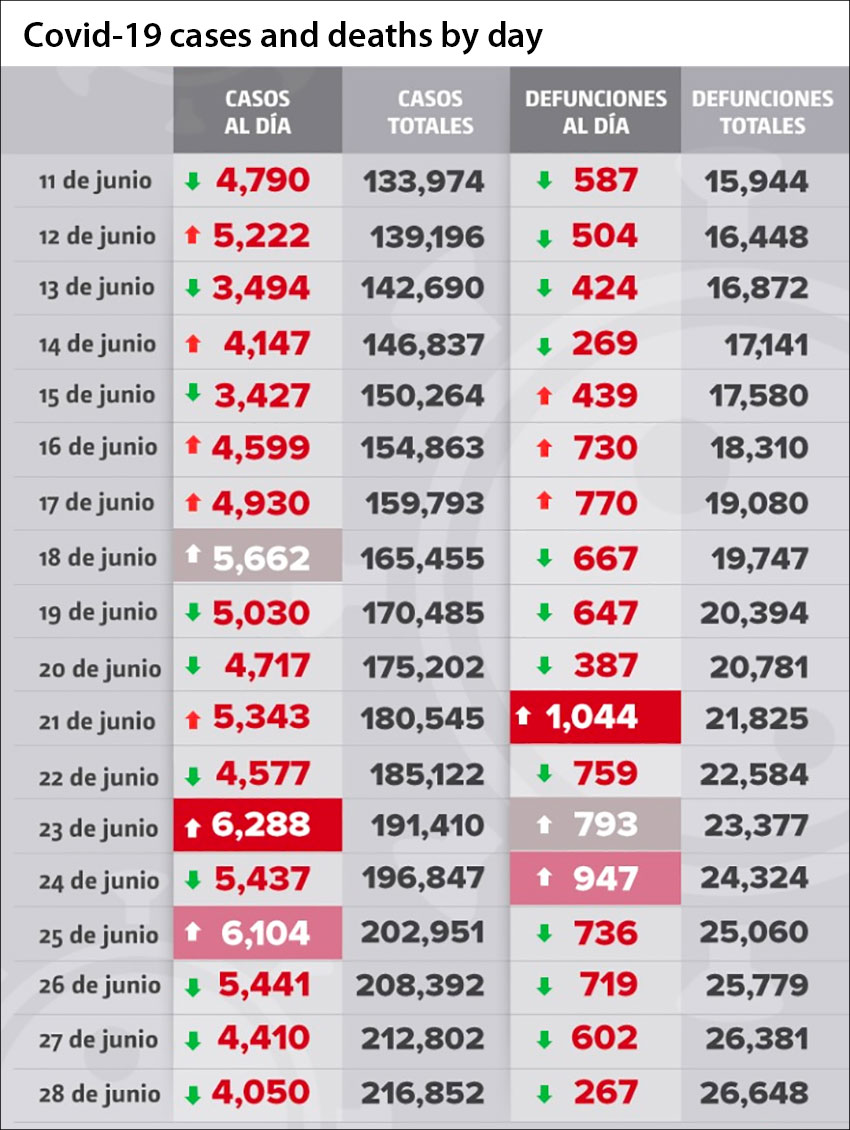
The daily tally of coronavirus cases and deaths
The daily tally of coronavirus cases and deaths. Deaths are numbers reported and not necessarily those that occurred each day. milenio

López-Gatell also presented a graph showing that Mexico’s number of cumulative confirmed Covid-19 deaths per million people is lower than that of the United States, the United Kingdom, Spain, France, Italy and Brazil. Only Germany has a lower per-capita death rate than Mexico among the eight countries included in the graph.

López-Gatell said the rate at which deaths are occurring in Mexico is slower than that of all the other countries bar Germany.

He highlighted that many of the Covid-19 fatalities in Mexico are related to diabetes, hypertension, obesity and other chronic diseases. The population of Mexico is more affected by those illnesses at a higher rate than the populations of almost every other country in the world, he said.

López-Gatell’s assertion that the pace of growth of the pandemic is slowing is also supported by recent data for the greater Mexico City metropolitan area, Mexico’s coronavirus epicenter.

Health Ministry data shows that the number of new cases detected between June 15 and 21 in the 16 Mexico City boroughs and 59 México state municipalities that are part of the Valley of México metropolitan area was 12.3% lower than in the previous week.

A total of 7,154 cases were detected between June 15 and 21 compared to 8,162 during the week before. It was the second consecutive week that case numbers declined in the Valley of México after a 7.2% drop between June 8 and 14.

The 7.2% decrease was the first weekly drop in case numbers since Covid-19 was first detected in Mexico at the end of February.

At the national level, the number of cases reported on Saturday and Sunday declined in comparison with previous days, although López-Gatell acknowledged that the Health Ministry usually registers fewer cases over the weekend.

He said that 4,050 additional cases were registered on Sunday, increasing Mexico’s cumulative case tally to 216,852.

Mexico’s Covid-19 death toll increased by 267 – the smallest daily spike since June 7 – to 26,648.

López-Gatell said that an additional 2,004 fatalities are suspected to have been caused by Covid-19 but have not yet been confirmed.

Of the total number of confirmed cases, 25,558, or about 12%, are considered active.

Mexico City currently has the highest number of active cases in the country, with 3,838, followed by México state and Puebla, where 2,513 and 1,826 people, respectively, tested positive for Covid-19 after developing symptoms in the past 14 days.

Six other states have more than 1,000 active cases. They are Guanajuato, Tabasco, Tamaulipas, Veracruz, Yucatán and Jalisco.

Eighteen states including Mexico City are starting this week with an orange light on the Health Ministry’s stoplight map to assess the risk of coronavirus infection, while the other 14 states currently have a red light.

An orange light denotes a high risk of coronavirus infection while a red light is indicative of the maximum risk of contagion.

Source: La Jornada (sp), Milenio (sp), Infobae (sp)