The price of Mexico’s export crude fell into negative territory for the first time ever on Monday as demand for oil remains low due to the coronavirus pandemic.
The state oil company Pemex reported that a barrel of crude fell to US -$2.37 per barrel, a decline of 116% compared to Friday’s closing price of $14.35.
The descent into negative territory came as the West Texas Intermediate Price, the main United States benchmark to which the Mexican crude price is tied, fell to more than $30 below zero.
The prices went negative partially as a result of the way oil is traded. Futures contracts in the United States requiring purchasers to take possession of oil in May expire today but most refineries don’t currently want crude because demand is so low and they don’t have anywhere to store it.
With nowhere to store oil themselves, some speculators paid buyers to take it off their hands.
“If you are a producer, your market has disappeared, and if you don’t have access to storage you are out of luck,” said Aaron Brady, vice president for energy oil market services at the consulting firm IHS Markit. “The system is seizing up.”
Monday’s price plunge is the latest bad news for Pemex, which saw its credit rating downgraded by both Fitch Ratings and Moody’s Investors Service last week.
With global oil prices having already fallen this year due to collapsing demand due to the coronavirus crisis and a price war between Saudi Arabia and Russia, Mexico’s revenue from oil exports has already dropped sharply and now looks set to decline even further.
Carlos Huerta, an energy sector consultant and former political economy advisor at Pemex, said that the oil market had reacted to “what will very probably be one of the most severe economic crises of the last 100 years.”
“The high correlation between the energy sector and economic growth … indicates that the economic paralysis will be brutal,” he said.
In that context, the Mexican government needs to increase spending to support the economy, Huerta said, asserting that it should inject resources into productive sectors, broaden social programs, support small and medium-sized businesses and make unemployment benefits widely available.
“If the health maxim is ‘stay at home,’ the economic maxim of the Mexican state must be ‘spend,’” he said.
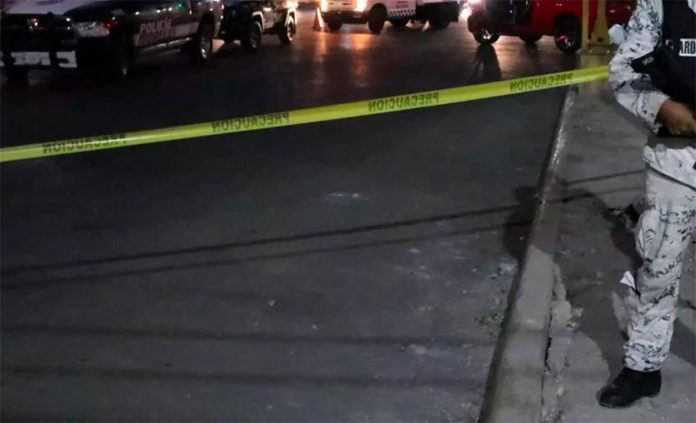
Not even the coronavirus pandemic has put a dent in Mexico’s alarmingly high homicide rate: March was the most violent month since President López Obrador took office in December 2018, official statistics show.
The National Public Security System reported on Monday that there were 3,000 homicide victims last month, the highest number since July 2018 when 3,074 people were murdered.
The March numbers constitute the second highest monthly total since former president Felipe Calderón was sworn in on December 1, 2006. The number of victims last month is 8.5% higher than February and 5.1% higher than March 2019.
Once again, Guanajuato had the highest number of homicide victims in March with 353 followed by México state, Chihuahua, Baja California and Michoacán, where 286, 247, 243 and 213 people, respectively, were murdered.
The other five states among the 10 most violent in March were, in order, Jalisco, Guerrero, Mexico City, Veracruz and Sonora.
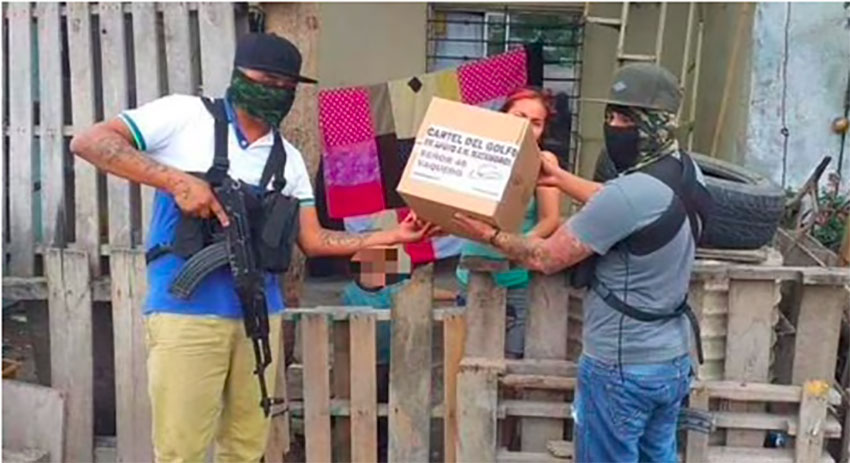
With best wishes from the Gulf Cartel.
Yucatán and Baja California Sur were the least violent, with just two homicide victims each. Eight people were murdered in each of Campeche and Aguascalientes last month while there were 10 victims in Nayarit.
Domestic violence offenses also increased as people spent more time in their homes to help limit the spread of Covid-19. More than 20,300 cases were reported in March, a 13.7% increase compared to February.
Minor drug trafficking offenses, human trafficking and muggings all increased compared to February but femicides, kidnappings, extortion, vehicle theft and burglaries all declined.
The high levels of violence seen in March have shown only limited signs of abating in April even though a health emergency stipulating the suspension of all nonessential activities has been in effect since the start of the month. An average of 97 people per day were murdered last month while in the first 19 days of April there was an average of 84 homicide victims per day, according to preliminary government statistics.
The past two days were the two most violent of the year with a total of 219 homicide victims. The government reported 105 victims on Sunday but the 2020-high only stood for a day before the murders of 114 people were reported on Monday.
Guanajuato, where the Jalisco New Generation Cartel and the San Rosa de Lima Cartel are engaged in a bloody turf war, was the most violent state in the country on Monday with 16 homicides. México state recorded the highest number of murders on Sunday with 12.
President urges killers to think of the suffering they have caused.
“We’re dealing with the coronavirus [pandemic] but unfortunately we’re still having problems with homicides. They haven’t even calmed down because of the coronavirus situation; don’t come along now and say ‘we’re handing out groceries,’ stop [the violence]! Think of your families and yourselves. Those who dedicate themselves to these [criminal] activities, if you’re listening to me or watching me, you have to have love for life, it’s the most sublime thing, a blessing,” he said.
“Handing out groceries doesn’t help, what helps is stopping bad deeds, loving your neighbor, not causing harm to anyone. … Think of your families, especially your mothers, the suffering that you cause them, the suffering of the victims’ families,” López Obrador said.
The president reiterated that his administration is committed to providing alternatives for people involved in crime so that they can “be happy again with their families, have a job and not be forced to do harm.”
He has consistently pledged to reduce violence by addressing its root causes rather than combating it with force.
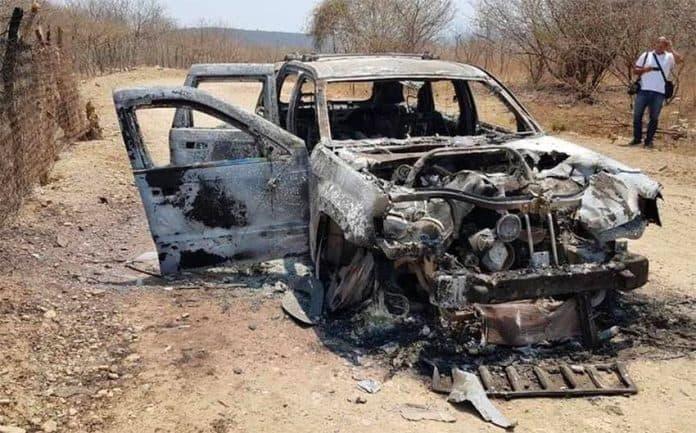
The wreckage of a vehicle after weekend clashes in Guerrero.
It’s not the coronavirus that is killing people in the mountains of Guerrero, it’s violent gun battles between community vigilantes, police and soldiers and the Cartel del Sur.
Clashes over the weekend in El Naranjo, an agricultural town where poppies grown for opium gum and heroin are a big crop, left burnt-out cars and 13 dead in another wave of extreme violence that has been plaguing the region for years.
Residents say the latest attack began Saturday morning with a gun battle that lasted for hours, punctuated from time to time by the sound of explosions.
On one side, the violent Cartel del Sur, on the other, a group called the United Front of Community Police of Guerrero State (FUPCEG), a grassroots citizens militia of 11,700 fighters who patrol 39 municipalities in Guerrero.
The Cartel del Sur’s hold on this region is particularly brutal. Led by Isaac Navarette Celis, the cartel is particularly known for producing and trafficking a potent form of heroin known as China White for which the region’s poppy crop is essential, and for virtually enslaving small towns in this region through extortion and violence.
FUPCEG, headed up by former electrical engineer Salvador Alanis, has taken on the cartel in El Naranjo before.
Last summer the vigilante group, armed with AK-47s, attempted to liberate the small town from the cartel’s grip.
“We fight to free communities that have been isolated by the criminals,” a FUPCEG leader known as “El Burro” told The Daily Beast as they prepared to engage in a gun battle with cartel forces in the town last July. “The people of this town have asked us for help, and so that’s what we’re going to do.”
But the unrest in the region continues, despite FUPCEG’s best efforts.
Last weekend, after a full day of violence, someone decided to call in the cavalry.
A 911 call on Sunday morning reporting the presence of armed civilians in the area prompted a flyover by a Ministry of Public Security helicopter which then called on ground forces, consisting of the National Guard, soldiers and state police to move in. A gun battle ensued, resulting in the deaths of four of the gunmen, presumably cartel members.
Authorities arrested two other men and seized an arsenal of military-grade weapons, ammunition, drugs and explosives. Later another four bodies were found, killed execution-style at least one day prior. It appears an attempt was made to burn them.
On Monday, authorities discovered the bodies of five more men covered in blankets at the bottom of a ravine, as well as hundreds of shell casings and five stolen and two burnt-out vehicles.
This brought the toll to 13 killed in this small town in just two days, while 14 people have been killed by the coronavirus in the entire state since the pandemic began.
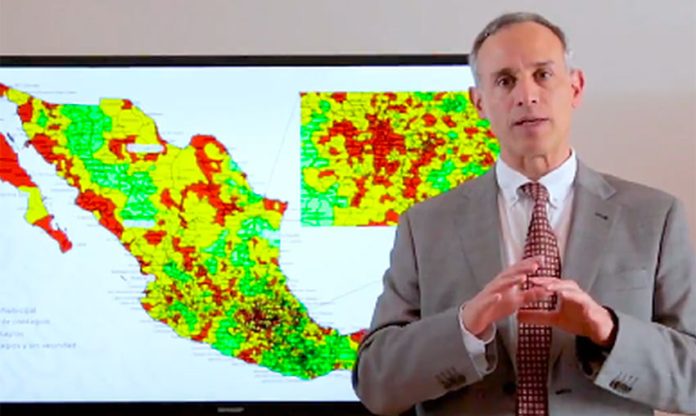
López-Gatell announces 'some good news' on Monday.
A resumption of normal life could be possible in almost 1,000 municipalities across the country on May 18 because they have no or very few cases of Covid-19, Deputy Health Minister Hugo López-Gatell said on Monday.
“We have areas of the country that don’t have a significant transmission [of the disease],” López-Gatell said in a video message posted to social media.
“In those municipalities where there are no cases or very few cases,” the government will be able to lift most of the measures in place to limit the spread of Covid-19 before the rest of the country,” he said.
“When? From Monday, May 18. … In almost 1,000 municipalities … we can control the disease, the epidemic of Covid, using others measures that correspond to phase one. This will allow these regions … to recover normality,” López-Gatell said.
The deputy minister announced last week that the government’s social distancing initiative, including the suspension of all nonessential activities, would be extended by an extra month to May 30 but he flagged the possibility of lifting restrictions earlier in parts of the country where there has been little or no transmission of Covid-19.
In Monday’s video, López-Gatell made the surprise assertion that the number of coronavirus cases reported on a daily basis is decreasing and as a result Mexico’s epidemic curve is flattening.
“We have good news, we’re doing well. We are managing to reduce infections, this is what we call flattening the curve. … We have a flatter curve, this means we have fewer cases every day and with this … those people who have a serious disease because of Covid and need hospitalization [will be able to] find a space in the national health system,” he said.
However, López-Gatell acknowledged at both the Health Ministry’s coronavirus press briefing on Monday night and President López Obrador’s regular news conference on Tuesday morning that the rate of Covid-19 infection is in fact accelerating, contradicting his earlier statement.
“Don’t think that we’re already coming out of the epidemic, by no means. We’re not even in the phase of reducing cases,” he said on Monday night.
Acknowledging that Covid-19 is now spreading quickly in the community, López-Gatell declared today that Mexico has now entered phase three of the coronavirus pandemic.
• Covid-19 cases by municipality are provided on this interactive map published by the Mexican Biodiversity Commission. But there are no assurances that the data is complete.
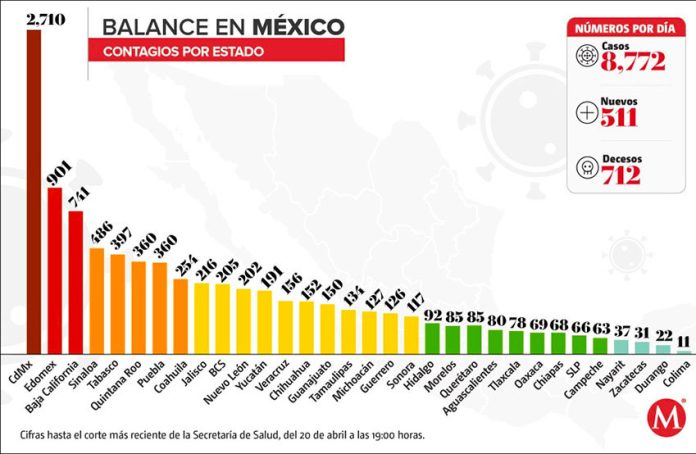
Coronavirus cases by state as of Monday evening. milenio
The federal government has declared the start of the most serious phase of the coronavirus pandemic in Mexico as the number of Covid-19 cases continues to grow.
Deputy Health Minister Hugo López-Gatell made the phase three declaration at President López Obrador’s regular news conference on Tuesday morning.
“We are in the phase of rapid ascent in which a large number of infections and hospitalizations will accumulate,” he said. “We must continue maintaining the national healthy distance initiative so that these are as low as possible.”
López-Gatell said that there are now more than 1,000 Covid-19 cases in each of the four regions recognized by the General Health Council: western Mexico, the north, central Mexico and the southeast.
“We have more than 4,000 cases in the central region. … We have extended spread [of the virus] in all the regions of the country even though the spread is in patches. We have active outbreaks, we have spread throughout the country, these are the characteristics of the ascent phase,” he said.
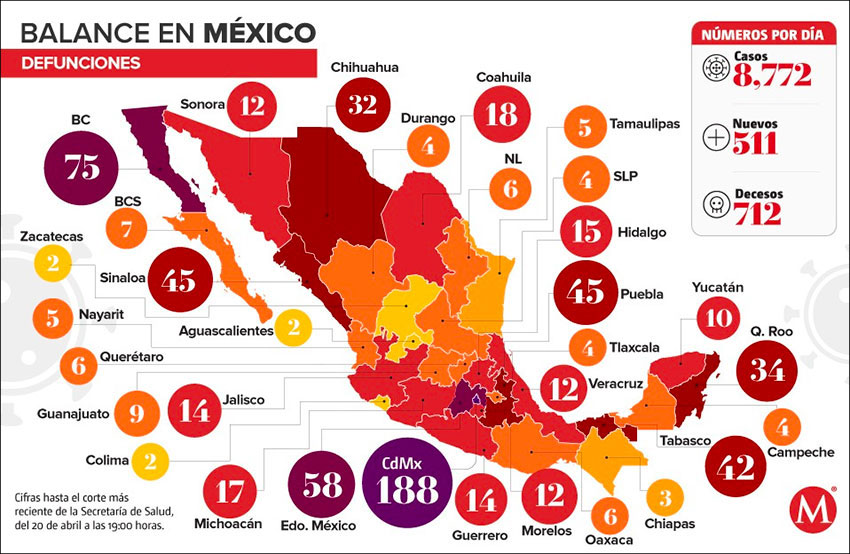
Covid-19 deaths as of Monday.
The government is predicting that the virus will spread rapidly in the first half of May and that pressure on the health system will be greatest in the second half of next month.
The government’s social distancing initiative, including the suspension of all nonessential activities, is currently scheduled to run through May 30. Specific measures and restrictions applicable to phase three of the pandemic will be published in the government’s official gazette on Tuesday afternoon.
The phase three declaration comes after the Health Ministry reported on Monday that the number of confirmed Covid-19 cases had increased by 511 to 8,772 and that the death toll had risen by 26 to 712.
Among those confirmed to have the disease are 13 infants aged 1 or less and 44 pregnant women.
Of the almost 9,000 confirmed cases since the disease was first detected in Mexico at the end of February, 2,965 cases are currently considered active, López-Gatell said.
Mexico City continues to have the highest number of cases in the country followed by México state and Baja California. At a municipal level, the Mexico City borough of Iztapalapa has the highest number of active cases followed by Culiacán, Sinaloa, and Tijuana, Baja California.
Mexico City also leads the country for coronavirus-related deaths with 188 as of Monday. Baja California is second with 75 followed by México state with 58.
With 45 fatalities attributed to the new coronavirus, Tijuana has recorded the highest number of deaths among the nation’s more than 2,000 municipalities. Gustavo A. Madero in Mexico City and Culiacán follow with 39 and 30 deaths, respectively.
Mexican Social Security Institute director (IMSS) Zoé Robledo said on Monday that he was particularly concerned about the possibility that hospitals in Tijuana, Culiacán, Monclova, and the Valley of México metropolitan area will be overwhelmed with the expected large influx of Covid-19 patients.
He also said that IMSS has hired an additional 9,000 health workers to respond to the most critical phase of the coronavirus pandemic but that it still needs another 9,000.
“Between doctors, general doctors, specialists, nurses …. orderlies, paramedics, we’ve hired about 9,000 people but we still need 9,000 more and we’re still hiring,” Robledo said.
Nine healthcare workers have tested positive for Covid-19 in Puerto Vallarta.
The Jalisco municipality of Puerto Vallarta is the only one in the state to have recorded coronavirus infections among medical personnel.
There are now 21 cases in the popular tourist destination, the third highest in the state. Nine are among health professionals.
Guadalajara tops the list of Jalisco’s 198 Covid-19 cases with 66, followed by neighboring Zapopan with 54. But Puerto Vallarta and the capital each have recorded three of the state’s 13 Covid-19 deaths, more than any other Jalisco municipality.
Although Puerto Vallarta residents and visitors are currently observing the federal government’s quarantine guidelines, authorities initially failed to enforce the measures to their fullest extent and allowed foreign tourists to gather on the beaches when they were supposed to be closed.
Terrón told Mexico News Daily that she believes the virus has hit Puerto Vallarta in this unique way as a direct result of that failure to enforce the rules from the beginning.
“The [local] authorities were very permissive during the first days of the pandemic, given what they wanted, which was to continue to treat foreign tourists well,” she said.
Terrón added that the initial cases in Puerto Vallarta all began in people who work at or in the vicinity of the international airport, either in a commercial, transportation or official airport capacity.
“Unfortunately these people were perhaps infected by a foreigner who arrived [for vacation],” she said.
But a glimmer of hope shone through the weekend’s cloud of heavy headlines, as Terrón said that one of the sick health workers in the city had recovered and was scheduled to be discharged from the hospital on Monday afternoon.
To date health authorities have investigated suspicious cases in 101 of Jalisco’s 125 municipalities and detected infections in 23 of them. Another 2,805 suspected cases have tested negative during the pandemic, and 372 possible cases are currently under observation.
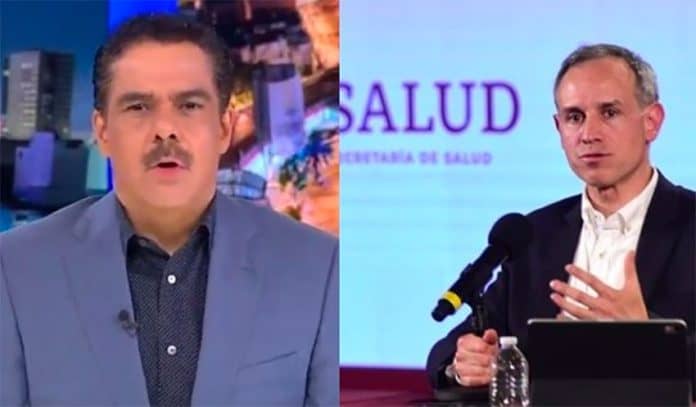
Alatorre, left, charged that information provided by López-Gatell, right, is 'irrelevant.'
The federal government has issued an official warning to the broadcaster TV Azteca after its most prominent newscaster called for the public to ignore the Health Ministry’s coronavirus press briefings because the Covid-19 statistics it presents are false.
The Interior Ministry (Segob) said in a statement that the health emergency declared by the government at the end of last month “deserves obligatory observance in the entire national territory” and that media organizations have a responsibility to disseminate the measures contained in it because they are designed to “preserve the public health of Mexicans.”
However, TV Azteca news anchor Javier Alatorre instead “invited” the public to “disobey the instructions” of Deputy Health Minister Hugo López-Gatell, Segob said.
López-Gatell, the government’s coronavirus point man, appears on television at 7:00 p.m. every night to present the Health Ministry’s press briefing at which updated Covid-19 statistics and advice are provided.
Alatorre, host of the news program Hechos, declared on Thursday that the deputy minister’s numbers and news conferences have become “irrelevant” and urged his audience to “no longer pay attention to Hugo López-Gatell.”
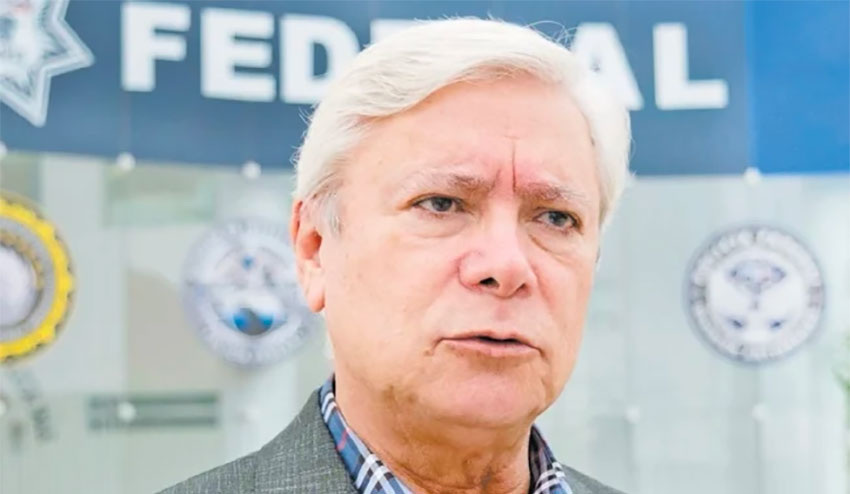
Baja California Governor Bonilla has questioned the coronavirus statistics issued by the federal government.
“Governors of different states [have] refuted the numbers of the deputy health minister,” he said, adding that even López-Gatell himself had “accepted his falsehoods” in an interview with The Wall Street Journal.
Segob said that if TV Azteca again fails to comply with the orders of the government’s General Health Council as contained in the emergency declaration, it will proceed with administrative sanctions against the broadcaster.
“The Interior Ministry has the authority to monitor … radio and television broadcasts … [to ensure] that the rights of third parties, in this case the right to health, are not violated,” the statement said.
For his part, President López Obrador on Monday recommended not sanctioning TV Azteca, charging that even though Alatorre acted irresponsibly, everyone has the right to freedom of speech. The newscaster’s remarks didn’t do “a lot of damage” in any case, he added, because the people are responsible and the majority of them follow his recommendations and those of health authorities.
Asked about Alatorre’s remarks on Saturday, López-Gatell guaranteed that the information presented at the Health Ministry’s nightly press conferences is accurate, although he has acknowledged that the real size of the coronavirus pandemic in Mexico is at least eight times larger than that indicated by the number of confirmed cases.
He said on Friday that the statistics presented each night are compiled by the Health Ministry from information provided by the authorities of each of Mexico’s 32 federal entities.
His remarks came after Baja California Governor Jaime Bonilla questioned the accuracy of the data presented by the federal government for that state, where there are large Covid-19 outbreaks in the border cities of Tijuana and Mexicali.
Bonilla, who warned last week that doctors are “falling like flies” in Tijuana due to a lack of personal protective equipment, claimed that there is a lag of up to seven days between his government’s reporting of data to federal health authorities and their inclusion of it in the statistics they present nightly.
“Why are they reporting information if it’s not real?” he asked.
Bonilla, a member of López Obrador’s Morena party, and Alatorre, who the president describes as a “friend,” are far from the only people who have questioned the accuracy of the federal Health Ministry’s coronavirus statistics.
Citing the discrepancy between case numbers in the United States and Mexico and low testing rates for the disease, two epidemiological experts said earlier this month that the ministry’s numbers are not credible.
According to a report published Monday by the newspaper Financial Times, a pneumonia specialist who works at two private Mexico City hospitals also believes that the numbers presented by the government don’t reflect the true impact of the disease.
“I think in the whole country there are 60,000-80,000 cases and no less than 5,000 deaths,” the specialist said. “In one and a half to two weeks, this is going to explode.”
The specialist said that doctors across Mexico have been ordered not to officially report cases of Covid-19. The number of confirmed cases reported by the Health Ministry on Sunday (8,261) and deaths (686) represent just a small fraction of those estimated by the specialist.
While health authorities deny that there is a cover-up, one very clear discrepancy has been exposed in the data presented by federal authorities and those in Mexico City with regard to the number of patients on ventilators. The Mexico City government has reported that there are more Covid-19 patients intubated than the federal government says are on ventilators in the whole country.
The director of a public hospital in Mexico City agreed with the pneumonia specialist that the official statistics “do not add up.”
Both the infection rate and the death rate have been underreported, the director said, asserting “you have to multiply everything by eight.”
The hospital chief also said that the testing carried out in Mexico – where fewer than 50,000 people had been tested as of Sunday – is not always accurate.
“More or less 70% of the patients I have here have tested negative but scans and symptoms show they are 100% Covid,” the director said.
Doctors have been allowed to record deaths in such cases as ““atypical pneumonia, probably Covid,” the hospital chief added.
Sandra López Leon, a Mexican epidemiologist in New York, also questioned the official coronavirus statistics, stating: “It’s misleading that in Mexico they’ve been reporting a fraction of the number of cases for three months.”
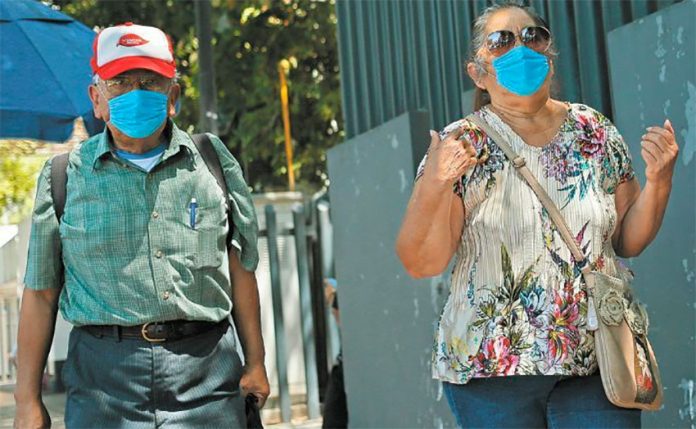
Many seniors have recovered from Covid-19 in their homes.
Almost four in 10 people aged 60 or over who have tested positive for Covid-19 have not required hospitalization, data from the federal Health Ministry shows.
Despite being among the most vulnerable to the infectious disease, 555 seniors did not have symptoms that warranted admission to hospital and were told to isolate themselves in their homes.
As of Saturday, the figure represents 37% of all Mexicans aged 60 or over confirmed to have Covid-19.
Of the 555 patients with non-serious symptoms, 209 are aged between 60 and 64 and 150 are aged between 65 and 69. Those two cohorts account for 65% of all seniors who have been able to convalesce in their homes.
An additional 28% of seniors who didn’t require hospitalization are aged between 70 and 79, meaning that 7% of those aged 80 or over with Covid-19 were able to recover at home.
Among those who have recovered at home are a 95-year-old man in Naucalpan, México state, a 91-year-old woman in Culiacán, Sinaloa, and a 90-year-old woman in Jamay, Jalisco.
However, many others were not as lucky. As of Saturday, 958 people aged over 60 with Covid-19 had been hospitalized and 160 required intensive care.
Deputy Health Minister Hugo López-Gatell presented data on Sunday that showed that the fatality rate for coronavirus patients aged over 60 is 19.3 per 100 cases, more than three times higher than the 5.9 rate among those aged 25-59.
Mexico’s overall fatality rate is currently 8.3 deaths per 100 confirmed cases, although López-Gatell presented data last week that showed that the rate was less than one based on the number of estimated cases of Covid-19.
The global fatality rate based on the confirmed number of Covid-19 cases is about 6.8. However, many epidemiologists estimate that there are between five and 10 undetected cases for each confirmed Covid-19 case, meaning that the real fatality rate from the disease is likely much lower.
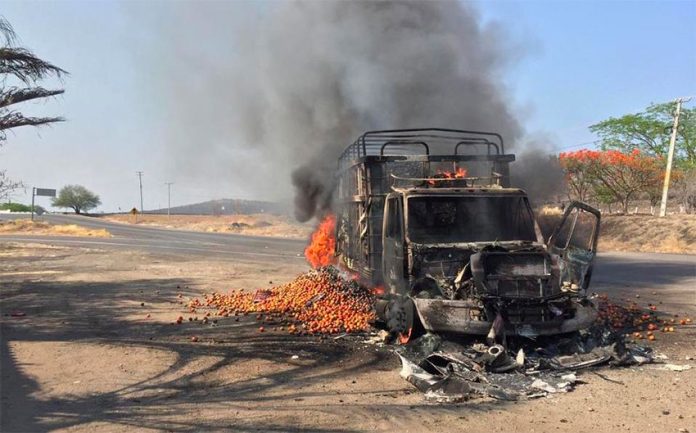
One of several vehicles set on fire to block highways on Sunday.
A wave of gang violence swept through the municipality of Múgica in Michoacán’s Tierra Caliente region over the weekend, terrorizing residents and leaving vehicles, businesses and houses burned and riddled with bullet holes.
Presumed members of criminal gangs burned at least four vehicles in order to block highways and the entrances to several residences in the municipality on Sunday.
The violence affected several communities and triggered panic among residents, many of whom fled to nearby hills fearing for their lives. They called for the National Guard and state police to be deployed in order to reestablish peace and order in the region.
State police had put a stop to the situation and cleared the roadblocks by 6:00 p.m. on Sunday, announcing on Twitter that traffic had been restored to normal at one blockade in the city.
“In coordination with [the federal Defense Ministry] and [the National Guard], the [Michoacán state police] are carrying out operations to maintain order and tranquility among the people [of Múgica],” the force tweeted on Sunday evening.
Authorities had not released information on deaths resulting from the violence or the alleged gang affiliation of the perpetrators as of Monday morning, but the region has been a battleground for the Los Viagras and Jalisco New Generation cartels in recent years.
The capacity of several Mexico City hospitals to treat coronavirus patients is already being stretched to the limit weeks before the worst of the pandemic is predicted to arrive.
Eight health care facilities in the capital including the Juárez, La Raza and Mexico General hospitals and the National Institute of Medical Sciences and Nutrition are at least 80% full, according to the Mexico City government.
Mayor Claudia Sheinbaum said on Saturday that 468 Covid-19 patients were on ventilators in Mexico City hospitals, an increase of more than 100 compared to last Thursday.
“On the 16th [of April], I said that that there were 356 intubated patients; today [Saturday] there are 468 in different hospitals of the city,” Sheinbaum told a virtual press conference.
She said that the critical coronavirus cases were being treated at facilities run by the Mexican Social Security Institute and the State Workers Social Security Institute, public specialty hospitals including the National Institute of Respiratory Diseases (INER) and private hospitals.
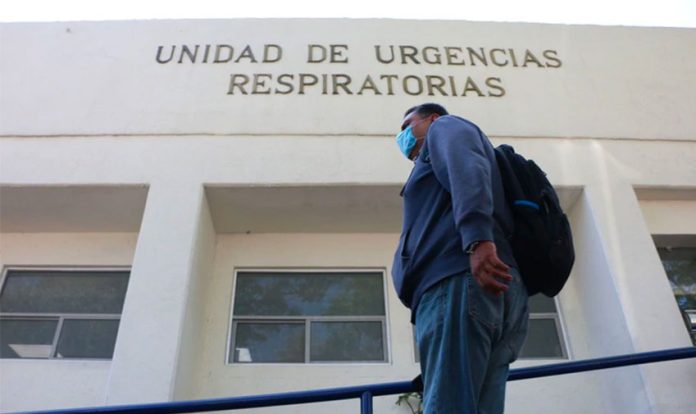
Never before has the INER had so many patients intubated at the same time, Sheinbaum said, explaining that about 70 people were on ventilators at the facility in southern Mexico City.
“We’re coming into a delicate phase [of the pandemic]; … That’s why we’re still reminding you that we have to stay at home,” she said.
The newspaper Reforma said that several hospitals in the capital have already reached saturation point two to three weeks before President López Obrador says the worst stage of the coronavirus pandemic will come.
The General Hospital of Iztapalapa – the Mexico City borough with the highest number of Covid-19 cases – is already full, Reforma said.
The public facility, one of four specially designated Covid-19 hospitals in the capital, is referring new patients to the Dr. Belisario Domínguez hospital in the same borough but it is also full.
Reporters for Reforma confirmed that medical personnel at the Belisario Domínguez facility are sending patients to the General Hospital of Tláhuac in the neighboring borough of the same name. However, that hospital doesn’t have beds available for additional patients either.
One suspected Covid-19 patient experiencing breathing difficulties arrived at the Tláhuac hospital by ambulance on Friday but the paramedics were told that they would have to seek treatment at another facility.
On Monday, President López Obrador dismissed the reports of overflowing hospitals and declared there were enough beds to attend to coronavirus cases. He said the necessary infrastructure exists despite the condition in which previous governments left the healthcare system.
As of Sunday there were 2,591 confirmed cases of Covid-19 in Mexico City, a figure that represents just under a third of the 8,261 cases across the country. The capital has also recorded the highest number of coronavirus-related fatalities with 183, or 27% of the nationwide death toll of 686.
With almost 30 confirmed cases of Covid-19 per 100,000 residents of Mexico City, the infection rate in the capital is more than four times higher than the nationwide rate of 6.46, Health Ministry data shows.
According to the epidemiological surveillance system used by the ministry, there are likely around eight undetected cases of Covid-19 for each confirmed one, meaning that more than 23,000 people in the capital have probably been infected.