Home Blog Page 1583

New 100-peso banknote will be released later this year

0
Sister Juana will appear on one side of the new bill.

The Bank of México has announced that the scheduled release of the new 100-peso note in the second half of this year will go ahead as planned, despite the socioeconomic effects of the Covid-19 pandemic.

Those who were dismayed to see the face of feminist poet and nun Sister Juana Inés de la Cruz leave the new 200-peso note that was put into circulation last September will be happy to hear that she will now grace one side of the new 100-peso bill.

The reverse will feature monarch butterflies swarming in the forests of central Mexico.

Some media reports claimed the announcement was well received by a public wary of using cash out of fear of spreading Covid-19, but Banxico’s Alejandro Alegre told the newspaper El Universal that proper hygiene, rather than payment method, is what will help curb the spread of the virus when shopping.

He reminded people to follow the World Health Organization’s recommendations to wash the hands thoroughly after touching any surface, bills and coins included, because all are potential carriers of Covid-19.

He said that anyone is at risk “upon being exposed to any type of surface, including credit and debit cards and the point-of-sale terminals … all surfaces, like the keys to the car or house.”

Banxico announced in February that the new 50-peso bill — which will feature the species of salamander endemic to Mexico City’s Lake Xochimilco and called axolotl — will be put into circulation in 2022.

The new 500-peso note, changed from brown to blue and adorned with the face of 19th-century president Benito Juárez, was released in August.

Other plans to update the country’s cash include a phasing out of the 20-peso note and replacing it with a coin.

Source: El Imparcial (sp)

Investigators probe Peña Nieto’s financial transactions at 50 banks

0
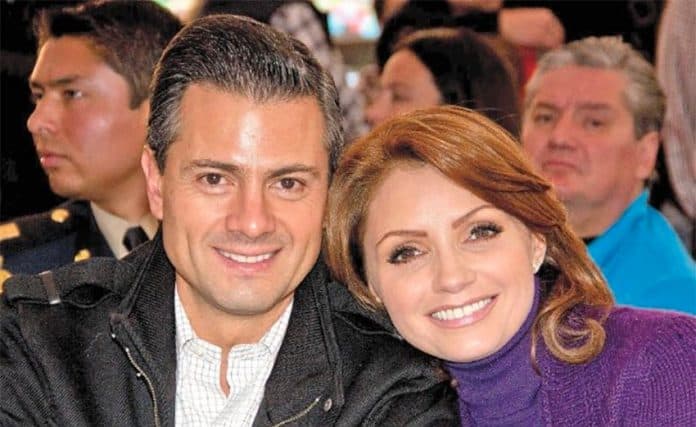
Former president Peña Nieto and his now ex-wife Angélica Rivera.

The federal government is conducting a probe into the financial transactions carried out by former president Enrique Peña Nieto and members of his family during the 2012-2018 term of his administration, according to a report by the newspaper El Universal.

The Ministry of Public Administration (SFP) sent a letter to the National Banking and Securities Commission (CNBV) this month asking it to access information about transactions completed by Peña Nieto, his ex-wife Angélica Rivera and his four children, Paulina, Nicole, Alejandro and Diego.

The letter, a copy of which was obtained by El Universal, was signed by Public Administration Minister Irma Sandoval and received by the CNBV on April 14.

It says that the SFP is carrying out an investigation into the wealth accumulated by Peña Nieto during his six-year term and asks the CNBV to seek information from at least 50 banks where the ex-president and his close family members might hold accounts.

They include Citibanamex, Santander, HSBC, Azteca, BBVA, the Bank of China México and the Bank of America México.

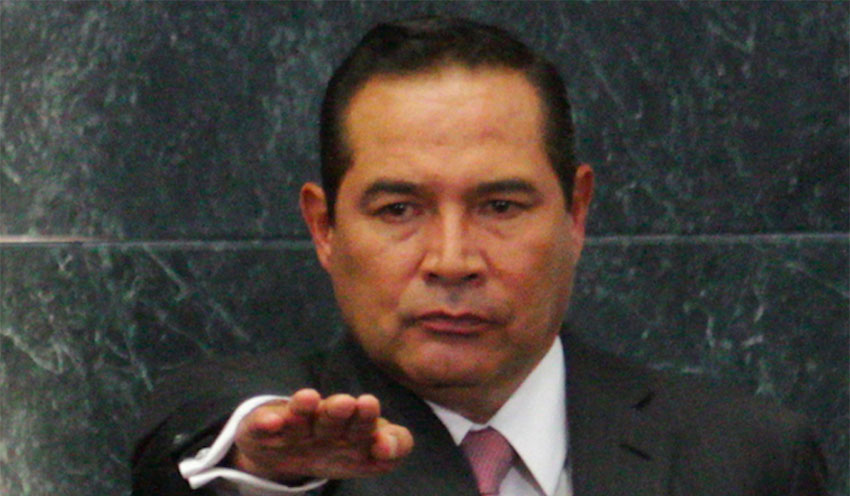
The financial transactions of former cabinet secretary Luis Miranda are also being investigated.

The SFP also asked the CNBV to seek information relating to transactions made by Peña Nieto and his family members at other financial institutions such as currency exchange houses and credit unions.

In response to a request made by El Universal for comment from the SFP about the authenticity of the letter to the CNBV, a spokesman said that information could not be provided about any investigations the ministry might be conducting.

El Universal also said that it sought comment from Peña Nieto but was unable to contact him. The ex-president has not been seen in public since September 2019 when he was photographed eating at a New York restaurant with his partner Tania Ruiz.

Peña Nieto’s government was plagued by corruption scandals including the so-called “master fraud” embezzlement scheme, in which federal agencies allegedly diverted billions of pesos in public money via shell companies, and the “white house” affair, in which the former president’s now ex-wife purchased a mansion built by a favored government contractor.

El Universal also reported on Friday that the government’s Financial Intelligence Unit (UIF) has asked the CNBV to obtain information about financial transactions carried out by Institutional Revolutionary Party legislator Luis Enrique Miranda and his wife over the past decade.

Miranda was minister of social development for 16 months during the Peña Nieto administration.

Peña Nieto has kept a low profile since he left office, but has been seen occasionally with model Tania Ruiz.

UIF chief Santiago Nieto confirmed on Thursday that the federal deputy is under investigation but offered no details beyond saying that President López Obrador has told him that there must be “zero tolerance” in corruption cases.

The highest profile members of the Peña Nieto government who have been arrested on corruption charges are former cabinet secretary Rosario Robles and Emilio Lozoya, ex-chief of the state oil company.

Robles, who is implicated in the master fraud scheme, is currently in preventative custody awaiting trial, while the government is in the process of attempting to have Lozoya extradited from Spain, where he was arrested in February.

The Wall Street Journal reported in February that Peña Nieto was being investigated by the federal Attorney General’s Office in relation to the acts of corruption allegedly committed by Lozoya, who is accused of benefiting financially from Pemex’s purchase of a fertilizer plant at an allegedly inflated price and receiving US $10 million in bribes from Brazilian construction firm Odebrecht in exchange for a lucrative refinery contract.

López Obrador, however, denied any knowledge of a probe into his predecessor, stating that just because an investigation is reportedly taking place doesn’t make it a fact.

Source: El Universal (sp) 

Experts argue in favor of face masks, if there are enough to go round

0
Masks can help slow spread of the virus, academics say.

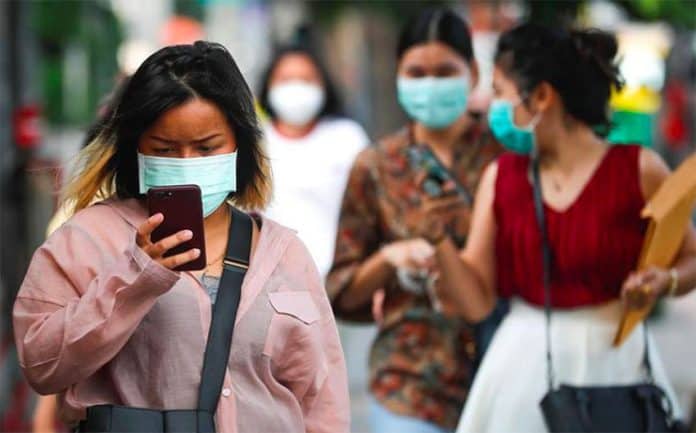
The widespread use of face masks can play an important role in slowing the spread of Covid-19 but the federal government must guarantee a supply for health workers before obliging members of the general public to wear them, say two academics.

Jorge Baruch Díaz, a professor of medicine at the National Autonomous University, told the newspaper El Financiero that “there is scientific evidence that the use of face masks” reduces the risk of infection from respiratory diseases.

“In a hospital environment the risk of infection is reduced by up to 40% if face masks are used,” he said. “Due to their effectiveness, the World Health Organization has always recommended their use for respiratory diseases.”

In a separate interview, Jorge Castañeda Sánchez, a researcher in the department of biological systems at the Xochimilco campus of the Metropolitan Autonomous University, also said that the use of masks can reduce the risk of infection from airborne diseases.

But both academics said the federal government should not make citizens’ use of face masks obligatory until they can guarantee their supply as well as that of other essential personal protective equipment to frontline health workers.

General Motors is planning to help the government in that regard: the automaker announced this week that it will begin making face masks at its plant in Toluca, México state, at the end of April. The company said that it intends to make 9 million masks over six months and distribute them to public hospitals in Mexico City, México state, San Luís Potosi, Guanajuato and Coahuila.

If the federal government were to make the universal use of masks mandatory, the order would have to be accompanied by an information campaign that educates the public about how to wear them properly, the academics said.

If masks are not used correctly – they should cover people’s mouth and nose and fit flush against their face – they can do more harm than good, they said.

Deputy Health Minister Hugo López-Gatell said as much recently, stating that they can give those wearing them a “false sense of security.”

Federal authorities have said on repeated occasions that it will not order their universal use. However, the governments of 11 states and Mexico City have made the wearing of face masks mandatory in some or all public places.

Castañeda claimed that the governments that haven’t made the use of masks compulsory haven’t done so because of the lack of availability.

For his part, Díaz said “if a country or a state has guaranteed the supply of face masks for health personnel and the most vulnerable groups [of society], it can then transition to generalized use of face masks.”

He added that China, Singapore and South Korea all made the use of face masks mandatory and were successful in flattening their coronavirus epidemic curves.

Face masks are not a panacea, said both academics, but their generalized use can help to control the spread of Covid-19.

Source: El Financiero (sp), El Universal (sp) 

Use of face masks declared mandatory in at least 11 states, Mexico City

0
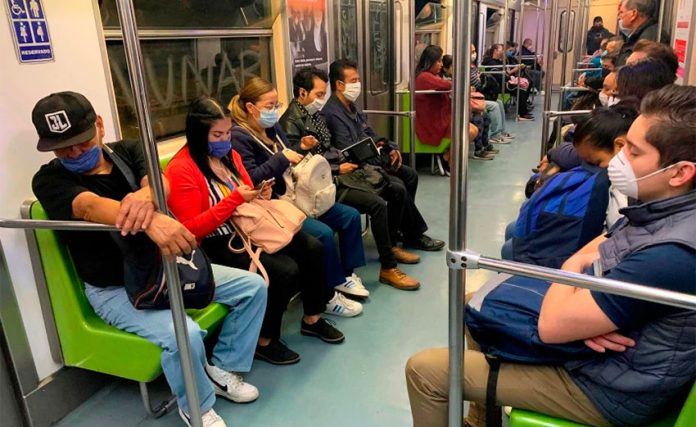
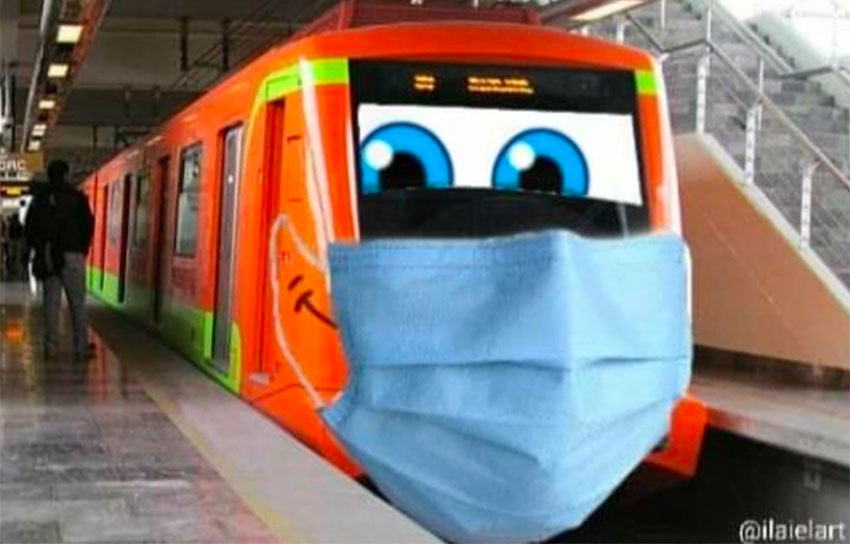
The Mexico City Metro, where masks are now mandatory.
The Mexico City Metro, where masks are now required.

As part of efforts to reduce Covid-19 transmission, governments in at least 11 states and Mexico City have made the use of face masks mandatory either in all public places or in certain locations.

Starting Friday, all Mexico City Metro passengers must wear masks while inside stations and on trains, Mayor Claudia Sheinbaum announced on Wednesday.

To support the measure, Metro workers will distribute 1 million masks free of charge to passengers at the Pantitlán station. Located in the capital’s east, the station is the busiest in the system during peak hours. Sheinbaum said that city officials will also distribute free masks at most other stations.

In Puebla, Governor Miguel Ángel Barbosa signed a decree stipulating that face masks must be worn in public places. The order took effect on Monday and is being supported by state authorities who are distributing thousands of masks. Despite the decree, people who don’t wear masks while outside will not face sanctions.

State authorities in Tamaulipas, Oaxaca, Durango, Coahuila, Quintana Roo and Yucatán have also ordered the obligatory use of masks by citizens when they are outside their homes. Oaxaca Governor Alejandro Murat said that people who don’t comply could be fined or face other sanctions.

A Metro train wears a face mask in this meme tweeted by Mayor Sheinbaum.

In Nuevo León, people won’t be allowed to board public transit if they are not wearing a mask and their use has also been made obligatory in taxis and private vehicles providing ride share services via companies such as Uber. State Health Minister Manuel de la O Cavazos said that those providing transportation services who don’t uphold the rule will be sanctioned.

In Chilpancingo, the capital of Guerrero, city authorities have made the use of masks mandatory in markets, supermarkets, department stores and public transit, while in León, Guanajuato, citizens must wear them in all public places.

The use of masks is also compulsory for all citizens in Cuernavaca, Morelos, when they are not in their homes, while senior citizens, pregnant women, children and people with respiratory diseases who live in other parts of the state must wear them while outside.

While millions of Mexicans have now been told to wear masks by their local authorities, it appears unlikely that the federal government will make their use in public mandatory across the country. Deputy Health Minister Hugo López-Gatell said last week that there is no solid scientific evidence that the widespread use of masks will help to limit the spread of Covid-19.

He said earlier this month that people can be lulled into a “false sense of security” while wearing masks, believing that they are not susceptible to infection when in fact they are.

Source: Milenio (sp) 

A new call to stay at home in Yucatán after citizens flock to the streets

0
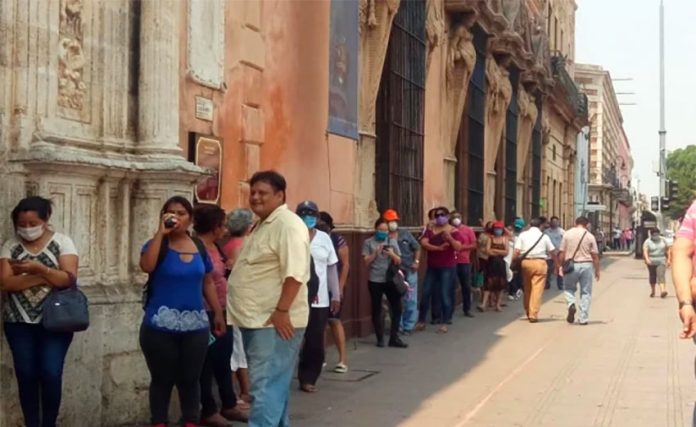
citizens in Merida
What quarantine?

Residents of Mérida and other Yucatán municipalities have been breaking the quarantine in order to shop, visit, receive donations and even go on vacation, prompting the state government to issue a new call for citizens to stay at home.

State police have also been deployed to persuade people to limit their outings to carry out essential chores and to use face masks.

The state government has insisted that now is not the time to relax the measures to prevent the spread of Covid-19. Yucatán had 131 confirmed cases and seven deaths from the disease as of Thursday night, according to the federal Health Ministry.

In Mérida, residents left their homes to go shopping, go to the bank, visit friends and family and even to go on vacation last weekend, prompting residents of the coastal town of Chelem to block families from the capital from entering and staying at their beach homes.

State police set up a checkpoint and only allowed residents and those who could prove they own property to enter.

Municipal police were sent to shopping centers in Mérida to enforce the safe-distance rule and hand out face masks. They were also deployed to the streets to persuade citizens to return home if they were not on urgent or essential business.

The state reiterated that although the calendar says it’s still the Easter holiday, it was no time to be taking trips. It also urged the use of face masks when in public on essential business.

Elsewhere in Yucatán, Homún residents were observed breaking quarantine to line up for donations of meat.

Local authorities initially praised the action but after the event received criticism for breaking quarantine, they backtracked and denounced the action, saying on Facebook that “we do not approve of actions that put our citizens at risk” and reiterating the call for people not to gather in groups of 10 or more.

As for the donation of meat, the authorities asked that any such charitable actions in the future be coordinated through the municipal government in order ensure that all preventative measures are followed.

Earlier in April, long lines of people not observing physical distancing measures were observed shopping in Tecoh and Kanasin and taking advantage of sales.

Sources: El Universal (sp), La Verdad (sp)

Aid for the needy handed out in Jalisco in name of El Chapo

0
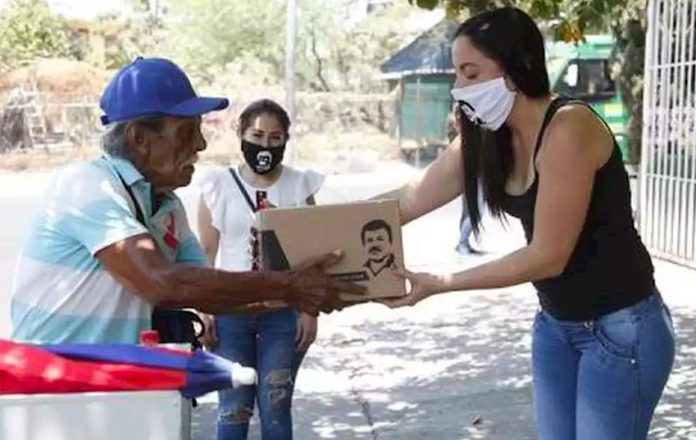
A woman hands out provisions bearing the image of the convicted drug trafficker.

While Joaquín “El Chapo” Guzmán is serving life plus 30 years in a federal supermax prison in the United States, the former cartel leader’s daughter is making sure her father’s name lives on during the coronavirus crisis.

Alejandrina Guzmán is distributing boxes, stenciled with her father’s image, of provisions including sugar, soups, beans, toilet paper and cooking oil to the elderly in Guadalajara.

Guzmán, who heads up the clothing and alcohol brand El Chapo 701 — thought to be named for her father’s ranking as number 701 on the list of the world’s richest people by Forbes magazine in 2009 — has been using her father’s likeness as a marketing tool since launching her business in 2018.

Her website, where she sells hoodies emblazoned with the El Chapo logo for around US $78, describes her father as a “humble orange seller with many goals and ambitions. Proud of his roots, a friend of all, a willing, attentive and ever-present leader for his people.”

Alejandrina Guzmán’s company uses social media to identify those in need, highlighting El Chapo 701’s mission of helping the underprivileged, “our older adults, who have taught us a legacy of respect and traditions.”

Facebook videos show a crew packing up and distributing boxes while wearing masks. “We are working and contributing. A great pleasure to visit your homes and give you these Chapo handouts,” reads a recent post.

Cartels, which are finding drug manufacture and smuggling increasingly difficult as travel has shut down, have seized upon the coronavirus pandemic as a public relations tool.

In Michoacán, the Viagras cartel distributed around 300 boxes of provisions.

In Tamaulipas, gun-toting members of the Gulf Cartel handed out boxes stamped with the message “Gulf Cartel in support of Ciudad Victoria.”

And the Jalisco New Generation Cartel, considered to be one of Mexico’s deadliest, distributed coronavirus provisions in early April in eight municipalities in San Luis Potosí. The boxes and bags were emblazoned with a sticker bearing the cartel’s initials and a message: “from your friends, Covid-19 contingency support.”

Source: Reforma (sp)

This is the only Tabasco municipality that has no cases of Covid-19

0
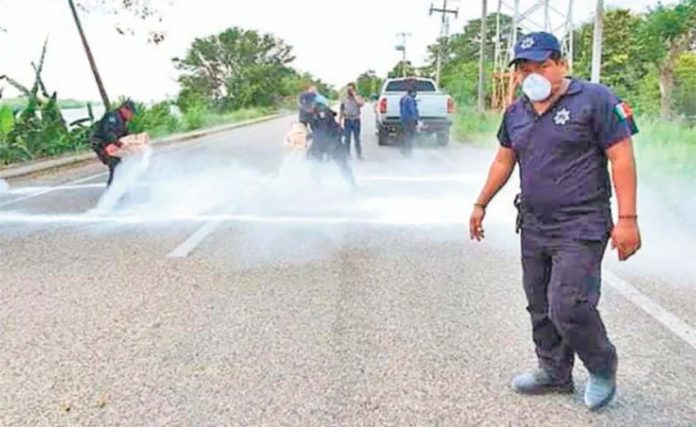
Municipal workers sprinkle lime on a highway to disinfect vehicle tires.

The municipality of Jonuta is the only one in Tabasco without a confirmed case of Covid-19, and local authorities aim to keep it that way.

Mayor Francisco Alfonso Filigrana Castro has locked down the municipality in hopes that prohibiting outsiders from entering will also keep the coronavirus out.

Police have set up checkpoints at the entrances to the town of 29,511 inhabitants, and no one is allowed to enter. Anyone who leaves is told they will not be allowed to re-enter until further notice.

The lockdown has been in effect since March 31, just after the state of Tabasco closed all beaches, cantinas, hotels, restaurants and other nonessential businesses, but Jonuta took other actions to confront the pandemic early on in the crisis.

The town’s efforts began on March 13 when handwashing and hand gel stations were placed at the entrances to the municipality. A 10:00 p.m. curfew was ordered on March 26, eight days after Tabasco’s first recorded case, but the spread of the virus in the state compelled local authorities to take even more drastic actions.

City streets and vehicles are now regularly sanitized with bleach and soap and lime is spread over the roads to disinfect tires.

Local authorities also urged residents who were outside Jonuta to remain where they were for the duration of the pandemic, as they will not be allowed to enter.

“The most important thing is to have this municipality free of the virus,” authorities said.

While some have criticized the move to lock down municipalities, Mayor Filigrana sees it as a measure that will ultimately have to be implemented nationwide.

“It is the only way to control this [pandemic],” he said. “I’m really sorry for those who get angry, but it’s for the health of our inhabitants.”

Despite opposition, Filigrana is not alone. Other municipalities in the country have also gone into lockdown to avoid contagion in recent weeks.

Police in the Tabasco municipality of Huimanguillo have also set up checkpoints at the entrances to their town, but they are not blocking all access, only restricting entrance to local authorities and residents who can prove they are conducting essential business.

Tabasco had 210 confirmed cases in 16 of its 17 municipalities as of Thursday, according to the latest epidemiology report from the federal Health Ministry.

Sources: El Universal (sp), La Silla Rota (sp)

‘How shall we live, what are we going to eat?’

0
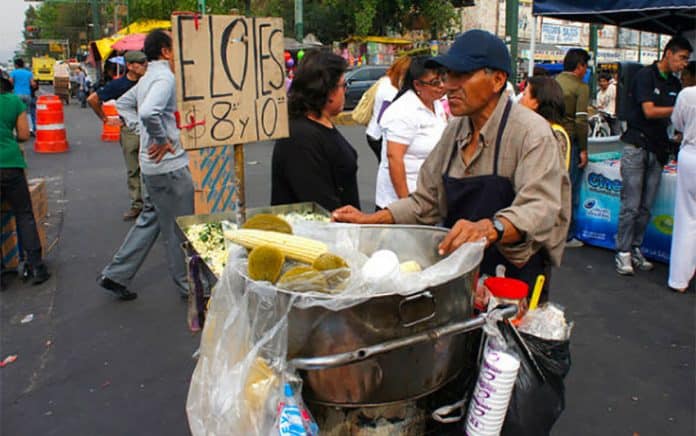
A corn vendor in Mexico City.

Mexican street corn is a humble delicacy for the country’s citizens and visitors, who delight in the boiled corn cobs, slathered in mayonnaise, lime and chile.

But corn vendors, who have taken an especially hard hit due to the coronavirus pandemic, are now asking the government for help.

In Xochimilco, vendor Agustina says sales are not even coming close to covering costs. “We sell 20, 25 ears of corn, do you think that is enough? When is it going to compare to what we sold before, our two little buckets full?”

Agustina’s husband is an unemployed farmworker, and she is the mother of 11 children. Hers is a hand-to-mouth existence that is no longer viable.

She and around 30 other self-employed merchants, many of whom usually work at sporting events and concerts, took their cases to the National Palace, the doorstep of President López Obrador, asking for financial support. 

They were told they needed to make their request in writing, including a list of names of people who no longer had work, so they did just that, hoping for some relief.

“We found out on the news that the president is going to give support to small merchants and that is why we came . . .” said Roberto Tintor.

While only 30 turned up at the National Palace, an estimated 250 people are out of work, said a beer vendor who works in the Foro Sol stadium in Mexico City.

But hope and despair sometimes come hand in hand.

“Supposedly right now phase three is coming and nobody, not even any merchant, will be able to be outside, so what are we going to live on? What are we going to eat?” said Agustina.

Source: Reforma (sp)

Covid-19 cases estimated at 56,000; confirmed cases are up 450 to 6,297

0
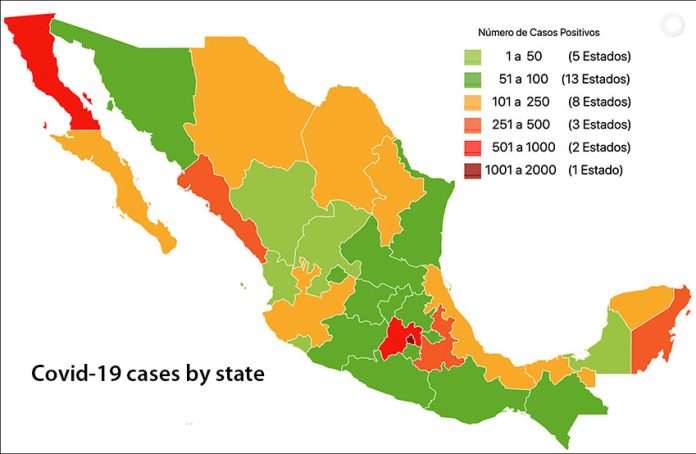
Coronavirus cases as of Thursday.
Coronavirus cases as of Thursday. An interactive version of the map can be found here.

Almost 56,000 people have had Covid-19 in Mexico since the first case was detected at the end of February, according to Health Ministry estimates, a figure almost nine times higher than the number of confirmed cases of the disease in the country.

“We estimate that 55,951 people have had Covid-19,” Deputy Health Minister Hugo López-Gatell said at the government’s coronavirus press briefing on Thursday night.

The estimate is derived from the sentinel surveillance system in which data about a disease is collected in certain locations and extrapolated to predict total numbers across the country. Health authorities are collecting data about confirmed and possible cases of Covid-19 at 375 different health care facilities.

The estimate presented on Thursday is more than two times higher than that presented last week when the Health Ministry estimated that there were 26,519 Covid-19 cases in Mexico.

Based on the estimated number of Covid-19 cases, the fatality rate in Mexico is 0.87 per 100 cases, López-Gatell said. If only confirmed cases of the disease are considered, the case fatality rate is a much higher 7.72.

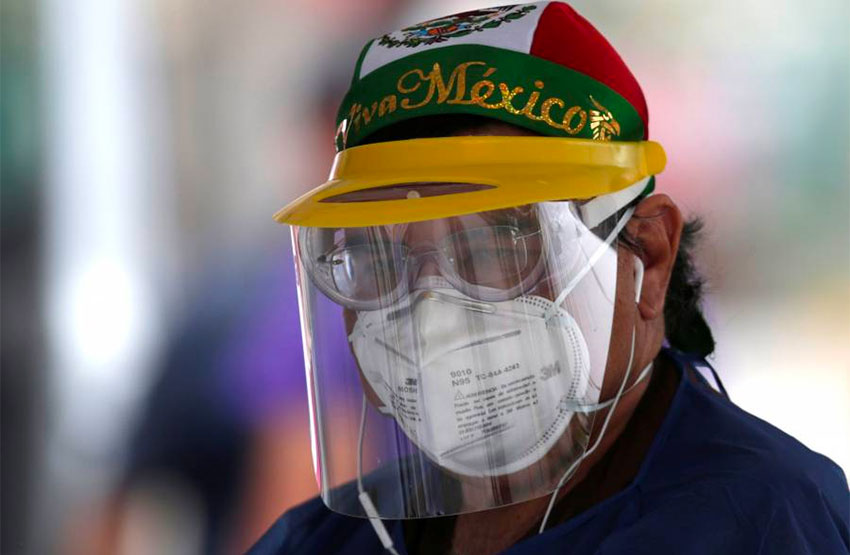
Double protection.
Double protection.

Earlier in the press briefing, Health Ministry Director of Epidemiology José Luis Alomía reported that the number of confirmed cases had increased by 450 to 6,297 and the coronavirus death toll had risen by 37 to 486.

He also said that there are 12,340 suspected cases of Covid-19 and that 101 deaths were possibly caused by the disease but have not yet been confirmed. If the deaths are found to have been caused by Covid-19, they will be added to the coronavirus death toll, Alomía said.

Hypertension, diabetes and obesity continue to be the most common existing health problems in those who have died.

Covid-19 patients aged 60 or older are three times more likely to die than those aged 25-59, according to Health Ministry data that shows that the fatality rate among the former cohort is 17.6 per 100 cases and 5.7 among the latter. The case fatality rate among people younger than 25 is 0.3.

With 1,828 confirmed Covid-19 cases and and 110 deaths, Mexico City is the worst affected entity in the country. México state ranks second for both cases and deaths with 695 and 46, respectively.

Baja California has the third highest number of cases with 505 but ranks fifth for deaths with 31. Sinaloa and Puebla have the third and fourth highest coronavirus death tolls in the country with 40 and 32 fatalities, respectively.

The Health Ministry also presented data from Google that showed that the number of people using public transit across Mexico has declined by about 63% since the government declared a health emergency at the end of March. Health promotion chief Ricardo Cortés said that Quintana Roo has recorded the biggest decline while Querétaro has seen the smallest decrease in public transit use.

Meanwhile, General Health Council secretary José Ignacio Sántos defended the council’s Bioethical Guide to Allocation of Critical Medicine Resources, asserting that it is “legally solid” and backed by experts.

The guide came under fire this week because it suggests that younger Covid-19 patients who need critical care should be prioritized over seniors when medical resources such as ventilators are limited.

Source: Milenio (sp) 

463 municipalities identified for application of phase three

0
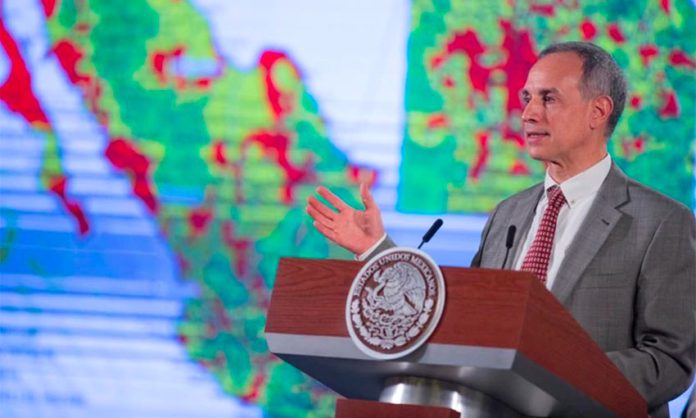
López-Gatell: coronavirus hot spots are areas where there is higher transmission.
López-Gatell: coronavirus hotspots are areas where there are higher rates of transmission.

Phase three measures to contain the spread of Covid-19 will apply to 463 municipalities with significant outbreaks before the government officially declares the commencement of the most critical stage of the coronavirus pandemic, Deputy Health Minister Hugo Lopez-Gatell said on Thursday.

Speaking at President López Obrador’s morning news conference, López-Gatell said the government was bringing the measures forward for the coronavirus hotspots.

“We have said that reaching phase three is unavoidable; we’re technically not yet in phase three in a generalized way but …  given the intensity of transmission, there are areas that have to be treated like phase three,” he said.

López-Gatell said that the 16 boroughs of Mexico City, México state municipalities that are part of the greater metropolitan area of the capital, the Baja California cities of Tijuana and Mexicali, Jalisco capital Guadalajara, Nuevo León capital Monterrey, Puebla city and the Quintana Roo resort city Cancún have the highest rates of Covid-19 transmission in the country.

Culiacán, Sinaloa; Ciudad Juárez, Chihuahua; Monclova, Coahuila; and Villahermosa, Tabasco, are also among the municipalities that will see phase three measures before the government officially declares the commencement of the critical stage of the pandemic in which the number of Covid-19 cases is predicted to rise rapidly.

“Phase three is defined by the generalization of transmission [across the country] not by the number of cases. … If we look [at Mexico] in subregions, we have regions like the Valley of México, and the metropolitan areas that I’ve mentioned where we have [Covid-19] spread that corresponds to phase three,” López-Gatell said.

After declaring on Tuesday that it was only a matter of days before Mexico would enter phase three of the pandemic, the deputy minister said that the government wasn’t considering the possibility of a phase three declaration that only applied to certain parts of the country. A “selective process would be confusing,” he said.

However, López-Gatell said this morning that the imposition of stricter restrictions on people’s movement was recommended for parts of the country where there are larger outbreaks of Covid-19.

To date, however, the federal government has not announced any obligatory home quarantine or a curfew, although the state of Sonora has imposed its own mandatory lockdown.

López-Gatell did announce this morning that the government’s social distancing initiative, including the suspension of all nonessential activities and large gatherings, will be extended by an extra month to May 30.

However, restrictions could be lifted on May 17 in areas of the country where transmission of the disease is low or non-existent, López-Gatell said, explaining that 979 of Mexico’s 2,463 municipalities have not yet reported infections.

He stressed that strict “stay at home” orders remain in place for senior citizens, people with chronic diseases and pregnant women. Schools are currently scheduled to reopen on June 1.

López-Gatell said that Mexico City has seen significant reductions in traffic, public transport use and pedestrian numbers but acknowledged that people’s movement has not declined as much as the government hoped in other cities around the country such as Guadalajara and Tijuana.

Although an average of 380 new confirmed cases of Covid-19 were reported daily over the last week, the deputy minister said that the government was “having success” with the social distancing measures it has implemented.

He said that projections show that the peak of transmission of the disease will be between May 8 and 10 and that the greatest pressure on the health system will come about two weeks later.

By June 25, around 95% of all expected Covid-19 cases in Mexico will have occurred, López-Gatell said, citing projections that assume that mitigation measures are generally followed.

Mexico currently has 5,847 confirmed cases of coronavirus and has recorded 449 deaths.

Source: Reforma (sp), Infobae (sp)