Home Blog Page 1597

Saudi oil price decrease adds to Pemex’s financial woes

0
pemex

A decline in global oil prices places additional pressures on the already ailing finances of Pemex, Mexico’s heavily indebted state oil company, and could affect its credit rating, according to three analysts.

International crude prices fell sharply on Monday after Saudi Arabia, the world’s second largest oil producer after the United States, launched a price war with Russia. The Middle East kingdom slashed its prices and set plans to ramp up production from April after Russia refused to make a further large cut to its output to stabilize markets amid declining demand for oil due to the spread of the novel coronavirus known as Covid-19.

The price of Mexican crude plunged 31.6% as a result, the newspaper El Financiero reported, noting that it has now lost 56.5% of its value this year. The Mexican peso also fell on Monday on the back of the price war news, dropping to more than 22 to the United States dollar early Monday before recovering to just over 21.

Raúl Feliz, an economist at Mexico City research university CIDE, told the news agency Reuters that the price war spells bad news for Pemex, which suffered one of its worst-ever losses last year and still has debt in excess of US $100 billion despite government efforts to reduce it.

“The fact that the oil market outlook has deteriorated due to this war is negative for Pemex, no question,” he said. “And this could increase talk of a ratings downgrade.”

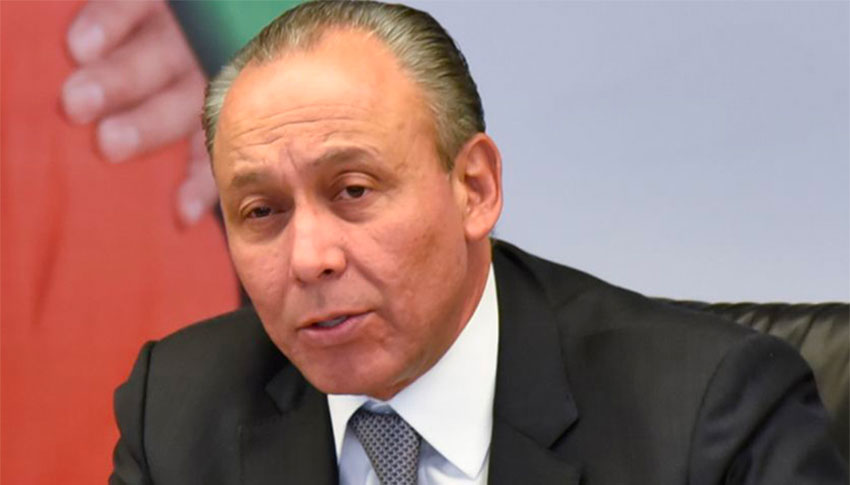
Raúl Feliz: bad news for Pemex.
Economist Raúl Feliz: bad news for Pemex.

Fitch Ratings downgraded the state-run company’s bonds to junk status in the middle of last year, and all three leading ratings agencies – Fitch, Moody’s and Standard & Poor’s – have a negative outlook on Pemex’s creditworthiness, meaning that there is a significant risk of further cuts.

Lower global oil prices will mean less revenue for Pemex, which will impact on its already “very vulnerable finances,” said Carlos González Tabares, director of analysis and stock market strategy at the Monex financial group. The decline in income could affect Pemex’s rating and Mexico’s sovereign rating, he said.

Gabriela Siller, head of economic analysis at financial group Banco Base, agreed that the crude price war increases the possibility that Pemex and the nation will see a downgrade to their credit ratings.

While the three analysts agreed that lower oil prices will hurt Pemex, Feliz noted that an annual hedging program used by both the state oil company, and the federal government more broadly, as insurance against price changes will help to lessen the impact of the slump.

Pemex CEO Octavio Romero said in January that the company had already contracted a “small portion” of its 2020 hedge but didn’t reveal the price it had locked in or the number of barrels of oil to which it would apply. The government said in January that the Finance Ministry (SHCP) had locked in a $49 per barrel price for oil worth a total of $1.37 billion.

Feliz told Reuters that the Pemex hedge will directly cushion the blow of the price slump, while the SHCP hedge could generate revenue that can be invested in the state oil company.

Carlos González of Monex: lower income will have an impact.

However, if the Saudi-Russian price war continues for an extended period, the financial strain on Pemex will likely increase despite the efforts to protect it.

The CIDE academic said that the ratings agencies will look closely at how Pemex’s debt compares with the proven crude reserves it holds, adding that the state oil company’s current investment levels “are not sufficient to stabilize production and simultaneously keep up proven reserves.”

With regard to Mexico’s ability to cope with a broader economic crisis precipitated by the global spread of Covid-19 – markets around the world slumped on Monday – President López Obrador reiterated on Tuesday that the nation’s public finances are healthy, adding that the government has a fund to respond to any complications that might eventuate.

“In the face of crises in the markets … we are resisting,” he told reporters at his morning news conference.

“I told you yesterday that we have healthy public finances because we managed to protect ourselves. No more was spent than we have in income; we didn’t put the country into debt.”

Source: Reuters (en), El Financiero (sp), El Economista (sp) 

On ‘A Day Without Us,’ millions of women notably absent from public life

0
Empty desks at a Mexico City office on Monday.

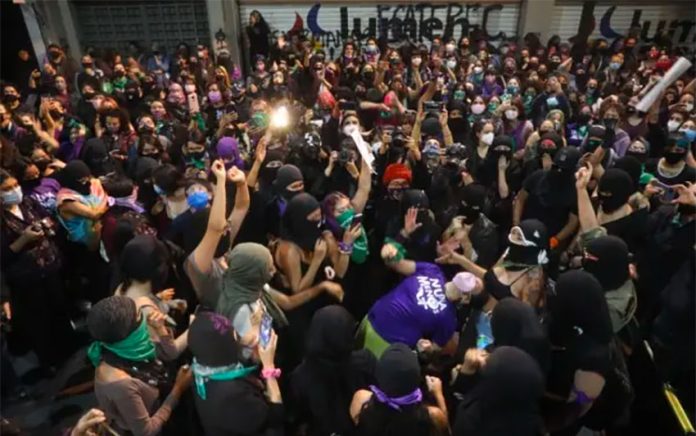
Women were conspicuous by their absence on Monday as millions took part in the national women’s strike, organized to protest the high levels of gender-based violence in Mexico and demand action from the government.

A day after large numbers of women marched in cities across Mexico to mark International Women’s Day, many stayed at home on Monday to send a clear message to authorities and the nation’s men that they are fed up with machista culture and the high levels of gender violence in a country where an average of 10 females are murdered every day.

Classrooms at schools and universities, government offices, the Supreme Court, federal Congress, the Mexico City Metro, banks and streets across the nation were some of the places devoid of women and girls, or with notably lower numbers than normal.

Organizers said that the aim of the strike, dubbed #UnDíaSinNosotras (A Day Without Us) and #UnDíaSinMujeres (A Day Without Women) on social media, was to remind people that large numbers of women in Mexico disappear forever.

“It is no longer possible to continue living in a country where a woman can be murdered in a brutal way, without any consequence, and in a culture that allows for it to happen,” Lorena Wolffer, an artist and feminist activist, told The New York Times.

Men ran the checkouts at retail stores.

At the National Autonomous University (UNAM) in Mexico City, the nation’s largest tertiary education institution, faculty buildings were almost deserted, the newspaper El Financiero reported. Medicine faculty employee Cristian Pimenel described the atmosphere as “sad.”

An accounting student identified only as Nicolás declared the main UNAM campus, Ciudad Universitaria (University City), “dead,” telling the newspaper Milenio that the absence of female classmates generated an “ugly” sensation. The situation was similar at the majority of universities across the country, both public and private, with female students skipping classes in large numbers.

At the entrance to the Mariano Azuela Primary School in the Mexico City neighborhood of Navarte, a sign announced that the school was closed due to a lack of the “necessary conditions” to operate. Many other schools scrambled to cover classes, their staff depleted by the absence of female teachers.

Many municipal, state and federal female government employees – more than 60,000 in Mexico City alone – joined the strike, leaving their male colleagues to go on working without them.

“You feel a void. … It’s not just physical but also professional and moral,” said Alexis, an IT employee at the federal Interior Ministry. “Teamwork can’t be completed because we’re missing their input.”

At the Supreme Court, 95% of female employees, including three judges, stopped work on Monday, the newspaper El Economista reported. Some of the few women who did show up for work at the nation’s highest court wore purple kerchiefs in a show of solidarity with the feminist movement.

A women’s forum was scheduled to take place at the lower house of Congress, the Chamber of Deputies, but no lawmakers – female or male – showed up. A sign on the door of National Action Party Deputy Laura Rojas Hernández, the president of the lower house, simply said: “closed due to strike.”

In the Mexico City Metro, women were absent from many stations’ ticket offices, ensuring long lines to purchase tickets at recently installed machines. Train cars reserved exclusively for women were at least half empty, even in peak travel periods.

Many major banks closed hundreds of their branches on Monday due to a lack of tellers to attend to customers. BBVA shut down 53% of its 1,800 branches, Citibanamex only opened 428 out of more than 1,400 and Santander closed around half of its 1,200 banks.

“My five female colleagues didn’t come; we were overwhelmed with work,” a BBVA employee in the south of Mexico City told El Financiero.

The absence of women was also notable at President López Obrador’s regular morning news conference, with just six female journalists in attendance, according to a report by the newspaper Milenio.

The widespread participation of females in the national strike also meant less traffic on the nation’s roads, fewer social media posts by Mexican women and lighter than normal pedestrian traffic in city streets.

An area reserved for women at a Mexico City Metro station was deserted yesterday.

However, while millions responded to the call to skip their normal daily activities, many others did attend their jobs, mostly out of necessity. Doctors, nurses, lawyers, policewomen and supermarket employees were among the female workers who carried on with their regular Monday activities.

“Conviction, commitment and responsibility moves us” to continue working, said Érika Guerrero Jáuregui, deputy head of nursing at the Dr. Antonio Fraga Mouret Specialist Hospital in Mexico City.

“We can make ourselves more visible by working. … I decided to work, firstly, [out of duty] to the institution [to which I belong] and secondly because of the commitment I have to women. This is my support [to the feminist movement] – going to work to attend to other women who need my help,” she said.

Law professor Italy Desire taught her regular Monday class in Mexico City, telling Milenio: “I believe that one of the best tools women have to eradicate violence is education – so I can’t deny my students the opportunity to be here.”

Alexa Carmona, a criminal lawyer in the capital, said that she had “important trials” to attend on Monday, explaining “it’s not easy to not come and leave them for tomorrow.”

Despite her own inability to join the strike, Carmona said that she supported “all the women who decided to stay at home.”

Teresa, a juice vendor at the Cuauhtémoc market in Mexico City, succinctly summed up her decision not to join the strike, telling El Financiero: “if you don’t work, you don’t earn.”

However, the decision of millions of other women to stay away from work on Monday no doubt exacted a heavy toll on an already ailing Mexican economy. Citibanamex analysts estimated that the economy would take a 43.5-billion-peso (US $2.1 billion) hit as a result of the strike while those at BBVA forecast a more modest 34-billion-peso impact.

The absence of women from learning institutions and workplaces on Monday, and the consequent emphasis it placed on the huge contribution they make, led many Mexican men to the same conclusion, El Financiero reported: “Another day without women – please no.”

Source: El Economista (sp), El Financiero (sp), Milenio (sp) 

Sexist comments cost federal delegate suspension, reprimand

0
Mireles and his wife at an art exhibition in Mexico City last month.

A subdelegate of the State Workers Social Security Institute (ISSSTE) in Michoacán has been suspended from his duties for five days for derogatory comments about women he made in September of last year.

Also a founder of one of the state’s self-defense forces, José Manuel Mireles Valverde referred to the female partners of ISSSTE beneficiaries as “whores” in a September 4 video that circulated on social media.

The sanctions he was given, which included a public admonishment, were also in response to a September 9 meeting in which Mireles was recorded telling medical staff at a hospital in Uruapan that the union leader had asked him to create a position for “una nueva nalguita,” which translates roughly as “a nice new ass.”

The Ministry of Public Administration (SFP), which handed down the sanction, said that its code of ethics mandates that public functionaries should promote and practice equal treatment of both men and women and avoid any actions that diminish human dignity, rights and liberties or that constitute any form of discrimination.

“It also establishes that public servants should eliminate any discriminatory language based on gender stereotypes and foster an egalitarian and inclusive culture,” said the SFP.

The ministry said it guaranteed Mireles his right to be heard before a court during its investigation and that it will respect any appeals or other legal actions he may want to take.

“The SFP has as one of its goals the promotion of a new ethic, with a gender perspective, in public service, to guarantee the integrity and human rights of women, and it asks public servants to comply with the obligation to observe discipline and respect of the citizenry during the execution of their duties,” the ministry added.

Mireles, 60, made headlines again in late September when he married a 21-year-old woman.

Source: El Universal (sp)

Health ministry purchases 91 million pesos of cancer meds

0
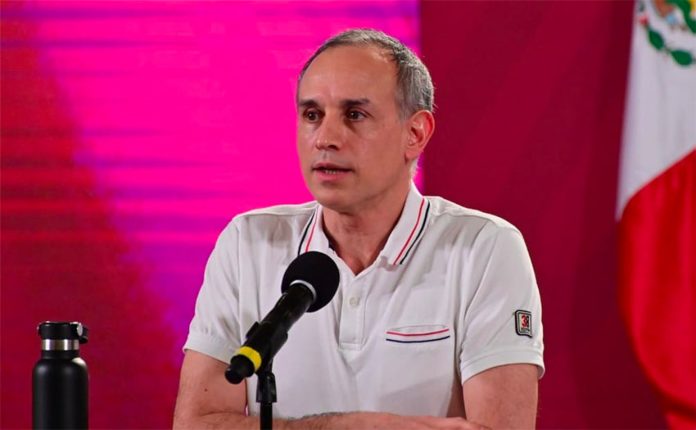
López-Gatell announces the purchase of medications for cancer patients.

The Health Ministry has invested 91 million pesos (US $4.4 million) in cancer medications to combat the drug shortages being experienced in several parts of the country.

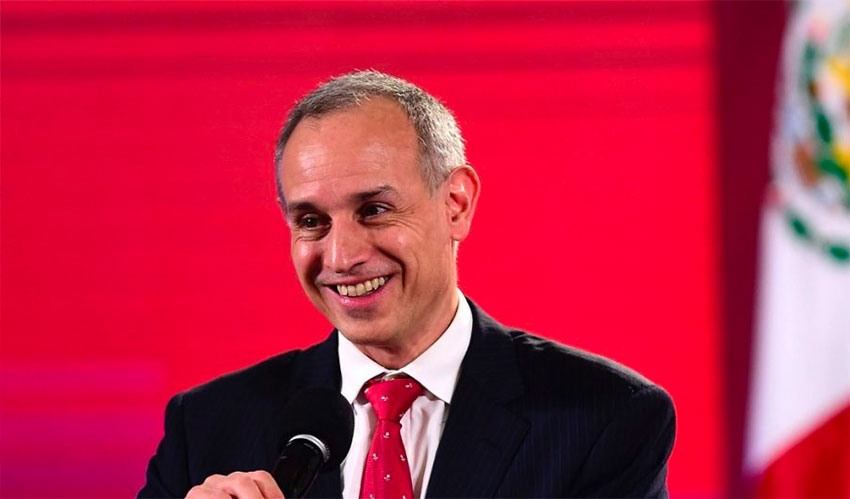
Deputy Health Minister Hugo López-Gatell announced on Tuesday that the government bought the drugs from five different countries to offset the shortfalls created by what he called a monopoly by the private sector.

He said that the lack of cancer meds was due to “the private sector, which has had a monopoly in the last six years.”

The government bought 542,677 doses of life-saving cancer medications like methotrexate, vincristine, cyclophosphamide and others.

“This is a failure of private suppliers and since we saw the first manifestation of this failure, which was around the middle of last year, we have begun this strategy to purchase internationally,” he said.

He said that they bought the drugs for 5% less than the prices paid in 2018 by looking to international markets, primarily in Argentina, Spain, France, India and the United States.

The Health Ministry assured the public that the international providers who sold the drugs have all the necessary certifications to guarantee their safety, effectiveness and quality.

“We implemented the process of pharmacovigilance for all of the medications, with the objective of identifying any adverse qualities or lack of effectiveness to guarantee the safety of the patient,” said López-Gatell.

President López Obrador said that his administration is trying to raise up the country’s health system so the Mexican people can be guaranteed free medications and assured of their constitutional right to health.

He reiterated that his goal is to bring about changes by December 1 of this year to ensure that “the health system is running well, that there are no medication shortages, that we don’t lack doctors, that facilities are in good condition.”

Hospitals in several states began to report cancer medication shortages in May of last year, and worried parents of children with cancer have held several protests since then.

The pharmaceutical industry said in June of last year that it would not take responsibility for any medication shortages created by the administration’s new centralized purchasing model.

Source: Milenio (sp)

National Guard, police remove teachers’ blockade of Puebla railway

0
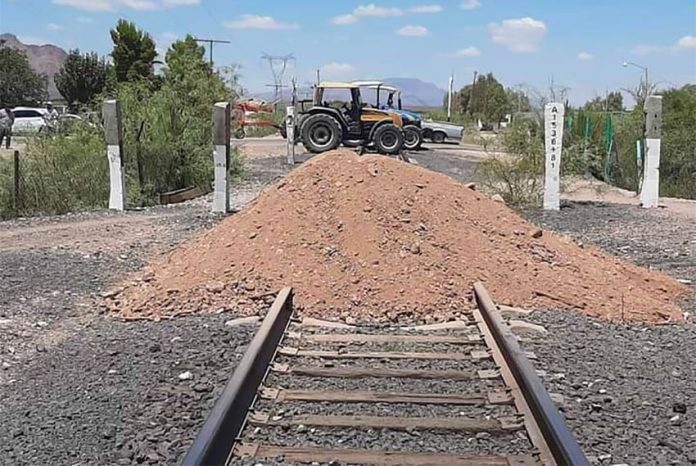
Security forces at the scene of the rail blockade Tuesday morning.

Teachers who blocked railroad tracks in the municipality of Rafael Grajales, Puebla, to protest being laid off cleared the tracks and ended their protest after state police and the National Guard were deployed to remove them.

Members of the SNTE teachers’ union had been blocking the tracks for 13 days when security forces arrived on the scene at 7:00 a.m. on Tuesday. They were told to leave the grounds after their protest had affected millions of tonnes of products transported by the railroad company Ferrosur.

Although there was no physical confrontation, protest leader Diana Montes Hernández said that she considered the manner in which they were forced to leave the tracks an attack by the state.

“We were surrounded. We want to think that this wasn’t [an order from] the president … [but] we were surrounded by over 400 state police, over 600 National Guard troops, drones, over 50 trucks,” she said.

“We decided to withdraw. We don’t want deaths, we don’t want injuries. We are just asking that our demands be heard. The president … comes from [social] movements; he knows that they have left us no other alternatives, … but today it seemed like other agreements were more important to him than taking care of the teachers,” she said.

The demands of the approximately 1,500 teachers include the democratization of the SNTE teachers’ union and their reinstatement to their teaching positions.

Ferrosur announced las week that it was forced to suspend the transportation of cargo between Veracruz and the Valley of México due to the protest, reporting that it had 144,000 tonnes of products it was unable to move.

Source: Reforma (sp)

Did Mayan warrior queen build 100-kilometer Yucatán highway?

0
The 1,300-year-old road between the cities of Cobá and Yaxuná is the longest ever built by the Maya
The 1,300-year-old road between the cities of Cobá and Yaxuná is the longest ever built by the Maya. Courtesy of Traci Ardren (University of Miami), Proyecto Sacbe Yacuna-Coba, and Cultural Heritage Engineering Initiative

A Mayan warrior queen may have ordered the construction of a 100-kilometer limestone road on the Yucatán Peninsula in the 7th century in order to invade one city and respond to the rising influence of another.

Archaeologists and anthropologists who studied Sacbe 1, or White Road 1, using the laser surveying method known as lidar (light detection and ranging) believe that the queen of the Maya city of Cobá, Lady K’awiil Ajaw, possibly ordered its construction around 680 A.D. so that her armies could travel along it in order to conquer Yaxuná – a Mayan city 100 kilometers to the west in modern day Yucatán state – as well as other smaller cities along the way.

Travis Stanton, an archaeologist at the University of California and lead author of a report published in the Journal of Archeological Science subtitled “An analysis of lidar data along the great road between Cobá and Yaxuná,” said that K’awiil Ajaw was one of the most powerful and hostile leaders of ancient Cobá. Carved stone monuments, or steles, depict her standing over hostages, he said.

“The bellicose nature of her monuments” suggested that she was the leader who built the road to Yaxuná, Stanton said.

According to Traci Ardren, an archaeologist, University of Miami professor of anthropology and second lead author of the report, the warrior queen may have ordered the road to be built in order to counter the growing influence of Chichén Itzá, a large Mayan city located about 23 kilometers north of Yaxuná that is one of the new seven wonders of the world.

“I personally think the rise of Chichén Itzá and its allies motivated the road,” she said.

“It was built just before 700, at the end of the Classic Period, when Cobá is making a big push to expand. It’s trying to hold on to its power, so with the rise of Chichén Itzá, it needed a stronghold in the center of the peninsula. The road is one of the last-gasp efforts of Cobá to maintain its power. And we believe it may have been one of the accomplishments of K’awiil Ajaw, who is documented as having conducted wars of territorial expansion,” Ardren said.

“The lidar really allowed us to understand the road in much greater detail. It helped us identify many new towns and cities along the road – new to us, but preexisting the road. We also now know the road is not straight, which suggests that it was built to incorporate these preexisting settlements, and that has interesting geopolitical implications. This road was not just connecting Cobá and Yaxuná; it connected thousands of people who lived in the intermediary region.”

Source: Live Science (en), Milenio (sp), The Engineer (en) 

Agency hid scientists’ warnings over negative impacts of Maya Train

0
Conacyt commissioned a report—then shelved it.

The National Council of Science and Technology (Conacyt) hid a damning report on the Maya Train before a vote was held on the project last December.

At the end of September 2019, the council invited more than 30 researchers to participate in a group that was tasked with carrying out an analysis of the risks that the construction and operation of the 1,500-kilometer railroad will entail.

After a consultation and vote on the project was announced in the middle of November, Conacyt urged the researchers to move quickly to submit their report, telling them that it would be publicly disseminated before the plebiscite took place.

The researchers obliged, submitting their report to Conacyt between December 10 and 12, according to sources who spoke with the newspaper El Universal.

As a result, the federal agency had a window of three to five days to distribute the report before the December 15 vote that found more than 92% support for the Maya Train, President López Obrador’s signature infrastructure project.

However, it failed to make the report available to both government ministries and the general public.

“They [Conacyt] imposed a very short time frame on us … asking us to submit something, and we did. But that’s where it stopped,” said a researcher who spoke with El Universal on the condition of anonymity.

“They told us that it was too late and that they didn’t want to release it before the consultation in order not to influence it.”

Consequently, the report was unable to fulfill its key stated aim before the vote took place: to provide information about the rail project to the “different actors of society, government and academia who have an interest or responsibility to guarantee the public good.”

The contents of the report certainly had the potential to change opinion about the railroad that will link cities and towns in the states of Yucatán, Quintana Roo, Campeche, Chiapas and Tabasco, as the researchers determined that its construction and operation would have negative impacts in a broad range of areas.

Obtained by El Universal, the report (Spanish only) said that the project would affect at least 10 natural protected areas in Campeche, Chiapas and Quintana Roo, including the Palenque National Park and the Sian Ki’an Biosphere Reserve.

The Conacyt report, prepared prior to the Maya Train consultation.

Construction and operation of the railroad will undermine the capacity of ecosystems to replenish the water table and capture carbon, the report added.

The researchers also found that 1,288 archaeological sites are within 10 kilometers of the proposed route and that they could suffer a “direct impact” from the operation of the train.

The heavy loads of trains traveling near pre-Hispanic settlements and the increased number of visitors they will transport to them could cause “irretrievable damage” to the sites and their cultural relics, the report said.

It appears that the government has taken that finding into account, at least partially, as the chief of the National Tourism Promotion Fund, Rogelio Jiménez Pons, announced last week that a line between Valladolid, Yucatán, and Tulum, Quintana Roo, will not go ahead due to the large number of archaeological sites around Cobá in the latter state as well as problems with the subsoil in the area

The researchers contracted by Conacyt also found that 143,00o people living in 197 indigenous communities would be adversely affected by the construction and operation of the railroad.

In addition, the report said that cooperatives and individuals who cede land to the government for the project will not necessarily benefit financially because they will be compensated with shares that will be listed on the Mexican stock exchange and “whose performance is not guaranteed.”

Jobs to be generated by the construction of the project will only last for a short time and most will be poorly remunerated, the report said, adding that the operation of the Maya Train and its intent to stimulate tourism in southeastern Mexico will lead to the “increase of illicit activities such as human trafficking and the movement and use of drugs.”

Migrants aiming to travel through Mexico to the United States’ southern border could travel illegally on freight trains that will use the same tracks as tourist trains.

The Conacyt report adds to a range of concerns already raised by experts and indigenous groups in the five states through which the US $7-billion railroad is slated to run.

The Zapatista Army of National Liberation and two indigenous organizations called the consultation process “a sham,” and the United Nations found that it failed to meet all international human rights standards.

The government likely faces a long and rocky legal road to build the railroad, which is slated to begin operations in 2023.

A group of Maya and Ch’ol people has already been granted a definitive suspension order against the project that applies to one community in the Campeche municipality of Calakmul, and it is likely that other indigenous groups will also file legal action against the Maya Train, one of a trio of large projects that the government is betting will bring greater prosperity to the underdeveloped and impoverished southeast of the country.

Source: El Universal (sp) 

UNAM scientist makes history with botanical research award

0
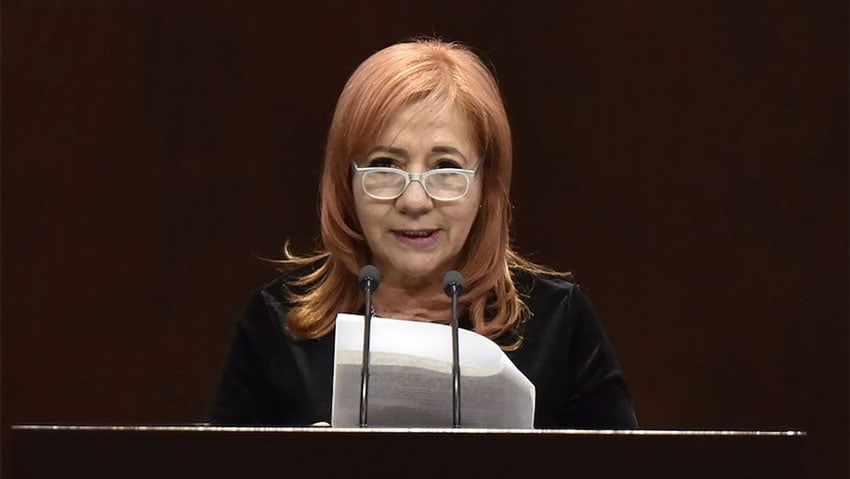
Award-winning UNAM scientist Rachel Mata.

A scientist at the National Autonomous University (UNAM) has become the first Latin American and only the second woman to be granted the Norman R. Farnsworth Excellence in Botanical Research Award by the American Botanical Council (ABC).

Professor emeritus Rachel Mata Essayag won the award for her work in pharmacognosy, or the study of plants for their medicinal uses, joining the ranks of other important pioneers in the field, such as Joseph Betz, Otto Sticher and Douglas Kinghorn.

She has worked with a number of plants esteemed in Mexico for their purported medicinal uses, such as epazote, cancerina, myrtus, amber, alache, zopilote and copalchi, among others.

“The importance of studying [these plants] is that it creates awareness of their compositions and biological properties so that health authorities will promote their proper use,” she said.

She said that the award is thanks to the joint labor of her colleagues and students in their work to better understand plants’ medicinal properties.

Mata said that she is pleased that the council looked to Mexico when thinking of granting the award, and “that they are not just interested in research done in Europe, [but] now consider work done in Latin America.”

The ABC gives the award in honor of Norman R. Farnsworth, who made important contributions to the field of pharmacognosy in the mid-20th century.

Mata stands out in the UNAM Chemistry Department for her work creating vegetable compounds from medicinal plants from Mexico. She has developed analytical methods for the quality control of botanical ingredients.

For the last three decades, she has been at the vanguard of research in her field. Her work has led to the discovery of new compounds made from traditional medicinal plants and other agrochemical advances.

She has published over 200 scientific articles, books and book chapters, and has assessed over 100 undergraduate and postgraduate students, among them stand-out researchers of natural products.

She also won the Norman R. Farnsworth Award given by the American Society of Pharmacognosy in 2014, the National University Award for Natural Sciences Education in 2000 and the Marín de la Cruz Award in 2002, among others.

Also among her honors is a special issue of the Journal of Natural Products, official journal of the American Society of Pharmacognosy, dedicated to her in 2019. She has been a fellow of the organization since 2014.

Source: Infobae (sp)

Shift in Mexico’s energy policy triggers secret international talks

0
AMLO's energy policy has investor countries worried.

Diplomats from eight countries and the European Union met in Mexico City on Friday to discuss concerns about the federal government’s energy policy and how best to communicate them to President López Obrador.

The news agency Reuters reported that the United States Embassy hosted the talks and that diplomats from Canada, the United Kingdom, France, Germany, Italy, Spain, the Netherlands and the EU attended.

The broad diplomatic participation at the meeting is testament to the widespread concern about López Obrador’s break with the energy policy of the previous federal government, Reuters said. The economies represented at the meeting have traditionally been some of the biggest investors in Mexico.

Reuters reported that officials from the United States, Canada and the European nations say privately that the current government’s policy, which favors a greater role for the state in the energy sector, is undermining the legal foundations of contracts worth billions of dollars that were signed with the administration of former president Enrique Peña Nieto, who opened up Mexico’s oil and gas sector to foreign and private companies for the first time in almost 80 years.

López Obrador’s aim, they fear, is a gradual squeeze-out of the investments of foreign and private companies.

Claudia Jañez sees hostility toward private investment.

For its part, the Mexican government denies that it is sabotaging existing contracts, although it has said that some are unfair and harmful to the country. It has sought to renegotiate some of the contracts, such as those signed with three companies that built gas pipelines for the Federal Electricity Commission (CFE).

The government has also stopped Pemex from entering into new joint ventures with private companies, although it is seeking to muscle in on a large shallow-water oil project in the Gulf of Mexico, claiming that the reserve discovered by a consortium led by U.S. company Talos Energy extends into a block owned by the state oil company.

In addition, the government has attempted to strengthen the CFE by granting clean energy credits designed to encourage the development of new wind and solar farms to old, state-run renewable energy projects. Six foreign and Mexican renewable energy companies launched legal action against the rule change, arguing that it would severely harm clean energy investment, and a federal court upheld one injunction request.

Five people familiar with the talks at the U.S. Embassy on Friday told Reuters that the diplomats contemplated ways in which they could relay their energy policy concerns to López Obrador, who has pledged to “rescue” Mexico’s energy sector and has not held any new auctions to sell off oil and gas blocks since he took office in December 2018.

The diplomats say that the governments they represent have different opinions about how to communicate their complaints to the president, Reuters reported. However, there is a common aim: don’t give López Obrador the impression that he is being pushed about lest he decides to adopt an even more hardline approach with regard to state involvement in the energy sector.

Asked to comment on the discussions, the United States Embassy told Reuters that it doesn’t disclose its private diplomatic conversations, while the embassies of the other countries and the office of López Obrador didn’t respond to Reuters’ requests. However, one person told Reuters that there was a debate about whether to make the discussions public.

Some business groups have also criticized the government more broadly for scaring away foreign investment.

Claudia Jañez, president of the Executive Council of Global Companies, said in January that the business community is “deeply concerned” about increasing uncertainty and government “hostility” toward private investment. She charged that government interference in investment is the main cause of stagnation in the Mexican economy, which contracted by 0.1% last year.

At the same press conference, Business Coordinating Council (CCE) president Carlos Salazar Lomelín said that the government shouldn’t change rules because doing so creates economic uncertainty and hurts investment.

For his part, López Obrador has stressed that his government welcomes investment, and indeed direct foreign investment increased 4.2% in 2019 to US $32.92 billion pesos, according to preliminary statistics from the Economy Ministry.

However, Jañez said that investment last year, and that which will flow into Mexico in 2020, are the result of plans made between five and 10 years ago rather than an endorsement of the economic policy of the current federal government.

Source: Reuters (en) 

AMLO sets dates for referendum on controversial Mexicali brewery

0
The fight against the brewery has been going on for nearly four years.

President López Obrador announced that the vote to determine the fate of a brewery being built by U.S. beverage producer Constellation Brands in Mexicali will be conducted on March 21 and 22.

The president announced the vote last week to much opposition from the company and even the U.S. Embassy, which said a vote would not be good for Mexico.

“It is binding because the Ministry of the Interior has the faculties for such a proposition. It’s actually not called a consultation, it’s called a participatory exercise,” he said at his morning press conference on Monday.

Farmers and other residents of the area have opposed the construction of the brewery since 2016, claiming that it will put a strain on the region’s water supply.

The president said that the federal government will set up information tables to apprise the public of the permits the company has received and who granted them.

“We’re going to announce the opinions in favor and those against. We’re going to explain how the company received all of its permits for construction,” he said.

He denounced that his administration is being subjected to pressures by businessmen and financial groups that view the public consultation as a threat to the completion of the project.

“We want the citizens to be those who decide, we want the public to decide,” he said, adding that the government will not issue permits for other projects like the brewery, which require large amounts of water, in the north of the country, where the resource is scarce.

Constellation Brands, which exports Corona and other beer brands to the United States, has said that the plant “will not affect, at any moment, the availability and supply of water in the region.”

The company, which has breweries in other parts of the north of the country, has said that the Mexicali plant will be ready at the end of 2021, after several setbacks due to local opposition to the project.

Construction is currently around 70% complete and the company has invested around US $900 million so far.

“We have to find a balance,” the president said. “The health of the people comes first, we can’t leave people without water. If there are other options for water for the people and water for the company, they can go ahead; if not, it can’t be done. This is the criterion, but both can be done when we look for options,” he said.

The company responded to the president by saying that it does not have the time to carry out a public consultation and that with such an uncertain future, it might have to look elsewhere for such a project.

“Although we consider that the best for our company and for Mexico is that our emblematic brands continue to be produced in Mexico, if we must expand and can’t do it in the country, we might not have any other option than to look elsewhere for production,” said company president Daniel A. Baima in a letter to López Obrador.

“The company no longer has the time to carry out a public consultation in which its future in Mexico continues to be uncertain. We hope to be able to count on your valuable support in order to put an end to the delays and underwrite this historic agreement,” he said.

The public was set to vote on the project last year until electoral authorities in Baja California reversed the decision to conduct the consultation in March of 2019.

Source: Zeta Tijuana (sp)