Home Blog Page 1678

New measures would curb private-sector participation in energy: report

0
López Obrador and CEO chief Bartlett touring a geothermal plant Saturday in Michoacán.
López Obrador and CEO chief Bartlett tour a geothermal plant Saturday in Michoacán.

The Federal Electricity Commission (CFE) has drawn up plans to limit private-sector participation in the energy market, according to a media report published Saturday.

The Financial Times said it has seen a CFE blueprint which includes measures that seek to increase the electricity transmission costs on which private companies have based their plans.

Energy experts told the newspaper that if the measures were implemented, they would immediately undermine the economic viability of some private-sector projects.

The Times said that companies producing electricity from renewable sources such as wind and solar would be most affected.

Such companies – which produce about 6% of Mexico’s energy – are able to generate power at less than half the cost of plants that run on fossil fuels.

A former energy sector official said that if they are approved, the measures would eliminate energy investment incentives and “absolutely destroy the [electricity] market.”

The CFE didn’t respond to the Times’ request for comment.

The former official said “the main objective” of the measures “is to strengthen the CFE by weakening all features of the market and erasing the independence of [national grid operator] Cenace and [the regulator] CRE . . . regardless of the impact on consumers and costs.”

The ex-official explained that would include getting rid of contracts between private electricity generators and their customers, revoking existing permits and putting up barriers that make it harder for renewable energy companies to enter the market.

The plans are in keeping with President López Obrador’s vision of strengthening the CFE in order to consolidate the state’s dominant role in power generation. The president is an outspoken critic of the previous government’s energy reform, which opened up the electricity and petroleum markets to foreign and private companies.

The president said on Saturday that if foreign investors are not prepared to invest in electrical generation, the government will. He said the private sector currently has 44% of the market and the CFE 56% but the latter could increase its share.

Increased transmission costs could affect the viability of projects such as this solar plant in Coahuila.

“. . . we are going to compete, invest and supply [energy] because now we are prepared . . .”

If business doesn’t invest, López Obrador warned, “we could finish our six-year term with 60 or 70%.”

CFE director Manuel Bartlett said this month that increasing the state’s capacity to generate power was an issue of national security. He also said that part of his job is to “rescue the CFE,” which has debt of US $19 billion and saw its profits plummet 81% in the third quarter.

The measures in the CFE blueprint are the government’s latest attempt to renegotiate energy sector rules, the Times noted.

The CFE launched legal action earlier this year that sought to annul clauses in pipeline contracts it deemed economically unfavorable, while the Energy Secretariat (SE) announced last month that it had decided to grant clean energy credits to old, state-run renewable energy projects.

López Obrador announced in August that the government had reached an accord with three pipeline companies that will save US $4.5 billion, while a federal appeals court last month ruled in favor of a company that challenged the SE decision, which critics say would severely harm clean energy investment.

Six foreign and Mexican renewable energy companies have launched legal action against the Energy Secretariat’s rule change.

Experts told the Financial Times that the measures in the CFE plans would also trigger legal action if enacted.

The Business Coordinating Council, a powerful lobby group, has written to Energy Secretary Rocío Nahle to urge the government to “respect the contractual terms on which electricity supply that has already been contracted is based,” especially the transmission fees.

Experts have also dismissed claims by Bartlett that renewable energy is risky because the sources it relies on – wind and sunshine – are not always available.

The intermittence issue has been “more than overcome in advanced economies,” said a senior official in the renewables sector.

Limiting private investment in the energy sector will result in higher generation costs for the CFE, the unnamed official told the Times, adding that Bartlett’s focus on state energy production is “a dogmatic obsession.”

Verónica Irastorza, a former undersecretary of energy planning, said that “not using renewables to generate electricity cheaply for Mexican manufacturers is just letting a golden opportunity go by.”

Among the renewable projects that could be affected by the CFE measures are a huge solar farm run by Italian company Enel in Coahuila and Latin America’s largest wind farm in the Isthmus of Tehuantepec region of Oaxaca.

Source: Financial Times (en), Milenio (sp)
Pilot program will offer French instruction in secondary schools

0
mexican students
Parlez-vous français? Not yet, but instruction is coming.

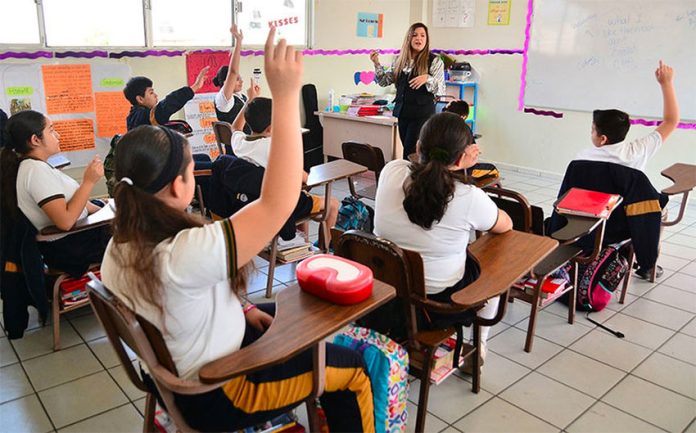
Students in 34 secondary schools are going to study French in a pilot program supported by the French government.

Federal Education Secretary Esteban Moctezuma Barragán and French Foreign Minister Jean-Yves Le Drian signed an agreement in Mexico City Thursday to collaborate on the program.

Moctezuma said the government will subsequently seek to extend French language instruction to hundreds of schools across Mexico.

The return of French to public schools “is great news for the country,” he said. “It will be a productive program that will have multiplying effects in the medium term . . . We’re taking an important step to strengthen the bilateral relationship on education.”

The education secretary said the government would like French teachers to attend courses at the Liceo Franco Mexicano (French-Mexican School), which he described as the most important school of its kind in Latin America.

Meanwhile, English language proficiency continues to decline in Mexico.

The 2019 English Proficiency Index compiled by the language training company EF Education First put Mexico in 64th place on the list of 100 countries.

And a study conducted five years ago found that 80% of preparatory school-aged students — their ages are 15 and 16 — had no understanding of English. The research, conducted by the education advocacy organization Mexicanos Primero, also found that 15% of English teachers couldn’t even speak the language.

The French foreign minister signed five other agreements on Thursday which will increase cooperation between the French government and the Mexican secretariats of Labor, Foreign Affairs and Public Administration (SFP).

Eight French companies have committed to participating in the government’s apprenticeship scheme known as “Youth Building the Future” and the French Ministry of Europe and Foreign Affairs will assist in the quest to stamp out government corruption.

Le Drian and Foreign Secretary Marcelo Ebrard also signed an agreement in support of “effective multilateralism” to tackle international issues.

“A new page is being written in the bilateral relationship between France and Mexico . . .” Le Drian said.

For his part, Ebrard said that Mexico’s relationship with France “is important for several reasons.”

“The most obvious ones are due to history and the cultural, political and intellectual closeness between Mexico and France that dates back centuries and which has a lot of prospects in the future” he said.

“. . . All these [newly-signed] initiatives are very good for Mexico because we’re beginning a new stage [of cooperation] with France and the European Union. We’re very interested in Mexico occupying the place it should on the international stage and France is a strategic partner in that sense.”

Source: El Universal (sp), Notimex (sp), El Economista (sp)  

At 2,921, November homicides up 7%; year-to-date increase of 2.7%

0
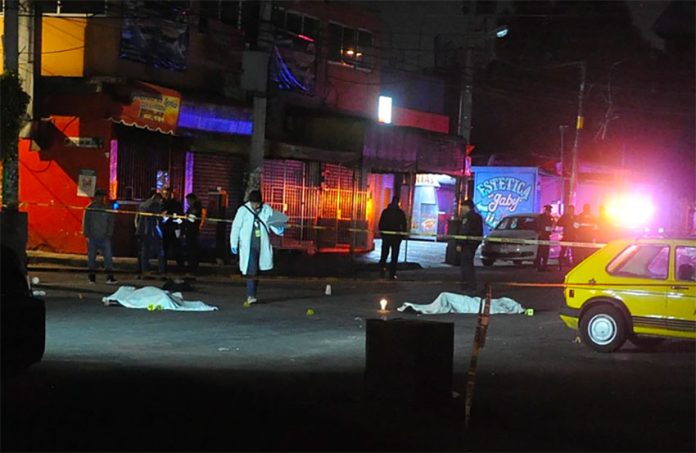
Two of the 31,688 homicides recorded so far this year.

Homicides increased 7% in November compared to the same month last year, bringing the total number of murder victims in 2019 to almost 32,000.

There were 2,921 victims of intentional homicide last month, according to data from the National Public Security System (SNSP), making November the fourth most violent month of the year after June, July and August.

With 346 homicides, Guanajuato was the most violent state in the country in November followed by México state, Baja California, Chihuahua and Jalisco, all of which recorded more than 220 murders.

The same five states were the most violent in the first 11 months of the year in terms of sheer numbers, although Colima recorded the highest per capita murder rate.

In Guanajuato, where the Jalisco New Generation Cartel and the Santa Rosa de Lima Cartel are engaged in a turf war, 3,211 people were murdered between January and November.

With 2,657 homicides, Baja California was the second most violent state in the period followed by México state, Jalisco and Chihuahua, where 2,603, 2,465 and 2,379 people were murdered respectively.

The number of people murdered in the five states represents 42% of all homicide victims across the country in the first 11 months of 2019.

SNSP data shows that there were 31,688 homicide victims to the end of November, a 2.7% increase compared to the first 11 months of 2018, which was the most violent year in recent history.

There were 916 femicides in the same period, a 13% increase, while kidnappings rose 3.8% to 1,231 cases.

High levels of violent crime have continued to plague Mexico this year despite the nationwide deployment of the newly-created National Guard in July and the continued use of the military to carry out public security tasks.

President López Obrador continues to blame previous governments for the rampant violence, and is especially critical of the administration of former president Felipe Calderón, who launched the so-called war on drugs in late 2006. More than 200,000 people have been murdered in the years since.

López Obrador has pledged that the government’s social programs, intended to address the root causes of violence, will help to pacify the country but crime statistics for this year indicate that any impact they have on reducing criminality is unlikely to come quickly.

The government’s security strategy, which avoids the use of force whenever possible, came under increased pressure in the latter months of the year after a string of cartel attacks including an unprecedented show of strength by the Sinaloa Cartel in Culiacán in response to an operation to capture one of Joaquín “El Chapo” Guzmán’s sons and the massacre of nine members of a Mexican-American Mormon family in Sonora.

However, López Obrador has remained adamant that responding to violence with more violence is not the right strategy and in November declined an offer from United States President Donald Trump to help combat Mexico’s notorious drug cartels.

The president said this week that he was certain his government will be able to guarantee security in Mexico, stressing once again that the root causes of violence are being attended to, impunity is no longer accepted and that the deployment of greater numbers of police and National Guard members is in the works.

Source: Infobae (sp) 

López Obrador has reversed positive trends in the energy industry

0
Mexico has turned away from promoting renewable energy.

President Andrés Manuel López Obrador, known as AMLO, has now been in office for about one year. It’s a good time to review his policies, and in particular his approach to the energy sector.

The previous administration of Enrique Peña Nieto undertook significant energy sector reforms, which AMLO generally opposed at the time and during his campaign for president. Understanding those reforms and their significance is crucial to understanding the new policies of AMLO’s first year.

Oil production is an important part of the Mexican economy and Petróleos Mexicanos (Pemex), the national oil company, is considered a crown jewel of Mexico. But due to declining production in the super giant Cantarell field and persistent underinvestment, oil production has been declining since its peak in 2004 — today it is just over half the 2004 level.

The electricity sector also faced challenges: the Federal Electricity Commission (CFE), the state monopoly utility, had high prices, low renewables penetration despite terrific resources, and an aging grid infrastructure.

Former president Peña Nieto’s energy reforms had two main goals — bringing in competition and capital. Competition was intended to bring in new entrants and technologies, ultimately contributing to the Mexican economy and lowering energy costs for Mexican consumers. The industry needed capital to keep up with growing demand for oil, gas, and power and to replace oil and gas production from declining fields.

Energy sovereignty?
Energy sovereignty?

But the average Mexican didn’t necessarily understand or accept the reforms, especially for oil. It’s difficult to understand in the United States, but in Mexico, oil is seen as an important part of the national patrimony that belongs to all Mexicans. The day that the Mexican oil industry was nationalized in 1938 is still commemorated as a holiday, when patriotic Mexicans contributed from their own savings to buy out the international companies that had been operating there.

In a survey we conducted around Mexico before the 2018 election, a majority of respondents didn’t know about the oil production decline, meaning that the need for more investment was not obvious to the general public. Bringing foreign oil companies back into Mexico was thus a controversial move.

In his campaign, AMLO focused on a concept he called energy sovereignty — bringing the energy industry back under government control and decreasing imports. As a result, many of the changes that have happened in the last year are focused on “taking back Mexico’s energy” — returning it to its state-run structure, a questionable proposition with questionable results.

The changes are most drastic in oil. AMLO put a moratorium on auctions for oil exploration for at least three years, saying he wants to see results from the auctions that have already occurred. He’ll be waiting a while — it takes at least four to five years to go from exploration to production in a new area.

The fact that the earlier auctions aren’t yet delivering production shouldn’t be a surprise to anyone. However, AMLO is honoring the contracts signed during the last administration.

Mexico has significant additional oil and gas potential, but Pemex doesn’t have the money or, in some cases, the expertise to develop them. Outside investment could bring expertise in the deepwater offshore and unconventional oil and gas resources like those in the southern United States. These resources are also present on the other side of the border, but U.S. producers are the best in the world at understanding and producing them.

AMLO is also very focused on the Mexican refining sector. Last year Mexico imported more than 70% of its refined fuels — gasoline, diesel and jet fuel — from the United States. AMLO commissioned a new refinery in Tabasco, his home state, and is focused on modernizing Mexico’s other refineries. Keeping more of the value-added from Mexico’s oil in the country seems like a good idea on its face, but refining is a high-capital, low-margin, relatively low-employment business.

Modernizing existing refineries might be a good investment, but building a new refinery from scratch when there is ample capacity right across the border is a questionable investment, especially when AMLO says Pemex can deliver it for US $8 billion in three years. When the project went out to bid to international companies, they came in at $10 to $12 billion and four to six years.

Additionally, retrenchment at CFE is harming investment in renewable energy. AMLO’s administration cancelled what would have been Mexico’s fourth clean energy auction, despite the fact that the previous three auctions were very successful, and unlike in oil, are already bringing results. The first three auctions yielded contracts for seven gigawatts of wind and solar capacity, and the average price in the last auction was just $0.021 per kilowatt-hour, among the lowest costs ever bid at that time in late 2017. It’s very doubtful that CFE would achieve these prices for new electricity without competition.

And instead of focusing on renewables, AMLO’s administration is focused on modernizing CFE’s existing generation and even building new coal. The head of the CFE has dismissed wind and solar as unreliable and expensive, and said: “We do not want to buy electricity, we want to generate electricity, it’s an aberration that we are forced to buy electricity from our competitors.”

AMLO and U.S. President Trump are both populists, although from different sides of the political spectrum. But their views on energy, and especially renewable energy, are somewhat similar. They both hark back to an earlier time, when energy security meant self-sufficiency and renewable power was outside the mainstream.

AMLO’s energy policies could be worse, but they are bad enough. He is holding Mexico back from creating a more modern energy system with lower prices for consumers and in terms of environmental and greenhouse gas emissions performance.

The writer is a fellow in the Cross-Brookings Initiative on Energy and Climate. Her work is focused on the intersection of energy, environment and policy, including climate policy and international cooperation, energy efficiency, unconventional oil and gas development, regional and global natural gas trade and the energy-water nexus. This piece was originally published by Brookings.

In Mexico City, captivating contemporary art is on every corner

0
Visit ZonaMaco for newest and best work from Mexico and beyond.

Previous installments of Mexico News Daily’s mini-series on art in Mexico City have examined muralism and modernism in the nation’s capital. But there’s more: there is also captivating, inquisitive and confounding contemporary art on every corner.

First and foremost if you are an art aficionado who wants a look at the newest and best work from Mexico and beyond, the yearly pilgrimage to ZonaMaco is a must.

An international art fair that began in 2002, ZonaMaco is known as Latin America’s best and features artists known and unknown, big and small, near and far. It’s the luxury of sinking into some delectable art without all the hoighty-toightyness of the international art scene. Locals mingle with tourists, novices with experts.

Galleries all over the city participate in exhibits, conferences and cultural events during the fair’s two event times – the main fair in February and a supplementary one in September. In addition to the main contemporary art exhibits, there is also ZonaMaco Diseño, ZonaMaco Salón and ZonaMaco Foto, focused on design, antiques and photography. See the full schedule for 2020 on their website and book your tickets now – the city fills up quickly for this annual art smorgasbord.

If those dates won’t work or big art fairs are not your thing, we get it, but good contemporary art can be had at any time of the year in Mexico City if you know where to look.

Modern art at Kurimanzutto.

You might want to try starting at Tamayo Contemporary Art, founded by famous muralist and art collector Rufino Tamayo and his wife. While the museum’s permanent collection is a hodgepodge of various styles and eras, they run a dozen or more contemporary exhibits throughout the year that include everything from fluorescent light displays to ethnographical video to collage.

For some excellent photography exhibits, make the hike out to the Foto Museo Cuatro Caminos photo museum, whose stark, warehouse-like exhibition halls only serve to make the over-sized images pop and dazzle. A little more neighborly, the tiny Museo Experimental El Eco is located in Colonia San Rafael and despite its lesser fame, puts up truly great exhibits, each with printouts of information about the artist and art on display.

But maybe you aren’t just browsing but ready to buy: galleries galore await your critical eye and open wallet. Neighborhoods Roma and Condesa have become the gallery epicenter in the past few years and they are a great place to start, especially if you want to create your own gallery walking tour among the charming, tree-lined streets of these two beautiful barrios.

Heavy hitters include OMR and Proyectos Monclova, or you can visit Arroniz Arte Contemporanea, FIFI project, House of Gaga, MAIA Contemporary, Le Laboratoire and Licenciado. The most well-known and highly regarded gallery in the city is probably Kurimanzutto in the San Miguel Chapultepec neighborhood, and while you’re up that way you can stop at the RGR+ART and Parque Galería (and Luis Barragan’s House and Studio).

A few final favorites of mine include the Galería Hilario Galguera and Taller Lu’um in San Rafael. Taller Lu’um is particularly interesting as a fusion of contemporary designers working with traditional Mexican artisans to incorporate ancient techniques into modern designs. Proceeds help these artisans keep their traditions alive.

Keep in mind that most of these galleries are closed on Sundays and Mondays and some require a previous appointment so always call ahead or check their website for info.

While great art abounds in many corners of Mexico, you won’t find the density and variety anywhere else that you will in the country’s capital. Paris, London and New York are fine, but great and exciting art can be had right here in Mexico City — with the added bonus of tacos afterwards.

Discovery of murals a surprise on outskirts of ancient city of Teotihuacán

0
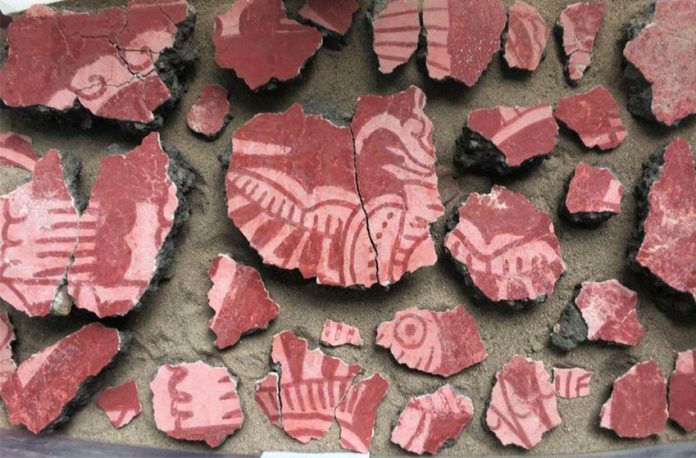
Mural fragments depicting a bird that have been found at Teotihuacán. David Carballo/Proyecto Arqueológico Tlajinga

Fragments of murals recently found on the outskirts of the pre-Hispanic city of Teotihuacán provide further evidence that commoners there lived more privileged lives than their counterparts in other ancient cities.

A team of archaeologists led by David Carballo of Boston University uncovered murals decorated with flowers and birds that appear to be singing in Teotihuacán’s Tlajinga district, located about three kilometers south of the city’s core.

“We’re now finding that life on the periphery was pretty good,” Carballo told the news agency Reuters, adding that the discovery of the murals came as a complete surprise.

The archaeologist and his team have also found jade, a finely-carved stone mask and shells from both the Pacific and Gulf coasts in the area.

In addition, they have excavated an ancient obsidian workshop where some 200,000 blades were likely produced.

The findings have led the archaeologists to believe that Teotihuacán, which flourished from about 100 B.C. to 550 A.D., had a successful craft-based economy in which artisans including lapidaries, potters, garment makers and obsidian workers plied their trades.

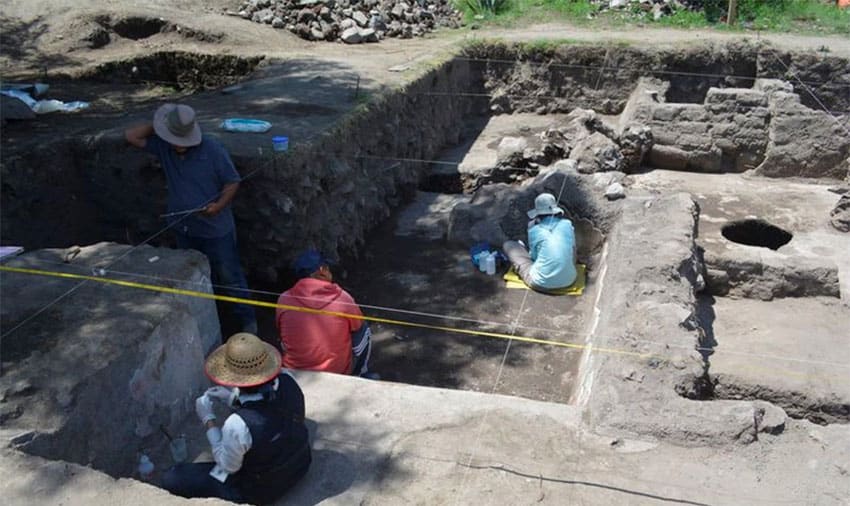
Archaeologists at work in Tlajinga, Teotihuacán.
Archaeologists at work in Tlajinga, Teotihuacán. David Carballo/Proyecto Arqueológico Tlajinga

They believe that the bustling economy allowed the commoners of Teotihuacán, located about 50 kilometers northeast of Mexico City, to live more comfortable lives than low-class residents of cities in the Mayan world or ancient Rome and Egypt, where poverty and enslavement were common.

Ancient housing on Teotihuacan’s outskirts supports the hypothesis.

In the district of La Ventanilla, there are multi-family apartment compounds made out of stone that have white-lime plaster floors, built-in drainage systems, open-air courtyards and murals, Reuters said.

Ruben Carrera, one of the first archaeologists to excavate the district, said that the housing is indicative of lower inequality in Teotihuacán compared to other ancient cities.

“It wasn’t as pronounced as, say, Rome or other places where there was a dominant group and a dominated group,” he told Reuters.

Carrera also noted that no evidence of slavery has ever been uncovered in Teotihuacán, whose two large pyramids now attract millions of tourists a year.

Michael Smith, an Arizona State University archaeologist who heads up a research lab at Teotihuacán, told Reuters that a wealth calculation based on house sizes showed that inequality in Teotihuacán was low for a pre-industrial settlement.

The average home in the ancient city was about 200 square meters, or the size of a tennis court, whereas Mexica dwellings typically only measured one-eighth that size, he said.

Another piece of evidence that indicates that Teotihuacán residents lived lives not all that different from the city’s elite is that they grew to almost the same height.

Data collected by Carballo shows that males buried in apartment compounds on the outskirts of the city were less that one centimeter shorter on average than elites laid to rest in graves near the Moon Pyramid in the center of Teotihuacán.

In contrast, commoners in Mycenae, Greece, were more than six centimeters shorter than royals, data shows, and nine centimeters shorter in ancient Egypt.

Source: Reuters (en) 

Residents arm themselves against criminal gangs in southern Veracruz

0
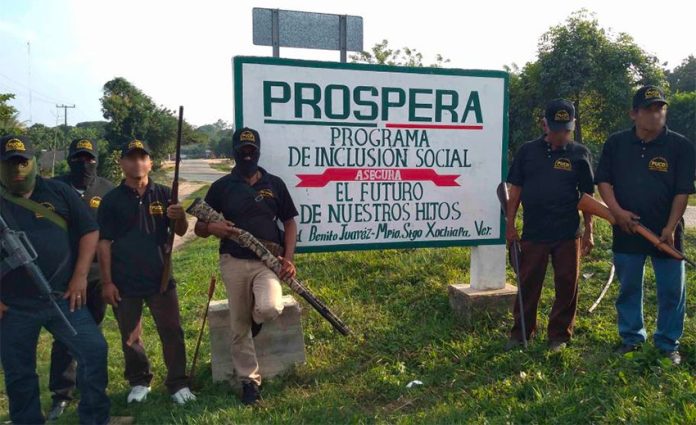
On the defensive in Veracruz.

Residents of a municipality in southern Veracruz have taken up arms to defend themselves against crime.

According to a report by the news website Animal Político, residents of at least seven communities in Santiago Sochiapan are unable to go about their day to day activities due to the threat posed by criminal groups.

“We’re afraid because they threaten us . . .We can’t go anywhere,” said octogenarian Eduardo Santiago Romero, adding that an ulcer developed on his foot because he was unable to seek medical attention for an injury.

Many Santiago Sochiapan residents are still not going to school or work, visiting friends and even shopping, Animal Político said, even though a community police force is now carrying out patrols, setting up roadblocks in order to keep tabs on who is coming into and out of the municipality and completely shutting down access to towns at night.

One woman from the town of Benito Juárez said she had taken both her children out of school due to security concerns.

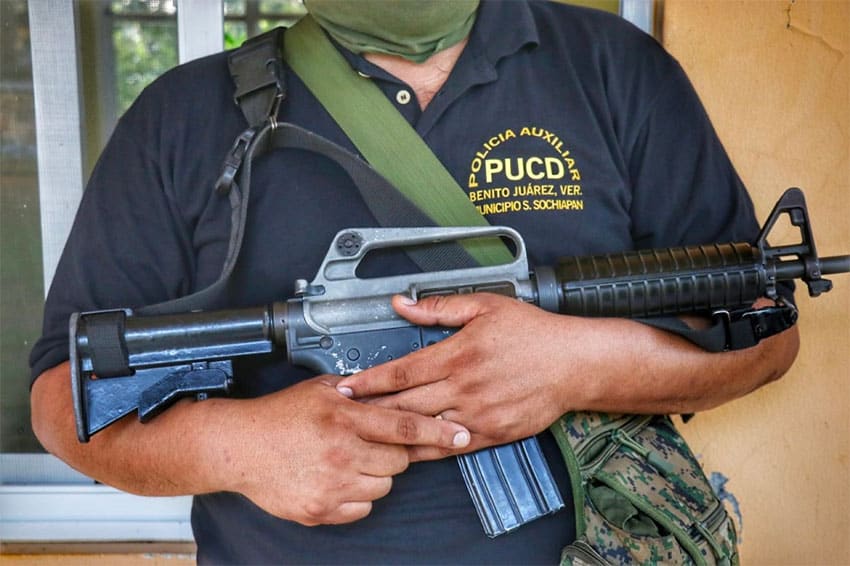
An auxiliary police volunteer in Benito Juárez, Veracruz.

There is no high school in the community, forcing older students to travel to the town of María Lombardo del Caso in Oaxaca to attend classes. However, most have decided to give up their studies due to insecurity on the highway between the town and Santiago Sochiapan.

Animal Político reported that the catalyst for the formation of a community police force was the disappearance on July 18 of two ranchers in the neighboring municipality of Playa Vicente and an armed attack the same day on the home of a family member of the abducted brothers.

Speaking on the condition of anonymity, the family member – a Santiago Sochiapan resident – said that residents of the municipality have joined a larger community police group known as Towns United Against Crime.

“We’ve taken up arms in 12 or 13 towns, we’re united with the municipalities of Las Choapas, Jesús Carranza, San Juan Evangelists, we’re more than 1,000 people united against crime,” he said.

One community police member wielding an AR-15 style rifle he said that he seized from a criminal after a confrontation told Animal Político that he hadn’t been able to operate his business buying and selling cattle for six months “because organized crime won’t let me anymore.”

He said that criminal groups had demanded an initial extortion payment of 500,000 pesos (US $26,400) from him as well as 50,000-peso monthly payments.

Gangs of criminals are not just extorting and kidnapping ranchers but stealing their cattle as well.

In San Juan Lalana, Oaxaca, which borders Santiago Sochiapan, there was a clash on December 1 between the army and a criminal group traveling in a convoy of 10 vehicles transporting stolen cattle.

Four suspected criminals were killed in the confrontation and four others were arrested, Oaxaca authorities said.

There have been several other recent clashes in the area and a suspected local leader of the Jalisco New Generation Cartel (CJNG) known as Doble Cero (double zero) was arrested in southern Veracruz on December 6.

Community police in Santiago Sochiapan and other nearby Veracruz municipalities have been on high alert ever since.

Veracruz Public Security Secretary Hugo Gutiérrez Maldonado warned that violence could spike due to a “re-arrangement” in the local power structure of the CJNG.

Source: Animal Político (sp) 

New Puebla museum will celebrate the Mesoamerican beverage pulque

0
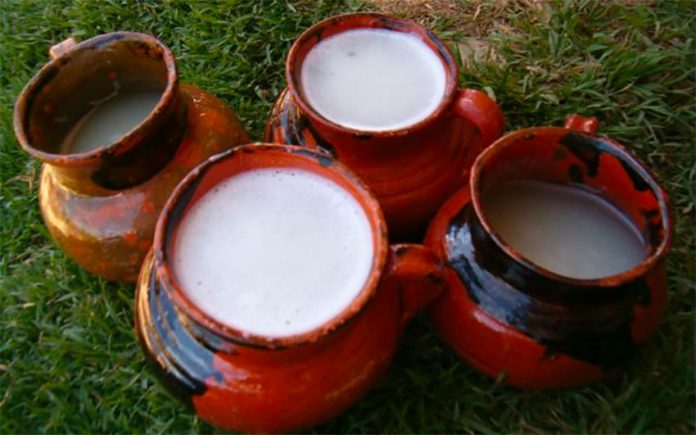
Pulque jugs have an artisanal history all of their own.

The world’s first museum dedicated to pulque is planned for the city of Puebla.

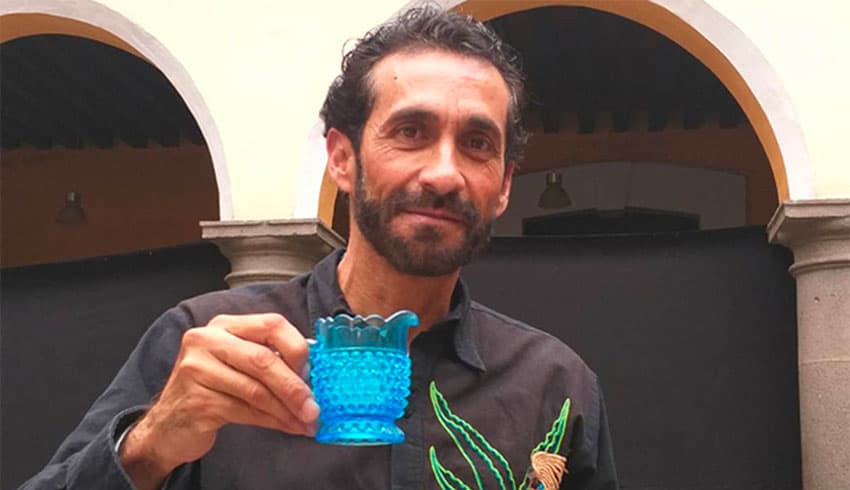
The basis of this museum is the private collection of pulque paraphernalia belonging to Javier Gómez Marín, over 8,000 pieces and a library of 4,500 titles related to the beverage, its making and its history.

The new museum will be found in an old mansion in the historic center of the city and although it’s not yet open, this collection already has a history of being loaned for exhibitions and other events.

Gómez’s collection includes watercolor paintings, photographs, postcards and even a short film done by Adolf Hitler’s filmmaker Hubert Schonger. It contains the vessels and implements used for the making of pulque, from the gourd used to extract the maguey sap to vats and transport jars.

Perhaps most importantly it contains myriad pitchers, jars and mugs used for the consumption of the beverage, traditionally done in pulque bars called pulquerías. These receptacles come in a variety of materials and styles and have an artisanal history all their own. Depending on the region, pulque mugs come in green glass, ceramic and even cut and painted gourds. Many in Gómez’s collection depict aspects of Mexico’s history and culture, and most come from old pulque haciendas in various parts of the country.

Pulque is a mildly alcoholic beverage made from the sap of several agave species known as maguey, rather large plants that grow on much of the Central Mexican Plateau.

Pulque making and consumption go back far into the Mesoamerican period, about 8,500 years. By the Aztec period, its consumption was strictly limited to certain rituals and festivals, almost exclusively to the upper class.

After the Conquest, pulque lost its sacred status and became a beverage of the lower classes for its alcoholic content and as a food staple. From the colonial period to the early 20th century, pulque haciendas could be found in Hidalgo, Tlaxcala, Puebla, Morelos, Michoacan and Querétaro. At one point, colonial authorities tried to ban pulque due to alcoholism among the indigenous, but this proved impossible to enforce.

Pulque enjoyed its height at the end of the 19th and beginning of the 20th century, just before the Mexican Revolution. During that time, the “king of pulque” was a man named Ignacio Torres Adalid because he had 500 haciendas producing maguey and an equal number of pulque bars in the country, accounting for 80% of Mexico’s production at that time.

After the Revolution, haciendas were broken up and government authorities discouraged the drinking of pulque. But the main threat to the drink came from the introduction and promotion of beer, touted as modern, more hygienic and healthier. It became and remains the most popular alcoholic beverage in the country.

Eighty percent of the pulque now produced comes from the state of Hidalgo, but only 4.4% of the population consumes it.

Pulque collection owner Gómez.

However, in the past two decades, the drink has experienced something of a comeback. It has gained a reputation as a specialty beverage and today there are over 100 pulquerías in Mexico City alone. These range from seedy dives that survived pulque’s lost years, to new trendy places in exclusive parts of the city.

Meanwhile, the manner of producing pulque has remained unchanged since the Mesoamerican period.

Before fermentation, the liquid is known as aguamiel. The fermented liquid is white, slightly viscous and acidic with an alcohol content of about 6%. Fresh batches of pulque are produced by adding already fermented liquid into a fresh vat of aguamiel. It is consumed as is (known as natural) or mixed with fruit or other flavorings (called curado).

One issue with pulque production is that the flora is not easily killed off by the alcohol they produce as they are in the production of beer and wine. For this reason, pulque can “overferment,” spoiling it, so it must be consumed within a short time. This is one reason for the curado version, to disguise any adverse flavors that may have already started to form.

Good pulque should have the color and viscosity of pasteurized milk and should have a very slight smell or none at all. It is slightly acidic and may contain a hint of carbonation. Pulque that is going bad smells sour, becomes more viscous and begins to separate. Bubbles can be seen on its surface.

The difference between drinkable and non-drinkable pulque can be only hours, which severely limits where and how pulque can be commercialized. Although good pulque can be had in reputable pulquerías in cities, the best locations for their consumption are near where it is made.

Interestingly, pulque has nutritional and other health benefits no other alcoholic beverage does. In addition to calories, it provides protein, thiamin, riboflavin, niacin, vitamin C, calcium and iron. For certain indigenous groups such as the Otomí in Hidalgo, the consumption of pulque can be important in the diet. In many pulque drinking areas, the common saying is that pulque is one step away from eating meat.

Sources: La Jornada de Oriente (sp), El Universal (sp)

A magical trip beneath the towering walls of the Sumidero Canyon in Chiapas

0
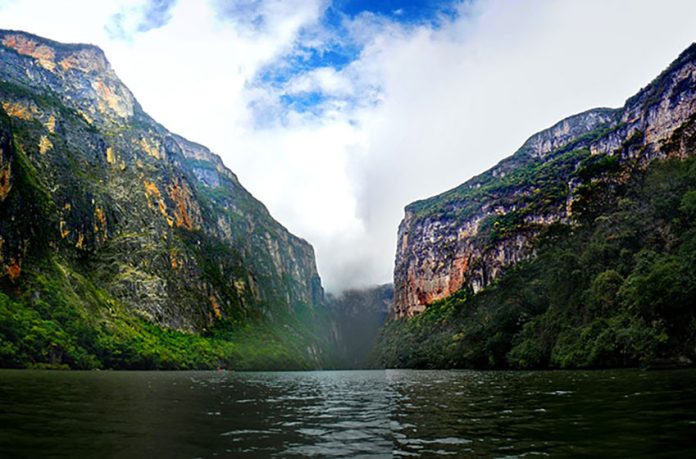
The imposing Sumidero Canyon lies northeast of Tuxtla Gutiérrez, Chiapas.

A visit to Tuxtla Gutiérrez, the capital of the state of Chiapas, would never be complete — so I was told — without a boat trip through the nearby Cañon del Sumidero, whose vertical walls tower up to 1,000 meters above the rather narrow Grijalva river.

When I looked up sumidero I discovered that one of its meanings is “cesspool” which was not very encouraging until I learned that this canyon was one of the favorite haunts of the founder of the Tuxtla zoo, biologist Miguel Álvarez del Toro. If Mexico’s most famous conservationist loved this place, then I had to see it for sure.

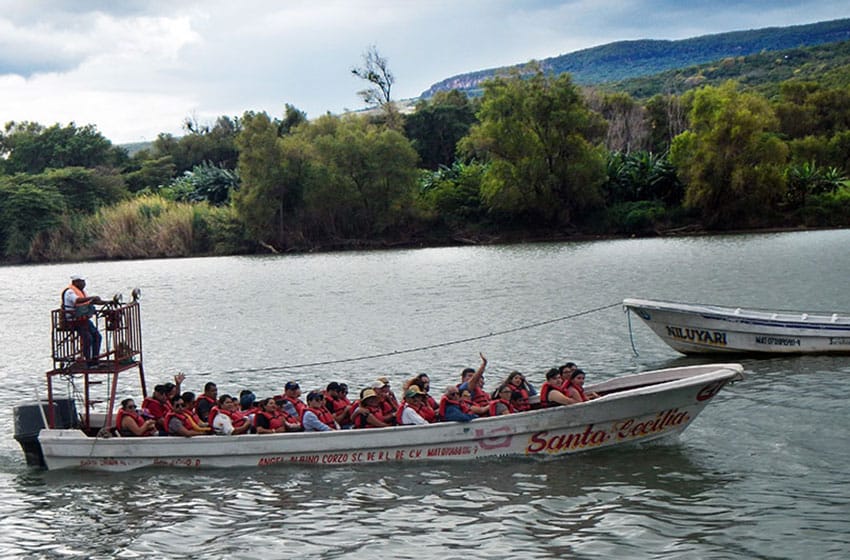
Trips down the river are organized from several docks alongside the little town of Chiapa de Corzo which, I was surprised to learn, had for a brief time been the state capital. The word chiapa, by the way, appears to be a short form of the word tepechiapan, which means “water below the hill,” a fitting description of the Grijalva river flowing through kilometer-high walls of rock.

“It’s better to take that boat ride in the morning, rather than later in the day,” a local taxi driver told us. “The boat men won’t leave until they have enough customers to fill every single seat, so people who go to Chiapa de Corzo late in the afternoon may find themselves sitting around forever waiting for their tour to start.”

As for us, we only had to wait half an hour. Then lifejackets were assigned to each of us. Although it looked like it was going to rain, we learned that umbrellas were forbidden.

With new safety standards in place, over 300,000 people visit the canyon annually.

Since these boats are uncovered, to allow for a good upward view of the canyon walls I would suggest you bring along a waterproof poncho if rain seems likely.

A warm jacket is another good idea. Even on a sunny day, the boats travel at high speeds along much of the river, generating a strong breeze with plenty of spray.

Here you may be wondering: is it all worthwhile?

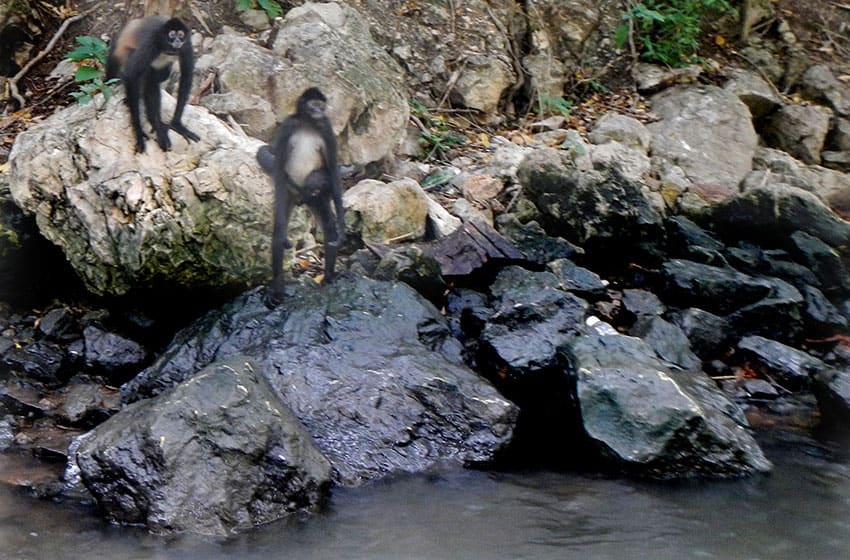
The answer, in my opinion, is a resounding sí que sí: absolutely yes! There is much more to this canyon than high walls. The farther you go downriver, the more obvious it becomes that there is something wonderful, something magical about it. One moment you are overwhelmed by majesty and grandeur and the next you’re seduced by a spray of wildflowers and then your heart is touched by the affection and clowning antics of child-like spider monkeys who are obviously fast friends with the boatmen who ferry us tourists up and down the river.

You are mesmerized by rocky crags high, high above you, but when you glance back down at the river you see an elegant white egret posing on a slender wand protruding from the water or suddenly discover a big brown pelican floating right next to you. Another glance and you spot a huge, lazy crocodile sprawled over a rocky outcrop, taking the sun.

And if you brought along those binoculars, you may even get to see a cinnamon hummingbird pollinating the wildflowers.

Spider monkeys Pancho, left, and Alondra live on the riverside.

I was, of course, curious to see how Chiapas is dealing with the problem of pollution in this important river. In Jalisco, where I live, the waters of the Santiago river, which skirts the city of Guadalajara, are not only toxic, but so filled with human waste that the stench is unbearable, all this despite some of the strictest anti-pollution laws in the world.

I am happy to report that during 90% of our river trip we noticed nothing amiss. The water appeared clean and smelled fine. This is apparently due to the daily removal of over 30 tonnes of trash, much of which consists of tree branches and natural debris washed into the river by the rains. Unfortunately, during the other 10% of the time we did find little coves where all sorts of things were floating on the surface but this Sumidero is definitely no cesspool!

In fact, when it comes to caring for their most famous river, it looks to me like Chiapas is far ahead of Jalisco.

Some 120 boats carry visitors along the 30-kilometer stretch between the two docks at Chiapa de Corzo and the Chicoasén hydroelectric dam downriver. These boats are sturdy, the guides are very well trained, and everyone on board is obliged to wear a lifejacket. In addition, there are ambulance boats anchored along the riverside, on call all day long.

This professional approach, however, came at a price. Years ago the boats were old and leaky and even kids could be guides. This situation generated a spate of accidents, some fatal. The government responded with suspensions and fines and took 60 boats out of circulation. Today, the situation has reversed itself and the boat cooperatives are proud of their new, high standards.

As a result, around 300,000 people take the boat ride down the Grijalvo river every year, making the Cañon del Sumidero the second most popular site in Chiapas, after Palenque.

[soliloquy id="96861"]

Our voyage down the river run ended much too soon at the foot of the dam which, all by itself, generates over 30% of all the hydroelectric power produced in Mexico.

Here we found two “floating Oxxos” awaiting us with junk food. The magic spell was broken. Back to business.

But I returned home slightly changed. I may not be able to voice it, but I did experience something unique in this tall river canyon and before we debarked all of us applauded our guide as we would the conductor of a symphony orchestra, for he had been instrumental in making our lives just a little bit richer.

Oh, yes, the Sumidero Canyon is well worth it.

The writer has lived near Guadalajara, Jalisco, for more than 30 years and is the author of A Guide to West Mexico’s Guachimontones and Surrounding Area and co-author of Outdoors in Western Mexico. More of his writing can be found on his website.

CORRECTION: An observant reader pointed out that we had reversed the flow of the Grijalva river. In fact, it flows north so the Sumidero Canyon is downriver from Chiapa de Corzo. We apologize for the error.

UN says Maya Train consultation didn’t meet international standards

0
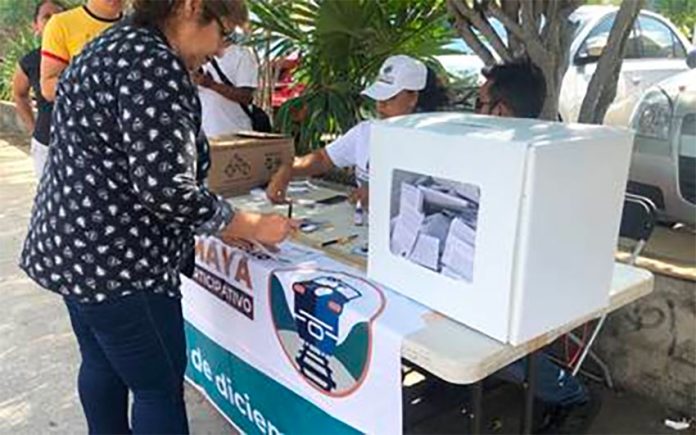
A woman casts her vote on the train on Sunday.

The United Nations said Thursday that the consultation on the government’s Maya Train project failed to meet all international human rights standards.

The Mexico office of the United Nations High Commissioner for Human Rights (ONU-DH) said in a statement that during the month-long consultation process in southeastern states it observed that the information presented to indigenous communities only outlined the potential benefits of the project and not the negative impacts it may cause.

International standards establish that a consultation process with indigenous communities must be carried out prior to a project being executed in a manner that is culturally appropriate, serves to inform and allows free participation.

However, during information meetings observed by the ONU-DH in Campeche, Yucatán, Quintana Roo, Chiapas and Tabasco, community members asked questions about the possible negative impacts of the project on several occasions “without obtaining a clear and complete response,” the statement said.

The ONU-DH said that the absence of studies about the potential impacts or “the failure to disseminate” the studies made it difficult for people to reach an informed opinion about the Maya Train before Sunday’s vote, which found 92% support for the 120-billion-peso (US $6.3-billion) project.

It also said it observed that some people expressed support for the project in the erroneous belief that if they didn’t, they wouldn’t receive assistance from authorities to meet their basic needs such as water, housing, healthcare and education.

The ONU-DH said that authorities failed to make it completely clear that government aid wasn’t conditional on people’s support for the Maya Train.

In addition, the ONU-DH said that indigenous communities didn’t participate in the design of the consultation.

As a result, the consultation period was too short, translations of materials into indigenous languages were inadequate (if they existed at all) and many people were unable to travel to meetings due to a lack of resources.

“The majority of those who participated were municipal and ejido [community land] authorities, leaving other groups and people who form part of the community on the outside,” the ONU-DH said.

The UN office said it was particularly concerned about “the low participation and representation of indigenous women” in the consultation process despite efforts to encourage their inclusion.

Representatives of the ONU-DH attended a total of 12 regional information and consultation meetings on the invitation of the National Institute of Indigenous Peoples, the National Tourism Promotion Fund (Fonatur), which is in charge of the Maya Train project, and the Interior Secretariat.

After Sunday’s vote, Fonatur chief Rogelio Jiménez Pons said that work will begin on the project in late March or early April.

Source: El Universal (sp)