The trains are moving again in Michoacán, but for how long?
The solution to railway blockades that disrupt the movement of goods is to enforce the law, suggests the president of Kansas City Southern of México.
José Zozaya said allocating the necessary personnel and jailing protesters who block the rails are the way to get freight moving again.
“We have filed complaints and believe [the protesters] will be held responsible and some may go to jail. Once this happens, I’m sure that they’ll stop going out to block the tracks,” he said.
The federal penal code stipulates a jail sentence ranging from 15 days to two years for anyone blocking railways without inflicting damage. That sentence can be as long as five years if there is damage to the tracks.
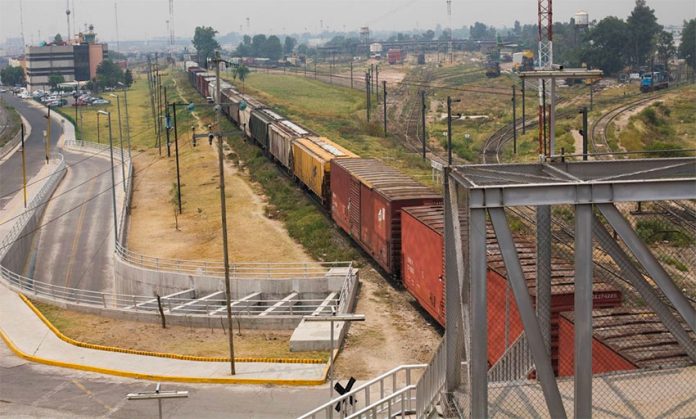
Zozaya’s comment came after 10-15 members of the CNTE teachers’ union blocked the tracks in the port city of Lázaro Cárdenas, Michoacán, for several days last week, an action which disrupted the movement of around 20 trains.
The company filed complaints against the protesters with the federal Attorney General’s Office (FGR).
The Nuevo León Chamber of Industrial Transformation (Caintra) called for authorities to find a solution to the problem, stating that blockades are difficult to deal with even when companies have prior warning of them.
“Caintra is asking for support and is joining the petition with other chambers to resolve a problem that gravely impacts logistics and the industrial sector of Mexico,” said institutional relations director Jesús Francisco López.
The blockade that paralyzed rail traffic in the port was lifted late last week after Michoacán Governor Silvano Aureoles Conejo promised to grant the teachers 2.24 million pesos (US $113,000) to settle outstanding debts with them.
Zozaya said investigations should still be carried out despite the negotiations.
“If the negotiations arrive at a happy ending, we can consider withdrawing the complaints . . . but in the interim, whoever blocks railways should go to jail,” he said.
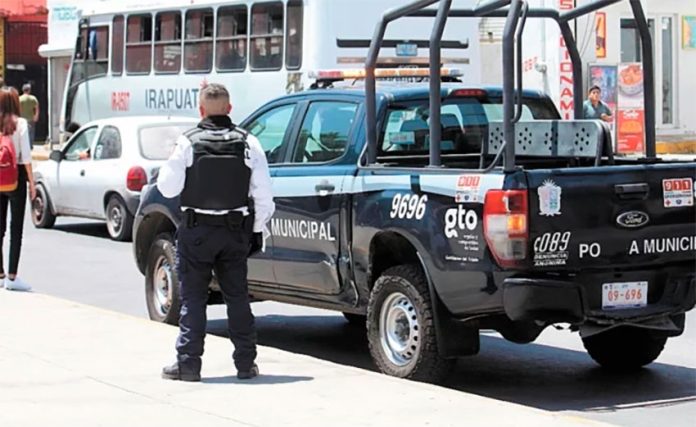
The mayor of Irapuato has called for action from Guanajuato authorities after 12 police officers were killed in the state in the space of a single week.
The state security strategy has to change, said Ricardo Ortiz Gutiérrez on Monday, adding that the criminals responsible for the deaths of the municipal officers – three of whom were part of Irapuato’s force – have not been held accountable.
“The [state] Attorney General’s Office says nothing and there are no arrests . . .” Ortiz said. “There is a situation of impunity.”
The National Action Party mayor said the attacks on police in the municipalities of Irapuato, Villagrán – where seven officers were killed, Celaya and León have generated fear among police officers in the state and could trigger a mass exodus due to resignations.
Ortiz said that nobody can force officers to remain in the job but added that Irapuato authorities are seeking to provide greater security to police and improve their salaries.
He warned that further attacks on police are possible and urged the Guanajuato government to do more to improve security in the state, Mexico’s most violent in 2019.
The newspaper El Universal reported that 250 members of the National Guard were expected to arrive in Irapuato on Tuesday and that 850 additional guardsmen will be deployed to other municipalities in the region.
However, it also said the state government is planning to withdraw between 60 and 70 state police officers out of 150 who had been deployed to Irapuato to bolster security.
With regard to the police deaths, Guanajuato Security Commissioner Sophia Huett said it was not her aim to criminalize police but it could not be ruled out that some of the slain officers had links to organized crime.
One in particular did not, if bravery awards are any measure.
Security analyst Alejandro Hope said in his regular column for El Universal this week that among the 12 officers killed was an “exemplary” police commander from Irapuato.
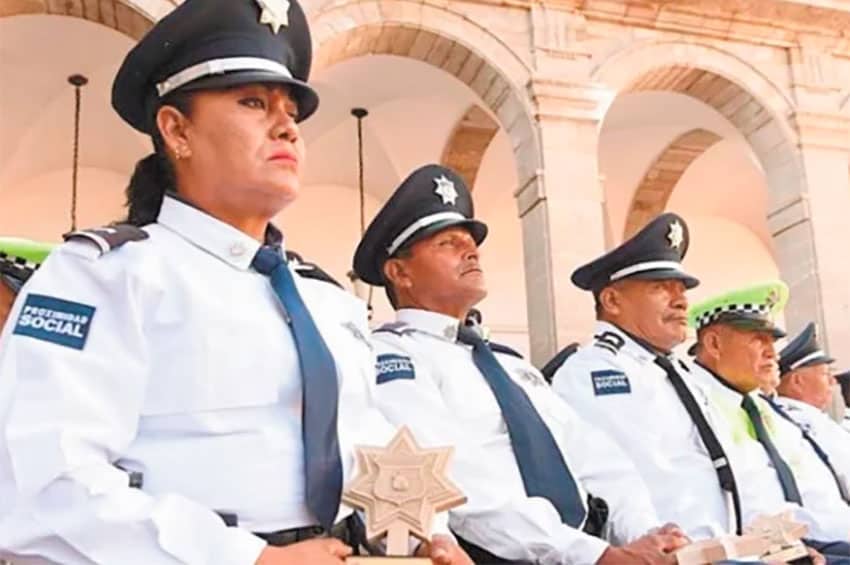
Bravery award winner Arellano, one of 12 officers killed in one week.
María Sonia Arellano Mendoza received an award four months ago that recognized her commitment to fighting crime, he wrote.
The 15-year veteran of the Irapuato police was kidnapped along with her husband and son last week by armed men allegedly linked to the Jalisco New Generation Cartel.
The kidnappers spared the lives of Arellano’s husband and son but not hers. The policewoman’s dismembered body was found on a dirt road on the outskirts of Irapuato.
Hope noted that the deaths of Arellano and the other 11 police officers in Guanajuato – two more of whom were women – are not uncommon. Sixty police officers have now been killed in Guanajuato this year and 409 in 27 states across the country, he wrote.
The figure is just shy of the 421 police deaths recorded last year and well above the 52 police murders in the United States in 2018.
The analyst wrote that attacks on police affect all Mexicans and presented four arguments to support his assertion.
Firstly, “attacks against police facilitate corruption,” Hope said, arguing that faced with the threat of death, officers are more likely to be lured into criminality by gangs that offer them financial incentives.
“In that sense, the attacks . . . undermine the integrity of institutions,” he wrote.
Secondly, in the face of the possibility of attacks, police tactics and the equipment they use become more military-like, Hope said.
“That limits the possibility of community police practices and moves [police] forces away from the public, which ends up reducing the efficacy of public security institutions,” he wrote.
Hope’s third argument was that if officers feel under attack they are more likely to commit human rights abuses or use disproportionate force, and his fourth was that police deaths exacerbate fear among citizens.
“If a police commander can be kidnapped, murdered and dismembered with impunity in broad daylight, nobody can feel safe,” he wrote.
“Given that, the murder of police officers should be considered an extremely serious act that warrants an exceptional response both from the state and society. But that’s not the case . . . An act as brutal as the murder of Commander Arellano went to the inside pages of the newspapers. The matter didn’t have a great impact on social media. It was treated as just one more piece of news. If we don’t care about the lives of police, how can we ask them to protect ours?”
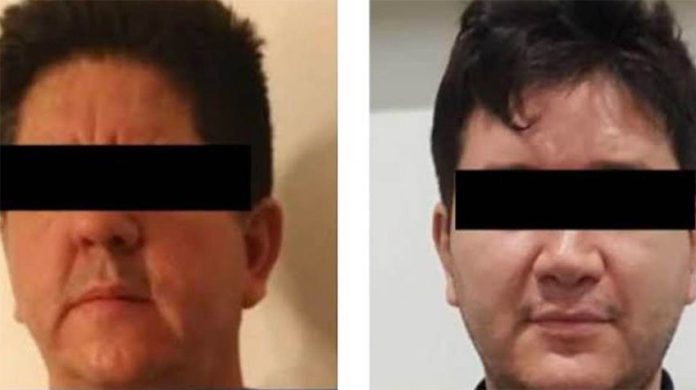
Drug lord's brothers-in-law Ulises and Arnulfo González.
Two leaders of a gang considered to be the financial arm of the Jalisco New Generation Cartel (CJNG) were given prison sentences for drug and weapons charges on Monday.
Arnulfo and Ulises Jovani González Valencia, brothers-in-law to CJNG leader Nemesio “El Mencho” Oseguera Cervantes, were sentenced in the federal court at the maximum security prison at Puente Grande, Jalisco.
Arnulfo González was sentenced to five years for possession with intent to sell cocaine and methamphetamines, and his brother was given six years for the same charge, as well as possession of firearms.
The brothers were arrested by security forces in June 2018 in Zapopan, Jalisco.
Court documents revealed that in 2016 Arnulfo González established a center of operations in Bolivia where he created a money laundering scheme disguised as a real estate business and built a network of cocaine producers in order to export to Mexico and the United States.
He has since been on the U.S. Treasury Department’s blacklist, as has his brother Ulises, who posed as a real estate investor using false names and credentials to move illicit funds.
With the two behind bars, seven of 18 González Valencia siblings have been arrested for drugs, money laundering and organized crime.
One of the brothers, implicated in the Panama Papers, is in jail in Uruguay for money laundering. Gerardo González was arrested in 2016 when Uruguayan authorities seized over US $10 million worth of real estate. His extradition to the United States was approved in 2017, but appeals have kept him in Uruguay.
Abigael “El Cuini” González was arrested on drug trafficking charges in Puerto Vallarta in 2015. Although the United States has requested his extradition, a writ of amparo has kept him in the El Altiplano federal prison in México state since then.
In 2017, police in Brazil arrested José “La Chepa” González. His extradition has also been requested, but he remains in prison in Brazil.
Elvis González was arrested after being hospitalized for a traffic accident in Jalisco in January 2016 but was later released due to insufficient evidence.
Rosalinda González, wife of cartel boss El Mencho, was arrested on organized crime and money laundering charges in 2018 but was released on bail only three months later.
The United States will not send “labor inspectors” to Mexico to ensure compliance with the new North American trade agreement, U.S. Trade Representative Robert Lighthizer said in a letter responding to concerns from the Mexican government.
Addressed to Mexico’s chief negotiator, Jesús Seade, Lighthizer wrote that the U.S. government included language in the implementing legislation sent to Congress that authorizes up to five attachés from the Department of Labor to work with Mexican officials, workers and civil society groups on the implementation of Mexican labor reform.
The attachés will provide technical assistance and disburse capacity building funds, he said.
“These personnel will not be ‘labor inspectors’ and will abide by all relevant Mexican laws,” Lighthizer wrote.
The trade representative added that the United States-Mexico-Canada Agreement (USMCA) “allows an independent, three-person panel chosen by both parties to request on-site verifications in any of our three countries when there are good faith questions about whether workers at a particular facility are being denied key labor rights.”
Lighthizer stressed that “those verifications will be conducted by the independent panelists not by the labor attachés.”
The new trade pact is a “great agreement” for the United States and Mexico, he wrote. “I look forward to working with you and your colleagues to ensure that the agreement enters into force as quickly as possible.”
The letter comes after Seade accused the United States of preparing USMCA legislation that didn’t reflect the modified trade agreement signed by Mexican, Canadian and U.S. officials last week.
The Secretariat of Foreign Affairs said that it could reject any U.S. diplomats posted to carry out inspections because the accreditation of labor attachés can only proceed with the consent of the host country.
Seade told a press conference on Monday that the United States has now “perfectly” clarified its intention with regard to supervision of labor laws in Mexico.
In a Twitter post, he reiterated that Mexico will never allow labor inspectors to operate in Mexican workplaces.
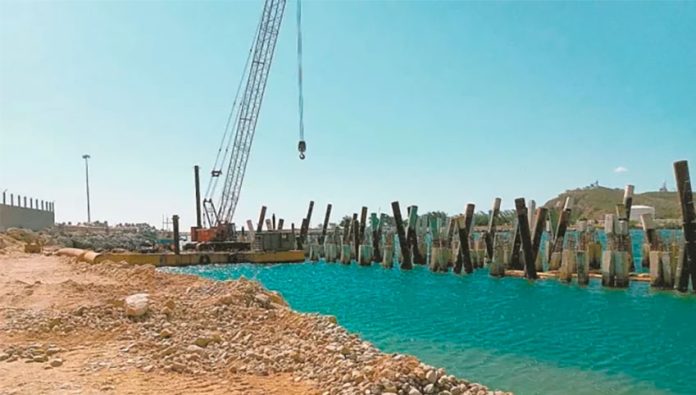
Wharf construction under way in Salina Cruz, Oaxaca.
Frequent highway blockades on the Isthmus of Tehuantepec threaten to undermine a 107-million-peso (US $5.65-million) project to boost the capacity of the port in Salina Cruz, Oaxaca.
Work on a new wharf that will allow two container ships to be unloaded simultaneously is expected to be completed by the end of the year.
The project, which started in April after being put out to tender during the administration of the previous federal government, is the first upgrade to the Salina Cruz port since it was built in 1980.
However, port director Ricardo Tapia Ríos told the newspaper El Universal that highway blockades erected on the Isthmus of Tehuantepec due to social conflicts have the capacity to “hold back the investment” in the port.
Civil Protection specialist Tore Knape Macías said there were 216 blockades on the Pan-American and Trans-Isthmus highways between January 1 and December 11 this year. He said the frequency of blockades has generated concern among business owners who rely on the Salina Cruz port to import or export goods.
Corn and fertilizer are among the products whose transportation has been held up due to lengthy blockades. Tapia explained that the port has lost business due to the risk that shipments will be delayed.
One such delay in October cost a shipper of corn to Chiapas US $10,000 a day for the month that a ship was held up. First it was rain and then it was wind that delayed unloading the ship’s 30 tonnes of cargo. But then it was further delayed by highway blockades. The process that should have taken seven days took 30.
Port director Tapia said he hoped that the federal government’s social programs will help to reduce conflicts in the south of Oaxaca and eliminate the blockades.
There are concerns about the impact that the railroad and port expansion projects will have on the environment and communities in the Isthmus region.
The indigenous group El Istmo es Nuestro (The Isthmus is Ours) and Maoist organization Sol Rojo (Red Sun) have both indicated they will support local communities in their opposition to the project.
Javier Aluz of the latter group said in November that the people of the Isthmus will continue their “agenda of resistance” against the trade corridor project, which he said was part of an agenda of “imperialism” in the region.
The December-January marathon is blamed for increased traffic accidents.
Statistics show that highway deaths increase 25% during the 26-day series of holiday celebrations known as the Guadalupe-Reyes Marathon.
According to the national statistics institute Inegi, 377 people died in traffic accidents from December 12, 2018 to January 6, 2019, yielding a daily average of 14.5 highway deaths, while the average during the rest of the year is 11.5.
Of those 377 deaths 179 were drivers, 90 were passengers, 98 were pedestrians and 14 were cyclists, while details of the other eight victims’ deaths were unspecified.
The last three Guadalupe-Reyes Marathons have left 1,028 people dead and 19,902 injured from automobile accidents.
The deadliest day of the marathon is the day it begins, when the Virgin of Guadalupe is celebrated. There were 37 highway deaths on December 12 this year, 30 on the same day in 2018, and 27 in 2017.
While not a part of Mexican religious or folkloric tradition, it is common for people to try to fit in as much partying as possible during the holiday season, which also includes nine days of posadas parties, Christmas Eve and Christmas Day, New Year’s and Three Kings Day on January 6.
While increased alcohol consumption is seen as the most likely culprit behind the rise in accidents, the Inegi statistics show that only 8.5% of people who died in the previous marathon were confirmed to have consumed alcohol, while 37% did not have alcohol on their breath.
This leaves a field of 55% of victims about whom it is not known if they had been drinking.
The Association of Mexican Insurance Companies (AMIS) says that during December automobile accidents increase 20% over the yearly average, but in the last days of the month they increase 40%, and that alcohol is involved in four of every 10 accidents.
Since 2003 Mexico City has implemented a program to combat drunk driving, which has reduced the number of fatal accidents by 30%, according to the city.
In 2013 the Pan American Health Organization suggested that the program be implemented elsewhere in the country, and it is now in effect in several other states.
Although alcohol is historically the primary cause of traffic accidents, the use of mobile devices while driving has recently become the third leading cause after speeding and drunk driving.
AMIS said that 15-20% of accidents are now caused by distracted driving due to mobile device use.
It is estimated that the federal and state governments spend over 150 billion pesos (US $7.9 billion) each year on expenses generated by automobile accidents, such as hospitalization, towing, impounding, administration, expert reports and court costs.
Two Tabasco residents denounced corruption in the federal government’s tree-planting employment program a day after authorities revealed that it had been scammed by thousands of people.
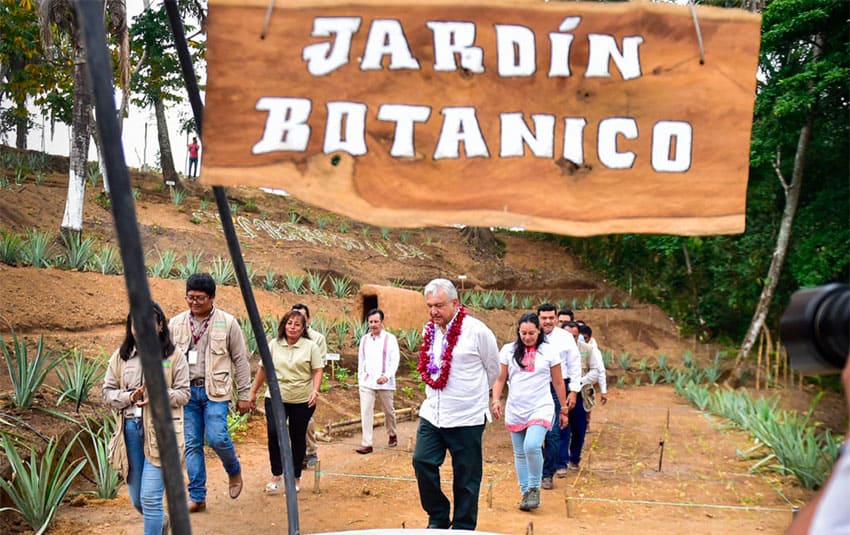
José Manuel Cruz López, a 56-year-old from the municipality of Macuspana, told the newspaper Reforma at an event attended by President López Obrador in Jalapa, Tabasco, on Saturday that one farming family is fraudulently using the names of its employees to collect 5,000-peso (US $265) monthly payments from the Sembrando Vida (Sowing Life) program.
Teresa Méndez López, an ex-worker of the agroforestry program, also claimed that there are people “abusing” the Sembrando Vida scheme.
When López Obrador arrived at the Jalapa event, she personally handed him a folder on which the words “Super urgent. Corruption. Forgery of signatures” were written in large letters, Reforma said.
The number of hectares planted with trees is also well under the target of the reforestation program. López Obrador said that 150,000 hectares of trees had been planted this year, a figure that only represents just over a quarter of the target of 570,000 hectares.
In that context, the president and Welfare Secretary María Luisa Albores urged the teams tasked with providing the saplings for the program to increase production.
“It’s the largest reforestation program in the history of our country, it’s the largest reforestation program in the world, we need one billion saplings between 2019 and 2020,” Albores said at an event in Coatzacoalcos, Veracruz, on Saturday.
“It’s a great challenge, a great challenge for everyone and so we have to start this work. We have things to do, things to work out, the [tree] planters are ahead of us. While we in the government are trying to move quickly, they’re going faster . . .” she said.
For his part, López Obrador called for the officials in charge of the program to manage it effectively in order to avoid criticism from government adversaries.
“We’re going to be very vigilant so that this program is successful. As always our adversaries, the conservatives, are betting that this program will fail . . . That’s the way conservatives are, they want things to stay the same as they have always been but we want changes,” he said.
“Don’t give them the opportunity [to complain],” López Obrador told more than 900 Sembrando workers and officials from nine states – Veracruz, Puebla, Durango, Colima, Chihuahua, Guerrero, Hidalgo, Nayarit and Tamaulipas – where the program will start next year.
He highlighted that the tree-planting program is aiming to create 200,000 jobs with an investment of just 13 billion pesos (US $686.3 million), asserting that even if all Ford factories in the United States moved to Mexico, not as many jobs would be created.
“That doesn’t mean that we’re rejecting those from Ford coming, now with the [new North American free trade] agreement, they’re going to come, but we don’t want to bet only on that, we want to rescue the countryside.”
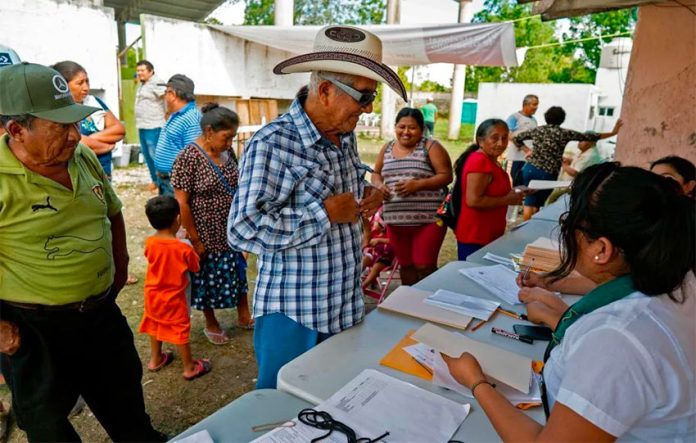
A polling booth during Sunday's vote on the train project.
A vote on the Maya Train in the areas through which it will run passed overwhelmingly with over 92% of citizens voting in favor of the project on Sunday.
It was held in five southeastern states where 92.3% voted in favor of the megaproject and 7.4% against. The first tenders will be announced in January and work will begin in March or April, said the National Tourism Promotion Fund (Fonatur), which is in charge of the 120-billion-peso (US $6.3-billion) project.
“We will begin the first tenders in the first week of January, in the areas where there are already tracks, and by the end of March or the beginning of April we’ll begin working on the project,” said Fonatur director Rogelio Jiménez Pons.
The rate of participation among the 1,078 indigenous communities invited to vote was 70%, according to Adelfo Regino Montes, head of the National Institute of Indigenous Communities (INPI).
In a press conference Regino said that INPI carried out 30 consultative assemblies with indigenous communities near the proposed route of the train in November and December.
The assemblies consulted 1,400 Maya, Ch’ol, Tzotzil and Tzeltal communities, providing information on the project in their native languages and seeking the opinions of thousands of indigenous authorities.
“There was a general consensus for the implementation of the Maya Train development project,” said Regino, adding that several committees were established in order to ensure compliance with the agreements made in the assemblies.
In his morning conference on Monday, President López Obrador said the results of the consultations will be published in detail on the internet and on social media.
Holiday season is baking season: time for some pecan pie.
The holiday season is upon us and I find myself in the mood for baking. The trick is to make things that are easy to give as gifts, so I don’t end up eating the whole batch of whatever it is myself.
That said, when living in Mexico there are some limitations on available ingredients – or the quality of ingredients. The flour is irritating (it’s like powder!), most brands of baking powder and baking soda have a strong bitter/salty aftertaste and much of what’s labeled “butter” is really what we’d call margarine. Nevertheless, a cheerful holiday spirit can prevail!
Another challenge is walnuts. In Mazatlán, where I live, they’re basically impossible to find. Once in a while a bag might appear at Sam’s Club, Costco or Walmart, but pecans are much more common and affordable. I’ve learned to save my walnut cravings for visits north, although friends in Guanajuato have told me walnuts are grown locally there.
And after all, Chiles en Nogada, the traditional Mexican Independence Day dish, features nogada, a rather scrumptious cream sauce made with walnuts. One surmises then that at the very least walnuts must be grown in the state of Puebla, where the dish is said to have originated.
Back to pecans. Turns out Mexico produces about half of the world’s total crop (who knew?!) and they’re harvested in October/November – coincidentally just in time for holiday baking. I didn’t realize how many of my favorite cookie and cake recipes have walnuts in them, but it’s no problem to just substitute pecans, which taste almost – but not quite – the same.
These Wedding Cookies can also be made with a chocolate version.
Mexican Wedding Cookies
Everyone loves these cookies, and it’s easy to make lots and give them as gifts. Don’t use margarine – the rich taste of real creamery butter is a must!
1 cup (2 sticks) butter, softened
About 2 cups confectioner’s sugar (azucar glas in Spanish)
1 tsp. vanilla extract
2-¼ cups flour
¼ tsp. salt
¾ cup chopped walnuts or pecans
Preheat oven to 400 F. Combine butter and ½ cup confectioner’s sugar in a large mixing bowl. Beat till smooth and creamy. Add vanilla, mix well, then add the flour and salt. Stir until completely mixed. Stir in the walnuts.
Using your hands, roll bits of dough into bite-size balls, about 1-inch in diameter. Place about an inch apart on cookie sheets and bake for 10-12 minutes or until the bottoms are light brown and tops and sides are pale yellow. Remove from oven, and taking about 6 cookies at a time, roll them gently in the remaining confectioner’s sugar. Set aside on rack to cool completely, and then roll them again in the sugar. Makes about 48 cookies.
Chocolate version: Reduce flour to 2 cups and add ¼ cup unsweetened cocoa, sifted if possible or whisked well into the flour before being added to the butter-sugar mixture.
Sometimes it’s easier to find pecans than walnuts, but they can be used as a substitute.
Potato Chip Pecan Cookies
These are unbelievably delicious – they taste like salted caramel cookies. No one will guess the “secret ingredient.”
2-¼ cups flour
2 sticks unsalted butter, softened
¾ cup packed light brown sugar
¾ cup regular sugar
1 tsp. vanilla
2 eggs
1 tsp. baking soda
¾ tsp. salt
4 cups crushed potato chips, regular style – not Ruffles or thick-cut (2 big bags, about 10 oz.) divided
1 cup pecans, toasted & coarsely chopped
Heat oven to 375 F. Beat butter and sugars together on high speed till fluffy, 2-3 minutes. Add vanilla and eggs one at a time, beating after each addition until combined. Add flour, baking soda and salt. Beat on low till mixed well. With a wooden spoon or spatula, stir in potato chips and nuts. Dough will be soft! Roll into 1-1/2 to 2-inch balls, then roll in remaining potato chips to coat. Place 2 inches apart on cookie sheet. (Do not flatten.) Bake 18-20 minutes until golden. Yield: About 24 big cookies.
Grandma Ozeta’s Pecan Pie
This recipe is from a friend’s grandmother in North Carolina, who used pecans from her own trees. Try to find real corn syrup without added sugar or flavoring, which is common in Mexico. Feel free to use a store-bought pie shell.
1 cup corn syrup
½ cup light brown sugar
½ cup butter
3 eggs, slightly beaten
1 tsp. vanilla
1-½ cups pecan pieces
9-inch baked pie shell
Preheat oven to 325 F. Combine sugar, syrup and butter and bring to a boil; cool 5 minutes. Slowly pour over beaten eggs, add vanilla and nuts, and mix gently but well. Pour in pie shell and bake for about 45 minutes.
Sour Cream Coffee Cake
Easy to make and classically delicious, this cake will be loved by everyone. Perfect for breakfast, brunch or with afternoon coffee.
Topping:
1 cup pecans, chopped
¼ cup melted butter
¼ cup sugar
1/3 cup brown sugar
1 tsp. cinnamon
Cake:
½ cup butter or shortening
1 cup sugar
2 eggs
1 tsp. vanilla
2 cups flour
1 tsp. baking powder
1 tsp. baking soda
½ tsp. salt
1 cup sour cream or plain yogurt
Preheat oven to 350 F. Grease a 9-inch square pan. Mix all topping ingredients together in a small bowl and set aside.
In large bowl cream shortening and sugars till fluffy; add eggs one at a time, beating well after each one. Add vanilla. Combine dry ingredients separately and then add alternately in three parts with sour cream or yogurt. Beat until smooth after each addition. Put half the batter in prepared pan; top with half the topping mixture. Repeat with remaining batter and topping. Bake 45-50 minutes till knife inserted in center comes out clean. Note: Recipe can be doubled and made in a 9×13-inch pan. Just be sure center is cooked through.
Janet Blaser of Mazatlán, Sinaloa, has been a writer, editor and storyteller her entire life, and feels fortunate to write about great food, amazing places, fascinating people and unique events. Her work has appeared in numerous travel and expat publications as well as newspapers and magazines. Her first book, Why We Left: An Anthology of American Women Expats, is available on Amazon. Contact Janet or read her blog at whyweleftamerica.com.
You'll find plenty of piñatas at this weekend's fair.
Mexico immediately comes to mind when a piñata appears, but how did the tradition begin?
The origin of the Mexican piñata can be traced to an old colonial monastery in Acolman, state of México, which is found today on the northern fringes of the Mexico City metropolitan area. It is a syncretism of two traditions whose association with Christmas came about with the Spanish evangelicalism in the early colonial period.
On the winter solstice, there was an indigenous tradition of breaking an old pot decorated with feathers to honor the birthday of the god Huitzilpochtli. The Spanish had something similar, which originally came from China and was associated with Lent.
The monks at the Acolman monastery redesigned the pot, keeping it and the treats inside but adding seven cones or points, which represented the seven deadly sins. The breaking of the pot was interpreted as overcoming sin and the treats inside as the eternal reward.
There are still piñatas made with clay pots, but these are rare. They are now far more commonly made with paper maché techniques, both for economical and safety reasons.
Piñatas are made all over Mexico, but they remain an important part of the identity of Acolman with some of the best and most experienced piñata makers located here. One of these is the Ortíz Zacarías family, who in 2003 created what was then the world’s largest piñata for the city of Toluca. It measured 12 meters high and almost five meters wide and was decorated by 4,500 schoolchildren from all over the state of México. It has since been surpassed by makers in Toluca, who created one that was 22 meters tall.
To honor this history and to promote Acolman’s role in the making of piñatas, the municipality founded the Feria de la Piñata in 1986. This year’s edition is set for December 19 to 22 and will feature the sale of piñatas by 50 Acolman makers, as well as workshops to show visitors how to make their own.
It also has a number of cultural events, with artists invited from Aguascalientes, Mexico City and even Chile. Each day has a featured popular musical act and there are midway rides, horse racing and the crowning of a piñata queen. Local food specialities will also be available. Recommended are barbacoa, pulque and tlacoyos.