Home Blog Page 1681

14 die in truck-van collision near Zapotlanejo, Jalisco

0
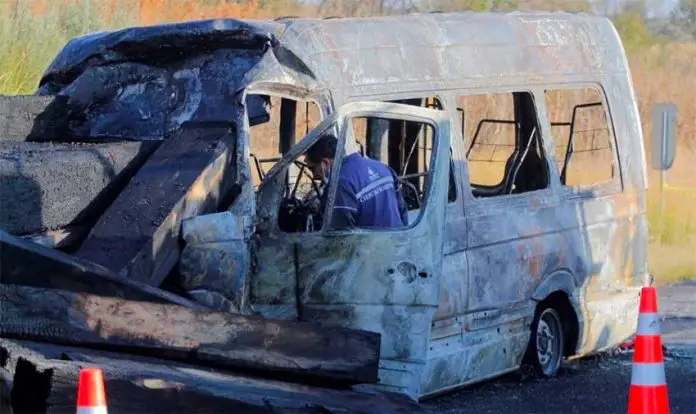
The accident scene in Jalisco Wednesday morning.

An accident on the Guadalajara-Lagos de Moreno highway near Zapotlanejo, Jalisco, left 14 people dead and 12 seriously injured on Wednesday morning.

Nine people were killed at the scene in the collision between a van and a truck and five more died in hospital.

The accident occurred around 5:00am Wednesday morning when a passenger van collided with a truck hauling wooden beams. The van burst into flames, which ignited the wood.

Two of the most seriously injured were airlifted to a hospital in Guadalajara and the others were taken in ambulances to medical centers in Tapatitlán.

The van was traveling from San Felipe, Guanajuato, to Nuevo Vallarta, Nayarit. The driver of the van was among the dead, as were five of the minors on board.

Sources: Informador MX (sp), Debate (sp)

Large numbers of police uncertified and poorly paid; forces short on numbers

0
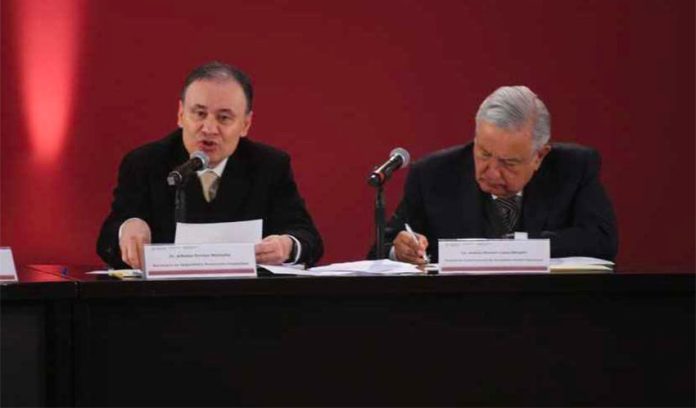
Durazo, left, and López Obrador during a report on security.

A new federal government report reveals that large numbers of Mexico’s police are uncertified and poorly paid, and that every state force in the country is short on numbers.

Presented by Security Secretary Alfonso Durazo on Tuesday, the report shows that at the end of September, only 12 of Mexico’s 32 federal entities had police forces in which more than half of the officers were certified.

Certification is conferred on officers who have passed confidence tests, completed initial training and are performing to their expected level.

Of the 20 entities where fewer than half of police officers were certified, Jalisco was in the worst position. Just 2.7% of its state police were certified at the end of September.

Fewer than 15% of police in state forces in Tlaxcala, Baja California Sur and Mexico City were certified, while in Puebla, Sonora, Nayarit, Chiapas and Guerrero, fewer than 30% of officers are qualified.

At the other end of the scale, more than eight in 10 state police in Baja California, Guanajuato and Colima were certified, while 96.4% of officers were certified in Querétaro, the highest of any state.

Stressing the importance of certification, Durazo said it wasn’t possible to combat organized crime with “uniformed crime.”

President López Obrador suggested that cleaning up state forces was needed to get rid of corrupt and uncertified police.

The federal report also revealed that police in five states are paid less than 10,000 pesos (US $525) per month on average.

Officers in Tabasco were the worst paid at the end of September, receiving average monthly salaries of 6,331 pesos.

Officers in Oaxaca earn 8,598 pesos a month, while those in Baja California Sur, Tlaxcala and Mexico City make between 9,200 and 9,900 pesos. Police in most states earn between 13,000 and 18,000 pesos.

San Luis Potosí police were the best paid in the country, earning 21,090 pesos a month on average, followed by those in Sonora, who earn 19,687 pesos. Guanajuato Governor Diego Sinhue announced last week that police in his state will receive salaries of 24,400 pesos per month starting in January, which will make officers there the best paid in the country.

The report also showed that every state police force in the country has fewer officers than it should based on international per-capita standards. Baja California and Sinaloa have the biggest shortfall: both have 2.6 fewer officers per 1,000 residents than they should.

Only Mexico City’s force has more officers than those recommended by international standards.

López Obrador said that federal authorities are working on a plan to improve police salaries at the state and municipal levels and address the officer shortfall.

Meanwhile, Durazo acknowledged on Wednesday that 2019 has been a “difficult year” in terms of security, explaining that the government has not achieved the results it would have liked.

“However, we’ve substantively improved the instruments of the state to combat insecurity and without them it would be impossible to aspire to guaranteeing adequate conditions for peace in the short term,” he said.

Official statistics show that Guanajuato has been the most violent state this year, with more than 3,000 intentional homicides.

Murder numbers increased in 16 states, including Mexico City, Jalisco, Nuevo León and Michoacán, but went down in the other 16.

Among the states with fewer homicides this year than 2018 are Quintana Roo, Oaxaca, Guerrero, Baja California, Baja California Sur and Tamaulipas.

Source: El Economista (sp), Milenio (sp)  

Illegal Chinese market biggest threat to Mexico’s jaguars: conservationists

0
There's a black market for jaguar body parts.

The black market is the biggest threat facing jaguars in Mexico and elsewhere in Latin America, according to the National Jaguar Conservation Alliance (ANCJ).

ANCJ biologist Rodrigo Medellín Legorreta said that in recent years the illegal Chinese market for jaguar parts has taken its toll on the animal’s populations in Latin America.

“This year . . . one of my groups that monitors jaguar activity informed me of a regrettable act: a jaguar we were tracking . . . was found without its head or claws, which indicates that illegal trade has unfortunately reached us,” he said.

He said jaguar teeth are used to make jewelry, the bones are employed in Chinese medicine and the pelts are used to make clothing or rugs.

During a press conference ANCJ members said that although Mexico has made advances in jaguar conservation efforts, the country still needs to take actions to protect the endangered animal.

They asked the federal government not to reduce the budget for environmental funds and requested that Finance Secretary Arturo Herrera assess the application for the funds, which help with species conservation and habitat protection.

They also said that increased awareness among the public and private businesses is needed to generate change and remove the jaguar from the endangered species list.

The ANCJ is a group of 60 specialists from over 40 institutions that have dedicated themselves to the conservation of the big cats in the last 15 years. The organization will publish a study in 2020 that cites Mexico as a leader in jaguar research and conservation in Latin America.

There are some 4,800 wild jaguars in Mexico according to a study published last year. The number was up 20% compared to estimates made eight years earlier.

Source: El Universal (sp)

Two more anchors found in search for ships sunk by Hernán Cortés

0
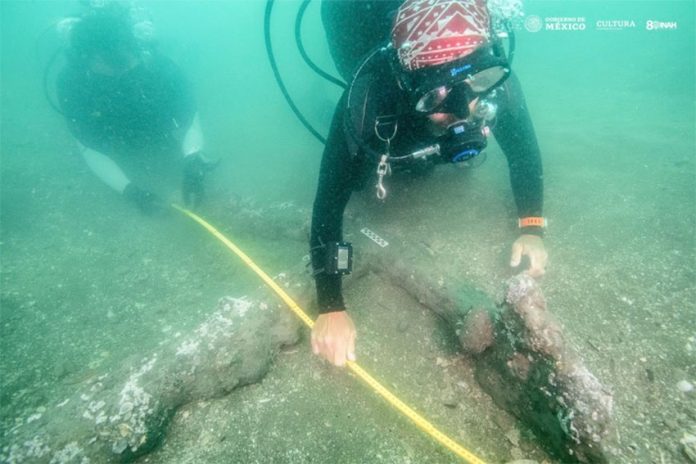
Divers measure one of the anchors found off Veracruz.
Divers measure one of the anchors found off Veracruz. jonathan kingston/inah

Underwater archaeologists have found two more anchors off the coast of Veracruz that could belong to ships scuttled by Spanish conquistador Hernán Cortés in 1519.

The National Institute of Anthropology and History (INAH) said in a statement that the characteristics of the large iron anchors suggest that they date back to the 16th century. Archaeologists believe that the anchors either belonged to Cortés’ ships or other Spanish ships that moored off the coast of Veracruz later in the same century.

A team led by INAH archaeologist Robert Junco found the anchors in the Gulf of Mexico north of the port city of Veracruz.

Cortés scuttled 10 of his 11 ships in the area to quell a rebellion, leaving his men with no option but to accompany him on his expedition inland to the Mexica city of Tenochtitlán.

Junco explained that the discovery was made 300 meters north of where a 15th-century anchor with a crosspiece made out of oak from northern Spain was found in 2018.

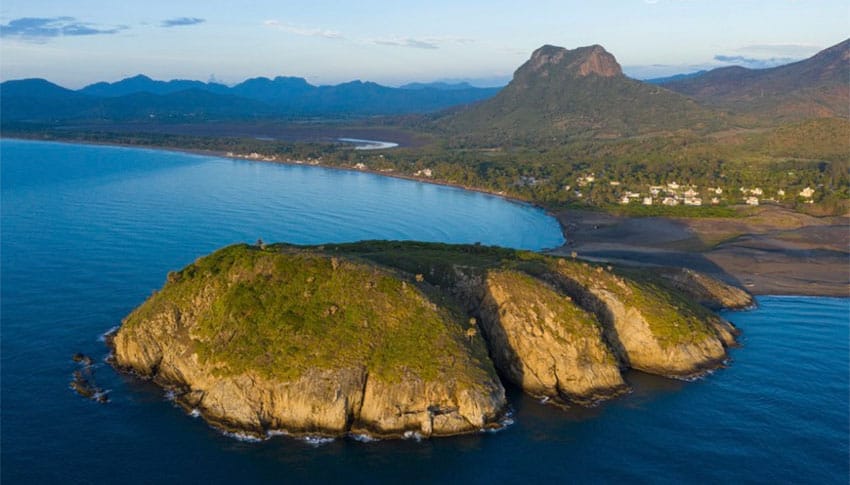
The anchors were found in the waters off Villa Rica.
The anchors were found in the waters off Villa Rica. jonathan kingston/inah

Both anchors are larger than that found last year: one is 3.68 meters long and 1.55 meters wide, while the other is 2.6 meters by 1.43 meters. Unlike the 2018 discovery, there was no wood attached to either of them.

INAH said the anchors were found at depths of between 10 and 15 meters and were buried in between one and 1.5 meters of sediment. Both are in good condition as they were protected by the sediment that covered them. They were reburied and left in situ in accordance with archaeological protocols, INAH said.

Christopher Horrell, a United States archaeologist participating in the project to search for Cortés’ sunken ships, said the design of the anchors was consistent with those made in the 16th century.

Junco said it was not clear if the three anchors belong to the same historical time but added that their alignment to the southeast suggested that they were anchored in the port formerly known as Villa Rica, which protects ships from northerly and northwesterly winds.

The archaeologists said they will next explore 15 sites where they believe they could find even more anchors.

If anomalies detected by magnetometers on the seafloor are anchors, Junco said, “it would reaffirm the hypothesis that we are in the port that was [known as] Villa Rica . . . or the other assumption that we’ve found the place where Cortés’ fleet was sunk . . .”

The project to search for Cortés’ ships began last year off the coast of Actopan, Veracruz. This year is the 500th anniversary of the Spanish conquistador’s arrival in the land that would become Mexico.

Descendants of Cortés and Aztec emperor Moctezuma II met in Mexico City last month to mark the 500th anniversary of their ancestors’ first meeting.

Mexico News Daily 

Pemex freed from rules governing wholesale fuel pricing

0
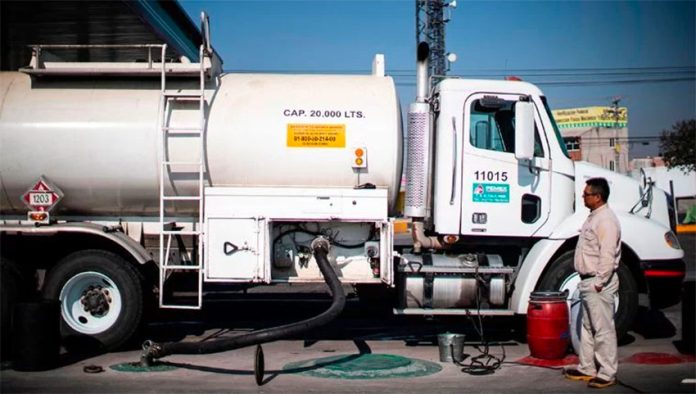
Pemex will now set wholesale fuel prices it charges to gas stations.

Pemex can now sell wholesale gasoline and diesel at any price it wishes after the Energy Regulatory Commission (CRE) revoked a year-old regulation that essentially restricted the state oil company from selling below cost or well above market prices.

The A/057/2018 regulation had forced Pemex to follow a set methodology to determine the prices at which it sold fuel to gas stations.

The methodology was based on U.S. Gulf Coast reference prices but made adjustments for quality and logistics, added a premium for imported fuel and considered Mexico’s crude price adjustment factor known as the K-factor.

Pemex was also required not to exceed maximum wholesale fuel prices set by the CRE on a monthly basis and had to give its customers – regardless of the retail brand under which the fuel was to be sold – equal discounts based on volumes purchased and contract length.

The members of the governing body of the CRE voted unanimously on Monday to terminate the regulation that was developed by the previous federal government after the fuel market was opened up to foreign and private companies. The rule was meant to be temporary until companies other than Pemex supplied at least 30% of the Mexican fuel market.

The energy news organization Argus Media reported that Pemex supplied 87% of Mexico’s gasoline in September, although it only met 57% of diesel demand. The CRE did not explain the rationale behind its decision, Argus said.

Energy analyst Ramsés Pech told the newspaper El Economista that the revocation of the regulation could force some gas stations to close because Pemex is now able to decide the price of the fuel it sells to them. The company will thus adjust prices dependent on its own business interests, he said.

Alejandra Palacios, president of the Federal Economic Competition Commission (Cofece), said that without limits on wholesale fuel prices, there are “risks of Pemex selling under cost and losing money, and for private companies the risk is that it will become impossible to compete with Pemex.”

She said Cofece will monitor how the change affects the fuel market.

Gas station trade organization Onexpo said in a statement that the CRE decision could have a “cascade of consequences in the market” including the possibility that Pemex-branded stations will benefit.

In light of the CRE decision, Onexpo said it has begun an “exhaustive analysis of the challenges, opportunities and new scenarios” in the fuel market. “Its conclusions will be announced soon,” the organization said.

Pemex has lost almost 2,000 of its gas stations to private companies in the last three years, Argus said, noting also that private-sector importers have eaten into the state oil company’s wholesale market share over the past year by supplying greater quantities of gasoline and diesel to retailers.

President López Obrador, a critic of the previous government’s energy reform, is determined to reduce Mexico’s reliance on fuel imports and says that upgrading Mexico’s six state-owned refineries – and building a seventh on the Tabasco coast — will allow the country to be more self-sufficient in its energy needs.

Source: Argus Media (en), El Economista (sp) 

8 dead after National Guard clashes with kidnappers in Guanajuato

0
More National Guardsmen are en route to Guanajuato.
More National Guardsmen are en route to Mexico's most violent state.

A clash between the National Guard and kidnapping suspects in Irapuato, Guanajuato, left eight people dead early Tuesday morning.

A National Guard soldier and seven civilians were killed in the confrontation that occurred during an operation to rescue two kidnapping victims. One civilian was wounded in the shooting.

“Forensic studies are being carried out on the bodies to determine their legal identities and cause of death. Meanwhile, investigations to clarify the facts and shed light on the case are in process,” said the Attorney General’s Office.

Initial reports said security forces seized 11 guns, seven bulletproof vests, ammunition, drugs and three vehicles found on the property where the clash occurred.

It came just prior to a report on national security by federal Security Secretary Alfonzo Durazo, who said that Guanajuato was the most violent state in Mexico with 3,211 murders in the first 11 months of 2019.

He said the numbers compiled by the National Public Security System (SNSP) represent over 10% of the homicides registered in the country from January to November.

Amid the rise in violence in the state — which is tied to territorial struggles between the Santa Rosa de Lima Cartel and the Jalisco New Generation Cartel — the state announced Monday the deployment of 1,100 National Guard troops, who will carry out security operations in the state’s most violent municipalities.

Source: El Financiero (sp)

Orizaba is an example of a city that is doing things well

0
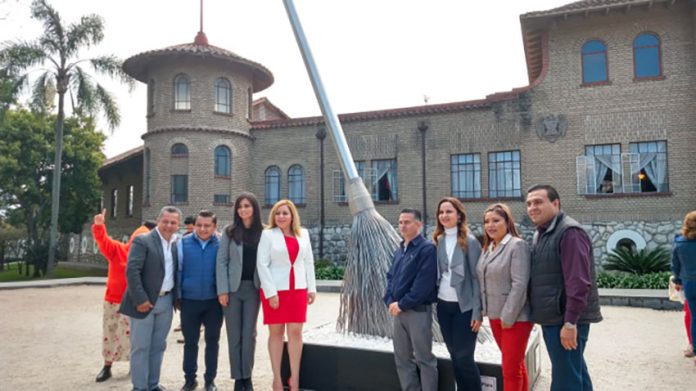
The city's silver broom, awarded for cleanliness.

This past weekend I visited Orizaba, recipient of the Spanish “Silver Broom” award for its cleanliness. It really was a site to behold: clear and modern stoplights and street indications, easily-visible lanes and arrows, very little graffiti, and new, readable street signs, many of which had explanations of why the names had been given in the first place.

As the birthplace of Francisco Gabilondo Soler (famously known as the singer Cri-Cri), the city center is filled with well-maintained statues from his songs (some admittedly fairly racist — clearly, not all cultural cornerstones from the 30s and 40s have aged well).

The Alameda park was filled with an assortment of sturdy playgrounds made from recycled material — even one for dogs! Another kid-friendly park features life-sized dinosaur statues, and is definitely worth the visit if you can keep the inexplicably-placed giant crucifix from scaring your heathen children.

There’s a river walk that doubles as a zoo with an impressive number of animals, cable cars that seem to float over the city as they travel back and forth from the center to a nearby mountain, and plenty of tourist information placed throughout the city.

The food wasn’t fabulous, but I guess you can’t have it all.

My own city of Xalapa could certainly learn a few things from Orizaba, as could many other communities. While ambitious projects are often started enthusiastically here, the enthusiasm, or perhaps the budget, seems to die down quite quickly.

A handful of streets in and around my neighborhood, for example, were torn up completely in what seemed like less than a day, and have stayed that way for the better part of several months. Vertical gardens are erected, then left to die and wilt. New potholes appear with each heavy rain, which is a problem in a city with an average rainfall of 1,587 millimeters a year.

The intentions are good, but it seems we forget that a city is a living thing, and needs constant care and maintenance.

Part of the problem, I believe, is that urban planning is controlled by a hodgepodge of entities, all the way up to the federal level. But as anyone whos worked in a large organization knows, when several branches are in charge of one area, things tend to slip through the cracks and misunderstandings about what things are whose responsibility abound.

Corruption is obviously also part of the problem, as evidenced by the abundance of half-bridges that go nowhere and have been overgrown by plants in a truly post-apocalyptic style. Well-intentioned efforts like a tree-planting initiative have shown major problems with oversight, and  cases in which billions of pesos are spent on projects that never materialize or go way over budget and time are well-documented.

As the case of Orizaba shows, most urban planning and maintenance is best done by the people who actually live in the communities, as they know best the unique needs of each place. And while huge infrastructure projects can be a boon to local and national economies, the devil really is in the details.

So with no further ado, the simple lessons learned on this last trip to Orizaba:

Prevent accidents by maintaining roads and ensuring that everyone knows how to drive at all times with clear indications. First and foremost, streets must be constructed in the first place to last. We now have the technology to do just that, with recycled tires no less! Add to these clearly painted lanes, arrows that show the options for where to go when you get to the end of the block, large and clear street signs, and functional stoplights whose sensors are regularly updated according to average traffic flows, and we’ve got a first-class road system!

Invest in lasting (and free) infrastructure for children. There was something old-fashioned about the playground equipment, though it was clean, safe and new. I couldn’t quite put my finger on it until I got closer and realized that it was recycled plastic painted to simply look like wood. The playgrounds were free, of course, as were the zoo and the dinosaur park. I think even the staunchest capitalist would agree that all children deserve safe places to play, and Orizaba was chock full of contented children.

Show pride in your community’s heritage.  Not every city can be the birth place of Cri-Cri or that guy who did the Spanish voice of Homer Simpson (trust me, I know — I’m from Waco, Texas). But there’s always something that makes a place special, and calling attention to those things makes people proud not only to call it home, but to welcome others.

Maintain green spaces.  Plants — especially plants native to the area — just make everything beautiful. The more, the merrier!

Keep things neat and painted.  Even one house getting a new (or first) coat of paint can make such a difference. Painting is something that we can all work on together to keep our neighborhoods and communities beautiful. Comex regularly sponsors community painting projects, including murals, giving citizens a chance to really add personality to their communal spaces.

Real ownership of the community comes when we all take pride in where we live and work to make it functional, beautiful, and comfortable. Let’s take a page from Orizaba and get to work!

Sarah DeVries writes from her home in Xalapa, Veracruz.

Man suspected of murdering son’s kidnapper released from preventative custody

0
Don Ramón during his arrest.

A Veracruz man accused of killing a man he suspected of trying to kidnap his son was released from jail on Monday after his case went viral on social media and sparked hundreds of protests calling for his release.

Ramón Merino will continue the judicial process under house arrest while authorities investigate the case, which is expected to take about three months.

Don Ramón, as he has been dubbed by supporters, was arrested after shooting two men he suspected of trying to kidnap his son. He killed one and wounded another, who was also arrested. A third man fled.

Merino was initially sentenced to a year of preventative custody in prison, but public pressure led a judge to modify the ruling.

“Originally, the attorney general had provided evidence to seek a charge for the crime of homicide, and during the hearing the judge resolved to change the charge to manslaughter,” said the Veracruz Attorney General’s Office in a statement.

According to Veracruz state law, Merino could get five to 12 years in prison if it is found that he began the quarrel that led to the murder, or four to eight years if it is found that he was provoked, and a fine of up to 20,500 pesos (US $1,083).

Upon being released from jail, Don Ramón was met by a cheering crowd of supporters.

“I can’t explain to you how happy I am for your support . . . I love you, I love you and forgive me if I’ve ever offended you, although I don’t think I have because I have always been respectful with everyone in my town. I’m here to serve you,” he said to supporters.

“I’m happy for what I did, because I defended myself,” he added.

On December 8, Ramón Merino received a call from his son who said that he was being followed by men in a truck who wanted to kidnap him. The ex-soldier told his son to come to his house in Acultzingo, Veracruz, where he met the men with gunfire.

When making his statement after his arrest, Merino said that the same men had victimized his daughter a year earlier.

Source: Infobae (sp)

Maya Train consultation criticized over lack of details about the project

0
Information about the train in short supply, critics say.

A public consultation on the Maya Train project found more than 92% support among citizens of the five states through which it will run.

But before Sunday’s vote was held, around 20 activists, community landowners, residents and politicians who spoke with the newspaper El Universal in Quintana Roo and Campeche said there was not sufficient information about the project to decide whether it should be built or not.

Indeed, the general director of the National Tourism Promotion Fund, which is in charge of the 120-billion-peso (US $6.3-billion) project, admitted last week that the exact route of the railroad has not yet been determined and that technical and economic viability studies have not yet been completed.

All reports about the project will be available in January, Rogelio Jiménez Pons told a press conference in Tulum, Quintana Roo.

A lot of the concern about the project is concentrated in areas through which the train will run but where there are no existing tracks.

That includes municipalities in Quintana Roo and Campeche between Tulum in the former state and Escárcega in the latter. The Maya Train project intends to build about 500 kilometers of track between the two locations.

Tulum Mayor Víctor Mas told El Universal that he supported the rail project but conceded that there is a lack of detail about it.

“As far as I know, there are three companies working in the municipality, studying the technical part [of the project] . . . soil mechanics, and the environmental part but we won’t have concrete information until a few months from now,” he said.

Activists from the environmental group Tulum Sostenible (Sustainable Tulum) said that such information is vital in order to reach an informed opinion about whether the project should go ahead.

“Tulum is an area of many cavities, an enormous network of subterranean rivers and we’d like to know how they’re going to build such heavy infrastructure over such fragile territory,” said Karla Acevedo.

The president of the Tulum Hotel Association said that more information is needed about the finances of the project in order to determine whether it will be economically viable.

Although the government claims it will boost tourism to Mexico’s southeast, David Ortiz said he doesn’t think the train will attract more visitors to Tulum. Whether higher numbers of tourists will visit other destinations in the region after the project is completed remains to be seen, he said.

In Campeche, an ecologist who has studied the effect of infrastructure projects on the natural environment told El Universal that construction of the new railroad in the municipality of Calakmul could have an adverse effect on flora and fauna.

Alberto González said the Maya Train proposes construction of “wildlife passages” that will enable wild animals to cross from one side of the tracks to the other but he added that “it’s not clear if the animals will use them or not – there are no conclusive studies.”

Calakmul Mayor Luis Felipe Mora Hernández expressed concern about the damage that construction could cause to the Calakmul Biosphere Reserve although he added that local authorities didn’t want to “obstruct” the project.

Sebastián López Vázquez, a community landowner and director of an indigenous persons’ organization in Calakmul, neatly summed up the sentiment expressed by many others in southeast Mexico when asked their opinion.

“They [the government] haven’t given us information all year and that’s what we need first to know the benefits and the bad things.”

After Sunday’s consultation, Jiménez Pons said that work will begin on the project in late March or early April. President López Obrador says the project will generate employment and contribute to greater economic prosperity in the southeast.

He has also said there will be no net negative environmental impact on the region, which is full of jungle, wetlands, wildlife reserves and archaeological sites, because thousands of trees will be planted to compensate for those that are felled during construction of the railroad.

Source: El Universal (sp) 

Having no arms not an obstacle for Miss Veracruz 2020 contestant

0
Miss Nanchital 2020 is going for the Miss Veracruz crown.

A contestant in the Miss Veracruz 2020 beauty competition is spreading the message that no obstacle is too big for her dreams: Ana Gabriela Molina de los Santos has no arms.

Molina, who has already won the competition in her hometown for Miss Nanchital 2020, caused a sensation after participating in the presentation of Miss Veracruz contestants last weekend in Xalapa.

“Thank you to everyone, most of all my family who were able to come and those who, despite distances . . . have always shown me their support,” she said in a post on Facebook.

Molina graduated with a bachelor’s degree in psychology on December 10 and is a motivational speaker, hosting conferences on personal development.

She hopes that her participation in the competition will show others that her disability has not stopped her from chasing her dreams and that if she can accomplish her goals despite having no arms, then anyone can accomplish their own.

“No dreamer is too small and no dream is too big,” she said in another Facebook post.

The winner of the Miss Veracruz 2020 competition will go on to represent the state in the Miss Mexico pageant.

Last year’s Miss Veracruz, Marilú Acevedo, was the first runner-up in the Miss Mexico competition, barely losing the crown to Ashley Alvídrez of Chihuahua.

Sources: XEU Noticias (sp), Milenio (sp)