Home Blog Page 1680

Nuevo León displaces México state to become No. 1 state in manufacturing

0
The Kia automotive plant in Nuevo León.

Nuevo León has displaced México state to become the largest manufacturing state in the country, statistics show.

Manufacturing in the northern border state was worth just over 850.6 billion pesos (US $44.9 billion) in the first 10 months of the year, according to data from the national statistics agency Inegi.

Production of transportation equipment (including vehicles and auto parts), metals and food made the biggest contributions to manufacturing GDP in Nuevo León, providing 52.9% of the total.

Transportation equipment manufacturing has grown on average by 14.1% annually during the last six years. Almost one-third of all manufacturing revenue in Nuevo León between January and October this year was generated by the sub-sector.

Among the other manufacturing sub-sectors that have experienced strong growth are leather production, beverages and tobacco, printing, plastic and rubber, and paper.

Economy Secretariat data shows that two-thirds of total foreign direct investment in Nuevo León between 2014 and 2019 – more than US $11.8 billion – went to manufacturing, especially the auto parts and automotive sub-sectors.

Kia, Daimler, Navistar, Caterpillar and John Deere are among the foreign companies that have a presence in the state.

The second largest manufacturing state in the first 10 months was Coahuila, where products worth 813.39 billion pesos were made.

Rounding out the top five manufacturing states between January and October were México state, Guanajuato and Jalisco, where production was worth 809.68 billion pesos, 640.66 billion pesos and 438 billion pesos respectively.

México state lost its decades-long stranglehold on the title of Mexico’s top manufacturer due to a decline in production in a range of sub-sectors including transportation equipment, food, chemicals and beverages, and tobacco.

During the last six years, Inegi data shows that Aguascalientes has experienced the strongest manufacturing growth, at 10.1% annually, followed by San Luis Potosí and Baja California, where production increased on average by 9.2% and 9.1% respectively during each year of the period.

Héctor Magaña Rodríguez, head of the Economic and Business Research Center at Tec. de Monterrey, said that manufacturing in Aguascalientes and San Luis Potosí has increased due to strong foreign investment in the automotive sector.

The biggest average annual declines between 2014 and 2019 were in Oaxaca and Tamaulipas, where production fell 9.8 and 5% respectively.

Manufacturing has gone backwards in Tamaulipas mainly due to high levels of violence while in Oaxaca “the lack of strategy to industrialize the state” has resulted in the majority of public resources going to social programs, Magaña said.

Source: El Economista (sp) 
AMLO opposes bill that would relax separation of church and state

0
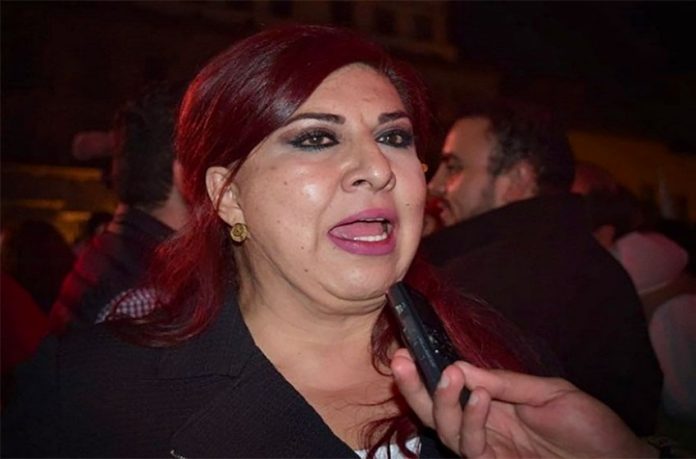
Senator Luévano, proponent of the bill.

President López Obrador said Wednesday that he doesn’t support a proposal presented by a ruling party lawmaker that would relax Mexico’s long-enshrined separation of church and state.

Speaking at his regular morning news conference, López Obrador said the draft bill put forward by Morena party Senator Soledad Luévano Cantú sought to reopen an issue that “was resolved over a century and a half ago” by the anti-clerical reform laws championed by former president Benito Juárez.

The matter “shouldn’t be touched,” the president said, making it clear that he didn’t endorse the proposal in any way.

Luévano’s bill seeks to modify the Law of Religious Associations and Public Worship to eliminate historic language that enshrines the “separation of the state and churches.”

If passed, the legislation would reportedly grant religious groups greater access to the media, loosen regulations on the ownership of property by churches, allow cooperation between churches and the state on social and cultural development, permit “conscientious objections” to law on religious grounds and let church authorities into government facilities such as hospitals and military installations to carry out spiritual work.

The proposal, which Luévano said on Twitter was hers alone, has the potential to cause confrontation, López Obrador said, recalling the Cristero War between 1926 and 1929 in which the government’s anti-Catholic stance was violently opposed.

The president, who has described himself as a Christian “in the broad sense,” said that he didn’t believe that modifying the separation of church and state principle would help the country.

“I think everyone, the majority of Mexicans, agrees that the lay state should prevail, which the constitution establishes,” he said.

The secular state is not anti-religious, López Obrador said, asserting that it guarantees the rights of both believers and non-believers.

“Render unto God what is God’s and unto Caesar what is Caesar’s,” he said.

Mexico’s most senior Catholic and the leader of an umbrella group of evangelical churches both expressed support for López Obrador.

“I completely agree with the president’s statement this morning, that a secular state is one that guarantees freedoms and therefore religious freedom. The president said it very clearly and we agree,” said Carlos Aguiar Retes, primate archbishop of Mexico.

The president of the National Brotherhood of Evangelical Christian Churches also offered support for López Obrador while rejecting that Luévano’s bill seeks to put an end to the separation of church and state.

“When he [López Obrador] asserts that the lay state is immovable and the separation of church and state must remain, we agree with that thought. The lay state must be a guarantor of freedoms including religious beliefs. The bill proposes that . . .” Arturo Farela said.

“It doesn’t seek to end the separation [of church and state], it only proposes religious freedom,” the church leader said, adding that he was in favor of the benefits it would bring religious groups such as access to the media without having to apply for a government permit.

Andrew Chestnut, professor of religious studies at Virginia Commonwealth University, told the Associated Press that Luévano’s proposal would probably benefit evangelicals and other small religious groupings the most.

Evangelicals likely see an opportunity to win more space in a society in which the Catholic Church has a lot of influence, he said.

However, without López Obrador’s support, the proposal appears to have almost no chance of being passed.

Chesnut pointed out that criticism of the bill has come from across the political and religious spectrum, explaining that “the lay state in Mexico almost has a kind of sacred status.”

Source: The Associated Press (en), El Universal (sp) 

Secondary students win all the top prizes at robotics competition

0
Mexicans at the podium at international robotics contest in China.
Mexicans at the podium in China.

Mexican robotics students crowded the podiums at the 2019 World Educational Robot Contest in Shanghai, China, on December 14 and 15.

All top prizes in the secondary level competition went to Mexican robotics teams, all from Guanajuato.

Comprised of three computing and mechatronics students from the Conalep technical college of Silao, team Robocon took home first place in the secondary competition.

“I’m very proud of the talents that the students of Conalep have achieved; today I congratulate the young people of Silao, Guanajuato, who have become the winners of the 2019 WER world robotics contest,” said college director Enrique Ku Herrera.

Second place went to team Alfa Maravilla, comprised of students from the School of Scientific and Technological Studies (CECyTE) in Comonfort, while the Storm Bots team from the Advanced System of Secondary and Superior Education (SABES) school in San José Parangueo took home third place.

In the primary level competition, the team from Celaya, Guanajuato, won first place.

Second place was taken by students from the English American School of Monterrey.

The WER contest is organized by the World Educational Robotics Society, which held its first competition in 1994. It is considered the Olympics of robotics competitions for students aged 3 to 18.

Each year over 500,000 students compete in World Educational Robotics contests. World-level winners receive scholarships and have a significant advantage in university admission, some even being directly admitted to elite universities.

Sources: El Financiero (sp), Forbes México (sp)

Mammoth Museum will expand to accommodate new finds

0
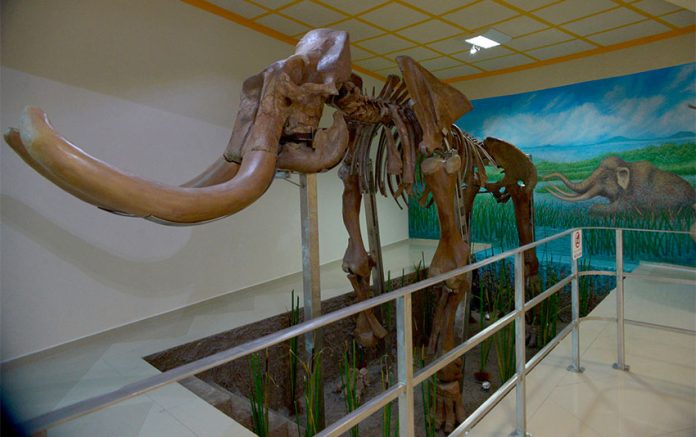
A mammoth display at the musuem in Tultepec.

The Mammoth Museum in Tultepec, México state, will be expanded to accommodate new remains found in 2019.

The two-story museum, part of the Víctor Urbán Velasco Cultural Center in the San Rafael neighborhood, doesn’t have enough space for more than 900 bones from at least 14 mammoths that were found on municipal land in Tultepec this year.

The municipal government is expected to allocate about 2 million pesos (US $105,000) to the expansion project in 2020.

Museum director Juana Zúñiga told the newspaper El Universal that the Tultepec government has given the green light for the project although its funding won’t be officially approved until February.

The Mammoth Museum opened in November 2018 but the idea to open it dates back to 2015 when drainage works in Tultepec unearthed a mammoth skeleton made up of more than 200 bones.

Local authorities wanted the remains to stay in Tultepec and struck an agreement to that end with the National Institute of Anthropology and History (INAH) in 2016.

The permanent exhibition The Tultepec Mammoth, a look to the past finally opened on November 29 last year.

Zúñiga said the exhibition aims to “open a window” to Mexico’s prehistoric past. More than 46,000 people visited the museum in the first year after it opened, she said.

The museum director said that visitor numbers increased after the announcement last month of the discovery of at least 14 mammoth skeletons although they are not yet on display.

“The excavation is still in process,” Zúñiga said, adding that the bones will also have to be cleaned and restored before they are placed on display once the museum is expanded.

“New agreements with INAH and [more] financial resources are also needed . . .” she said.

In addition to mammoth remains, bird and fish bones are on permanent display.

Currently on temporary display is a collection of photographs entitled Frozen Mammoths, which explains the process that was used to uncover remains of the extinct mammal in Siberia.

Entry to the Mammoth Museum, located about 40 kilometers north of central Mexico City, is free.

Source: El Universal (sp) 

Big projects will require community consultation in Mexico City

0
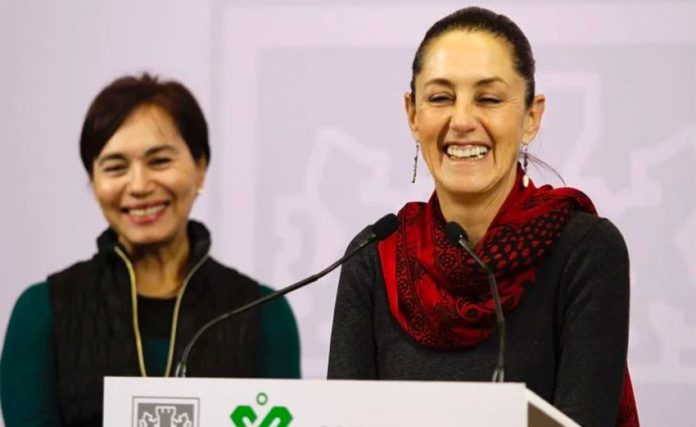
Robles, left, and Sheinbaum present new consultation process.

Large construction projects in Mexico City will soon be subject to community consultation before permits are granted.

Authorities are preparing a consultation process in which people living in an area where a project is planned will have the opportunity to have their say. A majority of residents and developers must reach agreement before the government will give approval for projects to go ahead.

Mexico City Environment Secretary Marina Robles said that consultation will be required for large developments such as shopping centers and entertainment venues.

She said the process will be “orderly and systematic” and will be conducted in stages.

In the first stage, the city government will provide information to residents about a development application via both an official website and booths that will be set up in the area where the project is planned. The developer will also be required to disseminate information about the planned project, Robles said.

In a second stage, residents will have the opportunity to attend meetings and respond to surveys in order to express their opinions and concerns, ask questions and make proposals, the secretary said.

Robles said that if residents reach an agreement with developers for the project to go ahead, the government can then proceed with its assessment in order to decide whether the necessary permits will be granted to the developer.

If residents and developer don’t reach agreement, the consultation process will enter another stage, she explained.

More meetings will be held and residents will be interviewed in depth by authorities to discuss their concerns.

If residents change their mind and express support for the project, the government can move ahead with the authorization process. If they still reject the project, yet another round of meetings and consultations will be held, Robles said.

Mayor Claudia Sheinbaum said the aim of the consultation process is to ensure that no large developments are built without residents first being asked their opinion.

“At times in the previous administration, authorizations were given [even though] there was a conflict with residents,” she said.

Sheinbaum said that the consultation process will also provide greater certainty to developers, explaining that some projects have stopped due to opposition from residents.

“It’s good for the developer and it’s very good for the residents of Mexico City. It’s a process of agreements and until there’s a final agreement with citizens, authorization won’t be given,” she said.

The mayor added that if a project is opposed by a minority of residents, their views will not be permitted to overrule those of the majority.

Source: El Universal (sp) 

Acid attack victim faces years of recovery after inadequate medical attention

0
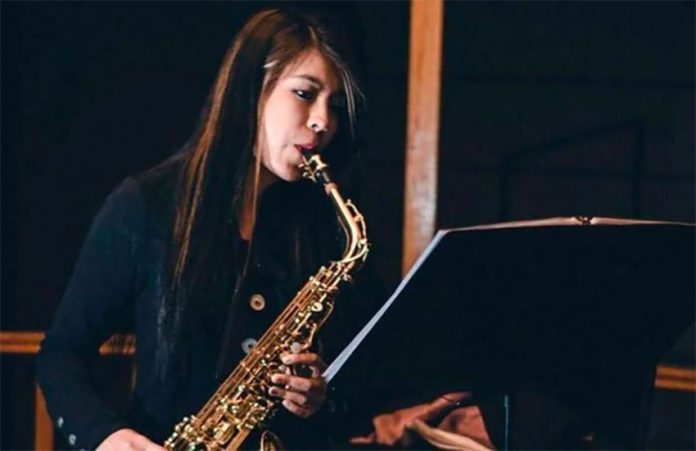
Saxophonist Ríos Ortíz, acid attack victim.
Saxophonist Ríos Ortíz, victim of acid attack.

A 26-year-old Oaxaca woman faces years of recovery after she was doused with sulfuric acid in an attack her family claims was ordered by a former state lawmaker.

María Elena Ríos Ortíz, a talented saxophone player and travel agency employee, was attacked with acid on September 9 by a man who requested an appointment with her under the pretext that he needed assistance to apply for a passport.

As Ríos was filling out a form in the Huajuapán de León travel agency, the man poured a bottle of acid over her, burning her face, chest and legs.

“The first thing my sister did was scream and move towards a sink to rinse herself off with water,” Silvia Ríos told the newspaper Milenio.

“But she took too long,” she said, adding that her mother was also at the travel agency and also suffered burns during the attack.

After three months in hospital in Huajuapán and Oaxaca city, where medical personnel lacked the expertise to treat her severe burns, Ríos was transferred to the National Rehabilitation Institute for Burns Victims in Mexico City on Friday and was finally assessed by specialists on Monday.

According to a report by Milenio, Ríos could have recovered much more quickly had she received adequate medical attention straight away.

Her family is now worried about how they will pay for the specialist treatment she requires, the newspaper said. Silvia Ríos said her sister has been depressed as a result of her predicament and told her that she would rather be dead than in the condition in which she finds herself.

According to the Oaxaca Attorney General’s Office, three people were involved in the crime: the man who poured the acid over Ríos and two who planned the attack.

Attorney General Rubén Vasconcelos said that a lot of progress has been made on the investigation and pledged that those responsible will not go unpunished.

For its part, the victim’s family is convinced that the attack was ordered by a former Oaxaca lawmaker with whom Ríos was previously in a romantic relationship.

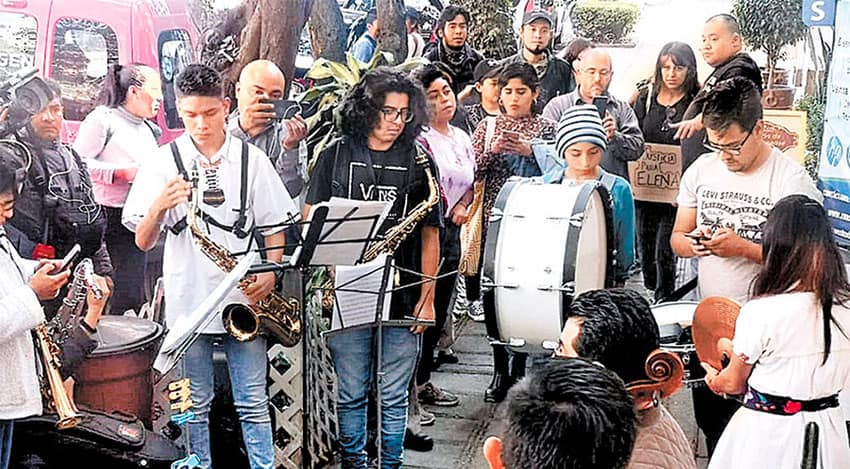
Oaxaca musicians at a fundraising event for their colleague.

“We know that it was him. His name is Juan Antonio Vera Carrizal. He is an ex-deputy, a gas station owner and a businessman,” Silvia Ríos said.

She said Vera and her sister initially had a work relationship that developed into a romantic one.

When the relationship ended, the 56-year-old former Institutional Revolutionary Party lawmaker attempted to persuade Ríos to return to him, Silvia said.

When she refused, Vera began to harass her via text messages, she said, explaining that the messages harassed, denigrated and threatened her.

“He called her a slut . . . he even called my mom and made up stories that she slept with several men,” Silvia said, adding that when her sister was in hospital she received similar messages to those sent by Vera which warned that she would be killed if she didn’t stop making claims about who was responsible for the attack.

A month after the attack, Vera – who according to his state Congress biography is married and the father of three children – denied any involvement in the crime in a radio interview.

“María Elena Ríos worked with me and we have a friendship but that doesn’t mean anything. If you have a healthy lifestyle that’s the way you’ll live but if you have a lifestyle that isn’t normal, you’ll have problems,” he said, seemingly insinuating that promiscuity was a factor in the attack.

“The Attorney General’s Office must investigate and capture the person that committed this terrible act,” Vera added.

Source: Milenio (sp), Infobae (sp) 

UNESCO’s inscription of 14 monasteries celebrated this month

0
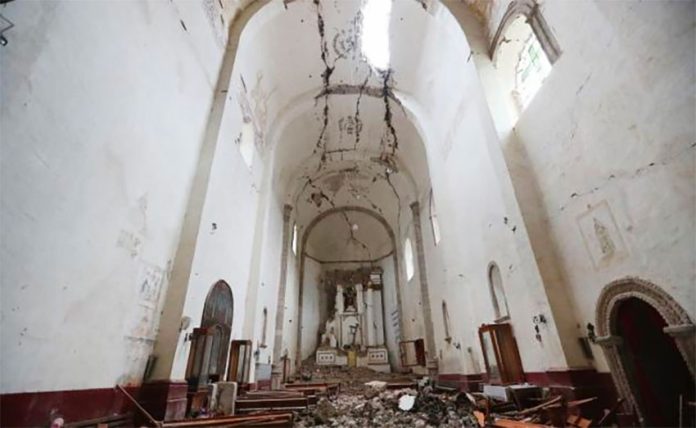
Earthquake damage at the monastery of San Juan Bautista in Tlayacapan, Morelos.

It has been 25 years since 14 monasteries dating from the 16th century became a World Heritage Site in Morelos and Puebla, an anniversary that is being celebrated this month by the secretaries of Culture in the two states, along with the National Institute of Anthropology and History (INAH).

But the occasion is marred by the condition of the complexes two years after the massive 2017 earthquake devastated central Mexico.

The monasteries were inscribed onto UNESCO’s list on December 17, 1994. Eleven are located in the small state of Morelos, and three in Puebla. Collectively they are known as the 16th-century monasteries on the slopes of the volcano Popocatepetl on what is called the Route of the Convents.

The monasteries employed an architectural model adopted by the evangelizing Franciscans, Dominicans and Augustinians which would influence similar construction in colonial Mexico. The religious institutions were essentially built as fortresses as the indigenous populations had not yet been completely subdued.

One important aspect of the monasteries is the atriums with their “open chapels,” open archways to allow for the saying of mass to the large number of indigenous who would gather in the open-air atrium. These were built first, with the rest coming later.

The monasteries functioned nearly non-stop until the 19th and early 20th century, until anti-clerical politics and laws closed cloisters down and expropriated them. By the 21st century many had been converted into museums or other public spaces.

The earthquake on September 19, 2017 affected all of these monasteries. Centered in nearby Axochiapan, Morelos, the quake heavily damaged or destroyed architectural elements such as bell towers, cupolas, apses, vaulted ceilings, walls and even entire wings. The falling debris wrecked irreplaceable murals, other artwork, religious icons, organs, bells, altars and pews.

Shortly after, federal and state authorities announced efforts to study and restore all of the complexes, along with many other historical sites damaged in the region. By September 2019, authorities admitted the effort was proceeding slowly. One reason was that reconstruction requires the use of historically accurate materials and techniques, often the piecing together of fragments that had been all but crushed.

The goal for the reconstruction of the buildings is not only to recreate what was, but to be sure that they can withstand future earthquakes.

The extent of the damage and the challenges reconstruction pose were presented in a three-part documentary by INAH and the Morelos State Radio and Television Institute for the anniversary.

The 14 monasteries are San Mateo Apóstol y Evangelista in Atlatlahucan, the Cuernavaca Cathedral, Santo Domingo de Guzmán in Hueyapan, Santo Domingo de Guzmán in Oaxtepec, Santiago Apóstol in Ocuituco, La Natividad in Tepotztlan, San Juan Bautista in Tetela del Volcán, San Juan Bautista in Tlayacapan, San Guillermo in Totolapan, San Juan Bautista in Yecapixtla, Inmaculada Concepción in Zacualpan de Amilpas, Francisco de Asis in Calpan, San Miguel Arcangel in Huejotzigo and La Asunción in Tochimilco.

Sources: La Jornada de Oriente (sp), El Universal (sp), Excélsior (sp)

Thieves make off with half a million pesos’ worth of orchestra’s instruments

0
The Oaxaca orchestra whose instruments were stolen.
The Oaxaca orchestra whose 36 instruments were stolen.

Thieves in Oaxaca’s Sierra Mixe stole musical instruments from a children’s orchestra last week, triggering protests by the indigenous children and their parents to demand justice and the return of their instruments.

The trumpets, clarinets, saxophones, piccolos and other instruments of the orchestra in San Pedro y San Pablo Ayutla, comprised of 80% student musicians, were stolen from their school after a performance to celebrate the Virgin of Guadalupe on December 12.

The 36 instruments were valued at 500,000 pesos (US $26,000).

“They stole our soul and our history,” said orchestra director Pablo Vásquez Ramírez.

In response, Oaxaca Governor Alejandro Murat said the instruments will be replaced.

To help out and raise funds for the Ayutla musicians, a children’s orchestra in San Lorenzo Cacaotepec held a concert at the Children’s Museum of Oaxaca on Tuesday.

“To steal instruments is to cut off the wings of a musician, so we’re supporting them so they can buy new instruments,” said orchestra director Benjamin Bautista.

Sources: Milenio (sp), 24 Horas (sp)

Ex-president Calderón protected Sinaloa Cartel, accuses Morena lawmaker

0
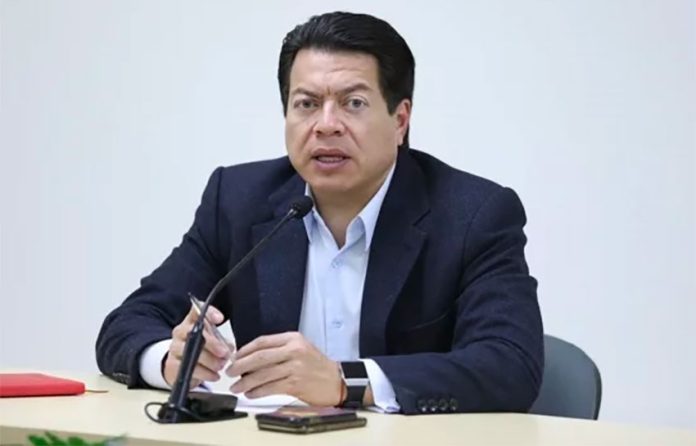
Morena Deputy Delgado accused former president of protecting cartel.
Morena Deputy Delgado: 'it proved costly for Mexico.'

Former president Felipe Calderón protected the Sinaloa Cartel while in office between 2006 and 2012, charges a lawmaker with Mexico’s ruling party.

Mario Delgado, leader of the Morena party in the lower house of Congress, accused Calderón of providing protection to the cartel formerly led by Joaquín “El Chapo” Guzmán through his security secretary, Genaro García Luna, who was arrested in the United States last week on charges that he accepted bribes from the Sinaloa Cartel.

The result of the protection afforded to the cartel was “a spiral of violence and criminality” that continues to this day, Delgado told a press conference on Tuesday.

The lawmaker also charged that Calderón launched the so-called war on drugs shortly after he took office in late 2006 to distract people from the “huge” fraud in the presidential election the same year.

President López Obrador narrowly lost the vote in an election he claims was rigged in Calderón’s favor.

“He used the war as a distractor so that the country would forget that he stole the 2006 election,” Delgado said.

“. . . It turned out to be extremely costly for us,” he added before repeating his claim that Calderón protected the Sinaloa Cartel.

“. . . Maybe that protection provided certain balances but in the end complicity with crime . . . turned out to be extremely costly. There were thousands of deaths and disappearances in the last 12 years, violence and blood, all to help a criminal group,” Delgado said.

Calderón last week denied any knowledge of García’s alleged collusion with the Sinaloa Cartel but he has not responded to the accusations made by the Morena leader.

Delgado said the current government’s security strategy is completely different to that followed by Calderón and his successor, Enrique Peña Nieto, citing the creation of the National Guard and “very aggressive social investment” as key differences.

The López Obrador administration also aims to avoid the use of force whenever possible, a strategy epitomized by the decision to release one of El Chapo’s sons in Culiacán, Sinaloa, in October rather than engage in a direct conflict with the Sinaloa Cartel.

The new strategy “will yield positive results,” Delgado said, charging that the high levels of violence currently plaguing Mexico are the “last swipes of the tail of a system in which there was complicity between the government and some criminal groups.”

The federal government no longer “makes pacts with crime,” the lawmaker said.

“. . . What we have to do, from my point of view, is let the federal government’s strategy mature,” Delgado added, emphasizing that the number of National Guard members on the ground will double to 120,000 next year.

“The capacity of the Mexican state to be in territories where crime has gained a lot of ground is being recovered.”

Source: El Universal (sp) 

US updates travel warning, adding 5 municipalities to danger list

0
Gómez Palacio, Durango, has been taken off the US warning list.

Municipalities in Sonora and Zacatecas were added to the list of places the United States Department of State recommends U.S. citizens not travel in its updated 2019 Mexico Travel Advisory, while two were given the green light.

Municipalities to avoid that were not listed as such on the 2018 advisory include Empalme, Guaymas, Obregón and Navojoa in Sonora and Fresnillo, Zacatecas.

San Pedro Garza García, Nuevo León, and Gómez Palacio, Durango, were removed from the list.

As with the advisory issued in November 2018, U.S. citizens are advised not to travel to the states of Colima, Guerrero, Michoacán, Sinaloa and Tamaulipas.

High levels of crime were cited as reasons for avoiding those states, while kidnappings were also seen as a threat in Tamaulipas.

Eleven states remain in the Level 3 category, which advises U.S. citizens to reconsider traveling to them due to crime. They are Chihuahua, Coahuila, Durango, Jalisco, México state, Morelos, Nayarit, Nuevo León, San Luis Potosí, Sonora and Zacatecas.

Although federal Security Secretary Alfonso Durazo reported on Tuesday that Guanajuato has recorded the highest number of murders in the country so far this year, a representative at the U.S. Embassy in Mexico City told Mexico News Daily that Guanajuato was “not experiencing that crisis” during the period the State Department collected its data.

Source: El Universal (sp), El Heraldo de México (sp)