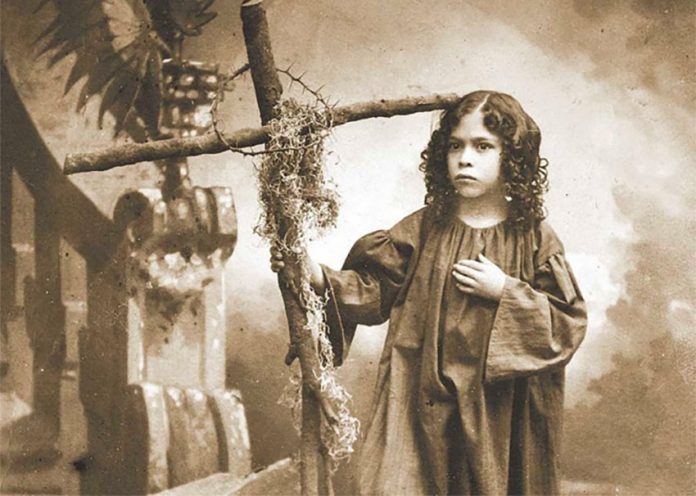
An undated photograph by Joaquín Urbina. museo del estanquillo
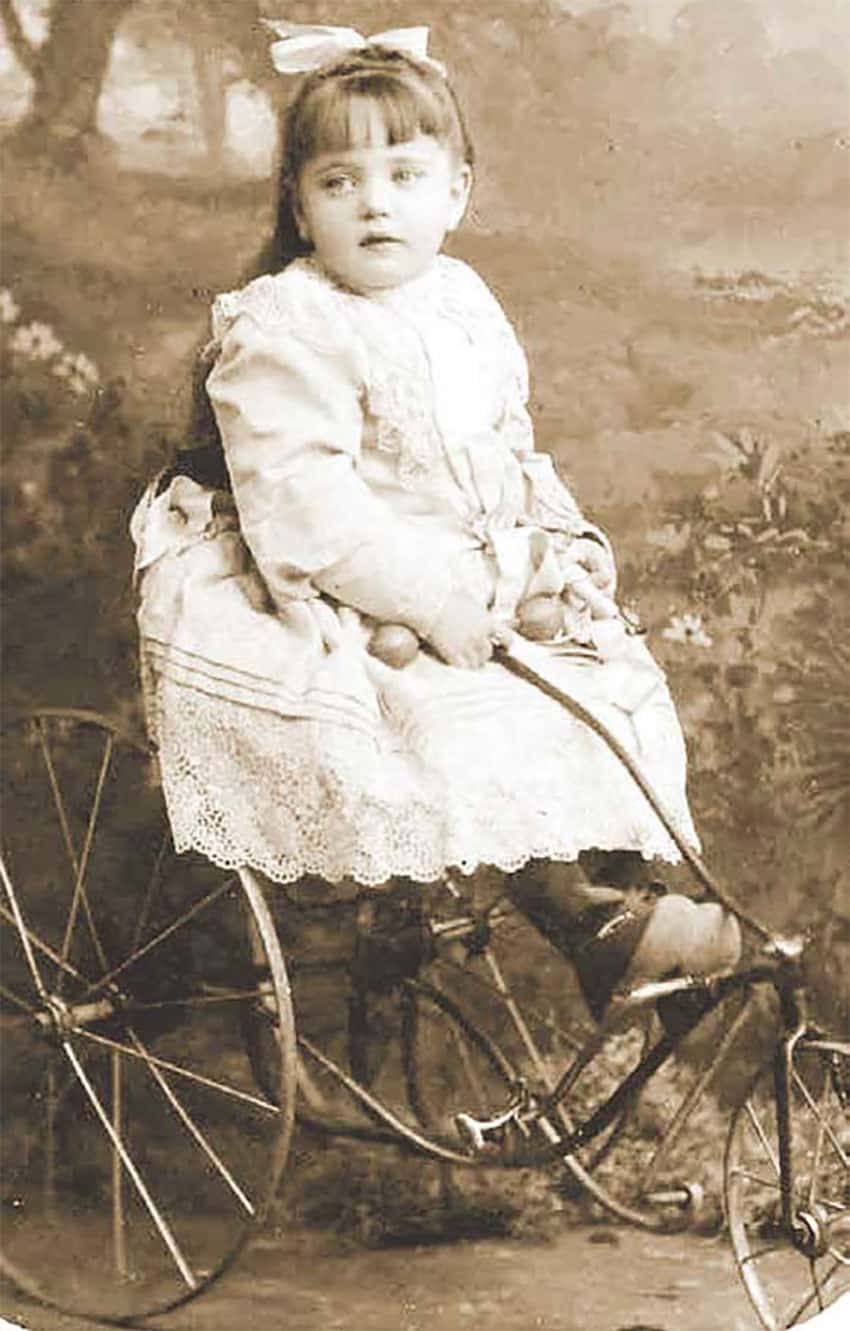
Photographs of middle and upper-class citizens, literary figures, politicians, circus performers, singers, as well as objects from 1860 to 1910, when photography became popular in Mexico, are on display at an exhibition in Mexico City.
Mirror Out of Your Skin is a collection of photographs that celebrates the 180th anniversary of the arrival of the daguerreotype in Mexico.
Over 700 photographs are divided into 36 thematic groups and in chronological order beginning in 1860.
The taking of portraits was commercialized in that year with the use of glass photographic plates that allowed people to make copies of small portraits known as “cartes de visite” (visiting cards in French).
“The exhibition is also a homage to 19th-century Mexican photographers who gave the image to Mexicans, both the powerful and those in the middle class who could afford to have their photo taken,” said curator Gustavo Amézaga Heiras.
Carmen Mondragón, who later became a model, painter and poet, in 1896.
Also on display will be a number of objects and pieces that give an account of how the phenomenon of photography permeated daily life at the time. It will include objects like photo albums and original pieces of furniture featured in the pictures.
Amézaga said the exhibition also includes the albums of prominent businessmen and the health records of prostitutes from 1868, which are normally housed in the Miguel Lerdo de Tejada Library in Mexico City.
Critic and art historian José Antonio Rodríguez, who participated in a pre-inaugural viewing of the exhibition, said Mexico is a country that really took to photography.
“We are one of the few countries that has photographic power. We don’t have economic power, we have terrible social problems, but we are a photographic powerhouse,” he said.
Rodríguez added that the 19th century in Mexico was complex, an era that saw great changes in photography.
The exhibition is on until next April at the Museo del Estanquillo (Museum of the Little Shop) at Isabel La Católica 26 in Mexico City’s historic center.
Cheering news: López Obrador celebrates oil discovery with Pemex workers in Tabasco.
Pemex announced on Friday that it has discovered a huge oil deposit in Tabasco that could yield 500 million barrels of crude.
State oil company CEO Octavio Romero said Pemex could confirm the existence of a “giant deposit” at the Quesqui field, located in Huimanguillo.
“With the analysis of information provided by this well and seismic data in the area, we can confirm today the existence of a giant deposit equivalent to 500 million barrels of crude oil in a 3P reserve,” he said. A 3P reserve is made up of deposits that are proven, probable and possible.
Speaking at the Quesqui field alongside President López Obrador, Romero said that the discovery was the largest since 1987 when a 536-million-barrel deposit was found in Tabasco.
He also said another well is being drilled at Quesqui that could contain an additional 200 million barrels of crude.
The Pemex chief said Pemex is aiming to extract 69,000 barrels per day (bpd) of crude and up to 300 million cubic feet of gas from the site in 2020. Romero predicted that yields will increase to 110,000 bpd of crude and 410 million cubic feet of gas in 2021.
The large oil find is welcome news for the government, which has pledged to revive the heavily indebted state oil company.
López Obrador said on Friday that Pemex, which has seen its oil output decline for more than a decade, was in “a very bad state” when his government took office but claimed that it is now “bouncing back because there is no corruption and it is being managed very well.”
Obesity rates among both children and adults have increased in towns with populations below 100,000, according to a survey presented on Friday.
Conducted by the National Public Health Institute, the National Health and Nutrition Survey for towns with fewer than 100,000 residents – where 80% of Mexico’s poorest people live – found that 15.3% of children aged between 5 and 11 in such towns were obese in 2018 compared to 12.4% in 2012.
Among adolescents aged 12 to 19, the obesity rate rose to 14.2% last year from 10.5% in 2012, while the rate among adults increased to 33.6% from 31%. The survey found that the prevalence of obesity continues to be higher among women.
On the brighter side, the survey found that the combined overweight/obese rate for children younger than 5 declined to 6% in 2018 from 9.5% six years earlier.
It also found that people who are not beneficiaries of any government food programs are more likely to be obese than those who are. Food aid programs assist four in 10 families that lack sufficient food, the survey said.
It added that “obesity is more common in vulnerable populations due to the coexistence of factors such as unemployment, the high availability of food with low nutritional content, low levels of food security and reduced access to health services.”
Combating obesity is one of the greatest health challenges not just in small impoverished towns but across the nation.
A report published by the World Obesity Federation (WOF) in October said that Mexico only has a 4% chance of reducing childhood obesity rates by 2025. By 2030, there will be just over 6.5 million school-aged Mexican children with the condition, the WOF predicted.
A study by the United Nations Food and Agriculture Organization (FAO) published late last year said that close to four million adult Mexicans joined the ranks of the obese between 2012 and 2016. In 2012, 20.5 million adults were considered obese but by 2016 the figure had increased to 24.3 million.
Of the 150 countries assessed by the FAO, Mexico ranked sixth in terms of the percentage of the population that is considered obese.
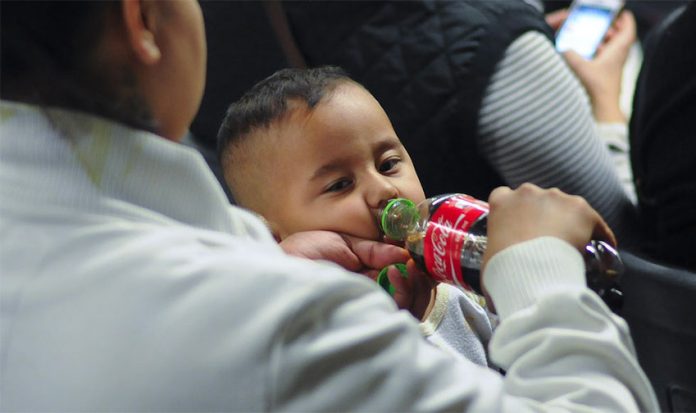
Soft drink producers have committed to reducing the calorie content of the drinks they make and sell in Mexico by another 20%.
ANPRAC, the national soft drink makers’ association, said in a statement that drinks made at the 120 bottling plants it represents will have one-fifth fewer calories by 2024.
The association noted that its members, among whom are Coca-Cola Femsa, Coke-bottler Arca Continental and Grupo Peñafiel, have already reduced calories in their beverages by 55% over the past 10 years, meaning that some products on shelves in 2024 will have 75% fewer calories than they originally had.
ANPRAC said it will also continue to develop new products that are available in a range of sizes to suit consumers’ needs.
“We’ve [already] launched 172 new low-calorie and no-calorie products with the aim of offering options for all lifestyles,” the statement said.
A 1 peso per liter soda tax designed to reduce consumption was introduced in Mexico in 2014 and was raised to 1.17 pesos per liter in 2018.
However, Mexico – where millions of people suffer from obesity, type 2 diabetes and other conditions linked to diet –continues to be one of the world’s largest soda consumers.
“It can’t only be about paying more taxes, there needs to be more information for the people,” he said.
The next day, the lower house of Congress passed modifications to the General Health Law that stipulate that the labels on food and drinks must warn consumers if they contain high levels of calories, sugar, salt or saturated fat.
The Senate approved the modifications in late October, meaning that health-risk warnings should soon begin appearing on products whose consumption is considered harmful to human health.
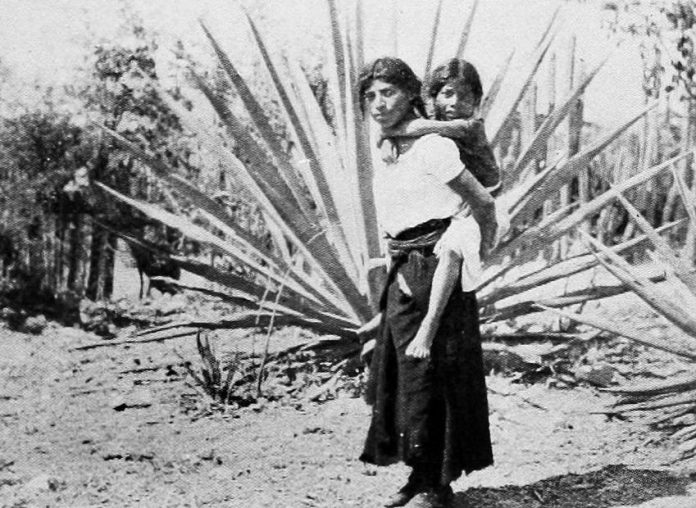
Slave mother and child and a henequen plant. K Turner
While paging through an archaeological guide to western Mexico, I came upon a cryptic reference to a long-abandoned train station near the small town of San Marcos, Jalisco, located 80 kilometers west of Guadalajara.
It said, “Yaquis were once sold here (as slaves) for 25 centavos a head . . . Around the station were located concentration camps where hundreds of indigenous people died of hunger and disease.”
When I asked my Mexican friends whether they had ever heard of such a thing, they asked me if I had ever heard of a book called Barbarous Mexico by an American named John Kenneth Turner.
I found the book and because it had been published in 1911, I was able to read all of it online at Wikisource. Despite the title, I quickly learned that the book is not an attack upon the Mexican people, but an exposé of the atrocities committed against many of them by President Porfirio Díaz during 34 years of repeated “unopposed reelection.”
One of the worst schemes of the Díaz government, says Turner, was the provocation of the Yaqui Indians to rebellion in order to clear them out of Sonora so their land — rich for both mining and agriculture — could be sold to Americans.
Roll call at sunrise on a slave plantation. K Turner
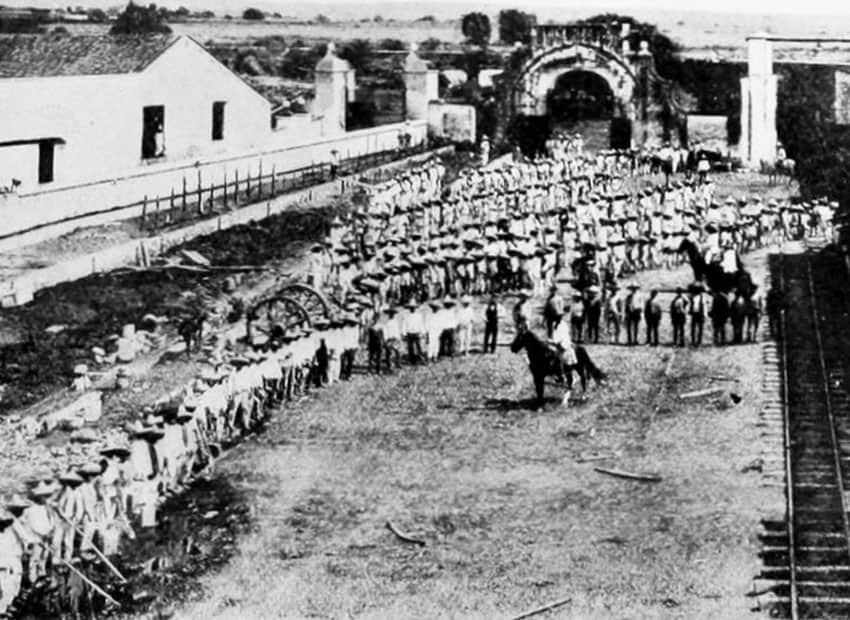
The Yaquis were put on boats at Guaymas and shipped to San Blas, where they were forced to walk over 300 kilometers to San Marcos. Here were large concentration camps where families were broken up. Individuals were then sold inside the station and packed into train cars which took them to Veracruz. Another boat ride took them to Progreso in Yucatán, from which they were taken to the plantation which would be their tomb.
John Kenneth Turner, a reporter for the Los Angeles Express, first learned about this business in 1908 from several Mexicans locked up in the local county jail.
“What are you accused of?” he asked them.
“Invading a friendly country,” they replied.
“What country is that?” he asked.
“Mexico,” they answered.
Women in Bull Pen. K Turner
Turner inquired as to why they would want to invade their own country.
“Because the constitution has been suspended and awful things are happening.”
When he asked for concrete examples, the jailed Mexicans told him that great numbers of people were being bought and sold like cattle and forced to work on sisal plantations until they dropped dead — even though Mexico had abolished slavery many years before.
Turner was determined to see for himself and traveled to Mérida where he passed himself off as a rich man anxious to invest in the lucrative henequen hemp business.
Here he discovered that the Yaquis were indeed slaves in the worst sense of the word, beaten bloody every morning at roll call, forced to work in the blazing sun from dawn to dusk on little food, locked up every night and beaten again if they failed to cut and trim at least 2,000 henequen leaves per day.
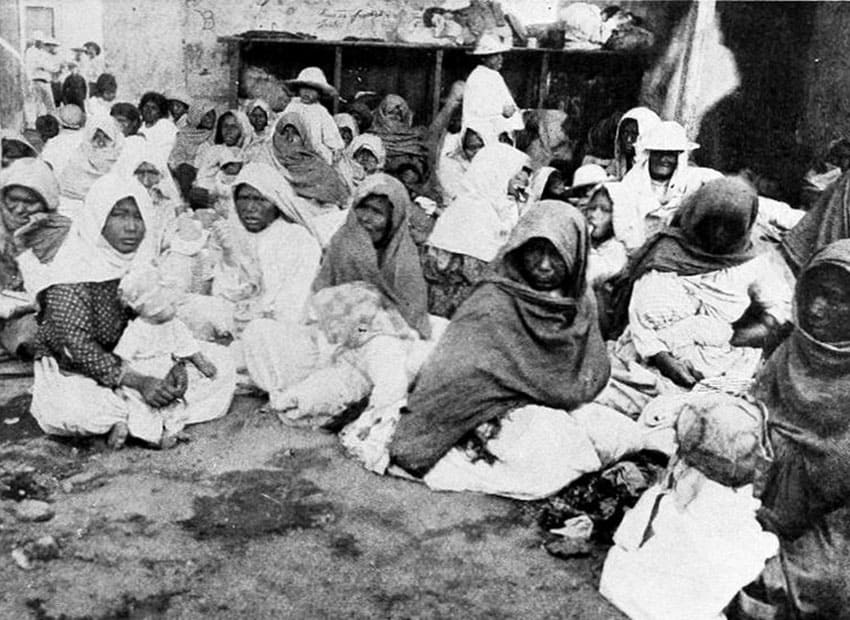
The Yaqui women, separated from their families, were forced to “marry” Chinamen and every baby born on the plantation was worth up to $1,000 cash to the owner. At least two-thirds of the Yaquis arriving in Yucatán were dead before the end of the first year of such treatment.
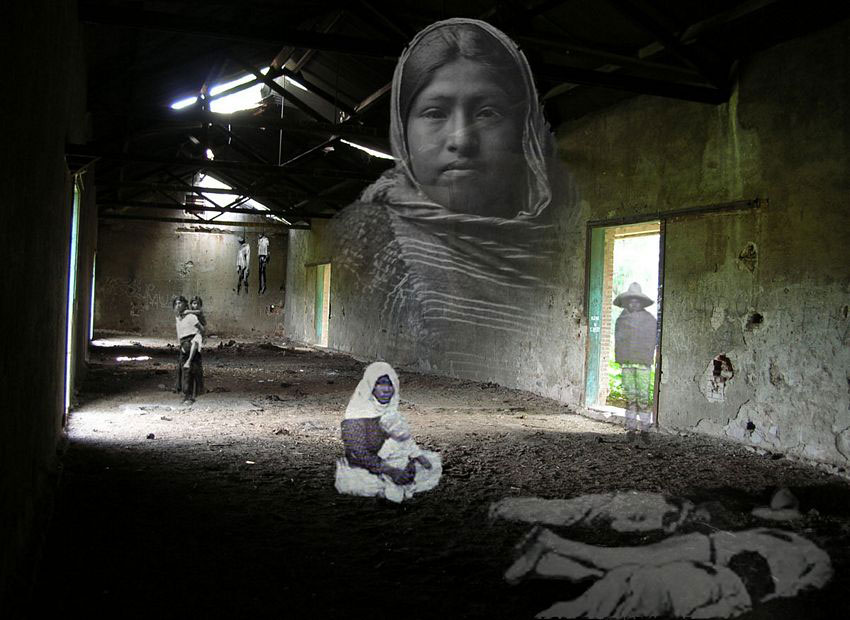
Collage in memory of Yaquis who died at San Marcos. K Turner/ Firstpeople.us/J Pint
Turner was able to interview some of the slaves. One man with a baby on his arm said he was plowing in his field when the soldiers came. “They did not give me time to unhitch my oxen,” he said.
“Where is the mother of your baby?” inquired Turner. “Dead in San Marcos,” replied the young father. “That three weeks’ tramp over the mountains killed her.”
Indeed, Turner’s informants agreed that “the crudest part of the trail was between San Blas and San Marcos “where women with babies fell down on the roadside, never to get up again.”
It would first appear that those who must have grown rich from these atrocities were Porfirio Díaz, his relatives and cronies, but the book points out that more than half the sisal was shipped to the U.S.A. and Turner accuses wealthy families such as the Hearsts, the Rockefellers and the Guggenheims of having profited the most from the expropriated lands of the Yaquis and Mayas as well as the “Flaming Hell” of the henequen plantations.
The Yaqui people were famed for being hard-working and strong. Between 1904 and 1909, according to Turner, around 15,000 of them were rounded up, forced along the tortuous route to Yucatán and enslaved. Despite their extraordinary strength, most of them died within the first year on the plantations, raising questions of whether they were the victims of genocide.
After years of abandonment, the San Marcos train station was renovated and turned into a cultural center. In my opinion, the building ought to be a memorial to the Yaquis, but there is not even a plaque commemorating the pain and sorrow suffered there.
[soliloquy id="95778"]
Today, few citizens of the area are aware of the atrocities which took place in the train station. Eighty-year-old Juan Díaz of San Marcos remembers stories of “false promises made by President Porfirio Díaz” in those times and recalls that those who took the bait “were rewarded by becoming slaves in the henequen plantations.”
Others say they remember rumors that Yaqui Indians had been sold in the place. Nevertheless, not one of the 10 histories of San Marcos found in the local library mentions a word about the mistreatment of Yaquis in the area.
Turner’s book raised eyebrows at the time of its publication and has even been called “the Uncle Tom’s Cabin of slavery in Mexico.” As it is filled with passion and indignation, it might not be considered objective. A more scholarly treatment of the same subject, however, was published by Duke University Press in 1974.
This is Development and Rural Rebellion: Pacification of the Yaquis in the Late Porfiriato by Evelyn Hu-Dehart, a professor of history at Washington University in St. Louis.
Hu-Dehart confirms the great majority of Turner’s claims, with the notable exception of his assertion that the Yaquis were essentially peaceful. “The Díaz government did not provoke the Yaqui rebellion, but inherited it,” says Hu-Dehart, who points out that the Yaquis inevitably sided with anyone fighting the authorities and refused to accept any deal giving them less than the one thing they wanted: complete autonomy in their lush corner of Sonora.
Interestingly, Hu-Dehart’s unemotional paper provides hard evidence for what might seem Turner’s most controversial accusation: that the government of Porfirio Díaz deliberately attempted the genocide of the Yaqui Indians. She quotes the words of General Lorenzo Torres to the chief of the Yaquis in 1908: “The government is . . . disposed to exterminate all of you if you continue to rebel.”
If you are traveling along Highway 4 in the state of Jalisco, perhaps visiting the Great Stone Balls of Ahualulco, or the Guachimontones (Circular Pyramids) of Teuchitlán, you might want to stop at the San Marcos train station, which is just 420 meters off that road, to reflect on the barbarous events which took place there and perhaps wander in the beautiful eucalyptus grove next to the old building.
All traces of the Yaquis’ passing have been obliterated, but their decomposing bodies probably helped give life to those tall, proud trees and perhaps they are the best memorial of all to the many souls who were murdered at San Marcos.
To find the train station, patiently type “N20.77867W104.18994” into Google Maps. It’s a 75-minute drive from the west end of Guadalajara.
The writer has lived near Guadalajara, Jalisco, for more than 30 years and is the author of A Guide to West Mexico’s Guachimontones and Surrounding Area and co-author of Outdoors in Western Mexico. More of his writing can be found on his website.
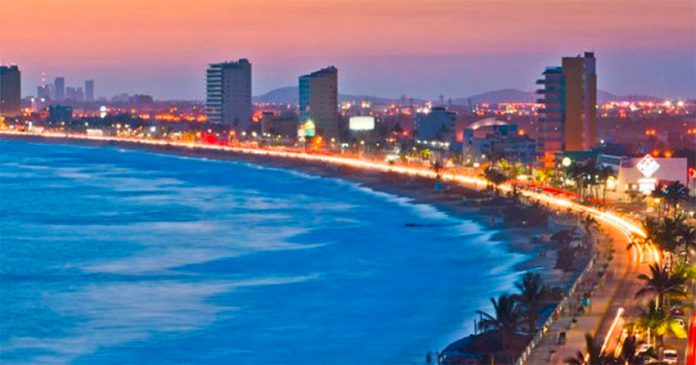
The hotel company Grupo Posadas has announced that it will invest 450 million pesos (US $23.3 million) to build a 25-story, 170-room Fiesta Americana hotel in Mazatlán, Sinaloa.
“We like to grow because we support Mexico,” Grupo Posadas managing director José Carlos Azcárraga said at an event on Thursday.
“Tourism is an industry that has many benefits and the most important one is the creation of jobs. In the particular case of this hotel, 800 direct and indirect jobs will be created,” he said. Azcárraga didn’t specify when the project is expected to start or finish.
Sinaloa Economy Secretary Javier Lizárraga Mercado applauded Grupo Posadas’ decision and said the state government will continue to work to attract more tourism investment.
“In Sinaloa this year, we will exceed four million tourists, in Mazatlán it will be three million. The port represents 70% of tourism,” he said.
Lizárraga said that among the visitors to Mazatlán this year were more than 300,000 cruise ship passengers. The goal, he added, is to reach half a million.
“We’re prepared to receive more tourists and we have greater air connectivity. Tourism now represents 7% of GDP in Sinaloa,” Lizárraga said.
The secretary also said that the number of hotel rooms in the Pacific coast resort city has increased to more than 13,000 from 9,500 at the end of 2016 and that 5,000 more are planned.
“That speaks of the dynamism of Sinaloa and Mazatlán,” Lizárraga said.
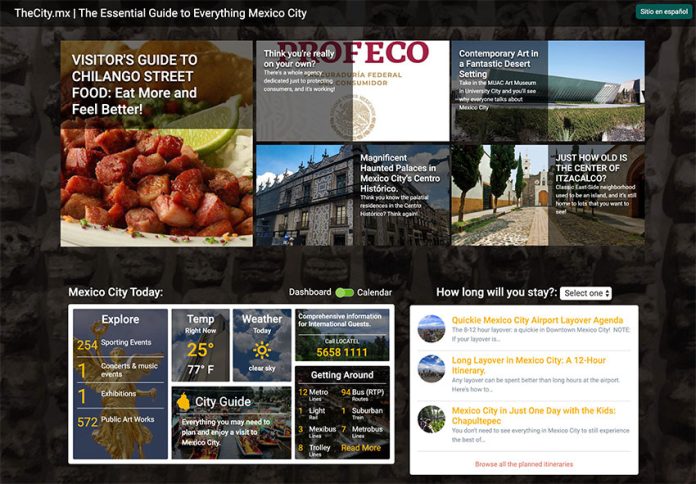
The Mexico City government has launched an English-language tourism website to promote the capital and provide information to foreign visitors.
TheCity.mx, which dubs itself as “The Essential Guide to Everything Mexico City,” features information about different neighborhoods, food (including the ubiquitous street stands), the public transit system, tourist attractions (including lesser known ones) and the history of the capital.
It also offers a range of advice, including the best times of the year to visit Mexico City and tips related to social etiquette and manners (learning at least a little bit of Spanish is a good start).
In addition, it lists emergency numbers, contact details for embassies, hotels, museums, tour options and Mexico City festivals and events, among other information.
Mayor Claudia Sheinbaum told a press conference this week that the new website will “enrich” the experience of English-speaking visitors to Mexico City.
She said that tourists are always looking for a space where all the information about a particular destination is compiled and TheCity.mx meets that need for Mexico City.
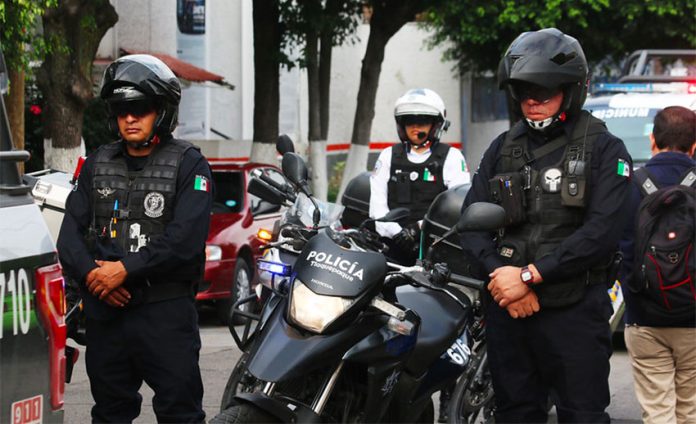
Sheinbaum said that international visitor numbers to the capital have increased 17.5% this year compared to 2018 and predicted that the government’s promotion efforts will result in higher numbers in 2020. The mayor added that Mexico City’s tourism police will increase their patrols to provide greater security to visitors.
For his part, the head of the government’s Digital Agency for Public Innovation, which developed the new website in conjunction with the secretariats of Culture and Tourism, said that a chatbot will be activated on TheCity.mx in January to respond to visitors’ questions.
José Merino said the bot will also be accessible via the messaging service WhatsApp.
He added that the tourism website will also promote the capital in English-language posts on social media sites Facebook, Instagram and Twitter as part of a campaign called TheCity.mx Newer, Older, Deeper.
Just over a quarter of all international tourists who come to Mexico visit or pass through Mexico City and 44.6% come from countries where the official language is English, Merino said.
Police in Tlaquepaque are among those preparing for the holidays.
Municipalities in the metropolitan area of Guadalajara have joined forces with state and federal authorities to strengthen security in the Jalisco capital for the end-of-year vacation period.
A security operation in which municipal and state police are collaborating with the National Guard began on Thursday and will conclude on January 6. It aims to guarantee security for citizens in the metropolitan area’s shopping, dining and tourist precincts.
“This model is inter-institutional so that all Jalisco residents have a peaceful and calm end to the year without being victims of crime,” state security cabinet chief Macedonio Tamez said on Thursday.
“With this [operation] the municipal, state and federal governments are protecting the city . . .” he added.
One of the municipalities that will see a bolstered security force presence is Zapopan, which borders Guadalajara to the west and north.
An inter-institutional force of 181 members will patrol popular shopping areas in Zapopan such as the Andares mall and surrounding area.
“What we want is to avoid any criminal act,” said Zapopan Mayor Pablo Lemus Navarro.
“That could range from robbery of bank account holders [after withdrawing cash] to theft of a watch. We want to avoid any act of insecurity in the area.”
In Tlaquepaque, which borders Guadalajara to the south, the security operation will cover all 42 neighborhoods that are part of the Magical Town designation. Mayor María Elena Limón said the operation will benefit 280,000 people who are expected to visit the municipality during the vacation period.
The joint security operation is similar to that implemented in Guadalajara during the Buen Fin shopping event last month, the newspaper El Economista said. Shoppers in the Jalisco capital didn’t report any crime problems during the four-day event that concluded November 18.
Five California sea lions were rescued from fishing nets in the Gulf of California off the coast of Sonora.
The liberation of the three pups under a year old and an adult male and adult female was the result of a campaign to disentangle the mammals from fishing nets on Isla San Jorge, off the coast of Sonora.
The campaign began with a theoretical training course led by the Marine Mammal Center (TMMC) in Sausalito, California, in coordination with various Mexican conservation organizations.
Conanp explained in a press release that the nets used in the Gulf of California use buoys and weights to keep them spread vertically in the water, some as long as 800 meters.
Once set, they move with the currents to capture various species, some of which have difficulty getting free. Sea lions are among the marine mammals that die in the nets.
The California sea lion is protected as an at-risk species under a 2010 environmental protection law.
The rescue was carried out by agents from the Natural Protected Areas Commission (Conanp) and the environmental protection agency Profepa in coordination with personnel from the Islas del Golfo de California protected area and the navy.
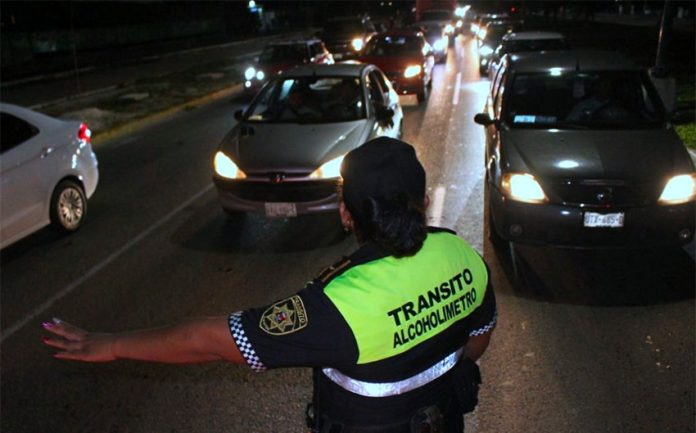
Motorists caught driving under the influence in Cancún will no longer be automatically sent to the local jail, known as “El Torito” (The Little Bull).
Drivers now have the option to pay a fine of 8,000-12,000 pesos (US $411-617), and the amount of the fine can depend on how much the driver has had to drink.
Those with a blood-alcohol content (BAC) of 0.041 to 0.08, measured with a roadside breath test, will be fined as much as 10,138 pesos (US $521), and those with a BAC over 0.08 will be fined as much as 12,673 pesos (US $651).
The fines will be as much as double in repeat instances of impaired driving, and the driver’s license will be suspended for six to 12 months.
The initiative provides an option of jail time no longer than 36 hours or community service if the driver is unable to pay the fine.
In all cases, the automobile will be impounded until the driver has completed the applicable sanctions.
Delivery and transit drivers will lose their licenses if they have any quantity of drugs or alcohol in the blood.
The Cancún municipal council also approved a measure to install video cameras at impaired driving checkpoints to ensure that the program is functioning properly or, in other words, that there is no corruption in the process, explained Mayor María Elena Lezama Espinosa.
The announcement of the initiative came after a busy weekend at El Torito. Cancún booked 105 people into the cells for impaired driving from November 29-December 1.
The national BAC limit for driving a vehicle is 0.08, though some states have limits as low as 0.04. Federal law allows police to imprison an impaired driver for 20-36 hours for the offense.
People caught driving impaired more than twice in one year, or more than three times in three or more, have their license revoked.