The US Embassy is considering limiting employees' movements, according to one news report.
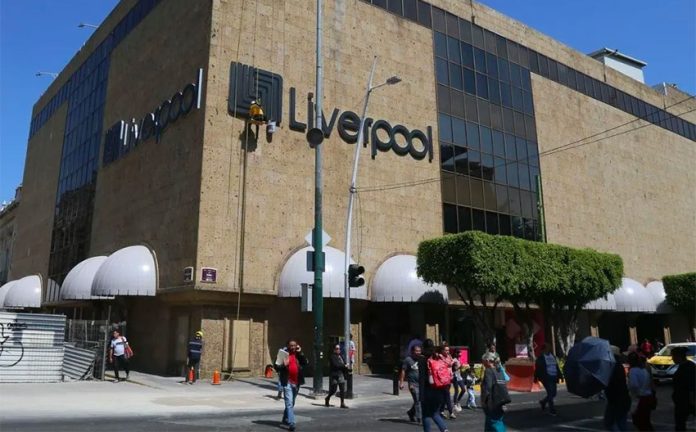
A 61-year-old employee of the U.S. Embassy in Mexico City lost a gold Rolex watch valued at US $8,000 in a mugging at a store in Polanco on Sunday.
According to witnesses, the woman was inside a store at 513 Horacio street when a young man pushed her to the ground, threatened her with a gun and removed her watch.
The aggressor is described as being well-dressed and thin, 1.65 meters tall and appearing to be about 25 years of age, with brown skin, dark hair, a straight nose, oval face, with no facial hair or tattoos.
Witnesses said the robber escaped in a red Audi whose plate number was MUJ-5335.
Police reviewed security camera footage from the business where the theft took place as well as other businesses, and were able to track the thief’s escape route. One of the cameras may have even captured his face.
The watch is described as silver with a pink face and a metal band. Mexico City police have the watch’s serial number, and are working with embassy staff to capture the robber.
Muggings have risen 28% in Mexico City in the first six months of the current administration’s term.
This is not the first time that an employee of the U.S. Embassy has been robbed in Mexico City.
The embassy is considering the possibility of limiting its employees’ movement on the streets, reported the newspaper El Universal, or even taking the more extreme measure of issuing a travel warning for Mexico City, a measure that has been taken in places like Ciudad Juárez, Tijuana, Michoacán and Acapulco.
Independence heroes are featured on one side of the new bill.
The 17th-century poet and writer Sister Juana Inés de la Cruz has been featured on Mexican banknotes for 41 years. Today it was time to say farewell.
Sister Juana first appeared on the brown 1,000-peso banknote in 1978. The other side of the bill showed a landscape of the Santo Domingo Plaza in Mexico City.
After Mexico’s currency was reorganized in 1993, Sister Juana moved to the 200-peso note, where she has remained until today.
The note shows the baroque poet’s face with a fragment of her famous poem You Foolish Men. The opposite side shows a landscape of the Panoayan Hacienda in Amecameca, México state, where Sister Juana lived as a child.
On Monday, Mexico’s central bank (Banxico) began circulating the new 200-peso notes which will gradually replace the Sister Juana bills.
El Pinacate biosphere reserve in Sonora is featured on the reverse side of the new banknote.
Former professor Berenzon was fired for plagiarism.
A former professor dismissed by the National Autonomous University (UNAM) for plagiarism is now apparently employed by the National Council of Science and Technology (Conacyt).
The newspaper El Universal reported that Boris Berenzon Gorn has been a member of Conacyt director María Elena Álvarez-Buylla’s staff since May 30 and that he was seen working with the science agency’s communications team at an event on August 6.
Berenzon was dismissed by the School of Philosophy and Letters (FFyL) at UNAM in 2013, four months after researcher Juan Manuel Aurrecoechea filed a complaint against him for plagiarizing at least 18 paragraphs of his 1988 book Puros Cuentos.
Aurrecoechea said the plagiarized paragraphs appeared in a book published in 2010 that was based on Berenzon’s 2001 doctoral thesis, El discurso del humor en los gobiernos revolucionarios (The Discourse of Humor in Revolutionary Governments).
The FFyL council fired Berenzon on the grounds that he committed a “serious” breach of his academic responsibilities.
Not citing sources correctly could not be considered “a mere methodological error,” the FFyL council said upon dismissing the former professor, who became the first UNAM academic to be fired for plagiarism.
Berenzon has also been accused of plagiarizing his master’s thesis, El Universal said.
Six years after his dismissal from Mexico’s most prestigious university, Berenzon’s history of plagiarism apparently didn’t disqualify him from employment at the government’s leading scientific body.
“It is a pleasure to have the support of Dr. Boris Berenzon Gorn in this fight against neoliberal science. Welcome to the Conacyt work team,” director Álvarez-Buylla wrote on Twitter on Saturday above a photograph of the ex-professor.
However, the tweet was deleted just minutes after it was posted and on Sunday morning Álvarez-Buylla wrote on the same social media platform that her account had been hacked.
“A tweet was sent from my personal Twitter account of which I disapprove. I do not know the origin and intention of the message. The account has already been recovered,” she said.
Álvarez-Buylla, who has been accused of acting illegally by taking important decisions without seeking approval of the Conacyt board, hasn’t clarified whether Berenzon actually works at the science council or not.
Kombucha makers Pesqueira, left, and Diaz of Tío Scoby.
Tío Scoby is a small business. As in, really small. Run by two women out of a home near the National Autonomous University in Mexico City, it produces 50 liters per week of kombucha, a fermented beverage touted for its many health benefits.
But keeping it small is part of their goal, say owners Lucía Pesqueira Mateos and Mariana Diaz. Small size helps maintain quality control.
“We want to make this for our community for people to have healthier options,” said Diaz, who studies architecture at the Universidad Iberoamericana.
Specifically, in the case of Mexico, Diaz said, options healthier than soda are needed.
“I never really liked drinking soda, but I do like the fizziness,” Diaz said. “Sometimes I want to have something fizzy, but also something cold, light and refreshing and with unique flavors from different vegetables and fruits.”
Tío Scoby likes to experiment with different flavors for their kombucha.
Kombucha, Diaz said, fulfills all those needs. And Tío Scoby’s products offer her favorite qualities of the beverage.
Kombucha is one of many fermented beverages beloved the world over. Although the exact origins are not known, it is thought to have originated in Manchuria where the drink is traditionally consumed. Made with natural sugars, green or black tea and often a fruit or vegetable for flavor, it has a light alcohol content of about 0.5%.
The drink has become a fad in the past decade or so in the United States and elsewhere. And the fad is starting to kick in in Mexico as well. Some small cafes and large supermarkets carry Mexican kombuchas.
After sampling the beverage on a trip to Costa Rica, Diaz didn’t like many of the kombuchas she tried at various stores upon her return to Mexico. So she decided to make her own.
“Kombucha is similar to beer in that it has yeast,” said Pesqueira, a microbiologist. “SCOBY is an acronym for Symbiotic Culture Of Bacteria and Yeast, which is present in all kombuchas.”
The yeast transforms the sugars into ethanol and CO2 resulting in the slight alcohol concentration. The fizziness results from the CO2. The yeast also has bacteria that take ethanol and convert it into organic acids that are very good for your digestive system.
It has sugar, but the sugar has been transformed. So when you drink a kombucha, you’re drinking vitamins and beneficial bacteria. The body’s highest concentration of bacteria is the gut, and these microorganisms feed the good bacteria.
Because it’s a bit sour, kombucha hasn’t totally caught on in Mexico. But it’s not a stretch to see why Tío Scoby’s products are in demand. While not accustomed to kombucha itself, many Mexicans are familiar with other fermented, ancestral drinks such as pulque (fermented agave nectar), tejuino (fermented corn), tepache (fermented pineapple and sugar) and various fermented cacao beverages.
“Pulque is another probiotic beverage and it’s alive. All these probiotic beverages are alive. That’s what makes them unique. Pulque and kombucha are living beverages,” said Pesqueira, who recommends drinking a third of a 360ml bottle of Tío Scoby daily for healthy digestion.
“In Mexico we are not as familiar with fermented foods or beverages compared to Asia, for example. In Europe, you have a lot of fermented fruits and beverages, pickles, sauerkraut. We’ve been making fermented foods here for centuries as a way to preserve food. It’s interesting how we have lost this really important resource. Everything now is pasteurized and, when you do that, you lose a lot of beneficial properties.”
The SCOBY itself is a living organism from which all kombucha is made. It can be split off from a mother SCOBY and can also regenerate from smaller pieces. The SCOBY Tío Scoby uses was given to Diaz by a woman in Guatemala.
“Yeast is a type of fungus, but on a microscopic level,” Pesqueira said. “Kombucha has so many types of bacteria and yeast . . . and the most common would be like what you find in beer. There are different types of SCOBY in Asia and in the U.S. . . . Sometimes one is fizzier than the other. It’s hard to determine how much of a specific microorganism exists in each SCOBY.”
Drink one-third of this bottle every day for healthy digestion, its makers say.
Fermentation of a batch of kombucha takes about seven to 10 days in Mexico City, depending on the season. Because it’s a natural process, it is affected by the elements. Fermentation takes longer in colder regions, which is why Diaz and Pesqueira recommend refrigerating each bottle of Tío Scoby and consuming it within a month.
“Refrigeration slows down fermentation, but the fermentation actually never stops,” Diaz said.
On a sunny Sunday afternoon on the city’s southside, Pesqueira and Diaz reflected on what it’s taken to start Tío Scoby and where they’d like to see it go. The women prepare kombucha with rotating flavors, always loving to experiment, though they almost always have a berry, orange, ginger or unflavored version in stock.
“We just started to read about it and then we started to do it,” Diaz said. “We are still reading up on it, seeing what we’d like to add, learning more things all the time. We’ve had a request to make it fizzier, so we might make one option with more fizz. We’ve also been thinking about starting to make kefir — a fermented milk drink popular in Eastern Europe and Russia.”
Recently, Diaz and Pesqueira teamed up with local bartenders to make a “mezkombucha” using kombucha as a mixer for mezcal. While admittedly the high alcohol content of mezcal kills some of the good bacteria in kombucha, Pesqueira said it’s a healthier alternative than mixing with soda or juice that has added sugar. It can also help counter the effects of a hangover, Diaz said.
These businesswomen are obviously trying to bring kombucha onto the Mexican scene in unique ways.
“Our next step is to sell from coffee shops and yoga centers. Now we do deliveries each week,” Pesqueira said. “We’re not looking to have our own storefront. We sell at bazaars, but they are quite expensive. Some ask 2,000 pesos for two days and our kombucha is only 50 pesos per bottle, so we would have to sell a lot of kombucha to get a return. But it’s also good for us to get the name out there and to meet people and share what kombucha is.”
Additionally, Diaz and Pesqueira have begun giving classes on the health benefits of kombucha as well as teaching how to make it.
“Often Tío Scoby has been the first experience that someone has had with kombucha,” Diaz said. “We get asked so many questions and we love to explain. We send voice messages, articles we’ve read or things we’ve written. I love that people are taking an interest in their health. It speaks about a new curiosity in people in Mexico. There are certainly those who don’t want to try it because it’s different. The fact that it’s something different can be an obstacle, but also an opportunity.”
• To place an order with Tío Scoby, message Diaz and Pesqueira on Instagram.
Megan Frye is a writer, photographer and translator living in Mexico City. Her experience includes newsroom journalism and non-profit administration. She has been published in several international publications.
The glory days appear to be over for Yucatán honey producers, who are facing the most difficult conditions they have seen in the last 50 years.
Between 2008 and 2012, honey production in the state reached record levels of 12,000-14,000 tonnes a year. This year, production is expected to be 4,000-7,000 tonnes at most, and the trend will most likely continue downward.
Yucatán beekeepers feel discouraged because they lack both funding and support.
“There’s worry, almost desperation,” said Nelly Ortiz Vázquez, president of the Yucatán School of Agronomic Engineers and director of the state’s Beekeepers’ Association.
“We haven’t only lost influence in international markets, but also at the national level. Yucatán fell from first to third and fourth places in honey production, surpassed by states like Jalisco and Veracruz.”
Conditions are not good for Yucatán honey producers.
According to official numbers, around 11,000 honey producers depend on beekeeping to make a living in Yucatán.
“We have no idea what could happen in 2020. Plants aren’t flowering, there’s no nectar, no support. How will we care for and conserve our bees?” she added.
She said that in the last 10 years Yucatán has faced severe deforestation that has affected all types of plants across the whole state. Bee populations have also declined because of the varroa mite.
“In Mérida, for example, although they talk about planting trees and reforestation, the urban growth and the area covered by concrete gets bigger and bigger with more residential neighborhoods. In rural areas, fires, indiscriminate felling, neglect, etc., have caused many traditional plants to die,” she said.
Market factors have also played a role in the decline of Yucatán’s honey industry.
One of its main markets is Europe, where consumers bought large quantities of the sweetener from 2005 to 2010. However, over time orders declined after China began selling a cheaper honey made from sugar beets.
“The Chinese imitate everything, even the image of the Virgin of Guadalupe, and now with the beet-based honey that they are mass producing and selling cheap, they’re taking foreign markets, like those in Europe, for example,” said Ortiz. “It’s not only affecting Yucatán, but all of Mexico’s honey production.”
The cheap Chinese honey has caused the Yucatán product to fall from 50 pesos per kilo in its glory days to just 12 pesos per kilo today.
In response to the crisis, the state’s Secretariat of Rural Development announced the installation of 28 enlarged beehives with queen bees imported from Italy. The trial run aims to strengthen hives and achieve better honey production by improving the genetics of Yucatán bees.
Rural Development Secretary Jorge André Díaz Loeza stated that his department will invest 20 million pesos (US $992,000) in the project.
Ortiz hopes that the introduction of the new queen bee species will make Yucatán bees more resistant to climate change and pests like the varroa mite. She said it’s a question of culture and persistence, and that beekeepers are looking for new ways to keep their hives alive.
Sonora’s rising homicide numbers are due to a 40% deficit in police numbers, according to National Defense Secretary Luis Cresencio Sandoval.
Intentional homicides in the first seven months totaled 537, up nearly 50% over the same period last year, according to federal crime statistics.
The highest murder numbers are being seen in the capital, Hermosillo, and the municipality of Cajeme, Sandoval said. The former accounts for nearly 23% of all murders. By the end of August, there were a total of 159, 37 of those in that month alone.
Sandoval said that elements of organized crime have been detected in the state’s many police forces, and that the government will initiate a purge campaign in Hermosillo, Cajeme, Guaymas, Empalme and Navojoa to rid the forces of corruption.
“Military personnel will head [the operation], which will help with the purging process, and it begins today in Guaymas and Palme,” he said on Monday.
Currently deployed in the state are 4,323 soldiers, 568 marines, 1,186 National Guardsmen, 706 Federal Police, 1,173 state police and 3,973 municipal police. Sandoval plans to have 1,800 National Guard personnel stationed in eight coordinated regions in the state by the end of the year.
President López Obrador held his morning press conference in Sonora on Monday, during which he said the military will reinforce the work of Sonoran police forces in order to ensure public security.
“There are four municipalities where there is already an agreement that the armed forces help with public security in order to reinforce municipal police forces, such as Guaymas, Cajeme and Navojoa . . .” he said without naming the fourth.
Light on detail, self-congratulatory and lacking information that hadn’t previously been disclosed were the criticisms levelled by political pundits at President López Obrador’s first annual report.
The lack of focus on security was a shortcoming identified by Catalina Pérez Corre, one of several people consulted by the newspaper El Universal.
The law professor and researcher at the Mexico City university CIDE said she was surprised that the president only allocated a small fraction of his address to the issue.
“It’s surprising because it’s one of the issues that matters most to citizens and he didn’t provide details,” she said.
“The only thing he gave details about was the number of National Guard elements . . . He didn’t report about homicides, how many organized crime groups there are, how many [anti-crime] operations have been carried out, what they [the government] have concentrated their efforts on . . .” Pérez added.
Francisco Rivas, director of the National Citizens’ Observatory, a crime watch group, said the report was “more of the same” and accused López Obrador, and federal authorities more widely, of failing to be accountable to the Mexican people.
He was also critical of the brevity with which the president addressed the violence that is currently plaguing the country.
Rivas said that López Obrador didn’t reveal how public money has been spent to reduce insecurity and what results have been achieved in the area. The president also failed to detail the anti-crime measures it implemented but which didn’t have the “desired impact,” he said.
“. . . In the more than 90 minutes he devoted to his presentation, less than 10 were dedicated to the issue of security,” Rivas said.
Anthropologist and writer Alberto Aziz Nassif described the report as merely a summary of what has already been said at López Obrador’s daily press conferences. He also criticized the president for failing to cast a more critical eye over his government’s performance during its nine months in office.
“I expected a more detailed, thorough and critical analysis and perspective of the reality of the country,” Aziz said.
“The only critical thing that the president said is that in terms of security, there are no positive results. He didn’t say anything about [other] complicated problems such as economic stagnation . . .”
The former head of the now-defunct Federal Electoral Institute, Luis Carlos Ugalde, said there was nothing new in López Obrador’s report.
“. . . He reiterated his moralistic construction of politics, his idea that the ultimate aim of a government is [to create] happiness and that material indicators don’t matter,” he said.
Ugalde also said that it was unnecessary for the president to speak out against his political adversaries.
Meanwhile, columnist Luis Cardenas said the annual report was aimed specifically at the president’s supporters rather than the general public as it should have been.
Armed civilians cut off the hands of a 15-year-old youth in Tuxpan, Veracruz, on Saturday, evidently in punishment for theft.
Local police reported that the boy, identified only as Adrian “N,” was kidnapped, stripped naked and painted from head to toe with grey paint. The attackers used white paint to write “This happened to me because I’m a thief” on his back, torso and arms.
Then they cut off both his hands and left them in a plastic bag outside a secondary school.
The victim walked to his home where his family took him to a local hospital.
He was found to be in hypovolemic shock due to extreme blood loss, and in critical condition.
His hands had been contaminated, rendering surgical reattachment impossible although the city has neither the trained medical staff nor the facilities for such a procedure.
Local authorities have mounted a search to find those responsible.
Total remittances to Mexico hit US $41.46 billion from January to August this year. (Archive)
Remittances by Mexicans working abroad reached their second-highest monthly level in July since Mexico’s central bank (Banxico) started keeping records 24 years ago.
They sent home US $3.27 billion, 14.4% more than in July 2018. The number of transactions was 9.1% higher, while the average amount per transaction was up 5% to US $340.
Goldman Sachs analyst Alberto Ramos said he expects the growth in cash sent back to continue.
“We hope that the growth in remittances stabilizes between 4% and 6%,” he said. “The solid flow of remittances from workers has been good for the current account balance and for supporting private consumption, especially for low-income families.”
In the second quarter of 2019, Mexico achieved a current account surplus of US $5.143 billion, the largest since Banxico began keeping records in 1980. Remittances totaling US $9.403 billion were an important contributing factor for the surplus.
In his morning press conference on Monday, President López Obrador said that total remittances in 2019 could rise as high as US $35 billion, calling the money sent home by emigrants “a blessing” for the Mexican economy. However, he noted that emigration should be a choice and not an obligation.
“The support from migrants is very important, and that’s why we need to help them; they are living heroes,” he said. “What are we going to do? Despite the importance that remittances have, the most important thing is that Mexicans shouldn’t be obligated to emigrate. Those who leave the country should do it out of choice, not necessity.”
The principal source of remittances is Mexicans working in the United States.
President López Obrador with his first annual report.
President López Obrador sees progress in the transformation he has promised to bring Mexico, but cannot say the same about reducing violent crime.
The president delivered his first annual report to the nation on Sunday, asserting that the transformation “has started to become reality” but conceding that his government has not yet managed to bring down the levels of violent crime.
In an address at the National Palace, López Obrador cited austerity measures, social programs and anti-corruption actions as achievements of his administration since taking office last December.
The president blamed policies implemented by the last two federal governments, charging that the use of military and police force to combat violence was a failure and that the consequences are still being felt today.
“The results were catastrophic . . . The strategy left a horrific toll of deaths, disappearances, wounded persons and a human rights crisis . . .” López Obrador said.
He said his government will achieve peace by attending to the root causes of violence and ensuring that there are “jobs, good salaries, well-being and that young people’s right to education and work is guaranteed.”
López Obrador also highlighted that the National Guard has now been deployed to 150 regions across the country and stressed that the armed forces have committed to guaranteeing public security without violating human rights or using excessive force.
“. . . I am a man of challenges and I am perseverant and that’s why I can say that I’m sure we will be able to calm the country; Mexico will be pacified. That’s a commitment,” he said.
The president characterized his government as an inclusive one, asserting that it “represents everyone, the rich and poor, believers and freethinkers.”
He claimed that his government has established an “authentic rule of law” and that it doesn’t – “as was the custom” – intervene in the judiciary, the Attorney General’s Office or the central bank.
The president gives his report Sunday at the National Palace.
He said his administration’s austerity measures have generated savings of 145 billion pesos (US $7.2 billion) in nine months, noting that officials’ salaries and benefits have been cut, “millionaire” pensions of past presidents have been cancelled and overseas trade offices have been closed.
“The luxuries, extravagances and opulence that characterized the exercise of presidential power have reached their end,” he declared.
Continuing his attack on his predecessors, the leftist president asserted that “nothing has damaged Mexico more than the dishonesty of its rulers,” adding “that’s the main cause of economic and social inequality and the insecurity and violence we suffer.”
To narrow the inequality gap, López Obrador said that his government is now providing financial support to half of all households and nine out of 10 indigenous families. The elderly, the disabled, students and farmers are all receiving greater financial support than before, he said.
The government’s youth employment scheme and tree-planting program have provided opportunities for more than one million disadvantaged people across the country, he said, and an additional 300,000 jobs were created in the first seven months of the year. The government is “rescuing the countryside from the abandonment to which it was condemned” through financial support for farmers and guaranteed prices for five agricultural products, he said.
The president noted that the minimum salary was raised by 16% at the start of the year and that petroleum production has stabilized after 14 years of decline.
López Obrador defended his government playing a greater role in the economy than that of its predecessors.
“There is still this false idea that the state shouldn’t promote development or seek to redistribute wealth but rather limit itself to creating the conditions that allow investors to do business and assume that the benefits will automatically trickle down to the rest of society. This assumption was cruelly revealed to be false during the neoliberal period,” López Obrador said.
The president reiterated that the raison d’etre of his government is “to eradicate corruption and impunity,” citing pipeline petroleum theft as one example of a scourge permitted under previous governments that is no longer tolerated.
Fuel theft has been “practically eliminated,” López Obrador said, claiming that the crime is down 94% and savings of 50 billion pesos have been generated this year. The president also said that via decree, he put an end to the cancelation of tax debt owed by large corporations.
The president claimed credit for reaching a migration deal with the United States that avoided blanket tariffs on Mexican goods that were threatened by U.S. President Donald Trump. The agreement, López Obrador said, allowed Mexico to dodge “a possible political and economic crisis.”
More than 1,000 people marched in Mexico City to demonstrate opposition to the president’s administration.
He also highlighted cooperation with the United States to implement development projects in the Northern Triangle of Central America so that people are not forced to migrate “because of hunger or violence.”
The president claimed that the government’s airport plan for Mexico City – upgrading the airport in the capital and Toluca and building the new Santa Lucía airport – will solve the saturation problem in three years and “save more than 100 billion pesos” in comparison with what the abandoned airport project would have cost.
The Isthmus of Tehuantepec trade corridor project will create “a transport link similar to the Panama Canal,” López Obrador charged, noting also that the government is upgrading the country’s six oil refineries, building a new one on the Tabasco coast and pursuing the Maya Train project, which “will benefit the states of Quintana Roo, Yucatán, Campeche, Tabasco and Chiapas.”
However, “the most important objective of the government,” López Obrador said, is to have “in 2024 . . . a better society. . . [in which] people are living in an environment of well-being.”
“. . . For the good of all, the poor come first,” the president added.
“Only with a just society will we achieve the rebirth of Mexico. The country will not be viable if poverty and inequality persist. It’s an ethical imperative.”
As the president gave his speech, about 1,100 people marched in protest in Mexico City, chanting “Get out, López Obrador.”
One of the organizers of the march, opposition politician Fernando Belauzaran, accused the president of lying to Mexicans in his daily 7:00am press conferences.
“He doesn’t tell the truth. It’s like a festival of mythomaniac tendencies every morning,” he told journalists.
“Andrés Manuel has deceived a lot of people who believed in him. They still haven’t realized the magnitude of the mistake they made,” protester María José Tam, a 34-year-old marketing specialist, told Agence France-Presse.