Vehicles burn in blockades on a Guanajuato highway.
Joint state-federal security operations in Guanajuato on Tuesday triggered a violent response from criminal groups, which set vehicles on fire to block 11 highways in seven municipalities.
The police operations took place in the Laja-Bajío region of Guanajuato, where the Santa Rosa de Lima Cartel, a fuel theft and extortion gang led by José Antonio “El Marro” Yépez Ortiz, has a strong presence.
Set up after 2:00 p.m. Tuesday on the Villagrán-Jueventino Rosas, Celaya-Comonfort, Salamanca-Querétaro and Salamanca-Celaya highways, among others, the blockades caused traffic chaos and triggered panic among residents of Guanajuato, Mexico’s most violent state in 2019.
Two police officers and two nurses were wounded in a clash with criminals on the Acámbaro-Salvatierra highway, the newspaper Milenio reported.
The hostile response to the police operations particularly affected Celaya, where four of the 11 fiery blockades were set up. The other municipalities that saw blockades were Salamanca, Juventino Rosas, Salvatierra, Comonfort, Apaseo el Alto and Villagrán, where the town of Santa Rosa de Lima is located.
The blockades triggered traffic chaos and panic.
Due to fear that their vehicles could be commandeered and set aflame, the ETN and Primera Plus bus lines canceled services scheduled to run late yesterday afternoon between Querétaro and several cities including Guadalajara, Salamanca, Irapuato, León, Morelia and Celaya.
As rumors swirled that the violent response from organized crime might have come in response to the arrest of Yépez, one of Mexico’s most wanted men, Guanajuato Government Secretary Luis Ernesto Ayala Torres announced that wasn’t the case.
The hostilities on Tuesday came after armed men attacked a municipal police surveillance booth in Celaya on Monday night, wounding one officer. Over the weekend, an explosive device detonated in a car left near National Guard facilities in the same municipality, Milenio reported.
The wave of violence came after the father of El Marro, Rodolfo N., was arrested in Celaya last Thursday. He remains in preventative custody as he awaits trial on vehicle theft charges.
Federal Security Secretary Alfonso Durazo described the arrest of the criminal leader’s father as “notable” and said that security forces would be ready for any violent reaction to the detention.
At least eight people close to Yépez have been arrested recently, including his wife Karina Mora, although she was later released after a judge ruled that police had entered the house where she was detained without a search warrant.
El Marro’s niece, Denise Yépez Pérez, was arrested on weapons charges in Apaseo el Alto, Guanajuato, in February, while his sister and her husband-to-be were murdered in January during their wedding ceremony at a church in the Guanajuato community of Pelavacas.
The Santa Rosa de Lima Cartel he heads is engaged in a bloody turf war in Guanajuato with the Jalisco New Generation Cartel, considered Mexico’s most powerful criminal organization.
The dispute between the two groups is the main generator of violence in the state, where there were more than 3,500 homicide victims last year.
Spring Break revelers in Cancún. Coronavirus wil probably mean fewer will travel to Mexico this year.
Beach destinations such as Cancún and Los Cabos will likely see a downturn in Spring Break visitor numbers due to the outbreak of coronavirus and the fear that the spread of the disease generates.
NYU, Columbia and Cornell universities in New York are urging students not to travel abroad this month, The New York Post reported, adding that Syracuse University is advising its students against both domestic and foreign travel “to avoid the possibility that your freedom of movement may become restricted.”
Students at many other universities in the United States, the largest source country for visitors to Mexico, are also likely to opt against Spring Break travel south of the border even though there are just eight confirmed cases of Covid-19 here, and there is no evidence that the virus is being transmitted within the country.
Fear about the infectious disease, rather than Covid-19 itself, is currently the “biggest problem” faced by the travel industry, said United States travel agent Claire Schoeder.
For those who do decide to travel to Spring Break destinations in Mexico, authorities are planning to implement protocols to protect against possible infection with the new coronavirus that originated in Wuhan, China, late last year.
Deputy Health Minister Hugo López-Gatell told a press conference that authorities from Mexico, the United States and Canada would meet this week to discuss plans to protect travelers.
“In these conversations with the United States and Canada … we will be developing protocols … that enable us, in advance, to protect each other,” he said.
The deputy minister said that the three countries will make a commitment to help travelers avoid Covid-19 but didn’t cite any specific measures they would take.
Spring Break dates run from late February to mid-April, but March is the peak month.
Meanwhile, the World Travel and Tourism Council (WTTC) announced Tuesday that it is postponing its global summit that was scheduled to take place in Cancún in April partially due to the global coronavirus outbreak. WTTC president Gloria Guevara said that the summit will now be held in October.
She said that she was optimistic that there wouldn’t be a widespread outbreak of Covid-19 in Mexico, asserting that the country is not as susceptible as others because of its warm climate. However, Guevara conceded that jobs in Mexico’s tourism sector, a large contributor to GDP, could be lost due to a downturn in tourism related to the health crisis.
While Mexico currently has only eight confirmed cases of Covid-19, Mexico City infectious disease specialist Francisco Moreno Sánchez believes that the real number is much higher, while Paul Hunter, a professor of medicine at the University of East Anglia in Norwich, England, predicts that new cases linked to the growing spread of the virus in the United States will show up in Mexico and other Latin American countries in coming weeks.
Of the confirmed cases, five patients have recovered well and three of them will end their 14-day isolation period on Tuesday, Health Ministry Director of Epidemiology José Luis Alomía Zegarra said Monday. Two people confirmed to have Covid-19 required hospitalization but one is now in stable condition, he said.
The second was a case identified on Tuesday in Puebla.
One can be forgiven for thinking that a Saint Patrick’s Day parade held in Mexico City is just a kind of marketing gimmick, especially when sponsored by the McCarthy’s Irish Pub chain. But while marketing certainly plays a role, there is more interest in Irish/Scottish culture among Mexicans than one would suspect.
In 1997, Mexico City’s first bagpipe band, the Banda de Gaitas del Batallón de San Patricio, was officially formed on the 150th anniversary of the fall of the Saint Patrick Battalion on August 20, 1847. The battalion was made up of Irish and Scottish soldiers who came to Mexico City with the United States Army during the Mexican-American War.
Deciding the American side was unjust, they switched sides at the Churubusco Fort in the south of the city. When the fort fell, the battalion’s surviving members were executed as traitors.
Their story does not make it into U.S. history books, but they have not been forgotten in Mexico.
The San Patricio band was formed by Rafael Gutiérrez who was fascinated by the story, Irish/Scottish culture and, of course, bagpipes. He even went to Scotland to learn all he could there.
A previous edition of Mexico City’s St. Patrick’s Day parade.
The group has 15 members and plays on the first Sunday of every month at the Churubusco Fort. They regularly play at festivals and other events in various parts of Mexico and even abroad. They performed on Saint Patrick’s Day in Dublin in 2015, and on Mexican Independence Day in Los Angeles in 2018.
In 2017, four members were invited to play with the Royal Edinburgh Military Tattoo. In 2018, Gutiérrez received a medal from the government of the United Kingdom for his role in promoting British culture. The band is customarily hired for weddings, quinceañeras and other events where they play both Irish/Scottish and Mexican traditional tunes.
To be a bagpipe player in Mexico requires a special kind of dedication as the instrument is still rather exotic and not easy to play. Bagpipes and uniforms are expensive and, imported from Scotland, they cost 50,000 pesos (US $2,400) or more just for the basic equipment.
Practicing is not easy either. It must be done outdoors, and even then, neighbors can complain to authorities about the racket. Gaiteros (bagpipe players) mostly practice in public areas, which draws attention. Most reactions they get are of curious amusement, especially from foreign tourists. Many take pictures and record the music, and some even drop unsolicited donations.
And yes, the men get chided for wearing “skirts.”
For a long time, the San Patricio band had been the only gaiteros in Mexico City, but interest in the instrument and Irish migration to Mexico has grown. In 2014, a second group formed called the Banda de Gaiteros de la Ciudad de México with the support of the Casa Regional de Asturias. This group focuses on teaching the instrument and researching Irish/Scottish culture in Mexico. It plays monthly at the British Chapel in Mexico City and pays homage to the fallen Saint Patrick Battalion on August 20 in San Angel.
Kronos Cantus is a band that specializes in the medieval version of the bagpipes.
Other Irish/Scottish performing groups in Mexico City include Banda Asociación Cultural de Galicia, the Daoine Sidhé Dance Corps and Kronos Cantus, a bagpipe band specializing in the medieval version of the instrument.
Mexico City’s Saint Patrick’s Day parade is set for March 15, 2020 at 12 p.m. It starts on the corner of Tamaulipas and Alfonso Reyes streets in the Condesa neighborhood and proceeds to Parque España.
There will also be the Da Terra Celta Cultural Festival on Sunday, March 22 at 12 p.m. at the Churubusco Fort (National Interventions Museum), featuring the San Patricio group, Daoine Sidhé and Kronos Cantus.
The San Patricio band will play at Celtics Pub in Mexico City on March 14 and 17, Celtics Pub in Querétaro on March 15, and at the National Autonomous University (UNAM) in Mexico City on March 19.
The auction results were announced at the president's press conference Monday.
Sunday’s “mega-auction” at the Los Pinos Cultural Center in Mexico City brought in 53,414,500 pesos (US $2.5 million), according to Ricardo Rodríguez Vargas, head of the Institute to Return Stolen Goods to the People (Indep).
He called the first Indep auction of 2020 “a success,” adding that it saw the highest participation by bidders of any of the government’s auctions so far.
“People didn’t put down their bidding paddles. We sold around 70% of the goods and there was great enthusiasm,” he told the president’s Monday morning press conference.
Rodríguez said that they sold the goods on the block for around 56% more than their general appraised value. One such good was a house in Cancún that sold for 15 million pesos (US $718,500) and another in Tlajomulco, Jalisco, that sold for 4 million (US $191,600).
He said that the jewelry also sold very well, for around 27% more than its general calling price. The airplanes for sale sold for as much as 2,500% more than the opening bid.
Rodríguez said that the money taken in by the auction will go to the Economic Culture Fund, which will invest it in the printing of over 2 million copies of 21 “very interesting, very nice, very entertaining” books.
He said that due to a lack of public will, many of the properties for sale — many of which were confiscated from “key public figures” — had sat in the federal Attorney General’s Office’s inventory for as long as 15 years.
One such figure was Zhenli Ye Gon, a Chinese investor who has been implicated in drug trafficking.
Rodríguez said that more houses in Cancún and the Mexico City neighborhood of El Pedregal will be auctioned off in the next few months and the proceeds will likewise be allocated to fund social projects.
Mexico is a country without laws and President López Obrador is a compulsive liar, according to the owner of a Coahuila steelmaker fighting extradition from Spain on corruption charges.
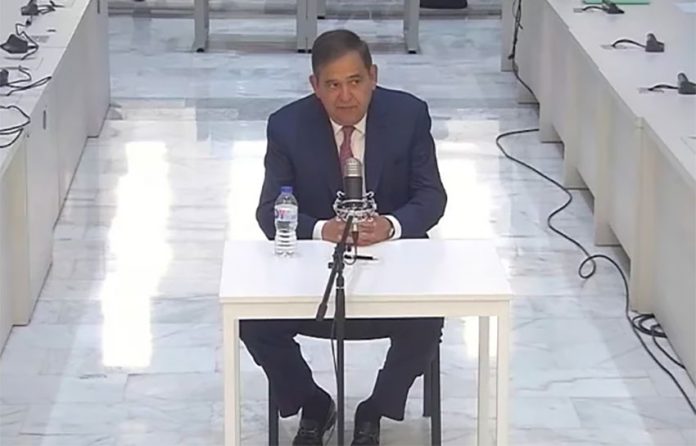
Arrested in Mallorca in May last year on charges related to the 2014 sale of a fertilizer plant to Pemex at an allegedly highly inflated price, Alonso Ancira, owner and president of Altos Hornos de México, made the claims during an extradition hearing in Madrid on Tuesday.
“There’s no justice in Mexico. Here [in Spain] justice is delivered and I congratulate you. Maintain it because in Mexico we already lost it,” Ancira told judges of the Audiencia Nacional court.
The businessman argued that if he is sent to Mexico, he has no guarantee of receiving a fair trial in a case that will examine the allegedly corrupt US $475 million sale of a disused fertilizer plant in Veracruz, a dealing in which former Pemex CEO Emilio Lozoya – arrested in February in the south of Spain – is also implicated.
Making clear his desire to remain in Spain, Ancira said that prisons in the European nation are like two-star hotels compared to jails in Mexico, where inmates are forced to sleep in crowded cells.
He also took aim at López Obrador, describing him as a mythomaniac, comparing him to Adolf Hitler and declaring that “he’s not an individual who is sane.”
Ancira described himself as “collateral damage” in the Mexican government’s pursuit of officials who allegedly committed acts of corruption during the administration led by former president Enrique Peña Nieto.
He rejected the accusation that he sold the fertilizer plant at an inflated price and charged that the case against him has no solid legal basis. The government has violated his rights to due process, legal defense and personal freedom, added Ancira, who is currently free on bail but has had his passport confiscated and is required to check in with legal authorities every other day.
The Audiencia Nacional judges will announce their response to Mexico’s extradition request within a period of 10 days, the newspaper El Universal reported, noting that Ancira will have the opportunity to file an appeal if they don’t hand down the decision he is hoping for.
Altos Hornos is Mexico’s largest integrated steelmaker.
Officer Velasco: attacked during Sunday's Women's Day march.
A protester at the International Women’s Day march in Mexico City on Sunday — held to draw attention to violence against women —used a caustic substance to burn the face of a female police officer posted to the event’s security detail.
Officer Lucero Velasco San Juan, 25, said that she stayed after her shift had ended in order to support her fellow officers on Juárez avenue.
“Everything was very calm until about five in the afternoon, which is when it all happened. … We were protecting the people … since there were families there,” she said.
“When we got in line … a group of women passed us and began to throw bottles at us, they began to throw liquids on us, to shout, to hit our shields, to paint them with spray paint. Then they tried to take our shields by pulling on them, and when they were pulling on them someone stuck their hand in my helmet and rubbed something on me.”
She said she didn’t feel anything at that moment, as she was busy with her duties, but the pain gradually began to set in.
“After the women continued on, that was when I began to feel more pain, more burning. I told my commander that it was hurting me, and she lifted the face mask on my helmet and saw that I had a burn on my face,” said officer Velasco.
She was treated by paramedics and taken to a hospital for further care. She hopes the burn will not leave a scar.
“I’m very sad, really very sad, because in the end we are women and we are human beings; before women, we are human beings,” she said.
“So if there’s no respect for women by men, for women by women, yes, it makes me very sad, even more so knowing that we’re there to keep people safe. … We were there to protect them, not hurt them, so it makes me sad that they burned my face and it scares me, because I don’t know if I’ll recover 100% or if I’ll have a scar on my face.”
Passengers arrive at Mexico City airport. A doctor says greater efforts should be taken to test travelers.
A Mexico City infectious disease specialist has asserted that “there must be many more cases” of the novel coronavirus known as Covid-19 in Mexico than the seven reported to date.
Francisco Moreno Sánchez, head of internal medicine at the ABC hospital, described the situation as “very worrying” because people infected with the virus without knowing it will unwittingly spread it to others.
In an interview with El Heraldo Radio, the doctor warned that if a widespread outbreak occurs in Mexico, the nation’s healthcare system will struggle to provide adequate treatment to all those who require it.
Moreno said that Mexico should be carrying out more tests to detect cases of Covid-19, as has occurred in other countries such as South Korea. If people found to have the virus are placed in quarantine, its spread will be limited and deaths will be avoided, he said.
However, Moreno acknowledged the difficulty of widespread testing because there are only three medical centers in Mexico with certification to test for Covid-19.
Doctor Moreno: more testing is needed.
The doctor charged that Mexico is taking the possibility of a large Covid-19 outbreak too lightly, pointing out that statistics show that the infectious disease is 25 times more deadly than influenza.
There should be greater efforts to detect cases of coronavirus among passengers arriving at Mexico’s airports, Moreno said, explaining that the illness that originated in Wuhan, China, late last year has now spread to more than 100 countries.
In Latin America, 106 Covid-19 cases had been detected in 11 countries as of Monday. While the number of cases is much lower than those in Asia, Europe and the United States, the figure represents a 10,500% increase since the first case was confirmed in Brazil on February 26.
While all seven Mexicans confirmed to have Covid-19 contracted the virus outside the country, there have been cases of local transmission in at least five Latin American countries, according to the World Health Organization.
Paul Hunter, a professor of medicine at the University of East Anglia in Norwich, England, told the news website BBC Mundo that the number of cases in the United States – where more than 800 Covid-19 infections and 27 deaths have been recorded – is likely to increase quickly, and that it will probably spread from there to Latin American nations in the near future.
“I suspect that what will happen in coming weeks is that a lot of the cases in Latin America will be linked to the United States,” he said.
Mexico is more susceptible than other Latin American countries to the spread of Covid-19 from the United States because the two nations share a 3,145-kilometer border, and large numbers of Mexicans travel between the two on a daily basis.
Hunter expressed the same concern as Moreno, the Mexico City infectious disease specialist, by stating that early detection of the virus is essential to limiting its spread.
“It’s simple: if tests aren’t done, you can’t know how many cases there are. There are several countries that haven’t reported any cases but the question is whether they’ve tested anyone,” he said.
For that reason, the number of cases reported at a global, regional and individual country level doesn’t offer a full picture of the prevalence of Covid-19, Hunter said.
In Mexico’s case – as Moreno noted – the failure to test more widely for coronavirus likely means that there are many undetected cases of Covid-19, which has now claimed the lives of almost 4,000 people around the world.
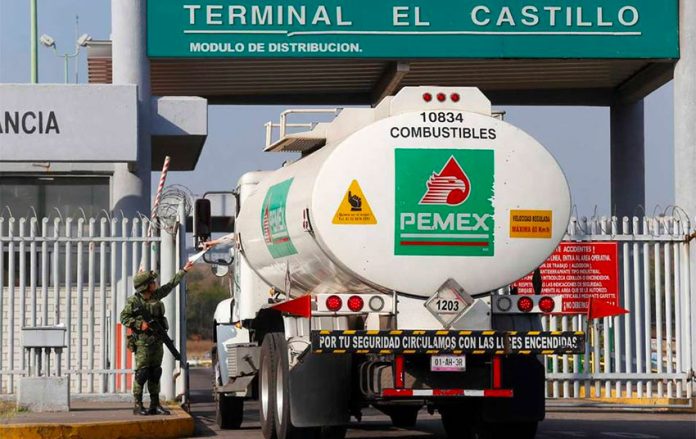
A decline in global oil prices places additional pressures on the already ailing finances of Pemex, Mexico’s heavily indebted state oil company, and could affect its credit rating, according to three analysts.
International crude prices fell sharply on Monday after Saudi Arabia, the world’s second largest oil producer after the United States, launched a price war with Russia. The Middle East kingdom slashed its prices and set plans to ramp up production from April after Russia refused to make a further large cut to its output to stabilize markets amid declining demand for oil due to the spread of the novel coronavirus known as Covid-19.
The price of Mexican crude plunged 31.6% as a result, the newspaper El Financiero reported, noting that it has now lost 56.5% of its value this year. The Mexican peso also fell on Monday on the back of the price war news, dropping to more than 22 to the United States dollar early Monday before recovering to just over 21.
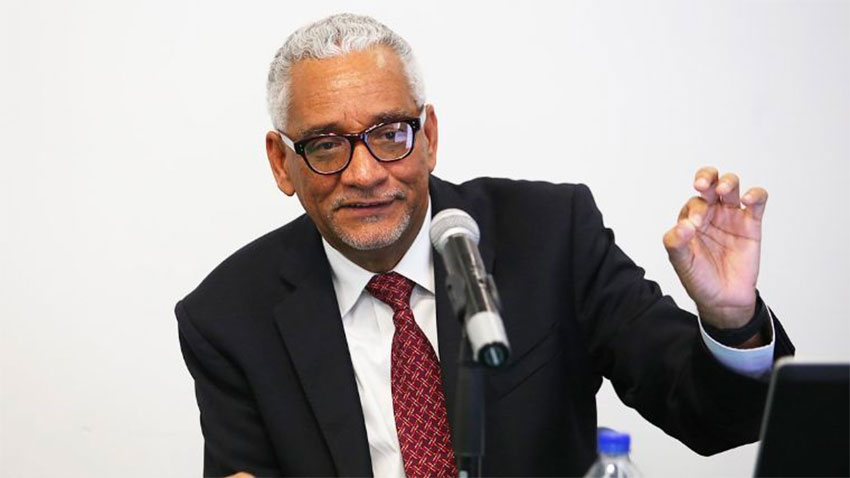
Raúl Feliz, an economist at Mexico City research university CIDE, told the news agency Reuters that the price war spells bad news for Pemex, which suffered one of its worst-ever losses last year and still has debt in excess of US $100 billion despite government efforts to reduce it.
“The fact that the oil market outlook has deteriorated due to this war is negative for Pemex, no question,” he said. “And this could increase talk of a ratings downgrade.”
Economist Raúl Feliz: bad news for Pemex.
Fitch Ratings downgraded the state-run company’s bonds to junk status in the middle of last year, and all three leading ratings agencies – Fitch, Moody’s and Standard & Poor’s – have a negative outlook on Pemex’s creditworthiness, meaning that there is a significant risk of further cuts.
Lower global oil prices will mean less revenue for Pemex, which will impact on its already “very vulnerable finances,” said Carlos González Tabares, director of analysis and stock market strategy at the Monex financial group. The decline in income could affect Pemex’s rating and Mexico’s sovereign rating, he said.
Gabriela Siller, head of economic analysis at financial group Banco Base, agreed that the crude price war increases the possibility that Pemex and the nation will see a downgrade to their credit ratings.
While the three analysts agreed that lower oil prices will hurt Pemex, Feliz noted that an annual hedging program used by both the state oil company, and the federal government more broadly, as insurance against price changes will help to lessen the impact of the slump.
Pemex CEO Octavio Romero said in January that the company had already contracted a “small portion” of its 2020 hedge but didn’t reveal the price it had locked in or the number of barrels of oil to which it would apply. The government said in January that the Finance Ministry (SHCP) had locked in a $49 per barrel price for oil worth a total of $1.37 billion.
Feliz told Reuters that the Pemex hedge will directly cushion the blow of the price slump, while the SHCP hedge could generate revenue that can be invested in the state oil company.
Carlos González of Monex: lower income will have an impact.
However, if the Saudi-Russian price war continues for an extended period, the financial strain on Pemex will likely increase despite the efforts to protect it.
The CIDE academic said that the ratings agencies will look closely at how Pemex’s debt compares with the proven crude reserves it holds, adding that the state oil company’s current investment levels “are not sufficient to stabilize production and simultaneously keep up proven reserves.”
With regard to Mexico’s ability to cope with a broader economic crisis precipitated by the global spread of Covid-19 – markets around the world slumped on Monday – President López Obrador reiterated on Tuesday that the nation’s public finances are healthy, adding that the government has a fund to respond to any complications that might eventuate.
“In the face of crises in the markets … we are resisting,” he told reporters at his morning news conference.
“I told you yesterday that we have healthy public finances because we managed to protect ourselves. No more was spent than we have in income; we didn’t put the country into debt.”
Women were conspicuous by their absence on Monday as millions took part in the national women’s strike, organized to protest the high levels of gender-based violence in Mexico and demand action from the government.
A day after large numbers of women marched in cities across Mexico to mark International Women’s Day, many stayed at home on Monday to send a clear message to authorities and the nation’s men that they are fed up with machista culture and the high levels of gender violence in a country where an average of 10 females are murdered every day.
Classrooms at schools and universities, government offices, the Supreme Court, federal Congress, the Mexico City Metro, banks and streets across the nation were some of the places devoid of women and girls, or with notably lower numbers than normal.
Organizers said that the aim of the strike, dubbed #UnDíaSinNosotras (A Day Without Us) and #UnDíaSinMujeres (A Day Without Women) on social media, was to remind people that large numbers of women in Mexico disappear forever.
“It is no longer possible to continue living in a country where a woman can be murdered in a brutal way, without any consequence, and in a culture that allows for it to happen,” Lorena Wolffer, an artist and feminist activist, told The New York Times.
Men ran the checkouts at retail stores.
At the National Autonomous University (UNAM) in Mexico City, the nation’s largest tertiary education institution, faculty buildings were almost deserted, the newspaper El Financiero reported. Medicine faculty employee Cristian Pimenel described the atmosphere as “sad.”
An accounting student identified only as Nicolás declared the main UNAM campus, Ciudad Universitaria (University City), “dead,” telling the newspaper Milenio that the absence of female classmates generated an “ugly” sensation. The situation was similar at the majority of universities across the country, both public and private, with female students skipping classes in large numbers.
At the entrance to the Mariano Azuela Primary School in the Mexico City neighborhood of Navarte, a sign announced that the school was closed due to a lack of the “necessary conditions” to operate. Many other schools scrambled to cover classes, their staff depleted by the absence of female teachers.
Many municipal, state and federal female government employees – more than 60,000 in Mexico City alone – joined the strike, leaving their male colleagues to go on working without them.
“You feel a void. … It’s not just physical but also professional and moral,” said Alexis, an IT employee at the federal Interior Ministry. “Teamwork can’t be completed because we’re missing their input.”
At the Supreme Court, 95% of female employees, including three judges, stopped work on Monday, the newspaper El Economista reported. Some of the few women who did show up for work at the nation’s highest court wore purple kerchiefs in a show of solidarity with the feminist movement.
A women’s forum was scheduled to take place at the lower house of Congress, the Chamber of Deputies, but no lawmakers – female or male – showed up. A sign on the door of National Action Party Deputy Laura Rojas Hernández, the president of the lower house, simply said: “closed due to strike.”
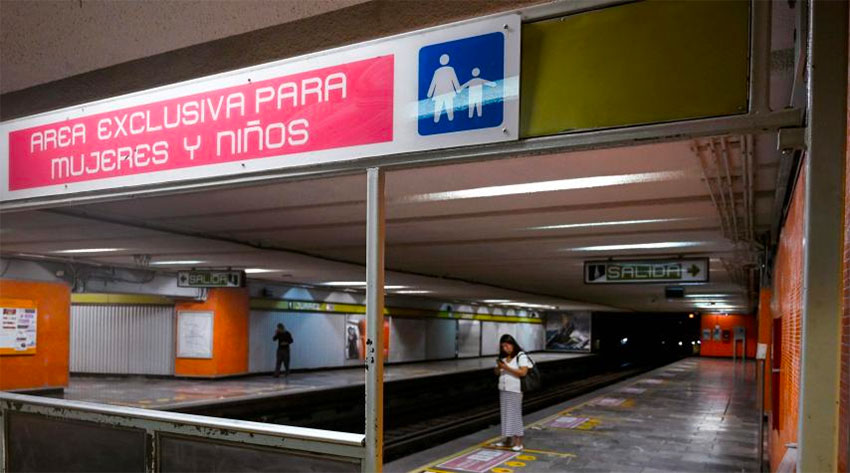
In the Mexico City Metro, women were absent from many stations’ ticket offices, ensuring long lines to purchase tickets at recently installed machines. Train cars reserved exclusively for women were at least half empty, even in peak travel periods.
Many major banks closed hundreds of their branches on Monday due to a lack of tellers to attend to customers. BBVA shut down 53% of its 1,800 branches, Citibanamex only opened 428 out of more than 1,400 and Santander closed around half of its 1,200 banks.
“My five female colleagues didn’t come; we were overwhelmed with work,” a BBVA employee in the south of Mexico City told El Financiero.
The absence of women was also notable at President López Obrador’s regular morning news conference, with just six female journalists in attendance, according to a report by the newspaper Milenio.
The widespread participation of females in the national strike also meant less traffic on the nation’s roads, fewer social media posts by Mexican women and lighter than normal pedestrian traffic in city streets.
An area reserved for women at a Mexico City Metro station was deserted yesterday.
However, while millions responded to the call to skip their normal daily activities, many others did attend their jobs, mostly out of necessity. Doctors, nurses, lawyers, policewomen and supermarket employees were among the female workers who carried on with their regular Monday activities.
“Conviction, commitment and responsibility moves us” to continue working, said Érika Guerrero Jáuregui, deputy head of nursing at the Dr. Antonio Fraga Mouret Specialist Hospital in Mexico City.
“We can make ourselves more visible by working. … I decided to work, firstly, [out of duty] to the institution [to which I belong] and secondly because of the commitment I have to women. This is my support [to the feminist movement] – going to work to attend to other women who need my help,” she said.
Law professor Italy Desire taught her regular Monday class in Mexico City, telling Milenio: “I believe that one of the best tools women have to eradicate violence is education – so I can’t deny my students the opportunity to be here.”
Alexa Carmona, a criminal lawyer in the capital, said that she had “important trials” to attend on Monday, explaining “it’s not easy to not come and leave them for tomorrow.”
Despite her own inability to join the strike, Carmona said that she supported “all the women who decided to stay at home.”
Teresa, a juice vendor at the Cuauhtémoc market in Mexico City, succinctly summed up her decision not to join the strike, telling El Financiero: “if you don’t work, you don’t earn.”
However, the decision of millions of other women to stay away from work on Monday no doubt exacted a heavy toll on an already ailing Mexican economy. Citibanamex analysts estimated that the economy would take a 43.5-billion-peso (US $2.1 billion) hit as a result of the strike while those at BBVA forecast a more modest 34-billion-peso impact.
The absence of women from learning institutions and workplaces on Monday, and the consequent emphasis it placed on the huge contribution they make, led many Mexican men to the same conclusion, El Financiero reported: “Another day without women – please no.”
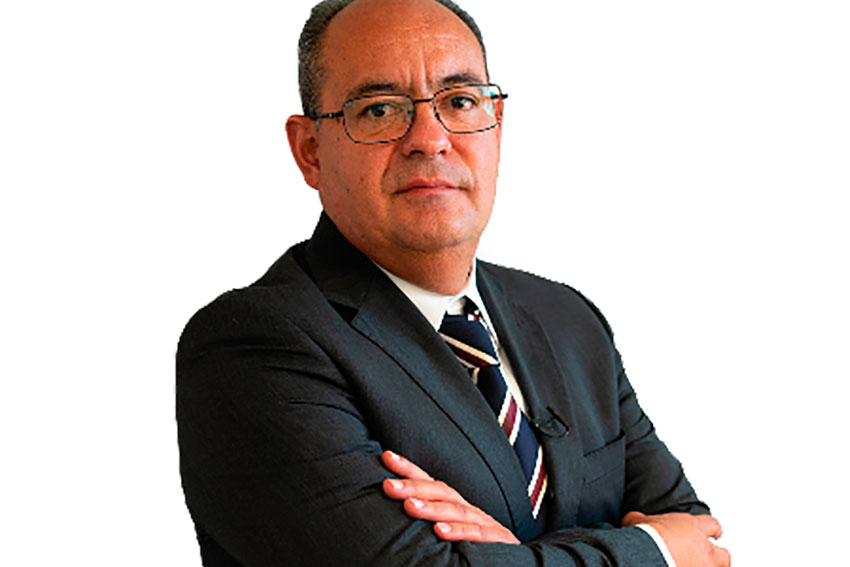
Mireles and his wife at an art exhibition in Mexico City last month.
A subdelegate of the State Workers Social Security Institute (ISSSTE) in Michoacán has been suspended from his duties for five days for derogatory comments about women he made in September of last year.
The sanctions he was given, which included a public admonishment, were also in response to a September 9 meeting in which Mireles was recorded telling medical staff at a hospital in Uruapan that the union leader had asked him to create a position for “una nueva nalguita,” which translates roughly as “a nice new ass.”
The Ministry of Public Administration (SFP), which handed down the sanction, said that its code of ethics mandates that public functionaries should promote and practice equal treatment of both men and women and avoid any actions that diminish human dignity, rights and liberties or that constitute any form of discrimination.
“It also establishes that public servants should eliminate any discriminatory language based on gender stereotypes and foster an egalitarian and inclusive culture,” said the SFP.
The ministry said it guaranteed Mireles his right to be heard before a court during its investigation and that it will respect any appeals or other legal actions he may want to take.
“The SFP has as one of its goals the promotion of a new ethic, with a gender perspective, in public service, to guarantee the integrity and human rights of women, and it asks public servants to comply with the obligation to observe discipline and respect of the citizenry during the execution of their duties,” the ministry added.
Mireles, 60, made headlines again in late September when he married a 21-year-old woman.